‘The Accountant 2’ Movie and 4K Review
The following review was written by Ultimate Rabbit correspondent, Tony Farinella.

In the interest of full disclosure, I must confess I do not have a vivid recollection of the 2016 film “The Accountant,” which starred Ben Affleck and Anna Kendrick. I know I watched and reviewed the first film, but it didn’t leave a lasting impression on me in either a positive or negative way. Because of this, I wasn’t exactly sure what to expect from a sequel that was taking place nine years after the original.  I didn’t go back and watch the first film, but I was still able to follow along effortlessly with the sequel. The more I watched it, little bits and pieces from the first film started to come back to me. Plus, with an action/thriller, in most cases, you start to understand the gist of it: These guys are good, these guys are bad, and they are going to have a big shootout before it’s all said and done.

The Accountant 2” opens up with a bang as Raymond King (J. K. Simmons) meets up with a quiet yet deadly assassin, Anaïs (Daniella Pineda). Raymond tells her he needs her help in tracking down a missing family. Before long, there is bedlam at their meetup location, which leaves Raymond, the former FinCEN director, dead. On his dead body, he wrote “Find the Accountant.” This message finds its way to his protégé and the current deputy director, Marybeth Medina (Cynthia Addai-Robinson). She gets in touch with The Accountant, Christian Wolff, played by Ben Affleck.
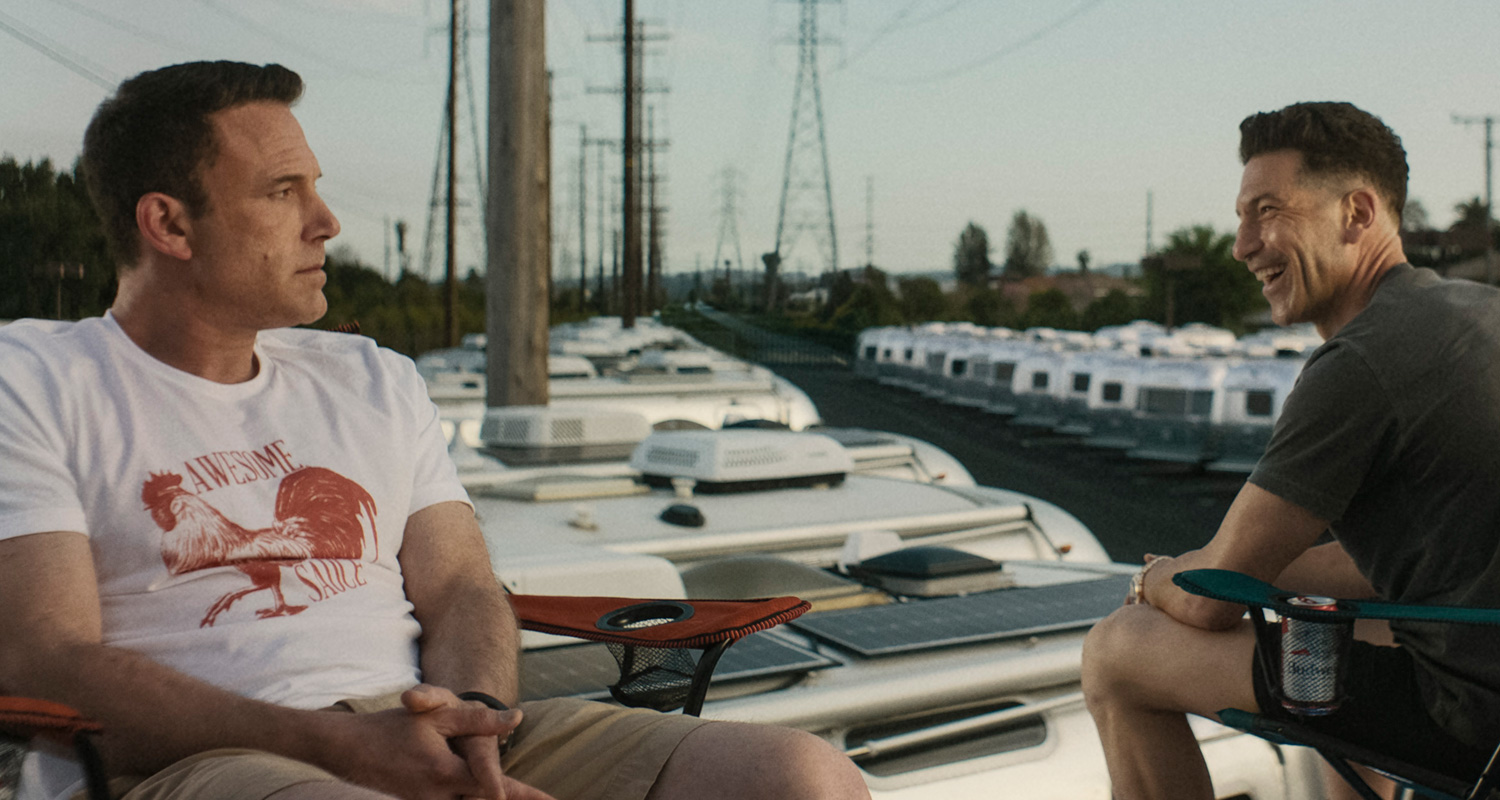
Christian is not only an accountant, he’s an autistic assassin. I don’t remember if it was clearly stated in the first film, but they hint around at it here, as I don’t think they wanted to hit the audience over the head with it. It would have felt like they were exploiting this if they reminded the audience of it time and time again. Instead, the film shows his difficulty expressing himself while also highlighting his strengths, such as when he goes line-dancing and is able to pick up the moves by watching other people and their rhythmic movements. With his help, Marybeth will be able to find out what happened to her mentor and also find out what got him killed.

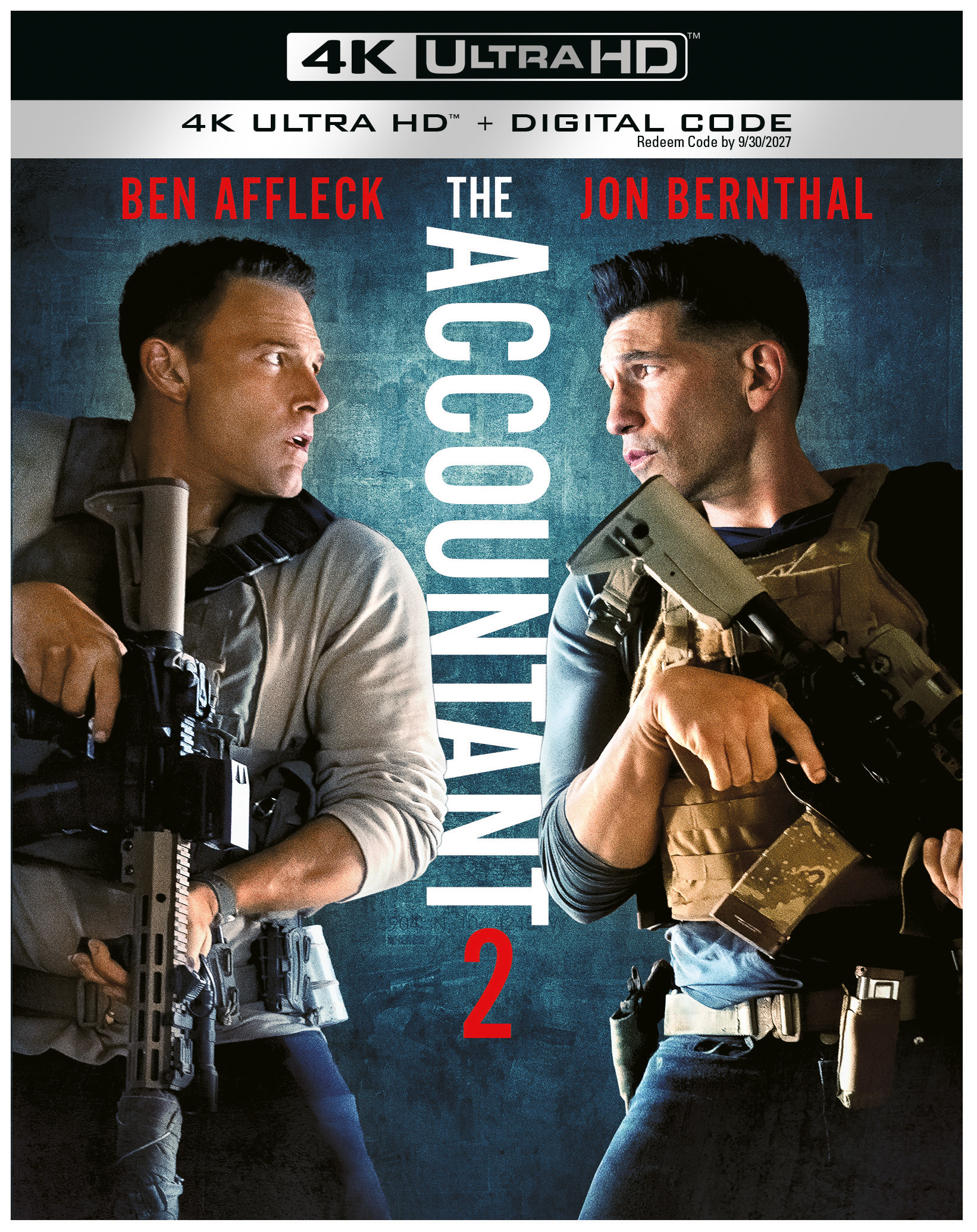
“The Accountant 2” does not even mention the Anna Kendrick character, but it does bring back Christian’s brother, Braxton, played by Jon Bernthal. Affleck and Bernthal have terrific chemistry together on screen, as they have a real Oscar and Felix “Odd Couple” dynamic. Braxton is direct, in-your-face, and blunt. Christian is more subdued, thoughtful, and precise with his actions. Along with Marybeth, they are committed to finding answers when it comes to the death of Raymond King along with the missing family. The three of them all bring something unique and different to the table with their strengths and weaknesses.
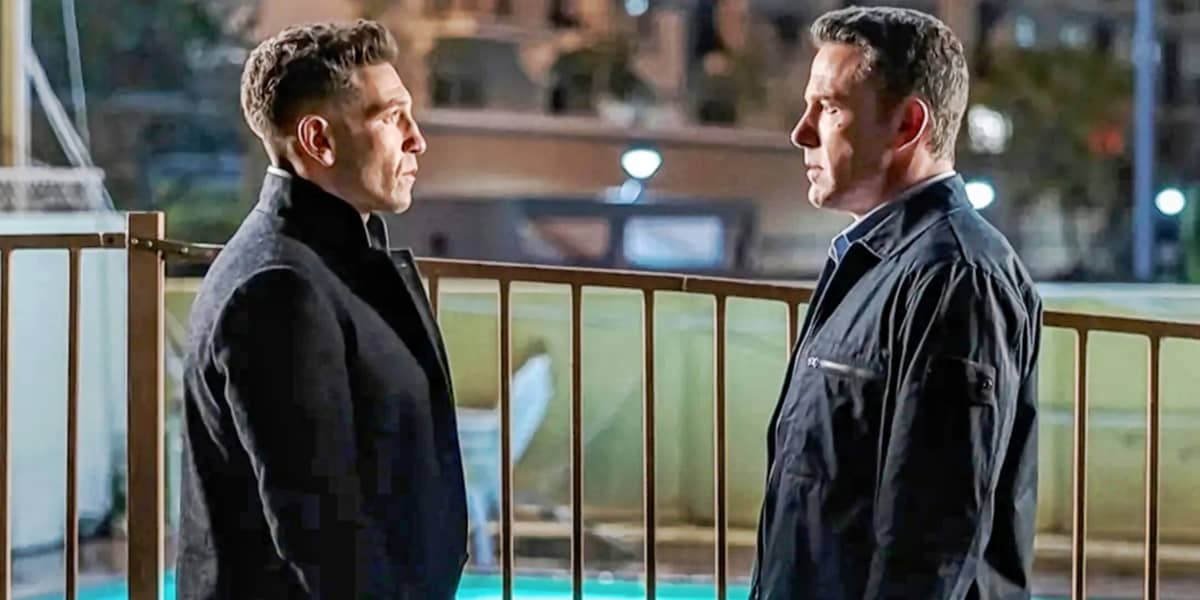
This sequel is a tale of two movies. The first half is entertaining, funny at times, and fast-paced. It focuses on relationships, characters, and story. I was captivated and enjoyed the story and its various twists and turns along with the interactions between the characters. Bernthal, in particular, is a real standout amongst the cast. He’s funny but also has a softer side to his character. There is one scene in particular where he’s talking to his brother and he’s wondering why they aren’t closer. He wonders if it’s because of Christian’s challenges or if there is something more to it. Affleck also does a good job of not overplaying his character or turning it into an over-the-top and showy performance. He brings humanity and heart to the character.

Overall, “The Accountant 2” is way too long at 132 minutes, and after a while, there are one too many bad guys to be found here. Once it turned into a shoot-’em-up action flick, I was ready for the credits to start rolling. It turns into a live-action version of “Call of Duty.” I also feel as though films which use sex trafficking as a major storyline are becoming commonplace in Hollywood, and they are starting to feel like a copout when the screenwriter doesn’t know what else to do with the story. Overall, I enjoyed a lot more of this sequel than the parts I didn’t, and it’s a fun action flick until it loses itself in the final 40 minutes.

* * ½ out of * * * *

4K Info: “The Accountant 2” is released on a single-disc 4K from Warner Brothers Home Entertainment. The film has a running time of 132 minutes and is rated R for strong violence and language throughout. The film comes with a crisp looking slipcover along with a digital copy that can be redeemed online.

4K Video Info: The Dolby Vision transfer is a thing of beauty. The colors are vivid and the film has a crisp and flawless look to it. Action films, in particular, are some of the best films to watch on 4K, and “The Accountant 2” is no exception.

4K Audio Info: The Dolby Atmos track is loud, in-your-face, and it really thumps in your living room. At times, I found the film to be a little too loud, but that might just be my personal preference. For others, they might find it to be perfect for enjoying this film to the fullest. Subtitles are included in English, Spanish, and French.

Special Features:

None

Should You Buy It?

I try to keep my finger on the pulse of physical media when it comes to collectors and their buying habits, and if there is one genre they are always looking for on 4K, it is action flicks. Because of this, if you are a physical media enthusiast, I’m going to recommend you purchase “The Accountant 2,” but I’d maybe wait for it to drop in price a little bit. I don’t think you need to rush out and buy it on release day. The film is an above average film, and I did enjoy it, but it did lose me near the end with its endless shootout scenes. The film is also about 30 minutes too long. For filmgoers who aren’t as into action flicks as others, it’s worth watching one time as it’s a fun flick with some interesting characters.

**Disclaimer** I received a copy of this film from Warner Brothers to review for free.  The opinions and statements in the review are mine and mine alone.
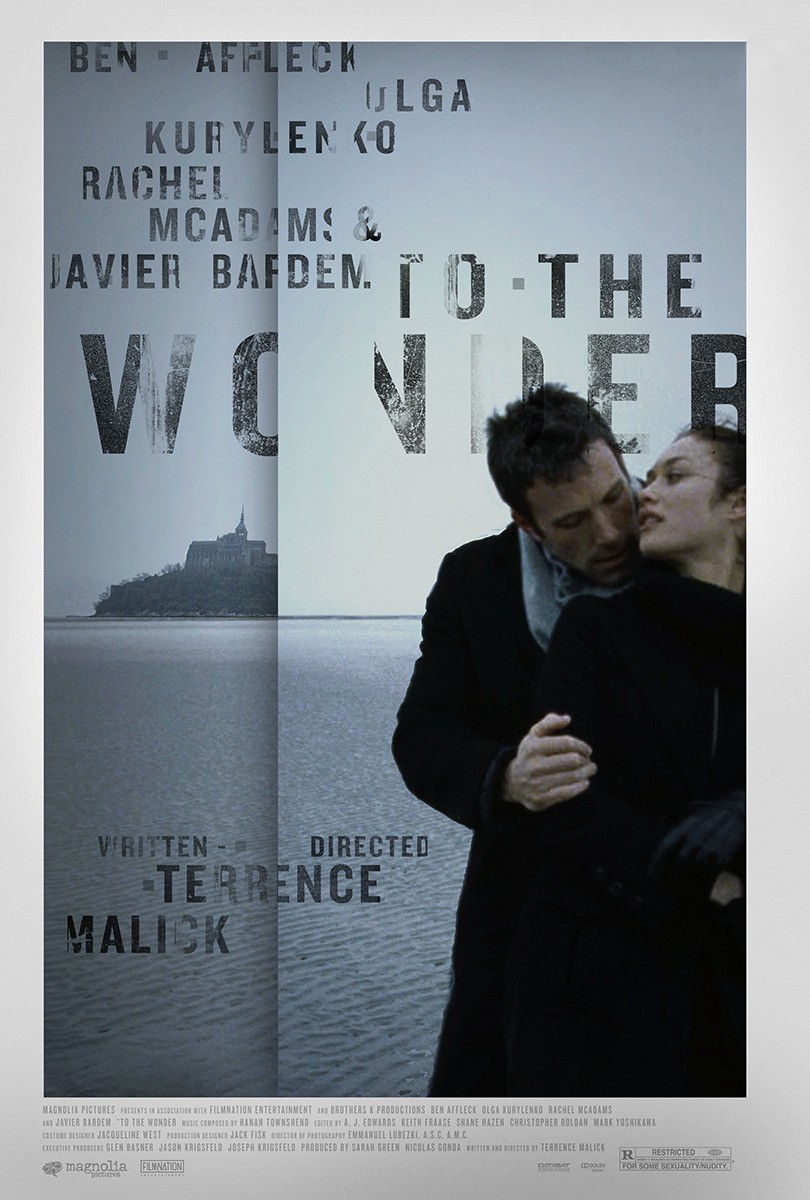
Terrence Malick’s ‘To the Wonder’ – Meandering but Still Unforgettably Beautiful

Terrence Malick’s “To the Wonder” is, in many ways, a mixed bag of a film. Not all of its parts go together in a way which feels entirely cohesive. It focuses on a couple played by Ben Affleck and Olga Kurylenko who fall in love and come to America to start a new life, but they eventually find themselves falling out of love, and they constantly struggle to understand how something so wonderful can go so awry. And then we have Father Quintana (Javier Bardem), a Catholic priest who is struggling to keep his faith even as he feels the presence of God eluding him at a time when he is desperate to believe in an afterlife. The balancing act between these characters is wobbly at best, but Malick still gives us many beautiful and wondrous images which are very powerful, and these images quickly remind me of how brilliant he is at capturing nature on film.

“To the Wonder” starts off in Europe where Marina (Kurylenko) finds herself completely enamored by her American boyfriend, Neil (Affleck), as they take a tour around town. Along with them is Marina’s daughter, Tatiana (Tatiana Chiline), who is thrilled when Neil asks her if she and her mom would like to move with him to the United States to live. After briefly viewing the European sights, the film then heads over to Neil’s home state of Oklahoma where the flatlands appear to stretch out as far as the eye can see. Heck, it almost looks like hardly anybody lives there, so it is a huge relief when we see t Neil and Marina actually have neighbors.

As with “The Tree of Life,” “To the Wonder” functions mostly as a silent film as the majority of the dialogue we hear is as a voiceover. Malick is far more interested in the inner thoughts of his characters than anything else as they struggle with the things they want and which are constantly outside of their grasp. We feel their passion for one another, and we also feel their pain and disappointment when their love eventually fades away.

Having read up on Malick as a filmmaker and as a person, it is clear to me how this film and “The Tree of Life” are his most autobiographical works overall. What the characters go through is not much different from what he has experienced in his own life, and with these films, it looks as though he is still trying to pick up the pieces of what went wrong.

Kurylenko first came to my attention in “Quantum of Solace,” and she has made the most of being a Bond woman as her performance here shows. It is thrilling to watch her dancing around the streets of Europe as well as in a corporate drug store which typically sucks the life out of everyone who shops at one. In many ways, Kurylenko is the best thing about this film as she takes us through Marina’s transcendent highs and her emotionally draining lows with complete conviction throughout.

Back in 20123, people had serious issues with Affleck as an actor, and this is even after his film “Argo” won the Academy Award for Best Picture. I myself have never had any issues with his acting abilities, and he gives a strong, understated performance as Neil, and it is never his fault we come to know less about this character than the others we are introduced to here. I really wish Malick had given Neil as much attention as he did to Marina as this would have made Neil’s journey in this story all the more illuminating. Nonetheless, Affleck is still very good in here.

Rachel McAdams is inescapably luminous as Jane; a childhood sweetheart of Neil’s who shows up after Marina has gone away. Malick makes Jane look beyond beautiful as he frames her against fields of wheat, and it is emotionally draining to watch Jane bear her soul to Neil and try to melt his heart in the process. McAdams ends up disappearing from “To the Wonder” a little bit too soon, but she is a vision to watch throughout.

Bardem’s character of Father Quintana at first feels a little out of place as much of the focus seems to be on the relationship between Marina and Neil, but his presence makes more sense as this film goes on. With this character, Malick seems to be saying how our loss of love for one another may have to do with our relationship to God, or lack thereof. Bardem does some of his subtlest work as he portrays a man struggling to hold onto whatever faith he has left, and it results in some of this film’s most emotionally draining scenes.

When we watch Quintana visit the sick, the elderly and the dying, I found myself being reduced to tears as these moments ring so emotionally true in a way I would rather not realize as death is becoming all too common for me to deal with. Plus, Malick just had to use Henryk Górecki’s third symphony entitled the “Symphony of Sorrowful Songs” which Peter Weir used to such great effect in “Fearless.” It remains a piece of music which is as beautiful as it is infinitely sad, and it always reduces me to a weeping wreck whenever I listen to it. I also have to admit I was very angry at Malick for using this piece of music here as it felt so unfair that he reduced me to a complete wreck in an inescapably manipulative way. Then again, I was in the midst of a very deep depression at the time, so that did not help matters.

But as mournful as “To the Wonder” is, there are still many beautiful moments to watch for as Malick remains a master of capturing the unpredictability of nature and animals on film. This includes moments like when Affleck and McAdams are suddenly surrounded by more buffalo than Kevin Costner dealt with in “Dances with Wolves,” the sunlight piercing through the colored glass in a church, or watching Kurylenko walking across the beach as the water covers the sand. These are moments which still will not fade away from my memory anytime soon. Working again with his “Tree of Life” cinematographer, Emmanuel Lubezki, Malick still captures moments of visual poetry in ways few other filmmakers can ever hope to equal.

It is those incredible visual moments which make me want to forgive how meandering “To the Wonder” is as it unfolds before us. I have learned Malick actually shot this movie without a screenplay, and this made me wonder how the actors dealt with this style of filmmaking. Considering that Jessica Chastain, Rachel Weisz, Amanda Peet, Barry Pepper and Michael Sheen all had roles in this film which were eventually removed from the final cut has me believing there was a whole lot more to this film than what ended up onscreen. While “The Tree of Life” had several different story lines going on, Malick was able to rein them all in to where everything seemed to fit perfectly. With “To the Wonder,” he has a little too much going on, and the film ends up losing focus more often than it does not.

Still, if you are willing to tolerate those flaws, “To the Wonder” is still a profound experience filled with great performances and beautiful images which will stay with you long after this film has concluded. I really wish the audience I saw it with all those years ago felt the same way I did. I bring this up as one audience member remarked at how the lives of these characters proved to be far more boring than anyone else’s. Well hell, some people enjoy the simple pleasures in life more than others, but many are still insistent about how theirs are better than the average human being, and that is even though there is plenty of evidence to prove otherwise.

Seriously, it seems very fitting that “To the Wonder” was the last film Roger Ebert reviewed and gave to the Chicago Sun Times before he passed away in April of 2013. Rest in peace, Roger.

* * * out of * * * *

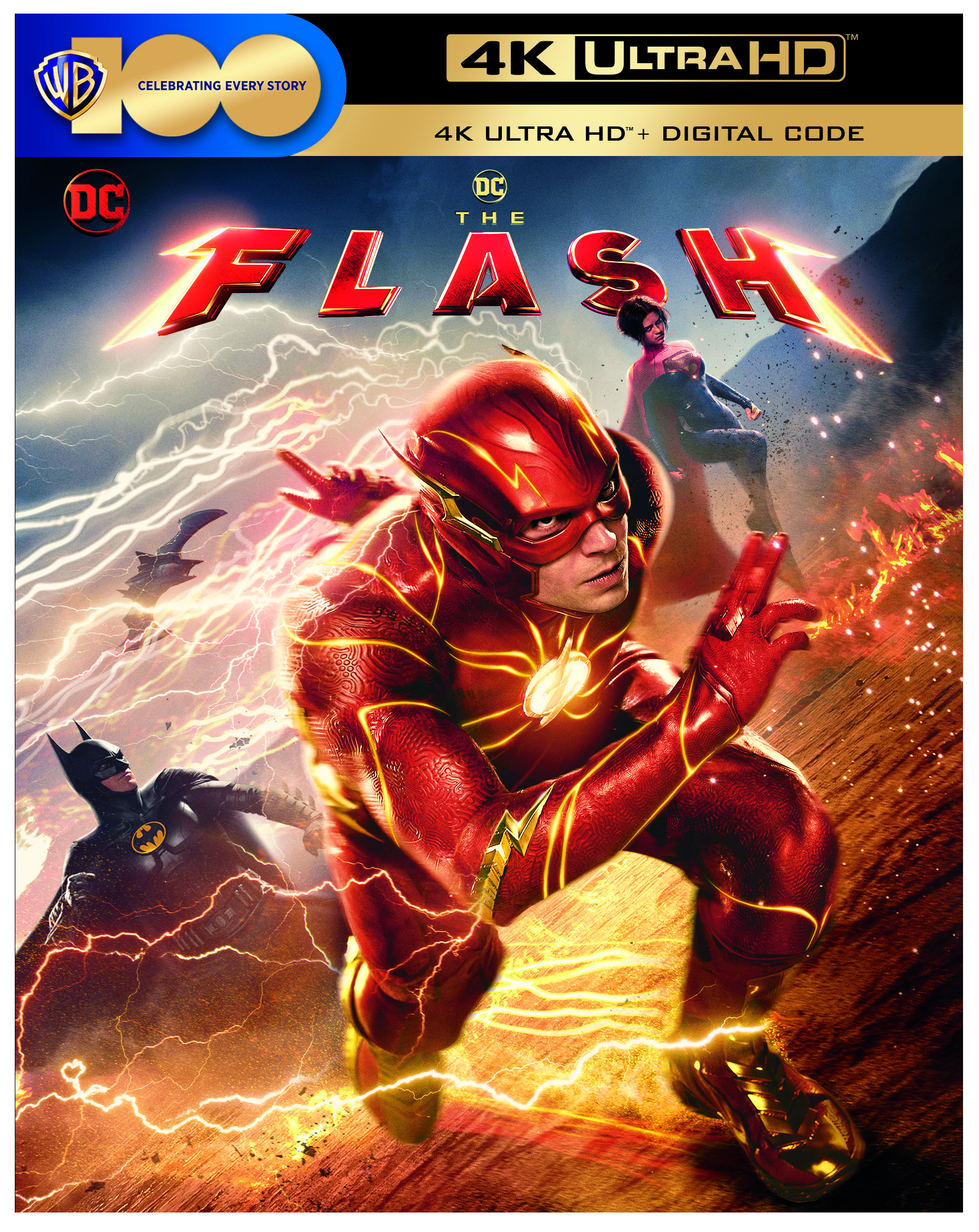
‘The Flash’ Movie and 4K Review

The following review was written by Ultimate Rabbit correspondent, Tony Farinella.

In order to be direct with the readers, I must admit two things before reviewing “The Flash” – I’m not at all familiar with the drama surrounding Ezra Miller and his off-screen antics.  I’m also not at familiar with “The Flash.”  Because of these reasons, I was able to go into the film fairly fresh, which is how I like to go into most movies.  The less I know about a movie or a character, the better.  I believe a film should be able to stand on its own two feet for the diehard fans along with the newbies.  When the movie accomplishes that tricky tightrope act, it has done its job.

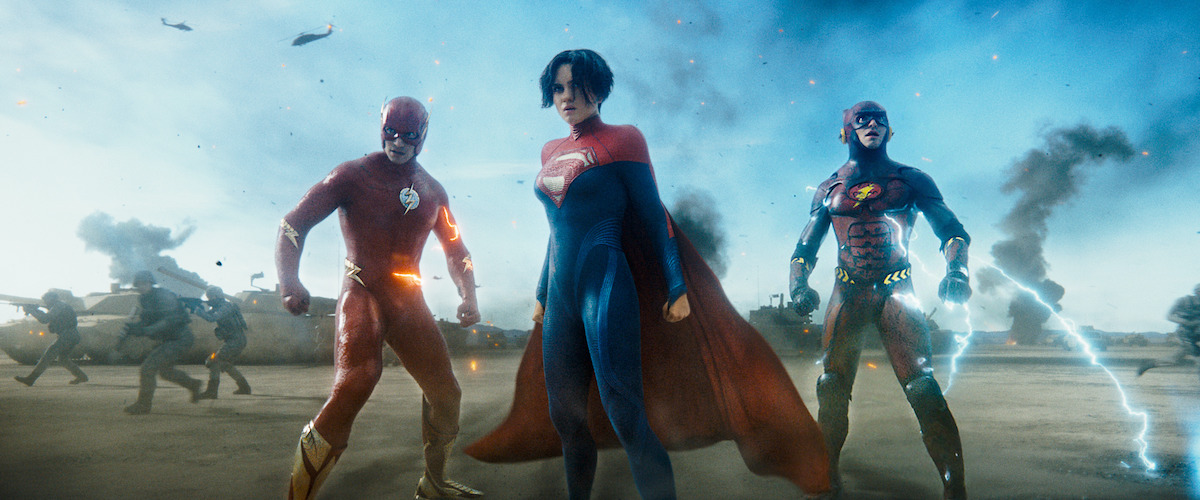
Ezra Miller stars as Barry Allen/The Flash.  He’s just trying to get his energy for the day with a sandwich when he must help save a hospital, specifically the maternity ward, as babies are flying out of the window along with a nurse and a dog.  Barry even says to himself that he feels like the janitor of the Justice League. Meanwhile, he shows up late to his job at a research center, where his coworkers are none too pleased with his track record for being tardy. After work, he sees an old friend from college, Iris West (Kiersey Clemons). She’s a reporter who wants to find out how Barry feels about his father’s upcoming trial for the murder of his mother.  Barry maintains that his father is innocent.  This sets him on a mission to try to go back in time using his lightning speed and change the past.

If he can change the past, his father will not be in prison and his mother will still be alive.  Batman (Ben Affleck) warns The Flash about the consequences of messing with the past.  He says their past made them who they are, and they need to grow from it.  The Flash, however, believes he can right a wrong and is determined to change past events. When he goes back into his childhood home, he sees his mother, father, and a different version of himself.  He meets up with the second version of himself and tries to explain what he’s trying to do and how they are going to do it.

The Flash” had a great opening sequence which was fun, exciting, and really well-done by director Andy Muschietti (“It” and “It Chapter Two”).  I thought the film was establishing a really good baseline of humor and emotion, especially in the scene with Barry talking to his father (Ron Livingston) on the phone.  I could feel the connection between Barry and his mother and what an important relationship this was to him.  It’s the emotional core of the movie.  Who amongst us has not wanted to go back in time and fix the past?  However, the middle of the movie is really bogged down with action sequences, Michael Keaton looking bored as Batman, and the film lost its way in the multiverse.  It ends on a high note with the emotion and heart from the start of the movie. At that point, we were two hours plus into this movie, so it was too little, too late.

Miller is entertaining in small doses here, but when there are two of him, he overplays it a little bit and tries way too hard to be funny.  Less is more with the multiverse angle in the film. The second version of Barry is incredibly grating, annoying and cumbersome to spend time with as an audience member.  When the first part of him is grounded in some form of reality, it’s really good. Overall, it’s a mixed bag with his performance.  The film loves nostalgia with cameos and callbacks throughout the film, but it didn’t work for me because it felt like they were trying to be a little too cutesy.  Overall, there is a good film in here somewhere, but it really lost its way in the middle.  Once it regained its footing, it was far too late.

* ½ out of * * * *

4K Info: “The Flash” is released on a single disc 4K from Warner Brothers Home Entertainment. The film has a running time of 144 minutes and is rated PG-13 for sequences of violence and action, some strong language, and partial nudity. It comes with a digital code for the film as well.

Video/Audio Info: The film comes with a Dolby Vision transfer and a Dolby Atmos soundtrack. I’m sad to report, this is not one of the better transfers I’ve seen for a new film. It didn’t stand out in any way, really.  It looks very lifeless and run-of-the-mill. The audio was solid, but the visual look of the film left a lot to be desired.

Special Features:

“The Flash: Escape the Midnight Circus” podcast – Six-part original scripted audio series featuring Max Greenfield as The Flash

“The Flash: Escape the Midnight Circus” Behind the Scenes

Deleted Scenes

Saving Supergirl – featurette

The Bat Chase – featurette

Battling Zod – featurette

Fighting Dark Flash – featurette

The Flash: The Saga of the Scarlet Speedster – featurette

Making the Flash: Worlds Collide – featurette

Let’s Get Nuts: Batman Returns, Again – featurette

Supergirl: Last Daughter of Krypton – featurette

Flashpoint: Introducing the Multiverse – featurette

Should You Buy It?

I had high hopes for this film as I’m a big fan of director Andy Muschietti, and I thought he would bring a unique visual flair to it.  I also felt as though the film would do what I wish more superhero films would do, which is incorporate comedy and emotion with some fun action sequences.  Instead, it goes off the rails for a good chunk, and it doesn’t stick with what works in the beginning and end of the film. It also completely forgets about the love story between Iris and Barry, which was moving in a really good direction.  For the most part, this was a pretty dull and uninteresting viewing experience.  The 4K transfer also leaves a lot to be desired.  There are plenty of special features here, so if you did enjoy the film, you will have a lot to go through if you pick this disc up.  If you did like the film, I’d suggest waiting for it to drop down in price a little bit, as the 4K transfer doesn’t make this a must-own right away.  I wish it would have included the Blu-ray, as I would have liked to have seen the difference between the two formats.  Overall, if you haven’t seen this film, you aren’t missing anything. If you did see it and liked it, you have the special features going for you, but the visuals are truly underwhelming.

**Disclaimer** I received a copy of this film from Warner Brothers to review for free.  The opinions and statements in the review are mine and mine alone.
‘Deep Water’ – Neither Erotic Nor Mysterious Enough For Your Enjoyment

With “Deep Water,” I could not help but feel a certain level of excitement at its arrival. With erotic thrillers, it feels like we have been in a drought of them at our local cinema. Sure, there was the “Fifty Shades of Grey” trilogy, but those movies were far more laughable than they ever were truly entertaining. This one also marks the return of Adrian Lyne to the director’s chair for the first time in 20 years, and he is known for specializing in erotic films such as “9 ½ Weeks,” “Fatal Attraction” and “Unfaithful.” And yes, the trailer in which we get to gaze at Ana de Armas’ lovely body as Ben Affleck gazes at her from a distance proved to be ever so alluring. Oh, I almost forgot to mention, it is based on the novel of the same name by Patricia Highsmith, the same author who wrote “The Talented Mr. Ripley” and “Strangers from a Train?” This should have been the first I pointed out here.

Seriously, all these elements were in place for a great motion picture for us to take in, but despite an interesting start, “Deep Water” ends up faltering long before it ends as secrets are revealed far too soon to where the suspense is completely destroyed for no good reason. Also, the film is nowhere as erotic as you may hope it will be. Moreover, Disney, which bought 20th Century Fox and since renamed it 20th Century Studios, decided to dump it on Hulu as even Mickey Mouse was saying, “Even Minnie wouldn’t show me that much skin!” Well, some only get so lucky,

Ben Affleck and Ana de Armas star as Vic and Melinda Van Allen, a married couple living in the small town of Little Wesley, Louisiana who appear to have it all: an affluent lifestyle, a gorgeous home where they host many parties for their equally affluent friends, a beautiful daughter named Trixie (Grace Jenkins) who keeps telling Alexa to play “Old McDonald Had a Farm” to her mother’s infinite annoyance, and anyone outside of their lifestyle must be looking at them with either envy or tremendous resentment. Their marriage, however, appears to be a loveless one as Melinda seems far more interested in flirting with the many incredibly handsome men around her as Vic looks on, wondering what she is up to. On one hand, Vic seems content with her being with other men as he is willing to accept her for who she is, but the more you look into his eyes, the more you see how frustrated he is with this situation to where he might actually become emotional. This frustration becomes even more pronounced once some of the men Melinda is seen with are found dead. Were they murdered? What’s really going on with this couple?

Lyne tantalizes us with these questions in the first half of “Deep Water” as, while he used to show us a lot of wild sex in his previous films, only hints at what is going on here. Vic may be convinced Melinda is sleeping with other men, but he only sees so much of what she is up to. In the meantime, he tells her potential suitors that he murdered a man who was once her boyfriend. Is he being serious? It’s hard to say as Affleck is quick to remind us what a gifted poker player he can be, and that’s even if he has been banned for life from a casino or two.

Indeed, this film works best when the screenplay does not reveal all its cards to the audience. Affleck seems to revel in getting under the skin of others to where you wonder just how much his character enjoys in doing so. The same goes with de Armas who appears to revel in her husband’s inability to obtain her in the ways a husband can. As Vic and Melinda circle around one another like bloodthirsty sharks, I began to wonder if their continued relationship was strengthened by their endless strife with one another. While divorce might make more sense for these two, the conflicts between them seem to invigorate them to where a normal life is completely out of the question for them. It even reminded of a season six episode of “Homicide: Life on the Street” entitled “Strangled, Not Stirred” in which we see a couple achieve supreme intimacy through murder. I figured things here would go in this direction with these characters, but no such luck.

When “Deep Water” reaches its midway point, it completely implodes as it reveals its cards to where the suspense is killed. In fact, things become increasingly laughable as the story barrels towards a conclusion that is unforgivably abrupt and unsatisfying. Like I said, this one comes from the director of “Fatal Attraction” which had one of the most divisive endings in cinematic history, but at least its ending had a catharsis which it demanded despite what others thought. This one, however, leaves far too many story threads to where I have to wonder if there’s a director’s cut just waiting for us to check out.

In retrospect, “Deep Water” might have been far more interesting if Lyne had focused more on the characters played by Affleck and Tracy Letts who plays Don Wilson. Don is immediately suspicious of Vic, especially after he playfully admits to murder, and seeing these two together in one scene to the next is especially fulfilling as we are watching actors who enjoy not just facing against one another, but are also eager to turn their characters into anything but mere cliches this genre often employs to a detrimental extent.

Considering the talent involved, I could not help but have high expectations for “Deep Water” as it arrives at a time when superhero/comic book movies continue to dominate our local multiplexes to where we wonder if variety is still a thing. Moreover, movies for adults are a thing I have been deprived of for far too long. Even with it going straight to streaming, I figured there was much more in store for the audience. That it falls short of greatness is frustrating as it may be a long time before we get another motion picture of its ilk.

In my research, I did learn this particular Highsmith novel is a favorite of Gillian Flynn’s who deeply admired how it showed the in-your-face warfare between a husband and wife. I believed this novel inspired her to write “Gone Girl” which became a bestseller and was later adapted into the twisted cinematic masterpiece directed by David Fincher. Whether or not “Deep Water” aspired to be on the same level as “Gone Girl,” it came up far too short.

When all is said and done, Lyne’s movie makes me want to pick up a copy of Highsmith’s novel even though I have so many books on my shelf to where it looks like a Jenga piece on the verge of collapsing. I am convinced a great movie can be made out of this novel, but we have yet to see it.

* * out of * * * *

‘Gone Baby Gone’ – Ben Affleck’s Directorial Debut

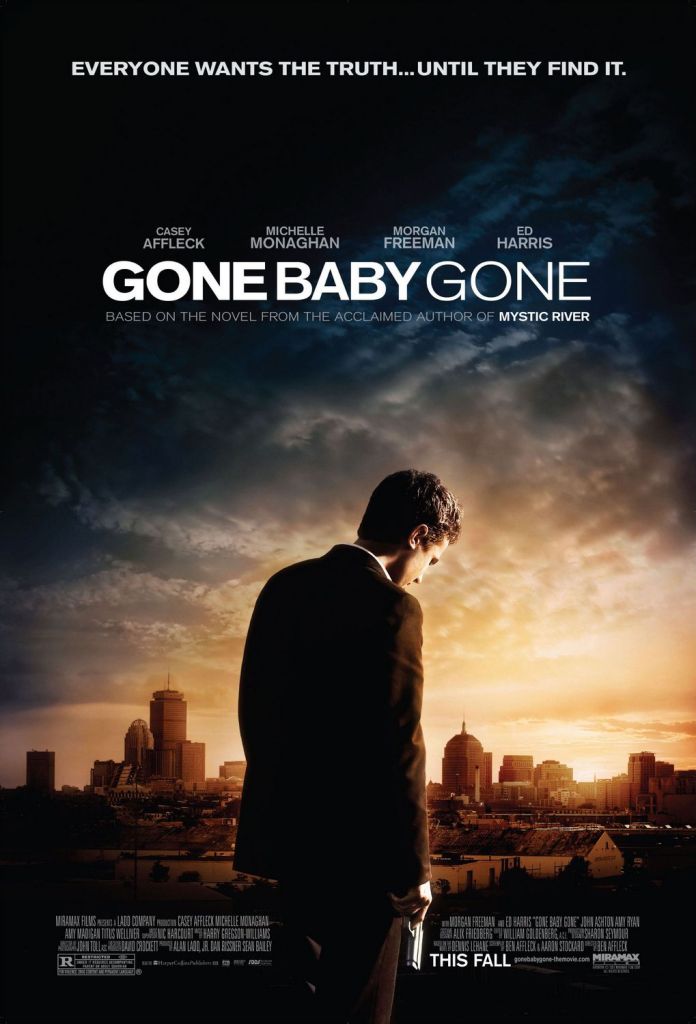
Gone Baby Gone” marked the feature film directorial debut of Ben Affleck, and it is based on the novel of the same name by Dennis Lehane. Back in 2003, another Lehane novel was turned into a great movie by Clint Eastwood called “Mystic River,” but I would actually put “Gone Baby Gone” right ahead of it, and this is saying a lot. It is a completely absorbing and emotionally devastating film involving the abduction of a child whom several individuals are desperate to see returned home safely. Their search for the child will test their levels of morality, and it will change their concepts of right and wrong forever.

Casey Affleck and Michelle Monaghan play two Boston private detectives who are hired by relatives of the baby’s mother to help assist in the investigation. During this process, they come to work with two detectives (played by Ed Harris and John Ashton) to bring the child back home. As they continue their investigation, the story ends up coming with more twists and turns than you would ever expect.

Ben Affleck’s directorial debut here should be labeled as astonishing, but his success here should have seemed like a big surprise. He has been a Boston native all his life, so he is a natural to direct a movie like this. He perfectly captures the feel of Boston and of the people who live there. He sucks you right into the atmosphere of the town and never lets you go. He also brilliantly succeeds in generating strong tension, and it quickly becomes one of those movies where you feel the gunshots that go off. I found myself ducking in my seat in certain scenes. Yes, it is that intense.

In addition, Ben also succeeds in getting great performances from every single actor here. What a great feeling it is to see a movie which does not contain single bad performance in it. At the top of the list is Amy Ryan who gives an utterly believable and fearless performance as a drug addicted mother who at first does not seem to care at all about her child. She is a fiend and cannot hide it, but she shows cracks in that rough façade of hers to show a mother who desperately wants her daughter back. It is an utterly realistic performance which earned Ryan a deserved Oscar nomination for Best Supporting Actress.

Ben took a big risk casting his younger brother Casey in the lead role of Patrick Kenzie. It could have been a very bad case of Hollywood nepotism, something which pisses of my closest friends to no end. But Casey has proven to be a very strong actor in his own right, and he handles what is very difficult role here with a very strong performance. Casey has really gone beyond his brother’s shadow to do some great work in movies like “The Assassination of Jesse James,” and he truly deserved the Best Actor he won for “Manchester By the Sea.” He has shown that he is an actor who has taken many risks back when he was acting opposite his big brother in “Good Will Hunting,” and he continues to gives us one memorable performance after another

There is also great work done here by Ed Harris who portrays Remy Bressant, a good cop who is always trying to do the right thing. But Casey’s character sees the cracks in Remy’s façade, and Remy is indeed not all he appears to be. Harris has given one great performance after another, and this is one more great performance that he can add to a resume filled with them.

It is also great to see John Ashton here as Remy’s partner, Detective Nick Poole. We all remember him best as Sgt. Taggart from the “Beverly Hills Cop” movies and, when I first watched “Gone Baby Gone,” it felt like it has been way too long since I last saw him in anything. Ashton is, of course, very believable as a cop who has seen it all, but still won’t give up in finding that little girl.

And else can be said about Morgan Freeman which has not been said already? We see him often as a major force of morality in just about every movie he appears in, but “Gone Baby Gone” definitely puts this to the test as his character, Captain Jack Doyle, tries to give balance to a situation which threatens to go completely out of control, and the revelation made about Jack near the film’s end will hit you like a ton of bricks.

“Gone Baby Gone” is a very complex film which examines what we think are the right and wrong choices in any given situation. As it goes on, we discover there is a very thin line between what is right and wrong. All these characters spend their time doing what they feel is the right thing, but it does come with its own set of consequences. Nothing will ever come out quite the way we want it to, and there is a negative for every positive.

This is a truly haunting and devastating film on many levels. It is skillfully written and is devoid of clichés and characters that are types more than human beings. It is messy in the way they deal with certain situations, and it shows how even good choices come with severe consequences. Who truly knows if they are making the right choices in life? Can we ever be truly certain of this?

This old expression keeps playing in my head of how the road to hell is paved with good intentions. Not all these characters end up in hell, but many of them find the outcome they want is not what is best for everyone around them. One tagline for this film is that everyone wants the truth until they find it. That is very true for these characters here. For every positive, there is a negative; and the negative can have a far greater impact than the positive. You leave thinking about this constantly. Did the right thing happen? Is everything going to be alright? In this world, I guess we can never really know.

“Gone Baby Gone” was one of the best films of 2007, a year which featured one great motion picture after another. It proved to be a great achievement for Ben Affleck who took a of crap over the years for what even he has to admit were some bad career choices. But ever since his award-winning performance in “Hollywoodland,” things have been changed for him quite significantly, and he earned his place on the Oscar stage when “Argo” won Best Picture. Yes, there was “Batman v Superman: Dawn of Justice,” but enough about that one already. He still gave us “The Town,” right?

* * * * out of * * * *

Ten Years Later, ‘The Town’ Remains a Riveting Crime Thriller

I saw this film with a friend of mine who grew up around the area it takes place in, and he declared this to be the “best Boston movie ever.” Now I am not in a position to verify this as fact because while I visited Boston when I was a kid, I have never lived there. But with this coming from someone who spent his childhood growing up in this neighborhood and made hundreds of visits to Fenway Park, this is very high praise which cannot be ignored or easily dismissed.

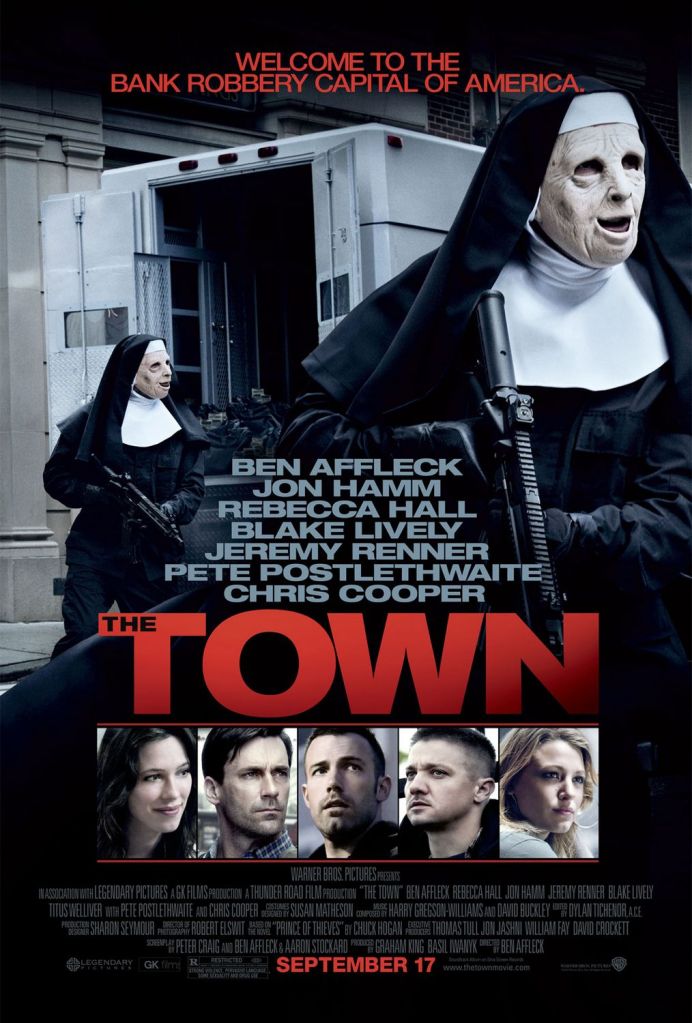
With “The Town,” an adaptation of Chuck Hogan’s novel “Prince of Thieves,” Ben Affleck proves what should have been clear to us after his directorial debut “Gone Baby Gone;” he is truly an excellent filmmaker. Moreover, he has a strong understanding of Boston and the surrounding areas. Affleck also succeeds in giving us one of his very best performances while surrounding himself with a strong cast of talented actors. Upon this film’s release, many were out for his blood as he was making one terrible movie after another with “Gigli,” “Reindeer Games” and “Surviving Christmas,” but “The Town” showed us that his career deserved a second act.

Affleck stars as Doug MacRay who, with his lifelong group of friends, commits robberies on banks and armored cars. One such robbery has them kidnapping a beautiful bank manager named Claire whom they let go after they have successfully made their getaway. But after looking over her driver’s license, they realize she lives only a block or two away from where they reside. Fearful that she might recognize them, Doug volunteers to check her out to see if she knows anything. In the process, he falls madly in love with her, and she is quick to return his feelings. Now this could mean one of two things; crime truly makes you stupid, or love conquers all. This leads the team of robbers to get even more paranoid than they already are as they are about to pull off one last heist, and we all know what happens on that “last job.”

While Boston plays a big part in this film, the setting of “The Town” is actually Charlestown, home of the Bunker Hill Monument which is prominently featured throughout. In the opening titles, it is said Charlestown has more than 500 robberies in a year and is known as a place which breeds a strong criminal element. It all reminds me of what Bono sang about in the U2 song “Dirty Day:”

“If you need someone to blame, throw a rock in the air. You’ll hit someone guilty.”

Now “The Town” is more than likely to earn a lot of comparison with Michael Mann’s “Heat” as both share plot and thematic similarities. But while “Heat” was truly an epic motion picture, “The Town” is far more intimate in its scope and characters. Much of the attention is paid to the criminals themselves than to the police or FBI agents who are obsessively pursuing them. It also surrounds you in an authentic Boston atmosphere and makes you wonder if the characters who were born and raised there will ever be able to survive outside of it, let alone leave it without the threat of death hanging over their heads.

Along with screenwriters Peter Craig and Aaron Stockard, Affleck takes the most familiar elements of your average heist movie and reinvigorates them to create an exciting motion picture which is as big on character as it is on action. Clearly, Affleck’s attention is more acutely focused on the characters and the circumstances which surround them all. As for the action, it has some of the best staged robbery sequences I have seen in recent films, and there is also a brilliantly staged car chase through the narrow streets which makes you wonder if the thieves could ever possibly escape as the police are not always the bumbling idiots they are made out to be on the silver screen.

Then there is Affleck the actor, and a lot of my friends still cannot stand him. Truth be told, I never thought he was a bad actor, and as Doug MacRay he gives one of his best performances to date. I totally believed him as a hardened criminal who looks to find another path in life, and he holds his own against a cast of exceptional actors who give him so much to work off of.

Another big standout performance in “The Town” comes from Jeremy Renner who was on a roll after his Oscar-nominated performance in “The Hurt Locker.” As James “Jem” Coughlin, Renner portrays the most unstable and drug addicted member of the gang, and its most heedless one as well. Coughlin is like a coiled snake waiting to strike and it is easy to see he will be the master of his own downfall, but Renner gives him a wounded soul as well. Having served nine years in prison rather than rat on his best friend Doug, James constantly feels like he is on the verge of being betrayed and feels, as Lars Ulrich once said, “so disrespected.” Other actors would just play up the hothead aspects of this character, but Renner gets at James’ heart and of how his feelings end up dictating his actions.

Jon Hamm is also on board as Special Agent Adam Frawley. But while he looks to be one of your obsessive law enforcement characters in a heist movie, Hamm actually subverts this to show us an FBI agent who proves to be as ruthless as the criminals he is chasing. In certain scenes, he proves more than willing to ruin another character’s life if it means gaining evidence and capturing criminals who are always one step ahead of the law. That Don Draper coolness rubs off on Adam as he almost effortlessly wiggles his way past another person’s defenses and then dives in for the kill.

The actresses cast do remarkable work here, holding their own against a dominantly male cast. Rebecca Hall is Claire Keesey, the bank manager held hostage who later falls for one of the robbers without even knowing it. Claire has to balance out her own frazzled emotions in the aftermath of what she has been through, and she has to deal with her strong feelings for Doug which never falter even after she discovers who he really is. As for Blake Lively, her performance as drugged out single mother Krista showed there was more to her than her work on “Gossip Girl.”. Lively excels in showing how Krista still harbors deep feelings for Doug and yet is unable to pull herself out of a painful downward spiral.

You also have resident character actors Chris Cooper and the late Pete Postlethwaite doing the same solid acting work you can always count on them for. Cooper only appears in one scene as Doug’s dad, Stephen MacRay, but he creates a fully developed character whose troubled history is communicated more in facial expressions and actions than it is in words. Postlethwaite plays Fergie the Florist, your typical mob boss, but his performance never feels anywhere as clichéd as you might expect. Even in a few scenes, his Fergie is a very scary character whose threats seem very real and who holds the answers to the questions Doug is always asking. Both of these guys are proof there are no small roles, only small actors, and these guys are most definitely NOT small actors!

Looking at the plot of “The Town” as a whole, this film could have been average or would have told the same old tired heist story with nothing new or original to say about it. But while this film may not be original, all the specific details put into use here seriously elevate it from the ordinary. The relationships and dialogue between each character never feels contrived or artificial, and the screenplay has great moments where characters realistically regain the trust of others without being at all manipulative:

“Ask me anything you want.”

“I won’t believe you.”

“Yes, you will.”

“Why?”

“Because you’ll fucking hate the answers.”

Going into “The Town,” I knew I was in for a good movie, but I should have known I was about to watch a great one. Affleck more than earned his career resurgence, and his work as a director cannot be held in doubt after this and “Gone Baby Gone,” let alone his Oscar winning triumph “Argo.” This movie could have been a spectacular failure in anyone else’s hands, but Affleck is much smarter than we ever give him credit for. Ten years after its successful release, “The Town” remains a riveting motion picture which sucks you in and never lets you off easy. Even if it brings to mind other heist movies, this one stands on its own as a unique piece of cinema and the kind only Affleck could have given us.

* * * * out of * * * *

Ben Affleck Talks About Directing ‘Gone Baby Gone’ and ‘The Town’

WRITER’S NOTE: This screening took place back in 2011, not long after “The Town” was released in movie theaters everywhere.

Ben Affleck arrived amid throngs of fans and paparazzi at the Aero Theatre in Santa Monica for a Q&A of his directorial efforts, “The Town” and “Gone Baby Gone.” Both films have received tremendous praise and given him a second wind to his career which at the time was in lousy shape. Upon being introduced to a standing ovation, he remarked, “This is nice! People are still in the seats! It’s always cool when people stay through the end credits!”

So why did Affleck want to direct? Having worked for some time as an actor, he said he was lucky to work with many gifted people, but he found himself becoming increasingly frustrated with the direction films he starred in went. Realizing film is a director’s medium, he decided it was time to give it a shot. With “Gone Baby Gone,” Affleck said he was determined to fail on his merits and succeed on them as well. He described his previous directorial experience as being comprised of “horrible college movies” which made him happy YouTube was not around when he worked on them.

“Gone Baby Gone” does feel like the work of a confident director, but Affleck said he felt “failure was around the corner” when he made it. He found shooting utterly difficult as he struggled to find things which worked, and he was forced to shoot take after take to bring the actors to a state of relaxation. The whole process apparently made him feel like jumping off a roof. Still, this film does mean a great deal to him as it allowed him to go after the core philosophy of what he called “acting making the movie.” It also dealt with themes he wanted to explore such as children paying for the sins of their parents and of how strong moral ideals are not always rewarded.

With “The Town,” Affleck succeeded in making both a genre film and a character driven motion picture by taking a drama and, as he said, “wrapping it inside the shell of a traditional action movie.” That it was set in Boston was appealing to him as well. “The Friends of Eddie Coyle” served as an inspiration for “The Town,” and Affleck said he wanted to make a modern film noir which felt real to where your brain was not telling you that it wasn’t. Editing it was painful though as the assembly cut was four hours long and he was unsure of what to take out. Test audiences did not help either as he remarked, “They liked the action. They didn’t like the talking!”

Affleck also talked about the Pete Postlethwaite who co-starred in “The Town” and passed away before the movie was released. Postlethwaite was sick during shooting, but Affleck said he still did the movie and came to work each day with a great attitude. Despite him playing such an unsavory character, Affleck said it was always wonderful to be in Postlethwaite’s presence.

With directing, Affleck said it gave him the appreciation he did not always have for what others did on set. He also confessed he had absolutely no idea of what the crew did to make movies a reality, and that actors always believed film sets revolve around them. Considering what he has been through before and after starring in “Gigli,” he considers himself “remarkably sane for winning an Oscar” back in his 20’s.

We have seen Ben Affleck go from making good movies to truly awful ones (even he admits this), but he still describes himself as being a “late bloomer” which is tricky if you have success early on in life. We all thank him for coming by the Aero Theatre on this particular evening, and he left us with this unforgettable piece of advice for all aspiring filmmakers:

“Don’t make any movies with your girlfriend.”

‘Jay and Silent Bob Reboot’ – The Duo is Back for Some High Times

Jay and Silent Bob Reboot poster

2001’s “Jay and Silent Bob Strike Back” was supposed to be the last installment of the View Askewniverse, but time has shown you cannot keep two stoners from New Jersey down. The duo would return in “Clerks II,” and now 13 years later following some serious drug problems and a near fatal heart attack, Jason Mewes and Kevin Smith have come back to play their iconic characters in “Jay and Silent Bob Reboot” which has the two up to the same shenanigans while finding new meaning in their lives. Like the average Kevin Smith film, it is imperfect but still a lot of fun. And unlike “Yoga Hosers,” you do not have to be stoned to enjoy it.

When “Reboot” begins, Jay and Silent Bob have been busted by the police for running an illegal marijuana operation in the old RST video store next to the Quick Stop. In court, they are represented by Brandon (Justin Long) who gets them acquitted upon convincing the judge (Craig Robinson) that the duo’s store was a temporary pop-up store designed to promote an upcoming movie. The case against them is dismissed which is a relief for them and me as I was not in the mood to watch a court movie. Things, however, take a sharp left turn when the same lawyer quickly switches sides and defends a representative of Saban Films which has optioned the comic book series “Bluntman and Chronic.” It turns out the two, when they were signing documents the lawyer said were necessary for representation purposes, inadvertently signed away their naming rights to Saban, and now they can no longer self-identify as Jay and Silent Bob ever again.

After meeting with Brodie Bruce (Jason Lee), Jay and Silent Bob discover Saban is planning a big budget reboot entitled “Bluntman v Chronic” which is being directed by… Well, you’ll see. Once again, our intrepid duo heads out to Hollywood in an effort to stop production in this reboot and reclaim their identities in the process.

Yes, the plot of “Reboot” is the same as “Strikes Back,” and even Smith has stated this new movie is “literally the same fucking movie all over again.” However, to dismiss this latest View Askew production as a lazy retread would be to miss the point. Smith is out to make fun of sequels, remakes and reboots, and he is not lost on the irony that “Reboot” is essentially all three of those things. What results is one of the most meta movies I have seen in some time as he threatens to be cleverer than he is, but it also results in a motion picture which kept me guessing as to what would happen next. Not all the jokes hit, but the ones which do had me laughing uncontrollably, and this includes one such moment which made me as light-headed as the “frosted” scene from “Zack and Miri Make a Porno.”

As you can expect, there are a myriad of cameos to be found throughout “Reboot” as well as a ton of easter eggs. One key cameo comes early when Shannon Elizabeth returns as Justice (a.k.a. Boo Boo Kitty Fuck), Jay’s love interest from “Strike Back.” It turns out Jay did get an answer to his question of “will you fuck me when you get out” as Justice introduces him to their love child, Millennium “Milly” Faulken (Harley Quinn Smith). But because Jay and Justice have been estranged for years to where she has lied to Milly about his whereabouts, she encourages Jay not to reveal to Milly he is her father because, well, you know. Still, Milly finds a way to join him and Silent Bob on their journey to Hollywood.

The moment where Jay discovers he is a dad is what makes this particular View Askew movie stand out as he is forced to confront a new responsibility no one is easily prepared for. It also allows for Jason Mewes to show a vulnerability here we have not seen from previously, and this makes for an especially heartfelt story. In real life, Mewes has become a dad himself, and this among other things is what has kept him from an early death. Seriously, there is real emotion to be found here in “Reboot” even for those who are not Kevin Smith fans in the slightest.

As for the other cameos, not all of them have been spoiled by the trailer, so I will go over the ones you already know about. Chris Hemsworth, in a movie filled with priceless “Thor” puns, plays himself and reminds us of his inspired comic performance in the “Ghostbusters” reboot. Ralph Garman of “The Ralph Report” can rest assured that his cameo as Ted Underhill lasts a lot longer than 17 seconds, but it could have lasted even longer so we too could get his character’s credit card number. Matt Damon’s cameo is so infinitely priceless to where I refuse to ruin it for anyone and, unlike Jimmy Kimmel, I am glad Smith made time for him. You also have Fred Armisen, Rosario Dawson and Kevin’s wife Jennifer Schwalbach making small but very memorable appearances, and be sure to take a look at the name of Craig Robinson’s character as it is like something out of a 1970’s exploitation movie.

But the best cameo here comes from Ben Affleck who returns as “Chasing Amy’s” Holden McNeil. Both Affleck and Smith had been estranged for some time, but even Affleck knew he had to be a part of this flick as Smith was responsible for giving him some of his first leading roles in movies. Plus, Affleck helps to give “Reboot” an even bigger heart as he talks about how children are like our own reboots, and this solidifies the evolution Smith had in mind for the various characters he has created over the years. While “Clerks II” dealt with the responsibilities of being an adult, “Reboot” looks at what becoming a parent does to your overall identity to where everything else in your life becomes secondary. Smith covered this before in “Jersey Girl,” a movie which I think is better than people typically give it credit for, but here it takes on a deeper meaning as both he and Mewes have danced with the Grim Reaper and have come out the other side with infinitely changed perspectives.

When it comes to the cinema of Kevin Smith, his movies are either for you or they are not. I have been a big fan of his since “Clerks” which contained one of my most favorite pieces of dialogue ever (“This job would be great if it weren’t for the fucking customers”), and it is a true joy to see him revisit his View Askew Universe. While he may not be as gifted as Martin Scorsese or Steven Spielberg, Smith still knows how to give us a fun time, and he does just that with “Jay and Silent Bob Reboot.” Even if you are not supposed to be here today, I would like to think this movie will find a way to cheer you up. And yes, be sure to stay through the end credits.

* * * ½ out of * * * *

Olga Kurylenko Talks About Losing Herself in Terrence Malick’s ‘To the Wonder’


To The Wonder Olga Kurylenko

WRITER’S NOTE: This article was written in 2013.

While former Bond woman Olga Kurylenko gave a compelling performance in “Oblivion,” she gives an even greater one in Terrence Malick’s “To the Wonder.” As Marina, a European woman who moves with her American boyfriend Neil (Ben Affleck) to Oklahoma, she is fascinating to watch as she goes from being deliriously happy in love to becoming emotionally devastated when their relationship turns sour. Seeing her dance her way through a sterile drug store to becoming so upset at how bad things get makes you see what she is capable of as an actress.

Going from a big budget science fiction film like “Oblivion” to a low budget “art film” like “To the Wonder” was clearly a study in contrasts for Kurylenko, and she joked about how she at least had a trailer on the set of “Oblivion.” She went out of her way to discuss the differences between the two films to Sheila Roberts of Collider while at the “Oblivion” press conference, and it’s one of the few instances where we get a good look at how the secretive and elusive Malick works with his actors.

“It was very different. They couldn’t be further apart from each other,” Kurylenko said of “Oblivion” and “To the Wonder.” “In Malick’s film, for example, there was no script and that’s the difference. Here, with ‘Oblivion,’ the script was very detailed and very precise. The way Malick worked with us, he never rehearsed, and he was actually against any rehearsal.”

“Malick just throws actors in, but there is a backstory and again lots of conversations,” Kurylenko continued. “The way I built my character was by talking with Terrence all the time. We just spoke, spoke, spoke. I had a little homework to do before I started the movie. I had to read three Russian novels: ‘Anna Karenina,’ ‘The Idiot’ and ‘The Brothers Karamazov.’ Those are very tiny little novels (laughs). After that, I didn’t really need to read a screenplay. We just spoke. There were discussions about what I drew from the books, how we can compose the character, what similarities there are between Marina and different female characters in those books, and that’s how the character was born. It was a mixture of Dostoyevsky, Tolstoy and Terrence Malick.”

Kurylenko describes working with Malick on “To the Wonder” in even greater detail in an article she wrote which appears on the Black Book website. In the article, she makes her experience seem incredibly vivid as she describes how free spirited she became while on set. Once she and Malick had their discussions about the character, he let her run wild and encouraged her to find that elusive thing he called “the Wonder.” What is “the Wonder?” Well it sounds like the deep fascination we have with the ways of nature, and we constantly lose our fascination with that in our busy lives and continued dependence on technology. Anyway, from what Kurylenko wrote, it sounds like she was both eager and ever so desperate to find it.

“Terry smiles and I jump, twirl, run, and jump again,” Kurylenko wrote. “He claps, ‘more, more, more, like a rabbit!’ But then the Wonder suddenly goes missing. I scream and run into the house-throwing things, breaking things. It rains pretzels and cereal and there are more screams, but now they’re not mine, they’re Neil’s, and I’m laughing wildly and crying-my Marina is hysterical, unstable. I collapse on the floor and I wipe my tears from his shoes and kiss them. I ask, ‘Why do I do this? I want to be good, so good, but sometimes I suddenly feel possessed.’ And I beg forgiveness.”

“I receive pages every morning, sometimes ten, sometimes more,” Kurylenko continued. “They’re not exactly a script. Whether one exists or not is a complete mystery, but the words are (excuse my poeticism) rather like a breakfast for the soul. And every morning it’s a feast! If I digest the sense of what the pages contain, the nature of Terry’s words will shine through my eyes while we’re filming, and I won’t even need to speak. Every sentence is filled with such deep knowledge of the soul.”

One great thing I learned while looking into the making of “To the Wonder” was how Kurylenko always stayed in character even when the cameras were not rolling. Some actors believe their work stops when they have no lines of dialogue to speak or when the camera isn’t focusing on them, but any great acting teacher will tell you your work never stops even when the day is done. Kurylenko understands this perfectly, and she told Liz Braun of The Toronto Sun how this made “To the Wonder” more physically challenging for her than “Oblivion.”

“It was exhausting, because I was the character even when the camera didn’t film me — you have to be with Terrence because you never know when he’s filming you, and he doesn’t like rehearsals,” Kurylenko told Braun. “Terrence is someone I utterly admire and love. I trusted him completely, because he made me do somewhat ridiculous stuff. I never said no. I did everything, and I was dancing, moving through nature, walking constantly.”

While it may seem inconvenient for Olga Kurylenko to have two movies out at the same time as one might bury the other at the box office, the upside is both of them show the range she has as an actress. We cannot deny Kurylenko is a very talented actress, and it will be interesting to see where her career goes from here. Her role in “To the Wonder” might be a once in a lifetime opportunity, but hopefully more of those opportunities will come her way very soon.

SOURCES:

Sheila Roberts, “Olga Kurylenko Talks OBLIVION, Flying the Bubbleship, How Her Bond Experience Helped Her with Action, and More,” Collider, April 13, 2013.

Olga Kurylenko, “Olga Kurylenko on Terrence Malick and Filming ‘To the Wonder’-In Her Own Words,” Black Book, April 11, 2013.

Liz Braun, “Olga Kurylenko compares ‘Oblivion’ and ‘To the Wonder,'” The Toronto Sun, April 17, 2013.


‘Justice League’ Doesn’t Leap Tall Buildings in a Single Bound

Justice League movie poster

You know how the Daytona 500 is the Super Bowl of NASCAR racing, but it’s also the first big race of the season instead of the last? That’s what “Justice League” is. It’s the penultimate motion picture of the DC Extended Universe, and yet it’s coming to us before Aquaman, Flash and Cyborg get their own solo films. With the Marvel Cinematic Universe, every character was in their own movie before “The Avengers” finally arrived on the silver screen. Granted, Hawkeye and Black Widow have yet to get their own movies, but enough groundwork was laid to where the time had come for “The Avengers” to become a reality. With “Justice League,” its long-awaited appearance feels a little premature.

Following the events of “Batman vs Superman: Dawn of Justice,” the world is still mourning the death of Superman (Henry Cavill), and all the other superheroes are trying to move on despite the large void the Man of Steel has left in his passing. Batman/Bruce Wayne (Ben Affleck) remains as dour as ever, but his faithful butler Alfred (Jeremy Irons) threatens to be even more dour to where they seem to be having a contest in that department. Wonder Woman/Diana Prince (Gal Gadot) leads a quiet life working in a museum, Victor Stone/Cyborg (Ray Fisher) spends the days hiding in his apartment because everyone thinks he is dead and he hates his father for saving him through the use of cybernetics, Arthur Curry/Aquaman (Jason Momoa) is busy drinking his life away when he’s not swimming in the ocean, and Barry Allen/Flash (Ezra Miller) spends his days trying to fit in with kids his age while moving at supersonic speed. These superheroes couldn’t be more mismatched, but they of course find themselves working together to stop a fearsome enemy bent on world domination.

This enemy is Steppenwolf (voiced by Ciaran Hinds), a supervillain determined to find three boxes of power known as the Mother Boxes and, in the process, escape the role of servitude he has been consigned to for far too long. Steppenwolf is, you know, the kind of villain bent on gaining the most power of anyone in the world, and we all know what happens to people like them; they are either defeated as we expect them to be, or they become President of the United States.

The movie gets off to a terrific start with Batman battling a common criminal on the streets of Gotham, but it turns out to be a ploy for the Caped Crusader to discover the identity of another evil foe who thrives on the fear of humans. Following this, “Justice League” becomes a labored adventure as Batman and Wonder Woman take their precious time finding all the other superheroes, some of which are hesitant to join the party even though they realize their planet is at great risk of being annihilated. Knowing those holdouts will eventually become a part of the league, this proves to be the film’s most agonizing point as too much time is spent gathering everyone together.

Ben Affleck still makes for a good Bruce Wayne/Batman, but I sense he is already tiring of the role. Gal Gadot left a powerful mark on movies this year as Wonder Woman, and she is every bit as thrilling a presence here. Of the new additions, Jason Momoa proves to be a solid choice as Aquaman, and watching him here makes me look forward to the character’s solo movie coming out next year. Ezra Miller steals every scene he is in as the Flash, and he brings a wonderful edginess to the role while also bringing the character down to earth in an especially unique way. While Miller’s character is thrilled to have these superpowers, he still yearns to fit in with everybody else, and he portrays this inner conflict very effectively.

The same can’t be said, however, for Ray Stone/Cyborg as the character has little more to do in “Justice League” other than brood, argue with his father, and try to tell everyone in hearing range of how his powers can in no way be mistaken as a gift. This is with all due respect to Ray Fisher who does what he can with an underwritten role, but I grew tiresome of his complaining, especially when we all know he’s going to be in this league eventually.

But honestly, the real heart and soul of “Justice League” belongs to Henry Cavill who returns as Clark Kent/Superman. Even I refused to believe the Man of Steel was all but finished off for good at the end of “Batman v Superman” as you can’t keep a good superhero down, and Superman remains one of the very best. Even better is the realization of how Cavill no longer has the shadow of Christopher Reeve hanging over him as he manages to bring the same dedication to this iconic character Reeve did years before, and seeing Superman fight for justice this time around brought a big smile to my face.

Indeed, “Justice League” gets better and better as it enters the third act in which our superheroes band together to defeat Steppenwolf. While I found myself not caring enough about these characters in the first half, I really rooted for their success as the movie went on because the actors looked excited to inhabit these unforgettable characters. There are times when the filmmakers succeed in arousing our childhood love for these superheroes, and this is when the movie works at its best.

Of course, I have to wonder which filmmaker deserves the most credit for “Justice League.” Zack Snyder is credited as director, but Joss Whedon came in during post-production, and it is tempting to believe Whedon, who struck gold with cinematic comic book gold with “The Avengers,” managed to tap into our childhood innocence in a way Snyder could not. With “Man of Steel” and “Batman v Superman,” Snyder focused more on the characters’ darkness which has enveloped their lives, and you can’t blame him for going in this direction as DC Comics tended to veer into darker territory. But they got so dark to where there wasn’t much in the way to be found, and it was said Snyder was going to go in a slighter lighter direction with “Justice League,” but we probably won’t know how much lighter he made it until we get his director’s cut, and the fans are already clamoring for one like crazy.

I also have to give credit to Danny Elfman for composing an excellent score here. Even he is eager to spark our childhood innocence as his score contains themes he created for Tim Burton’s “Batman” as well as John Williams’ theme for “Superman” which remains one of the best superhero movie scores ever composed. Those subtle little touches make a huge difference as they help to reawaken the past in a most welcome way.

Looking back, “Justice League” is enjoyable for the most part as it builds to a strong climax, but it still feels like this all-star superhero movie was brought to us earlier than it should have. The parts which were lacking keep me from giving this movie a solid recommendation. I still look forward to the solo movies like “Aquaman,” but in the end the filmmakers crammed too many characters into a story already overwhelmed by them, and what results is not completely satisfying in a way a film like this should be.

What I am left with is the wonderment over how the visual effects team managed to remove Cavill’s mustache digitally. Because of his commitment to starring in “Mission Impossible 6,” he couldn’t shave it off when “Justice League” went into reshoots. Then again, it would have been interesting to see this Superman with a mustache as it would have allowed Cavill to do something a little bit different with this iconic character. Of course, he would have to explain the unexpected presence of facial hair. How would he go about doing so?

“Well, something happened on the way to heaven…”

* * ½ out of * * * *