With “Pan’s Labyrinth” having reached its 20th anniversary, many of its participants have come together to discuss what went into its making, and of how this particular Guillermo Del Toro masterpiece still holds up to this very day. Among those participants is the film’s director of photography, Guillermo Navarro, who ended up winning the Oscar for Best Cinematography for his wok here. He also served as director of photography on Quentin Tarantino’s “Jackie Brown,” Robert Rodriguez’s “Desperado,” “From Dusk till Dawn” and “Spy Kids,” and also Renny Harlin’s “The Long Kiss Goodnight.”
I was lucky enough to speak with Guillermo Navarro while he was doing press for “Pan’s Labyrinth,” and it was an illuminating conversation about what went on behind the scenes and of how much has changed since this film was released. He shot it on 35mm film and discussed how he manipulated the image by shooting day for night and underexposing the negatives. It was a great look at how filmmakers can manipulate the image on 35mm film and other film stocks, but Navarro also laments how the movie business rarely uses film anymore and prefers to have everything shot on digital. For him, it has taken a lot of the fun out of his job.
Navarro also talks about how difficult it was to make this film as they had very little money to work with, and that they worked with a largely unfamiliar Spanish crew as their usual crew of creatives were working on another project.
“Pan’s Labyrinth” has just been released in a beautiful new 4K restoration, and it is best experienced on the silver screen. I want to thank Guillermo Navarro for taking the time to talk with me. Please check out the interview below.
In addition, I have also included this video of Guillermo Navarro winning the Best Cinematography Oscar at the 79th Academy Awards.
With the critical and commercial failure of “The Exorcist: Believer,” you would think movie studios would get the picture and realize that “The Exorcist” franchise had long since overstayed its welcome. But because Universal Pictures spent hundreds of millions of dollars on the rights to this long-running franchise, they still need to get their money back. Clearly, they will do anything to keep this from looking like a horrific investment.
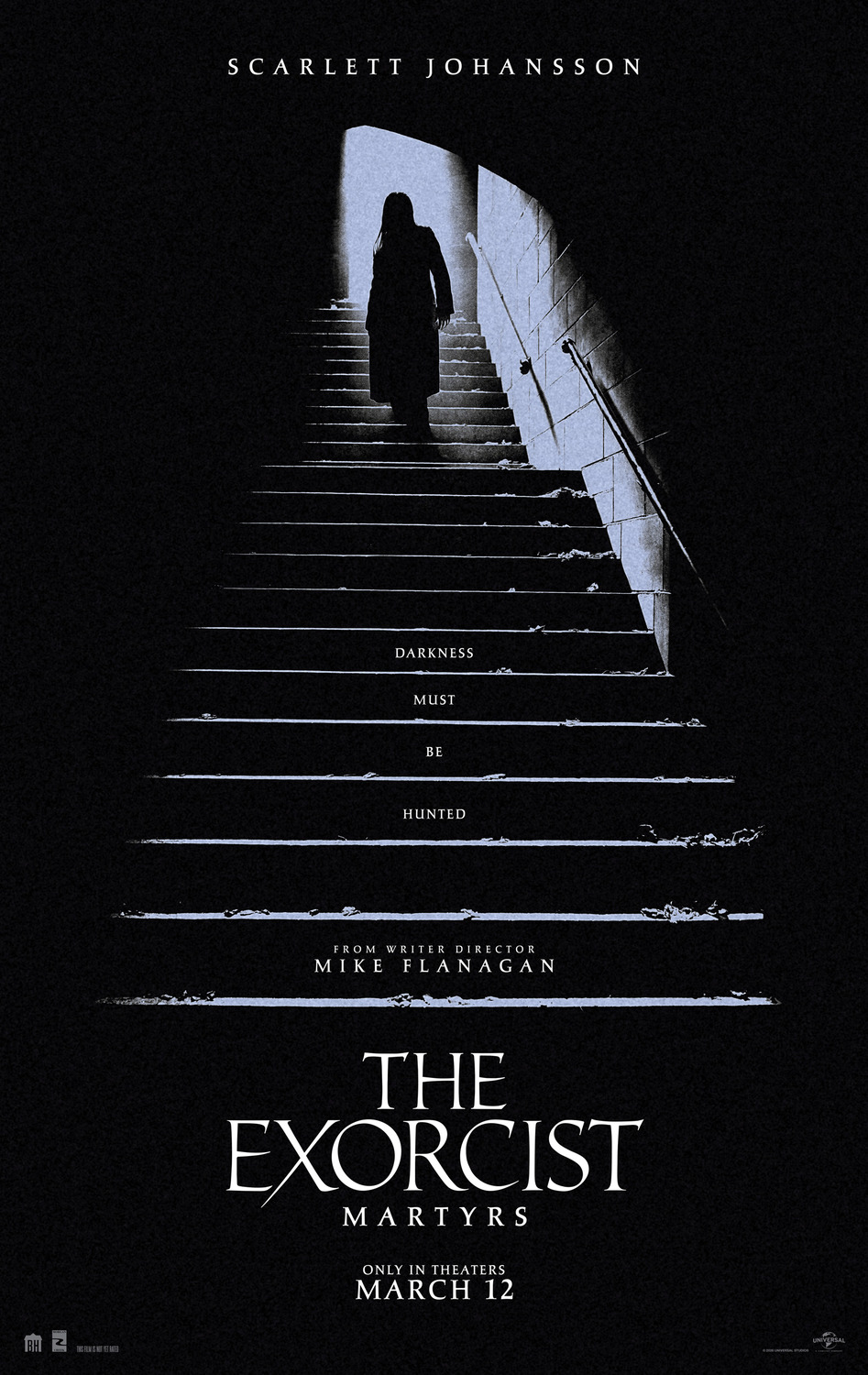
So, David Gordon Green is out, and in his place now is writer and director Mike Flanagan who has spent much of his career adapting the literary works of Stephen King to the silver screen. With “The Exorcist: Martyrs,” Flanagan looks to reboot the franchise with what has been described as a “radical new take,” and he was very aggressive in getting the director’s job as he felt he could bring something new to this franchise which some will say has seen one sequel too many.
And now, we have the first trailer for “The Exorcist: Martyrs” which will be arriving in theatres everywhere come March of 2027. One hand, it makes the upcoming film look quite creepy, but its also makes it look like a movie. When it comes to William Friedkin’s “The Exorcist,” it was not so much a movie as it was an experience (and an incredibly visceral at that). The sequels have either failed to live up to that experience or have dared to take things in a more cerebral direction. With “Martyrs,” I am not sure where this sequel or reboot is going to land, but I have a feeling it is going to be more of a movie than an experience.
The trailer has a clever beginning as we see Detective Julie Miller (Scarlett Johansson) descend down a number of steps which may not be the same ones in Georgetown, but they certainly reminded of those same steps we saw Jason Miller tumble down all those years ago. Julie comes up to a murder scene involving an altar boy who her partner, Detective Gina Restrepo (Sasha Calle from “The Flash”), tells her is about 15 to 16 years old. We do not see all the gory details of this altar boy’s death as Julie’s head is in the way, and Universal Pictures will not benefit from a restricted trailer at this point in time. But to see this boy being crucified upside down is quite the image, and the medal we see being pulled out of his mouth looks exactly like the one from the original film.
The rest of the trailer features a number of images which have quickly seared into my memory, we see John Leguizamo who is playing a character about to be executed by lethal injection, something which has not been very effective in Tennessee recently. Laurence Fishburne shows up as a priest who looks to have many years etched on his face (please do not ask me how I cam to this conclusion). And an especially prominent figure here is Julie’s son, Max Miller (Jacobi Jupe), who looks to provide this film’s innocent moments in addition to its most terrifying ones.
But for me, one of the most memorable images comes with Julie entering a room and then stopping in place to where I was convinced someone or something would jump at her when least expected. Instead, her son Max asks her, “What is it mom?”
To this, Julie replies, “I’d appreciate it if you didn’t call me that.” And when it comes to Johansson, she delivers this line in a way which is not the least big theatrical or demonic, and it makes the dialogue all the more terrifying as a result.
I also have to add; we never hear Mike Oldfield’s “Tubular Bells” played once in this trailer. Maybe this film will indeed be a radical new take.
After watching this first trailer for “The Exorcist: Martyrs,” I have to be honest and say I cannot help but be intrigued by what Flanagan has to offer us. At the same time, I am quickly and often reminded of how the original “Exorcist” was a visceral experience more than anything else. This one, however, looks like just another horror movie. Can Flanagan and company come even close to duplicating what Friedkin gave us years ago, or can they only hope to make a movie which is only slightly better than “The Exorcist: Believer?”
Well, it cannot be any worse than “Exorcist II: The Heretic.” Can it?
On this week’s edition of OMG, has it been that long since this movie came out? Guillermo Del Toro’s “Pan’s Labyrinth” has now reached its 20th anniversary. While many motion pictures age like milk, which is to say not at all, this one has aged like a fine wine and remains as powerful and as visionary as ever. This is even more so with the film now being re-released in theatres in a stunning 4K restoration, and the filmmakers have also worked to present it in 3D as well. Seriously, this a motion picture one can never get sick of.
I had the honor and the privilege of talking to two of the stars of “Pan’s Labyrinth.” I talked with Ivana Baquero who plays Ofelia, a child whose journey into a fantastical underworld serves as an escape from the harsh reality she and her mother have been thrust into. In addition, I also talked with Doug Jones who portrays both the Faun and the Pale Man. Jones has played very unique characters in various Del Toro films, and this includes “Hellboy” and “The Shape of Water.”
Baquero was only 10 years old when she was cast as Ofelia in “Pan’s Labyrinth,” and she left everyone in tears at her audition. We talked about that as well as what she did to prepare for playing such a large role for a child actor. With Jones, we discussed which character in this film was the harder for him to play, and if he is still willing to portray strange monsters in future projects or if he would instead play those in human form.
“Pan’s Labyrinth” is being re-released in theatres on October 9, and I encourage to see it on the silver screen instead of just at home. Please check out the interview below.
Oh great, here we go again. I thought and hoped people would have learned their lesson after a teacher made the unforgivable mistake of letting a class of fourth graders watch “Winnie the Pooh: Blood and Honey” without researching it to see that it was a full-blown horror film which Walt Disney would never have approved of.
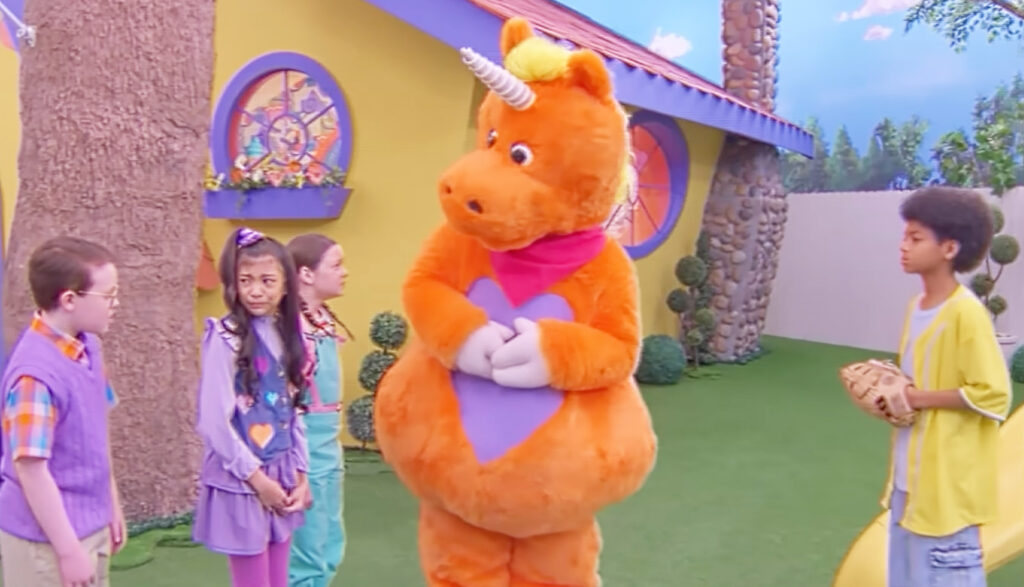
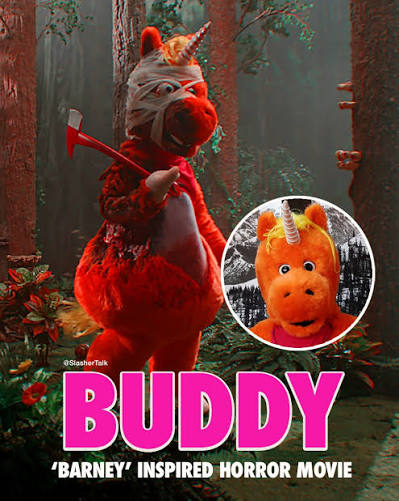
This past weekend saw the release of “Buddy” which marks the feature film directorial debut of Caspar Kelly. On the surface, it looked like an innocent motion picture with a main character who seemed reminiscent of Barney the purple dinosaur or other children shows from the 1990’s. But upon closer inspection, particularly after reading through the movie’s description on its Wikipedia page, it is actually a “supernatural comedy horror film” in which a group of children find themselves trapped inside a television program designed for their age group, and they spend the length of it trying to escape the murderous clutches of the show’s seemingly lovable host.
Reports came out over the weekend that parents took their kids to see “Buddy,” thinking it would be the perfect cinematic outing for the whole family. These kids ended up coming out of it traumatized, and their parents have been demanding refunds in the aftermath. Many of these parents have blamed the theaters and their employees for not warning them of the film’s content. Those who work at these same theaters say it is not their fault, and they are absolutely correct.
For the record, I have not seen “Buddy” as of yet, but I did take the time to research what it was about in ways those parents never bothered to. For those who actually took the time to do the same, we can all agree that this movie, which currently has a certified fresh score of 88% on Rotten Tomatoes, is most definitely not for kids.
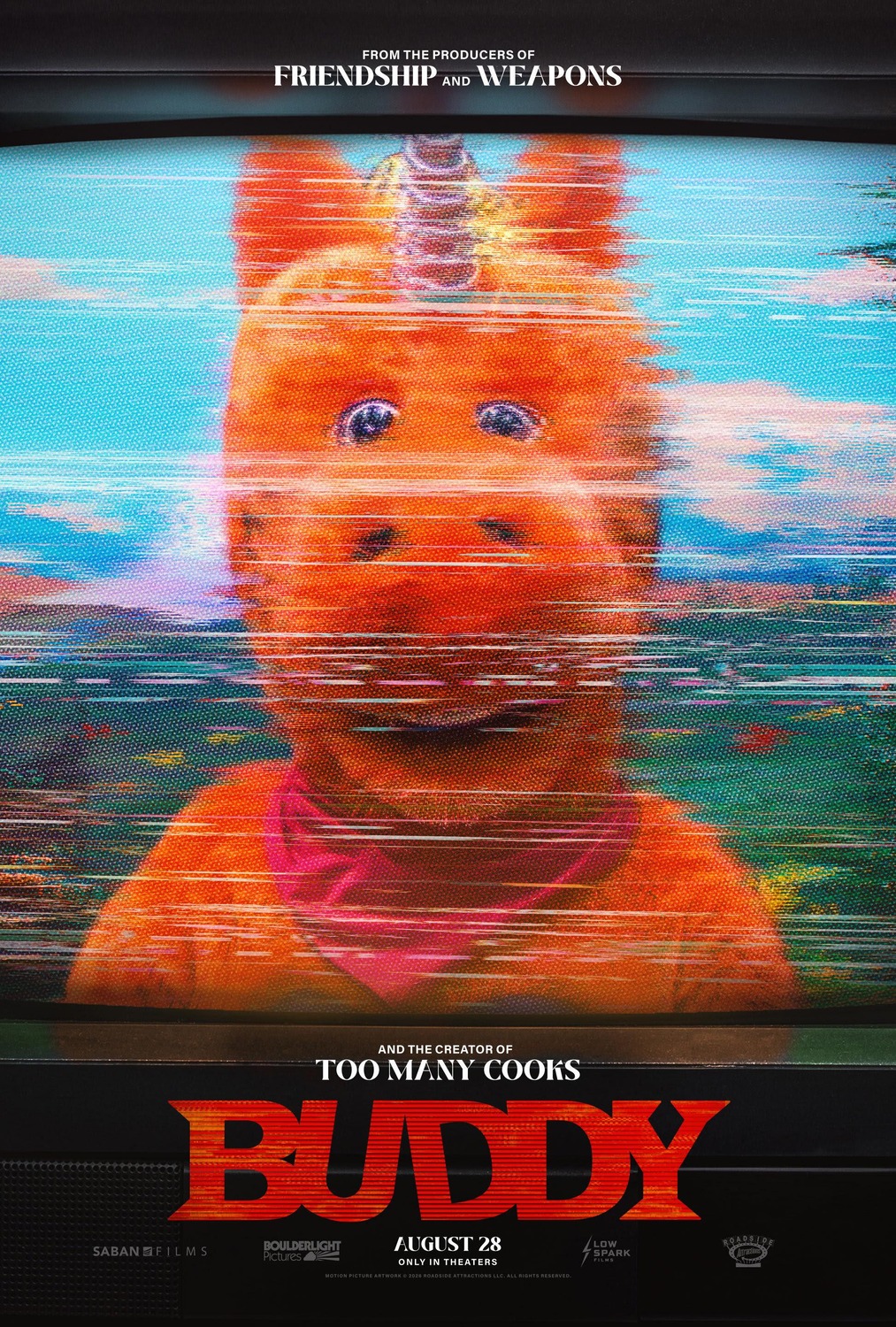
Seriously, look at this poster below for a second:
On one hand, it features a lovable looking bright orange unicorn, but something seems off as the image looks fuzzy as if the television showing this program has bad reception. This should be your first indication that something is off about this particular character as images can be deceiving. And, as Bo Diddley one said, you can’t judge a book by looking at its cover.
Now let us take a look at what is billed as the movie’s final trailer:
As this trailer begins, it does make “Buddy” look like an innocent family flick as it invites kids to “face their fears” among other things. But the closer you look at the images presented here, you see that the kids surrounding that bright orange unicorn look scared as hell and are looking to escape that creature’s clutches. Plus, you have that image of mother screaming her lungs out, and that has got to be of a parent experiencing their worst nightmare.
But perhaps the most definitive mark in this trailer for “Buddy” comes at the very end when the narrator announces that this film has been rated R for “graphic violence and gore.” And in taking a closer look at the MPA rating, it states the rating is for “sequences of strong bloody horror, violence and gore, language and weaponry.”
Or perhaps you need to look at these movie trailers to realize that your children might not come out of this motion picture in one piece:
Seriously, do I need to say much more after you have watched this?
Still not convinced? Then perhaps the most persuasive piece of evidence can be found on the Common Sense Media website which has a Parents’ Guide to “Buddy.” They have left the following sentence for all to see:
“Bloody horror tale looks like kids’ TV but definitely isn’t.”
And then there is the “Parents Need to Know” section which states the following:
“Parents need to know that Buddy is a dark horror comedy that’s reminiscent of a 1990s-era children’s TV show, featuring a costumed character of an orange unicorn (voiced by Keegan-Michael Key) that exhibits sinister tendencies. Violence includes children in peril and being roughly handled (as well as harmed off-screen), death, blood and gore, stabbing, impaling, a strangling, punching, head bashing and cleaving, intense violence involving costumed characters (head ripped off, gruesome burns, slicing bloody slabs off their own body, and more), a jump scare, a monster, and much more. Language isn’t frequent but includes “f–k,” “s–t,” “t–ty,” “bitch,” “hell,” “penis,” “poop,” etc.”
Seriously mom and dad, isn’t this enough to convince you that your children are better off watching “Spider-Man: Brand New Day” for the seventh time instead of taking them to see “Buddy?”
When all is said and done, I have absolutely no sympathy for the parents who took their children to see “Buddy” without knowing what it was about. No, I am not a parent, but even I would check a cinematic endeavor ever so thoroughly before sending any youngling I know into a darkened movie theater. You may yell at me saying how I don’t know what it is like to guide children through nightmares and psychological trauma, but isn’t that your job as a parent? Feel free to tell me what you think about this in the comments.
Granted, no one is perfect. My father let my brother rent “Uncommon Valor” from Nino’s TV and Video in Thousand Oaks, California years ago, but he did not know this film was rated R. I told my dad that it was rated R, but this was mainly because I was pissed my brother got to watch such movies with this rating like “Caddyshack” and “Risky Business” while I was denied such privileges. My brother was super pissed at me for pointing “Uncommon Valor’s” rating out as he was forced to take the VHS copy of the movie back to the video store, cursing me all the way over there. Well, at least one person was watching out for others!
While I am at it, are there not images of “Buddy’s” bright orange unicorn with his, or their, face half burned off? Doesn’t this tell you something. Like Chucky from the “Child’s Play” movies, this one takes a lick and keeps on ticking. Seriously, think about it!
When “Danny Collins” was released back in 2015, it felt like Al Pacino had played every kind of character there is on the stage and silver screen. But with this film, he plays a character unlike any he has taken on before; a rock star. Granted, a lot of people treat Pacino like he is a rock star already, especially when it comes to his role as Tony Montana in “Scarface,” but this did feel like a new thing for him. For a moment, the thought of Pacino as a popular singer was a bit terrifying. Can he even sing? Will he come off like the male version of Kim Carnes? By the way, I love Kim Carnes, so let’s not get the wrong impression here.
Well, Pacino can sing, and he is one of the reasons why “Danny Collins” proves to be far more enjoyable than I expected it to be. The story of an aging musician looking for redemption has been told time and time again, and there is very little in the way of originality to be found here. Still, I found this film to be a sweet and heartfelt look at a man looking to reclaim parts of his life which he has long since lost.
Pacino modeled Danny on both Barry Manilow and Rod Stewart, and we first see Danny singing songs to adoring crowds who cannot seem to get enough of him. He used to write his own songs, but after his second album got such a negative response, he went on to sing everybody else’s hits instead. These days he has all the fame and fortune he could ever want, all the drugs and alcohol to keep his deepest fears at bay and, of course, a fiancé half his age.
But then one day, Danny’s manager, Frank Grubman (Christopher Plummer), shows up with a letter written to him by John Lennon from forty years ago. For some reason, this letter was never delivered to Danny, but in it, John tells him not to worry about fame and fortune being detrimental to his talent. Upon reading this long-lost letter, Danny begins to wonder what his life would have been like had he gotten it much, much sooner. As a result, he drops out of his current tour and travels out to New Jersey to reconnect with his family and, hopefully, rediscover his musical muse.
For a moment, I thought I was going to be cringing non-stop as Danny goes to meet the son he never got to know. We know that those kinds of father-son meetings are fraught with tension and a lot of understandably hurt feelings, and the one shown in Danny Collins is no different. The chemistry, however between Pacino and Bobby Cannavale who plays Danny’s son, Tom, is very strong, and their acting really lifts this material up and away from the generic kind it could have easily fallen victim to. Cannavale previously acted opposite Pacino in a Broadway production of “Glengarry Glen Ross,” so these two have a rhythm of working together which they have clearly gotten comfortable with.
Jennifer Garner plays Tom’s wife, Samantha Leigh Donnelly, and she is a lovely presence to watch here. What I loved about her performance is how down to earth she is to where you never catch her acting. Samantha is a doting mother to hers and Tom’s daughter, Hope, and she is already pregnant with their second child, so you know she is capable of handling more things than either Danny or Tom can on their own. She proves to be the calm in the stormy relationship between estranged father and son, and she makes it clear to the men in this family that they had best listen to what she has to stay.
While we’re at it, I have to applaud young Giselle Eisenberg for her exceptional performance as Hope. It says a lot about the 7-year-old actress that she can hold her own with Pacino and company from scene to scene.
Right from the start, Christopher Plummer makes his manager character of Frank Grubman anything but a cliché. I liked how effortlessly Plummer made Frank the much-needed conscience Danny has desperately needed throughout his career, and he remains compulsively watchable throughout as he takes what could have been your typical backstabbing show business manager and turns him into a reasonable human being.
Another real delight to be found in “Danny Collins” is the great Annette Bening who gives her character of hotel manager, Mary Sinclair, a wonderfully biting sense of humor. Of all the characters here, Mary is the one who is not easily enamored by Danny and is not about to be seduced by his endless charisma. Throughout, I enjoyed the back-and-forth Bening and Pacino have, and her performance serves as a reminder of what a brilliant actress she can be. May we never forget this important fact.
As for Pacino, I very much appreciated his work here. There is none of the bombast which he became inescapably identified with after his Oscar winning performance in “Scent of a Woman.” He is also great at hinting at the fears tearing away at Danny as he tries to write his first song in lord only knows how long, and he makes you root for him to do more than just sing “Baby Doll.”
“Danny Collins” marks the directorial debut of Dan Fogelman, the screenwriter of such films as “Crazy Stupid Love,” “The Guilt Trip” and “Last Vegas.” He based it on the true story of when musician Steve Tilston received a long-lost letter from John Lennon, but he basically took the idea of that story and went from there. My hat is off to him for introducing this movie to us as something other than “based on a true story.” There’s an opening epigraph which says this film is kind of based on a true story, but not really. Kudos to Fogelman for introducing his film with something other than one of the most overused cinematic terms which has long since lost its meaning.
This could have easily been schmaltzy affair that ran on too much emotional manipulation, but Fogelman manages to keep the proceedings from ever feeling completely cringe-inducing. The plot is very formulaic, and there is a certain disease thrown in for one of the characters which may not have been entirely necessary, but he keeps things running smoothly to where you realize a lot of heart went into this.
But what really elevates “Danny Collins” above the usual formulaic norm are the performances and a director eager to not give us the same old stuff (not entirely anyway). This film was made for a fraction of what most motion pictures cost to make these days (and this does not include advertising), so it should be clear that this is a labor of love more than anything else. I left this film with the hope Danny will find the courage to be a songwriter once again, and that means a lot as I often lose my mojo as a writer to where I get nothing written. Here is hoping we all find our way back when we lose our way in life.
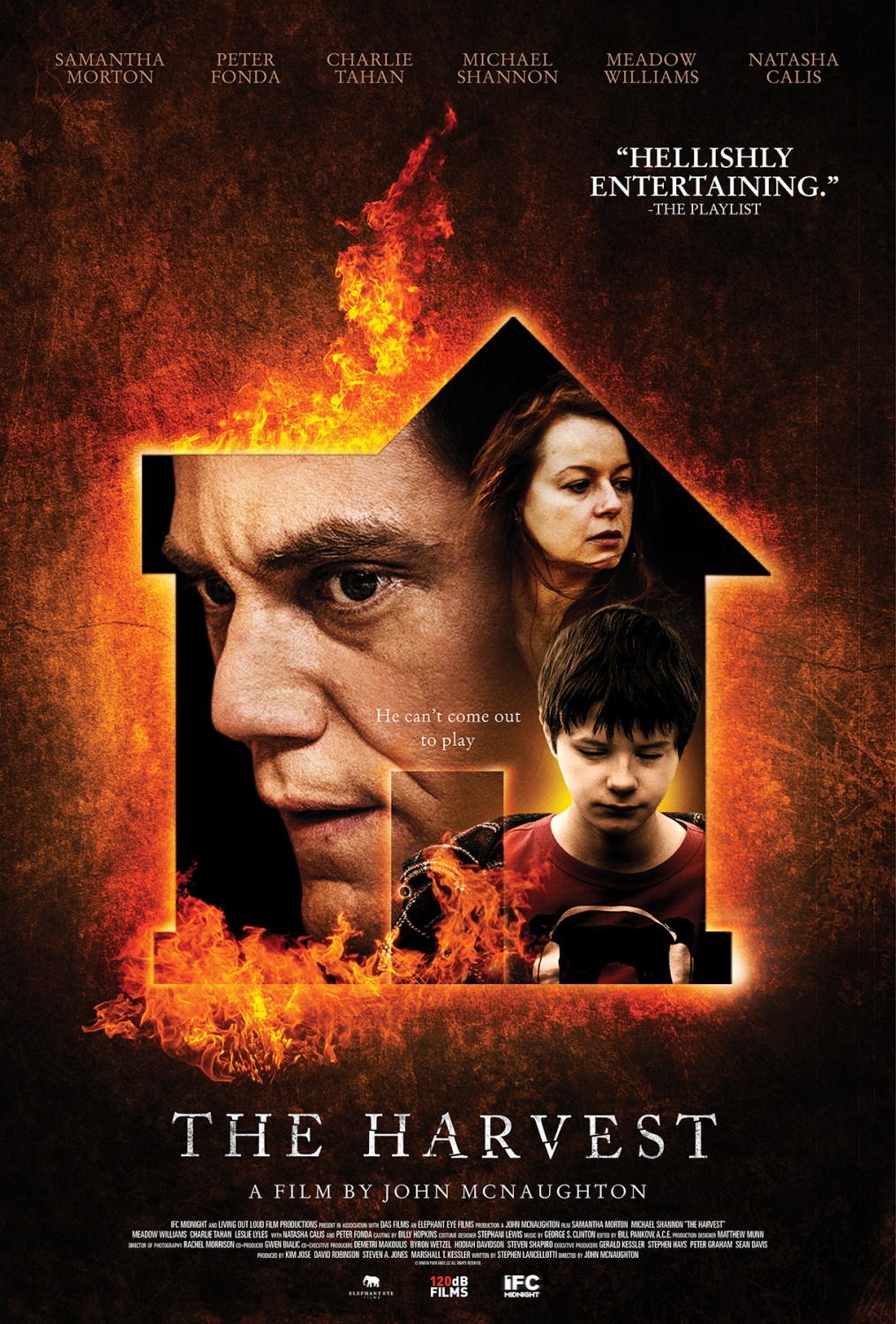
“The Harvest” is one of those movies which completely took me off guard to where I had no real idea of where it was going. This is a very rare experience for me when watching movies these days as I typically have a pretty good idea of where the story is going to end up, so that makes this particular film from John McNaughton, which represents his first directorial effort in a decade by the way, all the more effective.
The prologue of “The Harvest” is designed to mess with your head a bit, so I prefer to let audiences witness it for themselves. Past this, we come to meet Maryann (Natasha Calis), a young girl who has just moved into her grandparents’ house following the death of her parents. This causes her great discomfort because, aside from losing her mom and dad, she is forced to start all over again in a new town where she is forced to make new friends again. Having been uprooted myself at such a young age, I can confirm this is a real inconvenience.
Eventually however, Maryann does make a new friend in Andy (Charlie Tahan), a very sick young boy who is confined to his home twenty-four hours and seven days a week, and he cannot move around without a wheelchair. Andy is constantly looked after by his parents, Katherine (Samantha Morton) and Richard (Michael Shannon), who are both constantly in conflict over how to best take care of him. Katherine is a doctor who constantly keeps Andy in a medicated state, and Richard constantly urges her to ease up and not overdo it. Suffice to say, these two people do not have the same relationship they had when they first wed.
Now that is all I want to tell you about the plot. What I can say tell you from here is that Maryann comes to make certain discoveries which turn hers and Andy’s life completely upside down. Watching a movie like “The Harvest” is la lot ice peeling away at an onion; you keep going through various layers in order to get to the center of things, and McNaughton and screenwriter Stephen Lancellotti reveal only so much as they keep stringing us along to the very end. Before we get to the revelation at the story’s core, we dare not take our eyes off the screen for a single second.
It was really great to see Samantha Morton here as she gives “The Harvest” its best performance. As Katherine, she gives a very multi-layered performance as we watch her go from being understanding and caring to becoming very uptight and furiously angry. When Morton stares down Calis in one scene, it makes for an incredibly tense moment as Morton looks like a snake just waiting to strike. Her’s is a very impressive performance as well as the kind which is not always found in horror movies. You are never sure whether to empathize with Katherine or fear her presence, and this proves to be a reminder of how powerful an actress Morton can be.
Michael Shannon is one of the best character actors working today and, as Richard, he has to play an emotionally muted character of sorts. At first, it seems like Shannon is doing too little onscreen, but the reason for Richard’s emotional numbness does become clear as the movie goes on. This is the kind of role where most actors get self-conscious and feel like they are not acting enough. Shannon, however, does not make this mistake, and it makes for another one of the many compelling performances we have come to expect from him.
McNaughton is the same filmmaker who gave us the feel-good movie of 1990, “Henry: Portrait of a Serial Killer.” Trust me when I say I am not even going to bother comparing “The Harvest” to it because the one which famously starred Michael Rooker is a one-of-a-kind horror film which is hard to top in terms of bleak realism. “The Harvest,” in comparison, is more of a dark fairy tale that gets darker as it goes on, and it shows how gifted McNaughton is at creating suspense and maintaining it throughout a feature film.
Seriously, when you look at McNaughton’s resume, his work has never been merely confined to the one genre. He gave us the comedy-drama “Mad Dog and Glory” which had Robert De Niro, Bill Murray and Uma Thurman giving some of their most underrated performances ever, the erotic thriller “Wild Things” which did not even try to hide how gleefully trashy it was any more than it hid Kevin Bacon’s penis on the silver screen , the concert film of Eric Bogosian’s “Sex, Drugs, Rock & Roll,” and the crime drama “Lansky” which starred Richard Dreyfuss as the famous gangster of the same name. While it may be understandable how many are unable to get past “Henry” as that film left a gaping psychological scar on those who sat all the way through it, McNaughton has managed to go from one genre to the next in a way audiences do not easily recognize. This makes him quite an underrated filmmaker.
Now “The Harvest” does have its flaws, some of which come from it being an understandably low budget production. The pacing could have been strengthened, and we just have to get that one scene where a child tells the truth of what is going on and quickly get rebuffed for no sane reason. It is always infuriating to me when adults quickly dismiss their children’s explanations as hooey because, from one generation to the next, the young ones still see right through their parents’ hypocrisy. Also, this movie ends on a note which leaves too many questions unanswered. Granted, I am all for ambiguous endings in movies, but the one “The Harvest” gives us does not provide much in the way of benefits.
All the same, I admired what McNaughton was able to pull off with here, and “The Harvest” kept my attention from start to finish. It always seems difficult to pull off such a suspenseful thriller these days, but he does accomplish his task here. There is also no forgetting Morton’s complex and frightening performance as a mother desperate to protect her child. Whatever you think of this movie, her work will stay with you for a time once the end credits have finished.
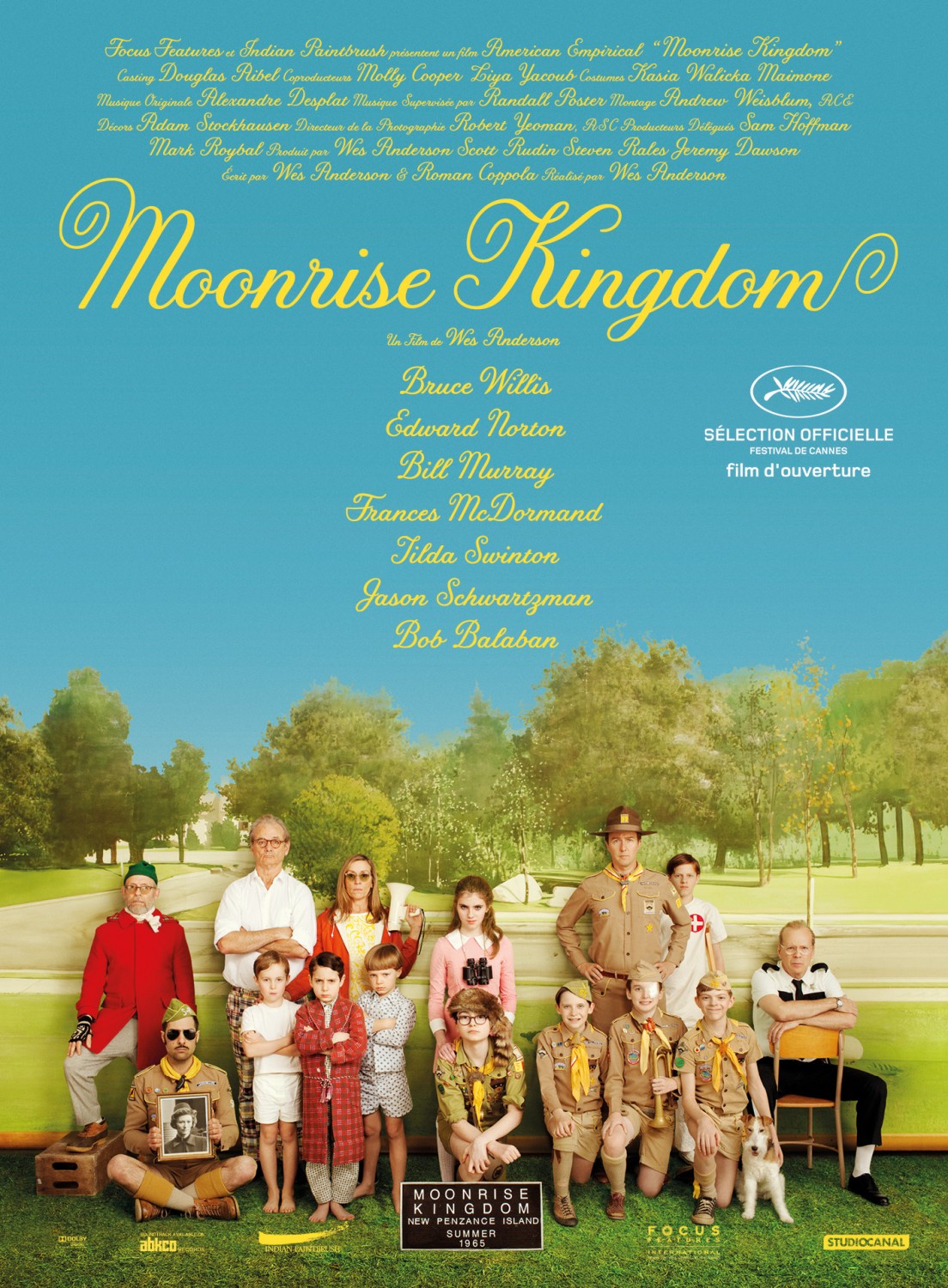
“Moonrise Kingdom” is one of many examples which shows Wes Anderson to be one of the most imaginative filmmakers working today. With his story of two 12-year-old kids falling in love and running away together, he gives us a whimsical journey into a past filled with innocence that constantly gets upended by bouts of family dysfunction. In a time where Hollywood relies too much on old ideas and endless remakes, seeing Anderson get an original movie like this made feels like a miracle.
“Moonrise Kingdom” takes place on the New England island of New Penzance in the year 1965. Sam Shakusky (Jared Gilman) has encouraged his pen pal of one year, Suzy Bishop (Kara Hayward), to run away with him into the island’s wilderness. Doing this, however, sends their parents and the town into a frenzy as they desperately search to find them before all hell breaks loose.
Sam himself is an orphan whose foster parents no longer want him around, and his running off with Suzy coincides with his resigning as a member of the Khaki Scout summer camp which is led by Scout Master Randy Ward (Edward Norton). While Sam has learned many useful skills, he is despised by all the other members he is forced to spend time with. In Suzy, he finds a much-needed soul mate who herself is ostracized from her schoolmates and is not blind to the marital difficulties her attorney parents, Walt (Bill Murray) and Laura (Frances McDormand), are going through. Suzy is even aware of her mother having an affair with the island’s police Captain, Duffy Sharp (Bruce Willis).
But it turns out that these two kids have done the island of New Penzance a huge favor as their romantic getaway wakes up its inhabitants from the sullen slumber their lives have descended into. This is especially the case with Walt and Laura who appear to be bereft of emotions for one another. It gets to where Laura can barely communicate with Walt without using a bullhorn to get his and their kids’ attention. When Walt finds out his daughter has run away, he responds to Laura by informing him of this situation as a “loaded question” more than anything else.
The sullenness of the adults is contrasted sharply with the sheer innocence of Sam and Suzy as we watch their romance bloom. Their adventurous behavior proves to be contagious as they read through storybooks Suzy stole from the local library, and dance to vinyl records of lively French rock music. The specific details Anderson gives these characters make them among the most unique kids I have ever seen at the movies. With their taste in art, literature and music, they threaten to seem more mature than their parents to an infinite degree.
It is this theme of innocence which permeates “Moonrise Kingdom” throughout as Sam and Suzy deal with what is left of their innocence while others desperately try to recapture it for themselves. Randy Ward is an example of a man trying to stay young by embracing his role as a scout leader to where he takes it a little too seriously. To him, this role gives his life more meaning than any day job ever could, but the kids under his command do not all see it in the same way he does.
Then there’s Willis’ character of Captain Sharp who, like Sam and Suzy, feels like a loner on this small island. In this role, Willis almost threatens to outdo Murray’s sullen expression as his face becomes a mask of inescapable sadness. It is through searching for these kids that his life finds new meaning as they make him feel young again and give him a reason to live a life with more purpose.
Having read all this, one might think “Moonrise Kingdom” is some sort of serious drama, but it’s really a wondrous coming of age movie with a lot of gleefully inspired comedic moments. Anderson has always populated his movies with sad characters, and yet he still finds ways for the audience to laugh with them during their endless struggles. While this film has him once again dealing with his favorite themes of family dysfunction and arrested development, he finds a wonderful slant which ends up making it one of his best efforts.
One of Anderson’s other successes here is in making a period piece that is not a prisoner to its period. While its eclectic soundtrack (a must buy by the way) gets the music of 1965 down perfectly, this movie takes place in a world which does not completely mesh with reality. As a result, “Moonrise Kingdom” almost feels like it could be taking place at any period of time. Perhaps that can be the result of us remembering the first time we ever fell in love like Sam Suzy do.
Like the best Wes Anderson movies, there is not a single weak performance to be found here, and the actors inhabit their characters to the best of their abilities. Murray, a veteran of several Anderson movies, still strikes comedic gold even as his characters he portrays seem to get sadder and sadder. McDormand is highly entertaining to watch as always, and that is regardless of whether or not her character needs a bullhorn to be heard.
Among the newbies to the Anderson cinematic universe, Bruce Willis proves to be a surprising and welcome addition as the lonely police captain. His face can speak a thousand words even when he does not speak, and he looks to be having a blast in the kind of movie one we often do not expect to see him in.
Norton was another newbie to Anderson’s movies when “Moonrise Kingdom” was made and released, and it is nice to see him let loose in a way he was not always able to back in the day. His role of the hapless scout master Randy Ward allows him to create a character who could have easily just been someone to laugh at with endless disdain. Never does he play Randy for laughs like others would have, and that makes his performance all the stronger for it.
As for the actors inhabiting Sam and Suzy, Jared Gilman and Kara Hayward do a fantastic job of capturing their characters’ individual sensibilities and unique aspects. Thanks to their performances, they make these pre-teens seem very human and not your typical kids searching for meaning in a formulaic motion picture.
In addition, you get excellent performances from Jason Schwartzman as Cousin Ben, and another from Khaki Scout who aids the two runaways in their quest to be together. Even Harvey Keitel shows up in a delightfully unexpected way as Commander Pierce, the king of all Khaki Scouts.
Beautifully shot and wonderfully written, “Moonrise Kingdom” stands alongside “Rushmore,” “The Royal Tenenbaums” and “Fantastic Mr. Fox” as one of Anderson’s best and most inventive movies, and this will continue to be the case with each successive motion picture he makes. His work represents a highly imaginative cinematic landscape that filmmakers in general do not have the opportunity and support to pull off, and the realization of this proves to be quite depressing. Movies like this one make me hope there are still those in Hollywood who will not be risk adverse on a regular basis and embrace creativity more often than not.
WRITER’S NOTE: This article was originally written back in 2015.
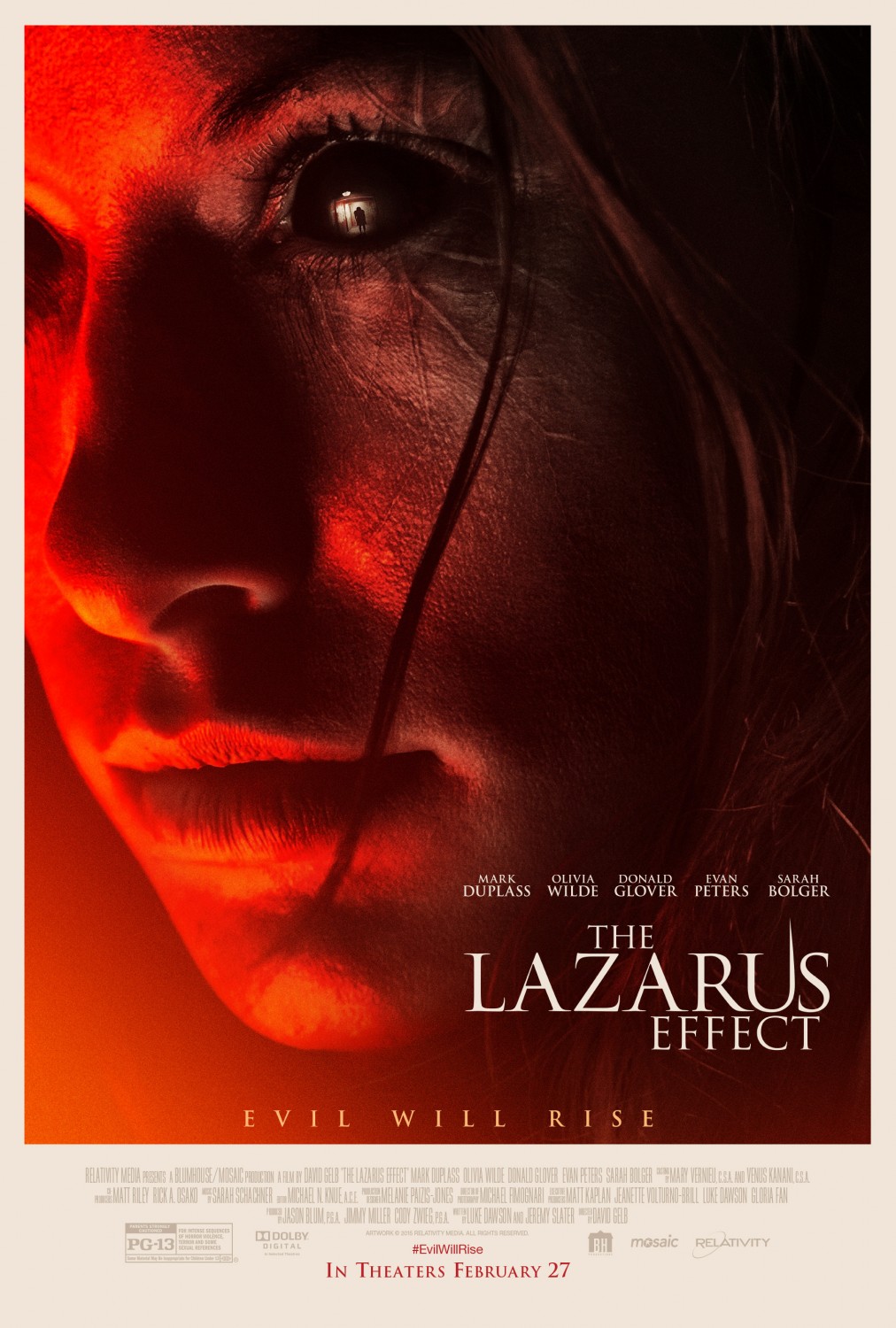
The supernatural horror film “The Lazarus Effect” takes a cue from movies like “Frankenstein” and “Re-Animator” as it features a group of scientists who are intent on bringing the dead back to life. It stars Olivia Wilde and Mark Duplass as Zoe and Frank, a couple of medical professionals who have found a way to resurrect the deceased through the use of a serum they have named Lazarus. But during one experiment, Zoe suddenly gets electrocuted and dies, and Frank, in desperation, gives her the serum which successfully returns her to the land of the living. But in the process, Frank comes to discover that Zoe has developed some incredible abilities which makes him wonder if she brought something truly evil back from the dead with her.
One plot point in “The Lazarus Effect” concerns a nightmare Zoe keeps having where she is trapped in a burning house, and there is a door ahead of her which seems to have a raging fire waiting to burst out from behind it. Even more unsettling is that she also sees a pair of hands at the bottom of the door struggling to escape whatever fiery fate is coming their way. This nightmare gets a new meaning once Zoe is resurrected.
This nightmare reminding me of Joel Schumacher’s film “Flatliners” which starred Keifer Sutherland, Julia Roberts and Kevin Bacon as medical students who are very eager to discover what happens after you die. Each is made to die for a minute or two before they are resuscitated, and their afterlife proves to be a realm where they are tortured for the grievous and painful sins they committed in the past. Seeing that “The Lazarus Effect” kind of deals with the same thing, it made me wonder why these movies deal with the high psychic price to pay once we leave this mortal coil.
I got to ask the cast of “The Lazarus Effect” this during the film’s press conference held at the Four Seasons Hotel in Los Angeles, California. To first to provide an answer was Donald Glover who plays the lab assistant, Niko. Best known for playing Troy Barnes on the cult television comedy “Community,” Glover said that death remains the one thing we don’t know about.
Donald Glover: I feel like we kind of live right now in a time where humans feel like we know everything now especially when we just pick up the phones and happily answer and people feel like everything is done. It’s like, “We did it guys! We have internet.” It was cool talking to Olivia (Wilde) and Mark (Duplass) about how people are actually doing research, and I was reading articles about doctors actually bringing people back to life. There was a New York cab driver who was like dead for, I think like, a while (laughs). They just brought him back, and now they are doing studies on post-death and stuff like that. This is why I really like this film. It felt special because there’s realness and people really don’t even understand what we are after that (death). I think it’s scary because we just don’t know it especially when we’re being told all the time we know everything.
Duplass followed up on Glover’s response by saying it reminded him of something he read about movies like “The Lazarus Effect.” In the process, he also elaborated on how the approach to this resurrection movie differed from others like it.
Mark Duplass: When a movie examines this type of subject matter, usually it’s either in the future or everyone is wearing some sort of like leathery, shiny black suits, and it’s kind of like not human (laughs). So, we all loved this idea, and that’s part of the reason David (Gelb, the director) cast a lot of us because maybe we’re more on the naturalistic side of performances, that we’re just so normal looking and normal acting research students going through this very un-normal thing. It was just exciting.
Indeed, death is something many of us do not want to think about, but the question of what happens to us when we pass away continues to linger in our minds. “The Lazarus Effect” is not meant to give a definitive answer to that, but along with “Flatliners,” it makes you want to make peace with all the bad things you did in your life before it is too late.
“The Lazarus Effect” is available on physical media and streaming platforms.
WRITER’S NOTE: The following article is about a movie event I very much enjoyed attending back in 2015.
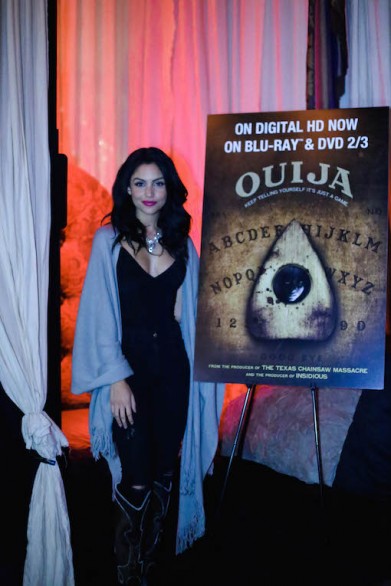
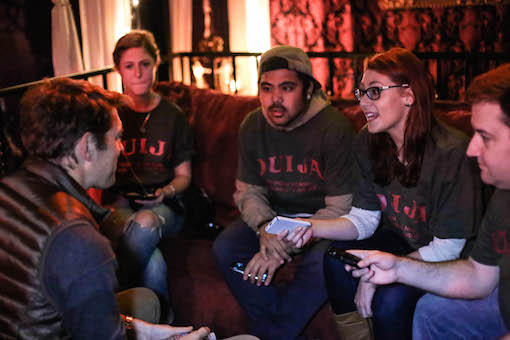
Members of the press and a few select horror fans were in for quite a treat when Universal Pictures, along with Think Jam, put together a special party in honor of the Blu-ray and DVD release for “Ouija,” one of 2014’s most popular horror movie releases. Guests were treated to a haunted scavenger hunt which had them walking up and down Hollywood Boulevard, and it was followed by a séance open-bar event held at Boardner’s by La Belle.
The séances were conducted by Robert Murch, a renowned Ouija expert and film consultant, and guests got to drink special cocktails with names like “Evil Elixir,” a combination of champagne and Absinthe (a favorite spirit liquor of mine). Also in attendance were “Ouija’s” director Stiles White, actress Bianca Santos who played Isabelle, and the CEO of Blumhouse Productions, Jason Blum.
I was lucky enough to be on the team which won the scavenger hunt, and my fellow teammates and I were given the sole opportunity to speak with Blum for a few minutes about “Ouija” and other films he is responsible for bringing to the screen. His company, Blumhouse Productions, has been behind some of the biggest horror franchises of the past few years which include “Paranormal Activity” and “The Purge,” and he was also a producer of Best Picture nominee “Whiplash.”
The Ouija board is often referred to as a talking board used in séances to communicate with spirits, and participants place their fingers on a planchette to spell out whatever the spirit is trying to say. Some see it as a harmless game of sorts, but others strongly fear that using Ouija boards can lead to demonic possession. I remember Ouija boards being used in a number of films like “The Exorcist” where Linda Blair tries to communicate with Captain Howdy, “Awakenings” in which the late Robin Williams utilizes one in an effort to make a connection with a seemingly comatose Robert De Niro, and one was used to frightening effect in “Paranormal Activity” when an invisible force sets it ablaze while nobody is home.
Since many of us were familiar with these boards in one way or another, I asked Blum if he wanted to show us something different about them that we have not seen previously in any other film. His response highlighted what he really tries to do with the movies he makes.
Jason Blum: Well, I’ve never seen anyone look through the planchette before. I think that’s a new thing, and I love that idea of looking through a glass into the world of ghosts. It’s hard to make an Ouija board dramatic, so we tried to figure out how to do that, and I think they did a pretty good job trying to make it feel original. But that’s what I always tell people when we are working on a movie; try and make it different. That’s very un-Hollywood.
It was very refreshing to hear Blum say this as many movie producers do not like to stray far from formulas, and horror films are typically governed by them to where it is very difficult to make one which stands out from the pack. Blum agrees there are a lot of repeats to be found in the realm of motion pictures, but he remains intent on doing things differently on the horror films he produces. He openly admits that he does not always succeed, but there is no doubt that he definitely tries.
“Ouija” is available to own and rent on physical media and streaming services.
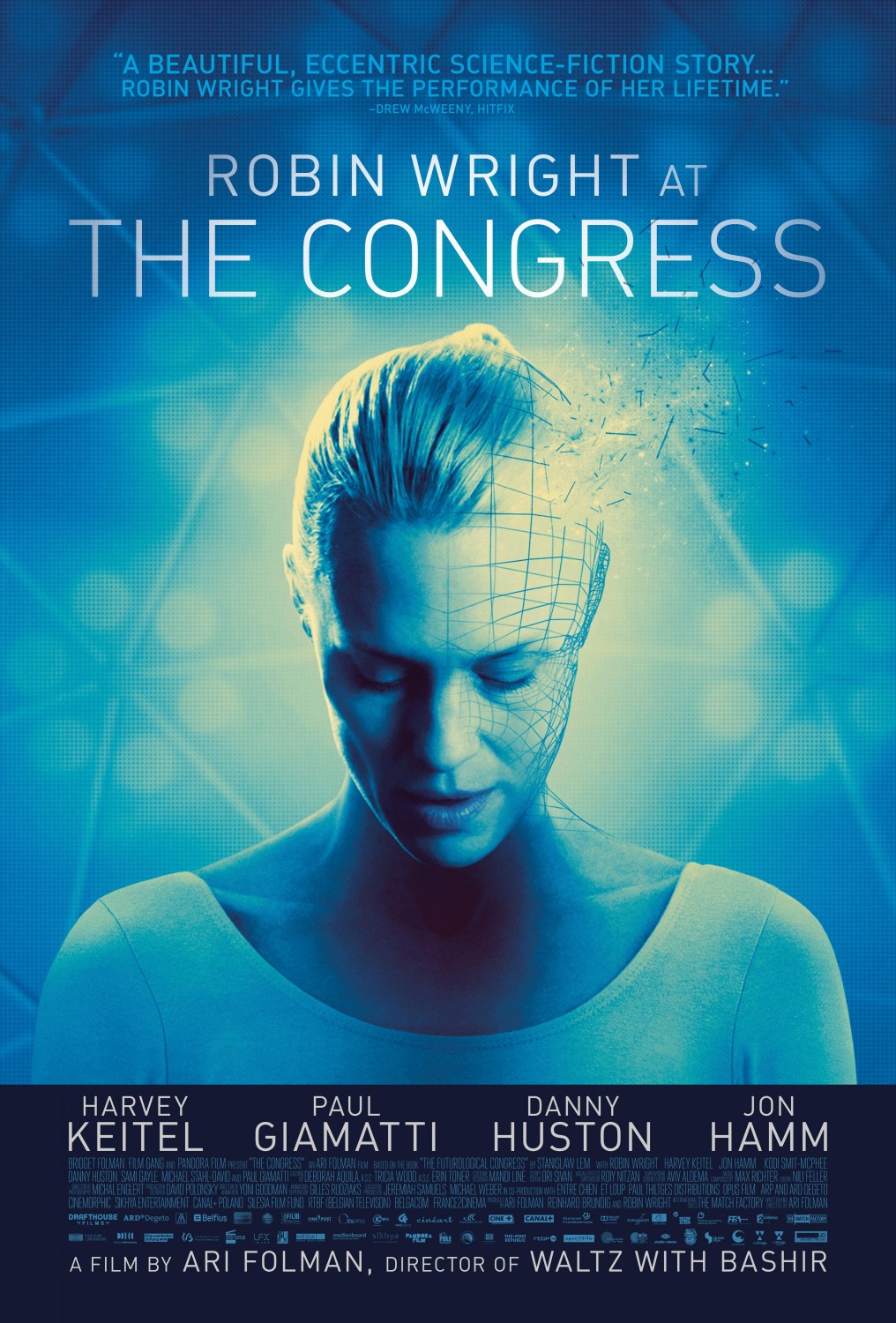
“The Congress” is one of the most bizarre motion pictures I have ever seen, and I mean that as a compliment. It combines live-action scenes with animated sequences to tell a story about an actress who willingly gives up her identity so she can be digitized by a movie studio so they can make many films starring her. In the process, it offers a look at the value of one’s identity, how we are unique in our own way, and it questions whether or not it is worth it to give up who we are as individuals so that other people can take on our own identity. With the constant advent of AI in every facet of our lives, those questions are now more important than ever.
Robin Wright stars as a fictional version of herself in this movie. After so many years in which she appeared in such classic motion pictures like “The Princess Bride,” “Forrest Gump” and “Unbreakable,” she is presented here as a washed-up actress who has been in one box office bomb too many. Even worse, she has long since been seen as someone who is very difficult to work with. We see her living with her two children in an airplane hangar located right next to an airport, and this is due to her son, Aaron Wright (Kodi Smit-McPhee), being convinced he is the heir to the Wright Brothers. Aaron’s belief in this leads him to build huge kites on a regular basis.
It also turns out that Aaron is suffering from a rare condition known as Usher’s syndrome, a disease which causes partial hearing loss which gradually deteriorates into total deafness and blindness. Aaron believes he can be cured of it if he smashes one of his kites into a real passenger plane. Looking at this, it is no wonder Wright gave up on her acting career so she could be there for him.
Then one day her longtime agent, Al (Harvey Keitel) comes to her with a deal he has brokered with the head of Miramount Studios, Jeff Green (Danny Huston at his most cynical and slimy), to capture her cinematic identity in a digital format so he can put her in all sorts of movies she does not have to come to a studio to act in. Basically, she is asked to sell her identity and her soul to the studio, and in return she will receive a very hefty compensation which will allow her to look after her family. The only thing is that she has to agree never to act on any other stage in the world ever again, and this leaves the viewer wondering if this is worth such a price.
When Robin Wright was cast in “The Congress,” she was at a certain peak in her career thanks to her role as Claire Underwood on the Netflix series “House of Cards.” On top of that, she had given memorable performances in “Moneyball,” “The Girl with the Dragon Tattoo” (the David Fincher version) and in “A Most Wanted Man” in which she co-starred opposite the late Phillip Seymour Hoffman. In real life, we had no business considering her as anything close to a washed-up actress, but she is so convincing here to where any irony in the air was beside the point.
“The Congress” takes place in a time where the economy is laser focused on scanning actors to where signing off your identity is easier than trying to make a living in show business. Now it has never been easy to make a living as an actor, but if this can happen to Wright, then it can happen to any actor. While we still may be way off from digital actors taking over for real life actors in movies, this reality is proving to be much closer to a reality than we would like to think or believe.
When we catch up with Robin in a distant future, this is when “The Congress” takes a serious left turn I did not see coming. She ends up entering a completely animated world where everything is being transferred to a chemical method which will allow everyone can be someone famous or anyone or anything other than themselves. The animation feels distinct from any other animated movie I have watched then and now, and it makes the experience of watching “The Congress” a unique one. This is a captivating world to be immersed into, but after a while you feel Robin’s concern as she comes to see her deal with the studio has come at a bigger price than she realized. While it might be fun to be someone other than yourself, is it really worth giving up your own identity in the process?
“The Congress” was written and directed by Ari Folman who directed the critically acclaimed “Waltz with Bashir.” With this movie he sucks us into a world which is full of an array of colors and possibilities, but once we discover this is part of a new Hollywood dictatorship, we become desperate to escape it. Robin comes to regret the decisions she has made as her identity no longer feels like her own, and her family has long since become the most valuable thing in her life as well.
After watching “The Congress,” it was hard for me to think of a better actress who could have been in this movie other than her. From start to finish, we are with Robin as she traverses her way through an ever-changing technology she cannot keep up with, and she is mesmerizing throughout. We feel for her as she attempts to salvage what is left of herself in this strange new world, and any kind of victory she ends up achieving here feels like a significant one.
The rest of the cast proves to be more than up to the challenge as they either play or voice their characters with a lot genuine emotion. In addition to Wright, Keitel and Smit-McPhee, we also have Jon Hamm who plays Dylan Truliner, an animator who invented Robin on Miramount’s computers and has long since become enraptured by her. Even Paul Giamatti shows up as Dr. Barker, and you can never really go wrong with an actor like him.
Seriously, the best way to enjoy “The Congress” is to walk into it with an open mind. It is far from the typical mainstream fare we see playing at our local multiplexes, and it takes you on a journey few movies can. In the process of examining the effects of a Hollywood dictatorship on the rest of the world, Folman has given us a motion picture which leaves you with a lot on your mind after the end credits. In this day and age, this is even more the case than ever.