Anybody who knows me best knows I am a huge fan of film scores and soundtracks, and James Newton Howard’s score to “Grand Canyon” is one of my all-time favorites. I knew at some point this score would get an expanded and remastered soundtrack, and La La Land Records finally came through with this limited-edition release. While he is better known for his music to “The Prince of Tides,” “The Fugitive,” “Batman Begins” and “The Dark Knight” which he worked with Hans Zimmer on, “Grand Canyon” remains my favorite work of his as the music provides a soothing heartbeat to this movie.
The movie “Grand Canyon” came out in 1991 and was directed by Lawrence Kasdan and written by him and his wife Meg. Its story revolves around six different Los Angeles residents whose lives intertwine with one another over the course of a few days. It all starts when Mac (Kevin Kline), while driving home from a Lakers game, drives into a bad neighborhood where his car breaks down. Just when it looks like he’s about to be killed by a gang, tow truck driver Simon (Danny Glover) rescues him and the two end up becoming unlikely friends. Many called it “The Big Chill” of the 1990’s, but “Grand Canyon” more than stands on its own as it observes the lives of Los Angeles residents who are dealing with personal issues which are tearing them apart.
What I love about Howard’s score is how it combines so many different kinds of music, be it orchestra, electronics, rock, jazz or percussion, to create a film score so unique to where I have a hard time comparing it to any other. It captures the coldness of big city life while giving the characters stuck in it a sympathetic voice which understands how they feel. The “Main Titles” hooked me right away and made me feel so at ease even though I knew this movie was not going to be a fairy tale.
La La Land Records limited edition release of “Grand Canyon” includes twenty-five minutes of music not included on its original release. Soundtracks, back in the 1990’s, were limited to having only forty to fifty minutes of music on a compact disc, so a lot of great stuff got left out as a result. It’s been over twenty years since this movie came out, but the music remains as powerful as ever. In addition, there are some bonus tracks which are alternate takes on certain themes as well as some source music for a violent film which Davis (Steve Martin) has produced with an unrestrained glee.
As usual, La La Land Records has provided an informative booklet on the making of “Grand Canyon” and its music which is entitled “Scoring the City of Angels” written by Daniel Schweiger, soundtrack editor of AssignmentX.com and Filmmusicmag.com. Schweiger writes extensively about the making of the movie and of how Howard came up with the music for it, and I’m not sure we have had as much detailed information on the creation of this score previously. Each track on this disc gets an individual write up, and it’s nice to see someone, let alone anyone, give this soundtrack the attention it deserves.
If there’s any downside to this edition of the “Grand Canyon” soundtrack, it’s that it doesn’t include the song “Searching for a Heart” by the late Warren Zevon. Usually La La Land Records is able to get all the songs from a movie’s original soundtrack, but I guess there was an issue with the rights this time around. It would have also been great to have the other Zevon song featured in this movie, “Lawyers, Guns and Money,” included as well. Mac plays it while he’s driving home from the Lakers game, and the lyrics turn out to be quite prophetic for him.
“Grand Canyon” is truly one of the unsung cinematic masterpieces of the 1990’s, and what’s sad is most people don’t know about this movie today. This proved to be my introduction to the work of James Newton Howard, and it is one of the main reasons why this movie is so great. I am thrilled to see La La Land Records has taken the time to make Howard’s score sound better than ever before. While he didn’t get an Oscar nomination for his work here (he was instead nominated that same year for “The Prince of Tides”), there’s no doubt in my mind this remains his most memorable film score to date.
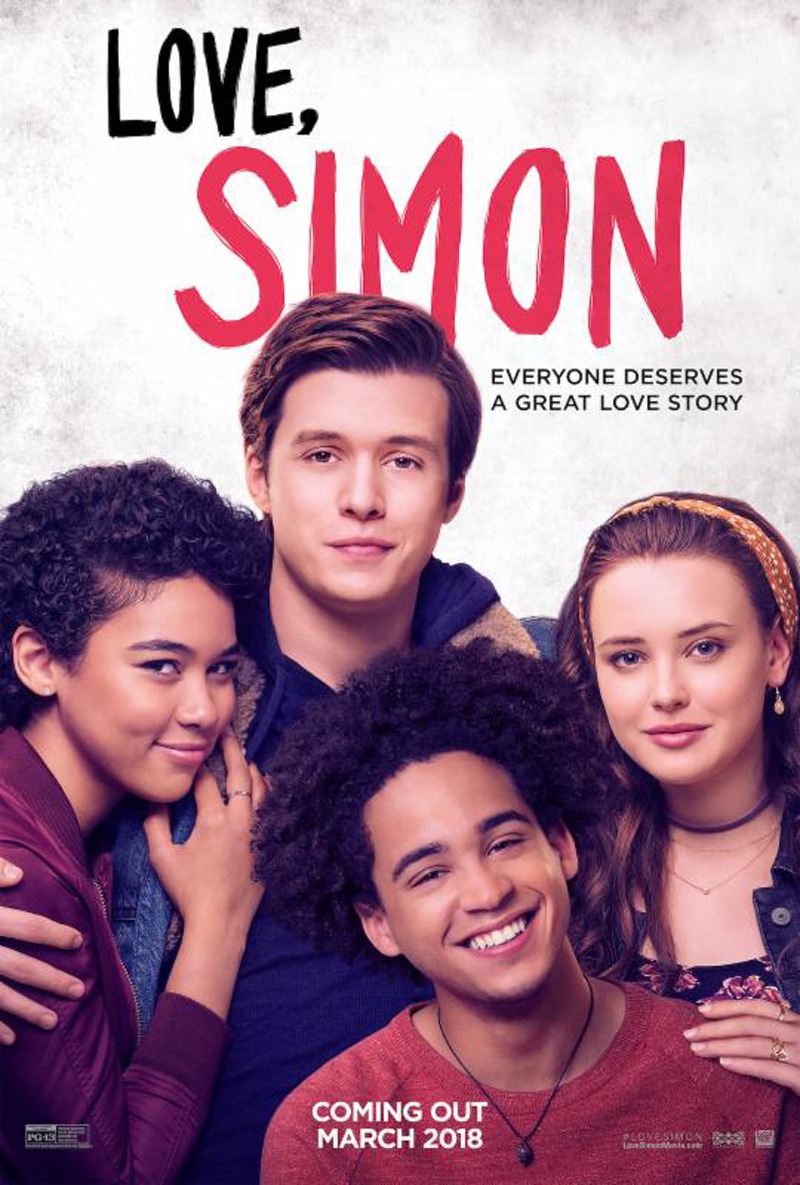
When it comes to teen movies, I live for those which take the adolescence seriously. Those years can be rough and tumble ones, filled of strong emotions which can overwhelm our small little worlds to an unbearable degree, and this is reflected in “The Breakfast Club,” “Pump Up the Volume” and “The Spectacular Now.” However, most teen movies deal with those years in a shallow manner to where they do nothing more than magnify the fears we have, or had, of being seen as unpopular or horribly isolated from our peers. Going into “Love, Simon,” which is based on the book “Simon vs. the Homo Sapiens Agenda” by Becky Albertalli, I figured it would be one of the shallower motion pictures involving teen life as its poster features the cast in all their clear-skinned glory. Surely some of these stars had to deal with acne, right?
“Love, Simon” ends up falling into the middle space of realistic and shallow teen movies. Some parts of it feel forced to where they belong more in a network sitcom, but others strike at the truth of growing up in a way few other movies have recently. In fact, this may be the first movie in which we eagerly await to see two guys kiss. Many were revolted by such a sight in the past, but these days we accept it because love is far more an attractive thing than hate. Realizing this, it makes me believe we have evolved as a society even more than we already have.
Simon Spier (Nick Robinson) is your average teenager who comes from a good home with loving parents and a sister who looks to become a world class chef in record time. He also has a great group of friends he can confide in any time, and this made me very envious of his life as it didn’t feel like I always had that when I was his age. But Simon does have a big secret, and he doesn’t need to spell it out for us. He is gay and has yet to tell his family and friends, and the only way he can discuss his sexual orientation dilemma is with his email pen pal who is also contemplating how he can come out to his own family and friends.
Right from the start, I realized “Love, Simon” is a groundbreaking movie as the filmmakers were not about to paint the majority of the characters in such broad or obvious strokes. I was constantly reminded of the scene from “Clueless” in which Murray tells Cher that the boy she wants to have sex with is in fact a “disco-dancing, Oscar Wilde-reading, Streisand ticket-holding friend of Dorothy.” While homosexuals might, and I strongly stress the word might, have been easier to spot in the past, such stereotypes we are now largely irrelevant as we have no business judging anyone as what we say about others speaks far more about who we are.
“Love, Simon” also takes place in a time where our lives have long since become dominated by social media and cell phones. In the past, we could leave our school lives behind once we went home, but kids today cannot do the same as their friends and enemies continue to exert a strong hold over them via the internet, and nobody these days can live without it let alone a cell phone.
Simon is able to keep his sexual orientation a secret even as he reaches out online to another young man who is considering coming out to his parents. Things, however, become complicated when the annoying class nerd, Martin Addison (Logan Miller), discovers Simon’s secret and threatens to blackmail him unless he can set him up with one of his very pretty friends, Abby (Alexandra Shipp). From there, Simon’s life heads into a spiral of sorts as he is forced to lie to his closest friends and comprise their relationships, all in an effort to keep his secret even more secret than ever before.
One of the key elements of “Love, Simon” is how our main protagonist is always trying to find out the true identity of his email pen-pal, Blue. The filmmakers tantalize us with the possibilities of it being this or that person, Director Greg Berlanti teases us with what could be obvious answers, but he instead invites us to see past what we thought we saw and see the bigger picture we have no business denying ourselves. Movies in the past have played on what we think homosexuals look, how they act and dress like, but this one makes how nothing is ever clear cut as it seems.
The only character who you could say exhibits such stereotypes is Ethan, an out-and-proud teenager played by Clark Moore. Ethan doesn’t try to hide who he really is from anyone, nor should he, but he does have a key scene with Simon where he explains how his coming out was not as easy as it seemed. In retrospect, I wished the filmmakers had dug a little deeper into Ethan’s character, but to their credit, they do give him some of the movie’s best one-liners (the “gangbanged by TJ Maxx” line is classic).
I also really enjoyed the camaraderie Simon has with his best friends played by Shipp, Jorge Lendeborg Jr., Miles Heizer, and Katherine Langford, whose character fares much better here than the one she played on “13 Reasons Why.” Seeing these friends have a great time with one another reminded me of the friendships I had during my high school years. It’s those friendships who help us get through the worst of times, and being a teenager can really suck more often than not. When Simon’s friendships become threatened, it’s painful to watch because losing a friend can seem so infinitely painful to where the heartache seems impossible to cure.
As for the character of Martin, he reminds of the kind of guy I never wanted to be seen as in high school. You know, the guy completely unaware of how annoying he is to others and who thinks so highly of himself that he cannot see the truth of what’s going on around him. The scene where he professes his affection to Abby at a football game is one of those horrifically cringe-inducing moments we all hope and pray never to get caught in, and Miller sells the moment for all the humiliation it is worth.
Simon’s parents are played wonderfully by Jennifer Garner and Josh Duhamel, and they present the typical loving couple and parents we always hope to see in movies like these. Garner in particular has a wonderful scene with Robinson as she professes how proud she is of him for coming out. Duhamel, however, has a scene with Robinson where he accepts his son for who he is, and it feels like laughable for reasons I’m sure the filmmakers didn’t intend. Still, it’s fun to see Duhamel come to see how the music he loved in the past is no longer cool.
“Love, Simon” also features a pair of sublime supporting performances from Tony Hale and Natasha Rothwell, both who look like they are having the time of their lives. Hale plays Mr. Worth, the high school’s vice-principal who tries much too hard to fit in with a youthful demographic who will never see him as cool, especially when he is so busy taking away their cell phones at any given opportunity.
As for Rothwell, she plays Ms. Albright, the school’s drama teacher who is directing a production of the musical “Cabaret.” Her reactions to her students’ talent, or lack thereof, are priceless as she wonders how she went from doing “The Lion King” on Broadway to ending up here. Just watch Rothwell as she reprimands a pair of immature students who make fun of others for being different. The way she handles them could have been cliched, but it leads to one of the biggest laughs “Love, Simon” has in store for its audience.
In some ways I wish “Love, Simon” had dug even deeper into its subject manner. Many scenes ring true in the ways teenager act and live their lives, but it only gives so far beneath the surface of things to where this comes close to seeming like a missed opportunity. All the same, to have a movie like this one which the life of an adolescent seriously is always a wonderful gift, and this one definitely qualifies.
In the past, gay-themed or LGBT movies were treated with latex gloves as studios feared general audiences would not be quick to accept homosexuals in love. But with movies like “Brokeback Mountain” and “The Kids Are All Right,” we were not given gay love stories, but love stories as passionate as any we had ever watched before. The audience I saw “Love, Simon” with cheered loudly at the sight of two boys kissing each other, and I like to think this shows how far we have come in accepting things which never should have been quicker to accept in the past. Besides, we should agree seeing two boys kiss is a far more pleasing sight than seeing teenagers gunned down by a madman with an assault weapon, wouldn’t you say?
I will be curious to see what audiences will have to say about “Red Sparrow” after seeing it. Those expecting a Jason Bourne-like adventure or something along the lines of “Salt” which starred Angelina Jolie as a sleeper spy may be disappointed as this film feels more like an adaptation of a John Le Carre novel where the lives of spies are not the least bit romanticized. The movie itself is based on the book of the same name by Jason Matthews who, like Le Carre, was once a member of an intelligence agency. What results is a motion picture which is not as interested in gunfights or car chases as it is in the mind games spies play with one another as the art of manipulation becomes a far more powerful weapon than a bullet. It also serves as yet another reminder of how Jennifer Lawrence is one of the best things in movies these days as she sucks you right into her gaze and never lets you go.
Lawrence plays Dominika Egorova, a gifted Russian dancer who suffers a career-ending injury at the movie’s start. With her dancing now a thing of the past, she and her mother find their future looking particularly bleak as the loss of their apartment and medical care become imminent. As a result, she accepts an invitation from her loving but undeniably devious uncle, Ivan (Matthias Schoenaerts), to work for Russian intelligence. But whereas most spy movies see recruits being trained in the ways of martial arts and weaponry, the recruits we see here are instead trained in the ways of manipulation. Or, more specifically, sexual manipulation.
The scenes where we see Dominika and others being trained in the ways of manipulation help make “Red Sparrow” stand out among other spy movies as I can’t remember many which see new recruits being made to use their minds and bodies as weapons. Heck, the only one I can think of like it is “Remo Williams: The Adventure Begins,” and that film came out back in the 1980’s. As the Headmistress of the spy training school, Charlotte Rampling gives us a passive aggressive version of the sadistic drill instructor from “Full Metal Jacket” as she forces her students into situations which will test their mental defenses instead of their physical ones. We never see her raise her voice or yell at her pupils, but this is because Rampling makes it clear why she doesn’t need to do so. You can question her, but she will make you see why you shouldn’t have in the first place.
Once “Red Sparrow” moves from the school and into Dominika’s mission which involves her meeting up with CIA agent Nathaniel “Nate” Nash (Joel Edgerton), the story enters into familiar territory as we watch these two spies from different countries fall for one another in a way which goes against their training. Still, it’s fascinating to watch Lawrence and Edgerton test one another as each try to crack through the mental they have built to protect themselves. It reminded me of when James Bond went head to head with Vesper Lynd in “Casino Royale” as each tried to learn more about the other. Both kept their guard up as they wondered who would break first.
Ever since her breakthrough performance in “Winter’s Bone,” Lawrence has proven to be an amazing talent as she brings a natural charisma and a raw energy few others can these days. Her work in “Red Sparrow” is no exception as she kept my eyes glued to the screen from start to finish. Seeing her go from a gifted ballerina to a methodical agent is mesmerizing as Dominika looks to get the upper hand in each situation she gets thrust into, and Lawrence nails each note of her character while maintaining a Russian accent which doesn’t fail her. She is not out to give us another variation on Katniss Everdeen here as the character of Dominika takes this acress down a road she has not traveled down before.
Speaking of Katniss Everdeen, “Red Sparrow” was directed by “The Hunger Games’” Francis Lawrence, and he certainly knows how to get the best out of his leading actress. In addition, he also keeps a solid level of tension flowing throughout. Yes, the movie does run a little too long, and the torture scenes we see pale in comparison to those in spy movies of the past. Heck, a similar torture scene in “Casino Royale” was far more painful to endure, and that 007 adventure was PG-13. Still, Francis gets plenty of mileage out of the mind games each character plays on the other.
It’s impossible not to think about the #MeToo movement while watching “Red Sparrow” as Lawrence is greeted with brutal assaults on her character by men prepared to take what they want without anything resembling remorse. Like Lisbeth Salander in “The Girl with the Dragon Tattoo,” her character of Dominika is forced to exist in a male-dominated world which leaves everyone of her gender little in the way of options, something which needs to change now. This makes the character’s revenge all the more fulfilling as she puts those men in their place in sometimes painful ways. Of course, this will most likely make “Red Sparrow” harder to sit through for many audience members.
“Red Sparrow” does have its flaws, and its conclusion is not as fulfilling as I thought it would be, but I find it impossible to deny the compelling effect it had on me overall. And again, Jennifer Lawrence reminds us why she is one of the most enthralling actors working in movies today. She dares you to look into her eyes to see if you could possibly find your way into her soul. Even as the movie goes through the familiar tropes of the spy movie genre, the Oscar winner keeps us watching her every move.
They say the truth shall set you free, but in the world of “Red Sparrow,” the truth is likely to get you killed. Realizing this reminds me of the Depeche Mode song “Should Be Higher” as David Gahan sung about how “lies are more attractive than the truth.” For Dominika and Nate, their lies have to be. Or do they?
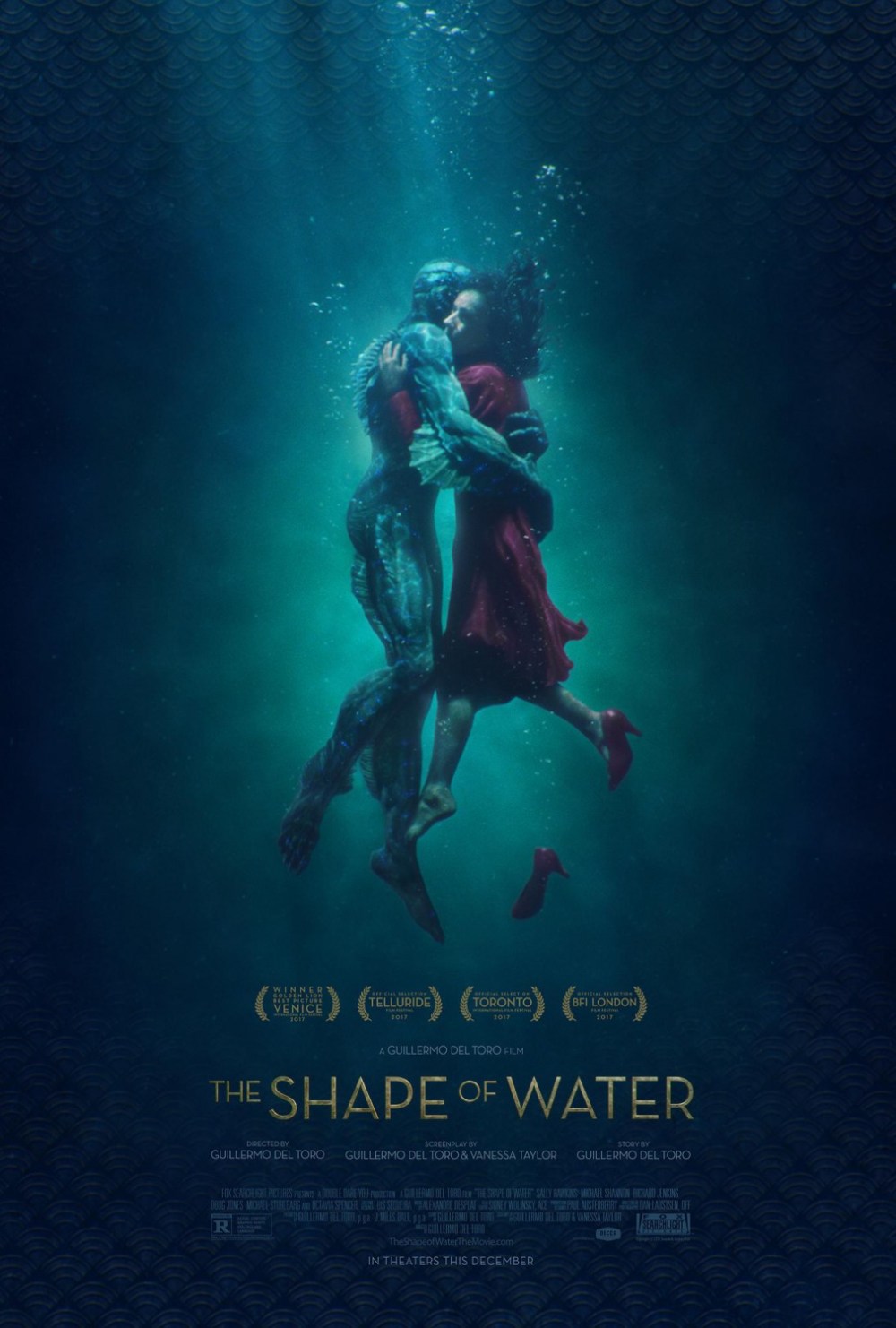
“Pan’s Labyrinth,” “Blade II” and “The Devil’s Backbone” should be more than enough proof of how Guillermo Del Toro is a cinematic god among directors. If you need further proof of this, then I suggest you watch “The Shape of Water,” his romantic fantasy which is truly one of the best films of 2017. While I tend to scoff at romantic movies as I consider them cringe-inducing exercises in endurance which prove to be even more painful than running the Los Angeles Marathon. Please keep in mind, I have run this marathon seven years in a row, and soon I will be running it yet again.
“The Shape of Water” transports us back to Baltimore, Maryland in the year 1962 when America was stuck in the middle of the Cold War. We meet Elisa Esposito (Sally Hawkins), a janitor at a secret laboratory who was rendered mute at a young age due to a neck injury. She follows a daily routine of pleasuring herself in the bathtub while boiling eggs on her kitchen stove, and then she goes to work where she performs her duties without complaint. Luckily, she has a pair of friends to converse with, in a matter of non-speaking, like artist and closeted homosexual Giles (Richard Jenkins) and her ever so talkative co-worker Zelda Fuller (Octavia Spencer) who also takes the time to interpret Elisa’s sign language. But even with friends like these, let alone the luck she has living above a movie theater, there is clearly something missing from her life.
Things, however, quickly change for Elisa when the laboratory she works at receives a creature in a tank. This creature was captured in South America by the cold-hearted Richard Strickland (Michael Shannon), and the government officials he answers to want to dissect the creature in an effort to gain a foothold on the space race. Elisa, however, has different ideas as she develops a strong connection with the creature which will not be easily broken.
I guess this might seem like a strange love story for many to take seriously, but considering the seismic shifts in how the world views, and should view, marriage and the rights of others, “The Shape of Water” could not have been timelier. As improbable as a relationship like this one may sound, Del Toro and his cast make it one we quickly become engaged in to where we are swept up emotionally in a way few movies can.
Along with cinematographer Dan Laustsen, Del Toro gives this film a look which is at once suffocating and yet wondrous. We clearly in the world of movies while watching this one, but the while this might seem like a genre picture designed to take us out of reality, it is filled with genuine emotion which is never easily earned. We can always count on Del Toro to give us a beautifully realized motion picture, but this one deserves special recognition as it had a budget of around $20 million, and yet he made it look like cost so much more. I would love to ask him how he accomplished what he did on a limited budget. In any other case, $20 million is a lot of money. But for a film like this, it seems almost too low to work with.
Sally Hawkins has wowed us as an actress in “Happy-Go-Lucky,” “Made in Dagenham” and “Blue Jasmine,” but she really outdoes herself here as Elisa Esposito as this role takes her into Holly “The Piano” Hunter territory. With her character being a mute, Hawkins not only has to communicate without the use of words (vocally anyway), she has to keep her heart open in a way which we make a habit of avoiding. This actress shows little hesitation in making herself so open and vulnerable to a creature everyone else would be quick to be infinitely fearful of.
Speaking of the creature, he is played by Doug Jones, an actor who is masterful at portraying non-human characters. Whether it’s as Abe Sapien in the “Hellboy” movies, the Faun and the Pale Man in “Pan’s Labyrinth” or even as Lieutenant Commander Saru on “Star Trek: Discovery,” Jones always succeeds in finding a humanity in these characters others would never be quick to discover or find. His performance here as the Amphibian Man is every bit as good as Andy Serkis’ in “War for the Planet of the Apes,” and I put these two actors together because many believe it is the makeup or special effects which do all the acting for them, but it’s their acting which makes their characters so memorable. Jones, like Hawkins, has to communicate without the use of words, but he has an even bigger challenge as his character cannot even use sign language. His work deserves more credit than it will likely get at awards time.
“The Shape of Water” also has a terrific cast of character actors, and they are the kind who never ever let us down. Richard Jenkins is right at home as Giles, a closeted gay man who, when he tries to reach out to someone he cares about, is quickly rebuffed not just by that someone, but also by a society which thoughtlessly excluded many for all the wrong reasons. Jenkins never resorts to giving us a cliched version of a homosexual, but instead makes us see Giles as a man who is kind and considerate but still ostracized to where he is willing to break the rules to help a friend who doesn’t judge him in the slightest.
When it comes to Octavia Spencer, you can never go wrong with her, and she is a wonderful presence here as Zelda Fuller, Elisa’s co-worker who is never at a loss for words. She also makes it clear how Zelda is a force to be reckoned with, and this is something the character’s husband really should have taken into account a long time ago.
There is also Michael Stuhlbarg who portrays Dr. Robert Hoffstetler, the scientist who sees far more value in the Amphibian Man being alive as opposed to becoming a glorified science experiment worthy of dissection. This is a typical role you find in genre films, but Stuhlbarg inhabits the role to where Robert can never be dismissed as a simple stock character. Even as we learn there is more to Robert than what we initially see on the surface, Stuhlbarg makes us see this is a man who values understanding and compassion over greed. You know, the kind of person we would love to see in the White House at this moment.
But one actor I want to point out in particular is Michael Shannon who portrays Colonel Richard Strickland, a man hellbent on putting his country before everything else, including his wife and kids. Shannon succeeds in rendering Strickland into a more complex character than you might expect. As we watch Strickland get berated by his superiors for not doing his job like they want him to, Shannon shows us a patriotic American who wants to serve his country well, but we watch as his spirit becomes as corrupted and diseased as those two fingers of his which were torn off his hand by the creature and reattached with limited success. As the movie goes on, those fingers of his become a disgusting color as they come to represent the corruption of his soul. Other actors would be intent on making you despise such a villainous character, but Shannon makes you see a man whose desperation has forever blindsided his worldview.
Whether or not you think “The Shape of Water” breaks any new ground in the world of motion pictures is irrelevant. All that matter is how it is a beautifully realized film which takes you on an incredible voyage only the best of its kind can. It also reminds you of how valuable a filmmaker Del Toro is in this day and age when distinct voices in the world of cinema are continually minimized and rendered silent for the sake of profit. Here’s hoping you get to see it on the big screen where it belongs before Donald Trump leads us into a war no one in America is prepared to be drafted into.
When I heard that they were making a sequel to Danny Boyle’s “28 Days Later,” I couldn’t help but wonder why. How could you make a sequel to a movie like that without it being the same old thing? 20th Century Fox put together a company called Fox Atomic which specializes in horror movies and sequels to horror movies because god forbid the money stops there! They made “The Hills Have Eyes 2.” I thought “The Hills Have Eyes” remake was great, but I was not as excited about seeing the sequel because it had a different director who made some bad horror films.
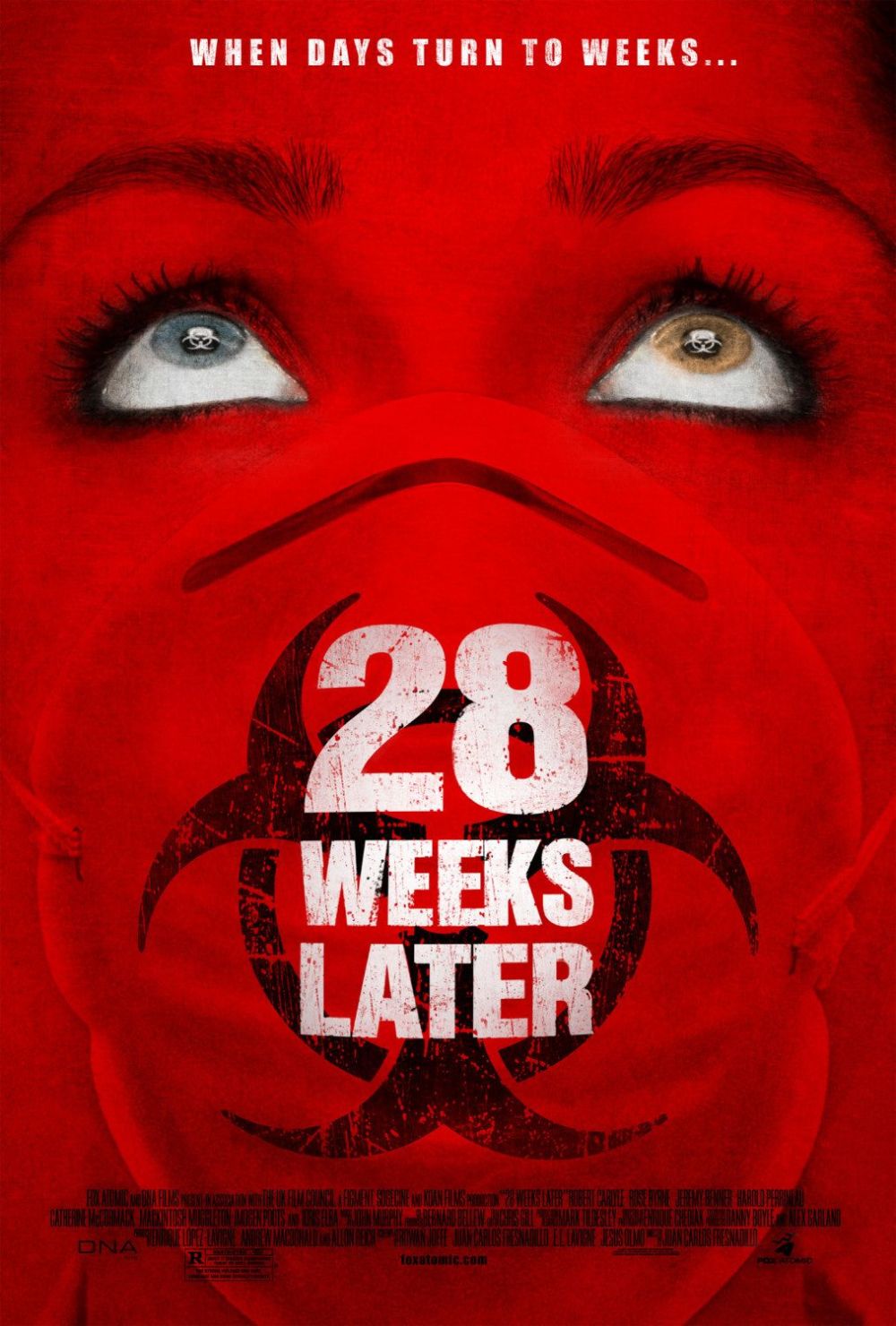
Now they have released “28 Weeks Later.” That’s great, milk it as much as you want. No mercy or respect for the franchise. Then again, these were my thoughts before I actually watched the movie. It had the good luck of at least having Danny Boyle and Alex Garland on as executive producers, so I was assured this follow-up wouldn’t be of poor quality. Under the tense direction of Juan Carlos Fresnadillo, who previously directed “Intacto,” “28 Weeks Later” adds itself to the list of sequels which equal the original in terms of vision and sheer terror, and it ends up delivering what it promises; an extremely intense and unsettling movie going experience.
All the main characters from “28 Days Later” are absent here, so we have a whole new cast of characters trying to stay alive while stranded in a part of the world engulfed by the rage virus. It starts off with a group of English people who have managed to find refuge in a home where they hide from the infected. The main characters are a married couple played by Robert Carlyle and Catherine McCormick who are seen preparing dinner when the movie begins. Most of the actors here are not too familiar to audiences, and this helps the movie in its approach. Carlyle will definitely be familiar to those who remember him from “Trainspotting” and “The Full Monty,” and each of those movies show off how much of a range he has as an actor.
The opening of “28 Weeks Later” has a supreme amount of tension that never lets up. I got to see it at Grauman’s Chinese Theater, and I sat in the back with my hands over my ears because I was eagerly anticipating all hell breaking loose as soon as the movie started. I typically watch most horror movies like this because it’s not what I see that gets to me, it’s the sound. Look no further than the original “Halloween” for an example of this.
The opening is brilliantly shot because you feel like you are right there with these people inside the house. You don’t see the outside world until they do, and it ain’t pleasant. When the infected make their inevitable entrance, Carlyle’s character ends up abandoning his wife who screams at him from a window in disbelief. He runs away from the infected at warp speed, and the fact he escapes with his life is both astonishing and shameful.
The story then moves to London after the outbreak with things finally returning to normal. The United States Army has taken over, and the first of the survivors are now coming back into the safe zone to start their lives over in a land now free of infection. We get to meet the children of Carlyle’s and McCormick’s characters who are played by Imogen Poots and Mackintosh Muggleton. Carlyle’s character is, of course, unprepared to tell his children how their mother perished among the infected, and he lies to them about what happened. As much as you despise him, you can’t help but feel a little sorry for him. Don’t you hate that?
Anyway, his lie about their mother being killed gets exposed when she is found alive in a closed off area of England. She has been bitten by the infected, but somehow has not been overtaken by the rage virus. Her blood seems to have some sort of immunity from the virus which keeps her from going completely psychotic. It is incredibly tragic that husband doesn’t have the good sense to keep himself from kissing her. A kiss is just a kiss? Not in this movie!
As you can expect, all hell breaks loose, otherwise there wouldn’t be a movie. The military tries to control the situation and they end up resorting to, when nothing else works, code red as they quickly see there’s no stopping the spread of infection. They can’t tell the difference between who is human and who is infected, so they resort to killing everyone to keep the situation contained. What makes this scenario so terrifying is how realistic is presented here, and the depressing solution the military takes to contain this horrifying situation is painfully understandable as it threatens the rest of the world. So, those young kids now have to find their way out of the “safe zone” and run away from those who have no choice but to bite and infect them.
There is a lot of shaky handheld camera work in “28 Weeks Later” which gives the movie an immediacy which sucks you in just like the original did. I have been back and forth in regards to hand held camerawork because it can veer easily from being exciting to the becoming relentlessly annoying. Don’t even get me started on the later movies of Woody Allen. I can’t even begin to tell you how nauseous I got while watching “Deconstructing Harry” on the big screen.
But here, the shaky camerawork is perfect as it brings us right into the chaos these characters are feverishly trying to escape. The camera goes all over the place to where we can’t tell where the exit is or if we can trust the person next to us. Fresnadillo is excellent in drawing you into the mindset of the chaos and confusion of what the characters are forced to experience. What if you can’t find your way out? What if the person next to you is infected? Where is the safest place to go? Everyone is running for dear life, but in which direction does one head?
What also makes “28 Weeks Later” work is it’s not just based on thrills and chills as there is an intelligence at work here. There’s a subtle critique of the seemingly endless occupation of military forces in other countries as they futilely try to control a situation completely beyond anyone’s control.
Aside from those kid actors who are terrific and very down to earth, there are a few others worth mentioning. Jeremy Renner plays Doyle, a military shooter who quickly develops a conscience when he decides not to follow orders and instead save a little boy who doesn’t deserve to die. I also want to mention Rose Byrne who plays Army doctor, Scarlet. I like it when a movie where there is a very strong female character who thinks she has found the key to eradicating infection. Of course, no one listens to her because the quick fix-it answer is to kill the host and everyone else if it comes into contact with. Byrne is very believable as a soldier who has no choice but to hold it together when the world around her quickly crumbles.
“28 Weeks Later” is an incredibly tense ride from start to finish, and it never lets up. There’s an unnerving sequence where the main characters have to flee from a chemical attack by going into the underground subway which is pitch black, and the only way they can make their way through is with night vision. This proves to be one of the scariest scenes I have seen in a motion picture in the longest time.
Whereas “28 Days Later” found a measure of hope at its conclusion, “28 Weeks Later” is unrelentingly bleak. Any hope is vanquished by the end, and its last shot features a famous landmark which shows how inevitable it is infection will spread from country to country. This sequel proves to be very respectful of its predecessor, and it goes even further into the nightmare the world is caught up in and beyond everybody’s control. It makes me eager to see “28 Months Later” which I hope will at some point in the future become a reality. But personally, I am waiting for “28 Millennium Later.” The way things are going right now, humanity is doomed in one way or another.
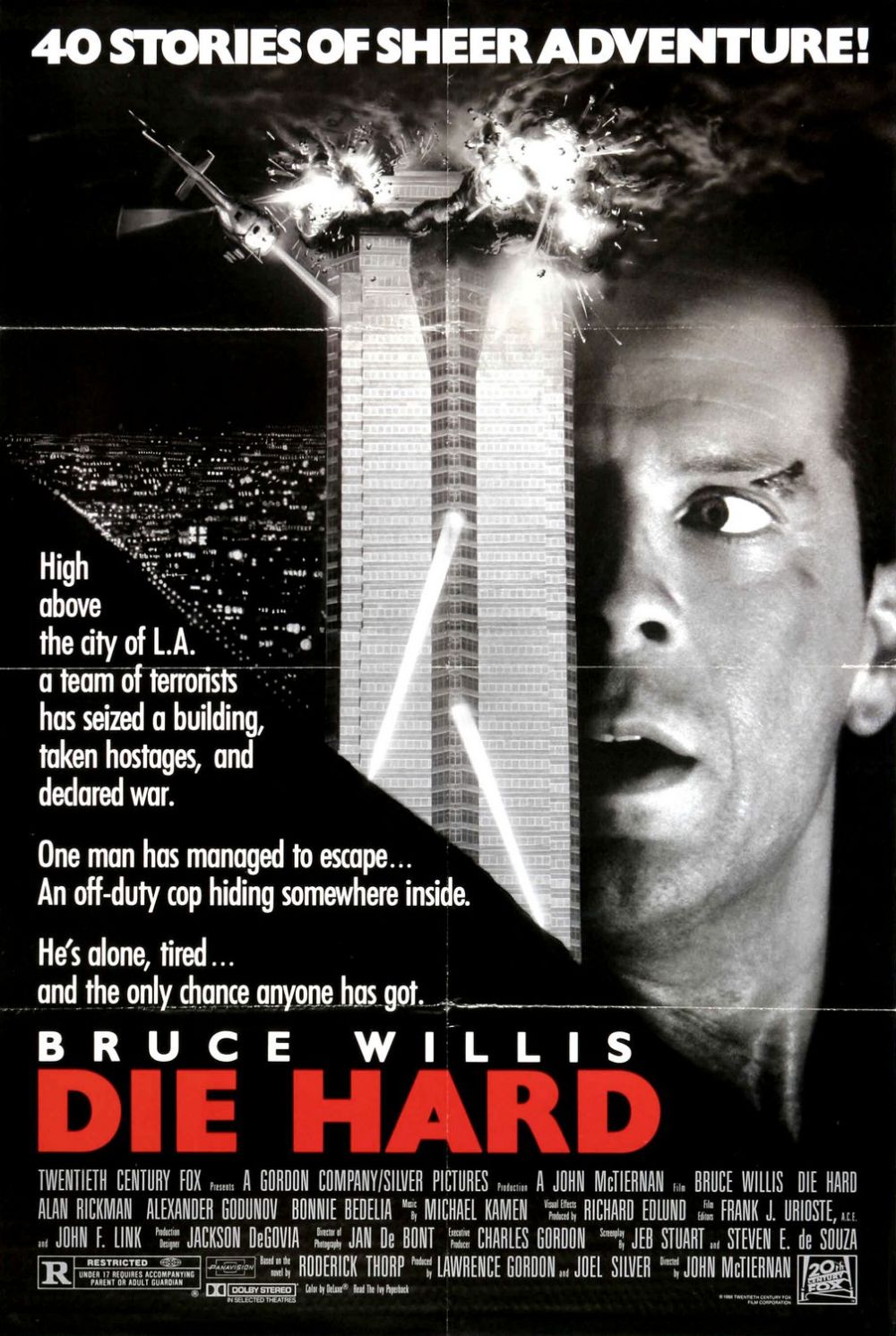
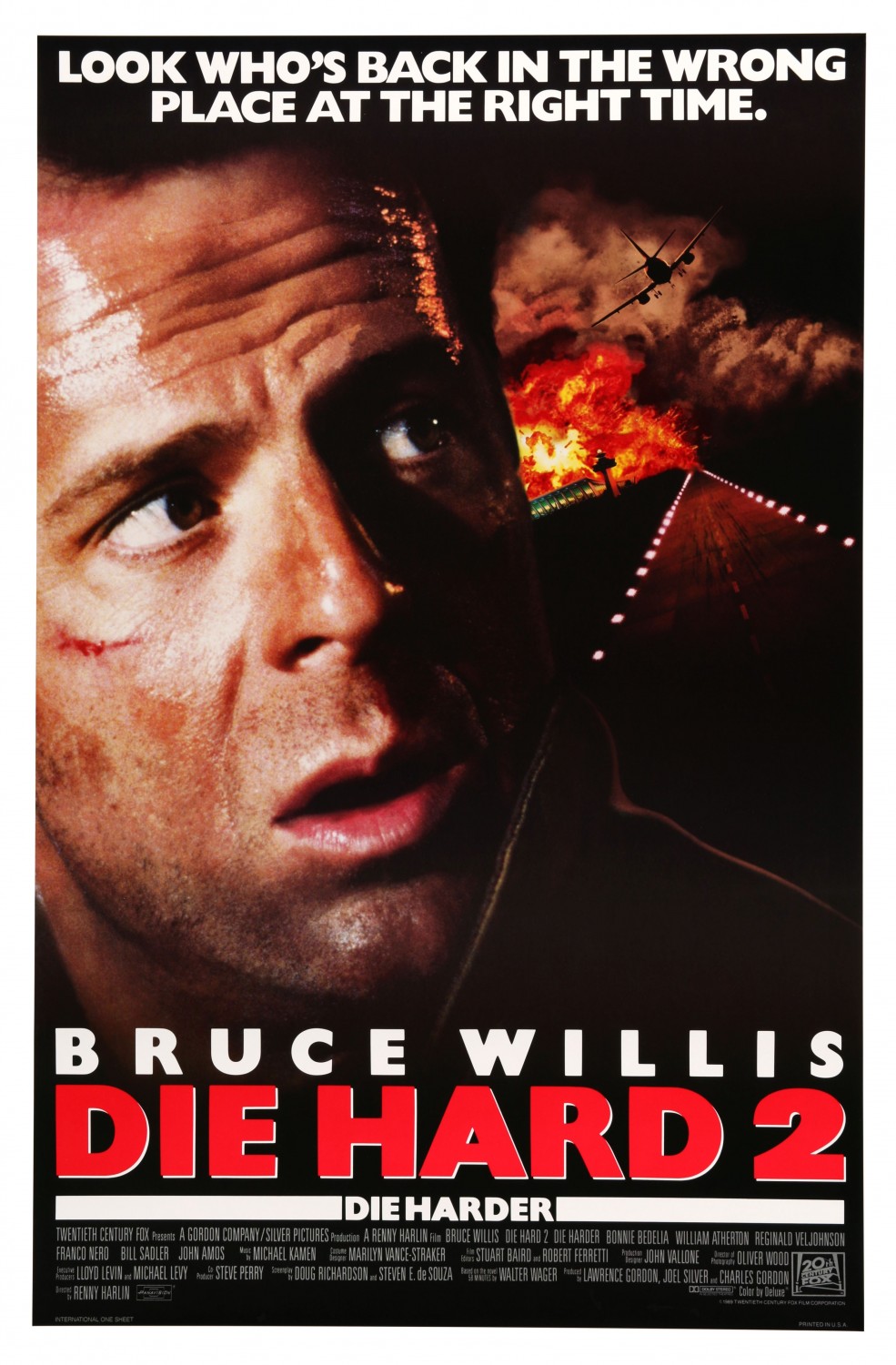
Steven E. de Souza and Renny Harlin dropped by the Egyptian Theatre in Hollywood back in 2009 to talk about the making of “Die Hard” and “Die Hard 2.” Both films introduced us to modern action hero John McClane, a man more real and human than the muscular superheroes played by Arnold Schwarzenegger and Sylvester Stallone. They also inspired a most popular concept in movies; the lone warrior fighting overwhelmingly bad odds. The audience at the Egyptian clearly had seen both these movies hundreds of times, but seeing them on the big screen made them seem more exciting than ever.
In talking about the genesis of “Die Hard,” de Souza said it was based on Roderick Thorp’s novel “Nothing Lasts Forever.” The filmmakers followed the book closely, but there were differences: John McClane was older and visiting his daughter, not his wife. Also, Al Powell (played by Reginald VelJohnson) was originally a cab driver, but the character was turned into a cop as the CB radio craze had long since ended. The writers also dropped the ticking time bomb as well. De Souza also explained in writing the screenplay how he made Hans Gruber the protagonist and John McClane the antagonist. Basically, while Gruber is dragging out time, McClane is busy trying to foil his plans.
In casting “Die Hard,” de Souza admitted Bruce Willis, best known back then for starring on the television series “Moonlighting,” was not the first choice. Frank Sinatra had first dibs as “Nothing Lasts Forever” was a sequel to his movie “The Detective,” but he felt he was too old to play the part. Offers were made to Sylvester Stallone, Arnold Schwarzenegger, James Caan and even Richard Gere, all of whom turned the role down as they found McClane to be too passive.
The conversation moved on to “Die Hard 2” which de Souza said 20th Century Fox decided to move forward with a week after the original opened. Harlin said he had just finished making “A Nightmare On Elm Street 4,” one of that franchise’s biggest hits. This led to him getting many offers as the thinking is studios proclaim you a genius when you have a hit movie. Harlin said he still doesn’t understand the thinking behind this. 20th Century Fox had offered him “The Adventures of Ford Fairlane” and gave Harlin total freedom in filming a movie which featured, as he put it, “girls in bikinis.” The studio bosses liked what they saw and gave him “Die Hard 2” to direct, and Harlin began shooting it two weeks after “Ford Fairlane” wrapped.
Harlin remembered “Die Hard 2” as being so hard to make and that even Joel Silver came to admit he put too much on his plate. As nervous and excited as he was about doing it, Harlin bemoaned his misfortune at shooting during what he called “least snowy winter ever.” He and the production team looked everywhere for snow and couldn’t even find any in Colorado or Montana. In Spokane, Washington, they finally lucked out with lots of snow and were set to start filming, but a sudden heat wave melted it all on the very next day.
Both Harlin and de Souza said they saw “Die Hard 2” as a comedy which makes sense when McClane says, “How can the same thing happen to the same guy twice?” Bruce Willis, however, didn’t see it as a comedy and initially refused to say the “yippee kay yay” line again since he already did in the first film. Harlin said Silver eventually convinced Willis to do a take his way and then another take Harlin’s way. Indeed, it works well as a comedy as McClane’s bad luck is impossible to ignore. Harlin did however credit Willis for the “just the fax ma’am” line.
Thanks to de Souza and Harlin for dropping by. Seeing “Die Hard” and “Die Hard 2” on the silver screen was a great treat. After all these years, they remain exhilarating action movies to watch.
When it comes to singing, I still consider it to the most challenging of all the performing arts. You can be a good singer technically by hitting all the notes just right, but none of it will matter if you don’t put your heart and soul into each of those notes. You can only hide behind technique for so long before the teacher makes you see that you have to be emotionally open and show the audience you are living the song and not just singing it.
I was strongly reminded of this while watching “The Greatest Showman,” the musical drama which stars Hugh Jackman as P.T. Barnum, the infinitely ambitious showman and entrepreneur who created the Barnum & Bailey Circus which ran for over 140 years before shutting down in 2017. Once Jackman sings his first note, it becomes abundantly clear there is no other actor who could inhabit a man who command an audience to where no one could dare take their eyes off him. The scene threatens to be overwhelmed by a rousing musical number, strong choreography and beautiful cinematography, but nothing can upstage the passion Jackman brings to the role as he dominates every filmmaking element to command the stage like no one else can.
For those of you expecting a complex look at P.T. Barnum, you will need to look elsewhere or, better yet, read a book on the man. Director Michael Gracey along with screenwriters Jenny Bicks and Bill Condon are not out to give us a multi-layered portrayal of a man whose success in life was beset by allegations of abuse of his circus animals among other things. Instead, they are more focused on him as a man eager to break out of the shackles of modern life so he can embrace a lifestyle some would say he is undeserving of. At the very least, you have to give the filmmakers credit for not saying this is “based on a true story,” a phrase you all know I abhor with a passion.
We watch as P.T. captures the heart and affection of Charity (Michelle Williams) from a young age even though they come from two different classes of people, P.T. from the poor and Charity from the rich. Nevertheless, their love for one another breaks through barriers, and they marry and bring two beautiful daughters into the world whom they share a powerful love of imagination and possibilities with.
The scene in which we watch P.T. Barnum work in an office and trying not to becoming completely numbed by a redundant work environment resembles the suffocating office Jonathan Pryce was an employee at in Terry Gilliam’s “Brazil,” and from there I was sucked into his quest to escape a life where, as Trent Reznor put it, every day is exactly the same. Of course, his mission in starting an adventurous life is stifled by struggles new beginnings bring about. Barnum ends up buying a museum, but it’s a constant struggle to get anyone to purchase a ticket. Then he employs a number of performers which so-called “normal” people quickly dismiss as freaks of nature. But by giving the public something different, Barnum finally succeeds in making his mark to where nothing he does can be easily ignored.
I found Barnum’s story as presented here fascinating as he tries to find acceptance in a society which pretty much banished him from the day he was born. Barnum even goes out of his way to entice famous Swedish singer Jenny Lind (Rebecca Ferguson) to do a series of concerts in America in the hopes that critics who constantly bash his circus act will come to accept him as an upper-class citizen. The question is, will he leave his circus performers and business partners in the dust in the process?
The plot of “The Greatest Showman” is actually quite thin to where the narrative feels more rushed than you might expect in a movie with a running time of 105 minutes. The story of P.T. Barnum is one deserving of a complex and deeply researched screenplay, but the filmmakers here were instead determined to give us a story about a dreamer who defied the odds and led a life of adventure we all hope to live. If you can accept what they were attempting to do here, this movie will prove to be an enjoyable one, and I was willing to accept it for the movie it was trying to be.
The advertisements boast of how “The Greatest Showman” features music by the lyricists of “La La Land,” another movie dedicated to the risks dreamers take. The songs, which include “Come Alive” and “This is Me,” are rousing and will get you into a wonderfully invigorated state as you sit and take in the spectacle. Having said this, this is not the kind of musical which will remain in your mind long after you have watched it. Perhaps my standards for musicals are too high as “South Park: Bigger, Longer & Uncut” remains the best movie musical Hollywood has released in years (“La La Land” is not far behind).
Aside from Jackman, the other actors acquit themselves nicely. Michelle Williams remains one of the bravest actresses, let alone actors, working today as she never hesitates to lay herself emotionally bare in a scene. Just check out her heartbreaking scene from “Manchester by the Sea” (you’ll know it when it comes up). Williams shares the screen with Jackman to where it should be no surprise she can hold her own with Jackman as their characters’ love is threatened more often than not.
Zac Efron, while I sometimes hoped he would be livelier than he was, certainly has all the right moves as Phillip Carlyle, a playwright who becomes Barnum’s business partner. Zendaya plays Anne Wheeler, an acrobat whom Phillip quickly gains a strong affection for, and she makes her presence in this movie a memorable one. I also have to single out Keala Settle who portrays Lettie Lutz, a bearded lady, as her performance of the song “This is Me” proves to be a real show stopper as we root for her and her fellow freakish performers to come out of the shadows to where no one can ignore or easily dismiss them.
With “The Greatest Showman,” you have a movie musical which has flaws not hard to miss, but I was still enthralled with it even though I am not in a rush to buy the soundtrack. Much of this is due to the actors as there is no denying they put all their heart and soul into their roles. Jackman, who has already has had one heck of a year with his penultimate Wolverine performance in “Logan,” remains a powerful presence whether he is appearing on stage or screen, and even if you have issues with this motion picture, there’s no denying there are few actors like him working right now.
As I walked out of the theater, I was reminded of something Groucho Marx once said:
“I wouldn’t want to belong to a club that would have me as a member.”
Does Barnum believe the same before this movie’s end? I leave it to you to find this out.
Kenneth Branagh’s adaptation of “Murder on the Orient Express” marks a return of sorts for the actor and director. His last few movies as a director, “Thor,” “Jack Ryan: Shadow Recruit” and “Cinderella,” had him embracing all the cinematic tools available to him to where his unique talents threatened to be squashed as he began to look like any other filmmaker making blockbuster motion pictures. But with this latest adaptation of Agatha Christie’s classic mystery novel, we see him returning to his theatre roots as he directs an all-star cast to excellent performances while simultaneously playing the lead role of Belgian detective Hercule Poirot. The late Leonard Nimoy said he never directed another “Star Trek” movie after “The Voyage Home” because acting and directing at the same time was just too much work. Branagh, however, makes it all look like a walk in the park, and after all these years I am astonished that he can make it look so easy.
Branagh is fantastic as Hercule, and he makes this classic character into a man of many splendors. We first see him being very picky about being served two hard-boiled eggs, both of which need to be the same size for him to eat. This scene almost makes him looks like a food snob, but then we see him solve a crime at the Wailing Wall in Jerusalem. Hercule brings up three holy men to the front of the crowd, and immediately we think one of them is guilty, and that, once the guilty man is revealed, people will find their prejudices to be justified. But instead, Hercule implicates another man with the crime, and it shows how he sees sins as being universal and not relegated to a particular group or ethnicity. From there, we know this man will not be bound by prejudice when it comes to solving a crime.
Hercule just wants to take a holiday aboard the Orient Express, and we see him take great joy in observing perfectly baked foods as well in reading Charles Dickens’ “A Tale of Two Cities” which he laughs at constantly. But detectives like him can only stay on vacation for so long as the scent of crime is never far from him. And, as the movie’s title implies, a murder is committed which only he can solve with his unique set of skills. This will not be an easy case, but Hercule is quick to tell us, “If it were easy, I would not be famous.”
“Murder on the Orient Express” has been adapted several times, the most famous adaptation being Sidney Lumet’s 1974 film which, like this one, features an all-star cast. I have not seen any of the previous versions nor have I read Christie’s novel, so I am coming into this one a fresh newbie. From the start, I expected Branagh’s film to be an old-fashioned whodunit, but as it went on, I was surprised to see the story deal with themes Shakespeare wrote about time and time again. It becomes less about who the murderer is and more about the sins we allow ourselves to live with and of the different kinds of punishment we are forced to endure. Once the murderer is revealed, the story doesn’t stop there.
Branagh brings together a terrific group of actors who sink their teeth into roles which, on the surface, might seem underwritten and one-dimensional, but each actor does excellent work in creating an inner life for their characters to where their eyes tell us more than their mouths do. Even as they work on perfecting their poker faces, something which Hercule has them all beat at, their eyes betray a truth which can no longer stay buried.
Johnny Depp shows up as Edward Ratchett, an unsavory individual who becomes the victim of the story. Seeing Depp getting killed off early on in a movie is guaranteed to please many audience members who have had their fill of him, and I don’t just mean Amber Heard. I’m just glad Branagh cast him in this role instead of as Hercule. Depp would have just resurrected his Guy LaPointe character from “Tusk” and “Yoga Hosers” if he played Hercule, or perhaps he would have given us another variation on Charlie Mortdecai as, like Hercule, that character sports a truly extravagant mustache. All the same, Depp is wonderful in the role and makes Ratchett into a despicable character whose nasty fate deserves a thorough investigation.
I loved watching Penelope Cruz as Pilar Estravados as her demeanor presents the character as one with dark intentions as well as someone who has suffered far too much pain and tragedy in life. It took me a bit to recognize Josh Gad who plays Ratchett’s right-hand man, Hector MacQueen, and he is excellent as a man who has compromised his values once too often. Daisy Ridley, whom we cannot wait to see again as Rey in the next “Star Wars” movie, matches Branagh scene for scene as Mary Debenham, a lady who refuses to be investigated by Hercule for a protracted amount of time, but even her poker face falls apart before she realizes it. And you can always depend on Derek Jacobi, Dame Judi Dench and Willem Dafoe to turn in excellent performances as they rarely, if ever, have let us down.
But one performance I want to single out in particular is Michelle Pfeiffer’s who portrays Caroline Hubbard. 2017 has been a big year for Pfeiffer as she has emerged from what seems like an infinitely long hiatus and has given unforgettable and scene-stealing performances in Darren Aronofsky’s “mother!” and Barry Levinson’s “The Wizard of Lies.” The same goes with her performance here as she takes the stereotypical divorced socialite and renders her into a complex figure of tragedy whose armor is harder for Hercule to break through. Pfeiffer has always been a fantastic actress, and her performance as Caroline reminded me of this and of how long her career has lasted. She has a show-stopping moment towards the movie’s end (you’ll know it when you see it), and it is further proof of how she has never been just another pretty face in Hollywood.
Branagh has directed “Murder on the Orient Express” as a theatre piece, and it is clear to me how much attention he has given the actors here. Having said that, he also gives this adaption a beautifully cinematic look. Along with his collaborators, director of photography Haris Zambarloukos and composer Patrick Doyle, he makes this film feel wonderfully old-fashioned, and it seems like forever since I have watched a movie which evokes this feeling. It should also be noted how he shot this movie on 65mm film which suits the material perfectly, and seeing those cigarette burns appear on the screen was a very welcome sight for me.
Of course, not everything about “Murder on the Orient Express” is perfect. The movie does drag a bit towards the end, and the story is at times a bit hard to follow. It also pales in comparison to another mystery movie Branagh directed back in the 1990’s, “Dead Again.” Still, it proves to be a wonderfully entertaining motion picture which reminded me of his best work even while not quite equaling it. The ending draws our attention to another Agatha Christie classic novel which implies, if this movie does well, we could be seeing the beginning of a franchise. I do hope this happens as Branagh has put together a wonderfully entertaining motion picture which begs for a continuation. Whether he can come up with a follow up remains to be seen as the world of movies remains dominated by endless superhero/comic book franchises.
I also have to say the mustache Branagh sports in this movie is very impressive. Lord knows how long it took for him to grow and keep so pointy. Many other actors would have been easily upstaged by such a mustache, but not Branagh.
Looking back at some of the articles I have written about screenings at New Beverly Cinema, I kept saying or implying that you could never expect any screenings showing there to sell out. But now it looks like that’s becoming less and less the case. Ever since Quentin Tarantino bought the building where the theater is located and saved it from becoming another Supercuts, more and more movie geeks have descended on this establishment, the last standing movie reparatory theater in Los Angeles. Jason Reitman did a movie program there which featured “Election,” “Boogie Nights” and “Ferris Bueller’s Day Off,” and it brought out huge crowds of people. Torgan and company ended up having to do something they almost never do; turn people away!
Well, the line around New Beverly once again snaked around the corner as actor Peter Weller was scheduled to introduce a screening of the 1984 cult classic, “The Adventures of Buckaroo Banzai Across the 8th Dimension,” on March 29, 2010. Every single was taken, and the screening got delayed because the line at concessions threatened to snake around the theater as well. Weller brought along two other players from Buckaroo’s crew: Billy Vera who played the bass guitarist for Banzai’s rock band the Blue Blaze Irregulars, and Gerald Peterson who played Rug Sucker. The Q&A was moderated by Jeremy Smith, Mr. Beaks from Ain’t It Cool News, and he proclaimed this to be “the nerdiest movie ever made.” Upon saying this, he got a huge applause from the audience.
Weller did look a little ragged, and he later explained it was because he didn’t go to bed until about 2 a.m. the night before as he just got through 86 hours of PhD exams at UCLA. Furthermore, he said he has been wearing the same clothes for several days straight which reek of cigar smoke as he was smoking 10 of them in a day.
“Buckaroo Banzai” turned out to be a lot of fun, and this is despite the fact I have no idea of how to explain what it’s exactly about. However, it turns out the most ardent fans of this movie and the actors who starred in it can’t really explain what the plot is about either.
“I didn’t understand it (the script) actually, and I think no actor in it does understand it. I don’t think Billy or Gerald understood it, but it was fun,” Weller said.
“If you say you understood it, you’re a liar,” Vera said.
Weller went on to say 20th Century Fox didn’t know how to market “Buckaroo Banzai” at all. The studio executives came to the set around the time they were finishing principal photography and asked him, “Is it an action movie?” Later on, the editor of the movie, Oscar nominee Richard Marks, said, “That film is a comedy! It’s a comedy and they should have known that from the jump!”
But perhaps the best way to describe “Buckaroo Banzai” is its half comedy and half drama. Vera added many television shows later took on the half comedy and half drama formula, but he couldn’t think of any which came before this movie. To this, Weller added, “Or after.”
Weller was actually not sure if he was going to do this film because he had his eye on a romance movie around the same time. But this same romantic movie was getting bounced around from studio to studio, and his agent convinced him to take “Buckaroo Banzai” since it looked more and more like the other flick was not going to happen. With a cast which included Christopher Lloyd, Ellen Barkin and John Lithgow, this could not have been easy to turn down.
“The Adventures of Buckaroo Banzai Across the 8th Dimension” marked the directorial debut of screenwriter W. D. Richter who was best known for writing Phillip Kaufman’s version of “Invasion of the Body Snatchers” and also “Brubaker.” Richter was also responsible for co-writing another movie 20th Century Fox had trouble promoting, John Carpenter’s “Big Trouble in Little China.” Weller described Richter as a beautiful and really laid-back guy, and that he was also an intellectual from the east coast. Richter didn’t have the get up and go Hollywood thing going on, and Weller said this made him perfect for the actors to work with. Also, Richter was a musician as was Weller and several of the cast members, and Weller said his heroes have always been musicians.
Vera said he got cast after Richter and Weller saw him perform at the Viper Room in Hollywood. After he was done, Vera said Richter got a hold of him and asked, “You know, I like the way you improvise on stage. Do you think you could do that in a movie?” “Yeah, I do it every night,” Vera said. ”Do me a favor,” Richter said, “kind of tell me where you’re gonna stand so that I can have a camera ready for you.” Weller, Vera and Peterson all agreed that this was the way Richter directed the whole movie.
Mr. Beaks then started taking questions from the audience, the first one coming from a guy who read somewhere that the producers of “Buckaroo Banzai” were not at all happy with the film. He asked if this dislike of theirs bled onto the set to which Weller replied, “Uh, yeah.“ It must really suck to make a movie while knowing those who got the ball rolling and spent so much money on it don’t believe in it after viewing the dallies. And like many cult movies, this one was a box office flop, but it eventually found a cult following on video, cable, and DVD. You have to wonder how this movie among others could inspire such fans to watch it at least 57 times. Weller summed it all up perfectly:
“The longevity of it is that it’s unique. There’s a uniqueness to it,” Weller said. “They (the producers) wanted it to fit into a mold. They thought that it would be more slapstick, overt action and humor. The humor, although I have to say I don’t understand a lot of it, was fantastic. The humor was so… Just under the radar man.”
“And that’s why they cut a half hour of it,” Vera added. “The movie was a half hour longer which gave the jokes more room to breathe, but the studio said they wanted to cut it short so that they can show it more times per day.”
Particularly fascinating was Weller’s take on Christopher Lloyd whom we all know best as Doctor Emmet Brown from “Back to the Future.” Weller talked about when Lloyd’s house in Montecito burned down during the devastating Malibu fires. Lloyd had gone on television to talk about what happened, and Weller described how he and his wife were so devastated over what happened to him. But during a conversation with one of Weller’s professors at UC Santa Barbara, who brought up how sorry he was for Lloyd losing his house, Weller quoted exactly what he said:
“You’re gonna be the first to know the truth… I was already selling the house and there was nothing in it at all. I was living in an apartment in Montecito!”
Stunned at hearing this, Weller looked right at Lloyd and said, “Chris! The world, not just LA, but the whole world! We even saw this news in Italy! You looked so sad…” Lloyd’s response to this really did turn the whole thing into a comedy:
“I know! Because when the fire was going and I walked up and they put three cameras in my face, and I didn’t know what to do except LIE!”
Weller also said he met Jeff Goldblum on the same night he lost his virginity, and then he brought up an almost insane story about Goldblum which took place when he was getting married. Weller had already been married at that point and was telling Goldblum how excited he was to see him settling down. What Goldblum told him after that made us see him in different light:
“We’re on the other side now Peter!”
Other tidbits about “Buckaroo Banzai” included how the montage of Buckaroo and his comrades coming together during the end credits was actually an addition made by Richter later on. While filming this, Weller admitted he and the actors were actually walking to the tune of Billy Joel’s “Uptown Girl.”
Before those end credits began, there was also the promise of a sequel laid out for the audience entitled “Buckaroo Banzai Against the World Crime League.” One audience member asked why this sequel never got made, and it turns out there was more to it than the movie dying at the box office:
“Well the one guy (producer) went to prison for bank fraud, and the other guy blew his brains out in Century City Plaza,” Weller said. “Both of those guys were really good guys and I stayed in touch with the one who went to the joint, and he’s out now.”
Just before they finally started showing the movie, Weller thanked the crowd for coming out and said that this turnout and excitement was what he had expected when he walked in to meet his professors at UCLA today. Instead, they just gave him more stuff to work on, and that was after the 86 hours of work he had already done. Suffice to say, this crowd was far more welcoming.
It was great to finally see “The Adventures of Buckaroo Banzai across the 8th Dimension” after all these years, and it was even more fun watching it with a large audience. To see it on television is one thing, but there is nothing like experiencing it on the silver screen in a packed theater. Weller took a very unrealistic character who was a renaissance man, a top neurosurgeon, particle physicist, race car driver, rock star and comic book hero, and he made you buy into him without questioning the logic of how he found the time to take on all these disciplines.
Another memorable evening at the New Beverly Cinema!
Watching the trailer for “The Mountain Between Us” got me to thinking about other movies about people surviving a horrific plane crash like “Alive,” “Cast Away,” “The Edge” and “The Grey.” You watch these characters struggle to survive in an environment they couldn’t be less prepared to deal with, and they always prove to be compelling as you wonder what you would do in a similar situation. Even movies like “The Blue Lagoon” and “Swept Away” come to mind as both are about a man and a woman trapped together on a deserted island, and it made me wonder what kind of motion picture “The Mountain Between Us” would end up being. Could it be another story of human beings trapped in a harsh environment which tests their limits of survival, or is it one where two strangers to fall in love in a time and place they otherwise would not?
After watching “The Mountain Between Us,” which is based on the novel by Charles Martin, I can confirm it is a combination of both kinds as it deals with a man and woman stuck in an intensely frigid environment after their charter plane crashes in the High Uintas Wilderness, and it is only a matter of time before they fall for one another even as they do their best to keep their mind on survival and making it back to civilization. What results is nothing new as this is territory has been covered countless times from one decade to the next, and yet it is still a very compelling motion picture regardless of the familiar elements.
The main reason this film works as well as it does is because of its main stars, Idris Elba and Kate Winslet. They both are always working at the top of their game no matter what project they appear in, and they work incredibly well off of one another in each scene they share with one another. But more importantly, they are able to render their characters as relatable and down to earth people in ways their individual stardom might otherwise not allow. Winslet and Elba are among the most recognizable movie stars working right now, and this never compromises their work here in my opinion.
Alex Martin (Winslet) is a photojournalist desperate to get back home in time for her wedding to Mark (Dermot Mulroney), and Dr. Ben Bass (Elba) is a neurosurgeon eager to get back to patients in desperate need of his assistance. Their flights end up getting cancelled due to a severe weather front approaching them, and yet their desperation overrides the need for safety. Alex, seeing Ben and she have the same problem, join together to enlist the services of Walter (Beau Bridges), a friendly pilot who agrees to fly them to another airport before the weather gets really bad. But as fate would have it, Walter suffers a stroke in mid-flight, and their plane ends up crashing in the frigid wilderness.
I have to give director Hany Abu-Assad credit for his handling of the plane crash sequence. Somehow, he manages to have his camera moving all around the plane’s interior from the back where Winslet and Elba are seated to the front where Bridges is at the controls, and it all looks like it was done in a single shot. Steven Spielberg shot a similar scene in “War of the Worlds” in which his camera went inside and outside of a van as Tom Cruise navigates it through the debris-laden New Jersey highway, but Abu-Assad instead keeps things relegated to the action inside the plane.
Indeed, plane crashes in movies tend to be more frightening when you are made to feel you are inside the airplane to where the director doesn’t bother with many, or any, exterior shots. Considering how Winslet, Elba and Bridges are also in a plane prone to mechanical failure more often than not makes this crash sequence all the more terrifying and brutal. Plane crashes are common in movies, but this one reminded me of the kind which work best on the silver screen.
Alex and Ben are trapped in the icy mountains of Utah and have suffered painful injuries which force them to stay in one place to recuperate and wait for rescue. Their only other companion is Walter’s dog who is quick to warm up, figuratively speaking, to Winslet, but not to Elba. Eventually, they are forced to realize their hopes of rescue are dwindling with each day, and despite their differing opinions on whether they should stay or go, they realize they need one another to make it through the harsh wilderness which surrounds them as it represents their only chance for survival. As the story goes on, we see the obstacles they face are not just physical, but psychological as well.
I liked how Alex and Ben hint at the many disaster pictures they have watched after their plane makes an unexpected and violent stop. Ben is good at fixing up wounds and stabilizing a broken leg, and Alex keeps reminding him about the rule of threes: you can survive 3 minutes without air or in icy water, you can survive 3 hours without shelter in a harsh environment, you can survive 3 days without water, and you can survive 3 weeks without food. These rules remain strong in our minds as they face deadly animals and icy temperatures their insulated clothing can only handle so much of.
There were a couple of questions, however, which I couldn’t help but ask while “The Mountain Between Us.” Why was Ben so slow to create an S.O.S. sign outside of the wreckage for approaching planes to see? This would have been the first thing I would have done. Also, these two still look quite well-groomed for people who are in no position to bathe themselves while being lost for weeks at a time. After watching “The Revenant” in which Leonardo DiCaprio and ends up sleeping in a dead horse’s carcass to keep from freezing to death, I couldn’t help but think this movie could have used more in the way of realism. Compared to that Oscar-winning film, Winslet and Elba look to have a bit easier.
Regardless, I still found “The Mountain Between Us” to be very compelling film as Winslet and Elba inhabit their characters with a fearlessness as they are forced to expose one another’s vulnerabilities as their survival comes to depend on knowing more about who they are. Winslet, in particular, has an amazing moment where she tells Elba about a refugee girl she once befriended. The way Winslet plays this scene is incredible as she is able to paint for us a vivid experience of the things Alex experienced to where no cinematic flashback is needed to further illustrate what she has been through. love it when filmmakers trust their actors to where they can deliver moments so fully to where we have all the information we need.
And yes, their characters do eventually fall for one another, but thankfully “The Mountain Between Us” never becomes a romantic tale of the cringe-inducing variety like “The Blue Lagoon” or “Swept Away” (and by that, I mean Guy Ritchie’s god-awful remake). The moment where they first kiss is wonderfully acted as I expected one or both of them to say “we shouldn’t” or something equally silly, but Winslet and Elba still manage to say so much more than words can to where dialogue is not necessary.
Regardless of the flaws inherent in “The Mountain Between Us,” its these two remarkable actors who keep us hooked to where their familiar storyline felt fresher than it would have in the hands of others. While familiarity can breed contempt, and this isn’t the first time we have seen Winslet plunge into icy waters, it never takes away from the story’s power or the terrific performances of its leads. Long before we arrive at the movie’s climax, we come to realize the title not only refers to physical obstacles these characters are forced to face, but the emotional ones as well. Considering how we all build emotional walls over the years, tearing them down can be as hard as climbing a mountain, and I don’t mean Mount Everest.




 The Ultimate Rabbit