While much of the attention on Michael Bay’s “Pain & Gain” has been focused on Mark Wahlberg and Dwayne Johnson, there’s another actor in the cast audiences are taking notice of as well: Anthony Mackie. The Julliard School graduate made his movie debut opposite Eminem in “8 Mile,” and he has since gone on to give memorable performances in the Best Picture winners “Million Dollar Baby” and “The Hurt Locker.” “Pain & Gain” is one of several 2013 movies Mackie will be appearing in, and he does not appear to be suffering from a shortage of roles in the slightest.
In “Pain & Gain,” Mackie portrays Adrian “Noel” Doorbal, a bodybuilder and personal trainer who works with Daniel Lugo (played by Wahlberg) at the Sun Gym in Miami. Lugo ended up recruiting Doorbal to help him kidnap rich businessman Victor Kershaw (Tony Shalhoub) so they can steal his money and live out the American dream. In an interview with Billy Donnelly of the website Moviefone, Mackie recalled being blown away by the script when he first read it and couldn’t believe it was based on a true story. The actor also took the time to explain how his character differs from the ones played by Wahlberg and Johnson.
“What I love about Doorbal is that he’s the grounding force of this movie,” Mackie told Donnelly. “Everybody else does this crime so they can move into a nice neighborhood and sleep with strippers and buy sports cars. When everybody else got a sports car, he got a minivan. When everybody else blew their money on all kinds of random shit, he got married and bought a house. So, he is the true testament, the epitome of wanting to have the American dream. And I think that’s why the character works so well. Because he’s logical with every aspect of it. But in real life? He was the henchman. He was the dude who was cutting the body up and killing people and doing all the crazy stuff that Mark’s and Dwayne’s characters couldn’t do.”
For Doorbal, living the American dream means having a nice home, a loving wife, a dog and a white picket fence. Compared to Lugo and Paul Doyle (played by Johnson), he is not as greedy in his desires even though he’s every bit as guilty of the crimes they all committed. While talking with Brennan Williams of The Huffington Post, Mackie explained what playing this character had to offer him which others in the past had not.
“I have never portrayed a character in this vein before,” Mackie told Williams. “He was so dynamic and so convoluted. And I’m, for some reason, at this point in my life am really interested in people justifying their wrongs. I feel like there’s so many people that do awful things in their day-to-day life, but some kind of way in their minds, they can justify them. And that was something that I’ve become so interested in. So, I wanted to explore that in a movie. And this movie came at the right time for me to do that.”
Now a lot has been said about the weightlifting and intense workouts Wahlberg and Johnson had to endure for “Pain & Gain,” but Mackie was not an exception. Furthermore, Mackie said he and Wahlberg worked out together every morning and that they were very competitive with one another. They would constantly challenge each other to see who could bench press the most weight, and Wahlberg got to where he could lift almost 400 pounds. Mackie detailed both his workouts and the strict diet he stuck to while making this movie.
“Bodybuilding and weightlifting is more of a lifestyle than anything else, so the diet part was easy because it was just about staying focused and staying on your regimen,” Mackie said. “It wasn’t like I had to eat anything or I couldn’t eat anything. It was all about putting together what nutrients I needed day-to-day to get enough of one thing or another in my body. So, it was fairly easy for me. I ate a lot of lean protein like turkey and chicken. I got my carbs from sweet potatoes. So, it became easier as time went on. But I tell you what, after three months of doing that, I don’t want to see a piece of turkey or chicken for a long time.”
Actually, one big issue Doorbal quickly has to confront at the movie’s start is his use of steroids. He uses them to enhance his body structure, but they end up rendering him impotent and made a certain part of his body horrifically small. We all know by now how steroids are incredibly bad for your body when they are abused, but during a press conference for “Pain & Gain,” Mackie explained what his research into steroids taught him.
“From what I understand, it depends on what type you take,” Mackie said. “When doing research, they just talked about all kinds of stuff, and you cycle on this stuff and you would be very surprised at how very easy it is to get caught into it. But there ain’t no lovin’ when you’re juicin’ (laughs). That’s the message I get from the movie; if you want some lovin,’ put down the needle!”
From here, Anthony Mackie has a lot to look forward to as he has “Runner, Runner” coming up in which he co-stars with Justin Timberlake, and he is set to play Falcon in the superhero sequel “Captain America: The Winter Soldier.” While Doorbal took the wrong path in life in pursuing his dreams, Mackie did not make that same mistake and he is now one of the busiest actors in Hollywood today. In fact, Mackie made it very clear what his version of the American dream is.
“To not go to jail,” Mackie said. “I grew up in New Orleans at a time where everybody was getting killed or going to jail, so my goal in life was to go to college and not spend one night in a jail cell.”
He has succeeded in doing just that.
SOURCES:
Billy Donnelly, “Anthony Mackie, ‘Pain & Gain’ Star, on Excess, the American Dream, and ‘Captain America: The Winter Soldier,'” Moviefone, April 26, 2013.
Robert Downey, Jr. is back as Tony Stark/Iron Man in “Iron Man 3” which finally made its way to movie theatres after an endless advertising blitz. Then again, it hasn’t been long since we last saw him as he was in “The Avengers” which came out last summer. It makes you wonder if Downey, Jr. might be getting a little sick of playing Tony Stark and his alter ego as this role has monopolized his time over the past few years. But in “Iron Man 3,” the actor finds a fresh way to portray this iconic comic book character as he becomes afflicted by something I know more about than I would ever care to: panic attacks.
That’s right, ever since his near-death experience in “The Avengers,” Stark has been having serious anxiety problems and is constantly worried he won’t be able to protect the love of his life, Pepper Potts (Gwyneth Paltrow). But there’s an even bigger problem on the horizon for him and it comes in the form of The Mandarin (Ben Kingsley), an unrepentant terrorist who leads an international terrorist organization known as The Ten Rings. The Mandarin is out to punish America and its President, Ellis (William Sadler), for their crimes against humanity, and also for trying to adopt Chinese culture in such a ridiculously fake way.
In addition, Stark has to deal with his ex-flame Dr. Maya Hansen (Rebecca Hall) and Aldrich Killian (Guy Pearce), a scientist he arrogantly rebuffed back in 1999. In the present, Killian has become a brilliant scientist who has developed the Extremis virus which cured him of his own physical disabilities, and we soon find it also gives those exposed to it superhuman strength and the power to generate extreme heat. Will it be used as a weapon for bad against good? Is this a superhero movie?
The big news about “Iron Man 3” is Jon Favreau who directed the last two installments has stepped out of the director’s chair, and in his place is Shane Black, the same man who wrote the screenplays for “Lethal Weapon,” “The Last Boy Scout,” “The Long Kiss Goodnight” and who eventually directed one of his screenplays with “Kiss Kiss Bang Bang.” Black seems like an unusual choice to helm a summer blockbuster, but the change in directors proves to be a good thing as Black focuses on character as much as he does on the spectacle. It’s a darker entry than the last two films, but Black still injects a lot of humor into the proceedings.
Now where “The Dark Knight Rises” was more about Bruce Wayne than it was about Batman, “Iron Man 3” is more about Tony Stark than his alter ego. In fact, we don’t see Iron Man in action as much as we did previously or in “The Avengers” for that matter. Some might see this as a serious flaw, but I think it benefits the story greatly. Being Iron Man has become a serious addiction for Stark to where he can’t sleep and function normally unless he’s working on one of his darn suits, and he’s never been the easiest guy to be around. Clark Kent and Peter Parker struggled greatly with their alter egos, but Stark’s position proves to be far more precarious.
Downey, Jr. could almost walk his way through this iconic role of his, but he still captures the different sides of Tony Stark beautifully. Even when he is a bit too dismissive to 10-year old Harley (Ty Simpkins), we still love the actor to death. Come to think of it, is there another actor in Hollywood who can make arrogance look sexier than Downey, Jr.? I think not.
Kingsley is the kind of actor who can play any role, and this has been the case for a long time. As The Mandarin, he creates an ominous presence in “Iron Man 3” which makes you believe he can be a nasty threat anywhere and everywhere. My only frustration with him was, even before I saw this sequel, I knew he wouldn’t be able to top the most malevolent prick he has ever brought to life in the movies: Don Logan from “Sexy Beast.” Then again, when “Iron Man 3” reaches a certain point, it becomes very clear why this is the case.
Pearce can go from playing a good guy to a bad guy with relative ease, but his last few movies have had him portraying the slimiest of villains (check out his performance in “Lawless”). He succeeds in making Aldrich Killian both an unfortunate victim and a selfish bastard all in one, and you have to give Black and his co-screenwriter Drew Pearce credit for giving us more than your one-dimensional baddie. Pearce always knows how to create a nemesis we just love to despise.
Paltrow gets her biggest role yet in the “Iron Man” franchise this time around, and I could tell you why but this would be giving away far too much. The important thing is she looks to be having a blast playing Pepper Potts this time around, and her fun is contagious.
Hall is, as always, a very appealing presence, and she is terrific as Dr. Maya Hansen. James Dale Badge makes Eric Savin, one of The Mandarin’s henchman, a ruthless bastard you want to see taken down ASAP. William Sadler seems like an unlikely choice to play the President of the United States after seeing him play the bad guy in “Die Hard 2” and the Grim Reaper in “Bill & Ted’s Bogus Journey,” but he sells himself in the role with no problems. And while I still miss Terence Howard as Col. James “Rhodey” Rhodes, Don Cheadle still gives an excellent performance as that character.
Everyone who reads my reviews knows I usually expect the third movie in a trilogy to be the one which destroys a franchise, but “Iron Man 3” doesn’t do that. I liked it more than “Iron Man 2” which had far too much going on in it, and the change in directors serves this franchise well. Black has made an entertaining and compelling film which brings closure to this particular Marvel Studios trilogy. But then again, it’s highly unlikely this will be the last time we’ll see Downey, Jr. as Iron Man.
As always, be sure to stay through the end credits for the return of another Marvel Comics character.
She has played supporting roles in “The English Teacher,” “At Any Price” and “Arbitrage,” but now Sophie Curtis finally gets her first leading role in the horror film “Innocence.” Based on the book of the same name by Jane Mendelsohn, Curtis plays Beckett Warner, a young woman who has just moved with her father to New York City after the tragic death of her mother. Once there she is enrolled in a super elite Manhattan prep school where she makes the acquaintance of the school’s nurse Pamela Hamilton (Kelly Reilly) who helps her settle in to her new environment. But as Pamela begins to insinuate herself into Beckett’s life even more, Beckett comes to discover that the school harbors a deep, dark secret that may end up claiming her life.
It was a lot of fun talking with Curtis back in 2014 on the phone as she was about to start college at UC Berkeley. We talked about how she got cast in “Innocence,” how the movie “Bram Stoker’s Dracula” was a big inspiration for her in playing Beckett, and of what it was like working with established actors like Kelly Reilly and Linus Roache.
Ben Kenber: Congratulations on this being your first lead role in a movie.
Sophie Curtis: Thank you. I’m very excited.
BK: You’re welcome. This is one of the few horror movies I’ve seen recently where a teenager having sex can actually save their life instead of end it because it’s usually the other way around (Sophie laughs). How do you feel about that?
SC: I felt like it was empowering. I think it’s good for kids to see both sides, and I really enjoyed playing a character who wants to overcome all the things that are thrown at her. My experience and my courage for it to be my first film, because I was very nervous about that while I was filming, I think that kind of adds to the veneer throughout the film and I hope people pick up on that one while they’re watching it.
BK: How did you get cast in “Innocence?”
SC: I went through the normal audition process, and then Hilary Brougher, the director, had it down to me and I think two other girls, and she met with all of us separately through lunch. We weren’t really auditioned or reading lines. We were just talking about our perspective of who Beckett is and what she’s struggling with and what that means to us. I think we really connected on our views of Beckett and I think we had an understanding. Hillary is awesome. She actually wrote my college recommendation for me so we were very close on set, and I think that we had an immediate connection and that probably helped with me in getting the role for Beckett. She helped me a lot in getting this character.
BK: Kelly Reilly plays a very enigmatic character, and I loved watching how she was able to say things without speaking a word. You look into her eyes and you know she is trouble. What was it like rehearsing with her? Did she surprise you when it came to certain scenes in the movie?
SC: Yes. It’s really funny because she’s actually super, super sweet when she’s not playing a bloodsucking witch and she gives a very raw performance. I think that really helped me with my character because her and Linus Roache who played my dad are very established actors and it was my first leading role, and I think they knew that everybody has to start somewhere so they were very accepting of that and just helped me to do the best that I could do with my performance.
BK: How long of a schedule did you all have to make “Innocence” in?
SC: I think it took us a month and a half, and we were filming really, really long days. Going in at four or five a.m. and finishing once it was dark out was really intense for me, but it was one of the best summers of my life so I’m absolutely grateful for that.
BK: You said “Bram Stoker’s Dracula” was a big inspiration for you in playing Beckett. What was it specifically about that movie that inspired you so deeply?
SC: I think it’s just the idea of going back to the source of horror. I think that “Dracula” and films like “Frankenstein” are films that have been drawn from so much to create today’s horror films and today’s horror novels. It’s kind of like the grandfather of horror and I think it’s the idea of supernatural love story with a normal girl, Winona Ryder who is one of my favorite actresses, just being trapped in a hyper reality and being misunderstood. I liked the simplicity of it and I like seeing how it’s transformed throughout in trying to create new movies like “Innocence.” That was the inspiration for Beckett.
BK: Are there any movies out right now that you feel are as good as “Bram Stoker’s Dracula?”
SC: Honestly, I really like old horror movies. To me, “Innocence” is not as much of a horror movie. It’s just more of a thriller and a coming-of-age story.
BK: What’s great about Beckett is that she is one of the more down to earth teenagers that we’ve seen in movies recently. Did you add a lot to this character that wasn’t in the script, or did you mostly stick to the script?
SC: She is really down to earth and I think she just has a very innocent demeanor. Hilary had adapted the script from the book as written by Jane Mendelsohn, and Jane was a producer on the film so she was very involved with how she wanted her story to be portrayed in the movie. I think Hilary kind of changed it from the book and she really involved me in that she starts off solemn and at other time she’s very happy. I kind of gave her my opinions on the script and how I felt Beckett should be represented after reading it and studying the character and just having an insight of being a teenager and how I felt Beckett should come off. So I think I did help or least I hoped I helped. I think I tried to make Beckett as much as my own character because she’s just a really awesome character and I had a really fun time playing her. She definitely taught me a lot while I was filming.
BK: Your character goes through a wide range of emotions throughout this movie. What was it like juggling all those different emotions while playing this role?
SC: It was really intense, but I think that me being nervous and excited and scared and happy and all of those things in real life as Sophie for being my first film and just being in this really intense working environment that I wasn’t used to. I think that really added to Beckett’s character and it helped me. I was going through similar emotions to what she was going through just in different circumstances, so you just try to draw from that and apply it to her situation.
BK: I understand that you are now starting college at UC Berkeley. How is that going for you?
SC: I’m here right now in my dorm, so if you hear other people it’s just my roommates. I’m in a triple so it’s really very crowded.
BK: What do you have planned next other than school?
SC: I’m just seeing what happens with “Innocence” right now. It’s just a really exciting time so I’m just reviewing a few possibilities, and there’s some really great opportunities. I just have to figure out which ones are the right ones for me. You have to be really, really dedicated to the project you take on because it’s really long hours and you have to really invest yourself in the character and become the character. It’s hard to wake up every single day and play somebody for hours on end that you don’t enjoy playing. I loved playing Beckett and I’d love to play her again if there’s a possibility of doing an “Innocence 2.”
BK: Well thank you for your time Sophie and good luck at school. It will definitely be a fun time for you for sure.
SC: Thank you, I’m very excited and happy to be here. It’s far from home so it’s been a little bit of an adjustment, but I like it a lot.
“Innocence” is now available to own and rent on DVD, Blu-ray and Digital.
“U Want Me 2 Kill Him?” is yet another in a long line of movies “based on a true story.” But after watching it, you have to believe it’s true because no one could make a story like this up. Based on the Vanity Fair article by Judy Bachrach, it stars Jamie Blackley as Mark, a very popular high school student who ends up getting into a relationship with his online girlfriend Rachel. Mark ends up becoming so hopelessly in love with Rachel to where he’s willing to do anything to win her favor, and she soon has him befriending her lonely younger brother John (Toby Regbo) who gets picked on at school every day. As a result, Mark and John develop a strong friendship which soon leads them down some very dark paths that will have them doing things they never believed they were capable of. It all leads to one of the most shocking and baffling crimes in England’s history.
The movie’s director is Andrew Douglas who is best known for making the acclaimed documentary “Searching for the Wrong-Eyed Jesus” and for helming the 2005 remake of “The Amityville Horror.” I got to speak to him about “U Want Me 2 Kill Him?” which I felt served as a reminder of how threatening technology is in this day and age, and of how the emotions of a teenager are always simmering just beneath the surface. Douglas talked about the long road it took to get this movie financed and made, how familiar he was with the real-life story, and he also gave me an update of what’s happened to Mark and John since the movie’s release.
WARNING: THIS INTERVIEW DOES CONTAIN SPOILERS.
Ben Kenber: I was not at all aware of the true story this movie was based on. Were you aware of this story or the Vanity Fair article it was based on before you got the script?
Andrew Douglas: I’m not a big magazine reader anymore because of the internet, but for some reason I did look at that magazine and I did see the article. Ever since “The Amityville Horror” I’ve always got a weather eye out for projects. I didn’t know at the time what it could be or what it might be, but it just seemed such an extraordinary story. Being in America and finding a story from back home was also very appealing, and then it took a couple of years (to get it off the ground). It had a funky journey because uncharacteristically I tried to buy the rights to the story. It wasn’t something I’m used to, but I did have an agent and I reached out to try to buy the rights to that story thinking it was so extraordinary that I got to be able to do something with this. In the meantime, Bryan Singer of all people had also reached out and snagged the rights. So, a year went by or maybe six months, and a script came out based on that story which Bad Hat Harry, Bryan Singer’s company, had produced and it was pretty good and I took a meeting on it. It went into the air as what’s called an open directing assignment, so I managed to arrange a meeting on it. In the meeting I pitched a slightly different interpretation of the same material, and then another year went by during which the studio the project was with, Warner Independent Pictures, went down the tubes taking the script with it. So, all of a sudden that material was untouchable, so Bat Hat Harry got in touch with me and said, “Remember the take that you had on this story?” I said, “Yeah.” They said, “Well could you come in and re-pitch it to Bryan?” So, I did and they really liked it and they felt it was sufficiently different from where they’ve been in order to start again with the same thing. Over the next year I developed up the script and I found a young English writer who had a great voice for authentic youth, and I presented it to Bad Hat Harry and got my commercial company, Anonymous Content, involved a little bit as well to pony up some money, and all of a sudden, we had a film. Interestingly, right around the time I was shooting, there was also in London an opera based on the same article. I went to see it and it was kind of very operatic and it couldn’t be more different from the film, but it was very interesting to me that here’s a story that grabbed at least three different people in three different ways. The first script was quite documentary in the sense that they presented the kids from a kind of adult perspective, and really to me it was a story of how weird the world is. The opera was told from the police woman’s point of view, so to some extent the story was really about a police woman being puzzled by the internet and by the strange landscape of the internet. My take on it was here’s this weird world, here’s this odd landscape that we haven’t really explored in literature or in film yet, but I’m going to approach it from the point of view of one of the inhabitants of it. The idea was to see if I could find a way through the perplexing nature of what Mark does. What was interesting to me as a kind of challenge was we have these two ordinary boys, more or less ordinary boys, who live in an ordinary town, horribly ordinary, who go to a regular school. They are not project kids, they are not kids who are used to knives or used to violence. How do they make the journey that they made? That was really a kind of interesting challenge to me, and I felt as though it would be best served by really taking on the point of view of one of the kids. It could’ve been either of them funny enough, and John certainly makes an interesting journey as well. But I thought Mark was slightly the more difficult journey to explain; a regular kid who’s handsome and good at football and popular with the girls. What is missing in his life that he needs this thing so badly, that he needs to go as far as he goes? And I just thought that was both interesting in a conventional drama, but also interesting in the context of this new landscape of the internet.
BK: Yes, absolutely. These days people seem to be more open with one another on the internet than in real life when they are face-to-face.
AD: Yeah, I think that’s true, and also not necessarily honest as well of course. One of the things that internet provides then and now, even though we have cameras now which we didn’t have in the wild west of 2003, is the secret language of texting. So, I might be projecting on this, but there is still something very alluring, hopefully not with my kids, about what is called the dark room. Being able to go into a dark room where nobody knows you and nobody can really see you and you can be anything. Maybe it was two years ago that there was a floater piece about young gamers with their avatars. They had a real portrait of the gamers and then right next to them was their avatars, and it was so interesting and, in many ways, it was like a pageant. You get for example a disabled person or another person or the most extreme avatar who is everything that they weren’t, and it was very interesting and moving to see that article. I think to some extent this is what we do and this is what my film’s about. The film doesn’t judge them. Mark says early on to John, “I want a mad life like you have,” and John gives him one. He so does for six months there; he gets a very, very mad life. John on the other hand, he’s just sort of like a brother or somebody to look out for him, and you get that. So, I try not to judge the kids and say they’re weird or they’re bad. I just try and say that in a funny way both kids got what they needed and what they weren’t getting from home. And I thought the judge was very cool. I copied the dialogue straight from the court transcripts, so when the judge says that each boy is an extension of the other, that’s actually what the judge said. I thought that was like one of the coolest judgments. You’ve got to expect courts to be that smart, and I just thought that was really interesting because it was something that nobody had really seen before. It was a new crime so John was accused of organizing his own death, and Mark equally was accused of stabbing him. So, for the judge and for all the generations of the legal institution, it was very perplexing which could have been another take on the movie of course. This is material that has many different points of view on it. Somebody else could’ve taken it from the point of view of the trial and try to figure that out. You know how cool “The Social Network” was? It was all based around those court hearings. That could have been another way to go, but you just make your choices and I am pretty happy with how it came out. There are moments where it has to kind of stretch credibility. I had Mike Walden (the movie’s screenwriter) write the characters as realistically as I could bear, but still when you look back from the end of the film they’re melodramatic. They’re still not quite real and that was kind of intentional. The film is almost more fun watching it the second time. A film like “The Usual Suspects” or “Fight Club,” when you watch these kinds of films a second time you see all the tricks, and it’s very satisfying the see how the filmmakers flirted with showing you everything.
BK: This is definitely a movie that needs to be watched at least twice to see how the characters managed to accomplish all that they did. “U Want Me 2 Kill Him?” also reminded me of what it’s like being young and how the emotions of a teenager are just simmering below the surface to where they don’t know how to deal with certain things.
AD: Right, and the stakes for a kid dealing with those emotions are always so high. So, here’s this person online who he never met. He has a girlfriend of sorts, although that other girlfriend in the real world is just kind of messing him around, but here’s this girl he’s never met and he knows the stakes are so high somehow, and that kind of felt true. You’re absolutely right in what you just said. You have a feel as though one meeting and he loves somebody, and then they die and then you have to seek revenge. Teenage emotions, they run so big really.
BK: Yes, they do. It’s almost easy to believe that a young teenage boy could do what he did, and that’s scary too because when you’re that young and you feel the need to do something, you can get easily manipulated. The other thing I found fascinating, even though we know what happens at the end, is how the movie shows the power women can have over men.
AD: Yeah, it’s all about sex in a way. What John is so instinctively clever about is that every kind of invention is really about sex or power. So, to create Rachel or somebody you talk about, but also somebody who is also in danger and in jeopardy… I didn’t really invent that, I kind of refined it. I was very careful to stay pretty close to the instant messaging transcripts, so all those characters come right from the source. So, John was kind of preternaturally clever in understanding that Mark is going to fall for both the damsel in distress and the sex, and this is going to be too alluring for him. Each time he loses Mark’s attention, he has to up the stakes to invent something even bigger. So finally, he invents the spy woman, and again the relationship is very kind of sexual. It’s funny in that there are so many ideas there and a film can only tackle a few without getting too dense. You’re right, that’s so interesting.
BK: At the movie’s end it is said that only so much can be revealed about these two boys because of their age, and they were ordered to never contact each other ever again. Since the making of the movie, has there any other news about these two boys?
AD: No, and it’s so disappointing. When I was doing screenings in London, I was so hoping that in the audience was one of them. I was so hoping that one of them would come out. I always imagined it was going to be John. My interpretation of his character was that he was kind of very proud of what he did. I tried to capture that when he’s proud of that scar. And I felt as though Mark might be more humiliated by the whole thing and that he might well disappear and use the anonymity of the court much more than John. But I felt that John would continue being a con man which is why I do that thing at the end where he’s still conning. That felt as though the con man as a character… We know now as grown-ups that they use people and that they always have to romance us and exaggerate, so the con man as kind of archetype, it’s hard to break that. But sadly, I never found out about them, and I really wish I could. Remember that film “The Fighter” that Christian Bale was so good in as the messed-up boxer? At the end of the movie you get this real satisfaction that you see the real guy (that his character was based on). I’d love to have been able to do that because it just kind of completes the circle, and it also nails down that this extraordinary thing you just saw is real. I would’ve loved to have done that. I would’ve loved to have been able to show pictures of them now. It would’ve been very satisfying to do that but no, not a glimpse.
BK: This is not a story you could easily make up. It definitely feels like it came from real life.
AD: I know, it’s too extraordinary isn’t it? Sometimes during the filming, I was going, “Oh man I wish I could put ‘based on a true story’ several times through the movie because otherwise people are just going to think I’m crazy to expect people to believe this.” But since I made this film, there was a big event here in America with that Heisman Trophy winner with that Hawaiian name. It just shows you what people will believe like Christianity or something like Mormonism. People believe what they need to believe, I think, at every kind of level. It’s almost as if the internet is like a new country or a new landscape, and I’m a bit surprised that there aren’t more movies about it. One of the things that occurred to me is that I think maybe studios are scared of films where the danger is all going to happen on the computer. I know that was certainly true for myself when I was trying to get financing for the movie. They said, “Oh is it all going to be on computer?” That’s why I kind of invented that thing where often times they are talking, so it doesn’t feel as though it’s all written onscreen. I’m just a bit surprised there aren’t more films coming out (on this subject).
BK: Yeah, it’s been a while. If you look back over the years, it’s kind of been an ongoing theme here and there like with movies such as “WarGames” from the 1980’s.
AD: Oh yes Ben, you’re absolutely right. I had forgotten about that.
BK: It’s interesting to see how technology has evolved over time. Even back then it was a threat, but technology is even more of a threat today than ever before.
AD: Right, right. I think that there was one moment in the film when the police are interviewing Mark’s parents in his bedroom and his dad says he just sits on that thing and points at the computer, not understanding that the computer is a door. It is a door to a place that the dad knows nothing about. That wasn’t kind of forefront in my mind as a parent or anything. It wasn’t meant to be a cautionary tale. It was meant to be a roller coaster to be honest. It’s really true that parents don’t quite understand that this technology is a back door, so who knows what?
BK: How did you go about casting the actors in this movie? They are all really good and very natural.
AD: Yeah, they’re terrific. It was just a normal process really. It started by trying to get real people cast. I really like Shane Meadows’ films like “This is England” and he always tends to use real people. But I quickly found that the script and the ideas and the characters were actually too complicated for real people to kind of be able to layer it, and so I went back to more conventional casting. It took a while. It took a lot of backwards and forwards with like 40 or 50 kids. Jamie was a stretch because that boy had to shave every hour (laughs). He’s got a real heavy beard. While everybody else would be having lunch, we sent him off to shave again.
BK: Much of the movie looks like it was shot handheld.
AD: That was intentional. There was a limited budget, but also it felt that the film would be best served if it looked very realistic because the story is so unrealistic. I felt if I shot it as realistically as possible, not quite documentary but very handheld and very real, I thought as though that would create a tension within the story.
BK: I liked that because you watch this movie and it just washes over you. It does feel like you’re being invited into these kids’ private lives in a way you wouldn’t necessarily be invited otherwise. In some cases, people might view this story as being rather convoluted, but it is based on a true story and the realism of it aids the movie very well.
AD: Oh good, I’m glad to hear you say that.
BK: Well thank you for your time Andrew, it has been very interesting to talk with you and I thank you for your time.
AD: Not at all. I appreciate your liking this film. Independent films need help; they need champions so it’s really great that you’re supporting independent films. It’s also easy to just go for the big studio films, but then I think we lose something. I’m a big fan of all kinds of movies. Along with everybody else I’ll be there watching the Superman or the Spiderman and I’ll be there on the first day, but equally I just love independent cinema and I love the way it deals with often times more grown-up ideas. It’s all great.
BK: I agree. My hope is that independent cinema goes through another renaissance really soon.
AD: Oh, I know, absolutely because you see films like “12 Years a Slave” or even “American Hustle” and they are very independent in spirit and they do so well. So, it just feels as though we don’t just want to watch tent pole movies. It’s just not enough because that’s too simplistic and sometimes you feel as though all you are is a consumer. You’re just consuming a kind of product. And with big movies they have less and less dialogue because they travel more easily like a “Transformers” movie. There’s not any dialogue in them anymore because that way they can just export it all over the world, and you just feel like a sucker sometimes.
“U Want Me 2 Kill Him?” is now available to own and rent on DVD, Blu-ray and Digital.
WRITER’S NOTE: This aritcle was originally written and published back in 2013.
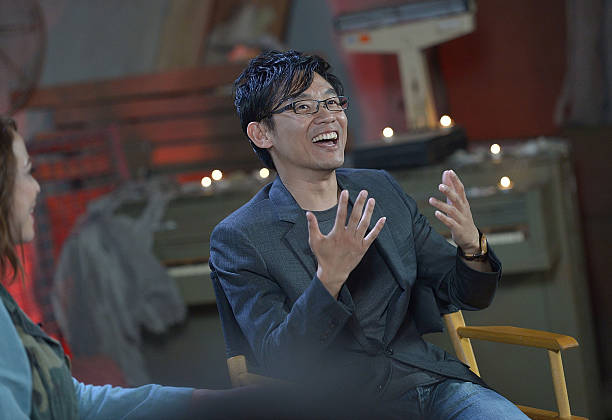
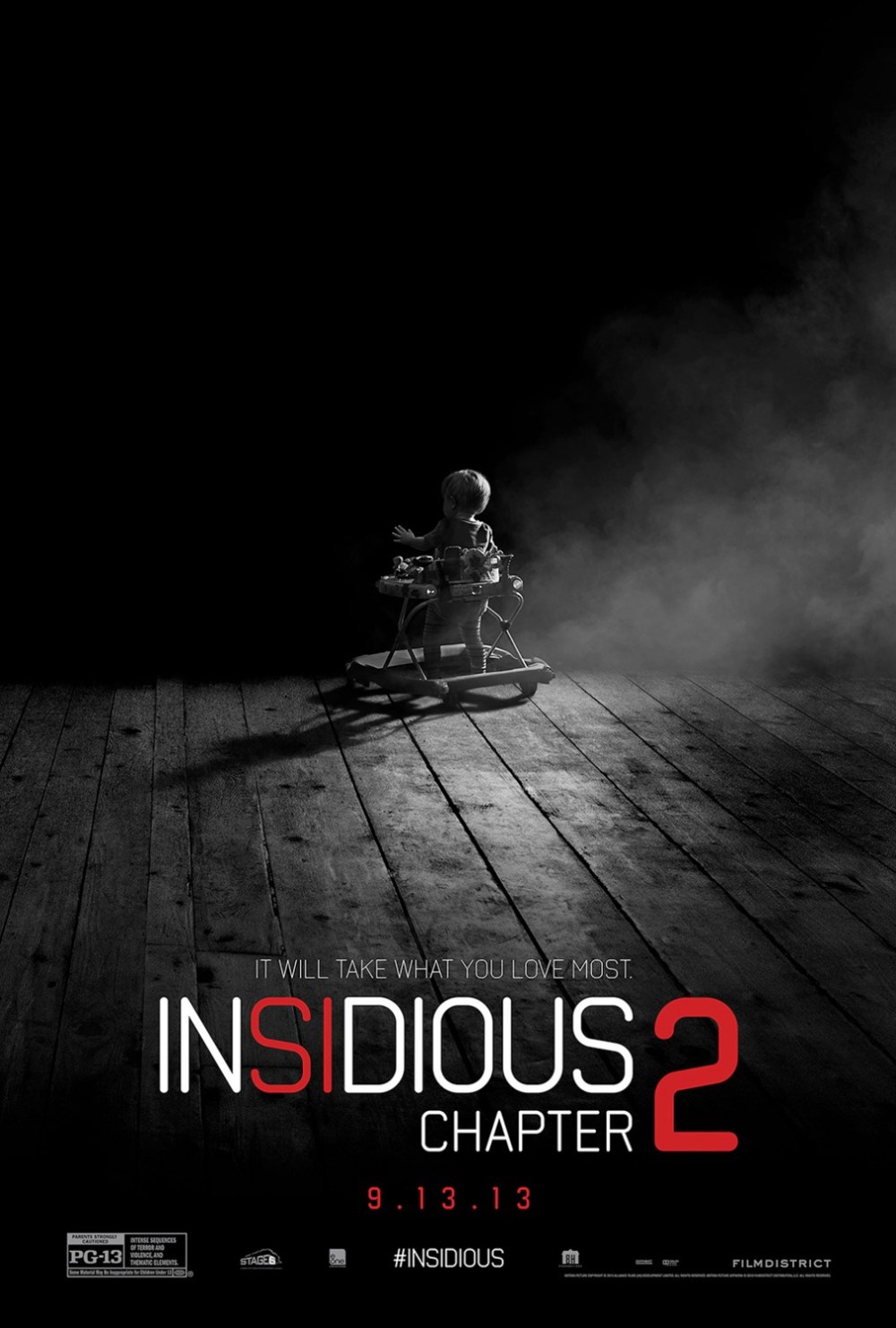
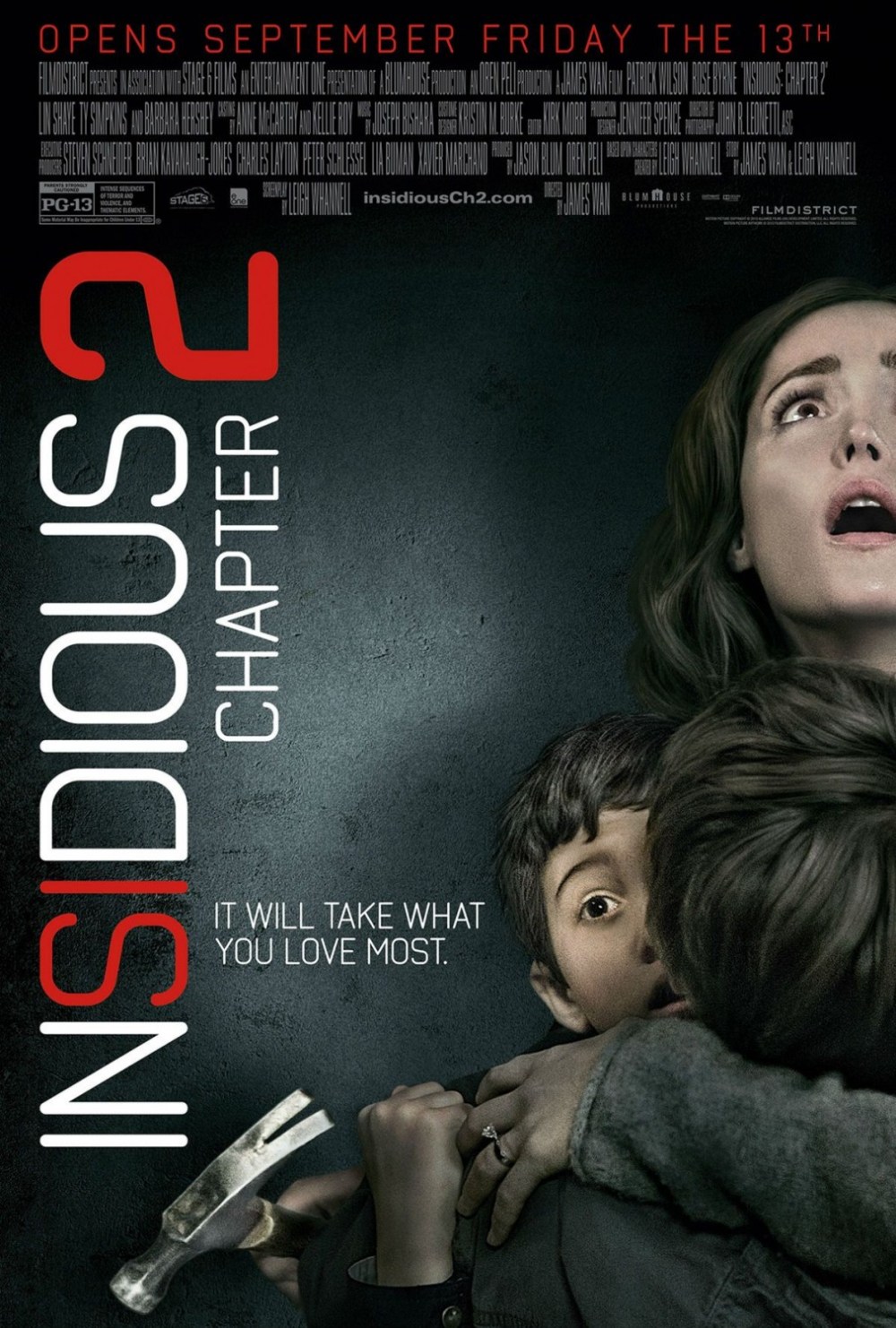
The first trailer for “Insidious: Chapter 2” debuted online on June 5, 2013, but some very lucky die-hard horror fans got to see it the day before at one of the film’s shooting locations in Los Angeles: Linda Vista Community Hospital. In addition, the fans also got to take a tour around the creepy hospital, eat fine catered Mexican food and enjoyed cocktails, and they were treated to a Q&A with the movie’s director, James Wan. The cast of “Insidious,” Patrick Wilson, Rose Byrne, Barbara Hershey and Ty Simpkins are back for the sequel as well as Wan’s frequent collaborator, screenwriter Leigh Whannell.
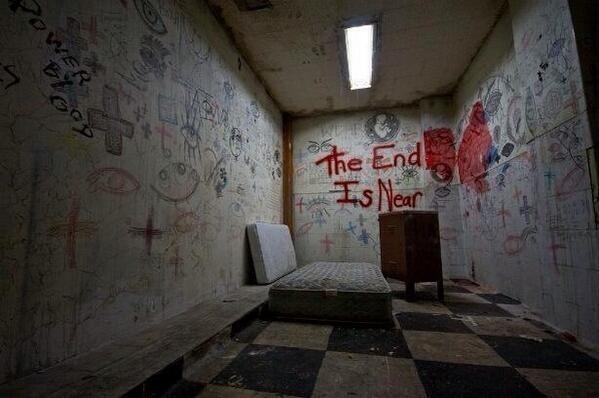
Before anyone got to see the trailer, the fans were taken on a tour through Linda Vista which was closed down 20 years ago. For them, it truly looked like something out of a Stephen King novel as the walls were drained of color and marked with graffiti which said “Hail Satan.” Tiles were falling off the ceiling, trash covered the floors of various rooms, and cobwebs were visible on various objects like a staircase or an old wooden chair. There was even a room filled with medical files and the tour guides invited the fans to look through some of them to see why patients were unluckily committed to this haunted establishment.
Once in a while people could hear noises coming from the darkest corners of the hospital. Were these noises the result of some evil spirit lurking around, the catering people bringing food into the building for guests, or was the film company that’s releasing “Insidious: Chapter 2” trying to play a cruel trick on the fans? No one was ever really sure.
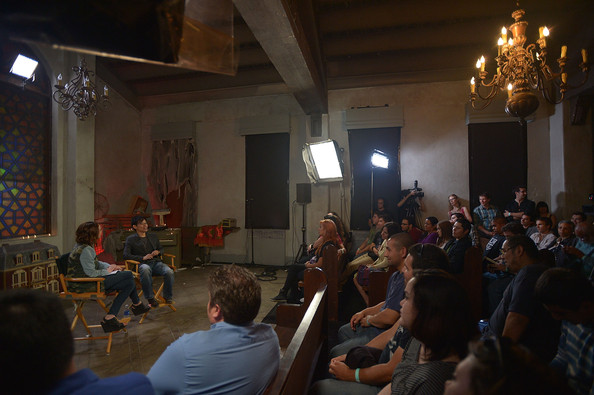
After taking in some fine Mexican cuisine and Spanish beer, the fans were ushered into the hospital’s chapel where the trailer made its world debut. It showed Josh (Patrick Wilson), his wife Renai (Rose Byrne) and their son Dalton (Ty Simpkins) moving in with Lorraine (Barbara Hershey) after the horrific events of the first film. But of course, bad things start happening very quickly as a baby carrier moves around the house by itself, and Renai is greeted by a creepy woman who goes into the next room only to vanish a second later.
Now whereas Dalton was possessed in the first film, it turns out that Josh is the unlucky one in this sequel as a poltergeist invades his body and won’t leave him alone. The trailer also included a piece of Thomas Bangalter’s music score from “Irreversible” which succeeded in unsettling the audience even further as Josh is met by a scary looking spirit who tells him “he’s got your baby.”
Once the trailer ended, Wan entered the chapel and was greeted with a loud and enthusiastic applause from the fans. He made it clear from the start that he and Whannell were not out to make a photocopy of “Insidious” but to instead continue the story exactly from where the first movie ended. Wan also said that with “Insidious: Chapter 2,” he wanted to take the story into a different genre.
James Wan: Whereas the first movie has a twist on the classic haunted house genre, the second one is a slightly different movie so it has a twist on different subgenre. It’s more in the vein of the classic domestic thriller but with a pervasive supernatural undertone. We wanted to take a movie about astral projection, astral traveling, and we felt that was a great premise to use in a scary movie. When Leigh and I started talking about making a haunted house movie we thought the whole astral projection angle could be something that’s unique and different to the haunted house movies. We combined those two together and we got “Insidious.”
Wan also delighted the audience when he told him that the sequel will deal “a little bit with the element of time travel.”
When it comes to special effects, Wan said that he prefers to use practical ones and did so with “Insidious: Chapter 2.” It’s not that he has anything against computer generated effects; it’s just that he finds practical effects are much scarier.
James Wan: For me it’s not necessarily seeing the scariest monster that makes it scary. It’s a character waking up in the middle of the night and he or she thinks that someone’s standing at the foot of their bed. That’s what makes things scary for me. So, for ‘Insidious’ it was putting those scares that I have personally in a movie.
Along with his longtime collaborator Whannell, Wan has made several horror movies including the original “Saw,” “Dead Silence” and “The Conjuring.” One fan asked Wan where he gets all his ideas for movies, and he responded by saying he finds inspiration by scaring himself late at night. While it might seem like very few things could ever scare Wan, he unabashedly described himself as a “chickenshit” and said everything scares him.
James Wan: When I was designing some of the scares for “Insidious” and my previous scary movie that I shot, one of the things that I would do, I would walk through my house with all the lights out and think up these really these really tricky, creepy scenarios. If I get really creeped out then I know it’s working and I’d run back to my computer and write it.
Wan also recollected how one time while writing a scene for a movie, his dog started barking at something. He described how his dog would stand in a corner of a room at 2 or 3 a.m. in the morning and just start barking, and then once the dog stopped, she would track whatever it was she was barking at around the room. While Wan freely admitted he loves his dog, he also said “she scares the heck out of me sometimes.”
Even after making several horror movies, Wan said that it is still a challenge to scare audiences as they always try to stay one step ahead of the filmmakers. With “Insidious: Chapter 2,” his goal was to ground the sequel more in the real world as he felt the story would be more effectively scary. When asked if the sequel will answer any questions the original did not answer or if it will bring up new ones, Wan replied that this one will “answer questions, but hopefully not in the way you expect.”
“Insidious: Chapter 2” will be unleashed in theatres on September 13, 2013 (yes, Friday the 13th). Up next for Wan is “Furious 7” in which he will be taking over the directorial duties from Justin Lin. But when asked what his dream project as a director is, Wan gave the audience an answer many did not expect.
James Wan: I’m a big comic book fan, I’d like to do a comic book film. I’m a romantic at heart, so a pet project of mine that I’ve always wanted to do is a big screen version of “Beauty and the Beast.” That way I can play with the scary creatures, the horror of that and it has this great story.
My feelings towards “Insidious: Chapter 2” are not much different from how I felt about “Insidious.” Neither movie scared me in the way they scared my friends, and they don’t really hold a candle to the “Paranormal Activity” movies in terms of making you jump out of your seat, but I did admire their cleverness as they turned the genres they were exploring upside down, and both films gave me something I wasn’t expecting. But moreover, the real strength of “Insidious: Chapter 2” is it doesn’t feel like a sequel as much as it feels like a continuation of what came before it. Part of me was expecting a simple retread of the original, but the filmmakers succeed in adding more to what came before.
It reunites the horror team of director James Wan and screenwriter Leigh Whannell, both who made the first “Insidious” movie as well as the first “Saw.” What drove me nuts about “Saw” and its sequels wasn’t the gore (the way I see it, the gore the merrier), but the plot twists which ended those movies left me with the most enormous of headaches as they expected me to believe Jigsaw (Tobin Bell) could pull this or that off, and I didn’t buy any of the conclusions for a second. The “Insidious” movies, however, don’t make the same mistake, and what I admired was how certain questions from the original film got answered here. Perhaps a close analysis would reveal plot holes, but both movies seem to connect together in a way which makes sense.
Like “Halloween II” (whether it’s the original sequel or Rob Zombie’s), “Insidious: Chapter 2” starts off where the original ended. Josh Lambert (Patrick Wilson) has successfully rescued his son Dalton (Ty Simpkins) from the Further, but after a peaceful moment where the family is reunited, his wife Renai (Rose Byrne) discovers paranormal investigator Elise Rainer (Lin Shaye) has been strangled to death. Josh is suspected to have strangled her, but he convinces Renai he did not. Soon after that, things slowly get back to normal as Josh moves his family into his mother Lorraine’s (Barbara Hershey) house, but it doesn’t take long for certain objects to move around on their own. The question is, did Josh really return from the Further, or did someone else come back in his place?
Now Wan and Whannell had a lot of fun playing around with the haunted house genre with the first “Insidious,” but now they are forced to up their game with this one. “Insidious: Chapter 2” is more of a domestic thriller with a bit of astral projection and time travel thrown in to mix things up. While it does deal with the same elements which made its predecessor a success, this sequel never feels like a simple repeat of the original. Both these films were made by people who have seen just about every horror movie known to man, and they have gone out of their way to subvert all those clichés we are used to seeing. With this movie, I was never entirely sure of what to expect, and that’s just the way I want it.
Wilson, Byrne, Hershey and Simpkins are every bit as good as they were in “Insidious,” and they don’t look like they have missed a bit between the original and the sequel. Angus Simpson and Whannell also show up again as Tucker and Specs, and they provide the comic relief this sequel needs, and they never overstay their welcome.
Joining the “Insidious” franchise this time around is Steve Coulter who plays Carl, Elise’s protégé in the paranormal arts. I am not familiar with Coulter’s work, but he gives a strong performance here as he works to help the Lambert family deal with what has been haunting them so viciously. It turns out he is a journeyman actor who has made many appearances in both film and television, and his veteran status serves this part well as Carl is an expert who has dealt with these situations extensively, and this makes him very believable as someone who has seen the worst things life has to offer.
Some fans may complain about the lack of scares in “Insidious: Chapter 2,” but for me, I’m just glad this sequel kept me intrigued throughout. Whether you find it terrifying or not, it’s a film which does keep you on edge from start to finish. When the movie ends, it turns out that there just might be room for another “Insidious” sequel, and there is a sequence at the end which implies a follow up will be coming our way. But even if it doesn’t, you can be sure the spirits (evil or otherwise) will be haunting you while you sleep.
I grew up watching reruns of “The Adventures of Superman” with George Reeves playing the iconic character, and I loved how he stood still and never blinked an eye when the bad guys shot bullets at him. Then came the movies with Christopher Reeve playing the sole survivor of Krypton, and I reveled in watching him give us the definitive version of this heroic character. Since then, Superman has not been the same for me as his goody two shoes image makes him seem a little dull compared to Batman, and the character has gone through various interpretations on television and in comic books to where I’m not sure what to make of him, or his alter ego Clark Kent, anymore.
I liked “Superman Returns” more than most people because it reminded me of the effect this iconic character had on me when I was young, and Bryan Singer made it clear we needed a hero like Superman now more than ever. However, the more Singer paid homage to the first two “Superman” movies, the more it paled in comparison to them. The character is now more than 75 years old and in desperate need of a reboot to stay relevant to today’s increasingly cynical society.
Now we have “Man of Steel” which takes Superman back to his beginnings to where we have to go through all the origin stuff yet again. This threatens to make the movie a bit tedious as we all know Superman was born as Kal-El on the planet Krypton and how his parents sent him to Earth before Krypton exploded. But what’s interesting is how director Zack Snyder tells Superman’s story in a non-linear fashion to where we’re never quite sure which direction the movie is going to take. Snyder also shows us how, while it may seem cool to be Superman, being him can also be quite lonely and painful.
For the filmmakers, the real challenge was making Superman more down to earth than he has been in the past and, for the most part, they succeeded. We all have experienced loneliness and alienation in our childhood and the changes our bodies go through, be it puberty or something else, which can drive us to the brink of insanity. But what’s worse for Kal-El, who is now named Clark Kent by his human parents, is he can’t really ask anyone for advice on how to deal with x-ray vision or super hearing abilities. While this kid is capable of doing great things, you can understand why he yearns for the normal life constantly denied to him.
I liked the scenes dealing with Superman’s childhood because they rang true emotionally, and the wisdom his human father Jonathan (Kevin Costner) passes on to him makes sense. Yes, this young man has super powers, but he’s got to keep them under wraps until he can learn the truth about where he came from. It’s frustrating, but it helps to keep Superman from being subjected to crazy medical experiments by the government and from growing an oversized ego which will definitely get the best of him.
Since the first half of “Man of Steel” is told in a non-linear fashion, it doesn’t take long for us to meet Henry Cavill, the latest actor to play Superman. It also doesn’t take long for him to remove his shirt and show us how much time he has spent at the gym. Cavill’s road to playing this iconic character has been a tough one as he came so close to getting cast in “Superman Returns,” and for a while he was known as the unluckiest man in Hollywood as he barely missed out on playing Cedric Diggory in “Harry Potter and the Goblet of Fire” and Edward Cullen in “Twilight.” How nice it is to see Cavill finally get his moment in the spotlight.
Cavill does solid work here as Superman, and he also gives us a Clark Kent who is unlike the four-eyed wimp we all remember him being. This is a Kent who wanders from job to job, haunted by an upbringing he has yet to learn more about, and it is a journey which has toughened him up quite a bit. Cavill also benefits from getting to play a more complex Superman in “Man of Steel” whereas the one we saw in “Superman Returns” was kind of neutered (no offense Brandon Routh). While he doesn’t quite have the same charisma Reeve brought to Superman, Cavill is a terrific choice for the role and he has more than earned the right to play him in this and future movies (and you know there will be more).
But as with “Superman: The Movie,” Warner Brothers put their nerves at ease by surrounding Cavill with a cast filled with stars and Oscar winners. I very much enjoyed Kevin Costner as Jonathan Kent, and he gives a wonderfully understated performance as Kal-El’s human father. However (SPOILER ALERT), I’m pretty certain I have not seen another actor other than him who looked so ridiculously serene as an enormous hurricane came barreling down on him (SPOLIERS END).
Diane Lane is also well cast as Kal-El’s human mother, Martha, and it’s a treat to see this actress in anything and everything she does. Plus, even as Martha heads into old age, Lane still looks irresistibly sexy as she refuses to betray her son’s whereabouts to General Zod. Some credit should go to Snyder for this as he doesn’t plaster Lane with the same hideous old-age makeup he used on Carla Gugino in “Watchmen.” I am so very glad he learned his lesson.
Speaking of General Zod, the great character actor Michael Shannon plays him in “Man of Steel.” Shannon does make him a compelling nemesis to Superman, and I liked how the actor portrays Zod as a man led by a corrupted sense of loyalty rather than just a power hungry villain. His work in “Man of Steel,” however, pales a bit in comparison to his galvanizing turn as serial killer Richard Kuklinski in “The Iceman.” Perhaps I was expecting a bit too much from Shannon this time around as I was hoping he would give us a villain for the ages. But even though he doesn’t, he is still very good here.
In addition, Amy Adams gives us a strong Lois Lane who doesn’t falter in the face of supernatural discoveries, Laurence Fishburne makes for a good Perry White, Antje Traue makes Faora into a tremendously lethal villainess, and it’s hard to think of anyone other than Russell Crowe to play Superman’s biological father, Jor-El. Crowe gives the role a gravitas not easily earned, and you will be pleased to know that he doesn’t sing in this film. I am, however, willing to defend his performance and singing in “Les Misérables.”
The one major complaint I had with “Man of Steel” was the spectacle at times overwhelmed the story and characters. This is not to say the characters are neglected, but I’m not sure I have seen as many high-rise buildings come crashing down in one movie. Just when I think I have seen the loudest action movie ever made, another one comes along to remind me of the necessity of ear plugs. In the process of giving us one tremendous action scene after another, Snyder ends up topping himself a bit too much to where I was desperate for him to tone things down. Still, he respects Superman enough to keep the character’s ideals intact even while taking some liberties.
Part of me still yearns for the “Superman” of yesterday when Christopher Reeve made us believe a man can fly, and of how the first two movies lifted my spirits up high. I think part of how you enjoy “Man of Steel” depends on how willing you are to separate it from all the “Superman” films which preceded it, and for me this is tough. But in the end, there’s no way things can stay the same, and this iconic character was in need of a refresher. With “Man of Steel,” Snyder has given us an exciting piece of entertainment which holds our attention for over two hours, and I am eager to see where Superman will go from here.
You may not know who Gene Jones is, but odds are you have seen him in at least one movie he has co-starred in. Many know him best for his role as the gas station owner who is subjected to one of Anton Chigurh’s terrifying coin tosses in “No Country for Old Men,” and he also appeared as Wild West Barker in “Oz the Great and Powerful” and co-starred in “The Odd Life of Timothy Green.” But after watching him in Ti West’s “The Sacrament,” it will be impossible to forget who Jones is as he gives us a character who seems sweet on the surface but is really a vicious devil in disguise.
“The Sacrament” follows a couple of reporters as they travel out to a commune located out in the middle of nowhere to find one of a long lost relative. Upon their arrival, they discover the commune is a technology-free zone called Eden Parish, and they meet Father (played by Jones) who is the leader and treats his loyal followers with tremendous warmth and care. But when these outsiders arrive, he quickly sees them as a threat and eventually convinces his followers to take a sinister course of action which leads to an unspeakable tragedy.
The press day for “The Sacrament” was held at the Magic Castle in Hollywood, California, and many who worked on this movie, be it in front of or behind the camera, participated in an informative press conference. Among those there was West who told us he wanted to audition Jones after seeing him play a pharmacist on “Louie.”
Ti West: There’s a scene where there is a woman waiting in line and asking all these inane questions to the pharmacist who’s not paying attention, and Louie (C.K.’s) waiting behind her and he’s getting bored. And then Gene eventually turns to her and is like, “Have you had a bowel movement today and was it soft?” And then she gets uncomfortable and then that’s the scene, and I was like, “That’s the guy.” So, what we did was that we tracked him down and then I asked him to do a quick audition. Most of the reason I asked him to do the audition wasn’t so much to see if it would be any good. I just wanted to see if he would not be into the material. So I knew that if he did the second audition that he wasn’t going to be uncomfortable with the subject matter like that because you never know if you don’t know people. Gene likes to say that the first audition wasn’t very good and that’s why I asked him to do a second one which is not true. But there was enough from those, just seeing him do it, to know what I had thought was going to happen was going to happen.
The plot of “The Sacrament” was largely inspired by the 1978 Jonestown Massacre when Jim Jones made the followers of the Peoples Temple commit mass suicide. When Jones first appears onscreen as Father, you can’t help but be reminded of Jim, especially with those sunglasses he’s wearing. But in describing his preparation to play Father, Jones shot down our assumptions of what he did to prepare for this role.
Gene Jones: It’s less than one day in Father’s life, and not a typical day. So, I didn’t do any Jim Jones research about what he read and how he interacted with people on a daily basis. What I tried to do was be a guy who was so nice, you would leave your family and you would leave your country and go with this guy. I never met Ti until I stepped onto the set. I did audition for it, but it was a video audition. Actually it was two auditions and Ti commented on those, and those comments gave me the freedom to go where I wanted to go which was in the direction of being so damn trustworthy and so avuncular and nice. A phrase that popped into my head a few weeks ago when I was doing one of these (press conferences) was I wanted to show you somebody who was evil but not mean. Somebody who believed absolutely poisonous things but was the nicest fellow you ever met.
West said when he first met Jones in the flesh was when he arrived at the movie’s set located in Savannah, Georgia. Jones’ first big scene was when he does the interview with the two reporters, and it involved a lot of work and memorization on his part. West was more than prepared for things to go wrong as he described this scene as a “massive undertaking,” but we all felt his astonishment at how things actually turned out.
Ti West: It’s the kind of production day that you dread because it’s a night shoot, there’s 200 extras, it’s 12 pages which is like six times more than anyone wants to shoot in a day and there’s just so many moving parts, and it was cued up to be a disaster. I remember on the very first take I hadn’t told the extras what to do yet, and you’ve got to keep in mind that the extras are just there for one night to be in a movie. They don’t know what the movie is about and they haven’t read the script. They are just like, “Yeah we’re in a movie!” They’re all seated and you figure that some of them aren’t going to be good and will have to move them around, but before we do any of that let’s just wing it. Let’s just try one where Gene comes in and we’ll tell them to cheer. He can come in and then start talking to A.J. (Bowen), and its 12 pages so if the lines get screwed up we’ll stop and then we’ll do it in chunks, and this is how we are going to get through this night. Well on the very first take, Gene came in everybody went crazy. He sat down, did a 17-minute unbroken take without dropping a line, got up, everybody cheered and he walked out, and all of the reactions from the extras were their genuine reactions. They weren’t me feeding them things to do because I just wanted to assess the situation, but the assessment of the situation was we don’t need to do anything because Gene nailed that so effortlessly, and then all the extras chimed in perfectly. Gene had figured out how he was going to do it, and all I had to do was just capture it.
Jones’ comment on how the extras fueled his performance was great because he made it sound like he was doing a play more than making a movie.
Gene Jones: I loved, loved the congregation, and there’s little variations each time you shoot. They were tuned to that and I didn’t have to say, “Give me an amen somebody.” They would give me an amen. They would just give it to me and they would nod, and it was just alive. It was like talking to a group of friends. They all chimed in and they were great.
In a business which can be so ridiculously youth-oriented, it is nice to see an actor like Gene Jones defy the odds. If this were a studio movie, executives would have probably forced Ti West to cast a young adult who was more demographically desirable. But in the end, there are certain parts only actors of a certain age can pull off, and this is one of them. Jones succeeds in giving us a villain for the ages as Father draws people in with ease and then destroys their lives for the most selfish of reasons.
Click on the video below to check out the interviews I did with Ti West, A.J. Bowen, Joe Swanberg and Amy Seimetz about “The Sacrament” for We Got This Covered.
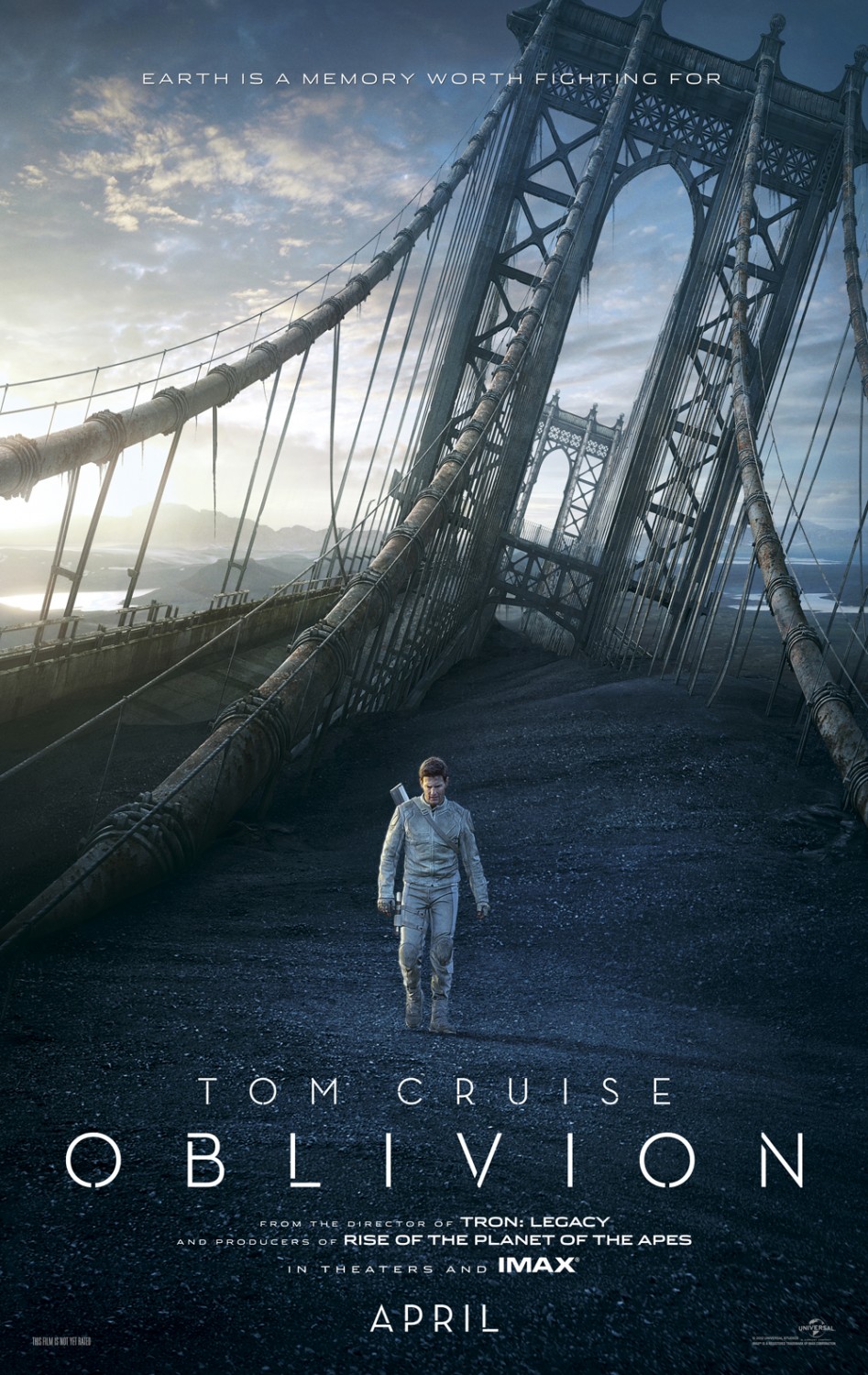
On one hand, I feel like I should be punishing “Oblivion” for its lack of originality as the story will easily remind viewers of other science fiction movies like “Total Recall” (the original, not the remake), “Moon,” “The Matrix” and “Logan’s Run.” On the other, I found Joseph Kosinski’s film to be a compelling piece of entertainment, and I liked how he took various elements from those sci-fi movies and put them together to create something which feels more original than I expected it to. The look of “Oblivion” is incredible, and the film benefits from a very strong cast, great visuals, and a truly awesome music score.
Like many science fiction movies, this one takes place in a distant future. The year is 2077, and sixty years earlier an alien invasion destroyed the Moon, which in turn decimated Earth and left it in shambles. Jack Harper (Tom Cruise) is one of the last human beings left, and he and his communications officer Victoria Olsen (Andrea Riseborough) spend their days helping to harvest what’s left of the planet’s natural resources and repairing drones which help protect it from further alien invasions. They are due to leave Earth in two weeks so they can rejoin the rest of humanity which has long since relocated to another planet. Of course, we all know what happens when people say they only have a few weeks before they leave Earth; they don’t.
Talking about “Oblivion” from here gets complicated because I don’t want to give away the story’s twists and turns and have it seem like a plot summary stolen from Wikipedia, but I’ll do my best. One day, a spaceship crashes on Earth which carries a number of capsules with astronauts sleeping inside them. One survivor is astronaut Julia Rusakova (Olga Kurylenko) who, once awoken from her deep sleep, she makes Jack see he has a past which has long since been denied to him.
This is all I’m going to say about the plot as telling you more would be spoiling the fun. Granted, I have seen many science fiction movies, so when the plots twists and turns came here, I wasn’t surprised. At the same, I was very much enthralled by what was going on. Even if I had a pretty good idea of what was coming next, I was still glued to my seat and eager to see what direction the film was going to head in next.
Much of the success with “Oblivion” comes from its distinct visuals which are very striking, and a lot of the credit for this goes not just to Kosinski but also his director of photography Claudio Miranda. I’ve lost count of how many post-apocalyptic movies which show Earth obliterated beyond all repair to where everything is dark, grey and gloomy. Many famous landmarks like the Empire State Building are shown to be either barely standing or covered up with a lot of dirt in “Oblivion,” but this is the first movie of its kind I can remember which takes place mostly in the daylight. While Earth isn’t in one piece in “Oblivion,” there is still a unique beauty to how it looks here. Those snowy mountains still look worth skiing on, and I found it rather comforting to see plants, grass and trees still growing even after an alien invasion, and this gives the movie an uplifting feel.
The other thing I really liked about “Oblivion” was the architecture of the buildings and the design of the spaceships. The Sky Tower which Jack and Victoria live in is beautiful, and I would love to live in it. This tower looks like the world’s most unique condominium, and I’ve never seen anything quite like it before. Also, it has the coolest swimming pool ever, and it makes me more excited about swimming pools than I have been in ages. Plus, I doubt I will see a cooler looking spaceship than the Bubbleship Cruise flies all over the place.
This is only Kosinski’s second movie as a director, but here he seems to have found his filmmaking voice this time around. His first film was “Tron: Legacy,” and like many eagerly awaited science fiction events, it was greeted with an obscene amount of hype and a lot of fan indifference. With “Oblivion,” however, he is not restricted to staying within certain boundaries dictated by a previous film or a long-running franchise, and he also has a stronger story (based on the graphic novel of the same name by him and Arvid Nelson) to work with as well.
Kosinski also benefits greatly from having M83 and Joseph Trapanese as his music composers here. Their score to “Oblivion” is much like what Daft Punk’s was to “Tron: Legacy:” a beautiful combination of electronic and orchestral music which sounds far more original than any other film score I have listened to recently, and it adds so much to the striking visuals of “Oblivion” as well as the emotion inherent in the story.
Much has been said about Cruise as a person these past few years, but I’m still happy to defend him as an actor. His work as Jack Harper is actually quite understated, and he never descends into the state of “grinning like an idiot every fifteen minutes” (as Dougray Scott described him in “Mission: Impossible II”) for too long. That grin does come along from time to time, but not in a way which ends up annoying half the audience. Along with his strong performance in “Jack Reacher,” his work in “Oblivion” proves he’s still a better actor than people tend to give him credit for.
Kurylenko, since her performance as a Bond woman in “Quantum of Solace,” has proven to be far more than a pretty face. This should have been made clear after we saw her in Terrence Malick’s “To the Wonder,” but there’s no mistaking her talent in “Oblivion” as she creates a complex portrait of someone who knows more than she lets on. I also very much enjoyed Riseborough’s performance as Victoria which was sweet and yet somewhat devious, and I look forward to seeing more of her work in the future.
Then there’s the great Melissa Leo who plays Sally, the mission control commander with a thick accent who oversees Jack and Victoria’s work from afar. Just like in “Flight,” she gives her character a sweet voice tinged with serious intentions which leaves the viewers on edge. As nice as she sounds, you can tell there’s some evil plot lurking behind her eyes. Some may see the role of Sally as a small one, but in Leo’s hands, no role can ever seem small when she plays it.
Oh yeah, Morgan Freeman shows up as well as Malcolm Beech. To say more about his character would further give away certain plot points, but I can confirm he gives the usual strong performance we always come to expect from him. Also, it was really cool to see him shooting a heavy-duty pair of fifty caliber machine guns as I’m not sure I have seen him do so before.
“Oblivion” may seem overly derivative, but then again, most movies released these days are far from original. What matters to me is that a filmmaker can take elements from the movies which inspired him/her and make them their own, and Kosinski has succeeded in doing so here. I very much enjoyed how “Oblivion” took me down the rabbit hole films often do, and I absolutely loved the visual look of it. It also benefits from a number of strong performances and a fantastic film score which sounds epic in a way other scores can only aspire to. When all is said and done, this film is quite a cinematic accomplishment.
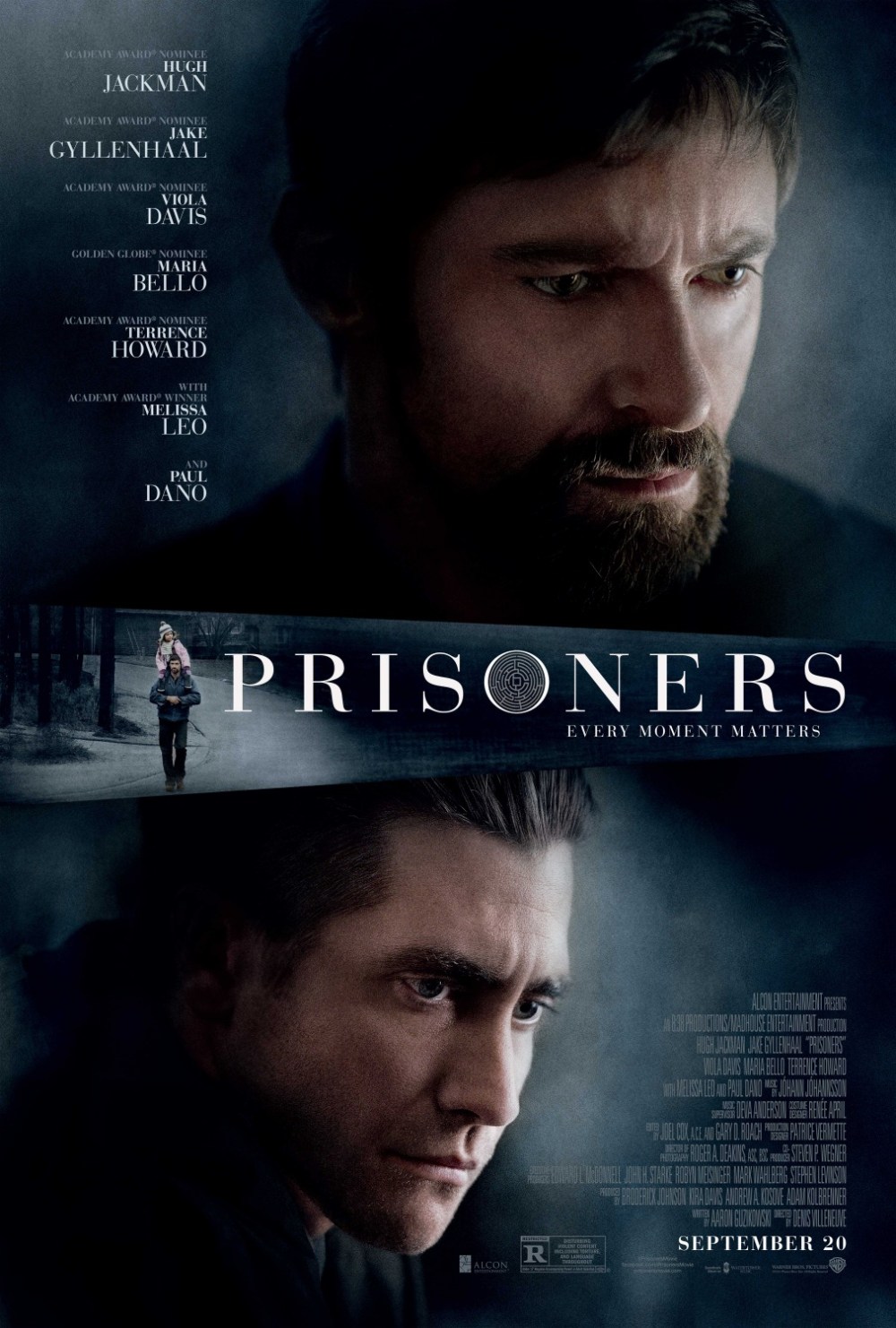
From the trailers, “Prisoners” looked like just another average child abduction movie with a strong cast which would hopefully make it seem slightly above average. I have seen so many movies like this to where they now seem like the same one no matter who is starring or directing. Boy, was I wrong about this one! “Prisoners” is a heavy-duty character driven drama which generates an agonizing amount of tension and never loses any of it throughout its two and a half hour running time. In a time when many movies are in serious need of an editing job, this one manages to make every single minute count.
It’s a snowy day when Keller Dover (Hugh Jackman) takes his family over to his friend Franklin Birch’s (Terrence Howard) house to celebrate Thanksgiving with a big feast. Both men have loving wives, two teenaged children who are unsurprisingly not all that interested in hanging out with their parents, and they have two beautiful six-year old daughters named Anna and Joy who can never seem to sit still for a single moment. But when Anna goes back to her home with Joy to fetch her safety whistle, both of them disappear without a trace and their families begin a desperate search to find them before it is too late.
The only suspect in the case is Alex Jones (Paul Dano), a man with the IQ of a 10-year old, whose RV Anna and Joy were playing around earlier in the day. When the police and Detective Loki (Jake Gyllenhaal) are not able to get any answers from Alex as to where the girls are, they are forced to let him go for lack of evidence. Keller, however, becomes convinced Alex does know where they are at, and he becomes infinitely, and frighteningly, determined to make Alex give him the answer he wants. Suffice to say, some moral boundaries are definitely crossed.
It should be no surprise Hugh Jackman gives a seriously intense performance here as a father obsessed with finding his child as we have gotten used to him playing the Wolverine in all those “X-Men” movies. But as furious as he got in “Logan” this past year, Jackman seems even more frightening here as he loses his moral perspective while desperately searching for answers. Just watch him as he bashes a bathroom sink with a hammer.
Jake Gyllenhaal also gives one of his best performances ever as Detective Loki, a man equally obsessed with getting the girls back even as he struggles with an uneasiness which will not let him be. What I especially like about Gyllenhaal here is how he implies certain things about this character without ever having to spell it out for the audience. Loki is a man with a troubled past who has his own demons to fight, and while we don’t always know what those demons are, this allows Gyllenhaal to add another layer to his character which only increases Loki’s complexity.
Terrence Howard, who gave a terrific performance in “Dead Man Down,” gives another one here as the other desperate father. It’s interesting to see him go from playing an intimidating crime lord to a helpless dad who finds himself in a morally dubious position when he is presented with a way of getting the answers, but he becomes increasingly unnerved at the way Keller is trying to obtain them. Howard is great at showing how helplessly conflicted his character is, and he makes you feel his inescapable pain and confusion as he is forced to go down a path he becomes convinced is the wrong one to go down.
Kudos also goes out to Maria Bello and Viola Davis who play the wives to Jackman and Howard. Bello portrays Grace Dover, and she has an especially difficult to watch scene in which she completely falls apart emotionally as she faces the worst nightmare no parent ever wants to face. As for Davis, she once again proves how powerful she can be in the smallest of roles. It should also be noted how each of these actors is a parent in real life, and I cannot even begin to think of what emotional depths they went to give such authentic portrayals.
Paul Dano continues to astonish in each film he appears in, and his performance as Alex Jones is one of his most enigmatic to date. Dano could have just fallen into the trap of making an Alex a caricature or the clichéd mentally disabled character we have seen too many times, but he is much too good an actor to do that. We can never figure out if Alex is truly helpless or cleverly manipulative, and Dano keeps us guessing as to what the answer is for the majority of the movie.
“Prisoners” was directed by Denis Villeneuve, a Canadian writer and director who won the Genie Award (Canada’s equivalent of the Oscars) for Best Director three times for his films “Maelström,” “Polytechnique” and “Incendies,” the latter which earned an Academy Award nomination for Best Foreign Film. In recent years, he has given us the brilliant “Sicario” and “Arrival,” and it makes sense he is at the helm of the eagerly anticipated “Blade Runner 2049.” Like I said, I have seen many movies involving child abduction, but he succeeds in making this one of the most intense and agonizing ever made. The fact he is able to main such a strong level of suspense and tension for over two hours is very impressive, and “Prisoners” would make for a great, albeit an emotionally exhausting, double feature with Ben Affleck’s “Gone Baby Gone.”
The screenplay by Aaron Guzikowski seems well thought out and has characters who don’t seem like anything the least bit stereotypical. Looking back, this could have been one of those scripts where the writer would come out saying, “Look how clever I am! I kept you guessing, didn’t I?” Guzikowski, however, is not out to make us feel like an idiot and instead gives us a fairly realistic scenario of just how harrowing a kidnapping situation can get.
The filmmakers have also employed the brilliant cinematographer Roger Deakins, who should have gotten the Oscar for “Skyfall,” and he makes the snowy climate these characters inhabit all the more vividly freezing. Even as the setting gets bleaker, Deakins still manages to find a haunting beauty in everything going on.
Child abduction movies can be very difficult to pull off because it is easy to fall into the realm of exploitation. It’s a credit to the filmmakers and actors that “Prisoners” never falls into this trap as it instead focuses on how frayed and unraveled emotions can get when parents have no idea where their children are. This is definitely not a film for new parents or those with small children to watch as I’m sure it will make them seriously uncomfortable. But for those who like their movie going experiences to be infinitely intense, “Prisoners” is definitely worth checking out. It was not at all what I expected it to be, and that’s a good thing.





 The Ultimate Rabbit