‘Iron Man’ Got the Marvel Cinematic Universe Off to a Strong Start

M Payoff 1sht

The 2008 summer movie season started off with a bang with the long-awaited release of “Iron Man” which starred Robert Downey Jr. as the egocentric weapons maker turned world protector, Tony Stark. It also marked the beginning of the Marvel Cinematic Universe which brought its many characters to the silver screen with great success, and this one still remains one of the best to come out of it.

“Iron Man” starts with Tony traveling through the Afghanistan desert with a military convoy that gets attacked by terrorists. Tony flees the hummer transporting him and almost gets killed by one of the missiles he designed. When he comes to, he is being held captive in a cave and kept alive by an electromagnet attached to his torso which keeps the shrapnel inside his body from going to his heart. The terrorists, led by Raza (Faran Tahir), force Tony to build them one of his most destructive missiles on pain of death, but he instead takes the parts they give him and creates a bulletproof suit which allows him to escape in spectacular fashion.

When he gets back to America, he has a press conference where he states he will turn his company from a weapon making factory into one that doesn’t promote endless destruction. Having seen the damage he has done to others, he is now determined to protect those from the weapons he created. As for the iron suit which saved his life, he works at perfecting it into something strong and indestructible. On top of giving him the ability to fly, it also allows him to get back at those who took advantage of his destructive creations.

“Iron Man” is a tricky movie to make because it is the type meant to set up this particular superhero and then move on to the inevitable sequels which never come out soon enough. It is a credit to director Jon Favreau that the characters are as interesting as the action is exciting. Unlike other comic book adaptations, this story feels much more grounded in reality and doesn’t have characters that don’t seem real. Unlike Peter Parker in “Spider-Man 3,” here we have a superhero who doesn’t waste his time feeling sorry for himself on a regular basis.

But the real masterstroke of “Iron Man” is the casting of Downey Jr. as Tony Stark. He is without a doubt one of the best actors working in movies today, and it is impossible to picture anyone else in this role. When he first appears, he clearly acts like the man Weird Al Yankovic sang about in “I’m Such a Groovy Guy.” Both brilliant and sexy, it’s tempting to believe Downey Jr. is playing himself, but that assumption would be unfair. He makes Tony’s transition from selfish egomaniac to world protector almost seamless and never less than believable. Inside that cool and ever so confident exterior, there lies a man who is taking his life and company in a direction which may completely kill it.

Seriously, Tony is one of coolest comic book heroes to appear in movies for the longest time. Most of the comic book heroes we have grown up with are emotional wrecks and understandably so. Batman saw his parents murdered in front of him, Superman only got to see his parents at that Crystal Palace as he lost his human father earlier than he should have, and Spider-Man lost his uncle when he was murdered. But Tony isn’t necessarily waylaid by emotional disasters the way those characters were. While many of us want to spit on those who look like they had everything handed to them on a silver platter, Tony more than earns his place in society and you never doubt his abilities to create extraordinary things.

Also, Tony has quite the lifestyle most guys envy. He has one hell of a mansion up in the hills of Malibu that has the most incredible view, and his personal jet is equipped with a pole that comes out of the floor for his very lovely stewardesses to take advantage of. I saw this movie in a theater with some friends of mine, and one of them leaned over to me and said, “This is the only way to live!”

In retrospect, this character is a relief after watching those other male superheroes who turn into whiny crybabies that remind me too much of myself. Female superheroes don’t fall into this category much, so that should make you wonder which gender is truly the stronger one.

The rest of the “Iron Man” cast is perfectly chosen. When the movie came out, Jeff Bridges was one of the most underappreciated actors working in movies (this has since changed). His character of Obadiah Stane, one of the main heads of Stark Industries, is a slimy corporate executive whose outer exterior projects a man of kindness and trust Tony relies on. That trust is utterly betrayed when Obadiah files an injunction against Stark to gain control of his company and put it back in the direction it was going before Stark started changing his ways.

Unlike Tony, Obadiah has no creativity or brilliance to rely on. All he has are selfish desires and a misplaced loyalty to Stark’s father who helped build the world’s first atomic bomb. Although he has the makings of another villain whose sole interest is world domination, Obadiah represents those who are too easily threatened by the winds of change. Bridges, like Downey Jr., gives Obadiah dimensions you wouldn’t necessarily expect a character like this to have. This is not just some one-dimensional bad guy like others, and it is a credit to Bridges’ brilliance that he makes this very clear.

Also, on board is Gwyneth Paltrow who is a wonderful presence as Tony’s longtime assistant, Virginia “Pepper” Potts. While it might seem weird for her to play someone’s assistant, she imbues Pepper with beauty, smarts, intelligence and heart which Tony more than depends on his life for. She also shares great chemistry with Downey Jr., and their relationship is key as those inevitable sequels would prove. Paltrow also has one of the movie’s best lines as she meets up with a Vanity Fair writer Tony made out with the night before:

“So, you just spend your time taking care of everything Tony asks you to do?

“I take care of all duties that Tony asks of me to do. That includes taking out the garbage.”

We also have Terence Howard as Tony’s military consultant and close friend, Jim Rhodes. Jim is the one who tries to keep Tony grounded in reality, but he never quite succeeds. Howard is great here if he a bit underused here, and this is the second movie I have seen where he plays a character constantly giving press conferences (“The Brave One” was the other one).

The movie has many great action scenes which you come out of feeling justified in saying, “that’s cool man!” When Iron Man fights off terrorists in a war-torn country, he finds very creative ways to dispatch his enemies that are too good to reveal here. Also, there are scenes where Tony is testing out different parts of the suit. This can usually be seen as the boring set up part for the superhero, but these moments make you jump out of your seat because you find yourself laughing harder than you usually do.

With “Iron Man,” Downey Jr. who gives us something more than the average super hero. He gives us one with brains, smarts and, most importantly, a soul. It doesn’t matter if you have great special effects if you don’t have the story or the characters to match up with it. “Iron Man” has that, and it set the bar high for the comic book movies which followed in its wake.

* * * ½ out of * * * *

‘Beverly Hills Cop III’ Felt Like the End of Eddie Murphy

Beverly Hills Cop 3 movie poster

There’s a scene early on in “Beverly Hills Cop III” where we see Detroit Detective Axel Foley (Eddie Murphy) walking down a tunnel located beneath the Wonder World amusement park. It’s almost a silent movie scene as Axel just walks and says nothing. In moments like these, Murphy is quick to come up with something very clever to make things lively, let alone funny, but here he does nothing but walk, and it represents the lack of passion he appears to have had for reprising one of his most famous cinematic characters. Murphy was paid $15 million for this long-awaited sequel, and watching him in it made me feel like he just took the money and ran.

When “Beverly Hills Cop III” came out in 1994, the same year I graduated from high school, I was very excited to see Murphy bring Axel Foley back to the silver screen as the first two movies in the franchise were among my favorites to watch over and over as a kid. But after watching him in this second sequel to Martin Brest’s 1984 smash hit, I felt like giving up hope of his career ever making a much-needed comeback.

As with the previous two movies, Axel Foley heads over to Beverly Hills following the death of a friend, in this case his boss, Inspector Douglas Todd (the late Gill Hill). Once there, he is reunited with his friend Billy Rosewood (Judge Reinhold) who has since become promoted to the role of DDO-JSIOC, Deputy Director of Operations for Joint Systems Interdepartmental Operational Command. His partner John Taggart has since retired, and he now partners with Jon Flint (Hector Elizondo) who already knows all about the trouble Foley causes whenever he drops by. Unsurprisingly, Foley raises all kinds of hell as he infiltrates Wonder World, a Disneyland-like amusement park, where the criminal link he is seeking out resides.

The big news about “Beverly Hills Cop III” is it reunited Murphy with John Landis, the director who helmed two of his best movies, “Trading Places” and “Coming to America,” the latter which had them coming to blows to where they promised they would never work together again. Through the graces of the movie gods, they overcame the differences to work together again, but the end result proves to be infinitely depressing as their efforts cannot equal the comic genius which preceded it. Sure, there are some good moments like the mechanics we see singing “Come See About Me” by The Supremes, the hilarious blunder of a police raid at the movie’s beginning and a scene where Foley rescues kids on a ride which has malfunctioned, but they all feel half-realized. Having re-watched this sequel recently, I keep thinking of all the ways this sequel could have been improved, and the list of those improvements is depressingly long.

Years after its release, Landis described the making of “Beverly Hills Cop III” as being “a very strange experience.” He said the screenplay, written by Steven E. de Souza of “Die Hard” fame, was terrible, but he believed Murphy could save it with his unique brand of humor. But while we have come to know Axel Foley as a wise-cracking cop, this sequel sees him become a more mature character. This proved to be a big mistake as I went into this believing Murphy would not hesitate in bringing his unique sense of humor to this project. But in taking Axel Foley in a different direction, Murphy ends up subverting our expectations in a negative way. Some franchises thrive on evolution, but this one is the kind which thrives on familiarity as “Beverly Hills Cop II” did nothing to change the formula of the original.

Seriously, it feels like Murphy isn’t even trying here. Perhaps we have asked too much of him over the years as screenwriters feel they don’t need to provide him with much material because everyone believes Murphy can come up with comedy gold no matter what. Maybe the man who became a star on “Saturday Night Live” and in “48 Hrs.” felt it necessary to remind his fellow filmmakers of how he cannot always come up with the goods. Still, it looks like he is coasting on his ego and fame to get this sequel to the finish line, and he just ends up looking like a fool in the process.

Indeed, there is much about “Beverly Hills Cop III” which feels lacking. The first two movies were produced by Jerry Bruckheimer and the late Don Simpson, but they both bailed on this franchise and were replaced by Mace Neufeld and Robert Rehme, best known for bringing the novels of Tom Clancy such as “The Hunt for Red October” to the silver screen. They seem an ill fit when it comes to the “Beverly Hills Cop” franchise as they make this particular sequel feel bland and infinitely uninspired.

Also missing this time out is Harold Faltermeyer who famously composed the score for the first two movies and made the “Axel F” theme one of the most popular to come out of the 1980’s. In his place is Nile Rogers, but his presence only exacerbates what is not present here. John Ashton was unable to return, so his part was more or less rewritten for Hector Elizondo. Ronny Cox failed to return as Captain Bogomil, but he explained why during a 2012 interview:

“They wanted me to be in ‘Beverly Hills Cop III,’ but…I read the script.”

It is nice to see Reinhold back as Billy Rosewood, but he really doesn’t get much to do here. As for Elizondo, his character of John Flint is essentially John Taggart, and the only thing which has changed here is the last name. The fact these characters share the same first name should give you an idea of how hard the screenwriters worked at distinguishing the characters from one another (which is to say, not at all). For what it’s worth, Elizondo does have this sequel’s best line of dialogue:

“I got a wife and three kids. I haven’t seen a fifty (dollar bill) in twelve years.”

As for the villains of “Beverly Hills Cop III,” they are a bland bunch with little in the way of dimension to make them the least bit interesting. Timothy Carhart has given memorable performances in “Thelma & Louise,” “Ghostbusters,” “Witness” and “Working Girl,” but as Ellis DeWald, he doesn’t get much to work with. His character is essentially the one-dimensional villain who might as well tell the audience, “Hate me! I’m the bad guy and I am greedy. I live for money and nothing else!” Steven Berkoff, Jürgen Prochnow and Brigitte Nielsen had more to work with in the previous “Beverly Hills Cop” movies, so it makes me feel bad for Carhart here.

Did anyone escape the aftermath of “Beverly Hills Cop III” in one piece? Well, Bronson Pinchot does return as Serge in a cameo, and he is a very welcome presence as his character has gone from working in the art gallery to hosting the “Survival Boutique” which features a massive weapon which is even capable of making coffee, something I know a future version of the iPhone will be able to do. Theresa Randle also has some nice moments as Wonder World employee Janice Perkins, and she shares a good deal of chemistry with Murphy which, in retrospect, this sequel could have built more upon. I also remember audience members cheering loudly when Randle punched a bad guy in the face, and this reminds me of how this sequel came out in a time where we didn’t see enough women kicking ass like that. Thankfully, times have changed.

When “Beverly Hills Cop III” reaches its final act, it feels so lazily put together to where you wonder if anybody involved here just gave up before the production wrapped up. The defeat of the bad guy feels completely unfulfilling, and the revelation of another character seems just tacked on for no particularly special reason. Once the end credits came up, I found myself walking out of the theater very disappointed. The first two movies in this franchise were some of the most entertaining of my youth, but this one felt inescapably underwhelming.

Looking back, this seemed like the ending of Eddie Murphy’s career as the wisecracking comedian we came to love so quickly seemed to have disappeared forever. Granted, he scored a huge comeback with the remake of “The Nutty Professor” and went on to score an Oscar nomination for his performance in “Dreamgirls,” but “Beverly Hills Cop III” really felt like the end. We have seen Murphy go through so many ups and downs, and this one felt like the final straw.

As I write this review, the possibility of a “Beverly Hills Cop IV” is still in the air despite many false starts. Murphy has long since admitted how the third entry in this franchise was “atrocious,” so here’s hoping the next entry not only redeems the character of Axel Foley, but is also made with a lot of heart and thought. It’s not enough to please an audience. You need to give them a reason to pay for a movie ticket instead of just banking on their nostalgia. While you are at it, bring back Harold Faltermeyer. His music would be a very welcome addition, and it will serve as a reminder of how the 1980’s never left us.

* ½ out of * * * *


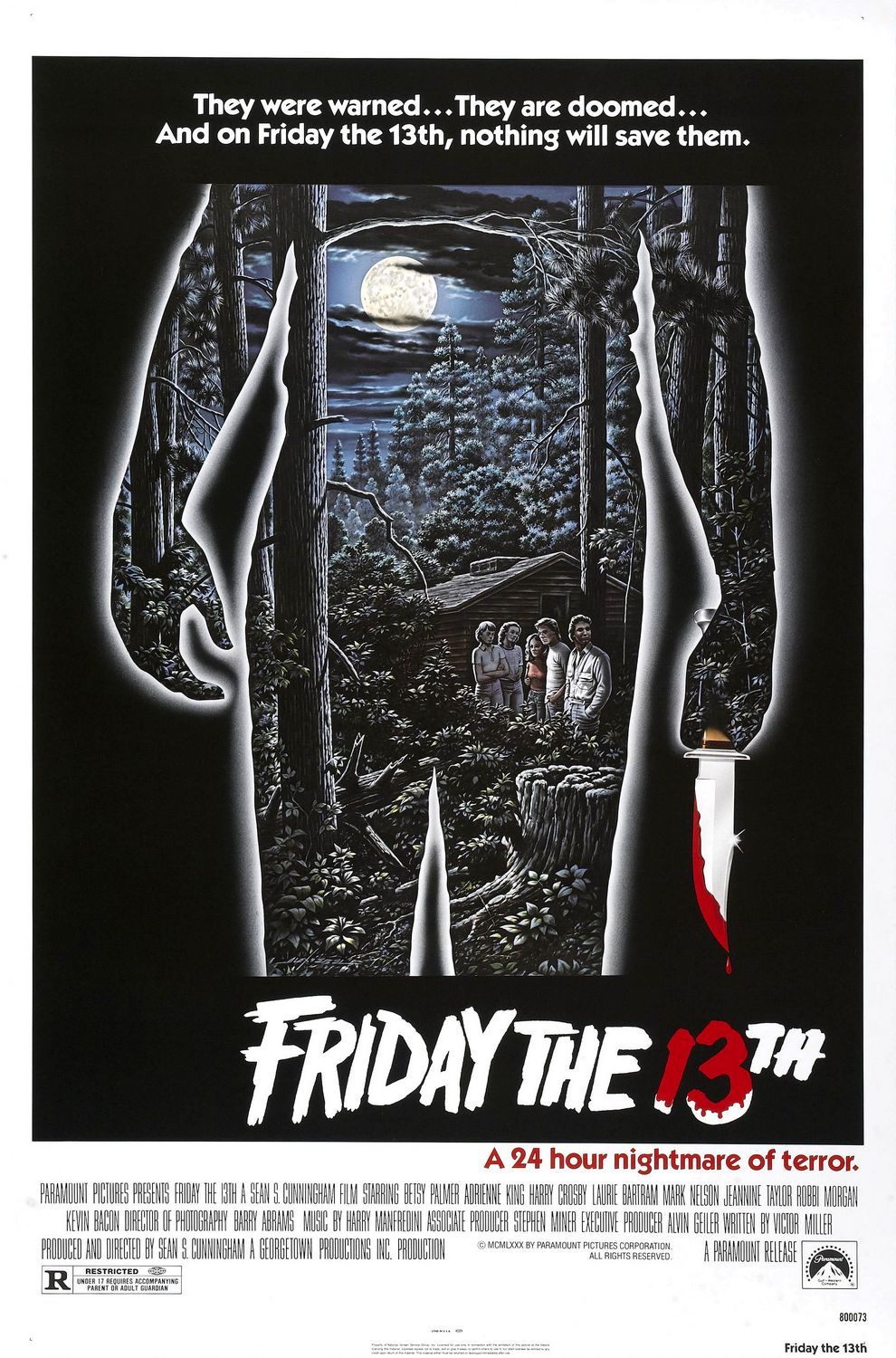
‘Friday the 13th’ May Be No ‘Halloween,’ But it is Better Than the Average Slasher Movie

Friday the 13th movie poster

Look, no one is going to mistake any “Friday the 13th” movie for cinema at its best. It started out as a rip off of “Halloween” with a little bit of “Psycho” thrown in for good measure, and it soon became a never-ending franchise which, to this day, still won’t die. We had two of the sequels with the word “final” in them, and each turned out to be a flat out lie. Just when it looks like this franchise has breathed its final breath, it is resurrected once again. Perhaps the world is overpopulated with too many horny teenagers who need to be dealt with in a messy way. In the end, these films touch on our deepest fears and exploit them for all they are worth. We know they’re not good for us, but we can’t help ourselves and want to see what nasty crimes will be perpetrated next.

The “Friday the 13th” movies are essentially the equivalent of a fast food meal, the kind which has an obscene amount of cholesterol in them. You know it’s bad for you, but you keep coming back for more. It’s not just tapping into our deepest desires, but into our willingness to be bad and rebel against what our parents don’t like. Film critics never stopped attacking these movies and continually bashed them to pieces, and yet they made so much damn money on such low budgets. It represented horror being taken to the next level for the children of the 80’s. Our parents hated the movies, and that made us all the more curious about seeing them. Jason Voorhees eventually became as familiar to us as Santa Claus. I remember when “Friday the 13th: The Final Chapter” (LOL) came out when I was in the second grade, and none us had ever looked more forward to a movie none of us would be able to see (nor had we any business to). Yes, these slasher flicks bring back a lot of nostalgia for me.

The original “Friday the 13th” seems much better in retrospect. This is especially the case when you compare them to the sequels, let alone all the endless knockoffs, which came after it. What surprised me is how some of the murders which occur in this movie actually happen off screen. We have no idea they have occurred until we see the carnage put on display right in front of our eyes. It’s pretty vicious what is perpetrated in this film, and this was back when an arrow through an eye actually felt shocking. For the most part, “Friday the 13th” and a couple of sequels felt very real. You have to give the filmmakers credit because none of the slasher movies made today can’t even touch that feeling of reality. We all know we’re watching a movie when it comes to the sequels, but the original was experienced more than watched.

I’m sure we all know by now what Drew Barrymore should have known at the beginning of “Scream;” Jason was not the killer in this one. Instead, it was his mother, played in an over the top performance by Betsy Palmer. Mrs. Voorhees is basically what Norman Bates’ mother would have looked like, had Norman not have killed her off. Those moments where she is clearly schizophrenic and acting as if her son is actually telling her to kill people are both chilling and hilarious at the same time. This is far from a convincing performance, but Palmer is so much fun to watch in her deranged state to where it really doesn’t matter.

The cast of actors were basically hired not so much for their acting talent, but because they resemble, as director Sean S. Cunningham put it, those kids who came out of a Pepsi commercial. In many ways, this casting choice helped give “Friday the 13th” a stronger feeling of reality as they are people we recognize from our own lives. They are not models who have enhanced themselves with endless plastic surgeries (those would appear in the sequels). The ladies look very sweet and fetching, and the men look down to earth and not like those guys who spent way too much time at the gym.

“Friday the 13th” also was the movie which started the cliché of how if you have premarital sex with your boyfriend of girlfriend, you would die. The last person left standing was always a virgin, or the one too shy to ask a boy for a date. As a result, many people think there is some highly conservative Christian value system in place in these movies which one must follow in order to survive an experience with a masked maniac. Some will say Carpenter originated this with the original “Halloween,” but he made it clear in the DVD commentary he was not trying to spread religious dogma. Carpenter said the characters got killed because they weren’t paying attention, but ever since the first “Friday the 13th,” it’s been open season on kids who don’t practice safe sex.

There is also the crazy old man Ralph (Walt Gorney) who warns everybody of how they “are all doomed.” Of course, it’s always some crazy guy no one ever listens to. God forbid it’s some normal person people take the time to listen to. But if everyone were to believe this guy, then there would be no movie.

Of all the actors in this film, let alone the entire series, Kevin Bacon is the one who came out of it with the most successful career. “Friday the 13th” may not show off his best talents, but he does have one of the coolest death sequences in horror movie history. Bacon also gets to have one of the sweetest love making scenes any horror movie could ever hope to have. His character and his girlfriend actually do make love. It’s not one of those humping and pumping moments you can find in so many other movies where one person is doing all the work and the other is not having enough pleasure. It makes their inevitable deaths feel kind of sad. Even if we really wanted to see these two get bumped off, we don’t look forward to it.

Sooner or later, we were bound to see this movie because people couldn’t stop describing the more graphic moments in it. I remember my brother telling me about the scene where Kevin’s girlfriend does finally get it:

“You see her looking into the shower stalls and no one’s there. But while she is looking, you can see in the background the shadow of an ax being raised up. When she turns around, you can see the ax going into her face!”

My reply to this at the time was:

“Whoa! Cool!”

Then you have the unforgettable Harry Manfredini music score which basically sounds like Bernard Herrmann’s “Psycho” score on speed. Never have woodwind instruments been as thoroughly pummeled as they are here. This is not to mention the “chi, chi, chi, ha, ha, ha” sound (it’s actually “ki, ki, ki, ma, ma, ma”) which is so clearly identified with this undying franchise. When you hear it, you know Jason is not far away with a rusty machete in his grasp.

Cunningham is no John Carpenter, and he is a better producer than a director, but he does keep the suspense quota of “Friday the 13th” at a high level and generates a number of good scares. This one does not focus so much on the killings as it did on the messy aftermath. While you did see characters gutted in the most painful places imaginable, there were a couple of others you kept wondering about until you saw their bloodied corpses. The later sequels would get a little more creative with the murders.

* * * out of * * * *

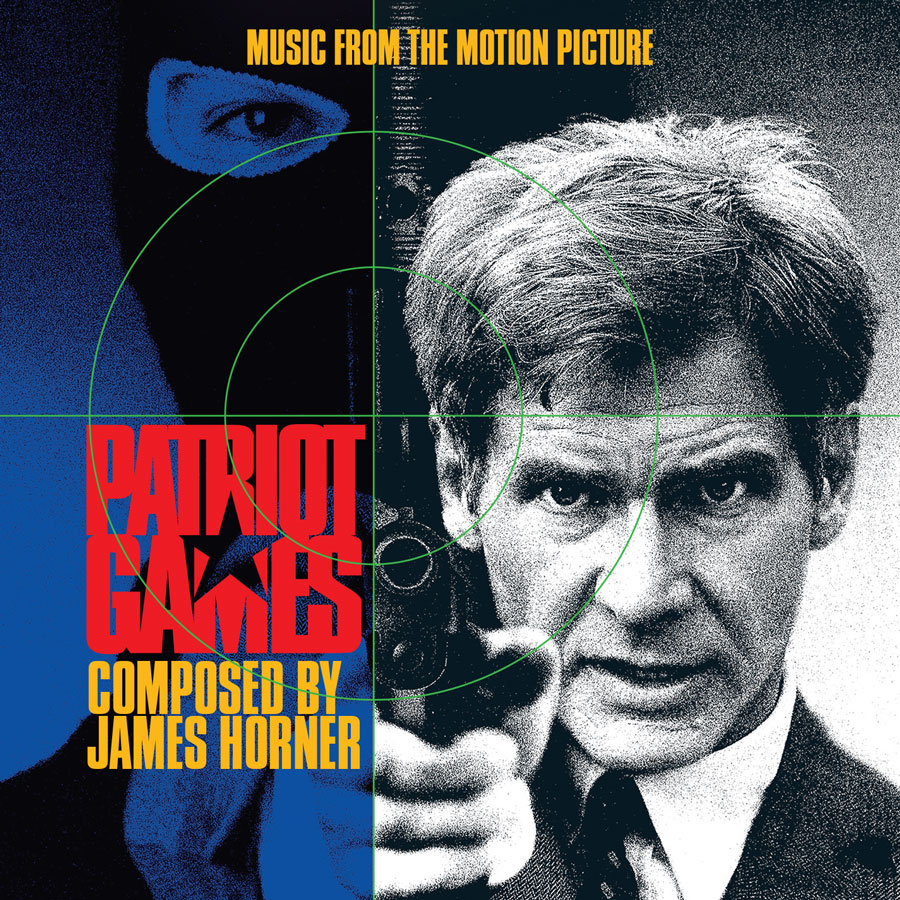
Soundtrack Review: ‘Patriot Games’ Extended Edition

Patriot Games soundtrack

Patriot Games” was the second Tom Clancy novel adapted to the big screen after the huge critical and commercial success of “The Hunt for Red October.” But in the process of bringing Clancy’s heroic character Jack Ryan back for another adventure, many changes ended up taking place. John McTiernan stepped away from the director’s chair and Phillip Noyce came on board, Alec Baldwin was replaced by Harrison Ford, and Basil Poledouris stepped aside for James Horner who at the time was an A-list composer very much in demand.

La La Land Records has released a remastered and expanded soundtrack to “Patriot Games” which contains a lot of music never before released, source cues and the Clannad song “Harry’s Game.” The film has Jack Ryan stopping an IRA assassination attempt on the Royal Family, but this makes him the target of a renegade faction of terrorists, especially Sean Miller (Sean Bean) whose brother Ryan ended up killing. In scoring this action and suspense film, Horner creates a surprisingly understated score which features lovely Irish and Gaelic flavors, and he combines both electronic and orchestral music to highlight the movie’s action set pieces.

Now most action scores start off with a thunderous main title to get the audience all hyped up, but the main title for “Patriot Games” is surprisingly subtle and not the least bit bombastic. This turned out to be an excellent move on Horner’s part as this film proves to be a more personal one for Jack Ryan than “The Hunt for Red October.” Among my favorite tracks are “Attempt on the Royals” which underscores Ryan’s heroic save and the loss of Sean Miller’s brother, “The Hit” in which Jack rushes after his family to save them from the vengeful Sean, and “Assault on Ryan’s House” where IRA terrorists make their last effort to eliminate the brilliant CIA analyst. I’ve always been a sucker for adrenaline pumping film music, and Horner was one of the masters at composing it.

At the same time, I really liked the low-key music he comes up with like “Closing Credits” which is a piece of music great to fall asleep to. I kept thinking it was one of the singers from Clannad who did the backing vocals on this track, but it was actually Maggie Boyle whose voice is nothing short of heavenly. Horner is great at finding the humanity in the characters inhabiting an action movie, and his music can be both thrilling and highly emotional at the same time. Not many film composers can pull off such a feat.

Among the previously unreleased tracks, it was nice to see “Sean Obsessing in Jail” on this release as Horner gets at what is eating away at Sean whose obsession for avenging his brother’s death continues to grow and grow, and I also got a kick out of “Cooley Escapes” which follows a minor character in the film who suddenly discovers he is under police surveillance. As for the source cues, they include the “Washington Post March,” some traditional Irish music and some pieces composed by Mozart, I’m not sure how necessary they were to this edition of the “Patriot Games” soundtrack. At the same time, those additions prove just how serious La La Land Records is about giving fans the most complete soundtrack to a movie they could ever hope to have.

One interesting thing about this particular La La Land Records release is it doesn’t contain the original commercial release of the soundtrack. Other releases of theirs have had them on a second disc as a bonus for those who liked the original version. But in the end, I guess they decided not to include it because everything from the original release is on these two discs anyway. I do need to point out, however, there are two different versions of “Closing Credits” on this expanded version. One is listed as the film version, and the other is listed as the album version. The difference between the two is the film version is in English and the other one is not. Regardless of which version you find yourself liking more, it is great to have both of them here.

And like many La La Land Records releases, it does come with a booklet detailing the making of the soundtrack and the movie itself. The booklet is entitled “The Pluck of the Irish,” and was written by Jim Lochner who is the managing editor of FSM Online and the owner of the website FilmScoreClickTrack.com. Now I have reviewed several La La Land Records releases, but the booklet for “Patriot Games” is one of the best they have ever put together as Lochner covers just about every single detail about the movie more than ever before.

Among the memorable passages are why Neufeld didn’t bring McTiernan back for “Patriot Games,” how Baldwin reacted to not getting cast in the film, and how Clancy was constantly upset about the changes made in bringing his book to the big screen. In describing Horner’s score, Lochner writes it is a “subtle, understated score that percolates underneath the surface, conveying the tension of a family under siege and the terrorists’ patriotic Irish roots.” I think this is the perfect description for the music of “Patriot Games,” and Lochner, in writing about the other tracks, makes the case for why Horner should have received more attention for it when the movie came out in 1992.

Once again, La La Land Records has given film music fans another remastered and expanded soundtrack which is a must buy. In a career that has seen him create unforgettable film scores for “Titanic,” “Star Trek II: The Wrath of Khan” and “Glory,” Horner’s score for “Patriot Games” stands out as one of his most unique. It is at times an understated and at other times a pulse pounding listen, and the Irish elements he puts in reminds us of what a masterful composer he was. Now it has the soundtrack edition it has long deserved.

Click here to purchase the soundtrack.

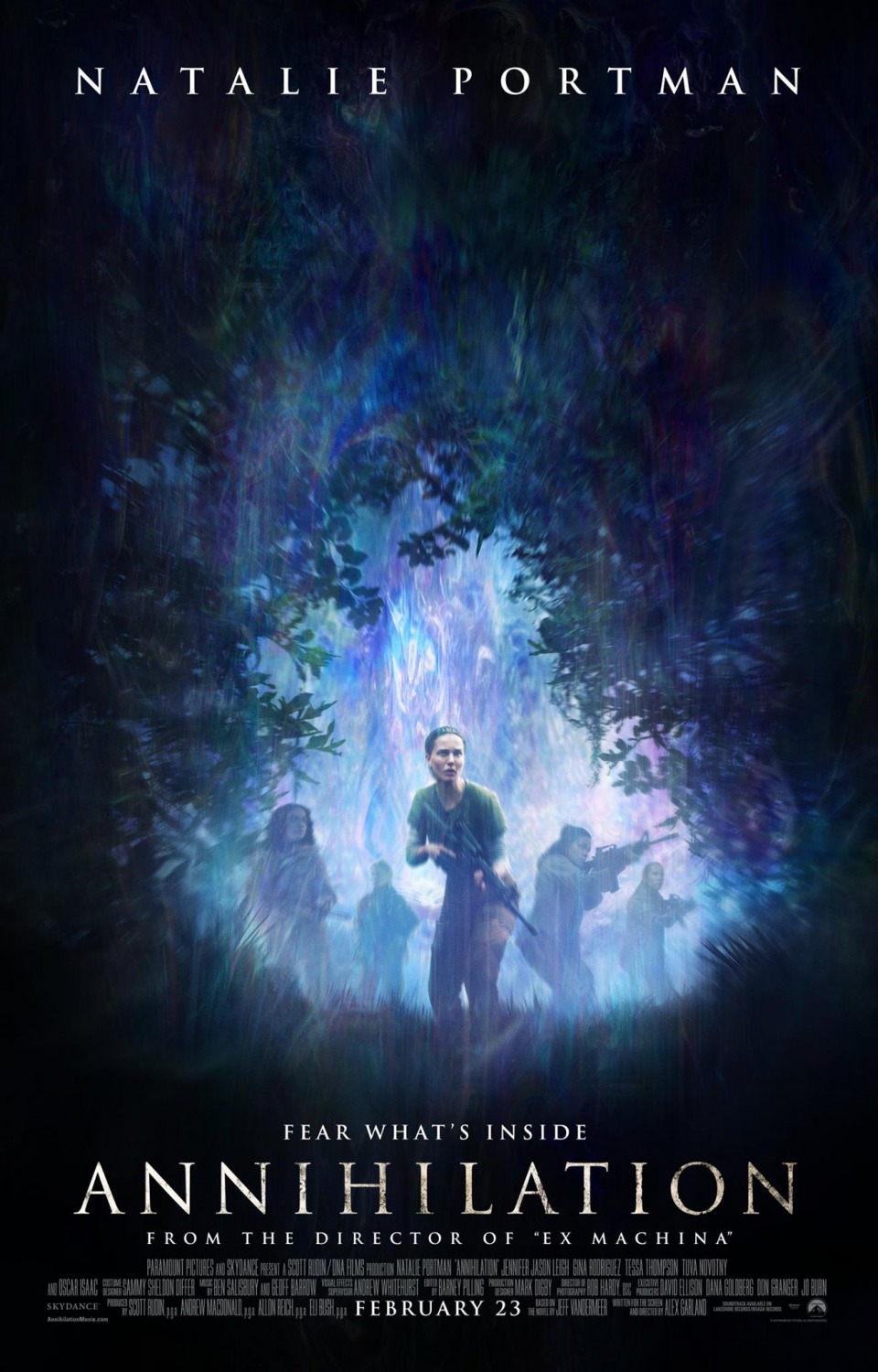
‘Annihilation’ is a Unique Sci-Fi Cinematic Experience

Annihilation movie poster

I have to give Paramount Pictures credit for taking risks in the past year or so on movies which defy what is considered these days to be mainstream entertainment. Last year, they released Darren Aronofsky’s “mother!,” a film which could in no way be mistaken for a comic book movie. Despite it earning a rare Cinemascore grade of an F, Paramount stood behind Aronofsky and his film defiantly, saying they were proud of the work he did. Keep in mind, the studio made this clear even after “mother!” suffered a weak opening at the box office, especially when compared to other movies starring Jennifer Lawrence.

Now in 2018, Paramount has released “Annihilation,” a science-fiction horror film which not only defies what many expect from Hollywood at the moment, but also proves impossibly hard to fit into any specific genre. This has led many to accuse Paramount of not giving the movie the proper promotion it deserved, but we will address this issue at another time. Whatever expectations you have for this cinematic experience, it would be best to leave them at the door as “Annihilation” deals with themes and situations other filmmakers have explored in the past, but this time they are handled in a way which feels truly fresh and not the least bit routine.

Natalie Portman stars as Lena, a biologist and former U.S. Army soldier who, as the movie starts, is in a depressed state as her husband, Army soldier Kane (Oscar Isaac), has been missing for a year, and many presume he has been killed in action. But suddenly, Kane reappears to Lena’s delight, but he resembles one of the pod people from Phillip Kaufman’s remake of “Invasion of the Body Snatchers” as he seems devoid of any emotion and cannot remember where he was. Before Lena can get a satisfactory answer regarding his whereabouts, Kane becomes very sick and is transported via ambulance to the hospital. As you can expect, military officials stop the ambulance, and it becomes clear Lena and Kane have stumbled across something those in power would prefer to keep under a heavy veil of secrecy.

“Annihilation” puts us right into Lena’s shoes as she desperately tries to understand the situation she has been thrust into. Finding herself at the United States’ government facility known as Area X, a name which implies a location always closed off to the general public, Lena is greeted by Dr. Ventress (Jennifer Jason Leigh), a psychologist who finally gives her some answers and introduces her to an area known as “the shimmer.” We see a meteor hit a lighthouse, and from there an electromagnetic field has developed and continues to spread at a rate to where it will eventually absorb everything in its path. Soldiers have been sent into “the shimmer” to better understand this phenomenon, but Kane is the only one who has come back from it alive.

Dr. Ventress ends up recruiting Lena and two other women to join her on the latest mission to enter “the shimmer,” a mission they have every reason to believe is a suicidal one. This is where “Annihilation” becomes particularly unique as these characters are not trying to be heroic but are instead dealing with their own self-destructive tendencies. Indeed, self-destruction is a big theme as these four women are revealed to be individuals deeply wounded by life in one way or another to where they feel as though there’s nothing much left to care about or live for. But as they get deeper into “the shimmer,” their survival instincts become awakened almost immediately.

“Annihilation” was written for the screen and directed by Alex Garland who started out as a novelist with his book “The Beach” which was made into a movie by Danny Boyle and starring Leonardo DiCaprio. Since then, he has graduated to writing screenplays for “28 Days Later,” “Sunshine,” “Never Let Me Go” and “Dredd.” In 2015, he made his directorial debut with “Ex Machina,” a brilliant science fiction thriller which dealt with the subject of artificial intelligence in a way which felt familiar and yet very fresh. Even if the story reminded me of “Frankenstein” in a way, the approach Garland took with the material and the characters felt invigorating and wonderfully unique.

Garland has brought this same kind of energy and enthusiasm to “Annihilation” as it follows a group of people caught in a situation much like the one in John Carpenter’s “The Thing” to where they are dealing with an antagonist who is not quite visible, and this leads them to become increasingly paranoid about one another. Garland does an excellent job of keeping the audience off-balance as he takes us through the story in a non-linear fashion. When Lena awakes in a tent inside “the shimmer,” she admits she has no idea how she got there or of what she experienced in the past few hours. Indeed, we end up feeling as lost as her as we are desperate to better understand the situation everyone has been sucked into, and Garland holds our attention throughout as a result.

Throughout, Garland gives us much to think about such as the differences between suicide and self-destruction as well as the importance and inherent danger of discovery. While watching “Annihilation,” I was reminded of a scene in “Jurassic Park” between John Hammond and Ian Malcolm. Hammond doesn’t understand why anyone would stand in the way of discovery, but Malcolm leaves him with this to chew on:

“What’s so great about discovery? It’s a violent, penetrative act that scars what it explores. What you call discovery, I call the rape of the natural world.”

But while Garland has crafted “Annihilation” as the thinking person’s sci-fi movie, it is not at all lacking in the thrill department. Certain scenes have a visceral feel to where I jumped out of my seat for the first time in ages. On a visual level, it has a look which is as beautiful as it is haunting, and I am having a hard time comparing it to other movies I have seen recently. On top of this, “Annihilation” features a very unique sonic landscape courtesy of composers Ben Salisbury and Geoff Barrow, both of whom combine an earthly sound with an electronic one as they work to separate the real world these characters have left behind and the alien realm they have dared themselves to enter.

Natalie Portman has a tricky role to play here. As Lena, she has to be vulnerable but also exhibit a reserve of strength deeply embedded in a character who has served her time in the military. That Portman manages to pull this off is not the least bit surprising, and she gives us a fully formed character whose experience and pain aid her in the movie’s spellbinding climax. Many still can’t shake the squeaky-clean image they have of Portman, but she has been around long enough to remind audiences of the amazing depth and range she has as an actress.

It’s great to see Jennifer Jason Leigh here as well, let alone in any movie she appears in. As Dr. Ventress, she creates a truly enigmatic character who keeps her emotion in check to where you constantly wonder what is going on in her head. Clearly, this doctor has more interests than in just exploring “the shimmer,” and Leigh keeps you guessing what they are all the way to the end.

I also have to give credit to Gina Rodriguez, Tessa Thompson and Tuva Novotny for creating such memorable characters out of those which, in any other movie, could have been of the easily disposable variety. Some characters exist solely to further the actions of the lead protagonist or serve as mere fodder for an ever so lethal antagonist, but these actresses make theirs stand out in a way they would not have otherwise, and their final onscreen moments are hard to shake once you have witnessed them.

And when it comes to Oscar Isaac, you can always count on him to give an infinitely charismatic performance even in a role where the character looks to have been drained of all emotion. Telling you more about his character of Kane would be detrimental to your viewing experience, but once you watch him here, you will agree he has created a fascinating portrait of a man who once knew his place in the world, but who now is forever lost in it.

It has now been a few days since I have watched “Annihilation,” and I still find myself thinking about the movie quite intensely. Even if its pace lags a little more than it should, the questions it left me with remain endlessly fascinating. When we see Lena reading “The Immortal Life of Henrietta Lacks,” is that a hint of some kind? What led Garland to include the Crosby, Stills & Nash song “Hopelessly Hoping” here? And more importantly, is the movie’s ending a hopeful one, or is it meant to be relentlessly bleak? Garland is not out to give us easy answers, but my hope is you will be open to the unusual experience this movie has to offer. Cinemascore may have given it an average grade of a C, but please remember this is the same research group which gave “America: Imagine the World Without Her” an A+.

Trust me, check this one out, and be sure to come into it with an open mind.

* * * ½ out of * * * *


‘Flight’ is Not What I Expected it to Be

Flight movie poster

The advertisements for Robert Zemeckis’ “Flight” are actually quite deceptive. It almost looks to be a mystery movie as we wonder if Denzel Washington’s character of Whip Whitaker was drunk or not when he crash-landed the commercial airplane he was flying. Whip ended up saving a lot of lives, but is the company which owns the airline he flies for trying to make him take the blame so they can reduce their loses? Looking at the commercials and trailers for “Flight,” it looked as if the film was being sold as a relatively easygoing cinematic affair. However, it turns to be something far more complex and ambiguous than what Hollywood is used to putting out.

“Flight” isn’t a mystery in the slightest, but instead a character study about a man who is overwhelmed by his addictions and has yet to be honest not only with others, but most of all with himself. From the start, we can see Captain Whip Whitaker is one messed up dude. Waking up in his hotel room after an evening tryst with stewardess Katerina Marquez (Nadine Velazquez), we see him drink some beer, smoke a cigarette, and arguing with his ex-wife over their son’s school tuition while snorting some cocaine. All of this happens before he puts on his uniform and heads over to his plane to get ready for takeoff.

Whip clearly has no business flying an airplane under these conditions, but fly it he does. When a malfunction suddenly forces it into a vertical dive, he manages to roll the plane over to where he’s flying upside down, and he does so just long enough to stabilize the descent and land it in an open field. Next thing Whip knows, he is waking up in a hospital room only to discover the real nightmare for him is about to begin.

It says a lot about the star power of Washington and Zemeckis that they could get a movie like “Flight” made today. Made for only $30 million, far less than what it cost for Zemeckis to make “The Polar Express” or “A Christmas Carol,” this is more of a character driven drama from the 1970’s as it gives us a main character who is not particularly likable, and yet we are compelled to follow him all the way to the movie’s end.

What I loved about the screenplay by John Gatins is how it revels in the ambiguity of its characters and the situations they are stuck in. We know Whip was far from sober when flying the plane, and yet we cannot help but wonder if his heroic act can somehow excuse his personal sins. His lawyer, Hugh Lang (Don Cheadle, terrific as always), tells him how ten other pilots were placed in flight simulators which recreated the event, and of how they ended up killing everybody on board. But there is one big difference between Whip and all those pilots: they were all sober.

We can always count on Washington to give us some of the best performances in movies today, and his work in “Flight” is unsurprisingly superb. It’s also the riskiest role he has played in a long time as his character is far from likable and apparently determined to drive everyone who tries to reach him away. Heck, Detective Alonzo Harris from “Training Day” almost seems like a nicer person than Whip as Alonzo tried to have his partner killed, but we always find ourselves rooting for Washington no matter which character he plays, and he does an exceedingly brave job in uncovering this character’s wounded humanity for all of us to see.

I do have to say, however, how amazed I am at the enormous amount of alcohol Whip consumes throughout the movie. Any normal person would have likely experienced liver failure long before this story reaches its final act.

Much has been said about how this is Zemeckis’ first live action movie since the year 2000 when he made “Cast Away” and “What Lies Beneath,” but people should really take note of how this is the first R-rated movie he has directed since “Used Cars” and that one came out in 1980. Having made so many films largely geared towards the whole family, it’s tempting to think he was no longer in a position to helm one with such complex characters and issues. But with “Flight,” Zemeckis does some of his most memorable work behind the camera in some time. There are moments where he paints some dramatic strokes broader than they need to be, but he never once shies away from the ambiguous nature and fascinating questions which Gatins’ screenplay elicits. He also does a brilliant job in one crucial scene involving a minibar in a hotel room, and the suspense of it had the audience I saw the movie with absolutely enthralled. And, of course, he stages a very frightening plane crash that tops the one he put together in “Cast Away.” Even from the safety of a movie theater, this sequence is truly harrowing to sit through, and its images hang over the rest of “Flight” like an ominous shadow.

Another superb performance comes from Kelly Reilly who plays Nicole Maggen, a former photographer trying to free herself from the throes of a nasty heroin habit. Reilly may be best remembered for her role in the deeply unsettling horror film “Eden Lake,” and her portrayal here feels very honest in how she presents an addict’s day to day struggle to stay clean.

There’s also a number of other terrific supporting performances to be found here from actors like John Goodman who looks to be channeling Jeff Bridges’ Dude character from “The Big Lebowski” for his role of Harling Mays. Goodman provides the movie with its much-needed scenes of comic support, and he proves to be as entertaining here as he was in “Argo.”

Bruce Greenwood, who increasingly lends the movies he appears in a strong integrity, is also really good as Whip’s longtime friend, Charlie Anderson. Also showing up in a small but pivotal role is the great Melissa Leo whose sweet voice can’t hide her relentless pursuit of the truth as FAA investigator Ellen Block.

I didn’t think I’d see another movie in 2012 other than Paul Thomas Anderson’s “The Master” which offered an equal amount of complex characters in ambiguous situations. As a result, “Flight” turned out to be a big surprise for me as it challenges viewers in ways a strong dramatic film should. It offers us yet another great Denzel Washington performance, and it reminds us of what a terrific director Robert Zemeckis can be regardless of whether or not the characters in his films are computer generated.

* * * ½ out of * * * *

‘Cloverfield’ Lives Up to the Hype

Cloverfield

The fact that “Cloverfield” is any good is something of a miracle. This movie was released in January, a month where Hollywood tends to dump all their crappy movies because they have no idea of where else to put them. Plus, this is a movie which could have easily collapsed under the height of anticipation and expectation which preceded it with its brilliant marketing strategy. We all saw the brilliant teaser trailer showing the severed head of the Statue of Liberty being thrown down into the middle of Manhattan. We didn’t see the title for the film until months later, and we couldn’t stop thinking about it. This trailer was analyzed like it was the equivalent of the Zapruder film which captured the Kennedy assassination, but now the movie is finally here and has gotten 2008 off to a strong start.

“Cloverfield” takes place in the city of New York which has seen its fair share of destruction on and off the big screen. It starts off with some color bars on the screen and there is a message stating the footage we are about to see is from the area “formerly known as Central Park.” Those are ominous words indeed, and it leaves us in a state of suspended tension as we already know something very bad is going to happen. We first meet Rob Hawkins (Michael Stahl-David) as he is filming the apartment of the woman he just slept with, Beth McIntyre (Odette Yustman). We see them hanging out in Coney Island throughout, but the movie then jumps ahead to a month or so later when Rob is about to leave New York for a new job in Japan. It turns out Beth and Rob never really hung out with each other again after the great day they had, and the time they had together is always on their minds. But just as they try to sort out their personal issues, the earth shakes beneath them and, of course, all hell breaks loose.

The movie does take its time getting started which is not a bad thing as it takes time to establish the main players and their backgrounds. The script doesn’t flesh them out completely, but they are fleshed out enough to where you do care about them. The big surprise party thrown for Rob is filled with people who look like, at the very least, got a callback for one or more of the shows on the CW network. It would have been nice to see the filmmakers add more ordinary people into this party who did not have the perfect body or such Noxzema clear faces, but anyway.

What makes this monster film particularly effective is how it is told from the ground view. We are there with the people as they experience this disaster firsthand, and the characters are not just simple clichés who look and feel like they belong in a typical watered-down sitcom. This is what drove me nuts about Roland Emmerich’s “Godzilla.” Like Steven Spielberg’s “War of the Worlds,” it is not caught up with the military as they make decisions on how to destroy this enormous beast. It is more concerned with people like you and me and how we might struggle to survive in this situation. The adrenaline keeps running high as Rob and a few others make their way through the decimated city to get to Beth who is trapped in her high-rise apartment.

Another key factor is that “Cloverfield” doesn’t show us the monster right away, and this as a result makes the thought of the monster becomes more terrifying than anything else. We do get to see the monster eventually, but not in its entirety until the latter half. I would love to describe the monster to you, but I’d rather you discover it for yourself as I really don’t want to spoil the surprise. Nothing will compare to the first time you watch this movie.

The movie is also dominated by the shaky cam work which threatens to become an overused method of filmmaking these days. For those of you who have serious motion sickness problems, don’t sit too close to the screen. As for myself, I actually dealt with it just fine. I was starting to think I might have reached my limit with shaky camerawork after watching “The Kingdom,” and it fails in comparison to the brilliant camerawork accomplished in “The Bourne Ultimatum.” But here, it’s fine and it keeps you on the edge of your seat.

“Cloverfield” is not exactly brilliant filmmaking, but it does get the job done and with no real music score might I add. We don’t get to hear a score until the end credits where Michael Giaachiano composed a piece of music which serves a tribute of sorts to the monster movies of the past. Credit, however, should go to director Matt Reeves who directs his first movie here since “The Pallbearer” which was made back in 1996. He keeps the action grounded enough to where we have no problem following the characters even if their situation is not entirely probable. Anyway, we go into a movie like this to have a good time, not to think too hard about everything going on.

* * * ½ out of * * * *

‘Jack Ryan: Shadow Recruit’ Forgets What Makes Tom Clancy’s Hero Stand Out

Jack Ryan Shadow Recruit movie poster

While watching “Jack Ryan: Shadow Recruit,” it didn’t take long to realize like the CIA analyst hero of the late Tom Clancy’s novels has been rebooted one too many times. After being portrayed by Alec Baldwin and Harrison Ford, Jack Ryan got his clock turned backwards when Ben Affleck played him in “The Sum of All Fears.” I have no problem admitting I liked that film, but casting a younger actor as Ryan ended up screwing with the franchise’s equilibrium. Things were going smoothly beforehand, so why throw a younger actor, any young actor, into this role and take the audience back in time? Why not bring Baldwin back? When is all said and done, Baldwin is still the best actor to inhabit this character.

Well, now we have Pine taking over the role of the brilliant Jack Ryan, and this time the franchise goes right back to the beginning of Ryan’s career. What results is by no means a bad movie as it is well made, features a number of strong performances and some exciting action scenes. Regardless, there’s a feeling of emptiness at this film’s core. The problem it’s not much different from the many spy movies I have seen over the years and, as a result, feels largely forgettable.

For those who remember Fred Dalton Thompson’s character of Rear Admiral Joshua Painter from “The Hunt for Red October,” he gave a speech in which he talked about how Ryan was severely injured in a helicopter crash back in the 70’s and spent the following year learning to walk again. This is the Ryan we meet here when this film begins as he is compelled to enlist in the military after the events of September 11, 2001. From there, we watch him recovering from a helicopter crash, and he recuperates over time with the help of Dr. Cathy Muller (Keira Knightley), the woman we know will eventually become his wife.

During his lengthy recovery, Ryan is paid a visit by CIA official Thomas Harper (Kevin Costner) who recruits him to work for the agency. We then move forward ten years later to when Ryan is working on Wall Street as a compliance officer at a stock brokerage, but this job is of course a cover for his real work as a covert CIA analyst as he keeps an eye out for financial transactions which are suspect and may indicate terrorist activity. Upon discovering trillions of dollars held by Russian organizations have gone missing, the trail of criminality leads him to Russian tycoon Viktor Cherevin (Kenneth Branagh). Ryan travels to Russia and, from there, things go bang, bang, bang like you would expect.

I think one of the big mistakes made with “Jack Ryan: Shadow Recruit” was that the filmmakers decided not to base it on any of Clancy’s novels. I know Clancy was always highly critical of the way Hollywood treated his books and I’m pretty sure he would have had many things to say about this installment had he lived to see it. At the same time, his stories were always intricate and fascinating, and the screenplay here by Adam Cozad and David Koepp is both confusing and hard in comparison. As a result, it feels a surprisingly lightweight compared to the complex stories Clancy came up with.

In addition to playing Jack Ryan’s chief nemesis, Branagh also directed the movie and has come to show a real panache for filming exciting action scenes. There’s also a crazy car chase near the end which really did have me on the edge of my seat, and he has come a long way from directing big budget movies like “Mary Shelly’s Frankenstein” and “Thor.” Granted, you can’t go into this expecting something on the level of his Shakespeare cinematic adaptations, but he does provide the audience with a fun time. The problem is the story of “Jack Ryan: Shadow Recruit” is very routine, and it was hard to get excited about what unfolded once I made this realization.

In all fairness, Pine does make for a good Jack Ryan in the way the character was written here. As tired as I am of movie studios making all these origin movies, Pine brings the same kind of energy to this role as he did to “Star Trek” as James Kirk. While this Ryan is not as interesting here as he was in the previous films, Pine does the best that he can with a somewhat underwritten part.

One performance in particular I want to point out is Costner’s as Thomas Harper. It’s fascinating to watch him here after having seen him as the heroic young soldier in movies like “No Way Out,” and he is aging nicely into the role of the elder statesmen who imparts his wisdom and advice to newbies. Part of the fun in watching Costner here is how mysterious he makes Harper. Ryan is not sure he can trust him fully, and Costner’s constant poker face throws not only him off, but the audience as well.

But despite all the good things about “Jack Ryan: Shadow Recruit,” the whole package feels far too ordinary for it to work effectively. We’ve seen this kind of story before, and not much was done to elevate it above the usual fare this genre has to offer. In the process of trying to make Jack Ryan young again in the hopes of jump starting this long-running franchise, they have robbed the character of what made him unique. In this film, he’s like any other young CIA recruit who has yet to understand what he’s getting himself into, and I have seen this scenario played out far too many times before.

For me, Jack Ryan was always the accidental action hero. He has a brilliant mind and always gets to the truth of the matter because he takes the time to study the individual at the center of the story. Like John McClane, he’s not out to be the hero and is always looking to avoid life threatening situations, but he eventually steps up to the plate because no one else can, and no else knows what he knows. If they ever do make another Jack Ryan, they need to make him the analyst he’s always been and not just start from scratch with an origin story. We know all about Ryan’s past, now let’s deal with his present and future. Is this too much to ask?

* * ½ out of * * * *


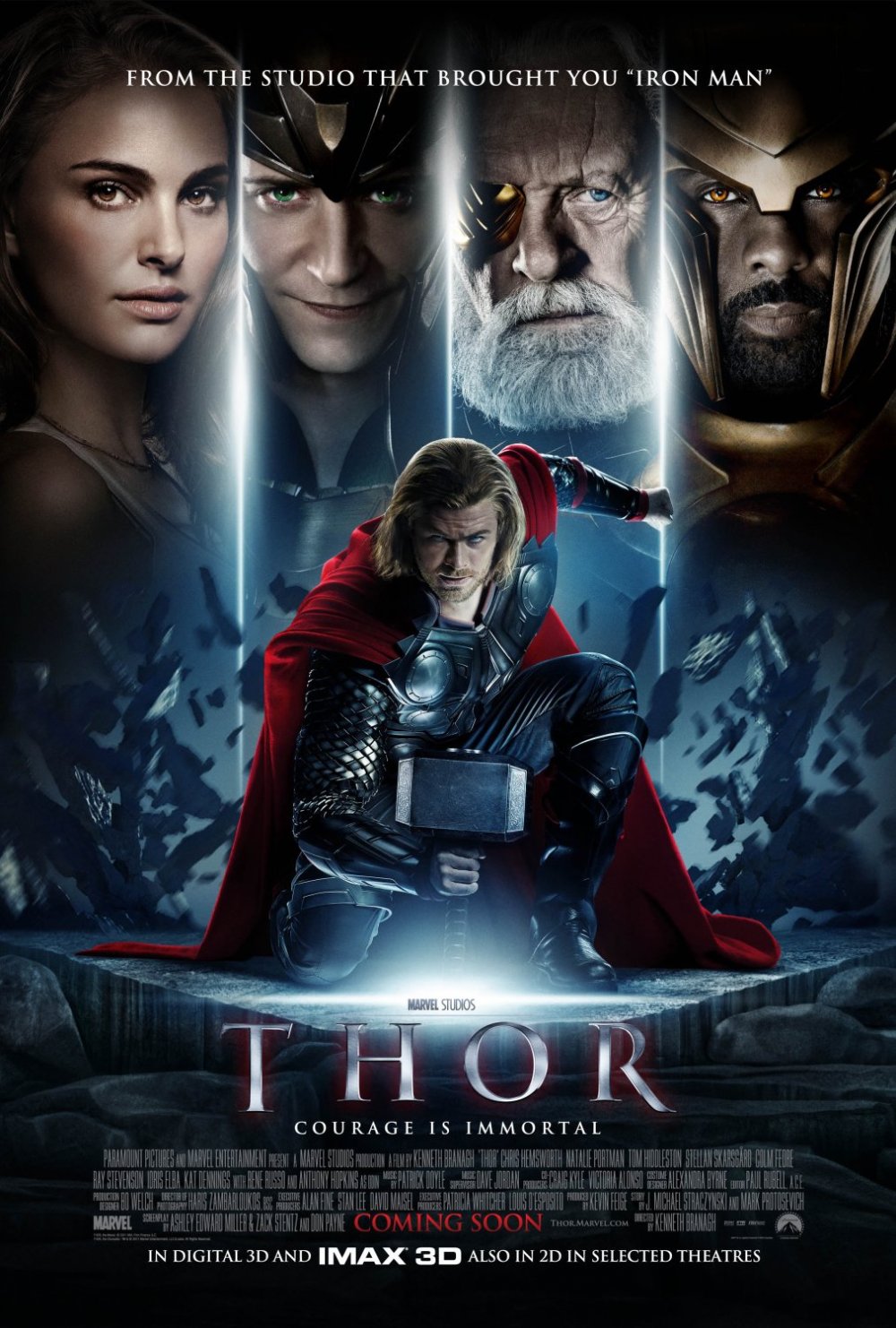
‘Thor’ Arrives with Thunderous Abandon

Thor movie poster

Thor” makes its presence known with thunderous abandon. Now like many comic books, this one is yet another I haven’t read, so I can’t say how true it stays to its origins. However, judging from the great Kenneth Branagh’s handling of the material, I imagine it’s very respectful to the character.

Heeding closely to classic Norse mythology, Thor is the god of thunder and heir to the throne of Asgard. But on the day of his ascension, the Frost Giants invade the planet’s deeper regions to retrieve the Casket of Ancient Winters, the source of their power. They are easily defeated, but their violation of the truce put together between them and Asgard seriously pisses Thor off. Against his father’s wishes, he and his fellow warriors journey to the Frost Giants home planet of Jotunheim to keep some frosty ass. Odin, however, intervenes and, infuriated with his son’s arrogance, strips him of his powers and banishes him to Earth. For a warrior like Thor, being banished to Earth does feel like a nasty insult.

First off, I really liked the way Branagh handled this material. In the wrong hands, this could have easily become high camp which would have been enjoyable for all the wrong reasons. But Branagh takes the characters and places they inhabit seriously, and he infuses them all with a strong humanity which comes to define them more than does their place in the universe. Even the villains are remarkably complex as their corruption results not so much from a need for power, but instead for a father’s love and approval. Of course, with Branagh directing, you can count on many Shakespearean references throughout, be it Iago from “Othello” or “King Lear,” and they prove to be a perfect fit for this movie.

I was also impressed with how well Branagh handled the visual elements of “Thor.” The last time he made a movie heavy with special effects was “Mary Shelly’s Frankenstein,” and he seemed a bit out of his league with that one. Perhaps we should not be impressed as this movie has a budget of at least $100 million, not counting advertisement costs, but the key thing here is the effects succeed in being an extension of the characters instead of just dwarfing them completely. Then again, that giant creature the Frost Giants unleash on Thor immediately had Liam Neeson screaming in my head, “RELEASE THE KRAKEN!!!”

As Thor, Chris Hemsworth, who played Captain Kirk’s father in J.J. Abrams’ “Star Trek,” owns the role right from the first moment he walks onscreen. Hemsworth clearly revels in portraying the great power Thor possesses, and he is a gentleman when the situation calls for it. Seeing him as a fish out of water on Earth also makes for some splendid moments which are slyly comic. I’m also glad to see Thor is not just another character who doesn’t want to be “the one,” conflicted about the things he is destined to do. With Hemsworth, you know from the get go he is fully aware he’s “the one” and owns this knowledge to where you feel his impatience in wanting to prove it to the universe. Instead of a whiny Anakin Skywalker, Hemsworth gives us a powerful warrior worth cheering for, and one who eventually learns from his mistakes.

As scientist Jane Foster, Natalie Portman’s casting in the role seems like a no brainer. We know from her off screen life that she is a remarkably intelligent human being, so she doesn’t have to prove to us how believable she can be as a scientist. She sparks instant chemistry with Hemsworth (damn those six pack abs!!!), and that shy smile of hers kills me every single time.

Then there’s the great Sir Anthony Hopkins whose portrayal of Asgard’s king and father to Thor, Odin, is nothing short of gallant. This is especially the case with the opening narration which he recites with such depth to where he makes all other actors who’ve done it before him sound like they were sleepwalking their way through it. While many may think this is one of those roles Hopkins did for an easy paycheck, it’s really one of the best performances he’s given in a while.

Tom Hiddleston plays Loki, Thor’s brother and the movie’s main villain. What I liked about Hiddleston is how he does so much more than give us the usual one-dimensional bad guy. Just like Joaquin Phoenix’s character from “Gladiator,” Loki feels slighted by his father as he prefers another man over him, and he becomes desperately eager to prove himself in any way he can. But of course, he ends up doing it in the worst way possible. Hiddleston makes Loki into a character who is more spiteful than hateful, and this makes his eventual fate seem all the more tragic in retrospect.

There are other strong performances throughout this blockbuster affair to enjoy as well. Rene Russo, where have you been? Idris Elba makes a memorable Heimdall, and it never seems like a small part with him playing it. Kat Dennings steals a few scenes as Darcy Lewis, Jane’s co-worker whose science is more political than astronomical. And Stellan Skarsgård remains a dependable actor as always playing scientist Erik Selvig, a character who ends up playing an important role in “The Avengers.”

Having said all this, “Thor” did feel like it could have been a little more exciting. It doesn’t quite have the same invigorating sweep as some of Branagh’s Shakespeare adaptations like “Hamlet” or “Henry V,” and it takes longer to get to the action than it should. It’s not quite as entertaining as “Iron Man,” but I would definitely rank it above “The Incredible Hulk.”

Regardless, there is still much to like about “Thor,” and Branagh has done the best job anyone could have in bringing this particular comic book hero to the big screen in such a respectful fashion. It also benefits from excellent casting, especially Hemsworth who looks like he came out of the womb looking like a warrior with a mighty hammer in his hand. This is one of the few times where “getting hammered” will sound more like a threat than an embarrassing state of drunkenness.

* * * out of * * * *

‘Paranormal Activity: The Ghost Dimension’ Ends This Series with a Whimper Instead of a Bang

Paranormal Activity The Ghost Dimension poster

With “Paranormal Activity: The Ghost Dimension,” we have finally reached the end of this long running horror franchise. At least, this is what Paramount Pictures is saying. They said the same thing after “Friday the 13th Part IV: The Final Chapter” and looked what happened there. When asked to explain the end of his movie “Halloween,” John Carpenter said it shows how evil never dies. This is a perfect explanation, and it helps explain why Michael Meyers keeps coming back to Haddonfield, why Freddy Krueger continues to haunt the dreams of teenagers, why Jason Voorhees continues to hack up camp counselors, and why Pinhead continues to lure the infinitely curious to that crazy box of his. Could the ever-malevolent demon known as Toby finally be stopped once and for all?

Well, let’s hope so because “The Ghost Dimension” confirms the “Paranormal Activity” franchise has finally run out of gas to where I wished the filmmakers ended it after “The Marked Ones.” This sequel returns the series to another tale of a white suburban family terrorized by Toby, and the family keeps looking into the things which go bump in the night even as the story get progressively worse. On the upside, this sequel does attempt to answer all the questions we have about this series and doesn’t just tease us endlessly the way “Paranormal Activity 4” did, but nothing is as scary as it once was.

This movie opens with a quick throwback to the literally back-breaking finale of “Paranormal Activity 3” where young Katie and Kristi are gathered up by their grandma Lois and taken to a room where a man tells them they are a critical part of Toby’s plan. We then move forward to 2013 where we meet the Fleeges, a family comprised of Ryan (Chris J. Murray), his wife Emily (Brit Shaw), and their young daughter Leila (Ivy George). They are later joined by Ryan’s brother Mike (Dan Gill) who just broke up with his girlfriend, and also Skylar (Olivia Taylor Dudley) who is a nanny or a yoga instructor or something along those lines.

Each “Paranormal Activity” movie has a twist on the technology used to exploit the presence of the demonic Toby, and this one is no exception. Ryan and Mike end up coming across this giant video camera (and yes, they used to be that big) which actually allows them to see the spiritual forces hovering around the home which take the form of an oil slick that moves around ominously. Pretty soon, young Leila is talking to Toby because impressionable kids are easily for demons to influence, and the family comes to discover they are living in the same house that grandma Lois lived in years ago. Yes, there are no such things as coincidences in a “Paranormal Activity” movie.

Let me start with “The Ghost Dimension’s” biggest problem, it feels like a movie. The previous installments, even “Paranormal Activity 4,” never made me feel like I was watching a movie. Instead, they felt like documents of real people being haunted by forces they can’t control and which encroach mercilessly on their safety. They felt real, but here everything feels highly scripted as the actors are forced to utter a lot of exposition in an effort to explain to the audience what Toby’s big plan is. As a result, everything feels contrived, and the movie comes across as just another exercise in found footage terror.

Furthermore, the characters are frustratingly one-dimensional and incredibly idiotic to put it mildly. A lot of opportunities to make them relatable or the least but likable are blown by the screenwriters as I never came to care much about them. After a while, I became more eager to see them become devilish entertainment for Toby. I do have to say, however, that Ivy George does very good work here as Leila, and she provides “The Ghost Dimension” with some of its most haunting moments as her face becomes a mask of possession which makes her intensely unpredictable.

The real big news about “The Ghost Dimension” is it’s the first “Paranormal Activity” movie to be shown in 3D. Now I’ve seen 3D used to great effect in Ridley Scott’s “The Martian” and Gaspar Noe’s “Love,” but watching it here only reminded me of how “The Ghost Dimension” feels more like a movie and less like an experience. In the end, the extra dimension feels like a stunt which adds nothing to the proceedings.

Also, in its attempts to answer many of the questions we have about Toby, it makes this horrifically violent demon look no different from so many others in cinematic history. Just as it was with the first two “Alien” movies, the thought of the monster is far scarier than the sight of it, and seeing Toby in his demonic form just takes away from what’s frightening about him. And the explanation of Toby’s “plan” feels like something out of a dozen other horror movies.

The original “Paranormal Activity” was supposed to be a stand-alone movie. It was supposed to end with Katie dying, but Paramount Pictures decided to change this ending and made Katie look like she was invaded by some evil force. The movie’s amazing success ensured sequels would be made whether we liked it or not, but the first two actually added to the original’s ending and built up a mythology which left audiences endlessly intrigued. But watching “The Ghost Dimension” makes me realize there was no way anyone could have concluded this mythology in a satisfactory manner. The revelation of Toby’s big plan sounds like something out of a dozen other horror movies, and it made me wish I knew a lot less about him.

“Paranormal Activity: The Ghost Dimension” does leave the door open for another sequel as the demonic force takes on a new form, but this really should be the last one for a while at the very least. It’s sad to see this franchise end on a banal note as things began feeling fresh again after “The Marked Ones,” but many horror franchises tend to overstay their welcome, and “Paranormal Activity” is just the latest example. We need to face the facts; the thrill is gone.

* ½ out of * * * *

Please check out the following reviews:

Paranormal Activity

Paranormal Activity 2

Paranormal Activity 3

Paranormal Activity 4

Paranormal Activity: The Marked Ones