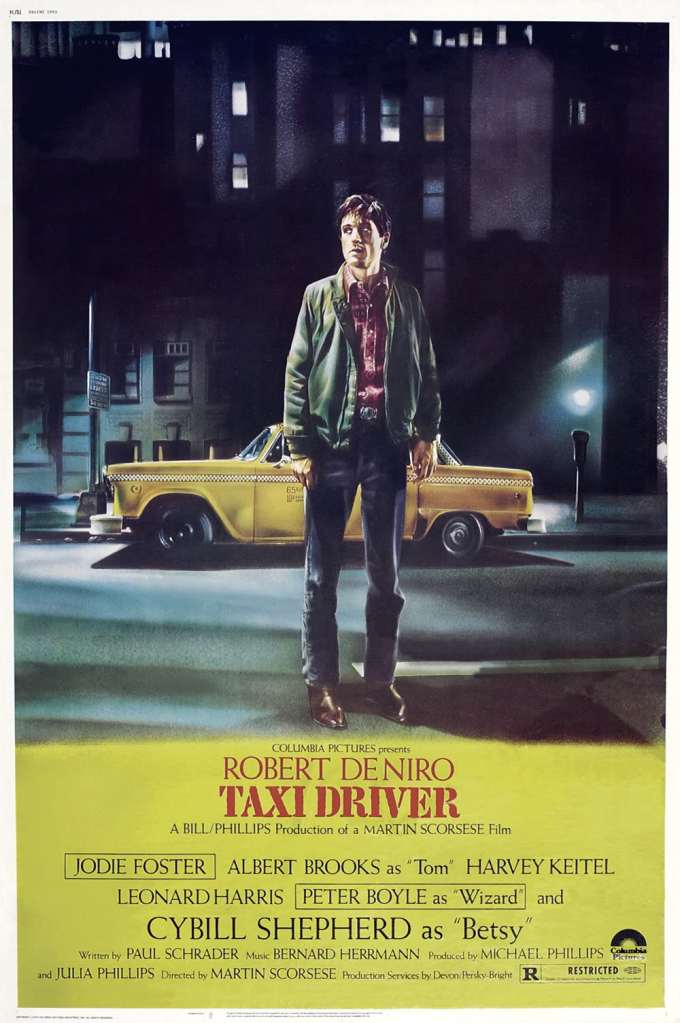
While “Goodfellas” introduced me to the filmmaking brilliance of Martin Scorsese and became my all-time favorite movie, it was “Taxi Driver” which really shaped the way I view movies today. Before seeing it, I always tried to avoid those movies which would make me sad or were too dark. This was a result of my parents having to carry me out of “Star Trek II” and “E.T.,” both of which I cried so hard over to where others wondered if I was okay. I promised myself I would never put my family through such embarrassing situations ever again, and this was especially the case with my brother who was constantly annoyed at my emotional outbursts.
Unlike “Goodfellas” which was immensely entertaining and had great comedic moments, “Taxi Driver” is dark, dark, dark. There is nothing the least bit glamorous to see here as we watch the main character of Travis Bickle (played by Robert De Niro) get continually sucked into a corrupted environment he deeply despises. I kept hoping for him to achieve sort of redemption and maybe, just maybe, have another chance with Cybil Shepherd’s character of Betsy whom he had a memorable first date with. But as we reach the movie’s bloody conclusion, I realized there was nowhere for Travis to go but down. While the reaction to his actions may have been surprising, we all know the truth about Travis and realize something will set him off again before we know it.
Once the end credits went up, my dad asked me what I thought about “Taxi Driver.” My initial reaction was it was not exactly enjoyable. My dad’s response to this has always stayed with me, “Not all movies are meant to be enjoyed. Some are meant to be experienced.”
Looking back, I see what he meant. Look, there are a lot of reasons to not make a movie about someone like Travis Bickle; he’s seriously nuts, not a good date if you want to go to the movies, and watching him lose his mind is painful. But the thing about “Taxi Driver” is people like Travis exist, and turning a blind eye to their existence does us no good. We need to understand why people do the things they do. It’s like what Roger Ebert said in his review of the film:
“Scorsese wanted to look away from Travis’s rejection; we almost want to look away from his life. But he’s there, all right, and he’s suffering.”
With “Taxi Driver,” I came to see how you need these kinds of movies just as much as you need the average escapist entertainment. Some movies need to shine a light on the darker parts of human nature to remind us we need to acknowledge we have a dark side and realize we have more in common with Travis Bickle than we would ever care to think or admit.
Since watching “Taxi Driver,” I have become completely open to movies which disturb me or take me on a journey I would not necessarily want to endure in real life. I can’t stand to watch films in a passive manner. I want to be moved by what I see, be disturbed and shaken, and even weep. Movies are too powerful an art form to be made just for the sake of entertainment. There are so many things about the human existence which deserve to be captured on celluloid, and I believe audiences crave these kind of cinematic experiences as they do the next Marvel movie.
“Taxi Driver” is my second favorite movie of all time, right behind “Goodfellas.” It is a movie I admire above so many others, and I still watch it from time to time. There are many I get sick of watching, but this is one I will never tire of sitting through.
WRITER’S NOTE: This article is based on a screening and Q&A which took place back in 2014.
“The Butterfly Room” is one of those movies which is being released under the radar. It just debuted at the Laemmle NoHo 7 without much in the way of publicity, and this a shame because this thriller directed by Jonathan Zarantonello proves to be a real treat for horror fans as it features several actors we affectionately remember from various horror and cult classics. Among them are Barbara Steele who is best known for her work in a number of Italian gothic horror films like “Black Sunday,” Ray Wise who left an indelible impression on us with his performances in “Robocop” and “Twin Peaks,” Erica Leerhsen who survived a few ill-fated horror movies like “Book of Shadows: Blair Witch 2” and the remake of “The Texas Chainsaw Massacre,” Camille Keaton who suffered such unforgivable brutality in “I Spit on Your Grave,” Adrienne King who memorably decapitated Jason Voorhees’ mother in “Friday the 13th,” and P.J. Soles who showed us things we really liked in John Carpenter’s “Halloween.” Looking at this cast, you might think this was another version of “The Expendables” but with horror icons.
Another big horror favorite in “The Butterfly Room” is Heather Langenkamp who is still best remembered for her role as Nancy Thompson in “A Nightmare on Elm Street.” Here she plays Dorothy, a single mother who has her own reasons for keeping her son away from butterfly collector Ann (Barbara Steele). As the movie goes on, you find out exactly why Dorothy has such a bone to pick with her, and it is not worth spoiling here.
Langenkamp dropped by the Laemmle NoHo 7 for “The Butterfly Room’s” opening night to participate in a Q&A with the movie’s second assistant director Brian McQuery. When asked how she became involved with this production, Langenkamp explained it all started with a journalist friend of Zarantonello’s who introduced the director to her while at a horror convention.
Heather Langenkamp: This journalist friend was my introduction, and I noticed that Jonathan was lurking in the background (laughs) for several hours. Finally, we struck up a conversation and he gave me the script later. I have to say that when I read it, I felt that the part of Dorothy was one of the better parts that I’ve read in many, many years. I think, from what you see on the screen, she’s a very strong woman and she’s a very fierce mother and I really enjoyed playing such a part. I remember we got together at this restaurant in Santa Monica, and I think I shocked Jonathan a great deal by telling them how much I liked it and how I really loved this idea that this horror movie focuses on an elderly woman which is something that is really rare.
In addition to all the horror icons, there are also several child actors here who play kids that become way too friendly with Ann. Now there is a saying, the things to avoid while making a movie are working with animals and children, but Langenkamp found working with child actors like Ellery Sprayberry and Julia Putnam very informative and fascinating.
Heather Langenkamp: It’s kind of a lesson every day in how to be so natural and so in the moment, and I always get a lot of inspiration from children like Miko Hughes (who appeared opposite Langenkamp in “Wes Craven’s New Nightmare”) who was like that for me. You just zone in with them as they really experience the movie in a different way I think, and it is really refreshing. Ellery was really fun to work with, and I remember this one day when she had to go too long here to short hair too long hair and everybody was panicked. But Ellery was just smiling and taking it all in stride, and we had a lot of fun on the set as I remember.
Ever since her days battling Freddy Krueger, we have not seen much of Langenkamp. Acting for her has since become a part time job as she spends most of her days running AFX Studio, a Special F/X Make-Up studio in Los Angeles, with her husband David LeRoy Anderson. One of her more recent acting roles was as a character named Moto in “Star Trek into Darkness,” but her role as Dorothy in “The Butterfly Room” is the biggest one she has had in some time. This led one audience member to ask her if coming back to acting was like getting back on a bicycle to where everything comes back to you quickly.
Heather Langenkamp: I would have to say not at all like riding a bike. I think that you’re much more self-conscious about how you’re doing as you get older especially if you’ve taken time off. I was really worried a lot of the time about whether I was going to be able to get my chops back up to speed, and I’m happy with the way the movie looks on the screen. I’m much happier than I actually thought I was at about 6:45 tonight (the movie started at 7:40 pm) because I get a lot more critical of myself too as I get older. Both of those things combine actually, making for a very uncomfortable day today, but now I can relax. I don’t think it’s like riding a bike. I wish it was more like that.
But even after being away from acting, Langenkamp still has a great love for it. She explained why and also talked about what it was like working with Steele who is probably the biggest horror icon in this cast.
Heather Langenkamp: It’s probably my favorite thing to do. I think one the most creative things that a person can do is bring a script to life and think of the character and think of how you’re going to interact with someone like Erica. Those scenes were a lot of fun and especially all the scenes with Barbara Steele. She is one of my personal heroes and someone that I greatly admire, so I often watched her. She’s a very elegant woman and she’s very powerful, so sometimes I would just watch her and try to learn from her in the thing she did to be kind of a majestic creature in the film. I learn a lot from the people that I work with and I always and see what their techniques are and how they get prepared, and I take whatever I can from people like that.
Like many horror movies coming out today, “The Butterfly Room” was shot on a very low budget and had a tight shooting schedule. Moreover, Zarantonello started filming this movie back in 2010, and it is finally making its premiere four years later. With little time to make this movie, actors do not have the same luxuries available to them on big budget studio productions. Langenkamp described the pressures she faced and how she learned to deal with them.
Heather Langenkamp: It’s always difficult especially with wardrobe and hair when there’s really not enough time to get all that is necessary, and maybe there’s not enough personnel to take care of everybody. There are four or five ladies sometimes who all need to be ready within an hour of each other, and so we had very quick moments in the makeup chair sometimes (laughs) and you just have to put your vanity aside. That’s the hardest thing for an actor to do, but you realize you’re not going to get the hour in the chair that may be would make you feel more comfortable. In the end I really do feel like naturalism is the rule of the day, and looking as natural as possible as much as an actor. Maybe you don’t love it, but I do think that it adds to the reality of filmmaking. So, every time I didn’t get enough time in the chair, I would say in the end that it’ll be better for the film.
It is really great to see Heather Langenkamp back on the big screen after being absent from it for what feels like years. She may not be interested in stardom and is not looking to make a big comeback in movies, but she is still very much interested in giving the best she can as an actress. While she may forever be linked to “A Nightmare on Elm Street” to where many cannot see her as anyone other than Nancy Thompson, she can still hold our attention whenever she appears in a movie. Clearly, she is more comfortable these days running a special effects studio, but I do hope we get to see more of her on the silver screen sooner than later.
In a year filled with many great foreign films like “Parasite,” “Corpus Christi” is another one to keep an eye out for. Directed by Jan Komasa (“Suicide Room” and “Warsaw 44”), it stars Bartosz Bielienia as Daniel, a 20-year-old man on the verge of finishing his sentence at a youth detention center for second degree murder. While there, he experiences a spiritual awakening which inspires him to enter the priesthood, but because of his felony conviction, no seminary will ever be able to accept him. Upon his release, he is sent to a small village to do manual labor. However, Daniel quickly discovers the local church there and ends up lying his way into becoming the town’s new priest. His passion and unconventional methods come to inspire its residents in a way they have not been in a while, and in the process he comes to discover a terrible tragedy which has engulfed the town in endless sorrow. As he digs deeper into the tragedy and the town’s deepest secrets, some of the townspeople become increasingly suspicious of his methods, and it is only a matter of time before the past catches up with him.
Now the above plot description might make “Corpus Christi” sound like a remake of “Sister Act,” but it really proves to be a thoughtful and compelling motion picture as it ponders what it means to be a person of faith, of the possibility of finding forgiveness in a realm where sadness and anger seem infinite and irrevocable, and of finding redemption even when society will not easily permit its criminally convicted to do so. What results is an enthralling film which is now Poland’s selection for the Best International Film category at the 92nd Academy Awards.
I was lucky enough to speak with Komasa and Bielienia while they were in Los Angeles to do press for “Corpus Christi.” Komasa recently won the Best Director award at the Gdynia Film Festival for his work here, and Bielienia has picked up Best Actor awards at the El Gouna Film Festival, the Chicago International Film and the Stockholm International Film Festival.
Be sure to check out “Corpus Christi” when Film Movement releases in American theaters in 2020. My full interview is up above, and you can also watch the movie’s trailer down below.
WRITER’S NOTE: This article was written back in 2012.
While Joseph Gordon-Levitt, Bruce Willis and Emily Blunt get top billing in Rian Johnson’s “Looper,” one actor in the cast to keep an eye on is Noah Segan who plays Kid Blue. Segan previously worked with Johnson on “Brick” and “The Brothers Bloom,” and it turns out the writer/director wrote the part of Kid Blue with Segan in mind. While his role might seem small, Segan took his time to develop the character, and he is bound to leave a very memorable impression on audiences as a result.
Kid Blue is an assassin like Levitt’s character, and he loves wielding his six shooter which makes him look like a cowboy along the lines of Billy the Kid. While audiences will see Kid Blue as being one of the villains of this film, Segan sees the role a bit differently.
“I play an antagonist, I wouldn’t want to go so far as to call him a villain,” Segan said. “A little spoiler: nobody is that good in this movie. Everybody is some form of bad and has some villainous traits; some for better reasons than others. I would say the easiest comparison is if you’re ready for a cat-and-mouse game between Bruce Willis and Joseph Gordon-Levitt, get ready for me to be the bulldog chasing both of them.”
What people will remember best about Kid Blue is how he is always carrying with him an old-fashioned six shooter gun. The character loves to show it off as it makes him look like a bad ass, but he is also famous for accidentally shooting one of his feet off with it. Segan took the time to describe the gun his character loves to wield in more detail.
“The Gatmen Gun, the gun that I use, is a very modern take on another classic weapon: a single-action revolver,” said Segan. “It isn’t a Colt 45, but the same thing that people carried in the Civil War and in the Old West; very elegant, perfectly made revolvers that, in the case of ‘Looper,’ happened to use ammunition usually reserved for big game hunting. Our bullets, that are a .45-70 caliber bullet, are not put into handguns. They’re made for giant rifles that are designed to take trophies home, or shoot at a tank. Rian found this company that makes these sort of novelty, single-action revolvers in this caliber and then had them adjusted for the Gatmen, and had them powder-coated black. In my case, I had mine chromed out with a flat-sight and a wooden grip reminiscent of a western gun that my character would want to use.”
What makes this especially interesting is “Looper” takes place in the year 2044, and yet Kid Blue seems to be stuck in a past which no longer exists. During a press junket for the movie which took place at the Four Seasons Hotel in Beverly Hills, California, Segan talked of the contrast between the future this character lives in and how he emulates famous ones from history.
“I’m playing someone in the future who is obsessed with the past which is a big theme of the movie overall,” said Segan. “In my case, it’s very aesthetic. Having things you can touch, having blue jeans in the future, having cowboy boots in the future and my revolver in the future, it’s stuff that’s real easy to look at and play with. There’s a scene in the movie where I roll a cigarette with real rolling papers and smoke that. There’s something very tactile and something that almost doesn’t even exist today. It was very helpful, but everything that was there felt that way.”
It also turns out Kid Blue is actually Segan’s nickname in real life. His friend Paul Sado ended up introducing him to a 1973 movie called “Kid Blue” which stars Dennis Hopper, Warren Oates, Ben Johnson, Lee Purcell, and Peter Boyle. After watching it, Segan said it became his favorite movie.
“There’s humor in the film, but it’s about change. It’s about adulthood and it stuck with me, and people started calling me Kid Blue,” Segan said. “Rian Johnson sent me the first draft of ‘Looper’ years ago. I opened it up and there it was on whatever page – Kid Blue. I called him up, and I said, what’s that? He said, ‘that’s you.’ It really works with this character. It’s a guy who’s sort of a bumbling diligent failure. In ‘Kid Blue,’ Hopper plays that up for comedy, and in ‘Looper,’ I sort of play up for pathos. I’m unimaginably trying to emulate Dennis Hopper.”
Noah Segan proves with his performance in “Looper” how there are no small roles, only small actors. On the surface it might seem like his character of Kid Blue is nothing than a one-dimensional bad guy, but Segan makes him much more than what was on the page. This is a testament to his preparation for the role which was thought out well and very creative. On the basis of his performance, it is certain we can expect many more from Segan in the near future.
WRITER’S NOTE: This article was written back in 2013.
Matthew Goode’s performance as the enigmatic Uncle Charlie in “Stoker” brings to mind the one Joseph Cotton gave as Charlie Oakley in Alfred Hitchcock’s “Shadow of a Doubt.” Both men show a pleasant and courteous exterior, but there’s something in their eyes which tells you they are really twisted. Goode has delivered many strong performances in movies like “Match Point,” “Watchmen” and “A Single Man,” but it’s going to be impossible to forget him after seeing him playing a very frightening sociopath in this one.
Now playing a character as evil as Uncle Charlie has got to be a lot of fun for actors, but at the same time they really can’t judge a character like this too much. Once they do, they fail to portray them in a truthful way and their performance eventually rings false. Goode, in an interview with Nigel M. Smith of Indiewire, however, made it clear he was not about to fall into the same trap.
“I’m not a method actor; I think that would be rather exhausting on this sort of a project. But I don’t judge the character; I think that’s safe to say,” Goode told Smith. “You’re conning yourself between action and take. I don’t think about it too much, I just do what you have to do. You know there’s a camera in your face, and there are times when you can just get completely lost in it and the take is over. Then sometimes it’s very choreographed and you have to get your head in there to match with someone’s eye line, and I love that. I love the technique.”
“So with a darker character like this, it’s quite fun,” Goode continued. “It’s something that’s very different to who I am. I’m not a sociopath and I don’t go around strangling people. It’s just like kids playing. That’s really what our job is. We haven’t grown up.”
The other important thing to remember with a role like this is not to play it as evil. Yes, Uncle Charlie is evil as can be, but to portray just that one side of him would make for a very boring performance. You have to look at this character like you would any other and examine their wants, needs and motivations. In doing so, you will give yourself different areas to explore, and your performance will be all the better for it. In talking with Katie Calautti of Spinoff Online, Goode explained how he went about preparing to play Uncle Charlie.
“You can’t just play bad,” Goode told Calautti. “I wouldn’t even know how to start playing bad, or what that even means – it’s so two-dimensional. So you have to find some sense, despite his despicable acts, some kind of psychological truth of why. And director Park (Chan-wook) talked about bad blood and the idea that there was a predisposition within the family bloodline to want or need to commit these acts, and where does evil come from, is it nature or nurture? And for me they’re all very lonely, isolated characters. So I felt like, as much as this is a coming-of-age story for Mia (Wasikowska’s) character, Charlie’s kind of trapped in the past.”
The best scene in “Stoker” comes when Goode joins Wasikowska on the piano, and the two engage in a duet which can be best described as beautifully intense. Watching these two actors duel with one another while pounding away at those black and white keys was exhilarating, and it was the one scene from this film I wanted to know the most about. Karen Benardello of We Got This Covered was at the film’s press conference and asked Goode what it was like shooting this particular scene.
“It became liberating in the end,” Goode said. “I hadn’t played the piano in 20-odd years. So coming back into the fold of the piano, it was unbelievably daunting. Luckily, I don’t have a bad-sized hand, so I didn’t have to leap or anything like that. But it was hard work, but it was great working with Mia. We learned about three quarters of it, because some of it was just too hard, and too much going on with both hands. But we were able to fake some of that, and he was able to shoot the whole thing from whatever angle he wanted. We kind of recognized that in the vocabulary of filmmaking. When someone starts playing, you think, is he actually playing that? (laughs) He was able to dip down, and you go, they are! It’s not a trick on the audience, so it was nice.”
Hopefully Matthew Goode’s performance in “Stoker” will help burn his name into our collective consciousness because every moment he is onscreen is filled with a rising tension which never lets up. While he doesn’t let you in on all his character’s secrets, you know he is like a snake waiting to strike. He has already worked with a number of well-known directors such as Woody Allen, Tom Ford and Zack Snyder, but Goode makes it clear how a lot of the opportunities which have come his way so far have been the result of sheer luck.
“I’m not the person who’s able to pick and choose their roles,” Goode said. “But I know that Nicole [Kidman], for example, has said that she’s interested now – there might be a film in the studio system, but she loves independent film and she thinks that’s much more where her desires are, and the films she kind of likes. And so I think she is able to say to herself, ‘I like to choose projects not only based on the material but also the filmmaker,’ which is wonderful for her. And I think I just happen to have been quite lucky in the fact that the material that I gravitate towards or the people that have thought I am going to be better suited to it – because it’s not my choice, they’ve picked me. I’ve been lucky as hell, and the parts have been quite varied.”
WRITER’S NOTE: This article was originally written in 2012.
She played a hard-bitten young woman in “Winter’s Bone” and portrayed the heroic Katniss Everdeen in “The Hunger Games,” but now actress Jennifer Lawrence gets her most challenging role yet in David O. Russell’s “Silver Linings Playbook.” Starring opposite Bradley Cooper, she plays Tiffany who has been recently widowed and speaks bluntly about what’s on her mind without a single apology. The eccentricities and quirkiness of the character required an actress who is wise beyond her years, and Lawrence proved to be the one who could pull it off.
Lawrence ended up auditioning for Russell via Skype from her father’s home in Louisville, Kentucky. In talking with Rebecca Ford of The Hollywood Reporter, she said what attracted her to the role was that she didn’t understand who Tiffany was. I think this is what made her performance in “Silver Linings Playbook” especially good because this lack of understanding forced her to make some important discoveries along with the character. A lot of times actors are expected to know their characters inside and out, but here is a case where an actor can grow along with who they are playing.
“I was very confused by her,” Lawrence told Ford. “She was just kind of this mysterious enigma to me because she didn’t really fit any basic kind of character profile. Somebody who is very forceful and bullheaded is normally very insecure, but she isn’t. I was driven to her to kind of discover that personality a little bit more.”
“Silver Linings Playbook” is based on the book of the same name by Matthew Quick, and in the book, Tiffany is described as being a goth chick. Lawrence told Ramin Setoodeh of The Daily Beast how in addition to getting her hair dyed black, she was also going to get her tongue, and possibly other parts of her body, pierced. But Lawrence later came to see how Tiffany needed to be made less intense of a character because, just like with Cooper’s character of Pat Solitano, she needed to be made relatable enough for the audience to want to follow her.
But unlike Cooper’s character who is diagnosed with bipolar disorder, Lawrence did not try to discover what Tiffany’s psychological diagnosis was. In the film we learn Tiffany’s husband was a cop who was killed in the line of duty three years ago, and she still hasn’t gotten past his death. Both she and Cooper benefitted greatly from focusing on what their characters’ personal problems were as opposed to what a doctor may have described their problems as being.
“I didn’t ever feel like Tiffany had a condition. I felt like Tiffany did something and made no apologies,” Lawrence told Setoodeh. “She’s like, ‘Yeah, I fucked everyone in my office. I was mourning the death of my husband.’ For me, I gained weight and lay around.”
Yes, Lawrence had to gain weight to play Tiffany in “Silver Linings Playbook.” However, Lawrence ended up telling Melena Ryzik of the New York Times she was actually thrilled to put on the pounds as “that never happens in a movie.” There is something really refreshing about hearing an actor, any actor, get excited about putting on weight as there are far too many svelte individuals in Hollywood. Actresses are especially held up to a ridiculous physical standard which can be far from healthy, so seeing Lawrence defy such standards makes her seem both refreshingly intelligent and down to earth.
Ironically, the thing which almost kept Lawrence from being cast was she was much younger than her character. On top of that, she is also 15 years younger than her co-star Cooper which complicated matters even further. Russell, however, told Ford of The Hollywood Reporter how he was won over by Lawrence because she is “wise beyond her years.”
“She plays kind of ageless. She can be 30 or 40 or 20,” Russell told Ford.
Russell also told Ryzik that Lawrence is one of the “least neurotic people” he has ever met in his life. The more he talked about the actress’ confidence and vulnerability, the more it seems like Lawrence was the only logical choice to play Tiffany in “Silver Linings Playbook.”
“She (Lawrence) always offers her opinion,” Russell said to Ryzik. “She’s not afraid to talk to anybody about anything, and yet she can also turn around and have an 18-year-old’s ‘nevermind.’ That’s their version of being vulnerable.”
Jennifer Lawrence’s quick ascent to becoming one of Hollywood’s biggest stars today was no mistake. After her breakthrough turn in “Winter’s Bone,” she has continued to impress audiences with her talent in films like “The Beaver,” “The Hunger Games” and “X-Men: First Class.” But “Silver Linings Playbook” shows us all just how far her range as an actress goes. It looks like another Oscar nomination is in store for her in the near future.
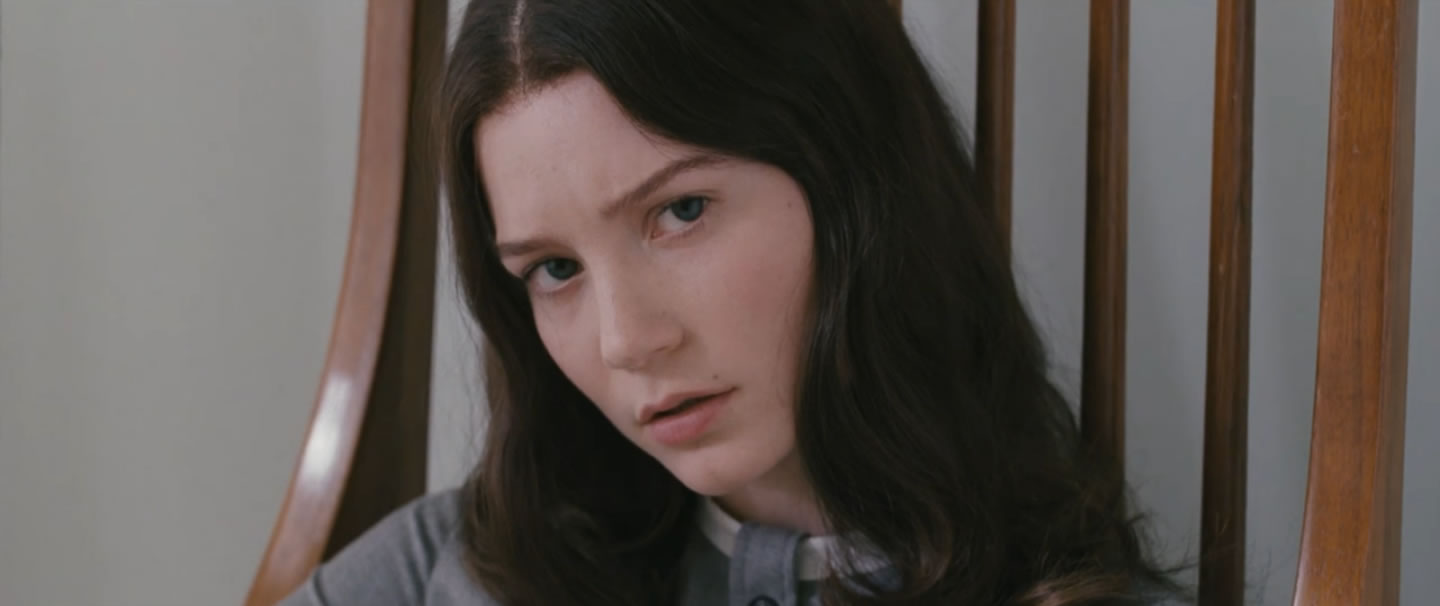
After watching her in Tim Burton’s “Alice in Wonderland” and seeing her portray the highly intelligent daughter of Annette Bening and Julianne Moore in “The Kids are All Right,” Australian actress Mia Wasikowska goes from lightness to darkness in “Stoker.” In it she plays India, a mysterious, dark-haired teenager whose father has just been killed in a car accident on her 18th birthday. Throughout the movie we see India trying to deal with both her emotionally unstable mother Evelyn (Nicole Kidman) and her enigmatic uncle Charlie (Matthew Goode) who has arrived to stay with them. Thanks in large part to Wasikowska, India is one of the most original and haunting teenage characters to appear in movies in quite some time.
It’s fascinating to watch Wasikowska’s transformation in “Stoker” as there is very little trace of the good-natured characters she has portrayed previously. Even her work in “Jane Eyre” felt like a fairy tale compared to the creepy nature of this film. Going into it, I wondered if Wasikowska was really looking to distance herself from the roles she has played in the past. It turns out she was, but in an interview with Helen Brown of The Telegraph, she also said it was because she was drawn to the character’s ambiguity.
“You don’t know if India’s a hero or a villain, the hunter or the hunted,” Wasikowska told Brown. “The film toys with your perception. It’s a weird love triangle between a mother, an uncle and a daughter. That feels very modern and very classic, at the same time.”
“It’s less about evil being in the bloodline than an idea of evil as contagious,” Wasikowska continued. “I think violence is something that catches on. I was interested in something India’s father says: ‘Sometimes you have to do something bad to stop you from doing something worse.'”
I loved how Wasikowska avoided making India seem like the average sullen, anti-social or Goth-like teenager we’ve seen in so many movies and TV shows. There’s something about India which feels wholly original, and it is a wonderfully complex character you spend all of “Stoker” constantly trying to figure out. Wasikowska explained to Brown what she was aiming for when she decided to play India.
“Stereotypes are much more prominent in teen movies,” Wasikowska said. “As a teenager, it’s more attractive to watch something you don’t necessarily feel you are, to watch movies about pretty people in love. But it was always exciting for me to find roles that gave me an opportunity to express what I felt was the more realistic side of teenagers.”
The most memorable scene in “Stoker” comes when Uncle Charlie joins India on the piano for one of the most exhilarating duets ever filmed. The whole moment feels like a cross between the “Dueling Banjos” scene from “Deliverance” and David Helfgott playing Sergei Rachmaninoff’s blisteringly difficult Concerto No. 3 in “Shine;” it’s a moment of harmony combined with a psychological unraveling which reaches a fever pitch. This is a movie scene I will be studying for a long time, and while talking with The Hollywood Reporter’s Rebecca Ford, Wasikowska described what it was like filming it.
“That’s sort of one of the scenes that you’re always anticipating during the shoot,” Wasikowska told Ford. “It was almost my favorite one to film, because we had the music there, playing really loudly for us, and then, to a certain extent, I felt like I didn’t have to do anything because so much of the emotion and the feeling was in the music, and if I just sort of surrendered to that, it was all there.”
“Stoker” marks the English-language debut of South Korean filmmaker Park Chan-Wook who is best known for his “Vengeance Trilogy” of movies which includes “Sympathy for Mr. Vengeance,” “Oldboy” and “Sympathy for Lady Vengeance.” Both he and Wasikowska worked closely together on India to make sure they were on the same page throughout filming, and Wasikowska told Ford they kept sending each other pictures back and forth through email which helped to illustrate their thoughts on the character.
“Some of the images were from India’s perspective, so things that I thought would explain the way that she sees the world,” Wasikowska said. “And then the other images would be something that had an essence of her physicality or her emotionally, so that was really helpful.”
Now with a movie as dark and disturbing as “Stoker” is, you would think the atmosphere on set would be very serious as to not break the mood of the piece. But as we found out on this movie and many others before it, the dark nature of the script was counterbalanced by a lot of humor amongst the cast and crew. Wasikowska made this abundantly clear to contactmusic.com while at a press conference.
“I’ve often found on the films that have a more serious nature, the more light-hearted and silly and goofy it becomes in between the scenes out of necessity to counter the intensity of the scenes and material,” Wasikowska said. “I felt like we were pretty good at that!”
Watching Mia Wasikowska in “Stoker” gives you an idea of what great work lies ahead for her. Here she digs deep into a character she hasn’t previously portrayed, and she completely disappears into the part as a result. While India is still a hard character to figure out at the movie’s end, it is Wasikowska’s journey into the role which renders it all the more fascinating.
“The best way to explain it is when I’m filming, I have a definite story that I follow for her, but then when I finish and I let go of the project a bit, it’s sort of up to interpretation,” Wasikowska said. “So one of the interesting things has been seeing how people have interpreted her (India) and her character in the story. And the only thing that’s consistent is how different everybody’s opinion is of her.”
The wonderful Juno Temple has left an indelible impression in movies like “Atonement,” the controversial “Killer Joe,” and as Selina Kyle’s BFF in “The Dark Knight Rises.” Now she gets to move up to a starring role in Ramaa Mosley’s “The Brass Teapot” in which she plays the happily married Alice. She and her husband John (Michael Angarano) are madly in love with each other but also seriously broke, and she is desperately looking for a job but is constantly turned down for other applicants who have more experience, usually in the form of a master’s degree. But one day she discovers a beautiful brass teapot at an antiques store which ends up spewing out money whenever she hurts herself, and from there Alice does everything she can to generate all the money she and her husband could ever need.
I got to catch up with Temple during a roundtable interview at “The Brass Teapot’s” press conference which was held at the SLS Hotel in Beverly Hills. She described Alice as being a “confused creature” because while she is not doing well financially, she does have a wonderful husband to lean on during tough times. Temple talked about the similarities and differences between her and Alice and how they each came to inform the way she played this character.
Juno Temple: It’s interesting for me because she’s someone that I find myself very different from, but that’s the challenge isn’t it? That’s the joy of being an actress. At the beginning she can’t see what is in front of her. She just can’t open her eyes and see that actually, in the grand scheme of the universe, she’s bloody lucky. She’s very ambitious and she expects a lot more for herself, and she’s frustrated that she is not where she thinks she should be at. So, her ego is kind of hurt and she’s almost embarrassed to be who she is which I understand, but it’s almost like c’mon, look at this amazing husband you have! Look at this person who adores you, and people can only dream of people that look at you that way sometimes.
Now once the brass teapot, which Temple described as being “magical, mythical and a devil,” comes into the picture, Alice undergoes a major switch as she and her husband acquire a wealth which has long been denied to them. She becomes insatiably greedy as they stand to make so much money through the pain and misery they willfully inflict on themselves and each other. As Temple continued to talk, I really came to admire the objectivity she had about Alice and how the character fits into the overall story.
JT: It’s interesting because she almost kind of deserves to go through what you go through to open her eyes to reality a little bit because I think she’s being a bit lazy with the teapot. The whole joy of booking a job as an actress, auditioning and then coming back and maybe doing a screen test and then actually getting cast and then getting to shoot the same for real, is you earn it. You earn that moment and it’s joyous. With Alice, she’s getting in a muddle that she thinks that this money is hers, but actually it’s the teapot’s and it’s feeding off some really, really important emotional nasty shit that is inside of this couple and giving them money. But actually, it’s destroying these people and give them what they think is awesome and useful and makes life like a good thing like a big house, posh dresses, nice dresses, etc. In the end, she really takes it too far.
The other great thing about Alice as a character is she does have an arc. In acting classes, teachers tell their students to map out the journey the character they are playing has in a play or script. Each character starts off at a certain point and ends becoming a different kind of person at the conclusion, and as an actor you need understand where your character is going from start to finish. This way it becomes not about the end result but more about the journey you take when you finally come to play your character on stage or screen. Temple took the time to describe the journey Alice has in “The Brass Teapot” and of where it eventually leads her to.
JT: I like the arc that she has because she really does learn about herself. It’s almost like she grows up from being a child to a grown-up, and I think it’s ultimately a story about love and about someone really, really loving someone else and helping someone through this crazy addiction, and love kind of conquering everything, I guess.
Speaking of addiction, Temple did quite a bit of research into drug addiction as she felt Alice was essentially an addict herself. The teapot of the movie’s title is an object of greed as well as a narcotic of the most inviting kind. Once it has a grasp on Alice, it almost completely consumes her and her husband in the process.
JT: What I learned about it was that you cannot control it. Your body becomes completely dependent on it that it almost hurts to get rid of it. So that was a really interesting thing for me of it almost being a painful process to sever the tie between her and the teapot. But the tie between her and her husband wasn’t as painful. Drug addiction destroys a lot of relationships, and sometimes it can create new relationships when people get it out of your lives. That was a major research thing for me and a major thought behind it.
But while “The Brass Teapot” deals with the dangers of an addiction, Temple is quick to stress the movie is really a comedy with a lot of humor. It’s a fable at its heart of how money can change you, but it can’t make you happy all the time. Temple is a joy to watch throughout as she takes Alice from being a frustrated and unemployed young woman to an endlessly greedy human being willing to do anything to keep those dollar bills flying in.
As the interview came to an end, she shared with us what keeps her going as an actress.
JT: We’re all in this business because we love it, because we’re passionate about it. If it’s a 20-hour day, tomorrow could be another one, but guess what? There’s a weekend coming. I think you’re in it for the right decisions if you’re willing to do a 20-hour day, and if you need a few extra tears are just going to ask them to wait for 15 minutes. I definitely want to be at giving actress and that’s something I really, really, really treasure.
WRITER’S NOTE: This article was originally written in 2013.
There comes a time in a young Disney star’s life when they are faced with the great challenge of transitioning from being a child actor to an adult one. Many are not able to make this switch because either their talent only goes so far, or their fans just don’t want to accept them as anything else. Anne Hathaway managed to go from playing a nerdy princess in “The Princess Diaries” to portraying a single mother forced into prostitution in “Les Miserables,” and she won an Oscar in the process. Now Selena Gomez gets to shed her good girl image in Harmony Korine’s controversial film “Spring Breakers.” After playing the outgoing Alex Russo on “Wizards of Waverly Place” for several years, she gets to join three other young actresses on a holiday of drunken debauchery.
Gomez plays Faith, an evangelical Christian who is encouraged by her three friends Brit (Ashley Benson), Candy (Vanessa Hudgens) and Cotty (Rachel Korine) to go with them to Florida for the spring break holiday. The fact her friends end up robbing a restaurant located near their college to get the money for this vacation doesn’t seem to faze Faith much as she looks forward to going wild and releasing all her inhibitions. Once there, the girls have the time of their lives as they party like there’s no tomorrow, and they never want the party to end.
It turns out it was Gomez’s mother, Amanda Dawn “Mandy” Cornett, who brought the script of “Spring Breakers” to her attention as she was already a big fan of Korine’s movies. From there, Gomez watched his movies “Gummo” and “Trash Humpers” as she traveled to Nashville to audition for him. In an interview with Justin Harp of Digital Spy, Gomez made it clear she had no reservations about working with the filmmaker who is known for shocking his audiences and pushing the envelope so to speak.
“I was excited and enticed to work with Harmony,” Gomez told Harp. “When I auditioned for Harmony, we talked about how he wanted to leave my lifestyle behind and have me go on this adventure with him. I knew it was going to be crazy, but I was comfortable with it. Harmony wanted an innocence because he thought it would be creepier. I agree with him.”
For any human being, be it an actor or otherwise, it is always scary to step outside of your comfort zone. One has to wonder what it was like for Gomez to step outside of entertainment geared towards children and to take on something far more risqué with “Spring Breakers.” But for an actress who started off her career with an episode of “Barney and Friends,” Gomez told Zorianna Kit of Yahoo! News she very much enjoyed the change of pace this role had to offer.
“It was completely liberating,” Gomez told Kit. “Up until this film, everything I’ve been a part of definitely has been a bit more processed, like how many pieces of jewelry I have on, what my hair looks like. With Harmony, I never wore makeup and he never cared about my hair.”
“I feel like I did grow up shooting this,” Gomez continued. “This was the first movie I shot by myself without my mom coming. It was the first time I got to improvise as much as I have.”
Korine ended up throwing Gomez and the other actresses into a real spring break holiday where everyone was getting obscenely drunk, going crazy and tearing up their hotel rooms without any remorse. This must have seemed incredibly terrifying for the cast and crew as they were dealing circumstances they could not easily control. But despite the majority of the participants being drunk beyond all repair, Gomez told Harp that things were actually pretty cool on set even as she wore little more than a bikini.
“When we did the spring break scenes, we were surrounded by hundreds of spring breakers in bikinis who wore even less, so that was okay,” Gomez said. “I was more uncomfortable in the scenes where I was getting arrested, in jail and in the pool hall with strangers. It added vulnerability and helped me feel grossed out, which was what my character is supposed to feel.”
But despite how crazy things got while filming “Spring Breakers,” Gomez still formed a very close-knit bond with her fellow co-stars. Now sometimes on a film like this, you would expect there to be a lot of catfights between actresses, but that was not the case on this one. Perhaps many just wish it was the case as it makes for press which generates a lot of page views, but Gomez made clear to Marlow Stern of The Daily Beast just how devoted she is to her fellow cast members.
“These girls have my back till death,” Gomez told Stern. “They’re so amazing, sweet, and protective. We did a lot of partying in the movie, so after we partied for 18 hours straight on set, we would like to go home, have great food, and watch movies. We’re not nearly as crazy as they are in the movie.”
Whether or not her role as Faith in “Spring Breakers” comes even close to gaining her any Oscar consideration, Selena Gomez has certainly picked the right project to make it known to the world she is in show business to stay. While she intends to spend more time in 2013 focusing on her music career, she is co-starring with Ethan Hawke in the upcoming action film “The Getaway.” The transition from child actor to adult actor may remain a very difficult one to make, but Gomez sounds intent on making it happen for her.
“The transition is a little weird, but I’m honored to be a part of things that allow me to grow,” she says. “I want to continue doing that, and if it works out and people like it, that’s awesome, and if not, I’m trying to do all I can. I’m just hoping for the best!”
I could never bear to give my stuffed animals away. They were a huge part of my childhood, and the thought of letting them go forever seemed so horrifying. Society expects you to give up on little dolls and stuff as you become an adult, and I honestly find that to be kind of bogus. Am I really supposed to stop playing with these plush friends of mine because society expects me to? Am I supposed to permanently kill off the childlike wonder inside of me so I look normal and hopelessly embittered like everybody else? Doesn’t this seem cruel?
In the end, I didn’t need to give my stuffed animals away. They got eviscerated by a rat that ended while they sat in a trash bag in the family garage. The rat wanted their stuffing, and he (or she) left behind a lot of rat poop which had to be disposed of carefully because it spreads disease. However, all the Eeyores I have collected over the years were fine as they continue to get preferential treatment ever since I got my first one back in the 1980’s.
It was inevitable these cuddly friends of mine would never get the same amount of attention as the years went by. The dilemma of what to do with these things we grew up with brings about strong emotions and uncertainty, and this is what Andy faces in “Toy Story 3.” Coming 11 years after its predecessor, young Andy who had given much love to these toys is now a young adult about to start college. His mother tells him he can either donate his toys to a nearby daycare center, or they can just go up in the attic. Despite Andy not having played with them in years, he is reluctant to let his toys go.
The majority of the toys from the first two “Toy Story” movies are back including Woody, Buzz Lightyear, Jessie, Rex, Slinky Dog, Mr. & Mrs. Potato Head, Bullseye and Hamm who has always been one of my favorites. Many, however, have since been donated or thrown out including Woody’s girl, Little Bo Peep. So, while Andy clearly has favorites among the toys he grew up with, it doesn’t make them feel anymore safe now that he is leaving home.
Woody (Tom Hanks) tries to keep the other toys’ spirits up even as he reminds them they knew this day was coming and that they might as well make the best of things while preparing for attic mode. However, an error occurs which has them getting donated to the nearby Sunnyside Daycare Center. At first, the toys don’t feel too bad because they are back in a position where they get to be played with on a regular basis. But despite the warm welcome from other toys, it quickly turns into their worst nightmare as they deal with kids who are not nearly old enough to take care of them. Instead of treating them with love, they get flung all over the place like they were frisbees, painted on, and contorted into positions which would make us cringe uncontrollably. Remember the scene from “Close Encounters of the Third Kind” where one of Richard Dreyfuss’ children smashes a baby doll to smithereens? Jessie, Buzz Lightyear, Mr. and Mrs. Potato Head and others get it just as bad here.
Now the third movie in a franchise is typically where a series goes off the rails or “jumps the shark” as some would say. After bringing something fresh and original to audiences everywhere, filmmakers end up relying on the formula which made the previous two movies so good. As a result, number three can come across as a regurgitation of our favorite moments to where it rings hollow because, even if they presented the characters in a slightly different context, it’s still the same old thing. The realization of this is always disheartening and depressing.
I’ve got good news though; “Toy Story 3” manages to escape this unfortunate trap and it proves to be just as inventive, imaginative, funny and heartwarming as its brilliantly made predecessors. Once again, Pixar shows they are not willing to rest on their laurels, and they keep their focus on the story as always.
When I was young, I always loved to believe my stuffed animals had lives of their own and did things I was never a witness to. I could see them taking out the Chevy Suburban my family used to have while the rest of us slept at night. To think they would be comfortable for the rest of their existence just sitting in my room didn’t seem particularly fair, and they deserved a night on town and a few beers. The great thing about the “Toy Story” movies is they understand how far our imaginations can go with this belief, and they play upon it in ways which are hilarious and endlessly entertaining.
Tom Hanks, Tim Allen, Joan Cusack and the always dependable Pixar regular John Ratzenberger among others are back voicing their beloved characters. Slinky Dog, originally played by the late Jim Varney, is voiced here by Blake Clark, and he makes the transition almost perfectly seamless.
We also get to see Barbie (Jodi Benson) with her biggest role in any of the “Toy Story” movies to date as she finally gets to meet the man of her dreams, Ken (Michael). Director Lee Unkrich and screenwriter Michael Arndt have a lot of fun playing around with the Ken we think we know, and they love hinting at the kind of person we think he might be. It’s funny to think Mattel didn’t want anyone touching Barbie when the first movie was made, and now it is unthinkable not to include her.
One of the prominent new characters in “Toy Story 3” is a strawberry scented bear named Lots-O’-Huggin’ Bear, but he’s called Lotso for short. Pixar always makes ingenious casting decisions in regards to the actors they pick, and casting Ned Beatty as the voice of Lotso is further proof. This cuddly and stain resistant teddy bear looks warm and affectionate, and Beatty’s voice makes us feel at home when Lotso first appears onscreen. But Lotso soon turns out to be a deceptive toy who thinks nothing of sacrificing the stronger toys to toddlers who are quicker to destroy than love them. All of what Lotso does here is powered by his feeling of resentment over being forgotten and quickly replaced by his owner. Now he manipulates the daycare center so he can live in comfort while the other toys suffer helplessly.
In terms of movies this sequel satirizes, it combines elements of “The Great Escape” and “Mission: Impossible” to show how challenging it will be for Woody and the gang to break out of Sunnyside. All the various descriptions of how closely guarded like a fortress this seemingly harmless place is leads to one brilliant moment after another. The one toy which gets chosen to watch over the surveillance cameras is an act of genius.
Now if you have already seen the trailer, you know one of the big set pieces in “Toy Story 3” comes when Buzz Lightyear gets reset and goes into Spanish speaking mode. Seeing him woo Jessie with his smoldering dance moves as if he were Ricky Martin or Antonio Banderas had everyone in the audience young and old laughing uncontrollably. The Gypsy Kings also perform a very cool cover of Randy Newman’s song “You’ve Got A Friend in Me,” and this version alone makes me want to buy the soundtrack.
And yes, Randy Newman returns to do the music score for a Pixar movie for the first time since “Monsters, Inc.” Once again, he captures the innocence of childhood and the exciting world these toys inhabit while also capturing the bittersweet emotions which bring this movie to a very emotional climax.
Of all the “Toy Story” movies, this one is easily the darkest as we see these toys get subjected to places which they should not come out of unscathed. Plus, these toys are at the endgame stage as they will soon part with Andy in one way or another. The ending of this one will almost certainly bring tears to the eyes of many as Andy talks to a shy little girl about his toys and Woody in particular. We’ve all grown up with these characters since the 1990’s, so we cannot help but feel like Andy in how we end up leaving certain things behind even if it breaks our heart.
“Toy Story 3” does what every Pixar movie does best; it entertains and enthralls the audience no matter what age they are. With this tremendous sequel, Pixar has completed another trilogy which will stand as one of the best in cinematic history, and they come around full circle with this adventure of Woody and Buzz, the characters who started it all for this animation company. They continue to push creative boundaries with all they do, and their enviable track record both creatively and financially is more than deserved. More power to them!
When this movie is over, you will know what a Lincoln Log looks like and what it doesn’t look like. Knowing the difference is important if you want to keep yourself from gagging!