‘Contagion’ Movie and 4K Review

The following review was written by Ultimate Rabbit correspondent, Tony Farinella.

Some of my favorite films are the ones which stick in my brain long after the credits have rolled. They make me uncomfortable, get under my skin, and make me anxious.ย  You might wonder why someone would want out of such a moviegoing experience, but I believe the best films really challenge and require something out of the viewer. I have seen โ€œContagionโ€ three times now. I saw it during its theatrical run in 2011, re-watched it on Blu-ray during the height of the pandemic in 2020, and I watched it again recently on 4K. Every single time I’ve watched it, Iโ€™ve been utterly engrossed in it, even though I know all of the beats and how itโ€™s going to play out. If anything, I gain something extra from this film because of how much it ended up being pretty damn accurate.

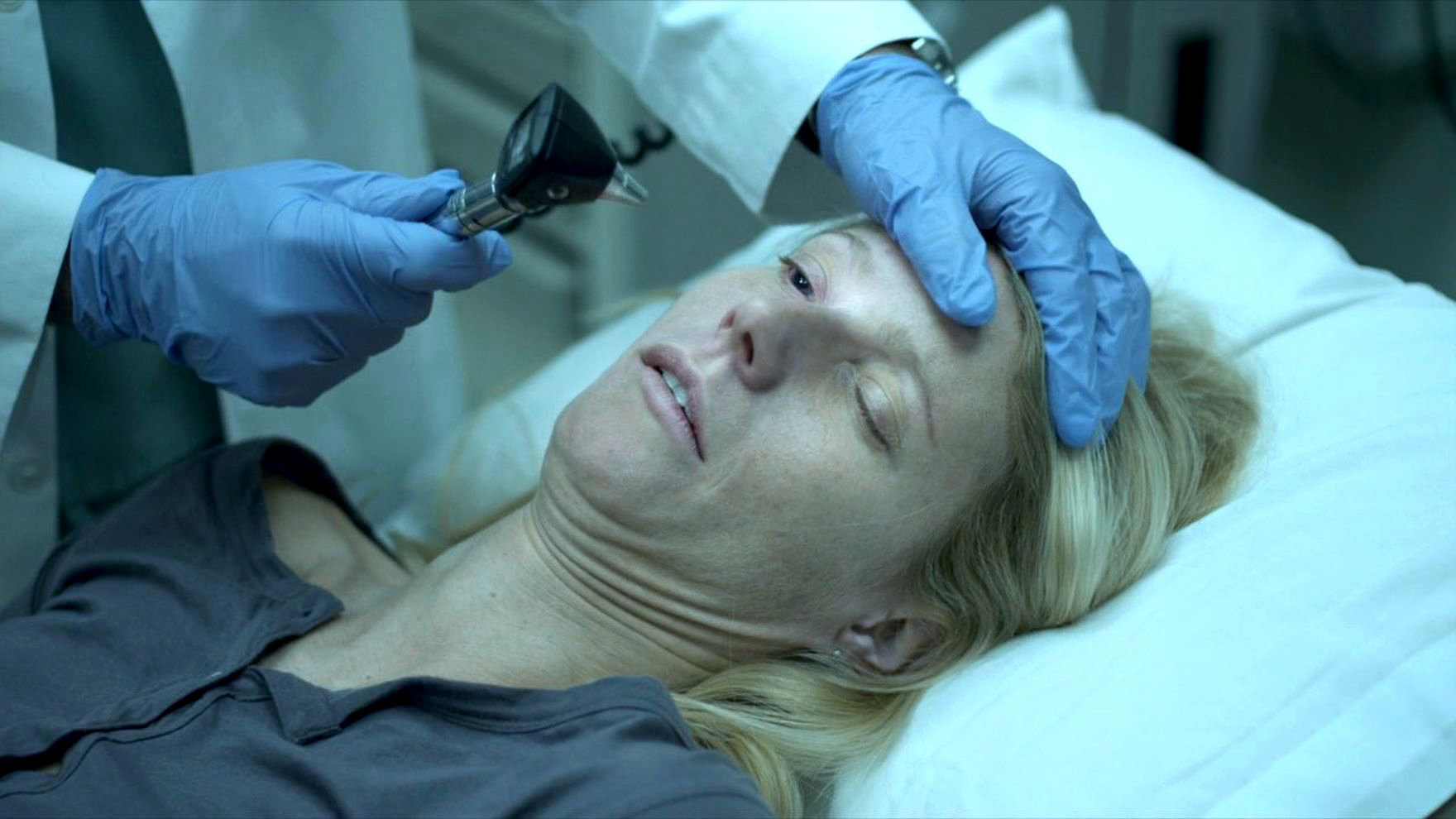
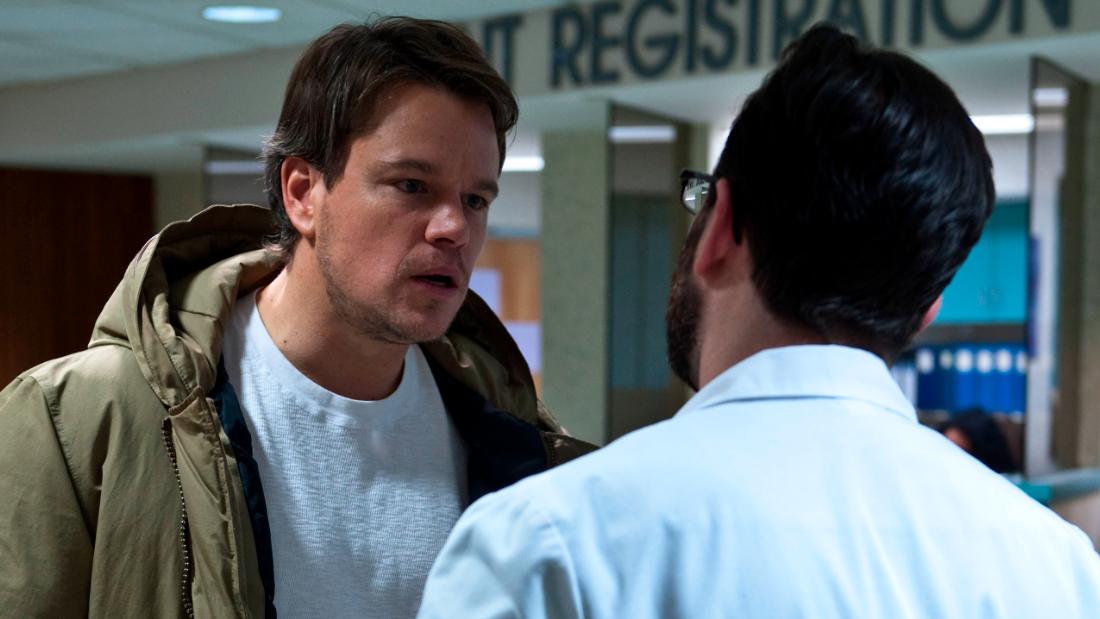
โ€œContagionโ€ opens by introducing us to Beth Emhoff (Gwyneth Paltrow), an executive returning home to her husband and son after a trip to Hong Kong. Upon returning home, she has a seizure and dies in the hospital, which leaves her husband, Mitch (Matt Damon), with plenty of questions but no answers.ย  It becomes even more agonizing for Mitch when his stepson passes away shortly after his wife.ย  He is wondering what she came down with, how it was transmitted, and if he is at-risk for it along with his daughter. His whole world has been turned upside down, and heโ€™s constantly on edge, angry, and making sure heโ€™s doing his due diligence to stay safe.

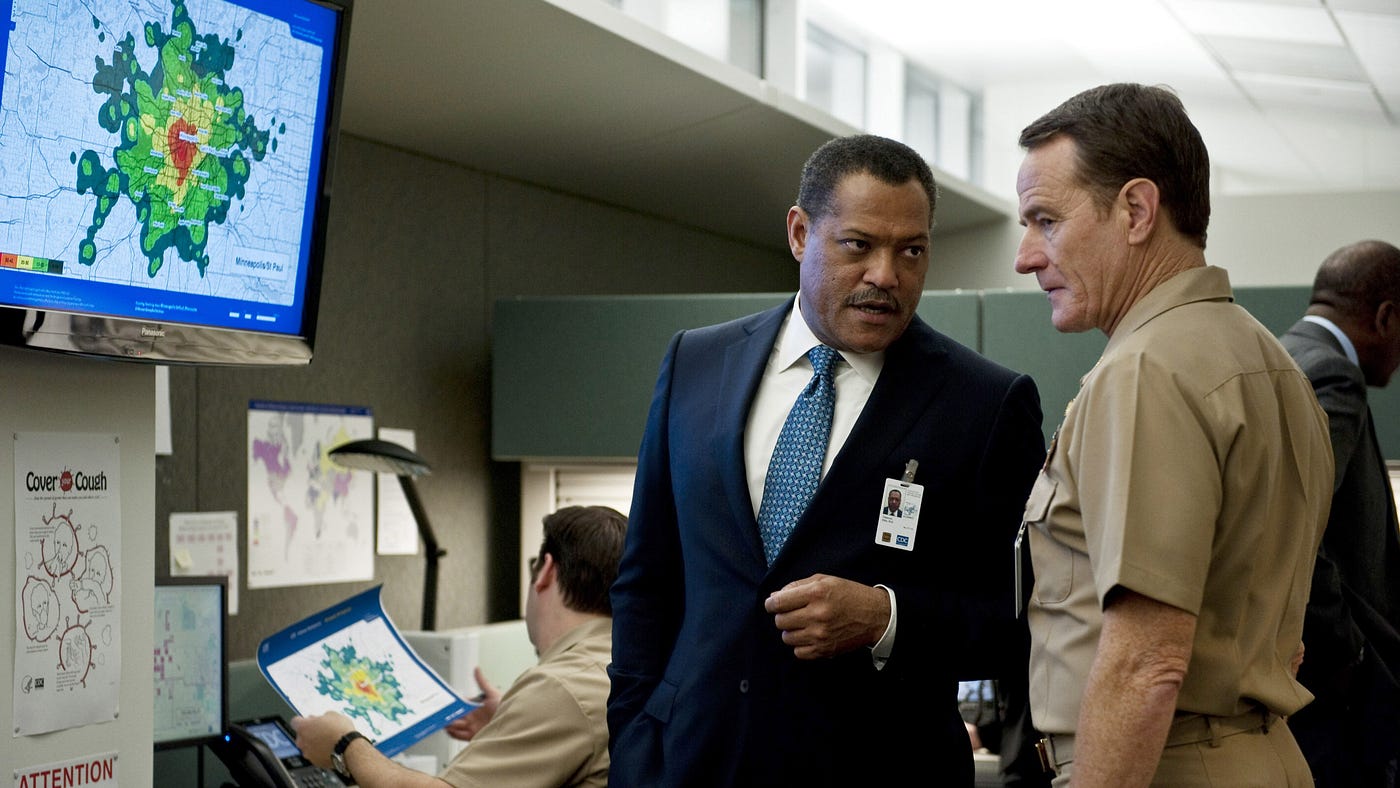
The story then shows us Dr. Ellis Cheever (Laurence Fishburne), who works for the CDC, and heโ€™s looking to trace the root of this problem.ย  Is it something people should be concerned about or is it an isolated incident? He brings in Dr. Erin Mears (Kate Winslet) from the Epidemic Intelligence Service, to talk to anyone and everyone who was in contact with Beth.ย  She is going to look anywhere and everywhere for a connection to what might have happened to Beth. She also wants to find out if anyone else is in danger of catching what Beth had as well.

It doesnโ€™t take long for panic and hysteria to take over when the death toll is increasing every day.  Itโ€™s becoming a dog-eat-dog world out there, and people are willing to do whatever it takes to not only survive, but to protect their loved ones as well.  They are not afraid to take extreme measures if they need to, as they donโ€™t want to be another victim of this deadly virus which, in the film, is called the MEV-1. Dr. Ally Hextall (Jennifer Ehle), meanwhile, is working around the clock to come up with a vaccine to treat this disease.

There is also a conspiracy theorist named Alan Krumwiede with a very popular blog, and heโ€™s played by Jude Law. Alan is brainwashing his website visitors to try Forsythia, which he believes will cure this disease.  This creates two problems: one, people begin to look at Forsythia as a miracle cure and when the pharmacies run out of it, people start to loot and destroy them. The second problem is that people are now hesitant to take the vaccine, which will actually save lives and help stop the spread of MEV-1.  Heโ€™s looking out for his own personal gain and profit, but during times of panic, people will believe anything they read on the Internet.

There is also a storyline involving Dr. Leonora Orantes, a WHO epidemiologist, played by Marion Cotillard, who is looking through countless footage of Beth in order to determine the sequence of events in which she contracted the illness and whom she might have inflicted as well. Leonora is in Hong Kong doing this, and because they are worried about how their village will survive, they kidnap her in order to make sure they have access to the vaccine when it’s released.ย  They donโ€™t want to hurt Leonora, and she is not scared for her life, as she just wants to help them. As stated previously, desperate times call for desperate measures. When itโ€™s a matter of life and death, you never know what you are capable of doing as a human being.

The only issue I had with โ€œContagionโ€ and why I couldnโ€™t give it the full four stars is the fact that some stories are more interesting than others and, at times, the plot can be a little bloated.ย  There are some tremendous performances in the film, especially from Matt Damon, Laurence Fishburne, Kate Winslet and Marion Cotillard. Director Steven Soderbergh gives his actors plenty of space and freedom to show off their considerable acting chops. When the film is firing on all cylinders, itโ€™s truly engrossing and engaging. Itโ€™s pretty easy to follow as well, even when they are using scientific terms which might not be as common or familiar to someone like myself.

โ€œContagionโ€ an ambitious film, and for 80% of its running time, itโ€™s a great movie.  The other 20% is a bit of a slog and can be a little over-stuffed plot-wise. Overall, though, it is a really, really good movie which features some of the biggest names in Hollywood on screen together.  Itโ€™s a dark, moody, and tense film that is relentless when the pressure is turned up. I will say this: every single time Iโ€™ve watched โ€œContagion,โ€ Iโ€™ve enjoyed it even more and gained something new from it and an even greater appreciation for what it achieved on camera. This is a powerful piece of cinema, and it is a film that will always leave an impact because of what happened to the world in 2020.

Iโ€™ll end my review by saying this: Iโ€™m not an expert on Covid-19 and the pandemic, but this film foreshadowed a lot of what happened in 2020; from social distancing, handwashing, conspiracy theorists, vaccines and the ability to access to them, and what human beings are capable of doing when they are pushed to the brink of life or death.  For a lot of people, they probably want to put 2020 in the rearview mirror and not watch a movie which focuses on things that were difficult or challenging for the world.  I, on the other hand, find it therapeutic and cathartic to watch a movie like this, as itโ€™s a way for me to deal with what happened in my own way. 

* * * ยฝ out of * * * *

4K Info: โ€œContagionโ€ is released on a single disc 4K from Warner Brothers Home Entertainment. It has a running-time of 106 minutes and is rated PG-13 for disturbing content and some language.  It also comes with a digital copy of the film.

Video Info: The minute I popped this movie into my 4K player, I was instantly transfixed by the picture quality.  It was a huge upgrade from the Blu-ray which I previously owned. The film has a dark and brooding look to it with green and blue hues. According to the press release, this was sourced from the original camera negative and the remastering was overseen by Soderbergh. This is exactly what you are looking for when you buy a 4K. You want it to come from the original camera negative and have it looked over by the director.  This is a beautiful 4K and the HDR is incredibly crisp and clear.

Audio Info:ย  There is also a Dolby Atmos soundtrack here, so this is a win-win for film collectors out there.ย  The music was composed by Cliff Martinez, who has worked on some of my favorite film scores, such as โ€œSpring Breakers,โ€ โ€œPump Up the Volumeโ€ and โ€œDrive.โ€ย  Heโ€™s collaborated quite a bit in his career with Soderbergh. This movie does not work as effectively without this mesmerizing score.

 Special Features:

The Reality of Contagion โ€“ Featurette

The Contagion Detectives โ€“ Featurette

Contagion โ€“ How a Virus Changes the World โ€“Featurette

Should You Buy It?

I was so happy to be able to review โ€œContagionโ€ on 4K and check it out. I recently reviewed โ€œWonka,โ€ which I thought was an incredible 4K, but this one is even better, considering the improvements they made on the transfer. It still has the same gritty and dirty look to it while also providing an improved picture quality at the same time. The film itself is very close to being a masterpiece. I was very close to giving it four stars, but I had to deduct half a star because of a few issues, which I mentioned in my review. Still, with that being said, โ€œContagionโ€ comes highly recommended. As physical media shifts to mostly online retailers, it is our duty to support 4K releases of films like โ€œContagion.โ€  Why? Because it encourages Warner Brothers and other studios to go into their archives and upgrade other great movies as well.  At the end of the day, they will do their part if we show them there is a legitimate market for physical discs.

**Disclaimer** I received a copy of this film from Warner Brothers to review for free.  The opinions and statements in the review are mine and mine alone.
An Ultimate Rabbit Video Review: ‘Thanksgiving’

So here I am with another video review of a recent movie release. This time it is for Eli Rothโ€™s โ€œThanksgiving,โ€ a movie which was promised to us ever since Roth made his fake โ€œThanksgivingโ€ trailer for 2007โ€™s โ€œGrindhouse.โ€ But while that trailer came across as a send-up and satire of the many slasher films we grew up with over the years, this one is more of a reboot of what came before. It also comes with quite the cast of actors which includes Patrick Dempsey (recently crowned People Magazineโ€™s Sexiest Man Alive), Rick Hoffman, Gina Gershon, Nell Verlaque, Addison Rae and Milo Manheim to name a few. Furthermore, it proves to be far more well-produced and directed than the average slasher flick to where it becomes clear this one has a much higher budget what filmmakers would usually expect on a shoot like this.

What results here is a horror movie which is not about to redefine the genre in any way, shape or form, but instead one which acts as a love letter to those Roth and company grew up on like โ€œHalloween,โ€ โ€œSilent Night Deadly Night,โ€ โ€œNew Yearโ€™s Evilโ€ and โ€œApril Foolโ€™s Dayโ€ to name a few. I found โ€œThanksgivingโ€ to be a complete blast as it featured a number of truly suspenseful and scary moments, and I found myself laughing harder here than at any other movie released in 2023. While Eli Rothโ€™s output as a director has been mixed at best, this film reminds you he is a better filmmaker than we tend to give him credit for. From start to finish, I could say everyone in front of and behind the camera put a lot of love into this project, and they must have had the time of their lives making it.

Please check out my video review below, and you can also check out both the real trailer for โ€œThanksgivingโ€ and the fake one Roth created for โ€œGrindhouse.โ€

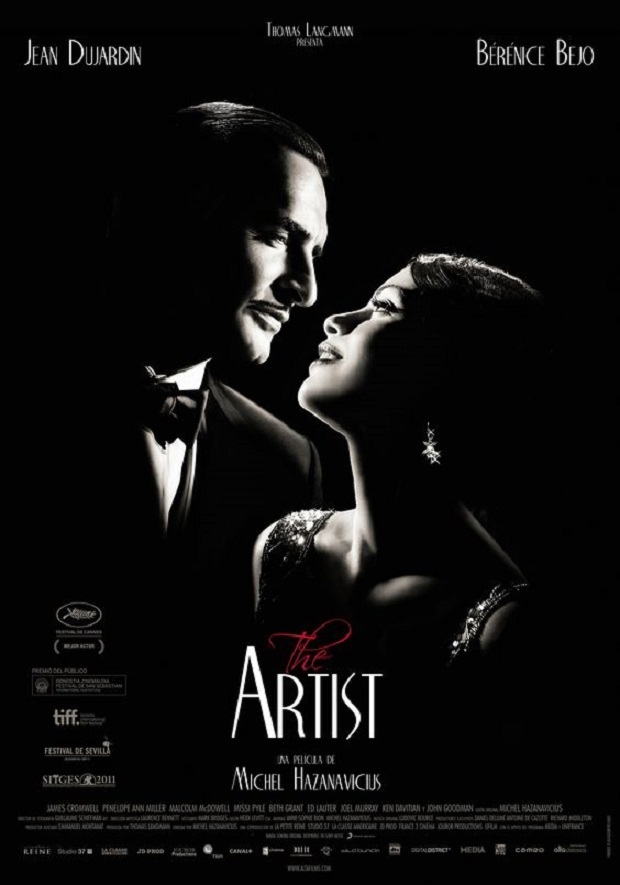
‘The Artist’ – Best Picture Winner at the 84th Academy Awards

Believe it or not, โ€œThe Artistโ€ is only the second silent film in cinematic history to win Best Picture at the Academy Awards. The first was โ€œWingsโ€ which itself was the first film to win this particular award. I figured there were several other silent films which took home this award, but I guess the Oscars came about as the movie business was quickly transitioning to what was once called โ€œtalkiesโ€ when these awards began.

Looking back at โ€œThe Artist,โ€ I have to admit it was nice to see a filmmaker reach back to a time when the movie industry was in its infancy, just like what Martin Scorsese did with “Hugo.” But while โ€œThe Artistโ€ does not quite reach the same level of greatness that โ€œHugoโ€ did, it still proves to be a compelling motion picture with great performances, a powerful story, and it serves as a reminder of how great black and white can be for certain motion pictures.

The story told here is one which has been told a million times before. George Valentin (Jean Dujardin) is a silent film star who sees his great career suddenly crash to the ground when sound is introduced into motion pictures. George initially resists this change, feeling that it is a fad which will pass by quickly before anyone knows it. Of course, we all know this is not going to be the case as change is in the air and there is no stopping it.

As George finds his career ruined by this advancement in film and technology, another actress he once befriended named Peppy Miller (Bรฉrรฉnice Bejo) embraces this technological change and sees her star rise to the heavens as a result. She has gotten great and truly genuine advice from George in how to make her mark as an actress, and she forever holds a special place in her heart for him. So, it comes to deeply hurt her seeing his career fall apart after what he has done for her, and then we see things for him get even more difficult with the 1929 stock-market crash. Will Peppy save George and help him make a comeback?

That the plot of “The Artist” is such an old one ended up taking away from the overall experience for me a bit as I knew where it was heading and that everything would eventually be alright. All I could hope for was that the director and actors would keep things interesting so that I was not thinking about the outcome too much. This is where this movie succeeds because the performances are so rich and the direction is nothing short of excellent to where I was caught up in the moment to where I started watching and stopped thinking so much.

Jean Dujardin looks like he walked right out of a 1920โ€™s silent film here, and he was clearly born to play George Valentin. In doing a movie within a movie, he manages to balance out both Valentin the star and Valentin the man. Much of the acting in silent films involved a lot of mugging, and its great fun to watch Dujardin getting ready to shoot a scene as he makes clear how much he is playing for the camera. But when Valentin is not making a movie, Dujardin’s performance becomes all the more remarkable as he expresses emotions he is not in a position to verbalize onscreen or off of it.

This is the thing about screen acting; the most powerful moments in a movie can come from just one look from an actor. Being able to make clear what a character is thinking without saying it out loud is the biggest challenge, and the actors in โ€œThe Artistโ€ have to work even harder because words will not save them, especially even when certain dialogue is put on the screen for all to see. That they do succeed in drawing us in emotionally with little in the way of sound or dialogue is a true testament to their talents.

Matching Dujardin scene for scene is Bejo who plays rising film star Peppy Miller. She is a joy to behold and an infinitely appealing presence here, and that smile of hers lit up my heart in a way few things can. Seeing Peppy rise to the level of a movie star is endless fun, but Bejo also keeps her a likable character even when success threatens to spoil her rotten. This made me like Peppy all the more as a result.

There is a slew of other great performances to be found in “The Artist” which does not have a weak one to be found in its entire cast. John Goodman looks like he’s having a marvelous time channeling his “Matinee” character for the role of studio boss Al Zimmer. James Cromwell is very touching as Valentin’s loyal butler Clifton as he becomes the conscience this fallen movie star needs to hear out. It is also great to see Penelope Ann Miller here as Valentin’s wife, Doris, a character who does not seem to be the least bit satisfied with this marriage.

But the one who upstages everyone here is Uggie who portrays Georgeโ€™s ever so faithful Jack Russell terrier named Jack. Uggie reminded me of Mike the Dog who stole many scenes in “Down and Out in Beverly Hills” from his human co-stars and, like Mike, he becomes as big a character as everyone else here. That he is able to convey certain emotions to where he gets a police officer to save his owner from certain death is amazing. His performance topped off what had been a great year for dogs at the movies along with another named “Beginners.” Isn’t it about time the Academy Awards gave animals special Oscars for their work onscreen?

Director Michel Hazanavicius stays very true to the way silent films were shot back in the day, and his extensive research of them certainly shows from start to finish. He makes “The Artist” look like it really came from the 1920โ€™s as he transports you back in time to this specific cinematic period. He is also served well by a beautiful film score by Ludovic Bource which heightens the already strong emotions to great effect, and by cinematographer Guillaume Schiffman who gives “The Artist” a striking look which does not betray any of today’s technological advances which could have been used here.

Having said all this, “The Artist” would not have been my choice for Best Picture at the 84th Academy Awards (my pick was โ€œThe Tree of Lifeโ€). Plus, with such a familiar story, it feels like we are getting hit here by a case of deja vu. Regardless, it is still a fantastic piece of filmmaking which you owe it to yourself to watch if you have not already. Along with “Hugo,” many may look at 2011 as the year movies reached back in time to remind us of what a magical experience they were when they first came to exist.

* * * ยฝ out of * * * *

‘Empire of Light’ – Sam Mendes’ Imperfect but Enthralling Love Letter to Cinema

One of the things which really excited me about โ€œEmpire of Lightโ€ is how it reunited director Sam Mendes with the God of all living cinematographers, Roger Deakins. Together, these two geniuses have given us visual wonders in โ€œRevolutionary Road,โ€ โ€œSkyfallโ€ and โ€œ1917.โ€ And with โ€œ1917,โ€ Deakins finally won his second Academy Award for Best Cinematography, so he and Mendes are a match made in cinematic heaven as far as I am concerned. As this movie itself, I had no idea what to expect, and that is just as well.

โ€œEmpire of Lightโ€ transports us back to the early 1980โ€™s where we are taken to an English seaside town where a cinema is showing โ€œThe Blues Brothersโ€ and โ€œAll That Jazz,โ€ the latter which I still need to watch. We meet Hilary Small (Olivia Colman), one of the cinemaโ€™s managers who dutifully opens it up at the start of a new day and helps get everything ready for audience members eager to take in the latest feature presentation. But while she at first seems like a pleasant enough human being, we soon learn during a doctorโ€™s appointment that she is taking lithium. It is not made entirely clear why she has been prescribed this form of medication, but it implies she has been through a wealth of emotional turmoil to where she needs some reigning in. But while the medication may be helping her, she admits to her doctor that she generally feels lifeless on a daily basis. And thereโ€™s also the cinemaโ€™s chief manager, Mr. Ellis (Colin Firth), who often invites her into his office to discuss professional matters which prove to be anything but professional.

And then we are introduced to the cinemaโ€™s newest employee, Stephen (Michael Ward), a young black man who has been applying to college with little success. Quickly, a relationship forms between him and Hilary as both feel a deep need for compassion which reality constantly denies them. But the times they are forced to live through constantly threatens to tear them apart in tragic ways, and their secrets may reveal more to the other than they can possibly ever hope to deal with.

The first thing I have to mention about โ€œEmpire of Lightโ€ is the performance of Olivia Colman. As always, she remains an acting dynamo as she takes Hilary from ecstatic highs to devastating lows as her character is forced to deal with a roller coaster of emotions she cannot easily control in the slightest. Every single moment she has onscreen is mesmerizing as she exhibits emotions not easily faked, and it makes Hilaryโ€™s journey from start to finish all the more emotionally extreme.

Then there is Michael Ward who portrays Stephen, the one who helps lift Hilary out of her mundane existence. Ward is wonderful in creating a character whose passion for things helps to make him all the more charismatic as he navigates through a time of cruel racism and missed opportunities which can easily bring anyone else down. He also makes the seemingly unlikely relationship between Stephen and Hilary all the more palpable as some may be quick to dismiss any possibility of something like this actually happening. What life has taught me is that anything is possible, so why shouldnโ€™t this relationship be a distinct possibility?

And yes, there is Deakinsโ€™ cinematography which is as captivating as ever. While it may not be as orgasmic as the visuals he gave us in โ€œBlade Runner 2049,โ€ he succeeds in painting a lovely atmosphere of an English coastal town, the kind which ceased to exist decades ago, but whose history is still relevant in todayโ€™s world of Brexit and humanity going backwards. His work is also complimented beautifully by the wonderfully ambient film score by Trent Reznor and Atticus Ross who stand in for Mendesโ€™ regular musical collaborator, Thomas Newman.

When it comes to the screenplay by Mendes, however, it does try to cover more ground than it possibly can to where the focus gets lost from time to time. Part of me wanted to see more of the racism of the time explored more deeply as the script only seemed to touch the surface of it. The same goes with Hilaryโ€™s mental illness as it felt like I only learned so much about what she has been through. Perhaps this was by Mendesโ€™ design as he wanted to keep us at a certain distance, but had we known more, perhaps this part of the movie would have been more profound as a result.

As for the love โ€œEmpire of Lightโ€ has for movies in general, it does make for one great scene involving Toby Jones who plays the cinemaโ€™s dedicated projectionist. Norman. Hearing Jones describe the intricacies of feeding film through the projectors makes for some of this movieโ€™s most memorable and magical moments as it reminded me of the time I worked at a cinema in my youth. It also leads to a scene later on which reminded me of the climatic one in โ€œCinema Paradiso,โ€ one of the greatest movies ever made about movies.

I do have to say that this film does threaten to have as many endings as โ€œThe Lord of the Rings: Return of the King.โ€ Mendes must have been searching endlessly for the right way to conclude this particular film of his. Did he succeed? Well, Iโ€™ll leave it to you to find out. All I can say is that when you think the movie is over, it isnโ€™t.

Despite its flaws which keep it from being the perfect Mendes motion picture which โ€œAmerican Beautyโ€ and โ€œSkyfallโ€ are, I found โ€œEmpire of Lightโ€ to be very enthralling. It captures an interesting period of history, and its love of movies and film is deeply felt. And when all is said and done, it proves that Olivia Coleman is worth the price of admission no matter what she is appearing. Heck, my dad would pay her to read the phone to him just as he would with Tilda Swinton. Iโ€™m serious!

* * * ยฝ out of * * * *

William Friedkin Discusses His Career at American Cinematheque

On January 22 & 23, 2011 at the Aero Theatre in Santa Monica, American Cinematheque presented a tribute entitled “Strangle-Hold: The Gripping Films of William Friedkin.” Featured were four of the director’s most noted movies: “The French Connection,” “To Live and Die In LA,” “Sorcerer,” and “The Exorcist.” Mr. Friedkin was there both nights to talk about his work and filmmaking, and he was greeted by sold out audiences who gave him with a standing ovation.

It’s been a long road for Friedkin. Despite the many ups and downs of his long career, he still directs movies even though his work these days is constantly, and unfairly, stuck in the shadow of his greatest work. Back in the 1970’s, he gave us two of the greatest movies ever with “The French Connection” which has one of the greatest cinematic car chases ever, and “The Exorcist” which is as powerfully unnerving today as it was when it first came out. Since then, however, he was seen as stumbling both critically and commercially with movies like “Deal of The Century” and “The Guardian” to name a few.

But Friedkin has now rebounded with “Bug” starring Ashley Judd, and the re-release of “The Exorcist” which was a big hit despite it being readily available on video and DVD. Even his flops like “Sorcerer” and “Cruising” have been critically re-evaluated and gained strong cult followings in recent years. Today, he is directing Matthew McConaughey in “Killer Joe.”

Friedkin started off by remarking how the Aero Theatre’s marquee said “William Friedkin Live” and how glad he was to see that at his age. From there, he told a story about his friendship with the great writer/director Billy Wilder and how they had lunch together often at Johnny Rockets. At one point, Wilder said to him:

“You and I have something in common; we both want to make commercial films for a large audience. So don’t look for your films to get shown at the Cinematheque!”

It may have taken long enough, but American Cinematheque did come through for him!

When working with actors, Friedkin said he does not put his personal style on them, and that he always creates an atmosphere for actors to work in which allows their creativity to flow. If the actors come up with something better, he is more than willing to let them roll with it to see where it would take the movie. This aided tremendously in his job of deeply immersing the audience in the story as much as possible.

Some in the audience asked him if he had any advice to pass on to filmmakers. Friedkin was quick to the point:

“Don’t go to film school!”

Friedkin claimed he never had a single lesson in filmmaking, and he said everything he learned came from “the masters who broke the rules” like Orson Welles and Alfred Hitchcock. In fact, he encouraged everyone to get out of the classroom and watch all of Hitchcock’s movies. While they may vary in quality, he said the master of suspenseโ€™s genius is present in every shot he took.

Friedkin also encouraged aspiring directors to not even bother with the preview process or audience testing. None of his movies have ever been altered by these processes, and he really doesn’t like them anyway. Had “The Exorcist” been previewed, he said, it would not have ever have been released!

In selecting movies to make, Friedkin says the movie comes to him more than he goes to it. But the one theme which runs through each and every motion picture he has helmed is ambiguity. The works he admires the most are the ones which ask questions but don’t provide answers. As he sees it, the quest is far more interesting than the end of the journey as there are no ultimate answers, only great questions.

Friedkin also loves playing with the thin line between good and evil. Case in point is “The French Connection” where Popeye Doyle, played by Gene Hackman, is a racist and a womanizer while the drug dealer is a gentleman with manners and who loves his wife dearly. There’s only so much that separates the good guys from the bad ones, and movies like this serve as a very strong reminder of that.

Though his glory days might be behind him, William Friedkin remains a director with an unwavering vision on each film he does. This proves to be the case even in his weakest movies as even they show how fully in control of the craft he is. I look forward to seeing what he comes up with next.

How Taxi Driver Forever Changed The Way I View Movies

While “Goodfellas” introduced me to the filmmaking brilliance of Martin Scorsese and became my all-time favorite movie, it was “Taxi Driver” which really shaped the way I view movies today. Before seeing it, I always tried to avoid those movies which would make me sad or were too dark. This was a result of my parents having to carry me out of “Star Trek II” and “E.T.,” both of which I cried so hard over to where others wondered if I was okay. I promised myself I would never put my family through such embarrassing situations ever again, and this was especially the case with my brother who was constantly annoyed at my emotional outbursts.

Unlike “Goodfellas” which was immensely entertaining and had great comedic moments, “Taxi Driver” is dark, dark, dark. There is nothing the least bit glamorous to see here as we watch the main character of Travis Bickle (played by Robert De Niro) get continually sucked into a corrupted environment he deeply despises. I kept hoping for him to achieve sort of redemption and maybe, just maybe, have another chance with Cybil Shepherdโ€™s character of Betsy whom he had a memorable first date with. But as we reach the movie’s bloody conclusion, I realized there was nowhere for Travis to go but down. While the reaction to his actions may have been surprising, we all know the truth about Travis and realize something will set him off again before we know it.

Once the end credits went up, my dad asked me what I thought about โ€œTaxi Driver.โ€ My initial reaction was it was not exactly enjoyable. My dad’s response to this has always stayed with me, “Not all movies are meant to be enjoyed. Some are meant to be experienced.”

Looking back, I see what he meant. Look, there are a lot of reasons to not make a movie about someone like Travis Bickle; he’s seriously nuts, not a good date if you want to go to the movies, and watching him lose his mind is painful. But the thing about “Taxi Driver” is people like Travis exist, and turning a blind eye to their existence does us no good. We need to understand why people do the things they do. It’s like what Roger Ebert said in his review of the film:

“Scorsese wanted to look away from Travis’s rejection; we almost want to look away from his life. But he’s there, all right, and he’s suffering.”

With “Taxi Driver,” I came to see how you need these kinds of movies just as much as you need the average escapist entertainment. Some movies need to shine a light on the darker parts of human nature to remind us we need to acknowledge we have a dark side and realize we have more in common with Travis Bickle than we would ever care to think or admit.

Since watching “Taxi Driver,” I have become completely open to movies which disturb me or take me on a journey I would not necessarily want to endure in real life. I can’t stand to watch films in a passive manner. I want to be moved by what I see, be disturbed and shaken, and even weep. Movies are too powerful an art form to be made just for the sake of entertainment. There are so many things about the human existence which deserve to be captured on celluloid, and I believe audiences crave these kind of cinematic experiences as they do the next Marvel movie.

“Taxi Driver” is my second favorite movie of all time, right behind “Goodfellas.” It is a movie I admire above so many others, and I still watch it from time to time. There are many I get sick of watching, but this is one I will never tire of sitting through.

Heather Langenkamp Reflects on Acting and ‘The Butterfly Room’

The Butterfly Room poster

WRITERโ€™S NOTE: This article is based on a screening and Q&A which took place back in 2014.

โ€œThe Butterfly Roomโ€ is one of those movies which is being released under the radar. It just debuted at the Laemmle NoHo 7 without much in the way of publicity, and this a shame because this thriller directed by Jonathan Zarantonello proves to be a real treat for horror fans as it features several actors we affectionately remember from various horror and cult classics. Among them are Barbara Steele who is best known for her work in a number of Italian gothic horror films like โ€œBlack Sunday,โ€ Ray Wise who left an indelible impression on us with his performances in โ€œRobocopโ€ and โ€œTwin Peaks,โ€ Erica Leerhsen who survived a few ill-fated horror movies like โ€œBook of Shadows: Blair Witch 2โ€ and the remake of โ€œThe Texas Chainsaw Massacre,โ€ Camille Keaton who suffered such unforgivable brutality in โ€œI Spit on Your Grave,โ€ Adrienne King who memorably decapitated Jason Voorheesโ€™ mother in โ€œFriday the 13th,โ€ and P.J. Soles who showed us things we really liked in John Carpenterโ€™s โ€œHalloween.โ€ Looking at this cast, you might think this was another version of โ€œThe Expendablesโ€ but with horror icons.

Another big horror favorite in โ€œThe Butterfly Roomโ€ is Heather Langenkamp who is still best remembered for her role as Nancy Thompson in โ€œA Nightmare on Elm Street.โ€ Here she plays Dorothy, a single mother who has her own reasons for keeping her son away from butterfly collector Ann (Barbara Steele). As the movie goes on, you find out exactly why Dorothy has such a bone to pick with her, and it is not worth spoiling here.

Langenkamp dropped by the Laemmle NoHo 7 for โ€œThe Butterfly Roomโ€™sโ€ opening night to participate in a Q&A with the movieโ€™s second assistant director Brian McQuery. When asked how she became involved with this production, Langenkamp explained it all started with a journalist friend of Zarantonelloโ€™s who introduced the director to her while at a horror convention.

Heather Langenkamp: This journalist friend was my introduction, and I noticed that Jonathan was lurking in the background (laughs) for several hours. Finally, we struck up a conversation and he gave me the script later. I have to say that when I read it, I felt that the part of Dorothy was one of the better parts that Iโ€™ve read in many, many years. I think, from what you see on the screen, sheโ€™s a very strong woman and sheโ€™s a very fierce mother and I really enjoyed playing such a part. I remember we got together at this restaurant in Santa Monica, and I think I shocked Jonathan a great deal by telling them how much I liked it and how I really loved this idea that this horror movie focuses on an elderly woman which is something that is really rare.

In addition to all the horror icons, there are also several child actors here who play kids that become way too friendly with Ann. Now there is a saying, the things to avoid while making a movie are working with animals and children, but Langenkamp found working with child actors like Ellery Sprayberry and Julia Putnam very informative and fascinating.

Heather Langenkamp: Itโ€™s kind of a lesson every day in how to be so natural and so in the moment, and I always get a lot of inspiration from children like Miko Hughes (who appeared opposite Langenkamp in โ€œWes Cravenโ€™s New Nightmareโ€) who was like that for me. You just zone in with them as they really experience the movie in a different way I think, and it is really refreshing. Ellery was really fun to work with, and I remember this one day when she had to go too long here to short hair too long hair and everybody was panicked. But Ellery was just smiling and taking it all in stride, and we had a lot of fun on the set as I remember.

Ever since her days battling Freddy Krueger, we have not seen much of Langenkamp. Acting for her has since become a part time job as she spends most of her days running AFX Studio, a Special F/X Make-Up studio in Los Angeles, with her husband David LeRoy Anderson. One of her more recent acting roles was as a character named Moto in โ€œStar Trek into Darkness,โ€ but her role as Dorothy in โ€œThe Butterfly Roomโ€ is the biggest one she has had in some time. This led one audience member to ask her if coming back to acting was like getting back on a bicycle to where everything comes back to you quickly.

Heather Langenkamp: I would have to say not at all like riding a bike. I think that youโ€™re much more self-conscious about how youโ€™re doing as you get older especially if youโ€™ve taken time off. I was really worried a lot of the time about whether I was going to be able to get my chops back up to speed, and Iโ€™m happy with the way the movie looks on the screen. Iโ€™m much happier than I actually thought I was at about 6:45 tonight (the movie started at 7:40 pm) because I get a lot more critical of myself too as I get older. Both of those things combine actually, making for a very uncomfortable day today, but now I can relax. I donโ€™t think itโ€™s like riding a bike. I wish it was more like that.

But even after being away from acting, Langenkamp still has a great love for it. She explained why and also talked about what it was like working with Steele who is probably the biggest horror icon in this cast.

Heather Langenkamp: Itโ€™s probably my favorite thing to do. I think one the most creative things that a person can do is bring a script to life and think of the character and think of how youโ€™re going to interact with someone like Erica. Those scenes were a lot of fun and especially all the scenes with Barbara Steele. She is one of my personal heroes and someone that I greatly admire, so I often watched her. Sheโ€™s a very elegant woman and sheโ€™s very powerful, so sometimes I would just watch her and try to learn from her in the thing she did to be kind of a majestic creature in the film. I learn a lot from the people that I work with and I always and see what their techniques are and how they get prepared, and I take whatever I can from people like that.

Like many horror movies coming out today, โ€œThe Butterfly Roomโ€ was shot on a very low budget and had a tight shooting schedule. Moreover, Zarantonello started filming this movie back in 2010, and it is finally making its premiere four years later. With little time to make this movie, actors do not have the same luxuries available to them on big budget studio productions. Langenkamp described the pressures she faced and how she learned to deal with them.

Heather Langenkamp: Itโ€™s always difficult especially with wardrobe and hair when thereโ€™s really not enough time to get all that is necessary, and maybe thereโ€™s not enough personnel to take care of everybody. There are four or five ladies sometimes who all need to be ready within an hour of each other, and so we had very quick moments in the makeup chair sometimes (laughs) and you just have to put your vanity aside. Thatโ€™s the hardest thing for an actor to do, but you realize youโ€™re not going to get the hour in the chair that may be would make you feel more comfortable. In the end I really do feel like naturalism is the rule of the day, and looking as natural as possible as much as an actor. Maybe you donโ€™t love it, but I do think that it adds to the reality of filmmaking. So, every time I didnโ€™t get enough time in the chair, I would say in the end that itโ€™ll be better for the film.

It is really great to see Heather Langenkamp back on the big screen after being absent from it for what feels like years. She may not be interested in stardom and is not looking to make a big comeback in movies, but she is still very much interested in giving the best she can as an actress. While she may forever be linked to โ€œA Nightmare on Elm Streetโ€ to where many cannot see her as anyone other than Nancy Thompson, she can still hold our attention whenever she appears in a movie. Clearly, she is more comfortable these days running a special effects studio, but I do hope we get to see more of her on the silver screen sooner than later.

Exclusive Video Interview with ‘Corpus Christi’s’ Jan Komasa and Bartosz Bielenia

In a year filled with many great foreign films like โ€œParasite,โ€ โ€œCorpus Christiโ€ is another one to keep an eye out for. Directed by Jan Komasa (โ€œSuicide Roomโ€ and โ€œWarsaw 44โ€), it stars Bartosz Bielienia as Daniel, a 20-year-old man on the verge of finishing his sentence at a youth detention center for second degree murder. While there, he experiences a spiritual awakening which inspires him to enter the priesthood, but because of his felony conviction, no seminary will ever be able to accept him. Upon his release, he is sent to a small village to do manual labor. However, Daniel quickly discovers the local church there and ends up lying his way into becoming the townโ€™s new priest. His passion and unconventional methods come to inspire its residents in a way they have not been in a while, and in the process he comes to discover a terrible tragedy which has engulfed the town in endless sorrow. As he digs deeper into the tragedy and the townโ€™s deepest secrets, some of the townspeople become increasingly suspicious of his methods, and it is only a matter of time before the past catches up with him.

Now the above plot description might make โ€œCorpus Christiโ€ sound like a remake of โ€œSister Act,โ€ but it really proves to be a thoughtful and compelling motion picture as it ponders what it means to be a person of faith, of the possibility of finding forgiveness in a realm where sadness and anger seem infinite and irrevocable, and of finding redemption even when society will not easily permit its criminally convicted to do so. What results is an enthralling film which is now Polandโ€™s selection for the Best International Film category at the 92nd Academy Awards.

I was lucky enough to speak with Komasa and Bielienia while they were in Los Angeles to do press for โ€œCorpus Christi.โ€ Komasa recently won the Best Director award at the Gdynia Film Festival for his work here, and Bielienia has picked up Best Actor awards at the El Gouna Film Festival, the Chicago International Film and the Stockholm International Film Festival.

Be sure to check out โ€œCorpus Christiโ€ when Film Movement releases in American theaters in 2020. My full interview is up above, and you can also watch the movieโ€™s trailer down below.

Noah Segan Talks About Playing Kid Blue in ‘Looper’

Noah Segan in Looper

WRITERโ€™S NOTE: This article was written back in 2012.

While Joseph Gordon-Levitt, Bruce Willis and Emily Blunt get top billing in Rian Johnson’s “Looper,” one actor in the cast to keep an eye on is Noah Segan who plays Kid Blue. Segan previously worked with Johnson on “Brick” and “The Brothers Bloom,” and it turns out the writer/director wrote the part of Kid Blue with Segan in mind. While his role might seem small, Segan took his time to develop the character, and he is bound to leave a very memorable impression on audiences as a result.

Kid Blue is an assassin like Levitt’s character, and he loves wielding his six shooter which makes him look like a cowboy along the lines of Billy the Kid. While audiences will see Kid Blue as being one of the villains of this film, Segan sees the role a bit differently.

“I play an antagonist, I wouldn’t want to go so far as to call him a villain,” Segan said. “A little spoiler: nobody is that good in this movie. Everybody is some form of bad and has some villainous traits; some for better reasons than others. I would say the easiest comparison is if you’re ready for a cat-and-mouse game between Bruce Willis and Joseph Gordon-Levitt, get ready for me to be the bulldog chasing both of them.”

What people will remember best about Kid Blue is how he is always carrying with him an old-fashioned six shooter gun. The character loves to show it off as it makes him look like a bad ass, but he is also famous for accidentally shooting one of his feet off with it. Segan took the time to describe the gun his character loves to wield in more detail.

“The Gatmen Gun, the gun that I use, is a very modern take on another classic weapon: a single-action revolver,” said Segan. “It isn’t a Colt 45, but the same thing that people carried in the Civil War and in the Old West; very elegant, perfectly made revolvers that, in the case of ‘Looper,’ happened to use ammunition usually reserved for big game hunting. Our bullets, that are a .45-70 caliber bullet, are not put into handguns. They’re made for giant rifles that are designed to take trophies home, or shoot at a tank. Rian found this company that makes these sort of novelty, single-action revolvers in this caliber and then had them adjusted for the Gatmen, and had them powder-coated black. In my case, I had mine chromed out with a flat-sight and a wooden grip reminiscent of a western gun that my character would want to use.”

What makes this especially interesting is “Looper” takes place in the year 2044, and yet Kid Blue seems to be stuck in a past which no longer exists. During a press junket for the movie which took place at the Four Seasons Hotel in Beverly Hills, California, Segan talked of the contrast between the future this character lives in and how he emulates famous ones from history.

“I’m playing someone in the future who is obsessed with the past which is a big theme of the movie overall,” said Segan. “In my case, it’s very aesthetic. Having things you can touch, having blue jeans in the future, having cowboy boots in the future and my revolver in the future, it’s stuff that’s real easy to look at and play with. There’s a scene in the movie where I roll a cigarette with real rolling papers and smoke that. There’s something very tactile and something that almost doesn’t even exist today. It was very helpful, but everything that was there felt that way.”

It also turns out Kid Blue is actually Segan’s nickname in real life. His friend Paul Sado ended up introducing him to a 1973 movie called “Kid Blue” which stars Dennis Hopper, Warren Oates, Ben Johnson, Lee Purcell, and Peter Boyle. After watching it, Segan said it became his favorite movie.

“There’s humor in the film, but it’s about change. It’s about adulthood and it stuck with me, and people started calling me Kid Blue,” Segan said. “Rian Johnson sent me the first draft of ‘Looper’ years ago. I opened it up and there it was on whatever page – Kid Blue. I called him up, and I said, what’s that? He said, ‘that’s you.’ It really works with this character. It’s a guy who’s sort of a bumbling diligent failure. In ‘Kid Blue,’ Hopper plays that up for comedy, and in ‘Looper,’ I sort of play up for pathos. I’m unimaginably trying to emulate Dennis Hopper.”

Noah Segan proves with his performance in “Looper” how there are no small roles, only small actors. On the surface it might seem like his character of Kid Blue is nothing than a one-dimensional bad guy, but Segan makes him much more than what was on the page. This is a testament to his preparation for the role which was thought out well and very creative. On the basis of his performance, it is certain we can expect many more from Segan in the near future.

SOURCES:

Samuel Zimmerman, “Q&A: Noah Segan on guns, gore and style of ‘Looper,’” Fangoria, September 28, 2012.

“Looper” press junket at Four Seasons Hotel in Beverly Hills, California, September 25, 2012.

Chase Whale, “10 Things ‘Looper’ Star Noah Segan Told Us About ‘Looper’ Star Noah Segan,” Film.com, September 25, 2012.


Matthew Goode on Portraying Such an Evil Character in ‘Stoker’

Matthew Goode in Stoker

WRITER’S NOTE: This article was written back in 2013.

Matthew Goode’s performance as the enigmatic Uncle Charlie in “Stoker” brings to mind the one Joseph Cotton gave as Charlie Oakley in Alfred Hitchcock’s “Shadow of a Doubt.” Both men show a pleasant and courteous exterior, but there’s something in their eyes which tells you they are really twisted. Goode has delivered many strong performances in movies like “Match Point,” “Watchmen” and “A Single Man,” but it’s going to be impossible to forget him after seeing him playing a very frightening sociopath in this one.

Now playing a character as evil as Uncle Charlie has got to be a lot of fun for actors, but at the same time they really can’t judge a character like this too much. Once they do, they fail to portray them in a truthful way and their performance eventually rings false. Goode, in an interview with Nigel M. Smith of Indiewire, however, made it clear he was not about to fall into the same trap.

“I’m not a method actor; I think that would be rather exhausting on this sort of a project. But I don’t judge the character; I think that’s safe to say,” Goode told Smith. “You’re conning yourself between action and take. I don’t think about it too much, I just do what you have to do. You know there’s a camera in your face, and there are times when you can just get completely lost in it and the take is over. Then sometimes it’s very choreographed and you have to get your head in there to match with someone’s eye line, and I love that. I love the technique.”

“So with a darker character like this, it’s quite fun,” Goode continued. “It’s something that’s very different to who I am. I’m not a sociopath and I don’t go around strangling people. It’s just like kids playing. That’s really what our job is. We haven’t grown up.”

The other important thing to remember with a role like this is not to play it as evil. Yes, Uncle Charlie is evil as can be, but to portray just that one side of him would make for a very boring performance. You have to look at this character like you would any other and examine their wants, needs and motivations. In doing so, you will give yourself different areas to explore, and your performance will be all the better for it. In talking with Katie Calautti of Spinoff Online, Goode explained how he went about preparing to play Uncle Charlie.

“You can’t just play bad,” Goode told Calautti. “I wouldn’t even know how to start playing bad, or what that even means – it’s so two-dimensional. So you have to find some sense, despite his despicable acts, some kind of psychological truth of why. And director Park (Chan-wook) talked about bad blood and the idea that there was a predisposition within the family bloodline to want or need to commit these acts, and where does evil come from, is it nature or nurture? And for me they’re all very lonely, isolated characters. So I felt like, as much as this is a coming-of-age story for Mia (Wasikowska’s) character, Charlie’s kind of trapped in the past.”

The best scene in “Stoker” comes when Goode joins Wasikowska on the piano, and the two engage in a duet which can be best described as beautifully intense. Watching these two actors duel with one another while pounding away at those black and white keys was exhilarating, and it was the one scene from this film I wanted to know the most about. Karen Benardello of We Got This Covered was at the film’s press conference and asked Goode what it was like shooting this particular scene.

“It became liberating in the end,” Goode said. “I hadn’t played the piano in 20-odd years. So coming back into the fold of the piano, it was unbelievably daunting. Luckily, I don’t have a bad-sized hand, so I didn’t have to leap or anything like that. But it was hard work, but it was great working with Mia. We learned about three quarters of it, because some of it was just too hard, and too much going on with both hands. But we were able to fake some of that, and he was able to shoot the whole thing from whatever angle he wanted. We kind of recognized that in the vocabulary of filmmaking. When someone starts playing, you think, is he actually playing that? (laughs) He was able to dip down, and you go, they are! It’s not a trick on the audience, so it was nice.”

Hopefully Matthew Goode’s performance in “Stoker” will help burn his name into our collective consciousness because every moment he is onscreen is filled with a rising tension which never lets up. While he doesn’t let you in on all his character’s secrets, you know he is like a snake waiting to strike. He has already worked with a number of well-known directors such as Woody Allen, Tom Ford and Zack Snyder, but Goode makes it clear how a lot of the opportunities which have come his way so far have been the result of sheer luck.

“I’m not the person who’s able to pick and choose their roles,” Goode said. “But I know that Nicole [Kidman], for example, has said that she’s interested now – there might be a film in the studio system, but she loves independent film and she thinks that’s much more where her desires are, and the films she kind of likes. And so I think she is able to say to herself, ‘I like to choose projects not only based on the material but also the filmmaker,’ which is wonderful for her. And I think I just happen to have been quite lucky in the fact that the material that I gravitate towards or the people that have thought I am going to be better suited to it – because it’s not my choice, they’ve picked me. I’ve been lucky as hell, and the parts have been quite varied.”


SOURCES:

Nigel M. Smith, “‘Stoker’ Star Matthew Goode On the Joys of Playing a Sociopath and Working for Park Chan-Wook,” Indiewire, March 5, 2013.

Katie Calautti, “‘Stoker’ Star Matthew Goode on Evil, Parenting and, Yes, Belts,” Spinoff Online, March 1, 2013.

Karen Benardello, “Interview with Mia Wasikowska, Matthew Goode And Chan-wook Park On ‘Stoker,'” We Got This Covered, March 8, 2013.