I still vividly remember watching the trailer for this sequel at Crow Canyon Cinemas where it played before a screening of “Bill & Ted’s Bogus Journey.” I could hear and feel the audience’s disdain for “Return to the Blue Lagoon” to where I kept waiting for them to erupt into a chorus of boos. This trailer made this sequel to “The Blue Lagoon” look infinitely lame as well as completely unnecessary. The trailer’s narrator talked of how the 1980 original was “the first movie to explore the innocence of natural love,” and my eyes immediately rolled up in the back of my head. Oh lord…
Seriously, was anyone begging for a follow up to Randal Kleiser’s 1980 film which starred Brooke Shields and Christopher Atkins? While “The Blue Lagoon” was a huge hit which made almost $60 million and only cost between $4 and $5 million to make, it was critically eviscerated in a way few movies were at the time. Indeed, its portrayal of these two kids living an idyllic existence and developing outside of what is considered civilized society is laughable to say the least, and the overly dramatic score by the late Basil Poledouris made things even more cringe-inducing to where watching this movie on mute made it slightly easier to digest.
The trailer for “Return to the Blue Lagoon” made this sequel look like it will be an exact photocopy of its predecessor as it features Milla Jovovich (in her breakthrough performance) and Brian Krause going through the same motions as Shields and Atkins did before them. When Jovovich tells Krause how she realizes she is now a woman, I did my best to stifle a laugh and failed. When the narrator says “through the eyes of innocence, they discover their sensuality,” I did a facepalm. Remember those unintentionally hilarious videos we watched in health class? Watching this trailer reminded me of them.
Movie trailers are supposed to get you excited about what they are advertising, not give you a reason to avoid it altogether. The one for “Return to the Blue Lagoon,” however, gave us more than enough reason to not bother taking a second trip to that deserted island. The sequel opened in theaters on August 2, 1991 and grossed only $3 million dollars against a budget of $11 million. Jovovich has since said this was the worst movie she has ever done, and I imagine any of the “Resident Evil” sequels are vastly more entertaining to sit through.
The only other thing which may have kept audiences away from “Return to the Blue Lagoon” was perhaps sheer jealousy. Krause got to make out with Jovovich while we sat back and watched. Deep down, you had to feel jealous about that. Rod Stewart was right, some guys have all the luck.
Feel free to check out the misbegotten trailer below.
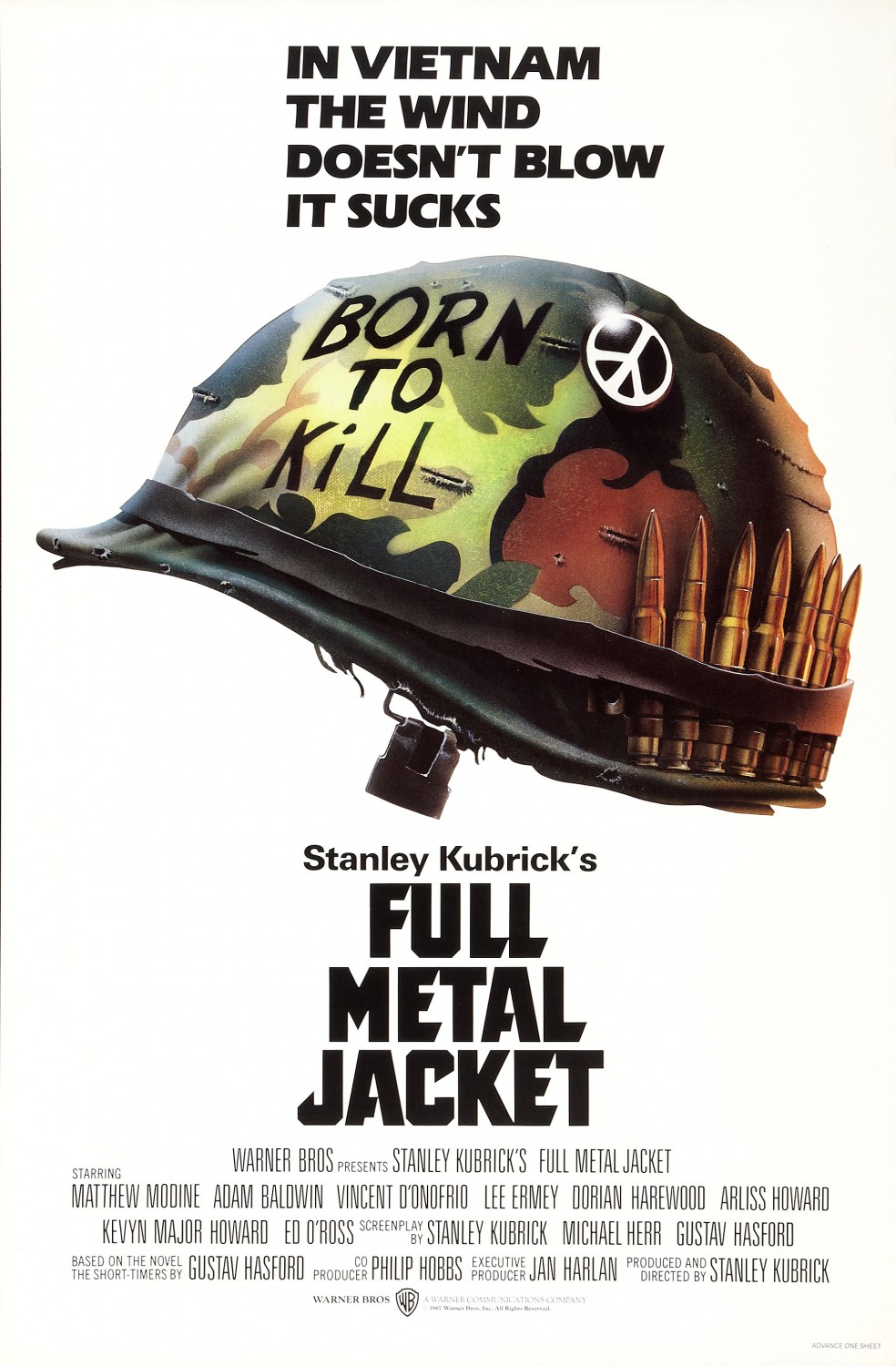
While moderating a Q&A session with Leon Vitali and Tony Zierra about “Filmworker” at the Nuart Theatre in Los Angeles, actor Matthew Modine shared some stories about the making of Stanley Kubrick’s “Full Metal Jacket.” In the 1987 war film, Modine plays Private Joker, one of a dozen soldiers who endure Marine Corp basic training under the brutal and abrasive instruction of their drill instructor, Gunnery Sergeant Hartman (the late R. Lee Ermey). Following graduation, he heads to South Vietnam to work as a war correspondent for the Stars & Stripes newspaper, and it is there he witnesses the atrocities of war up close. The question is, how much of his humanity can hold onto in the face of death and destruction?
The stories of Kubrick’s behavior and work ethic have long since become legendary in regards to the methods he used to get an actor into a specific emotional state and the number of takes he puts his cast through. The first story Modine shared with us about Kubrick, however, proved to be a bit unexpected.
“Stanley liked to carry a walkie talkie because he wanted to be a part of every aspect of the filmmaking,” Modine said. “Why shouldn’t he have a walkie talkie and know what the assistant directors were saying and what kind of movements were happening? We broke for lunch and the assistant director, Terry Needham, got a call from Stanley, and Stanley asked Terry to come over here. Terry said, ‘Okay, but where is here?’ He said, ‘I’m over here,’ and Terry said come out of the tent where we were having lunch. Terry didn’t want to say on the radio that he was stuck in the portapotty. He couldn’t get the door open. So that’s just a little window into a different part of Stanley that doesn’t appear in the documentary.”
During the Q&A, we learned how the crew on a Kubrick film was actually very small, and the one on “Full Metal Jacket” totaled about 15 people. Vitali even said there was only one electrician, and his job was simly operate the lights on a dimmer. Modine ended up adding a nice bit of trivia to this story.
“The one electrician that we had working on the film, because of the union, he would come in and turn the lights on, and then Stanley would tell him to fuck off to his house because there was some wiring problem in his house,” Modine said. “He had to pay him for the day so he said go wire my house.”
Perhaps the most bizarre and hilarious story Modine shared with us was when he talked about Dorian Harewood who played Eightball, the soldier who experiences an especially brutal and bloody death which is captured in slow motion. The way this scene was shot, however, makes sense when Modine discussed what Harewood demanded from Kubrick.
“Dorian Harewood is a wonderful actor,” Modine said. “We were originally contracted for about six months I think, and the contracts were coming to an end. So they wanted to renegotiate the contracts, and it wasn’t a renegotiation. It was just a reupping to continue the contracts for a longer period of time, and Dorian came to Stanley and said, ‘I want to renegotiate. I want more money,” and Stanley couldn’t believe the audacity of this young guy. He’s like, ‘You’re working for Stanley Kubrick and you are asking me to pay you more money?’ And he (Harewood) said, ‘Well yeah, I have to go back to Los Angeles. I have a singing career, I have an acting career, there’s other jobs, and if you want me to stay here, you’re gonna have to pay for it.’ Stanley couldn’t believe it, and I remember him stumbling around for hours furious with that crazy look on his face, and then he turned and he said, ‘I’m gonna kill him!’ I really thought, oh fuck, Stanley’s gonna commit murder. He’s going to kill Dorian Harewood. I said, ‘What do you mean?’ He goes, ‘I’m going to kill him.’ Remember when Dorian gets shot all over the body? It was because however number of days were left upon Dorian Harewood’s contract, Stanley was going to put in all the bullet hits he could. It was really cold. You could see Stanley wearing that hat and two coats, and we were wearing Vietnam khakis. It was freezing cold and snowing in London, and we were dressed up for North Vietnam. He killed him for as many days left that he had on the contract, and he had five days left lying on the cold earth with bullet hits. He (Stanley) would say, ‘Nah, we have to do it again. Put more bullet hits on him.’ And they were full loads full of exploding blood and everything.”
It was great to hear Matthew Modine share his stories about “Full Metal Jacket” as it remains one of Kubrick’s most memorable films. Many critics have called it the best war film ever made, and it features images which are impossible to forget. The actor also left us with something he wanted to share with all the directors in the audience.
“My favorite direction from a director ever was from Stanley Kubrick,” Modine said. “He would clear his throat and pull on his beard and say, ‘Matthew, you’re not going to do it that way, are you?’ It’s my favorite direction because it’s so specific.”
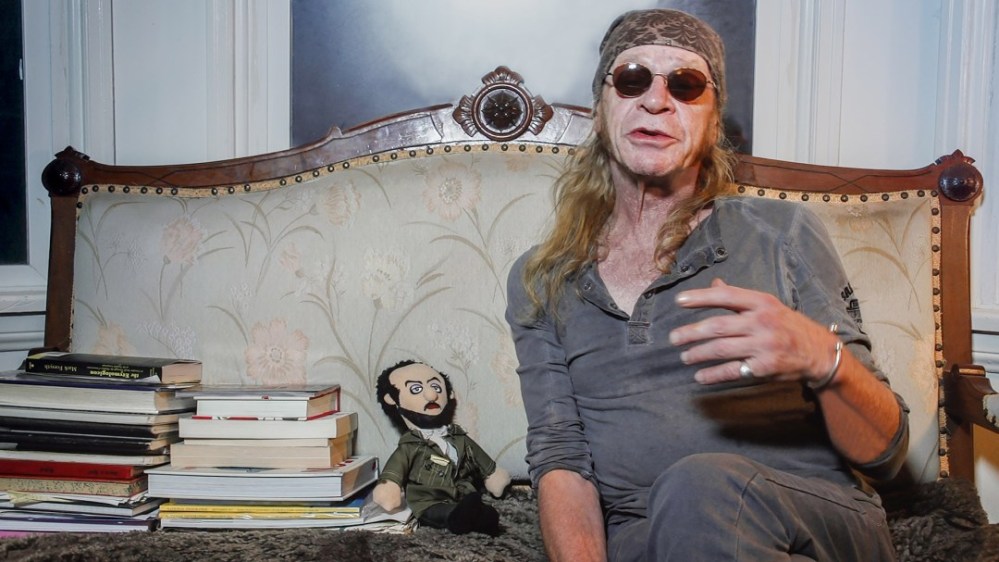
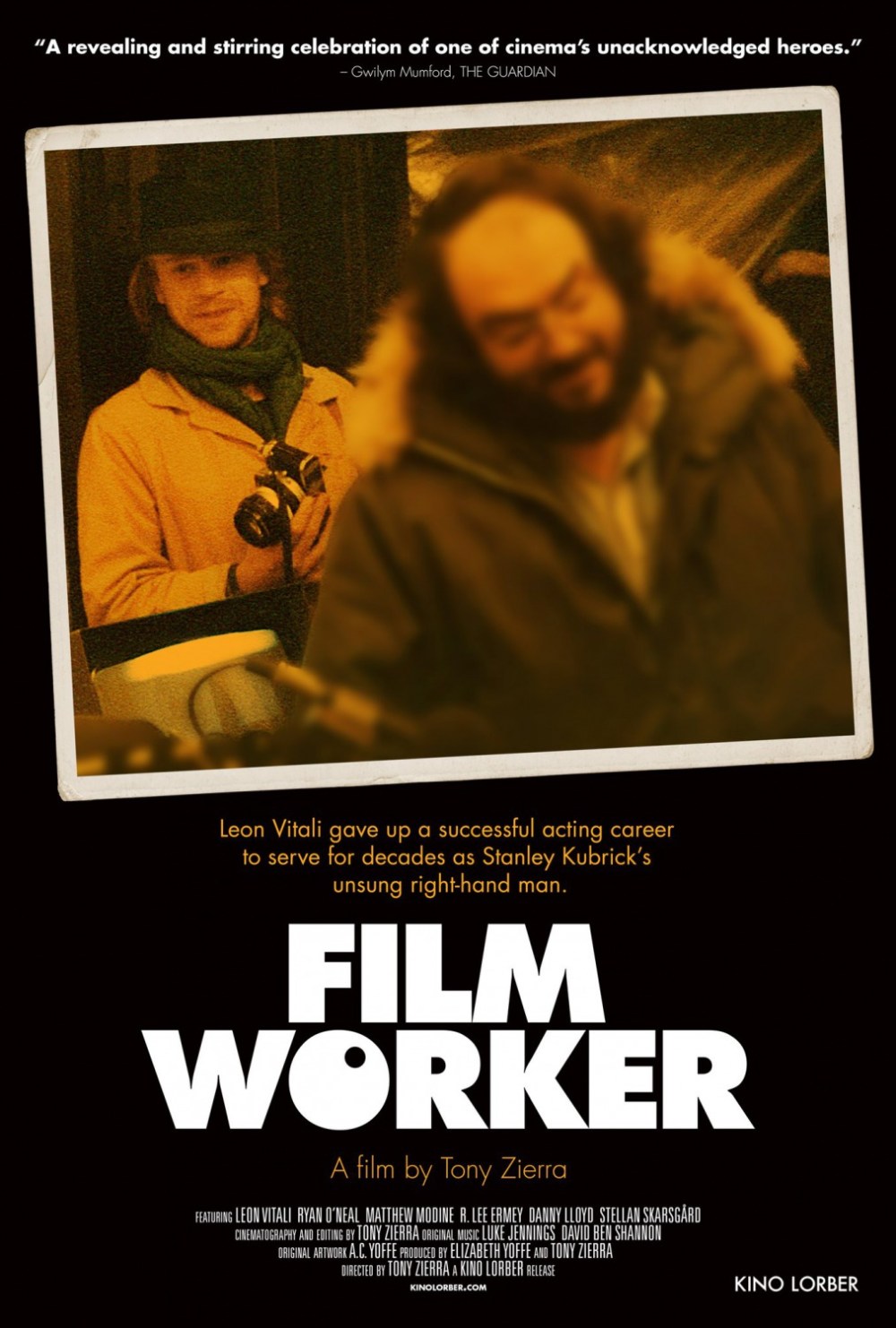
Leon Vitali was the guest of honor at the Nuart Theatre on Friday, May 18, 2018 where the documentary “Filmworker” was being shown. Directed by Tony Zierra, it chronicles how Vitali went from being a successful British actor to becoming Stanley Kubrick’s personal assistant after starring in “Barry Lyndon,” and of the intense dedication he gave to the filmmaker’s work from “The Shining” to “Eyes Wide Shut.” Vitali was greeted with a much-deserved standing ovation as he made his way to the stage for a Q&A. Joining him were Zierra and actor Matthew Modine who played Joker in “Full Metal Jacket.”
Modine remarked about a scene which was cut out of “Filmworker” where he said “Stanley stood on Leon’s shoulders” and how much of a marriage Leon and Stanley’s working relationship was, and he described it as being “at times dysfunctional” and “lovely in a British way.” Zierra was actually working on another documentary about Kubrick called “SK13” when he met Vitali, and he said talking with Vitali was a must as it was well-known how he was one of Kubrick’s closest associates. Zierra managed to track him down in Culver City and met with him, and what resulted was this documentary which was filmed over three and a half years.
“This is the worst nightmare for a filmmaker that when you are really super independent you pick up another documentary and you can’t even finish one,” Zierra said. “I went back and told my producer and partner, Elizabeth Yoffe, this is the most amazing story and I have to do a documentary about this guy, but I’m not sure if I really want to take on another project. But then I remember she said to me you are going to regret it if you don’t do it, so I went back and I asked him, and he said no. And I realized that Leon is just not used to talking about himself. He can talk about Kubrick forever, so it was quite difficult.”
Zierra then remarked how he and Vitali eventually “broke the ice” when he volunteered to organize the heaps of notebooks and materials Vitali had kept over the years while working for Kubrick. As we see in “Filmworker,” Vitali has a huge collection which really does deserve an exhibit of its own.
Modine talked about the overall crew numbers on a Kubrick film and illustrated just how important Vitali was to the famed filmmaker. In the process, he revealed something very surprising as Kubrick’s movies have such an epic look about them to where it looked like hundreds, maybe even thousands, of people worked for him. But as life often teaches us, looks can be deceiving.
“(People) imagine the enormity of Stanley Kubrick’s legend is that he was a filmmaker who must’ve had hundreds of people working for him, and it was quite the contrary,” Modine said. “Leon really did wear 100 different hats because when you went to work there was sometimes, when we were filming on the stage, maybe it felt like 15 people working on the film. What I feel is that Stanley Kubrick created an environment for himself to be able to keep production costs down to the minimum so that he could have the ability to work for an extended period of time to do as many takes as were necessary. But in fact, he was probably the most independent filmmaker I’ve ever worked with.”
“That’s absolutely true,” Vitali responded. “The crew on ‘Full Metal Jacket’ ended up looking like a well-crewed student film, you know? We had one electrician, that was it, because he shot so much of it in natural light. And any light he did have, it was a bank of lights like in the barracks for instance that just went up and down on a dimmer. So, he was always conscious about getting every single dollar on the screen. It was the most important thing to him.”
Vitali did share stories about Kubrick which involved him calling Vitali a certain word which has a broader meaning in England and Scotland but a simpler one in America as many find it extremely offensive (hint: it begins wit a c and ends with a t), and he also talked about the pie fight scene which was taken out of “Dr. Strangeglove” because they just felt it would have been a terrible way to end the movie. In terms of filmmakers today who Vitali considers in Kubrick’s league, he said he really admires Paul Thomas Anderson, Guillermo Del Toro because he gets back to the fairy tale part of the storytelling, and Sean Baker who directed “The Florida Project.” In terms of his favorite Kubrick movie, he said if you put a gun to his head he would have to say it is “2001: A Space Odyssey.”
One of the most interesting moments of the evening, however, came when Modine asked Vitali what an artist is and what value art and movies have.
“Artist has become a word like love or hate, and it’s used so loosely I think” Vitali said. “To me, anyone can be an artist. In my vacation time from drama school, I used to work with a brick layer, and I eventually saw the way he worked with the bricks. He was an artist at what he did. I’ve seen car mechanics who find their way around because it’s all a process of elimination. I think an artist’s work is a process of elimination because the hardest thing to do is to get back to simplicity of whatever it is you are trying to tell or the story you are trying to tell, and how often things come in which seem like good ideas but they are big distractions. So, you are all the time working to get rid of the junk, however appealing it might seem at the time. Composers and musicians and actors or any of those, they are all artists because that’s what they do. It’s getting everything down to the simplest that you can make it to make the story resonate and have a point. That’s what I think anyway.”
“Filmworker” is an absolute must see for Stanley Kubrick fans, and it is now playing at the Nuart Theatre in Los Angeles through May 24th.
Photos, poster and trailer courtesy of Kino Lorber.
It has been almost 20 years since Stanley Kubrick passed away, but his presence is still deeply felt among cinephiles. Some may say this is because “2001: A Space Odyssey” is being re-released in honor of its 50th anniversary, but it goes much further than that. Kubrick had a singular vision, and stories of his directorial methods, such as getting an actor to do dozens upon dozens of takes of a single scene, remain legendary as only a handful of filmmakers could have gotten away with this. And as the documentary “Room 237” showed, people continue to share their interpretations of “The Shining” and of the meanings they believe certain images in it have. Indeed, Kubrick’s films had a large degree of ambiguity in them, and watching them just once is never enough.
But just when you thought you had heard every story about Kubrick, along comes Tony Zierra’s documentary “Filmworker” which looks at the life and times of Kubrick’s right-hand man, Leon Vitali. As an actor, he worked a lot in British television, but after appearing in Kubrick’s film “Barry Lyndon,” he dedicated his life to helping the famed director any which way he could. What results is a movie about working with such a meticulous human being, and of the overall effects it had on Vitali to where it is shocking to see he is still above ground.
“Filmworker” starts with a look at Vitali’s early life as an actor, and it shows how o often he worked in British television and movies to where he was never ever lacking for a job, a position I and my actor friends get to enjoy at some point in this lifetime. Then he got the role of Lord Bullingdon in “Barry Lyndon,” and this introduced the actor to the Kubrick life he was quick to embrace. In a scene where Ryan O’Neal ends up punching Vitali in the back, O’Neal says Kubrick told him, “You’re not hitting him hard enough.” From there, they did the scene 30 more times, and it served as Vitali’s introduction to Kubrick’s obsessive nature in getting things just right down to the smallest of details.
It is very easy to see why Vitali became such a die-hard Kubrick fan after he watched “2001” and “A Clockwork Orange.” Both films reflected a singular vision no other director could have conjured, and Vitali remarked how “2001” dared to have no dialogue in its first 20 minutes, something which seems unthinkable in this day and age. Following their collaboration on “Barry Lyndon,” Kubrick sent him a copy of Stephen King’s “The Shining” to see if it would be worth turning into a movie. Once Vitali told Kubrick it was, the director brought him on so he could search for the perfect child actor to play Danny Torrance. From there, he abandoned his acting career and dedicated his life to Kubrick all the way through his last movie, “Eyes Wide Shut.”
Vitali ended up doing just about every kind of job for Kubrick including casting director, acting coach, location scout, sound engineer and color corrector to name a few. Upon Kubrick’s passing, he became the only person to restore his films. To say he dedicated his life to Kubrick’s work would be the understatement of the millennium. We watch as he works tirelessly to get all the details right, and we see the toll it takes on him and his body. He speaks of how he worked two 36-hour shifts on one project and of how he slept on the floor to catch a two-hour nap while fully dressed so that, when he woke up, he could get right back to work.
Watching “Filmworker,” I wasn’t always sure if I should thank Vitali for all the work he has done or pity him. Some describe him as Igor to Kubrick’s Dr. Frankenstein. I prefer to see him as Waylon Smithers to Kubrick’s Mr. Burns. This man gave up a thriving acting career to work for the director of “Dr. Strangeglove,” and their relationship certainly had a bit of Dr. Jekyll and Mr. Hyde to it. Vitali shows us the note Kubrick wrote to him in thanks for his work on “Barry Lyndon,” and he remarks at how his first handshake with the filmmaker proved to be “very warm.” But once they began working on “Full Metal Jacket,” Vitali admitted he came to see another side of Kubrick, one which few others got to see up close.
Many like to talk about the Stanley Kubrick they met and of how he was so different compared to all the rumors which were circulating throughout Hollywood about him, but Vitali makes it abundantly clear how he knew Kubrick in a way no one else could. At one point, he even describes Kubrick as the film industry’s equivalent to Gordon Ramsey, the chef from “Hell’s Kitchen” and a man who is always in serious need of anger management classes. People keep asking Vitali how he handled Kubrick, but he responds to this by saying he never handled him but instead handled himself so that he could exist in Kubrick’s world.
Actors like Matthew Modine, Danny Lloyd and the late R. Lee Ermey are interviewed at length here, and they have great stories to share about both Kubrick and Vitali. Lloyd and Ermey credit Vitali for helping them with their performances in a way no one else could, and Modine remarks at how selfless Vitali is when it comes to his work for Kubrick. Modine is just one of several individuals who freely admit they are too selfish to dedicate their lives to Kubrick the way Vitali did. O’Neal goes out of his way to say he “fled” the set of “Barry Lyndon” once his work there was done as he was terrified of being subjected to reshoots.
Indeed, the level of dedication Vitali gives Kubrick is both commendable and scary. You also have to feel for him as he suffers under the heavy hand of Warner Brothers while working to give Kubrick’s films the attention they deserved. I remember when the first DVD’s of his work came out and how bad they were, and Vitali spent his precious time getting the color just right. Hearing how Kubrick got incensed if the green was off reminded me of Robin Williams in “One Hour Photo” when his character of Sy went off at a repairman for not taking a difference of three points in color all that seriously. If you are passionate enough about something, you will see it through to the very last detail.
As you can imagine, there is a good deal of trivia about Kubrick on display here. Among the most interesting bits come from Ermey who played Gunnery Sargent Hartman in “Full Metal Jacket” as he discusses how he went about getting actors for the movie, and it is eerie to see him describe what the movie did for his career and of how he has led a great life as it was only a few weeks ago he died due to complications from pneumonia. We also get to hear from Tim Colceri who was originally cast as Hartman before being replaced by Ermey. He ended up playing the doorgunner who shoots away at any and every Vietnamese individual regardless of whether or not they are the “enemy.” Watching Colceri’s face as he reflects on the role he could have had is heartbreaking as his disappointment looks to last a lifetime.
In a lot of ways, “Filmworker” serves as a love letter to Vitali as his work on Kubrick’s films is extraordinary, and we should be thankful for what he has done as this documentary shows how no one else could have preserved the iconic director’s work the way he has. But beyond that, it also acts as a love letter to those who work tirelessly behind the scenes on film sets as they often do not get the respect they deserve. To many, they simply appear as names on a movie’s end credits, and some of those credits move at lightning speed when those movies are shown on the Sundance Channel. But after watching this documentary, we have every reason to thank Vitali for his devotion to Kubrick as, without him, no one could have been able to give “Eyes Wide Shut” the release it deserved. But more importantly, it provides Vitali with the happy ending he has long since earned.
While watching “Filmworker,” I was reminded of what Homer Simpson told his family while they watched the end credits for “The Simpsons Movie:”
“A lot of people worked hard on this film, and all they ask is for you to memorize their names!”
This is, of course, completely unrealistic, but when it comes to “Filmworker,” I want to believe such a thing could be possible.
I want to say that when “Deadpool” was released, it was a breath of fresh air in a time of endless comic book/superhero movies, but this description doesn’t do it justice. The air coming from the 2016 box office hit was filthy, and we loved how Ryan Reynolds, Tim Miller and company refused to play it safe with this Marvel Comics character to where a PG-13 rating just wasn’t going to do it for them. But in addition to being so gleefully profane, the movie also had a big heart as it ended with a message of loving someone inside and out instead of just admiring what is on the surface. If there ever was an R-rated movie for today’s teenagers to sneak into, “Deadpool” was it.
Now we finally have its long-awaited sequel, “Deadpool 2,” which was preceded for the longest time by a pair of jokey trailers which didn’t have much in the way of new footage, but instead put its wisecracking hero in situations which didn’t always put him in the best light, and we laughed our asses off all the same. Surely this sequel couldn’t match the inventiveness and comedic genius of the original, right?
Well, I am very happy to report that “Deadpool 2” proves to be just as funny and entertaining as its predecessor, and in some ways, I thought it was even better. While this one looked as though it would suffer from overkill as the recent “Kingsman” sequel did, everyone in front of and behind the camera keeps the energy level high and the laughs coming in rapid succession. With Reynolds constantly breaking the fourth wall and a plot which refuses to make clear right away of where this sequel is heading, I was never sure of what would come next. As a result, I could never take my eyes off the screen.
So, what has Wade Wilson/Deadpool been up to since his last expletive-laden adventure? Quite a bit actually, and it has thrust him into a realm of despair he doesn’t see himself escaping from. What ends up giving him a reason to live is helping to protect Russell Collins (“Hunt for the Wilder people’s” Julian Dennison), a young mutant who goes by the name of Firefist for reasons which become immediately clear to where Pyro’s penchant for lighting everything up pales in comparison. But in the process, they are both met by Nathan Summers/Cable (Josh Brolin), a time-traveling cybernetic mutant soldier who is looking to right a terrible wrong, and his main target might not be who you think.
The amount of pop culture references is countless in “Deadpool 2,” and you may need to watch this sequel twice to catch all of them. Right from the start, Wade wastes no time in skewering popular icons like Wolverine who made his swan song in last year’s “Logan.” From there, we watch as this particular comic book character lays waste to gangsters to the tune of Dolly Parton’s “9 to 5,” gleefully provides a spoof of the James Bond opening titles which include such classics as “directed by one of the guys who killed the dog in ‘John Wick,’” and he makes you look at Barbara Streisand’s song “Papa, Can You Hear Me?” from “Yentil” in a very unnerving way. Also, he is quick to call you out on obvious references such as a line from “Robocop,” and by that, I mean the original, not the remake. Whether it’s a good or bad guy you are talking about here, at least they have great taste in movies.
However, the laughs and action come at us so quickly in “Deadpool 2” to where it takes longer than usual to figure out what the movie’s main plot is. At times, it seems like the filmmakers are geared towards throwing jokes, action scenes and filthy jokes and the expense of an actual story, and it looks as though we won’t find a story until the third act. Even Wade at one point says if he and his newly-appointed X-Force achieve their goals, there won’t even need to be a third act. Of course, I was having too much with this sequel to criticize this point all that much, and a story does indeed emerge.
Reynolds has come a long way from his “Van Wilder” days to get to this point. He’s given memorable performances in “Buried” and “The Proposal,” but his career has been overshadowed by having starred in one of the worst comic book movies ever, “Green Lantern.” “Deadpool” served as his redemption for that cinematic misfire, and his dedication to staying true to Wade Wilson and his alter-ego has been commendable considering the ill-fated debut he made as this character in “X-Men Origins: Wolverine.” Watching Reynolds here is a reminder of what a gifted comedic actor he can be when given the right material, and it is impossible to picture anyone else in this role instead of him.
Tim Miller stepped out of the director’s chair for “Deadpool 2,” and in his place is David Leitch who assisted Keanu Reeves and Charlize Theron in their path to ass-kicking glory in “John Wick” and “Atomic Blonde.” I was impressed at how he managed to keep this sequel’s energy and laugh quotient up and running throughout as I kept waiting for the whole thing to burst at the seams. It’s no surprise “Deadpool 2” lacks the freshness of the original, but it does have the same level of insane energy and even more to spare beyond it.
And there’s Josh Brolin who appears in his second Marvel movie in two months as Cable. Just as he did in “Avengers: Infinity War,” he gives this iconic comic book character a wounded humanity which makes especially complex and threatening throughout. Even when Cable undergoes a change of alliances which is almost as unbelievable as any in “The Fate of the Furious,” Brolin keeps a straight face throughout the proceedings which become increasingly over the top. It’s also great to see how Brolin has a good sense of humor about himself as he endures barbs relating to “The Goonies,” and looking at his scared face here made me want to say, “Who do you think you are, Thanos?”
It’s also nice to see a variety of new and familiar characters here like Karan Soni whose character of taxi driver Dopinder has developed a bit of a blood lust which Wade is not quick to take all that seriously. Stefan Kapičić gets a bit more to do as Colossus in this sequel as this character does what he can to make Wade a better person. The character of Peter, a regular person with no superpowers, is an inspired addition to this series, and I would love to have seen Rob Delaney play him in more scenes here. T.J. Miller also returns as bar owner and Wade’s best friend, Weasel, but considering his penchant for making fake bomb threats, I believe this will be the last time we see him in this role.
“Deadpool 2” could have been too much of a good thing, but I had so much fun with it to where it didn’t matter if it was. I can’t remember the last time I laughed so hard at a movie, and it is nice to watch a movie where the jokes hit far more often than they miss. Reynolds, like Ben Affleck, have a strong sense of humor about his past mistakes in the world of cinema, and its fun seeing a movie star crack a few laughs at their own expense However, I am curious as to why he did not lay waste to “Blade: Trinity.” That misbegotten sequel was every bit as bad as “Green Lantern.”
And as always, be prepared for a post-credit sequence which is by the funniest of its kind since “Spider-Man: Homecoming.” It is too damn hilarious to spoil here, and you have got to see it for yourself.
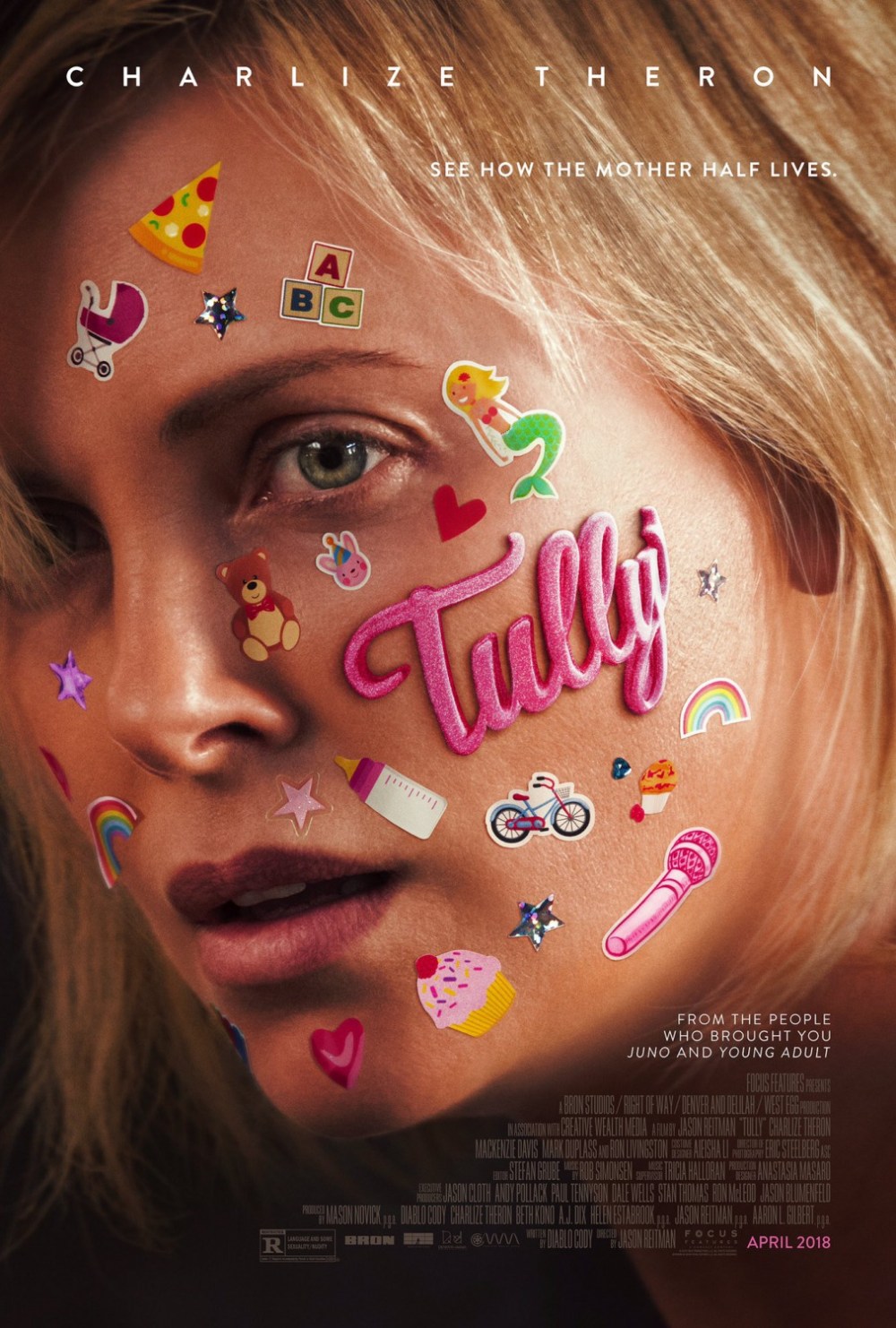
Okay, as I write this review for “Tully,” the latest collaboration between filmmaker Jason Reitman and writer Diablo Cody, I have to confess I am not a parent. I have not experienced restless nights with a crying newborn who constantly needs a bottle of milk or a quick diaper change, and if I ever do become a parent, I am certain I will deal with it as well as my friends with kids have (which is to say, not at all). But after watching “Tully,” I feel confident in saying it is one of the more honest depictions of what a mother goes through before, during and after she gives birth. Whereas most movies conclude with the birth of a child, this one starts with one and goes from there.
Charlize Theron plays Marlo, a mother of two and with a third on the way. Her belly is so big to where she looks ready to burst at any second, and we also see how overwhelmed she is with everything and anything. Her son Jonah (Asher Miles Fallica) is an overly-sensitive boy who freaks out loud noises he is exposed to, and she is forced to give him more attention at the expense of her daughter Mia (Lia Frankland). When Marlo visits the principal at Jonah’s school and tells her this third child is “such a blessing,” you can tell she doesn’t fully believe it.
When Marlo does give birth to a girl she names Mia, it is one of the more unique birth scenes in movies. Most filmmakers treat the arrival of a newborn with unfettered joy, but “Tully” treats it dispassionately as Marlo is too wiped out and depressed to be happy about anything. For a moment, I feared this movie would venture into “We Need to Talk about Kevin” territory, but neither Reitman or Cody are out to make this story about a sociopathic child.
From there, Reitman presents us with a furious montage of Marlo constantly getting up in the middle of the night to take care of her crying baby, feed her, change her diapers (always an unappealing task), and pump milk out of her breasts. Sure, Marlo does have a loving husband in Drew (Ron Livingston), but he has yet to fully see the heavy toll motherhood is taking on her. It’s an unnerving montage as we keep waiting for Marlo to explode in frustration, and when she eventually does, you cannot blame her.
Marlo’s brother, Craig (Mark Duplass), comes to her rescue by offering to hire a night nanny. Marlo is at first very hesitant to let Craig do this as the thought of anyone else raising her children is terrifying, but one day after she is unable to stop Mia’s crying, she relents. The night nanny comes in the form of Tully (Mackenzie Davis), a youthful woman who quickly proves to be wise beyond her years. Once she comes into Marlo’s life, things begin to change for the better, but as the movie goes on, you wonder more about who Tully is and if she is too good to be true.
Watching “Tully” reminded me of many scenes in movies and television where I witnessed a mother losing her patience. We watched Marge Simpson roar like a lion at anyone who couldn’t possibly understand her frustrations, we were taken aback when Dee Wallace yelled at her son “alright I’ll get your daddy!” while being stalked by a rabid St. Bernard in “Cujo,” and we watched helplessly as Brie Larson tried to explain to her son what is really going with them in “Room.” Mothers will often explode in frustration, and many of the best movies about parenting portray this. As we see Marlo get upset with her kids, it is highly likely we will be reminded of the agony we put our own mothers through to where a long overdue apology may be required from us. “Tully” has several moments like these, and they are fully earned throughout.
Theron has long since proven to us what a phenomenal actress she can be. As Marlo, she gives a fully realized performance as a mother who looks like the joy she has for life has been completely sucked out of her. The Oscar-winning actress makes you feel the pain of Marlo’s situation as the character has long since reached her breaking point to where she seems like she cannot take another challenge thrown in her general direction. As the movie goes on, we see Marlo rise out of her depressed state to where she experiences happiness for what seems like the first time in ages. Theron makes us feel every note of Marlo’s anguishes and triumphs to where we cannot come out of this motion picture saying we were not the least bit moved.
As the night nanny, Mackenzie Davis proves to be such a luminous presence as Tully to where we realize this movie doesn’t just need her, it deserves her. A modern-day Mary Poppins, Tully predicts Marlo’s every move and need and gives her just what she needs to make it to the next stage in her life. Davis is best known for her work on “Halt and Catch Fire” and for appearing in one of my favorite movies of 2017, “Blade Runner 2049.” She gives off such a warm glow in “Tully” to where you just want to hug here and never let her go.
I also have to give credit to Ron Livingston who plays Marlo’s husband, Drew. It could have been a thankless role of a husband and father completely ignorant of his wife’s suffering, but the “Office Space” actor makes him more than the average movie dad. Even as Drew loses himself in video games which have him battling and killing zombies, Livingston makes us see he is a man with a good heart even with all his flaws. In his penultimate scene, Livingston doesn’t make Drew into a total schmuck who berates his wife when things go haywire, but instead into a spouse eager to admit he doesn’t know everything his wife is going through and is desperate to hear her out. I love it when Livingston says “I love us” instead of “I love you” as it shows the perspective and honesty Reitman and Cody are committed to giving this particular parental adventure, and it makes this moment between these two characters all the more special.
If I have any problems with “Tully,” they come in the second half when revelations are made to where we have no choice but to question everything we just saw I would tell you which movies these revelations reminded me of, but this would be giving away way too much. But while these revelations could have wrecked any other motion picture, they do little to take away from this one.
“Tully” marks a big comeback for Reitman and Cody after a few years of cinematic misfires. “Labor Day” and “Men, Women & Children” put a few dents in Reitman’s resume as a director, and Cody’s directorial debut “Paradise” and screenplay for “Ricki and the Flash” (0ne of Jonathan Demme’s last films before his death) were ill-received to put it mildly. But when these two artists come together, they create something which is never easily forgotten.
Reitman makes the struggles these parents go through all the more vivid without making them seem the least bit glamorous. “Tully” does not have the look of a motion picture to where you feel like you are watching one, but instead of a real life setting with all its messiness and imperfections on display. At times, I felt like I was watching a home movie, and this made everything I saw feel all the more powerful.
As a writer, Cody still comes up with some classic zingers like “abandoned trash barge” or describing someone as a “book of fun facts for unpopular fourth graders,” but her screenplay also shows her rising to another level of thoughtfulness and maturity. Being the mother of three children herself, Cody clearly understands the journey such a person ends takes to where the mother/newborn connection is not forged right away. There has been some controversy over “Tully’s” portrayal of mental illness, and it is never made clear if Marlo is suffering from post-partum depression or something similar. Cody, however, is not out to make Marlo a special case study, but instead to share the challenges she was forced to overcome to be the mom she is today.
I think it is more than appropriate that “Tully” has arrived in theaters just in time for Mother’s Day. Lord knows we owe our mothers a great deal of gratitude for all they have done for us, let alone all they have gone through to get us to where we are today. Sure, dads deserve a lot of credit too, but being a mother comes with a lot more challenges and obstacles to overcome. If this Reitman/Cody film cannot make you see this, then what will?
Many keep wondering what draws people, and not just women, to prostitution. It seems such a sordid profession which offers nothing but degradation and humiliation to those involved in it. Other than money, what does draw people into a lifestyle like this one which has been around for so long? From a physical point of view, it’s got to get tiresome after a while. Maybe it is appealing from a psychological point of view; people profiting off the needs and weaknesses of others may very well be its selling point. To have control over another person is always an appealing prospect.
This is made clear in “Klute” which was directed by Alan J. Pakula who had a talent for taking familiar stories and populating them with characters you can recognize from real life. The movie revolves around the case of a missing man and a private detective named John Klute (Donald Sutherland) who has been assigned to find him. The only lead he has is a prostitute named Bree Daniels, and she is played by Jane Fonda in one of her best roles.
Fonda won one of her two Oscars for her performance in this classic 1970’s thriller. It is a wonderfully complex role for an actress to play as Bree is a struggling actress and model who finds a power and control as a call girl she doesn’t have elsewhere in life. In one of several meetings with her psychiatrist, Bree admits she doesn’t enjoy the physical part, but she does enjoy the act she plays for all her clients. When she is with them, she considers herself to be the greatest actress in the world and brilliantly exploits their weaknesses to gain a higher price for her services.
Bree, however, ends up finding a different view on life with John, a man as straitlaced and upstanding as they come. Donald Sutherland has one of his best roles here, and while his character ends up succumbing to Bree’s charms, he never completely loses himself in his desires. Throughout the movie, he remains the source of hope and strength Bree needs when she finds out someone wants to kill her.
When Bree does ends up sleeping with John, she thinks she has him right where she wants him. She quickly intuits her strength over him as a result of him not making her orgasm as a weakness on his part, but later finds herself losing this power she has over men while she is with him. Bree finds she likes being with him, and this scares her because love is not something anyone can have any control over. There is a beautiful moment when she is shopping with John at a local farmer’s market, and you can see the insecurity on her face. She feels strongly for John, and it frightens her as the addiction she has for being a call girl may overwhelm her true love for him.
Pakula does a great job of increasing tension throughout “Klute,” and this is heightened by the characters being very relatable and down to earth. This has been the case with the majority of his movies like “All the President’s Men,” “The Parallax View” and even “Presumed Innocent.” Even if the plots of some of his movies seem far-fetched, it is the reality of the characters and the world they inhabit which sucks us in.
“Klute” also features another great performance by the late Roy Scheider as Frank Ligourin, a pimp disguised as a record producer. Scheider makes him unlike other pimps we have seen in “Taxi Driver” or “Street Smart” as he makes his character much more casual in his cruelty and control over those who work for him. He doesn’t deal too much in force because it doesn’t suit him well, and it would affect the relationships he has with his employees.
We do find out who’s threatening Bree early on, so the whodunit element of “Klute” disappears rather quickly. This could have really sunk the movie, but Pakula gets away with it because we find it is integral to the themes the movie explores: perversity, sexuality and the mentality behind them. Many think they are above perversity, but there is a darkness inside of us which often goes unchecked. The more we repress it, the more explosive it becomes when finally released. There are no good or bad guys in this movie, just people trying to measure out what they feel is right and wrong, and some do a better job of figuring this out than others.
“Klute” does have an anticlimactic ending, but that’s probably because the one we expect a movie like this to have would have just taken away from the reality of the story. Either way, it proves to be one of the most memorable movies of the 1970’s.
The 2008 summer movie season started off with a bang with the long-awaited release of “Iron Man” which starred Robert Downey Jr. as the egocentric weapons maker turned world protector, Tony Stark. It also marked the beginning of the Marvel Cinematic Universe which brought its many characters to the silver screen with great success, and this one still remains one of the best to come out of it.
“Iron Man” starts with Tony traveling through the Afghanistan desert with a military convoy that gets attacked by terrorists. Tony flees the hummer transporting him and almost gets killed by one of the missiles he designed. When he comes to, he is being held captive in a cave and kept alive by an electromagnet attached to his torso which keeps the shrapnel inside his body from going to his heart. The terrorists, led by Raza (Faran Tahir), force Tony to build them one of his most destructive missiles on pain of death, but he instead takes the parts they give him and creates a bulletproof suit which allows him to escape in spectacular fashion.
When he gets back to America, he has a press conference where he states he will turn his company from a weapon making factory into one that doesn’t promote endless destruction. Having seen the damage he has done to others, he is now determined to protect those from the weapons he created. As for the iron suit which saved his life, he works at perfecting it into something strong and indestructible. On top of giving him the ability to fly, it also allows him to get back at those who took advantage of his destructive creations.
“Iron Man” is a tricky movie to make because it is the type meant to set up this particular superhero and then move on to the inevitable sequels which never come out soon enough. It is a credit to director Jon Favreau that the characters are as interesting as the action is exciting. Unlike other comic book adaptations, this story feels much more grounded in reality and doesn’t have characters that don’t seem real. Unlike Peter Parker in “Spider-Man 3,” here we have a superhero who doesn’t waste his time feeling sorry for himself on a regular basis.
But the real masterstroke of “Iron Man” is the casting of Downey Jr. as Tony Stark. He is without a doubt one of the best actors working in movies today, and it is impossible to picture anyone else in this role. When he first appears, he clearly acts like the man Weird Al Yankovic sang about in “I’m Such a Groovy Guy.” Both brilliant and sexy, it’s tempting to believe Downey Jr. is playing himself, but that assumption would be unfair. He makes Tony’s transition from selfish egomaniac to world protector almost seamless and never less than believable. Inside that cool and ever so confident exterior, there lies a man who is taking his life and company in a direction which may completely kill it.
Seriously, Tony is one of coolest comic book heroes to appear in movies for the longest time. Most of the comic book heroes we have grown up with are emotional wrecks and understandably so. Batman saw his parents murdered in front of him, Superman only got to see his parents at that Crystal Palace as he lost his human father earlier than he should have, and Spider-Man lost his uncle when he was murdered. But Tony isn’t necessarily waylaid by emotional disasters the way those characters were. While many of us want to spit on those who look like they had everything handed to them on a silver platter, Tony more than earns his place in society and you never doubt his abilities to create extraordinary things.
Also, Tony has quite the lifestyle most guys envy. He has one hell of a mansion up in the hills of Malibu that has the most incredible view, and his personal jet is equipped with a pole that comes out of the floor for his very lovely stewardesses to take advantage of. I saw this movie in a theater with some friends of mine, and one of them leaned over to me and said, “This is the only way to live!”
In retrospect, this character is a relief after watching those other male superheroes who turn into whiny crybabies that remind me too much of myself. Female superheroes don’t fall into this category much, so that should make you wonder which gender is truly the stronger one.
The rest of the “Iron Man” cast is perfectly chosen. When the movie came out, Jeff Bridges was one of the most underappreciated actors working in movies (this has since changed). His character of Obadiah Stane, one of the main heads of Stark Industries, is a slimy corporate executive whose outer exterior projects a man of kindness and trust Tony relies on. That trust is utterly betrayed when Obadiah files an injunction against Stark to gain control of his company and put it back in the direction it was going before Stark started changing his ways.
Unlike Tony, Obadiah has no creativity or brilliance to rely on. All he has are selfish desires and a misplaced loyalty to Stark’s father who helped build the world’s first atomic bomb. Although he has the makings of another villain whose sole interest is world domination, Obadiah represents those who are too easily threatened by the winds of change. Bridges, like Downey Jr., gives Obadiah dimensions you wouldn’t necessarily expect a character like this to have. This is not just some one-dimensional bad guy like others, and it is a credit to Bridges’ brilliance that he makes this very clear.
Also, on board is Gwyneth Paltrow who is a wonderful presence as Tony’s longtime assistant, Virginia “Pepper” Potts. While it might seem weird for her to play someone’s assistant, she imbues Pepper with beauty, smarts, intelligence and heart which Tony more than depends on his life for. She also shares great chemistry with Downey Jr., and their relationship is key as those inevitable sequels would prove. Paltrow also has one of the movie’s best lines as she meets up with a Vanity Fair writer Tony made out with the night before:
“So, you just spend your time taking care of everything Tony asks you to do?
“I take care of all duties that Tony asks of me to do. That includes taking out the garbage.”
We also have Terence Howard as Tony’s military consultant and close friend, Jim Rhodes. Jim is the one who tries to keep Tony grounded in reality, but he never quite succeeds. Howard is great here if he a bit underused here, and this is the second movie I have seen where he plays a character constantly giving press conferences (“The Brave One” was the other one).
The movie has many great action scenes which you come out of feeling justified in saying, “that’s cool man!” When Iron Man fights off terrorists in a war-torn country, he finds very creative ways to dispatch his enemies that are too good to reveal here. Also, there are scenes where Tony is testing out different parts of the suit. This can usually be seen as the boring set up part for the superhero, but these moments make you jump out of your seat because you find yourself laughing harder than you usually do.
With “Iron Man,” Downey Jr. who gives us something more than the average super hero. He gives us one with brains, smarts and, most importantly, a soul. It doesn’t matter if you have great special effects if you don’t have the story or the characters to match up with it. “Iron Man” has that, and it set the bar high for the comic book movies which followed in its wake.
Before they co-wrote the screenplay for “A Quiet Place” along with John Krasinski, filmmakers Bryan Woods and Scott Beck spent some time in the found footage genre with “Nightlight.” This movie takes place in Covington forest, a place believed to be haunted as many troubled youths have gone there and committed suicide. This, however, doesn’t stop a group of five teenagers from venturing out there for an evening of flashlight games and blood curdling ghost stories. But of course, it doesn’t take long for the fun to come to a screeching halt as they end up awakening a demonic presence, an unseen evil wastes no time in preying upon their deepest fears. From there, the five friends struggle to help each other to escape the forest before they are forever plunged into the most terrifying of nightmares.
From the outset, “Nightlight” looks to be your typical found footage horror movie a la “The Blair Witch Project,” but there is one thing which helps set it apart. It is one of the recent films in this genre which deals seriously with issues teens go through. We come to discover how these kids lost a friend of theirs named Ethan to suicide, and he ended up taking his life in the same forest they are spending the night in. While trying to evade the demonic force hunting them down, they also try to make peace with Ethan’s death and of the part they feel they played in it. While a lot of horror movies are filled with dumb teenage characters, these ones in “Nightlight” feel relatable, and their problems may end up reminding you of what you felt like at their age.
I got to speak with Woods and Beck back in 2015 while they were in Los Angeles to promote “Nightlight,” and it turns out they have known each other since the sixth grade. Their early years of making movies with action figures has gotten them to where they can confidently helm their own feature films, and their careers would soon hit an even bigger peak with “A Quiet Place.” They were full of details on the making of “Nightlight” such as how they found the forest featured prominently in this movie, how they wanted to make this particular found footage stand out from so many others like it, and why they decided to cast unknown actors. In addition, they also had some interesting stories to tell about animal wranglers and the importance of sound design in a horror movie.
Please check out the interview above. “Nightlight” is now available to own and rent on DVD, Blu-ray and Digital.
I came into “Take Me to the River” with little knowledge as to what the movie was about, and perhaps this is the best way to approach it. At first it looks to be a tale of a gay teenager dealing with his conservative relatives who have yet to understand how human nature really works, but then it takes a sharp left turn to reveal it is really about deep dark family secrets which are revealed in a wordless way, and the psychological impact it ends up having on its audience is far more profound than we could have ever seen coming.
We are introduced to Ryder (Logan Miller), a gay California teenager who is going with his mom Cindy (Robin Weigert) and dad Don (Richard Schiff) to a family reunion in Nebraska. Ryder is intent on revealing his sexuality to everyone there, but his parents encourage him not to. Shortly after he arrives, he is treated with suspicion from others as his red shorts look like a pair of swimming trunks and his glasses resemble something which came out of the 1980’s. His cousins, however, are crushing on him as he makes them special drawings, and they find him wonderfully rebellious. But then things go awry during a moment between him and 9-year-old Molly when she comes out of a barn with a bloodstain on her dress. Ryder is immediately suspected of abuse by his uncle Keith (Josh Hamilton), but he makes clear he didn’t do anything to her.
Now revealing more about “Take Me to the River” from there is a bit tricky because it is better not to know too much about the movie beforehand. For a time, I thought I knew where the movie was going to go, but then it becomes more like a thriller. This is especially the case when Ryder is invited to a supper with Keith and his family where Keith looks to make amends with him, but his laser-like stare indicates he has something quite devious planned for his nephew, and we are just as in the dark as Ryder is.
This movie marks the feature film directorial debut of Matt Soebel who also wrote its screenplay, and he does an excellent job of putting us right in Ryder’s shoes. Like Ryder, we have little idea of what’s going on and it leaves us with an inescapable feeling of dread. And like “The China Syndrome,” it doesn’t have, or even need, a music score to underscore the tension which continually builds up. We don’t really hear any music until the very end, and when that final song comes on, I felt like breathing a sigh of relief as the tension finally lifted.
This is also a motion picture which derives its power from what is not said more than what is. Soebel is not interested in spelling everything out to us as our imaginations are capable of generating things far more frightening, and when the story comes to hint at a deep dark family secret, we cannot help but be unsettled at what that secret could be.
But as much as “Take Me to the River” sounds like a thriller, it is also a coming of age story as Ryder comes to better understand the people around him and develops a stronger compassion than he ever had before. The fact he is gay eventually becomes a tiny issue as their bigger things to undercover which has left his family members with very nasty emotional scars. This is saying a lot because many coming of age movies don’t come constructed like this, and it makes this one all the more unique.
I was very impressed with Miller who left a strong impression on audiences in “The Stanford Prison Experiment.” We never catch him portraying a typical teenager, let alone a gay teenager, but instead a regular kid who is caught up in a situation he can’t stay one step ahead of. I also liked Hamilton’s performance as Keith because it shows him to be quite the poker player. But the most impressive performance in “Take Me to the River” comes from Robin Weigert as Cindy. At first, she makes Cindy an overprotective mother, but her actions come to reveal someone who has suffered a serious trauma she can never fully make peace with. Weigert, just with a look, shows us how deep her emotional scars go, and it’s always impressive to see any actor pull this off without having to spell it out for the audience.
There’s always something to be said for a movie which catches you by surprise, and “Take Me to the River” is certainly one. I went into it not knowing much about it, and it took me on a ride unlike few others I have been on in recent years. In a time where movies are bound by formulaic standards and studio executives who are hell bent on starting the next big franchise, it’s nice to know there are still filmmakers out there making movies which go against the grain. Not everything can be the same, and in the end, everyone needs some variety as they can get easily bored.
If you love movies which break the mold, then “Take Me to the River” is one you need to check out. When it comes to humanity, there’s always something more to a person than meets the eye. While you might think individuals can be easily divided into groups of people you feel you can easily identify, this movie comes around to remind you this it is not as easy as you think. Family secrets are never easy to unveil, and this movie serves as a reminder as to why. I look forward to what Sobel has in store for us next.