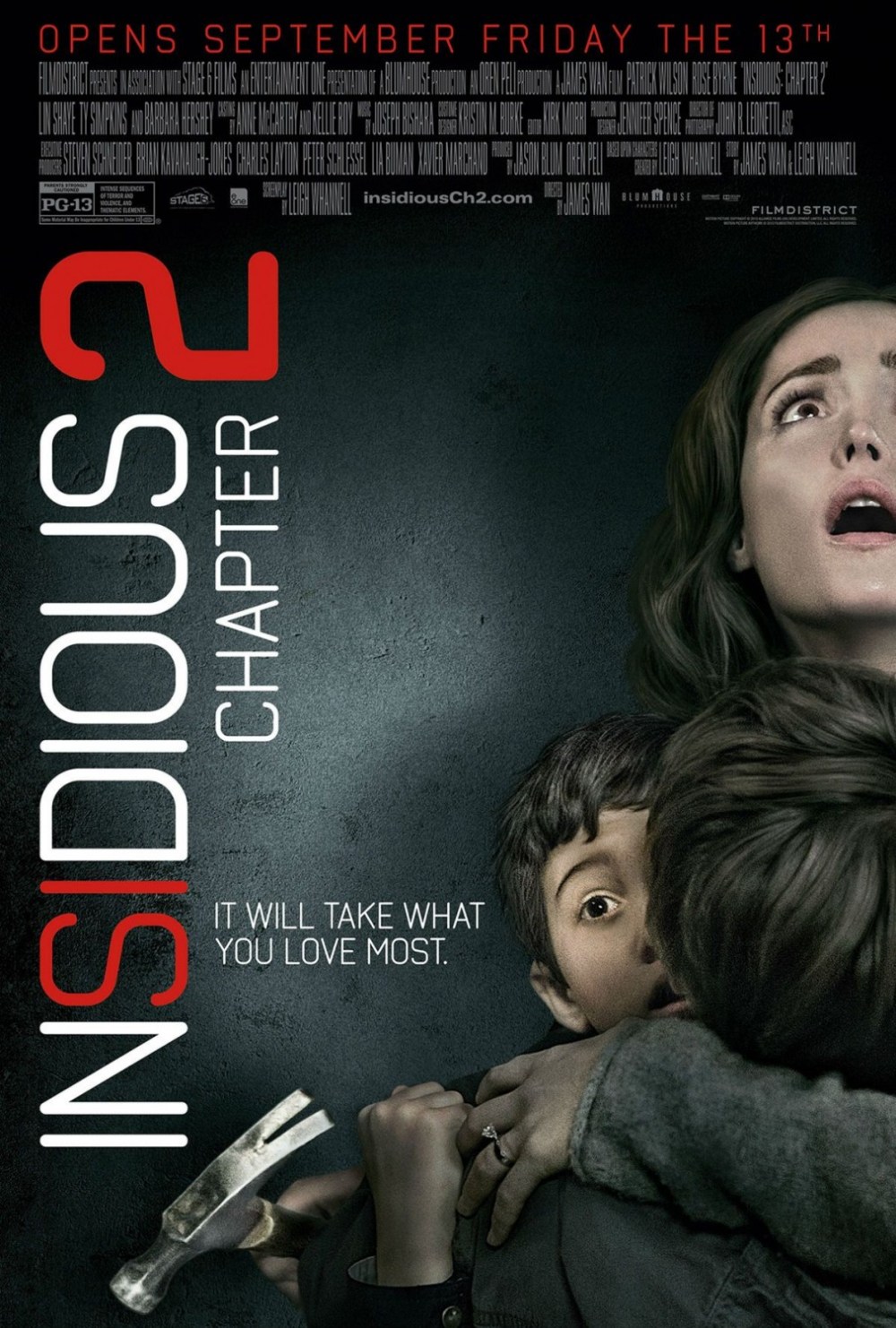
My feelings towards “Insidious: Chapter 2” are not much different from how I felt about “Insidious.” Neither movie scared me in the way they scared my friends, and they don’t really hold a candle to the “Paranormal Activity” movies in terms of making you jump out of your seat, but I did admire their cleverness as they turned the genres they were exploring upside down, and both films gave me something I wasn’t expecting. But moreover, the real strength of “Insidious: Chapter 2” is it doesn’t feel like a sequel as much as it feels like a continuation of what came before it. Part of me was expecting a simple retread of the original, but the filmmakers succeed in adding more to what came before.
It reunites the horror team of director James Wan and screenwriter Leigh Whannell, both who made the first “Insidious” movie as well as the first “Saw.” What drove me nuts about “Saw” and its sequels wasn’t the gore (the way I see it, the gore the merrier), but the plot twists which ended those movies left me with the most enormous of headaches as they expected me to believe Jigsaw (Tobin Bell) could pull this or that off, and I didn’t buy any of the conclusions for a second. The “Insidious” movies, however, don’t make the same mistake, and what I admired was how certain questions from the original film got answered here. Perhaps a close analysis would reveal plot holes, but both movies seem to connect together in a way which makes sense.
Like “Halloween II” (whether it’s the original sequel or Rob Zombie’s), “Insidious: Chapter 2” starts off where the original ended. Josh Lambert (Patrick Wilson) has successfully rescued his son Dalton (Ty Simpkins) from the Further, but after a peaceful moment where the family is reunited, his wife Renai (Rose Byrne) discovers paranormal investigator Elise Rainer (Lin Shaye) has been strangled to death. Josh is suspected to have strangled her, but he convinces Renai he did not. Soon after that, things slowly get back to normal as Josh moves his family into his mother Lorraine’s (Barbara Hershey) house, but it doesn’t take long for certain objects to move around on their own. The question is, did Josh really return from the Further, or did someone else come back in his place?
Now Wan and Whannell had a lot of fun playing around with the haunted house genre with the first “Insidious,” but now they are forced to up their game with this one. “Insidious: Chapter 2” is more of a domestic thriller with a bit of astral projection and time travel thrown in to mix things up. While it does deal with the same elements which made its predecessor a success, this sequel never feels like a simple repeat of the original. Both these films were made by people who have seen just about every horror movie known to man, and they have gone out of their way to subvert all those clichés we are used to seeing. With this movie, I was never entirely sure of what to expect, and that’s just the way I want it.
Wilson, Byrne, Hershey and Simpkins are every bit as good as they were in “Insidious,” and they don’t look like they have missed a bit between the original and the sequel. Angus Simpson and Whannell also show up again as Tucker and Specs, and they provide the comic relief this sequel needs, and they never overstay their welcome.
Joining the “Insidious” franchise this time around is Steve Coulter who plays Carl, Elise’s protégé in the paranormal arts. I am not familiar with Coulter’s work, but he gives a strong performance here as he works to help the Lambert family deal with what has been haunting them so viciously. It turns out he is a journeyman actor who has made many appearances in both film and television, and his veteran status serves this part well as Carl is an expert who has dealt with these situations extensively, and this makes him very believable as someone who has seen the worst things life has to offer.
Some fans may complain about the lack of scares in “Insidious: Chapter 2,” but for me, I’m just glad this sequel kept me intrigued throughout. Whether you find it terrifying or not, it’s a film which does keep you on edge from start to finish. When the movie ends, it turns out that there just might be room for another “Insidious” sequel, and there is a sequence at the end which implies a follow up will be coming our way. But even if it doesn’t, you can be sure the spirits (evil or otherwise) will be haunting you while you sleep.
It’s interesting how the spy world in John le Carré’s novels differs sharply from the one in Ian Fleming’s. Whereas James Bond was a dashing playboy of a spy and the good and bad guys were easy to tell apart, the spies in Carré’s world exist in a morally gray area, and their lives prove to be anything but glamorous. No one is innocent, and everyone has something to hide from others or perhaps even themselves. Here, there are no gunfights or explosions but instead conflicts both internal and external. Even the people we look up to in Carré’s novels are deeply flawed, and you can quickly see why no one can truly trust one another.
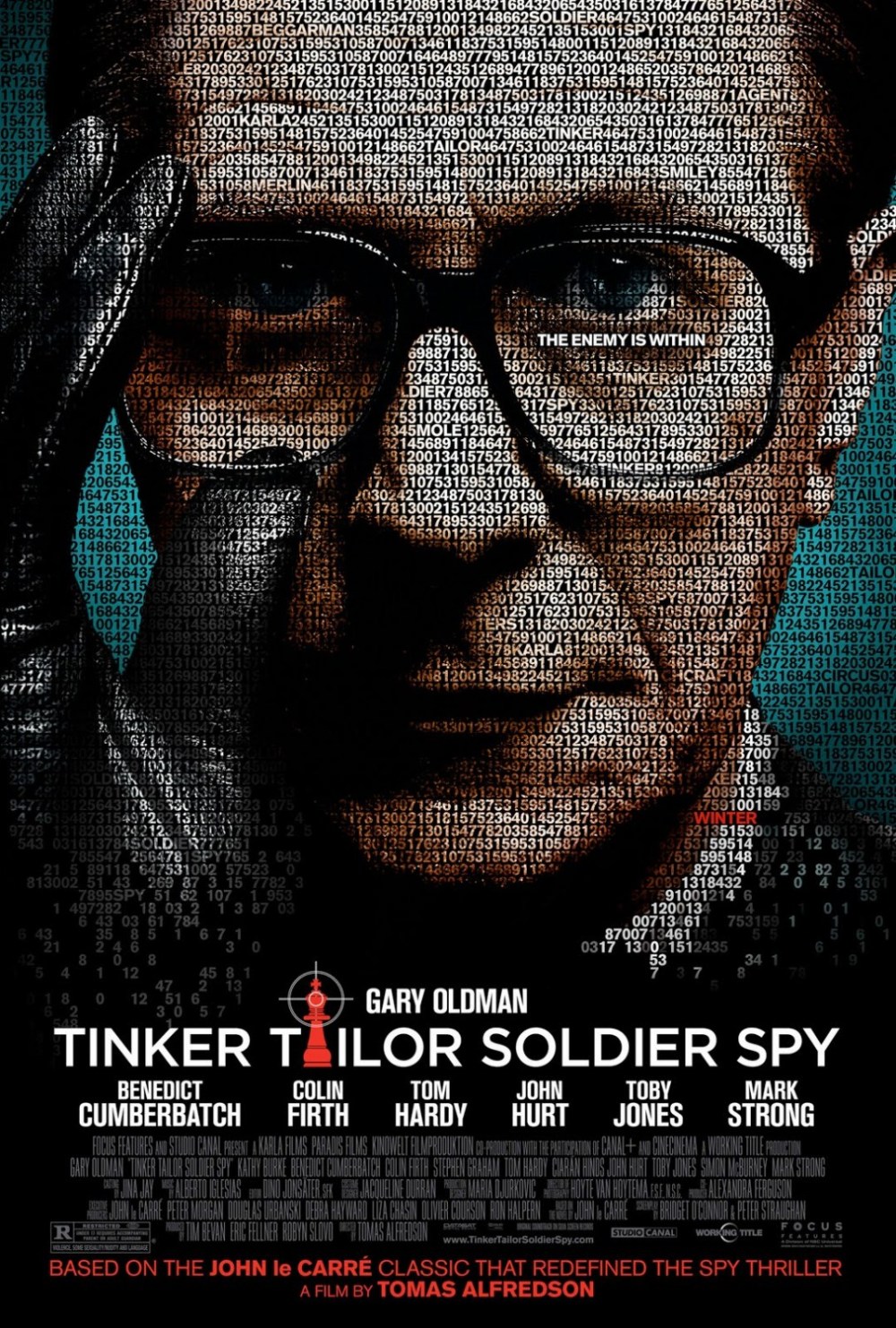
No book in Carré’s vast library of work exemplifies this more than “Tinker Tailor Soldier Spy” which features his most famous fictional character, George Smiley. Originally turned into a brilliant BBC miniseries back in 1979 with Sir Alec Guinness as Smiley, it has now been made into a motion picture with Gary Oldman in the lead role. Whereas the miniseries had more time to develop the story and characters, this movie does an excellent job of doing the same in a shorter span of time. Granted, much has been left out from the novel, but those unfamiliar with the miniseries are unlikely to notice.
The movie hovers around the goings on in The Circus, the codename for British Intelligence. After one operation goes wrong and an agent is killed, the head of Intelligence, Control (John Hurt), is forced to resign along with his right-hand man, Smiley. Smiley, however, is brought back into service when it becomes apparent there is a mole in British Intelligence. Moreover, it’s a mole which has been in The Circus for a long time, and he is a senior member with access to all sorts of secret information. Smiley, in his own way, seeks out the mole before the British become completely compromised in world affairs, and what results is a game of chess more than a battle of wits.
Casting Oldman as George Smiley at first seems like a surprising choice. Oldman made his film debut as Sid Vicious in “Sid & Nancy,” and his performance as the doomed punk rocker reminds us of how over the top he can be as an actor, and I always looked forward to seeing him play the villain in movies like “The Professional” and “Air Force One.” We revel in his emotionally unhinged performances which have made him stand out prominently among other actors of his ilk, and he has rarely, if ever, let us down.
As Smiley, however, Oldman is forced to dial back on the manic energy he became famous for. George Smiley is a character who never loses his cool and conveys so much even through the simplest of gestures. With even an ever so slight movement, we can see Smiley’s thought process at work and are never in doubt of how powerful a character he is. Each movement Oldman takes as Smiley is one which has been deliberately thought out, and even he knows he doesn’t have to bounce off the wall as this famous spy because this one goes into the room knowing all he needs to know.
In recent years, Oldman has gotten to stretch a bit with roles like Sirius Black in the “Harry Potter” movie franchise. While Black is first seen as a bad guy, it turns out he is a good one who cares deeply about Harry’s well-being. Then there is his role as James Gordon in Christopher Nolan’s “Batman” movies where he makes the good guy seem very cool without being such a square. What makes George Smiley an especially interesting character is he is neither a good or bad guy, but instead someone who is forced to navigate the dirty waters which he cannot help but get submerged in from time to time.
This is one of those roles which drive most actors crazy because it can become ever so easy to become utterly self-conscious about every single scene they are in. Being an actor myself, I often wonder if I am doing enough or perhaps too much in one performance to the next. While acting on the stage makes this easier to answer, acting in a movie or television is not only different but far more intimate. In the latter, you have to be more natural to where the camera never catches you emoting, and this can be difficult to say the least. But it’s those subtleties which can provide amazing results with the right director watching over you.
“Tinker Tailor Soldier Spy” also has a cast of brilliant British actors like John Hurt, Colin Firth, and Toby Jones, all of whom do their best in playing characters who have long since accepted the fact that they are morally compromised. You also have Tom Hardy, who succeeded in doing so much with just his eyes as Bane in “The Dark Knight Rises,” as a British agent who is only beginning to become morally compromised. None of these intelligence officers are easy to decipher on the surface, and a lot of this is thanks to their excellent performances.
Directing this adaptation is Tomas Alfredson who directed the great film “Let the Right One In.” Alfredson handles the intricacies of a story which could easily have become convoluted in terrific fashion, and he keeps us enthralled throughout. Even if we can’t follow the story, he succeeds in keeping us on the edge of our seat all the way to the end. Furthermore, he generates an intense and exciting climax without the use of gunplay or explosions, and there is something to be said about that.
Describing all which goes on in “Tinker Tailor Soldier Spy” is not easy, but it is not an impossible story to follow. Watching this movie for a second time will help give you a chance to examine the subplots more closely. While the spy world of Carré may seem nowhere as exciting as the one Fleming created for 007, it deals with the real world more directly as the line between right and wrong is forever blurred. What’s fascinating is how these people survive in it even as they continue losing pieces of themselves in a world and time which is prepared to beat them down on a regular basis. Everyone involved deserves a lot of credit for making what might seem ordinary and unglamorous seem so relentlessly thrilling.
I’m sure everyone has read or heard the story of “A Christmas Carol” several dozen times by now, be it as a play, a book, or a movie. My introduction to it came back in 1984 with the television movie starring George C. Scott as Ebenezer Scrooge. My parents got my brother and I to this movie back when we lived in Thousand Oaks, California. Back then, I had no idea what I was in store. All that was going through my head at the time as the movie began was, am I staying up later than Santa Claus would like? I sure didn’t want to miss out on any presents, and it was way past my bedtime. Please keep in mind, I was nine years old at the time.
What makes this particular version of “A Christmas Carol” stand out is how down to earth the actors are in their performances. These days when I see this story, it is usually at a play typically acted and directed with incredible theatricality. But with movies, things are done in a far more intimate fashion. Director Clive Donner doesn’t have any of the actors over-emoting anything and, as a result, these characters end up feeling like our next-door neighbors. Forget how this is a period piece; some things about humans never change.
Ebenezer Scrooge reminded me of the meanest bullies from school, especially those determined to make themselves feel stronger by belittling and excluding others from social gatherings. But seeing him go through the heartaches of life made this particular bully all the more sympathetic to me regardless of how cold he was to people around him. I was already feeling bad for Scrooge before the story’s midpoint. Plus, I thought it was inexcusable for the Ghost of Christmas Present to leave Ebenezer in the freezing cold instead of bringing him home to await the next ghost. Some people can be so inconsiderate.
I first came to discover actor George C. Scott in the movie “Taps,” but this is the role I will always remember him for best, and that’s even over his Oscar winning performance in “Patton.” Scott showed how Scrooge can truly be the role of a lifetime as he takes the character from being a hopeless curmudgeon of a human being to the ultimate fun-loving guy by the story’s conclusion. The moment where he realizes that what the Ghost of Christmas Future was not actually real and promises from there on out to always keep Christmas in his heart is an amazing piece of acting, and this moment remains strong in my memory so many years later.
It is Scott’s brilliant performance which made this particular “Christmas Carol” such a memorable experience for me. Now I don’t know about the rest of my family, but I found myself being pulled from one giant emotion to another. There were times where things got a little too dark for me where I almost cried, and I have always been an infinitely sensitive human being, but all those feelings made for one of the most gloriously happy climaxes in any motion picture I have ever seen. Seeing Scrooge meet up with the fully recovered Tiny Tim brought a big smile to my face. It all reminds me of how Robin Williams, in an interview he had with David Frost, talked about a Russian he once met who told him how we have to live with pain in order to feel pleasure.
It has now been over 30 years since we all watched this version of “A Christmas Carol” with George C. Scott, but the experience of watching it remains ever so vivid in my mind as was my fear of Santa not coming down our chimney if I stayed up so late.
For the record, Santa did come by and left me and my brother plenty of presents… or so I was told.
When it comes to singing, I still consider it to the most challenging of all the performing arts. You can be a good singer technically by hitting all the notes just right, but none of it will matter if you don’t put your heart and soul into each of those notes. You can only hide behind technique for so long before the teacher makes you see that you have to be emotionally open and show the audience you are living the song and not just singing it.
I was strongly reminded of this while watching “The Greatest Showman,” the musical drama which stars Hugh Jackman as P.T. Barnum, the infinitely ambitious showman and entrepreneur who created the Barnum & Bailey Circus which ran for over 140 years before shutting down in 2017. Once Jackman sings his first note, it becomes abundantly clear there is no other actor who could inhabit a man who command an audience to where no one could dare take their eyes off him. The scene threatens to be overwhelmed by a rousing musical number, strong choreography and beautiful cinematography, but nothing can upstage the passion Jackman brings to the role as he dominates every filmmaking element to command the stage like no one else can.
For those of you expecting a complex look at P.T. Barnum, you will need to look elsewhere or, better yet, read a book on the man. Director Michael Gracey along with screenwriters Jenny Bicks and Bill Condon are not out to give us a multi-layered portrayal of a man whose success in life was beset by allegations of abuse of his circus animals among other things. Instead, they are more focused on him as a man eager to break out of the shackles of modern life so he can embrace a lifestyle some would say he is undeserving of. At the very least, you have to give the filmmakers credit for not saying this is “based on a true story,” a phrase you all know I abhor with a passion.
We watch as P.T. captures the heart and affection of Charity (Michelle Williams) from a young age even though they come from two different classes of people, P.T. from the poor and Charity from the rich. Nevertheless, their love for one another breaks through barriers, and they marry and bring two beautiful daughters into the world whom they share a powerful love of imagination and possibilities with.
The scene in which we watch P.T. Barnum work in an office and trying not to becoming completely numbed by a redundant work environment resembles the suffocating office Jonathan Pryce was an employee at in Terry Gilliam’s “Brazil,” and from there I was sucked into his quest to escape a life where, as Trent Reznor put it, every day is exactly the same. Of course, his mission in starting an adventurous life is stifled by struggles new beginnings bring about. Barnum ends up buying a museum, but it’s a constant struggle to get anyone to purchase a ticket. Then he employs a number of performers which so-called “normal” people quickly dismiss as freaks of nature. But by giving the public something different, Barnum finally succeeds in making his mark to where nothing he does can be easily ignored.
I found Barnum’s story as presented here fascinating as he tries to find acceptance in a society which pretty much banished him from the day he was born. Barnum even goes out of his way to entice famous Swedish singer Jenny Lind (Rebecca Ferguson) to do a series of concerts in America in the hopes that critics who constantly bash his circus act will come to accept him as an upper-class citizen. The question is, will he leave his circus performers and business partners in the dust in the process?
The plot of “The Greatest Showman” is actually quite thin to where the narrative feels more rushed than you might expect in a movie with a running time of 105 minutes. The story of P.T. Barnum is one deserving of a complex and deeply researched screenplay, but the filmmakers here were instead determined to give us a story about a dreamer who defied the odds and led a life of adventure we all hope to live. If you can accept what they were attempting to do here, this movie will prove to be an enjoyable one, and I was willing to accept it for the movie it was trying to be.
The advertisements boast of how “The Greatest Showman” features music by the lyricists of “La La Land,” another movie dedicated to the risks dreamers take. The songs, which include “Come Alive” and “This is Me,” are rousing and will get you into a wonderfully invigorated state as you sit and take in the spectacle. Having said this, this is not the kind of musical which will remain in your mind long after you have watched it. Perhaps my standards for musicals are too high as “South Park: Bigger, Longer & Uncut” remains the best movie musical Hollywood has released in years (“La La Land” is not far behind).
Aside from Jackman, the other actors acquit themselves nicely. Michelle Williams remains one of the bravest actresses, let alone actors, working today as she never hesitates to lay herself emotionally bare in a scene. Just check out her heartbreaking scene from “Manchester by the Sea” (you’ll know it when it comes up). Williams shares the screen with Jackman to where it should be no surprise she can hold her own with Jackman as their characters’ love is threatened more often than not.
Zac Efron, while I sometimes hoped he would be livelier than he was, certainly has all the right moves as Phillip Carlyle, a playwright who becomes Barnum’s business partner. Zendaya plays Anne Wheeler, an acrobat whom Phillip quickly gains a strong affection for, and she makes her presence in this movie a memorable one. I also have to single out Keala Settle who portrays Lettie Lutz, a bearded lady, as her performance of the song “This is Me” proves to be a real show stopper as we root for her and her fellow freakish performers to come out of the shadows to where no one can ignore or easily dismiss them.
With “The Greatest Showman,” you have a movie musical which has flaws not hard to miss, but I was still enthralled with it even though I am not in a rush to buy the soundtrack. Much of this is due to the actors as there is no denying they put all their heart and soul into their roles. Jackman, who has already has had one heck of a year with his penultimate Wolverine performance in “Logan,” remains a powerful presence whether he is appearing on stage or screen, and even if you have issues with this motion picture, there’s no denying there are few actors like him working right now.
As I walked out of the theater, I was reminded of something Groucho Marx once said:
“I wouldn’t want to belong to a club that would have me as a member.”
Does Barnum believe the same before this movie’s end? I leave it to you to find this out.
With “Star Wars” movies now becoming a yearly tradition, I wonder if they will begin to feel less like an event and resemble a typical episode of the “Law & Order” franchise. You know a version of the show is always on television in one form or another, but are you as excited to watch an episode as you were when you first discovered it? Perhaps this is an unfair comparison, but considering where Disney is taking this franchise, it is beginning to feel like it no longer takes place in a galaxy all that far away.
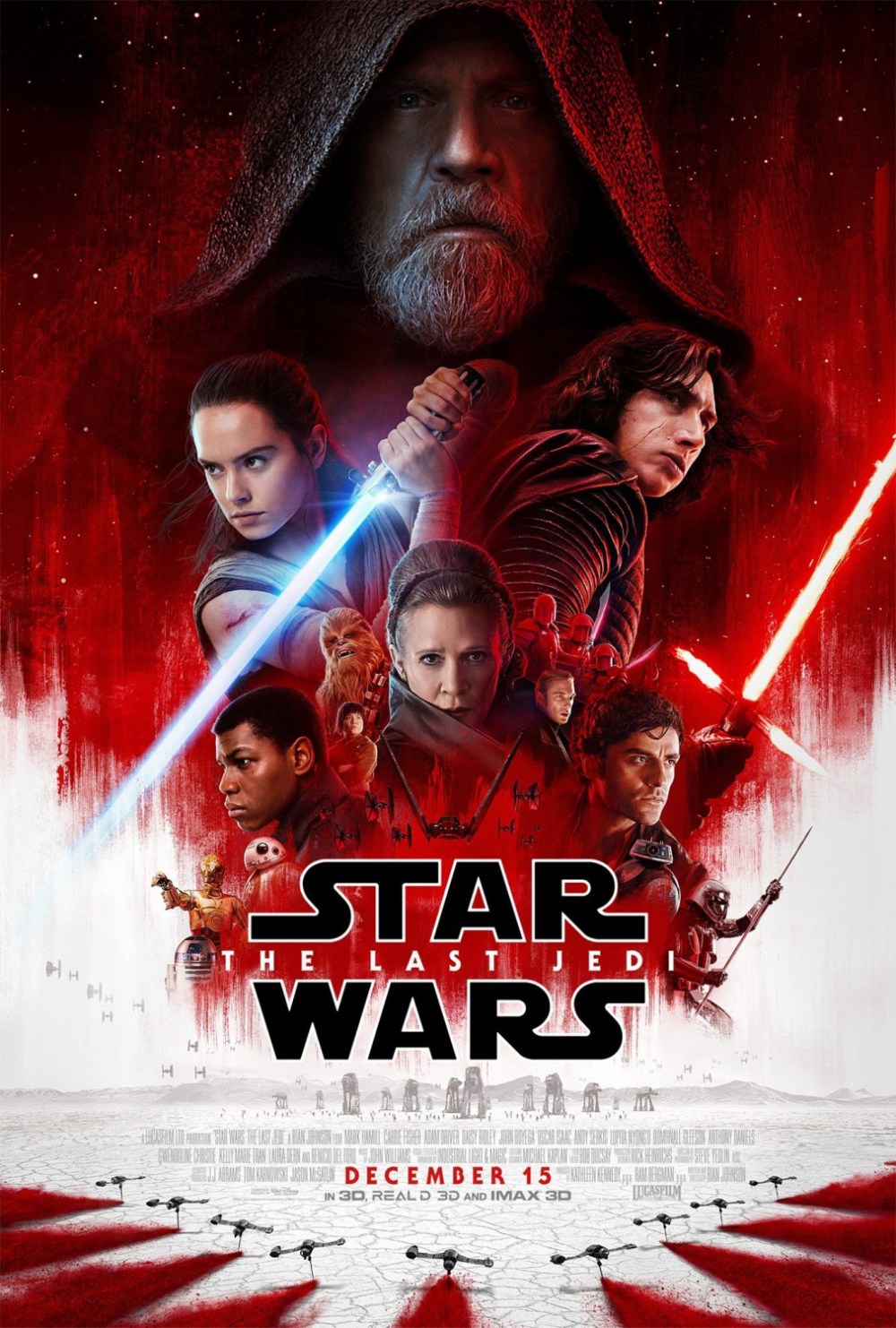
I bring this up because I couldn’t stop thinking about this during the opening crawl of “Star Wars: The Last Jedi.” Each new “Star Wars” motion picture feels like a major event to where it should be declared a national holiday, but since it’s becoming a regular thing now since Disney bought Lucasfilm, will the franchise still feel this special with each future installment? Well, hopefully this remains the case as “The Last Jedi” proves to be a rousing piece of entertainment which stays true to the franchise’s ideals, and it even has a number of surprises up its sleeve to where I eagerly await the next episode set to come out in 2019.
While each “Star Wars” film typically takes place several years after the last one, “The Last Jedi” begins where “The Force Awakens” concluded. Rey (Daisy Ridley) comes to meet the legendary Luke Skywalker (Mark Hamill) who has long since exiled himself on the planet Ahch-To (gesundheit), a much nicer destination than Dagobah. Meanwhile, the Resistance finds itself feeling the First Order after the latter obliterates their main base. From there, the rebels are on the run, but they can only get so far before they realize the First Order has tracked their whereabouts and to where they are trapped with little hope of escape. It is up to the daring and dashing Poe Dameron (Oscar Isaac) and former stormtrooper Finn (John Boyega) to save the day with the help of friends both old and new.
Revealing more about a “Star Wars” film just as it is released tends to result in actions which will prove to be infinitely painful to say the least, so this will be a spoiler-free review. What I can tell you is while this episode deals with the subjects of hope and the need to discover more than what can be found on the surface, the key subject writer and director Rian Johnson deals with here is failure. All the characters are dealing with failure in one way or another, and it comes to haunt every action they take. The characters we grew up with are dealing with failings they cannot escape, and the ones we were introduced to in “The Force Awakens” are now discovering the irreversible consequences of their actions.
Johnson previously wrote and directed “The Brothers Bloom” and “Brick,” but his best known film before helming “The Last Jedi” was “Looper,” a sci-fi time travel motion picture which was ingenious as it was thrilling. Having seen it, I went into this “Star Wars” extravaganza with the confidence he could pull it off, and he did. Even though “The Last Jedi” threatens to overstay its welcome at two hours and 32 minutes, making it the longest “Star Wars” movie to date, you cannot punish Johnson for his ambition as he covers a lot of ground while leaving us salivating for more.
When it came to the prequels, you had to forgive the actors because they were being directed by a man, George Lucas, who is a master storyteller but deeply deficient when it came to dealing with the human element. But Johnson, like J.J. Abrams before him, knows how to elicit strong performances from his cast, and each actor is more than up to the challenge.
Watching Mark Hamill and Carrie Fisher was deeply fascinating as their adventures in the original “Star Wars” trilogy remain forever burned into my consciousness, and it still feels like I first watched those movies just yesterday. Their youthful exuberance in fighting the dark side was contagious as I wanted to fight alongside them, and I know I’m not the only who feels this way. When we catch up with their characters of Luke Skywalker and Leia Organa in “The Last Jedi,” the years of endless battles and devastating defeats show in their faces as we wonder how much of a fight they have left in them considering what they have been through. While they are heroes, both have grown weary in the face of an enemy which is every bit as imposing as the Galactic Empire, and their confidence in their abilities is shakier than ever before.
It’s especially poignant to watch Fisher here as this was her last movie before she passed away, and knowing this will be the final time we will see her as Leia is a real heartbreaker. Even as Leia’s accent changes yet again, Fisher imbues the former princess with a dignity and humility which will not be easily shattered in the face of defeat. Even as the odds get worse for the Resistance, Fisher makes Leia stand tall, and she makes clear to the audience that this sci-fi icon will not go down without a fight.
After watching Hamill’s brief appearance in “The Force Awakens,” I came into this film wondering where he would take the great Luke Skywalker. Well, he’s no Yoda here as a devastating failure has led him to believe the Jedi should end and has robbed almost completely robbed him of his sense of humor. Whether or not this is the Luke Skywalker you hoped to see in “The Last Jedi,” Hamill dares to take this character in another direction, but despite defying expectations, the actor makes Luke the powerful Jedi we always wanted him to be.
It’s also great to see “The Force Awakens” veterans Oscar Isaac and John Boyega back as Poe Dameron and Finn as their charismatic energy lends itself nicely to the special effects extravaganza which could have, but does not, overwhelm their talents. Watching Isaac here also serves as a reminder that covering him in pounds of makeup like Bryan Singer did in “X-Men: Apocalypse” is completely unnecessary and just takes away from him. Domhnall Gleeson still makes General Hux into more of a twisted tightwad than we previously saw, and Andy Serkis mesmerizes as Supreme Leader Snoke while continuing to shroud the character in mystery.
Among the newcomers to this franchise are Laura Dern as Resistance Vice Admiral Amilyn Holdo, Benicio Del Toro as the codebreaker DJ, and Kelly Marie Tran comes into play as Rose Tico, a maintenance worker who becomes a key player in the Resistance. While it is great to see Dern and Del Toro here, let alone in any other movie they appear in, their characters are a bit underwritten to where their talents can only go so far with the material given to them. Tran, however, makes Rose Tico into a terrific character I am very eager to see in the next “Star Wars” episode. As for the Porgs, they are delightful little creatures who do not overstay their welcome, and they serve as a reason why Chewbacca might consider becoming a vegetarian in the future.
But the performances which really held my attention more than any others came from Daisy Ridley as Rey and Adam Driver as Kylo Ren. Both bring a raw intensity to their characters which left me on edge as their passions could lead them either in the right direction, or instead down a road which offers no hope of return. The connection Rey and Kylo share throughout “The Last Jedi” is one which grows stronger in each scene, and it makes me wonder if they could possibly survive without one another in Episode IX. Both actors bring a natural energy which Natalie Portman should have been allowed to bring in the prequels, and they remain as compelling as ever.
Many complained “The Force Awakens” hewed too closely to the plot of “A New Hope” to where it became an exercise in nostalgia more than anything else. So it’s only natural filmgoers are coming to “The Last Jedi” expecting something close to “The Empire Strikes Back.” However, Johnson and company have succeeded in giving us a “Star Wars” episode which surprises us more often than not. While many may be sitting in a movie theater crying out, “I knew that was going to happen,” I think they need to realize not everything is going to go the way they expect. It reminded me of the next to last episode of “The Sopranos’” second season as it left me in shock and wondering what could possibly happen next. While we feel we know and understand the formula of the average “Star Wars” movie, this one upends it to where we can only guess what will happen in the future.
“The Last Jedi” also shows us there is more to failure than we see at first, and this is an important lesson to take in as we often let failure keep us from moving forward in life. It also shows us how hope can be tested more than ever before to where we grasp onto any last piece of it. In “The Shawshank Redemption,” Morgan Freeman talked about how “hope is a dangerous thing” and that “hope can drive a man insane,” but our heroic characters still cling onto hope as nothing else will do, and surrender is not even a part of the equation.
While the continuing onslaught of “Star Wars” movies threatens to make this franchise feel a lot less special, none of my worries detracted from my enjoyment of “The Last Jedi.” It proves to be as entertaining as any other “Star Wars” movie currently out there in circulation, and yes, I include the prequels. This film also makes me look forward to Rian Johnson’s continued contributions to the franchise which look to be many, and I eagerly await the next episode as I am not sure what to expect from it. I just hope I don’t go into a future “Star Wars” movie saying to myself, “I got a bad feeling about this.”
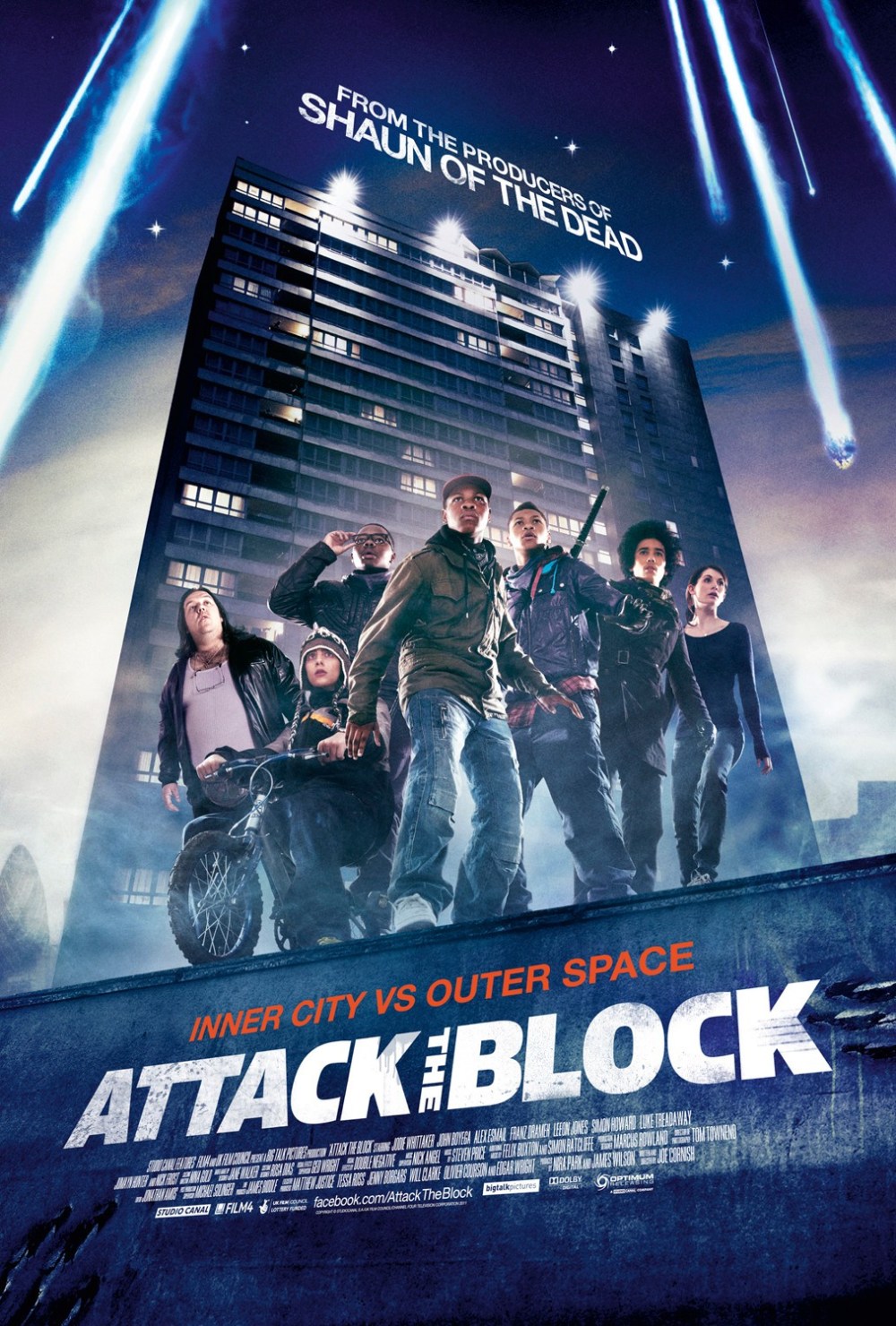
“Attack the Block” is a highly entertaining combination of action and sci-fi genres which deals with humans defending themselves against a swarm of unfriendly extra-terrestrials. It follows a street gang of young kids who, in the process of robbing a female nurse, get greeted by an alien who lands with a loud thud on someone’s car (here’s hoping they have auto insurance). It marks the beginning of an attack by an alien race which immediately tears apart anything in its path, and it’s up this gang of delinquents to save the day.
The majority of “Attack the Block” takes place in a council estate, a location which houses the financially challenged of England’s residents, and it is generally overrun by a nasty criminal element. This setting has been used to great effect in “Fish Tank” and “Harry Brown,” movies which effectively showed how isolating it can be to live there. The characters presented feel very true to life, and it makes what could be seen by many as another B-movie far more effective as a result.
Leading this street gang is Moses (John Boyega), a 15-year-old who is older than his age would suggest. Moses and his mates spend their time robbing those walking through the terrace they live in. But when the aliens enter into their territory, they find antagonists that are completely unwilling to give up their valuables (assuming they have any), and the threat they pose to this gang make their struggles in daily life a cakewalk in comparison.
“Attack the Block” was directed by Joe Cornish, an English comedian, television and radio presenter, director, writer and actor. This marks his directorial debut as he has previously helmed several behind the scenes documentaries like “The Fuzzball Rally” featured on the “Hot Fuzz” DVD and Blu-ray. Cornish’s work here is very assured, and he does an excellent job of combining elements of horror and comedy to great effect, something never easy to pull off. He also generates highly suspenseful moments which really get the audience on edge, and they make for a surprisingly unpredictable motion picture.
Of all the performances, the most impressive comes from John Boyega as Moses. This is his film debut, but he looks and acts like he’s been acting for ages as his eyes reveal a battle over how far he will go and of all the bad things he has seen in life. As the fight against the aliens goes on, it offers his character a chance for redemption and to be a hero, and Boyega makes Moses earn those honors long before the film’s conclusion.
Also impressive is Jodie Whittaker as Sam, a hospital nurse faced with an impossible situation where she has to work with the same gang of kids who mugged her in order to survive. Whittaker convincingly takes her character from being a frightened woman to one who holds her own alongside these kids, and she is not your typical horror victim screaming her way throughout the entire movie.
It’s also great to see Nick Frost here as the drug dealer, Ron. Frost brings an ever so dry humor to the proceedings, and all the other actors work off of him to great effect. In each movie he does, Frost is brilliant at sneaking the occasional joke in when you least expect it, and you can always count on him to leaving on the floor laughing.
“Attack the Block” was made for only $13 million, and the visual effects the filmmakers came up with are very impressive considering the budget. Having less money forces directors to be more creative, and Cornish succeeded in making this film look like it cost a lot more. The aliens themselves are minimal in their design, but they feel far more threatening than the ones you might remember from “Cowboys & Aliens.” Their pitch-black fur is highlighted by neon-like eyes and teeth, and their horrendously loud shriek is certain to make audiences jump out of their seats more often than not.
The action is also highlighted by a super cool electronic score by Basement Jaxx which really puts you in the right frame of mind. I definitely recommend buying the soundtrack once you have watched this movie. I myself didn’t even hesitate in purchasing a copy. That’s how much I like this kind of film music.
The summer 2011 movie season was mostly disappointing due to a lack of creativity and inspiration as many of the blockbusters were cynically made by studios with the intention of making money while giving audiences what they thought they wanted. Watching “Attack the Block” though is a great reminder of how much fun it can be to go to the movies, and it was one of the best action movies to come out that year. This is a must see.
Rian Johnson’s “Looper” is an ingenious movie which combines the genres of noir, science-fiction and western into a mind twister of a film which will have you enthralled throughout. It reminds you of all those time travels movies you grew up watching, and yet it feels very original when compared to them. It also proves Johnson is a creative filmmaking force to reckon with, and it gives each cast member an opportunity to give their best performance in any film they appeared in during 2012.
Joseph Gordon-Levitt stars as Joe Simmons, an assassin in the year 2044 who works for the mafia and kills agents sent back from the year 2072. In this future, time travel is possible and also illegal, and the mob takes advantage of it to get rid of their garbage. The movie’s title refers to the kind of assassin Joe is, a foot soldier who is paid on the condition their targets never escape. They are given a shotgun called a Blunderbuss which doesn’t have much of a range but it is powerful enough to kill a person up close. When “Looper” starts, Joe looks to have been doing this for a while and has been living the good life as a result.
Things, however, change drastically when the mob decides to “close the loop” by sending back the Loopers’ future versions of themselves to eliminate. Joe ends up coming into contact with an older version of himself (played by Bruce Willis), and the old Joe escapes before young Joe can get him in his sights. From there, the young Joe is on the run as he has searches for his older self in order to get the mob off his back and live to see another day, so to speak.
To say more will spoil some of “Looper’s” most inventive moments as it is full of surprises you don’t see coming. The story looks to have been very well thought out, and its focus is more on the characters than anything else. Also, it creates a future which looks futuristic and yet not far removed from our present. Some movies can alienate you with their overreliance on special effects, but “Looper” isn’t out to blow you away visually. Instead, it finds its most potent moments involving the insane situations Levitt and Willis find themselves in.
Seeing Levitt and Willis face off in a diner gives us one of the most riveting scenes in any movie released in 2012. Considering how brutal they are to each other throughout “Looper,” I couldn’t help but think: talk about being hard on yourself!
Time travel as a concept has been done to death in movies, and Johnson is fully aware of how familiar audiences are of the rules surrounding it. I loved how he used this familiarity to his advantage here as it makes “Looper” easier to follow than it might seem at first. Johnson also succeeds in juggling different storylines to great effect as things could have burned out creatively speaking before the end credits came up. You go into “Looper” thinking it’s about time travel, but then it becomes about something else entirely. It is a film which demands to be seen multiple times for you to take in all its meanings.
Levitt had a fantastic year so far in 2012 with terrific performances in “The Dark Knight Rises,” “Premium Rush” and “Lincoln,” but “Looper” was truly the icing on the cake for him. As the young Joe Simmons, he gets one of his meatiest roles ever as an assassin who’s a drug addict (what’s in those eye drops anyway?), but who still has a conscience even after all the damage he has done to himself and others. While the prosthetics on his face, which were used to make him look more Willis, are a bit awkward to take in at first, Levitt gives the role his all and looks thrilled to able to transform himself into a character like this.
So much has been said about Bruce Willis over the years as his role as John McClane from “Die Hard” will forever be burned into our consciousness, but seeing him as old Joe in “Looper” reminds us of what a great actor he can be. His Joe is driven to correct the past so he can save the future he has built up for himself, but it also forces him to do things which leave him morally conflicted. Seeing the pain which crosses Willis’ face makes us root for him somewhat in “Looper” even as his character goes seriously astray with his deadly actions.
Then there’s Emily Blunt who plays hard bitten single mom Sara, and she is an incredibly powerful even when she is not wielding a heavy-duty shotgun. Blunt has been a continually wonderful presence in each movie she’s appeared in, and here she gets to be both bad-ass and very vulnerable. Her scenes with Pierce Gagnon, the 5-year old actor who is amazing as her son Cid, are as emotionally powerful as they are deeply suspenseful.
There are also other terrific performances to be found in “Looper” from actors like Paul Dano who plays the neurotic assassin Seth, and Noah Segan who channels Billy the Kid into his role of a six-shooter carrying killer named Kid Blue. And there’s no forgetting the great Jeff Daniels who brings both danger and humor to his role of mob boss Abe. Some are surprised to see Daniels in this kind of role given how he has been typically cast as nice guys in movies, but keep in mind, this is the same guy who played the most embittered of writers in “The Squid and The Whale.”
It’s a treat for moviegoers that a film as endlessly inventive as “Looper” got produced in a time where creativity was at a cinematic low. Everyone involved in this picture clearly came to it with tremendous enthusiasm, and it shows in every single second which unfolds before us. It is not only one of the best movies of 2012, but also one of the best time travel movies ever made. And watching it again makes me all the more excited for Johnson’s biggest movie yet, “Star Wars: The Last Jedi.”
I felt like I could never figure Hunter S. Thompson out. Whenever I saw films based on his work, he seemed like some crazed lunatic living in a world of his own creation and madness. After watching “Gonzo: The Life and Work of Dr. Hunter S. Thompson,” I feel like I now know what he was all about. Hunter was as patriotic as any American can get, and while he always seemed to be losing his mind, no one can deny he was a true visionary. At the very least, he was never boring.
This documentary was directed by Alex Gibney who managed to get many people to talk on camera about Hunter who, whether they loved or hated it, had to admit to feeling the upmost respect for all he did. The fact Pat Buchanan participated in this documentary is a big surprise considering how Hunter described him as a “half-crazed Davy Crockett running around the parapets of Nixon’s Alamo.” The writings of Dr. Thompson are featured throughout, and the documentary is narrated by Johnny Depp who played the eccentric author in Terry Gilliam’s film version of “Fear & Loathing in Las Vegas.”
Hunter is credited with creating Gonzo journalism, a style of reporting where reporters involve themselves in the action to such a degree to where they become central figures in their own stories. He would take on assignments like covering a motorcycle event, and then he would veer off into something else like the death of the American dream. Through his writing, he got at the ugly heart of the matter and exposed it for all its misleading falsehoods.
“He was a reporter with a wild imagination.”
-Tom Wolfe
“He was not afraid to express himself in sometimes shocking ways.”
-President Jimmy Carter
We see Hunter take on his first big assignment when he meets the Hell’s Angels in California which he looked up to as the last outlaws in the world. This relationship, however, turned sour when he witnessed them gang bang a woman at their party. The group later suspected Hunter of trying to profit off of what he wrote, and they beat him severely. This whole experience ended up shaping him as a writer as he looked beyond the façade sold to the public on a regular basis.
One of the most interesting parts in this documentary is how it shows Hunter’s love of America and his sadness over the death of one of his favorite politicians, Robert Kennedy. It is made abundantly clear how Hunter so wanted to believe in the hope of a better future. His sadness only deepens when he is witness to the beatings at the Democratic convention which took place the same year Robert died, and he berated the Democrats for not doing their part to put an end to the violence.
I got a huge kick out of the section where Hunter runs for Sheriff of Pitkin County, Colorado, as it showed how visionary he was as he had all these plans for revitalizing the town of Aspen. He called for the decriminalization of drugs for personal use, but he also wanted to keep a ban on trafficking as he was no fan of people profiting off of them. Furthermore, he wanted to tear up the streets and replace them with grassy pedestrian malls, he proposed placing a ban on tall buildings being built as they obscured his view of the mountains, and he wanted to rename Aspen “Fat City” in an effort to deter investors who wanted to commercialize the city. Of course, Hunter lost the election which was no real surprise to him, but his run for the office was never ever forgotten.
“Gonzo” also does a great job of looking at the various relationships Hunter had throughout his lifetime. We get a look at his marriages and learned what it was like living with him. To know Hunter was to tolerate him. Perhaps the most interesting relationship documented here is the one between Hunter and artist Ralph Steadman who created some of the most insane drawings which accompanied Hunter’s feverish writings in Rolling Stone magazine. It is interesting to learn Steadman was actually a conventional artist whose work was no different from anyone else’s. But then Hunter turned Steadman on to drugs, and his work evolved into what he is best known for. There is a great moment where we see Steadman at work, and he has this utterly insane look on his face as if he is gleefully possessed. Who knows what would have happened to him had he never met Hunter.
Perhaps the most important section of “Gonzo” is when Hunter supports George McGovern’s run for President of the United States. McGovern was the democratic nominee running against incumbent President Richard Nixon. The Vietnam War was raging on, and hundreds of young American lives were being snuffed out day after day. McGovern sought to put an end to the Vietnam war which the whole country had since gone against. Hunter had a vicious hatred of Nixon, and he saw the possibility of Nixon going on to a second presidential term as a possible death blow to this country.
As important as this section of the documentary, it was a bit overlong and could have been shortened. It gets redundant as we clearly get the message of Hunter’s disillusionment with politics in general. Fortunately, “Gonzo” picks up in the last half as we see how Hunter became trapped by his fame to where his work suffered as a result. But the McGovern section is still important, especially when Hunter is interviewed in the documentary and says this, “I desperately wanted to put an end to that senseless war [in Vietnam]. I’m sick and tired of old men dreaming up wars for young men to die in.”
Sound familiar? No wonder Hunter got depressed when George W. Bush got elected and the World Trade Center was attacked on September 11, 2001. Hunter wrote about those events as if he knew exactly what they would lead to, another war overseas with America striking back in revenge mode. This was all another depressing example of how history repeats itself.
For the most part, “Gonzo: The Life and Work of Dr. Hunter S. Thompson” does an excellent job of making you understand him better and of where he was coming from. We need people like Hunter, people who challenge authority and get us riled up about the way the country is heading. His suicide, other than being very selfish and hardly noble, robbed us of a powerful voice we need in times when politicians continue to deepen the divide between the rich and the poor. Hunter was a crazy man at times, and he was also proof that if you take enough drugs, they will completely mess up your head. But you had to love him because he was never boring and always fearless. It is likely there will never be another man like him.
I grew up watching reruns of “The Adventures of Superman” with George Reeves playing the iconic character, and I loved how he stood still and never blinked an eye when the bad guys shot bullets at him. Then came the movies with Christopher Reeve playing the sole survivor of Krypton, and I reveled in watching him give us the definitive version of this heroic character. Since then, Superman has not been the same for me as his goody two shoes image makes him seem a little dull compared to Batman, and the character has gone through various interpretations on television and in comic books to where I’m not sure what to make of him, or his alter ego Clark Kent, anymore.
I liked “Superman Returns” more than most people because it reminded me of the effect this iconic character had on me when I was young, and Bryan Singer made it clear we needed a hero like Superman now more than ever. However, the more Singer paid homage to the first two “Superman” movies, the more it paled in comparison to them. The character is now more than 75 years old and in desperate need of a reboot to stay relevant to today’s increasingly cynical society.
Now we have “Man of Steel” which takes Superman back to his beginnings to where we have to go through all the origin stuff yet again. This threatens to make the movie a bit tedious as we all know Superman was born as Kal-El on the planet Krypton and how his parents sent him to Earth before Krypton exploded. But what’s interesting is how director Zack Snyder tells Superman’s story in a non-linear fashion to where we’re never quite sure which direction the movie is going to take. Snyder also shows us how, while it may seem cool to be Superman, being him can also be quite lonely and painful.
For the filmmakers, the real challenge was making Superman more down to earth than he has been in the past and, for the most part, they succeeded. We all have experienced loneliness and alienation in our childhood and the changes our bodies go through, be it puberty or something else, which can drive us to the brink of insanity. But what’s worse for Kal-El, who is now named Clark Kent by his human parents, is he can’t really ask anyone for advice on how to deal with x-ray vision or super hearing abilities. While this kid is capable of doing great things, you can understand why he yearns for the normal life constantly denied to him.
I liked the scenes dealing with Superman’s childhood because they rang true emotionally, and the wisdom his human father Jonathan (Kevin Costner) passes on to him makes sense. Yes, this young man has super powers, but he’s got to keep them under wraps until he can learn the truth about where he came from. It’s frustrating, but it helps to keep Superman from being subjected to crazy medical experiments by the government and from growing an oversized ego which will definitely get the best of him.
Since the first half of “Man of Steel” is told in a non-linear fashion, it doesn’t take long for us to meet Henry Cavill, the latest actor to play Superman. It also doesn’t take long for him to remove his shirt and show us how much time he has spent at the gym. Cavill’s road to playing this iconic character has been a tough one as he came so close to getting cast in “Superman Returns,” and for a while he was known as the unluckiest man in Hollywood as he barely missed out on playing Cedric Diggory in “Harry Potter and the Goblet of Fire” and Edward Cullen in “Twilight.” How nice it is to see Cavill finally get his moment in the spotlight.
Cavill does solid work here as Superman, and he also gives us a Clark Kent who is unlike the four-eyed wimp we all remember him being. This is a Kent who wanders from job to job, haunted by an upbringing he has yet to learn more about, and it is a journey which has toughened him up quite a bit. Cavill also benefits from getting to play a more complex Superman in “Man of Steel” whereas the one we saw in “Superman Returns” was kind of neutered (no offense Brandon Routh). While he doesn’t quite have the same charisma Reeve brought to Superman, Cavill is a terrific choice for the role and he has more than earned the right to play him in this and future movies (and you know there will be more).
But as with “Superman: The Movie,” Warner Brothers put their nerves at ease by surrounding Cavill with a cast filled with stars and Oscar winners. I very much enjoyed Kevin Costner as Jonathan Kent, and he gives a wonderfully understated performance as Kal-El’s human father. However (SPOILER ALERT), I’m pretty certain I have not seen another actor other than him who looked so ridiculously serene as an enormous hurricane came barreling down on him (SPOLIERS END).
Diane Lane is also well cast as Kal-El’s human mother, Martha, and it’s a treat to see this actress in anything and everything she does. Plus, even as Martha heads into old age, Lane still looks irresistibly sexy as she refuses to betray her son’s whereabouts to General Zod. Some credit should go to Snyder for this as he doesn’t plaster Lane with the same hideous old-age makeup he used on Carla Gugino in “Watchmen.” I am so very glad he learned his lesson.
Speaking of General Zod, the great character actor Michael Shannon plays him in “Man of Steel.” Shannon does make him a compelling nemesis to Superman, and I liked how the actor portrays Zod as a man led by a corrupted sense of loyalty rather than just a power hungry villain. His work in “Man of Steel,” however, pales a bit in comparison to his galvanizing turn as serial killer Richard Kuklinski in “The Iceman.” Perhaps I was expecting a bit too much from Shannon this time around as I was hoping he would give us a villain for the ages. But even though he doesn’t, he is still very good here.
In addition, Amy Adams gives us a strong Lois Lane who doesn’t falter in the face of supernatural discoveries, Laurence Fishburne makes for a good Perry White, Antje Traue makes Faora into a tremendously lethal villainess, and it’s hard to think of anyone other than Russell Crowe to play Superman’s biological father, Jor-El. Crowe gives the role a gravitas not easily earned, and you will be pleased to know that he doesn’t sing in this film. I am, however, willing to defend his performance and singing in “Les Misérables.”
The one major complaint I had with “Man of Steel” was the spectacle at times overwhelmed the story and characters. This is not to say the characters are neglected, but I’m not sure I have seen as many high-rise buildings come crashing down in one movie. Just when I think I have seen the loudest action movie ever made, another one comes along to remind me of the necessity of ear plugs. In the process of giving us one tremendous action scene after another, Snyder ends up topping himself a bit too much to where I was desperate for him to tone things down. Still, he respects Superman enough to keep the character’s ideals intact even while taking some liberties.
Part of me still yearns for the “Superman” of yesterday when Christopher Reeve made us believe a man can fly, and of how the first two movies lifted my spirits up high. I think part of how you enjoy “Man of Steel” depends on how willing you are to separate it from all the “Superman” films which preceded it, and for me this is tough. But in the end, there’s no way things can stay the same, and this iconic character was in need of a refresher. With “Man of Steel,” Snyder has given us an exciting piece of entertainment which holds our attention for over two hours, and I am eager to see where Superman will go from here.
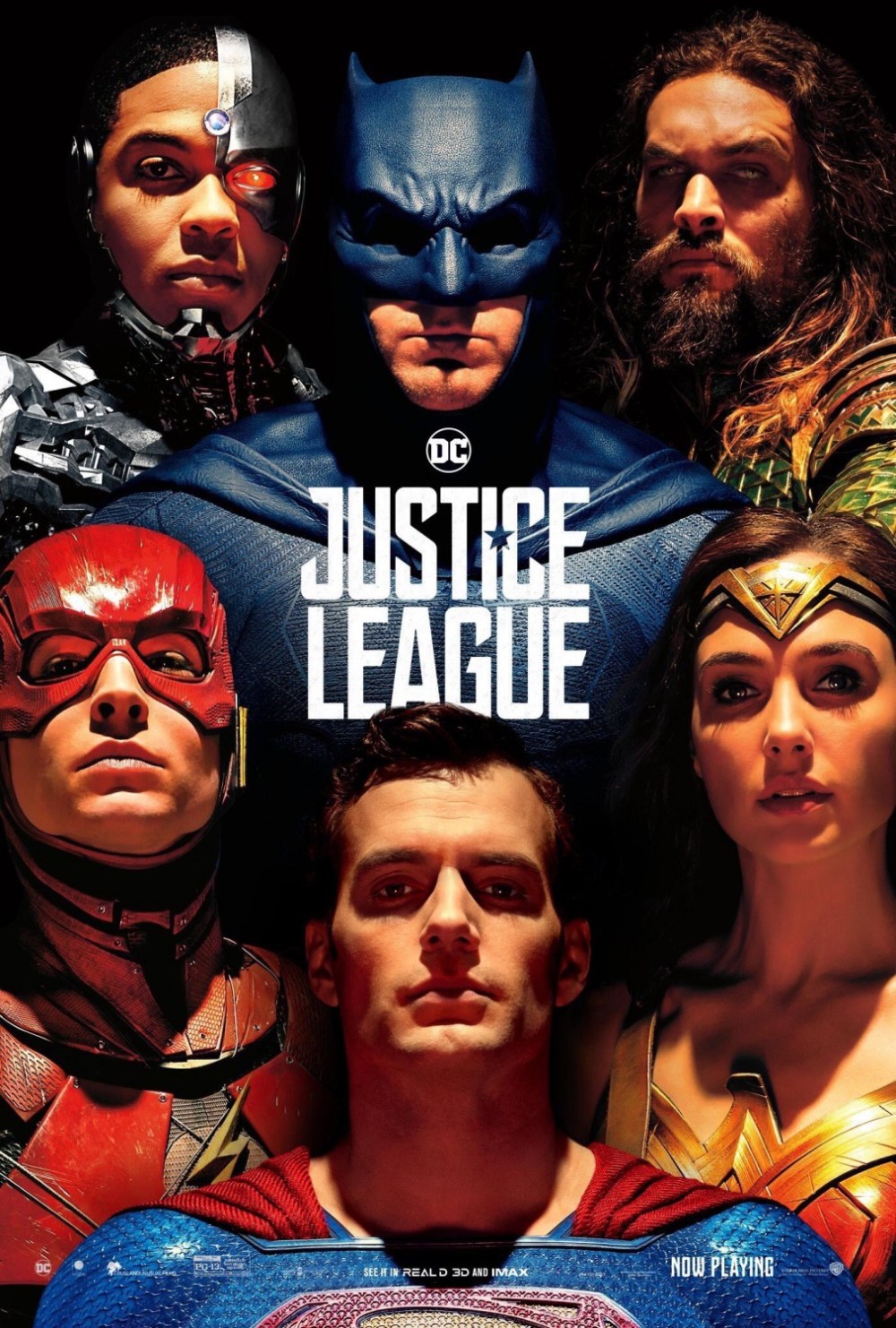
You know how the Daytona 500 is the Super Bowl of NASCAR racing, but it’s also the first big race of the season instead of the last? That’s what “Justice League” is. It’s the penultimate motion picture of the DC Extended Universe, and yet it’s coming to us before Aquaman, Flash and Cyborg get their own solo films. With the Marvel Cinematic Universe, every character was in their own movie before “The Avengers” finally arrived on the silver screen. Granted, Hawkeye and Black Widow have yet to get their own movies, but enough groundwork was laid to where the time had come for “The Avengers” to become a reality. With “Justice League,” its long-awaited appearance feels a little premature.
Following the events of “Batman vs Superman: Dawn of Justice,” the world is still mourning the death of Superman (Henry Cavill), and all the other superheroes are trying to move on despite the large void the Man of Steel has left in his passing. Batman/Bruce Wayne (Ben Affleck) remains as dour as ever, but his faithful butler Alfred (Jeremy Irons) threatens to be even more dour to where they seem to be having a contest in that department. Wonder Woman/Diana Prince (Gal Gadot) leads a quiet life working in a museum, Victor Stone/Cyborg (Ray Fisher) spends the days hiding in his apartment because everyone thinks he is dead and he hates his father for saving him through the use of cybernetics, Arthur Curry/Aquaman (Jason Momoa) is busy drinking his life away when he’s not swimming in the ocean, and Barry Allen/Flash (Ezra Miller) spends his days trying to fit in with kids his age while moving at supersonic speed. These superheroes couldn’t be more mismatched, but they of course find themselves working together to stop a fearsome enemy bent on world domination.
This enemy is Steppenwolf (voiced by Ciaran Hinds), a supervillain determined to find three boxes of power known as the Mother Boxes and, in the process, escape the role of servitude he has been consigned to for far too long. Steppenwolf is, you know, the kind of villain bent on gaining the most power of anyone in the world, and we all know what happens to people like them; they are either defeated as we expect them to be, or they become President of the United States.
The movie gets off to a terrific start with Batman battling a common criminal on the streets of Gotham, but it turns out to be a ploy for the Caped Crusader to discover the identity of another evil foe who thrives on the fear of humans. Following this, “Justice League” becomes a labored adventure as Batman and Wonder Woman take their precious time finding all the other superheroes, some of which are hesitant to join the party even though they realize their planet is at great risk of being annihilated. Knowing those holdouts will eventually become a part of the league, this proves to be the film’s most agonizing point as too much time is spent gathering everyone together.
Ben Affleck still makes for a good Bruce Wayne/Batman, but I sense he is already tiring of the role. Gal Gadot left a powerful mark on movies this year as Wonder Woman, and she is every bit as thrilling a presence here. Of the new additions, Jason Momoa proves to be a solid choice as Aquaman, and watching him here makes me look forward to the character’s solo movie coming out next year. Ezra Miller steals every scene he is in as the Flash, and he brings a wonderful edginess to the role while also bringing the character down to earth in an especially unique way. While Miller’s character is thrilled to have these superpowers, he still yearns to fit in with everybody else, and he portrays this inner conflict very effectively.
The same can’t be said, however, for Ray Stone/Cyborg as the character has little more to do in “Justice League” other than brood, argue with his father, and try to tell everyone in hearing range of how his powers can in no way be mistaken as a gift. This is with all due respect to Ray Fisher who does what he can with an underwritten role, but I grew tiresome of his complaining, especially when we all know he’s going to be in this league eventually.
But honestly, the real heart and soul of “Justice League” belongs to Henry Cavill who returns as Clark Kent/Superman. Even I refused to believe the Man of Steel was all but finished off for good at the end of “Batman v Superman” as you can’t keep a good superhero down, and Superman remains one of the very best. Even better is the realization of how Cavill no longer has the shadow of Christopher Reeve hanging over him as he manages to bring the same dedication to this iconic character Reeve did years before, and seeing Superman fight for justice this time around brought a big smile to my face.
Indeed, “Justice League” gets better and better as it enters the third act in which our superheroes band together to defeat Steppenwolf. While I found myself not caring enough about these characters in the first half, I really rooted for their success as the movie went on because the actors looked excited to inhabit these unforgettable characters. There are times when the filmmakers succeed in arousing our childhood love for these superheroes, and this is when the movie works at its best.
Of course, I have to wonder which filmmaker deserves the most credit for “Justice League.” Zack Snyder is credited as director, but Joss Whedon came in during post-production, and it is tempting to believe Whedon, who struck gold with cinematic comic book gold with “The Avengers,” managed to tap into our childhood innocence in a way Snyder could not. With “Man of Steel” and “Batman v Superman,” Snyder focused more on the characters’ darkness which has enveloped their lives, and you can’t blame him for going in this direction as DC Comics tended to veer into darker territory. But they got so dark to where there wasn’t much in the way to be found, and it was said Snyder was going to go in a slighter lighter direction with “Justice League,” but we probably won’t know how much lighter he made it until we get his director’s cut, and the fans are already clamoring for one like crazy.
I also have to give credit to Danny Elfman for composing an excellent score here. Even he is eager to spark our childhood innocence as his score contains themes he created for Tim Burton’s “Batman” as well as John Williams’ theme for “Superman” which remains one of the best superhero movie scores ever composed. Those subtle little touches make a huge difference as they help to reawaken the past in a most welcome way.
Looking back, “Justice League” is enjoyable for the most part as it builds to a strong climax, but it still feels like this all-star superhero movie was brought to us earlier than it should have. The parts which were lacking keep me from giving this movie a solid recommendation. I still look forward to the solo movies like “Aquaman,” but in the end the filmmakers crammed too many characters into a story already overwhelmed by them, and what results is not completely satisfying in a way a film like this should be.
What I am left with is the wonderment over how the visual effects team managed to remove Cavill’s mustache digitally. Because of his commitment to starring in “Mission Impossible 6,” he couldn’t shave it off when “Justice League” went into reshoots. Then again, it would have been interesting to see this Superman with a mustache as it would have allowed Cavill to do something a little bit different with this iconic character. Of course, he would have to explain the unexpected presence of facial hair. How would he go about doing so?