‘Salt’ Has Angelina Jolie Doing More Than Tomb Raiding

Salt movie poster

Looking back, the summer 2010 movie season was truly the summer of the preposterous action movie. We got the big screen version of “The A-Team” which had four guys trying to steer a parachuting tank with its turret by firing rounds out of it, then there was Tom Cruise who could do just about anything except take the time to go to the bathroom in “Knight and Day” (Jack Bauer had that problem too), and even the brilliant “Inception” employed a concept which is not at all possible (unless the military is trying to keep it a secret). And then there was “Salt” starring Angelina Jolie which runs very rapidly through a river of plot holes and leaps in logic, and it’s just as much fun as the films I just mentioned. Thanks to director Phillip Noyce (“Clear and Present Danger” and “Rabbit Proof Fence”) who keeps things moving at such a fast pace, there’s not much time to sit back and count all the inconsistencies. All we can do is hang on to the edge of our seats and revel in the slam bang action brought to us without an overuse of CGI effects.

Jolie plays CIA agent Evelyn Salt who is just about to head on home to her loving husband Mike (August Diehl) who loves to study spiders when she and her partner Ted Winter (Liev Schreiber) suddenly get the opportunity to interrogate a Russian defector. During this interrogation, the defector reveals that a highly trained Russian agent will assassinate the Russian President when he visits the United States. He the name of this agent is Evelyn Salt, and the chase is on from there. Immediately thrown under a veil of heavy suspicion, Evelyn desperately rushes out of the office to find her husband before he disappears from her life forever. Never mind abiding the law or taking the time to explain herself, she wants her husband now! When a woman gets pissed, it is in your best interest not to argue with her, especially if she is a CIA agent!

Evelyn Salt is a mixture of both Jason Bourne and Jack Bauer, and this is especially the case in how she manages to evade capture or break free from highly trained agents and officers on more than one occasion. The movie really plays on Jolie’s strengths throughout, and of the kind of person the media has perceived her to be. I say this because over the years she has been treated like some seriously deranged human being who would have sex with her bother instead of a regular person which she is if anyone actually bothered to notice. Jolie plays on these perceptions throughout “Salt” as we watch her relentlessly pursue those who wish to capture and question her, and also when she changes her appearance to get closer to her objective.

I also liked how by the time she comes to meet the man who will soon become her husband, you can believe she has been fully trained to all she can do. A lot of movies would have you believe these characters were born with these skills and have perfected them since they were toddlers. With Jolie, you never doubt her even as the movie becomes more ridiculous by the minute.

There are so many twists and turns throughout “Salt” to where it shamelessly flaunts its illogic plot developments throughout to where we give up trying to figure it all out. Compared to many of Noyce’s other movies, this is easily the most kinetic action movie he has made to date even when compared to “Dead Calm” which introduced Nicole Kidman to the world. You could complain about how things don’t add up, but Noyce never lets the pace of the movie lag for a second, and we never find the time to sort through the plot and characters while we are watching. For other movies this would be a major hindrance, but for “Salt” it works to its advantage. You’re too thoroughly entertained to even care if this film is messing with our head one time too many.

In addition to the talents of Ms. Jolie, you also have Liev Schreiber as her partner and friend Ted Winter. Many consider Schreiber to be this stone-faced actor who wears the same expression in each and every movie he does, but this is probably because they have never seen him act onstage where he gives one brilliantly inspired performance after another. Schreiber holds his own opposite the formidable Jolie as he desperately works to protect his friend from those who would make her disappear, and you root for him as he gets closer and closer to getting a full idea of who she really is.

You also have Chiwetel Ejiofor as Peabody, an agent above Winter who pursues Salt relentlessly. He’s the character you want to shake around and slap in the face so he can see how wrong he is about her (or how wrong we think he is). Chiwetel has done great work over the years, most notably in Stephen Frears’ “Dirty Pretty Things,” and he makes Peabody more than your average one-dimensional government official who would foolishly believe a Russian defector over a loyal agent from the CIA.

We also have to give Noyce a lot of credit for not relying on a plethora of CGI effects in “Salt.” When you see Jolie clinging for dear life on her apartment building 12 stories up from the ground, that was really her (get ready for some serious vertigo). It all reminded me of how good “Live Free or Die Hard” was as it tried to make the effects as real as possible as the filmmakers came to realize the typical film going audience would no longer be easily fooled by CGI effects. Sometimes they are not even better than the real thing.

If there is one seriously massive complaint I have against “Salt,” it’s in regards to Andre Braugher’s role as the Secretary of Defense. Those of you who know me are fully aware of what a die-hard fan I am of the NBC cop show from the 1990’s, “Homicide: Life on the Street.” Braugher’s work on the show was beyond brilliant, and not many other actors can manipulate people through such theatrically volcanic explosions of anger. Furthermore, let us not forget his work in movies like “Glory” where he made the first of many memorable impressions. But in “Salt,” he is relegated to a role where he barely has any lines and is given far too little to do. What gives?! You want to cast Braugher in a movie, then you give him a role which is in tune with his well-known talents. Stop giving him roles which could be played by anyone.

Maybe “Salt” is more fun than it deserves credit for. But along with a pulsating music score by James Newton Howard and some tight film editing by John Gilroy and the well-regarded Stuart Baird, the movie gives you a good dose of adrenalin pumping fun which we don’t always get on the silver screen. Nitpick all you want about the events in “Salt,” it’ll still keep you on the edge of your seat throughout.

* * * out of * * * *

‘Red Sparrow’ Thrives on the Presence of Jennifer Lawrence

Red Sparrow movie poster

I will be curious to see what audiences will have to say about “Red Sparrow” after seeing it. Those expecting a Jason Bourne-like adventure or something along the lines of “Salt” which starred Angelina Jolie as a sleeper spy may be disappointed as this film feels more like an adaptation of a John Le Carre novel where the lives of spies are not the least bit romanticized. The movie itself is based on the book of the same name by Jason Matthews who, like Le Carre, was once a member of an intelligence agency. What results is a motion picture which is not as interested in gunfights or car chases as it is in the mind games spies play with one another as the art of manipulation becomes a far more powerful weapon than a bullet. It also serves as yet another reminder of how Jennifer Lawrence is one of the best things in movies these days as she sucks you right into her gaze and never lets you go.

Lawrence plays Dominika Egorova, a gifted Russian dancer who suffers a career-ending injury at the movie’s start. With her dancing now a thing of the past, she and her mother find their future looking particularly bleak as the loss of their apartment and medical care become imminent. As a result, she accepts an invitation from her loving but undeniably devious uncle, Ivan (Matthias Schoenaerts), to work for Russian intelligence. But whereas most spy movies see recruits being trained in the ways of martial arts and weaponry, the recruits we see here are instead trained in the ways of manipulation. Or, more specifically, sexual manipulation.

The scenes where we see Dominika and others being trained in the ways of manipulation help make “Red Sparrow” stand out among other spy movies as I can’t remember many which see new recruits being made to use their minds and bodies as weapons. Heck, the only one I can think of like it is “Remo Williams: The Adventure Begins,” and that film came out back in the 1980’s. As the Headmistress of the spy training school, Charlotte Rampling gives us a passive aggressive version of the sadistic drill instructor from “Full Metal Jacket” as she forces her students into situations which will test their mental defenses instead of their physical ones. We never see her raise her voice or yell at her pupils, but this is because Rampling makes it clear why she doesn’t need to do so. You can question her, but she will make you see why you shouldn’t have in the first place.

Once “Red Sparrow” moves from the school and into Dominika’s mission which involves her meeting up with CIA agent Nathaniel “Nate” Nash (Joel Edgerton), the story enters into familiar territory as we watch these two spies from different countries fall for one another in a way which goes against their training. Still, it’s fascinating to watch Lawrence and Edgerton test one another as each try to crack through the mental they have built to protect themselves. It reminded me of when James Bond went head to head with Vesper Lynd in “Casino Royale” as each tried to learn more about the other. Both kept their guard up as they wondered who would break first.

Ever since her breakthrough performance in “Winter’s Bone,” Lawrence has proven to be an amazing talent as she brings a natural charisma and a raw energy few others can these days. Her work in “Red Sparrow” is no exception as she kept my eyes glued to the screen from start to finish. Seeing her go from a gifted ballerina to a methodical agent is mesmerizing as Dominika looks to get the upper hand in each situation she gets thrust into, and Lawrence nails each note of her character while maintaining a Russian accent which doesn’t fail her. She is not out to give us another variation on Katniss Everdeen here as the character of Dominika takes this acress down a road she has not traveled down before.

Speaking of Katniss Everdeen, “Red Sparrow” was directed by “The Hunger Games’” Francis Lawrence, and he certainly knows how to get the best out of his leading actress. In addition, he also keeps a solid level of tension flowing throughout. Yes, the movie does run a little too long, and the torture scenes we see pale in comparison to those in spy movies of the past. Heck, a similar torture scene in “Casino Royale” was far more painful to endure, and that 007 adventure was PG-13. Still, Francis gets plenty of mileage out of the mind games each character plays on the other.

It’s impossible not to think about the #MeToo movement while watching “Red Sparrow” as Lawrence is greeted with brutal assaults on her character by men prepared to take what they want without anything resembling remorse. Like Lisbeth Salander in “The Girl with the Dragon Tattoo,” her character of Dominika is forced to exist in a male-dominated world which leaves everyone of her gender little in the way of options, something which needs to change now. This makes the character’s revenge all the more fulfilling as she puts those men in their place in sometimes painful ways. Of course, this will most likely make “Red Sparrow” harder to sit through for many audience members.

“Red Sparrow” does have its flaws, and its conclusion is not as fulfilling as I thought it would be, but I find it impossible to deny the compelling effect it had on me overall. And again, Jennifer Lawrence reminds us why she is one of the most enthralling actors working in movies today. She dares you to look into her eyes to see if you could possibly find your way into her soul. Even as the movie goes through the familiar tropes of the spy movie genre, the Oscar winner keeps us watching her every move.

They say the truth shall set you free, but in the world of “Red Sparrow,” the truth is likely to get you killed. Realizing this reminds me of the Depeche Mode song “Should Be Higher” as David Gahan sung about how “lies are more attractive than the truth.” For Dominika and Nate, their lies have to be. Or do they?

* * * out of * * * *

‘Flight’ is Not What I Expected it to Be

Flight movie poster

The advertisements for Robert Zemeckis’ “Flight” are actually quite deceptive. It almost looks to be a mystery movie as we wonder if Denzel Washington’s character of Whip Whitaker was drunk or not when he crash-landed the commercial airplane he was flying. Whip ended up saving a lot of lives, but is the company which owns the airline he flies for trying to make him take the blame so they can reduce their loses? Looking at the commercials and trailers for “Flight,” it looked as if the film was being sold as a relatively easygoing cinematic affair. However, it turns to be something far more complex and ambiguous than what Hollywood is used to putting out.

“Flight” isn’t a mystery in the slightest, but instead a character study about a man who is overwhelmed by his addictions and has yet to be honest not only with others, but most of all with himself. From the start, we can see Captain Whip Whitaker is one messed up dude. Waking up in his hotel room after an evening tryst with stewardess Katerina Marquez (Nadine Velazquez), we see him drink some beer, smoke a cigarette, and arguing with his ex-wife over their son’s school tuition while snorting some cocaine. All of this happens before he puts on his uniform and heads over to his plane to get ready for takeoff.

Whip clearly has no business flying an airplane under these conditions, but fly it he does. When a malfunction suddenly forces it into a vertical dive, he manages to roll the plane over to where he’s flying upside down, and he does so just long enough to stabilize the descent and land it in an open field. Next thing Whip knows, he is waking up in a hospital room only to discover the real nightmare for him is about to begin.

It says a lot about the star power of Washington and Zemeckis that they could get a movie like “Flight” made today. Made for only $30 million, far less than what it cost for Zemeckis to make “The Polar Express” or “A Christmas Carol,” this is more of a character driven drama from the 1970’s as it gives us a main character who is not particularly likable, and yet we are compelled to follow him all the way to the movie’s end.

What I loved about the screenplay by John Gatins is how it revels in the ambiguity of its characters and the situations they are stuck in. We know Whip was far from sober when flying the plane, and yet we cannot help but wonder if his heroic act can somehow excuse his personal sins. His lawyer, Hugh Lang (Don Cheadle, terrific as always), tells him how ten other pilots were placed in flight simulators which recreated the event, and of how they ended up killing everybody on board. But there is one big difference between Whip and all those pilots: they were all sober.

We can always count on Washington to give us some of the best performances in movies today, and his work in “Flight” is unsurprisingly superb. It’s also the riskiest role he has played in a long time as his character is far from likable and apparently determined to drive everyone who tries to reach him away. Heck, Detective Alonzo Harris from “Training Day” almost seems like a nicer person than Whip as Alonzo tried to have his partner killed, but we always find ourselves rooting for Washington no matter which character he plays, and he does an exceedingly brave job in uncovering this character’s wounded humanity for all of us to see.

I do have to say, however, how amazed I am at the enormous amount of alcohol Whip consumes throughout the movie. Any normal person would have likely experienced liver failure long before this story reaches its final act.

Much has been said about how this is Zemeckis’ first live action movie since the year 2000 when he made “Cast Away” and “What Lies Beneath,” but people should really take note of how this is the first R-rated movie he has directed since “Used Cars” and that one came out in 1980. Having made so many films largely geared towards the whole family, it’s tempting to think he was no longer in a position to helm one with such complex characters and issues. But with “Flight,” Zemeckis does some of his most memorable work behind the camera in some time. There are moments where he paints some dramatic strokes broader than they need to be, but he never once shies away from the ambiguous nature and fascinating questions which Gatins’ screenplay elicits. He also does a brilliant job in one crucial scene involving a minibar in a hotel room, and the suspense of it had the audience I saw the movie with absolutely enthralled. And, of course, he stages a very frightening plane crash that tops the one he put together in “Cast Away.” Even from the safety of a movie theater, this sequence is truly harrowing to sit through, and its images hang over the rest of “Flight” like an ominous shadow.

Another superb performance comes from Kelly Reilly who plays Nicole Maggen, a former photographer trying to free herself from the throes of a nasty heroin habit. Reilly may be best remembered for her role in the deeply unsettling horror film “Eden Lake,” and her portrayal here feels very honest in how she presents an addict’s day to day struggle to stay clean.

There’s also a number of other terrific supporting performances to be found here from actors like John Goodman who looks to be channeling Jeff Bridges’ Dude character from “The Big Lebowski” for his role of Harling Mays. Goodman provides the movie with its much-needed scenes of comic support, and he proves to be as entertaining here as he was in “Argo.”

Bruce Greenwood, who increasingly lends the movies he appears in a strong integrity, is also really good as Whip’s longtime friend, Charlie Anderson. Also showing up in a small but pivotal role is the great Melissa Leo whose sweet voice can’t hide her relentless pursuit of the truth as FAA investigator Ellen Block.

I didn’t think I’d see another movie in 2012 other than Paul Thomas Anderson’s “The Master” which offered an equal amount of complex characters in ambiguous situations. As a result, “Flight” turned out to be a big surprise for me as it challenges viewers in ways a strong dramatic film should. It offers us yet another great Denzel Washington performance, and it reminds us of what a terrific director Robert Zemeckis can be regardless of whether or not the characters in his films are computer generated.

* * * ½ out of * * * *

‘Cloverfield’ Lives Up to the Hype

Cloverfield

The fact that “Cloverfield” is any good is something of a miracle. This movie was released in January, a month where Hollywood tends to dump all their crappy movies because they have no idea of where else to put them. Plus, this is a movie which could have easily collapsed under the height of anticipation and expectation which preceded it with its brilliant marketing strategy. We all saw the brilliant teaser trailer showing the severed head of the Statue of Liberty being thrown down into the middle of Manhattan. We didn’t see the title for the film until months later, and we couldn’t stop thinking about it. This trailer was analyzed like it was the equivalent of the Zapruder film which captured the Kennedy assassination, but now the movie is finally here and has gotten 2008 off to a strong start.

“Cloverfield” takes place in the city of New York which has seen its fair share of destruction on and off the big screen. It starts off with some color bars on the screen and there is a message stating the footage we are about to see is from the area “formerly known as Central Park.” Those are ominous words indeed, and it leaves us in a state of suspended tension as we already know something very bad is going to happen. We first meet Rob Hawkins (Michael Stahl-David) as he is filming the apartment of the woman he just slept with, Beth McIntyre (Odette Yustman). We see them hanging out in Coney Island throughout, but the movie then jumps ahead to a month or so later when Rob is about to leave New York for a new job in Japan. It turns out Beth and Rob never really hung out with each other again after the great day they had, and the time they had together is always on their minds. But just as they try to sort out their personal issues, the earth shakes beneath them and, of course, all hell breaks loose.

The movie does take its time getting started which is not a bad thing as it takes time to establish the main players and their backgrounds. The script doesn’t flesh them out completely, but they are fleshed out enough to where you do care about them. The big surprise party thrown for Rob is filled with people who look like, at the very least, got a callback for one or more of the shows on the CW network. It would have been nice to see the filmmakers add more ordinary people into this party who did not have the perfect body or such Noxzema clear faces, but anyway.

What makes this monster film particularly effective is how it is told from the ground view. We are there with the people as they experience this disaster firsthand, and the characters are not just simple clichés who look and feel like they belong in a typical watered-down sitcom. This is what drove me nuts about Roland Emmerich’s “Godzilla.” Like Steven Spielberg’s “War of the Worlds,” it is not caught up with the military as they make decisions on how to destroy this enormous beast. It is more concerned with people like you and me and how we might struggle to survive in this situation. The adrenaline keeps running high as Rob and a few others make their way through the decimated city to get to Beth who is trapped in her high-rise apartment.

Another key factor is that “Cloverfield” doesn’t show us the monster right away, and this as a result makes the thought of the monster becomes more terrifying than anything else. We do get to see the monster eventually, but not in its entirety until the latter half. I would love to describe the monster to you, but I’d rather you discover it for yourself as I really don’t want to spoil the surprise. Nothing will compare to the first time you watch this movie.

The movie is also dominated by the shaky cam work which threatens to become an overused method of filmmaking these days. For those of you who have serious motion sickness problems, don’t sit too close to the screen. As for myself, I actually dealt with it just fine. I was starting to think I might have reached my limit with shaky camerawork after watching “The Kingdom,” and it fails in comparison to the brilliant camerawork accomplished in “The Bourne Ultimatum.” But here, it’s fine and it keeps you on the edge of your seat.

“Cloverfield” is not exactly brilliant filmmaking, but it does get the job done and with no real music score might I add. We don’t get to hear a score until the end credits where Michael Giaachiano composed a piece of music which serves a tribute of sorts to the monster movies of the past. Credit, however, should go to director Matt Reeves who directs his first movie here since “The Pallbearer” which was made back in 1996. He keeps the action grounded enough to where we have no problem following the characters even if their situation is not entirely probable. Anyway, we go into a movie like this to have a good time, not to think too hard about everything going on.

* * * ½ out of * * * *

‘Ant-Man’ Proves to be More than the Average Origin Movie

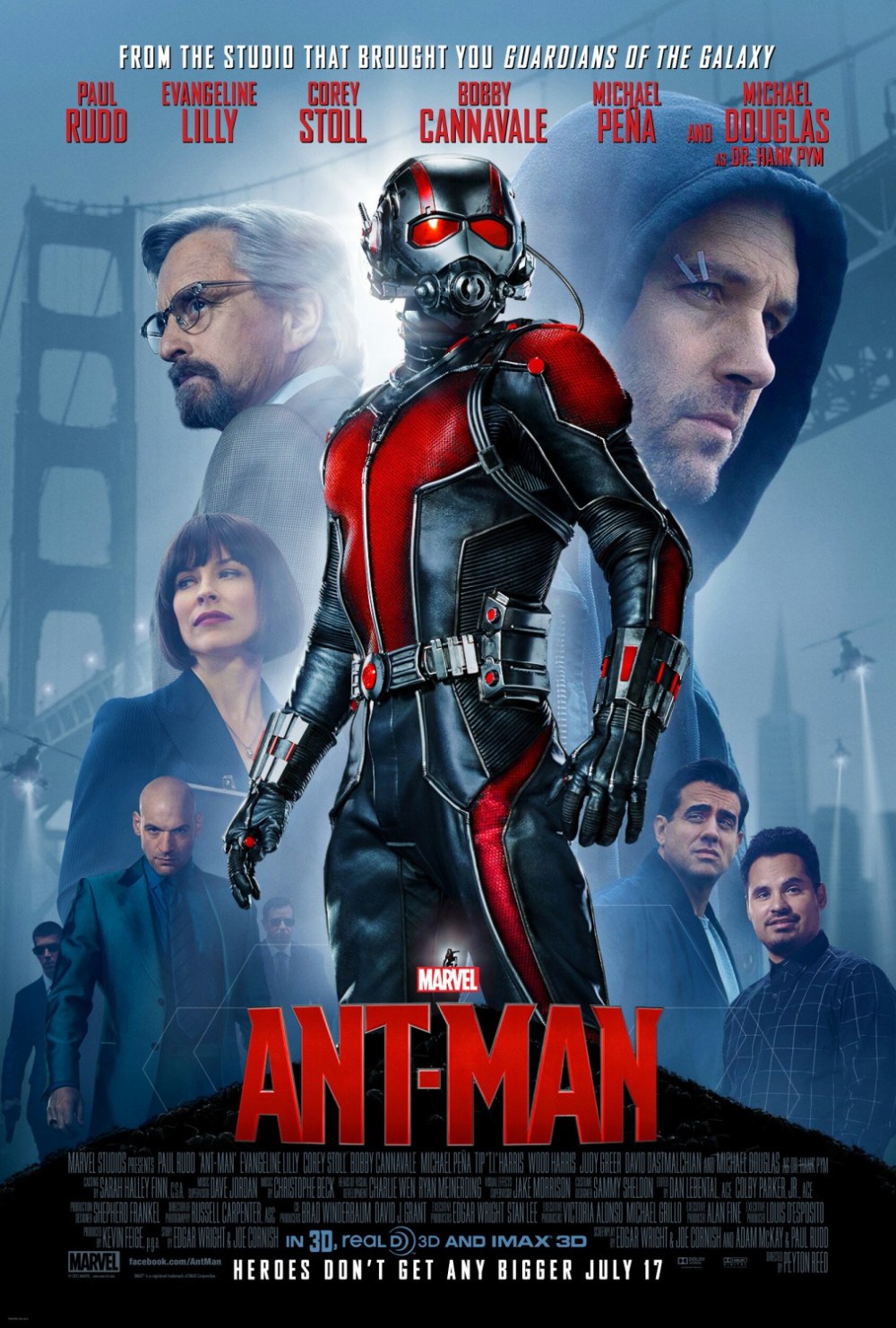
Ant Man movie poster

Part of me will always wonder what “Ant-Man” would have looked like had Edgar Wright not left the project. Wright has long since proven to be a wonderful talent behind the camera with “Shaun of the Dead,” “Hot Fuzz,” “Scott Pilgrim vs. the World” (my favorite movie of 2010) and “The World’s End,” all of which succeeded in giving audiences an awesomely entertaining time at the movies. He left this film after having been involved with its development for several years as Marvel had different plans for it than he did, and this usually spells trouble for any cinematic endeavor. But we can only wonder so much about what could have been until we realize we will never truly know since Wright’s version was never made. When all is said and done, “Ant-Man” proves to be a very entertaining time at the movies. It is yet another superhero origin story, but one which feels fresh and unlike others that just go through the motions.

We come to meet Scott Lang (Paul Rudd) just before he leaves prison after serving a sentence for robbery (but not armed robbery). Scott was once married and has a daughter who thinks the world of him, and he is desperate to make an honest living despite his law breaking past. After a job at Baskin Robbins goes bust for him, he is contacted by Hank Pym (Michael Douglas), a brilliant physicist who invites him to take his place as Ant-Man, a superhero who can take on the bad guys no matter how big or small he is.

When it comes to superhero movies, I have long since tired of the origin story as it feels like a setup for a franchise Hollywood studios are infinitely desperate for in this day and age. “Ant-Man,” however felt like a fresh and subversive take on the origin story to where I couldn’t remember the last of its kind I had seen. The only thing it did remind me of was the Monty Python sketch about ants which showed how strong they are when it comes to lifting things far greater than their weight. Watching it also had me excited at the possibilities of what one person could do if they are shrunk down to such a miniscule size, and this is even though we would like certain body parts to be larger than they already are.

Paul Rudd is a perfect choice to play Scott Lang as his effortless charisma makes you believe Scott is an ex-con who is ever so eager to turn his life around for the sake of his daughter. This is a role which could have been played either too seriously or broadly, but Rudd manages to find a balance to where this character is not the usual brooding super hero who has occupied many comic book movies to an annoying abandon.

Of course, every superhero movie needs a strong female character, and we get one here with Hope Van Dyne. The daughter of Hank Pym, she is played by Evangeline Lilly whom we all know from the “Lost” and for playing the elf Tauriel in Peter Jackson’s “Hobbit” trilogy. Lilly’s character has to deal with many conflicting emotions when it comes to her father and Scott, and it’s endlessly fascinating to see how she handles those emotions from start to finish. What could have been an easily disposable role is made all the more unforgettable thanks to Lilly’s committed performance as someone who is still stuck in the past and trying to make a better future for herself and everyone else.

Many of us, including myself, grew up watching Michael Douglas in movies like “Romancing the Stone,” “The War of the Roses” and “Fatal Attraction,” and he has since graduated to playing the role of elder statesman in. His performance as Hank Pym is one of the best I have seen Douglas give in some time as he imbues this character with a lot knowledge and wisdom as well as a lot of heart. Hank is a deeply flawed man who does what he can to protect his family, but he ends up unintentionally wounding those closest to him in the process. Douglas is perfectly cast here as he is great at making us root for someone we almost don’t want to root for, but we end up doing so all the same.

Then there’s Michael Pena who gives a terrific performance in each and every film he is in, and he steals one scene after another as Scott Lang’s best friend, Luis. Pena infuses an infectious energy in his performance which makes you want to be a part of Ant-Man’s plan to get back at the bad guys, and his performance as Luis is another memorable role he can add to his wide variety of roles he has performed to a great extent thus far.

And let’s not forget Corey Stoll who makes for a wonderfully detestable villain as Darren Cross, an ever so bitter student of Hank Pym who looks to go into the Ant-Man business for himself. Stoll has left quite the impression on audiences ever since his role as Ernest (“who wants to fight”) Hemingway in Woody Allen’s “Midnight in Paris.” It’s nice to see he doesn’t give us the usual one-dimensional bad guy we typically expect in a summer movie, and this makes his character of Darren all the more threatening.

“Ant-Man” was directed by Peyton Reed whose previous credits include “Yes Man,” “The Break-Up” and “Bring it On,” movies I should have seen already, but anyway. Reed does fine work in balancing out the characters here with the terrific special effects on display to where “Ant-Man” never comes across as the usual comic book movie fare. It makes me excited for what will come next.

We can be sure this will not be the last time we will see Ant-Man on the big screen. After all, what’s a Marvel movie without a franchise? You can expect the usual batch of post-credit sequences that will require you to sit through the end credits and appreciate the fact hundreds of people worked hard to make this movie a reality. But for a change, I don’t find myself looking to a Marvel sequel with sarcasm. I look forward to it as a promising continuation of a story which features one of the more unusual Avengers to inhabit this ever-growing cinematic universe.

* * * out of * * * *

If You Liked ‘Captain Phillips,’ Then Check Out ‘Fishing Without Nets’

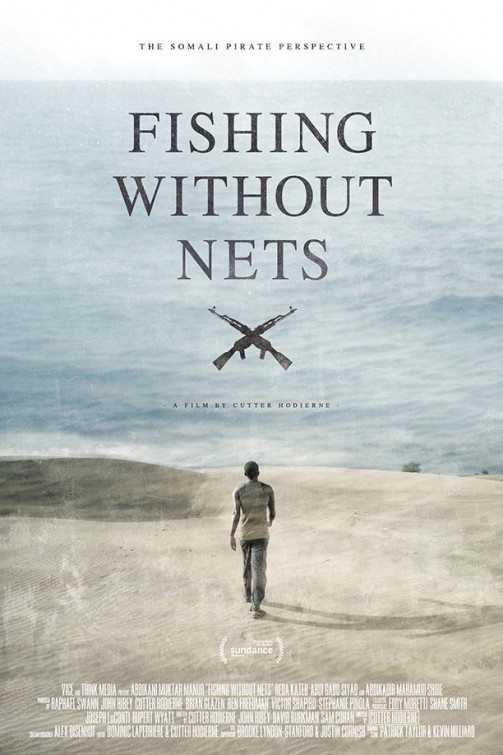
Fishing Without Nets movie poster

Fishing Without Nets” is the third movie in recent years to deal with Somali Pirates hijacking a ship at sea, and it comes on the heels of “Captain Phillips” and “A Hijacking.” The scenario may be the same, but the perspective is different this time around. While “Captain Phillips” and “A Hijacking” observed the pirates from a certain distance, “Fishing Without Nets” is told from their point of view. While no one is in a position to condone their actions, director Cutter Hodierne gives us an empathetic view of their struggles which have led them to take such drastic actions to ensure their own survival.

The movie opens on Abdi (Abdikani Muktar), a Somali fisherman, loving husband and father, walking through the village he lives in. The place is an utter mess and you get the sense it has been a mess for quite some time to where it doesn’t appear to offer much in the way of opportunities. Abdi has no interest in joining the pirates on their hijacking missions as he prefers to make an honest living through fishing, but he becomes increasingly desperate as his last few times out at sea resulted in no fish being caught. In the process of trying to get his wife and son out of Somalia to a better place, he discovers he needs a whole lot more money to make that happen, so he relents and joins the pirates on their latest hijacking mission with the promise of a huge reward. But once the pirates take over an oil tanker, Abdi finds himself wanting to escape the situation even before it descends into paranoia and chaos.

Watching “Fishing Without Nets” reminded me of movies like “Frozen River,” “Maria Full of Grace” and “Alive” which feature characters resorting to life-threatening methods as the bottom constantly threatens to fall out from beneath them. “Frozen River” in particular was about a mother (played by Melissa Leo) whose husband ran out on her with their life savings, and she is barely making ends meet at a minimum wage job. As a result, she resorts to smuggling illegal immigrants across the Canadian border into the United States which nets her enough money to keep her big screen TV from getting repossessed as well as for the down payment on her family’s new home. In any other instance she would not resort to this law-breaking activity, but when a mother’s livelihood and her family’s are at stake, you know she will do anything to keep them safe.

This is certainly the case for Abdi when he resorts to piracy to keep his family safe, and he even says at one point, “a man is not a man until he can feed his family.” When it comes down to it, “Fishing Without Nets” is about the will to survive, and this remains a universal story all around the world. When pushed to extremes, you can bet no one is going to just lie down, give up and die. No, they are going to fight for their loved ones even if it means breaking the law, so you cannot help but be empathetic to Abdi’s choices even as they put his life in serious danger.

Hodierne went out of his way to cast non-actors for this movie instead of putting known names in it, and this helps to give “Fishing Without Nets” a truly authentic feel which puts you right into the action. While some of the situations are familiar from “Captain Phillips” and “A Hijacking,” he makes this film stand out with its unique point of view, and he generates some serious tension when infighting breaks out among the pirates. Scenes where a gun is pointed at a character’s head are a dime a dozen in movies, but here those same scenes have an intensity which really shakes you up.

Also, Hodierne and his director of photography, Alex Disenhof, capture some amazingly beautiful shots on the ocean which help illustrate just how isolated all these characters are out there. The last shot pulls away from a boat drifting in the ocean, and it’s truly one of the most memorable moments of any film I saw in 2014. Considering how small of a budget Hodierne had to work with, this makes what he accomplished all the more impressive.

“Fishing Without Nets” may not be on the same level as “Captain Phillips” or “A Hijacking,” but it is an action packed and intense movie which would make for a perfect triple feature with those two. After it was over, I could see why the Sundance Film Festival decided to give Hodierne a directing award because it is a truly impressive debut which invites you into a world that is not the least bit safe to be in. Furthermore, it also allows us to understand why Somalis have been resorting to such methods in order to survive, but then again, anyone else might be forced to do the same when it comes to surviving in an endlessly harsh and cruel world. It doesn’t make it right, but it’s a truth which hopefully none of us will ever have to face like these men do.

* * * ½ out of * * * *

‘Silver Linings Playbook’ is One of 2012’s Best Movies

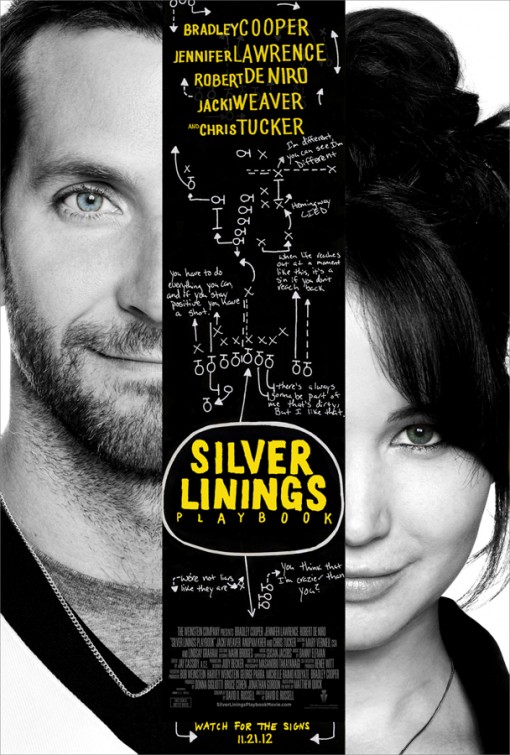
Silver Linings Playbook movie poster

I always wonder about people who have been diagnosed with a psychological problem like bipolar disorder. Some of them have a tremendous zest and passion for life which makes me begin to wonder if it’s even fair to say they are sick. Everyone else gets so beaten up and run down by life to where it robs the smiles off their faces, and yet people like Pat Solitano, Bradley Cooper’s character in “Silver Linings Playbook,” seem so inspired by everything around them. Despite Pat’s problem, I came out of this movie desperately wanting to feel the way he feels as it seems like such a waste to become so infinitely numb to everything and anything in life.

Of course, Pat’s boundless zest for life has come at a huge price for him. “Silver Linings Playbook,” which comes to us from writer and director David O. Russell, starts off with Pat being released from a mental institution after being locked there for eight months. It turns out Pat was a former school teacher who went off the deep end one day upon coming home and finding his wife Nikki in the shower with another man. Pat did not take this well to put it mildly, and he went ballistic on the guy in a way no one will ever quickly forget.

Now that Pat’s been released, he is forced to move back in with his parents (played by Robert De Niro and Jacki Weaver) as he has lost his home and job, and his wife has since moved away and filed a restraining order against him. Pat is determined to move his life forward in a positive direction and win Nikki back, but he is still troubled by the discovery he made all those months ago. It also doesn’t help that a certain Stevie Wonder song, the same one played at Pat’s and Nikki’s wedding, was playing on the stereo when Pat found his wife at home but not alone. The song acts as a terrible trigger for him, and you feel his excruciating pain whenever it starts playing near him.

Cooper is best known for his work in “The Hangover” movies, but this role really shows the kind of actor he is truly capable of being. Cooper makes you sympathize with Pat’s sincere intentions to be a better person even when he flies off the handle for unexpected reasons. Just watch him go ballistic after he finishes reading Ernest Hemingway’s “A Farewell to Arms.” From start to finish, Cooper is a dynamo as Pat, and you relish in the joy he gets from playing this character.

Cooper is also well matched with Jennifer Lawrence who provides a passionate and fiery turn as Tiffany. Now a widow after her husband passed away, Tiffany speaks her mind bluntly and without apology, and it is clear she is still coping with a devastating loss. Lawrence blew us away with her breakthrough performance in “Winter’s Bone,” and her talent as an actress has never been in doubt since. She more than rises to the challenge presented to her in “Silver Linings Playbook” in creating a character who on the surface is not exactly pleasant, and yet she still lets us see the wounded humanity which Tiffany’s tough exterior cannot hide.

The film also features a number of terrific supporting performances as well. Robert De Niro gives one of his best performances in a long time as Pat’s father who is as hopeful for his son’s recovery as he is for the Philadelphia Eagles to win every single football game they play. Jacki Weaver, best known for her Oscar nominated performance in “Animal Kingdom,” also lends strong support as Pat’s mom. There are also some inspired turns from John Ortiz as Ronnie and Anupam Kher as Dr. Patel, and even Julia Stiles shows up as Tiffany’s sister Veronica.

But one supporting performance which really stands out in “Silver Linings Playbook” is Chris Tucker’s as Danny, Pat’s friend who leaves the mental institution only to find he’s not really allowed to just yet. Not only is this the first movie Tucker’s done in a long time without “Rush Hour” in the title, but he also dials down his manic comic energy to give a surprisingly naturalistic performance. Tucker is a lot of fun to watch here, and he fits in perfectly with the rest of the cast without ever upstaging anybody.

“Silver Linings Playbook” is based on the book of the same name by Matthew Quick, and it is the perfect fit for David O. Russell. His films, whether it’s “Flirting with Disaster,” “The Fighter” or even “Three Kings,” deal with complicated characters who are trying to salvage what is left of their souls so they can move on to better things. This one is no different as Pat and Tiffany need each other to get past the traumas which have come to define their lives in the present. Russell presents their story in a way which never feels the least bit formulaic, and he never ever takes the easy way out with these characters.

What I’ve come to love about Russell’s movies is how they feel alive in a way most don’t. With “Silver Linings Playbook,” you are watching lives unfold in front of you, and it is directed to where you experience what’s happening instead of just watching it. Regardless of the problems these characters face here, there is something strangely positive and fulfilling in seeing them overcome all which is holding them back. It is also exhilarating to watch characters so filled with passion and a love for life, and this film is full of them. This is really one of the most entertaining and enjoyable movies I saw back in 2012.

* * * * out of * * * *

This ‘Peter Rabbit’ is Far From Ultimate

Peter Rabbit 2018 poster

After watching the trailer for Sony Pictures Animation’s “Peter Rabbit,” I kept thinking of the times when brands like KFC and Planter’s Peanuts among others changed their image in commercials to something more hip which made them look ever so desperate to appeal to a youthful demographic. It was both hilarious and cringe-inducing to see these popular brands reduce themselves to current trends they were never created for, and more often than not, it just revealed to us how tone deaf corporate executives can be in their quest for a profit. Those of you who have seen the “Peter Rabbit” trailer can agree this is not quite the same character we grew up reading about in those wonderfully imaginative books by Beatrix Potter. Now that I have seen the movie all the way through, I can confirm Ms. Potter is rolling over in her grave.

This “Peter Rabbit” is nothing more than a bastardization of those innocent tales as the filmmakers go out of their way to modernize this material to such an infinitely nauseating extent, and it hurt to see everyone trying way too hard to be clever. The harder everyone tries to be hip here, the more depressing this movie becomes as its story becomes increasingly convoluted and eventually turns in a poor man’s version of “Home Alone” as Peter tortures his nemesis in the same way Macauley Culkin tortured Joe Pesci and Daniel Stern.

Directed by Will Gluck who previously gave us the ill-advised remake of “Annie,” this movie isn’t so much an adaptation of “The Tale of Peter Rabbit” as it is a story which exists outside of it. Even though Peter Rabbit (voiced by James Corden) came close to meeting his maker the last time he invaded Mr. McGregor’s vegetable garden, we see he has not learned his lesson as he continues to steal every single vegetable he gets his paws on. But when a new McGregor moves into town, things will become even more challenging for him and his furry friends.

The opening minutes of “Peter Rabbit” serve to introduce not only Peter, but also a number of Potter’s other creations like Benjamin Bunny (Matt Lucas), Mrs. Tiggy-Winkle (Sia), Tommy Brock, Mr. Tod and Mr. Jeremy Fisher. Seeing this, I couldn’t help but think Sony Pictures was aiming to create a cinematic universe to rival the one Marvel Studios continues to add to. If this movie succeeds at the box office, we may very well see these characters get their own solo adventures to where they might have their own “Avengers” or “Justice League” movie. Still, I don’t think we should expect “Peter vs. Benjamin: Dawn of Radishes” anytime soon. After all, neither has a mother named Margret.

Peter runs afoul again of Mr. McGregor (a completely unrecognizable Sam Neill), but a heart attack suddenly does the old man in, freeing up the rabbit and his friends to have the equivalent to an endless rave party in his home. But then into the picture comes family relative Thomas McGregor (Domhnall Gleeson) who moves in after being fired from his job at Harrods in London, and no time is wasted before he and Peter wage war against one another which involves, among other things, repeated electrocution.

Perhaps it was too much to expect the filmmakers to remain true to “The Tale of Peter Rabbit” with had its main character being portrayed as being very naughty and later paying a price for being recklessly disobedient to his elders. This particular Potter tale was a great one for kids as it taught them the value of being good, something which Peter did not value in the slightest. “Peter Rabbit,” however, defies the tale’s morality and shows how this rabbit’s rebellious ways are something to cheer on instead of lay caution to. Also, Peter’s sisters Flopsy, Mopsy and Cottontail are shown to be willing participants in his rebellious escapades, something they were not previously.

I was also shocked to see how Neill’s Mr. McGregor was portrayed as a bloodthirsty meat eater who showed no hesitation in making a rabbit pie out of those who failed to escape his clutches. This leads “Peter Rabbit” to have a “Watership Down” scene where we learn how one of his parents became a tasty meal for Mr. McGregor, and this reeks of shameless manipulation on the part of the filmmakers. At the very least, this movie is bound to appeal to vegans as much as it will to children.

Then there is Thomas McGregor, and Gleeson portrays him in a way very similar to his role as General Hux in the recent “Star Wars” movies. Thomas is such an obsessive neat freak to where he wants the toilets at Harrods to be so clean he could drink out of them, and he almost does so with a straw. I expect sick humor like this in “The Human Centipede,” not in a family movie. If you want to see Gleeson in something good, check out “About Time” or the underrated “Goodbye Christopher Robin” instead.

James Corden is a wonderful talent, and I always enjoy watching his late-night sketches which include many unforgettable carpool karaoke episodes. But when it comes to roles like voicing Peter Rabbit, he tries way too hard to be funny and hip. This was the same problem with his work in “The Emoji Movie” which, in retrospect, I gave him too much leeway on. His performance in “Peter Rabbit” is definitely spirited, but seeing him trying to be infinitely clever to where he is desperate to stay one step ahead of the audience becomes painful and exhausting as the movie drags on.

Indeed, the filmmakers try way too hard to make “Peter Rabbit” seem so hip and cool to where they include songs like Len’s “Steal My Sunshine,” a great pop song which has now been officially used once too often in movies. Gluck also includes Big Country’s “In a Big Country,” Rancid’s “Time Bomb,” Vampire Weekend’s “The Kids Don’t Stand a Chance,” and The Proclaimers’ “I’m Gonna Be (500 Miles).” You know, the kind of music Potter listened to endlessly while she wrote. Seeing the animals dancing the latest dance moves here was very dispiriting to me, but at least we never see Flopsy, Mopsy or Cottontail do any twerking.

If there is one real saving grace in “Peter Rabbit,” it is Rose Byrne. As Bea, the McGregor’s next-door neighbor, painter and animal lover, she is so infinitely appealing to where she truly lights up the screen whenever she appears. Byrne gives these proceedings a heart and soul which doesn’t deserve them, and I became infinitely jealous of Peter whenever she picked him up and cuddled him. It’s moments like those which had me wanting to be Peter, but anyway.

The children I saw “Peter Rabbit” with really enjoyed the shenanigans portrayed onscreen, and I am sure many of them will get a kick out of this movie. I, on the other hand, stared at the silver screen feeling dejected as the plot went down a road which filmmakers have traveled thousands of times before. Things get even more ridiculous when Thomas and Peter go from being bitter enemies to much needed allies. Seeing one character attempting to blow up another with dynamite is enough to bring about a restraining order. These two coming together near the end is as ridiculous as the thing which kept a pair of superheroes from beating one another to death in “Batman v. Superman: Dawn of Justice.”

“Peter Rabbit” is the first 2018 movie I have watched, and I’m positive many others which have yet to be released will be far better. Parents right now have a chance to take their children to movies which are far more imaginative and thoughtful like “Paddington 2,” but it looks like they will be quicker to get in line for this one instead. Call me a purist, but this is not how a Beatrix Potter tale should be translated to cinema. Of the many rabbits out there, this one is far from being ultimate.

* out of * * * *


‘The Shape of Water’ is Another Cinematic Masterpiece from Guillermo Del Toro

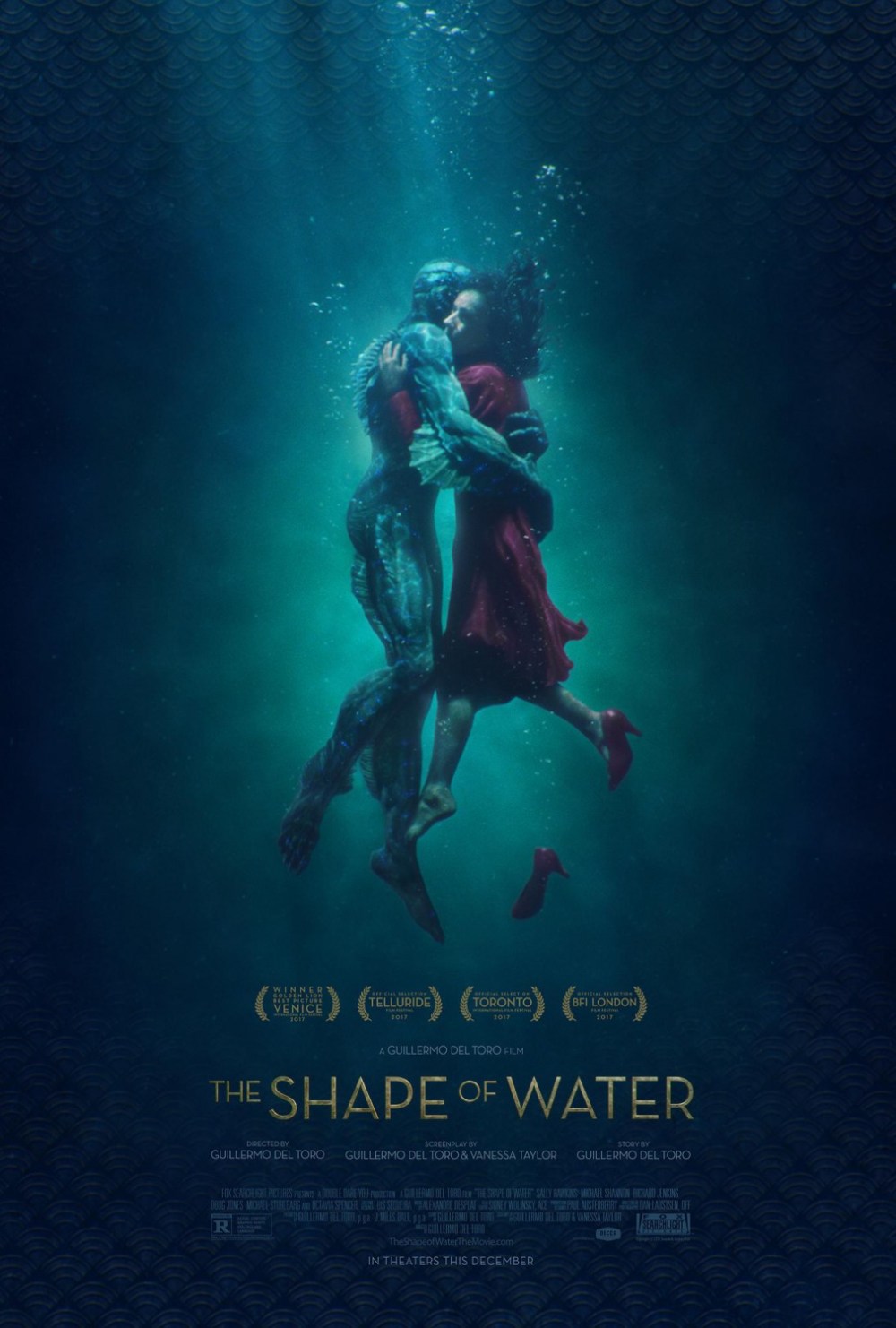
The Shape of Water movie poster

“Pan’s Labyrinth,” “Blade II” and “The Devil’s Backbone” should be more than enough proof of how Guillermo Del Toro is a cinematic god among directors. If you need further proof of this, then I suggest you watch “The Shape of Water,” his romantic fantasy which is truly one of the best films of 2017. While I tend to scoff at romantic movies as I consider them cringe-inducing exercises in endurance which prove to be even more painful than running the Los Angeles Marathon. Please keep in mind, I have run this marathon seven years in a row, and soon I will be running it yet again.

“The Shape of Water” transports us back to Baltimore, Maryland in the year 1962 when America was stuck in the middle of the Cold War. We meet Elisa Esposito (Sally Hawkins), a janitor at a secret laboratory who was rendered mute at a young age due to a neck injury. She follows a daily routine of pleasuring herself in the bathtub while boiling eggs on her kitchen stove, and then she goes to work where she performs her duties without complaint. Luckily, she has a pair of friends to converse with, in a matter of non-speaking, like artist and closeted homosexual Giles (Richard Jenkins) and her ever so talkative co-worker Zelda Fuller (Octavia Spencer) who also takes the time to interpret Elisa’s sign language. But even with friends like these, let alone the luck she has living above a movie theater, there is clearly something missing from her life.

Things, however, quickly change for Elisa when the laboratory she works at receives a creature in a tank. This creature was captured in South America by the cold-hearted Richard Strickland (Michael Shannon), and the government officials he answers to want to dissect the creature in an effort to gain a foothold on the space race. Elisa, however, has different ideas as she develops a strong connection with the creature which will not be easily broken.

I guess this might seem like a strange love story for many to take seriously, but considering the seismic shifts in how the world views, and should view, marriage and the rights of others, “The Shape of Water” could not have been timelier. As improbable as a relationship like this one may sound, Del Toro and his cast make it one we quickly become engaged in to where we are swept up emotionally in a way few movies can.

Along with cinematographer Dan Laustsen, Del Toro gives this film a look which is at once suffocating and yet wondrous. We clearly in the world of movies while watching this one, but the while this might seem like a genre picture designed to take us out of reality, it is filled with genuine emotion which is never easily earned. We can always count on Del Toro to give us a beautifully realized motion picture, but this one deserves special recognition as it had a budget of around $20 million, and yet he made it look like cost so much more. I would love to ask him how he accomplished what he did on a limited budget. In any other case, $20 million is a lot of money. But for a film like this, it seems almost too low to work with.

Sally Hawkins has wowed us as an actress in “Happy-Go-Lucky,” “Made in Dagenham” and “Blue Jasmine,” but she really outdoes herself here as Elisa Esposito as this role takes her into Holly “The Piano” Hunter territory. With her character being a mute, Hawkins not only has to communicate without the use of words (vocally anyway), she has to keep her heart open in a way which we make a habit of avoiding. This actress shows little hesitation in making herself so open and vulnerable to a creature everyone else would be quick to be infinitely fearful of.

Speaking of the creature, he is played by Doug Jones, an actor who is masterful at portraying non-human characters. Whether it’s as Abe Sapien in the “Hellboy” movies, the Faun and the Pale Man in “Pan’s Labyrinth” or even as Lieutenant Commander Saru on “Star Trek: Discovery,” Jones always succeeds in finding a humanity in these characters others would never be quick to discover or find. His performance here as the Amphibian Man is every bit as good as Andy Serkis’ in “War for the Planet of the Apes,” and I put these two actors together because many believe it is the makeup or special effects which do all the acting for them, but it’s their acting which makes their characters so memorable. Jones, like Hawkins, has to communicate without the use of words, but he has an even bigger challenge as his character cannot even use sign language. His work deserves more credit than it will likely get at awards time.

“The Shape of Water” also has a terrific cast of character actors, and they are the kind who never ever let us down. Richard Jenkins is right at home as Giles, a closeted gay man who, when he tries to reach out to someone he cares about, is quickly rebuffed not just by that someone, but also by a society which thoughtlessly excluded many for all the wrong reasons. Jenkins never resorts to giving us a cliched version of a homosexual, but instead makes us see Giles as a man who is kind and considerate but still ostracized to where he is willing to break the rules to help a friend who doesn’t judge him in the slightest.

When it comes to Octavia Spencer, you can never go wrong with her, and she is a wonderful presence here as Zelda Fuller, Elisa’s co-worker who is never at a loss for words. She also makes it clear how Zelda is a force to be reckoned with, and this is something the character’s husband really should have taken into account a long time ago.

There is also Michael Stuhlbarg who portrays Dr. Robert Hoffstetler, the scientist who sees far more value in the Amphibian Man being alive as opposed to becoming a glorified science experiment worthy of dissection. This is a typical role you find in genre films, but Stuhlbarg inhabits the role to where Robert can never be dismissed as a simple stock character. Even as we learn there is more to Robert than what we initially see on the surface, Stuhlbarg makes us see this is a man who values understanding and compassion over greed. You know, the kind of person we would love to see in the White House at this moment.

But one actor I want to point out in particular is Michael Shannon who portrays Colonel Richard Strickland, a man hellbent on putting his country before everything else, including his wife and kids. Shannon succeeds in rendering Strickland into a more complex character than you might expect. As we watch Strickland get berated by his superiors for not doing his job like they want him to, Shannon shows us a patriotic American who wants to serve his country well, but we watch as his spirit becomes as corrupted and diseased as those two fingers of his which were torn off his hand by the creature and reattached with limited success. As the movie goes on, those fingers of his become a disgusting color as they come to represent the corruption of his soul. Other actors would be intent on making you despise such a villainous character, but Shannon makes you see a man whose desperation has forever blindsided his worldview.

Whether or not you think “The Shape of Water” breaks any new ground in the world of motion pictures is irrelevant. All that matter is how it is a beautifully realized film which takes you on an incredible voyage only the best of its kind can. It also reminds you of how valuable a filmmaker Del Toro is in this day and age when distinct voices in the world of cinema are continually minimized and rendered silent for the sake of profit. Here’s hoping you get to see it on the big screen where it belongs before Donald Trump leads us into a war no one in America is prepared to be drafted into.

* * * * out of * * * *

’28 Weeks Later’ is a Shockingly Effective Sequel

28 Weeks Later movie poster

When I heard that they were making a sequel to Danny Boyle’s “28 Days Later,” I couldn’t help but wonder why. How could you make a sequel to a movie like that without it being the same old thing? 20th Century Fox put together a company called Fox Atomic which specializes in horror movies and sequels to horror movies because god forbid the money stops there! They made “The Hills Have Eyes 2.” I thought “The Hills Have Eyes” remake was great, but I was not as excited about seeing the sequel because it had a different director who made some bad horror films.

Now they have released “28 Weeks Later.” That’s great, milk it as much as you want. No mercy or respect for the franchise. Then again, these were my thoughts before I actually watched the movie. It had the good luck of at least having Danny Boyle and Alex Garland on as executive producers, so I was assured this follow-up wouldn’t be of poor quality. Under the tense direction of Juan Carlos Fresnadillo, who previously directed “Intacto,” “28 Weeks Later” adds itself to the list of sequels which equal the original in terms of vision and sheer terror, and it ends up delivering what it promises; an extremely intense and unsettling movie going experience.

All the main characters from “28 Days Later” are absent here, so we have a whole new cast of characters trying to stay alive while stranded in a part of the world engulfed by the rage virus. It starts off with a group of English people who have managed to find refuge in a home where they hide from the infected. The main characters are a married couple played by Robert Carlyle and Catherine McCormick who are seen preparing dinner when the movie begins. Most of the actors here are not too familiar to audiences, and this helps the movie in its approach. Carlyle will definitely be familiar to those who remember him from “Trainspotting” and “The Full Monty,” and each of those movies show off how much of a range he has as an actor.

The opening of “28 Weeks Later” has a supreme amount of tension that never lets up. I got to see it at Grauman’s Chinese Theater, and I sat in the back with my hands over my ears because I was eagerly anticipating all hell breaking loose as soon as the movie started. I typically watch most horror movies like this because it’s not what I see that gets to me, it’s the sound. Look no further than the original “Halloween” for an example of this.

The opening is brilliantly shot because you feel like you are right there with these people inside the house. You don’t see the outside world until they do, and it ain’t pleasant. When the infected make their inevitable entrance, Carlyle’s character ends up abandoning his wife who screams at him from a window in disbelief. He runs away from the infected at warp speed, and the fact he escapes with his life is both astonishing and shameful.

The story then moves to London after the outbreak with things finally returning to normal. The United States Army has taken over, and the first of the survivors are now coming back into the safe zone to start their lives over in a land now free of infection. We get to meet the children of Carlyle’s and McCormick’s characters who are played by Imogen Poots and Mackintosh Muggleton. Carlyle’s character is, of course, unprepared to tell his children how their mother perished among the infected, and he lies to them about what happened. As much as you despise him, you can’t help but feel a little sorry for him. Don’t you hate that?

Anyway, his lie about their mother being killed gets exposed when she is found alive in a closed off area of England. She has been bitten by the infected, but somehow has not been overtaken by the rage virus. Her blood seems to have some sort of immunity from the virus which keeps her from going completely psychotic. It is incredibly tragic that husband doesn’t have the good sense to keep himself from kissing her. A kiss is just a kiss? Not in this movie!

As you can expect, all hell breaks loose, otherwise there wouldn’t be a movie. The military tries to control the situation and they end up resorting to, when nothing else works, code red as they quickly see there’s no stopping the spread of infection. They can’t tell the difference between who is human and who is infected, so they resort to killing everyone to keep the situation contained. What makes this scenario so terrifying is how realistic is presented here, and the depressing solution the military takes to contain this horrifying situation is painfully understandable as it threatens the rest of the world. So, those young kids now have to find their way out of the “safe zone” and run away from those who have no choice but to bite and infect them.

There is a lot of shaky handheld camera work in “28 Weeks Later” which gives the movie an immediacy which sucks you in just like the original did. I have been back and forth in regards to hand held camerawork because it can veer easily from being exciting to the becoming relentlessly annoying. Don’t even get me started on the later movies of Woody Allen. I can’t even begin to tell you how nauseous I got while watching “Deconstructing Harry” on the big screen.

But here, the shaky camerawork is perfect as it brings us right into the chaos these characters are feverishly trying to escape. The camera goes all over the place to where we can’t tell where the exit is or if we can trust the person next to us. Fresnadillo is excellent in drawing you into the mindset of the chaos and confusion of what the characters are forced to experience. What if you can’t find your way out? What if the person next to you is infected? Where is the safest place to go? Everyone is running for dear life, but in which direction does one head?

What also makes “28 Weeks Later” work is it’s not just based on thrills and chills as there is an intelligence at work here. There’s a subtle critique of the seemingly endless occupation of military forces in other countries as they futilely try to control a situation completely beyond anyone’s control.

Aside from those kid actors who are terrific and very down to earth, there are a few others worth mentioning. Jeremy Renner plays Doyle, a military shooter who quickly develops a conscience when he decides not to follow orders and instead save a little boy who doesn’t deserve to die. I also want to mention Rose Byrne who plays Army doctor, Scarlet. I like it when a movie where there is a very strong female character who thinks she has found the key to eradicating infection. Of course, no one listens to her because the quick fix-it answer is to kill the host and everyone else if it comes into contact with. Byrne is very believable as a soldier who has no choice but to hold it together when the world around her quickly crumbles.

“28 Weeks Later” is an incredibly tense ride from start to finish, and it never lets up. There’s an unnerving sequence where the main characters have to flee from a chemical attack by going into the underground subway which is pitch black, and the only way they can make their way through is with night vision. This proves to be one of the scariest scenes I have seen in a motion picture in the longest time.

Whereas “28 Days Later” found a measure of hope at its conclusion, “28 Weeks Later” is unrelentingly bleak. Any hope is vanquished by the end, and its last shot features a famous landmark which shows how inevitable it is infection will spread from country to country. This sequel proves to be very respectful of its predecessor, and it goes even further into the nightmare the world is caught up in and beyond everybody’s control. It makes me eager to see “28 Months Later” which I hope will at some point in the future become a reality. But personally, I am waiting for “28 Millennium Later.” The way things are going right now, humanity is doomed in one way or another.

* * * ½ out of * * * *