‘Judgment at Nuremberg’ Anniversary Screening at New Beverly Cinema

Judgment at Nuremberg movie poster

Stanley Kramer’s classic movie “Judgment at Nuremberg” got a very special screening at New Beverly Cinema on October 1, 2012. At the time, the movie was celebrating its 51st anniversary, and introducing it was Stanley’s widow, Karen Kramer. She took the time to talk not just about “Judgment at Nuremberg,” but also of her husband’s other work and the impact his films have had overall.

Karen was actually at the Cinerama Dome in Hollywood the night before where they were showing another of her husband Stanley’s best-known works, “It’s a Mad, Mad, Mad, Mad World.”

“That film was all about greed,” Karen said. “And of course, globally we thought that was bad in 1963 when that film was made. But of course, globally now it’s become a national pastime.”

“Judgment at Nuremberg” is a different film, Karen said, and one which audiences of all kinds owe it to themselves to see again and again. Like “It’s a Mad, Mad, Mad, Mad World,” this movie is as important to watch today as it was when it first came out.

“I don’t think any of us thought that genocide would ever exist again after World War II,” Karen said. “We knew all the facts and we knew all the heinous crimes that had been committed, but genocide unfortunately is running rampant again. So, this film is unfortunately very relevant (to today’s world events).”

Stanley had made “Judgment at Nuremberg” 14 years after World War II ended, and back then no studio wanted to make it and he had a very difficult time raising the money for its production. But Karen said Stanley thought it was very interesting to explore what happened with the judicial system during that time. The movie was inspired by the trail of four German Judges at Nuremberg who were tried for crimes perpetrated by the Nazi party. The question, however, becomes one of whether or not these particular Judges were fully aware of what Adolf Hitler was doing to the Jews.

“This (trial) is the one he chose because the judicial system was supposed to represent globally men of honor, men with education, men who were supposed to be fair to humanity, and these men of the Third Reich sanctioned all those heinous crimes,” Karen said. “But then I wonder about this and I think, yes of course they’re guilty but then you think about their position which was also explored in this film; if you were a member of a judicial system of the Third Reich, what would happen if you said no, I’m not going to participate? Would you lose your life, your reputation, your financial security? I suppose there was pressure put upon these men, but it doesn’t make it right.”

Karen was correct in saying Stanley explored this subject very well in “Judgment at Nuremberg.” The movie was nominated for 11 Academy Awards and Stanley himself got a Best Director nomination. It took home two Oscars, one for Maximilian Schell who won for Best Supporting Actor as defense attorney Hans Rolfe, and the other for Best Adapted Screenplay written by Abby Mann. Stanley made over thirty movies which were mostly socially conscious films, and they garnered over eighty Oscar nominations. Karen remarked how Stanley himself never got an Oscar, but that he did receive the Irving Thalberg Award which is the most important award anyone can get from the Academy of Motion Picture Arts and Sciences.

Karen went on to tell a story about Montgomery Cliff who gives an astonishing performance as Rudolph Peterson and of how he had trouble remembering his lines on the day his scene was shot.

“Stanley and Spencer Tracy (who played Chief Judge Dan Haywood) got together and they said look, I think we can handle this but a little bit differently,” said Karen. “So, Spencer went over to Montgomery and said look, I know you can’t remember the lines but you know what this scene is about. I’ll sit very close to the camera and just look into my eyes and just play from the heart, which of course he did.”

Karen also talked about Judy Garland whose performance as Irene Wallner garnered her an Oscar nomination. Clift did his performance on the stand first and then Garland did hers, and Clift came to watch Garland perform.

“I think he wanted to make sure she wasn’t better than he was, but that’s how actors were then,” Karen said. “So, he’s watching this and he’s crouching down in a corner someplace watching her perform, and he’s crying and she’s crying. He’s just undone and the minute she finished of course everyone applauded her, and he just went over to Stanley and he says, ‘you know Stanley, she played it all wrong!'”

Karen said “Judgment at Nuremberg” is one of her late husband’s better films and that he used film constantly as a tool or weapon to fight against discrimination, bigotry and man’s inhumanity. She also made it clear how Stanley didn’t make a movie unless it had something to say.

“He didn’t think of himself as a message filmmaker which is what interested him, and he took risks,” Karen said. “His life was threatened often, and when we made ‘Guess Who’s Coming to Dinner’ our lives were threatened because interracial marriage was against the law in sixteen states when he made that movie. He was always questioning things like in ‘High Noon;’ he would question standing up even if you’re alone to do the right thing even if people don’t support you. He often risked his financial security and his reputation to tell his stories.”

A big thank you to Karen Kramer for taking the time to talk about her late husband Stanley Kramer and this movie of his which continues to stand the test of time. “Judgment at Nuremberg” is as riveting to watch today as it was when it first came out a half a century ago. Don’t let the black and white photography turn you off of seeing this classic film because the issues it ponders are the same ones we are forced to deal with today.
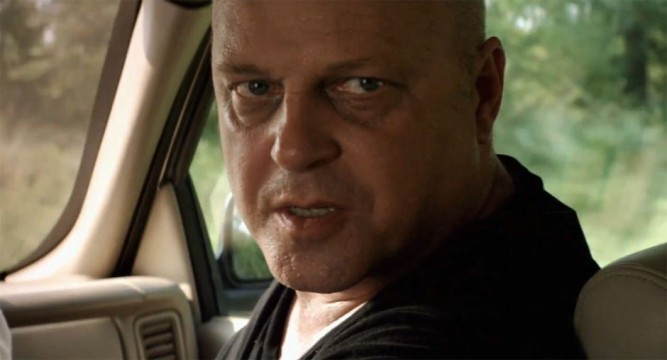
Michael Chiklis Talks About His Acting Career and ‘Parker’

Michael Chiklis in Parker

WRITER’S NOTE: This article was written in 2013.

Michael Chiklis has been a very busy actor lately. Ever since the transformation his career took when he played Vic Mackey on “The Shield,” he has gone on to appear in two “Fantastic Four” movies as the Thing, and he now stars alongside Dennis Quaid on the CBS television show “Vegas.” But now he’s back on the silver screen in “Parker” which stars Jason Statham and is directed by Taylor Hackford, and in it he plays the vicious bank robber Melander. Chiklis has become one of the few actors working today who can go from television to film and from playing a hero to portraying a villain with relative ease. Many actors get typecast to where audiences won’t allow themselves to see them as anything else, and this is why we admire Chiklis because he appears to have completely bypassed that hurdle.

I got to catch up with Chiklis when he was at the press conference for “Parker” which was held at the Four Seasons Hotel in Beverly Hills, California. He told us he would soon be directing an episode of “Vegas,” but this is nothing new for him as he previously directed episodes of “The Shield.”

Michael Chiklis: I have fun with it. I deliberately boss everybody around… No, I’m kidding. I don’t make a big deal of it. It’s usually I take a lot of gut from my fellow actors because they want to give you a hard time. It’s to be expected and I just take it.

One of the reporters told Chiklis that Melander is “a real dick,” and he responded to this description with a big laugh. It was never lost on the actor how his character was a complete bastard, and he reveled in the opportunity to play a full out bad guy. While Vic Mackey from “The Shield” may have been an antihero, Melander has no redeeming qualities whatsoever.

MC: This guy’s a malevolent prick and great. I can just sort of unabashedly get to be a dick which is fun. When you get to do that in real life? You don’t unless you want to be a pariah. One of the wonderful things about being an actor is you get to walk a mile in another man’s shoes, and the other great thing is that you get to step out of them and not be in the shoes anymore. It was wonderful to sort of step into a pair of shoes of a guy who’s all about himself; a narcissistic, sociopathic douche bag and just let that be.

Since he’s become known for playing such hard boiled or douche bag-like characters, it is tempting to think Chiklis is not much different from the ones he played on “The Shield,” “Vegas” or “Parker.” But he didn’t need to convince us he isn’t because if he was like Melander in “Parker,” he would be in jail or even on death row. Chiklis does get a kick out of how people can mistake him for the characters he has played, but it’s clear he’s not out to live up to this image we have of him either.

MC: I think Vic Mackey in particular had an effect on people. I’ve had grown men shake my hand like this (and he showed their handshakes to be full of nervous energy), and I’m like, oh dude it’s all right, I’m not gonna hurt you. That’s happened, but as the father of daughters that’s not such a horrible thing. There are benefits to that. Sometimes it’s scary though because some people really don’t have a capacity to separate truth from fiction. It is a movie and we’re actors playing parts, and I’m not fucking Vic Mackey, I’m not. I’m not a malevolent prick, I’m just not, but I have fun playing one and I’m sure I’ll play others in the future. I like to mix it up and play all kinds of people.

Like I said, Chiklis is one of those actors who can go from playing a good guy to playing a bad one, and we never doubt he will give a strong performance as either kind of character. All of us at this roundtable interview couldn’t help but wonder if he likes playing bad guys more than good ones, or if he likes playing both types of characters equally. But like any other actor, famous or not, Chiklis is not looking to play the same type of person over and over again.

MC: The reason why that’s true is because I don’t prefer to do one or the other. I like to all of that. I’m terrified of complacency and I do not like to be boxed in. I’ve always wanted be diverse, and the more diverse you are, the more of an opportunity you’ll have to play a wide variety of roles. Some people thrive in an area that they have their note in and their terrific at it, and they just sing the note all the way to the bank and good for them. That’s just not my way. I can’t do that.

Chiklis compared his interest in acting roles to his iPod which he said has music by The Tubes and Sergei Rachmaninoff on it. What he ended up saying made perfect sense as none of us like to listen to the same type of music all the time. We need variety, and it’s this same type of variety which Chiklis demands as an actor. Now most actors don’t get to indulge in any kind of variety, but he admits many give him strange looks when it comes to his taste in things.

MC: I have eclectic taste in film and television and musicals. People freak out because I went to see “Glengarry Glen Ross” when I was just in New York, and then the next night I was at “Newsies and they were like, what the? And I dig both because that’s life. I’d hate like hell to look at the same flower every day no matter how beautiful it was. It just makes to me a more interesting life and career, and I’m just blessed that I’ve been able to afford the opportunity to play these characters.

Now Chiklis didn’t always have this diversity in his career as for years he was known for being on the comedy-drama TV series “The Commish” which had him playing a suburban police commissioner in upstate New York named Tony Scali who worked through various problems with humor and creativity. This led to Chiklis to being typecast as a nice guy in film and television, and to him playing the same type of character in many projects like the ill-received television series “Daddio.” It took someone very close to make him realize what he had to do to change his future as an actor.

MC: A lot of the diversity in my career which I always desired, but I didn’t necessarily know how to attain, I credit to my wife because she made the statement to me years ago: it’s not incumbent upon the studios to reinvent you, it’s incumbent upon you to reinvent yourself. And I just looked at her and went that’s right, that’s correct and that’s brilliant. Actors become puzzle pieces in that he fits there, she’s fits there, and you can understand that. So, I was fitting in the rolly polly affable guy place for a lot of these people, and I couldn’t just expect them in osmosis to go like, oh yeah, Chiklis, bad ass mother fucker because they’ve never seen that from me. So, she simply pointed out, you want them to see you that way? You’ve got to show them that and you’ve got to demand that.

Demanded it he did, and Michael Chiklis’ acting career is now stronger than it has ever been. He plays a remorseless bank robber in “Parker,” and at the same time he portrays a Chicago mobster on “Vegas.” It doesn’t look like this actor will ever lack for a variety of roles at this point in his life, and this says a lot about his talent as well as his perseverance in an industry as fiercely competitive as this one is. More power to him!

CLICK HERE TO CHECK OUT THE EXCLUSIVE INTERVIEW WHICH I DID WITH MICHAEL CHIKLIS FOR THE WEBSITE WE GOT THIS COVERED.


Olga Kurylenko on Playing a Lost Astronaut in ‘Oblivion’

Olga Kurylenko Oblivion photo

WRITER’S NOTE: This article was written in 2013.

Ever since her breakthrough turn as Bond woman Camille Montes in “Quantum of Solace,” French actress Olga Kurylenko has left quite the impression on us. In her latest film, “Oblivion,” she stars opposite Tom Cruise as Julia Rusakova, an astronaut who literally drops out of the sky and reveals to him the truth of his existence which has long since been denied to him. It’s a movie with many twists and turns, and talking about is tricky because nobody wants to give any important plot points away, but Kurylenko did her best to talk about “Oblivion” without spoiling anything for us at the movie’s press conference held at the Universal Studios backlot.

I was lucky enough to attend this press conference, and Kurylenko proved to be as beautiful off screen as she is on it. The role of Julia was one she put a lot of thought into, and she explained how the character appears onscreen was the result of her own research as well as working with the movie’s director Joseph Kosinski, who previously directed “Tron: Legacy,” and Cruise. The way she sees it, the creation of Julia as a character was the result of a lot of team work.

Olga Kurylenko: Basically, I spoke a lot, with him (Kosinski) and with Tom. Also, the three of us would have meetings to discuss our characters and our characters’ backstory. We rehearsed. I watched videos of astronaut trainings. I watched some old romantic movies as a preparation and inspiration. It’s a work in process. You grow together.

One has to wonder how difficult it was for Kurylenko to play Julia because there is only so much she can reveal about this character in “Oblivion.” How does one go about playing a character without accidentally unlocking their secrets sooner than later? A simple look or a line of dialogue can easily unravel a character’s mystery because these days audiences are always trying to stay one step ahead of the filmmakers, and keeping secrets from them is damn near impossible. However, it was the secrets of Julia that really made Kurylenko want to do this movie.

OK: What I found very interesting was the fact that there was this mystery to Julia, that I couldn’t reveal everything right away about her after her very first appearance on screen, and that she had to unravel and uncover her story during the whole film. She’s a completely different thing in the end than what we see her as in the beginning. All that mystery was interesting to work on.

Of course, one question on all of our minds was of what it was like for her to work with Tom Cruise. So many things have been said about Cruise over the years, both good and bad, but Kurylenko had nothing but the kindest things to say about him. In fact, she even said how stunned she was at how much he was willing to give as an actor during filming.

OK: He’s a big star and he’s a wonderful actor. We know that, but only his partners and other actors know how much he gives to the other. He gives so much. He’s such a generous partner, and that’s not always the case. I’ve never seen him sit in his trailer. He’ll always be there. If the camera was on me, even if he was far away, just for my eye line, he would prefer to be there. He would never leave the set, even if I told him seriously, I don’t need you, he would still be there because he is involved one hundred percent. That’s a wonderful thing.

Kurylenko also described Cruise as being especially supportive in their scenes aboard the Bubbleship, a spaceship which Cruise’s character, Jack Harper, flies all over what’s left of planet Earth. Those scenes were shot in a gimbal on a soundstage, and there is some behind the scenes footage which shows the two of them spinning all over the place and going upside down which quickly reminded me of a certain amusement park ride I went on as a kid. Being that Cruise is also a licensed pilot, this allowed Kurylenko to put her complete trust in him.

OK: He talked me through it. He knows how it works. It’s very reassuring to have a partner like that. He’s not just an actor who’s there who has no idea. He technically knows how things work. You feel safe with him. I threw up in the beginning when I came out of the (gimbal), so that was done, but I don’t get sick from motion. Thank God. I don’t care. I can be on a boat and everything. It’s rather that I don’t like it psychologically, being thrown around. I don’t enjoy rollercoasters. That was like being in a rollercoaster and a washing machine at the same time because it was spinning all the time. I usually don’t like to go into washing machines when I have a choice, but here I didn’t have a choice. Tom looked at me and said, “You don’t have a choice.” In a way, it’s all these great memories. Today, they sound very funny, so it’s great to remember. It was funny how I slowly adjusted to that machine, because in the end, I was fine. But, in the beginning, it was tough.

Olga Kurylenko continues to give memorable performances which will eventually have you remembering her for a body of work instead of just one single performance. Other actresses like Jane Seymour, Famke Janssen and Diana Rigg have become known for more than being a Bond woman, and the same is certain for Kurylenko as she moves on to her next project which is Terrence Malick’s “To the Wonder.”

Martin Freeman on Playing Bilbo Baggins in ‘The Hobbit’

Martin Freeman The Hobbit photo

WRITER’S NOTE: This article was written in 2012.

He’s made a name for himself on BBC television shows like “The Office” and “Sherlock,” and he had the lead role of Arthur Dent in “The Hitchhiker’s Guide to the Galaxy.” But now actor Martin Freeman gets his biggest role to date as Bilbo Baggins in “The Hobbit: An Unexpected Journey.” This character was previously portrayed by Ian Holm in Peter Jackson’s “Lord of the Rings” trilogy, but Freeman now has the privilege of playing Bilbo in a movie which takes place sixty years before that trilogy’s beginning.

When it comes to portraying a character who has been played by a well-known actor in previous films, the task can seem quite daunting. Any actor in this position usually has to deal with a shadow hanging over them as their performance will always be compared to what came before. Holm’s Bilbo, however, functioned more as a cameo in “The Lord of the Rings” movies as he was only in them briefly. Furthermore, Freeman more than makes this role his own as he takes Bilbo from being someone who’s just minding their own business to someone willing to risk their life to help others. Still, you had to wonder if Freeman spent a lot of time studying Holm’s work in the previous films. Eventually, he cleared this up with Steve ‘Frosty’ Weintraub of the Collider website.

“I’ve watched the films again, obviously in more detail before I came to this. I looked at Ian’s (performance) more when I needed to. Again, I don’t really know how much I should say, but there were points where it was relevant for me to look very closely at Ian’s performance,” Freeman told Weintraub. “But generally, no because I think we’re quite good. I know why I was cast; do you know what I mean? Because I think we’re not that dissimilar, physically or whatever else. I think if I was, I don’t know, Jeff Goldblum or someone, then I might be thinking right, hang on, if he’s the older me I’d better attend more to something else maybe. Well, grow, for a start. But no, ’cause I think I was always trusted with it.”

“All I was told, which I think was flattery, and probably bollocks, was you are the only person to play it. So, I thought, well if they think that, then I’ve got to trust that,” Freeman continued. “And there’s only so much you can run with someone else’s thing. It’s very helpful in the way that it’s brilliant as he is always brilliant, and it’s a beautiful establisher of that character and a very loved one for obvious reasons. But it can also hamper you if you’re thinking, like in the barrels, if there’s even part of me thinking, how would Ian have done this, then I’m fucked. So, I’ve got to let that go. I’ve always been mindful of it because I’m familiar with it. But I think the work for that connection was done in the casting of me, rather than what I’m then going to do on top of it.”

In an interview with Colin Covert of the Toledo Blade, Freeman described Bilbo as being neither “the main guy in the room” or an “alpha male.” Looking back at “The Hobbit: An Unexpected Journey,” this gave the actor a great starting off point as he has to take this character from being a timid and rather pompous man to one who acts selflessly. Freeman really gives an exceptional performance as Bilbo’s transition from a self-centered person to a warrior of sorts feels seamless and subtle. You never consciously catch the actor trying to shift his character in a certain direction because it all seems to come about naturally.

One of the movie’s pivotal scenes comes when Bilbo meets up with Gollum who is again played by the brilliant Andy Serkis. This scene was actually shot in the first week of production and apparently took a whole week to film. When it comes to CGI characters, the actors usually have to play opposite something or someone which isn’t there. Fortunately for Freeman, Serkis was there on set to give life to Gollum, and he talked with Meredith Woerner of i09 about what it was like working with Serkis.

“Andy feels real,” Freeman told Woerner. “Obviously he doesn’t look like Gollum, strictly speaking, but he’s being Gollum. And I’m an animal of the theater and you’re used to using your imagination. You don’t have to use your imagination that much when you hear that voice and see the physicality and you think, oh there’s Gollum. There’s a man or a creature that wants to eat me. It didn’t feel very cheated at all. Gollum is such a beloved character. There’s a special place in people’s hearts for Gollum, I think. People who love the books and the films are delighted he’s in this, I think.”

Seriously, Martin Freeman gives a pitch perfect performance as Bilbo Baggins in “The Hobbit: An Unexpected Journey” to where you wonder if he and Ian Holm were actually separated at birth. This bodes well for the next two movies in Jackson’s “Hobbit” trilogy, and it will be interesting to see where Freeman takes this character from here.

One other thing; Freeman made it clear how Leonard Nimoy’s song “The Legend of Bilbo Baggins” did not play a big part in his research for the role.

“It helped me enjoy that three minutes of listening to it,” Freeman said of the song. “I’m still baffled by it.”

SOURCES:

Steve ‘Frosty’ Weintraub, “Martin Freeman Talks the Ring’s Impact on Bilbo, Being a Favorite for the Role & a Lot More on the Set of THE HOBBIT,” Collider, October 25, 2012.

Colin Covert, “Q&A; with ‘Hobbit’ Martin Freeman,” Toledo Blade, December 17, 2012.

Meredith Woerner, “The Hobbit’s Martin Freeman on dwarves, Gollum and Leonard Nimoy,” i09, December 16, 2012.

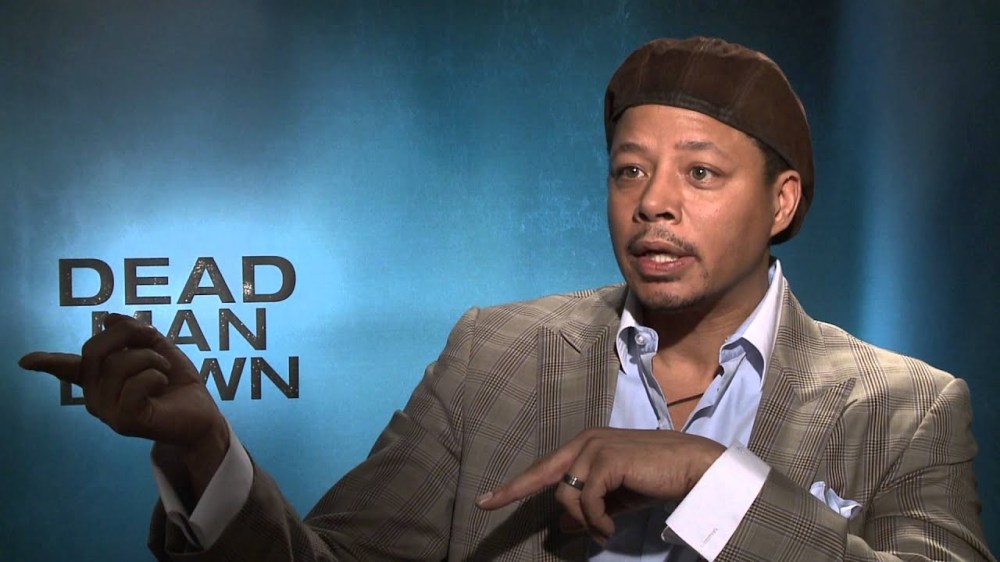
Terrence Howard On His Future As An Actor and ‘Dead Man Down’

Dead Man Down Terrence Howard photo

WRITER’S NOTE: This interview took place in 2013.

It was so infinitely cool to hang out with actor Terrence Howard during the Los Angeles press day for “Dead Man Down.” Hearing him speak was endlessly fascinating because, on top of being an actor, he is also very knowledgeable on the subjects of science and the Bible, and his intelligence has led him to make a number of interesting choices in the roles he has played. Throughout the interview, he talked about how he chose to portray crime lord Alphonse Hoyt and what the future holds for him as an actor.

Now when you hear about crime lords in movies, you usually expect actors to give scenery-chewing performances which are way over the top. But at the same time, many actors fall into the trap of making these characters seem like comic book characters as opposed to fully developed human beings. The beauty of Howard’s performance in “Dead Man Down” was that it was never over the top, and he allowed himself to portray Alphonse in a way you wouldn’t necessarily expect. In his conversations with the film’s director Niels Arden Oplev (who made the original version of “The Girl with the Dragon Tattoo“), Howard came to realize he wouldn’t be playing the same old crime lord we have become all too familiar with.

Terrence Howard: That man (Oplev) told me, “I’m going to change your life. I’m going to make you a bad guy that nobody has ever seen before,” and he gave me all the tools necessary to accomplish it. I think he’s a genius for that. What he did in creating these characters where all of them were compromised from the start was a beautiful, beautiful thing. There’s no good guy, there’s no bad guy in the movie. Everyone makes a crucial mistake in trying to make you pay for what you did yesterday with the resources of today.

Having seen “Dead Man Down,” I couldn’t agree with him more. Alphonse Hoyt is a bad guy, but he is also a very complex character who cannot be dismissed as a one-dimensional villain. Even the characters played by Colin Farrell and Noomi Rapace are in a morally gray area as they have suffered tragedies in their own lives and are out to get revenge in the worst way possible. Howard compared the characters to another movie he co-starred in.

TH: It’s like “Crash;” everyone was a bad guy somewhere along the way. Even Ryan Phillippe’s character, who was the good guy, ends up doing something terrible at the end of it. I think that’s what cinema’s about. it’s supposed to teach you about humanity and the choices that we’re making whether it’s good or bad, and the audience can watch and hopefully gain some type of understanding of how to place the stumbling blocks of yesterday in a way on the path that they become stepping stones for those that will follow us. We are all still one person even though we see each other as separate individuals.

During the interview, Howard made it very clear to us that Alphonse was not born a bad guy. While his character leads a life of crime, we come to understand he never meant to go down the dark path that he did. This may not make any of his deeds in “Dead Man Down” forgivable, but it helps us to understand where he came from. Howard talked about how he saw the character at length and how his own personal experiences came to inform his performance.

TH: He (Alphonse) wanted to fit into society. Now mind you, he was part of a disenfranchised social group as a young black man, and in being a light-skinned black man growing up in the 70’s, black people didn’t appreciate him and didn’t like him and white people didn’t like him. When I was a kid, I was called a no nation motherfucker because I couldn’t hang out with black people and I couldn’t hang out with white people, so I had to find some type of foundation within my own family group. When I went down to Brazil, I found my family because everybody looks like me there. My character just wants to be accepted; he wants to be respected. He’s like Michael Corleone who said, “I tell you within five years we are going to be complete and above board. Just give us those five years and all of the businesses are going to be respectable.” That’s what he’s hoping, but Michael Corleone was never able to achieve that because you cannot gain peace by creating problems for someone else.

It’s natural I suppose to assume Howard based his character on another crime lord or that he did research on kingpins from history, but he actually found inspirations from other surprising sources. Among them were a story by writer Khalil Gibran and the story of King Saul and of how he had been anointed to become the King of Israel but was later denied this honor.

TH: When King Saul thought too much of himself and began to break God’s laws, King Saul had the kingdom ripped away from him. Now instead of accepting that and repenting, he fought against the anointed of Jehovah in fighting David, and therefore he had this evil spirit that was always following him, and he knew that he was going to fall and lose his place. That’s a hard place to exist in. But then Khalil Gibran told this story about the criminal, and in the story of the criminal was a young man strong of body and nature who had gone and knocked on the doors to go to work, but people told him ‘well you need education’ and they closed the doors. So, he went to the schools and they said well, you need money, and therefore he went out to beg and they said you’re a strong man, you’re lazy. So, he ended up on the top of a mountain and he looks down and is angry in his heart, and at that moment a lightning bolt strikes a tree and this club falls on him. He’s angry at God and he raises a club and says, “I asked and it was not given. Now I shall take with the strength of my arm,” and he then descended into that city and became the most notorious criminal of all time. Then two years later, a new Amir took over the city and made him the chief of his army and they dominated and desolated that city, and Khalil Gibran made a beautiful commentary that “of good men do we turn criminals out of our inhumanity towards each other. So, it was a combination of those things and a little bit of King Ahab because he refused to take direction from Jehovah also. There’s a lot of people that made Alphonse.

There are rumors Howard is thinking about retiring from acting, and this is a surprise because he still looks like he has many great performances left to give. He did not say he was going to retire, but I quickly came to respect his reasons for why he is considering it. Howard did not set out to be an actor for fame, wealth and glory, but instead to better himself as a person.

TH: I had a conversation with Sidney Poitier where I asked him, are you gonna do another movie? And he said, “No I don’t want to do an impersonation of myself anymore.” I may have 10 years left in my life and I don’t want to waste it doing something I’ve done before. If I can’t learn from a character, if I’m just going in and taking from a bag of tricks and choices, I don’t want to do it. It’s pointless for me because I have to grow as a human being and I don’t want the safe road. If I wanted the safe road I would’ve stayed working as a chemical engineer for New York when I graduated college. If I wanted the safe road I would’ve stayed in Cleveland, Ohio and been a contractor. I think I have greater things that I can contribute to the world of education and science than just as an actor. Now acting pays a lot, but I feel like I’m walking on water for tips as an actor because I know how to do it. I want to achieve my purpose as a human being and the reason I was put on this planet, so I will follow the course. As a sperm, if I knew which way to go and knew how to do it, I wouldn’t have gotten there because I would’ve been bored with it. But because I didn’t know where I had to go and I had to trust my instincts, I beat a half billion of my own brothers and sisters and hijacked my mother’s body and Terrence Howard has come to be. I like following the river as it flows.

Well, here’s hoping Terrence Howard doesn’t retire from acting for a very long time. While there is no doubt as to how smart a human being he is and of how much he can give in other areas of life, he continues to give one great performance after another. Howard also infuses each role he takes on with a strong intelligence, and it was endlessly fascinating to hear him talk about the things he knows as well as his role in “Dead Man Down.”

Thomas Jane on Playing Todd Parker in ‘Boogie Nights’

Boogie Nights Thomas Jane photo

WRITER’S NOTE: This is from a Q&A which took place on October 5, 2012.

Actor Thomas Jane was excited to be a guest at New Beverly Cinema as the theater presented the first day of their Paul Thomas Anderson movie marathon. One of the movie’s being shown this evening was “Boogie Nights” which served as Jane’s big acting breakthrough, and in it he plays dancer Todd Parker who becomes a dangerous friend to the characters played by Mark Wahlberg and John C. Reilly. During a Q&A which was moderated by Brian McQuery, Jane talked about how he prepared to play Todd and of what it was like working with Anderson.

One audience member asked Jane if he prepared a certain voice or walk for when he played Todd, and he replied he usually took the script for “Boogie Nights” to this theater he was working out of in Los Angeles where he could get his fellow actors to play all the other parts. It was there where Jane did a lot of experimentation which led him giving the role his own interpretation.

“I’d bring in funny glasses, do my hair crazy and try all this different stuff like bringing in a flowered shirt to wear,” Jane said. “I didn’t have any clue about who this guy was. I just knew that I was trying to find him, and then it just clicked in one day. I think it was the voice and just doing the scenes in my little theater off of Hyperion and Melrose. The first thing I found as an actor was the way Todd talked, and once I found that then everything else happened with the role.”

Jane first heard about “Boogie Nights” from casting director Christine Sheaks who had sent him the script which she said was “pretty amazing.” Upon reading the scene where Todd, along with Dirk Diggler and Reed Rothchild, go to rob a drug dealer, Jane said he was especially interested in playing Todd. Then, after doing an improvisation with Philip Seymour Hoffman and John C. Reilly in front of Anderson which lasted about fifteen minutes, he was cast in the role.

Looking back at shoot, Jane recollected much of what went on was improvised on set, and he attributed it to Anderson’s jazz-like direction.

“One thing that’s notable about the way Paul Thomas Anderson works is the freedom he gives to his actors,” Jane said. “We did have lines to say and stuff, but if you had an idea at the moment or a line to throw in or if something happens by mistake, he always encouraged that spontaneity and that freedom. That was what was so fun about working on ‘Boogie Nights.'”

When asked if he had any stories about the actors he worked with, Jane came up with a great one about Burt Reynolds. He talked about the scene where Wahlberg gets into a fight with Reynolds over wanting to shoot his sex scene now instead of later, and Anderson told Jane to fuck with Reynolds and “get in his face” once Wahlberg ran away. So, Jane started messing with Reynolds like Anderson asked him to and even pushed him, and Reynolds ended up kicking Jane right in the nuts.

“He thought the take was over and I was some punk actor getting in his face,” Jane said of Reynolds. “Paul Thomas Anderson didn’t tell Burt Reynolds that we were doing a little improvisation after the scene was over! To his (Reynold’s) credit, he gave me a bottle of champagne in my trailer the next day and he actually turned out to be really cool.”

There was also a lot of talk about the scene at the drug dealer’s house when Cosmo kept throwing fire crackers all over the place. It turns out the actor playing Cosmo was actually a friend of Anderson’s, and the fire crackers were not originally in the script. However, it got Anderson the reactions he wanted so he just put it into the movie. But since the scene was shot over several days, Anderson had to find other ways to keep the actors on their feet.

“The first day was all fire crackers, but then we had to recreate that over the next three days,” Jane said. “After the first twenty or thirty fire crackers go off you’re kind of over it, but then you can’t hear anymore. So, Paul brought a starting pistol in and he used a starting pistol for a while and then that got old. I remember he brought in a big couple of boards and was whacking those together. That was a brilliant scene because all that stuff made the tension so high.”

Thomas Jane has come a long way from his hungry days as an actor, and seeing him strut his way onto the screen in “Boogie Nights” showed us a star had arrived. For him, talking about this movie at New Beverly Cinema was very special as he said he got his film education there. He also remembered when Sherman Torgan was running the theater back then and of how he let Jane in for free, and that popcorn and candy bars served as his nightly dinner for a time.

Jane has since moved on from “Boogie Nights” to make a successful acting career for himself, and he still has many great performances left to give.

Dwayne Johnson on Getting Pumped Up for ‘Pain & Gain’

Pain and Gain Dwayne Johnson

WRITER’S NOTE: This article was written in 2013.

Many like to laugh at athletes who decide to try acting because while they may excel in their chosen sport, it doesn’t necessarily mean they will be equally successful on stage and screen. Dwayne Johnson, however, has proven to be an exception as he keeps getting better and better with each movie he appears in. In “The Scorpion King,” he proved to have a strong screen presence which would serve him well in future movies like “The Rundown” and “Fast Five,” and he gave one of his best performances to date in “Snitch” as John Matthews, a father who goes undercover for the DEA so he can get his son out of prison. Now he stars in “Pain & Gain,” Michael Bay’s action comedy based on the Miami New Times articles about the Sun Gym Gang who kidnapped a rich businessman in the hopes of extorting him for money so they could live the American dream.

Johnson plays Paul Doyle, an ex-con who has clearly spent hours upon hours in the prison gym. A former drug addict, Doyle has since become a born-again Christian who yearns to do good in life. Still, when his friend Daniel Lugo (Mark Wahlberg) comes to him with a plan to kidnap spoiled rotten businessman Victor Kershaw (Tony Shalhoub), Doyle cannot resist the pull towards a life of crime.

“Pain & Gain” plays around with Johnson’s image as a bodybuilder, but in an interview with Erin O’Sullivan of Yahoo Movies, he explained there was something more than the physical training which made him want to play this character.

“I was really fortunate because I was coming off of ‘G.I. Joe: Retaliation,’ and I was coming off of ‘Fast & Furious’ at that time too. So, a lot of those projects supported and fostered the type of training I was doing,” Johnson told O’Sullivan. “The biggest thing with a movie like this — the biggest departure (for me) was the vulnerability and showing this type of vulnerability, and playing a character who is easily influenced and who’s just out of prison and looking for salvation.”

The movie has garnered quite a bit of controversy as it is said to be based on a true story which involved a brutal kidnapping, torture and murder. The survivors of the Sun Gym Gang’s crimes have been very open about their opposition to “Pain & Gain” as they don’t want the audience to sympathize with the characters played by Johnson, Wahlberg and Anthony Mackie as they are all based on real life killers. None of this was lost on Johnson who told Colin Covert of the Star Tribune he said a prayer every day for the victims of the gang’s crimes and explained how the story hit close to home for him as he lives in Miami where the crimes took place.

“The story rocked our city. It was a crazy time for us down there then. It’s painful for many people to remember it even to this day,” Johnson told Covert. “It’s been a passion project of Michael Bay’s for years, and he had a very clear idea of how to present it; a kind of ‘Pulp Fiction-y,’ fast-moving version that shows what boneheads these criminals actually were. Of course, whenever there is a story based on actual crimes, you have a responsibility to tell it in a way that’s respectful, we were fully aware of that.”

Now you’d think after doing several action movies in a row that Johnson would have all of the muscle and physical training he’d ever need, but even on a movie like “Pain & Gain” which cost only $25 million to make (way below the budgets of Bay’s “Transformers” movies), the actor and pro-wrestler still had a strict training regimen to follow. Johnson discussed his training schedule with the website Bodybuilding.com, and it makes you wonder how he found any free time to work out.

“My routine for this film was training six times per week with George Farah (an IFBB professional bodybuilder and trainer). Many people who go on Bodybuilding.com know who my strength and conditioning coach is. I also have a training coach in Dave Ramsey,” Johnson told the website. “This was a hell of a prep. For a movie like this, that revolves around the world of bodybuilding and the culture of bodybuilding-that we love, by the way, and that we grew up on-the prep was a good 8-10 weeks, six workouts per week, training twice per day. I did my cardio in the morning.”

According to USA Today, Johnson added 12 to 15 pounds of muscle to his 6-foot 4-inch body, and he maxed out at 250 pounds. As a result, it shouldn’t be much of a surprise that he recently had emergency hernia surgery even though it was attributed to the WWE match he wrestled in last month. To all this, Johnson said the following:

“When you’re young, you think you’re invincible. When you’re older, you have to start listening to your body.”

Over the past few years, Dwayne Johnson has proved he can handle comedy, drama and action with equal success, and he’s become one of the true bona fide action stars in movies today. We look forward to seeing him again in “Fast & Furious 6” as Luke Hobbs, and he also has “Hercules: The Thracian Wars” to look forward to as well. At this point there should be no doubt, for an athlete turned actor, that Johnson is the real deal.

SOURCES:

Erin O’Sullivan, “‘Pain & Gain:’ Mark Wahlberg & Dwayne Johnson Talk Bulking Up for Action Movie,” Yahoo Movies, April 20, 2013.

Colin Covert, “Mark Wahlberg and Dwayne Johnson talk about new Michael Bay movie ‘Pain & Gain,'” Star Tribune, April 24, 2013.

‘Pain & Gain’ Exclusive with Mark Wahlberg and Dwayne ‘The Rock’ Johnson,” Bodybuilding.com, April 22, 2013.

Bryan Alexander, “Dwayne Johnson, Mark Wahlberg pumped for ‘Pain & Gain,'” USA Today, April 25, 2013.

Olga Kurylenko Talks About Losing Herself in Terrence Malick’s ‘To the Wonder’


To The Wonder Olga Kurylenko

WRITER’S NOTE: This article was written in 2013.

While former Bond woman Olga Kurylenko gave a compelling performance in “Oblivion,” she gives an even greater one in Terrence Malick’s “To the Wonder.” As Marina, a European woman who moves with her American boyfriend Neil (Ben Affleck) to Oklahoma, she is fascinating to watch as she goes from being deliriously happy in love to becoming emotionally devastated when their relationship turns sour. Seeing her dance her way through a sterile drug store to becoming so upset at how bad things get makes you see what she is capable of as an actress.

Going from a big budget science fiction film like “Oblivion” to a low budget “art film” like “To the Wonder” was clearly a study in contrasts for Kurylenko, and she joked about how she at least had a trailer on the set of “Oblivion.” She went out of her way to discuss the differences between the two films to Sheila Roberts of Collider while at the “Oblivion” press conference, and it’s one of the few instances where we get a good look at how the secretive and elusive Malick works with his actors.

“It was very different. They couldn’t be further apart from each other,” Kurylenko said of “Oblivion” and “To the Wonder.” “In Malick’s film, for example, there was no script and that’s the difference. Here, with ‘Oblivion,’ the script was very detailed and very precise. The way Malick worked with us, he never rehearsed, and he was actually against any rehearsal.”

“Malick just throws actors in, but there is a backstory and again lots of conversations,” Kurylenko continued. “The way I built my character was by talking with Terrence all the time. We just spoke, spoke, spoke. I had a little homework to do before I started the movie. I had to read three Russian novels: ‘Anna Karenina,’ ‘The Idiot’ and ‘The Brothers Karamazov.’ Those are very tiny little novels (laughs). After that, I didn’t really need to read a screenplay. We just spoke. There were discussions about what I drew from the books, how we can compose the character, what similarities there are between Marina and different female characters in those books, and that’s how the character was born. It was a mixture of Dostoyevsky, Tolstoy and Terrence Malick.”

Kurylenko describes working with Malick on “To the Wonder” in even greater detail in an article she wrote which appears on the Black Book website. In the article, she makes her experience seem incredibly vivid as she describes how free spirited she became while on set. Once she and Malick had their discussions about the character, he let her run wild and encouraged her to find that elusive thing he called “the Wonder.” What is “the Wonder?” Well it sounds like the deep fascination we have with the ways of nature, and we constantly lose our fascination with that in our busy lives and continued dependence on technology. Anyway, from what Kurylenko wrote, it sounds like she was both eager and ever so desperate to find it.

“Terry smiles and I jump, twirl, run, and jump again,” Kurylenko wrote. “He claps, ‘more, more, more, like a rabbit!’ But then the Wonder suddenly goes missing. I scream and run into the house-throwing things, breaking things. It rains pretzels and cereal and there are more screams, but now they’re not mine, they’re Neil’s, and I’m laughing wildly and crying-my Marina is hysterical, unstable. I collapse on the floor and I wipe my tears from his shoes and kiss them. I ask, ‘Why do I do this? I want to be good, so good, but sometimes I suddenly feel possessed.’ And I beg forgiveness.”

“I receive pages every morning, sometimes ten, sometimes more,” Kurylenko continued. “They’re not exactly a script. Whether one exists or not is a complete mystery, but the words are (excuse my poeticism) rather like a breakfast for the soul. And every morning it’s a feast! If I digest the sense of what the pages contain, the nature of Terry’s words will shine through my eyes while we’re filming, and I won’t even need to speak. Every sentence is filled with such deep knowledge of the soul.”

One great thing I learned while looking into the making of “To the Wonder” was how Kurylenko always stayed in character even when the cameras were not rolling. Some actors believe their work stops when they have no lines of dialogue to speak or when the camera isn’t focusing on them, but any great acting teacher will tell you your work never stops even when the day is done. Kurylenko understands this perfectly, and she told Liz Braun of The Toronto Sun how this made “To the Wonder” more physically challenging for her than “Oblivion.”

“It was exhausting, because I was the character even when the camera didn’t film me — you have to be with Terrence because you never know when he’s filming you, and he doesn’t like rehearsals,” Kurylenko told Braun. “Terrence is someone I utterly admire and love. I trusted him completely, because he made me do somewhat ridiculous stuff. I never said no. I did everything, and I was dancing, moving through nature, walking constantly.”

While it may seem inconvenient for Olga Kurylenko to have two movies out at the same time as one might bury the other at the box office, the upside is both of them show the range she has as an actress. We cannot deny Kurylenko is a very talented actress, and it will be interesting to see where her career goes from here. Her role in “To the Wonder” might be a once in a lifetime opportunity, but hopefully more of those opportunities will come her way very soon.

SOURCES:

Sheila Roberts, “Olga Kurylenko Talks OBLIVION, Flying the Bubbleship, How Her Bond Experience Helped Her with Action, and More,” Collider, April 13, 2013.

Olga Kurylenko, “Olga Kurylenko on Terrence Malick and Filming ‘To the Wonder’-In Her Own Words,” Black Book, April 11, 2013.

Liz Braun, “Olga Kurylenko compares ‘Oblivion’ and ‘To the Wonder,'” The Toronto Sun, April 17, 2013.


Anthony Mackie on Playing a Criminal Bodybuilder in ‘Pain & Gain’

Pain and Gain Anthony Mackie

WRITER’S NOTE: This article was written in 2013.

While much of the attention on Michael Bay’s “Pain & Gain” has been focused on Mark Wahlberg and Dwayne Johnson, there’s another actor in the cast audiences are taking notice of as well: Anthony Mackie. The Julliard School graduate made his movie debut opposite Eminem in “8 Mile,” and he has since gone on to give memorable performances in the Best Picture winners “Million Dollar Baby” and “The Hurt Locker.” “Pain & Gain” is one of several 2013 movies Mackie will be appearing in, and he does not appear to be suffering from a shortage of roles in the slightest.

In “Pain & Gain,” Mackie portrays Adrian “Noel” Doorbal, a bodybuilder and personal trainer who works with Daniel Lugo (played by Wahlberg) at the Sun Gym in Miami. Lugo ended up recruiting Doorbal to help him kidnap rich businessman Victor Kershaw (Tony Shalhoub) so they can steal his money and live out the American dream. In an interview with Billy Donnelly of the website Moviefone, Mackie recalled being blown away by the script when he first read it and couldn’t believe it was based on a true story. The actor also took the time to explain how his character differs from the ones played by Wahlberg and Johnson.

“What I love about Doorbal is that he’s the grounding force of this movie,” Mackie told Donnelly. “Everybody else does this crime so they can move into a nice neighborhood and sleep with strippers and buy sports cars. When everybody else got a sports car, he got a minivan. When everybody else blew their money on all kinds of random shit, he got married and bought a house. So, he is the true testament, the epitome of wanting to have the American dream. And I think that’s why the character works so well. Because he’s logical with every aspect of it. But in real life? He was the henchman. He was the dude who was cutting the body up and killing people and doing all the crazy stuff that Mark’s and Dwayne’s characters couldn’t do.”

For Doorbal, living the American dream means having a nice home, a loving wife, a dog and a white picket fence. Compared to Lugo and Paul Doyle (played by Johnson), he is not as greedy in his desires even though he’s every bit as guilty of the crimes they all committed. While talking with Brennan Williams of The Huffington Post, Mackie explained what playing this character had to offer him which others in the past had not.

“I have never portrayed a character in this vein before,” Mackie told Williams. “He was so dynamic and so convoluted. And I’m, for some reason, at this point in my life am really interested in people justifying their wrongs. I feel like there’s so many people that do awful things in their day-to-day life, but some kind of way in their minds, they can justify them. And that was something that I’ve become so interested in. So, I wanted to explore that in a movie. And this movie came at the right time for me to do that.”

Now a lot has been said about the weightlifting and intense workouts Wahlberg and Johnson had to endure for “Pain & Gain,” but Mackie was not an exception. Furthermore, Mackie said he and Wahlberg worked out together every morning and that they were very competitive with one another. They would constantly challenge each other to see who could bench press the most weight, and Wahlberg got to where he could lift almost 400 pounds. Mackie detailed both his workouts and the strict diet he stuck to while making this movie.

“Bodybuilding and weightlifting is more of a lifestyle than anything else, so the diet part was easy because it was just about staying focused and staying on your regimen,” Mackie said. “It wasn’t like I had to eat anything or I couldn’t eat anything. It was all about putting together what nutrients I needed day-to-day to get enough of one thing or another in my body. So, it was fairly easy for me. I ate a lot of lean protein like turkey and chicken. I got my carbs from sweet potatoes. So, it became easier as time went on. But I tell you what, after three months of doing that, I don’t want to see a piece of turkey or chicken for a long time.”

Actually, one big issue Doorbal quickly has to confront at the movie’s start is his use of steroids. He uses them to enhance his body structure, but they end up rendering him impotent and made a certain part of his body horrifically small. We all know by now how steroids are incredibly bad for your body when they are abused, but during a press conference for “Pain & Gain,” Mackie explained what his research into steroids taught him.

“From what I understand, it depends on what type you take,” Mackie said. “When doing research, they just talked about all kinds of stuff, and you cycle on this stuff and you would be very surprised at how very easy it is to get caught into it. But there ain’t no lovin’ when you’re juicin’ (laughs). That’s the message I get from the movie; if you want some lovin,’ put down the needle!”

From here, Anthony Mackie has a lot to look forward to as he has “Runner, Runner” coming up in which he co-stars with Justin Timberlake, and he is set to play Falcon in the superhero sequel “Captain America: The Winter Soldier.” While Doorbal took the wrong path in life in pursuing his dreams, Mackie did not make that same mistake and he is now one of the busiest actors in Hollywood today. In fact, Mackie made it very clear what his version of the American dream is.

“To not go to jail,” Mackie said. “I grew up in New Orleans at a time where everybody was getting killed or going to jail, so my goal in life was to go to college and not spend one night in a jail cell.”

He has succeeded in doing just that.


SOURCES:

Billy Donnelly, “Anthony Mackie, ‘Pain & Gain’ Star, on Excess, the American Dream, and ‘Captain America: The Winter Soldier,'” Moviefone, April 26, 2013.

Brennan Williams, “Anthony Mackie Talks ‘Pain & Gain,’ And Filming ‘Runner, Runner’ With Justin Timberlake,” The Huffington Post, April 26, 2013.

“Anthony Mackie on his Lil’ ‘Pain & Gain’ Pickle,” eurweb.com, April 12, 2013.

“Anthony Mackie, Vivica Fox & More Talk ‘Pain & Gain’s’ American Dream,” Eurweb.com, April 30, 2013.

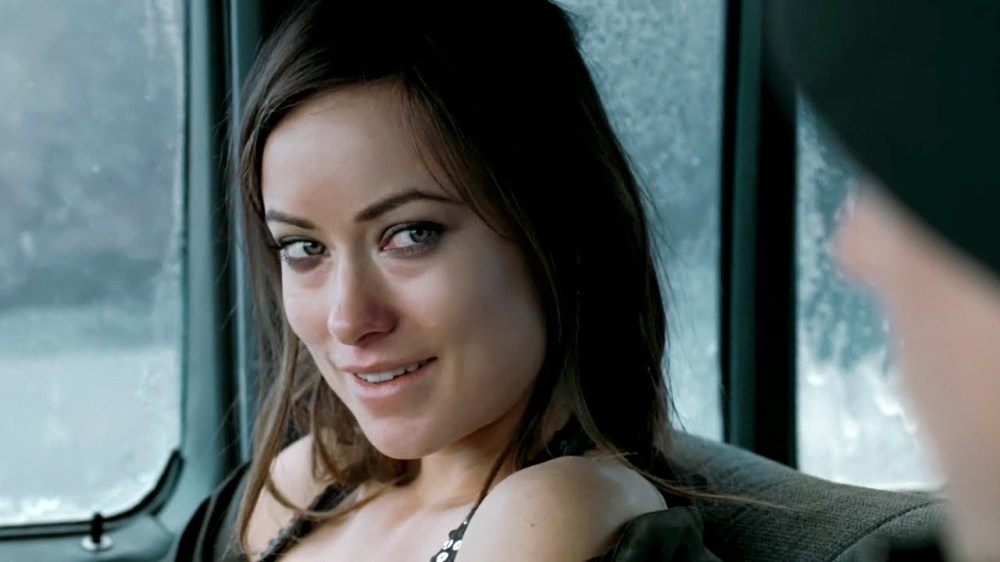
Olivia Wilde Discusses Playing Liza in ‘Deadfall’

Olivia Wilde in Deadfall

WRITER’S NOTE: This article was written in 2012.

Olivia Wilde might seem like just another pretty face in Hollywood, but she continues to give the characters she plays a strong intelligence they might not otherwise have. If you look at her performances in “Tron: Legacy” and “Cowboys & Aliens,” you will realize she has put a tremendous amount of thought in how she approaches her roles to where you leave the theater incapable of forgetting the effect she had on you. The latest example of this is “Deadfall” in which she portrays Liza, the sister of Addison (Eric Bana) whom she is on the run with after a casino heist gone wrong.

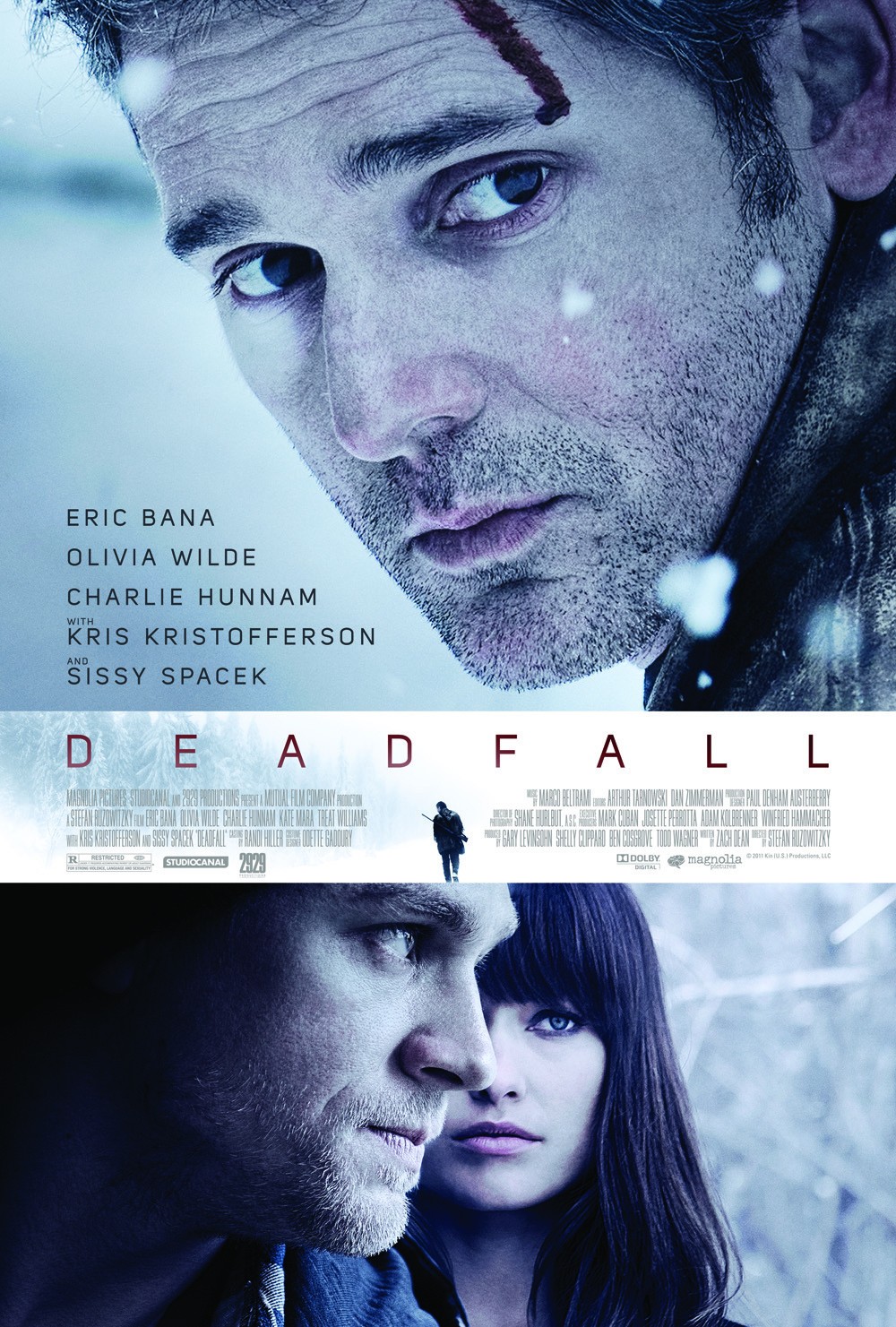
Deadfall movie poster

For Wilde, the role of Liza represented a huge departure for her. She had just finished playing Dr. Remy “Thirteen” Hadley on the television show “House,” and Liza took her in a completely different direction.

“Liza was so different from anything I’d ever played before, and I think I was really attracted to playing someone a little more broken,” Wilde said to Sophie A. Schillaci of The Hollywood Reporter. “I had spent many years on ‘House’ playing this very tough woman. I had played tough women in movies, and I realized that was something I was gravitating toward because it’s probably something I aspire to. But I’m interested in exploring people who really don’t have their act together completely.”

At the beginning of “Deadfall,” Addison and Liza’s car crashes in the snow which forces them to separate and go on the run towards the Canadian border. Liza, wearing little more than a miniskirt, almost freezes to death until former boxer Jay (Charlie Hunnam) rescues and later starts up a relationship with her. I got to attend the movie’s press conference at the Four Seasons Hotel in Beverly Hills, and it was fascinating to hear Wilde talk about the relationships Liza had with each of these men and how deeply they affected her.

“Well I think with Addison she’s a perpetual child, she’ll always be his little Liza,” Wilde said. “So that established what the dynamic was like in that she’s very dependent on him. She’s terrified of him and yet she is still very drawn to him. But the romance between Jay and Liza allows her to be a woman, and you really see her coming into her own. So naturally in the writing they were very different relationships, and that kind of did the work for me.”

There was also the question of how deep the relationship between Addison and Liza went. At the start of the movie they look to be as close as a brother and sister can be, but as the story continues it looks like there is a lot of sexual tension between them. While it is not entirely clear if their relationship is an incestuous one, a kiss the two share at a Thanksgiving dinner seems to imply there might be. This led Wilde to talk more about the research she did for this role.

“That (kiss) kind of underlined the tension between them,” Wilde said. “I heard someone say that the relationship between passion and rage is very close, and there’s a violence to our upbringing in our lives that I think could just easily fall over into sex. It was really helpful to read about incestuous relationships and to know quite a lot about how that tends to happen, and yet it’s a very subtle part of the film. There are only one or two spots where it’s hinted at, and I’m glad we didn’t over explain it because it does leave it a bit of a mystery, but it adds so much to the story.”

All actors need to take the time to research the similarities and differences between them and the characters they play. For Wilde, it made her realize that her life could have been much different if she was more like Liza in “Deadfall.”

“I feel very lucky to not be Liza,” Wilde told Jay Stone of the National Post. “It makes me really appreciate having a very loving family and healthy upbringing and not having been abused. It’s a horrible problem that exists in many families. One of the reasons we’re doing this as actors is to reflect humanity, to show these types of people on screen and bring light to them in a certain sense.”

We’re going to see a lot more of Olivia Wilde in the future. Up next for her is “The Longest Week” in which she stars opposite Jason Bateman, “Black Dog, Red Dog” with James Franco and Chloe Sevigny, “Her” directed by Spike Jonze, and “Drinking Buddies” which is the project she is most excited about being a part of. As long as Wilde continues to bring that same level of thoughtfulness and intelligence she brings to movies like “Deadfall,” we will have so much to look forward to.

SOURCES:

Sophie A. Schillaci, “Olivia Wilde Sheds Her ‘Tough Woman’ Image for ‘Broken’ Character in ‘Deadfall’ (Video),” The Hollywood Reporter, December 7, 2012.

Ben Kenber, “Interview with the Cast and Director of Deadfall,” We Got This Covered, December 7, 2012.

Jay Stone, “Deadfall’s Olivia Wilde feels ‘lucky not to be Liza,'” National Post, December 7, 2012.