While much of the attention on Michael Bay’s “Pain & Gain” has been focused on Mark Wahlberg and Dwayne Johnson, there’s another actor in the cast audiences are taking notice of as well: Anthony Mackie. The Julliard School graduate made his movie debut opposite Eminem in “8 Mile,” and he has since gone on to give memorable performances in the Best Picture winners “Million Dollar Baby” and “The Hurt Locker.” “Pain & Gain” is one of several 2013 movies Mackie will be appearing in, and he does not appear to be suffering from a shortage of roles in the slightest.
In “Pain & Gain,” Mackie portrays Adrian “Noel” Doorbal, a bodybuilder and personal trainer who works with Daniel Lugo (played by Wahlberg) at the Sun Gym in Miami. Lugo ended up recruiting Doorbal to help him kidnap rich businessman Victor Kershaw (Tony Shalhoub) so they can steal his money and live out the American dream. In an interview with Billy Donnelly of the website Moviefone, Mackie recalled being blown away by the script when he first read it and couldn’t believe it was based on a true story. The actor also took the time to explain how his character differs from the ones played by Wahlberg and Johnson.
“What I love about Doorbal is that he’s the grounding force of this movie,” Mackie told Donnelly. “Everybody else does this crime so they can move into a nice neighborhood and sleep with strippers and buy sports cars. When everybody else got a sports car, he got a minivan. When everybody else blew their money on all kinds of random shit, he got married and bought a house. So, he is the true testament, the epitome of wanting to have the American dream. And I think that’s why the character works so well. Because he’s logical with every aspect of it. But in real life? He was the henchman. He was the dude who was cutting the body up and killing people and doing all the crazy stuff that Mark’s and Dwayne’s characters couldn’t do.”
For Doorbal, living the American dream means having a nice home, a loving wife, a dog and a white picket fence. Compared to Lugo and Paul Doyle (played by Johnson), he is not as greedy in his desires even though he’s every bit as guilty of the crimes they all committed. While talking with Brennan Williams of The Huffington Post, Mackie explained what playing this character had to offer him which others in the past had not.
“I have never portrayed a character in this vein before,” Mackie told Williams. “He was so dynamic and so convoluted. And I’m, for some reason, at this point in my life am really interested in people justifying their wrongs. I feel like there’s so many people that do awful things in their day-to-day life, but some kind of way in their minds, they can justify them. And that was something that I’ve become so interested in. So, I wanted to explore that in a movie. And this movie came at the right time for me to do that.”
Now a lot has been said about the weightlifting and intense workouts Wahlberg and Johnson had to endure for “Pain & Gain,” but Mackie was not an exception. Furthermore, Mackie said he and Wahlberg worked out together every morning and that they were very competitive with one another. They would constantly challenge each other to see who could bench press the most weight, and Wahlberg got to where he could lift almost 400 pounds. Mackie detailed both his workouts and the strict diet he stuck to while making this movie.
“Bodybuilding and weightlifting is more of a lifestyle than anything else, so the diet part was easy because it was just about staying focused and staying on your regimen,” Mackie said. “It wasn’t like I had to eat anything or I couldn’t eat anything. It was all about putting together what nutrients I needed day-to-day to get enough of one thing or another in my body. So, it was fairly easy for me. I ate a lot of lean protein like turkey and chicken. I got my carbs from sweet potatoes. So, it became easier as time went on. But I tell you what, after three months of doing that, I don’t want to see a piece of turkey or chicken for a long time.”
Actually, one big issue Doorbal quickly has to confront at the movie’s start is his use of steroids. He uses them to enhance his body structure, but they end up rendering him impotent and made a certain part of his body horrifically small. We all know by now how steroids are incredibly bad for your body when they are abused, but during a press conference for “Pain & Gain,” Mackie explained what his research into steroids taught him.
“From what I understand, it depends on what type you take,” Mackie said. “When doing research, they just talked about all kinds of stuff, and you cycle on this stuff and you would be very surprised at how very easy it is to get caught into it. But there ain’t no lovin’ when you’re juicin’ (laughs). That’s the message I get from the movie; if you want some lovin,’ put down the needle!”
From here, Anthony Mackie has a lot to look forward to as he has “Runner, Runner” coming up in which he co-stars with Justin Timberlake, and he is set to play Falcon in the superhero sequel “Captain America: The Winter Soldier.” While Doorbal took the wrong path in life in pursuing his dreams, Mackie did not make that same mistake and he is now one of the busiest actors in Hollywood today. In fact, Mackie made it very clear what his version of the American dream is.
“To not go to jail,” Mackie said. “I grew up in New Orleans at a time where everybody was getting killed or going to jail, so my goal in life was to go to college and not spend one night in a jail cell.”
He has succeeded in doing just that.
SOURCES:
Billy Donnelly, “Anthony Mackie, ‘Pain & Gain’ Star, on Excess, the American Dream, and ‘Captain America: The Winter Soldier,'” Moviefone, April 26, 2013.
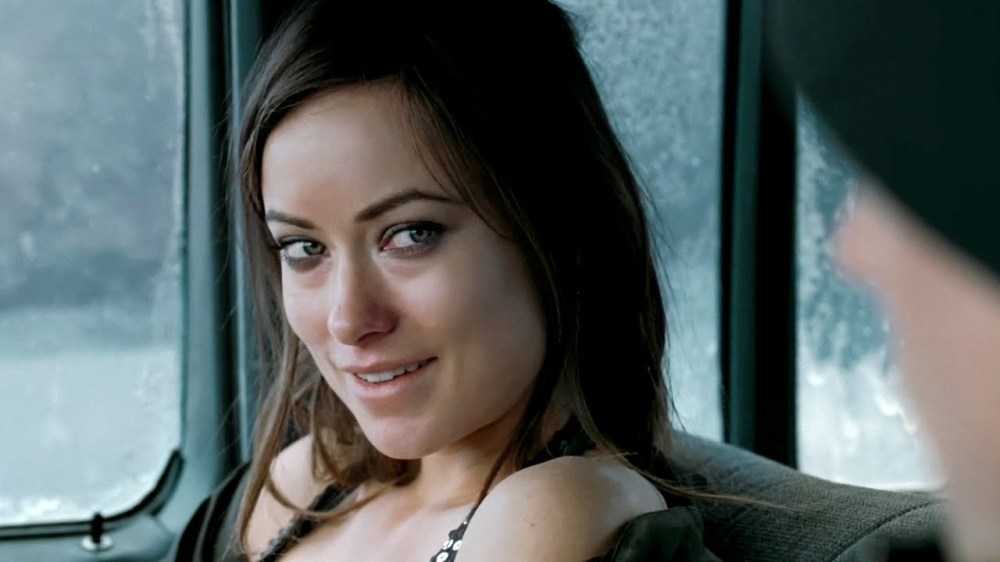
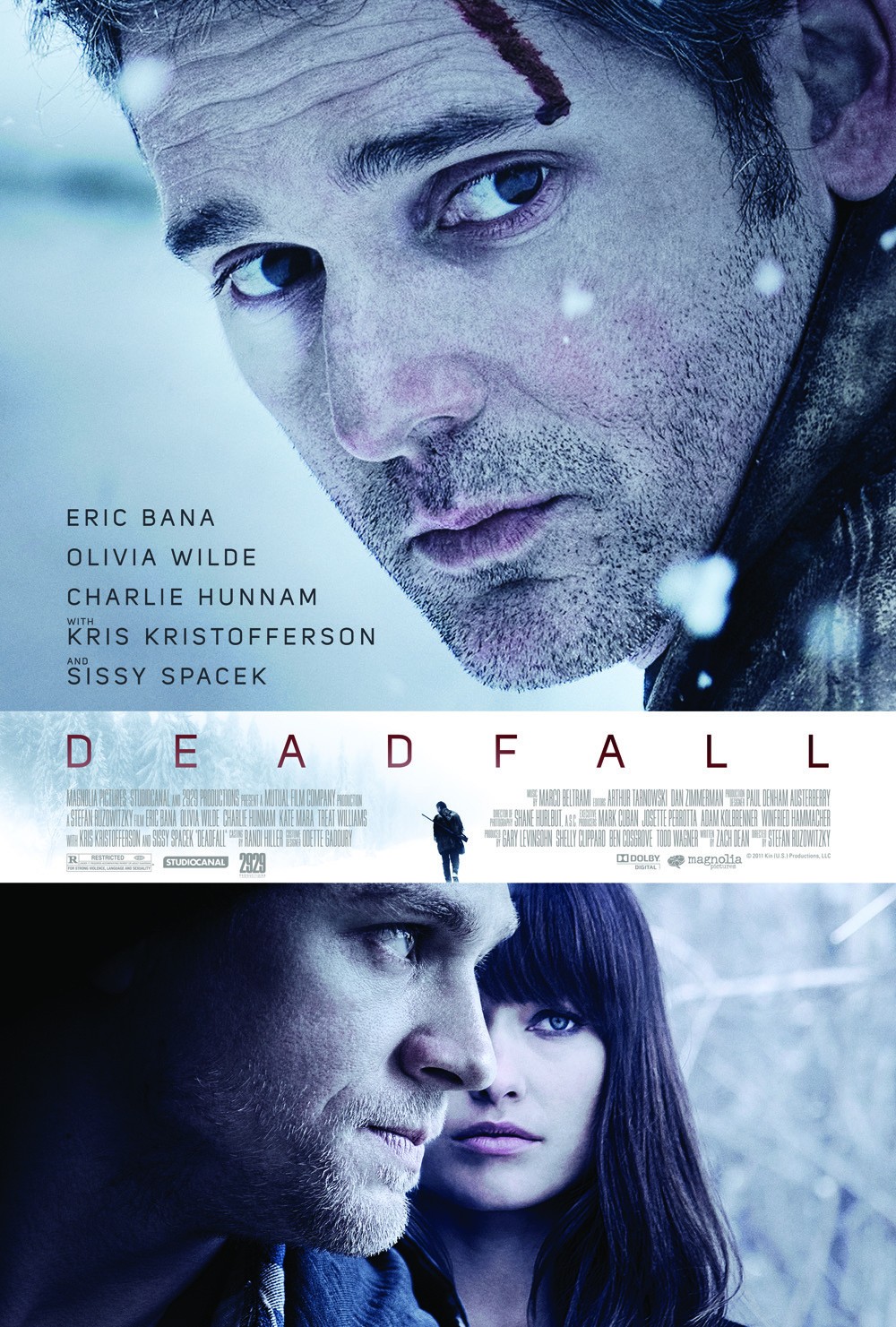
Olivia Wilde might seem like just another pretty face in Hollywood, but she continues to give the characters she plays a strong intelligence they might not otherwise have. If you look at her performances in “Tron: Legacy” and “Cowboys & Aliens,” you will realize she has put a tremendous amount of thought in how she approaches her roles to where you leave the theater incapable of forgetting the effect she had on you. The latest example of this is “Deadfall” in which she portrays Liza, the sister of Addison (Eric Bana) whom she is on the run with after a casino heist gone wrong.
For Wilde, the role of Liza represented a huge departure for her. She had just finished playing Dr. Remy “Thirteen” Hadley on the television show “House,” and Liza took her in a completely different direction.
“Liza was so different from anything I’d ever played before, and I think I was really attracted to playing someone a little more broken,” Wilde said to Sophie A. Schillaci of The Hollywood Reporter. “I had spent many years on ‘House’ playing this very tough woman. I had played tough women in movies, and I realized that was something I was gravitating toward because it’s probably something I aspire to. But I’m interested in exploring people who really don’t have their act together completely.”
At the beginning of “Deadfall,” Addison and Liza’s car crashes in the snow which forces them to separate and go on the run towards the Canadian border. Liza, wearing little more than a miniskirt, almost freezes to death until former boxer Jay (Charlie Hunnam) rescues and later starts up a relationship with her. I got to attend the movie’s press conference at the Four Seasons Hotel in Beverly Hills, and it was fascinating to hear Wilde talk about the relationships Liza had with each of these men and how deeply they affected her.
“Well I think with Addison she’s a perpetual child, she’ll always be his little Liza,” Wilde said. “So that established what the dynamic was like in that she’s very dependent on him. She’s terrified of him and yet she is still very drawn to him. But the romance between Jay and Liza allows her to be a woman, and you really see her coming into her own. So naturally in the writing they were very different relationships, and that kind of did the work for me.”
There was also the question of how deep the relationship between Addison and Liza went. At the start of the movie they look to be as close as a brother and sister can be, but as the story continues it looks like there is a lot of sexual tension between them. While it is not entirely clear if their relationship is an incestuous one, a kiss the two share at a Thanksgiving dinner seems to imply there might be. This led Wilde to talk more about the research she did for this role.
“That (kiss) kind of underlined the tension between them,” Wilde said. “I heard someone say that the relationship between passion and rage is very close, and there’s a violence to our upbringing in our lives that I think could just easily fall over into sex. It was really helpful to read about incestuous relationships and to know quite a lot about how that tends to happen, and yet it’s a very subtle part of the film. There are only one or two spots where it’s hinted at, and I’m glad we didn’t over explain it because it does leave it a bit of a mystery, but it adds so much to the story.”
All actors need to take the time to research the similarities and differences between them and the characters they play. For Wilde, it made her realize that her life could have been much different if she was more like Liza in “Deadfall.”
“I feel very lucky to not be Liza,” Wilde told Jay Stone of the National Post. “It makes me really appreciate having a very loving family and healthy upbringing and not having been abused. It’s a horrible problem that exists in many families. One of the reasons we’re doing this as actors is to reflect humanity, to show these types of people on screen and bring light to them in a certain sense.”
We’re going to see a lot more of Olivia Wilde in the future. Up next for her is “The Longest Week” in which she stars opposite Jason Bateman, “Black Dog, Red Dog” with James Franco and Chloe Sevigny, “Her” directed by Spike Jonze, and “Drinking Buddies” which is the project she is most excited about being a part of. As long as Wilde continues to bring that same level of thoughtfulness and intelligence she brings to movies like “Deadfall,” we will have so much to look forward to.
WRITER’S NOTE: This interview was conducted back in 2012.
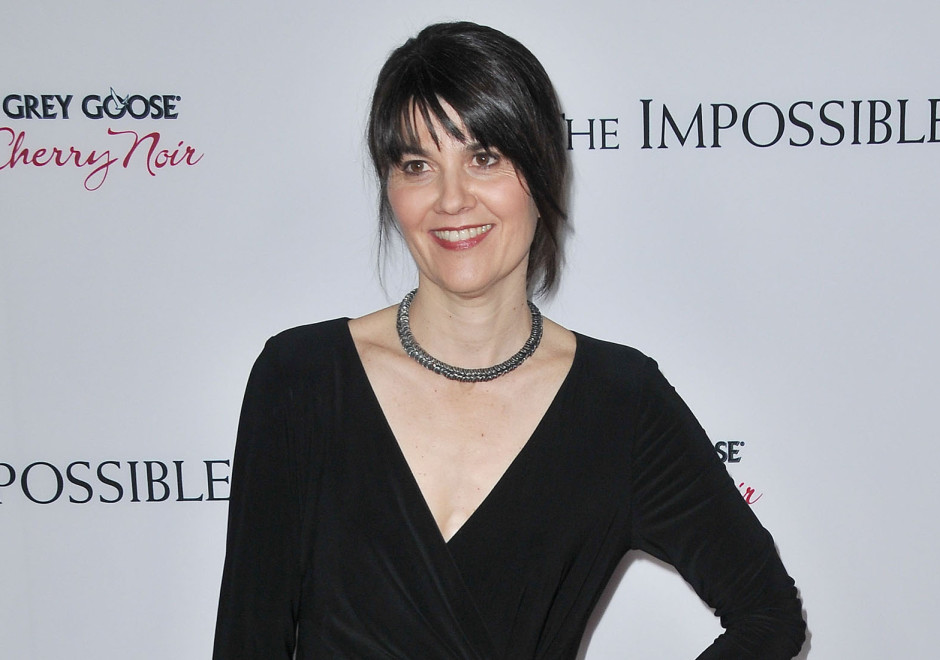
I can’t begin to tell you what an honor and a privilege it was to be sitting across from Maria Belon, a Spanish doctor who, along with her husband and three sons, miraculously survived the 2004 Indian Ocean tsunami. Her story of survival is the focus of “The Impossible,” and she participated in a roundtable interview which I attended with several others. Belon may not see herself as a hero, but seeing her so lively and upbeat even after the horrific ordeal she endured is nothing short of inspiring.
In “The Impossible,” Belon is portrayed by Naomi Watts in a performance full of strength and raw emotion. We watch as Watts struggles to make her way to safety in the aftermath of the tsunami which decimated the coastal zone of Thailand, and it’s unnerving to see the injuries her character received which include a nasty gaping wound on one of her legs. Despite this, Belon said “nothing happened to us” (her and her family) because they survived. So, when J.A. Bayona, director of “The Orphanage,” came to her wanting to make a movie about the tsunami, she had to ask why.
Maria Belon: Why our story if we survived? Why in a story full of pain and full of loss pick up our story in which nothing happened? But then we understood that it was the only way of explaining the others’ pain was picking up a story of a family which nothing happened to.
For Bayona, the story of Belon’s family’s survival helped shed a light on the devastation left in the tsunami’s wake. Hundreds of thousands of people lost their lives, and “The Impossible” never ever loses sight of this. But more importantly, it is a story about many people and what they suffered. It is not just about this one family. Belon made this clear when asked if it bothered her how her family was being portrayed by English actors instead of those of Spanish descent.
MB: I am fed up with this question all the time. This movie is not about nationalities, not about races, not about colors. It’s about human beings. One of the conditions we put is that there should be no nationality for the family. I don’t care if they would be black, brown or green skin. I wouldn’t care about anything.
Belon said she was involved in the making of “The Impossible” for several years and did have a say in the film’s casting. When Bayona asked Belon who her favorite actress was, she replied Naomi Watts because of her performance in “21 Grams.”
MB: When I saw her in “21 Grams” I thought (gasp) what is this woman about? When he (Bayona) told me that Naomi is going to portray Maria, I was like okay, then I’ll go around the world to the other end and I hide. I don’t want to meet her; I don’t want to disturb her.
But despite her fear she might jinx Watts, Belon did eventually meet the Oscar-nominated actress, and the two spent a lot of time together on the set. Belon said they talked a lot about life, being moms, being lucky, death, loss and just about everything else as well. Clearly, these two women developed a very strong bond with one another that is unbreakable.
One of the most powerful moments from the interview was when Belon talked about what she called the gifts the tsunami gave her. A natural disaster like this seems to take away much more than it could ever possibly give, but you have to admire her for finding any upside in the midst of such immense tragedy.
MB: This is one of the gifts the wave gave me: I don’t care about myself anymore. I only appreciate the moment. I don’t think about the past anymore, I don’t take photos of any memories, and I don’t plan anything for the future. I only have now.
But although Belon survived the tsunami, she said she “almost died three times.” Once while hanging on the branch of a tree with her son Lucas, and two other times in the hospital. She admitted to being tired of struggling to stay alive, but it was the appearance of her husband which kept her going.
MB: When I saw my husband, I was like ‘good! Now I can rest. He was so nice when he said, I didn’t come here for that!
As for her three boys, Belon did give us an enthusiastic update on where they are in their lives. Lucas is now 18 years old and training to be a doctor, and she described him as being “immensely brave.” She said what he took from the experience of the tsunami is how there is never enough of what you can do for others. Thomas, now 16, is at a school where he studies half the time and does community service for the other half, and he is also working as a lifeguard in Wales. As for Samuel, 13, she said he is wondering whether being a firefighter or a policeman would be the best way to help people. Overall, they have all come out of this experience wanting to help others.
I myself asked Belon if she has been back to Thailand since the tsunami, and if work still needs to be done to repair the damage left in its wake. She replied there is still a lot of work which needs to be done especially with the orphanages and the widows. Many of the buildings have been repaired, but the souls of those who were left without parents and loved ones still need a lot of mending.
Watching “The Impossible,” you come out of it feeling like you survived the tsunami along with these characters. I shared this thought with Belon who said of course as this was part of the movie’s overall design.
MB: When we had discussions with the director and we spent hours and hours talking about the film, I said’it’s unfair to come back from one of those experiences with so much presence you get that you don’t give back. I told Bayona that it’s a bit difficult, but you have to make people go under the wave, and they said, “WHAT?!” I said sorry, that’s the only way. You go under the water, you drown and you almost die and you come out of the cinema and say (gasp), I’m alive!
“The Impossible” is one of biggest box office hits in Spain’s history, and Belon is thrilled with the response it has received as she is with the film itself. She is not sure what she’s going to do next, but she did express interest in returning to work as a doctor. Even after all she has been through, she made it clear she’s not afraid of the water and said “it wasn’t the ocean’s fault” for what happened. She has also come out of this horrific situation with a no-nonsense attitude.
MB: I only do what I enjoy. If there’s something I don’t enjoy, I quit. I did this (the movie) because I enjoy it. If somebody would like to do something that I don’t like then I will just go, “Sorry, I don’t like it (laughs).”
Maria Belon may not be a hero, but considering what she has been through, you cannot help but see her as a tremendously inspiring person. We’re all glad she’s still with us to tell her story, and it is a story which will hold you tightly within its grasp.
“The Impossible” is available to own and rent on DVD, Blu-ray and Digital.
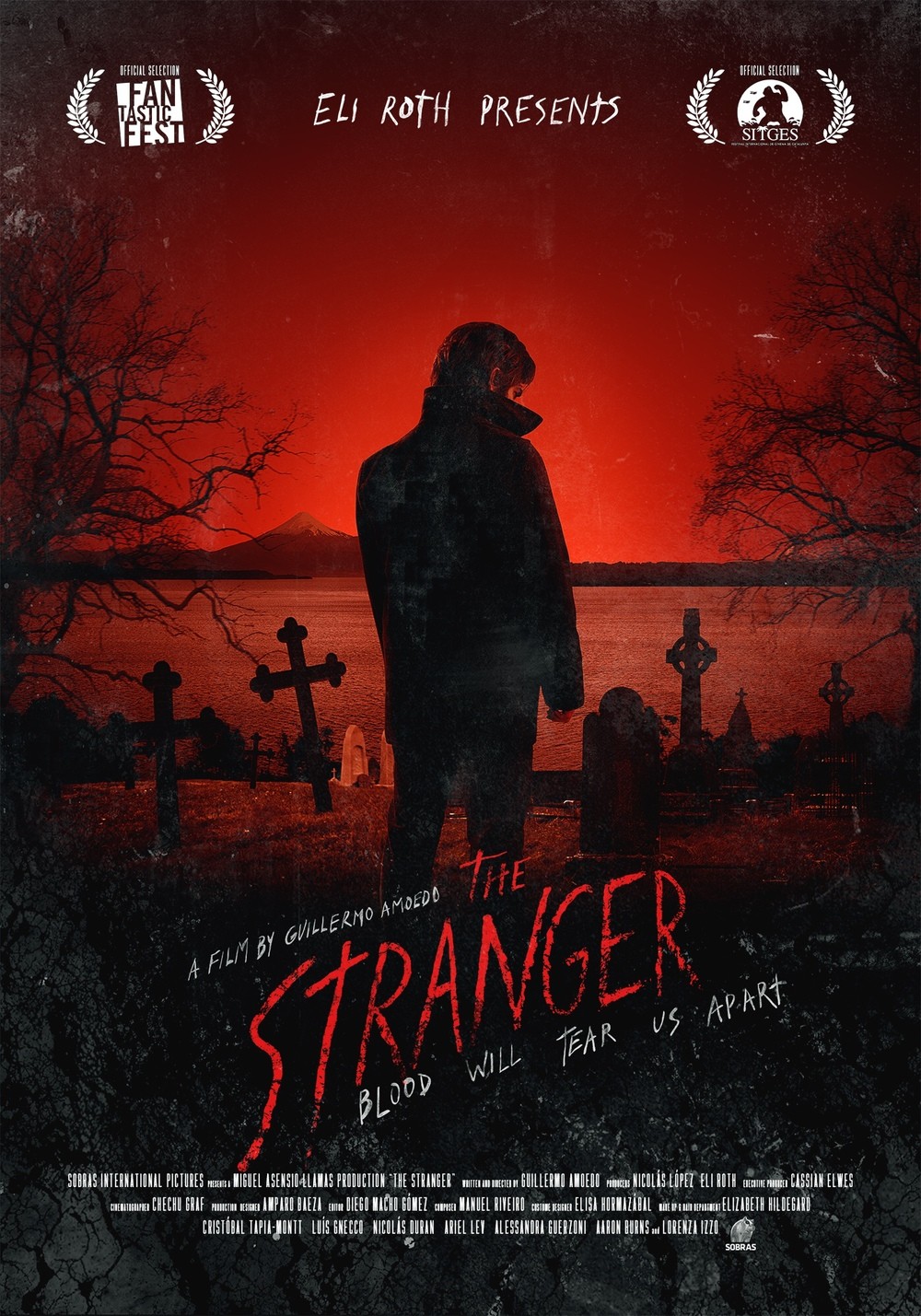
Uruguayan writer and director Guillermo Amoedo has left a solid mark on Chilean audiences with his short films and movies, and he was a co-writer on the Eli Roth productions of “Aftershock” and “The Green Inferno.” In 2014, he left his mark on American audiences with the supernatural thriller “The Stranger.”
Cristobal Tapia Montt stars as Martin, a mysterious man who arrives in a small Canadian town to look for his wife. The reasons why Martin seeks her out become clear as the movie goes on, but he quickly discovers she has died and decides to commit suicide as a result. But after he is viciously attacked by a trio of criminals, the incident soon has a snowball effect on the whole town, and its inhabitants soon find themselves ensnared in a nasty bloodbath many of them will be unable to escape.
I got to speak with Guillermo about “The Stranger” and of how he came up with the idea for it. Although it his film, Eli Roth’s name is heavily featured on the movie’s advertisements and it had me asking Guillermo how much the “Hostel” director was involved in its making. Guillermo also discussed how Cristobal was cast, of how a particularly brilliant vampire movie became a strong inspiration for “The Stranger,” and of how family always plays a big part in horror films.
Ben Kenber: What was the genesis of “The Stranger’s” story for you?
Guillermo Amoedo: Well it was an idea that I had five years ago in between scripts. It came actually from the idea of what kind of vampire movie I would like to see. I’m actually not a vampire movie fan, but I saw a vampire film called “Let the Right One In.” I really loved the way it is designed by genre and I really loved the way they treated the subject, and I wanted to do something very grounded in the kind of vampire films that I would like to see; more grounded and more character driven than the ones that are out there right now. I wanted to take the tone of that film and make it more grounded, but then also make it my own kind of story that was more of a character driven story about this guy who has to choose between his own family or humankind. I like this kind of character that had this deep moral conflict inside of them and has to make the tough decisions.
BK: On the surface, “The Stranger” looks like a vampire movie, but it also has elements of a ghost movie as well as supernatural elements as well. Was it always your intention to mix up genres with this movie?
GA: Yeah, that was the idea. It has of course some supernatural elements, but it’s more about the people than it was about the supernatural powers. That’s why I wanted to make all the supernatural stuff as minimal as possible. They don’t have wings, they don’t fly, they just have some stuff from the vampire mythology but they’re actually pretty human.
BK: “The Stranger” has Eli Roth’s name on the top of this movie’s advertisements and I know that you worked with him previously on “Aftershock.” What part did he play in the making of “The Stranger?”
GA: Well he helped a lot in the development of the script and had a lot of notes. He also helped us a lot in post-production with different cuts and ideas. He was involved in different stages of this process. This is the fourth film where we have been involved with Eli and we have a very friendly collaboration process with him.
BK: I really enjoyed Cristobal Tapia Montt’s performance as Martin and I love how he holds the audiences’ attention just with a single stare. What was it like directing him in “The Stranger?”
GA: He was amazing. Originally the script was written for someone older, much older, like 45 or 50 years old. But then before doing the film I made a short film and I casted him for it. I changed the age of the character in order to cast him, and he did such a wonderful job that I changed everything so he could play the role of Martin. He’s a terrific actor. He has a lot of experience working in Chilean films and TV, and I hope he can have more opportunities in the future.
BK: I liked that, as a writer, you didn’t go out of your way to spell out everything in the movie’s story for the audience. As a writer, how important is it for you to keep secrets from the audience?
GA: Well I think it has to be a balance of how much you can tell without revealing everything, but you also don’t want to reveal too much. There’s a line that says the secret to being boring is to tell everything. You have to test sometimes the script and then the movie to see how much you can hold back from the audience and how much you have to give them so it’s tricky sometimes. It also depends a lot on the kinds of audiences. Some people get mad because they want to know everything. It’s like the tip of the iceberg; you have to tell as much information as necessary so that the audience can understand the story, but then you can leave a lot of stuff that the audience can fill with their own imagination. So I like to do a lot of that stuff where people have to fill part of the story with their own imagination.
BK: Ariel Levy who plays Caleb, the town bully, was he meant to have the same hairstyle as Eminem in this movie?
GA: (Laughs) That wasn’t actually the idea, but now that you mention he does look a lot like an Eminem fan. It was to change Ariel’s aspect as much is possible, so we changed his haircut and his hair color and he was intended to resemble Ben Foster in “3:10 to Yuma,” but something like that more than Eminem. It was changing Ariel’s aspect everything to get him more involved in his character.
BK: Nicolás Durán’s character of Peter is referred to as a tagger which is slang for graffiti artist, and it was interesting to see the symbolism in what he was painting. Was there any intentional symbolism in what he was spraying over the walls in town?
GA: There is one thing: the symbol that he writes on the walls is the same as the marking that Cristobal’s character has on his wrist. That’s actually the idea that there is some kind of connection between them, and it’s a made up symbol that has to do with something the Greeks used to do. They used to mark the people who are ill before Christ, so we are trying to build a mythology between that and what kind of character that Cristobal plays.
BK: I imagine you had a very tight budget to work with on “The Stranger” and a short schedule to make it in. How much did that force you to be more creative while shooting?
GA: Always limitations, I think, are better. Sometimes you have too many limitations to work with, but when you have enough… It’s a good thing to know your limitations from before, so when I wrote the script I knew how many pages we could shoot a day and how much stuff we could do so I tried to plan everything right from the beginning. Then when there’s so much trouble that I think we were pretty much prepared for the worst, and we ended up doing a pretty good job.
BK: The town where you shot “The Stranger” in has a wonderfully Gothic feel to it as well as a great small-town vibe which fits the movie perfectly. Did you always plan to shoot the movie there, or did this town come to your attention through a location scout?
GA: Well we actually planned to shoot everything at another town that was farther away from the town (we shot in), more South. This town is near a place near another town where one of the producers of the movie has a house where he always goes to for vacation. He told me that this place was great and had lakes and volcanoes and everything. We went there and it was amazing. I mean everywhere you could shoot from anyplace and you would have three volcanoes in a lake in the town in the view and everything. It was an amazing place to shoot.
BK: How would you describe “The Stranger” to an audience that has yet to see it?
GA: I would say it is a supernatural thriller about the clash of two fathers who have to decide why on one side this father has this desire to save his son or put in danger the whole of humankind and decides to save humankind, and there’s the other one who decides to save his kid and puts the whole of humankind in danger. So there’s this clash of morals between fathers.
BK: Family always plays a big part in the best horror films.
GA: Yeah, and that’s what actually the film was about. Aside from the supernatural stuff, it’s about how far would you go to save your kid. How much would you put in and risk to save them? Even though your kid might become a monster, it’s still your kid. So that kind of challenges and creates a moral conflict, and that’s what the movie is about.
A big thank you to Guillermo Amoedo for taking the time to talk with me. “The Stranger” is available to own and rent on DVD, Blu-ray and Digital.
American audiences may not know who Cristobal Tapia Montt is, but they will not be able to forget him after watching him in Guillermo Amoedo’s horror thriller “The Stranger.” A Chilean actor who has spent much of his career acting in Spanish language movies and television, this Eli Roth production marks his first ever performance in an English language movie.
In “The Stranger,” Cristobal plays Martin, a mysterious man who arrives in a small town in the southern part of Canada to find his wife, Ana. The both of them are afflicted with a horrible disease which gives them a never ending thirst for human blood, and Martin is in town to kill her. But upon discovering that she died some time ago, he decides to commit suicide so he can eradicate this disease once and for all. However, after being brutally attacked by the town bullies, his presence in the town soon creates a snowball effect which will plunge its inhabitants into a bloodbath they have little chance of escaping.
It was a real pleasure talking with Cristobal about his performance in “The Stranger” as well as his other artistic works. Many have noted his unique approach to the characters he has played, and he has also been recognized for his work as an illustrator and musician. We talked about these things and a lot more, and I invite you to read our interview below.
Ben Kenber: Your performance in “The Stranger” is really good. I liked how you managed to hold the audiences’ attention with a single stare.
Cristobal Tapia Montt: Yeah, there is a lot of staring in the movie (laughs).
BK: How do you prepare for moments where you have a close-up and stare straight into the camera?
CTM: I don’t know if there’s much preparation for that. I didn’t have a lot of lines so I knew I was going to have to work on this face and attitude where you could actually understand what I was thinking or feeling, so I just jumped into it on set. Guillermo was directing me pretty well so he really knew what he wanted, so it wasn’t really hard at all. It was really easy and everything was pretty clear from the beginning.
BK: In the production notes it says you have a very unique approach to the characters you play. Could you tell us more about your approach?
CTM: Well actually I didn’t go to acting school, so every character I portray comes from a gut feeling. Whenever I try to imagine myself being that person, I see my characters as living beings as friends or people I’ve met. I just try to understand and have empathy on whatever they are going through or what they are going through and just understand them. It’s a really weird way I guess for me because I don’t know if anyone else does it that way, I try to picture living creatures and try to understand and be them for a while. It’s very intuitive and I just play it by my gut and whatever I feel. It sounds pretty scary, but I guess acting is kind of like that for me.
BK: Your character of Martin remains a very mysterious character in this movie. He’s not necessarily a vampire, but he’s also not entirely human. Did you have to create a whole backstory for this character?
CTM: Yeah of course. Actually I asked Guillermo to help me out with that because he had a backstory already, so he shared it with me and we discussed it and I kind of added my own backstory because there was a couple of years and a couple of gaps in between with his wife and what he had gone through. I just had to come up with this whole backstory and the 16 or 17 years that passed by because you don’t really know what happens. The moment that Martin appears in this northern city in Canada I just had to fill in the gap of all those years, so that’s essentially the backstory that had to come out with because no one really knew went on during those years.
BK: I’m guessing Martin has been on this planet for a lot longer than anyone realizes.
CTM: Yeah, exactly. That was the whole idea in the beginning. That was a really interesting transition because you never hear the word vampire in the movie, but you end up understanding that this movie has a lot to do with vampires. Vampires never grow old, but what we wanted to do… You can see a transition through the years. We just wanted him to have the longer beard and we wanted him to look actually beaten up a little bit just because emotionally he got beaten up so we wanted to reflect that physically. I think you see that in the movie as well because in the flashbacks we (Martin and Ana) both look not younger but fresher in a certain way and Martin looks lighter. We wanted to portray them with this burden 16 years after, and I think you can appreciate that in the movie.
BK: Speaking of emotion, this looks like a very emotionally draining part to play. How were you able to maintain such strong emotions throughout shooting?
CTM: I guess as an actor you get trained to get into it, and when you’re on set you do it and then you just disconnect. It’s kind of like a switch, you know? So in that sense it wasn’t really hard. It was just like getting into it and then stepping out of it. We were shooting at night because most of the movie was shot during the night, so whenever I went home to the cabin where we were staying in, I would just sleep so I didn’t really have any time to even think about it. I would get there at like seven in the morning and wake up at four and just go for it again. It’s exhausting as an actor to shoot at night, but emotionally I was doing pretty much okay. It was fine. It wasn’t really that draining.
BK: What was it like shooting in that small town where the movie takes place?
CTM: It was amazing. It’s this beautiful town down in the south of Chile and it’s amazing. It’s like super green, it’s way down south, it’s rainy, it’s gloomy and it sets the perfect mood for the movie as well. I think we were there for 12 or 14 days, and just to be there and to stay at a cabin that was right off the shore of the lake and wake up to that was very inspiring. It’s easier shooting a movie when you’re in such an amazing location.
BK: What interested you most in playing Martin in “The Stranger?”
CTM: Well the fact that it was in English. It was my first opportunity to play a character in English because I’m a Chilean actor so I’ve only played characters that speak Spanish. So it was a huge opportunity acting wise to try that out and see what it was like to act in English and if I could pull it off as well. The opportunity to be in a movie that is being shown in the (United) States was just very, very attractive, and that possibility existed since the beginning of the movie. I speak English and Spanish so I wouldn’t mind trying to act in English for a while because I’m a native speaker. The story was very interesting as well. I’m a horror fan and I’ve always liked vampire movies and science fiction, and it’s my kind of genre so that was pretty cool as well. It’s like, I get to play a vampire! It was a very interesting project so I was attracted to it from the beginning.
BK: What would you say are the differences between doing a movie in English and doing a movie in another language?
CTM: I thought it was going to be very, very different and maybe more difficult, but in the end it’s the same thing. It’s the same language film wise. You’re speaking a different language but you’re still telling the story. It’s very much the same, you know? I don’t think it’s different at all. But the main difference is that you will probably reach a larger audience because English is a universal language. A lot more people speak English than Spanish I’m assuming. I could be wrong, but I guess it’s easier to show in different countries if it’s in English, and I guess that’s the main difference from acting in Spanish.
BK: I also read that you are known for your music and illustrations as well as your acting. Can you tell us more about that?
CTM: Yeah sure. I’ve been drawing since I was very young. I’ve been drawn to the artistic world in all its forms. I started playing on the piano when I was 12, so I’ve been always been playing music and drawing since an early age. I dropped out of college. I was there for three years and I was interested in studying design. I just kept on drawing and playing. I’ve played a cello, I’ve played in different bands, and I have a music project that I’ve been a part of as well. I compose and sing and play instruments. I just really enjoy art as a channel of expression. Acting is just another form of that art and it just helps me get stuff out of my system. If I didn’t have that it would drive me nuts. It’s very personal though. I’ve never really gotten my music out there. At art shows I show my drawings and I’ve had two that sold, and I play live sometimes. But it’s not something that… I feel like it’s more personal. I really don’t have the urge to just like put it out there and make everyone listen to my music. It’s more about me expressing myself and putting myself out there.
I want to thank Cristobal for taking the time to talk to me. “The Stranger” is now available to own and rent on DVD, Blu-ray and Digital.
A sequel 40 years in the making, “I Spit on Your Grave: Déjà vu,” had its world premiere on April 18, 2019 at the Laemmle Music Hall Theater in Beverly Hills, California. Among those in attendance were its director Meir Zarchi who also wrote and directed the 1978 original, his son Terry Zarchi, Camille Keaton who returns as Jennifer Hills, and Jamie Bernadette who plays Jennifer’s daughter, Christy Hills. The sequel sees Jennifer and Christy getting abducted by the infinitely vengeful Becky (Maria Olsen) who looks to make Jennifer pay for what she did to her husband years ago. For those who have seen the original, you can expect blood, gore, acts of revenge which know no bounds, and the intensely painful separation of certain body parts which no one is ever quick to part with.
Following the screening, there was a Q&A with the cast and filmmakers who were also watching this sequel on the big screen for the very first time. It was an exciting evening for everyone as this sequel was actually finished back in 2015, and it is only now being released. When Keaton was asked what made her return to this iconic role, she made it clear how she wanted Zarchi to make a sequel for many years.
“I had been trying to get him to make a sequel to this movie for about 30, 35 years at least,” Keaton said. “One day I get a call, and lo and behold (Meir Zarchi told me) we’re gonna make a sequel. So I said, what? I was surprised and was happy we were going to do this, and it was great to work with him again.”
Jamie Bernadette was asked how she came to be cast in “Déjà vu,” and her response showed how thoughtful she is as a working actress.
“I saw the casting notice and I had seen the original 1978 film and thought it was brilliant,” Jamie said. “The casting notice said Christy Hills was a supermodel and gorgeous, and I thought no, I’m not going to submit. I’ll never get this. And then I sat and stared at that notice and said you know what, what the heck. So, I just pushed a button, and then I got asked for a tape. So I sent in a tape and I thought well, I won’t get a callback but we’ll just do this for kicks. Sent in a tape and I got called back in and I thought, you know what, if I meet Meir Zarchi, I’m happy. So, I walked into that callback room and Meir was sitting there with Terry (Zarchi), our producer. I did the scenes and I was in there for like 40 minutes. It was a long audition, and then Terry caught me on my way to the elevator and said can I take my picture with you because Terry told me later that he just knew before I spoke…”
“(It was) the eyes, the eyes,” Terry Zarchi said. “There was a look that she gives… She gave that look in the audition before she uttered a word. I said wow, that spoke so many words without her saying a word. I can’t wait to hear her, and then a second later three words came out of her. I really hoped Meir likes her enough to (cast her), because he has the ultimate decision on who is going to be cast, but I knew.”
Terry’s relationship with the “I Spit on Your Grave” movies began when he was just nine years old and back when the 1978 original was referred to as “Day of the Woman.”
“I had a hippie guy come up to me while I was on the set and asked me hey, do you want to be in the movie,” Terry said. “I was like no, I really don’t. I was a shy kid, and they talked me into it by saying that my father would offer me $10 if I did the film. I decided to do the film.”
Meir Zarchi himself eventually made it to the front of the audience, and he answered the question which was all on our minds before anyone could ask it.
“Somebody asked me why did it take 40 years to make this sequel,” said Meir. “So I said because I was waiting (he points to Jamie) for this girl. She wasn’t born yet.”
An audience member asked the cast what they did to prepare for their roles and of what they did to get into the psychotic mindset. Jamie was very open about the research she did.
“I spent months watching horrific videos about rape and murder, and I had a lot of nightmares during those months,” Jamie said. “I watched the original film over and over. It was a lot of research into gang rape and things like that, so it was a dark time. I also lost a lot of weight for the role because I am playing an anorexic model. Every day was emotional.”
This evening also allowed Meir to share a moment with Camille whom he married after the making of “I Spit on Your Grave.” Unfortunately, their union did not last long as they divorced in 1982 after three years of marriage. Still, they appeared to have a great respect for one another, and it should be noted how Camille flew all the way over from Florida just for this screening (“I wouldn’t have missed it for the world,” she said).
“Tell us, what do you think about seeing yourself on the big screen after 40 years for this time,” Meir asked Camille.
“I felt the same way I felt about it when I saw myself the first time,” Camille replied.
“That’s a lie, that’s a beautiful lie” Meir said. “You know we were married once. No wonder she divorced me. What did I do? What did I do wrong?”
“I don’t think you did anything wrong,” Camille replied.
Regardless, they both shared a kiss which had the audience applauding.
2018 had Jamie Lee Curtis resurrecting Laurie Strode to tremendous effect in “Halloween,” and now Camille Keaton gets to do the same with Jennifer Hills while at the same time passing on the torch of vengeful female to Jamie Bernadette. As for Meir Zarchi, he isn’t terribly concerned whether or not you like or hate “I Spit on Your Grave: Déjà vu.” He does, however, want to make certain you were not bored while watching it. Suffice to say, the audience responded loudly that they were not.
The video below is from the Q&A following “Deja Vu’s” screening. My apologies for the the shakiness and visual quality as I shot this on my cell phone. Still, it was fun to hear how the cast and crew came to work on this long-awaited sequel.
There’s a movie coming out this weekend which is coming in under the radar which is worth your time. Once you have gotten through “Shazam” and the “Pet Sematary” remake, be sure to check out “The Wind,” a horror western which turns many of the clichés of scary movies on their heads. It also features some of the strongest female characters you could hope to see in a horror film in this day and age, and they are not your typical last girls or scream queens.
We are introduced to Lizzy Macklin (Caitlin Gerard), a plains-woman living in the untamed western frontier of the 1800’s who is forced to fend for herself when her husband, Isaac (Ashley Zukerman), leaves her alone to the needs of a close friend. From there, we watch Lizzy dealing with the elements which include a pair of fierce coyotes and a sheep that won’t stay dead. But when the wind of the movie’s title comes around, she is driven to near madness as forces beyond her control mess with her head, and she is forced to hold on to what is left of her sanity to live another day above ground.
I had the great opportunity to talk with “The Wind’s” director Emma Tammi and actress Caitlin Gerard recently. Tammi is known for her documentaries “Election Day” and “Fair Chase,” and “The Wind” marks her directorial debut of a narrative feature. Gerard portrayed Imogen Rainier in “Insidious: The Last Key,” and she is known for her work on the television series “When We Rise” and “American Crime.”
I want to thank Gerard and Tammi for taking the time to talk with me about “The Wind,” and I would also like to thank Rama Tampubolon of Rama’s Screen for being my cameraman on this interview. His help and tripod were very much appreciated.
Please check out the interview above, and be sure to check out “The Wind” when it arrives in theaters and VOD on April 5, 2019.
For many of us, the events of the Apollo 11 have long since been relegated to the annals of history. Back in July 1969, astronauts Neil Armstrong, Buzz Aldrin and Michael Collins were propelled into outer space to fulfill President John F. Kennedy’s 1961 national goal of landing a man on the Moon and then returning him safely back to Earth before the end of the decade. Those who were alive back then cannot and will not forget this incredible event, but many who were born after it occurred observe it as a mere footnote in history which has long since passed them by.
This historic event was revisited recently in Damien Chazelle’s film “First Man,” but now we have the documentary “Apollo 11” which takes audiences right back to 1969 when the mission took place. Described as a “cinematic event 50 years in the making,” it has been crafted from a newly discovered treasure trove of 65mm footage and 11,000 hours on uncatalogued audio recordings. The end result is a motion picture which makes you feel as though you are watching America’s first flight to the Moon as if it just happened yesterday, and it is a movie which demands to be seen on the biggest screen near you.
“Apollo 11” was directed by Todd Douglas Miller whose previous films include “Dinosaur 13” which observed the discovery of the largest Tyrannosaurus Rex fossil ever found, and “Gahanna Bill” which chronicles the life of Bill Withrow; a middle-aged, mentally handicapped man. I spoke with Miller about the making of “Apollo 11,” and he discussed why no narration or interviews were included in the documentary, the process of restoring much of the footage, and of how the discovered audio proved to be as informative as the visuals on display.
Ben Kenber: I love how the documentary opens with the image of the rocket and the capsule being slowly moved out to the launching area. It’s a fascinating way to start as we are reminded of the immense size of the rocket and also, more importantly, what humanity is capable of creating. What made you start the documentary with this image?
Todd Douglas Miller: One of the first images that we saw when we were doing some test scanning of the original film reel was the rocket being taken out on the crawler to pad 39A. It was actually upside down because the reel was wound backwards. So, we are looking at it and the way it comes off the scanner you only see an image every three or four seconds. And then we go, wait a minute, we know this is large-format but this is actually taken from a helicopter too, so we immediately put it up on the big screen in the theater and our jaws were just on the floor. I knew that I wanted to start this film to put the audience right in the moment, and I just felt like what better moment to see this giant 300+ feet tall Saturn V rocket and this amazing machine which was created to move it. It was really a no-brainer to start the movie there.
BK: I agree. Also, the resolution of the images you have to work with here is just breathtaking.
TDM: Yeah. Originally, we had set out to just rescan all the 16 and the 35mm film which we ultimately did. But when we dealt with those materials, some of them had been used over the decades, a shot here in a shot there, so there was a fair amount of clean and prep before we actually scanned them. With the 65mm, it was just so pristine, we really treated it with kid gloves in the color correction and the conform of it. It was just something that the technicians who were working with it on the scanners, they had just never seen anything like that: the condition and the way it moves through the machinery. Important to note too, the scanner that was developed for this was a prototype scanner. There is only one in existence created for just this project, but it actually moved the film through a series of air pressures. There was never anything physically touching the film itself. It’s a real testament to the guys who developed the technology created to handle it.
BK: In addition to all the footage which was discovered, there was a wealth of audio recordings recovered as well. Which give you more information and more help in making this documentary, the video or the audio?
TDM: That’s a great question. I would say if I had to pick because I am a visual guy, seeing the large-format film obviously informs some of the edit decisions as far as the eye candy shots go. But certainly, from a story perspective and how I want the shape the narrative of the mission, there was no better resource then the audio. We knew about all the air to ground audio and all the onboard audio that existed. When Neil Armstrong, Buzz Aldrin and Michael Collins were in the command module while they were on, let’s say, the dark side of the moon and they weren’t in communication with the earth, they flipped on a recorder so we have recordings that were taken on board, and there were also on-board recordings from the lunar landing and some other key moments during the mission. But we didn’t know of and what landed in our lap was 18,000 hours of Mission Control audio that was recorded at Mission Control on 30 tracks of audio in the front room, an additional 30 tracks of audio in the back room, and 11,000 hours of the 18,000 hours was statistically Apollo 11. It was a real mishmash. It has been digitized by a team down at the University of Texas in Dallas. It was going through NASA exports control. We got it fairly early so we could rifle through it and kind of help with the effort to transcribe everything and see if there was anything questionable in there or anything we can utilize in the film. It turned out it became our main resource for shaping the structure of this story that we wanted to focus on this because there were things in there that had never been heard before, or there were lines in there that might have not ended up on the air to ground transmissions that were cleaner than this 30-track audio recording.
BK: This documentary has no narration, but it really doesn’t need it because you can tell everything that is going on. Was it always your intention to not include any narration in this documentary, or was it something which came up during the editing process?
TDM: Yeah. One thing that you discover when you listen to all the mission audio, NASA broadcast what is basically the flight directors’ loop. So, if you hear any of the four flight directors (Gene Krantz, Clifford E. Charlesworth, Gerald D. Griffin and Glynn Lunney) talking with the other guys and also the flight capsule communicator in direct communication with the capsule, that gets broadcast. But a lot of times it’s just a lot of technical jargon and numbers. They are inputting data into their local computer, the command module and the lunar module. So, what’s great for the average viewer or for a filmmaker was there was also four public affairs officers stationed in Mission Control that were of functioning as narration for the general audience that was listening via TV or the radio and would kind of dumb it down for people like me. You could get kind of a blow-by-blow, it’s almost like watching a live sportscast, of exactly what’s going on. From a filmmaking perspective it was really great that they so happened to have the voices of airline pilots. They were just this really calming influence and it certainly translated very well into utilizing them in the guise of the film.
BK: I was also really fascinated with how fast the spacecraft goes. It’s frightening when you realize what the velocity is. The scene where the astronauts land on the moon is almost terrifying because they are descending so fast and I found myself wanting to yell at the screen, hit the brakes!
TDM: (Laughs) Yeah, it was really fun to deal with all that telemetry and hours and hours spent with the consultants trying to figure out different angles and the velocities and approximate altitudes for different things. It really puts in perspective the technical accomplishments in this year expertise that these astronauts had to fly these machines and land them safely. It’s really incredible.
BK: “Apollo 11” deals with some very iconic moments, and yet it all feels like we are watching this event for the first time.
TDM: Thanks for saying that. That was definitely the intent. We joked that from the beginning we wanted this to feel like “Dunkirk” in space. It’s an analogy in that if you think about just being dropped into a situation, even though you know how it ends, that it’s definitely going to take you for a ride just by the sheer imagery involved. Some of the imagery that was captured, whether it was Buzz Aldrin operating the 16mm camera during the landing or Michael Collins during the lunar liftoff when the lunar module was coming off the surface of the moon towards the command module to dock, those two scenes we wanted them to be unbroken shots because they are two of the most iconic things ever captured on celluloid as far as I’m concerned. I think that too often it gets kind of missed on people how special that imagery really is when you just see it in bits and pieces or sped up, or it has too much flash to it. To see it as it was, it had an emotional impact on me for sure.
BK: The film score by Matt Morton helps to heighten the more dangerous aspects of the mission. Every once in a while, we are reminded of how dangerous space travel can be just as were while watching Alfonso Cuarón’s “Gravity.” What was it like working with Matt on the score?
TDM: Well I have known Matt since we were kids, and he’s my oldest collaborator. Typically, the way we work is we do post scores so I’ll temp in music to a team and then give it to him, and we talked about it and then he goes off and does his magic. With this, he told me very early on even when we were in the research phase of the film that he wanted to do a period score with modern composition and I said, what does that mean? (Laughs) He said I actually want to go out and only use instruments that were made pre-1969, one of which is a Moog synthesizer. Moog at the time was reissuing their 1968 synthesizer. They only made 25 of them and he got, I don’t know, number 13 or 14. I was scared at first but I didn’t tell them. I trust him but he didn’t know how to play one, and it’s a monster thing. It takes up an entire wall. It’s huge. He would go off and give me these hours and hours of these Moog compositions, so we ended up pre-scoring most of the film that way and it was just an absolutely wonderful way to work. It is one in which we, moving forward, want to do more of. It’s really just a testament to Matt and his skills as a composer and his versatility too. I’m just lucky that I get to work with him. I think his skill set as a composer is really in the spotlight and this one, and I’m just really proud of the work he did.
BK: “Apollo 11” is dedicated to Al and Theo. Can you tell me about those two people?
TDM: Al was Al Reinert, and he was a filmmaker. He made of film in the 80’s called “For All Mankind.” We became friends. I reached out to him when we did a short film which was really a primer for this film called “Last Steps” about Apollo 17. We just really hit it off, and he was working on a space themed film. We were doing some resource sharing and I was really looking forward to sharing this with him. Unfortunately, he passed away not too long ago before he could see the film. It’s one of the things I regret most, not showing him an early cut. Al was also the screenwriter on “Apollo 13,” and his films had at impact on me as a filmmaker. But I’m also lucky enough to call him a friend and develop a personal relationship with him towards the end of his life. Theo is Theo Kamecke, and he also passed away during the making of our film. Theo was the director of a film that’s become a cult classic among space fans called “Moonwalk One,” and a lot of the imagery that’s in our film “Apollo 11” was created for “Moonwalk One.” He was known as a really good editor too, and he actually worked on an Academy Award-winning short film called “To Be Alive!” which was produced by the Francis Thompson Company which ended up producing “Moonwalk One.” There was going to be a contingent of myself, National Archives and Maps and some of the team were going to show him some of things we discovered, and unfortunately he passed away a few weeks before this happened. So, we dedicated the film to those two filmmakers.
BK: You are known for another documentary you made previously called “Dinosaur 13.” I was curious, between that and “Apollo 11,” which was the tougher documentary to make?
TDM: That’s an interesting question. I think in terms of sheer scope, this was more difficult. We knew from the very beginning the immense responsibility we had. The fact we were transporting priceless materials up the I-95 corridor from (Washington) D.C. to New York led to a lot of sleepless and restless nights. We shot a lot on “Dinosaur 13,” but the narrative kind of set itself, and we were purely focused on just the film. With this, it wasn’t just the film. It was also the preservation and curation of all these materials that we were generating, and also the ones we were utilizing. We just felt a real pressure to get it right, so I would have to vote for this one.
BK: I imagine it’s a lot more challenging to get the details right something like this especially when you have this treasure trove of material which was left unseen for far too long.
TDM: Yeah, and I am so proud of all the work that everybody did on this, and I am proud of the work everybody did on “Dinosaur 13.” That was definitely a big project to pull that all together. We used a lot of archival material on that as well and filmed as much as we did. With “Apollo 11,” we didn’t shoot it ourselves. We had the responsibility to honor a lot of these filmmakers who are now deceased.
“Apollo 11” opens exclusively in IMAX on March 1st for one week only, and it will open in theaters everywhere on March 8th. If you can, see it in IMAX. It is an extraordinary cinematic experience.
“Grandma” marked the great Lily Tomlin’s first leading role in a motion picture in 27 years, the last being 1988’s “Big Business” in which she starred opposite Bette Midler. Here she plays Ellie Reid, a misanthropic poet who is still mourning the death of her longtime partner. As the movie begins, Ellie coldly breaks up with her girlfriend (played by Judy Greer) and is met by her granddaughter Sage (Julia Garner) who desperately needs $600 dollars by sundown for an abortion. This leads Ellie and Sage to go on a road trip to get the money, and they find themselves uncovering dark secrets from the past which must be reckoned with.
“Grandma’s” press conference was held back in 2015 at the London Hotel in West Hollywood, California, and it was attended by Tomlin, the movie’s writer and director Paul Weitz, and co-star Sam Elliott.
Weitz’s previous films include “American Pie” which he co-directed with his brother Chris, “About a Boy” which featured one of Hugh Grant’s best performances, and “Being Flynn” which starred Robert De Niro and Paul Dano. Weitz previously worked with Tomlin on the movie “Admission,” and this led him to write the part of Ellie Reid with her in mind.
When it comes to writing a screenplay, one has to wonder how somebody does that. Does the writer treat it like a journey where they don’t know how it will end, or do they have the beginning, middle and end in mind when they start writing? I asked Weitz about this, and he gave us some insight on his writing process and of what story is really all about for him.
Paul Weitz: In terms of the script, I do think it’s a good sign for me when I kind of know what the ending is. It’s very clear that Sage ends up learning so much from Lily’s character in the movie like learning how to stand up for herself and learning not to shy away from the fight. It’s not clear to me what Lily’s character has gained from this until the end when this sort of fierce love that she has had for her dead partner, she’s able to let go of that guilt because of the protectiveness and kindness to her granddaughter. The most emotional thing in the movie to me is not the moment where Lily is crying. It’s actually a moment where she’s laughing and she’s thinking about some old joke that her partner said which made her laugh. It’s a really private moment and I really like that, and I like that it’s about letting go of stuff and moving on to something with a lot of up to miss him despite all the crap she’s been through.
Elliott plays Karl, one of Ellie’s former lovers who is quite perturbed by her sudden reappearance in his life. The actor is of course known for his deep and resonant voice which has served him well in one movie after another whether it’s “The Big Lebowski” or “Thank You for Smoking.” This led to my question of how he manages to keep his voice so deep and bold after so many years.
Sam Elliott: Uh, I don’t know. It actually gets deeper as time goes on if that makes sense. I’ve been blessed with it I guess. I sang very early on. My mom used to drag me to sing in a choir when I was a kid, and I was always involved with these acapella choruses and different things always through school. Its good fortune as it turns out. It’s not a matter of management, it’s just gravity.
“Grandma” is a terrific comedy drama filled with strong dialogue and terrific performances, and it is worth checking out. It is now available to own and rent on DVD, Blu-ray and Digital.
One of 2014’s most underrated and overlooked movies was “Joe.” Directed by David Gordon Green, who just directed the incredibly successful reboot of “Halloween,” it stars Nicolas Cage in one of the best performances as Joe, an ex-convict and a foreman for a small tree removal crew in Texas. One day, Joe is met by Gary (Tye Sheridan), a 15-year-old drifter who has just moved into town with his wayward family, and he ends up giving the young man a job on his crew. However, Gary’s father is an alcoholic bastard who beats up everyone and anyone in his path, and this presents Joe with the choice of finding redemption in his life or meeting his maker by putting an end to this vicious situation Gary has been tragically caught up in.
For Green, “Joe” represents a return to his independent roots where he made his mark with films like “George Washington” and “All the Right Girls.” As a result, he ends up capturing a reality of life which is not easily captured in other movies as we watch characters native to the state they live in trying to get by in life. Green ended up hiring non-actors to play certain roles as he wanted to capture the realism of the environment these people live in.
I was lucky enough to attend the press junket for “Joe” held at the Four Seasons Hotel in Los Angeles, California for the website We Got This Covered, and I asked Green what it was like capturing the authenticity of these people and where they live. More importantly, I was interested in finding out if capturing this authenticity was easier or harder to accomplish in this day and age where we are bombarded with an endless number of “reality shows.”
David Gordon Green: That’s a good question. We live in a world with reality television so it’s less surprising to see a camera on the street corner to see a production. Certainly, a lot of us who frequent the Los Angeles area don’t even bat an eyelash at some production that’s closing down a street and taking us on a detour. I kind of like that the production element can be that much more intimate because the mystery has been dissolved a little bit. When I was a kid you would watch a behind-the-scenes documentary about the making of a movie and it would blow your mind learning the steps of folly and the art form behind it. Now I think everyone has a good, clear concept of that. There’s not that obsession with that. It’s also a world where people know where the lines of documentary, reality TV and fiction/narrative filmmaking are starting to blur a little bit. I actually think there are a lot of values there. Some of the great performances are documentary performances. You see a movie like “Grizzly Man” and you’re like, if only I could take Timothy Treadmill, I could make an amazing script for him. In that way it’s become a lot easier and it’s just about trying to market a film to be appealing to an audience. Trying to get a movie that emotionally connects with an audience and invites them into a world that does have an authenticity. It does take you to difficult places but has enough of an emotional honesty and levity to be able to be something that you want to look at and an attractive quality within the cinematography and music that brings you in and makes you feel fulfilled. All of these technical elements that come in make it a rewarding experience and not just the dramatic hammer coming down to tell you their melodrama, but really to open up insight into the characters and their revelations to each other.
With those comments, I hope audiences take the time to discover “Joe” as it is a movie deserving of a bigger audience than it ended up getting in 2014. While many think Cage makes nothing but bad movies these days, this one reminds you of what a great actor he can be given the right material.