Tilda Swinton on Playing a Vampire in ‘Only Lovers Left Alive’

This image released by Sony Pictures Classics shows Tilda Swinton in a scene from “Only Lovers Left Alive.” (AP Photo/Sony Pictures Classics, Sandro Kopp)

WRITER’S NOTE: This article is in regards to a press day which took place back in 2014.

Scottish actress Tilda Swinton is not just an excellent actress but a unique one as well. She doesn’t invite easy comparisons amongst her peers because she stands out in a way few other actresses do. She is lovely in the way she portrays a character, lovely in the way she moves onscreen, and, as we learned when she appeared at the Four Seasons Hotel for the press conference on “Only Lovers Left Alive,” she speaks lovely about her work and of the vampire she portrays in this film.

Written and directed by acclaimed independent filmmaker Jim Jarmusch, “Only Lovers Left Alive” tells the tale of two vampires who have lived through countless centuries and, as the movie starts, have reunited after being apart on different continents. Swinton plays Eve who remains optimistic about the world’s future even after all she has seen, and her lover Adam is played by Tom Hiddleston (Loki of “Thor” fame) who is more pessimistic about where things are heading. You might mistakenly dismiss Jarmusch’s film as just another vampire film, but it proves to be much more than that as it deals with love and death in equal measure.

Everyone was understandably interested in what attracted Swinton to the role of Eve, and she went out of her to explain what her favorite characteristic of Eve was.

Tilda Swinton: She has this perspective, that she doesn’t sweat the small, the medium or the big stuff, and that she’s full of wonder. She’s always looking up which feels to me pretty much the prerogative of people who have lived that length of time.

This film also marks the third time collaboration between Swinton and Jarmusch. She previously appeared in “Broken Flowers” and “The Limits of Control,” and off-screen she is really good friends with the filmmaker as well. We all wondered what kind of direction Jarmusch gave Swinton on this particular movie. This led Swinton to discuss the number of years it took to get “Only Lovers Left Alive” made, and how this length of time benefited both her and Jarmusch.

TS: We talk all the time. Whether we talk about anything that’s pertinent to the making of the movie, I don’t know. We’re friends now and part of the reason that I love to work with him is it means that I get to hang out with my pal for longer than if I wasn’t shooting with him. This one was another long gestation. It was seven or eight years since now when he first rang me up and said, Hey there, let’s make a vampire film. So that means a lot of conjuring, many breakfasts when I was flying through New York saying so where are we, many moments on the phone and many conversations in dark corners about where we were going to go next over the years. When we came to shoot, the lovely thing about those long developments is that when you come to shoot, it’s just grace. You’re so relieved to finally be putting it down and you’ve also had that length of time to talk about it. You really don’t need to talk about that much.

One truly unforgettable thing about Swinton in this role, or in any other role she has played thus far, is how beautifully she moves. The physicality she shows off from moment to moment is incredible, and we all wanted to know how she came up with it. The fact she’s playing a vampire here makes her performance all the more fascinating as a result.

TS: We talked a lot about what it would be if you were that unsocialized because they’ve kind of been lifted out of human society, and very quickly we started to talk about them as lone wolves so we talked about them as animals. When we were putting together the look, we ended up filling those wigs with yaks’ hair and wolves’ hair, and there’s a heartbeat in the film that comes up and down in the soundtrack which is actually a wolf’s heart. So, I thought a lot about wolves when we were thinking about how Eve would walk about. If you’re not in the pack, if you’re alone at night, you can take your time. You can pick your rhythm. The music is very important life blood, but also the camera, the move and the feeling of the movement is always very important to Jim, and this one particularly because of this passage through these two different wildernesses.

After watching “Only Lovers Left Alive,” many wondered about the relationship between Adam and Eve and how they have lasted so long as a couple. At the start, they reside on different continents before they reunite. We asked Swinton what she did to create the really comfortable long-term bond between Eve and Adam. In the process, she brought up one of Jarmusch’s main inspirations.

TS: One of the first bits of sand in the oyster for Jim, which he immediately told me about on that telephone call eight years ago, was this book by Mark Twain, “The Diaries of Adam and Eve,” which is so delightful and playful. It’s sort of fictional or maybe not diaries of the original Adam and Eve which spells out very clearly that this is an enormous love affair between two opposites. That was a foundation in stone for us that they would be in it for the long haul, but completely different. That I find really enticing, to show two people really loving each other, but not being like each other at all. So, we talked a lot about that and that was fun because that feels really human, playing with that. Also, as you notice, we wanted it to be about a marriage in which they talk as long relationships do. There’s a sort of tradition of showing people coming together and then the end, and you never really see them actually living it out and living the ups and the downs and talking it through. We really spent a lot of time wanting to get that tone of two people who were family. It’s a long, long marriage. They are family, and that’s why they still dig each other even though they are so different and he is so tricky to live with and she is such a space cadet. They have this communication thing going and they really like talking about stuff. We really wanted to show that it felt like it was something we haven’t necessarily seen before.

Another big relationship Eve has is with playwright Christopher Marlowe, played here by John Hurt. In the universe this film takes place in, Marlowe has been proven to be the real writer of William Shakespeare’s plays, and he at one point ends up calling Shakespeare an illiterate at best. When Swinton asked about how she and Hurt established the rhythm of their characters’ relationship, she pointed how this relationship differed between the one Eve has with Adam.

TS: The relationship with Marlowe is a very precious part of the film for me. Honestly, partly because it felt very close to my own experience having a very close relationship with, in particular, Derek Jarman whose disappearance from the building I had to witness. But him being a partner, a different kind of partner for her, he’s her neighbor and he’s her companion in a way that Adam isn’t. It just felt completely alive and fresh. I just know that relationship inside out, and John does too and he was the perfect dance partner to play that out with. Our references are kind of similar. He feels like family and we just put that into the film.

One of the great joys of watching “Only Lovers Left Alive” is realizing it is not a “Twilight” wannabe. Then again, we should know Jarmusch is the last kind of filmmaker to follow current trends. The characters of Adam and Eve are unlike any vampires we have seen, and their love affair is proof of how opposites attract. While Eve is more optimistic and lives to celebrate each and every period of Earth’s history, Adam is far more cynical about the present day. We all wondered how Eve could stay so upbeat even when in Adam’s company, and her explanation of why was both fascinating and amusing.

TS: Well, he’s very young. He has yet to learn. He’s only 500 years old. She’s 3,000 years old. She seen it all and she knows that survival is possible if one keeps one’s eyes open and takes it all in. It’s not like she’s recommending a journey one space away. She talks about witnessing the Inquisition and the Middle Ages. She’s witnessed all the holocausts there have been, and yet she’s still seen humanity and spirit and nature survive those things. So, she knows that as long as one keeps looking up and as long as one keeps breathing and keeps one’s perspective, survival is possible. She’s got her priorities right. I love the fact that what Jim’s looking at here is how one goes on living, how one goes on loving, how one goes on renewing and, as they say, rebooting one’s sense of wonder and engagement. It feels strangely radical and unfashionable; the very fact that they are trying not to be young, but instead they are trying to survive youth.

Another thing that stood out to me is how the fact Adam and Eve were vampires really became secondary to the story. After a while, you don’t see them as vampires but more as a loving couple dealing with the trials and tribulations of life. Also, Adam has a heartbeat which is something we usually don’t expect vampires to have. Swinton explained this was done intentionally.

TS: We were slightly messing with the form. We’ve all seen a lot of vampire films and we like the idea of disconnecting some of the myths, some of the tropes and then also inventing some new ones. So, we’re hoping that all the vampire films from now on would involve these gloves that we actually put out there in the first place. I think we all felt the same that being vampires, very evolved vampires, very humane, virtually vegetarian vampires is secondary I would say to the idea of them being immortal and being lovers in a way that only lovers can really be immortal because they live on in each other’s spirits.

Another big question was why Detroit and Tangier were chosen as the main locations. Both prove to be major characters as they come to inform Adam’s and Eve’s individual worldviews. Detroit, which is better known these days for its problems more than anything else, suits Adam’s sensibilities perfectly while Tangier appeals to Eve in a whole other way.

TS: Detroit was always going to be a very important character in the film. My sense is that Detroit was like the Emerald City for Jim, so for him it’s really a love story to make a film there. Tangier was a kind of newer idea. There was a moment where we were going to make it Rome, and for all sorts of reasons Rome sort of detached. And then we wanted very much to making a home on the African continent, and then it became Tangier. Tangier seems to be such a natural home for her. It’s a different kind of wilderness. It’s packed full of people from all corners of this particular planet and probably others and from all particular centuries. It’s got that sense of all corners of time and space, end and start in Tangier, and you can also walk around Tangier at night and cause absolutely no ripples at all even with a massive, great wolf’s hair wig on and fantastic pants. It’s just a sort of hot spot of spirit, and it felt like a very nice partner to this relatively unpopulated Detroit where people are rare and relative to empty windows and grass and wolves. Once we settled on Tangier that really felt like the right place for her.

Tilda Swinton remains one of the best and most fascinating actresses working today, and she will continue to be as long as filmmakers are smart enough to give her free reign. She has been able to go from making independent films to studio movies with relative ease, and she still has an endless number of great performances to give. Some actors might get stifled when going from the indies to a film with an enormous budget, but this doesn’t look like it will happen to Swinton anytime soon.

TS: It’s all endlessly fascinating. It’s just a different caliber. It’s like getting a finer tooth to it. It’s only relatively rare because I come from a kind of cinema that grew out of the art world. Working with a sort of naturalistic grain is something I’ve rarely done, but when I have done it, I’ve really enjoyed it and found it just a special atmosphere. For example, in something like “Michael Clayton” or even “We Need to Talk about Kevin,” that sort of realism, just trying to spin the realism, has been really interesting. Maybe I’d always want to spin it, but to spin it with that kind of naturalistic grain like deep cover. It has been very interesting although I’ve done it very seldomly. It’s all fun to me. It’s all dressing up and playing whether it’s dressing up as a corporate lawyer or dressing up as someone of 96.

More power to you Tilda!

PLEASE CHECK OUT THE EXCLUSIVE VIDEO INTERVIEW I DID WITH TILDA SWINTON FOR WE GOT THIS COVERED DOWN BELOW:

WHILE WE ARE AT IT, CHECK OUT TILDA’S REACTION TO ME COMPLETING THE 2014 LOS ANGELES MARATHON THE DAY BEFORE THIS INTERVIEW:

Cicely Tyson on Playing Nana Mama in ‘Alex Cross’

WRITER’S NOTE: This article is about a press day which took place back in 2012. RIP Cicely.

The great Cicely Tyson has worked only so much in movies over the years as she is strongly determined to play only strong and positive images of African-American women. In Rob Cohen’s “Alex Cross,” she finds a very strong character in Regina “Nana Mama” Cross, Alex’s grandmother who helps keeps his children in line when he’s not around. At a press conference which took place at the Four Seasons Hotel in Beverly Hills, Tyson explained why she took on this particular role.

Upon meeting James Patterson, author of the Alex Cross novels, he said out loud “we finally found Nana Mama.” Watching her in “Alex Cross” makes this crystal clear to those who have read Patterson’s books. While Nana is Alex’s grandmother, she’s really more of a mother to him as we learn how he lost both his parents at an early age.

When asked if she would describe Nana as feisty or cantankerous, Tyson said “she’s all of that and more.” But she also sees the character first and foremost as being a mother.

Cicely Tyson: To me it is the most important feature in her personality. Then add to that fact that if anything ever happened to her son, she would not only be grandmother but mother to his children. So, I was torn between his love for the work that he chose and the fact that any day he could not come home to me or his children. So that was extremely difficult for me.

It is the danger of Alex’s work which leaves Nana Mama is constantly on edge because there’s always the possibility he won’t come home one day. Tyson said Nana knows the facts of how not only Alex’s life is in danger, but also her own and his children’s.

Tyson had previously worked with Perry on several of his movies, and when Cohen offered her the role, she told him anything with Perry interested her greatly. When asked what it was like working with him on “Alex Cross,” she talked of how he heard him say time and time again, “I can’t believe I’m in a scene with Cicely Tyson,” and he at one point told Cohen he didn’t know how to act around her. In turn, she responded that she could believe she was doing a scene with Perry.

Cicely Tyson: We both had the same anxieties about working in this particular capacity with each other.

When it comes to choosing roles, Tyson made it clear she never takes anything offered to her at face value.

Cicely Tyson: I have always maintained one way of selecting a role that I play, and it’s through reading the script. If my skin tingles, I know it’s for me, and if my stomach churns it’s a pass. That’s my way of deciding.

When asked what made her skin tingle about playing Mama Nana in “Alex Cross,” Tyson said it was working with Perry.

Tyson said she would definitely love to reprise the role of Mama Nana if “Alex Cross” is successful enough to generate a sequel. Despite its somewhat middling opening weekend at the box office, a follow up does look to be in the works with Perry returning as Alex. Tyson herself looks to work for as long as she is able to, but did she admit there is a certain play she wants to do. Now she wouldn’t say which play, but she is intent on retiring once she does it. While she never expected this opportunity to happen, it is now a possibility she will do this play sometime next year.

From “Sounder” to “Roots” to “Alex Cross,” Cicely Tyson has given us one unforgettable performance after another. Here’s hoping she doesn’t retire just yet.

Edward Zwick on the Pressures of Fame and ‘Pawn Sacrifice’

WRITER’S NOTE: This interview took place back in 2014. This is worth noting especially when the director mentions a particular individual who has become far too famous for his or anyone else’s good.

Edward Zwick has remained one of Hollywood’s best and perhaps most underappreciated directors as he has given us such great motion pictures like “Glory,” “The Last Samurai,” “Blood Diamond” and “Legends of the Fall.” With “Pawn Sacrifice,” he takes us back to the Cold War when American chess prodigy Bobby Fischer (Tobey Maguire) took on the Soviet Empire and its chess grandmaster Boris Spassky (Liev Schreiber) in a 21-game competition in an effort to end the Soviet’s domination of the game. But as Bobby contemplates which moves he could make on the chess board, he also has to deal with his mental illness and paranoia which may descend him into a realm of madness he won’t be able to escape from.

Zwick sat down for an interview at the Four Seasons Hotel in Los Angeles, California to talk about “Pawn Sacrifice,” working with Maguire and the genius of Bobby Fischer. As the interview went on, it focused more on the subject of fame and how crushing it can be. Bobby was really one of the first people who had to endure a type of fame which followed him all around the world, and we eventually saw what this attention did to him.

What’s up Hollywood reporter Izumi Hasegawa brought up the fact that, while this movie takes place back in 1972, it deals with celebrity in a way which feels very relevant to what’s going on today. We see artists like Miley Cyrus gaining notoriety for doing things which Hannah Montana would never do, and Zwick really made clear why we remain so deeply interested in famous people and the effect fame has on them.

Edward Zwick: We’re fascinated by the darker sides. We are fascinated when they reveal themselves in a way that is vulnerable or fragile or they have some sort of failures. I think we seize on that, and this was the very beginning of that. The person to ask about that too would be Tobey (Maguire) because he has had to deal with a share of it as an iconic superhero. I think that people of extraordinary ambition and single-mindedness reach a place that, at the same time, makes them more vulnerable to that glare. And as they try to retire from that glare and they turn inward, there is often this weird reaction and I’ve seen it with a lot of people I have worked with and it’s hard to describe. Most people who become artists to begin with, or who aspire to greatness, there’s often some vulnerability at the base that gets exposed, I think.

“Pawn Sacrifice” was released in a year which has seen documentaries made on the lives of Amy Winehouse, Kurt Cobain and Nina Simone; three brilliant artists whose lives were tragically destroyed because they couldn’t handle the pressures of fame which was thrust upon them. Since Bobby never had to deal with his likeness being plastered all over the internet, it’s tempting to say he got off easy, but this was not the case. Like those three, Bobby didn’t and couldn’t deal very well with fame as it isolated him more and more from the rest of humanity, and I remarked to Zwick how watching Maguire portray the chess prodigy here made me wonder how he would have dealt with fame in this day and age.

Edward Zwick: I think it would have been insufferable. Even the reason he disappeared even then was in some sense a reaction to that kind of scrutiny. It’s become so barbaric. I look at Donald Trump right now and I see someone who is now being considered in the political arena as legitimate who is famous for being famous. Not for his policies, good or bad, but because it is so important now in the culture to be famous or to be known, and he is now transitioning into this most serious realm. We’ve almost reached that height of absurdity.

What Zwick said rings absolutely true as our obsession with celebrities keeps getting bigger and bigger to where we are more likely to know who won the latest season of “American Idol” than the name of our current governor. This makes “Pawn Sacrifice” all the more important to watch, and it is now available to own and rent on DVD, Blu-ray and Digital.

BE SURE TO ALSO CHECK OUT THE EXCLUSIVE INTERVIEW I HAD WITH EDWARD ZWICK WHICH I DID FOR THE WEBSITE WE GOT THIS COVERED DOWN BELOW

Michael Stuhlbarg on Managing an Unstable Genius in ‘Pawn Sacrifice’

WRITER’S NOTE: This interview took place back in 2014.

Ever since he made his cinematic breakthrough in the Coen brothers’ “A Serious Man,” actor Michael Stuhlbarg has presented us with an array of characters he completely disappears into in movies like “Men in Black 3,” “Lincoln,” “Seven Psychopaths,” “Blue Jasmine,” “Cut Bank” and “Steve Jobs.” In “Pawn Sacrifice,” the Julliard trained actor portrays Paul Marshall, the manager and attorney to chess prodigy Bobby Fischer (played by Tobey Maguire). Bobby proves to be a hard man to get control of, and Stuhlbarg makes you see how exhausting it was for Paul as he was determined not to lose his most famous client even as the chess genius descended into madness

Stuhlbarg was at the Four Seasons Hotel in Los Angeles, California for the “Pawn Sacrifice” press day, and he talked in depth about he prepared to play a character who is based on a real-life person. Always a daunting task for any actor, Stuhlbarg appeared to handle this task with what seems like relative ease.

Ben Kenber: Your character of Paul Marshall reminded me a bit of Paul Giamatti’s character of Jerry Heller in “Straight Outta Compton” as both men are managers and forced to manage their clients under increasingly difficult circumstances. In your research, did you look a lot at different managers and how they worked with their clients?

Michael Stuhlbarg: Not so much. I stuck primarily with who Mr. Marshall was. It seemed to be enough. And also, particularly with what the script was asking of the dramatic situation, I just sort of threw myself into it and sort of said how can I get him into the next room if I need to get him there. And how can I please him as much as I can? Because it behooves all of us that he gets where he needs to go and he gets what he asks for. I tried to reason with him and just sort of placed myself in that dramatic context, so that was the dramatic result.

BK: Like Edward G. Robinson (whom he plays “Trumbo”), your character is based on a real-life person, but it’s a person most people don’t know as well as Bobby Fischer. Did this make your job as an actor harder or easier?

MS: The job is the same either way. I imagine I didn’t have to necessarily push myself to behave too much like Paul Marshall because not too many people, I believe, out there would have known him or perhaps fewer people would have known someone like him, Bobby Fischer or Edward G. Robinson. So I didn’t worry about that too much, but on the flipside of that is I tried to get as much video on him as I could so that I knew who he was, and I could listen to his rhythms and hear where he came from and try to embody it is truthfully as I could. At the same time, I was trying to be truthful to the situation.

BK: As an actor, would you say it’s more like working from the inside out or the outside in?

MS: I guess it has to be a marriage of both honestly. You ask questions enough about what you would do in a particular situation that a character finds himself in and you go from there. If he wore a particular pair of glasses which Paul did, it’s then let’s put on those glasses and how does it make me behave. Does it make me behave differently? Perhaps it does. Perhaps I hold my head a little differently. There are the outside influences that will change the way I behave, and there are questions that I could ask that he may have had to ask in his life that may also change me internally. So, I guess it’s always kind of a combination of the two for me.

Like the best character actors working in movies today, Michael Stuhlbarg shows no signs of slowing down as he has a number of projects coming up. It will be fascinating to see which role he will bring to life next.

Pawn Sacrifice” is now available to own and rent on DVD, Blu-ray and Digital.

PLEASE CHECK OUT THE VIDEO INTERVIEW I DID WITH STUHLBARG WHICH I DID FOR WE GOT THIS COVERED DOWN BELOW:

Tobey Maguire on Chess, Poker and ‘Pawn Sacrifice’

WRITER’S NOTE: This interview took place back in 2014.

Tobey Maguire brings his usual coiled intensity to the role of American chess prodigy Bobby Fischer in “Pawn Sacrifice.” Directed by Edward Zwick, the movie takes us back to the days of the Cold War where Russia and America were constantly facing down one another. Having become a master at chess at such an early age, Bobby eventually becomes determined to beat the Soviet Empire at the game as they have dominated it for decades. This puts Bobby in the crosshairs of Soviet chess grandmaster Boris Spassky (played by Liev Schreiber), and they come to face each other in what became known as the “Match of the Century,” a 21-game competition held in Iceland back in 1972.

Maguire dropped by the Four Seasons Hotel in Los Angeles, California to talk about his experience making “Pawn Sacrifice” and playing a real-life person. In addition to being an accomplished actor and producer, he is also known for being quite the poker player as he has played in various tournaments throughout the years and has won a lot of money. Front Row Features Managing Editor Angela Dawson asked him if he was able to utilize his knowledge of poker in this role.

Tobey Maguire: I think it doesn’t hurt. I mean it’s very different, and I think Bobby himself hated games if there was any element of chance. When he was six years old he would play some other games, but where there was any element of chance, whether it was cards or dice or something like that, he would get really frustrated because his skill would maybe gain him an advantage but then the chance element might take that advantage away. He almost felt that was unfair, so he no longer played games that have any element of chance and only wanted to play a strictly skilled based game which is essentially chess. He had all of the control and it was all skill, and the communication is very pure. He loved that there was this framework and essentially this pure communication with the person he was playing with. There’s no kind of manipulation or something else that could happen. It was like a safe place to communicate purely. But I also think it doesn’t hurt that I’ve played games and sort of battled with people over boards and across felt tables.

Looking at both games, it seems like there’s a similarity between them because both games require a lot of mental energy as you constantly second guess your moves and the moves you think your opponent will make. Whether you are about to move a chess piece or put down a poker bet, there’s a lot to consider beforehand as a player has to be actively concerned about making a wrong move that will have them suffering a loss they could have avoided. I brought this up to Maguire who sees similarities between the games, but he was also quick to describe how they are different from one another.

Tobey Maguire: Yeah, although with cards you’re acting on current, partial information. You have cards that I don’t see, so I’m then kind of mostly looking at your historical behaviors as it relates to betting and less on tics and moves and stuff. I think that there’s way too much put on so-called tells of poker. I think it’s much more about patterns of betting. I think that’s much more reliable than behavioral tells. I do think it’s a huge differential because in chess there is no hidden information. On a chessboard all the information is right in front of you. There is nothing hidden. The only thing you are guessing or second-guessing is really in your preparation. Bobby Fischer was extremely consistent and would play the same opening move over and over and over and over and over and over again. He actually went and I believe, although I don’t have the proof of this but based on people I talk to, that he basically studied variations that he hadn’t played before and ended up using a different opening move in game six that was very unusual for Bobby. It’s possible that he was doing what you’re talking about, kind of not counting on but anticipating that they would not have prepared to open with that. So, in that way, that’s a comparison that I could draw in relation to what you asked.

Maguire is riveting as always in “Pawn Sacrifice,” and the movie is now available to watch on DVD, Blu-ray and Digital.

You can also check out my video interview with Tobey Maguire below which I conducted for We Got This Covered.

Ewan McGregor on Surviving ‘The Impossible’

Ewan McGregor in The Impossible

WRITER’S NOTE: This article was written back in 2013.

While we endlessly applaud Naomi Watt’s emotional powerhouse of a performance in J.A. Bayona’sThe Impossible,” there’s no leaving out Ewan McGregor who is every bit as good. McGregor stars as Henry, husband to Watt’s character of Maria and the father of three young boys. After the Thailand beach resort they are staying at is laid waste by the 2004 Indian Ocean tsunami, Henry goes on a desperate search for Maria and his eldest son Lucas who are separated from him in its aftermath. McGregor convincingly portrays a man physically and emotionally battered by this horrific tsunami which destroyed thousands of lives, and he gives the movies of 2012 one of its most heartbreaking moments with a cell phone call back home.

I got to catch up with McGregor at the Los Angeles press day for “The Impossible” which took place at the Four Seasons Hotel in Beverly Hills. While there, he said what made him want to do the movie was the script by Sergio G. Sánchez which he described as “an amazing read.”

“I didn’t know that it was a true story when I read it but I was grabbed by how there was something very honest and true about it,” McGregor said. “So, when I found out that it was a true story, it wasn’t a surprise. Some of the lines of dialogue were very extraordinarily accurate and powerful.”

Now whereas Watts got to meet Maria Belon, the tsunami survivor her character was based on, McGregor admitted he did not get to meet his real-life counterpart before shooting began. While this might have put the actor at a disadvantage, he was still able to use his imagination for the role and did get the opportunity to talk to other survivors as well.

McGregor in real life is the father of four girls, and we could not help but wonder if he thought about what he would do if they were caught up in the tsunami. Acting sometimes has you asking questions you may not want to know the answers to, but those questions are still hard to ignore. McGregor’s performance feels so emotionally honest to where it seems like he did ask himself that question, but when we asked him if being a father affected his work here in any way, he made it clear to us what his acting process is.

“Well I suppose you’re always acting from two things: your imagination and your experience in life. But it’s not very nice to think about those things and I tried not to make myself think about my kids because I wouldn’t do that,” McGregor said. “But I had these great little boys, these three fantastic kids that Naomi and I were lucky to work with. I was able to think about them and we created this family that I believed in, and it felt that there was a reality to what we created that I was able to use. I just thought about them really and how desperate it would be to be in that situation.”

Speaking of which, McGregor considers his role in “The Impossible” to be the first film where he explores what it is to be a parent. Now while he may have played a dad in other movies, none of them spring to mind as quickly or are anywhere as memorable as this one. McGregor talked about this in more detail with Damon Wise of The Guardian and told him the only other film he could think of where he played a dad was “Nanny McPhee Returns.”

“I’ve certainly never made a film that felt to me like an exploration of that, of what it means to be a parent and that love you have for your kids,” McGregor told Wise. “This is something I’ve been experiencing for 16 years of my life, and it’s not in my work really anywhere. I thought – albeit a really extreme version of that – it was a nice way to look at that specific and unique love you have for your kids.”

“The Impossible” has been criticized in recent months for focusing more on an English family when the real-life family which inspired this movie was Spanish, and for also leaving the Thai people on the sidelines. Those who have seen the movie, however, can verify this criticism is not true and is deeply unfair to the filmmakers who have made a movie which is actually about many families and not just one. McGregor, in his conversation with Wise, was not the least bit surprised by this criticism and went on to describe it as being “not very clever.”

“The truth is it’s a story about this family, this western family, who are on holiday there. And that story is many, many people’s story,” McGregor explained. “But to say that it doesn’t tell the Thai people’s stories … Naomi’s character is saved by a Thai man, and taken to safety in a Thai village where the Thai women dress her. It’s one of the most moving scenes in the film, really. In the hospital they’re all Thai nurses and Thai doctors – you see nothing but Thai people saving lives and helping. Most of the survivors we spoke to had nothing but amazing things to say about the Thai response to the tsunami, in that they mobilized themselves very quickly.”

Ewan McGregor’s defense of “The Impossible” speaks volume of how emotionally involved he became with the film’s story, and it resulted in one of the very best performances he has given to date. Whether or not he gets serious Oscar consideration for his work, you will never be able to forget the impact he has on you here. And once again, the scene where he’s on the cell phone will break your heart.

SOURCES:

Ben Kenber, “Interview With Ewan McGregor On The Impossible,” We Got This Covered, December 19, 2012.

Damon Wise, “Ewan McGregor: ‘The Impossible is my first film about being a parent,'” The Guardian, December 27, 2012.

James Patterson on Alex Cross and Bringing Him to the Silver Screen

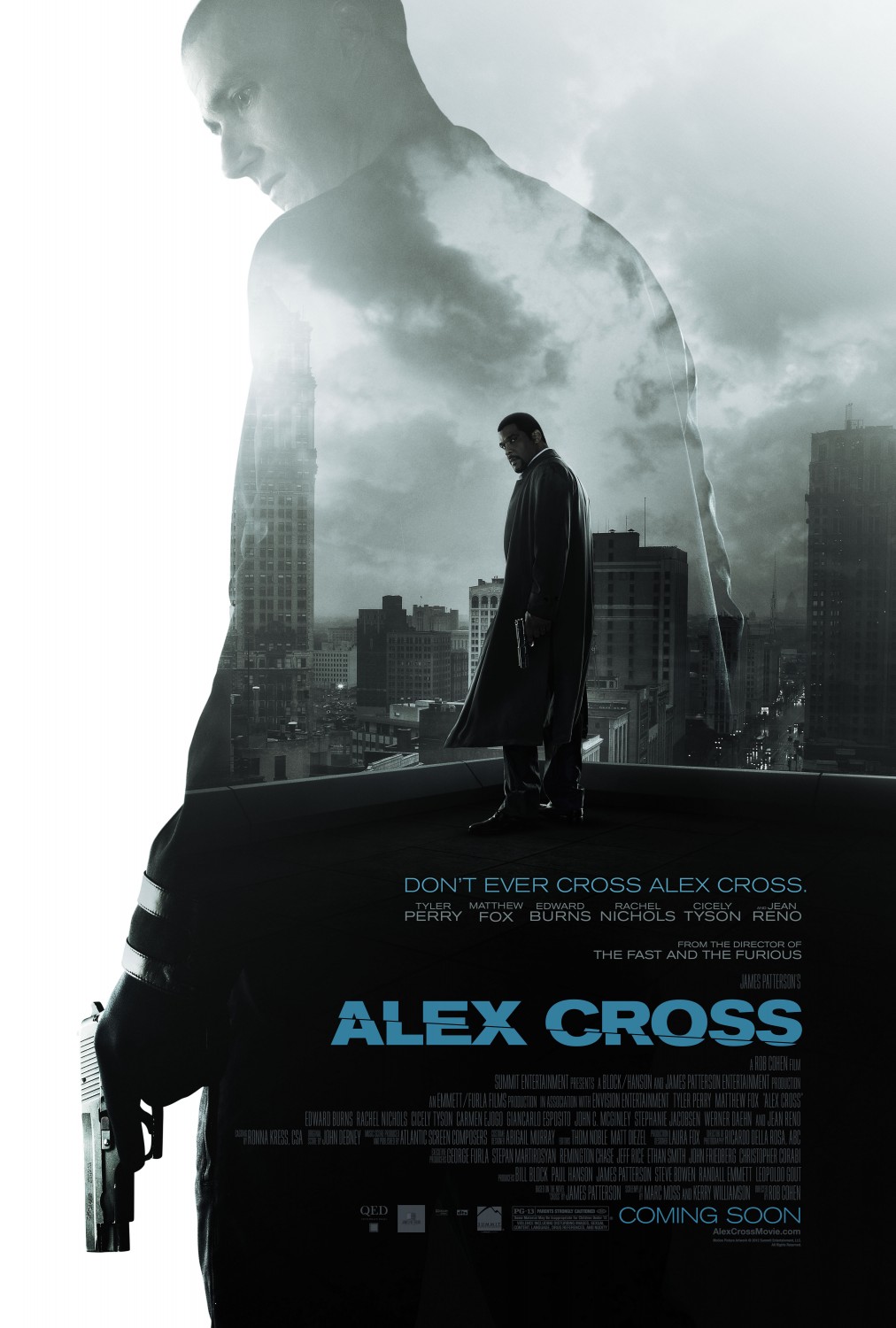
Alex Cross movie poster

WRITER’S NOTE: This article is in regards to a press day which took place in 2012.

It has been over ten years since the last Alex Cross movie, “Along Came a Spider,” made it to the big screen. But now director Rob Cohen, who directed “The Fast and The Furious,” has brought the heroic detective and psychologist back in a reboot which is simply entitled “Alex Cross.” No one appears to be happier about Cross’ return to the world of film than the man who created him, James Patterson. The writer was recently at a press junket for “Alex Cross” at the Four Seasons Hotel in Beverly Hills, and he shared his thoughts on the new movie and the character he created.

James Patterson: I think it turned out great. Summit Entertainment (which is distributing it) has been fabulous to work with and they didn’t get in the way. They were helpful and supportive in every aspect. I think Rob did a terrific job especially given the budget ($24 million) which was not enormous and about a quarter of what he’s used to.

There was also the talk of Tyler Perry taking over the role of Alex Cross from Morgan Freeman who portrayed the character in both “Kiss the Girls” and “Along Came a Spider.” Many were baffled as to why Perry was cast, and they were also intrigued as to what Patterson thought about him in the role instead of Freeman.

JP: Morgan is Morgan, but Tyler is much closer to the character in the books. The character in the books is bigger, he’s physical and he’s bright and I think Tyler did a great job. I think he’s going to blow people’s minds with this. When I went to Atlanta to meet with him, he said to me “James, I wouldn’t do this if I wasn’t sure that I could pull it off. And I’m going to give myself over to Rob. I’m not going to be the director.” And I think that’s what he did, and he took off some weight and bulked up as well.

As for Freeman, Patterson said the actor was never contacted about this movie. Like everyone else, he thinks Freeman is a wonderful actor but remarked how he is now 77 years old, and having him play a detective at that age was not going to work this time as Cross is around the age of 40 in the books.

Patterson was actually involved in the production of “Alex Cross” and even wrote the first draft of the screenplay. He had a lot of input as he owns 40% of the movie, but he was also able to step back and stay out of the way which he said is “the most useful thing that you can do sometimes.” The script did change a lot from what he originally wrote, and Patterson said he was perfectly alright with that.

When asked how he created Alex Cross, Patterson said he grew up in a town which eventually became known as “the murder capital of New York State,” and it was half black and half white. His experiences in this town enforced his reaction to the way blacks were treated in the media.

JP: I felt for a long time that the way movies were portraying African Americans was kind of stupid. I wanted to create a hero who really was a hero; an African American guy who is bright and anti all the stereotypes. Here’s a guy who’s taking care of his family, and this movie gets more into family than the first two did. He’s taking care of his kids, he’s cool with their grandmother, he’s well educated and a graduate of John Hopkins University, etc. So, I just wanted to go against the stereotypes, and I think that has worked and that’s what I’m happy about.

Returning to the movie, Patterson said one of the things which makes “Alex Cross” especially good is it has moments that are “really emotional,” and you don’t always have those moments in a film like this.

JP: Film crews can sort of not really be into the movie they’re working on that much, but there were times where they were watching the monitor and they were crying. It was very very emotional stuff and I think that’s unusual in a movie like this.

In talking about Matthew Fox who plays Michael “Picasso” Sullivan, Patterson described him as terrific and that his performance is one of the best and most original things about the movie.

JP: I think Matthew wanted to show everyone that he had this tremendous range which he does, and he wanted to be a bad guy. Once he got the part, he really pushed it. He took off a lot of weight because he wanted to have a certain look, and he was the madman.

Patterson believes what makes “Alex Cross” work so well as a movie was everyone went into it with a real hunger to do it. Cohen wanted a hit, Perry wanted to do something different and to show he had different skills than people thought he had, QED International (one of companies producing the movie) wanted to do something which would be a break out hit, and Patterson himself wanted another movie made about this character.

JP: Everyone was hungry and I always think that’s great. That does tend to produce a pretty good product.”

This was certainly the case here as “Alex Cross” proved to be a riveting action thriller with great performances from the entire cast and a lot of real emotion which never feels faked. Here’s hoping it finds the audience it deserves when it is released on October 19, 2012.

Click on the links below to check out the exclusive interviews I did with two people involved with the making of “Alex Cross.” These are interviews I conducted on behalf of the website We Got This Covered.

Rob Cohen

Ed Burns

Michael Shannon on Playing the Notorious Richard Kuklinski in ‘The Iceman’

Michael Shannon in The Iceman

WRITER’S NOTE: This article was originally written back in 2013.

Thanks to his unforgettable performances in “Bug,” “Revolutionary Road,” “The Runaways” and “Take Shelter,” Michael Shannon has long since become one of the best character actors working in movies today. It’s fascinating to watch him go from playing one kind of role to another which is completely different from the last, and his range as an actor has kept him from getting easily typecast in ways most actors cannot help but fall victim to. Now he takes on perhaps his most challenging role yet as the cold-blooded killer Richard Kuklinski in Ariel Vromen’s “The Iceman.”

Based on, yes, a true story, Kuklinski was convicted in 1986 of murdering 100 men for different crime organizations in the New York area. At the same time, the movie shows him to be a loving husband to his wife Deborah Pellicotti (Winona Ryder) and their children. We would later learn of his crimes in more detail in Anthony Bruno’s book “The Iceman: The True Story of a Cold-Blooded Killer” as well as in James Thebaut’s documentary “The Iceman Tapes: Conversations with a Killer.” The documentary is especially interesting to talk about as Kuklinski described his various crimes without a hint of remorse. His only true regret was the irreparable damage he did to his own family, and it is this confession which ends up bringing him to tears.

Shannon was at the Four Seasons Hotel in Beverly Hills, California for “The Iceman” press day, and he took the time to talk with me and several others about his experience making this particular film. He described the role as being very frightening, came to make some discoveries about the character which he didn’t see coming, and he admitted a truth about Kuklinski we are understandably hesitant to say out loud.

Michael Shannon: This is a very intimidating part to play. This character is so far removed from my own personal experience, and to try to play the part with any authenticity was a very daunting challenge. Sometimes I think I’m alone in this regard, but then sometimes I think maybe other people feel the same way and they’re just afraid to say it, but I actually kind of like the guy when I was watching the interviews. I think people are very adamant about, he’s a psycho, he’s a cold-blooded killer, he’s remorseless and so on. The fact of the matter is when you’re watching him in those interviews, he’s been arrested, he’s been caught, he’s not going to kill anybody else, his entire life has been ruined and he’s going to rot in jail until he dies. What good is it going to do him to cry on camera? It’s really none of our business, and in a way we’re all being peeping toms on this guy’s pretty cruddy life at this point. I looked at him as a pretty empathetic figure. If you look at his childhood at least as it’s described in the books that I read, it was absolute torture. He was tortured and it was very sad. So, these poor unfortunate parents created this monster, and he didn’t know how to… He wanted to be something other than he was. He even says it in the interview, he says it in the movie. He says, “This would not be me. This would not be me.” So, for all the people who say that he’s cold-blooded, why would he be saying that then? I found him a very sad, lonely person, and I felt like he deserved some sort of exploration into why he wound up the way he wound up.

Indeed, it’s hard to completely hate Kuklinski as he is presented in “The Iceman” as a devoted family man, and life had dealt him a bad hand which left him little in the way of skills to make a normal career out of. He did have a set of rules he set down for himself which dictated he did not kill women or children, and most of the people he killed were criminals and degenerates who weren’t doing society any favors. At the same time, it was not lost on Shannon or any of us that Kuklinski needed to be arrested and brought to justice for the murders he committed, but to dismiss him as some one-dimensional bad guy is to miss the bigger picture.

MS: This enterprise of making movies about people seems to be in service of trying to understand them, and that’s what I tried to do. He dropped out of school and he had a very low opinion of himself. I don’t think he thought he was a great person, and I think he was fighting lot of demons.

Shannon said he never talked to Kuklinski’s wife or any of the family members in preparation to play him, but this is understandable considering the subject matter. To ask them to participate in the production of “The Iceman” would be like asking them to relive a nightmare they may still be trying to wake up from. In terms of research, Shannon ended up relying on other resources.

MS: I did talk briefly to (Anthony) Bruno, the author who interviewed him. He talked with me for ten minutes and he told me the story of the first time he went to interview him and how just horrifying it was to be in the same room with him. He made the interviewer sit with his back to the door and Kuklinski would sit and look through the window, so Kuklinski knew when there was somebody out there like a guard or whatever and the interviewer didn’t. There was nobody that knew him that wanted to be involved with this I don’t think.

In the end, “The Iceman” is not out to change anyone’s mind about Kuklinski as a person. People have long since made up their minds about this man who murdered so many, but there is no denying Michael Shannon is a fantastic actor who continues to give one great performance after another. As Kuklinski, he allows us to peek inside this man’s twisted psyche to see the human being underneath all the notoriety, and it makes for a truly compelling portrait of a man whose name will forever live in infamy. Up next for Shannon is “Man of Steel” in which he will play Superman’s nemesis, General Zod. Like all of you, I can’t wait to see him in that superhero flick.


Michael Chiklis Talks About His Acting Career and ‘Parker’

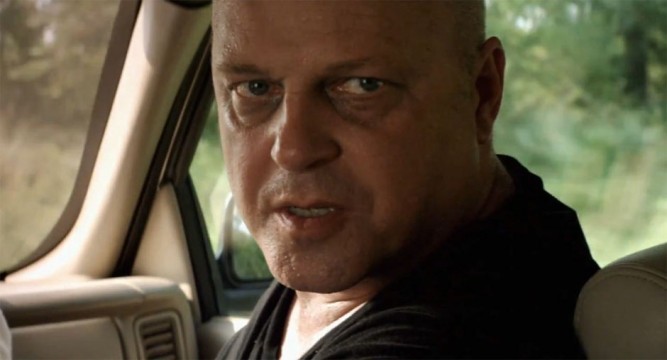
Michael Chiklis in Parker

WRITER’S NOTE: This article was written in 2013.

Michael Chiklis has been a very busy actor lately. Ever since the transformation his career took when he played Vic Mackey on “The Shield,” he has gone on to appear in two “Fantastic Four” movies as the Thing, and he now stars alongside Dennis Quaid on the CBS television show “Vegas.” But now he’s back on the silver screen in “Parker” which stars Jason Statham and is directed by Taylor Hackford, and in it he plays the vicious bank robber Melander. Chiklis has become one of the few actors working today who can go from television to film and from playing a hero to portraying a villain with relative ease. Many actors get typecast to where audiences won’t allow themselves to see them as anything else, and this is why we admire Chiklis because he appears to have completely bypassed that hurdle.

I got to catch up with Chiklis when he was at the press conference for “Parker” which was held at the Four Seasons Hotel in Beverly Hills, California. He told us he would soon be directing an episode of “Vegas,” but this is nothing new for him as he previously directed episodes of “The Shield.”

Michael Chiklis: I have fun with it. I deliberately boss everybody around… No, I’m kidding. I don’t make a big deal of it. It’s usually I take a lot of gut from my fellow actors because they want to give you a hard time. It’s to be expected and I just take it.

One of the reporters told Chiklis that Melander is “a real dick,” and he responded to this description with a big laugh. It was never lost on the actor how his character was a complete bastard, and he reveled in the opportunity to play a full out bad guy. While Vic Mackey from “The Shield” may have been an antihero, Melander has no redeeming qualities whatsoever.

MC: This guy’s a malevolent prick and great. I can just sort of unabashedly get to be a dick which is fun. When you get to do that in real life? You don’t unless you want to be a pariah. One of the wonderful things about being an actor is you get to walk a mile in another man’s shoes, and the other great thing is that you get to step out of them and not be in the shoes anymore. It was wonderful to sort of step into a pair of shoes of a guy who’s all about himself; a narcissistic, sociopathic douche bag and just let that be.

Since he’s become known for playing such hard boiled or douche bag-like characters, it is tempting to think Chiklis is not much different from the ones he played on “The Shield,” “Vegas” or “Parker.” But he didn’t need to convince us he isn’t because if he was like Melander in “Parker,” he would be in jail or even on death row. Chiklis does get a kick out of how people can mistake him for the characters he has played, but it’s clear he’s not out to live up to this image we have of him either.

MC: I think Vic Mackey in particular had an effect on people. I’ve had grown men shake my hand like this (and he showed their handshakes to be full of nervous energy), and I’m like, oh dude it’s all right, I’m not gonna hurt you. That’s happened, but as the father of daughters that’s not such a horrible thing. There are benefits to that. Sometimes it’s scary though because some people really don’t have a capacity to separate truth from fiction. It is a movie and we’re actors playing parts, and I’m not fucking Vic Mackey, I’m not. I’m not a malevolent prick, I’m just not, but I have fun playing one and I’m sure I’ll play others in the future. I like to mix it up and play all kinds of people.

Like I said, Chiklis is one of those actors who can go from playing a good guy to playing a bad one, and we never doubt he will give a strong performance as either kind of character. All of us at this roundtable interview couldn’t help but wonder if he likes playing bad guys more than good ones, or if he likes playing both types of characters equally. But like any other actor, famous or not, Chiklis is not looking to play the same type of person over and over again.

MC: The reason why that’s true is because I don’t prefer to do one or the other. I like to all of that. I’m terrified of complacency and I do not like to be boxed in. I’ve always wanted be diverse, and the more diverse you are, the more of an opportunity you’ll have to play a wide variety of roles. Some people thrive in an area that they have their note in and their terrific at it, and they just sing the note all the way to the bank and good for them. That’s just not my way. I can’t do that.

Chiklis compared his interest in acting roles to his iPod which he said has music by The Tubes and Sergei Rachmaninoff on it. What he ended up saying made perfect sense as none of us like to listen to the same type of music all the time. We need variety, and it’s this same type of variety which Chiklis demands as an actor. Now most actors don’t get to indulge in any kind of variety, but he admits many give him strange looks when it comes to his taste in things.

MC: I have eclectic taste in film and television and musicals. People freak out because I went to see “Glengarry Glen Ross” when I was just in New York, and then the next night I was at “Newsies and they were like, what the? And I dig both because that’s life. I’d hate like hell to look at the same flower every day no matter how beautiful it was. It just makes to me a more interesting life and career, and I’m just blessed that I’ve been able to afford the opportunity to play these characters.

Now Chiklis didn’t always have this diversity in his career as for years he was known for being on the comedy-drama TV series “The Commish” which had him playing a suburban police commissioner in upstate New York named Tony Scali who worked through various problems with humor and creativity. This led to Chiklis to being typecast as a nice guy in film and television, and to him playing the same type of character in many projects like the ill-received television series “Daddio.” It took someone very close to make him realize what he had to do to change his future as an actor.

MC: A lot of the diversity in my career which I always desired, but I didn’t necessarily know how to attain, I credit to my wife because she made the statement to me years ago: it’s not incumbent upon the studios to reinvent you, it’s incumbent upon you to reinvent yourself. And I just looked at her and went that’s right, that’s correct and that’s brilliant. Actors become puzzle pieces in that he fits there, she’s fits there, and you can understand that. So, I was fitting in the rolly polly affable guy place for a lot of these people, and I couldn’t just expect them in osmosis to go like, oh yeah, Chiklis, bad ass mother fucker because they’ve never seen that from me. So, she simply pointed out, you want them to see you that way? You’ve got to show them that and you’ve got to demand that.

Demanded it he did, and Michael Chiklis’ acting career is now stronger than it has ever been. He plays a remorseless bank robber in “Parker,” and at the same time he portrays a Chicago mobster on “Vegas.” It doesn’t look like this actor will ever lack for a variety of roles at this point in his life, and this says a lot about his talent as well as his perseverance in an industry as fiercely competitive as this one is. More power to him!

CLICK HERE TO CHECK OUT THE EXCLUSIVE INTERVIEW WHICH I DID WITH MICHAEL CHIKLIS FOR THE WEBSITE WE GOT THIS COVERED.


‘Jurassic World: Fallen Kingdom’ Director J.A. Bayona Talks About Making ‘The Impossible’

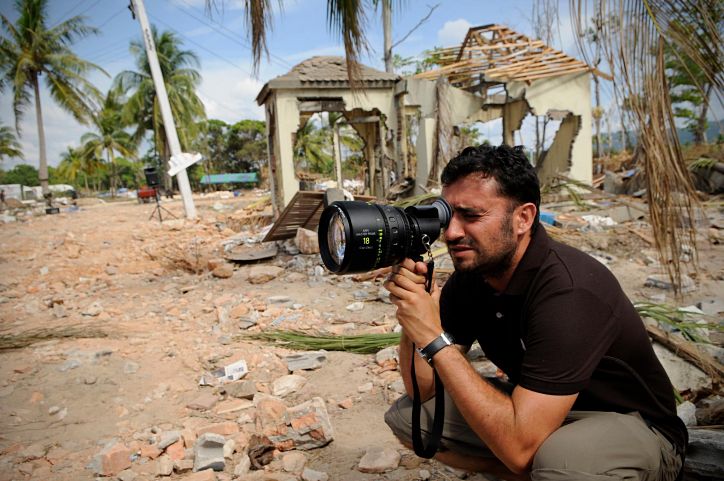
The Impossible JA Bayona photo

Spanish film director Juan Antonio Bayona, or J.A. Bayona for short, made a name for himself in 2007 with the horror movie “The Orphanage.” It earned him the respect of his fellow Spaniard Guillermo Del Toro who helped produce the film, and it became a big box office hit worldwide. These days he is known for directing “Jurassic World: Fallen Kingdom” which is expected to be one of the biggest hits of the 2018 summer movie season.

Following “The Orphanage,” Bayona was offered a number of movies to direct including “The Twilight Saga: Eclipse,” but he was really interested in doing something far more challenging to take on. Bayona found the challenge he was looking for with “The Impossible,” a movie based on the true story of a family that survived the devastating 2004 Indian Ocean tsunami in Thailand. What Bayona accomplished showed him to have great skill in getting strong performances out of an incredibly gifted cast, and he staged a tsunami scene so horrific, it puts the one in Clint Eastwood’s “Hereafter” to utter shame. The movie proves to be a cinematic experience as brilliant as it is gut wrenching to watch, and you won’t be able to ignore Bayona’s talent after you have seen it.

Bayona was at the Los Angeles press conference for “The Impossible” which was held at the Four Seasons Hotel in Beverly Hills, California back in 2012, and I was fortunate enough to attend his roundtable interview. We all thanked him for making this film which we agreed was one of the very best of the year.

The Impossible movie poster

Question: This is a great movie. Did you realize the scope of it when you got involved? Did you realize how inspiring it would be to moviegoers in general?

J.A. Bayona: Well it was getting bigger and bigger as much as we were getting into it. The first impact we had when we heard Maria (Belon’s) story was very emotional, and we wanted to figure out where that emotion was coming from. Even though it is a tough story and we’re talking about a tragedy, the emotion was coming not from a dark place. It was something that was coming from the way these people gave to the other ones in the worst moment. So, I thought that was very powerful and it was a very beautiful idea of approaching that. But then you talk to Maria and you realize how much suffering there is still nowadays. They call it “survivor’s guilt” even though she doesn’t like to call it that. She will talk about survival suffering because she doesn’t feel guilty for anything she did, but it’s really that there is a lot of suffering. I thought that would be interesting to tell the story of this family going there and then going back home and not talking about a disaster in a compassionate way and where you only talk about whether you live or you die. There’s a lot of gray space in the middle. From the very first meeting that we had we agreed that this was not just the family story. It was the story of many people, but the whole ending talks about that; how do you go home to the real world when your real world disappears? I like to see the film tell the story about the end of innocence. They don’t feel the same anymore, they lose the sense of security and their life is not the same anymore.

Q: How big of a challenge was this movie for you?

JAB: Well of course there was a huge challenge in the technical aspects of the film, but for me that was exciting and I was not worried about that. The real challenge was how to portray the story of the people who were there and how to give the big picture of what went on there and being respectful of the time.

Q: How much the movie was real and how much what was done with CGI? The movie looks very real even though some of those effects were probably done digitally.

JAB: Well it had to be like that because the story was very simple in reality so it could look like a visual effects movie. It had to feel real all the time. We did a lot of things for real like practical shooting and practical effects, and we also used a lot of CGI for greeneries and digital composition. But the great thing is to always mix several techniques so there’s a moment where everything gets lost so the audience doesn’t know what they are watching.

Q: Was anything done to reduce the carbon footprint of the movie or in trying to conserve resources?

JAB: Everything these days is now very regulated, so you have to be very respectful. For example, in shooting the water sequences in Spain the waters had to be darkened with a coloring used for food because that water had to be sent back again to the sea. Everything had to be natural. The water had to be decidedly desalinated before it got sent back to the sea.

Q: Did you think about shooting the movie in another country other than Spain, or was it always your intention to shoot there?

JAB: We did it in Spain because we found this huge water tank which is the second biggest in the world I think. So it was the perfect place to shoot all of the water sequences and once we finished with that we went to Thailand and we shot in the same places the tsunami took place in.

Q: The sound design in this movie is incredible, especially in the opening sequence. The screen is black but you already feel like you’re underwater. Can you tell us more about the sound design for this movie?

JAB: One of the things that I soon realized is that the characters didn’t have time to stop and think about what was happening. Everything was so fast that we had to deal more with emotions and sensory details. I was intellectualizing the sequence a lot with the actors, but in the end in front of the camera everything had to be sensorial and about the emotions. Sound has a great role in the film, and I talked a lot with Maria about the sounds and she was telling me for example that the sounds of the wave reminded her of the engine of the plane. This is the moment where I had the idea of starting with the sound of the engine because the movie was already starting and finishing on a plane. The way the plane sounds at the beginning and at the end is completely different, and that sets the behavior of the characters of how they go to Thailand and how they came back from Thailand. The sound of the way was very interesting. It sounds wilder underwater than on the surface because that’s where the danger was with all the debris and all the things which were dangerous for the people who were in the water were underwater. Maria was telling the also about the bloody birds, and I said, “What do you mean by the bloody birds?” She told me, “Once the water receded and we were completely alone in the debris and the devastation I started listening to the birds singing like nothing had happened, and I hated them at that moment because nothing happened to them.” This gave me the idea of how nature goes back to normal and that puts the characters very close to reality at the time, so of course we played a lot with this sound and with the music. It’s very interesting to see how music plays a lot with things that the characters can find the words to explain. I remember the moment when Maria was being dragged by this old man, and she sent me a message that was four pages of all these things that she felt in that moment. And in that sequence you only have a man dragging a woman so I focused only on Naomi’s eyes and I put some small music in their going up slowly, and only with that Naomi’s performance and only with their eyes and seeing the connection between this woman and this man. Using some notes of music, I was able to try to create a thought provoking experience in the audience, and that deals a lot with the four pages that Maria sent me.

Q: When this project began it was intended to be a Spanish production with Spanish actors, but then it became this huge thing. When did you decide to make this change?

JAB: Well we wrote the script in Spanish and we soon realized that 80% of the dialogue was already in English because people had to talk in English to be understandable to each other. Also I didn’t want to put the accent on nationalities because I wanted to portray all the people on the same level. I wanted to portray all the people like people, no nationalities. So it felt natural to go to English-speaking actors because first of all to finance a movie like this you need important names, but most of all I never wanted to put an accent on nationalities. If you see the film, they never say where they are from. All the time they talk about going back home. I wanted them to be very universal like a wide canvas so you can project yourself in there.

“The Impossible” is now available to own and rent on DVD, Blu-ray and Digital, and “Jurassic Park: Fallen Kingdom” arrives in theaters on June 22, 2018.