‘Filmworker’ Serves as a Love Letter to Stanley Kubrick’s Right-Hand Man
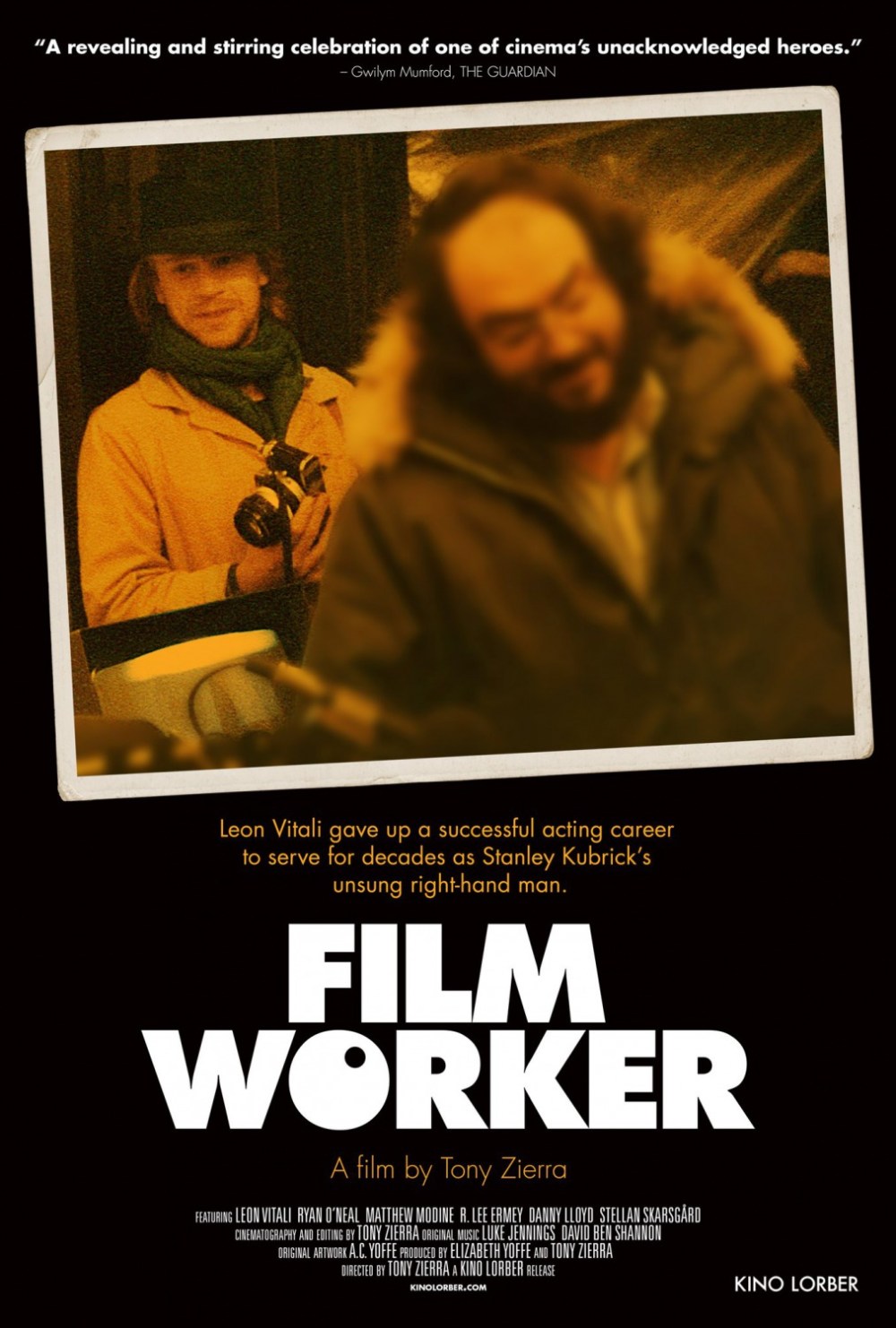
Filmworker poster

It has been almost 20 years since Stanley Kubrick passed away, but his presence is still deeply felt among cinephiles. Some may say this is because “2001: A Space Odyssey” is being re-released in honor of its 50th anniversary, but it goes much further than that. Kubrick had a singular vision, and stories of his directorial methods, such as getting an actor to do dozens upon dozens of takes of a single scene, remain legendary as only a handful of filmmakers could have gotten away with this. And as the documentary “Room 237” showed, people continue to share their interpretations of “The Shining” and of the meanings they believe certain images in it have. Indeed, Kubrick’s films had a large degree of ambiguity in them, and watching them just once is never enough.

But just when you thought you had heard every story about Kubrick, along comes Tony Zierra’s documentary “Filmworker” which looks at the life and times of Kubrick’s right-hand man, Leon Vitali. As an actor, he worked a lot in British television, but after appearing in Kubrick’s film “Barry Lyndon,” he dedicated his life to helping the famed director any which way he could. What results is a movie about working with such a meticulous human being, and of the overall effects it had on Vitali to where it is shocking to see he is still above ground.

“Filmworker” starts with a look at Vitali’s early life as an actor, and it shows how o often he worked in British television and movies to where he was never ever lacking for a job, a position I and my actor friends get to enjoy at some point in this lifetime. Then he got the role of Lord Bullingdon in “Barry Lyndon,” and this introduced the actor to the Kubrick life he was quick to embrace. In a scene where Ryan O’Neal ends up punching Vitali in the back, O’Neal says Kubrick told him, “You’re not hitting him hard enough.” From there, they did the scene 30 more times, and it served as Vitali’s introduction to Kubrick’s obsessive nature in getting things just right down to the smallest of details.

It is very easy to see why Vitali became such a die-hard Kubrick fan after he watched “2001” and “A Clockwork Orange.” Both films reflected a singular vision no other director could have conjured, and Vitali remarked how “2001” dared to have no dialogue in its first 20 minutes, something which seems unthinkable in this day and age. Following their collaboration on “Barry Lyndon,” Kubrick sent him a copy of Stephen King’s “The Shining” to see if it would be worth turning into a movie. Once Vitali told Kubrick it was, the director brought him on so he could search for the perfect child actor to play Danny Torrance. From there, he abandoned his acting career and dedicated his life to Kubrick all the way through his last movie, “Eyes Wide Shut.”

Vitali ended up doing just about every kind of job for Kubrick including casting director, acting coach, location scout, sound engineer and color corrector to name a few. Upon Kubrick’s passing, he became the only person to restore his films. To say he dedicated his life to Kubrick’s work would be the understatement of the millennium. We watch as he works tirelessly to get all the details right, and we see the toll it takes on him and his body. He speaks of how he worked two 36-hour shifts on one project and of how he slept on the floor to catch a two-hour nap while fully dressed so that, when he woke up, he could get right back to work.

Watching “Filmworker,” I wasn’t always sure if I should thank Vitali for all the work he has done or pity him. Some describe him as Igor to Kubrick’s Dr. Frankenstein. I prefer to see him as Waylon Smithers to Kubrick’s Mr. Burns. This man gave up a thriving acting career to work for the director of “Dr. Strangeglove,” and their relationship certainly had a bit of Dr. Jekyll and Mr. Hyde to it. Vitali shows us the note Kubrick wrote to him in thanks for his work on “Barry Lyndon,” and he remarks at how his first handshake with the filmmaker proved to be “very warm.” But once they began working on “Full Metal Jacket,” Vitali admitted he came to see another side of Kubrick, one which few others got to see up close.

Many like to talk about the Stanley Kubrick they met and of how he was so different compared to all the rumors which were circulating throughout Hollywood about him, but Vitali makes it abundantly clear how he knew Kubrick in a way no one else could. At one point, he even describes Kubrick as the film industry’s equivalent to Gordon Ramsey, the chef from “Hell’s Kitchen” and a man who is always in serious need of anger management classes. People keep asking Vitali how he handled Kubrick, but he responds to this by saying he never handled him but instead handled himself so that he could exist in Kubrick’s world.

Actors like Matthew Modine, Danny Lloyd and the late R. Lee Ermey are interviewed at length here, and they have great stories to share about both Kubrick and Vitali. Lloyd and Ermey credit Vitali for helping them with their performances in a way no one else could, and Modine remarks at how selfless Vitali is when it comes to his work for Kubrick. Modine is just one of several individuals who freely admit they are too selfish to dedicate their lives to Kubrick the way Vitali did. O’Neal goes out of his way to say he “fled” the set of “Barry Lyndon” once his work there was done as he was terrified of being subjected to reshoots.

Indeed, the level of dedication Vitali gives Kubrick is both commendable and scary. You also have to feel for him as he suffers under the heavy hand of Warner Brothers while working to give Kubrick’s films the attention they deserved. I remember when the first DVD’s of his work came out and how bad they were, and Vitali spent his precious time getting the color just right. Hearing how Kubrick got incensed if the green was off reminded me of Robin Williams in “One Hour Photo” when his character of Sy went off at a repairman for not taking a difference of three points in color all that seriously. If you are passionate enough about something, you will see it through to the very last detail.

As you can imagine, there is a good deal of trivia about Kubrick on display here. Among the most interesting bits come from Ermey who played Gunnery Sargent Hartman in “Full Metal Jacket” as he discusses how he went about getting actors for the movie, and it is eerie to see him describe what the movie did for his career and of how he has led a great life as it was only a few weeks ago he died due to complications from pneumonia. We also get to hear from Tim Colceri who was originally cast as Hartman before being replaced by Ermey. He ended up playing the doorgunner who shoots away at any and every Vietnamese individual regardless of whether or not they are the “enemy.” Watching Colceri’s face as he reflects on the role he could have had is heartbreaking as his disappointment looks to last a lifetime.

In a lot of ways, “Filmworker” serves as a love letter to Vitali as his work on Kubrick’s films is extraordinary, and we should be thankful for what he has done as this documentary shows how no one else could have preserved the iconic director’s work the way he has. But beyond that, it also acts as a love letter to those who work tirelessly behind the scenes on film sets as they often do not get the respect they deserve. To many, they simply appear as names on a movie’s end credits, and some of those credits move at lightning speed when those movies are shown on the Sundance Channel. But after watching this documentary, we have every reason to thank Vitali for his devotion to Kubrick as, without him, no one could have been able to give “Eyes Wide Shut” the release it deserved. But more importantly, it provides Vitali with the happy ending he has long since earned.

While watching “Filmworker,” I was reminded of what Homer Simpson told his family while they watched the end credits for “The Simpsons Movie:”

“A lot of people worked hard on this film, and all they ask is for you to memorize their names!”

This is, of course, completely unrealistic, but when it comes to “Filmworker,” I want to believe such a thing could be possible.

* * * * out of * * * *

Shane Black Unleashes the First Trailer for ‘The Predator’

The Predator teaser thumbnail

It has now been 30 years since John McTiernan’s “Predator” was unleased on audiences everywhere, and the action classic still holds up. Since then, we have been exposed to sequels and those horrid “Alien vs Predator” movies, both of which we would love to erase from cinematic history. But now comes the first trailer for the latest in the franchise, “The Predator,” and it is co-written and directed by Shane Black who also co-starred in the 1987 original as Rich Hawkins. With this sequel, Black said he promises to give us an event film which he hopes will “event-ise” the Predator once again and make it “more mysterious.” He has also remarked how “The Predator” will return the franchise to the intimate scale of the original, and judging from this teaser trailer, it looks like he will deliver on those promises.

The first thing I should point out is how little we see of the Predator here. From “Predator 2” and beyond, 20th Century Fox has put this particular cinematic alien front and center to where little is left to our collective imaginations as to what it looks like. But this time, we only see bits and pieces of the creature as the attention is focused more on the human characters. By leaving this iconic creature in the shadows, the Predator suddenly seems as threatening as when he battled Arnold Schwarzenegger all those years ago.

The Predator image 1

What wrecked the previous “Predator” movies were how they paid too much attention to their human characters who resembled little more than stock characters who were nothing more than clichés. Not only that, they acted so stupidly at times to where you couldn’t wait to see them killed in some brutal fashion. But considering “The Predator” is coming from the man who wrote the screenplay for “Lethal Weapon” and directed “Iron Man 3” and the criminally underseen “The Nice Guys,” I feel confident Black will give us characters who are down to earth and have memorable lines of dialogue at their disposal.

Boyd Holbrook, who gave us a wonderfully slimy antagonist in “Logan,” stars as Quinn McKenna, a Marine and Special Forces commando who we see being interrogated about a mission he was on. The interrogator asks Quinn if he saw anything “unusual,” and I love how he responds not just with words, but also with his eyes. It’s as if Quinn is saying cut the crap and let’s get to the point, and I imagine this is Black’s way of telling us how the characters in this film are going to be smarter and more interesting than the typical schmuck that has inhabited the average “Predator” movie once too often. I also loved how Quinn, when asked if he poses a threat, responds by saying, “We’re assassins. Isn’t posing a threat kind of the point?” Exactly! Why dance around the issue?

The Predator image 2

Olivia Munn also shows up here as Casey Bracket, a disgruntled science teacher who provides us with information about what this particular Predator and its ilk are up to. She says they are attempting “hybridization” as they are “upgrading on every planet they visit.” This harkens back to the ending of “Predator 2” in which we learned how far back these creatures have been to Earth and of how many lifeforms they have encountered. This helps to make the Predator all the more mysterious as he looks ready to attack in ways we cannot see coming.

I also enjoyed the opening part of the trailer in which Jacob Tremblay (the amazing young actor from “Room”) opens up a package with contains some kind of alien object. Tremblay ends up detaching a small part from it which lights up, and he treats it like a spaceship as he flies it around his room and crashes it into his Jenga set. Forget for a moment how he unknowingly has signaled the Predator’s spaceship to Earth where its occupant will surely lay waste to every and any human foolish enough to be in its path. Black captures the wondrous imagination of a child, and it reminds us of the worlds we create inside our minds as life seemed full of possibilities when we were young. Hence, this sequel does not look to be lacking in imagination.

“The Predator” is said to take place between the events of “Predator 2” and “Predators,” but watching this trailer makes me feel this sequel will blow those two out of the water. It is set to be released on September 14, 2018. Please feel free to check out the teaser trailer below.

The Predator logo


IFC Debuts First Trailer for Lars Von Trier’s ‘The House That Jack Built’

The House That Jack Built poster

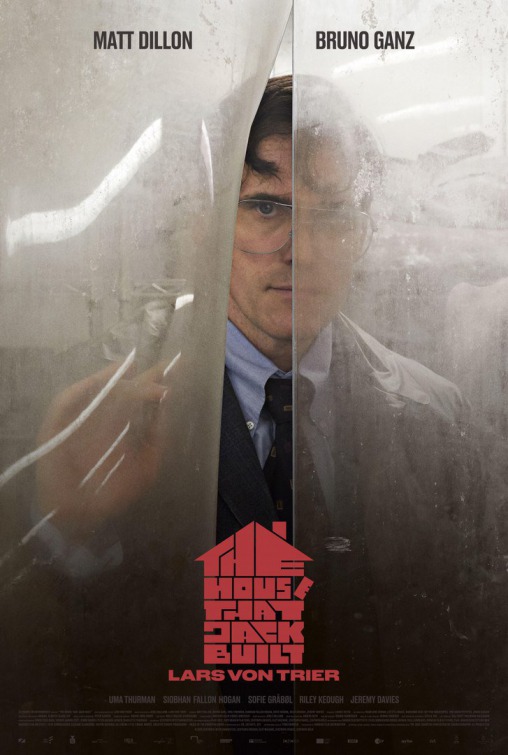
For years Lars Von Trier was considered persona non grata at the Cannes Film Festival, but in 2018 he returned to it with a vengeance. His latest film, “The House That Jack Built,” premiered there recently, and it was reported that a hundred people walked out of the screening in utter disgust. Of course, it wouldn’t be a Von Trier film if it didn’t cause some strong visceral reaction, let alone polarize the first audience to witness it. Now, those of us who were not lucky to go to Cannes this year get to watch the first trailer for “The House That Jack Built,” and it is made clear right away how this film is not at all for the faint of heart.

The trailer opens with Jack (Matt Dillon), an unrepentant serial killer, talking with Verge (Bruno Ganz) who I can only assume is a therapist of some kind. In their conversation, Jack assumes there are rules he must follow, but Verge assures him this is not the case but also says “don’t believe you’re going to tell me something I haven’t heard before.” But after I watched this trailer, I wondered if this would be the case. Many of us have grown up on serial killer movies like “The Silence of the Lambs,” “Seven” and “Copycat,” but this one seems a bit different and far more visceral than any I have seen in the past.

We see Jack pick up a lady played by Uma Thurman whose car has broken down. She holds a broken car jack in her hands, and she puts it down beside Jack once she gets in his car. From there, she talks openly about how she might have made a mistake getting into Jack’s car as he may very well be a serial killer. This reminded me of when a friend of mine shared his experience of watching “Friday the 13th Part VII: The New Blood” and of a particular female character who was there for the audience to utterly hate. When it looked like Jason was ready to kill her, my friend told me the audience started a chant of “kill the bitch, kill the bitch, kill the bitch,” and it looks like Von Trier is going for the same thing here as Thurman is just asking for Dillon to bash her head in with that car jack.

This trailer is filled with enough snippets to inform you “The House That Jack Built” will be an especially grisly adventure as Jack drags Thurman’s corpse into what looks like his secret lair, tortures another lady played by Riley Keough to where she screams helplessly, and takes aim at a pair of children and their mother. It should be clear before even watching this trailer that Von Trier is a filmmaker who never plays it safe, but those who are unware of this will be made very aware long before the last image.

For myself, there a couple of moments which stand out unforgettably. One is when Jack looks out the window of an apartment and yells how “nobody wants to help,” and the camera zooms out to where it looks like not a human being is in sight. The other comes when Jack says the following:

“Some people claim that the atrocities we commit in our fiction are those inner desires we cannot commit in our controlled civilization, so they are expressed instead through our art. I don’t agree. I believe heaven and hell are one and the same. The soul belongs to heaven and the body to hell.”

The way I see it, everyone has a dark side, and the world of art allows us to exorcise our most shameful desires. With “The House That Jack Built,” Von Trier gives us an individual who cannot separate the line between what is real and what is not, let alone fact and fiction. I have been a big admirer of this filmmaker since being introduced to his work through “Breaking the Waves,” and I cannot wait to see what he has in store for us here.

Please feel free to check out the trailer below at your own risk.


‘Deadpool 2’ Ups the Ante and Leaves You Begging for More

Deadpool 2 poster

I want to say that when “Deadpool” was released, it was a breath of fresh air in a time of endless comic book/superhero movies, but this description doesn’t do it justice. The air coming from the 2016 box office hit was filthy, and we loved how Ryan Reynolds, Tim Miller and company refused to play it safe with this Marvel Comics character to where a PG-13 rating just wasn’t going to do it for them. But in addition to being so gleefully profane, the movie also had a big heart as it ended with a message of loving someone inside and out instead of just admiring what is on the surface. If there ever was an R-rated movie for today’s teenagers to sneak into, “Deadpool” was it.

Now we finally have its long-awaited sequel, “Deadpool 2,” which was preceded for the longest time by a pair of jokey trailers which didn’t have much in the way of new footage, but instead put its wisecracking hero in situations which didn’t always put him in the best light, and we laughed our asses off all the same. Surely this sequel couldn’t match the inventiveness and comedic genius of the original, right?

Well, I am very happy to report that “Deadpool 2” proves to be just as funny and entertaining as its predecessor, and in some ways, I thought it was even better. While this one looked as though it would suffer from overkill as the recent “Kingsman” sequel did, everyone in front of and behind the camera keeps the energy level high and the laughs coming in rapid succession. With Reynolds constantly breaking the fourth wall and a plot which refuses to make clear right away of where this sequel is heading, I was never sure of what would come next. As a result, I could never take my eyes off the screen.

So, what has Wade Wilson/Deadpool been up to since his last expletive-laden adventure? Quite a bit actually, and it has thrust him into a realm of despair he doesn’t see himself escaping from. What ends up giving him a reason to live is helping to protect Russell Collins (“Hunt for the Wilder people’s” Julian Dennison), a young mutant who goes by the name of Firefist for reasons which become immediately clear to where Pyro’s penchant for lighting everything up pales in comparison. But in the process, they are both met by Nathan Summers/Cable (Josh Brolin), a time-traveling cybernetic mutant soldier who is looking to right a terrible wrong, and his main target might not be who you think.

The amount of pop culture references is countless in “Deadpool 2,” and you may need to watch this sequel twice to catch all of them. Right from the start, Wade wastes no time in skewering popular icons like Wolverine who made his swan song in last year’s “Logan.” From there, we watch as this particular comic book character lays waste to gangsters to the tune of Dolly Parton’s “9 to 5,” gleefully provides a spoof of the James Bond opening titles which include such classics as “directed by one of the guys who killed the dog in ‘John Wick,’” and he makes you look at Barbara Streisand’s song “Papa, Can You Hear Me?” from “Yentil” in a very unnerving way. Also, he is quick to call you out on obvious references such as a line from “Robocop,” and by that, I mean the original, not the remake. Whether it’s a good or bad guy you are talking about here, at least they have great taste in movies.

However, the laughs and action come at us so quickly in “Deadpool 2” to where it takes longer than usual to figure out what the movie’s main plot is. At times, it seems like the filmmakers are geared towards throwing jokes, action scenes and filthy jokes and the expense of an actual story, and it looks as though we won’t find a story until the third act. Even Wade at one point says if he and his newly-appointed X-Force achieve their goals, there won’t even need to be a third act. Of course, I was having too much with this sequel to criticize this point all that much, and a story does indeed emerge.

Reynolds has come a long way from his “Van Wilder” days to get to this point. He’s given memorable performances in “Buried” and “The Proposal,” but his career has been overshadowed by having starred in one of the worst comic book movies ever, “Green Lantern.” “Deadpool” served as his redemption for that cinematic misfire, and his dedication to staying true to Wade Wilson and his alter-ego has been commendable considering the ill-fated debut he made as this character in “X-Men Origins: Wolverine.” Watching Reynolds here is a reminder of what a gifted comedic actor he can be when given the right material, and it is impossible to picture anyone else in this role instead of him.

Tim Miller stepped out of the director’s chair for “Deadpool 2,” and in his place is David Leitch who assisted Keanu Reeves and Charlize Theron in their path to ass-kicking glory in “John Wick” and “Atomic Blonde.” I was impressed at how he managed to keep this sequel’s energy and laugh quotient up and running throughout as I kept waiting for the whole thing to burst at the seams. It’s no surprise “Deadpool 2” lacks the freshness of the original, but it does have the same level of insane energy and even more to spare beyond it.

And there’s Josh Brolin who appears in his second Marvel movie in two months as Cable. Just as he did in “Avengers: Infinity War,” he gives this iconic comic book character a wounded humanity which makes especially complex and threatening throughout. Even when Cable undergoes a change of alliances which is almost as unbelievable as any in “The Fate of the Furious,” Brolin keeps a straight face throughout the proceedings which become increasingly over the top. It’s also great to see how Brolin has a good sense of humor about himself as he endures barbs relating to “The Goonies,” and looking at his scared face here made me want to say, “Who do you think you are, Thanos?”

It’s also nice to see a variety of new and familiar characters here like Karan Soni whose character of taxi driver Dopinder has developed a bit of a blood lust which Wade is not quick to take all that seriously. Stefan Kapičić gets a bit more to do as Colossus in this sequel as this character does what he can to make Wade a better person. The character of Peter, a regular person with no superpowers, is an inspired addition to this series, and I would love to have seen Rob Delaney play him in more scenes here. T.J. Miller also returns as bar owner and Wade’s best friend, Weasel, but considering his penchant for making fake bomb threats, I believe this will be the last time we see him in this role.

Deadpool 2” could have been too much of a good thing, but I had so much fun with it to where it didn’t matter if it was. I can’t remember the last time I laughed so hard at a movie, and it is nice to watch a movie where the jokes hit far more often than they miss. Reynolds, like Ben Affleck, have a strong sense of humor about his past mistakes in the world of cinema, and its fun seeing a movie star crack a few laughs at their own expense However, I am curious as to why he did not lay waste to “Blade: Trinity.” That misbegotten sequel was every bit as bad as “Green Lantern.”

And as always, be prepared for a post-credit sequence which is by the funniest of its kind since “Spider-Man: Homecoming.” It is too damn hilarious to spoil here, and you have got to see it for yourself.

* * * ½ out of * * * *

‘Tully’ Finds Jason Reitman and Diablo Cody Creating Unforgettable Cinema Once Again

Tully movie poster

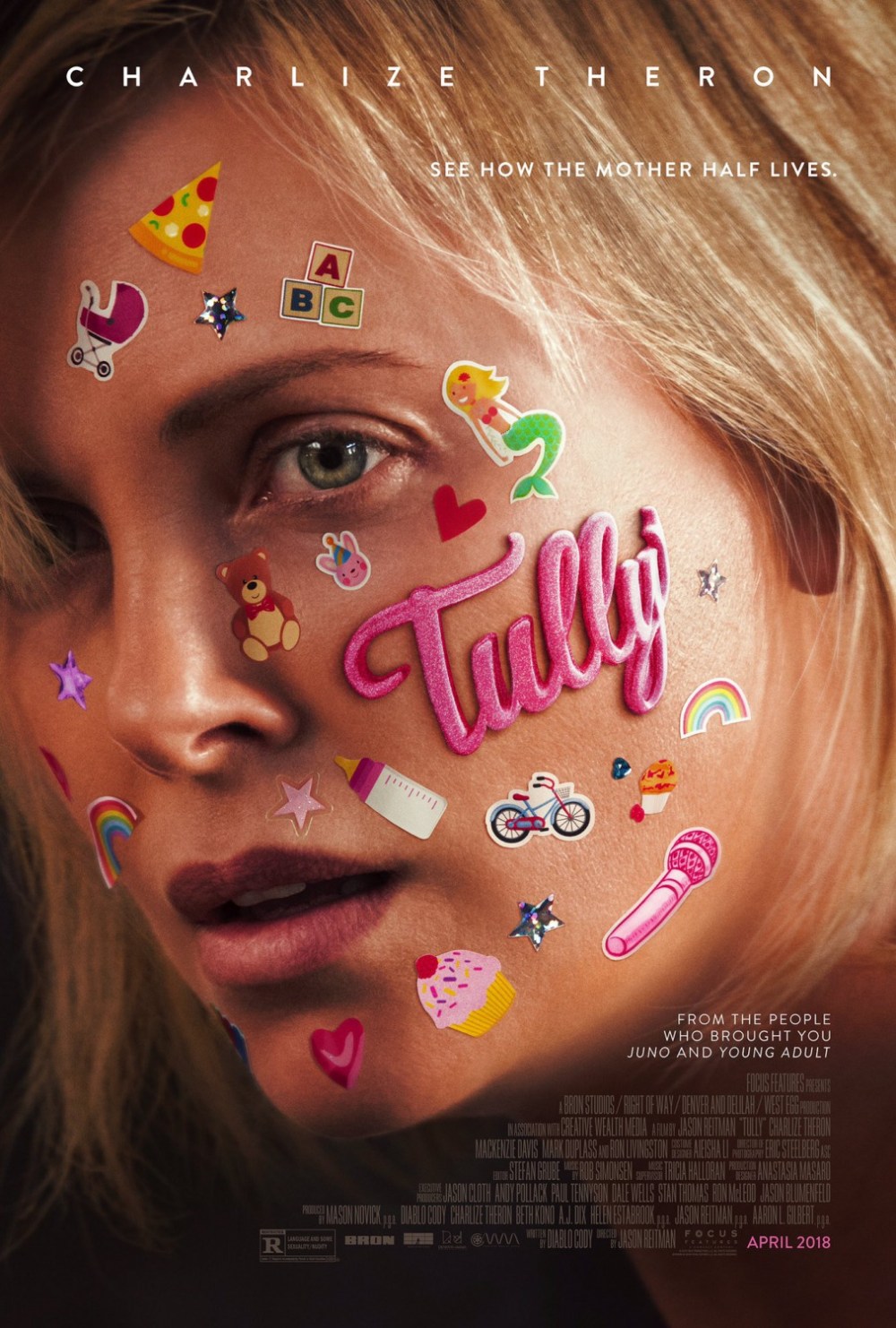
Okay, as I write this review for “Tully,” the latest collaboration between filmmaker Jason Reitman and writer Diablo Cody, I have to confess I am not a parent. I have not experienced restless nights with a crying newborn who constantly needs a bottle of milk or a quick diaper change, and if I ever do become a parent, I am certain I will deal with it as well as my friends with kids have (which is to say, not at all). But after watching “Tully,” I feel confident in saying it is one of the more honest depictions of what a mother goes through before, during and after she gives birth. Whereas most movies conclude with the birth of a child, this one starts with one and goes from there.

Charlize Theron plays Marlo, a mother of two and with a third on the way. Her belly is so big to where she looks ready to burst at any second, and we also see how overwhelmed she is with everything and anything. Her son Jonah (Asher Miles Fallica) is an overly-sensitive boy who freaks out loud noises he is exposed to, and she is forced to give him more attention at the expense of her daughter Mia (Lia Frankland). When Marlo visits the principal at Jonah’s school and tells her this third child is “such a blessing,” you can tell she doesn’t fully believe it.

When Marlo does give birth to a girl she names Mia, it is one of the more unique birth scenes in movies. Most filmmakers treat the arrival of a newborn with unfettered joy, but “Tully” treats it dispassionately as Marlo is too wiped out and depressed to be happy about anything. For a moment, I feared this movie would venture into “We Need to Talk about Kevin” territory, but neither Reitman or Cody are out to make this story about a sociopathic child.

From there, Reitman presents us with a furious montage of Marlo constantly getting up in the middle of the night to take care of her crying baby, feed her, change her diapers (always an unappealing task), and pump milk out of her breasts. Sure, Marlo does have a loving husband in Drew (Ron Livingston), but he has yet to fully see the heavy toll motherhood is taking on her. It’s an unnerving montage as we keep waiting for Marlo to explode in frustration, and when she eventually does, you cannot blame her.

Marlo’s brother, Craig (Mark Duplass), comes to her rescue by offering to hire a night nanny. Marlo is at first very hesitant to let Craig do this as the thought of anyone else raising her children is terrifying, but one day after she is unable to stop Mia’s crying, she relents. The night nanny comes in the form of Tully (Mackenzie Davis), a youthful woman who quickly proves to be wise beyond her years. Once she comes into Marlo’s life, things begin to change for the better, but as the movie goes on, you wonder more about who Tully is and if she is too good to be true.

Watching “Tully” reminded me of many scenes in movies and television where I witnessed a mother losing her patience. We watched Marge Simpson roar like a lion at anyone who couldn’t possibly understand her frustrations, we were taken aback when Dee Wallace yelled at her son “alright I’ll get your daddy!” while being stalked by a rabid St. Bernard in “Cujo,” and we watched helplessly as Brie Larson tried to explain to her son what is really going with them in “Room.” Mothers will often explode in frustration, and many of the best movies about parenting portray this. As we see Marlo get upset with her kids, it is highly likely we will be reminded of the agony we put our own mothers through to where a long overdue apology may be required from us. “Tully” has several moments like these, and they are fully earned throughout.

Theron has long since proven to us what a phenomenal actress she can be. As Marlo, she gives a fully realized performance as a mother who looks like the joy she has for life has been completely sucked out of her. The Oscar-winning actress makes you feel the pain of Marlo’s situation as the character has long since reached her breaking point to where she seems like she cannot take another challenge thrown in her general direction. As the movie goes on, we see Marlo rise out of her depressed state to where she experiences happiness for what seems like the first time in ages. Theron makes us feel every note of Marlo’s anguishes and triumphs to where we cannot come out of this motion picture saying we were not the least bit moved.

As the night nanny, Mackenzie Davis proves to be such a luminous presence as Tully to where we realize this movie doesn’t just need her, it deserves her. A modern-day Mary Poppins, Tully predicts Marlo’s every move and need and gives her just what she needs to make it to the next stage in her life. Davis is best known for her work on “Halt and Catch Fire” and for appearing in one of my favorite movies of 2017, “Blade Runner 2049.” She gives off such a warm glow in “Tully” to where you just want to hug here and never let her go.

I also have to give credit to Ron Livingston who plays Marlo’s husband, Drew. It could have been a thankless role of a husband and father completely ignorant of his wife’s suffering, but the “Office Space” actor makes him more than the average movie dad. Even as Drew loses himself in video games which have him battling and killing zombies, Livingston makes us see he is a man with a good heart even with all his flaws. In his penultimate scene, Livingston doesn’t make Drew into a total schmuck who berates his wife when things go haywire, but instead into a spouse eager to admit he doesn’t know everything his wife is going through and is desperate to hear her out. I love it when Livingston says “I love us” instead of “I love you” as it shows the perspective and honesty Reitman and Cody are committed to giving this particular parental adventure, and it makes this moment between these two characters all the more special.

If I have any problems with “Tully,” they come in the second half when revelations are made to where we have no choice but to question everything we just saw I would tell you which movies these revelations reminded me of, but this would be giving away way too much. But while these revelations could have wrecked any other motion picture, they do little to take away from this one.

“Tully” marks a big comeback for Reitman and Cody after a few years of cinematic misfires. “Labor Day” and “Men, Women & Children” put a few dents in Reitman’s resume as a director, and Cody’s directorial debut “Paradise” and screenplay for “Ricki and the Flash” (0ne of Jonathan Demme’s last films before his death) were ill-received to put it mildly. But when these two artists come together, they create something which is never easily forgotten.

Reitman makes the struggles these parents go through all the more vivid without making them seem the least bit glamorous. “Tully” does not have the look of a motion picture to where you feel like you are watching one, but instead of a real life setting with all its messiness and imperfections on display. At times, I felt like I was watching a home movie, and this made everything I saw feel all the more powerful.

As a writer, Cody still comes up with some classic zingers like “abandoned trash barge” or describing someone as a “book of fun facts for unpopular fourth graders,” but her screenplay also shows her rising to another level of thoughtfulness and maturity. Being the mother of three children herself, Cody clearly understands the journey such a person ends takes to where the mother/newborn connection is not forged right away. There has been some controversy over “Tully’s” portrayal of mental illness, and it is never made clear if Marlo is suffering from post-partum depression or something similar. Cody, however, is not out to make Marlo a special case study, but instead to share the challenges she was forced to overcome to be the mom she is today.

I think it is more than appropriate that “Tully” has arrived in theaters just in time for Mother’s Day. Lord knows we owe our mothers a great deal of gratitude for all they have done for us, let alone all they have gone through to get us to where we are today. Sure, dads deserve a lot of credit too, but being a mother comes with a lot more challenges and obstacles to overcome. If this Reitman/Cody film cannot make you see this, then what will?

* * * ½ out of * * * *

Former ‘Dr. Who’ Actor David Tennant on Portraying a Psychopath in ‘Bad Samaritan’

Bad Samaritan David Tennant

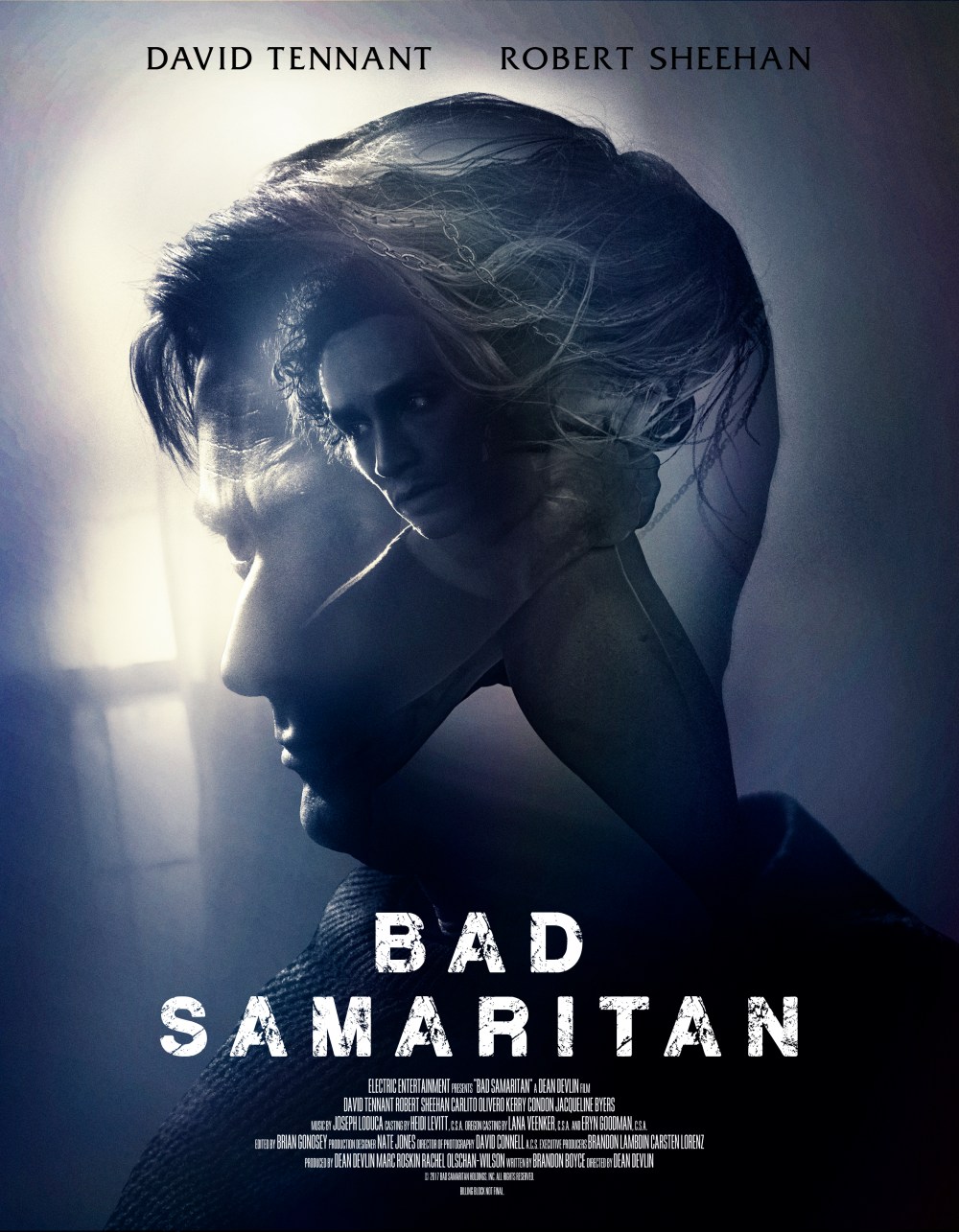
We know him best for playing the Tenth Doctor on the never-ending BBC television series “Dr. Who,” and for playing the sociopathic Kilgrave on Netflix’s “Jessica Jones.” Now in “Bad Samaritan,” David Tennant plays Cale Erendreich, a far more psychotic character than any he has played in recent years. When we first lay eyes on Cale, he is incredibly rude to a pair of valets at a local Italian restaurant. When he hands the keys to his Maserati over to them, he makes it clear his car is not be messed with or smoked in, and this leads the valets to invade his house and rob him, but they soon discover Cale has a woman chained up in his office. From there, we learn just how screwed up on an individual Cale is as this particular victim clearly is not his first, and he even tells her at one point, “You have earned the next stage in your evolution.”

Watching Tennant in “Bad Samaritan” reminded me of Ben Kingsley’s performance as Don Logan in “Sexy Beast.” As Don Logan, Kingsley gave us a character who truly was the anti-Gandhi and, in the process, he gave us one of the greatest and most fearsome villains the world of cinema has ever seen. In an interview, Kingsley talked about how he played the wound of the character as this was the thing which gave Don Logan the most ferocity. Hearing him say this remains fascinating to me to this very day as it gave me a stronger idea of how to play a villain in a movie or a play.

When Tennant appeared at the “Bad Samaritan” press day at the London Hotel in West Hollywood, I got to ask him what he felt Cale’s deepest wound was. His answer showed just how much research he did on this character and of how complex Cale is.

David Tennant: Well Cale certainly doesn’t know. A lack of self-awareness is probably right up there. Obviously, there is a lot of damage in his background and a lot of it, I’m sure, goes back to his parents and upbringing. Doesn’t it always? I think he’s a broken human being who doesn’t realize he is. He’s fatally damaged and believes he’s the only one who isn’t, so I suppose it’s that. It’s the gap between where he really sits in society and where he believes he sits in society I guess.

It is never enough to play a villainous character who revels in being so evil as it does nothing but make such an antagonist so one-dimensional and infinitely boring. Thank goodness we have actors like Tennant who are eager to explore the dark side of humanity to where they can give audiences a villain who is never easily forgotten.

Be sure to check out “Bad Samaritan” which is now playing in theaters everywhere.
BS_KA_r5v1 JPEG

Click here to check out my interview with Dean Devlin, the director of “Bad Samaritan.”


Exclusive Video Interview: Dean Devlin Talks About the Making of ‘Bad Samaritan’

Bad Samaritan

With Roland Emmerich, he helped bring “Independence Day,” “Godzilla” and “The Patriot” to the silver screen. In 2017, he struck out on his own and made his directorial debut with the disaster film “Geostorm.” Now filmmaker Dean Devlin follows that up with his sophomore directorial effort, a horror thriller named “Bad Samaritan” which was written by Brandon Boyce (“Apt Pupil”) and stars former “Dr. Who” actor David Tennant, Robert Sheehan and Carlito Olivero. Whereas “Geostorm” was a big budget Hollywood blockbuster, “Bad Samaritan” sees Devlin taking the independent film route to create his most intimate motion picture yet.

We get introduced to Sean Falco (Sheehan), an aspiring photographer who works as a valet with longtime friend Derek Sandoval (Olivero) at a local Italian restaurant. What his employers do not know, however, is Sean and Derek have more on their minds than parking cars. Once customers give them their keys, they drive out to their homes to burglarize them, and among the items they abscond with is a diamond ring which Sean gives to his girlfriend, Riley (Jacqueline Byers). But one night, when Sean breaks into the home of an especially rude customer, Cale Erendreich (Tennant), he discovers a woman chained to a chair. From there, it becomes a cat and mouse game as Sean tries to find a way to save her without getting arrested as a thief in the process.

I was lucky enough to speak with Devlin at the London Hotel in Los Angeles, California where he was doing press for “Bad Samaritan.” Devlin talked about how making this movie reminded him of why he got into filmmaking in the first place, the twisted psychology of Tennant’s character, what made him especially interested in working with Boyce, and of the advantages he had in shooting the film in Portland, Oregon.

Please check out the interview below.

AN ULTIMATE RABBIT NOTE: This interview was recently updated in order to rectify any potential copyright issues and to make it available to the largest audience possible. 


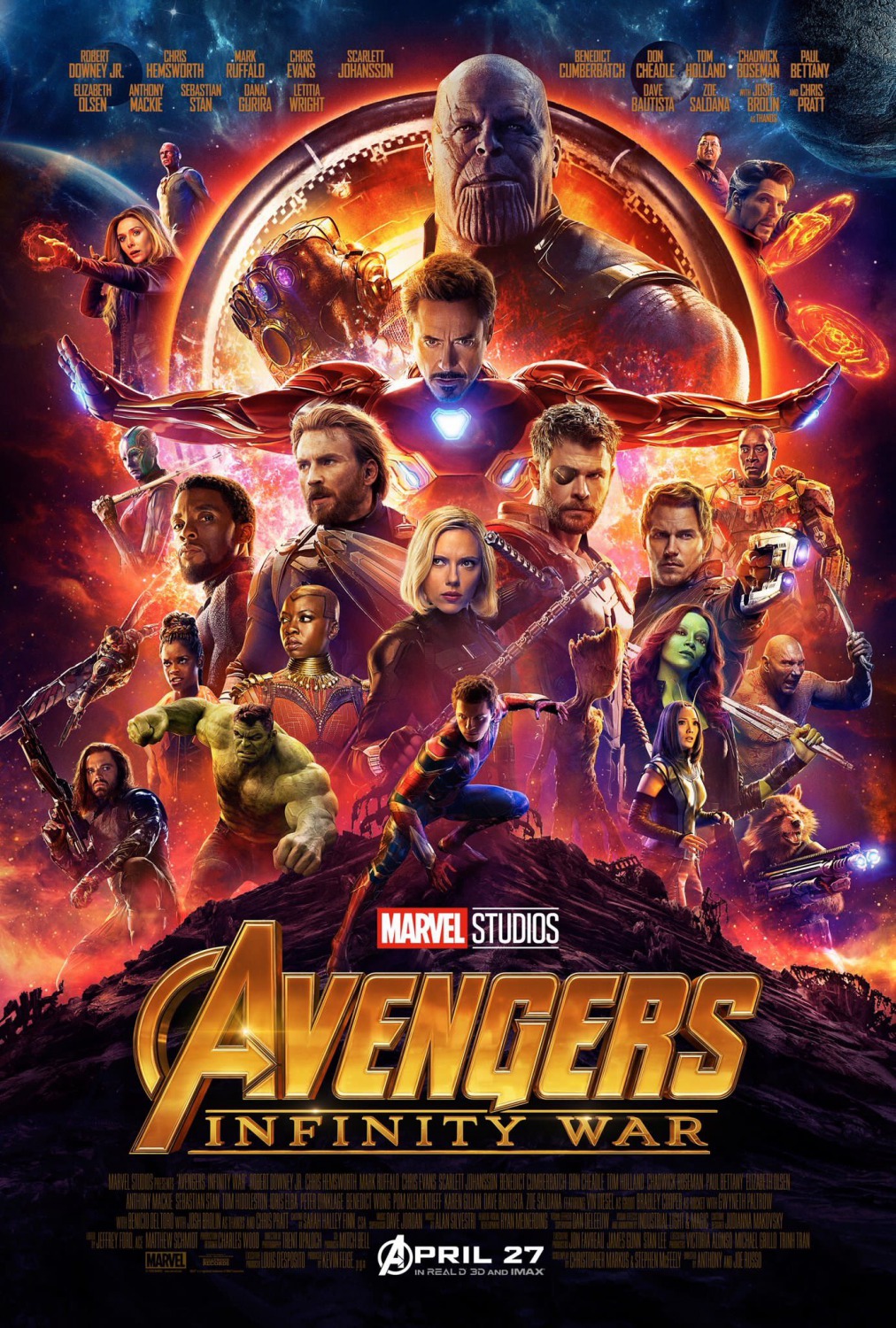
‘Avengers: Infinity War’

Avengers Infinity War poster

You know how many advertisements for movies say how “everything has led to this” from time to time? Well, for once, this statement makes perfect sense with “Avengers: Infinity War” which is, thus far, the biggest Marvel Cinematic Universe movie yet as it gives us their most threatening foe yet in Thanos. This particular Marvel character, an intergalactic despot from the planet Titan, has been hinted at in post-credit sequences from Marvel movies past, and now he is here to take center stage in a never-ending franchise which typically sees its greatest heroes get the majority of attention.

Thanos longs to get his hands on the Infinity Stones, six incredibly powerful, not to mention beautiful, gems which will allow him to impose his will on all of reality. Clearly, this is a character determined to gain unlimited power at any cost, and he is determined to re-balance the universe in the process. Thanos is looking to create his own version of Year Zero, and this means many characters will die whether we want them to or not.

Not only does “Avengers: Infinity War” arrive with a wealth of anticipation and expectations, but we also come into it with a sense of dread as we know some of our favorite characters may not survive this particular adventure. Then again, these Marvel movies do exist within the science fiction genre, and you can never be sure if anyone can ever truly stay dead. Spock died in “Star Trek II,” but he did come back to life in “Star Trek III.” Knowing “Avengers: Infinity War” will get a sequel, I can’t help but believe we will see some of these superheroes again. Besides, many of them have sequels in pre-production, so their fate is not exactly sealed. Who will live and die for certain? Well, we will find this out in the summer of 2019.

Directors Anthony and Joe Russo, both responsible for the “Captain America” sequels which rank among the best of the MCU, have a near impossible task with this “Avengers” movie as it features dozens upon dozens of main characters we have been introduced to in the past. The fact these characters are not all equally represented here is not a surprise, but what surprised me was how well the Russos were able to balance things out to where it felt like everyone had a good dose of representation throughout. Perhaps certain characters get more screen time than others, but I was too wrapped up with what was going on to really analyze this movie all too closely.

It is also worth noting how while these characters all inhabit the same cinematic universe, they do exist on different tonal levels. Some Marvel movies like “Iron Man” and “Thor” have their moments of levity, but they are generally serious adventures as their heroes are faced with obstacles both physical and psychological. Then again, there is “Guardians of the Galaxy” which came out at a time where Marvel movies in general were threatening to become as deadly serious as anything coming out of the DC Comics Extended Universe. James Gunn’s film of Peter Quill and his merry band of Han Solo-like bandits proved to be a comedic blast from start to finish, and it proved to be much lighter than the average superhero/comic book movie.

I bring this up because “Avengers: Infinity War” could have ended up being a very uneven motion picture in terms of tone as John Krasinski’s “The Hollars” was (granted, Krasinski did score a rebound with “A Quiet Place,” but still). The Russos, however, make everything blend together in a satisfying way to where nothing felt completely off-balance, and this is very commendable.

The way I see it “Avengers: Infinity War” gets off to a good start, but things feel just a little bit off to where this movie threatens to be more episodic than its filmmakers intended. But as it goes on, things improve to where the Avengers are given a real depth which reminds us they are as vulnerable as anyone else. Sure, they may be endowed with tremendous powers, but when faced with their greatest foe, they become as mortal as anyone else, and this makes their latest adventure all the more perilous.

There are many performances worth noting here, and this Marvel movie is overflowing with strong ones which would take forever to point out. Robert Downey Jr. continues to revel in the evolution Tony Stark/Iron Man as he gives his most soulful performance yet as this iconic comic character which got the MCU off to such a strong start. Zoe Saldana gets to take Gamora to an even more epic level as her character has a much closer relationship to Thanos than she would like to admit. The same goes for Chris Pratt who, as Peter Quill/Star Lord, finds even more depth than in the previous “Guardians of the Galaxy” movies to where it makes me look forward to the third movie in that franchise more than ever before.

But the one performance worth singling out above all others is Josh Brolin’s as Thanos. This could have been the typical one-dimensional antagonist bent on obtaining the most power any individual could ever obtain, but the “No Country for Old Men” actor makes him into an almost tragic figure who has yet to discover what price he has to pay for his quest for power, and it is a heavier one than he could ever expected. As a result, Brolin forces this character into the center stage in a way audiences could not have easily expected, and the final scene he has is a frightening reminder of the prominence Thanos has in the realm of Marvel Comics. Seeing this makes me believe no other actor could have portrayed Thanos as effectively as Brolin does here.

“Avengers: Infinity War” ends on a cliffhanger, and it feels like a bold move on the part of the Russo brothers and Marvel Studios to do so as it concludes on a note which truly left me breathless. We do get the typical post-credits sequence and the message of how so-and-so will return, but both these things take on a different meaning to where you almost wish this Marvel movie ended without them. In a year from now we will see the follow up to “Infinity War,” but until then we will be reminded of how our heroes will not always be there for us. Can they return for another round? We have yet to find out.

* * * ½ out of * * * *

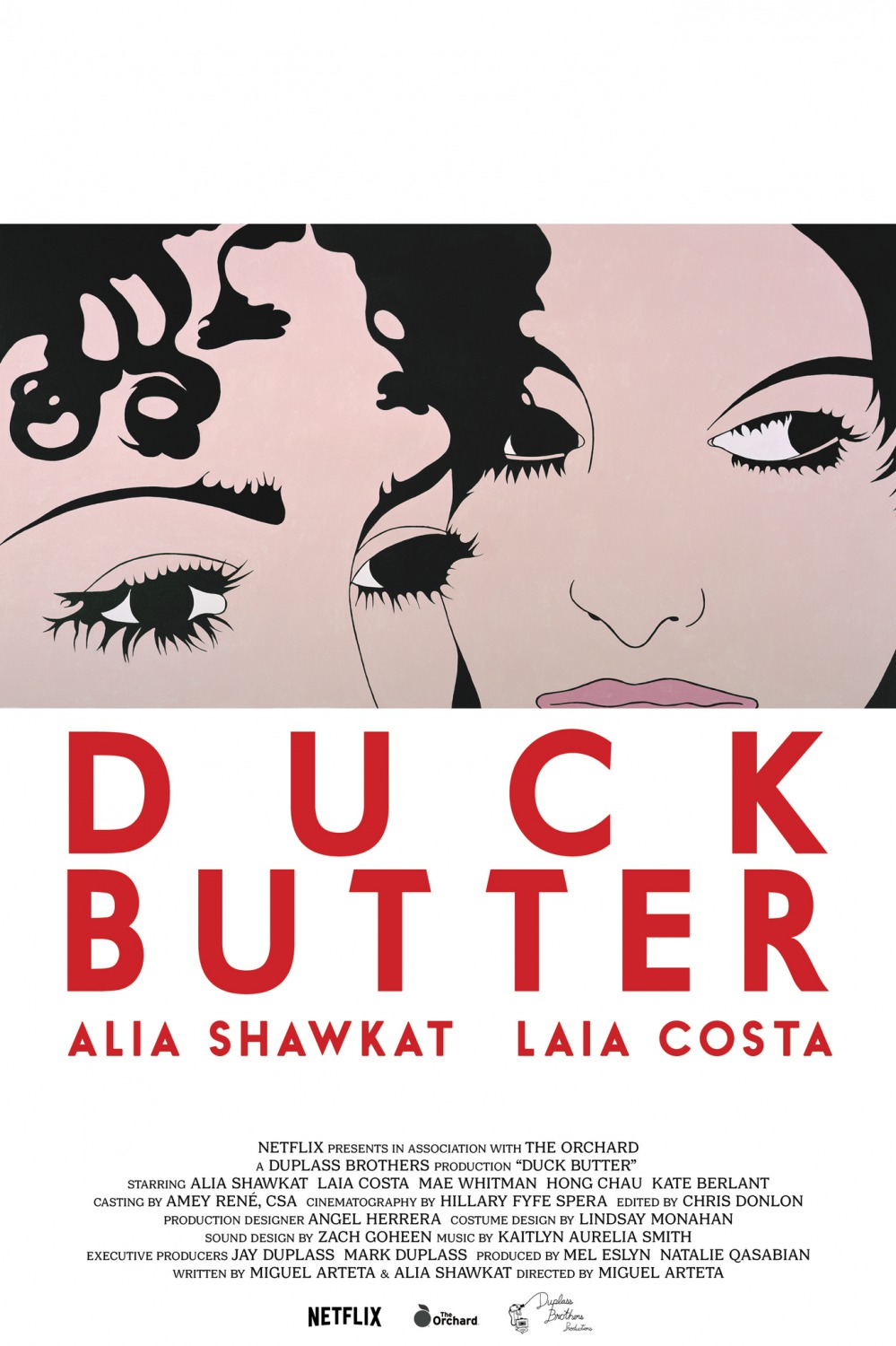
‘Duck Butter’ Examines the Joys and Perils of Intimacy

Duck Butter movie poster

When it comes to the films released under the banner of Duplass Brothers Productions, I have found many of them to be fearless in the way they deal with intimacy and vulnerability. We come into this world feeling free and uninhibited, and then we get our hearts broken in a way which leaves a scar that never disappears. From there, we build up our defenses to keep strangers from getting too close because we don’t want our feelings getting gutted, and the thought of being vulnerable with another person can seem terrifying sometimes. Movies like “The Skeleton Twins,” “Tangerine” “The One I Love” and “Blue Jay” have dealt with these themes effectively, and they are presented in a very intimate fashion to where you don’t feel like you are watching a movie, but instead real life unfolding before you. It serves as a reminder of how much we want intimacy and of the euphoric highs and terrifying lows which come with it.

The latest Duplass produced movie to deal with this is “Duck Butter,” and if you want to know what its title means, you have to watch it to find out for yourself. Alia Shawkat stars as Naima, an aspiring actress in Los Angeles who has just snagged her biggest role in a movie written and directed by Mark and Jay Duplass. But while Naima may find a certain freedom in acting, we see she is a bit repressed emotionally and has developed a bleak worldview as the daily news is filled with nothing but bad stuff like the inability of humanity to control global warming which, by the way folks, is very real. For those who do not believe me, please check out Werner Herzog’s “Encounters at the End of the World.”

At night, Naima goes to a club where she meets Sergio (Laia Costa), an aspiring singer who is everything she isn’t: a free spirit who is open to taking risks the average person would be quick to avoid. Sergio asks Naima to dance with her, and it gets off to an awkward start to where Sergio has to shake Naima’s arms in order to get her to loosen up. I remember a female friend having to do this with me, and it did work in releasing the stiffness which has enveloped certain parts of my body. It certainly works between these two women to where they just fall into each other’s arms in a way which spells out how they have found a strong connection not easily discovered.

From there, Naima spends the evening at Sergio’s house with friends of hers, all of whom encourage Naima to come out of her protective shell and express herself freely. After that, the two of them are left alone with each other and make love in a way which feels not the least bit choreographed and totally authentic. Both discuss the dissatisfaction they have had in dating and romantic relationships which came to be destroyed by dishonesty. So caught up they are in their truly intense chemistry, they decide to spend the next 24 hours together, having sex every hour on the hour in the belief they can transcend the deceit which usually plays a part in most relationships.

Van Halen, when Sammy Hagar was their lead singer, once sang, “How do I know when it’s love?” Watching Shawkat and Costa here is to know, or so it seems at first. Their intense connection is intoxicating to witness, and I hope to discover it in my own life sooner rather than later. These actresses make their attraction seem not only real, but exhilarating. As a result, I really got caught up in their relationship to where I didn’t want to see it fail. But as “Duck Butter” moves on to its second and third act, you can sense things will fall apart to where you wonder if things can ever be made right again.

Like many Duplass Brothers Productions, “Duck Butter” was made on a very low budget and with a shooting schedule which never seems long enough. Movies can suffer as a result from these factors, but this one benefits from them as the two main characters are confined to whatever locations they end up at to where we feel completely stuck with them. Intimacy can be a wonderful thing, but it can also be seriously scary when things fall out of our control and understanding.

“Duck Butter” was directed by Miguel Arteta who cowrote the screenplay with Shawkat. He is best known for directing “Star Maps,” “Chuck & Buck,” “Youth in Revolt” and “Cedar Rapids.” Each of his films deals with the insecure relationships people have, and this one is no exception. I reveled in the connection Naima and Sergio have with one another to where I wanted nothing to come between them. But as the story rolled along, I sensed something would, and it made me both nervous and resigned to an inevitable fate the even the writers could not avoid.

Shawkat is best known for her work on the television shows “Arrested Development” and “Search Party,” and we are long past the point where we have to realize what a talented actress she is. Watching her take Naima from being a repressed individual to one eager to embrace the love she has found is entrancing. From start to finish, she makes Naima an individual desperate for a connection she feels has been denied to her, but she also makes us see a character who eventually comes to see how her own needs are equally as important as her partner’s.

I am not familiar with Costa’s work, but she did win the Lola, the biggest award one can get from the German Academy of Cinema, for her performance in the critically acclaimed “Victoria.” Costa makes Sergio into the free spirit many of us wish we could be, and she makes the character into a romantic force to be reckoned with as she tests Naima to come out of her protective shell more than she has already. Costa appears like such a free spirit to where I wanted to be swept up in her orbit, and this is even though speed bumps in this relationship felt inevitable.

What I admired most about “Duck Butter” was how emotionally naked these two actresses were. Whatever you think about the art of acting, this is not as easy as many think it is. Both Shawkat and Costa have to break down their own defenses to make the plights of their characters all the more real, and you have to admire what they pull off here as their emotions infect us in a way we are not typically prepared for. We revel in the chemistry these two have, but we also fear their intimacy will lead them down a path which will destroy it irrevocably.

Many may see “Duck Butter” as a gay relationship movie or a part of queer cinema, but we are now in a time where putting things into one particular category only speaks of a person’s limited worldview. The screenplay originally had a heterosexual couple instead of a homosexual one at its center, but the trials and tribulations of love are the same no matter what side of the sexual spectrum you reside on. This movie shows how love can be exhilarating and damaging all at the same time, and I was captivated by it from start to finish.

* * * ½ out of * * * *

“Duck Butter” opens in Los Angeles and New York on April 27, and it will premiere on digital formats starting May 1.

‘Chappaquiddick’ Revisits a Tragedy No Kennedy Can Escape

Chappaquiddick movie poster

“They eat their wounded upstairs.”

Lieutenant Al Giardello tells Detective Frank Pembleton this on an episode of “Homicide: Life on the Street” to describe the politicians who have invited Pembleton to help them out on a delicate matter involving a congressman. So eager he is to impress his bosses, Pembleton suggests letting a police report get buried, covered up, and the Deputy Commissioner orders him to do so. But when this matter is made public to where a scandal erupts in the news, the Commissioner denies his own involvement and lets Pembleton take the fall. Pembleton has become one of the wounded as the higher ups in the department hang him out to dry, and we see what politicians will do to keep their political currency protected at all costs.

I kept thinking about this exchange while watching “Chappaquiddick” which takes us back to the year 1969 when Senator Ted Kennedy was involved in a car accident. While attempting to cross the Dike Bridge on Chappaquiddick Island in Massachusetts, his car went off the side and plunged into the water. Ted was able to free himself, but his passenger, Mary Jo Kopechne, remained trapped inside and eventually drowned. Ted failed to report this incident to the police until 10 hours after it happened, and we watch as his closest advisers look for ways to spin the story to their advantage as the scandal threatens to derail Ted’s political career and forever tarnish the image of the Kennedy family.

The car accident is presented in bits and pieces throughout because, as anyone who has been in an accident can tell you, no one remembers everything in a linear fashion. After the initial accident, the story jumps ahead to a soggy Ted Kennedy walking slowly back to the house where he, his advisers and secretaries were having a party. When his close friend Joe Gargan sees him shivering in the back of a car, Ted simply says, “I’m not going to be President.” From there, everyone goes into damage control mode as they try to get a hold of the narrative and manipulate it to where Ted will come out of this accident in one piece. But there is still a dead body in the center of this tragedy, and some in the inner circle are not about to let this fact go away.

It’s fascinating to watch the political spin machine at work in “Chappaquiddick” as this kind of press manipulation is a regular thing these days, but even back in 1969 the truth was not so easy to bend as the truth still found a way to the surface. Still, we feel the pressure of the press as Ted and company scramble to come up with an answer which will exonerate the Senator in the eyes of his constituents and America at large. There are scenes where his advisers come up with ridiculous scenarios to explain Ted’s actions, like getting a physician to explain how Ted suffered a concussion in the accident even though he isn’t given a chance to examine the senator. Then there’s the story about how Ted was put on sedatives because of his concussion, but a reporter points out how taking sedatives in this condition could easily kill him. And let’s not forget the neck brace fiasco which Ted didn’t even bother rehearsing. There was no Facebook or social media back then, but there was still enough attention paid to where Ted could not walk away from this tragedy unscathed.

At the center of “Chappaquiddick” is Jason Clarke who portrays Ted Kennedy. Many actors could have easily fallen victim to simply playing the late senator as the icon we all see him as and saddle themselves with an accent which makes them sound like Mayor Quimby from “The Simpsons.” Clarke never falls into any of those traps and instead makes Ted as human as anybody else, full of flaws and passions which at times get the best of him. It’s a wonderfully complex performance as Clarke shows how Ted worked to control how the news of this tragedy coming out while wrestling with a conscience that will not let him escape the guilt he feels. Just watch Clarke as he phones Mary’s parents to inform them of her death. It’s a heartbreaking moment, and not an easy one to pull off.

Special mention goes to Kate Mara who plays Mary Jo Kopechne. It’s a small role, but Mara makes the most of her time onscreen as she forces us to see Mary as much more than a mere historical footnote. We learn Mary was a devoted supporter of Bobby Kennedy and his values, and she desperately wants to believe Ted can deliver on the same promises Bobby made before he was killed. This makes her final onscreen moments where Kate is desperately keeping her head above water as she hopes for a miracle which never comes. Whether or not you knew of Mary Jo’s existence before this movie, Mara’s performance ensures we never forget her once we leave the theater.

Indeed, the entire cast of “Chappaquiddick” is well chosen as each actor inhabits their role with a lot of passion and energy which makes this more than the average biopic. Ed Helms and Jim Gaffigan get to break free of their comic roles here as Joe Gargan and Paul Markham, two of Ted Kennedy’s closest advisers who are desperate for him to get his story straight before he does even more damage to his image. Helms is especially worth singling out here as he makes Joe the conscience Ted desperately needs to pay attention to, and whether or not Ted does is not worth revealing here as you have to look into Helms’ eyes to see what the answer is.

One truly brilliant performance worth singling out here comes from Bruce Dern who gives an almost wordless performance as Joe Kennedy, the patriarch of this famous family. When we meet Joe, he has long since become hobbled by a stroke and aphasia, and this makes Dern’s work all the more challenging as he has to express things to the audience without the use of words. The final scene he has with Clarke is brutal as the frustrations and disappointments these two have with one another come to their breaking point.

It’s great to see Clancy Brown here as the no-nonsense Secretary of Defense Robert McNamara as he cuts through the bull to make sure the narrative runs as smoothly as possible for the incumbent senator. From the first moment he appears onscreen, the “Highlander” actor shows the audience he means business as McNamara moves quickly into damage control mode and freaks when the most thoughtless of mistakes are made by subordinates.

Olivia Thirlby also shows up here as Rachel Schiff, another loyal Kennedy secretary and close friend to Mary. It’s fascinating to watch Thirlby here as she takes Rachel from being totally devastated upon learning of her friend’s death to racing into damage control mode. Whatever you may think of her actions, Thirlby shows how devoted she is to the Kennedy family as she feels the country cannot suffer over one person’s mistake.

Also worth mentioning is Vince Tycer, a noted theater director in Connecticut, who plays David Burke, an individual known as a aide to powerful men. It’s fascinating to watch Tycer in “Chappaquiddick” as he hovers in the shadows next to Ted Kennedy and looks ready to defend the senator’s honor in any possible way. This is another character who could have been played in too broad a fashion, but Tycer plays David in a thoughtfully subtle way as this is a character who is more than willing to set aside his own thoughts and desires for something he considers to be the greater good.

“Chappaquiddick” was directed by John Curran who previously helmed such movies as “The Painted Veil” and “Tracks,” and he wrote the screenplay for Michael Winterbottom’s highly controversial “The Killer Inside Me.” Curran gives this film an underplayed feel as he wants us to see these characters not as historical figures forever defined by their public images, but as people like you and me. The more we see ourselves in these characters’ shoes, the more we get sucked into the story to where this becomes more than your average biopic or just another movie which is (sigh) “based on a true story.”

The only real problem I had with this movie was it felt a little too underdone to where an infusion of energy could have come in handy. I kind of wish Curran had livened up the proceedings at times, especially when it came to watching the walls close in on Ted. There is passion on display here, but that passion could have been stronger in retrospect.

Regardless, “Chappaquiddick” proves to be a fascinating look into the broad scope of political power and at the life of a man born into privilege who uses it to escape a harsh punishment with his career mostly intact. Ted did go on to become the “Lion of the Senate” as he fought long and hard for social justice and universal health care, but I left this movie wondering if his actions were taken to atone for his part in Mary Jo’s death. In the eyes of many Americans, he earned his forgiveness, but a closeup of Clarke’s eyes in this movie’s final moments suggests Ted never fully forgave himself. Did he truly earn a redemption in the years following this accident? We may never truly know, and this makes “Chappaquiddick” especially haunting.

* * * ½ out of * * * *