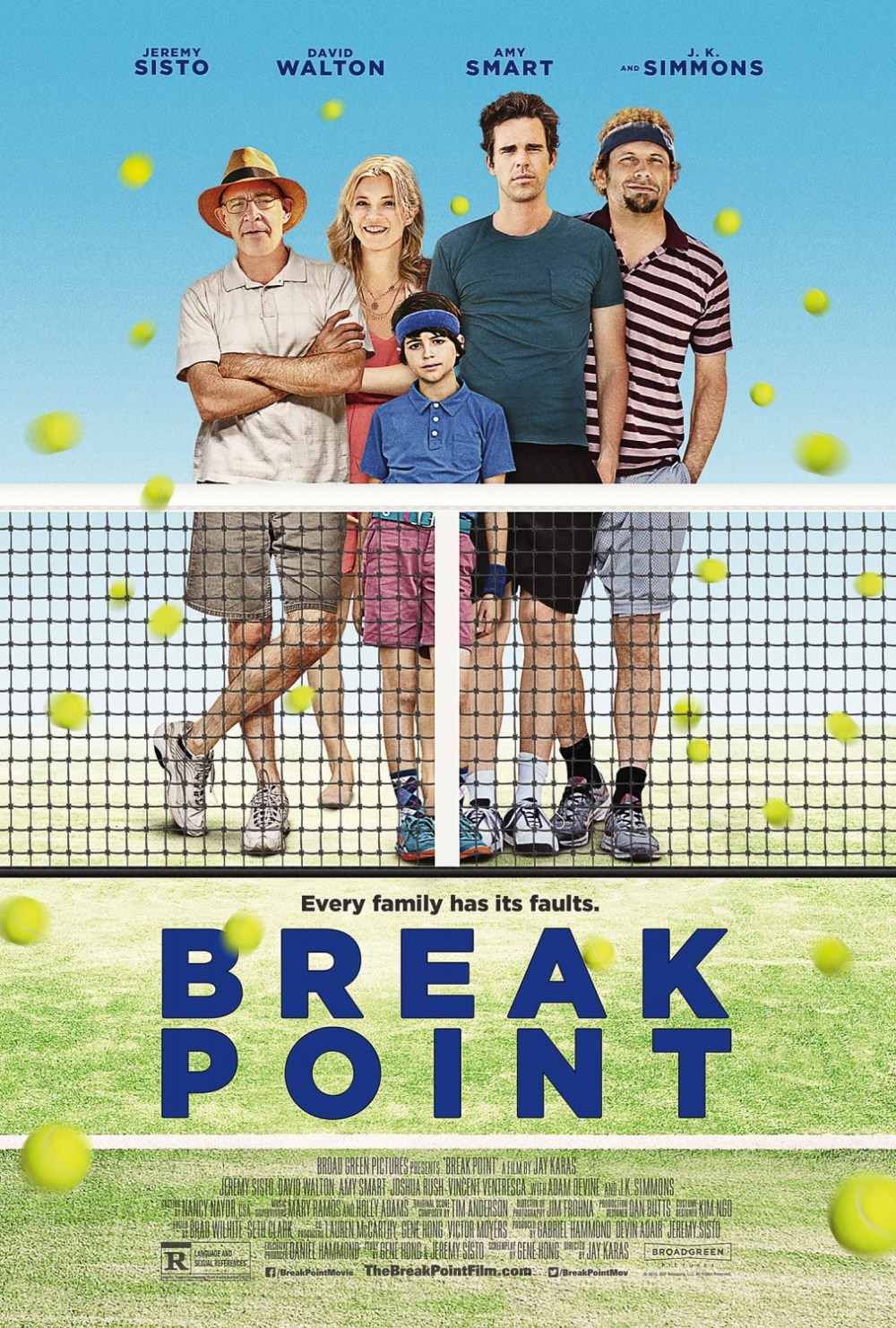
Actor Jeremy Sisto co-wrote, co-produced and stars in “Break Point” as Jimmy Price, an over the hill and unapologetically brash doubles tennis star who realizes his days in the sport are numbered. The sports comedy starts with his latest partner dropping out on him, and it doesn’t take long to see just how many bridges he has burned while on the pro circuit. His last and only chance to make it to a grand slam tournament is to partner up with his estranged brother Darren (David Walton) who used to play doubles tennis with him until they had a falling out. The question is, can they move past their deep-seated resentments of each other to work together effectively as a team? With the help of 11-year-old Barry (Joshua Rush), they just might have a chance.
Sisto has been acting since he was a kid, and he made his film debut in Lawrence Kasdan’s “Grand Canyon.” Since then we have seen him grow up before our eyes in movies like “Clueless,” “Thirteen,” and he even got to play Jesus in the television miniseries “Jesus.” Many know him best from his role as William Chenowith on the HBO series “Six Feet Under” where he played an artist suffering from bipolar disorder and occasional bouts of mania. In 2008 he joined the cast of NBC’s long-running “Law & Order” as Detective Cyrus Lupo, and he stayed with the show through its final three seasons during which he acted opposite Jesse L. Martin and Anthony Anderson.
Sisto sat down with me for an interview at the “Break Point” press day held in Los Angeles, California, and he talked about how he and the filmmakers wanted this sports movie to stand out from others like it. Sisto also discussed how he managed to make the difficult transition from child actor to adult actor, the challenges of getting “Break Point” made, and he shared his experience of working on “Grand Canyon” and of how special the making of it was for him.
Check out the interview above and enjoy! To find out how you can watch “Break Point,” please sure to visit the movie’s website for more information (www.thebreakpointfilm.com).
When it comes to interviews, filmmaker Brian De Palma always seems rather remote or looks like he would rather be somewhere else. In an interview about “Redacted,” he flat out told the interviewer he was simply there to sell his movie, and the interviewer replied perhaps De Palma was enjoying his company. To this De Palma replied, “I don’t think so.” So aside from him crushing the interviewer’s ego, his reply illustrates how uncomfortable he gets when talking about his movies. Perhaps this is why he has never done an audio commentary on any of them to date.
But this is the real joy of watching the documentary “De Palma” as he seems more than willing to spill the beans about his life and the inspirations behind his work. It also helps that it was directed by Noah Baumbach and Jake Paltrow, filmmakers De Palma has been friendly with for several years. Whether he’s talking about his greatest works like “Carrie” and “Scarface” or facing up to his critical and commercial disasters like “The Bonfire of the Vanities,” the revered filmmaker holds nothing back as he discusses each of them with a sense of humor which shows how he’s dealt with the movie industry and the way it has treated him over the years.
Now De Palma has often been accused of ripping off Alfred Hitchcock, and the documentary does start off with scenes from “Vertigo,” a movie now considered to be the greatest ever made. De Palma said he was so compelled by “Vertigo,” and we can see how this particular Hitchcock film influenced much of his work. However, the documentary gives us a deep overview of his films and how he drew inspiration from other filmmakers like Jean-Luc Goddard. He also explains the purpose of using split screen as it allows the audience to put everything together for themselves.
One of the real treats of “De Palma” is how it looks at the director’s upbringing, something we haven’t heard much about in the past. He never had much of a relationship with his dad, he says, who was an orthopedic surgeon which had him growing up around a lot of blood. This certainly explains why blood has played a big part in his movies whether it’s the prom scene in “Carrie” or the chainsaw scene in “Scarface.” We also get to see actor Robert De Niro, who appeared in De Palma’s movies “Greetings” and “Hi, Mom,” at the start of his career long before he played Al Capone in “The Untouchables.”
From there, we get to view his movies in chronological order and of how his work as a filmmaker evolved from one decade to the next. Now granted, this might make certain viewers a little impatient as they might want to skip ahead to his stories about “The Bonfire of the Vanities” or “The Untouchables,” but it’s sitting through the others before them that shows De Palma’s evolution as a filmmaker and how he managed to pull so much off despite intense pressure from studio executives and the MPAA.
Looking at these descriptions, “De Palma” may sound like just another talking head documentary. In a way it is, but to dismiss it as such would be unfair. De Palma is such an interesting guy on top of being a brilliant filmmaker, and I loved how he looks back at his triumphs and struggles with an almost gleeful sense of humor. He has been through a lot of heartbreak and struggles throughout his life, and it’s kind of a relief to see him laugh at some of the darker moments he was forced to endure.
What both Baumbach and Paltrow have pulled off is more than just the average documentary on a filmmaker you often see on cable. They present us with something which feels more like a friendly conversation with someone who is not always so open, and it’s a real pleasure to sit back and hear him talk. At the same time, “De Palma” also provides us with a look back at the great filmmaking period that was the 1970’s and how that period will never be repeated again. Then again, I have no issue with people proving me wrong there.
But perhaps most importantly, “De Palma” shows us a filmmaker who managed to stay true to his own voice despite working in a business which, as he puts it, makes you lose your own way. Even as he began working with bigger budgets and movie stars, he still tried to stay true to what he wanted to accomplish, and you come out of this documentary admiring him for that. And unlike other filmmakers who were stubbornly resistant to changes in technology, he was quick to utilize them whether it was high definition filmmaking in “Redacted” or the advent of music videos in “Body Double.”
There are many surprises and interesting bits of trivia to be found throughout “De Palma,” and I would rather you discover them for yourselves. What I can tell you is that this is one of the best movies, let alone documentaries, I have seen so far in 2016. It is infinitely interesting and a must for movie buffs and aspiring filmmakers. Whether he intended to or not, Brian De Palma has provided us with a master class in directing many would be smart to watch as the movie business is one which can tear an auteur’s vision apart out of fear or for the sake of profit. But here’s a man who, for better or worse, has done things his own way and continues to do so from one movie to the next.
And while it may be wishful thinking, here’s hoping it will give studio executives enough of a reason NOT to remake “Scarface.” We’ve already seen what others have done to “Carrie” for crying out loud.
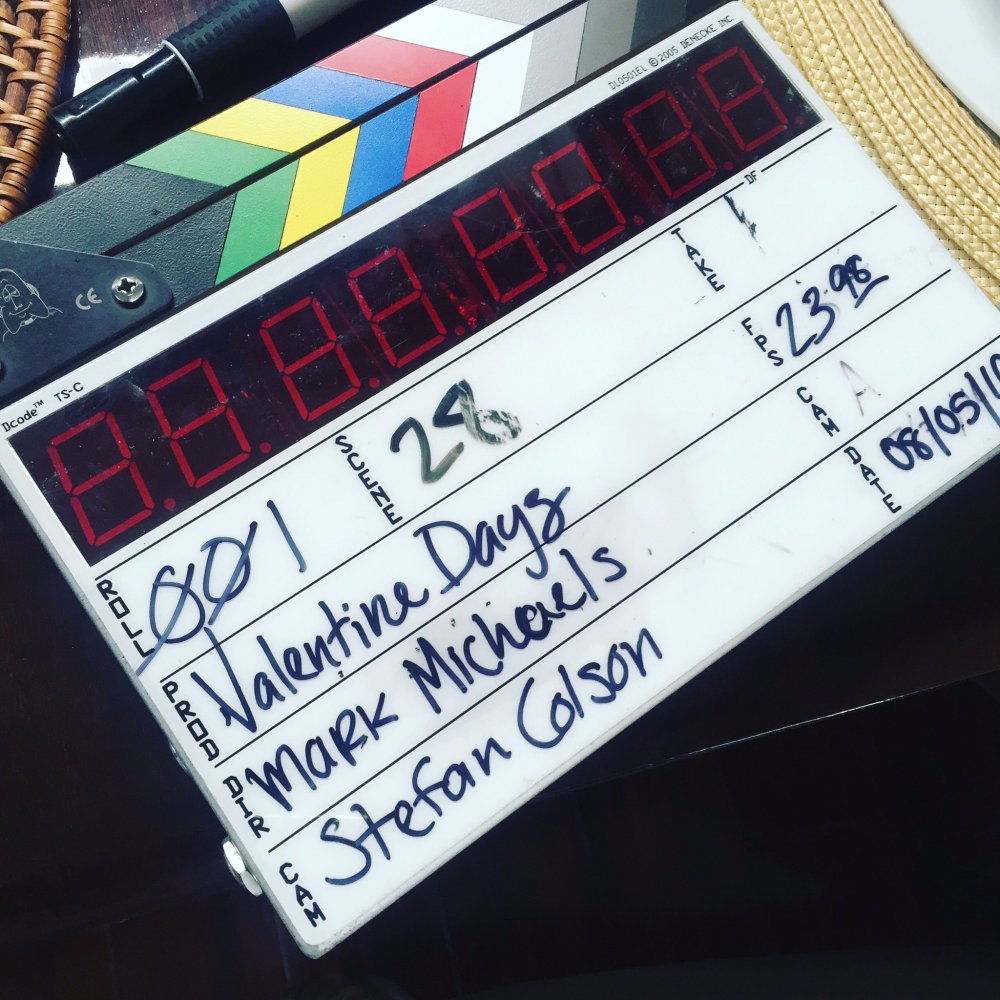
This past weekend saw the start of principal photography on the horror film “Valentine DayZ.” It’s the latest film from writer and director Mark Allen Michaels who helmed “The Fiancé,” a thriller which had a bride-to-be bitten by Bigfoot and becoming a force of nature, hell-bent on destroying her engagement. The movie’s press release describes it as a “heart-stopping horror story” and included the following plot synopsis:
“Revisiting his unique blend of hardboiled crime thriller and brutal, bloody horror, Michaels’ ‘Valentine DayZ’ takes his characters on a journey from the champagne and yacht lifestyles of the rich and corrupt, to doom and despair in Death Valley as the zombie-apocalypse threatens everything they hold dear.”
Now zombie movies and television shows are a dime a dozen these days, but “Valentine DayZ” looks to be a unique take on the genre. If it proves to be as deliriously entertaining as “The Fiancé,” we are in for one hell of a ride.
Shooting on the film began in Marina Del Rey, and the cast and crew were greeted by a seal which became an extra almost immediately (non-union of course). Other photos include a wealthy looking character hanging out on a yacht as well as cast and crew having fun with zombie makeup.
Oh lord, what happened here? This was supposed to be the movie of the summer where, for a change, we got to root for the bad guys. “Suicide Squad” was a movie I couldn’t help but have high expectations for as I was expecting something along the lines of John Carpenter’s “Escape From New York” which had us rooting for a sociopath more interested in his own survival than saving the world. Instead, we got a mess of a motion picture which is not the least bit exciting. While the previous DC comic book movie, “Batman vs Superman: Dawn of Justice,” proved to be a dour experience, “Suicide Squad” is just flat out boring.
I’m not going to bother going over the plot of “Suicide Squad” as there wasn’t much about it worth remembering. All you need to know is the worst of the worst have been recruited against their will to fight an antagonist bent on (what else?) world domination. We do, however, get a laborious introduction to the squad of the movie’s title which includes characters who are so seductively evil. There’s Floyd Walton/Deadshot (Will Smith) who never misses a target, Harley Quinn (Margot Robbie) who has gone from being a psychiatrist to an insane supervillain thanks to the Joker (Jared Leto), the assassin Digger Harkness/Captain Boomerang (Jai Courtney), former Los Angeles gang member Chato Santana/ El Diablo (Jay Hernandez) who puts all pyromaniacs to shame, Waylon Jones/Killer Croc (Adewale Akinnuoye-Agbaje) who looks more like a reptile than a human being, and Dr. June Moone/Enchantress (Cara Delevingne) who is an archaeologist possessed by an evil spirit (is there any other kind?).
These characters represent a path to the dark side which moviegoers like ourselves are eager to eat up onscreen. It’s no secret we revel in their exploits which go against all the laws we grew up believing in as the movies are a great way to explore humanity’s dark side. Instead, their adventures are unforgivably watered down to where we wonder what he was thinking or if Warner Brothers meddled with his vision too much. The PG-13 rating should have been a warning as this kind of material demands an R like “Deadpool” did.
“Suicide Squad” was written and directed by David Ayer who has given us some strong motion pictures like “End of Watch,” “Harsh Times,” “Street Kings” and “Sabotage.” His movies never sugarcoat reality which makes them all the more viscerally entertaining, but here exits his comfort zone and has made a movie which is not the least bit visceral. It would have been cool to see Ayer combine his real world aesthetic with the DC comic book universe, but what we get instead is something which is astonishingly banal. Not even the appearance of Batman (Ben Affleck, once again proving he was a terrific choice to play the Caped Crusader) does much to make the proceedings the least bit interesting.
Furthermore, the movie is poorly photographed to where everything feels so drab and lifeless. From the posters it looked like this would be an infinitely colorful motion picture as the villains leave their mark on a society which has long since abandoned them. Instead, every scene looks like it was illustrated from the same pastiche which makes it all the more depressing to sit through.
This is also not to mention the choppy editing which robs the action scenes of any excitement they hoped to have. Not even the clever music selections of songs by Eminem, Kanye West or Queen does much to raise our adrenaline levels as the characters show off their devilish talents. Ayer also introduces certain character driven scenes at the most inopportune moments in “Suicide Squad.” While they are meant to give more depth to the characters, they instead slow down an already tedious movie that pretty much lost me from the start.
In terms of the acting, some performances here are better than others. Will Smith and Margot Robbie pull off strong turns as Deadshot and fan-favorite Harley Quinn, but they are saddled with an endless stream of pathetic one-liners which fail to amuse in the slightest. Other are not as lucky such as Jai Courtney who looks more like Tom Hardy to where I thought Hardy was cast as Captain Boomerang. As for Adewale Akinnuoye-Agbaje, he suffers the same indignity Oscar Isaac and Idris Elba endured in “X-Men: Apocalypse” and “Star Trek Beyond;” getting covered up with way too much makeup which robs him of his natural charisma.
One of the best performances in “Suicide Squad” comes from Jay Hernandez who makes El Diablo into much more than just a one-dimensional schmuck. While the other actors have little room to move around, he manages to humanize his character to where we see much beyond the various tattoos covering his body to where his plight is ultimately heartbreaking. Hernandez manages to generate some genuine emotion here, and it’s in a movie which could have used more of it.
But the big surprise is Jared Leto’s turn as Joker in that Cesar Romero’s was far more threatening and memorable on the campy “Batman” television show. Leto does make the role uniquely his own and has a chilling laugh, but there’s nothing particularly special or invigorating about his portrayal. He doesn’t have the ghost of Heath Ledger haunting his every move, but he never comes across as much of a villain. Instead, Leto’s portrayal is nothing more than a cartoon, and his performance here is more of a cameo than a starring role.
Looking back, the most threatening character to come out of “Suicide Squad” is not a superhero or a supervillain, but instead a government official named Amanda Waller. From start to finish she is ruthless and single-minded in her approach to forming this squad and infinitely devious in keeping the team of supervillains under her complete control. It also helps that Amanda is played by the always fantastic Viola Davis who makes this character into a fascinating psychological case study as she proves to be an even bigger sociopath than those she has employed to save the world.
I came out of “Suicide Squad” depressed and wondered how so many talented people came together to make a comic book movie so lifeless and boring. Even if you come into it with low expectations as many are doing now, there’s not much of anything to like here. I was hoping to see an exhilarating motion picture with a devilish sense of humor, but instead we got what is so far the most disappointing movie of 2016. Warner Brothers may have started their own cinematic universe with some success, but now they need to start making better movies because they are way behind Marvel Studios.
To all the DC Comics fans out there who enjoyed “Suicide Squad,” please believe me when I say I’m happy for you. It’s good to know somebody got something out of this movie because I sure as hell didn’t. Here’s hoping and praying that “Wonder Woman” and “Justice League” are infinitely better.
It’s been a very busy time for J.K. Simmons ever since he won an Oscar for his truly frightening performance in “Whiplash” as he has not been lacking for work in the slightest. We watched him steal scenes from Arnold Schwarzenegger in “Terminator Genisys,” and now he steals the show yet again in the sports comedy “Break Point.” In it he plays Jack Price, a veterinarian, widow and father of two boys who were once a great tennis team but have long since become estranged from one another. When the boys decide to re-team to take one last shot at winning the grand slam tournament, Jack is pleased to see his sons playing together again. But will Jack be able to keep the peace when his sons inevitably clash over who’s the better player?
Now whereas many actors would take the father role and either overplay it or underplay it, Simmons finds a middle ground to where he makes Jack a believably down to earth guy who is relatable and someone you would really like to hang out with. He is such a wonderful presence in “Break Point” to where you want his onscreen sons to thank the lord they have such a wonderful father in their lives. The actor also brings his trademark deadpan humor to the role which is always a welcome addition.
Simmons sat down with me for an interview at the “Break Point” press day held in Los Angeles, California. He talked about his approach to playing Jack Price and how making the movie helped change his view on the game of tennis. He also talked about his experience making “Terminator Genisys” which allowed him to play the kind of character he usually doesn’t get cast as: a good guy.
Check out the interview above. “Break Point” is now available to watch on various formats. To find out how you can watch it, be sure to visit the movie’s website at www.thebreakpointfilm.com.
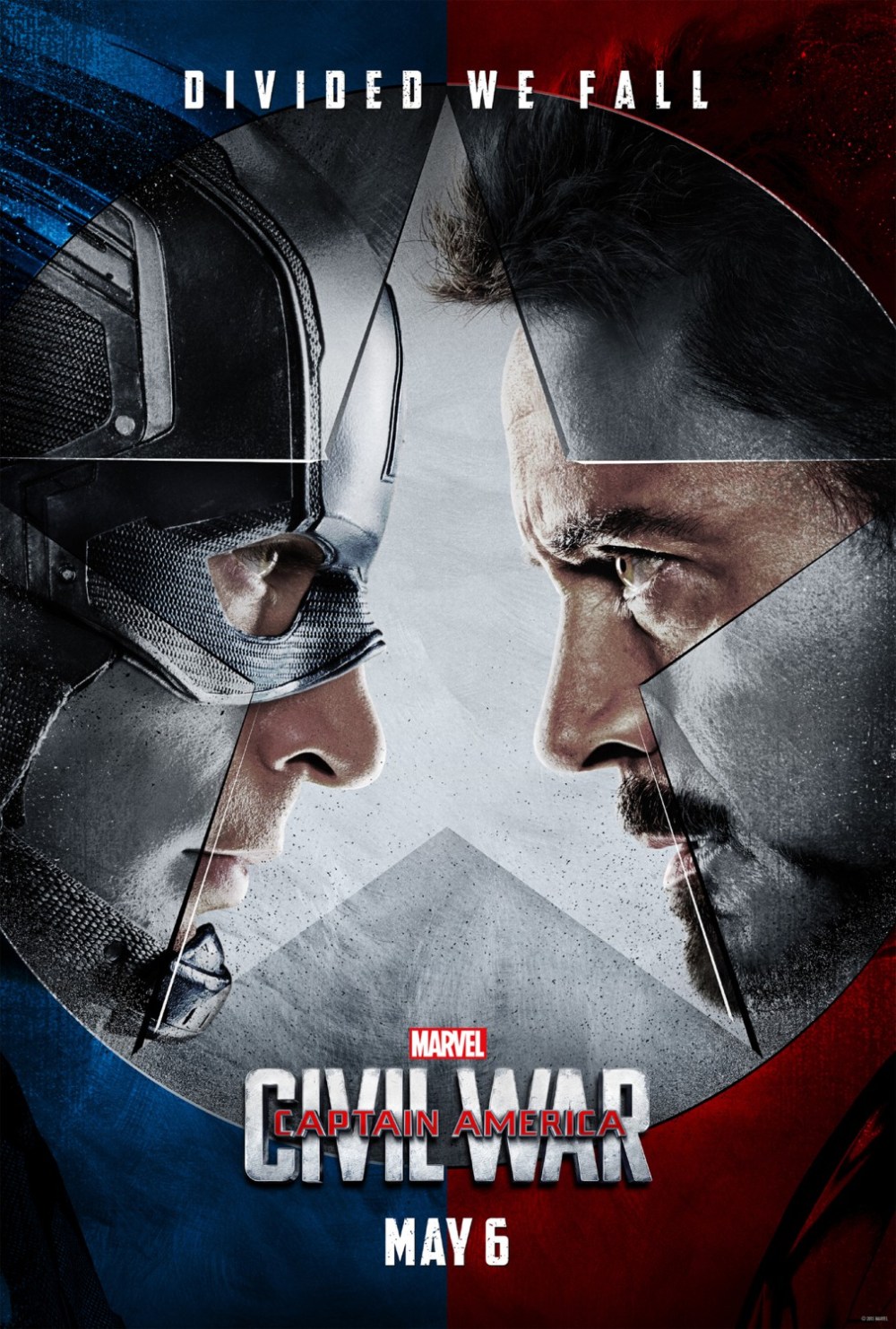
It’s tempting to call this latest Marvel movie “31 short films about The Avengers” as “Captain America: Civil War” manages to cram in so many characters and various storylines into its nearly two and a half hour running in a way which has one wondering why it didn’t burst at the seams. But despite that, it still works as directors Anthony and Joe Russo (who also helmed the superb “Captain America: The Winter Soldier”) manage to balance everything out as they combine tremendous superhero action scenes with thought provoking storylines. Whereas “The Avengers: Age of Ultron” didn’t leave much of an aftertaste, “Civil War” proves to be one of Marvel Studios best offerings to date.
Actually, this really should be called “The Avengers Part 2.5” as many of the Avengers are reunited here with the exception of the Hulk, Thor and Nick Fury. “Civil War” starts off a year after “Age of Ultron” as Captain America and company take on the bad guys but, as usual, cause a lot of collateral damage in the process. As a result, U.S. Secretary of State Thaddeus Ross (William Hurt) informs them the United Nations are working to establish a panel which will oversee and control The Avengers from here on out. Because of these superheroes’ activities, it’s a good guess many insurance companies went bankrupt while cleaning up what’s left of their mess.
What’s interesting about this is the dynamic it sets up between each superhero character. Tony Stark/Iron Man (Robert Downey Jr.) is quick to accept this accord as he is still smarting from his creation of Ultron and the destruction caused in Sokovia. However, Steve Rogers/Captain America (Chris Evans) refuses to sign on as he feels any government interference will hinder what he sees as the right thing to do. This sets up an interesting conundrum as the need to control the Avengers is understandable, but with limits set on what they can and cannot do, this could severely affect their ability to save the world, and we know they will need to save it again sooner rather than later.
In the midst of all this, the United Nations building is bombed and the chief suspect is revealed to be Bucky Barnes/Winter Soldier (Sebastian Stan). But Steve remembers the last time he saw Bucky up close and isn’t sure he’s the evil man everyone else sees him as, and he becomes determined to bring in Bucky himself. But as the movie’s trailers have shown, this will soon erupt into a major conflict for the Avengers as they are forced to take sides to where alliances may be torn apart forever.
We have been submerged in the Marvel Cinematic Universe since 2008 when “Iron Man” was released, and the filmmakers have smartly allowed the characters to evolve from one movie to the next. As much as this is Captain America’s movie, it is also Iron Man’s as we watch his alter ego Tony Stark change his ways, to a certain extent anyway, as he believes the Avengers have done a lot of bad things in the process of saving the world. While he still thinks all too highly of himself, Tony believes the team does need some supervision in order to keep it in line, and this is something he never would have suggested in the previous “Iron Man” movies.
When “Captain America: The First Avenger” first came out in 2011, many expected that the character would be the dullest Avenger as the comics showed him to be a straight arrow and overly patriotic. But with “The Winter Soldier” and “Civil War,” Captain America has become the most interesting character in this cinematic universe as his morality remains strong and unbreakable. A lot of that is thanks to Evans who invests the character with an unshakable pride and thoughtfulness which makes Steve Rogers more authentically heroic than other superheroes currently occupying your local multiplex.
In addition to Iron Man, the other Avengers who turn up include Natasha Romanoff/Black Widow (Scarlett Johansson), Sam Wilson/Falcon (Anthony Mackie), James Rhodes/War Machine (Don Cheadle), Vision (Paul Bettany), Clint Barton/Hawkeye (Jeremy Renner), and Scott Lang/Ant-Man (Paul Rudd). The Russo brothers are smart not to waste time introducing these characters as we have long since gotten to know them and need no explanation as to who they are. It’s great to see them here, and the actors portraying them continue to do excellent work.
As for the new superheroes in “Civil War,” each makes a memorable impression. Chadwick Boseman comes onboard as T’Challa, prince of the African nation of Wakanda who is later revealed to be Black Panther. Boseman imbues his character with a wounded pride which threatens to get the best of him, and he ends up in the middle of the Avengers’ conflict to where he might lose himself in anger and bitterness. The wonderful Elisabeth Olsen also shows up as Wanda Maximoff/Scarlet Witch whose powers include harnessing magic and engaging in hypnosis and telekinesis. Olsen shows us a superhero slowly coming into her own as she is conflicted on how to use the abilities she has been gifted, or perhaps cursed, with, and she makes the character both flawed and sympathetic.
But make no mistake, the big addition in “Civil War” is Peter Parker and his beloved alter-ego of Spider-Man. After the abominable cinematic mess that was “The Amazing Spider-Man 2,” the character has been rebooted yet again, but this time it may prove to be a good thing. Tom Holland now takes on the role of this web slinger and, like Tobey Maguire and Andrew Garfield before him, succeeds in making it his own as he creates a character who is wonderfully cheeky and super enthusiastic. Spider-Man isn’t onscreen a whole lot, but Holland is a big delight as he leaps all over the place with great abandon. Suffice to say, this bodes very well for this character’s future.
“Captain America: Civil War” is what “Batman vs. Superman: Dawn of Justice” promised but failed to be: a riveting motion picture featuring two superheroes who are prepared to fight to the death. It is also an improvement over “The Avengers: Age of Ultron” which, while not bad, failed to live up to expectations. The Russo brothers revel in showing these superheroes doing battle with one another, and they also provide them with a dramatic scenario which will forever test their relationships. I can’t wait to see how the events here will affect the next Marvel movie as the cinematic universe now enters a new phase which looks to be more interesting than what came before. Captain America and Iron Man don’t have mothers named Martha, so it may take a lot for them to get back on the same page.
When it comes to dealing with grief, there is no textbook with instructions on how to cope. In movies we often see characters react to the death of loved one in a way that feels overly dramatic and never real. Sometimes the tears come right away, but other times you are simply in shock as accepting the reality of a death takes a long time. We are lead to believe everyone grieves in the same way, but that is simply not true as writer and director Maris Curran shows us in “Five Nights in Maine.”
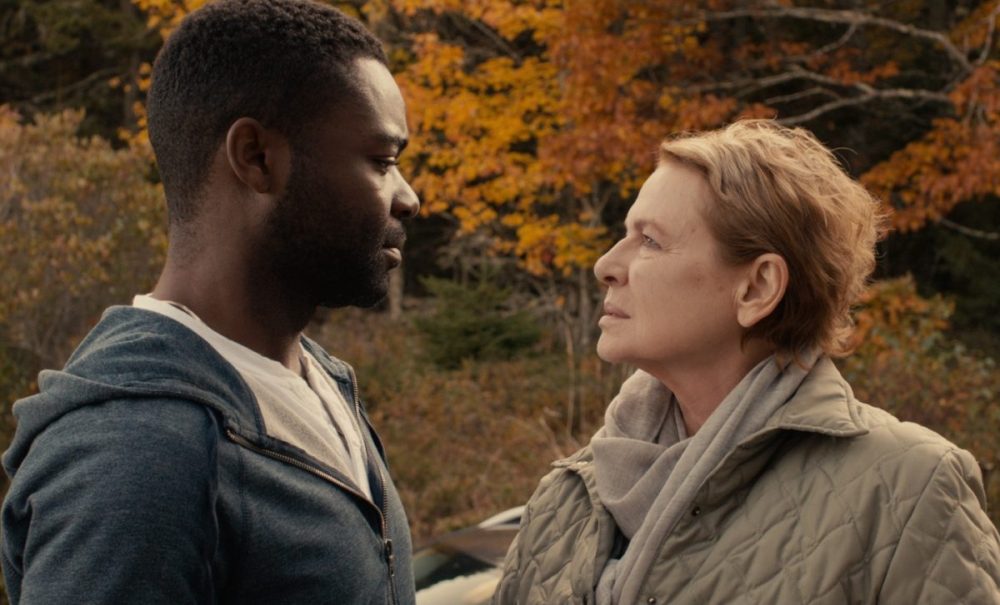
We are introduced to Sherwin (David Oyelowo) while he is having a wonderfully intimate moment with his wife, Fiona (Hani Furstenberg), and then a few scenes later he gets a call from the police informing him she was killed in a car accident. Overwhelmed by this sudden loss, Sherwin goes on alcoholic binge to deaden the pain which seems never ending. Out of the bluw, he receives a call from his estranged and terminally ill mother-in-law, Lucinda (Dianne Wiest), who invites him to stay with her at her secluded home in rural Maine in order to find a way to deal with the loss of someone they cared so much about.
Now at this point “Five Nights in Maine” looks to be one of those Hollywood movies where two people from different parts of life come together to sort out their differences and come to see what makes their suffering the same. Well, this movie is and isn’t that. What’s fascinating is how Sherwin and Lucinda don’t share grief as much as they compete with each other over who is grieving the most. It’s almost like a variation on a classic Ethel Merman song:
“Any grief you can feel, I can feel greater. I can feel it greater, greater than you.”
“No you can’t!”
“Yes I can!”
“No you can’t!”
“Yes I can!”
“No you can’t!”
“YES I CAN! YES, I CAN!”
Is this the best way to deal with grief? Perhaps not, but it is the way Sherwin and Lucinda decided to take. Sherwin tries to reason with Lucinda who is cantankerous and difficult to deal with, and it turns out Lucinda’s last meeting with her daughter did not go well at as Fiona returned from it very upset. As the movie goes on, you wonder if it is possible for either of them to find any common ground on Fiona’s passing. After a while, you just hope and pray they find a way through their immense pain to move on with their lives or, especially in Lucinda’s case, what’s left of them.
If there is one reason to see “Five Nights in Maine” other than the wonderful cinematography by Sofian El Fani, it’s the performances. David Oyelowo, criminally robbed of an Oscar nomination for his performance in “Selma,” reaches some deep emotional depths as Sherwin. The reaction Sherwin gibes off upon learning of Fiona’s death feels so amazingly genuine that you wonder how Oyelowo was able to portray it with such piercing honesty. This is clearly not an actor who takes the easy way out when it comes to any role he takes on.
Wiest, an actress we don’t see enough of these days, gives her strongest performance in quite some time as a mother facing death’s door and trying to understand why her daughter made it through there before she did. She is not out to make Lucinda an easily likable person, but she does show the cracks in her stern face as the reality of Fiona’s death begins to settle in.
There’s also a wonderfully understated performance here by Rosie Perez who plays Lucinda’s nurse, Ann. This character serves to fill in the missing blanks of which Sherwin was not witness to when Fiona met with Lucinda for the last time. Knowing how sassy Perez can be on screen or during her time on “The View,” her performance in “Five Nights in Maine” is a compassionate one which doesn’t require her unbridled enthusiasm to make it work. Watching her here serves as a reminder of her Oscar nominated performance years ago in Peter Weir’s “Fearless,” and how dare we forget how good she was in that one.
Curran, just as Josh Mond did with his film “James White,” sticks the camera right in his actors’ faces to where their every little gesture and facial movement comes to speak volumes when words cannot do the same. She is also not a director looking to spell out everything for the audience which I admire, and she doesn’t bang them over the head with a shamelessly manipulative film score. Speaking of which, David Boulter’s music helps heighten how lost the characters are in their own wilderness of pain and guilt.
Having said all that, I cannot help but have mixed feelings about “Five Nights in Maine.” While the acting is stellar and the direction strong, Curran’s screenplay feels strangely incomplete. While the actors are able to plumb the depths of their characters, Curran ends up keeping us at an arms-length distance from them. I came out of this movie feeling like I could have gotten to know them better, and their resolution over the loss they experienced does not feel entirely fulfilling. Like I said, Curran doesn’t spell everything out for the audience, but I wished she had dug even deeper into the characters’ psyches to give us something more memorable.
There is a lot to like about “Five Nights in Maine,” but I found some time after watching it that it didn’t leave much of an aftertaste. Overall the movie is a near miss for me. The performances are strong, but the story and the screenplay are an incomplete puzzle with pieces which shouldn’t be that hard to find. This movie quickly reminded me of the Peter Gabriel song “I Grieve” which offered a far more complete journey through grief in just a few minutes’ time. When this movie concludes, it still feels like Sherwin and Lucinda still have a long way to go to find peace with what happened.
Continuing my education in the westerns of John Wayne, for those of you who read my review of “Rio Bravo,” we come to an even greater one called “The Searchers.” It is a beautifully filmed movie directed by the great John Ford, and it stars John Wayne in what may very well have been his greatest onscreen performance ever as Ethan Edwards, a Civil War soldier coming home to a tenuous welcome. When his brother Aaron (Walter Coy) and his family are massacred by Comanche Indians, he sets off on a mission of both revenge and rescue as he discovers one of his nieces may still be alive. Along with him on this journey are the Texas Rangers led by the Reverend Captain Samuel Clayton (Ward Bond) and a step-nephew named Marty (Jeffrey Hunter) whom Ethan wants nothing to do with.
Like I said, this is a beautifully filmed western by Ford, and it is the first of his films I have watched. I can see why it is one of Steven Spielberg’s all-time favorite films, and I wonder if Ford’s other films are as beautifully shot as this one was. We get to see wide shots of barren fields which are soon covered by snowfall. Ford makes the passing of time seem all the more evident as we go from one season to another, and we feel the years passing these characters by as they refuse to give up on their quest. It gets to where we are as desperate as them to find those innocent souls who were kidnapped.
Wayne said of all the roles he played, he considered Ethan Edwards to be his best. As a result, he later named a son of his Ethan in a respectful homage to this film. Wayne is simply amazing here as a Confederate soldier who does not feel the need to swear an oath to Texas since his work as a soldier is far more important. Ethan is not an entirely likable person, and neither Wayne nor Ford hide the fact that he is pretty racist. But you cannot help but stay with Ethan on this journey because there’s little doubt he is justified in his pursuits.
Wayne has many amazing moments in “The Searchers,” and the strongest ones are when he doesn’t say a word. He may appear tough and resolute one moment, but in the next shot his eyes betray the worry and hurt that tear away at Ethan’s soul. Ethan’s life was torn apart when his young after the Comanche Indians attacked his family, and it has filled him with an unapologetically raw hatred towards them. There’s a powerful moment where we see Wayne coming in from someplace he was searching, and he looks like he is about to collapse in horror. We find out later why he was acting the way he did, but what he shows without saying anything leaves a lasting impression that you cannot get out of your head.
The main relationship Wayne’s character has throughout “The Searchers” is with Marty, and he is played by Jeffrey Hunter who is best remembered as Captain Christopher Pike from the original pilot of “Star Trek.” Marty sticks with Ethan despite Ethan’s cold dismissal of him throughout due to his biracial heritage, but Ethan needs Marty to keep him in check. Ethan’s racism is so deeply rooted to where it could force him to take actions he may spend the rest of his life regretting. Marty soon comes to understand why Ethan would rather see a family member dead than have them be defiled by a Comanche.
Watching “The Searchers” today might seem odd because the movie at times threatens to be as racist as Wayne’s character. It was made back in the days of cowboys and indians, but the main villains here are only one tribe of indians as well as double-crossing white men who should have known better. Not every Indian in this movie is presented as a bad guy. In fact, one of the best moments comes when Marty finds he has inadvertently married an Indian woman when he thought he was just buying a sweater. When we later see the fate of that Indian woman, we learn more about why Indians end up attacking each other over territory.
The movie is filled with incredible vistas Ford captures in all their glory, and I’m convinced that viewing it today is as exciting as when it first came out. I wonder if any other filmmaker today can accomplish what Ford did. We see characters grow from the start all the way to the finish, and Ethan comes to see he has gained a lot of respect for Marty to where he is prepared to give everything he has to him should he be killed. They never really become friends, but they rely on each other more than they would ever admit out loud. There is a lot of heart in this movie behind all that bravado which never covers up the fierce insecurity of its characters.
The final shot of Wayne standing in the doorway while the sun and wind bear down on him is one of the greatest moments in cinematic history, and it stays with you long after the movie is over. It says everything you need to know about Ethan as he is a man destined to walk this earth alone, but who will always be doing his job as a soldier till the day he drops dead.
I’m not sure what else I can say about “The Searchers” that has not already been said. I have absolutely no doubt that this is one of the greatest westerns ever made, and it is clearly one of the defining movies of Wayne’s career. Although some may find the Ethan’s racist attitudes too much to bear, there is still so much to enjoy and be enthralled by. I was never in a hurry to see “The Searchers,” but I’m really glad I finally did.
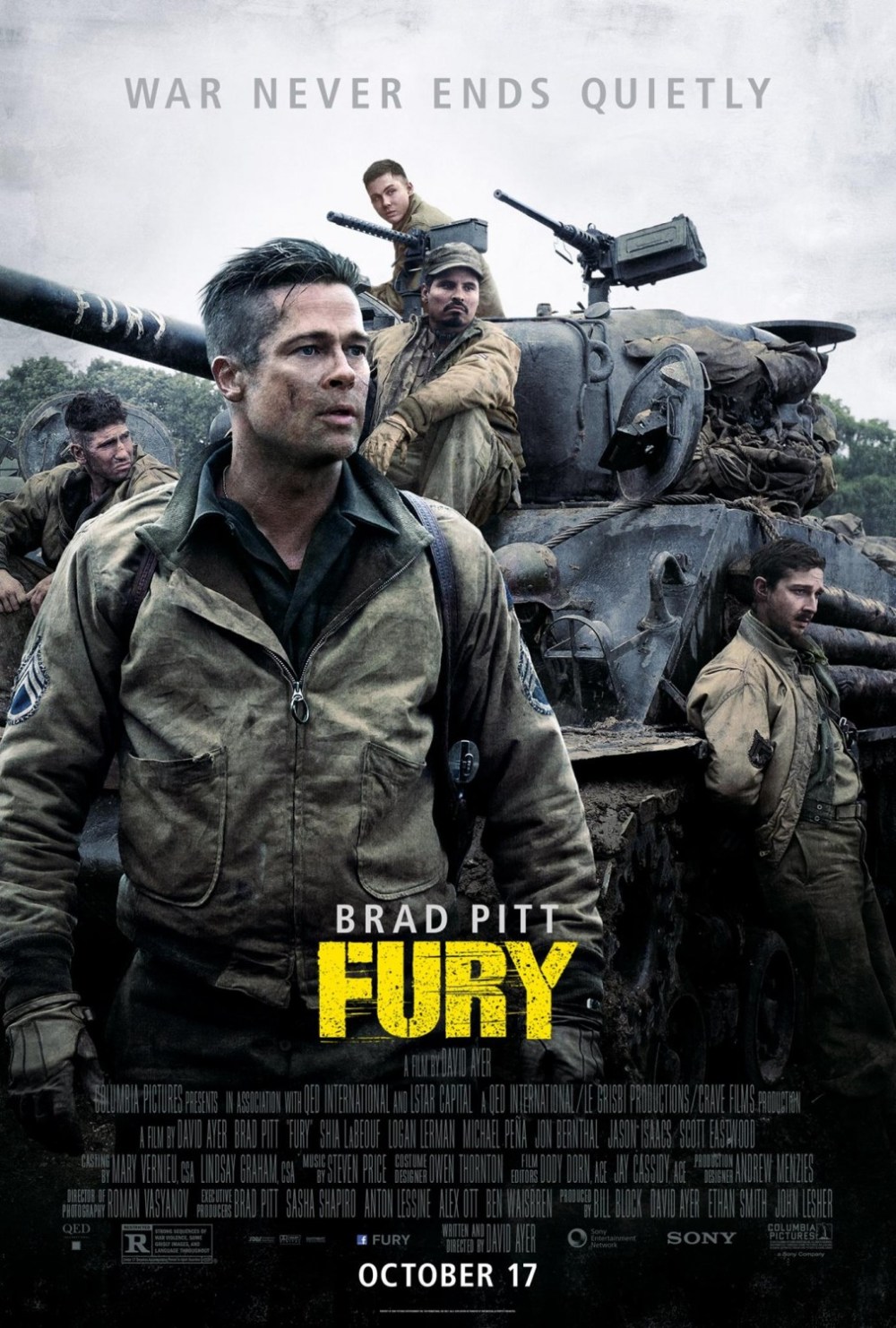
“Fury” was written and directed by David Ayer, the man who gave us “Harsh Times,” “End of Watch” and “Sabotage.” This movie takes us back to World War II and stars Brad Pitt as Don “Wardaddy” Collier, the commander of a Sherman tank and its five-man crew. We follow them as they go on a dangerous mission behind enemy lines in Nazi Germany. They soon find themselves outnumbered, outgunned and saddled with a rookie soldier barely qualified to serve with them. But even as the odds continue to stack up against them, they stay with their tank which they have named Fury as they consider it the only home they have left.
I attended the “Fury” press conference held at Sony Pictures Studios in Culver City, California, and among those there were Ayer and actors Logan Lerman, Jon Bernthal and Michael Pena. For me, one of the most memorable scenes comes when Pitt and Lerman enter an apartment belonging to a pair of German women and proceed to make themselves at home by cooking breakfast. Then they are joined by the rest of their crew who treat the women and the gathering with a lot of hostility. But as the scene goes on, we see them slowly regain a part of their humanity as they share stories which reduce them to tears.
This scene reminded me of a similar one in Stanley Kubrick’s “Paths of Glory” where a bunch of soldiers jeer a captive German girl when she appears onstage, but they begin to cry when she starts singing a sentimental folk song. I asked Ayer how the scene came about.
“That’s a really good question,” Ayer said. “I did a lot of primary source research, and you realize it’s a workaday world for these guys. It’s sort of a blue-collar existence for these tank crews at this point in the war. It’s go capture the town. Go get this town. Take this hill. Take this ridge. Capture that road junction. You’re given a laundry list of tasks and we think about all these famous battles and all these war-winning battles, but I liken these guys to coal miners. They put on their safety gear and go in and do their work and they come out at the end of the day. And a common pattern was they would capture a town and by early afternoon they’d be in control of it, and then they’d start kicking in cellar doors and looking for wine and looking for food, and they’d make… they locals would cook for them, and they’d do what guys do and pass out and get up the next day at 4 a.m. and take the next town.”
“Something is interesting about that, the idea that you’re in this war zone and there’s humanity and there’s people in there,” Ayer said. “In these movies there’s always a one-sided depiction of either side and of what happens when these people are together in this living room. I imagine this scene as the ultimate Thanksgiving dinner. I think we’ve all had those bad family dinners ourselves. The idea is this crew’s a family, and family can be love-hate. No one can wound you like a family member. No one can hurt you like your brother or sister who just says that one thing that spins you. That was what all the training and the boot camp and the rehearsal and the familiarity was all leading up to, for me, was really that scene. To get these guys as close as brothers so that they can go at each other like older brothers can.”
The other actors echoed Ayer’s sentiments about the dinner scene, and Pena, who plays Captain Trini “Gordo” Garcia, described it as the most intense scene he had to deliver in “Fury.”
“I remember we started shooting and I was an emotional mess,” Pena said. “David said, ‘Let me shoot the other guys first so you can get warmed up,’ and I was like, ‘Dude, I’ve been doing this for five months, buddy. Let’s just go right now.’ Everyone had big scenes and we’d know when the next scene was coming up or when somebody’s big scene was coming up, and we’d try to be as supportive as possible. These guys Bernthal and Shia—we shot it in a day and a half or something like that. I don’t remember. But they were always there tearing up at every take, really supporting me, because it was almost like us against them. It’s like our big brother is playing favorites to this guy (Lerman) and we all took it very seriously. So when I tell the story about the horses, which he never wants repeated, these guys gave me the green light, so to speak, and they were emotionally there for me as well. So that was the toughest.”
Bernthal, who plays Grady Travis, also talked about that scene and how the countdown to it and others that were equally intense loomed over the actors during production.
“We all had those scenes that we sort of circled on the calendar,” Bernthal said. “We could pretty much count down to the hour of when we were going to get to those scenes. It’s sort of like what we were talking about before like family and going for the jugular. For me it felt like, looking back on it, it wasn’t about those scenes, but it was that at any moment everyone here and Shia and Brad and the boss were armed with this information that could cut you down and break you. And because we were familiar and so close with each other, David and the way he kind of orchestrates the thing, he’ll set people loose on people. He’ll set the camera on somebody’s face, and then rip them apart. Sometimes it’s something that another actor says, and sometimes it’s something he comes up with and whispers in your ear.”
“I’ll be honest with you, after just a month of shooting when he would walk towards me, I’d start to shake and sweat, because I know what was coming in my ear was going to break me,” Bernthal continued. “And even though you know what he’s trying to do and it’s for a result, it scares me now honestly just thinking about it. Also, to do that to one of these guys that you love so much, to see them and to get the word to go after that dude, go get him, and like David said, it’s family, so I know what to say to you to press your button. And it becomes this kind of perverse, beautiful game. We’re trying to cut each other down and break each other. That’s what family does. It was uniform among every tank veteran we talked to. You don’t pick your family. You don’t pick your tank crew. These guys are as close as units can possibly get. That’s what we were going for, that familiarity and that bond. It’s just as dangerous as it is lovely.”
What a relief it is that “Batman v Superman: Dawn of Justice” has finally opened in theaters everywhere. Few movies have been dissected and criticized as deeply as this one even before its release, and it got to where it felt like decade had passed since Warner Brothers announced it as happening. After a while we all wanted to yell out, “Just release the damn movie already!” Clearly, Warner Brothers has A LOT riding on this particular superhero movie, and it is aiming to create its own comic book cinematic universe to rival Marvel’s.
Well, the best way to describe “Batman v Superman” is that it is, in a word, dour. Director Zack Snyder certainly gives us some spectacular action set pieces, but the whole movie is undone by a sense of joylessness. In keeping with Christopher Nolan’s superhero aesthetic of grounding these characters in reality, a lot of the fun and joy we have had in watching them do battle with the forces of evil feels absent this time around.
So why does Batman/Bruce Wayne have a such a bone to pick with Superman/Clark Kent anyway? Well it all goes back to the climax of “Man of Steel” where Superman did battle with General Zod over the skies of Metropolis to where a record number of buildings were reduced to rubble. One of them was the Wayne Enterprises building, and despite Bruce’s best efforts, he is unable to rescue all his employees from certain death and blames Superman that. As for Superman, he thinks Batman is too dangerous and seeks to expose Gotham’s vigilante and put an end to his reign.
Meanwhile, LexCorp mogul Lex Luthor (Jesse Eisenberg) is ever so eager to get his hands on the kryptonite from Zod’s failed terraforming experiment in the Indian Ocean as well as his body. While we all know Luthor gets super excited about real estate, those interests are shoved to the side as he is intent to reveal the duality of god and man. This all leads to an epic conclusion in which Lex unveils a monster which could very well destroy Batman and Superman in a way nothing else can.
One of the big problems with “Batman v Superman” is it tries to accomplish too much in its bloated running time of 151 minutes. This was the same problem with “The Amazing Spider-Man 2” which also sought to create its own cinematic universe to where it became an unforgivable mess. “Batman v Superman” is a better movie as Snyder is able to keep a lot of the thematic elements in balance, but there’s still too many subplots and characters to deal with and not enough time to become fully engaged on an emotional level with everything going on.
When Marvel created their own cinematic universe, they took their sweet time and were never in a rush to bombard us with too much right away. They started out with “Iron Man” and then brought other iconic superheroes to the screen that we quickly came to root for. When the first “Avengers” movie finally came out, we were ready to see our favorite Marvel characters join forces to battle an alien threat because the groundwork had been laid slowly and carefully.
On the other hand, Sony and Warner Brothers could barely wait to start their own cinematic universes, and as a result we have gotten overstuffed movies which feel more like overlong commercials for others that have yet to be made.
Snyder is not a bad director he has given us some terrific movies like “Dawn of the Dead” (one of the few horror remakes worth watching), the visual epic “300” and “Watchmen.” Clearly he had a lot on his plate with this movie’s sprawling subplots he could only be so successful with. His starting out with young Bruce Wayne watching his parents get murdered is unnecessary as we have seen this traumatic event played out many times before. We all know about Bruce’s dark past and how he became Batman, so this could have easily been skipped over.
Perhaps Snyder’s biggest setback with “Batman v Superman” is his overuse of special effects. There’s never a shortage of explosions, and he does pull off some impressive scenes like when Batman does battle with a dozen terrorists. But after a while the whole endeavor feels like one long video game with moments which brazenly defy logic. You come out of this movie wishing he had worked harder on the story’s emotional component, but when you have a ridiculously large budget of over $200 million, you are obligated to make sure the money’s up there on the screen.
For what it’s worth, the casting is spot on. Many balked at Ben Affleck being cast as the Caped Crusader, but he does solid work as Batman and Bruce Wayne, a CEO who actually looks after his workers’ needs and safety. While he can’t quite hold a candle to the best cinematic Batman of them all, Michael Keaton (Christian Bale is a very close second), he makes Bruce and his alter ego appropriately brooding and damaged. Affleck also has the requisite shirtless scene which shows how much time he has spent at the gym (his biceps are massive).
Cavill continues to do very good, if not overly impressive, work as Superman/Clark Kent as he makes the Man of Steel a noble and conflicted person on a planet whose inhabitants are not sure what to make of him. Amy Adams remains a wonderful choice to portray Lois Lane, Laurence Fishburne plays things a little broadly as Daily Planet editor Perry White, Holly Hunter is terrific as a US Senator hell bent on stopping Lex Luthor’s evil plans, and Jeremy Irons proves to be an inspired choice to play Alfred.
Then there’s Jesse Eisenberg who portrays Lex Luthor as if he were an infinitely psychotic Mark Zuckerberg. Eisenberg is never boring, but he never comes across as truly menacing. He does, however, share some strong moments with Hunter as they verbally spar with one another. The screenplay by Chris Terrio and David S. Goyer gives them some sharp dialogue which really stings, and it would have been great if there was more of it to go around.
But the one who steals the show here is Gal Gadot who plays Diana Prince and her alter ego Wonder Woman. Every time she appears onscreen, the movie comes to life as she battles her foes without an ounce of fear on her beautiful face. Like Affleck, many voiced their opposition to her being cast, and it’s nice to see her get the last laugh on those who doubted her.
“Batman v Superman: Dawn of Justice” is by no means a terrible movie, and many DC Comic fans will likely get a kick out of it. It also benefits from a conclusion which is far more emotional than we could have expected. However, there never seems to be any joy or exhilaration to be found here, and it makes this motion picture feel like an exercise in tedium. Plus, we only get one big fight between Batman and Superman which proves to be anti-climactic as the trailers have long since revealed that these two end up joining forces to battle an ever bigger threat. What looked like the comic book movie to end all comic book movies instead proves to be a big disappointment. Still, we do have “Suicide Squad” to look forward to.









 The Ultimate Rabbit