This ‘Peter Rabbit’ is Far From Ultimate

Peter Rabbit 2018 poster

After watching the trailer for Sony Pictures Animation’s “Peter Rabbit,” I kept thinking of the times when brands like KFC and Planter’s Peanuts among others changed their image in commercials to something more hip which made them look ever so desperate to appeal to a youthful demographic. It was both hilarious and cringe-inducing to see these popular brands reduce themselves to current trends they were never created for, and more often than not, it just revealed to us how tone deaf corporate executives can be in their quest for a profit. Those of you who have seen the “Peter Rabbit” trailer can agree this is not quite the same character we grew up reading about in those wonderfully imaginative books by Beatrix Potter. Now that I have seen the movie all the way through, I can confirm Ms. Potter is rolling over in her grave.

This “Peter Rabbit” is nothing more than a bastardization of those innocent tales as the filmmakers go out of their way to modernize this material to such an infinitely nauseating extent, and it hurt to see everyone trying way too hard to be clever. The harder everyone tries to be hip here, the more depressing this movie becomes as its story becomes increasingly convoluted and eventually turns in a poor man’s version of “Home Alone” as Peter tortures his nemesis in the same way Macauley Culkin tortured Joe Pesci and Daniel Stern.

Directed by Will Gluck who previously gave us the ill-advised remake of “Annie,” this movie isn’t so much an adaptation of “The Tale of Peter Rabbit” as it is a story which exists outside of it. Even though Peter Rabbit (voiced by James Corden) came close to meeting his maker the last time he invaded Mr. McGregor’s vegetable garden, we see he has not learned his lesson as he continues to steal every single vegetable he gets his paws on. But when a new McGregor moves into town, things will become even more challenging for him and his furry friends.

The opening minutes of “Peter Rabbit” serve to introduce not only Peter, but also a number of Potter’s other creations like Benjamin Bunny (Matt Lucas), Mrs. Tiggy-Winkle (Sia), Tommy Brock, Mr. Tod and Mr. Jeremy Fisher. Seeing this, I couldn’t help but think Sony Pictures was aiming to create a cinematic universe to rival the one Marvel Studios continues to add to. If this movie succeeds at the box office, we may very well see these characters get their own solo adventures to where they might have their own “Avengers” or “Justice League” movie. Still, I don’t think we should expect “Peter vs. Benjamin: Dawn of Radishes” anytime soon. After all, neither has a mother named Margret.

Peter runs afoul again of Mr. McGregor (a completely unrecognizable Sam Neill), but a heart attack suddenly does the old man in, freeing up the rabbit and his friends to have the equivalent to an endless rave party in his home. But then into the picture comes family relative Thomas McGregor (Domhnall Gleeson) who moves in after being fired from his job at Harrods in London, and no time is wasted before he and Peter wage war against one another which involves, among other things, repeated electrocution.

Perhaps it was too much to expect the filmmakers to remain true to “The Tale of Peter Rabbit” with had its main character being portrayed as being very naughty and later paying a price for being recklessly disobedient to his elders. This particular Potter tale was a great one for kids as it taught them the value of being good, something which Peter did not value in the slightest. “Peter Rabbit,” however, defies the tale’s morality and shows how this rabbit’s rebellious ways are something to cheer on instead of lay caution to. Also, Peter’s sisters Flopsy, Mopsy and Cottontail are shown to be willing participants in his rebellious escapades, something they were not previously.

I was also shocked to see how Neill’s Mr. McGregor was portrayed as a bloodthirsty meat eater who showed no hesitation in making a rabbit pie out of those who failed to escape his clutches. This leads “Peter Rabbit” to have a “Watership Down” scene where we learn how one of his parents became a tasty meal for Mr. McGregor, and this reeks of shameless manipulation on the part of the filmmakers. At the very least, this movie is bound to appeal to vegans as much as it will to children.

Then there is Thomas McGregor, and Gleeson portrays him in a way very similar to his role as General Hux in the recent “Star Wars” movies. Thomas is such an obsessive neat freak to where he wants the toilets at Harrods to be so clean he could drink out of them, and he almost does so with a straw. I expect sick humor like this in “The Human Centipede,” not in a family movie. If you want to see Gleeson in something good, check out “About Time” or the underrated “Goodbye Christopher Robin” instead.

James Corden is a wonderful talent, and I always enjoy watching his late-night sketches which include many unforgettable carpool karaoke episodes. But when it comes to roles like voicing Peter Rabbit, he tries way too hard to be funny and hip. This was the same problem with his work in “The Emoji Movie” which, in retrospect, I gave him too much leeway on. His performance in “Peter Rabbit” is definitely spirited, but seeing him trying to be infinitely clever to where he is desperate to stay one step ahead of the audience becomes painful and exhausting as the movie drags on.

Indeed, the filmmakers try way too hard to make “Peter Rabbit” seem so hip and cool to where they include songs like Len’s “Steal My Sunshine,” a great pop song which has now been officially used once too often in movies. Gluck also includes Big Country’s “In a Big Country,” Rancid’s “Time Bomb,” Vampire Weekend’s “The Kids Don’t Stand a Chance,” and The Proclaimers’ “I’m Gonna Be (500 Miles).” You know, the kind of music Potter listened to endlessly while she wrote. Seeing the animals dancing the latest dance moves here was very dispiriting to me, but at least we never see Flopsy, Mopsy or Cottontail do any twerking.

If there is one real saving grace in “Peter Rabbit,” it is Rose Byrne. As Bea, the McGregor’s next-door neighbor, painter and animal lover, she is so infinitely appealing to where she truly lights up the screen whenever she appears. Byrne gives these proceedings a heart and soul which doesn’t deserve them, and I became infinitely jealous of Peter whenever she picked him up and cuddled him. It’s moments like those which had me wanting to be Peter, but anyway.

The children I saw “Peter Rabbit” with really enjoyed the shenanigans portrayed onscreen, and I am sure many of them will get a kick out of this movie. I, on the other hand, stared at the silver screen feeling dejected as the plot went down a road which filmmakers have traveled thousands of times before. Things get even more ridiculous when Thomas and Peter go from being bitter enemies to much needed allies. Seeing one character attempting to blow up another with dynamite is enough to bring about a restraining order. These two coming together near the end is as ridiculous as the thing which kept a pair of superheroes from beating one another to death in “Batman v. Superman: Dawn of Justice.”

“Peter Rabbit” is the first 2018 movie I have watched, and I’m positive many others which have yet to be released will be far better. Parents right now have a chance to take their children to movies which are far more imaginative and thoughtful like “Paddington 2,” but it looks like they will be quicker to get in line for this one instead. Call me a purist, but this is not how a Beatrix Potter tale should be translated to cinema. Of the many rabbits out there, this one is far from being ultimate.

* out of * * * *
 

‘The Shape of Water’ is Another Cinematic Masterpiece from Guillermo Del Toro

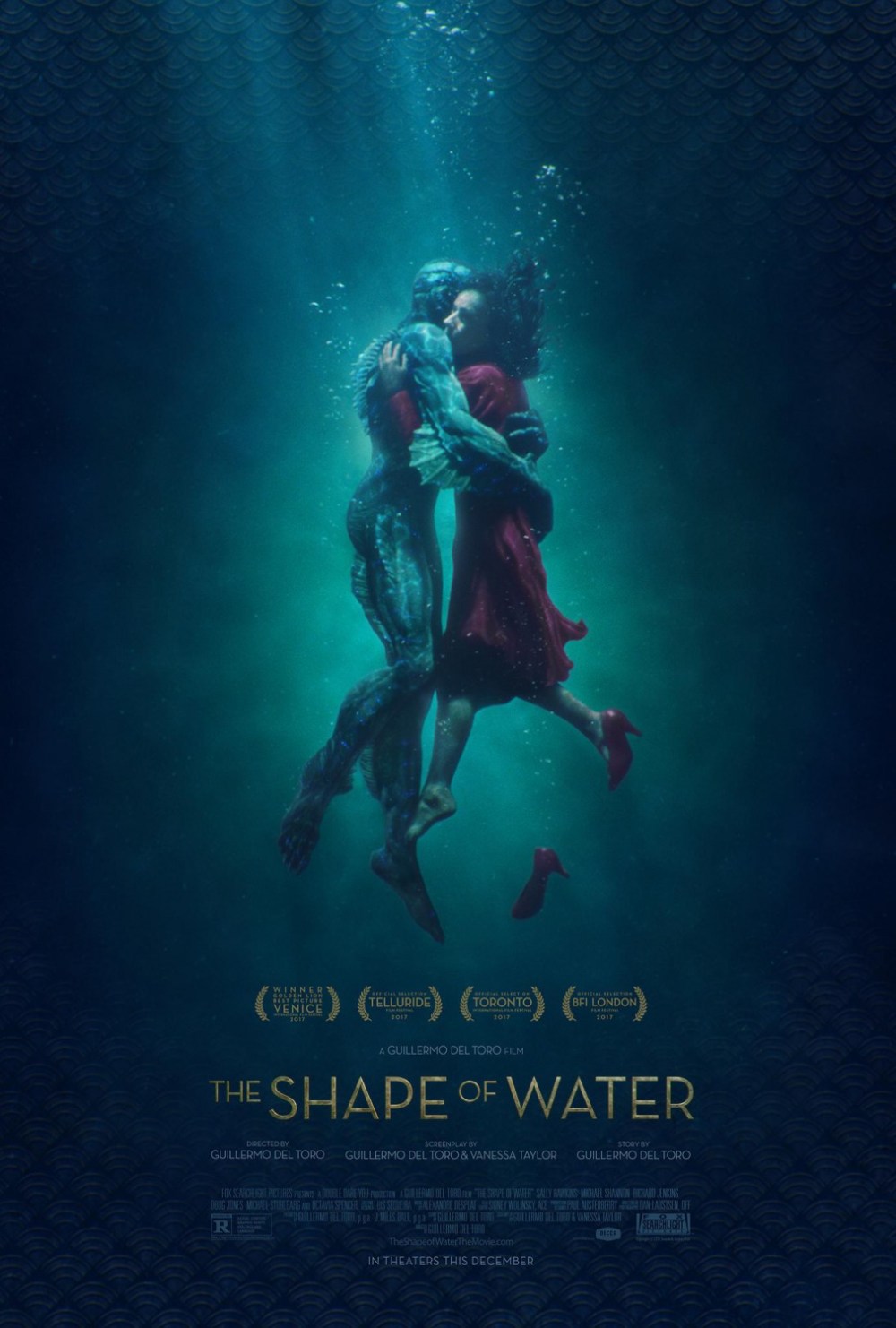
The Shape of Water movie poster

“Pan’s Labyrinth,” “Blade II” and “The Devil’s Backbone” should be more than enough proof of how Guillermo Del Toro is a cinematic god among directors. If you need further proof of this, then I suggest you watch “The Shape of Water,” his romantic fantasy which is truly one of the best films of 2017. While I tend to scoff at romantic movies as I consider them cringe-inducing exercises in endurance which prove to be even more painful than running the Los Angeles Marathon. Please keep in mind, I have run this marathon seven years in a row, and soon I will be running it yet again.

“The Shape of Water” transports us back to Baltimore, Maryland in the year 1962 when America was stuck in the middle of the Cold War. We meet Elisa Esposito (Sally Hawkins), a janitor at a secret laboratory who was rendered mute at a young age due to a neck injury. She follows a daily routine of pleasuring herself in the bathtub while boiling eggs on her kitchen stove, and then she goes to work where she performs her duties without complaint. Luckily, she has a pair of friends to converse with, in a matter of non-speaking, like artist and closeted homosexual Giles (Richard Jenkins) and her ever so talkative co-worker Zelda Fuller (Octavia Spencer) who also takes the time to interpret Elisa’s sign language. But even with friends like these, let alone the luck she has living above a movie theater, there is clearly something missing from her life.

Things, however, quickly change for Elisa when the laboratory she works at receives a creature in a tank. This creature was captured in South America by the cold-hearted Richard Strickland (Michael Shannon), and the government officials he answers to want to dissect the creature in an effort to gain a foothold on the space race. Elisa, however, has different ideas as she develops a strong connection with the creature which will not be easily broken.

I guess this might seem like a strange love story for many to take seriously, but considering the seismic shifts in how the world views, and should view, marriage and the rights of others, “The Shape of Water” could not have been timelier. As improbable as a relationship like this one may sound, Del Toro and his cast make it one we quickly become engaged in to where we are swept up emotionally in a way few movies can.

Along with cinematographer Dan Laustsen, Del Toro gives this film a look which is at once suffocating and yet wondrous. We clearly in the world of movies while watching this one, but the while this might seem like a genre picture designed to take us out of reality, it is filled with genuine emotion which is never easily earned. We can always count on Del Toro to give us a beautifully realized motion picture, but this one deserves special recognition as it had a budget of around $20 million, and yet he made it look like cost so much more. I would love to ask him how he accomplished what he did on a limited budget. In any other case, $20 million is a lot of money. But for a film like this, it seems almost too low to work with.

Sally Hawkins has wowed us as an actress in “Happy-Go-Lucky,” “Made in Dagenham” and “Blue Jasmine,” but she really outdoes herself here as Elisa Esposito as this role takes her into Holly “The Piano” Hunter territory. With her character being a mute, Hawkins not only has to communicate without the use of words (vocally anyway), she has to keep her heart open in a way which we make a habit of avoiding. This actress shows little hesitation in making herself so open and vulnerable to a creature everyone else would be quick to be infinitely fearful of.

Speaking of the creature, he is played by Doug Jones, an actor who is masterful at portraying non-human characters. Whether it’s as Abe Sapien in the “Hellboy” movies, the Faun and the Pale Man in “Pan’s Labyrinth” or even as Lieutenant Commander Saru on “Star Trek: Discovery,” Jones always succeeds in finding a humanity in these characters others would never be quick to discover or find. His performance here as the Amphibian Man is every bit as good as Andy Serkis’ in “War for the Planet of the Apes,” and I put these two actors together because many believe it is the makeup or special effects which do all the acting for them, but it’s their acting which makes their characters so memorable. Jones, like Hawkins, has to communicate without the use of words, but he has an even bigger challenge as his character cannot even use sign language. His work deserves more credit than it will likely get at awards time.

“The Shape of Water” also has a terrific cast of character actors, and they are the kind who never ever let us down. Richard Jenkins is right at home as Giles, a closeted gay man who, when he tries to reach out to someone he cares about, is quickly rebuffed not just by that someone, but also by a society which thoughtlessly excluded many for all the wrong reasons. Jenkins never resorts to giving us a cliched version of a homosexual, but instead makes us see Giles as a man who is kind and considerate but still ostracized to where he is willing to break the rules to help a friend who doesn’t judge him in the slightest.

When it comes to Octavia Spencer, you can never go wrong with her, and she is a wonderful presence here as Zelda Fuller, Elisa’s co-worker who is never at a loss for words. She also makes it clear how Zelda is a force to be reckoned with, and this is something the character’s husband really should have taken into account a long time ago.

There is also Michael Stuhlbarg who portrays Dr. Robert Hoffstetler, the scientist who sees far more value in the Amphibian Man being alive as opposed to becoming a glorified science experiment worthy of dissection. This is a typical role you find in genre films, but Stuhlbarg inhabits the role to where Robert can never be dismissed as a simple stock character. Even as we learn there is more to Robert than what we initially see on the surface, Stuhlbarg makes us see this is a man who values understanding and compassion over greed. You know, the kind of person we would love to see in the White House at this moment.

But one actor I want to point out in particular is Michael Shannon who portrays Colonel Richard Strickland, a man hellbent on putting his country before everything else, including his wife and kids. Shannon succeeds in rendering Strickland into a more complex character than you might expect. As we watch Strickland get berated by his superiors for not doing his job like they want him to, Shannon shows us a patriotic American who wants to serve his country well, but we watch as his spirit becomes as corrupted and diseased as those two fingers of his which were torn off his hand by the creature and reattached with limited success. As the movie goes on, those fingers of his become a disgusting color as they come to represent the corruption of his soul. Other actors would be intent on making you despise such a villainous character, but Shannon makes you see a man whose desperation has forever blindsided his worldview.

Whether or not you think “The Shape of Water” breaks any new ground in the world of motion pictures is irrelevant. All that matter is how it is a beautifully realized film which takes you on an incredible voyage only the best of its kind can. It also reminds you of how valuable a filmmaker Del Toro is in this day and age when distinct voices in the world of cinema are continually minimized and rendered silent for the sake of profit. Here’s hoping you get to see it on the big screen where it belongs before Donald Trump leads us into a war no one in America is prepared to be drafted into.

* * * * out of * * * *

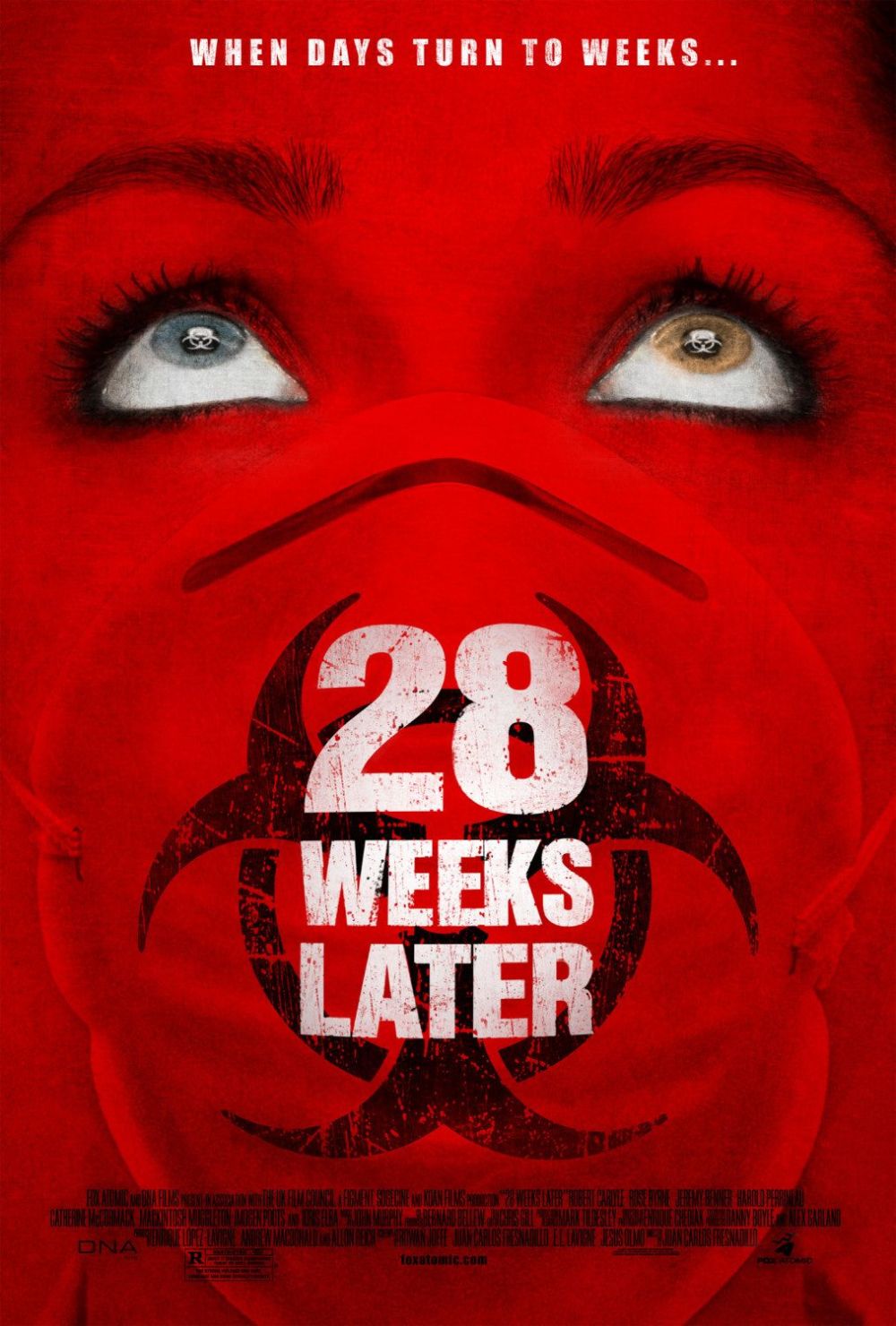
’28 Weeks Later’ is a Shockingly Effective Sequel

28 Weeks Later movie poster

When I heard that they were making a sequel to Danny Boyle’s “28 Days Later,” I couldn’t help but wonder why. How could you make a sequel to a movie like that without it being the same old thing? 20th Century Fox put together a company called Fox Atomic which specializes in horror movies and sequels to horror movies because god forbid the money stops there! They made “The Hills Have Eyes 2.” I thought “The Hills Have Eyes” remake was great, but I was not as excited about seeing the sequel because it had a different director who made some bad horror films.

Now they have released “28 Weeks Later.” That’s great, milk it as much as you want. No mercy or respect for the franchise. Then again, these were my thoughts before I actually watched the movie. It had the good luck of at least having Danny Boyle and Alex Garland on as executive producers, so I was assured this follow-up wouldn’t be of poor quality. Under the tense direction of Juan Carlos Fresnadillo, who previously directed “Intacto,” “28 Weeks Later” adds itself to the list of sequels which equal the original in terms of vision and sheer terror, and it ends up delivering what it promises; an extremely intense and unsettling movie going experience.

All the main characters from “28 Days Later” are absent here, so we have a whole new cast of characters trying to stay alive while stranded in a part of the world engulfed by the rage virus. It starts off with a group of English people who have managed to find refuge in a home where they hide from the infected. The main characters are a married couple played by Robert Carlyle and Catherine McCormick who are seen preparing dinner when the movie begins. Most of the actors here are not too familiar to audiences, and this helps the movie in its approach. Carlyle will definitely be familiar to those who remember him from “Trainspotting” and “The Full Monty,” and each of those movies show off how much of a range he has as an actor.

The opening of “28 Weeks Later” has a supreme amount of tension that never lets up. I got to see it at Grauman’s Chinese Theater, and I sat in the back with my hands over my ears because I was eagerly anticipating all hell breaking loose as soon as the movie started. I typically watch most horror movies like this because it’s not what I see that gets to me, it’s the sound. Look no further than the original “Halloween” for an example of this.

The opening is brilliantly shot because you feel like you are right there with these people inside the house. You don’t see the outside world until they do, and it ain’t pleasant. When the infected make their inevitable entrance, Carlyle’s character ends up abandoning his wife who screams at him from a window in disbelief. He runs away from the infected at warp speed, and the fact he escapes with his life is both astonishing and shameful.

The story then moves to London after the outbreak with things finally returning to normal. The United States Army has taken over, and the first of the survivors are now coming back into the safe zone to start their lives over in a land now free of infection. We get to meet the children of Carlyle’s and McCormick’s characters who are played by Imogen Poots and Mackintosh Muggleton. Carlyle’s character is, of course, unprepared to tell his children how their mother perished among the infected, and he lies to them about what happened. As much as you despise him, you can’t help but feel a little sorry for him. Don’t you hate that?

Anyway, his lie about their mother being killed gets exposed when she is found alive in a closed off area of England. She has been bitten by the infected, but somehow has not been overtaken by the rage virus. Her blood seems to have some sort of immunity from the virus which keeps her from going completely psychotic. It is incredibly tragic that husband doesn’t have the good sense to keep himself from kissing her. A kiss is just a kiss? Not in this movie!

As you can expect, all hell breaks loose, otherwise there wouldn’t be a movie. The military tries to control the situation and they end up resorting to, when nothing else works, code red as they quickly see there’s no stopping the spread of infection. They can’t tell the difference between who is human and who is infected, so they resort to killing everyone to keep the situation contained. What makes this scenario so terrifying is how realistic is presented here, and the depressing solution the military takes to contain this horrifying situation is painfully understandable as it threatens the rest of the world. So, those young kids now have to find their way out of the “safe zone” and run away from those who have no choice but to bite and infect them.

There is a lot of shaky handheld camera work in “28 Weeks Later” which gives the movie an immediacy which sucks you in just like the original did. I have been back and forth in regards to hand held camerawork because it can veer easily from being exciting to the becoming relentlessly annoying. Don’t even get me started on the later movies of Woody Allen. I can’t even begin to tell you how nauseous I got while watching “Deconstructing Harry” on the big screen.

But here, the shaky camerawork is perfect as it brings us right into the chaos these characters are feverishly trying to escape. The camera goes all over the place to where we can’t tell where the exit is or if we can trust the person next to us. Fresnadillo is excellent in drawing you into the mindset of the chaos and confusion of what the characters are forced to experience. What if you can’t find your way out? What if the person next to you is infected? Where is the safest place to go? Everyone is running for dear life, but in which direction does one head?

What also makes “28 Weeks Later” work is it’s not just based on thrills and chills as there is an intelligence at work here. There’s a subtle critique of the seemingly endless occupation of military forces in other countries as they futilely try to control a situation completely beyond anyone’s control.

Aside from those kid actors who are terrific and very down to earth, there are a few others worth mentioning. Jeremy Renner plays Doyle, a military shooter who quickly develops a conscience when he decides not to follow orders and instead save a little boy who doesn’t deserve to die. I also want to mention Rose Byrne who plays Army doctor, Scarlet. I like it when a movie where there is a very strong female character who thinks she has found the key to eradicating infection. Of course, no one listens to her because the quick fix-it answer is to kill the host and everyone else if it comes into contact with. Byrne is very believable as a soldier who has no choice but to hold it together when the world around her quickly crumbles.

“28 Weeks Later” is an incredibly tense ride from start to finish, and it never lets up. There’s an unnerving sequence where the main characters have to flee from a chemical attack by going into the underground subway which is pitch black, and the only way they can make their way through is with night vision. This proves to be one of the scariest scenes I have seen in a motion picture in the longest time.

Whereas “28 Days Later” found a measure of hope at its conclusion, “28 Weeks Later” is unrelentingly bleak. Any hope is vanquished by the end, and its last shot features a famous landmark which shows how inevitable it is infection will spread from country to country. This sequel proves to be very respectful of its predecessor, and it goes even further into the nightmare the world is caught up in and beyond everybody’s control. It makes me eager to see “28 Months Later” which I hope will at some point in the future become a reality. But personally, I am waiting for “28 Millennium Later.” The way things are going right now, humanity is doomed in one way or another.

* * * ½ out of * * * *

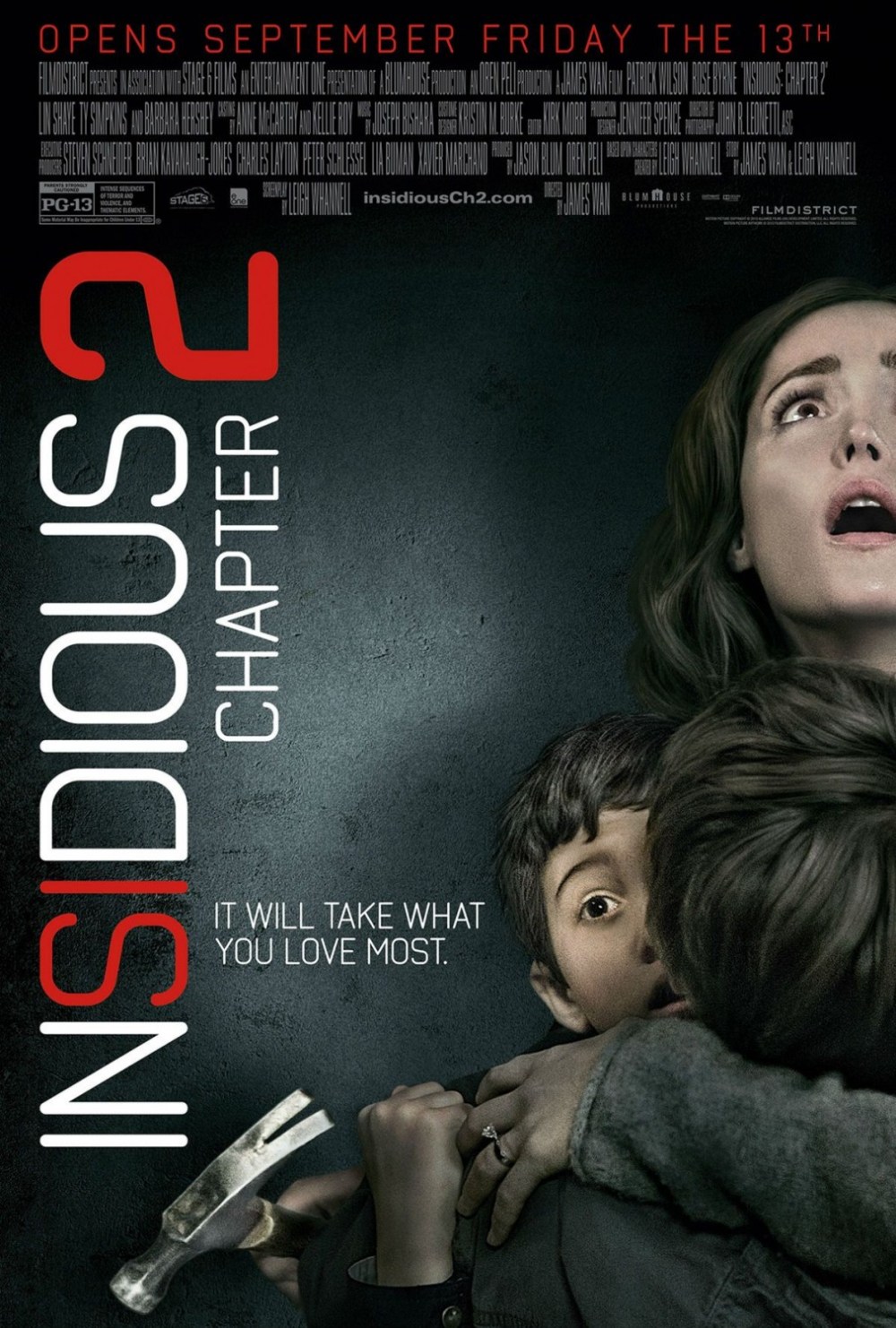
‘Insidious: Chapter 2’ is More of a Continuation Than a Sequel

Insidious Chapter 2 poster

My feelings towards “Insidious: Chapter 2” are not much different from how I felt about “Insidious.” Neither movie scared me in the way they scared my friends, and they don’t really hold a candle to the “Paranormal Activity” movies in terms of making you jump out of your seat, but I did admire their cleverness as they turned the genres they were exploring upside down, and both films gave me something I wasn’t expecting. But moreover, the real strength of “Insidious: Chapter 2” is it doesn’t feel like a sequel as much as it feels like a continuation of what came before it. Part of me was expecting a simple retread of the original, but the filmmakers succeed in adding more to what came before.

It reunites the horror team of director James Wan and screenwriter Leigh Whannell, both who made the first “Insidious” movie as well as the first “Saw.” What drove me nuts about “Saw” and its sequels wasn’t the gore (the way I see it, the gore the merrier), but the plot twists which ended those movies left me with the most enormous of headaches as they expected me to believe Jigsaw (Tobin Bell) could pull this or that off, and I didn’t buy any of the conclusions for a second. The “Insidious” movies, however, don’t make the same mistake, and what I admired was how certain questions from the original film got answered here. Perhaps a close analysis would reveal plot holes, but both movies seem to connect together in a way which makes sense.

Like “Halloween II” (whether it’s the original sequel or Rob Zombie’s), “Insidious: Chapter 2” starts off where the original ended. Josh Lambert (Patrick Wilson) has successfully rescued his son Dalton (Ty Simpkins) from the Further, but after a peaceful moment where the family is reunited, his wife Renai (Rose Byrne) discovers paranormal investigator Elise Rainer (Lin Shaye) has been strangled to death. Josh is suspected to have strangled her, but he convinces Renai he did not. Soon after that, things slowly get back to normal as Josh moves his family into his mother Lorraine’s (Barbara Hershey) house, but it doesn’t take long for certain objects to move around on their own. The question is, did Josh really return from the Further, or did someone else come back in his place?

Now Wan and Whannell had a lot of fun playing around with the haunted house genre with the first “Insidious,” but now they are forced to up their game with this one. “Insidious: Chapter 2” is more of a domestic thriller with a bit of astral projection and time travel thrown in to mix things up. While it does deal with the same elements which made its predecessor a success, this sequel never feels like a simple repeat of the original. Both these films were made by people who have seen just about every horror movie known to man, and they have gone out of their way to subvert all those clichés we are used to seeing. With this movie, I was never entirely sure of what to expect, and that’s just the way I want it.

Wilson, Byrne, Hershey and Simpkins are every bit as good as they were in “Insidious,” and they don’t look like they have missed a bit between the original and the sequel. Angus Simpson and Whannell also show up again as Tucker and Specs, and they provide the comic relief this sequel needs, and they never overstay their welcome.

Joining the “Insidious” franchise this time around is Steve Coulter who plays Carl, Elise’s protégé in the paranormal arts. I am not familiar with Coulter’s work, but he gives a strong performance here as he works to help the Lambert family deal with what has been haunting them so viciously. It turns out he is a journeyman actor who has made many appearances in both film and television, and his veteran status serves this part well as Carl is an expert who has dealt with these situations extensively, and this makes him very believable as someone who has seen the worst things life has to offer.

Some fans may complain about the lack of scares in “Insidious: Chapter 2,” but for me, I’m just glad this sequel kept me intrigued throughout. Whether you find it terrifying or not, it’s a film which does keep you on edge from start to finish. When the movie ends, it turns out that there just might be room for another “Insidious” sequel, and there is a sequence at the end which implies a follow up will be coming our way. But even if it doesn’t, you can be sure the spirits (evil or otherwise) will be haunting you while you sleep.

* * * out of * * * *

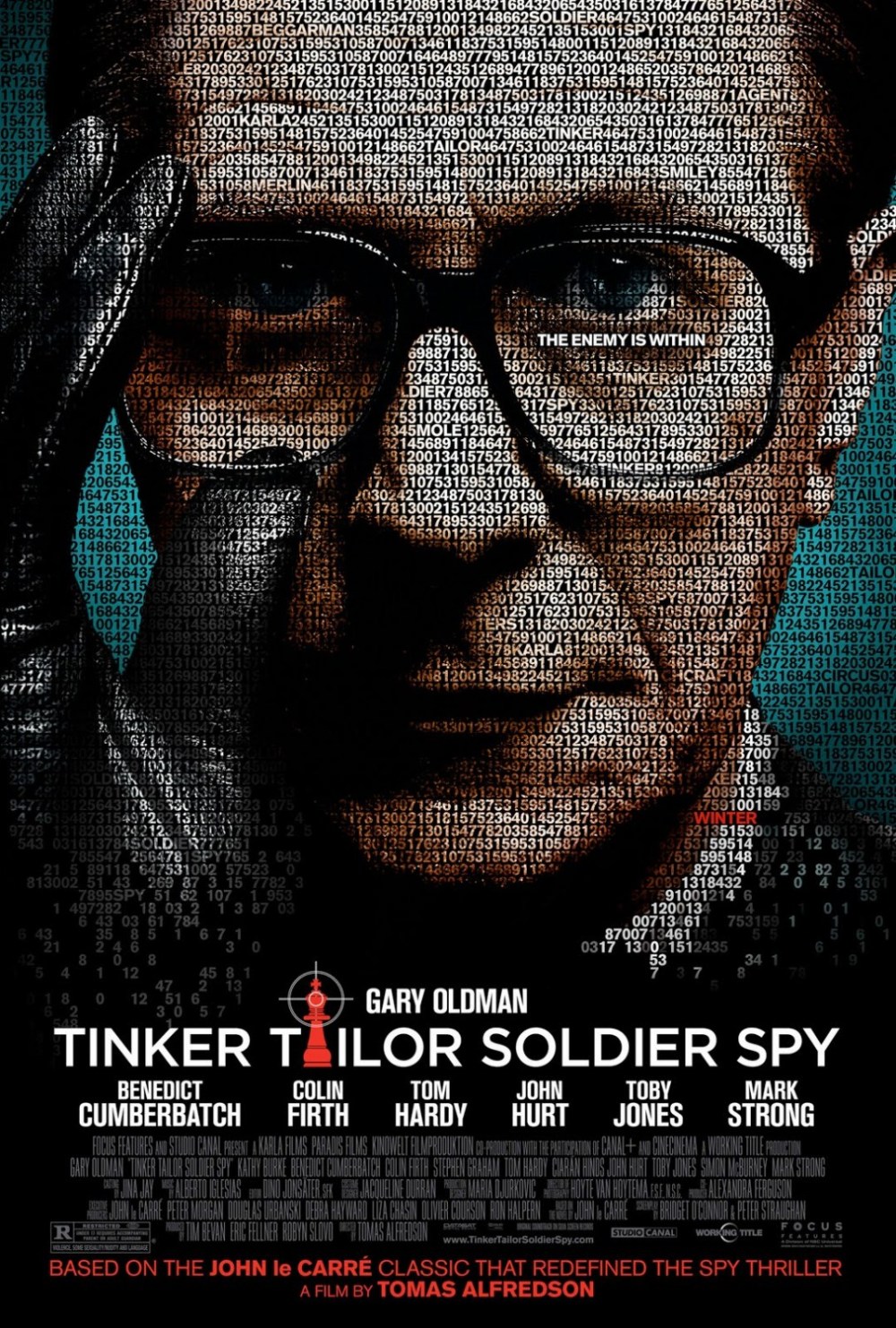
‘Tinker Tailor Soldier Spy’ Has Gary Oldman Giving One of His Best Performances

Tinker Tailor Soldier Spy movie poster

It’s interesting how the spy world in John le Carré’s novels differs sharply from the one in Ian Fleming’s. Whereas James Bond was a dashing playboy of a spy and the good and bad guys were easy to tell apart, the spies in Carré’s world exist in a morally gray area, and their lives prove to be anything but glamorous. No one is innocent, and everyone has something to hide from others or perhaps even themselves. Here, there are no gunfights or explosions but instead conflicts both internal and external. Even the people we look up to in Carré’s novels are deeply flawed, and you can quickly see why no one can truly trust one another.

No book in Carré’s vast library of work exemplifies this more than “Tinker Tailor Soldier Spy” which features his most famous fictional character, George Smiley. Originally turned into a brilliant BBC miniseries back in 1979 with Sir Alec Guinness as Smiley, it has now been made into a motion picture with Gary Oldman in the lead role. Whereas the miniseries had more time to develop the story and characters, this movie does an excellent job of doing the same in a shorter span of time. Granted, much has been left out from the novel, but those unfamiliar with the miniseries are unlikely to notice.

The movie hovers around the goings on in The Circus, the codename for British Intelligence. After one operation goes wrong and an agent is killed, the head of Intelligence, Control (John Hurt), is forced to resign along with his right-hand man, Smiley. Smiley, however, is brought back into service when it becomes apparent there is a mole in British Intelligence. Moreover, it’s a mole which has been in The Circus for a long time, and he is a senior member with access to all sorts of secret information. Smiley, in his own way, seeks out the mole before the British become completely compromised in world affairs, and what results is a game of chess more than a battle of wits.

Casting Oldman as George Smiley at first seems like a surprising choice. Oldman made his film debut as Sid Vicious in “Sid & Nancy,” and his performance as the doomed punk rocker reminds us of how over the top he can be as an actor, and I always looked forward to seeing him play the villain in movies like “The Professional” and “Air Force One.” We revel in his emotionally unhinged performances which have made him stand out prominently among other actors of his ilk, and he has rarely, if ever, let us down.

As Smiley, however, Oldman is forced to dial back on the manic energy he became famous for. George Smiley is a character who never loses his cool and conveys so much even through the simplest of gestures. With even an ever so slight movement, we can see Smiley’s thought process at work and are never in doubt of how powerful a character he is. Each movement Oldman takes as Smiley is one which has been deliberately thought out, and even he knows he doesn’t have to bounce off the wall as this famous spy because this one goes into the room knowing all he needs to know.

In recent years, Oldman has gotten to stretch a bit with roles like Sirius Black in the “Harry Potter” movie franchise. While Black is first seen as a bad guy, it turns out he is a good one who cares deeply about Harry’s well-being. Then there is his role as James Gordon in Christopher Nolan’s “Batman” movies where he makes the good guy seem very cool without being such a square. What makes George Smiley an especially interesting character is he is neither a good or bad guy, but instead someone who is forced to navigate the dirty waters which he cannot help but get submerged in from time to time.

This is one of those roles which drive most actors crazy because it can become ever so easy to become utterly self-conscious about every single scene they are in. Being an actor myself, I often wonder if I am doing enough or perhaps too much in one performance to the next. While acting on the stage makes this easier to answer, acting in a movie or television is not only different but far more intimate. In the latter, you have to be more natural to where the camera never catches you emoting, and this can be difficult to say the least. But it’s those subtleties which can provide amazing results with the right director watching over you.

“Tinker Tailor Soldier Spy” also has a cast of brilliant British actors like John Hurt, Colin Firth, and Toby Jones, all of whom do their best in playing characters who have long since accepted the fact that they are morally compromised. You also have Tom Hardy, who succeeded in doing so much with just his eyes as Bane in “The Dark Knight Rises,” as a British agent who is only beginning to become morally compromised. None of these intelligence officers are easy to decipher on the surface, and a lot of this is thanks to their excellent performances.

Directing this adaptation is Tomas Alfredson who directed the great film “Let the Right One In.” Alfredson handles the intricacies of a story which could easily have become convoluted in terrific fashion, and he keeps us enthralled throughout. Even if we can’t follow the story, he succeeds in keeping us on the edge of our seat all the way to the end. Furthermore, he generates an intense and exciting climax without the use of gunplay or explosions, and there is something to be said about that.

Describing all which goes on in “Tinker Tailor Soldier Spy” is not easy, but it is not an impossible story to follow. Watching this movie for a second time will help give you a chance to examine the subplots more closely. While the spy world of Carré may seem nowhere as exciting as the one Fleming created for 007, it deals with the real world more directly as the line between right and wrong is forever blurred. What’s fascinating is how these people survive in it even as they continue losing pieces of themselves in a world and time which is prepared to beat them down on a regular basis. Everyone involved deserves a lot of credit for making what might seem ordinary and unglamorous seem so relentlessly thrilling.

* * * * out of * * * *


‘A Christmas Carol’ with George C. Scott, My Introduction to the Charles Dickens Classic

A Christmas Carol 1984 poster

I’m sure everyone has read or heard the story of “A Christmas Carol” several dozen times by now, be it as a play, a book, or a movie. My introduction to it came back in 1984 with the television movie starring George C. Scott as Ebenezer Scrooge. My parents got my brother and I to this movie back when we lived in Thousand Oaks, California. Back then, I had no idea what I was in store. All that was going through my head at the time as the movie began was, am I staying up later than Santa Claus would like? I sure didn’t want to miss out on any presents, and it was way past my bedtime. Please keep in mind, I was nine years old at the time.

What makes this particular version of “A Christmas Carol” stand out is how down to earth the actors are in their performances. These days when I see this story, it is usually at a play typically acted and directed with incredible theatricality. But with movies, things are done in a far more intimate fashion. Director Clive Donner doesn’t have any of the actors over-emoting anything and, as a result, these characters end up feeling like our next-door neighbors. Forget how this is a period piece; some things about humans never change.

Ebenezer Scrooge reminded me of the meanest bullies from school, especially those determined to make themselves feel stronger by belittling and excluding others from social gatherings. But seeing him go through the heartaches of life made this particular bully all the more sympathetic to me regardless of how cold he was to people around him. I was already feeling bad for Scrooge before the story’s midpoint. Plus, I thought it was inexcusable for the Ghost of Christmas Present to leave Ebenezer in the freezing cold instead of bringing him home to await the next ghost. Some people can be so inconsiderate.

I first came to discover actor George C. Scott in the movie “Taps,” but this is the role I will always remember him for best, and that’s even over his Oscar winning performance in “Patton.” Scott showed how Scrooge can truly be the role of a lifetime as he takes the character from being a hopeless curmudgeon of a human being to the ultimate fun-loving guy by the story’s conclusion. The moment where he realizes that what the Ghost of Christmas Future was not actually real and promises from there on out to always keep Christmas in his heart is an amazing piece of acting, and this moment remains strong in my memory so many years later.

It is Scott’s brilliant performance which made this particular “Christmas Carol” such a memorable experience for me. Now I don’t know about the rest of my family, but I found myself being pulled from one giant emotion to another. There were times where things got a little too dark for me where I almost cried, and I have always been an infinitely sensitive human being, but all those feelings made for one of the most gloriously happy climaxes in any motion picture I have ever seen. Seeing Scrooge meet up with the fully recovered Tiny Tim brought a big smile to my face. It all reminds me of how Robin Williams, in an interview he had with David Frost, talked about a Russian he once met who told him how we have to live with pain in order to feel pleasure.

It has now been over 30 years since we all watched this version of “A Christmas Carol” with George C. Scott, but the experience of watching it remains ever so vivid in my mind as was my fear of Santa not coming down our chimney if I stayed up so late.

For the record, Santa did come by and left me and my brother plenty of presents… or so I was told.

‘The Greatest Showman’ Reminds Audiences Hugh Jackman is the Real Deal

The Greatest Showman movie poster

When it comes to singing, I still consider it to the most challenging of all the performing arts. You can be a good singer technically by hitting all the notes just right, but none of it will matter if you don’t put your heart and soul into each of those notes. You can only hide behind technique for so long before the teacher makes you see that you have to be emotionally open and show the audience you are living the song and not just singing it.

I was strongly reminded of this while watching “The Greatest Showman,” the musical drama which stars Hugh Jackman as P.T. Barnum, the infinitely ambitious showman and entrepreneur who created the Barnum & Bailey Circus which ran for over 140 years before shutting down in 2017. Once Jackman sings his first note, it becomes abundantly clear there is no other actor who could inhabit a man who command an audience to where no one could dare take their eyes off him. The scene threatens to be overwhelmed by a rousing musical number, strong choreography and beautiful cinematography, but nothing can upstage the passion Jackman brings to the role as he dominates every filmmaking element to command the stage like no one else can.

For those of you expecting a complex look at P.T. Barnum, you will need to look elsewhere or, better yet, read a book on the man. Director Michael Gracey along with screenwriters Jenny Bicks and Bill Condon are not out to give us a multi-layered portrayal of a man whose success in life was beset by allegations of abuse of his circus animals among other things. Instead, they are more focused on him as a man eager to break out of the shackles of modern life so he can embrace a lifestyle some would say he is undeserving of. At the very least, you have to give the filmmakers credit for not saying this is “based on a true story,” a phrase you all know I abhor with a passion.

We watch as P.T. captures the heart and affection of Charity (Michelle Williams) from a young age even though they come from two different classes of people, P.T. from the poor and Charity from the rich. Nevertheless, their love for one another breaks through barriers, and they marry and bring two beautiful daughters into the world whom they share a powerful love of imagination and possibilities with.

The scene in which we watch P.T. Barnum work in an office and trying not to becoming completely numbed by a redundant work environment resembles the suffocating office Jonathan Pryce was an employee at in Terry Gilliam’s “Brazil,” and from there I was sucked into his quest to escape a life where, as Trent Reznor put it, every day is exactly the same. Of course, his mission in starting an adventurous life is stifled by struggles new beginnings bring about. Barnum ends up buying a museum, but it’s a constant struggle to get anyone to purchase a ticket. Then he employs a number of performers which so-called “normal” people quickly dismiss as freaks of nature. But by giving the public something different, Barnum finally succeeds in making his mark to where nothing he does can be easily ignored.

I found Barnum’s story as presented here fascinating as he tries to find acceptance in a society which pretty much banished him from the day he was born. Barnum even goes out of his way to entice famous Swedish singer Jenny Lind (Rebecca Ferguson) to do a series of concerts in America in the hopes that critics who constantly bash his circus act will come to accept him as an upper-class citizen. The question is, will he leave his circus performers and business partners in the dust in the process?

The plot of “The Greatest Showman” is actually quite thin to where the narrative feels more rushed than you might expect in a movie with a running time of 105 minutes. The story of P.T. Barnum is one deserving of a complex and deeply researched screenplay, but the filmmakers here were instead determined to give us a story about a dreamer who defied the odds and led a life of adventure we all hope to live. If you can accept what they were attempting to do here, this movie will prove to be an enjoyable one, and I was willing to accept it for the movie it was trying to be.

The advertisements boast of how “The Greatest Showman” features music by the lyricists of “La La Land,” another movie dedicated to the risks dreamers take. The songs, which include “Come Alive” and “This is Me,” are rousing and will get you into a wonderfully invigorated state as you sit and take in the spectacle. Having said this, this is not the kind of musical which will remain in your mind long after you have watched it. Perhaps my standards for musicals are too high as “South Park: Bigger, Longer & Uncut” remains the best movie musical Hollywood has released in years (“La La Land” is not far behind).

Aside from Jackman, the other actors acquit themselves nicely. Michelle Williams remains one of the bravest actresses, let alone actors, working today as she never hesitates to lay herself emotionally bare in a scene. Just check out her heartbreaking scene from “Manchester by the Sea” (you’ll know it when it comes up). Williams shares the screen with Jackman to where it should be no surprise she can hold her own with Jackman as their characters’ love is threatened more often than not.

Zac Efron, while I sometimes hoped he would be livelier than he was, certainly has all the right moves as Phillip Carlyle, a playwright who becomes Barnum’s business partner. Zendaya plays Anne Wheeler, an acrobat whom Phillip quickly gains a strong affection for, and she makes her presence in this movie a memorable one. I also have to single out Keala Settle who portrays Lettie Lutz, a bearded lady, as her performance of the song “This is Me” proves to be a real show stopper as we root for her and her fellow freakish performers to come out of the shadows to where no one can ignore or easily dismiss them.

With “The Greatest Showman,” you have a movie musical which has flaws not hard to miss, but I was still enthralled with it even though I am not in a rush to buy the soundtrack. Much of this is due to the actors as there is no denying they put all their heart and soul into their roles. Jackman, who has already has had one heck of a year with his penultimate Wolverine performance in “Logan,” remains a powerful presence whether he is appearing on stage or screen, and even if you have issues with this motion picture, there’s no denying there are few actors like him working right now.

As I walked out of the theater, I was reminded of something Groucho Marx once said:

“I wouldn’t want to belong to a club that would have me as a member.”

Does Barnum believe the same before this movie’s end? I leave it to you to find this out.

* * * out of * * * *


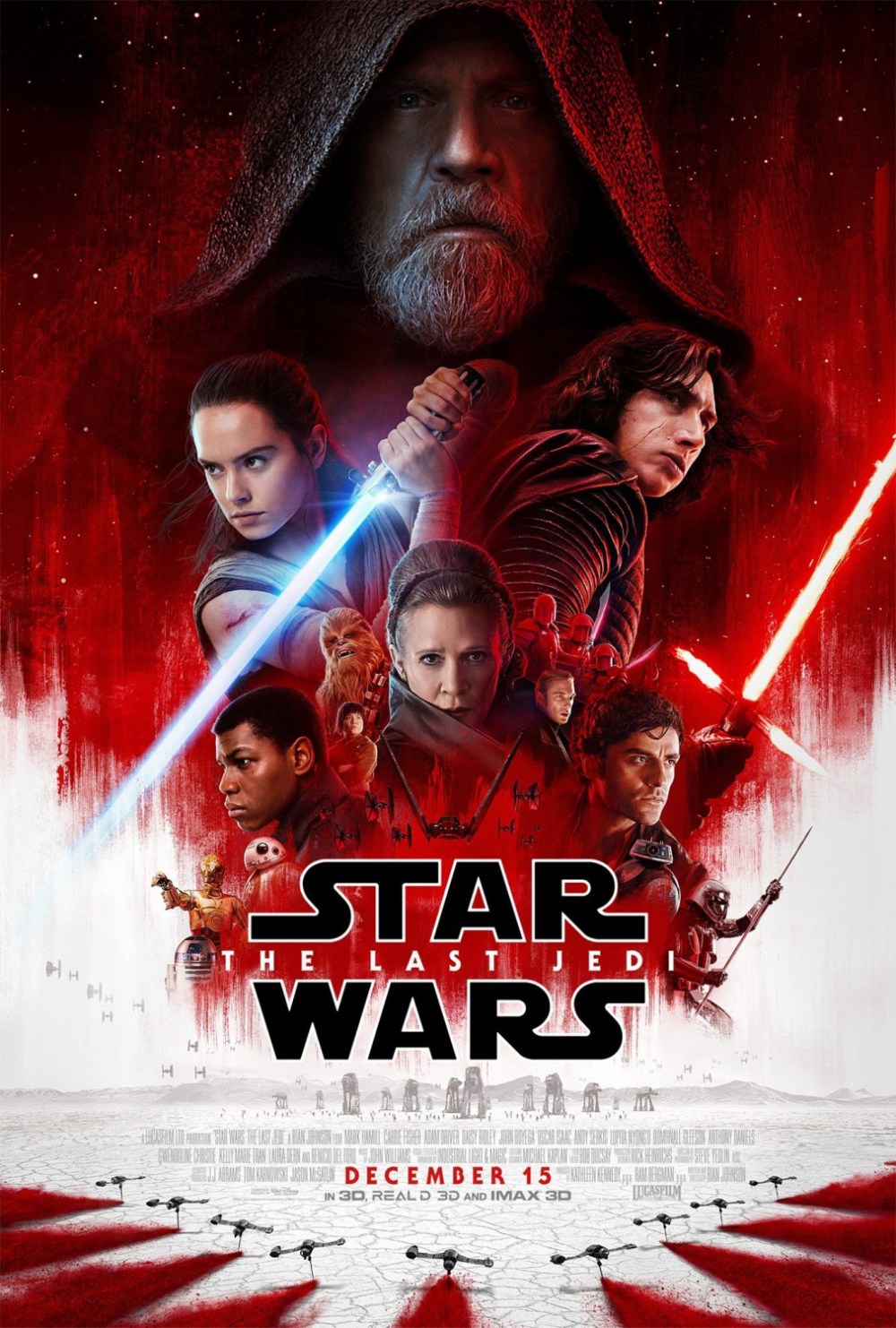
‘Star Wars: The Last Jedi’ Defies Easy Expectations

Star Wars The Last Jedi movie poster

With “Star Wars” movies now becoming a yearly tradition, I wonder if they will begin to feel less like an event and resemble a typical episode of the “Law & Order” franchise. You know a version of the show is always on television in one form or another, but are you as excited to watch an episode as you were when you first discovered it? Perhaps this is an unfair comparison, but considering where Disney is taking this franchise, it is beginning to feel like it no longer takes place in a galaxy all that far away.

I bring this up because I couldn’t stop thinking about this during the opening crawl of “Star Wars: The Last Jedi.” Each new “Star Wars” motion picture feels like a major event to where it should be declared a national holiday, but since it’s becoming a regular thing now since Disney bought Lucasfilm, will the franchise still feel this special with each future installment? Well, hopefully this remains the case as “The Last Jedi” proves to be a rousing piece of entertainment which stays true to the franchise’s ideals, and it even has a number of surprises up its sleeve to where I eagerly await the next episode set to come out in 2019.

While each “Star Wars” film typically takes place several years after the last one, “The Last Jedi” begins where “The Force Awakens” concluded. Rey (Daisy Ridley) comes to meet the legendary Luke Skywalker (Mark Hamill) who has long since exiled himself on the planet Ahch-To (gesundheit), a much nicer destination than Dagobah. Meanwhile, the Resistance finds itself feeling the First Order after the latter obliterates their main base. From there, the rebels are on the run, but they can only get so far before they realize the First Order has tracked their whereabouts and to where they are trapped with little hope of escape. It is up to the daring and dashing Poe Dameron (Oscar Isaac) and former stormtrooper Finn (John Boyega) to save the day with the help of friends both old and new.

Revealing more about a “Star Wars” film just as it is released tends to result in actions which will prove to be infinitely painful to say the least, so this will be a spoiler-free review. What I can tell you is while this episode deals with the subjects of hope and the need to discover more than what can be found on the surface, the key subject writer and director Rian Johnson deals with here is failure. All the characters are dealing with failure in one way or another, and it comes to haunt every action they take. The characters we grew up with are dealing with failings they cannot escape, and the ones we were introduced to in “The Force Awakens” are now discovering the irreversible consequences of their actions.

Johnson previously wrote and directed “The Brothers Bloom” and “Brick,” but his best known film before helming “The Last Jedi” was “Looper,” a sci-fi time travel motion picture which was ingenious as it was thrilling. Having seen it, I went into this “Star Wars” extravaganza with the confidence he could pull it off, and he did. Even though “The Last Jedi” threatens to overstay its welcome at two hours and 32 minutes, making it the longest “Star Wars” movie to date, you cannot punish Johnson for his ambition as he covers a lot of ground while leaving us salivating for more.

When it came to the prequels, you had to forgive the actors because they were being directed by a man, George Lucas, who is a master storyteller but deeply deficient when it came to dealing with the human element. But Johnson, like J.J. Abrams before him, knows how to elicit strong performances from his cast, and each actor is more than up to the challenge.

Watching Mark Hamill and Carrie Fisher was deeply fascinating as their adventures in the original “Star Wars” trilogy remain forever burned into my consciousness, and it still feels like I first watched those movies just yesterday. Their youthful exuberance in fighting the dark side was contagious as I wanted to fight alongside them, and I know I’m not the only who feels this way. When we catch up with their characters of Luke Skywalker and Leia Organa in “The Last Jedi,” the years of endless battles and devastating defeats show in their faces as we wonder how much of a fight they have left in them considering what they have been through. While they are heroes, both have grown weary in the face of an enemy which is every bit as imposing as the Galactic Empire, and their confidence in their abilities is shakier than ever before.

It’s especially poignant to watch Fisher here as this was her last movie before she passed away, and knowing this will be the final time we will see her as Leia is a real heartbreaker. Even as Leia’s accent changes yet again, Fisher imbues the former princess with a dignity and humility which will not be easily shattered in the face of defeat. Even as the odds get worse for the Resistance, Fisher makes Leia stand tall, and she makes clear to the audience that this sci-fi icon will not go down without a fight.

After watching Hamill’s brief appearance in “The Force Awakens,” I came into this film wondering where he would take the great Luke Skywalker. Well, he’s no Yoda here as a devastating failure has led him to believe the Jedi should end and has robbed almost completely robbed him of his sense of humor. Whether or not this is the Luke Skywalker you hoped to see in “The Last Jedi,” Hamill dares to take this character in another direction, but despite defying expectations, the actor makes Luke the powerful Jedi we always wanted him to be.

It’s also great to see “The Force Awakens” veterans Oscar Isaac and John Boyega back as Poe Dameron and Finn as their charismatic energy lends itself nicely to the special effects extravaganza which could have, but does not, overwhelm their talents. Watching Isaac here also serves as a reminder that covering him in pounds of makeup like Bryan Singer did in “X-Men: Apocalypse” is completely unnecessary and just takes away from him. Domhnall Gleeson still makes General Hux into more of a twisted tightwad than we previously saw, and Andy Serkis mesmerizes as Supreme Leader Snoke while continuing to shroud the character in mystery.

Among the newcomers to this franchise are Laura Dern as Resistance Vice Admiral Amilyn Holdo, Benicio Del Toro as the codebreaker DJ, and Kelly Marie Tran comes into play as Rose Tico, a maintenance worker who becomes a key player in the Resistance. While it is great to see Dern and Del Toro here, let alone in any other movie they appear in, their characters are a bit underwritten to where their talents can only go so far with the material given to them. Tran, however, makes Rose Tico into a terrific character I am very eager to see in the next “Star Wars” episode. As for the Porgs, they are delightful little creatures who do not overstay their welcome, and they serve as a reason why Chewbacca might consider becoming a vegetarian in the future.

But the performances which really held my attention more than any others came from Daisy Ridley as Rey and Adam Driver as Kylo Ren. Both bring a raw intensity to their characters which left me on edge as their passions could lead them either in the right direction, or instead down a road which offers no hope of return. The connection Rey and Kylo share throughout “The Last Jedi” is one which grows stronger in each scene, and it makes me wonder if they could possibly survive without one another in Episode IX. Both actors bring a natural energy which Natalie Portman should have been allowed to bring in the prequels, and they remain as compelling as ever.

Many complained “The Force Awakens” hewed too closely to the plot of “A New Hope” to where it became an exercise in nostalgia more than anything else. So it’s only natural filmgoers are coming to “The Last Jedi” expecting something close to “The Empire Strikes Back.” However, Johnson and company have succeeded in giving us a “Star Wars” episode which surprises us more often than not. While many may be sitting in a movie theater crying out, “I knew that was going to happen,” I think they need to realize not everything is going to go the way they expect. It reminded me of the next to last episode of “The Sopranos’” second season as it left me in shock and wondering what could possibly happen next. While we feel we know and understand the formula of the average “Star Wars” movie, this one upends it to where we can only guess what will happen in the future.

“The Last Jedi” also shows us there is more to failure than we see at first, and this is an important lesson to take in as we often let failure keep us from moving forward in life. It also shows us how hope can be tested more than ever before to where we grasp onto any last piece of it. In “The Shawshank Redemption,” Morgan Freeman talked about how “hope is a dangerous thing” and that “hope can drive a man insane,” but our heroic characters still cling onto hope as nothing else will do, and surrender is not even a part of the equation.

While the continuing onslaught of “Star Wars” movies threatens to make this franchise feel a lot less special, none of my worries detracted from my enjoyment of “The Last Jedi.” It proves to be as entertaining as any other “Star Wars” movie currently out there in circulation, and yes, I include the prequels. This film also makes me look forward to Rian Johnson’s continued contributions to the franchise which look to be many, and I eagerly await the next episode as I am not sure what to expect from it. I just hope I don’t go into a future “Star Wars” movie saying to myself, “I got a bad feeling about this.”

* * * ½ out of * * * *


‘Attack the Block’ Features John Boyega in a Terrific Debut Performance

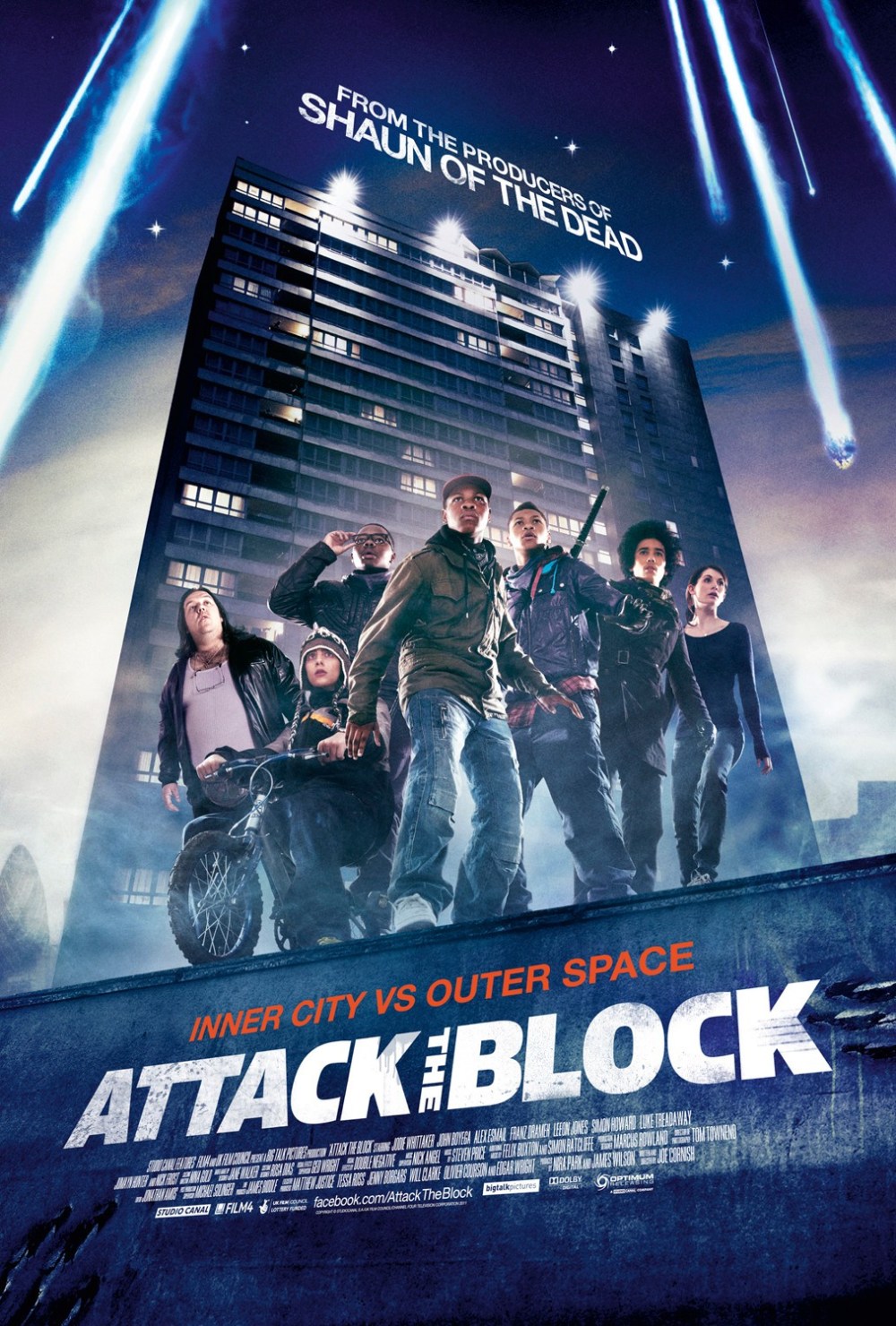
Attack the Block movie poster

Attack the Block” is a highly entertaining combination of action and sci-fi genres which deals with humans defending themselves against a swarm of unfriendly extra-terrestrials. It follows a street gang of young kids who, in the process of robbing a female nurse, get greeted by an alien who lands with a loud thud on someone’s car (here’s hoping they have auto insurance). It marks the beginning of an attack by an alien race which immediately tears apart anything in its path, and it’s up this gang of delinquents to save the day.

The majority of “Attack the Block” takes place in a council estate, a location which houses the financially challenged of England’s residents, and it is generally overrun by a nasty criminal element. This setting has been used to great effect in “Fish Tank” and “Harry Brown,” movies which effectively showed how isolating it can be to live there. The characters presented feel very true to life, and it makes what could be seen by many as another B-movie far more effective as a result.

Leading this street gang is Moses (John Boyega), a 15-year-old who is older than his age would suggest. Moses and his mates spend their time robbing those walking through the terrace they live in. But when the aliens enter into their territory, they find antagonists that are completely unwilling to give up their valuables (assuming they have any), and the threat they pose to this gang make their struggles in daily life a cakewalk in comparison.

“Attack the Block” was directed by Joe Cornish, an English comedian, television and radio presenter, director, writer and actor. This marks his directorial debut as he has previously helmed several behind the scenes documentaries like “The Fuzzball Rally” featured on the “Hot Fuzz” DVD and Blu-ray. Cornish’s work here is very assured, and he does an excellent job of combining elements of horror and comedy to great effect, something never easy to pull off. He also generates highly suspenseful moments which really get the audience on edge, and they make for a surprisingly unpredictable motion picture.

Of all the performances, the most impressive comes from John Boyega as Moses. This is his film debut, but he looks and acts like he’s been acting for ages as his eyes reveal a battle over how far he will go and of all the bad things he has seen in life. As the fight against the aliens goes on, it offers his character a chance for redemption and to be a hero, and Boyega makes Moses earn those honors long before the film’s conclusion.

Also impressive is Jodie Whittaker as Sam, a hospital nurse faced with an impossible situation where she has to work with the same gang of kids who mugged her in order to survive. Whittaker convincingly takes her character from being a frightened woman to one who holds her own alongside these kids, and she is not your typical horror victim screaming her way throughout the entire movie.

It’s also great to see Nick Frost here as the drug dealer, Ron. Frost brings an ever so dry humor to the proceedings, and all the other actors work off of him to great effect. In each movie he does, Frost is brilliant at sneaking the occasional joke in when you least expect it, and you can always count on him to leaving on the floor laughing.

“Attack the Block” was made for only $13 million, and the visual effects the filmmakers came up with are very impressive considering the budget. Having less money forces directors to be more creative, and Cornish succeeded in making this film look like it cost a lot more. The aliens themselves are minimal in their design, but they feel far more threatening than the ones you might remember from “Cowboys & Aliens.” Their pitch-black fur is highlighted by neon-like eyes and teeth, and their horrendously loud shriek is certain to make audiences jump out of their seats more often than not.

The action is also highlighted by a super cool electronic score by Basement Jaxx which really puts you in the right frame of mind. I definitely recommend buying the soundtrack once you have watched this movie. I myself didn’t even hesitate in purchasing a copy. That’s how much I like this kind of film music.

The summer 2011 movie season was mostly disappointing due to a lack of creativity and inspiration as many of the blockbusters were cynically made by studios with the intention of making money while giving audiences what they thought they wanted. Watching “Attack the Block” though is a great reminder of how much fun it can be to go to the movies, and it was one of the best action movies to come out that year. This is a must see.

* * * ½ out of * * * *

‘Looper’ – From the Director of ‘Star Wars: The Last Jedi’

Looper movie poster

Rian Johnson’s “Looper” is an ingenious movie which combines the genres of noir, science-fiction and western into a mind twister of a film which will have you enthralled throughout. It reminds you of all those time travels movies you grew up watching, and yet it feels very original when compared to them. It also proves Johnson is a creative filmmaking force to reckon with, and it gives each cast member an opportunity to give their best performance in any film they appeared in during 2012.

Joseph Gordon-Levitt stars as Joe Simmons, an assassin in the year 2044 who works for the mafia and kills agents sent back from the year 2072. In this future, time travel is possible and also illegal, and the mob takes advantage of it to get rid of their garbage. The movie’s title refers to the kind of assassin Joe is, a foot soldier who is paid on the condition their targets never escape. They are given a shotgun called a Blunderbuss which doesn’t have much of a range but it is powerful enough to kill a person up close. When “Looper” starts, Joe looks to have been doing this for a while and has been living the good life as a result.

Things, however, change drastically when the mob decides to “close the loop” by sending back the Loopers’ future versions of themselves to eliminate. Joe ends up coming into contact with an older version of himself (played by Bruce Willis), and the old Joe escapes before young Joe can get him in his sights. From there, the young Joe is on the run as he has searches for his older self in order to get the mob off his back and live to see another day, so to speak.

To say more will spoil some of “Looper’s” most inventive moments as it is full of surprises you don’t see coming. The story looks to have been very well thought out, and its focus is more on the characters than anything else. Also, it creates a future which looks futuristic and yet not far removed from our present. Some movies can alienate you with their overreliance on special effects, but “Looper” isn’t out to blow you away visually. Instead, it finds its most potent moments involving the insane situations Levitt and Willis find themselves in.

Seeing Levitt and Willis face off in a diner gives us one of the most riveting scenes in any movie released in 2012. Considering how brutal they are to each other throughout “Looper,” I couldn’t help but think: talk about being hard on yourself!

Time travel as a concept has been done to death in movies, and Johnson is fully aware of how familiar audiences are of the rules surrounding it. I loved how he used this familiarity to his advantage here as it makes “Looper” easier to follow than it might seem at first. Johnson also succeeds in juggling different storylines to great effect as things could have burned out creatively speaking before the end credits came up. You go into “Looper” thinking it’s about time travel, but then it becomes about something else entirely. It is a film which demands to be seen multiple times for you to take in all its meanings.

Levitt had a fantastic year so far in 2012 with terrific performances in “The Dark Knight Rises,” “Premium Rush” and “Lincoln,” but “Looper” was truly the icing on the cake for him. As the young Joe Simmons, he gets one of his meatiest roles ever as an assassin who’s a drug addict (what’s in those eye drops anyway?), but who still has a conscience even after all the damage he has done to himself and others. While the prosthetics on his face, which were used to make him look more Willis, are a bit awkward to take in at first, Levitt gives the role his all and looks thrilled to able to transform himself into a character like this.

So much has been said about Bruce Willis over the years as his role as John McClane from “Die Hard” will forever be burned into our consciousness, but seeing him as old Joe in “Looper” reminds us of what a great actor he can be. His Joe is driven to correct the past so he can save the future he has built up for himself, but it also forces him to do things which leave him morally conflicted. Seeing the pain which crosses Willis’ face makes us root for him somewhat in “Looper” even as his character goes seriously astray with his deadly actions.

Then there’s Emily Blunt who plays hard bitten single mom Sara, and she is an incredibly powerful even when she is not wielding a heavy-duty shotgun. Blunt has been a continually wonderful presence in each movie she’s appeared in, and here she gets to be both bad-ass and very vulnerable. Her scenes with Pierce Gagnon, the 5-year old actor who is amazing as her son Cid, are as emotionally powerful as they are deeply suspenseful.

There are also other terrific performances to be found in “Looper” from actors like Paul Dano who plays the neurotic assassin Seth, and Noah Segan who channels Billy the Kid into his role of a six-shooter carrying killer named Kid Blue. And there’s no forgetting the great Jeff Daniels who brings both danger and humor to his role of mob boss Abe. Some are surprised to see Daniels in this kind of role given how he has been typically cast as nice guys in movies, but keep in mind, this is the same guy who played the most embittered of writers in “The Squid and The Whale.”

It’s a treat for moviegoers that a film as endlessly inventive as “Looper” got produced in a time where creativity was at a cinematic low. Everyone involved in this picture clearly came to it with tremendous enthusiasm, and it shows in every single second which unfolds before us. It is not only one of the best movies of 2012, but also one of the best time travel movies ever made. And watching it again makes me all the more excited for Johnson’s biggest movie yet, “Star Wars: The Last Jedi.”

* * * * out of * * * *