‘Iron Man 2’ is Overloaded but Still a lot of Fun

Iron Man 2 poster

It was too easy to expect “Iron Man 2” to be better than the original. Many comic book movie sequels in recent years have blown away their predecessors to where you struggle to remember what the previous films were about. “Spider-Man 2,” “X-Men 2,” “Blade II” and “The Dark Knight” made us believe it was mandatory for sequels to be more enthralling because all the origin stuff was finally out of the way to where things could become a whole lot more interesting.

I was worried “Iron Man 2” would end up being like “Spider-Man 3,” a film whose massive disappointment still irks me years after its release. That sequel had far too much going on in it to where I quickly lost interest, and it was such a comedown from the brilliant “Spider-Man 2.” You’d hope the filmmakers and studios would remember how these movies do best with just one villain for the superhero to deal with. Sometimes you can get away with two, but you may be asking for trouble if you go beyond that.

With that said, “Iron Man 2” is still a lot of fun. Regardless of the flaws and clichés this time around, it is still the kind of experience you hope to have with a summer movie like this. Director Jon Favreau is back as is the always entertaining Robert Downey Jr. as Tony Stark, whose heroics prove to be every bit as big as his ego.

This sequel starts six months after Tony has come out to the world as Iron Man, feeling no need to disguise himself in some geeky disguise like Clark Kent or Peter Parker. He makes a grand entrance at the Stark Expo which has since been relocated to Flushing, New York, and he resists the urge to make his technology available to the U.S. military. Regardless of the demands of smarmy Senator Stern (Gary Shandling is great fun to watch here) to make Tony turn over the Iron Man suit over to him, Tony stands confident in telling everyone he has successfully privatized world peace.

As always, success breeds enemies, and you can only go so high before you get knocked off your pedestal. The vicious knock down comes from Ivan Vanko (Mickey Rourke), a deeply embittered and heavily tattooed Soviet physicist who is led by his father to believe Tony’s father, Howard Stark, had betrayed him by deporting him from America. Ivan eventually puts together his own arc reactor which allows him to use these electrified whips to inflict serious damage on objects and especially humans foolish enough to come within 20 feet of him. Clearly, Ivan has spent at least a decade in prison, and he has tattoos covering just about every section of his body. It made me think about what Robert Mitchum said about Max Cady in the “Cape Fear” remake:

“Jesus! I don’t know whether to look at him or read him!”

Rourke is a lot of fun to watch in this role which has him doing a pretty good Russian accent, and it’s a vast improvement over the crazy Irish brogue he tried to pull off in “A Prayer for The Dying.” Like the best actors, he focuses on the pain which drives his character, giving us something much greater and more fearsome than your typical one-dimensional villain. The only downside of his performance is that we don’t get to see enough of him. After one great fight scene on a race trick, we have to wait for Ivan’s electric whipping act to return in the film’s final act. Still, this is Rourke we’re talking about, and he gives it his all here like he did in “The Wrestler.” If there is one thing which hasn’t changed, it’s that Rourke still plays characters who never take the time to shampoo their hair.

Tony’s other chief nemesis is Justin Hammer, a business rival looking to create his own line of Iron Man suits since Tony is unwilling to share his. Plus, Hammer is looking to get into the Pentagon, a place Stark cannot see himself partying at. Hammer is played Sam Rockwell who provides a good dose of comic relief while still giving his character a nasty edge. You can feel the relentless resentment Hammer has for Stark and how it spills over into bringing Ivan on board not so much out of respect, but as a chance to tear down the empire Stark Industries has built up over the years. Rockwell continues to be one of the most interesting actors working today, and I loved how he tried to mimic Tony’s dance onto the stage at his own show to little avail.

The other big addition to “Iron Man 2” is Scarlett Johansson who plays Natalie Rushman, Tony’s new personal assistant. But eventually she is revealed to be a spy for S.H.I.E.L.D. named Natasha Romanoff/Black Widow who is flexible in ways her enemies only wish they were. The coolest fight scenes in “Iron Man 2” belong to Johansson, and she dominates the screen every time she’s onscreen. Her cool confidence combines with an irresistible sexiness. Like Rourke, she is underused here, but she is fantastic to watch throughout.

And of course, we have returning characters such as Pepper Potts played by Gwyneth Paltrow, and Pepper ends up inheriting more responsibilities such as becoming the new CEO of Stark Industries. Samuel L. Jackson is also back as Nick Fury, having appeared in the post credits sequence of “Iron Man.”

Also returning to Tony’s side is Lt. Col. James ‘Rhodey’ Rhodes, only this time he’s played by Don Cheadle. Cheadle is a fantastic actor and it is fun to see Rhodey try on one of those Iron Man suits, but I miss Terence Howard in the role. Howard brought a gravity to Rhodes which balanced out perfectly with Stark’s uncontainably egocentric personality. It’s no fault of Cheadle’s that Rhodes is not as strong a character this time around.

Watching “Iron Man 2” quickly reminded me of how good the first one was. Yes, it was an origin movie, but it was also one of the better ones in how fresh it felt and of how invested it was in the characters as well as special effects, something other summer blockbusters could learn from. We were left wanting more, but we also didn’t leave the theater feeling partially or completely unfulfilled. “Iron Man” left us patiently waiting for the sequel instead of craving for it in record time. Considering how good the first one was, we wanted the filmmakers to make as good a follow up as humanly possible.

“Iron Man 2,” however, is somewhat undone by putting too much into one movie. There are too many characters and bad guys here to where some don’t get enough of a chance to develop into something more interesting than usual. But Favreau keeps everything moving at a swift pace, and the cast is perfectly chosen as each one gets their moment to shine and bring their own uniqueness to their character.

But the one guy who really holds this franchise together is Downey Jr., and not once does he try to compromise Tony Stark/Iron Man and make him easily likable. Whenever Tony ends up acting like a jerk, we know what fuels his character; a despair over knowing how that the thing which saved him may also kill him sooner than he would prefer. I’m also thrilled he didn’t turn Tony into another superhero who constantly whines about the responsibilities they are forced to deal with. Tony wants all those responsibilities, and you know that with Downey Jr. playing the role, he will never shy away from what is expected of him.

I’m glad to say “Iron Man 2” is no “Spider-Man 3” thank goodness, but it could have been had Favreau and company not kept things going at the right pace. In the future, let’s hope Marvel sticks with one villain instead of two or more as it will make for a more effective motion picture. Still, all we ask from a summer movie like this is for it to be a lot of fun, and this one gives audiences a very entertaining ride.

* * * out of * * * *

‘Iron Man’ Got the Marvel Cinematic Universe Off to a Strong Start

M Payoff 1sht

The 2008 summer movie season started off with a bang with the long-awaited release of “Iron Man” which starred Robert Downey Jr. as the egocentric weapons maker turned world protector, Tony Stark. It also marked the beginning of the Marvel Cinematic Universe which brought its many characters to the silver screen with great success, and this one still remains one of the best to come out of it.

“Iron Man” starts with Tony traveling through the Afghanistan desert with a military convoy that gets attacked by terrorists. Tony flees the hummer transporting him and almost gets killed by one of the missiles he designed. When he comes to, he is being held captive in a cave and kept alive by an electromagnet attached to his torso which keeps the shrapnel inside his body from going to his heart. The terrorists, led by Raza (Faran Tahir), force Tony to build them one of his most destructive missiles on pain of death, but he instead takes the parts they give him and creates a bulletproof suit which allows him to escape in spectacular fashion.

When he gets back to America, he has a press conference where he states he will turn his company from a weapon making factory into one that doesn’t promote endless destruction. Having seen the damage he has done to others, he is now determined to protect those from the weapons he created. As for the iron suit which saved his life, he works at perfecting it into something strong and indestructible. On top of giving him the ability to fly, it also allows him to get back at those who took advantage of his destructive creations.

“Iron Man” is a tricky movie to make because it is the type meant to set up this particular superhero and then move on to the inevitable sequels which never come out soon enough. It is a credit to director Jon Favreau that the characters are as interesting as the action is exciting. Unlike other comic book adaptations, this story feels much more grounded in reality and doesn’t have characters that don’t seem real. Unlike Peter Parker in “Spider-Man 3,” here we have a superhero who doesn’t waste his time feeling sorry for himself on a regular basis.

But the real masterstroke of “Iron Man” is the casting of Downey Jr. as Tony Stark. He is without a doubt one of the best actors working in movies today, and it is impossible to picture anyone else in this role. When he first appears, he clearly acts like the man Weird Al Yankovic sang about in “I’m Such a Groovy Guy.” Both brilliant and sexy, it’s tempting to believe Downey Jr. is playing himself, but that assumption would be unfair. He makes Tony’s transition from selfish egomaniac to world protector almost seamless and never less than believable. Inside that cool and ever so confident exterior, there lies a man who is taking his life and company in a direction which may completely kill it.

Seriously, Tony is one of coolest comic book heroes to appear in movies for the longest time. Most of the comic book heroes we have grown up with are emotional wrecks and understandably so. Batman saw his parents murdered in front of him, Superman only got to see his parents at that Crystal Palace as he lost his human father earlier than he should have, and Spider-Man lost his uncle when he was murdered. But Tony isn’t necessarily waylaid by emotional disasters the way those characters were. While many of us want to spit on those who look like they had everything handed to them on a silver platter, Tony more than earns his place in society and you never doubt his abilities to create extraordinary things.

Also, Tony has quite the lifestyle most guys envy. He has one hell of a mansion up in the hills of Malibu that has the most incredible view, and his personal jet is equipped with a pole that comes out of the floor for his very lovely stewardesses to take advantage of. I saw this movie in a theater with some friends of mine, and one of them leaned over to me and said, “This is the only way to live!”

In retrospect, this character is a relief after watching those other male superheroes who turn into whiny crybabies that remind me too much of myself. Female superheroes don’t fall into this category much, so that should make you wonder which gender is truly the stronger one.

The rest of the “Iron Man” cast is perfectly chosen. When the movie came out, Jeff Bridges was one of the most underappreciated actors working in movies (this has since changed). His character of Obadiah Stane, one of the main heads of Stark Industries, is a slimy corporate executive whose outer exterior projects a man of kindness and trust Tony relies on. That trust is utterly betrayed when Obadiah files an injunction against Stark to gain control of his company and put it back in the direction it was going before Stark started changing his ways.

Unlike Tony, Obadiah has no creativity or brilliance to rely on. All he has are selfish desires and a misplaced loyalty to Stark’s father who helped build the world’s first atomic bomb. Although he has the makings of another villain whose sole interest is world domination, Obadiah represents those who are too easily threatened by the winds of change. Bridges, like Downey Jr., gives Obadiah dimensions you wouldn’t necessarily expect a character like this to have. This is not just some one-dimensional bad guy like others, and it is a credit to Bridges’ brilliance that he makes this very clear.

Also, on board is Gwyneth Paltrow who is a wonderful presence as Tony’s longtime assistant, Virginia “Pepper” Potts. While it might seem weird for her to play someone’s assistant, she imbues Pepper with beauty, smarts, intelligence and heart which Tony more than depends on his life for. She also shares great chemistry with Downey Jr., and their relationship is key as those inevitable sequels would prove. Paltrow also has one of the movie’s best lines as she meets up with a Vanity Fair writer Tony made out with the night before:

“So, you just spend your time taking care of everything Tony asks you to do?

“I take care of all duties that Tony asks of me to do. That includes taking out the garbage.”

We also have Terence Howard as Tony’s military consultant and close friend, Jim Rhodes. Jim is the one who tries to keep Tony grounded in reality, but he never quite succeeds. Howard is great here if he a bit underused here, and this is the second movie I have seen where he plays a character constantly giving press conferences (“The Brave One” was the other one).

The movie has many great action scenes which you come out of feeling justified in saying, “that’s cool man!” When Iron Man fights off terrorists in a war-torn country, he finds very creative ways to dispatch his enemies that are too good to reveal here. Also, there are scenes where Tony is testing out different parts of the suit. This can usually be seen as the boring set up part for the superhero, but these moments make you jump out of your seat because you find yourself laughing harder than you usually do.

With “Iron Man,” Downey Jr. who gives us something more than the average super hero. He gives us one with brains, smarts and, most importantly, a soul. It doesn’t matter if you have great special effects if you don’t have the story or the characters to match up with it. “Iron Man” has that, and it set the bar high for the comic book movies which followed in its wake.

* * * ½ out of * * * *

‘The Avengers’ Was Well Worth The Wait

The Avengers movie poster

So now we finally have “The Avengers,” a movie which has been hinted at over the past few years in “Iron Man,” “Iron Man 2,” “The Incredible Hulk,” “Thor” and “Captain America: The First Avenger.” Director of S.H.I.E.L.D. Nick Fury (Samuel L. Jackson) has made cameo appearances here and there to remind these superheroes there is this way they can all come and work together, and for a bit it seemed too good to be true. But low and behold, Joss Whedon has given us a summer blockbuster which was worth the wait and focuses on character as much as it does on spectacle.

“The Avengers” starts off with S.H.I.E.L.D. experimenting on a powerful energy source known as the Tesseract when Loki (Tom Hiddleston), Thor’s brother and nemesis, appears out of nowhere and steals it. His plan is to use it to subjugate Earth and its inhabitants because he feels they wanted to be lorded over more than they realize. From there it’s up to these various superheroes to join forces and defeat Loki and his army before it’s too late.

This movie does take its sweet time getting started, and it almost seems unnecessary considering how well acquainted we have become with all these superheroes through their individual movies. Still, meeting up with them again feels good as we are curious to see what they have been up to since their last set of adventures. Captain America/Steve Rogers is still trying to acclimate to present day life after being frozen for decades, Dr. Bruce Banner/The Hulk spends his time in a foreign country helping its people while trying to control his anger, and Tony Stark/Iron Man is busy completing a new skyscraper along with the love of his life, Pepper Potts. Others make their entrance at unexpected times and play more of a role here than they did in previous movies.

What makes “The Avengers” work so well is that Whedon never lets the iconography of these characters speak for them more than the actors do. While these few have amazing superpowers we all dream of having, they are seen as freaks who are not part of society as a whole. Being so alienated from the common man and woman, their relationship with themselves and those around them is dysfunctional to say the least.

Seeing these characters interact with one another gives this film its best moments. While they may have a lot in common, their ideas of protecting humanity differ quite significantly. Captain America is as old fashioned as they come, and his methods and beliefs have the more cynical people snickering behind his back. As for Thor, he’s from another planet which has all those around him wondering what the hell he’s talking about.

And then Tony Stark comes into this ruckus like John Bender in “The Breakfast Club,” gleefully and playfully chiding all those around him (he calls Thor “Point Break”). Robert Downey Jr. inhabits this character like few others could, and he makes Stark a likable character even while he’s being an arrogant bastard much of the time. In many ways, Downey is the most prominent presence among these Avengers even while others in the team are nowhere as selfish as Stark.

The actors in “The Avengers” confirm what we already knew in the past, that they were exceptionally well cast. Each one brings a depth of humanity to their characters in a way that keeps them from becoming mere caricatures of what we grew up reading about. Special kudos goes out to Chris Evans and Chris Hemsworth who make their roles as Captain America and Thor count for all they are worth. What could have been made inadvertently laughable has been rendered largely charismatic by these two thespians, and we cheer them on as they fight the good fight against Loki and his army.

It’s also nice to see Scarlett Johansson and Jeremy Renner get more screen time here as Black Widow and Hawkeye than they did in previous films. Renner had one of those blink and you missed it cameos in “Thor” while Johansson’s role in “Iron Man 2” was in a movie which had more characters than it had any right to deal with. In “The Avengers,” the two of them are given more room to grow, and each invests their character with real emotions which makes us root for them throughout.

But the one actor who stands out above everyone else in “The Avengers” (literally and figuratively speaking) is Mark Ruffalo who is the latest actor to portray Dr. Bruce Banner, better known by his alter ego of the Hulk. Marvel has had the hardest time translating this particular comic book character to the big screen despite memorable performances from Eric Bana and Edward Norton. But like those two actors, Ruffalo finds his own interpretation of this famous character, and he succeeds in making this role his own. Unlike the moody Bruce Banners of the past, Ruffalo gives us one who yearns to fit in with everyone else regardless of the angry state he gets in from time to time. In the process, Ruffalo gives us a Hulk worth cheering for as he dominates each action scene he’s in thanks in part to vocal help from the original Hulk, Lou Ferrigno. As a result, I see a future for the actor as this character in a way I couldn’t before. Seeing him slam Loki all over the place as if he were a wet rag had the audience clapping loudly.

Are there plot holes and inconsistencies to be found in “The Avengers?” Probably, but with a movie like this you don’t really find yourself thinking too much about that. What sucks for Thor is he never gets to meet up with his earthbound love Jane Foster (Natalie Portman) who is sent off to some remote place where she’ll be safe. When “Thor” ended, the portal between his world and Earth was forever destroyed it seem. It’s never made clear how it somehow got fixed to where Thor could travel back, but anyway. You’d figure he would at least spend some time with Dr. Foster, but some superheroes can only be so lucky I guess. At least you can give Thor some credit for looking her up. Dr. Banner never looks up his old girlfriend who was been played in past movies by Jennifer Connelly and Liv Tyler. What gives Hulk? You smash things but did you also smash what’s left of your emotional connections? Oh well…

The big problem with big budget blockbusters like “The Avengers” is they can easily get overwhelmed by the special effects to where the human element is completely lost. But none of this is ever lost on Whedon who has given us such great entertainment over the years with “Buffy The Vampire Slayer,” “Firefly” and “Cabin in The Woods” which he co-wrote. Here he gives a satisfying blockbuster which works on us emotionally as much as it thrills us. This could have easily been a major disappointment, and the fact it is not makes the film a huge success.

* * * ½ out of * * * *

WRITER’S NOTE: This review was written in 2012 not long after “The Avengers” was released.

‘Duck Butter’ Examines the Joys and Perils of Intimacy

Duck Butter movie poster

When it comes to the films released under the banner of Duplass Brothers Productions, I have found many of them to be fearless in the way they deal with intimacy and vulnerability. We come into this world feeling free and uninhibited, and then we get our hearts broken in a way which leaves a scar that never disappears. From there, we build up our defenses to keep strangers from getting too close because we don’t want our feelings getting gutted, and the thought of being vulnerable with another person can seem terrifying sometimes. Movies like “The Skeleton Twins,” “Tangerine” “The One I Love” and “Blue Jay” have dealt with these themes effectively, and they are presented in a very intimate fashion to where you don’t feel like you are watching a movie, but instead real life unfolding before you. It serves as a reminder of how much we want intimacy and of the euphoric highs and terrifying lows which come with it.

The latest Duplass produced movie to deal with this is “Duck Butter,” and if you want to know what its title means, you have to watch it to find out for yourself. Alia Shawkat stars as Naima, an aspiring actress in Los Angeles who has just snagged her biggest role in a movie written and directed by Mark and Jay Duplass. But while Naima may find a certain freedom in acting, we see she is a bit repressed emotionally and has developed a bleak worldview as the daily news is filled with nothing but bad stuff like the inability of humanity to control global warming which, by the way folks, is very real. For those who do not believe me, please check out Werner Herzog’s “Encounters at the End of the World.”

At night, Naima goes to a club where she meets Sergio (Laia Costa), an aspiring singer who is everything she isn’t: a free spirit who is open to taking risks the average person would be quick to avoid. Sergio asks Naima to dance with her, and it gets off to an awkward start to where Sergio has to shake Naima’s arms in order to get her to loosen up. I remember a female friend having to do this with me, and it did work in releasing the stiffness which has enveloped certain parts of my body. It certainly works between these two women to where they just fall into each other’s arms in a way which spells out how they have found a strong connection not easily discovered.

From there, Naima spends the evening at Sergio’s house with friends of hers, all of whom encourage Naima to come out of her protective shell and express herself freely. After that, the two of them are left alone with each other and make love in a way which feels not the least bit choreographed and totally authentic. Both discuss the dissatisfaction they have had in dating and romantic relationships which came to be destroyed by dishonesty. So caught up they are in their truly intense chemistry, they decide to spend the next 24 hours together, having sex every hour on the hour in the belief they can transcend the deceit which usually plays a part in most relationships.

Van Halen, when Sammy Hagar was their lead singer, once sang, “How do I know when it’s love?” Watching Shawkat and Costa here is to know, or so it seems at first. Their intense connection is intoxicating to witness, and I hope to discover it in my own life sooner rather than later. These actresses make their attraction seem not only real, but exhilarating. As a result, I really got caught up in their relationship to where I didn’t want to see it fail. But as “Duck Butter” moves on to its second and third act, you can sense things will fall apart to where you wonder if things can ever be made right again.

Like many Duplass Brothers Productions, “Duck Butter” was made on a very low budget and with a shooting schedule which never seems long enough. Movies can suffer as a result from these factors, but this one benefits from them as the two main characters are confined to whatever locations they end up at to where we feel completely stuck with them. Intimacy can be a wonderful thing, but it can also be seriously scary when things fall out of our control and understanding.

“Duck Butter” was directed by Miguel Arteta who cowrote the screenplay with Shawkat. He is best known for directing “Star Maps,” “Chuck & Buck,” “Youth in Revolt” and “Cedar Rapids.” Each of his films deals with the insecure relationships people have, and this one is no exception. I reveled in the connection Naima and Sergio have with one another to where I wanted nothing to come between them. But as the story rolled along, I sensed something would, and it made me both nervous and resigned to an inevitable fate the even the writers could not avoid.

Shawkat is best known for her work on the television shows “Arrested Development” and “Search Party,” and we are long past the point where we have to realize what a talented actress she is. Watching her take Naima from being a repressed individual to one eager to embrace the love she has found is entrancing. From start to finish, she makes Naima an individual desperate for a connection she feels has been denied to her, but she also makes us see a character who eventually comes to see how her own needs are equally as important as her partner’s.

I am not familiar with Costa’s work, but she did win the Lola, the biggest award one can get from the German Academy of Cinema, for her performance in the critically acclaimed “Victoria.” Costa makes Sergio into the free spirit many of us wish we could be, and she makes the character into a romantic force to be reckoned with as she tests Naima to come out of her protective shell more than she has already. Costa appears like such a free spirit to where I wanted to be swept up in her orbit, and this is even though speed bumps in this relationship felt inevitable.

What I admired most about “Duck Butter” was how emotionally naked these two actresses were. Whatever you think about the art of acting, this is not as easy as many think it is. Both Shawkat and Costa have to break down their own defenses to make the plights of their characters all the more real, and you have to admire what they pull off here as their emotions infect us in a way we are not typically prepared for. We revel in the chemistry these two have, but we also fear their intimacy will lead them down a path which will destroy it irrevocably.

Many may see “Duck Butter” as a gay relationship movie or a part of queer cinema, but we are now in a time where putting things into one particular category only speaks of a person’s limited worldview. The screenplay originally had a heterosexual couple instead of a homosexual one at its center, but the trials and tribulations of love are the same no matter what side of the sexual spectrum you reside on. This movie shows how love can be exhilarating and damaging all at the same time, and I was captivated by it from start to finish.

* * * ½ out of * * * *

“Duck Butter” opens in Los Angeles and New York on April 27, and it will premiere on digital formats starting May 1.

‘Inside Out’ is One of Pixar’s Best Films

Inside Out

Inside Out” is far and away one of the very best movies Pixar has ever made. A story of a girl experiencing conflicting emotions and an ever-growing shyness after she moves with her family from Minnesota to San Francisco, it is bound to have you experiencing a wealth of emotions such as happiness and sadness. Honestly, these animated characters feel more human and real than others you find in the typical Hollywood blockbuster. If you say you came out of this movie unmoved, you are nothing but a flat-out liar. Yes, “Inside Out” is that good.

We are introduced to Riley right out of the womb as she is born to very loving parents. At the same time, we are also introduced to the emotions which occupy her mind: Joy (Amy Poehler), Sadness (Phyllis Smith), Fear (Bill Hader), Anger (Lewis Black) and Disgust (Mindy Kaling). All of them take their turns at the controls of Riley’s mind, but Joy has the most influence as she is determined to keep Riley as happy no matter what. In the end, who wants to be unhappy, you know?

But then things change dramatically for Riley when her family moves from one side of America to the other and to a place which ruins pizza (watch the movie and you’ll see what I mean). While she tries to put on a brave face as the new girl in town, she finds her heart quickly breaking as she misses her old life and friends. This leads to her having an embarrassing moment in class and a hard time making friends and, as a result, Joy feels increasingly threatened as the more negative emotions begin to have increased influence over this pre-teen girl who has yet to discover the horrors of turning 13. Yes, this movie takes place before she hits puberty. Imagine what the sequel will be like!

“Inside Out” affected me deeply as I completed related to what Riley went through. When I was her age, my family moved me and from a town I felt very settled in to one which made me feel like an alien from another world. Being the new kid was no fun at all, and Riley’s emotional state should be completely understandable to those who have been through the exact same situation. In some ways she is lucky because she lives in the age of social media where she can talk with her friends via computer or Skype. I would have loved to have had this when I was her age.

This movie was directed by Pete Docter who helmed two of my favorite Pixar movies, “Monsters Inc.” and “Up,” and it was influenced by two things in his life; when his family moved to Denmark where he had trouble adapting to his new surroundings, and of the shyness his daughter began experiencing as she got older. For an animated movie, the characters like Riley and her parents feel wonderfully complex in a way you don’t necessarily expect. This isn’t the first Pixar movie to give us characters like these, but it is worth noting here.

I also liked how Riley is not portrayed as your stereotypical pre-teen girl. She is big into hockey in a way girls are more than we ever bother to realize, and she doesn’t obsess over the usual things we have been conditioned to believe girls obsess over like dresses and potential boyfriends. Docter has us see her as being like any other individual to where her gender is more or less beside the point. The feelings Riley experiences are universal, and they will quickly remind audience members of the ones they experienced when they were her tender age.

Now while I may be making “Inside Out” sound like an animated remake of “Pump up the Volume,” I assure you it is also very, very funny. This is in large part thanks to the cast which was perfectly chosen. Amy Poehler has always been one of my favorite “Saturday Night Live” stars, and it’s hard to think of another actress who could have voiced Joy better than she does. Her gleeful and spirited banter infects the character fully, and she also humanizes Joy to where she realizes why Riley can’t be happy all the time.

Phyllis Smith turns Sadness into a wonderfully funny character regardless of her infinitely depressed disposition. Bill Hader is absolutely priceless as Fear, Mindy Kaling makes Disgust more fun than she has any right to be, and who else could have done a better voicing Anger than the combustible comedian who is Lewis Black? Black steals every scene he has here as Anger, understandably, has difficulty keeping his cool. And let’s not forget Kyle MacLachlan and Diane Lane who voice Riley’s father and mother and make them into the most loving parents Riley could ever hope to have.

As “Inside Out” probes the memory banks and emotional centers of young Riley’s mind, it proves to be absolutely boundless in its imagination and visual effects. I keep waiting to see what surprises Docter had in store for us as we keep getting introduced to new characters like Riley’s imaginary friend Bing Bong (Richard Kind is fabulous) and other memory centers which are presented to us as if they were giant theme parks.

The filmmakers clearly did a lot of research on the human mind. This leads to many unforgettable moments like when certain parts of Riley’s mind such as Imagination Land crumbles and falls into the Memory Dump where memories are forever forgotten. On one hand it is an amazing piece of animation, but on the other it is a reminder of the things we lose in our lives as we get older. We may want to get some of these things back, but a lot of times we cannot.

But perhaps the most important thing we can get out of watching “Inside Out” is not the fact we can’t be happy all the time, but that Joy and Sadness need to coexist with one another. You can’t have pleasure without having pain, and this is made abundantly clear in one of the movie’s closing scenes which is beautiful and will have at least one tear trickling down your cheek.

Many have said Pixar has lost its footing in the past few years with an overreliance on sequels, but I have yet to see a movie of theirs which I have not liked. “Inside Out,” however, reminds you of how amazing they can be when they focus on giving you a great story more than anything else. It’s a movie for anybody and everybody, and I cannot recommend it highly enough.

* * * * out of * * * *

‘Beverly Hills Cop III’ Felt Like the End of Eddie Murphy

Beverly Hills Cop 3 movie poster

There’s a scene early on in “Beverly Hills Cop III” where we see Detroit Detective Axel Foley (Eddie Murphy) walking down a tunnel located beneath the Wonder World amusement park. It’s almost a silent movie scene as Axel just walks and says nothing. In moments like these, Murphy is quick to come up with something very clever to make things lively, let alone funny, but here he does nothing but walk, and it represents the lack of passion he appears to have had for reprising one of his most famous cinematic characters. Murphy was paid $15 million for this long-awaited sequel, and watching him in it made me feel like he just took the money and ran.

When “Beverly Hills Cop III” came out in 1994, the same year I graduated from high school, I was very excited to see Murphy bring Axel Foley back to the silver screen as the first two movies in the franchise were among my favorites to watch over and over as a kid. But after watching him in this second sequel to Martin Brest’s 1984 smash hit, I felt like giving up hope of his career ever making a much-needed comeback.

As with the previous two movies, Axel Foley heads over to Beverly Hills following the death of a friend, in this case his boss, Inspector Douglas Todd (the late Gill Hill). Once there, he is reunited with his friend Billy Rosewood (Judge Reinhold) who has since become promoted to the role of DDO-JSIOC, Deputy Director of Operations for Joint Systems Interdepartmental Operational Command. His partner John Taggart has since retired, and he now partners with Jon Flint (Hector Elizondo) who already knows all about the trouble Foley causes whenever he drops by. Unsurprisingly, Foley raises all kinds of hell as he infiltrates Wonder World, a Disneyland-like amusement park, where the criminal link he is seeking out resides.

The big news about “Beverly Hills Cop III” is it reunited Murphy with John Landis, the director who helmed two of his best movies, “Trading Places” and “Coming to America,” the latter which had them coming to blows to where they promised they would never work together again. Through the graces of the movie gods, they overcame the differences to work together again, but the end result proves to be infinitely depressing as their efforts cannot equal the comic genius which preceded it. Sure, there are some good moments like the mechanics we see singing “Come See About Me” by The Supremes, the hilarious blunder of a police raid at the movie’s beginning and a scene where Foley rescues kids on a ride which has malfunctioned, but they all feel half-realized. Having re-watched this sequel recently, I keep thinking of all the ways this sequel could have been improved, and the list of those improvements is depressingly long.

Years after its release, Landis described the making of “Beverly Hills Cop III” as being “a very strange experience.” He said the screenplay, written by Steven E. de Souza of “Die Hard” fame, was terrible, but he believed Murphy could save it with his unique brand of humor. But while we have come to know Axel Foley as a wise-cracking cop, this sequel sees him become a more mature character. This proved to be a big mistake as I went into this believing Murphy would not hesitate in bringing his unique sense of humor to this project. But in taking Axel Foley in a different direction, Murphy ends up subverting our expectations in a negative way. Some franchises thrive on evolution, but this one is the kind which thrives on familiarity as “Beverly Hills Cop II” did nothing to change the formula of the original.

Seriously, it feels like Murphy isn’t even trying here. Perhaps we have asked too much of him over the years as screenwriters feel they don’t need to provide him with much material because everyone believes Murphy can come up with comedy gold no matter what. Maybe the man who became a star on “Saturday Night Live” and in “48 Hrs.” felt it necessary to remind his fellow filmmakers of how he cannot always come up with the goods. Still, it looks like he is coasting on his ego and fame to get this sequel to the finish line, and he just ends up looking like a fool in the process.

Indeed, there is much about “Beverly Hills Cop III” which feels lacking. The first two movies were produced by Jerry Bruckheimer and the late Don Simpson, but they both bailed on this franchise and were replaced by Mace Neufeld and Robert Rehme, best known for bringing the novels of Tom Clancy such as “The Hunt for Red October” to the silver screen. They seem an ill fit when it comes to the “Beverly Hills Cop” franchise as they make this particular sequel feel bland and infinitely uninspired.

Also missing this time out is Harold Faltermeyer who famously composed the score for the first two movies and made the “Axel F” theme one of the most popular to come out of the 1980’s. In his place is Nile Rogers, but his presence only exacerbates what is not present here. John Ashton was unable to return, so his part was more or less rewritten for Hector Elizondo. Ronny Cox failed to return as Captain Bogomil, but he explained why during a 2012 interview:

“They wanted me to be in ‘Beverly Hills Cop III,’ but…I read the script.”

It is nice to see Reinhold back as Billy Rosewood, but he really doesn’t get much to do here. As for Elizondo, his character of John Flint is essentially John Taggart, and the only thing which has changed here is the last name. The fact these characters share the same first name should give you an idea of how hard the screenwriters worked at distinguishing the characters from one another (which is to say, not at all). For what it’s worth, Elizondo does have this sequel’s best line of dialogue:

“I got a wife and three kids. I haven’t seen a fifty (dollar bill) in twelve years.”

As for the villains of “Beverly Hills Cop III,” they are a bland bunch with little in the way of dimension to make them the least bit interesting. Timothy Carhart has given memorable performances in “Thelma & Louise,” “Ghostbusters,” “Witness” and “Working Girl,” but as Ellis DeWald, he doesn’t get much to work with. His character is essentially the one-dimensional villain who might as well tell the audience, “Hate me! I’m the bad guy and I am greedy. I live for money and nothing else!” Steven Berkoff, Jürgen Prochnow and Brigitte Nielsen had more to work with in the previous “Beverly Hills Cop” movies, so it makes me feel bad for Carhart here.

Did anyone escape the aftermath of “Beverly Hills Cop III” in one piece? Well, Bronson Pinchot does return as Serge in a cameo, and he is a very welcome presence as his character has gone from working in the art gallery to hosting the “Survival Boutique” which features a massive weapon which is even capable of making coffee, something I know a future version of the iPhone will be able to do. Theresa Randle also has some nice moments as Wonder World employee Janice Perkins, and she shares a good deal of chemistry with Murphy which, in retrospect, this sequel could have built more upon. I also remember audience members cheering loudly when Randle punched a bad guy in the face, and this reminds me of how this sequel came out in a time where we didn’t see enough women kicking ass like that. Thankfully, times have changed.

When “Beverly Hills Cop III” reaches its final act, it feels so lazily put together to where you wonder if anybody involved here just gave up before the production wrapped up. The defeat of the bad guy feels completely unfulfilling, and the revelation of another character seems just tacked on for no particularly special reason. Once the end credits came up, I found myself walking out of the theater very disappointed. The first two movies in this franchise were some of the most entertaining of my youth, but this one felt inescapably underwhelming.

Looking back, this seemed like the ending of Eddie Murphy’s career as the wisecracking comedian we came to love so quickly seemed to have disappeared forever. Granted, he scored a huge comeback with the remake of “The Nutty Professor” and went on to score an Oscar nomination for his performance in “Dreamgirls,” but “Beverly Hills Cop III” really felt like the end. We have seen Murphy go through so many ups and downs, and this one felt like the final straw.

As I write this review, the possibility of a “Beverly Hills Cop IV” is still in the air despite many false starts. Murphy has long since admitted how the third entry in this franchise was “atrocious,” so here’s hoping the next entry not only redeems the character of Axel Foley, but is also made with a lot of heart and thought. It’s not enough to please an audience. You need to give them a reason to pay for a movie ticket instead of just banking on their nostalgia. While you are at it, bring back Harold Faltermeyer. His music would be a very welcome addition, and it will serve as a reminder of how the 1980’s never left us.

* ½ out of * * * *


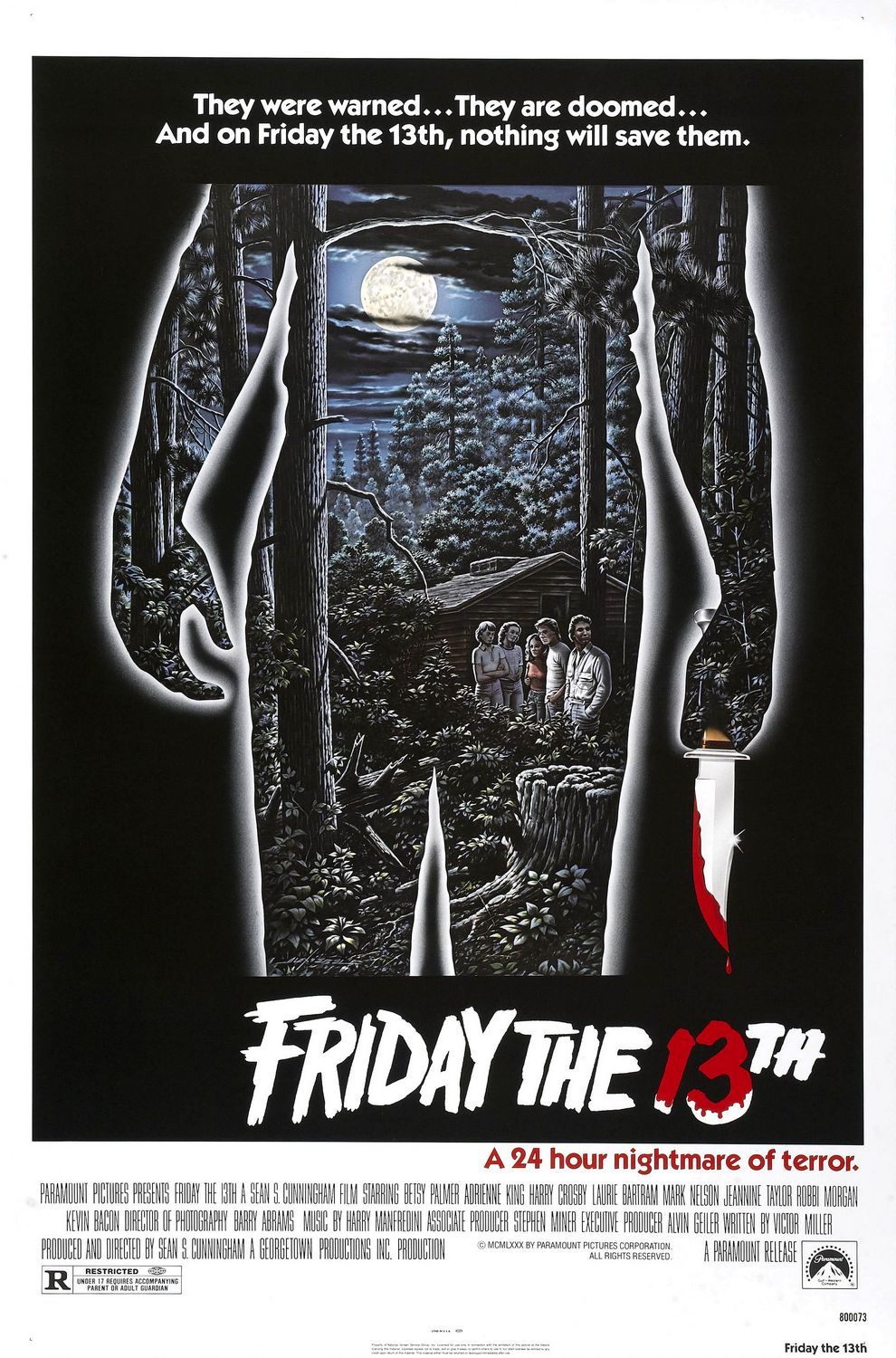
‘Friday the 13th’ May Be No ‘Halloween,’ But it is Better Than the Average Slasher Movie

Friday the 13th movie poster

Look, no one is going to mistake any “Friday the 13th” movie for cinema at its best. It started out as a rip off of “Halloween” with a little bit of “Psycho” thrown in for good measure, and it soon became a never-ending franchise which, to this day, still won’t die. We had two of the sequels with the word “final” in them, and each turned out to be a flat out lie. Just when it looks like this franchise has breathed its final breath, it is resurrected once again. Perhaps the world is overpopulated with too many horny teenagers who need to be dealt with in a messy way. In the end, these films touch on our deepest fears and exploit them for all they are worth. We know they’re not good for us, but we can’t help ourselves and want to see what nasty crimes will be perpetrated next.

The “Friday the 13th” movies are essentially the equivalent of a fast food meal, the kind which has an obscene amount of cholesterol in them. You know it’s bad for you, but you keep coming back for more. It’s not just tapping into our deepest desires, but into our willingness to be bad and rebel against what our parents don’t like. Film critics never stopped attacking these movies and continually bashed them to pieces, and yet they made so much damn money on such low budgets. It represented horror being taken to the next level for the children of the 80’s. Our parents hated the movies, and that made us all the more curious about seeing them. Jason Voorhees eventually became as familiar to us as Santa Claus. I remember when “Friday the 13th: The Final Chapter” (LOL) came out when I was in the second grade, and none us had ever looked more forward to a movie none of us would be able to see (nor had we any business to). Yes, these slasher flicks bring back a lot of nostalgia for me.

The original “Friday the 13th” seems much better in retrospect. This is especially the case when you compare them to the sequels, let alone all the endless knockoffs, which came after it. What surprised me is how some of the murders which occur in this movie actually happen off screen. We have no idea they have occurred until we see the carnage put on display right in front of our eyes. It’s pretty vicious what is perpetrated in this film, and this was back when an arrow through an eye actually felt shocking. For the most part, “Friday the 13th” and a couple of sequels felt very real. You have to give the filmmakers credit because none of the slasher movies made today can’t even touch that feeling of reality. We all know we’re watching a movie when it comes to the sequels, but the original was experienced more than watched.

I’m sure we all know by now what Drew Barrymore should have known at the beginning of “Scream;” Jason was not the killer in this one. Instead, it was his mother, played in an over the top performance by Betsy Palmer. Mrs. Voorhees is basically what Norman Bates’ mother would have looked like, had Norman not have killed her off. Those moments where she is clearly schizophrenic and acting as if her son is actually telling her to kill people are both chilling and hilarious at the same time. This is far from a convincing performance, but Palmer is so much fun to watch in her deranged state to where it really doesn’t matter.

The cast of actors were basically hired not so much for their acting talent, but because they resemble, as director Sean S. Cunningham put it, those kids who came out of a Pepsi commercial. In many ways, this casting choice helped give “Friday the 13th” a stronger feeling of reality as they are people we recognize from our own lives. They are not models who have enhanced themselves with endless plastic surgeries (those would appear in the sequels). The ladies look very sweet and fetching, and the men look down to earth and not like those guys who spent way too much time at the gym.

“Friday the 13th” also was the movie which started the cliché of how if you have premarital sex with your boyfriend of girlfriend, you would die. The last person left standing was always a virgin, or the one too shy to ask a boy for a date. As a result, many people think there is some highly conservative Christian value system in place in these movies which one must follow in order to survive an experience with a masked maniac. Some will say Carpenter originated this with the original “Halloween,” but he made it clear in the DVD commentary he was not trying to spread religious dogma. Carpenter said the characters got killed because they weren’t paying attention, but ever since the first “Friday the 13th,” it’s been open season on kids who don’t practice safe sex.

There is also the crazy old man Ralph (Walt Gorney) who warns everybody of how they “are all doomed.” Of course, it’s always some crazy guy no one ever listens to. God forbid it’s some normal person people take the time to listen to. But if everyone were to believe this guy, then there would be no movie.

Of all the actors in this film, let alone the entire series, Kevin Bacon is the one who came out of it with the most successful career. “Friday the 13th” may not show off his best talents, but he does have one of the coolest death sequences in horror movie history. Bacon also gets to have one of the sweetest love making scenes any horror movie could ever hope to have. His character and his girlfriend actually do make love. It’s not one of those humping and pumping moments you can find in so many other movies where one person is doing all the work and the other is not having enough pleasure. It makes their inevitable deaths feel kind of sad. Even if we really wanted to see these two get bumped off, we don’t look forward to it.

Sooner or later, we were bound to see this movie because people couldn’t stop describing the more graphic moments in it. I remember my brother telling me about the scene where Kevin’s girlfriend does finally get it:

“You see her looking into the shower stalls and no one’s there. But while she is looking, you can see in the background the shadow of an ax being raised up. When she turns around, you can see the ax going into her face!”

My reply to this at the time was:

“Whoa! Cool!”

Then you have the unforgettable Harry Manfredini music score which basically sounds like Bernard Herrmann’s “Psycho” score on speed. Never have woodwind instruments been as thoroughly pummeled as they are here. This is not to mention the “chi, chi, chi, ha, ha, ha” sound (it’s actually “ki, ki, ki, ma, ma, ma”) which is so clearly identified with this undying franchise. When you hear it, you know Jason is not far away with a rusty machete in his grasp.

Cunningham is no John Carpenter, and he is a better producer than a director, but he does keep the suspense quota of “Friday the 13th” at a high level and generates a number of good scares. This one does not focus so much on the killings as it did on the messy aftermath. While you did see characters gutted in the most painful places imaginable, there were a couple of others you kept wondering about until you saw their bloodied corpses. The later sequels would get a little more creative with the murders.

* * * out of * * * *

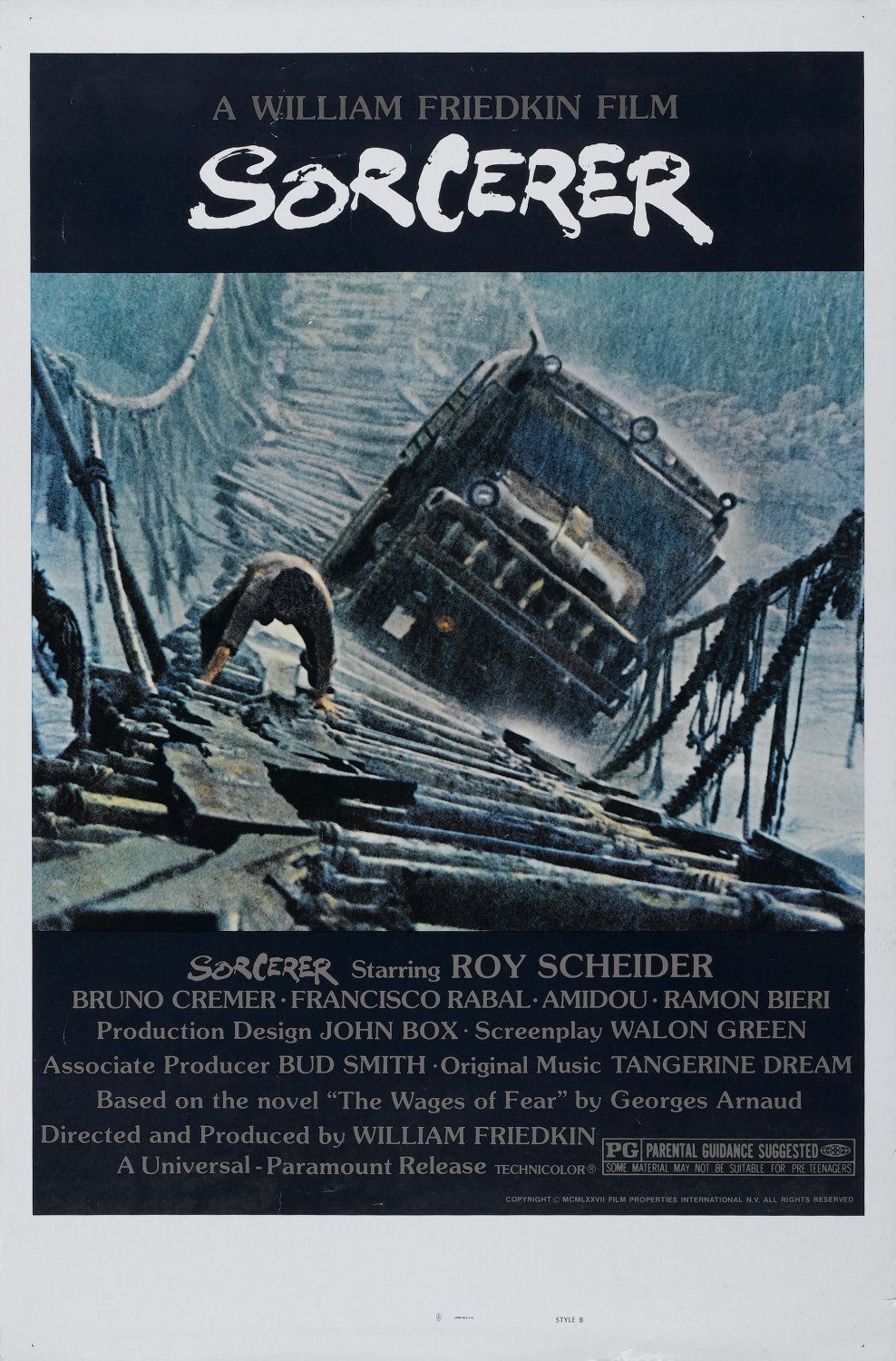
‘Sorcerer’ May Very Well Be William Friedkin’s Masterpiece

Sorcerer movie poster

This is the movie that almost completely destroyed filmmaker William Friedkin. “Sorcerer” came into theaters with a high level of anticipation, which was understandable as it was made by the same man who gave us “The Exorcist” and “The French Connection.” Lines were wrapped around the block when it opened at Mann’s Chinese back in 1977, but by the second week the theater was practically empty. “Sorcerer” was considered to be a critical and commercial failure, and Friedkin’s career has never been the same since. Of course, it opened around the same time as a small independent feature which blew away the competition. You may have heard of it, “Star Wars?”

Well, they say time heals all wounds, and “Sorcerer” has been critically re-evaluated to where it has received the critical acclaim it long deserved. The film is quite an accomplishment and a fascinating study in madness and redemption, and you will never look at truck driving the same way again after watching it. Depending on who you ask, it t is a remake of Henri-Georges Clouzot’s “The Wages of Fear” (Friedkin denies it is). The Oscar-winning director put his heart and soul into “Sorcerer,” and it pins you back into your seat and thoroughly exhausts you long before it ends. Like many great movies, it is one you experience more than watch.

“Sorcerer” takes its time getting started as we watch the back stories for its four main characters and of how they ended up at where they are. We meet hitman Nilo (Francisco Rabal) who takes down a target with a simple bullet, Kassem (Amidou) as he bombs a local church with the help of his friends, investment banker Victor Manzon (Bruno Cremer) who is about to be jailed for fraud, and then there’s Jackie Scanlon (Roy Scheider) who is marked for execution after his gang robs a church and accidentally kills a priest.

After this protracted prologue, the action moves to an unnamed location in a Latin American country which these four people have escaped to and seek refuge in. The utter squalor these men are forced to live in is so vivid to where it feels like the flies and stench of the environment doesn’t stop at the silver screen. You know how some people look at a movie and say it really made them want to take a cold shower? One shower is not enough to get past the filth these characters are forced to live in from day to endless day. This place is hell on earth for anyone, but these men obviously prefer it to death. They managed to avoid prison, but they came to a different kind of prison they are now ever so desperate to escape.

The chance for escape comes when an oil refinery suddenly explodes into a fireball, and the firefighters are unable to put the fire out without the help of explosives. Company executives manage to find a surplus of nitroglycerin sticks which can do the job, but the only catch is these sticks have not been turned and, as a result, have become highly sensitive and to where the slightest vibration could make them explode. So when an offer comes to drive this unstable set of explosives to the burning oil field for a high reward, these four jump at the chance to do the job. The rest of the movie follows their treacherous journey in trucks to deliver the explosives and hopefully not lose their lives in the process.

One thing I really admired about “Sorcerer” is how Friedkin dared to give us characters who were not altogether sympathetic. They are criminals of one kind or another, and yet we follow them every step of the way through their treacherous trip. Friedkin saw their incredibly dangerous journey as their chance not to just escape the filthy poverty they were stuck in, but also as an opportunity to redeem themselves for whatever bad deeds they committed. But their entire journey is a lot like sailing down the river Styx as they have to travel to through hell in order to escape it.

Friedkin does a great job of sustaining the tension as these men drive the trucks over terrain which looks like it’s on the verge of collapsing, and who encounter unwanted guests that have no idea of the cargo they are carrying. But the movie’s big action centerpiece is when they are force to drive the trucks over a suspended bridge which looks more than ready to completely fall apart. Add to that some furious rainstorms, and you have yourself one hell of a sequence which leaves you wrung out by the end.

Of all the actors in the cast, the most recognizable is Scheider. As a man on the run from the mob, he gives a performance which is never less than compelling, and you can only imagine the hell Friedkin put him through to play this role. The journey these men go on is not just dangerous physically, but also psychologically. Scheider does great work here as he is constantly on the verge of losing his mind, and this is especially in the movie’s second half.

Francisco Rabal, Amidou and Bruno Cremer are equally as good as they show the exhaustion and determination their characters have to complete this mission, and they too are put through the wringer to where they never seem to be acting their roles, but instead living them. You feel every bead of sweat which drips from their faces, and it makes “Sorcerer” even more of a visceral cinematic experience.

The imagery Friedkin captures is incredible as he shows us the squalor and unhealthy environment these characters live in so well, you can’t help but feel as trapped in it as they are. Friedkin has gone on record to say this film was the toughest for him to make, and I don’t doubt that for a second.

One of the other big pluses of “Sorcerer” is the brilliant score composed and performed by Tangerine Dream. Interestingly enough, they never saw a frame of the movie’s footage while working on the music, and yet they capture the events and psychology of the characters ever so perfectly. Like many of Tangerine Dream’s movie scores from “Thief” to “Risky Business,” this one is highly original and hard to compare to others. The soundtrack is still available on compact disc if you look hard enough for it.

After all these years, “Sorcerer” can no longer be mistaken as one of Friedkin’s misfires as it is now seen as one of his greatest cinematic achievements. It has since gained a strong cult following and is truly one of the most underrated movies of the 1970’s. It is unlikely we will ever get to see a movie made the way this one was ever again, and this makes it a must see for every and any film buff out there.

* * * * out of * * * *

‘Chappaquiddick’ Revisits a Tragedy No Kennedy Can Escape

Chappaquiddick movie poster

“They eat their wounded upstairs.”

Lieutenant Al Giardello tells Detective Frank Pembleton this on an episode of “Homicide: Life on the Street” to describe the politicians who have invited Pembleton to help them out on a delicate matter involving a congressman. So eager he is to impress his bosses, Pembleton suggests letting a police report get buried, covered up, and the Deputy Commissioner orders him to do so. But when this matter is made public to where a scandal erupts in the news, the Commissioner denies his own involvement and lets Pembleton take the fall. Pembleton has become one of the wounded as the higher ups in the department hang him out to dry, and we see what politicians will do to keep their political currency protected at all costs.

I kept thinking about this exchange while watching “Chappaquiddick” which takes us back to the year 1969 when Senator Ted Kennedy was involved in a car accident. While attempting to cross the Dike Bridge on Chappaquiddick Island in Massachusetts, his car went off the side and plunged into the water. Ted was able to free himself, but his passenger, Mary Jo Kopechne, remained trapped inside and eventually drowned. Ted failed to report this incident to the police until 10 hours after it happened, and we watch as his closest advisers look for ways to spin the story to their advantage as the scandal threatens to derail Ted’s political career and forever tarnish the image of the Kennedy family.

The car accident is presented in bits and pieces throughout because, as anyone who has been in an accident can tell you, no one remembers everything in a linear fashion. After the initial accident, the story jumps ahead to a soggy Ted Kennedy walking slowly back to the house where he, his advisers and secretaries were having a party. When his close friend Joe Gargan sees him shivering in the back of a car, Ted simply says, “I’m not going to be President.” From there, everyone goes into damage control mode as they try to get a hold of the narrative and manipulate it to where Ted will come out of this accident in one piece. But there is still a dead body in the center of this tragedy, and some in the inner circle are not about to let this fact go away.

It’s fascinating to watch the political spin machine at work in “Chappaquiddick” as this kind of press manipulation is a regular thing these days, but even back in 1969 the truth was not so easy to bend as the truth still found a way to the surface. Still, we feel the pressure of the press as Ted and company scramble to come up with an answer which will exonerate the Senator in the eyes of his constituents and America at large. There are scenes where his advisers come up with ridiculous scenarios to explain Ted’s actions, like getting a physician to explain how Ted suffered a concussion in the accident even though he isn’t given a chance to examine the senator. Then there’s the story about how Ted was put on sedatives because of his concussion, but a reporter points out how taking sedatives in this condition could easily kill him. And let’s not forget the neck brace fiasco which Ted didn’t even bother rehearsing. There was no Facebook or social media back then, but there was still enough attention paid to where Ted could not walk away from this tragedy unscathed.

At the center of “Chappaquiddick” is Jason Clarke who portrays Ted Kennedy. Many actors could have easily fallen victim to simply playing the late senator as the icon we all see him as and saddle themselves with an accent which makes them sound like Mayor Quimby from “The Simpsons.” Clarke never falls into any of those traps and instead makes Ted as human as anybody else, full of flaws and passions which at times get the best of him. It’s a wonderfully complex performance as Clarke shows how Ted worked to control how the news of this tragedy coming out while wrestling with a conscience that will not let him escape the guilt he feels. Just watch Clarke as he phones Mary’s parents to inform them of her death. It’s a heartbreaking moment, and not an easy one to pull off.

Special mention goes to Kate Mara who plays Mary Jo Kopechne. It’s a small role, but Mara makes the most of her time onscreen as she forces us to see Mary as much more than a mere historical footnote. We learn Mary was a devoted supporter of Bobby Kennedy and his values, and she desperately wants to believe Ted can deliver on the same promises Bobby made before he was killed. This makes her final onscreen moments where Kate is desperately keeping her head above water as she hopes for a miracle which never comes. Whether or not you knew of Mary Jo’s existence before this movie, Mara’s performance ensures we never forget her once we leave the theater.

Indeed, the entire cast of “Chappaquiddick” is well chosen as each actor inhabits their role with a lot of passion and energy which makes this more than the average biopic. Ed Helms and Jim Gaffigan get to break free of their comic roles here as Joe Gargan and Paul Markham, two of Ted Kennedy’s closest advisers who are desperate for him to get his story straight before he does even more damage to his image. Helms is especially worth singling out here as he makes Joe the conscience Ted desperately needs to pay attention to, and whether or not Ted does is not worth revealing here as you have to look into Helms’ eyes to see what the answer is.

One truly brilliant performance worth singling out here comes from Bruce Dern who gives an almost wordless performance as Joe Kennedy, the patriarch of this famous family. When we meet Joe, he has long since become hobbled by a stroke and aphasia, and this makes Dern’s work all the more challenging as he has to express things to the audience without the use of words. The final scene he has with Clarke is brutal as the frustrations and disappointments these two have with one another come to their breaking point.

It’s great to see Clancy Brown here as the no-nonsense Secretary of Defense Robert McNamara as he cuts through the bull to make sure the narrative runs as smoothly as possible for the incumbent senator. From the first moment he appears onscreen, the “Highlander” actor shows the audience he means business as McNamara moves quickly into damage control mode and freaks when the most thoughtless of mistakes are made by subordinates.

Olivia Thirlby also shows up here as Rachel Schiff, another loyal Kennedy secretary and close friend to Mary. It’s fascinating to watch Thirlby here as she takes Rachel from being totally devastated upon learning of her friend’s death to racing into damage control mode. Whatever you may think of her actions, Thirlby shows how devoted she is to the Kennedy family as she feels the country cannot suffer over one person’s mistake.

Also worth mentioning is Vince Tycer, a noted theater director in Connecticut, who plays David Burke, an individual known as a aide to powerful men. It’s fascinating to watch Tycer in “Chappaquiddick” as he hovers in the shadows next to Ted Kennedy and looks ready to defend the senator’s honor in any possible way. This is another character who could have been played in too broad a fashion, but Tycer plays David in a thoughtfully subtle way as this is a character who is more than willing to set aside his own thoughts and desires for something he considers to be the greater good.

“Chappaquiddick” was directed by John Curran who previously helmed such movies as “The Painted Veil” and “Tracks,” and he wrote the screenplay for Michael Winterbottom’s highly controversial “The Killer Inside Me.” Curran gives this film an underplayed feel as he wants us to see these characters not as historical figures forever defined by their public images, but as people like you and me. The more we see ourselves in these characters’ shoes, the more we get sucked into the story to where this becomes more than your average biopic or just another movie which is (sigh) “based on a true story.”

The only real problem I had with this movie was it felt a little too underdone to where an infusion of energy could have come in handy. I kind of wish Curran had livened up the proceedings at times, especially when it came to watching the walls close in on Ted. There is passion on display here, but that passion could have been stronger in retrospect.

Regardless, “Chappaquiddick” proves to be a fascinating look into the broad scope of political power and at the life of a man born into privilege who uses it to escape a harsh punishment with his career mostly intact. Ted did go on to become the “Lion of the Senate” as he fought long and hard for social justice and universal health care, but I left this movie wondering if his actions were taken to atone for his part in Mary Jo’s death. In the eyes of many Americans, he earned his forgiveness, but a closeup of Clarke’s eyes in this movie’s final moments suggests Ted never fully forgave himself. Did he truly earn a redemption in the years following this accident? We may never truly know, and this makes “Chappaquiddick” especially haunting.

* * * ½ out of * * * *

‘Take Me to the River’ Dives Right Into the Deep End

Take Me to the River poster

I came into “Take Me to the River” with little knowledge as to what the movie was about, and perhaps this is the best way to approach it. At first it looks to be a tale of a gay teenager dealing with his conservative relatives who have yet to understand how human nature really works, but then it takes a sharp left turn to reveal it is really about deep dark family secrets which are revealed in a wordless way, and the psychological impact it ends up having on its audience is far more profound than we could have ever seen coming.

We are introduced to Ryder (Logan Miller), a gay California teenager who is going with his mom Cindy (Robin Weigert) and dad Don (Richard Schiff) to a family reunion in Nebraska. Ryder is intent on revealing his sexuality to everyone there, but his parents encourage him not to. Shortly after he arrives, he is treated with suspicion from others as his red shorts look like a pair of swimming trunks and his glasses resemble something which came out of the 1980’s. His cousins, however, are crushing on him as he makes them special drawings, and they find him wonderfully rebellious. But then things go awry during a moment between him and 9-year-old Molly when she comes out of a barn with a bloodstain on her dress. Ryder is immediately suspected of abuse by his uncle Keith (Josh Hamilton), but he makes clear he didn’t do anything to her.

Now revealing more about “Take Me to the River” from there is a bit tricky because it is better not to know too much about the movie beforehand. For a time, I thought I knew where the movie was going to go, but then it becomes more like a thriller. This is especially the case when Ryder is invited to a supper with Keith and his family where Keith looks to make amends with him, but his laser-like stare indicates he has something quite devious planned for his nephew, and we are just as in the dark as Ryder is.

This movie marks the feature film directorial debut of Matt Soebel who also wrote its screenplay, and he does an excellent job of putting us right in Ryder’s shoes. Like Ryder, we have little idea of what’s going on and it leaves us with an inescapable feeling of dread.  And like “The China Syndrome,” it doesn’t have, or even need, a music score to underscore the tension which continually builds up. We don’t really hear any music until the very end, and when that final song comes on, I felt like breathing a sigh of relief as the tension finally lifted.

This is also a motion picture which derives its power from what is not said more than what is. Soebel is not interested in spelling everything out to us as our imaginations are capable of generating things far more frightening, and when the story comes to hint at a deep dark family secret, we cannot help but be unsettled at what that secret could be.

But as much as “Take Me to the River” sounds like a thriller, it is also a coming of age story as Ryder comes to better understand the people around him and develops a stronger compassion than he ever had before. The fact he is gay eventually becomes a tiny issue as their bigger things to undercover which has left his family members with very nasty emotional scars. This is saying a lot because many coming of age movies don’t come constructed like this, and it makes this one all the more unique.

I was very impressed with Miller who left a strong impression on audiences in “The Stanford Prison Experiment.” We never catch him portraying a typical teenager, let alone a gay teenager, but instead a regular kid who is caught up in a situation he can’t stay one step ahead of. I also liked Hamilton’s performance as Keith because it shows him to be quite the poker player. But the most impressive performance in “Take Me to the River” comes from Robin Weigert as Cindy. At first, she makes Cindy an overprotective mother, but her actions come to reveal someone who has suffered a serious trauma she can never fully make peace with. Weigert, just with a look, shows us how deep her emotional scars go, and it’s always impressive to see any actor pull this off without having to spell it out for the audience.

There’s always something to be said for a movie which catches you by surprise, and “Take Me to the River” is certainly one. I went into it not knowing much about it, and it took me on a ride unlike few others I have been on in recent years. In a time where movies are bound by formulaic standards and studio executives who are hell bent on starting the next big franchise, it’s nice to know there are still filmmakers out there making movies which go against the grain. Not everything can be the same, and in the end, everyone needs some variety as they can get easily bored.

If you love movies which break the mold, then “Take Me to the River” is one you need to check out. When it comes to humanity, there’s always something more to a person than meets the eye. While you might think individuals can be easily divided into groups of people you feel you can easily identify, this movie comes around to remind you this it is not as easy as you think. Family secrets are never easy to unveil, and this movie serves as a reminder as to why. I look forward to what Sobel has in store for us next.

* * * ½ out of * * * *