‘Booksmart’ is an Instant High School Movie Classic

Booksmart movie poster

Looking back at my high school days, I wonder if I got into enough trouble as a kid. I was a good kid for the most part, a pretty good student, and was and still am a firm believer in karma. Still, a lot of my fellow classmates who constantly got into all kinds of mischief, some of which involved police involvement, seem to be doing much better in life than me. The other day, I read an article about how the kids who were really into heavy metal back in the 1980’s have since turned out to be well-adjusted adults. Perhaps if I had discovered Metallica in elementary school instead of high school, I would feel well-adjusted as well. Besides, neither Megadeath nor Motley Crue came even close.

I bring this up because these thoughts went through my head as I watched “Booksmart,” an American coming of age comedy which has at its center two females who have been best friends since childhood and are now one day away from graduating high school. They have been model students, paid far more attention to their studies than partying, and they have since been accepted to some of the best colleges America has to offer. But with one day of high school left, they begin to wonder if they haven’t fooled around enough in the past four years. What results is a film which has been described as a female “Superbad,” and it is one of the best coming-of-age films I have seen in some time.

It is made clear from the start how best friends Molly Davidson (Beanie Feldstein) and Amy Antsler (Kaitlyn Dever) have spent more time studying these past four years than they have getting wasted every other weekend. Molly is the student body president, but she is nowhere as popular as the vice-president, Nick Howland (Mason Gooding), who only went for the position because it involved planning parties. Amy came out as gay two years ago, and she is harboring a huge crush on fellow classmate Ryan (Victoria Ruesga) which could go unrequited. But while they have accomplished so much, these two young women are typically spurned by their fellow classmates as being too pretentious.

Molly ends up convincing Amy to go to Nick’s party, the biggest end-of-the-school party of all, after she makes a shocking discovery. While she and Amy have gotten into good schools, Molly discovers her fellow classmates who looked to have been partying their scholastic years away have also gotten accepted to prestigious institutions as well. How is this possible? Well, Molly isn’t sure, but she sees this party as their last chance to have the fun they somehow denied themselves during their time in high school.

Like many great movies, “Booksmart” isn’t so much about the destination as it is about the journey. Molly and Amy’s determination to get to Nick’s party is quickly thwarted by the fact they have no idea where it is. As a result, they are forced to endure detours to other parties they did not plan on going to, cell phones which are quickly drained of all their energy, and teachers who either have unexpected side jobs or have forever sworn off drinking certain smoothies from Jamba Juice.

“Booksmart” marks the feature directorial debut of Olivia Wilde, an actress as strikingly intelligent as she is fiercely beautiful. She has said “The Breakfast Club,” “Fast Times at Ridgemont High,” “Dazed and Confused” and “Clueless” served as inspirations for this film, and she has taken the best parts from each of them and created something which feels wonderfully unique. It has many laughs and heartbreaking moments which we can all relate to as, regardless of the advances in technology, our high school years were always emotional battlefields which left us with psychic scars which never fully heal.

Along with a cleverly crafted screenplay by Emily Halpern, Sarah Haskins, Susanna Fogel and Katie Silberman, Wilde takes the time to explore the various personalities high school has to offer, and of the cliques they have long since been consigned to. But as the story goes on, these same individuals get a chance to peel back the façade given to them by their classmates to where we see people trying to survive these rough and tumble years as rumors about their supposed behavior still spread like wildfires which can never be easily put out. It’s moments like these I always cherish in high school movies as no one is ever what they appear to be on the surface, and this is what I think “Booksmart” is truly about; looking past what you think you see to discover what is really there, and making us see we are all the same.

Both Davidson and Antsler are perfectly cast as Molly and Amy to where they make you believe they have been best friends forever. We root for them as they look to live their last night as high schoolers to the fullest, and we feel for them as they eventually realize they may never see each other again for the longest time after this year is over. And yes, the two have a tense confrontation when they reveal truths which should have been confronted ages ago, and Wilde sticks the knife in deeper by muting their conversation as the looks on their faces is enough to illustrate the painful truths and grudges which have now forced their way to the surface.

Another memorable performance comes from Billie Lourd as Gigi, a gleefully blissed-out individual who somehow shows up at every high school party Molly and Amy are at. She is a riot throughout and inhabits her character with such wonderful abandon to where I believe Silberman when she said extra scenes were written for Lourd as everyone was really impressed with her performance.

In addition, there are some nice cameos from Will Forte and Lisa Kudrow who play Amy’s parents and have prepared a dinner with food names which need to be heard to be fully appreciated. Jason Sudeikis has some choice moments as school principal Jordan Brown who shows up unexpectedly throughout the film. And Diana Silvers has some strong scenes as Hope, a seemingly mean school girl who eventually lets her poker face down.

Wilde also has wonderful collaborators in Dan the Automator who composed the energetic film score, and cinematographer Jason McCormack who gives the visuals a reality we can relate to as well as a fantastical quality when our heroines slip into their imaginations to where one dance sequence looks like it was shot by Benoît Debie.

“Booksmart” arrives in theaters one year after “Eighth Grade,” a film about the worst year in our lives. “Booksmart” isn’t quite as brutal as it takes place in a time when the divisions between teenagers begin to disappear as they are all about to advance to another, and more vulnerable, stage in their lives. Still, it proves to be as entertaining, thoughtful and at times as heartbreaking. While it may invite easy comparison with “Superbad,” it is by no means a gender reversed remake of it. I don’t know how many out there think it is, but it is worth pointing this out here.

In a time when summer blockbusters and superhero movies reign supreme at the box office, a movie like this can get buried too easily. Here’s hoping “Booksmart” gets the audience it deserves in one way or another. And after you have watched it, you will agree that panda bears will never, ever be the same.

* * * * out of * * * *


‘Toy Story 3’ Concludes an Ever so Brilliant Pixar Trilogy

Toy Story 3 movie poster

I could never bear to give my stuffed animals away. They were a huge part of my childhood, and the thought of letting them go forever seemed so horrifying. Society expects you to give up on little dolls and stuff as you become an adult, and I honestly find that to be kind of bogus. Am I really supposed to stop playing with these plush friends of mine because society expects me to? Am I supposed to permanently kill off the childlike wonder inside of me so I look normal and hopelessly embittered like everybody else? Doesn’t this seem cruel?

In the end, I didn’t need to give my stuffed animals away. They got eviscerated by a rat that ended while they sat in a trash bag in the family garage. The rat wanted their stuffing, and he (or she) left behind a lot of rat poop which had to be disposed of carefully because it spreads disease. However, all the Eeyores I have collected over the years were fine as they continue to get preferential treatment ever since I got my first one back in the 1980’s.

It was inevitable these cuddly friends of mine would never get the same amount of attention as the years went by. The dilemma of what to do with these things we grew up with brings about strong emotions and uncertainty, and this is what Andy faces in “Toy Story 3.” Coming 11 years after its predecessor, young Andy who had given much love to these toys is now a young adult about to start college. His mother tells him he can either donate his toys to a nearby daycare center, or they can just go up in the attic. Despite Andy not having played with them in years, he is reluctant to let his toys go.

The majority of the toys from the first two “Toy Story” movies are back including Woody, Buzz Lightyear, Jessie, Rex, Slinky Dog, Mr. & Mrs. Potato Head, Bullseye and Hamm who has always been one of my favorites. Many, however, have since been donated or thrown out including Woody’s girl, Little Bo Peep. So, while Andy clearly has favorites among the toys he grew up with, it doesn’t make them feel anymore safe now that he is leaving home.

Woody (Tom Hanks) tries to keep the other toys’ spirits up even as he reminds them they knew this day was coming and that they might as well make the best of things while preparing for attic mode. However, an error occurs which has them getting donated to the nearby Sunnyside Daycare Center. At first, the toys don’t feel too bad because they are back in a position where they get to be played with on a regular basis. But despite the warm welcome from other toys, it quickly turns into their worst nightmare as they deal with kids who are not nearly old enough to take care of them. Instead of treating them with love, they get flung all over the place like they were frisbees, painted on, and contorted into positions which would make us cringe uncontrollably. Remember the scene from “Close Encounters of the Third Kind” where one of Richard Dreyfuss’ children smashes a baby doll to smithereens? Jessie, Buzz Lightyear, Mr. and Mrs. Potato Head and others get it just as bad here.

Now the third movie in a franchise is typically where a series goes off the rails or “jumps the shark” as some would say. After bringing something fresh and original to audiences everywhere, filmmakers end up relying on the formula which made the previous two movies so good. As a result, number three can come across as a regurgitation of our favorite moments to where it rings hollow because, even if they presented the characters in a slightly different context, it’s still the same old thing. The realization of this is always disheartening and depressing.

I’ve got good news though; “Toy Story 3” manages to escape this unfortunate trap and it proves to be just as inventive, imaginative, funny and heartwarming as its brilliantly made predecessors. Once again, Pixar shows they are not willing to rest on their laurels, and they keep their focus on the story as always.

When I was young, I always loved to believe my stuffed animals had lives of their own and did things I was never a witness to. I could see them taking out the Chevy Suburban my family used to have while the rest of us slept at night. To think they would be comfortable for the rest of their existence just sitting in my room didn’t seem particularly fair, and they deserved a night on town and a few beers. The great thing about the “Toy Story” movies is they understand how far our imaginations can go with this belief, and they play upon it in ways which are hilarious and endlessly entertaining.

Tom Hanks, Tim Allen, Joan Cusack and the always dependable Pixar regular John Ratzenberger among others are back voicing their beloved characters. Slinky Dog, originally played by the late Jim Varney, is voiced here by Blake Clark, and he makes the transition almost perfectly seamless.

We also get to see Barbie (Jodi Benson) with her biggest role in any of the “Toy Story” movies to date as she finally gets to meet the man of her dreams, Ken (Michael). Director Lee Unkrich and screenwriter Michael Arndt have a lot of fun playing around with the Ken we think we know, and they love hinting at the kind of person we think he might be. It’s funny to think Mattel didn’t want anyone touching Barbie when the first movie was made, and now it is unthinkable not to include her.

One of the prominent new characters in “Toy Story 3” is a strawberry scented bear named Lots-O’-Huggin’ Bear, but he’s called Lotso for short. Pixar always makes ingenious casting decisions in regards to the actors they pick, and casting Ned Beatty as the voice of Lotso is further proof. This cuddly and stain resistant teddy bear looks warm and affectionate, and Beatty’s voice makes us feel at home when Lotso first appears onscreen. But Lotso soon turns out to be a deceptive toy who thinks nothing of sacrificing the stronger toys to toddlers who are quicker to destroy than love them. All of what Lotso does here is powered by his feeling of resentment over being forgotten and quickly replaced by his owner. Now he manipulates the daycare center so he can live in comfort while the other toys suffer helplessly.

In terms of movies this sequel satirizes, it combines elements of “The Great Escape” and “Mission: Impossible” to show how challenging it will be for Woody and the gang to break out of Sunnyside. All the various descriptions of how closely guarded like a fortress this seemingly harmless place is leads to one brilliant moment after another. The one toy which gets chosen to watch over the surveillance cameras is an act of genius.

Now if you have already seen the trailer, you know one of the big set pieces in “Toy Story 3” comes when Buzz Lightyear gets reset and goes into Spanish speaking mode. Seeing him woo Jessie with his smoldering dance moves as if he were Ricky Martin or Antonio Banderas had everyone in the audience young and old laughing uncontrollably. The Gypsy Kings also perform a very cool cover of Randy Newman’s song “You’ve Got A Friend in Me,” and this version alone makes me want to buy the soundtrack.

And yes, Randy Newman returns to do the music score for a Pixar movie for the first time since “Monsters, Inc.” Once again, he captures the innocence of childhood and the exciting world these toys inhabit while also capturing the bittersweet emotions which bring this movie to a very emotional climax.

Of all the “Toy Story” movies, this one is easily the darkest as we see these toys get subjected to places which they should not come out of unscathed. Plus, these toys are at the endgame stage as they will soon part with Andy in one way or another. The ending of this one will almost certainly bring tears to the eyes of many as Andy talks to a shy little girl about his toys and Woody in particular. We’ve all grown up with these characters since the 1990’s, so we cannot help but feel like Andy in how we end up leaving certain things behind even if it breaks our heart.

“Toy Story 3” does what every Pixar movie does best; it entertains and enthralls the audience no matter what age they are. With this tremendous sequel, Pixar has completed another trilogy which will stand as one of the best in cinematic history, and they come around full circle with this adventure of Woody and Buzz, the characters who started it all for this animation company. They continue to push creative boundaries with all they do, and their enviable track record both creatively and financially is more than deserved. More power to them!

When this movie is over, you will know what a Lincoln Log looks like and what it doesn’t look like. Knowing the difference is important if you want to keep yourself from gagging!

* * * * out of * * * *


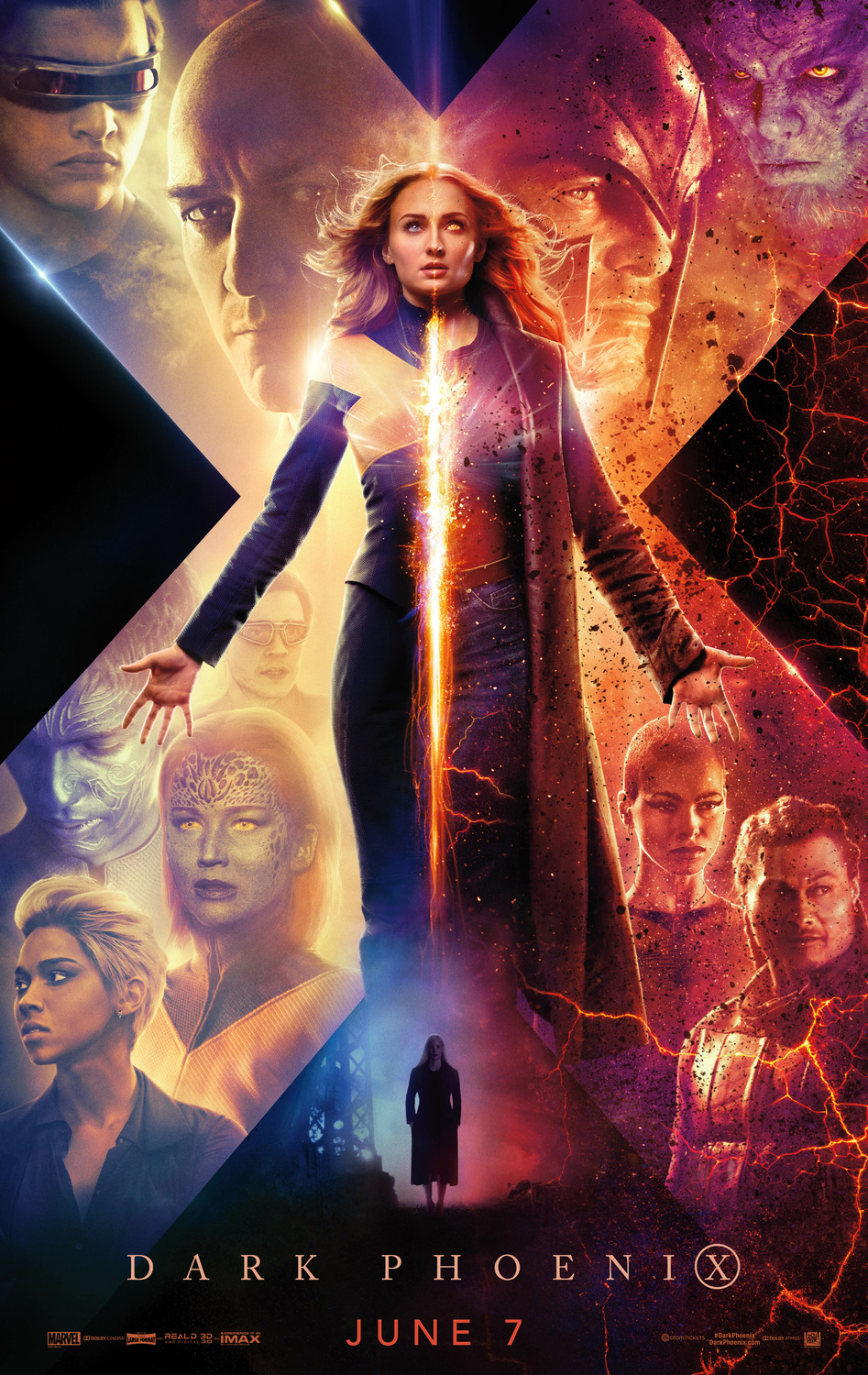
‘Dark Phoenix’ is the Worst ‘X-Men’ Movie Yet

Dark Phoenix movie poster

“X-Men: The Last Stand” has long been treated as the bastard stepchild of the “X-Men” franchise. The Brett Ratner-directed take on “The Dark Phoenix Saga” was sharply criticized by both fans and critics, and it took quite the beating from everyone it seemed including Bryan Singer who left the “X-Men” franchise to direct “Superman Returns,” and Matthew Vaughn who was set to direct this one before dropping out. “X-Men: Days of Future Past” helped wipe the slate clean by altering the timeline to where the events of “The Last Stand” no longer existed. And let’s not forget the scene from “X-Men: Apocalypse” where characters were walking out of “Return of the Jedi” which they felt paled in comparison to “The Empire Strikes Back,” and Jean Grey ends up saying, “Well, at least we can all agree the third one’s always the worst.” Please do not try to convince me this was not a jab at “The Last Stand.”

Now we have “Dark Phoenix,” the twelfth installment of the “X-Men” franchise, and it aims to give audiences a more faithful adaptation of “The Dark Phoenix Saga.” It also marks the directorial debut of Simon Kinberg, a long-time screenwriter in this franchise and someone eager to make up for the mistakes made in “The Last Stand.” With this being the last installment of the 20th Century Fox-produced “X-Men” franchise now that Disney owns Fox and plans to incorporate these characters into the Marvel Cinematic Universe, this one has to be the penultimate sequel of the bunch, right?

Nope, not a chance. With “Dark Phoenix,” Kinberg has given us the worst “X-Men” movie yet. While has a strong cast and excellent special effects to work with, the narrative is badly conceived, the screenplay is muddled, characters actions are ill-defined, and it features the blandest set of villains this franchise has ever had. While these movies have in general proven to be tremendously entertaining, I walked out of this one feeling very indifferent to it as the whole project feels inescapably dull and anti-climatic.

It’s a real shame because “Dark Phoenix” gets things off to a good start as we learn how Jean Grey came to be more or less adopted by Charles Xavier (James McAvoy) after her mutant powers inadvertently get her parents killed in a nasty car accident. From there, the story moves to 1992 when the X-Men fly into outer space to rescue astronauts after their space shuttle is damaged by a solar flare. But in the process, Jean Grey (played by Sophie Turner) absorbs the solar flare in her body and looks to have been killed. But after being rescued, she appears to be just fine, and soon she realizes her psychic powers have been amplified to an infinite degree. It’s like the scene in “Wolf” where Kate Nelligan wakes up Jack Nicholson after he’s been asleep for 24 hours. She asks how he is feeling and Nicholson, with a Cheshire cat grin, replies, “I feel ah… Good!” Yes, and so does Jean until the two separate personalities within her begin to fight with one another and leave a lot of damage which will have insurance agents scratching their heads in disbelief.

From there, everything in “Dark Phoenix” feels routine to the point where I got increasingly weary while watching it. We have been done this road before in the “X-Men” franchise before, and Kinberg fails to bring anything new or fresh to this material. This installment also lacks the powerful emotion which made the best “X-Men” even more enthralling than they already were. A major mutant character is killed off in this one, but this death was already spoiled in the trailers to where the loss feels hollow.

Jennifer Lawrence, who returns as Mystique, does have one good scene in which she chews out Professor Charles Xavier for getting caught up in all the celebrity hoopla foisted upon the X-Men for their heroic efforts they have done. She is quick to remind Charles how the women have at times been the most heroic of the bunch to where she wonders if X-Men should instead be called X-Women. Yes, score one for the Me Too and Time’s Up movements!

Other than that, Lawrence and other actors like Nicholas Hoult and Alexandra Shipp, both of whom return as Beast and Storm, don’t look terribly interested in reprising their roles. Things get even worse as alliances keep shifting back and forth and in ways which seem completely contrived. There was also plenty of laughter throughout the press screening I attended, and I have no doubt most of it was unintentional.

Then there are the villains of this piece, the D’Bari who are a shape-shifting alien race intent on obtaining the power Jean Grey now has. They are led by Vuk (Jessica Chastain, completely wasted here), and they are some of the most banal antagonists in recent cinema history. All of them look as though the life has been completely sucked out of their bodies to where I can’t help but say they each had too many Botox treatments. This alien race leaves very little to the imagination, and they are far from memorable.

Coming out of “Dark Phoenix,” I spent a lot of time wondering how something which came with a lot of promise could have gone so terribly wrong. It also makes me feel sorry for Kinberg as I have no doubt he came into this project with the best of intentions, but the road to hell is always paved with them. Everything here feels very tired and ill-thought, and having Magneto (Michael Fassbender) come back into the action after someone close to him has been killed made my eyes roll as this has always been the case with this character. Didn’t Magneto learn anything from the previous two installments?

What also infuriated me is that “Dark Phoenix” does not provide Quicksilver (Evan Peters) with a rescue scene set to a classic 1990’s song. “Days of Future Past” had this supersonic character saving his fellow mutants to the 1970’s song “Time in a Bottle” by Jim Croce, and “Apocalypse” had him doing the same thing to the tune of the Eurythmics’ 1980’s classic “Sweet Dreams (Are Made of This).” I came into “Dark Phoenix” expecting Quicksilver to do his hypersonic rescue thing to a 1990’s classic song, but no such luck. It could have been something by Nirvana, Pearl Jam, Soundgarden or perhaps Nine Inch Nails (“Head Like a Hole” would have been a great choice). Heck, they could have even used “Dyslexic Heart” by Paul Westerberg.

It’s no secret of how troubled the production of “Dark Phoenix” was. Thanks to poor test screenings, the entire third act had to be reshot. Its release was delayed a number of times as a result, and even though Kinberg describe the reshoots as being a “normal” process for any movie, none of them helped to salvage the cinematic mess we have here.

This is also the first “X-Men” movie not to feature Hugh Jackman as Wolverine as he had played the character for the last time in “Logan.” Indeed, Wolverine is the missing link here as his romance with Jean Grey gave the story much of its emotional power. This same level emotion is seriously missing here as we reach a conclusion which is never really in doubt. Then again, having Jackman romancing Sophie Turner would have seemed a bit strange.

For the record, I liked “The Last Stand,” but I have also never read the Marvel comic books it was based on. Had I done so, perhaps my feelings on Ratner’s film would have been different, but I still found it to be an entertaining ride from start to finish and with emotion to spare. Even if it paled in comparison with the first two “X-Men” movies, it still fared much better than the prequel which came after it “X-Men Origins: Wolverine,” and I did not care for that one much. While I know fans and filmmakers were eager to see a more faithful adaptation of “The Dark Phoenix Saga” come to fruition, the fact this is a complete failure makes it a stunning disappointment and the first real letdown of the summer 2019 movie season. Fans of the franchise will still go out to see “Dark Phoenix,” but the most fun they will have is in analyzing everything wrong with it.

My only hope with “Dark Phoenix” now is that it can drum up interest in the long-delayed stand-alone “X-Men” movie, “The New Mutants.” That one has seen its release delayed for over two years, and 20th Century Fox can only hide it next to the Lindberg baby for only so much longer.

* ½ out of * * * *

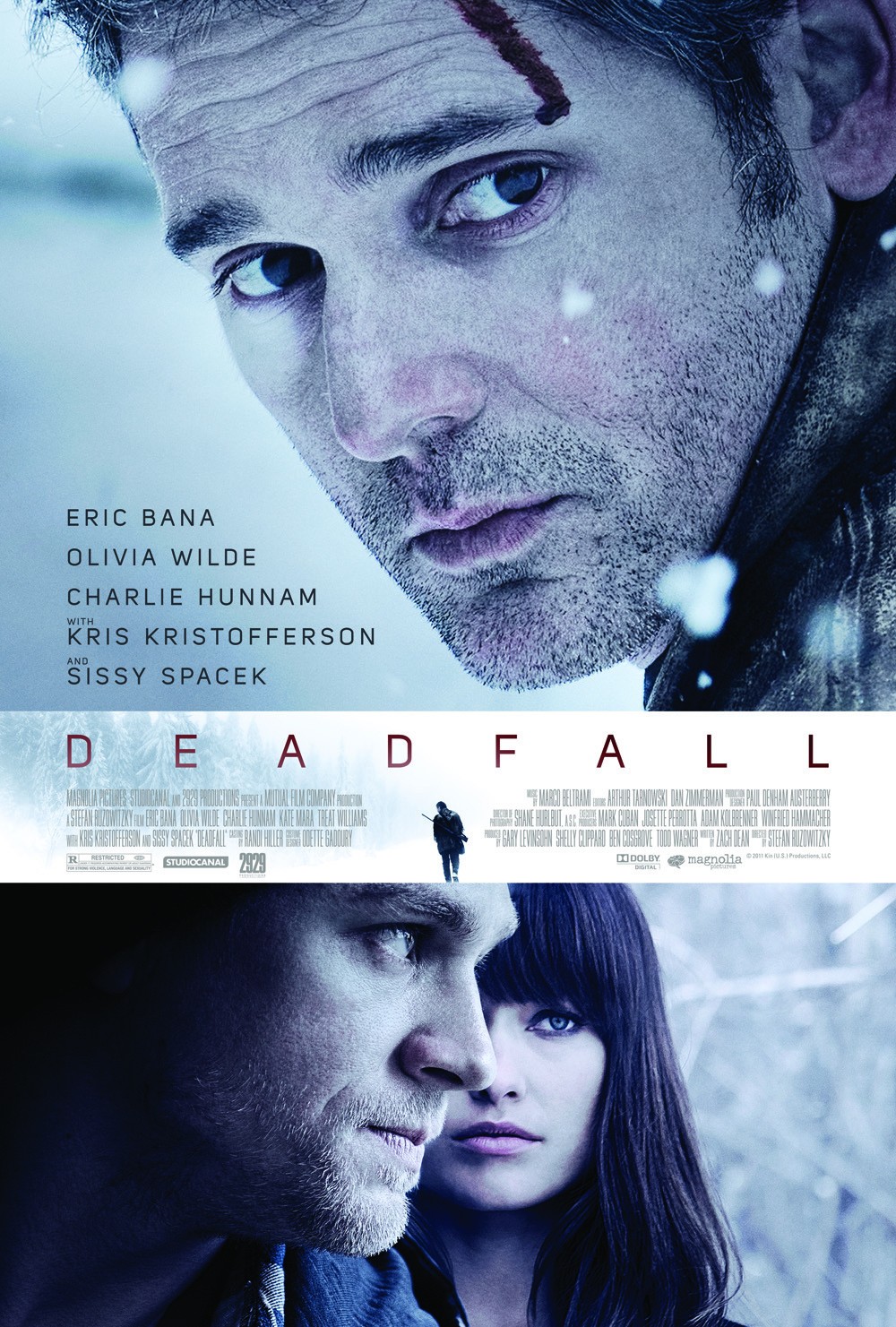
‘Deadfall’ is an Effective Thriller with Strong Performances and Beautiful Cinematography

Deadfall movie poster

Deadfall” is a riveting thriller which held my attention from beginning to end, and sometimes that’s all I ask of certain movies. This one came out under the radar back in 2012, premiering on VOD first and then debuting in a few theaters, and it is no surprise in didn’t catch on with audiences as a result. But while it may not break any new ground in the crime drama genre, and I did have a couple of issues with the script, I did admire the performances from the entire cast. Also, director Stefan Ruzowitzky does strong work in keeping the level of tension high throughout the proceedings, and this is enough for me to give the movie a solid recommendation.

“Deadfall” opens with Addison (Eric Bana) and his sister Liza (Olivia Wilde) driving through a snowy landscape while on their way to the Canadian border. They have just robbed a casino which didn’t go exactly as planned (things like that never do), and their situation gets even more precarious when their car crashes which forces them to split up. The car crash which opens the movie is a hair raiser and pretty nasty, and it reminded me of how deer are more fascinated with oncoming headlights than they have any right to be.

Meanwhile, Jay (Charlie Hunnam) has just been released from prison and is contemplating the possibility of meeting up with his parents June (Sissy Spacek) and Chet (Kris Kristofferson) for Thanksgiving dinner. But things get bad for him as well after he accidently injures a former colleague severely, and he ends up on the run rather than run the risk of going back to jail. While driving through blizzard conditions he comes across Liza who is shivering due to the lack of warm clothes, and he quickly saves her from freezing to death. From there, you know all these characters’ paths will eventually cross with one another by the movie’s end.

The first thing I want to point out is how beautiful the cinematography in “Deadfall” is. It was shot in Canada and director of photography Shane Hurlbut does incredible work in capturing the snow’s beauty as well as how unforgivingly punishing it can be. Even as I watched this in a very nice air-conditioned screening room, I found myself wanting to put my jacket on. This became even more so while watching poor Olivia Wilde walk through a blizzard while wearing a miniskirt. After watching her in “Deadfall,” you cannot say she is not brave actress.

As for the performances, the best one was given by Eric Bana as Addison. The actor has left an indelible impression on us in movies like “Chopper,” “Black Hawk Down” and “Munich,” and he makes Addison a very charming bad guy. There should be no doubt in anyone’s mind that Addison’s a psycho and someone we would all be best to keep our distance from but you can also understand why some of the characters in “Deadfall” hang out with him a lot longer than they should. Bana proves to be very unpredictable in the role, and you can never be sure at certain times if he’s going to be naughty or nice.

Wilde also delivers a strong performance as Liza, and she once again proves what a fiercely intelligent actress she is. Throughout “Deadfall,” we watch as she takes Liza from seeming like a lost girl to becoming a person whose confidence in their self continues to build. The relationship Liza ends up developing with Jay helps start the process of freeing her from Addison’s Svengali hold, and Wilde creates a fascinating portrait of a woman who manages to come into her own by the movie’s end.

Charlie Hunnam, best known for his work on the television show “Sons of Anarchy,” looks appropriately tough in the role of Jay. As we watch him getting released from prison at the movie’s start, he looks more than capable of boxing any opponent into complete submission. But the strength of Hunnam’s performance comes from those shades of vulnerability which his character cannot keep hidden. While prison has made him hard, it has not robbed him of his soul. Jay has made some foolish mistakes in his life, but Hunnam makes you care about him to where you cannot help but be deeply involved in his plight.

Kate Mara is also very good here as police officer Hannah, but she is unfortunately saddled with a father who treats her poorly because she’s a girl. Treat Williams plays Hannah’s dad, but while he’s always good, his character feels like an unnecessary addition to “Deadfall.” All we see him do is talk down to his daughter even when we can tell she is absolutely right about everything she sees going on. It’s the stupidity of characters like which really gets on my nerves.

You also have to give credit to Ruzowitzky for taking the time to cast Sissy Spacek and Kris Kristofferson as Jay’s parents. It’s astonishing to realize these two actors have never worked together before, and they bring an authentic down to earth flavor which helps ground the movie’s story in a reality we can recognize. Kristofferson’s part is a little underwritten, but it’s still fun to watch him here.

“Deadfall” ends on a somewhat frustrating note as there are a lot of loose ends left over and the fates of certain characters are left unresolved. Still, I found it to be a very entertaining movie thanks in large part to the terrific performances of the entire cast. And yes, the cinematography was incredibly beautiful, and especially for a movie which cost only $12 million to make. It alone reminds me to bring layers of clothing the next time I visit a blizzard-ridden city as I have been spoiled by the sunny California weather for far too long.

* * * out of * * * *

CLICK HERE TO CHECK OUT THE INTERVIEW I DID WITH STEFAN RUZOWITZKY FOR WE GOT THIS COVERED.

Brian De Palma’s ‘Domino’ is Not One of His Best Movies, But Not One of his Worst Either

Domino 2019 movie poster

BRIAN DE PALMA HAS A NEW MOVIE OUT. Now that last sentence was capitalized because I’m fairly certain most of my friends do not know this, and they are big fans of De Palma’s work. His latest film is “Domino,” not to be confused the late Tony Scott’s 2005 film of the same name, and it is being released quietly in a few theaters and on VOD on May 31st. Because of the lack of any real fanfare, many are calling this film “lesser De Palma” even before they have had a chance to view it. Even De Palma doesn’t seem all too excited about its release and is instead more interested in talking about what a difficult and horrible production it was. Now this is not the way you want your movie to open.

Well, I agree that “Domino” belongs in the “lesser De Palma” category, but having seen it twice, it’s actually better than you might expect. Yes, this was an underfunded production, and the movie is a standard cop revenge one we have seen many times before, but it still contains moments which quickly reminded me of what a master filmmaker De Palma can be when he is given the freedom to unleash his cinematic magic.

Things start off in Copenhagen on June 20, 2020. Why this movie takes place in 2020 is never made clear, but anyway. We are introduced to police officers Christian Toft (Nikolaj Coster-Waldau) and Lars Hansen (Soren Malling), and we quickly discover they have been partners for quite some time to where they see one another as family. Even Lars’ wife, Hanne (Paprika Steen), sees Christian as a son, and the closeness they all feel with one another is quite palpable.

But this partnership is brutally destroyed one night when Christian and Lars investigate a domestic disturbance which has them arresting suspected ISIS member Ezra Tarzi (Eriq Ebouaney). While Christian is checking out a crime scene, Ezra breaks free of his handcuffs, attacks Lars and slashes his throat in the process. Christian gives chase, but Ezra ends up being taken away by men who have other uses for his violent talents. Regardless, Christian vows to avenge the attack on Lars and promises to bring Ezra back to face justive.

Clearly this is a straightforward revenge flick, but other layers are added to the plot as we are introduced to duplicitous CIA agent Joe Martin (Guy Pearce) who intends to use Ezra for his own needs such as using him as a pawn to catch other ISIS members. Then there is another Copenhagen cop, Alex Boe (Carice van Houten), who is eager to bring down Ezra as well and for reasons which we will eventually become clear. Revenge may be a dish best served cold, but here it comes with an endless set of complications which will lead to many, many lives being threatened.

The attack on Lars leaves Christian riddled with guilt as he made the mistake of leaving his gun behind at home, forcing him to borrow Lars’ and leaving his partner defenseless. I tell you, if this were an American cop, the gun would never have been forgotten or left behind. It would have been remembered because Americans are a little too much in love with their guns, you know? Perhaps the Danish are a bit more relaxed with guns or, better yet, they have better way of dealing with gun control policies than Americans do.

While “Domino” fails to have the same production values which are evident in De Palma’s best work, there are still moments which remind us of what a master filmmaker he can be and how brilliant he is in ratcheting up the suspense. This especially is the case in the movie’s climax in which Christian and Alex chase down a team of ISIS terrorists who are preparing to set off a bomb in an arena. As things escalate to an explosive conclusion, De Palma keeps us on the edge of our seats through some brilliant editing and the music of one of his favorite composers, Pino Donaggio.

De Palma also utilizes split screens here and there, particularly in a terrifying moment when a female suicide bomber lays waste to a red-carpet event with a machine gun. The thought of death terrifies her, but she is endlessly manipulated by ISIS leader Salah Al Din (Mohammed Azaay) who promises her a road to God no one else can give her. Of course, it’s quite telling how he is willing to let others meet God before he does, or maybe he is simply getting others to do things he doesn’t have the guts to do himself.

Some will be quick to point out how stereotypical the terrorists are in “Domino.” Granted, they do fit the stereotypes many people have of Middle East terrorists, but I personally don’t see how you can judge an entire race of people or an ethnicity just from the portrayal of a handful of them in a movie. Then again, this is not a movie eager to dig too deep into the politics or deeply held religious beliefs. It is simply a straightforward thriller eager to give us an exciting, if not altogether memorable, time at the movies or at home on television which is where “Domino” will likely find its biggest audience.

The acting for the most part is serviceable. Coster-Waldau is believable as a cop plagued with guilt, and he gives the movie the protagonist it needs. Ebouaney helps to make Ezra more than the typically stereotypical terrorist as his acts of violence serve a similar need for vengeance involving his own family. It’s always great to see Carice van Houten in anything, and she makes Alex a strong female cop and an interesting foil for Christian. But perhaps the most colorful performance in “Domino” comes from Guy Pearce as the corrupt CIA agent who thinks nothing of working with terrorists to get what he wants, or of the laws being broken in the process. Pearce is a delight to watch as he swiftly moves from one place to another with relative ease and without ever breaking a sweat.

Indeed, “Domino” will not go down as one of De Palma’s best works, but I am glad to see it is far from being one of his worst. It certainly fares much better than “Snake Eyes” which, despite an amazing opening shot, quickly turned into a hopelessly idiotic mystery thriller. It is taut, has a streamlined running time, and while its ending feels a bit too pat, it gets the job done. Although this movie is getting dumped alongside blockbusters such as “Godzilla: King of the Monsters” and “Rocketman,” it is not the complete loss many have made it out to be.

In the documentary “De Palma,” the filmmaker talked about how he feels he can no longer make a studio movie. I thought “Domino” would be his ticket to escaping the shackles Hollywood executives are quick to put any filmmaker regardless of their long-standing reputation, but judging from the behind the scenes stories, it sounds like he didn’t quite break free of them. Regardless, this movie shows he still has his gifts. While many see him as being past his prime, I still believe he has a masterpiece or two left in him. I just hope whoever he works with next gives him the tools he needs instead of forcing him to make do with only what he has been given.

* * * out of * * * *

‘John Wick: Chapter 3 – Parabellum’ is an Action Movie Buff’s Wet Dream

John Wick Chapter 3 movie poster

The “John Wick” movies have been an action movie buff’s wet dream, and “John Wick: Chapter 3 – Parabellum” doesn’t disappoint in the slightest. It is an exhilarating ride featuring a vast assortment of brutal fight sequences with all kinds of weapons being utilized, and even horses are around to provide painful injuries to assassins eager to terminate the ex-hitman who hasn’t lost a beat since his retirement. Yes, the body count is high, and taking this into account reminded me of what Col. Trautman told Sheriff Will Teasle will need to have handy while trying to capture John Rambo in “First Blood:”

“A good supply of body bags.”

Yes, and you need a really good supply of body bags when it comes to taking down John Wick. This ex-hitman has been legendary from the get-go to where crime lords, once they realize who they are up against, can only say “oh shit” when his name is mentioned. Going into “John Wick: Chapter 3,” I hoped those looking to take out Mr. Wick bought their body bags in bulk from Costco. Better yet, they still sell coffins, right?

“John Wick: Chapter 3 – Parabellum” begins shortly after Mr. Wick was declared excommunicado by his handlers at the High Table after killing a crime lord on the grounds of the New York City Continental. Winston (Ian McShane) has given John an hour head start, and this chapter starts off with only a half hour so remaining before the $14 million bounty is made public to all assassins. As John runs furiously through the streets of New York City, even a homeless bum is aware that the contract on his life is about to begin, so who can he possibly trust?

Even before his hour is up0, we find John fighting the first of many adversaries with only a book. It certainly worked for Matt Damon in the “Jason Bourne” movies, but Keanu Reeves takes things a step further by killing someone by breaking the guy’s neck with the book, and it is a brutal kill which had me saying “ouch” out loud in the theater. I love action movies which have me reacting viscerally to the violence on screen, and this is definitely one of them. Sitting back and passively observing routine action sequences is something I have long since grown weary of watching, so it’s always reassuring when something like “John Wick” comes along as the filmmakers make you feel all the punches, bullets, knives and horse kicks which come to be inflicted on dozens upon dozens of characters, most of whom have no idea who they are dealing with.

In “John Wick: Chapter 2,” it quickly became clear that it would take more than one bullet to take out an opponent. In this chapter, the same rule applies to when knives are used as it takes three or four to stop your assailant dead in their tracks. One of the first big action sequences involves characters hurling the sharpest of knives at one another, and I’m guessing it was adrenaline which kept some going even after the second knife inserted into their bodies failed to put them down. And just when you think a knife isn’t going to be shoved into a certain part of the body, it does. It’s nice to see an action movie which not only defies your expectations, but also refuses to set limits in terms of which body parts get damaged.

But in the midst of all the crazy action scenes, there is a story and characters worth following. With what seems like the whole world coming after John Wick, you have to wonder why he still wants to have a pulse after all he has been through. His answer is he wants to preserve the memory of his late wife, Helen, and to earn the right to do so. The question is, will he be willing to pay the price to make this happen?

Keanu Reeves is an actor most people are quick to ridicule as they don’t see him as having much range, and that’s putting it nicelt. We first got to know him as Ted Theodore Logan in the “Bill & Ted” movies, and since then many have been quite to call him a terrible actor as he appears to give only one-note performances. I myself am willing to defend Reeves more than my friends are willing to on a regular basis. He has given memorable performances in “Permanent Record,” “Speed,” “Point Break,” “My Own Private Idaho” and “The Matrix.” Still, there are those who are quick to remind us of the work he did in “The Whole Truth” and “Knock Knock,” and watching him in those movies proves to be as painful as the bruises he suffers throughout this sequel.

Reeves really hits it out of the park here, and he throws himself into this role in both a literal and figurative sense. I also have to say he handles guns with such ferocity and precision to where I cannot think of another actor who can accomplish the same feat so effectively. I had no problem accepting him as a hardened assassin who is lethal beyond repair, and he has long since turned this tragic figure into much, much more than the B-movie antihero he started out as. And considering how Reeves has suffered more tragedy in his personal life than any one person should ever have to endure, he has a full understanding of John’s loss and of the importance to stay alive to keep the memory of his late wife alive. Yes, it is hard to think of another actor who could inhabit this character as effectively as he does.

Oscar winner Halle Berry shows up as Sofia, a close friend of John’s and an assassin just like him, and she handles firearms every bit as well as Reeves does. Too bad she disappears from this sequel far too soon.

The great Anjelica Huston steals every scene she has as the Director, a strict dance instructor and member of the Ruska Roma who offers John safe passage. Even as Huston makes this character look cold as steel, she allows you to see the brief glimmers of humanity she is forced to show at her most painful moments.

And as always, it is great to see Ian McShane back as Winston, the owner and manager of the Continental Hotel in New York. Ever since I first saw him in the brilliant “Sexy Beast,” McShane has never failed to make the slimiest and nefarious of characters all the more intriguing to where you can’t take your eyes off of him for a second. The same goes here as he makes Winston an enigma as the character holds his cards close to his chest while manipulating those around him with a controlled glee.

I came out of “John Wick: Chapter 2” wondering if there was any way director Chad Stahelski could top the insane mayhem that sequel had to offer. While this third chapter has a slightly lower body count, I think he has succeeded in doing so as the ways Mr. Wick dispatches his enemies are infinite to where no one can or even should feel safe around him. The only thing more insane is how it sets the ground work for a fourth chapter which is now set to be released in 2021. Personally, I cannot wait for the next chapter as this third one proves to be the kind of exhilarating and exhausting action movie I am always hoping to see at the local multiplex.

It’s almost a shame “John Wick: Chapter 3 – Parabellum” is coming out now as we can only pray the other movies of the 2019 movie season can measure up to this one in terms of endless excitement and the adrenaline rush. This one was well worth the wait, and it continues to provide Keanu Reeves with some of the best work in his long career.

I also have to say this sequel may very well have more scenes of exploding glass or characters being thrown into glass with epic shattering effect since “Another 48 Hours,” and that sequel came out in 1990. If there has been another movie since then which topped it before this “John Wick” chapter did, please let me know.

* * * * out of * * * *

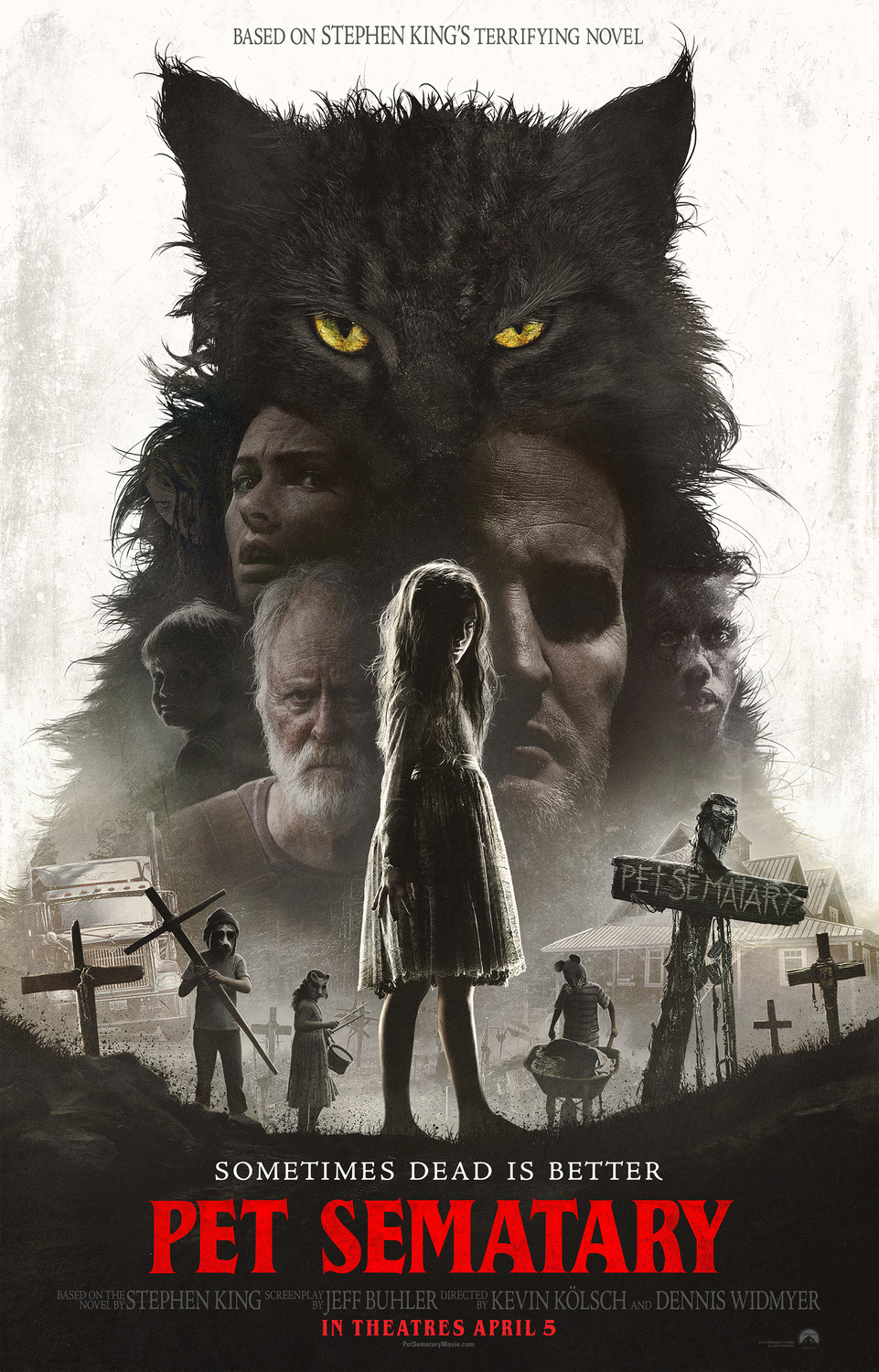
‘Pet Sematary’ Remake Easily Improves on the Original

Pet Sematary 2019 movie poster

Of all the Stephen King cinematic adaptations up for a remake, “Pet Sematary” is the one I looked forward to the most. I never cared much for the 1989 version directed by Mary Lambert. It wasn’t a terrible movie, but it was undone by a screenplay which tried to fit in too much from King’s novel, and ironically it was a screenplay written by King himself. While Fred Gwynne was perfectly cast as Jud Crandall, Dale Midkiff’s performance goes way over the top and contains moments which Kevin Smith and Ralph Garman are justified in describing as “exquisite acting.” And there was the ending which was undone by test screenings where the audience demanded something more graphic. Bitch, please!

Now we have the remake of “Pet Sematary” which comes to us from the directors of “Starry Eyes,” Kevin Kölsch and Dennis Widmyer, and it is easily an improvement over what came before. It is not a great horror movie, but even if it were, it is nearly impossible to top King’s 1983 novel which itself is one of the darkest works of fiction ever conceived. Heck, even King himself thought he went too far with it, and that should tell you something. Still, it is an effective film which pays tribute to the spirit of the novel even as it makes changes to the source material in a way I did not see coming.

As before, the story starts with Louis Creed (Jason Clarke) driving with his wife Rachel (Amy Seimetz) and their two kids to their new home in the small town of Ludlow, Maine. We learn that Louis and Rachel were looking to escape big city life for something simpler and countrylike to where they could spend more time with each other and the children. When they arrive at their new home, it looks like a heavenly and peaceful place which they will serve them well, but we all know where the story will go from there as a huge 18-wheeler truck zooms by with little warning while leaving a lot of dust and dead leaves in its wake.

The first half of the “Pet Sematary” remake more or less follows King’s novel to the letter as it treads familiar ground while adding some interesting touches in the process. Upon discovering the pet cemetery of the movie’s title, we also see a procession of children wearing animal masks as they march on by while carrying a dead dog in a wheelbarrow to the place which will bring about its resurrection. Both Kolsch and Widmyer give this movie a wonderfully unnerving feeling which they keep building on throughout as things for the Creed family get worse and worse to where they have little chance to regret the deeds they have committed.

WARNING: SPOILERS AHEAD.

One of the interesting things about this version is how the filmmakers have switched elements around, but in a way which does not take away from the spirit of the novel. Instead of young Gage getting run over by a truck driver who is distracted by his cell phone (and who isn’t these days?), it is Ellie, and the reaction of her parents to this terrible tragedy feel all too real to where neither has to yell out in sheer anguish.

Jeté Laurence plays Ellie Creed, and her performance is especially impressive as she makes this resurrected character far more than a zombie with a thirst for blood. Ellie seems very aware of the fact she is not who she once was, but she also has knowledge of what lies beyond the realm of the living, and she becomes a little too eager to bring her parents to the other side of it.

Jason Clarke has long since proven to be one of our most dependable actors in movies today with his terrific performances in “Dawn of the Planet of the Apes” and “Chappaquiddick.” Clarke makes Louis Creed into an especially sympathetic character even as he comes to play God when it comes to Ellie’s life. The late Victor Pascow (Obssa Ahmed) warns Louis not to exceed the boundaries set for humanity, but Louis is blinded by a grief I would not wish on anyone, and his desire to undo a terrible tragedy is understandable even if it flies in the face of reason, logic and the saying of “sometimes dead is better.”

Amy Seimetz, who co-starred in “Alien: Covenant,” also makes the most of her role as Rachel Creed, an individual who has dealt with death a far too young an age. Rachel remains forever haunted by the passing of her sister Zelda (Alyssa Brooke Levine) whom she was forced to watch by her lonesome while their parents were away. Indeed, Seimetz makes you deeply feel the unfairness of Rachel’s predicament as no child should be forced into such a position at such a young age, and it proves to be one of this movie’s most haunting segments as a result.

And while there is no topping Fred Gwynne’s performance as Jud Crandall, the great John Lithgow succeeds in making this role his own. How many movies and TV shows have we watched Lithgow in anyway? He has been a constant in popular culture, and he remains a welcome presence in anything he appears in. Lithgow doesn’t have to do much to show how Jud has lived a long life which has been filled with one tragedy too many, and this is the mark of a great on camera actor.

Kölsch and Widmyer do an excellent job of raising the tension and overbearing atmosphere of the story throughout the movie’s running time, and they don’t just resort to giving us jump scares every five minutes. They are also aided by a powerful film score composed by Christopher Young which makes an already unnerving motion picture even more so.

“Pet Sematary” is one of the few books I got to read before it was turned into a movie, and this is quite the feat for me these days as filmmakers typically beat me to the punch. As a result, my perspective of the book will forever remain more powerful than any movie made out of it. Still, this cinematic version of it is a powerful one which takes chances with the source material while remaining true to its spirit. I am also quite thankful the filmmakers had enough freedom to give this movie the ambiguous conclusion it deserves. I am a big fan of ambiguity in movies, and this one has an unsettling conclusion which stays with you long after you have walked out of the theater.

Still, I would have preferred The Ramones’ version of their song “Pet Sematary” as opposed to the cover of it performed here by Starcrawler. Nothing against their version, but in this case the original reigns supreme.

* * * out of * * * *

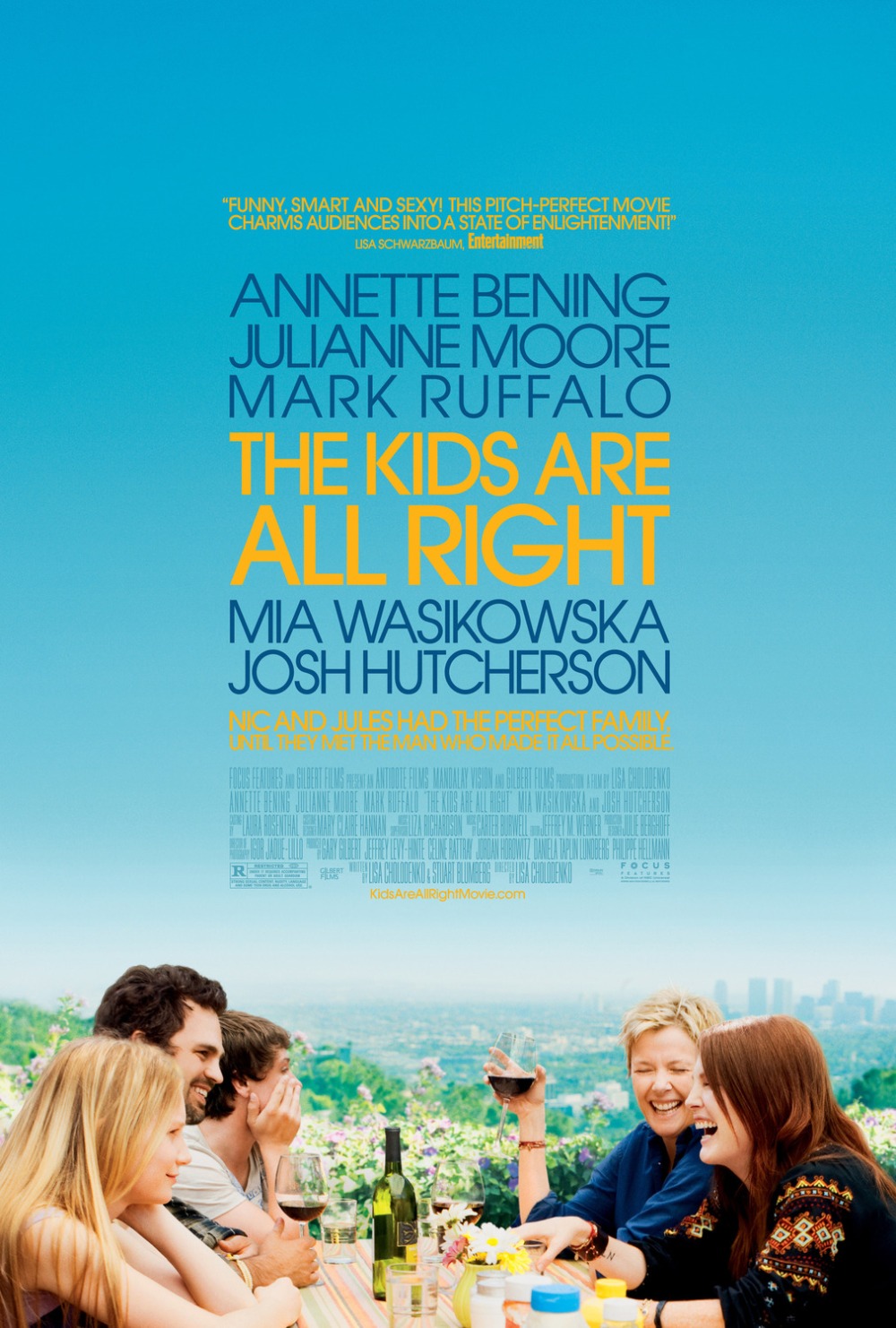
‘The Kids Are All Right’ is About Marriage, Period

The Kids Are All RIght movie poster

WRITER’S NOTE: This review was written back in 2010.

Lisa Cholodenko’s “The Kids Are All Right” takes its title from one of many great songs by The Who. However, I kept wondering about the movie’s title in regards to the way it is spelled. The Who’s song is entitled “The Kids Are Alright” while the movie splits “Alright” into “All Right.” What exactly does this mean? Are the kids infinitely more intelligent than the parents in this movie? Do they make better decisions in their lives than the adults? We all know kids have a stronger detector system when it comes to exposing the hypocrisy of parents and adults in general, so perhaps the movie’s title means to spell this out literally. Or maybe it’s because The Who made a rockumentary a number of years back called “The Kids Are Alright,” and perhaps Focus Features didn’t want to confuse the two. Anyway, that’s just a thought.

I was lucky enough to catch a screening of this movie on the day Proposition 8 was overturned by the California Supreme Court (YES!!!). This was the same proposition which barred gay couples from getting married and found funding from people who didn’t even live in California. However, to call this a gay or lesbian movie would make audiences completely miss the point as that is like calling “Brokeback Mountain a “gay cowboy” movie for crying out loud. What the couple of Nic (Annette Bening) and Jules (Julianne Moore) go through is not any different from what many “straight couples” go through, and it really gets to the truth of what hard work marriage can be.

Nic and Jules are a very loving couple indeed, and there is no doubt about how deep their affection for one another is. Furthermore, they have two wonderful children: a 15-year-old boy named Laser (Josh Hutcherson), and an 18-year old girl named Joni (Mia Wasikowska) who is about to head off to college. The major difference between Nic and Jules is while Nic has had a successful career as a physician, Jules has failed at just about every business she has tried to start up on her own. It gets to where Jules starts to wonder if Nic is really just belittling everything she does, and a resentment between the two grows quickly.

But what really throws a wrench into the family’s dynamic is when Joni, after being pushed by Laser to do so, contacts their biological father. Both were conceived by artificial insemination, and the sperm donor turns out to be a very nice guy named Paul (Mark Ruffalo) who has a phobia of commitment and leads a decidedly bohemian life. Upon meeting these two kids, he warms up to them immediately and finds himself changing in ways he didn’t expect. But then he meets the parents, and things get really crazy.

What I really liked about “The Kids Are All Right” was that after a summer of superheroes and high concept movies, here’s one which deals with real people and situations we all recognize from our own lives and the lives of others. The characters conceived here are all well meaning people who never come across as contrived or clichéd in the usual sense. Director Lisa Cholodenko, along with co-writer Stuart Blumberg, succeed in creating some wonderful characters, and they give them with hilarious dialogue which is also insightful and refreshingly down to earth. These are people with visible flaws which make them all the more human, as if we need to be told this.

I never found myself taking sides or hating any of the characters. Like I said, each one is well meaning and comes into this situation with the best of intentions. Of course, we all know where the best of intentions can lead us. When these people stray from one another, we may disagree with what they do, but Cholodenko uses this to make us understand why some end up doing the things they do. Everyone is complicated in their own way, but labeling people as bad for doing certain things only serves to blind us from understanding them as individuals.

All the actors are clearly in love with playing the intricacies of their roles, and each one creates a character we quickly become emotionally invested in. Annette Bening is perfect as Nic, the bread winner of the family. While at times very high strung and a bit overprotective of her family, she imbues Nic with a strong sense of commitment while losing sight of what brought her into this relationship in the first place.

Julianne Moore shines as she always does as Jules who feels increasingly neglected in her role as housewife, and her fear that Nic is not taking her career endeavors seriously feels very much justified. In many ways, Jules gets looked down more than anyone else in the script, but Moore never makes Jules a pitiful creature and gives her a strong center which she finds her way back to. Also, her speech on marriage is one of the movie’s best moments, and it comes from an honest place.

Mark Ruffalo continues his reign of great naturalistic performances and makes film acting look effortless. His character of Paul could have been the bad guy of the piece or some sitcom-like character, but you never doubt his sincerity in how he grows to love these kids which he had a hand in bringing into the world. Even when he missteps (and he really does), I found it impossible to dislike the guy. Of all the characters in “The Kids Are All Right,” he is the one who grows the most, but his revelations come in a way which is not exactly appropriate.

Both Mia Wasikowska and Josh Hutcherson are great as the kids, and Cholodenko keeps them from becoming conventional in the teenager mainstream movie kind of way. Wasikowska gets to be much livelier here than she was in Tim Burton’s bland remake of “Alice In Wonderland,” and she radiates intelligence which makes her character wise beyond her years to where she comes across as the most mature one in the film. Hutcherson also makes Laser into an interesting kid caught up in friendships which aren’t really sound and finding a father figure in the last place he expected to. Seeing him discovering his parents’ videotape of gay male pornography leads to one of the funniest scenes this movie has to offer.

If there is any complaint I have with “The Kids Are All Right,” it’s the ending. The plight of Ruffalo’s character is frustratingly left unresolved, and we never do learn if he will keep in touch with Joni and Laser. Nic and Jules do get a satisfying conclusion, but seeing Paul getting cut loose was an unfortunate disappointment. I was eagerly waiting to see where he would end up after all which had ensued.

Still, “The Kids Are All Right” is one of the nicest surprises of the 2010 summer movie season, and it deservedly got a large audience for an independent film. It has what I would like to see more of in movies: regular, down to earth people with problems and flaws much like anyone else’s. I also think it involves a relationship which any couple (and I strongly stress the word ANY) can relate to in different ways.

By the way, for those of you who think that gays getting married is still a threat to the “sanctity of marriage,” I got two words for you: Donald Trump. End of story.

* * * ½ out of * * * *

‘Avengers: Endgame’ Had Me Going Out of the Movie Theater Saying Wow

Avengers Endgame poster

WRITER’S NOTE: Will or will not this review have spoilers? Does it matter pointing it out at this point? Like any other movie, it would be best to keep from reading this review until you have seen this one.

Now you all know how much I hate the term “based on a true story” as it has long since lost its meaning for me, but there is also another I get seriously annoyed with, and it is this one: “it has all led up to this.” When a movie trilogy reaches its end or a television show finally arrives at its season or series finale, this phrase is often utilized as a way to get butts in the seats or eyes glued to the television in a why which will have advertisers salivating to no end. More often than not, it feels like a shameless trick to get us to watch something we otherwise wouldn’t, and we come out of it feeling angry as we have been easily duped.

But when it comes to “Avengers: Endgame,” the term “it has all led up to this” makes perfect sense. This is the 22nd film in the Marvel Cinematic Universe which started back in 2008 with “Iron Man,” but this one has a strong sense of finality as the superheroes we have followed all these years will rise and fall all at the same time. Yes, the MCU will continue on, and we have “Spider-Man” and “Black Panther” sequels to look forward to, but after this penultimate installment, things will never be the same. What results is an exhilarating motion picture which thrills even the most jaded of moviegoers, and its conclusion will leave you emotionally drained for very good reason. Yes, it really has all led up to this.

Three weeks have passed since Thanos (Josh Brolin) captured all the Infinity Stones, snapped his finger and eliminated half of all life across the universe. Those Avengers who survived the snap are, as you can expect, infinitely eager to avenge those lives who disintegrated, but their quest for justice does not go in the way you might expect. In fact, for some it comes too quickly and leaves a lot of damage in its wake.

Following this, the movie then jumps ahead five years as what is left of humanity is grappling with the things they can do in the aftermath. Some are still eager to undo what Thanos did while others have done what they can to move on. Either way, they are dealing with a clear case of survivor’s guilt, and their enthusiasm for saving the universe is not what it used to be.

Yes, these characters are blessed with super powers we would love to have o, but the filmmakers are quick to show us how they are as human as we are. They suffer from doubts, anxiety, frustration and, as this movie begins, they are overcome with despair. While they may be special or gifted, they aren’t much different from the average joe as the weight of the world lies heavily on them, and they don’t have time to balance their checkbook. (Who does anyway?)

Time travel plays a significant role in this MCU movie as a couple of the Avengers, namely Scott Lang/Ant-Man (Paul Rudd) and Tony Stark/Iron Man (Robert Downey Jr.), come up with a theory which will make it possible for them to accomplish, albeit with some limitations. Like everyone else, the Avengers have seen every time travel movie ever made and are quick to mention such classics as the “Back to the Future” trilogy, “Time After Time,” “Timecop” (was this particular Jean Claude Van Damme film ever that popular?), “Bill and Ted’s Excellent Adventure,” and even “Hot Tub Time Machine.” Somehow, “Star Trek IV: The Voyage Home” was left off this list, and I am deeply perturbed as a result. The Enterprise crew saved humpback whales in that one for crying out loud!

I enjoyed how “Avengers: Endgame” plays on our knowledge of time travel as a plot device. Even though science renders these various time travel methods to be utterly bogus, the pluses and minuses of actually changing historical events are always prominent in our minds. Remember all that talk about the space time continuum? Whether or not the conclusion of this movie is in doubt, I spent much of it wondering how things would end up once the mission was complete. What gave me comfort was what Doc Brown said in “Back to the Future Part III” about how the future isn’t written and how it is whatever you make it.

Granted, the time travel aspect does get a bit confusing at times, especially when certain characters end up facing off against their past and present selves. It reminded me of when Austin Powers faced a similar predicament in “The Spy Who Shagged Me,” and that one was a comedy. But the movie proves to be so much fun, who cares?

Helming “Avengers: Endgame” are Anthony and Joe Russo, brothers who have been a major asset to the MCU ever since they directed “Captain America: The Winter Soldier.” Along with screenwriters Christopher Markus and Stephen McFeely, they have an infinitely impossible job of balancing out a story filled with far too many superheroes, most of which will not get the same amount of screen time as the biggest ones of all. The ending is bombastic, but never in an overwhelming way. And yes, it is three hours long, but it never drags nor is it in need of a top-notch editor the way “I Spit on Your Grave: Déjà vu” was. For what it’s worth, you can head straight to the bathroom once the end credits start as there are no special scenes during or after them.

I imagine a lot of people look at these “Avenger” movies as being the kind which don’t require the cast to give their best performances ever. This assertion, however, is deeply unfair as many of the actors here have inhabited these characters for close to a decade. From one movie to the next, we see these characters evolve in meaningful ways to where we have to recognize what the passing years have done to them. It does not matter how incredible they are because they age like us even if they don’t always show it.

Chief among the cast is Robert Downey Jr. whose role as Tony Stark/Iron Man helped to rejuvenate a film career which looked to be permanently undone by drug abuse. Downey has taken Tony from being a lovably arrogant playboy millionaire to a less self-centered man who becomes eager to reign in his fellow superheroes before they do damage they won’t be able to walk away from. Tony himself has some interesting developments along with Pepper Potts (Gwyneth Paltrow) to where his hesitation to disrupt the course of events is challenged endlessly, and watching him here makes you realize how far he has come in this role.

Another actor is Chris Hemsworth who has had quite the journey as Thor. For his first two movies, he portrayed the powerful Asgardian as an unshakably pure force who could not ever be corrupted. Then came “Thor: Ragnarok,” the best “Thor” film yet, which allowed Hemsworth to take some risks with the character in ways which made him even more interesting. With “Endgame,” we get to see Thor in his Big Lebowski phase, and we can tell Hemsworth is just having a blast taking this superhero in this direction. We should applaud him for taking chances here as other actors would have been a bit too fearful to do so.

Then there is Chris Evans who took Steve Rogers and his alter-ego of Captain America from what we thought would be the average white guy and turned him into a charismatic good guy in a way we did not see coming. Evans really hits his peak here in the MCU as he finishes his run in a very moving way, with Steve Rogers getting to reclaim a part of his past he thought he lost many years before. It is not spoiling anything to say this is Evans’ last time playing this superhero, but seeing him take his curtain call here is wonderfully fulfilling.

Coming out of “Avengers: Endgame,” all I could say was, wow. It’s the perfect capper to an amazing franchise, and my hat is off to everyone at Marvel for crossing the finish line in such an unforgettable way. DC Comics and Warner Brothers can only hope to be this successful with their own cinematic universe. Not once was I worried this franchise would flame out the way “The Matrix” did with “The Matrix Revolutions.” Everyone involved hit it right out of the park with this installment, and you don’t even need record breaking box office to prove it.

Of course, the question now is, where will the MCU go from here? I cannot see Marvel topping what they did here, especially with the cast taking their bow in the way the original Enterprise crew did at the end of “Star Trek VI: The Undiscovered Country” by providing their signatures. I imagine there are many more Marvel movies in our future, but the journey from here will still be fraught with expectations which may or may not be met. If this was to be the last MCU ever, it would have been perfect. All the same, superhero/comic book movies still reign supreme at the box office, so hopefully the ones coming soon to a theater near you will still be wonderfully entertaining. Whether or not they are as glorious as this one is another story.

* * * * out of * * * *


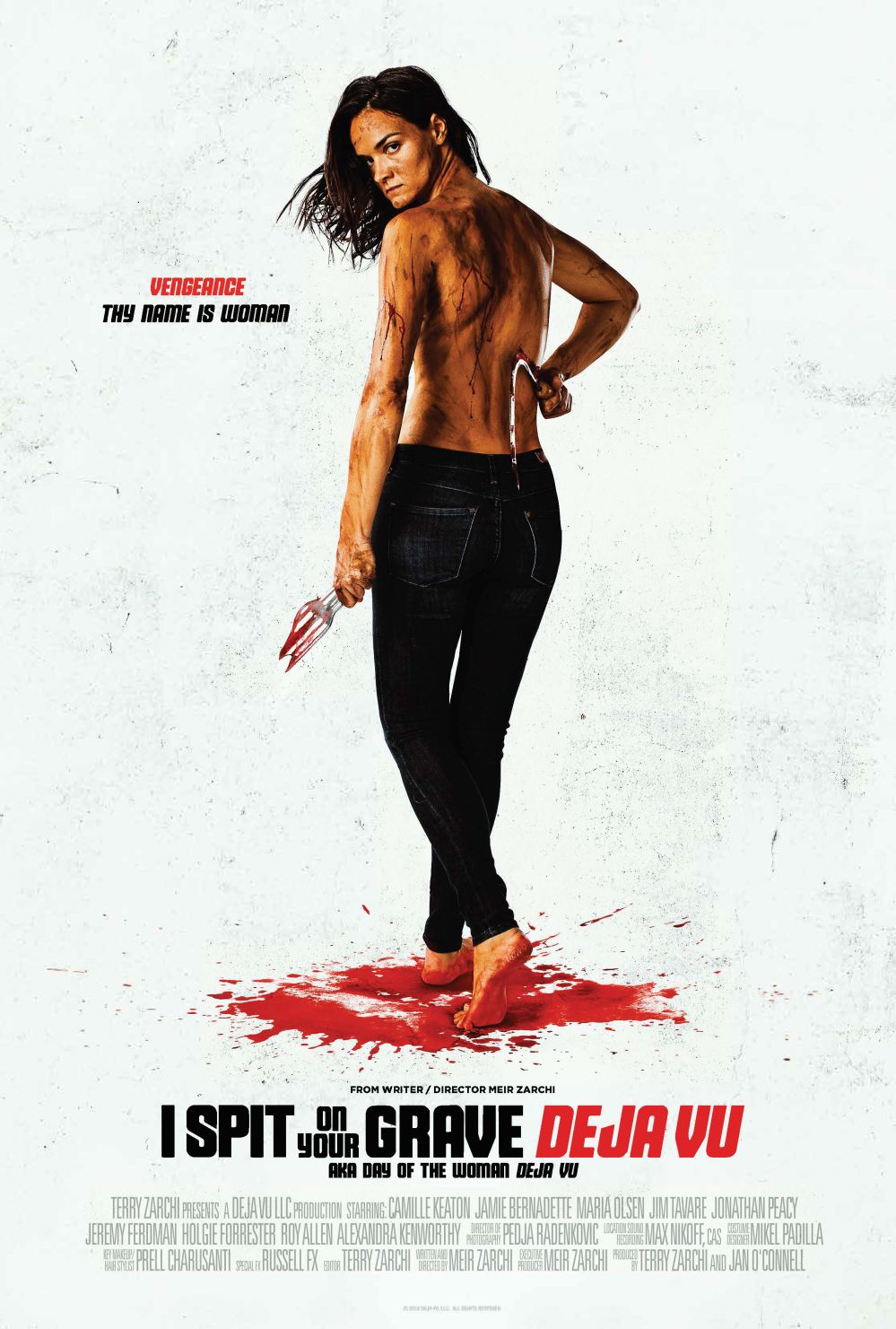
‘I Spit on Your Grave: Deja Vu’- Is it More Tolerable Than What Came Before?

i-spit-on-your-grave-deja-vu-ISOYGDV_HERO POSTER_rgb

As much as I abhor “I Spit on Your Grave,” its power to shock and deeply unnerve its captive audience is something I have to admire even if I do so begrudgingly. The 1978 cult classic is like a scab which I cannot help but pick at even when I know doing so is harmful and pointless. Meir Zarchi’s controversial revenge flick was such a poorly made motion picture, and yet it maintains a raw power which would later inspire a remake and two sequels. Heck, there is even a documentary called “Growing Up with I Spit on Your Grave” which was made by Meir’s son, Terry Zarchi, and I may have to watch just out of sheer curiosity.

Now it’s 40 years later, and Meir Zarchi has given us a direct sequel to the original called “I Spit on Your Grave: Déjà vu.” Upon hearing Zarchi was going to make a follow up, I couldn’t help but be incredibly intrigued. It’s been a long time coming for this sequel as it was finished in 2015 but is only now seeing a release, albeit one which is seeing it go straight to DVD and Blu-ray. Has Zarchi improved as a filmmaker? Will it be more disturbing and violent than what came before? Could “I Spit on Your Grave: The Next Generation” be a more appropriate title?

Well, I got to check the sequel out the other week at its Beverly Hills premiere where the cast and crew were in attendance along with fans who seemed more excited for this than they are for “Avengers: Endgame.” Since this screening, I have tried to sort out my thoughts about it and will continue to do so in this review. What I can tell you is this; “Déjà vu” is infinitely better than its predecessor, features some really strong performances, and it shocks in a way which feels nowhere as exploitive as what came before. At the same time, it is widely uneven, has some actors redefining the term “scenery chewing,” and it has a running time of almost two and a half hours. Plus, as it goes on, it quickly becomes clear why it was given the subtitle of “Déjà vu.”

The movie opens with us learning Jennifer Hills (Camille Keaton) was found not guilty of killing the four men who brutally raped her, and she has since published a memoir of her ordeal appropriately titled “I Spit on Their Graves.” She meets up with her beautiful daughter, Christy Hills (Jamie Bernadette), for lunch, and we se she is a successful model who has made quite the career for herself. Both women are at a crossroads in their lives as they discuss what else they can do now they have found amazing success despite a troubled past, and the road ahead offers no easy answers.

As Jennifer and Christy leave the restaurant, they are accosted by Kevin (Jonathan Peacy) and Scotty (Jeremy Ferdman) who are eager to get Jennifer’s autograph. The fact the two men drive up to her in a white van with the words “Enola Gay” painted on the side is not a good sign as this was the name given to the Boeing B-29 Superfortress bomber which dropped an atomic bomb on Hiroshima, Japan back in World War II. Before they know it, the two women are abducted and driven far away from the eyes of the world where they meet Becky (Maria Olsen), the wife of Johnny (Eron Tabor) whom Jennifer castrated in the bathtub and left bleeding to death. Suffice to say, Becky is brimming with rage and furious at Jennifer for depriving her of a “church-going” husband and their two kids of a father, and she is intent on taking Jennifer back to the place where it all began so she can give her a “preview to hell.” In the process, Christy is forced to fend for herself after she is separated from Jennifer, and as she attempts to rescue her mother from a horrible fate, she comes to discover more about herself than she ever could have expected.

“I Spit on Your Grave: Déjà vu” is a much more professionally made movie than its god-awful predecessor, and Zarchi is blessed with an excellent cinematographer in Pedja Radenkovic who gives him a number of beautifully framed shots amid the bloody carnage we know will be unleashed in front of our eyes. He also provokes our views on religion and revenge among other things as Becky has convinced herself as well as Kevin and Scotty how her acts are justified by the word of God and the Holy Bible, and she sees Jennifer as nothing more than a vixen who used her sexual powers to lure Johnny and the other men to their ever so painful deaths. It’s both fascinating and frightening to see how people use religion to justify acts which Jesus would not condone in the slightest, and this makes this sequel feel surprisingly, and painfully, timely.

The first performance worth singling out here is Jamie Bernadette’s as she is a commanding presence throughout and manages to say so much while saying nothing at all. Just watch her stare down one of her assailants as she rocks back and forth in a chair. Not once does Bernadette have to tell us that Christy will have her revenge in a most brutal way as her eyes make this clear from the get go. Even when “Déjà vu” takes us through moments which defy all believability, this actress makes you believe certain things could be possible even when logic tells us they are not.

Then there is Maria Olsen who makes Becky into one of the most unforgettable characters I have seen in a horror film in quite some time. Even when she looks to head into, as Kevin Smith and Ralph Garmin would call it, “exquisite acting” territory, Olsen gives a fully committed performance as someone whose heart and soul yearns for nothing more than vengeance, and I can’t help but see her in some respects as a female Khan Noonien Singh. As she prays at the grave of her dead husband, I couldn’t take my eyes off of her, and even the snot hanging from her nose can’t possibly upstage her.

Okay, now let’s talk about what doesn’t work about this sequel. Yes, Zarchi has definitely improved as a filmmaker, but he needs a better editor as this movie has no reason to run over two hours long. Scenes drag on for much longer than they have any right to. Moreover, why does Becky want revenge after 40 years? I know the American legal system moves very slowly, but this slowly?

While the screenplay fearlessly provokes our thoughts and beliefs on religion and justice, it doesn’t provide much in the way of answers. Is Zarchi trying to strive for some particular meaning here? If so, what exactly is he getting at? And as we arrive at the movie’s climax, certain characters end up doing a 180 turn on us to where I came out of it questioning the logic of everything which came before. Why, why, why?

And as “Déjà vu” goes on, we come to see it is replaying the same exact story of the 1978 original as Christy is forced to endure the same fate as her mother though in a way slightly less disturbing. Didn’t any of the characters around her learn anything from what happened before, or are they far too dumb to realize the consequences of their actions? The bible does say “an eye for an eye,” but the meaning of this phrase proves to be quite infinite.

As for the other performances, they come to redefine scenery chewing. Jonathan Peacy in particular is all over the place in his portrayal of Kevin to where I wondered why Zarchi never bothered to rein him in. The actor is like a dog who gets all too excited to where he cannot stop jumping all over strangers. Regardless of how the dog’s owner tells them to get down, sit or shake hands, this dog cannot and will not contain their energy. I have to admire the energy Peacy brought to his role, but perhaps a little less caffeine behind the scenes would have done him some good.

And there is Camille Keaton who returns as Jennifer Hills. Her appearance here threatens to be nothing more than a cameo, and this for me was the most disappointing thing about this sequel. At the “Déjà vu” premiere, Keaton said she had wanted Zarchi to make a sequel to “I Spit on Your Grave” for years, and yet she only gets so much to do here. Considering how Jaimee Lee Curtis got to resurrect Laurie Strode for one of the best “Halloween” movies ever and turned her iconic character into a bad ass survivalist, I was hoping the same would happen with Jennifer Hills. In the end, this proves not to be the case.

There is a rape here, but only one thank goodness. Now that last sentence may sound strange, but considering the half hour of brutal abuse Jennifer Hills endured in the 1978 movie, this was a relief as Zarchi is far more focused on the revenge of the female this time around. There is also a castration scene you can see coming from a mile away, and it is as painful as the one we witnessed decades before. And yes, there is another mentally challenged who gets murdered even after he spares another human from certain death. Seeing him get killed off was especially frustrating as the character, Herman (Jim Tavare), proved to be more of a morally balanced individual than anyone else here, and yet he still gets it right in the back.

At some point, I may be able to view “I Spit on Your Grave: Déjà vu” as a guilty pleasure. For what it’s worth, it is a vast improvement over its notorious predecessor and a little easier to sit through even as Zarchi fearlessly and shamelessly gets under our skin. It also ends on an interesting note as one character chooses to avert a course of action we expect them to take, and we wonder if history will repeat itself again as two people who are alluded to show up unexpectedly. Still, after a time it devolves into the same old story, and many of us will be left wondering if it was one which needed to be revisited at all.

Perhaps Zarchi can make another sequel with the subtitle “Vuja De.” You remember what George Carlin said about this, right?

“Do you ever get that strange feeling of vuja de? Not deja vu, vuja de. It’s the distinct sense that somehow, something that just happened has never happened before. Nothing seems familiar. And then suddenly the feeling is gone. Vuja de.”


* * out of * * * *