Michael Chiklis Talks About His Acting Career and ‘Parker’
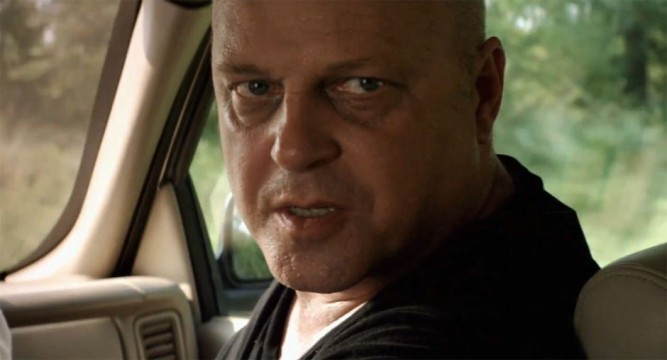
Michael Chiklis in Parker

WRITER’S NOTE: This article was written in 2013.

Michael Chiklis has been a very busy actor lately. Ever since the transformation his career took when he played Vic Mackey on “The Shield,” he has gone on to appear in two “Fantastic Four” movies as the Thing, and he now stars alongside Dennis Quaid on the CBS television show “Vegas.” But now he’s back on the silver screen in “Parker” which stars Jason Statham and is directed by Taylor Hackford, and in it he plays the vicious bank robber Melander. Chiklis has become one of the few actors working today who can go from television to film and from playing a hero to portraying a villain with relative ease. Many actors get typecast to where audiences won’t allow themselves to see them as anything else, and this is why we admire Chiklis because he appears to have completely bypassed that hurdle.

I got to catch up with Chiklis when he was at the press conference for “Parker” which was held at the Four Seasons Hotel in Beverly Hills, California. He told us he would soon be directing an episode of “Vegas,” but this is nothing new for him as he previously directed episodes of “The Shield.”

Michael Chiklis: I have fun with it. I deliberately boss everybody around… No, I’m kidding. I don’t make a big deal of it. It’s usually I take a lot of gut from my fellow actors because they want to give you a hard time. It’s to be expected and I just take it.

One of the reporters told Chiklis that Melander is “a real dick,” and he responded to this description with a big laugh. It was never lost on the actor how his character was a complete bastard, and he reveled in the opportunity to play a full out bad guy. While Vic Mackey from “The Shield” may have been an antihero, Melander has no redeeming qualities whatsoever.

MC: This guy’s a malevolent prick and great. I can just sort of unabashedly get to be a dick which is fun. When you get to do that in real life? You don’t unless you want to be a pariah. One of the wonderful things about being an actor is you get to walk a mile in another man’s shoes, and the other great thing is that you get to step out of them and not be in the shoes anymore. It was wonderful to sort of step into a pair of shoes of a guy who’s all about himself; a narcissistic, sociopathic douche bag and just let that be.

Since he’s become known for playing such hard boiled or douche bag-like characters, it is tempting to think Chiklis is not much different from the ones he played on “The Shield,” “Vegas” or “Parker.” But he didn’t need to convince us he isn’t because if he was like Melander in “Parker,” he would be in jail or even on death row. Chiklis does get a kick out of how people can mistake him for the characters he has played, but it’s clear he’s not out to live up to this image we have of him either.

MC: I think Vic Mackey in particular had an effect on people. I’ve had grown men shake my hand like this (and he showed their handshakes to be full of nervous energy), and I’m like, oh dude it’s all right, I’m not gonna hurt you. That’s happened, but as the father of daughters that’s not such a horrible thing. There are benefits to that. Sometimes it’s scary though because some people really don’t have a capacity to separate truth from fiction. It is a movie and we’re actors playing parts, and I’m not fucking Vic Mackey, I’m not. I’m not a malevolent prick, I’m just not, but I have fun playing one and I’m sure I’ll play others in the future. I like to mix it up and play all kinds of people.

Like I said, Chiklis is one of those actors who can go from playing a good guy to playing a bad one, and we never doubt he will give a strong performance as either kind of character. All of us at this roundtable interview couldn’t help but wonder if he likes playing bad guys more than good ones, or if he likes playing both types of characters equally. But like any other actor, famous or not, Chiklis is not looking to play the same type of person over and over again.

MC: The reason why that’s true is because I don’t prefer to do one or the other. I like to all of that. I’m terrified of complacency and I do not like to be boxed in. I’ve always wanted be diverse, and the more diverse you are, the more of an opportunity you’ll have to play a wide variety of roles. Some people thrive in an area that they have their note in and their terrific at it, and they just sing the note all the way to the bank and good for them. That’s just not my way. I can’t do that.

Chiklis compared his interest in acting roles to his iPod which he said has music by The Tubes and Sergei Rachmaninoff on it. What he ended up saying made perfect sense as none of us like to listen to the same type of music all the time. We need variety, and it’s this same type of variety which Chiklis demands as an actor. Now most actors don’t get to indulge in any kind of variety, but he admits many give him strange looks when it comes to his taste in things.

MC: I have eclectic taste in film and television and musicals. People freak out because I went to see “Glengarry Glen Ross” when I was just in New York, and then the next night I was at “Newsies and they were like, what the? And I dig both because that’s life. I’d hate like hell to look at the same flower every day no matter how beautiful it was. It just makes to me a more interesting life and career, and I’m just blessed that I’ve been able to afford the opportunity to play these characters.

Now Chiklis didn’t always have this diversity in his career as for years he was known for being on the comedy-drama TV series “The Commish” which had him playing a suburban police commissioner in upstate New York named Tony Scali who worked through various problems with humor and creativity. This led to Chiklis to being typecast as a nice guy in film and television, and to him playing the same type of character in many projects like the ill-received television series “Daddio.” It took someone very close to make him realize what he had to do to change his future as an actor.

MC: A lot of the diversity in my career which I always desired, but I didn’t necessarily know how to attain, I credit to my wife because she made the statement to me years ago: it’s not incumbent upon the studios to reinvent you, it’s incumbent upon you to reinvent yourself. And I just looked at her and went that’s right, that’s correct and that’s brilliant. Actors become puzzle pieces in that he fits there, she’s fits there, and you can understand that. So, I was fitting in the rolly polly affable guy place for a lot of these people, and I couldn’t just expect them in osmosis to go like, oh yeah, Chiklis, bad ass mother fucker because they’ve never seen that from me. So, she simply pointed out, you want them to see you that way? You’ve got to show them that and you’ve got to demand that.

Demanded it he did, and Michael Chiklis’ acting career is now stronger than it has ever been. He plays a remorseless bank robber in “Parker,” and at the same time he portrays a Chicago mobster on “Vegas.” It doesn’t look like this actor will ever lack for a variety of roles at this point in his life, and this says a lot about his talent as well as his perseverance in an industry as fiercely competitive as this one is. More power to him!

CLICK HERE TO CHECK OUT THE EXCLUSIVE INTERVIEW WHICH I DID WITH MICHAEL CHIKLIS FOR THE WEBSITE WE GOT THIS COVERED.


Olga Kurylenko on Playing a Lost Astronaut in ‘Oblivion’

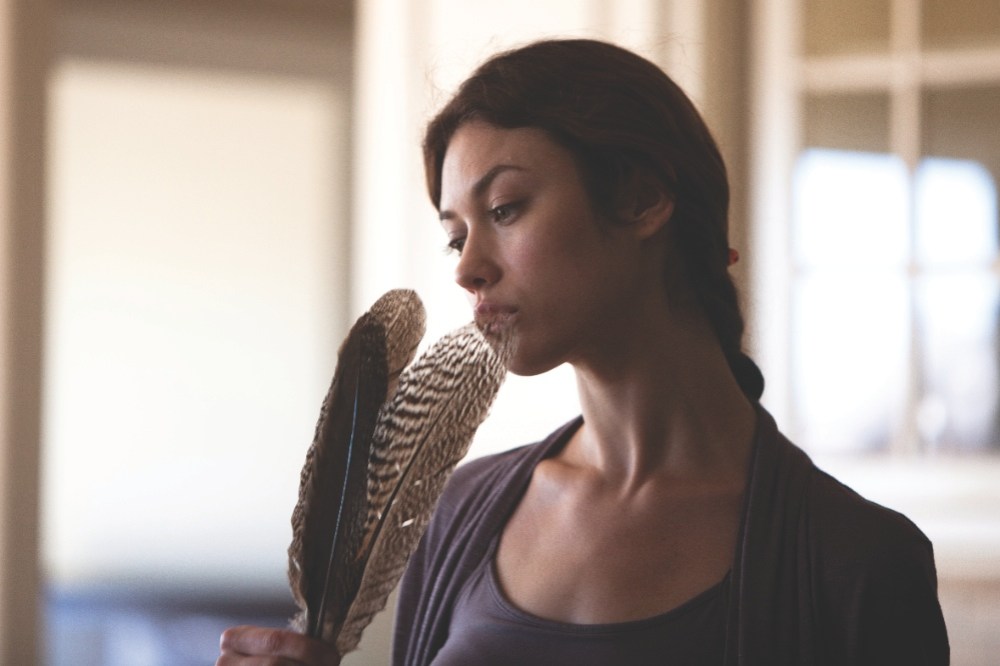
Olga Kurylenko Oblivion photo

WRITER’S NOTE: This article was written in 2013.

Ever since her breakthrough turn as Bond woman Camille Montes in “Quantum of Solace,” French actress Olga Kurylenko has left quite the impression on us. In her latest film, “Oblivion,” she stars opposite Tom Cruise as Julia Rusakova, an astronaut who literally drops out of the sky and reveals to him the truth of his existence which has long since been denied to him. It’s a movie with many twists and turns, and talking about is tricky because nobody wants to give any important plot points away, but Kurylenko did her best to talk about “Oblivion” without spoiling anything for us at the movie’s press conference held at the Universal Studios backlot.

I was lucky enough to attend this press conference, and Kurylenko proved to be as beautiful off screen as she is on it. The role of Julia was one she put a lot of thought into, and she explained how the character appears onscreen was the result of her own research as well as working with the movie’s director Joseph Kosinski, who previously directed “Tron: Legacy,” and Cruise. The way she sees it, the creation of Julia as a character was the result of a lot of team work.

Olga Kurylenko: Basically, I spoke a lot, with him (Kosinski) and with Tom. Also, the three of us would have meetings to discuss our characters and our characters’ backstory. We rehearsed. I watched videos of astronaut trainings. I watched some old romantic movies as a preparation and inspiration. It’s a work in process. You grow together.

One has to wonder how difficult it was for Kurylenko to play Julia because there is only so much she can reveal about this character in “Oblivion.” How does one go about playing a character without accidentally unlocking their secrets sooner than later? A simple look or a line of dialogue can easily unravel a character’s mystery because these days audiences are always trying to stay one step ahead of the filmmakers, and keeping secrets from them is damn near impossible. However, it was the secrets of Julia that really made Kurylenko want to do this movie.

OK: What I found very interesting was the fact that there was this mystery to Julia, that I couldn’t reveal everything right away about her after her very first appearance on screen, and that she had to unravel and uncover her story during the whole film. She’s a completely different thing in the end than what we see her as in the beginning. All that mystery was interesting to work on.

Of course, one question on all of our minds was of what it was like for her to work with Tom Cruise. So many things have been said about Cruise over the years, both good and bad, but Kurylenko had nothing but the kindest things to say about him. In fact, she even said how stunned she was at how much he was willing to give as an actor during filming.

OK: He’s a big star and he’s a wonderful actor. We know that, but only his partners and other actors know how much he gives to the other. He gives so much. He’s such a generous partner, and that’s not always the case. I’ve never seen him sit in his trailer. He’ll always be there. If the camera was on me, even if he was far away, just for my eye line, he would prefer to be there. He would never leave the set, even if I told him seriously, I don’t need you, he would still be there because he is involved one hundred percent. That’s a wonderful thing.

Kurylenko also described Cruise as being especially supportive in their scenes aboard the Bubbleship, a spaceship which Cruise’s character, Jack Harper, flies all over what’s left of planet Earth. Those scenes were shot in a gimbal on a soundstage, and there is some behind the scenes footage which shows the two of them spinning all over the place and going upside down which quickly reminded me of a certain amusement park ride I went on as a kid. Being that Cruise is also a licensed pilot, this allowed Kurylenko to put her complete trust in him.

OK: He talked me through it. He knows how it works. It’s very reassuring to have a partner like that. He’s not just an actor who’s there who has no idea. He technically knows how things work. You feel safe with him. I threw up in the beginning when I came out of the (gimbal), so that was done, but I don’t get sick from motion. Thank God. I don’t care. I can be on a boat and everything. It’s rather that I don’t like it psychologically, being thrown around. I don’t enjoy rollercoasters. That was like being in a rollercoaster and a washing machine at the same time because it was spinning all the time. I usually don’t like to go into washing machines when I have a choice, but here I didn’t have a choice. Tom looked at me and said, “You don’t have a choice.” In a way, it’s all these great memories. Today, they sound very funny, so it’s great to remember. It was funny how I slowly adjusted to that machine, because in the end, I was fine. But, in the beginning, it was tough.

Olga Kurylenko continues to give memorable performances which will eventually have you remembering her for a body of work instead of just one single performance. Other actresses like Jane Seymour, Famke Janssen and Diana Rigg have become known for more than being a Bond woman, and the same is certain for Kurylenko as she moves on to her next project which is Terrence Malick’s “To the Wonder.”

Martin Freeman on Playing Bilbo Baggins in ‘The Hobbit’

Martin Freeman The Hobbit photo

WRITER’S NOTE: This article was written in 2012.

He’s made a name for himself on BBC television shows like “The Office” and “Sherlock,” and he had the lead role of Arthur Dent in “The Hitchhiker’s Guide to the Galaxy.” But now actor Martin Freeman gets his biggest role to date as Bilbo Baggins in “The Hobbit: An Unexpected Journey.” This character was previously portrayed by Ian Holm in Peter Jackson’s “Lord of the Rings” trilogy, but Freeman now has the privilege of playing Bilbo in a movie which takes place sixty years before that trilogy’s beginning.

When it comes to portraying a character who has been played by a well-known actor in previous films, the task can seem quite daunting. Any actor in this position usually has to deal with a shadow hanging over them as their performance will always be compared to what came before. Holm’s Bilbo, however, functioned more as a cameo in “The Lord of the Rings” movies as he was only in them briefly. Furthermore, Freeman more than makes this role his own as he takes Bilbo from being someone who’s just minding their own business to someone willing to risk their life to help others. Still, you had to wonder if Freeman spent a lot of time studying Holm’s work in the previous films. Eventually, he cleared this up with Steve ‘Frosty’ Weintraub of the Collider website.

“I’ve watched the films again, obviously in more detail before I came to this. I looked at Ian’s (performance) more when I needed to. Again, I don’t really know how much I should say, but there were points where it was relevant for me to look very closely at Ian’s performance,” Freeman told Weintraub. “But generally, no because I think we’re quite good. I know why I was cast; do you know what I mean? Because I think we’re not that dissimilar, physically or whatever else. I think if I was, I don’t know, Jeff Goldblum or someone, then I might be thinking right, hang on, if he’s the older me I’d better attend more to something else maybe. Well, grow, for a start. But no, ’cause I think I was always trusted with it.”

“All I was told, which I think was flattery, and probably bollocks, was you are the only person to play it. So, I thought, well if they think that, then I’ve got to trust that,” Freeman continued. “And there’s only so much you can run with someone else’s thing. It’s very helpful in the way that it’s brilliant as he is always brilliant, and it’s a beautiful establisher of that character and a very loved one for obvious reasons. But it can also hamper you if you’re thinking, like in the barrels, if there’s even part of me thinking, how would Ian have done this, then I’m fucked. So, I’ve got to let that go. I’ve always been mindful of it because I’m familiar with it. But I think the work for that connection was done in the casting of me, rather than what I’m then going to do on top of it.”

In an interview with Colin Covert of the Toledo Blade, Freeman described Bilbo as being neither “the main guy in the room” or an “alpha male.” Looking back at “The Hobbit: An Unexpected Journey,” this gave the actor a great starting off point as he has to take this character from being a timid and rather pompous man to one who acts selflessly. Freeman really gives an exceptional performance as Bilbo’s transition from a self-centered person to a warrior of sorts feels seamless and subtle. You never consciously catch the actor trying to shift his character in a certain direction because it all seems to come about naturally.

One of the movie’s pivotal scenes comes when Bilbo meets up with Gollum who is again played by the brilliant Andy Serkis. This scene was actually shot in the first week of production and apparently took a whole week to film. When it comes to CGI characters, the actors usually have to play opposite something or someone which isn’t there. Fortunately for Freeman, Serkis was there on set to give life to Gollum, and he talked with Meredith Woerner of i09 about what it was like working with Serkis.

“Andy feels real,” Freeman told Woerner. “Obviously he doesn’t look like Gollum, strictly speaking, but he’s being Gollum. And I’m an animal of the theater and you’re used to using your imagination. You don’t have to use your imagination that much when you hear that voice and see the physicality and you think, oh there’s Gollum. There’s a man or a creature that wants to eat me. It didn’t feel very cheated at all. Gollum is such a beloved character. There’s a special place in people’s hearts for Gollum, I think. People who love the books and the films are delighted he’s in this, I think.”

Seriously, Martin Freeman gives a pitch perfect performance as Bilbo Baggins in “The Hobbit: An Unexpected Journey” to where you wonder if he and Ian Holm were actually separated at birth. This bodes well for the next two movies in Jackson’s “Hobbit” trilogy, and it will be interesting to see where Freeman takes this character from here.

One other thing; Freeman made it clear how Leonard Nimoy’s song “The Legend of Bilbo Baggins” did not play a big part in his research for the role.

“It helped me enjoy that three minutes of listening to it,” Freeman said of the song. “I’m still baffled by it.”

SOURCES:

Steve ‘Frosty’ Weintraub, “Martin Freeman Talks the Ring’s Impact on Bilbo, Being a Favorite for the Role & a Lot More on the Set of THE HOBBIT,” Collider, October 25, 2012.

Colin Covert, “Q&A; with ‘Hobbit’ Martin Freeman,” Toledo Blade, December 17, 2012.

Meredith Woerner, “The Hobbit’s Martin Freeman on dwarves, Gollum and Leonard Nimoy,” i09, December 16, 2012.

Olga Kurylenko Talks About Losing Herself in Terrence Malick’s ‘To the Wonder’


To The Wonder Olga Kurylenko

WRITER’S NOTE: This article was written in 2013.

While former Bond woman Olga Kurylenko gave a compelling performance in “Oblivion,” she gives an even greater one in Terrence Malick’s “To the Wonder.” As Marina, a European woman who moves with her American boyfriend Neil (Ben Affleck) to Oklahoma, she is fascinating to watch as she goes from being deliriously happy in love to becoming emotionally devastated when their relationship turns sour. Seeing her dance her way through a sterile drug store to becoming so upset at how bad things get makes you see what she is capable of as an actress.

Going from a big budget science fiction film like “Oblivion” to a low budget “art film” like “To the Wonder” was clearly a study in contrasts for Kurylenko, and she joked about how she at least had a trailer on the set of “Oblivion.” She went out of her way to discuss the differences between the two films to Sheila Roberts of Collider while at the “Oblivion” press conference, and it’s one of the few instances where we get a good look at how the secretive and elusive Malick works with his actors.

“It was very different. They couldn’t be further apart from each other,” Kurylenko said of “Oblivion” and “To the Wonder.” “In Malick’s film, for example, there was no script and that’s the difference. Here, with ‘Oblivion,’ the script was very detailed and very precise. The way Malick worked with us, he never rehearsed, and he was actually against any rehearsal.”

“Malick just throws actors in, but there is a backstory and again lots of conversations,” Kurylenko continued. “The way I built my character was by talking with Terrence all the time. We just spoke, spoke, spoke. I had a little homework to do before I started the movie. I had to read three Russian novels: ‘Anna Karenina,’ ‘The Idiot’ and ‘The Brothers Karamazov.’ Those are very tiny little novels (laughs). After that, I didn’t really need to read a screenplay. We just spoke. There were discussions about what I drew from the books, how we can compose the character, what similarities there are between Marina and different female characters in those books, and that’s how the character was born. It was a mixture of Dostoyevsky, Tolstoy and Terrence Malick.”

Kurylenko describes working with Malick on “To the Wonder” in even greater detail in an article she wrote which appears on the Black Book website. In the article, she makes her experience seem incredibly vivid as she describes how free spirited she became while on set. Once she and Malick had their discussions about the character, he let her run wild and encouraged her to find that elusive thing he called “the Wonder.” What is “the Wonder?” Well it sounds like the deep fascination we have with the ways of nature, and we constantly lose our fascination with that in our busy lives and continued dependence on technology. Anyway, from what Kurylenko wrote, it sounds like she was both eager and ever so desperate to find it.

“Terry smiles and I jump, twirl, run, and jump again,” Kurylenko wrote. “He claps, ‘more, more, more, like a rabbit!’ But then the Wonder suddenly goes missing. I scream and run into the house-throwing things, breaking things. It rains pretzels and cereal and there are more screams, but now they’re not mine, they’re Neil’s, and I’m laughing wildly and crying-my Marina is hysterical, unstable. I collapse on the floor and I wipe my tears from his shoes and kiss them. I ask, ‘Why do I do this? I want to be good, so good, but sometimes I suddenly feel possessed.’ And I beg forgiveness.”

“I receive pages every morning, sometimes ten, sometimes more,” Kurylenko continued. “They’re not exactly a script. Whether one exists or not is a complete mystery, but the words are (excuse my poeticism) rather like a breakfast for the soul. And every morning it’s a feast! If I digest the sense of what the pages contain, the nature of Terry’s words will shine through my eyes while we’re filming, and I won’t even need to speak. Every sentence is filled with such deep knowledge of the soul.”

One great thing I learned while looking into the making of “To the Wonder” was how Kurylenko always stayed in character even when the cameras were not rolling. Some actors believe their work stops when they have no lines of dialogue to speak or when the camera isn’t focusing on them, but any great acting teacher will tell you your work never stops even when the day is done. Kurylenko understands this perfectly, and she told Liz Braun of The Toronto Sun how this made “To the Wonder” more physically challenging for her than “Oblivion.”

“It was exhausting, because I was the character even when the camera didn’t film me — you have to be with Terrence because you never know when he’s filming you, and he doesn’t like rehearsals,” Kurylenko told Braun. “Terrence is someone I utterly admire and love. I trusted him completely, because he made me do somewhat ridiculous stuff. I never said no. I did everything, and I was dancing, moving through nature, walking constantly.”

While it may seem inconvenient for Olga Kurylenko to have two movies out at the same time as one might bury the other at the box office, the upside is both of them show the range she has as an actress. We cannot deny Kurylenko is a very talented actress, and it will be interesting to see where her career goes from here. Her role in “To the Wonder” might be a once in a lifetime opportunity, but hopefully more of those opportunities will come her way very soon.

SOURCES:

Sheila Roberts, “Olga Kurylenko Talks OBLIVION, Flying the Bubbleship, How Her Bond Experience Helped Her with Action, and More,” Collider, April 13, 2013.

Olga Kurylenko, “Olga Kurylenko on Terrence Malick and Filming ‘To the Wonder’-In Her Own Words,” Black Book, April 11, 2013.

Liz Braun, “Olga Kurylenko compares ‘Oblivion’ and ‘To the Wonder,'” The Toronto Sun, April 17, 2013.


Anthony Mackie on Playing a Criminal Bodybuilder in ‘Pain & Gain’

Pain and Gain Anthony Mackie

WRITER’S NOTE: This article was written in 2013.

While much of the attention on Michael Bay’s “Pain & Gain” has been focused on Mark Wahlberg and Dwayne Johnson, there’s another actor in the cast audiences are taking notice of as well: Anthony Mackie. The Julliard School graduate made his movie debut opposite Eminem in “8 Mile,” and he has since gone on to give memorable performances in the Best Picture winners “Million Dollar Baby” and “The Hurt Locker.” “Pain & Gain” is one of several 2013 movies Mackie will be appearing in, and he does not appear to be suffering from a shortage of roles in the slightest.

In “Pain & Gain,” Mackie portrays Adrian “Noel” Doorbal, a bodybuilder and personal trainer who works with Daniel Lugo (played by Wahlberg) at the Sun Gym in Miami. Lugo ended up recruiting Doorbal to help him kidnap rich businessman Victor Kershaw (Tony Shalhoub) so they can steal his money and live out the American dream. In an interview with Billy Donnelly of the website Moviefone, Mackie recalled being blown away by the script when he first read it and couldn’t believe it was based on a true story. The actor also took the time to explain how his character differs from the ones played by Wahlberg and Johnson.

“What I love about Doorbal is that he’s the grounding force of this movie,” Mackie told Donnelly. “Everybody else does this crime so they can move into a nice neighborhood and sleep with strippers and buy sports cars. When everybody else got a sports car, he got a minivan. When everybody else blew their money on all kinds of random shit, he got married and bought a house. So, he is the true testament, the epitome of wanting to have the American dream. And I think that’s why the character works so well. Because he’s logical with every aspect of it. But in real life? He was the henchman. He was the dude who was cutting the body up and killing people and doing all the crazy stuff that Mark’s and Dwayne’s characters couldn’t do.”

For Doorbal, living the American dream means having a nice home, a loving wife, a dog and a white picket fence. Compared to Lugo and Paul Doyle (played by Johnson), he is not as greedy in his desires even though he’s every bit as guilty of the crimes they all committed. While talking with Brennan Williams of The Huffington Post, Mackie explained what playing this character had to offer him which others in the past had not.

“I have never portrayed a character in this vein before,” Mackie told Williams. “He was so dynamic and so convoluted. And I’m, for some reason, at this point in my life am really interested in people justifying their wrongs. I feel like there’s so many people that do awful things in their day-to-day life, but some kind of way in their minds, they can justify them. And that was something that I’ve become so interested in. So, I wanted to explore that in a movie. And this movie came at the right time for me to do that.”

Now a lot has been said about the weightlifting and intense workouts Wahlberg and Johnson had to endure for “Pain & Gain,” but Mackie was not an exception. Furthermore, Mackie said he and Wahlberg worked out together every morning and that they were very competitive with one another. They would constantly challenge each other to see who could bench press the most weight, and Wahlberg got to where he could lift almost 400 pounds. Mackie detailed both his workouts and the strict diet he stuck to while making this movie.

“Bodybuilding and weightlifting is more of a lifestyle than anything else, so the diet part was easy because it was just about staying focused and staying on your regimen,” Mackie said. “It wasn’t like I had to eat anything or I couldn’t eat anything. It was all about putting together what nutrients I needed day-to-day to get enough of one thing or another in my body. So, it was fairly easy for me. I ate a lot of lean protein like turkey and chicken. I got my carbs from sweet potatoes. So, it became easier as time went on. But I tell you what, after three months of doing that, I don’t want to see a piece of turkey or chicken for a long time.”

Actually, one big issue Doorbal quickly has to confront at the movie’s start is his use of steroids. He uses them to enhance his body structure, but they end up rendering him impotent and made a certain part of his body horrifically small. We all know by now how steroids are incredibly bad for your body when they are abused, but during a press conference for “Pain & Gain,” Mackie explained what his research into steroids taught him.

“From what I understand, it depends on what type you take,” Mackie said. “When doing research, they just talked about all kinds of stuff, and you cycle on this stuff and you would be very surprised at how very easy it is to get caught into it. But there ain’t no lovin’ when you’re juicin’ (laughs). That’s the message I get from the movie; if you want some lovin,’ put down the needle!”

From here, Anthony Mackie has a lot to look forward to as he has “Runner, Runner” coming up in which he co-stars with Justin Timberlake, and he is set to play Falcon in the superhero sequel “Captain America: The Winter Soldier.” While Doorbal took the wrong path in life in pursuing his dreams, Mackie did not make that same mistake and he is now one of the busiest actors in Hollywood today. In fact, Mackie made it very clear what his version of the American dream is.

“To not go to jail,” Mackie said. “I grew up in New Orleans at a time where everybody was getting killed or going to jail, so my goal in life was to go to college and not spend one night in a jail cell.”

He has succeeded in doing just that.


SOURCES:

Billy Donnelly, “Anthony Mackie, ‘Pain & Gain’ Star, on Excess, the American Dream, and ‘Captain America: The Winter Soldier,'” Moviefone, April 26, 2013.

Brennan Williams, “Anthony Mackie Talks ‘Pain & Gain,’ And Filming ‘Runner, Runner’ With Justin Timberlake,” The Huffington Post, April 26, 2013.

“Anthony Mackie on his Lil’ ‘Pain & Gain’ Pickle,” eurweb.com, April 12, 2013.

“Anthony Mackie, Vivica Fox & More Talk ‘Pain & Gain’s’ American Dream,” Eurweb.com, April 30, 2013.

Tsunami Survivor Maria Belon Reflects on ‘The Impossible’

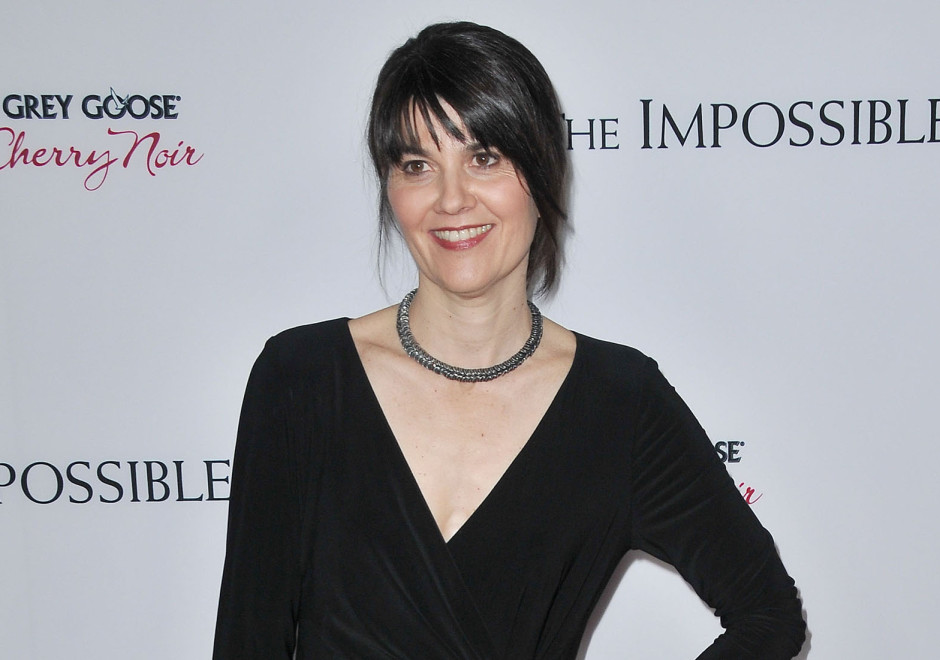
The Impossible Maria Belon photo

WRITER’S NOTE: This interview was conducted back in 2012.

I can’t begin to tell you what an honor and a privilege it was to be sitting across from Maria Belon, a Spanish doctor who, along with her husband and three sons, miraculously survived the 2004 Indian Ocean tsunami. Her story of survival is the focus of “The Impossible,” and she participated in a roundtable interview which I attended with several others. Belon may not see herself as a hero, but seeing her so lively and upbeat even after the horrific ordeal she endured is nothing short of inspiring.

In “The Impossible,” Belon is portrayed by Naomi Watts in a performance full of strength and raw emotion. We watch as Watts struggles to make her way to safety in the aftermath of the tsunami which decimated the coastal zone of Thailand, and it’s unnerving to see the injuries her character received which include a nasty gaping wound on one of her legs. Despite this, Belon said “nothing happened to us” (her and her family) because they survived. So, when J.A. Bayona, director of “The Orphanage,” came to her wanting to make a movie about the tsunami, she had to ask why.

Maria Belon: Why our story if we survived? Why in a story full of pain and full of loss pick up our story in which nothing happened? But then we understood that it was the only way of explaining the others’ pain was picking up a story of a family which nothing happened to.

The Impossible movie poster

For Bayona, the story of Belon’s family’s survival helped shed a light on the devastation left in the tsunami’s wake. Hundreds of thousands of people lost their lives, and “The Impossible” never ever loses sight of this. But more importantly, it is a story about many people and what they suffered. It is not just about this one family. Belon made this clear when asked if it bothered her how her family was being portrayed by English actors instead of those of Spanish descent.

MB: I am fed up with this question all the time. This movie is not about nationalities, not about races, not about colors. It’s about human beings. One of the conditions we put is that there should be no nationality for the family. I don’t care if they would be black, brown or green skin. I wouldn’t care about anything.

Belon said she was involved in the making of “The Impossible” for several years and did have a say in the film’s casting. When Bayona asked Belon who her favorite actress was, she replied Naomi Watts because of her performance in “21 Grams.”

MB: When I saw her in “21 Grams” I thought (gasp) what is this woman about? When he (Bayona) told me that Naomi is going to portray Maria, I was like okay, then I’ll go around the world to the other end and I hide. I don’t want to meet her; I don’t want to disturb her.

But despite her fear she might jinx Watts, Belon did eventually meet the Oscar-nominated actress, and the two spent a lot of time together on the set. Belon said they talked a lot about life, being moms, being lucky, death, loss and just about everything else as well. Clearly, these two women developed a very strong bond with one another that is unbreakable.

One of the most powerful moments from the interview was when Belon talked about what she called the gifts the tsunami gave her. A natural disaster like this seems to take away much more than it could ever possibly give, but you have to admire her for finding any upside in the midst of such immense tragedy.

MB: This is one of the gifts the wave gave me: I don’t care about myself anymore. I only appreciate the moment. I don’t think about the past anymore, I don’t take photos of any memories, and I don’t plan anything for the future. I only have now.

But although Belon survived the tsunami, she said she “almost died three times.” Once while hanging on the branch of a tree with her son Lucas, and two other times in the hospital. She admitted to being tired of struggling to stay alive, but it was the appearance of her husband which kept her going.

MB: When I saw my husband, I was like ‘good! Now I can rest. He was so nice when he said, I didn’t come here for that!

As for her three boys, Belon did give us an enthusiastic update on where they are in their lives. Lucas is now 18 years old and training to be a doctor, and she described him as being “immensely brave.” She said what he took from the experience of the tsunami is how there is never enough of what you can do for others. Thomas, now 16, is at a school where he studies half the time and does community service for the other half, and he is also working as a lifeguard in Wales. As for Samuel, 13, she said he is wondering whether being a firefighter or a policeman would be the best way to help people. Overall, they have all come out of this experience wanting to help others.

I myself asked Belon if she has been back to Thailand since the tsunami, and if work still needs to be done to repair the damage left in its wake. She replied there is still a lot of work which needs to be done especially with the orphanages and the widows. Many of the buildings have been repaired, but the souls of those who were left without parents and loved ones still need a lot of mending.

Watching “The Impossible,” you come out of it feeling like you survived the tsunami along with these characters. I shared this thought with Belon who said of course as this was part of the movie’s overall design.

MB: When we had discussions with the director and we spent hours and hours talking about the film, I said’it’s unfair to come back from one of those experiences with so much presence you get that you don’t give back. I told Bayona that it’s a bit difficult, but you have to make people go under the wave, and they said, “WHAT?!” I said sorry, that’s the only way. You go under the water, you drown and you almost die and you come out of the cinema and say (gasp), I’m alive!

“The Impossible” is one of biggest box office hits in Spain’s history, and Belon is thrilled with the response it has received as she is with the film itself. She is not sure what she’s going to do next, but she did express interest in returning to work as a doctor. Even after all she has been through, she made it clear she’s not afraid of the water and said “it wasn’t the ocean’s fault” for what happened. She has also come out of this horrific situation with a no-nonsense attitude.

MB: I only do what I enjoy. If there’s something I don’t enjoy, I quit. I did this (the movie) because I enjoy it. If somebody would like to do something that I don’t like then I will just go, “Sorry, I don’t like it (laughs).”

Maria Belon may not be a hero, but considering what she has been through, you cannot help but see her as a tremendously inspiring person. We’re all glad she’s still with us to tell her story, and it is a story which will hold you tightly within its grasp.

“The Impossible” is available to own and rent on DVD, Blu-ray and Digital.

Exclusive Interview with Cristobal Tapia Montt about ‘The Stranger’

Cristobal Tapia Montt in The Stranger

American audiences may not know who Cristobal Tapia Montt is, but they will not be able to forget him after watching him in Guillermo Amoedo’s horror thriller “The Stranger.” A Chilean actor who has spent much of his career acting in Spanish language movies and television, this Eli Roth production marks his first ever performance in an English language movie.

In “The Stranger,” Cristobal plays Martin, a mysterious man who arrives in a small town in the southern part of Canada to find his wife, Ana. The both of them are afflicted with a horrible disease which gives them a never ending thirst for human blood, and Martin is in town to kill her. But upon discovering that she died some time ago, he decides to commit suicide so he can eradicate this disease once and for all. However, after being brutally attacked by the town bullies, his presence in the town soon creates a snowball effect which will plunge its inhabitants into a bloodbath they have little chance of escaping.

It was a real pleasure talking with Cristobal about his performance in “The Stranger” as well as his other artistic works. Many have noted his unique approach to the characters he has played, and he has also been recognized for his work as an illustrator and musician. We talked about these things and a lot more, and I invite you to read our interview below.

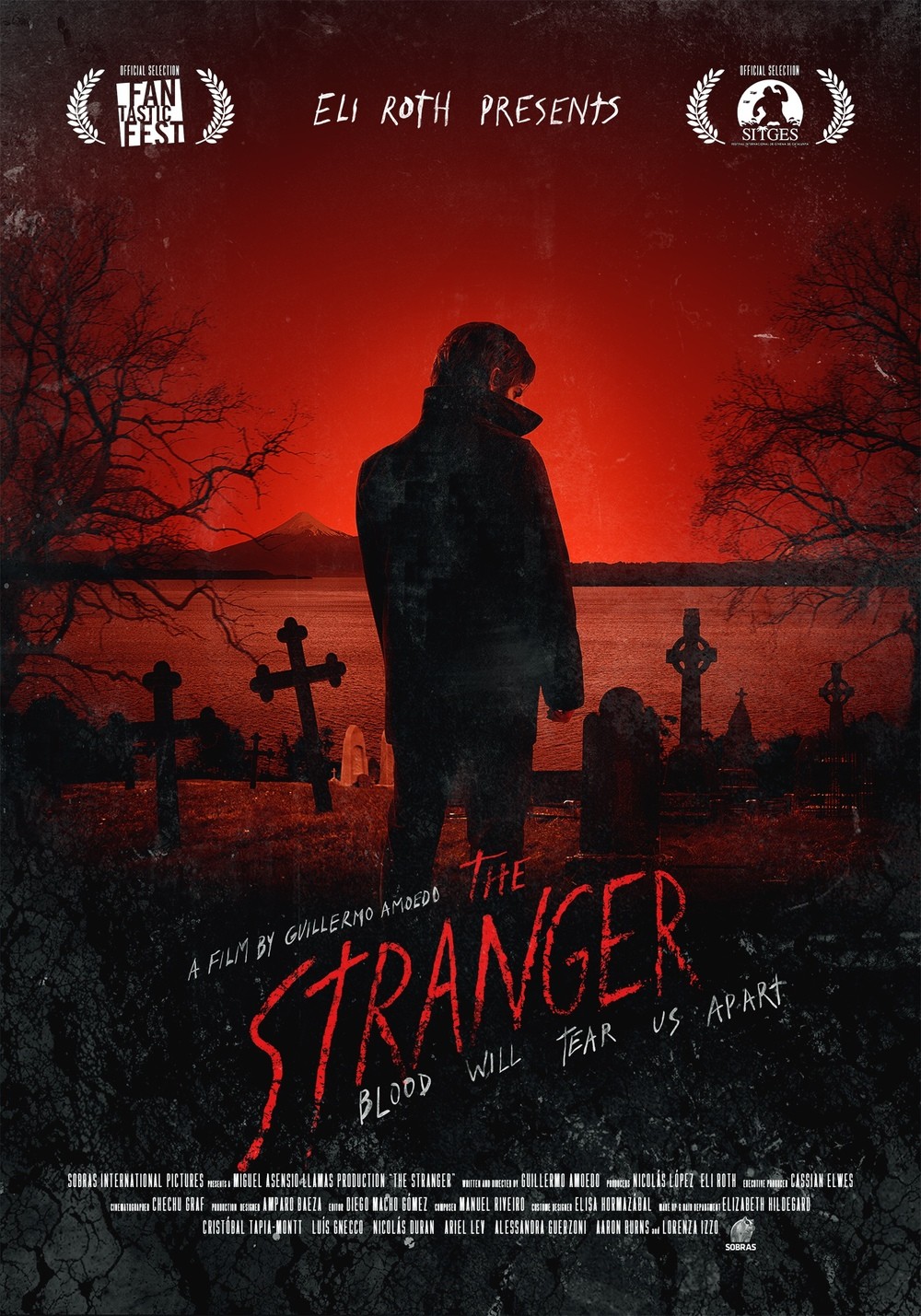
The Stranger 2014 movie poster

Ben Kenber: Your performance in “The Stranger” is really good. I liked how you managed to hold the audiences’ attention with a single stare.

Cristobal Tapia Montt: Yeah, there is a lot of staring in the movie (laughs).

BK: How do you prepare for moments where you have a close-up and stare straight into the camera?

CTM: I don’t know if there’s much preparation for that. I didn’t have a lot of lines so I knew I was going to have to work on this face and attitude where you could actually understand what I was thinking or feeling, so I just jumped into it on set. Guillermo was directing me pretty well so he really knew what he wanted, so it wasn’t really hard at all. It was really easy and everything was pretty clear from the beginning.

BK: In the production notes it says you have a very unique approach to the characters you play. Could you tell us more about your approach?

CTM: Well actually I didn’t go to acting school, so every character I portray comes from a gut feeling. Whenever I try to imagine myself being that person, I see my characters as living beings as friends or people I’ve met. I just try to understand and have empathy on whatever they are going through or what they are going through and just understand them. It’s a really weird way I guess for me because I don’t know if anyone else does it that way, I try to picture living creatures and try to understand and be them for a while. It’s very intuitive and I just play it by my gut and whatever I feel. It sounds pretty scary, but I guess acting is kind of like that for me.

BK: Your character of Martin remains a very mysterious character in this movie. He’s not necessarily a vampire, but he’s also not entirely human. Did you have to create a whole backstory for this character?

CTM: Yeah of course. Actually I asked Guillermo to help me out with that because he had a backstory already, so he shared it with me and we discussed it and I kind of added my own backstory because there was a couple of years and a couple of gaps in between with his wife and what he had gone through. I just had to come up with this whole backstory and the 16 or 17 years that passed by because you don’t really know what happens. The moment that Martin appears in this northern city in Canada I just had to fill in the gap of all those years, so that’s essentially the backstory that had to come out with because no one really knew went on during those years.

BK: I’m guessing Martin has been on this planet for a lot longer than anyone realizes.

CTM: Yeah, exactly. That was the whole idea in the beginning. That was a really interesting transition because you never hear the word vampire in the movie, but you end up understanding that this movie has a lot to do with vampires. Vampires never grow old, but what we wanted to do… You can see a transition through the years. We just wanted him to have the longer beard and we wanted him to look actually beaten up a little bit just because emotionally he got beaten up so we wanted to reflect that physically. I think you see that in the movie as well because in the flashbacks we (Martin and Ana) both look not younger but fresher in a certain way and Martin looks lighter. We wanted to portray them with this burden 16 years after, and I think you can appreciate that in the movie.

BK: Speaking of emotion, this looks like a very emotionally draining part to play. How were you able to maintain such strong emotions throughout shooting?

CTM: I guess as an actor you get trained to get into it, and when you’re on set you do it and then you just disconnect. It’s kind of like a switch, you know? So in that sense it wasn’t really hard. It was just like getting into it and then stepping out of it. We were shooting at night because most of the movie was shot during the night, so whenever I went home to the cabin where we were staying in, I would just sleep so I didn’t really have any time to even think about it. I would get there at like seven in the morning and wake up at four and just go for it again. It’s exhausting as an actor to shoot at night, but emotionally I was doing pretty much okay. It was fine. It wasn’t really that draining.

BK: What was it like shooting in that small town where the movie takes place?

CTM: It was amazing. It’s this beautiful town down in the south of Chile and it’s amazing. It’s like super green, it’s way down south, it’s rainy, it’s gloomy and it sets the perfect mood for the movie as well. I think we were there for 12 or 14 days, and just to be there and to stay at a cabin that was right off the shore of the lake and wake up to that was very inspiring. It’s easier shooting a movie when you’re in such an amazing location.

BK: What interested you most in playing Martin in “The Stranger?”

CTM: Well the fact that it was in English. It was my first opportunity to play a character in English because I’m a Chilean actor so I’ve only played characters that speak Spanish. So it was a huge opportunity acting wise to try that out and see what it was like to act in English and if I could pull it off as well. The opportunity to be in a movie that is being shown in the (United) States was just very, very attractive, and that possibility existed since the beginning of the movie. I speak English and Spanish so I wouldn’t mind trying to act in English for a while because I’m a native speaker. The story was very interesting as well. I’m a horror fan and I’ve always liked vampire movies and science fiction, and it’s my kind of genre so that was pretty cool as well. It’s like, I get to play a vampire! It was a very interesting project so I was attracted to it from the beginning.

BK: What would you say are the differences between doing a movie in English and doing a movie in another language?

CTM: I thought it was going to be very, very different and maybe more difficult, but in the end it’s the same thing. It’s the same language film wise. You’re speaking a different language but you’re still telling the story. It’s very much the same, you know? I don’t think it’s different at all. But the main difference is that you will probably reach a larger audience because English is a universal language. A lot more people speak English than Spanish I’m assuming. I could be wrong, but I guess it’s easier to show in different countries if it’s in English, and I guess that’s the main difference from acting in Spanish.

BK: I also read that you are known for your music and illustrations as well as your acting. Can you tell us more about that?

CTM: Yeah sure. I’ve been drawing since I was very young. I’ve been drawn to the artistic world in all its forms. I started playing on the piano when I was 12, so I’ve been always been playing music and drawing since an early age. I dropped out of college. I was there for three years and I was interested in studying design. I just kept on drawing and playing. I’ve played a cello, I’ve played in different bands, and I have a music project that I’ve been a part of as well. I compose and sing and play instruments. I just really enjoy art as a channel of expression. Acting is just another form of that art and it just helps me get stuff out of my system. If I didn’t have that it would drive me nuts. It’s very personal though. I’ve never really gotten my music out there. At art shows I show my drawings and I’ve had two that sold, and I play live sometimes. But it’s not something that… I feel like it’s more personal. I really don’t have the urge to just like put it out there and make everyone listen to my music. It’s more about me expressing myself and putting myself out there.

I want to thank Cristobal for taking the time to talk to me. “The Stranger” is now available to own and rent on DVD, Blu-ray and Digital.

Exclusive Interview with Caitlin Gerard and Emma Tammi on ‘The Wind’

There’s a movie coming out this weekend which is coming in under the radar which is worth your time. Once you have gotten through “Shazam” and the “Pet Sematary” remake, be sure to check out “The Wind,” a horror western which turns many of the clichés of scary movies on their heads. It also features some of the strongest female characters you could hope to see in a horror film in this day and age, and they are not your typical last girls or scream queens.

We are introduced to Lizzy Macklin (Caitlin Gerard), a plains-woman living in the untamed western frontier of the 1800’s who is forced to fend for herself when her husband, Isaac (Ashley Zukerman), leaves her alone to the needs of a close friend. From there, we watch Lizzy dealing with the elements which include a pair of fierce coyotes and a sheep that won’t stay dead. But when the wind of the movie’s title comes around, she is driven to near madness as forces beyond her control mess with her head, and she is forced to hold on to what is left of her sanity to live another day above ground.

I had the great opportunity to talk with “The Wind’s” director Emma Tammi and actress Caitlin Gerard recently. Tammi is known for her documentaries “Election Day” and “Fair Chase,” and “The Wind” marks her directorial debut of a narrative feature. Gerard portrayed Imogen Rainier in “Insidious: The Last Key,” and she is known for her work on the television series “When We Rise” and “American Crime.”

I want to thank Gerard and Tammi for taking the time to talk with me about “The Wind,” and I would also like to thank Rama Tampubolon of Rama’s Screen for being my cameraman on this interview. His help and tripod were very much appreciated.

Please check out the interview above, and be sure to check out “The Wind” when it arrives in theaters and VOD on April 5, 2019.

The Wind movie poster

‘Jurassic World: Fallen Kingdom’ Director J.A. Bayona Talks About Making ‘The Impossible’

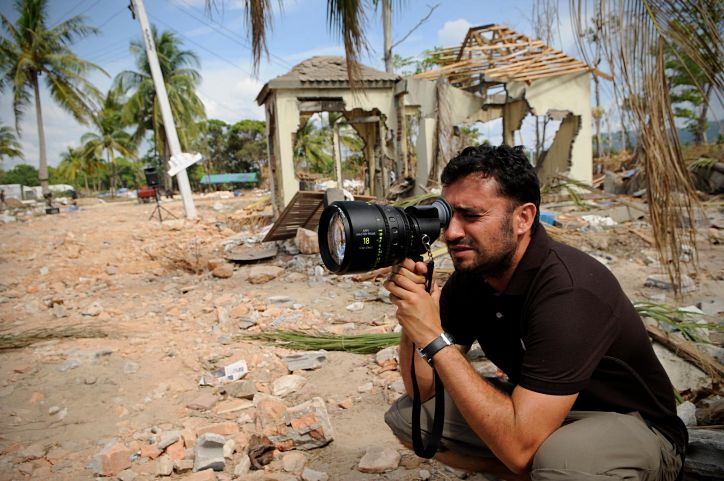
The Impossible JA Bayona photo

Spanish film director Juan Antonio Bayona, or J.A. Bayona for short, made a name for himself in 2007 with the horror movie “The Orphanage.” It earned him the respect of his fellow Spaniard Guillermo Del Toro who helped produce the film, and it became a big box office hit worldwide. These days he is known for directing “Jurassic World: Fallen Kingdom” which is expected to be one of the biggest hits of the 2018 summer movie season.

Following “The Orphanage,” Bayona was offered a number of movies to direct including “The Twilight Saga: Eclipse,” but he was really interested in doing something far more challenging to take on. Bayona found the challenge he was looking for with “The Impossible,” a movie based on the true story of a family that survived the devastating 2004 Indian Ocean tsunami in Thailand. What Bayona accomplished showed him to have great skill in getting strong performances out of an incredibly gifted cast, and he staged a tsunami scene so horrific, it puts the one in Clint Eastwood’s “Hereafter” to utter shame. The movie proves to be a cinematic experience as brilliant as it is gut wrenching to watch, and you won’t be able to ignore Bayona’s talent after you have seen it.

Bayona was at the Los Angeles press conference for “The Impossible” which was held at the Four Seasons Hotel in Beverly Hills, California back in 2012, and I was fortunate enough to attend his roundtable interview. We all thanked him for making this film which we agreed was one of the very best of the year.

The Impossible movie poster

Question: This is a great movie. Did you realize the scope of it when you got involved? Did you realize how inspiring it would be to moviegoers in general?

J.A. Bayona: Well it was getting bigger and bigger as much as we were getting into it. The first impact we had when we heard Maria (Belon’s) story was very emotional, and we wanted to figure out where that emotion was coming from. Even though it is a tough story and we’re talking about a tragedy, the emotion was coming not from a dark place. It was something that was coming from the way these people gave to the other ones in the worst moment. So, I thought that was very powerful and it was a very beautiful idea of approaching that. But then you talk to Maria and you realize how much suffering there is still nowadays. They call it “survivor’s guilt” even though she doesn’t like to call it that. She will talk about survival suffering because she doesn’t feel guilty for anything she did, but it’s really that there is a lot of suffering. I thought that would be interesting to tell the story of this family going there and then going back home and not talking about a disaster in a compassionate way and where you only talk about whether you live or you die. There’s a lot of gray space in the middle. From the very first meeting that we had we agreed that this was not just the family story. It was the story of many people, but the whole ending talks about that; how do you go home to the real world when your real world disappears? I like to see the film tell the story about the end of innocence. They don’t feel the same anymore, they lose the sense of security and their life is not the same anymore.

Q: How big of a challenge was this movie for you?

JAB: Well of course there was a huge challenge in the technical aspects of the film, but for me that was exciting and I was not worried about that. The real challenge was how to portray the story of the people who were there and how to give the big picture of what went on there and being respectful of the time.

Q: How much the movie was real and how much what was done with CGI? The movie looks very real even though some of those effects were probably done digitally.

JAB: Well it had to be like that because the story was very simple in reality so it could look like a visual effects movie. It had to feel real all the time. We did a lot of things for real like practical shooting and practical effects, and we also used a lot of CGI for greeneries and digital composition. But the great thing is to always mix several techniques so there’s a moment where everything gets lost so the audience doesn’t know what they are watching.

Q: Was anything done to reduce the carbon footprint of the movie or in trying to conserve resources?

JAB: Everything these days is now very regulated, so you have to be very respectful. For example, in shooting the water sequences in Spain the waters had to be darkened with a coloring used for food because that water had to be sent back again to the sea. Everything had to be natural. The water had to be decidedly desalinated before it got sent back to the sea.

Q: Did you think about shooting the movie in another country other than Spain, or was it always your intention to shoot there?

JAB: We did it in Spain because we found this huge water tank which is the second biggest in the world I think. So it was the perfect place to shoot all of the water sequences and once we finished with that we went to Thailand and we shot in the same places the tsunami took place in.

Q: The sound design in this movie is incredible, especially in the opening sequence. The screen is black but you already feel like you’re underwater. Can you tell us more about the sound design for this movie?

JAB: One of the things that I soon realized is that the characters didn’t have time to stop and think about what was happening. Everything was so fast that we had to deal more with emotions and sensory details. I was intellectualizing the sequence a lot with the actors, but in the end in front of the camera everything had to be sensorial and about the emotions. Sound has a great role in the film, and I talked a lot with Maria about the sounds and she was telling me for example that the sounds of the wave reminded her of the engine of the plane. This is the moment where I had the idea of starting with the sound of the engine because the movie was already starting and finishing on a plane. The way the plane sounds at the beginning and at the end is completely different, and that sets the behavior of the characters of how they go to Thailand and how they came back from Thailand. The sound of the way was very interesting. It sounds wilder underwater than on the surface because that’s where the danger was with all the debris and all the things which were dangerous for the people who were in the water were underwater. Maria was telling the also about the bloody birds, and I said, “What do you mean by the bloody birds?” She told me, “Once the water receded and we were completely alone in the debris and the devastation I started listening to the birds singing like nothing had happened, and I hated them at that moment because nothing happened to them.” This gave me the idea of how nature goes back to normal and that puts the characters very close to reality at the time, so of course we played a lot with this sound and with the music. It’s very interesting to see how music plays a lot with things that the characters can find the words to explain. I remember the moment when Maria was being dragged by this old man, and she sent me a message that was four pages of all these things that she felt in that moment. And in that sequence you only have a man dragging a woman so I focused only on Naomi’s eyes and I put some small music in their going up slowly, and only with that Naomi’s performance and only with their eyes and seeing the connection between this woman and this man. Using some notes of music, I was able to try to create a thought provoking experience in the audience, and that deals a lot with the four pages that Maria sent me.

Q: When this project began it was intended to be a Spanish production with Spanish actors, but then it became this huge thing. When did you decide to make this change?

JAB: Well we wrote the script in Spanish and we soon realized that 80% of the dialogue was already in English because people had to talk in English to be understandable to each other. Also I didn’t want to put the accent on nationalities because I wanted to portray all the people on the same level. I wanted to portray all the people like people, no nationalities. So it felt natural to go to English-speaking actors because first of all to finance a movie like this you need important names, but most of all I never wanted to put an accent on nationalities. If you see the film, they never say where they are from. All the time they talk about going back home. I wanted them to be very universal like a wide canvas so you can project yourself in there.

“The Impossible” is now available to own and rent on DVD, Blu-ray and Digital, and “Jurassic Park: Fallen Kingdom” arrives in theaters on June 22, 2018.


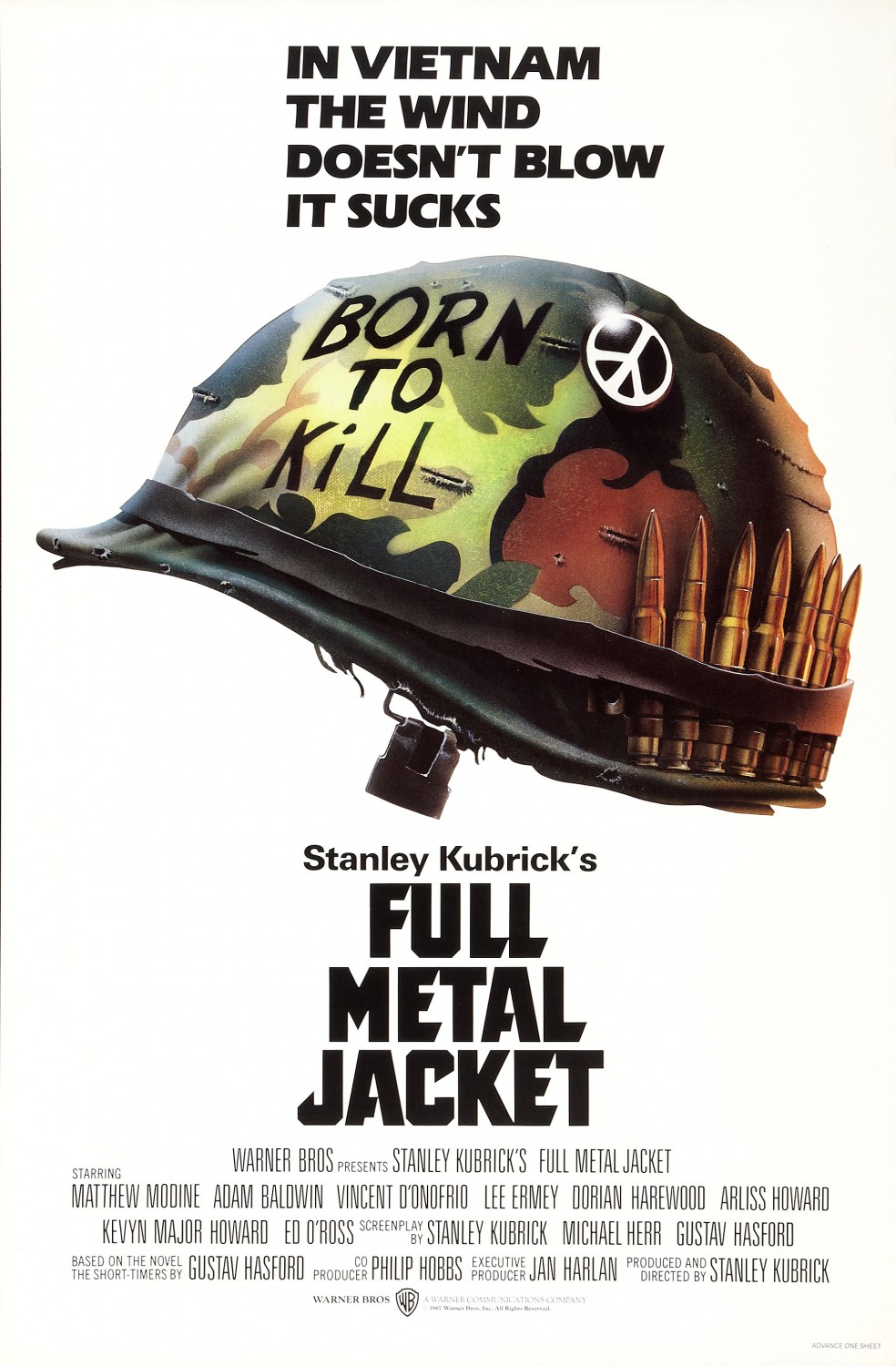
Matthew Modine Shares Stories About the Making of ‘Full Metal Jacket’

Full Metal Jacket Matthew Modine

While moderating a Q&A session with Leon Vitali and Tony Zierra about “Filmworker” at the Nuart Theatre in Los Angeles, actor Matthew Modine shared some stories about the making of Stanley Kubrick’s “Full Metal Jacket.” In the 1987 war film, Modine plays Private Joker, one of a dozen soldiers who endure Marine Corp basic training under the brutal and abrasive instruction of their drill instructor, Gunnery Sergeant Hartman (the late R. Lee Ermey). Following graduation, he heads to South Vietnam to work as a war correspondent for the Stars & Stripes newspaper, and it is there he witnesses the atrocities of war up close. The question is, how much of his humanity can hold onto in the face of death and destruction?

The stories of Kubrick’s behavior and work ethic have long since become legendary in regards to the methods he used to get an actor into a specific emotional state and the number of takes he puts his cast through. The first story Modine shared with us about Kubrick, however, proved to be a bit unexpected.

Stanley liked to carry a walkie talkie because he wanted to be a part of every aspect of the filmmaking,” Modine said. “Why shouldn’t he have a walkie talkie and know what the assistant directors were saying and what kind of movements were happening? We broke for lunch and the assistant director, Terry Needham, got a call from Stanley, and Stanley asked Terry to come over here. Terry said, ‘Okay, but where is here?’ He said, ‘I’m over here,’ and Terry said come out of the tent where we were having lunch. Terry didn’t want to say on the radio that he was stuck in the portapotty. He couldn’t get the door open. So that’s just a little window into a different part of Stanley that doesn’t appear in the documentary.”

During the Q&A, we learned how the crew on a Kubrick film was actually very small, and the one on “Full Metal Jacket” totaled about 15 people. Vitali even said there was only one electrician, and his job was simly operate the lights on a dimmer. Modine ended up adding a nice bit of trivia to this story.

The one electrician that we had working on the film, because of the union, he would come in and turn the lights on, and then Stanley would tell him to fuck off to his house because there was some wiring problem in his house,” Modine said. “He had to pay him for the day so he said go wire my house.”

Perhaps the most bizarre and hilarious story Modine shared with us was when he talked about Dorian Harewood who played Eightball, the soldier who experiences an especially brutal and bloody death which is captured in slow motion. The way this scene was shot, however, makes sense when Modine discussed what Harewood demanded from Kubrick.

Dorian Harewood is a wonderful actor,” Modine said. “We were originally contracted for about six months I think, and the contracts were coming to an end. So they wanted to renegotiate the contracts, and it wasn’t a renegotiation. It was just a reupping to continue the contracts for a longer period of time, and Dorian came to Stanley and said, ‘I want to renegotiate. I want more money,” and Stanley couldn’t believe the audacity of this young guy. He’s like, ‘You’re working for Stanley Kubrick and you are asking me to pay you more money?’ And he (Harewood) said, ‘Well yeah, I have to go back to Los Angeles. I have a singing career, I have an acting career, there’s other jobs, and if you want me to stay here, you’re gonna have to pay for it.’ Stanley couldn’t believe it, and I remember him stumbling around for hours furious with that crazy look on his face, and then he turned and he said, ‘I’m gonna kill him!’ I really thought, oh fuck, Stanley’s gonna commit murder. He’s going to kill Dorian Harewood. I said, ‘What do you mean?’ He goes, ‘I’m going to kill him.’ Remember when Dorian gets shot all over the body? It was because however number of days were left upon Dorian Harewood’s contract, Stanley was going to put in all the bullet hits he could. It was really cold. You could see Stanley wearing that hat and two coats, and we were wearing Vietnam khakis. It was freezing cold and snowing in London, and we were dressed up for North Vietnam. He killed him for as many days left that he had on the contract, and he had five days left lying on the cold earth with bullet hits. He (Stanley) would say, ‘Nah, we have to do it again. Put more bullet hits on him.’ And they were full loads full of exploding blood and everything.”

It was great to hear Matthew Modine share his stories about “Full Metal Jacket” as it remains one of Kubrick’s most memorable films. Many critics have called it the best war film ever made, and it features images which are impossible to forget. The actor also left us with something he wanted to share with all the directors in the audience.

My favorite direction from a director ever was from Stanley Kubrick,” Modine said. “He would clear his throat and pull on his beard and say, ‘Matthew, you’re not going to do it that way, are you?’ It’s my favorite direction because it’s so specific.”

In 2005, Modine published “Full Metal Jacket Diary,” a collection of photographs he took and of diary entries of his experiences which he kept during filming. Please click here to get more information about it.

Full Metal Jacket movie poster