‘Joker: Folie a Deux’ Movie and 4K Review

The following review was written by Ultimate Rabbit correspondent, Tony Farinella.

Joker: Folie à Deux” is an ambitious film to say the least. It’s a musical, a courtroom drama, a character study, a love story, and a thriller all-in-one.  Before I even put the film in my 4K player, I was well aware of how poorly it was received by critics and audiences alike.  I was also well aware that some people considered it a misunderstood masterpiece. I tend to fall somewhere in the middle with “Joker: Folie à Deux,” as I thought there were individual moments in the film which were powerful, well-acted and intense.  There were also moments where I was shaking my head and wondering what the hell was going on, and why they decided to go in this particular direction.  Overall, it’s a mixed bag, but I would say there is more bad than good in here.

I was a big fan of 2019’s “Joker” which surprised me, as I’m not usually a fan of comic book films.  I liked it because it didn’t feel like a comic book movie, and it was more of a character study.  I know film critics and fans like to criticize and call it a “Taxi Driver” rip-off, but I thought it was an impressive film with a standout performance from Joaquin Phoenix.  I was excited to watch the sequel, even with all the negative press it had received, because I thought the character was interesting, layered and complex. I wanted to see what they would do next with Arthur Fleck/Joker and what he’s been up to since we last visited him.
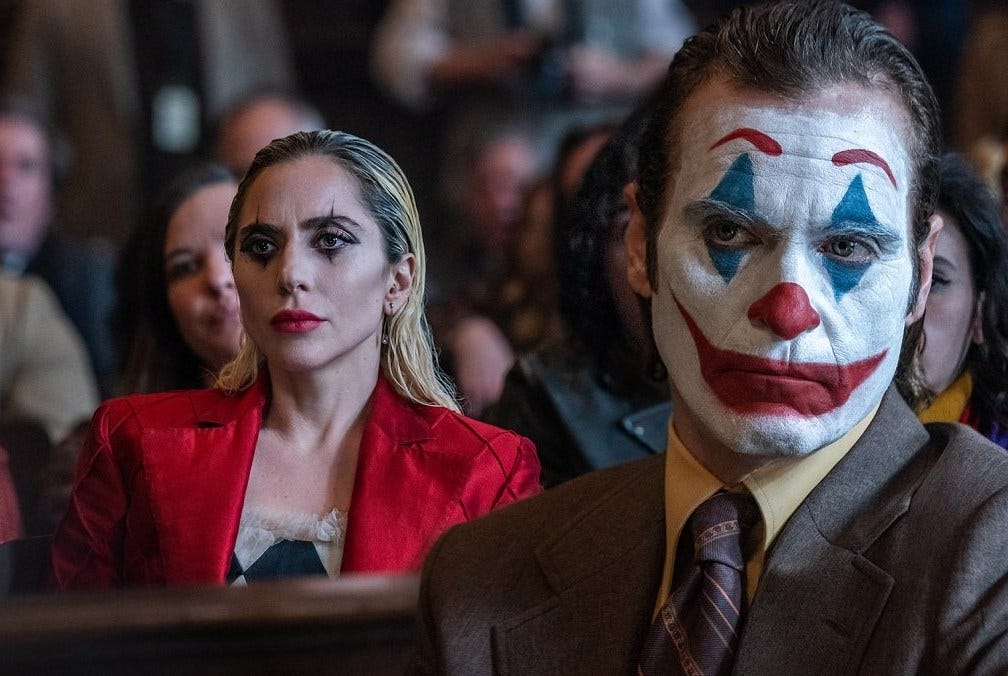
When “Joker: Folie à Deux” opens up, we see Arthur adjusting to life in Arkham State Hospital. He’s become a local celebrity because of the TV movie on his life, and the guards and fellow patients alike are fascinated by him.  While in the heavily guarded hospital, he’s awaiting trial for the five murders he committed.  Arthur’s lawyer, Maryanne Stewart, played by Catherine Keener, is not exactly sure what to make of him.  Her case is going to center around the fact that she believes Arthur suffers from dissociative identity disorder, which means his Joker persona is responsible for the murders. I found this part of the film to be the most intriguing, especially when Arthur is interviewed by a reporter, played by Steve Coogan.

One day, Arthur meets Lee Quinzel (Lady Gaga), and it is love at first sight.  They connect over their love of music, and she’s also a fan of Arthur.  She tells Arthur she’s watched the TV movie about his life twenty times and reveals they have a lot in common. Arthur is smitten with Lee, and they hit it off right away.  This gives him new life as he prepares for his upcoming trial.  He trusts anything that comes out of Lee’s mouth and believes she knows what is best for him. His lawyer, on the other hand, is looking out for Arthur’s best interests and warns him to keep his guard up.
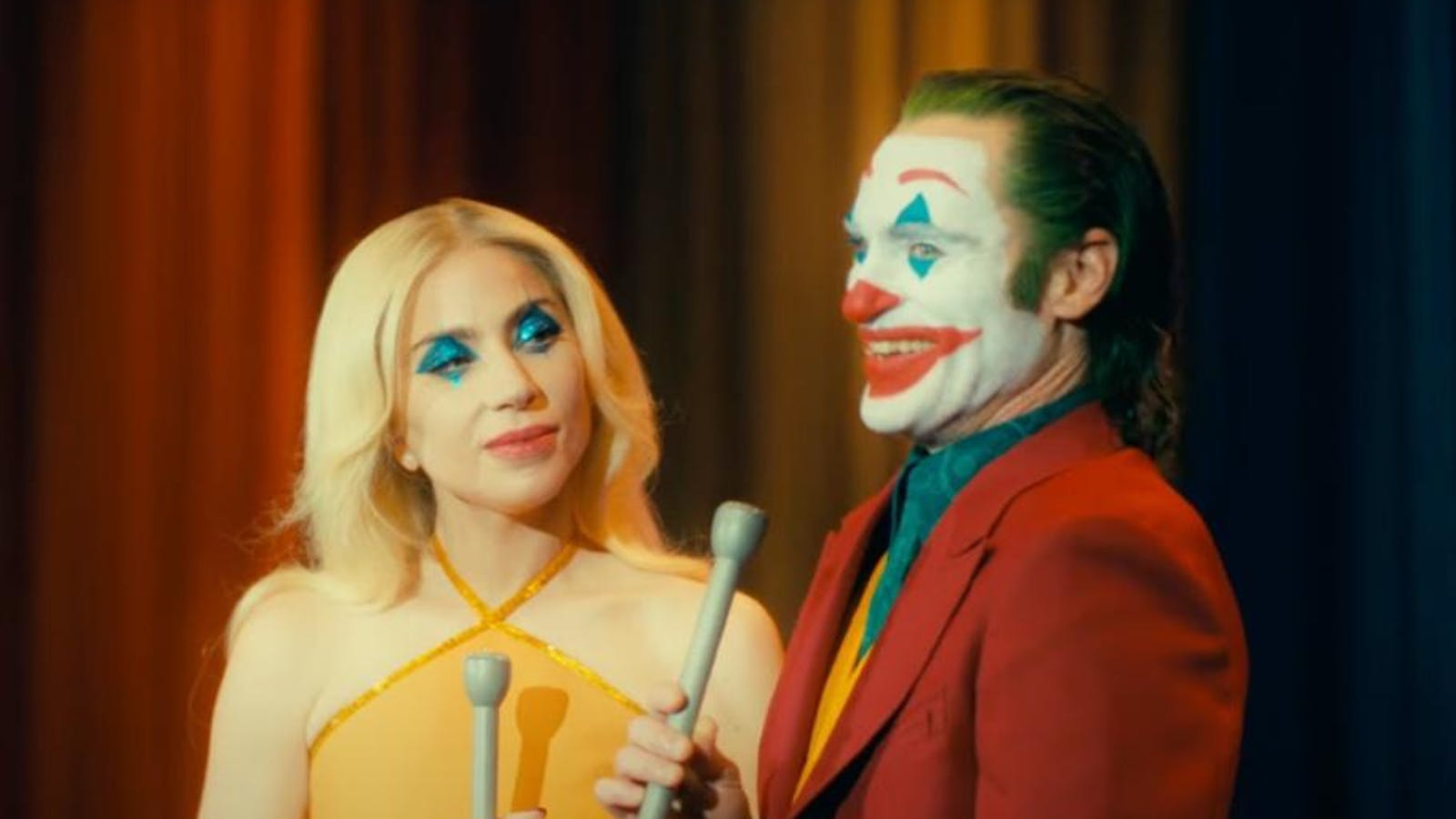
Let’s start with the positives—”Joker: Folie à Deux” has a lot of big ideas.  I enjoyed the exploration of mental health.  I thought the way they presented it was done in a way that was compelling and multifaceted. I also liked the way the film dealt with how society becomes obsessed with fame and how villains and killers are worshipped by the public. I thought the film had a terrific cast.  The performances were nuanced and believable. All of this made this sequel even more frustrating because there are true moments of brilliance on screen from the actors and the people behind the scenes.

Whenever the film started to get interesting or capture my attention, it would seem to have a moment where it felt like the director and the screenwriter were messing with the audience. It was almost as if we entered another film. I didn’t understand why they didn’t have the conviction and nerve to just make this a straight-up sequel without all of the random musical scenes and gimmicks. I have nothing against musicals, but these scenes made me lose my focus because they didn’t add to the story and instead took away from what was happening on screen.  Again, I felt like the director and the screenwriter were just messing with the audience and playing games.

Overall, I can’t recommend “Joker: Folie à Deux” because the film is all over-the-place and wildly inconsistent.  It’s even more infuriating because, like I stated previously, there are some really, really powerful and well-acted scenes throughout. However, they are not in the film nearly enough to recommend it.  Lady Gaga, for example, is great, but she doesn’t have enough screen time.  I was hoping she would have just as Phoenix did, but she’s in and out of this film far too often.  This is one of the most disappointing films of 2024.  I didn’t hate it, but I sure was disappointed by it.

* ½ out of * * * *

4K Info: “Joker: Folie à Deux” is released on a single 4K disc from Warner Brothers Home Entertainment. It also comes with a digital copy of the film. The film has a running-time of 138 minutes and is rated R for some strong violence, language throughout, some sexuality, and brief full nudity.

4K Video Info: Much like 2019’s “Joker,” this is a top-notch visual experience.  It is crystal clear from start-to-finish.  The film also has deep blacks which really set the moody and atmospheric tone of what unfolds. From a visual standpoint, this film gets an A. The Dolby Vision transfer is perfect.

4K Audio Info: The Dolby Atmos track is also perfect. This is a theatrical movie in every sense of the word, and the audio is perfect. It’s perfect for your at-home theater set-up.  Subtitles are included in English, Spanish and French.

Special Features:

Everything Must Go (Four Part Longform Documentary)

   – Can I Have a Cigarette?

   – Finding Lee

    – A Hundred Films in One

    – King of Nothing

The Character of Music

Live! With The Joker

Colors Of Madness

Crafted With Class

Should You Buy It?

This is going to be a hard pass from me unless you loved the film and thought it was brilliant.  I know John Waters and Quentin Tarantino have praised it, and it has been a source of controversy in the film community. Overall, I didn’t think it was great, and I also didn’t think it was one of the worst films of the year either. I think it’s below average, but it’s watchable, despite its lengthy running time. Joaquin Phoenix gives another top-flight performance as Arthur Fleck, and it’s hard to keep your eyes off him on screen. As mentioned earlier, I wish they would have given Lady Gaga more to do, as I thought she was fantastic when she was on-screen.  Overall, I’d say watch it on Max and see how you feel about it. If you do like it, you will be very happy with this 4K release.

**Disclaimer** I received a copy of this film from Warner Brothers to review for free.  The opinions and statements in the review are mine and mine alone.
Spike Jonze’s ‘Where the Wild Things Are’ Deserves Another Look

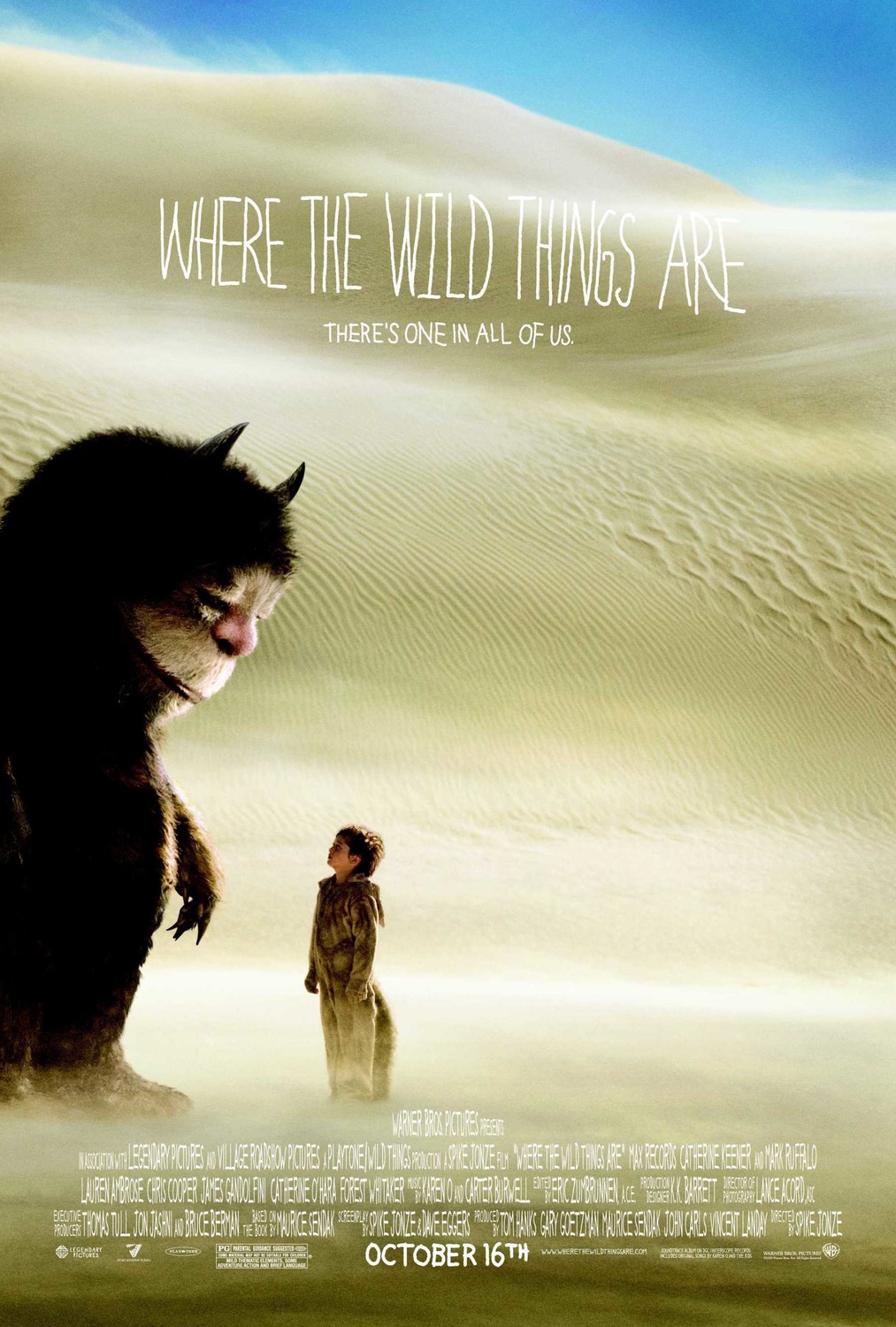
Back when I saw it in 2009, Spike Jonze’s take on Maurice Sendak’s “Where the Wild Things Are” proved to be one of the few movies which I felt really dealt with real kids instead of the cliched ones which inhabit far too many motion pictures. Here, we get a young boy who has quite a vivid imagination which he retreats to when the real world becomes too scary to deal with, and who comes from a broken family where the father is not present. It was nice to see kids, one in particular, treated as intelligent and capable of learning more than they knew, and it combines them with things which are real, imaginary and, of course, wild.

The kid here is Max, and he is played by Max Records in one of the best performances I have seen from a child actor. Seeing him build an igloo out of a snow pile or making a spaceship in his bedroom with his stuffed animals as willing passengers brought back great memories from when I was a kid. But reality rears its ugly head when other kids thoughtlessly destroy his igloo, not thinking of what it meant to him. Then we see him in elementary school as his teacher explains how the sun will die one day. This is one of the funnier moments as the teacher just can’t stop talking about all the different ways our planet will die. Granted, this won’t happen for another billion years, but when you’re a kid, this can feel like it is just around the corner.

Everything comes to a head as Max becomes very resentful of his mother (the always terrific Catherine Keener) when she brings home a new boyfriend (played by Mark Ruffalo). The bond Max shares with his mother is very strong, but when he is no longer the center of her attention, he rebels and ends up biting her on the shoulder. Horrified at what he did, Max runs away from home and sails to a distant island where he does indeed come across the Wild Things of the title, and this is where the rumpus truly begins…

The Wild Things are a combination of puppetry and CGI effects, and it makes them all the more real as a result. The visual effects are used to give them facial expressions which vividly captures their happiness and sadness. As a result, it never ever felt like I was just watching a whole bunch of special effects. It really felt like I was watching creatures I could actually interact with.

Of all the monsters, the one with the most recognizable voice is the late great James Gandolfini who plays the most prominent Wild Thing, Carol. We first see Carol destroying some dwellings he had just built. For Max, breaking things has a wonderment to it, and Carol links on to this with the upmost enthusiasm. Gandolfini is wonderful, and at times truly heartbreaking as he takes Carol from utterly enthusiastic highs to downright angry lows. This is not him doing Tony Soprano as if he was all covered with fur. Also, Carol’s last scene is one which really choked me up, and Gandolfini sells it for all it is worth.

Among the other voices are Catherine O’Hara’s, and she plays Judith, the one monster who is very mistrusting of Max. Paul Dano plays the ever so sensitive Alexander, and he captures the painfully shy nature of this monster in a very truthful way. Forest Whitaker portrays Ira, and I barely recognized his voice here which is pretty impressive. Lauren Ambrose voices KW, and the moments she shares with Max form some of the movie’s best moments.

You know the saying of how we have met the monster, and the monster is us? Well, that is very much the case here. The Wild Things clearly represent the different parts of Max’s personality, and he soon comes to see himself in all of them. As a result, Max manages to see things a little more clearly in relation to his own family, and especially his mother. By becoming the monsters’ king, he realizes he has become much like his mother.

I really mean it when I say Records gives one of the best child actor performances I have ever seen. The whole movie really rests on his shoulders, and that is a lot to put an 11-year-old through. Jonze really lucked out getting him to play this part as the young actor makes his character’s transition from being just a kid to someone who is more mature and understanding very believable, and this really shows in the movie’s last half.

Jonze shot a good portion of the action with handheld cameras to give the proceedings more of an immediacy, and he thankfully does not overdo it. Some filmmakers fail to reign this camerawork in a lot of times to where it is hard not to feel sea sick. This was only his third movie as a director, following the creative triumphs of “Being John Malkovich” and “Adaptation,” and his directorial vision remains a very original one.

“Where The Wild Things Are” was originally supposed to be released in 2008, but Warner Brothers had considered reshooting the whole thing. It turned out Jonze’s vision was a lot darker than they expected it to be for something they thought would be an average family movie. The fact that Jonze’s take on this classic children’s book did make it to the silver screen and was not buried in a deep dark dungeon like “Batgirl” feels like a miracle. While it was not the box office hit the studio hoped it would be, it continues to have a long shelf life.

It also has a wonderful soundtrack done by Karen O and the Kids. It’s one of those soundtracks which has really great songs which are never easily forgotten, and it adds vividly to the strong emotions generated throughout.

Is this movie appropriate for kids? Well, it depends. If they are 6 years or younger, you may want to see it before they do. I was sitting near a boy and his mother, and the boy did get a little freaked out at times. Still, it is nowhere as traumatic as “Watership Down” or “The Neverending Story” was. If your kid can handle “Bambi,” they can handle this one as well.

One of my favorite scenes comes when Max and the monsters are jumping all over the forest, and Carol was creating big dust clouds when he landed. This all leads to a wonderfully heartwarming moment where the wild things pile on top of each other and fall asleep. Seeing Max befriend the somewhat alienated KW is especially great because their individual differences just evaporate at that point. These are two who can relate and sympathize with one another as they both come from worlds where they feel like outcasts.

If there is one weakness to be found here, it is that the plot does not always hold together. There are some moments which drag, and it takes a bit for the pace to recover. Then again, this movie is based upon a book that is only ten sentences long. The fact Jonze and co-writer Dave Eggers were able to craft a story for a feature length movie out of it is pretty amazing. But when you read or re-read the book, I think you will find that there is more to it than its simplicity of story might imply.

There was a bookstore next to the theater I saw the film at, and I dashed in there to read the book. I can’t even remember the last time I read this Caldecott award winner, and there is a lot of different ways you can look at it. You can see it as a story of how kids do not easily separate from their parents, and of how the further away from home they get, the more they realize the importance of a home. Or maybe you will see it as a story of the one person who becomes king and gets what he wants, but then finds it deeply unfulfilling and bereft of love and family which we largely thrive upon.

I think Jonze saw “Where the Wild Things Are” as a story which clearly take in a child’s point of view. Just about everything in this movie made me feel like I a child again, and of how we become shaped by the things which make us happy and sad. It is not meant to break down the imaginary worlds we create for ourselves, but of how they can make us understand the world around us and the people who figure most prominently in our lives better. Max comes to see why his mother treated him the way he did, and he grows up a lot quicker than most others his age do in the process.

For me, this film was something of a godsend when I first watched it. We see kids treated like real kids, and there is a wealth of genuine imagination and emotions throughout. While it doesn’t always hold together, it is a much more accomplished film than many others which get passed off as “family entertainment.” Too many movies then and now are dumbed down for audiences, and they often don’t treat children like the intelligent creatures they can be,

Indeed, no one could have brought this classic book to the silver screen the way Jonze did. And after all these years, it is definitely worth another look.

* * * ½ out of * * * *

‘Joker: Folie a Deux’ – Yes, It Is That Disappointing

After spending too much time watching its critic and audience scores sink like stones on Rotten Tomatoes, I took the time to check out “Joker: Folie a Deux” at my local movie theater. Regardless of its horrific reception and the fact it is now one of the biggest box office bombs of 2024, I had to see it for myself as, and I am in agreement with Tony Farinella, the original was one of the very best movies of 2019. Surely it could not be as bad as many were making it out to be, and perhaps its Cinemascore grade of a D might prove to be a badge of honor. And perhaps it may be a misunderstood masterpiece which will only grow in stature like other box office debacles have in the past. Anything is possible.

Well, in the meantime, I have to be honest and say “Joker: Folie a Deux” is a tremendous disappointment. In its attempt to retain the anarchic spirit of its predecessor, it instead becomes a miserable and lifeless spectacle which many have described as being inert. This reminds me of some dialogue uttered by Hal Williams in “Private Benjamin:”

“Beware, there are mine fields out there. Most of them are inert. However, some are ert.”

Well, this sequel could use way more of those ert moments.

We catch up with Arthur Fleck (Joaquin Phoenix) two years after the murders he committed, and he is in custody at Arkham State Hospital, the place where all DC Comic villains end up residing in at some point. While he awaits trial where he is expected to answer for his crimes, his lawyer Maryanne Stewart (Catherine Keener) looks to prove he suffers from dissociative identity disorder and that his alter ego of Joker is far more responsible for the heinous acts he has committed.

While passing by a musical therapy session, Arthur catches the eye of Harleen “Lee” Quinzel (Lady Gaga), a patient who becomes instantly smitten with him. From there, these two form an unshakeable bond as they revel in one another’s chaos and fight against a society which seems infinitely determined to break them down in any and every way. But can this love affair survive the legal ramifications Arthur may have to answer to?

The big question many have about “Joker: Folie a Deux,” as I do, is this: is this sequel really a musical? Ever since the commercial failure of Steven Spielberg’s remake of “West Side Story” and the underperformance of the movie version of “In the Heights,” Hollywood has been shy about declaring any of its upcoming releases as being anything resembling a music video, let alone a musical. I can easily imagine a conversation between a film buff and a movie executive sounding something like this:

“Is this film a musical or not?”

“Well… it has music in it…”

When it comes down to it, “Joker: Folie a Deux” has a number of musical moments where Arthur and Harleen sing and dance to such tunes as “What the World Needs Now is Love,” “For Once in My Life,” “If My Friends Could See Me Now” and “That’s Entertainment” among others. Some are rehearsed to where the actors are not expected to be as well-rehearsed as the average Broadway actor, and others prove to be more theatrical in ways I expect from someone like Lady Gaga. Regardless, I felt this sequel did not engage the musical form in any kind of enthralling manner. It’s like it wanted a musical, and then it didn’t want to be as it went straight into a courtroom drama which simply regurgitated the events of the previous film.

This is a real shame as there is a lot to admire about “Joker: Folie a Deux.” The cinematography by Lawrence Sher is truly Oscar worthy, the production design by Mark Friedberg is impressive, and Hildur Guðnadóttir, who won an Oscar for her work on the previous film, gives this installment strong musical compositions. As for the actors, Joaquin Phoenix remains one of the best working in movies today, Lady Gaga remains an amazing talent, and we get terrific performances from infinitely reliable actors like Catherine Keener, Brendan Gleeson, Steve Coogan and Zazie Beetz throughout.

And let us never forget Leigh Gill who returns as Gary Puddles, Arthur’s former clown co-worker whose life he spared despite very brutal, not to mention horrifically bloody, circumstances. Seeing Gary testifying against Arthur is quite painful as he is testifying against a former friend and one who was always kind to him when no one else was proves to be moving and painful, and also one of the few moments this sequel has with any kind of invigorating emotion.

But as “Joker: Folie a Deux” reaches its final act, I became completely bewildered at what unfolded before me. We watch Arthur Fleck, decked out in his Joker makeup, apologize for his murderous actions to where he renounces his Joker persona. The problem is, “Joker” dealt with all the forces and a cruel, unforgiving Gotham city which turned Arthur into the menace he became to where it acted as an indictment of a society which renders his mental health a minute concern. By that film’s end, Arthur has fully embraced his alter ego to where his former life is just a memory, and he no longer feels any shame forced on him. But here, it is almost like the first film is treated like a joke when it never should have been.

Todd Phillips described the first “Joker” film as being an origin story, but not the  origin story of this particular villainous DC Comics character. To him, these two films were based on an idea of this character not actually being the Joker, but instead being an inspiration for the Joker. This is an interesting idea, but he doesn’t do a good job of communicating this idea to us. Instead, I came out of it feeling like the rug was ripped out from under me, and its conclusion left me feeling as emotionally wrung out as the one from “Alien 3” did, and that one made me want to shoot myself.

I don’t know; perhaps time will be kind to “Joker: Folie a Deux.” It was released the same year as Francis Ford Coppola’s “Megalopolis” and, like that one, received a terrible critical and commercial reception. It pains me to think this will be the last time in a while where a filmmaker will have unchecked power when making such a big-budgeted motion picture. While Coppola has the excuse of self-financing his passion project, Phillips is not so lucky as a major film studio backed him on this one, thinking they had another billion dollar hit on their hands. This feels like an implication that future movies like this one will be rendered more formulaic and safer in the process. That sucks, doesn’t it?

For what it is worth, “Alien 3” has grown on me a lot since its theatrical release, and maybe this one will too. Then again, it doesn’t have Marc Maron whose character survived the last one. Could the man with the WTF podcast have saved this one? Okay, that’s wishful thinking,

* ½ out of * * * *

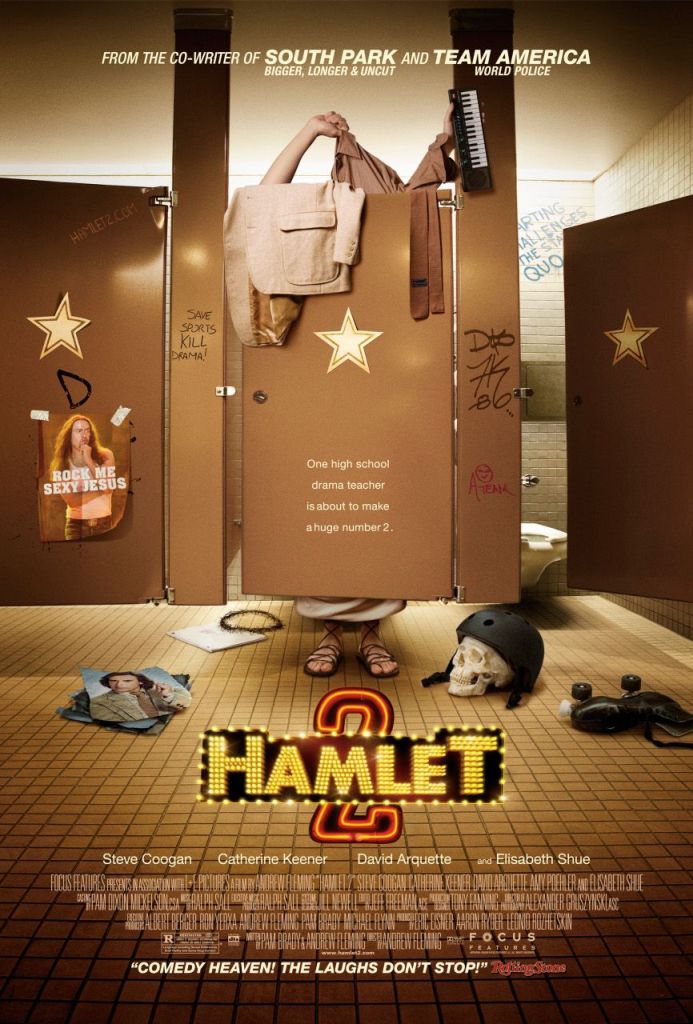
‘Hamlet 2,’ A Most Unusual and Unexpected Sequel

WRITER’S NOTE: Eddie Pence selected this as his Video Vault pick on the August 15, 2020 episode of “The Ralph Report.” But while the host of the podcast, Ralph Garman, was not particularly crazy about it, I think it is better than Garman gives it credit.

“Hamlet 2” starts off with an invisible voice telling us that to be an actor, you have to live in a dream. But dreams do die however, and the question posed here is this: Where dreams go when they die? Well, if you are Dana Marschz (played by Steve Coogan), then you go to Tucson, Arizona to spend the rest of your life teaching high school drama. Being an actor myself, there is something quite scary about the fate of this particular actor who is best known for his herpes medication commercials. Here in Arizona, he hopes to pass on his love of acting to high school students, and this is the thrust of the plot which powers up a motion picture dealing with one of the most unlikely sequels ever to be created.

“Hamlet 2” was a big hit at the Sundance Film Festival, and while it didn’t quite live up to the hype in my eyes, it was still a very clever movie which kept me entertained from beginning to end. It is a hilarious look at how art can never truly be suppressed, and this includes art which was never all that good to begin with.

We meet up with Dana Marschz sometime into his career as a high school teacher, and he only has two students, Rand Posin (Skylar Astin) and Epiphany Sellers (Phoebe Strole), who really seem to care about drama and acting. His latest class, he discovers, is largely populated by Latino students who are in attendance because their other electives have been cut, and drama is the only one left. It reminds me of all those high school kids with who were in drama class because was the only one they could get an easy A in other than physical education. Dana, however, is convinced this is being presented to him as a challenge he must face with no fear. While these students may seem unenthusiastic about drama, he is determined to change their minds.

Dana’s existence is a recovering alcoholic with a wife named Brie (played by the great Catherine Keener) who drinks a margarita from a gigantic martini glass. They also have a boarder, Gary, (David Arquette) who is sleeping with Brie while Dana rollerblades to school because he cannot afford a car. His gift to the high school is plays he wrote which are direct adaptations of the movies “Erin Brockovich” and “Dead Poets Society.” Still, they get ripped to pieces by a young critic who shows no mercy for Dana’s passion. Dana’s basic cry for all the negative criticism is, “He fisted us!”

Dana ends up conversing with this unsympathetic teenage critic to seek inspiration, and he suggests to Dana that he write something original and put everything into it. Thus, he comes up with what in many ways is a completely unnecessary sequel to one of William Shakespeare’s most famous plays, “Hamlet.” There is a rather large problem though as just about every character dies at the play’s end. But Dana, still up for an artistic challenge, remains undeterred by this, and he comes up with a device to solve this problem in the form of a time machine. Upon discovering the rather racy nature of the play, the most suburban students do everything they can to keep it from being performed, but Dana ends up proving to everyone that you cannot stop art.

It’s a little hard for me to critique “Hamlet 2” objectively because Dana’s fate is one I hope to avoid. It is made clear from the outset that he is not particularly talented, and we get a montage of scenes featuring him as an actor. The funniest one is a commercial he did for Herpes medication as he tells us, “Right now, I am having a herpes outbreak. But you wouldn’t know it!”

In the process of writing and directing his sequel play, it gets banned from being performed at the high school, and Dana ends up inspiring the Latino kids to put it on at another location. He even gets help from the ACLU to keep his play from being censored. Talk about free publicity!

“Hamlet 2” is a terrific star vehicle for Coogan, and he is never afraid to make himself look completely silly. He shows no fear in portraying Dana as a complete failure both as an actor and a drama teacher. That he somehow inspired these students who have grown up in a far different environment than his is pretty amazing. But in the end, it doesn’t matter if Dana is really bad or good because he gets the play up to the excitement and infuriation of everyone in Tucson, Arizona, the city where dreams come to die. Coogan proves to be a brilliant comic actor here, and he still is all these years later.

The director and co-writer of “Hamlet 2” is Andrew Fleming, and he does a good job of not taking things too seriously. Fleming started off his career as the writer and director of the “A Nightmare on Elm Street” wannabe, “Bad Dreams” (this title tells you all you need to know). From there, he went on to direct “Threesome,” “The Craft,” “Dick,” and “Nancy Drew.” Suffice to say, he has been around for a while, and this film proved to be one of his stronger efforts.

“Hamlet 2” also features a terrific performance from Elisabeth Shue who plays herself here. In this movie, she has given up on acting and appears to be much happier working as a nurse in a sperm bank. Dana goes gaga over Shue and invites her to speak with his class, but they have no idea who she is. We all remember her from “The Karate Kid,” and she earned a much-deserved Oscar nomination for her unforgettable performance in “Leaving Las Vegas,” but over the years her star has not ascended in the way we thought it would. Still, she works constantly and is always on the verge of giving us her next memorable performance. And, as “Hamlet 2” shows, she has a great sense of humor about herself.

Anybody who has ever been involved with community theater or in high school plays will get a kick out of this film. In retrospect, the high school students were the ones who manage to get the show up and running, and this is shown here. That Dana manages to inspire these kids through his embarrassing ways is astonishing. When you are already deep into the production of a show and your director flakes out or becomes useless, you can’t just give up. As Dana’s personal life hits rock bottom, it’s those kids who pull him up from the abyss.

I also like how “Hamlet 2” got into the conflicts Dana has with the school and parents because everyone in these situations always acts in an overly conservative way. As time goes on, I get more interested in what does not offend people because it seems like we are always looking to get mad about something. Granted, you can see why people might object to Jesus Christ kissing Satan or with a song entitled “Rock Me Sexy Jesus,” a song which was criminally robbed of an Oscar nomination. But everyone in the end is saved due to the protected freedom of the 1st amendment of the Constitution. That pisses a lot of people off, but that’s their problem.

The ACLU eventually gets involved when the show is threatened to be shut down, and a lawyer comes to visit Mr. Marschz to lend her help. She is played in a kick ass scene stealing performance by Amy Poehler. Her character of Cricket Feldstein is a ball buster about protecting the production, and she makes sure everyone involved gets to put it up. Her disinterest in whether or not the play is any good (“It’s irrelevant,” she says) is hilarious, and Poehler continues to show why she is one of the funniest actresses ever.

“Hamlet 2” is a lot of fun to watch, and the play which comes out of it is a hoot as it is a quasi-musical in which Hamlet and Jesus team up to change the past. Granted, they take all the drama and tragedy out of Shakespeare’s “Hamlet,” but it is a little hard at times to argue with Dana who calls the play “a real downer.” In addition to “Rock Me Sexy Jesus,” there is another song called “Raped in The Face” which is Dana’s stab at the critics who keep taking apart his plays based on movies. The song title alone demands your complete attention.

All the same, I wished the filmmakers had pushed the envelope a bit more. Seriously, you have to expect some envelope pushing when one of the writers, Pam Brady, is from “South Park.” I’m not saying “Hamlet 2” had to be insidiously evil, I just wished the satire in parts was a little sharper. Or perhaps I got a little depressed with Dana’s station in life because it is one I hope to avoid in my own life, and this made it hard for me to be more objective about what I saw. Still, this comedic film has stayed with me since I first saw it, and at some point, I need to watch it again.

Shakespeare once wrote about how all the world is a stage, and he was absolutely right. We are all merely players in this crazy thing called life, and “Hamlet 2” plays with this to such an enthusiastic extent to where I wonder if another “Hamlet” sequel is in our future. Or better yet, maybe we can get a “Romeo & Juliet” sequel as young love does not have to be so infinitely depressing. Seriously, everyone deserves a second chance.

* * * out of * * * *

‘Sicario: Day of the Soldado’ Proves to Be a Powerful and Worthy Sequel

Sicario Day of the Soldado movie poster

Sicario” was one of the most intense cinematic experiences I have had in the past few years, and it was one of the best movies of 2015. When I heard a sequel was being made, I was excited but also a bit reserved as I soon learned Emily Blunt, Denis Villeneuve, Roger Deakins and the late Johann Johannsson would not be returning for it. Sure, Benicio Del Toro, Josh Brolin and screenwriter Taylor Sheridan were back for another round, but would this be enough? Sequels at times have an immense power to sully their predecessors in an unforgivable way, and I was praying this one would not be a mere cash in.

Well, “Sicario: Day of the Soldado” (soldado is Spanish for soldier) doesn’t quite equal the brute force and honesty of its predecessor, but it does prove to be a very strong sequel. It also turns out there was a good reason to continue the stories of Alejandro Gillick (Benicio Del Toro) and Matt Graver (Josh Brolin). Whereas “Sicario” was about the militarization of the police, this sequel removes the policing aspect from it to reveal an even darker and more cynical take on the war on drugs and illegal immigration.

“Soldado” gets off to a brutal start as we watch three men enter a grocery store in Kansas City and blow themselves up. The way this scene is set up quickly reminded me of the take no prisoners attitude Villeneuve brought to “Sicario,” and this is made even clearer when one suicide bomber looks to spare a mother and child from certain death, and then does not. Like the original, “Soldado” is not about to offer its audience an easy way out of the harsh reality it presents here.

To combat this terrorism, which Secretary of Defense James Riley (Matthew Modine) defines as “violence used to achieve a political goal,” the United States government gives Graver permission to use extreme measures in combating the Mexican cartels as they are believed to have smuggled Islamic terrorists across the U.S./Mexican border. Graver makes it clear he will need to get “dirty” in order to achieve the goals laid out to him, and considering what we have seen Graver pull off previously, we know things will get dirtier than ever. Seeing Riley tell Graver “dirty is exactly why you are here” makes this scene more chilling as it shows how complicit the U.S. government is prepared to be in bending the rules, and we also know they will be quick to deny any culpability just like the IMF does in “Mission: Impossible.”

Graver decides the best course of action is to start a war between the two drug cartels, and this involves the kidnapping of Isabela Reyes (Isabela Moner), the daughter of one of the cartel’s kingpins. To pull this off, Graver enlists the sicario (Spanish for hitman) Alejandro Gillick, who still hungers for revenge against those who murdered his family. The way these two handle this kidnapping is insidiously clever as they make Isabela believe they did not abduct her in an effort to mess with her head and keep the cartels fighting amongst themselves. Of course, the best laid plans are usually thwarted at the most unexpected moment.

I first off have to say how glad I am to see Del Toro and Brolin back for this sequel. Both actors have cracked and weathered faces which help to do a good portion of the acting for them as their characters have endured endless moral crises which more than shows on the surface of their skin. While many actors are desperate to look younger than their actual age, it’s a nice to see a pair who are not afraid to show the lines in their face. Besides, does it make sense to cast baby-faced models as characters who have seen more than they should in a lifetime? I think not.

In “Sicario,” we were reminded of how brilliant an actor Del Toro can be as he made Alejandro Gillick into a complex character whose soul is deeply wounded, but who still seeks vengeance on those who wronged him. Never does Del Toro have to raise his voice to show the power Alejandro has over others, and seeing him fire a dozen bullets into a cartel lawyer is a fascinating sight as he may seem calm on the surface, but there is still a seething rage which cannot be contained. Besides, when it comes to revenge, one bullet is never enough.

With Brolin, we know he can portray Matt Graver in a way few other actors can as his character interrogates suspects almost effortlessly and carries out secret missions with surgical precision. The Oscar-nominated actor continues to play Graver as a man who has long accepted the fact he has become a lot like the enemies he hunts down, and it marks another great performance from him in a year which has seen him dominate the screen in “Avengers: Infinity War” and “Deadpool 2.”

What I found especially fascinating about “Soldado” is how it examines a particular moral conundrum both Matt and Alejandro find themselves in. When their mission suddenly goes awry, the U.S. government cancels it and orders them ro erase all proof of their involvement in Mexican internal affairs. Of course, this also means assasinating Isabela Reyes, but while Matt is intent on cleaning up the mess he and his team have been caught up in, Alejandro is not about to murder her. Having seen many, many movies throughout my life, I have long since become familiar with the characters in them who are determined to do the right thing and yet end up paying a high price for this as their sins have yet to be paid off. Knowing this makes “Soldado” even more intense as I began to wonder how these characters would suffer before they would be freed from the damage they have wrought.

Speaking of Isabela, I was really impressed with the performance of Isabela Moner who makes this drug kingpin daughter a tough cookie right from the start. When we first meet her, she is fighting a fellow classmate and leaves her bloody and bruised. During a meeting with the principal, she knows he is in no position to expel her because of who she is, and that vicious look in her eyes is all you need to see who has the most power in that situation. When kidnapped, however, Moner makes her character’s predicament all the more palpable as she gets thrust into a violent situation beyond her control, and her reaction to it all feels unmistakably real. And like all my favorite young adult characters in movies, she comes to see through the bullshit adults are dishing out to her.

Directing “Soldado” is Italian filmmaker Stefano Sollima, best known for directing gritty crime movies like “ACAB – All Cops Are Bastards” and “Suburra” as well as episodes of the critically acclaimed television show “Gomorrah.” While Sollima is unable to match the existential dread Villeneuve brought to “Sicario,” he succeeds in grounding the story in the same brutal reality we were introduced to previously. Even when Sheridan’s screenplay looks to strand us in formulaic territory, Sollima makes seemingly predictable scenes especially intense as even he knows how brutal the war on drugs can be.

Taking over cinematography duties is Dariusz Wolski who is known for his work on the “Pirates of the Caribbean” movies, and who gave a very special look to Alex Proyas’ “The Crow” and “Dark City.” It’s near impossible to match the unique look Deakins gave “Sicario,” but Wolski manages to equal the brutal visuals and stark landscapes to where we cannot deny this movie takes place in a reality we like to keep a safe distance from.

Then there is the film score which is composed by Hildur Guðnadóttir, a classically trained Icelandic cellist who collaborated with Johannsson on “Sicario.” Suffice to say, the music ended up in good hands as Guðnadóttir’s has created themes which match the ominous power Johannsson gave us back in 2015, and he brings back “The Beast” theme with tremendous gusto as the harsh realism shown here feels more brutal and chaotic than ever before.

“Sicario: Day of the Soldado” had no real chance of equaling the original, and I accepted this fact as I walked into the theater. But in the end it doesn’t matter because what we got here is a really strong sequel which captures a great deal of the original’s intensity and blunt truths, and it makes for a compelling motion picture. There is already talk of a third “Sicario” movie, so here’s hoping this one does well at the box office to ensure this will happen. And if they can get Emily Blunt to appear in it, that would be great as well.

Granted, this sequel is coming out at an interesting time as politicians are calling for increased security at the border, and immigrants are either being denied entry to the United States because of the country they are coming from, or their children are being separated from them for political leverage. While many may point to one group of people or another as being the biggest problem America has to deal with, the “Sicario” movies show how widespread corruption is and how far it has spread. One key scene to remember in “Soldado” comes when Miguel (Elijah Rodriguez), a Mexican-American teenager and aspiring hitman, gets a ride back across the border, and his driver turns out to be a Caucasian woman with a baby in the backseat. As Miguel pays her, she is quick to tell him, “Give me a job that pays better and I’ll do it.”

In this day and age, it is not so much the truth which matters, but of who controls the narrative.

* * * ½ out of * * * *

The filmmakers dedicated this movie to memory of Johann Johannsson who died on February 9, 2018 at the age of 48. It is a real shame we lost him so soon as his work on “Sicario,” “Arrival” and “The Theory of Everything” was remarkable, and it would have been great to see what themes he would have continued composing had he lived. Rest in peace Johann.

‘Incredibles 2’ Was Well Worth the Wait

Incredibles 2 movie poster

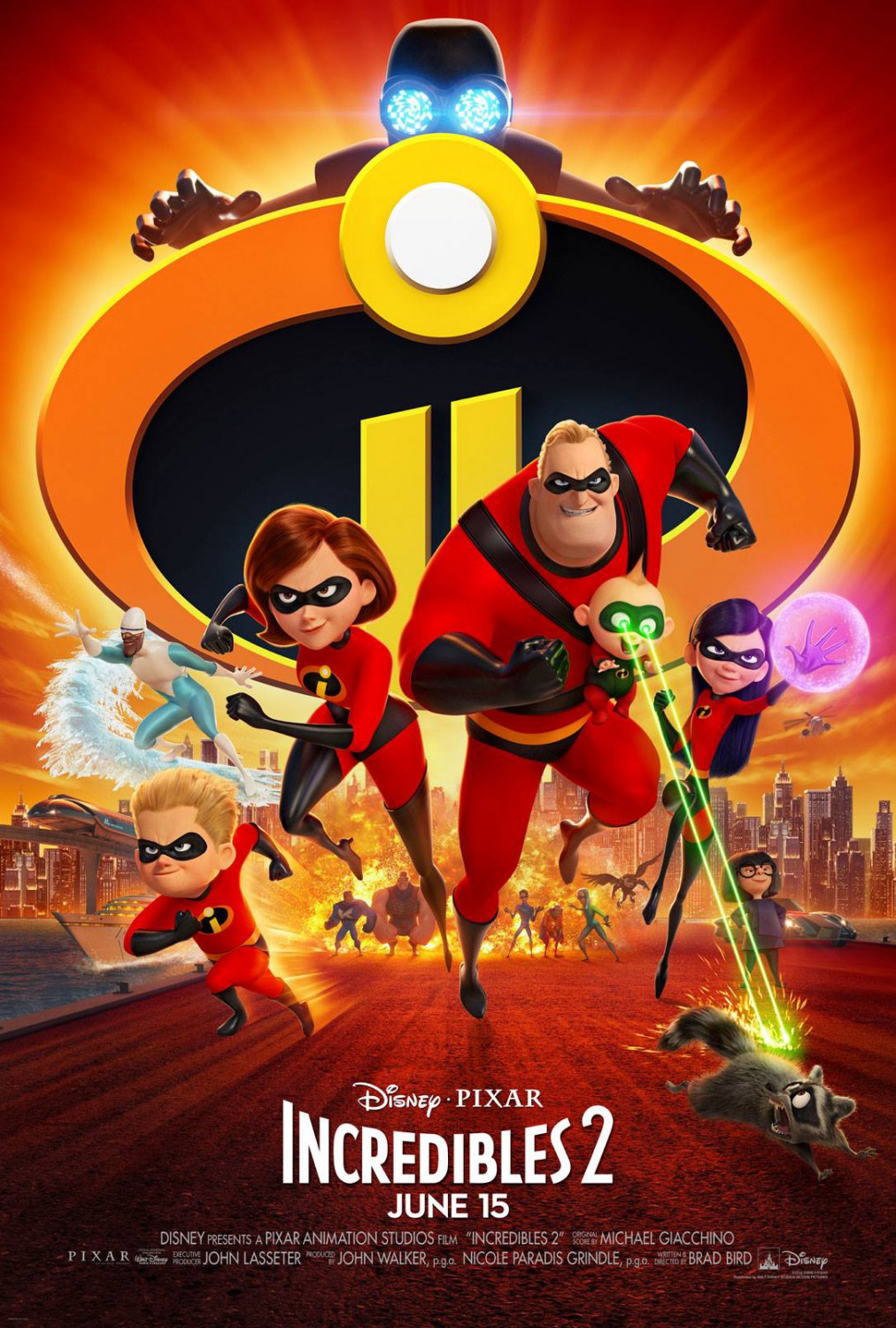
I was beginning to think Pixar had made one too many sequels to their biggest hits, but now we have “Incredibles 2” which brings writer and director Brad Bird back into the Pixar fold as he continues the fantastic adventures of Bob and Helen Parr who try to balance out their crime-fighting ways with raising three kids, each who has their own unique super powers they are ever so eager to use. It is no surprise how this sequel is not as fresh or as inventive as its predecessor, but I am thrilled to say “Incredibles 2” proves to be just as much fun as the original, and it is a blast from start to finish.

It has been 14 years since “The Incredibles” was unleashed on us, but “Incredibles 2” begins just mere seconds after it ended with the Parr family doing battle with the Underminer who lays waste to their town while robbing the Metroville bank. They manage to thwart the Underminer’s dastardly plans, but in the process they leave a tremendous amount of damage in their path. Despite their goodwill in preventing many citizens from getting hurt, the police do not even try to contain their fury at these supers to where they flat out tell them it would have been better to let the bad guy get away as the bank are insured. Hmm, it kind of makes you think how the story might just reflect the state of our society today…

While attempting to do the right thing, the Parrs forgot that, in spite of their victories, supers are still illegal and have long since been forced to adhere to their secret identities. With this latest incident, the family has been forced to say at a motel as their home was destroyed, and they are informed by government agent and friend Rick Dicker (Jonathan Banks) that the “Super Relocation” program is being shut down permanently. Bob and Helen now have two weeks to figure out what they can do to support their family before they find themselves homeless and out on the street.

Their savior comes in the form of Winston Deavor (Bob Odenkirk), a telecommunications tycoon who has been a big fan of superheroes since he was a child. Winston is intent on changing the public’s perception of supers with the help of his tech savvy sister Evelyn Deavor (Catherine Keener), and he chooses Helen to revive her superhero alter-ego of Elastigirl to make this happen. However, this leaves Bob, better known as Mr. Incredible, at a loss as he feels he should be the one to start things off, but Winston feels Elastigirl is a better choice as she does not leave the same path of destruction Mr. Incredible does on a regular basis. This ended up reminding me of what Al Powell told John McClane in “Die Hard 2” after McClane said he had a feeling about something:

“Ouch! When you get those feelings insurance companies start to go bankrupt!”

Seeing Helen/Elastigirl take center stage as the main superhero in “Incredibles 2” is a wonderful twist on the original when Bob/Mr. Incredible did his superhero thing while Helen stayed at home to look after the kids. With “Wonder Woman” having been a critical and commercial smash hit, lord knows we have been long overdue for female superheroes to take charge as this genre can no longer be considered a male dominated club. Holly Hunter returns to her role with great relish as she makes Helen/Elastigirl into a wonderfully realized human being who runs the gamut of emotions throughout, and the action sequences she is featured in puts those in so many live action movies rendered in this past year to utter shame.

It’s also great to have Craig T. Nelson back voicing Bob/Mr. Incredible, and hearing him here reminded me of the welcome presence he gave us in movies like “Poltergeist,” “All the Right Moves” and on the television series “Parenthood.” He does great work in making Bob’s heroic efforts in caring for his children by himself all the more palpable as he experiences sleep exhaustion any parent can relate to. Whether its desperately trying to understand how Dash’s teachers want him to do math in a completely different way from what he as taught or dealing with Violet’s descent into adolescence, Bob has more to deal with than any parent could ever expect, and having to handle so many real-life obstacles on your own has to be admired more than criticized.

This is Brad Bird’s first movie since “Tomorrowland” which proved to be a critical and commercial disappointment. After his phenomenal success with “The Incredibles,” “Ratatouille” and “Mission: Impossible – Ghost Protocol,” “Tomorrowland” was greeted with a lot of criticism to where it seemed like Bird lost his mojo, but every director has their failures, and we are always eager to see them make a comeback. With “Incredibles 2,” Bird shows us how quickly a filmmaker can recover from a cinematic failure as he raises the bar for the other movies to be released in the summer of 2018. When “The Incredibles” was released, the superhero genre was not at the same level of popularity it is at now, and this created challenges for any sequel destined to follow it. But Bird more than rose to the occasion as he has given us a sequel which is gloriously entertaining and full of heart.

I also have to say Jack Jack steals every scene he’s in here. Whereas we saw some of what Jack Jack was capable of in the first movie, his parents are only now discovering he has many superpowers. This makes Bob’s role as a parent more challenging as Jack Jack won’t stay still, refuses to fall asleep, and turns himself into an angry beast at the most inconvenient of moments. Even Lucius Best/Frozone (Samuel L. Jackson) cannot maintain his cool self once he sees how this baby boy can make himself invisible and not easily detectable.

And yes, Bird reprises his brilliant character of Edna Mode, fashion designer to the supers who, in her first appearance, reveals herself to be infinitely perturbed to learn Elastigirl is wearing a suit not designed by her. Still, she becomes Bob’s savior when upon agreeing to babysit Jack Jack so he can for once get a decent night’s sleep. The bond she forms with this baby boy is a hilarious sight to take in as he is quick to mimic Edna’s every move, and it makes her appearance all the more delightful to take in.

I got to see “Incredibles 2” with a nearly sold out audience, and it reminded me of how much fun it is to watch a movie with so many enthusiastic people. You could complain at length about how this sequel doesn’t have the freshness of the original, but it would just take away from the fun it contains. I had a great deal of fun watching this long-awaited motion picture, and the rest of the audience clearly felt the same all the way through the end credits. Pixar still succeeds in making movies for audiences young and old, and I eagerly await an “Incredibles 3.” Of course, it would be nice to see it come out in less than 14 years.

* * * ½ out of * * * *

Exclusive Interview with Nicole Holofcener about ‘Enough Said’

Enough Said movie poster

With movies like “Lovely & Amazing,” “Friends with Money” and “Please Give,” Nicole Holofcener has firmly established herself as a filmmaker with a unique voice. In a time where romance and relationship movies are being critically and commercially crucified, her films are wonderfully refreshing as they feature characters who feel real, are remarkably down to earth and have flaws we can all understand and relate to. Even if you think her films deal with familiar subjects and situations, the attention Holofcener gives to her characters and the actors who play them make you feel like you are experiencing a story you have never watched before.

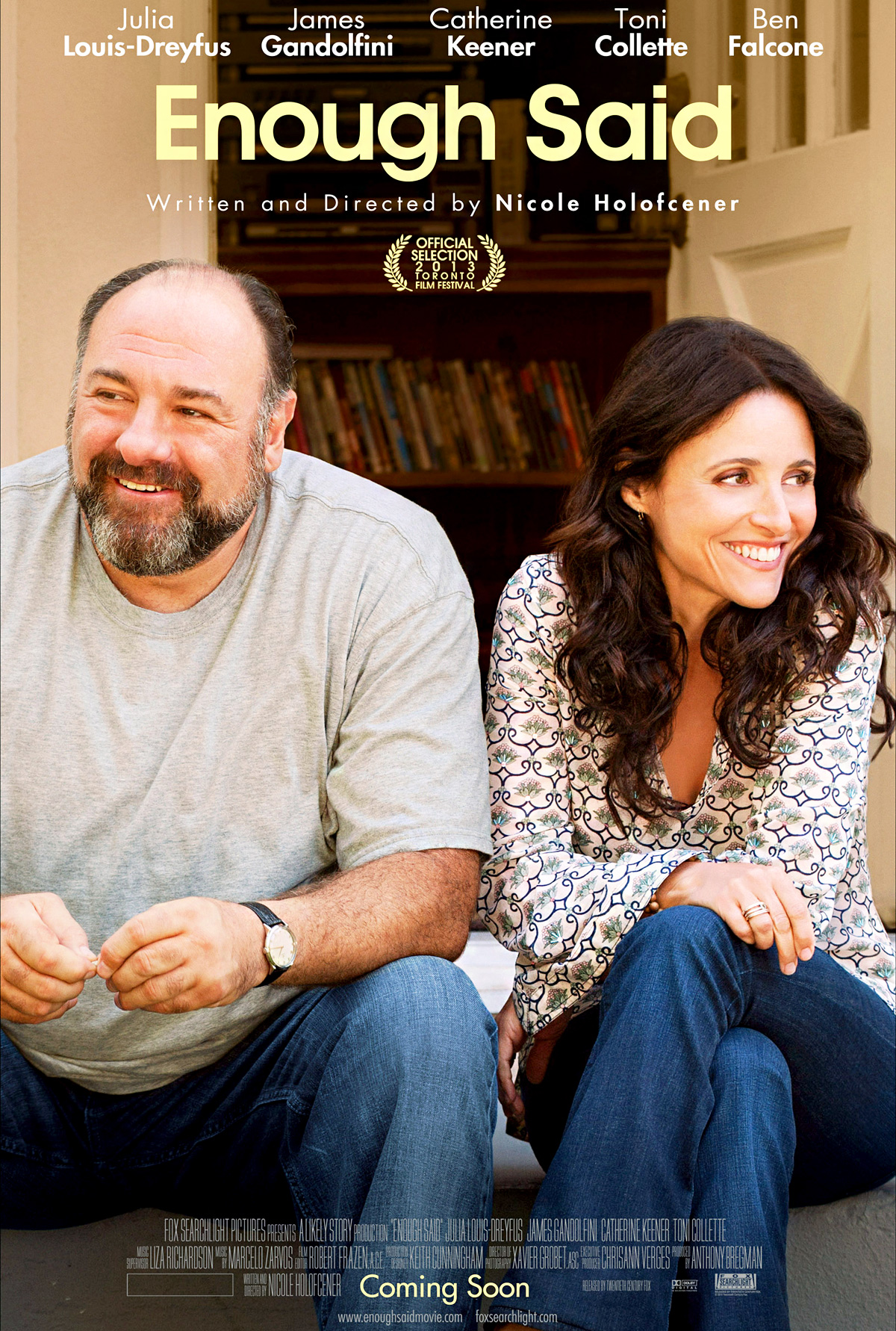
Her film “Enough Said” is no exception to this, and it stars Julia Louis-Dreyfus as Eva, a professional masseuse and single mother who is slowly getting back into the dating game. While at a party, she meets Albert (James Gandolfini, in one of his last performances), and the two find themselves forming a deep connection very quickly. Things, however, get complicated when (SPOILER ALERT) Eva discovers that one of her patients, Marianne (Catherine Keener), is actually Albert’s ex-wife. Throughout their sessions together, Marianne has been giving Eva many different examples about what a lousy husband Albert was, and this makes Eva wonder if her first impressions of Albert were the right ones to have.

I talked with Holofcener while she was doing press for the “Enough Said” digital release, and the movie itself has since received various nominations from the Golden Globes, the Independent Spirit Awards and the Screen Actors Guild Awards. During our interview, I got to find out how she comes up with such wonderfully unique characters, what it was like for her to work with the late James Gandolfini, and we also talked about Catherine Keener who has appeared in most of her films and how their creative relationship has evolved from their first film together.

Ben Kenber: “Enough Said” is fantastic and one of the best films of 2013. With this and “Please Give,” I really love how your movies deal with characters that are down to earth and have flaws like everybody else. Most romantic movies usually don’t have that, but your films are among the exceptions.

Nicole Holofcener: That’s very nice. Thank you. That’s what I’m going for.

Ben Kenber: With “Enough Said” and the other movies you have made so far, how do you come up with such unique characters?

Nicole Holofcener: I have no idea (laughs). I mean they’re kind of an amalgamation of people I know and people in my imagination. I guess, by going very specific, sometimes I’ll focus on a character’s habit or a quirk or a mannerism or something irritating or something specific. I started with the Sarah character (played by Toni Collette) in this movie with the fact that she has made problems that started with a friend of mine who said she left bracelets on the kitchen counter, and she finds them in the kitchen and how much that annoys her and why she won’t simply ask her housekeeper not to do that. Then I have Sarah, and it’s like everything kind of falls into place after that, not easily. I’m not saying it’s easy, but it informs who that person is and what her issues might be. And then all of a sudden, she had this whole story with her housekeeper and it ended up being a good scene, but it started with the bracelet on the kitchen counter. So very specific, I guess. By going very specific and individual. When I read a script, I hate it when they say things like, “Sarah, 35, driven, type A, but inside falling apart.” It’s like, well then, you don’t even have to read what happens because you’ve already been told who she is.

Ben Kenber: This looks like a movie which sticks very closely to the script you wrote, but was there any improvisation used by the actors?

Nicole Holofcener: Yeah, absolutely. The story is very much the script as written, but they (the actors) ad-libbed all over the place, and I got rid of some and I kept some. But they had the freedom to do that especially because they were so funny and smart. They changed things but not the story.

Ben Kenber: The characters are so down to earth, and everybody seemed so relaxed onscreen. How did you manage to get such naturalistic performances from your cast?

Nicole Holofcener: They were sedated. I just gave everyone a Xanax every day. If only it could be like that (laughs). Some days were more relaxed than others but, as they say, the director sets the tone. I’m pretty relaxed, and while I take directing seriously, we’re not in a war zone. I try to have a good time and help people feel safe and relaxed so that they can give vulnerable performances and trust me. I try to earn their trust, and then I try to help them feel comfortable.

Ben Kenber: Well it definitely looks like he succeeded in doing so.

Nicole Holofcener: Well that’s good.

Ben Kenber: I do have to ask you about the late James Gandolfini because this is a great role to see him in. It shows audiences there was more to him than Tony Soprano. People should’ve known this before “Enough Said” came out, but the movie makes it clear to those who couldn’t get “The Sopranos” out of their heads. What was it like to work with him?

Nicole Holofcener: It was great to work with him. It was often challenging. He asked a lot of questions. I think we were sometimes mutual pains in the asses, but in a very affectionate way. He’d look at me like, “C’mon!” I’d look at him like, “C’mon!” He was playful and very hard-working, very self-effacing and sweet, shy. The crew loved him. He was very friendly and warm toward the crew which was very nice and so was Julia (Louis-Dreyfuss). So, I had a very relaxed family kind of feeling.

Ben Kenber: Yeah, you definitely get that from watching the movie. Catherine Keener also stars in this movie as Marianne, and you’ve worked with her several times in the past. How has your working relationship with her evolved from the first time you worked with her to this one?

Nicole Holofcener: Well, the first time I worked with her I was kind of scared. She had more experience than me. It (“Walking and Talking”) was my first feature, and I was pretty intimidated by her. But she was very giving and warm, and that’s why we continue to work together. We’ve gotten to know each other so well, and discovering how wonderful she is, every part, just made me want to work with her again and again. And now that it has been so many years, it’s a short hand. Even though she’s still great, I’m not intimidated by her anymore (laughs). She can still be a little scary.

Ben Kenber: Keener is a terrific actress, and the rapport between you and her really shows with each movie you work together on.

Nicole Holofcener: Good, yeah. It’s a pretty special relationship, definitely.

Ben Kenber: Well, I really, really liked this movie a lot. I really gravitate towards movies with very down-to-earth characters. I usually avoid romantic movies like the plague, but with movies like yours where you can really relate to the characters and the problems they experience in life, they really stand out in a wonderful way. “Enough Said” is one of those movies.

Nicole Holofcener: I’m so glad. I hope that people who avoid romantic movies will watch this one for the same reason (laughs). Thanks, that’s good.

I want to thank Nicole Holofcener for taking the time to talk with me. “Enough Said” is available to own and rent on DVD, Blu-ray and Digital.


Get Out

Get Out movie poster

You know the main characters of this movie are in trouble once they hit a deer. Of this, I speak from my own experience as my dad drove me to the airport one time and ran over a deer which walked into his traffic lane. It was not his fault as the deer came out of nowhere, and there wasn’t any time to hit the brakes to avoid an animal oblivious to the Volvo station wagon heading straight at him (or her). Nevertheless, a week later I got laid off from my job. Looking back, hitting the deer proved to be an omen of bad things to come, and losing my job was one of them.

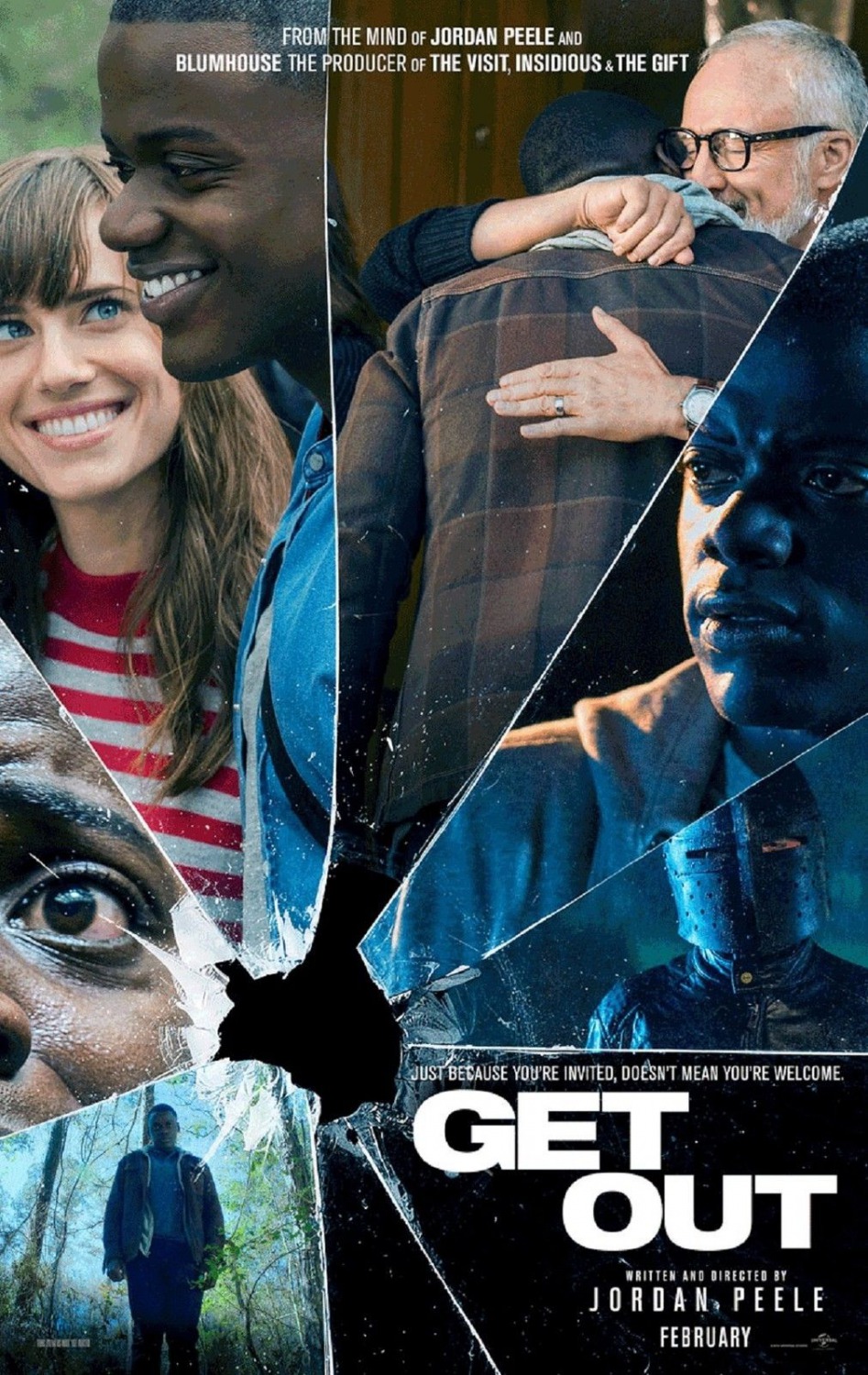
I was reminded of this as I watched the opening minutes of “Get Out,” an insidiously clever horror movie with the occasional dose of humor thrown in. Chris Washington (Daniel Kaluuya) and Rose Armitage (Allison Williams) are driving up an empty stretch of road to meet her parents when they slam into a deer. There’s nothing they can do to help the animal, and the police officer who arrives at the scene asks for Chris’ license even though he wasn’t driving. Rose encourages the officer to let Chris be, and he eventually leaves the scene while advising her to fix her broken rearview mirror. But as the movie goes on, this turns out to be the least of their problems.

I should probably point out that Chris and Rose are an interracial couple, and Chris is concerned Rose’s parents have no idea her daughter is dating a black man. His nervousness is understandable, and it is elevated further when Rose’s parents, Dean (Bradley Whitford) and Missy Armitage (Catherine Keener) try to make him feel welcome by telling him they would have voted President Barack Obama for a third time if it were possible. Basically, the Armitages are well-meaning white folks who support the fight against racism, but they have yet to understand the damage, however unintentional, they are doing to African-Americans.

Things get even weirder when Chris meets two other black people who work for the Armitages, Georgina (Betty Gabriel) and Walter (Marcus Henderson). Both act very strangely and in a manner which threatens to redefine passive-aggressive, and the way they stare at Chris is unnerving as they look like snakes ready to strike at their pray without much notice. It doesn’t take long for Chris to realize something is terribly wrong, but his attempts to escape the Armitage household are not exactly successful.

There is a lot of racial tension burning right underneath the surface in “Get Out,” and this is on purpose. The movie plays on the stereotypes whites have of blacks and vice-versa. Everyone is trying to be polite, but you can sense what’s really going on by looking into the eyes of each character as they project darker intentions or sheer terror, and sometimes both. We are left in suspense as we constantly wonder what the Armitages truly have in store for the helpless Chris, and when their intentions are revealed, it makes a scary, and an oddly amusing, amount of sense.

“Get Out” marks the directorial debut of Jordan Peele, one-half of the famous comedy duo “Key & Peele,” who also wrote the screenplay. It’s a very strong debut as he takes satirical elements and places them into a story which ratchets up the intensity throughout and keeps it up to the end. But Peele doesn’t just give us a flat-out satire as he never set out to play everything just for laughs. He digs deep and touches at our own preconceptions of race in America and plays around with the unintentional ways we reveal ourselves to be more prejudice than we ever realized.

Daniel Kaluuya, whom you might remember from “Sicario” and “Kick-Ass 2,” is excellent as Chris, a young man caught up in a situation we hope he fully comprehends before it is too late. He also has good chemistry with Allison Williams to where you can’t doubt they are believable as a couple. “Get Out” also has the benefit of having two terrific actors playing Rose’s parents, Bradley Whitford and Catherine Keener. Both have a warm presence here which eventually turns into something more sinister before you even know it.

I especially have to single out Keener as she remains one of the most underrated actors working today, and the scene where she hypnotizes Chris is a huge reminder of that inescapable fact. She doesn’t have to do too much to get our attention, and as Missy, she seduces us to a place we didn’t plan on going to, and it’s a place where we fear we will never rise up from.

There’s also a terrific scene-stealing performance from Lil Rel Howery as Chris’ best friend, Rod Williams, a TSA agent who has seen it all. In any other movie, Rod would be the one to overact in the most annoying way possible, but Howery turns the character into a welcome form of comic-relief the movie needs to ease the at times unbearable tension, and he is hilarious.

In many ways, “Get Out” is a clever riff on movies of the past like “The Stepford Wives” which dealt with the unusual behavior of female residents in a little Connecticut town, and Peel takes risks with the material you wish other filmmakers would take on a more regular basis. What results is a motion picture which is not perfect, but still a very good one which will stay with and unsettle you in the way a good horror movie should. It also plays with the ways white people try to show how non-racist they are and yet fall into an inescapable pit of hypocrisy before they even know it.

And for the record, I’m a white guy and I would definitely have voted for Barrack Obama for a third term as President. Think what you will of that statement. I’m just going to leave it here.

* * * ½ out of * * * *