‘Oblivion’ is Familiar, and Yet Visually Unique
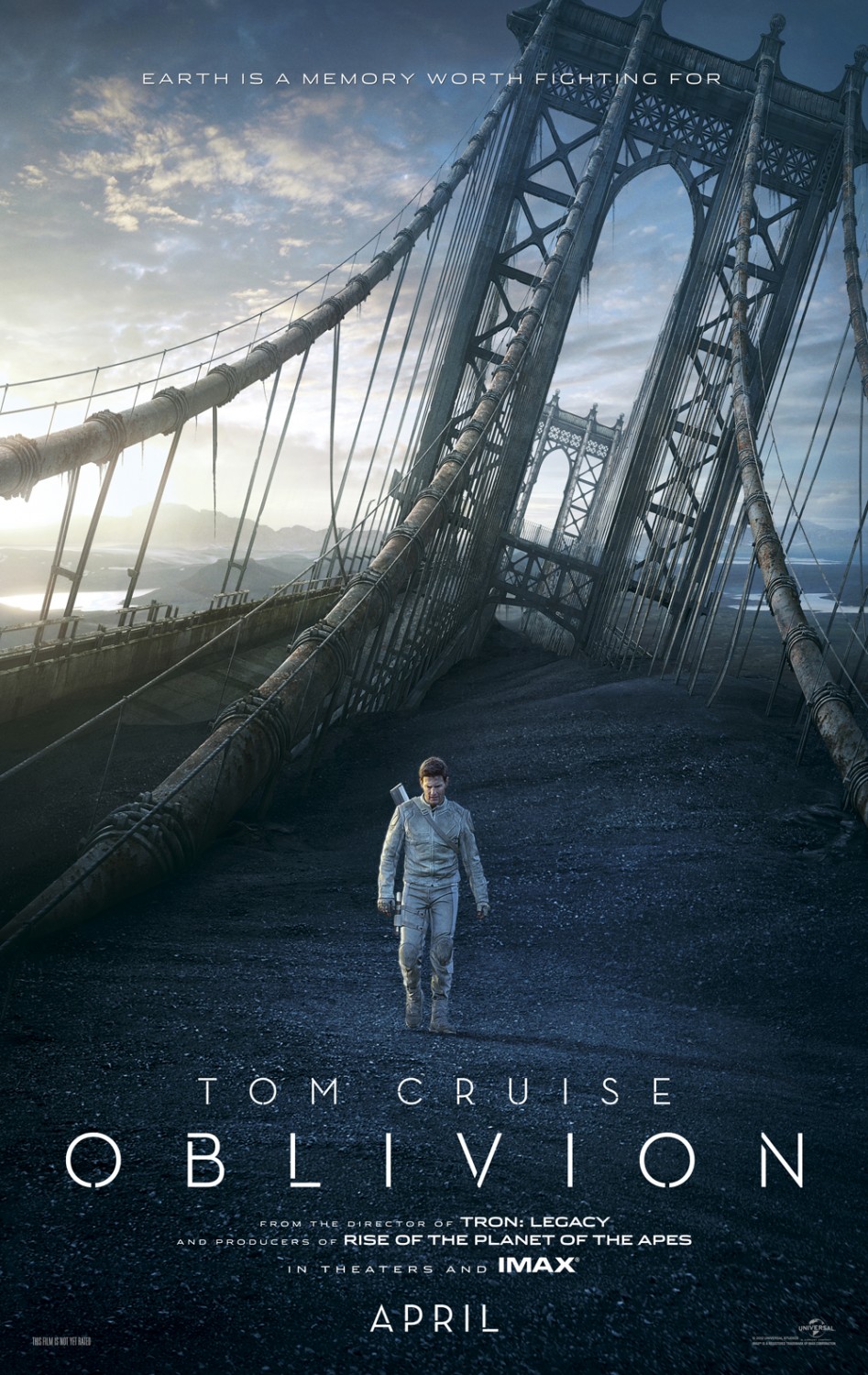
Oblivion movie poster

On one hand, I feel like I should be punishing “Oblivion” for its lack of originality as the story will easily remind viewers of other science fiction movies like “Total Recall” (the original, not the remake), “Moon,” “The Matrix” and “Logan’s Run.” On the other, I found Joseph Kosinski’s film to be a compelling piece of entertainment, and I liked how he took various elements from those sci-fi movies and put them together to create something which feels more original than I expected it to. The look of “Oblivion” is incredible, and the film benefits from a very strong cast, great visuals, and a truly awesome music score.

Like many science fiction movies, this one takes place in a distant future. The year is 2077, and sixty years earlier an alien invasion destroyed the Moon, which in turn decimated Earth and left it in shambles. Jack Harper (Tom Cruise) is one of the last human beings left, and he and his communications officer Victoria Olsen (Andrea Riseborough) spend their days helping to harvest what’s left of the planet’s natural resources and repairing drones which help protect it from further alien invasions. They are due to leave Earth in two weeks so they can rejoin the rest of humanity which has long since relocated to another planet. Of course, we all know what happens when people say they only have a few weeks before they leave Earth; they don’t.

Talking about “Oblivion” from here gets complicated because I don’t want to give away the story’s twists and turns and have it seem like a plot summary stolen from Wikipedia, but I’ll do my best. One day, a spaceship crashes on Earth which carries a number of capsules with astronauts sleeping inside them. One survivor is astronaut Julia Rusakova (Olga Kurylenko) who, once awoken from her deep sleep, she makes Jack see he has a past which has long since been denied to him.

This is all I’m going to say about the plot as telling you more would be spoiling the fun. Granted, I have seen many science fiction movies, so when the plots twists and turns came here, I wasn’t surprised. At the same, I was very much enthralled by what was going on. Even if I had a pretty good idea of what was coming next, I was still glued to my seat and eager to see what direction the film was going to head in next.

Much of the success with “Oblivion” comes from its distinct visuals which are very striking, and a lot of the credit for this goes not just to Kosinski but also his director of photography Claudio Miranda. I’ve lost count of how many post-apocalyptic movies which show Earth obliterated beyond all repair to where everything is dark, grey and gloomy. Many famous landmarks like the Empire State Building are shown to be either barely standing or covered up with a lot of dirt in “Oblivion,” but this is the first movie of its kind I can remember which takes place mostly in the daylight. While Earth isn’t in one piece in “Oblivion,” there is still a unique beauty to how it looks here. Those snowy mountains still look worth skiing on, and I found it rather comforting to see plants, grass and trees still growing even after an alien invasion, and this gives the movie an uplifting feel.

The other thing I really liked about “Oblivion” was the architecture of the buildings and the design of the spaceships. The Sky Tower which Jack and Victoria live in is beautiful, and I would love to live in it. This tower looks like the world’s most unique condominium, and I’ve never seen anything quite like it before. Also, it has the coolest swimming pool ever, and it makes me more excited about swimming pools than I have been in ages. Plus, I doubt I will see a cooler looking spaceship than the Bubbleship Cruise flies all over the place.

This is only Kosinski’s second movie as a director, but here he seems to have found his filmmaking voice this time around. His first film was “Tron: Legacy,” and like many eagerly awaited science fiction events, it was greeted with an obscene amount of hype and a lot of fan indifference. With “Oblivion,” however, he is not restricted to staying within certain boundaries dictated by a previous film or a long-running franchise, and he also has a stronger story (based on the graphic novel of the same name by him and Arvid Nelson) to work with as well.

Kosinski also benefits greatly from having M83 and Joseph Trapanese as his music composers here. Their score to “Oblivion” is much like what Daft Punk’s was to “Tron: Legacy:” a beautiful combination of electronic and orchestral music which sounds far more original than any other film score I have listened to recently, and it adds so much to the striking visuals of “Oblivion” as well as the emotion inherent in the story.

Much has been said about Cruise as a person these past few years, but I’m still happy to defend him as an actor. His work as Jack Harper is actually quite understated, and he never descends into the state of “grinning like an idiot every fifteen minutes” (as Dougray Scott described him in “Mission: Impossible II”) for too long. That grin does come along from time to time, but not in a way which ends up annoying half the audience. Along with his strong performance in “Jack Reacher,” his work in “Oblivion” proves he’s still a better actor than people tend to give him credit for.

Kurylenko, since her performance as a Bond woman in “Quantum of Solace,” has proven to be far more than a pretty face. This should have been made clear after we saw her in Terrence Malick’s “To the Wonder,” but there’s no mistaking her talent in “Oblivion” as she creates a complex portrait of someone who knows more than she lets on. I also very much enjoyed Riseborough’s performance as Victoria which was sweet and yet somewhat devious, and I look forward to seeing more of her work in the future.

Then there’s the great Melissa Leo who plays Sally, the mission control commander with a thick accent who oversees Jack and Victoria’s work from afar. Just like in “Flight,” she gives her character a sweet voice tinged with serious intentions which leaves the viewers on edge. As nice as she sounds, you can tell there’s some evil plot lurking behind her eyes. Some may see the role of Sally as a small one, but in Leo’s hands, no role can ever seem small when she plays it.

Oh yeah, Morgan Freeman shows up as well as Malcolm Beech. To say more about his character would further give away certain plot points, but I can confirm he gives the usual strong performance we always come to expect from him. Also, it was really cool to see him shooting a heavy-duty pair of fifty caliber machine guns as I’m not sure I have seen him do so before.

“Oblivion” may seem overly derivative, but then again, most movies released these days are far from original. What matters to me is that a filmmaker can take elements from the movies which inspired him/her and make them their own, and Kosinski has succeeded in doing so here. I very much enjoyed how “Oblivion” took me down the rabbit hole films often do, and I absolutely loved the visual look of it. It also benefits from a number of strong performances and a fantastic film score which sounds epic in a way other scores can only aspire to. When all is said and done, this film is quite a cinematic accomplishment.

If you can, see it in IMAX.
* * * ½ out of * * * *

Tom McLoughlin Revisits ‘Friday the 13th Part VI: Jason Lives’ at New Beverly Cinema

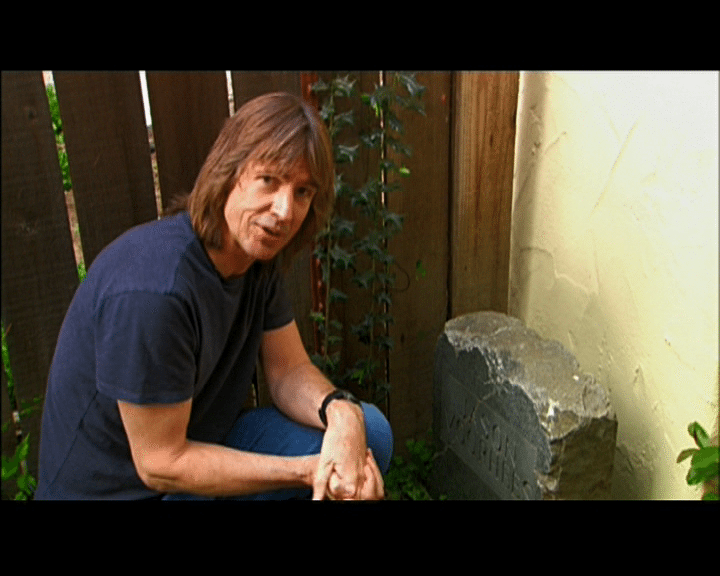
Tom Mcloughlin Jason Voorhees tombstone

On Friday June 5, 2009, Phil Blankenship presented a triple feature for horror fans at New Beverly Cinema with “Friday the 13th Parts IV, V, & VI.” The fourth film was called “The Final Chapter,” and seeing its title on the screen induced uncontrollable laughter in every member of the audience for obvious reasons. The fifth film, “A New Beginning” remains the most despised of the sequels as it tried to continue to the series without Jason, and it proved to be an embarrassing failure. “Jason Lives,” on the other hand, is one of the best in the series thanks in large part to the great sense of humor the filmmakers brought to it. All the sequels which came after this one turned out to be completely stupid and unintentionally hilarious with a few exceptions. In retrospect, these three movies marked the franchise’s peak as well as the start of its downward spiral.

As time went on, these three “Friday the 13th” sequels became known as the Tommy Jarvis trilogy. We first meet Tommy Jarvis in “The Final Chapter” where he is played by a very young Corey Feldman and spends his time playing on his computer or indulging in his hobby of making masks. Tommy ends up killing Jason with his machete, and then he can’t get himself to stop bashing him with it. In “A New Beginning,” we see an older Tommy, now played by John Shepherd, still dealing with the intense psychological damage his encounter with Jason thrust upon him. And then in “Jason Lives,” Tommy (this time played by Thom Matthews) is convinced Jason is not dead despite having been buried for years. But of course, he ends up accidentally resurrecting Jason and has to take him down yet again.

Blankenship gave the crowd a special treat by bringing out the writer/director of “Friday the 13th Part VI: Jason Lives,” Tom McLoughlin, to talk with the audience about its making. McLoughlin started off by saying how glad he was to be at New Beverly Cinema as he got all of his film education here, that shooting this sequel remains the most fun he has had as a filmmaker, and he confessed he has not seen a print of it since 1986.

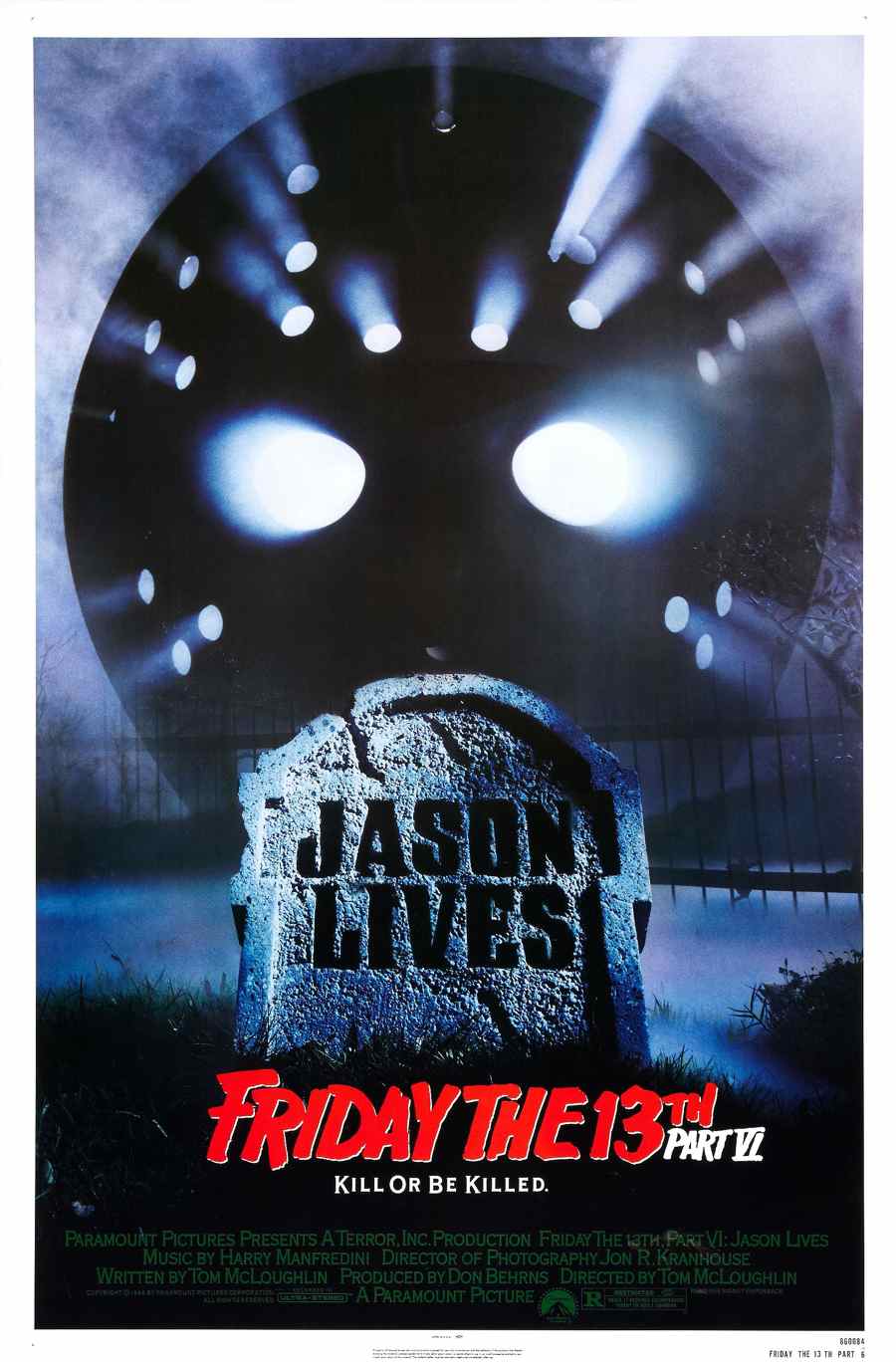
Friday the 13th Part VI Jason Lives poster

When first hired to direct “Jason Lives,” McLoughlin admitted the only “Friday the 13th” movie he had seen previously was the first one. As a result, the executives at Paramount Pictures forced him to watch the other four. With “Jason Lives,” McLoughlin was intent on ignoring the events of “A New Beginning” because he said it really pissed him off. The audience at the New Beverly was in complete agreement with this, and they applauded him loudly.

McLoughlin also said he had originally planned to introduce Jason’s father, Elias Voorhees, into this sequel in order to give the iconic slasher more of a back story. We all know about his crazy mother, but not much has ever been said about Jason’s poppa. But Paramount Pictures was not crazy about this plot element because they weren’t sure which direction it would take the franchise in, so they put the kibosh on it. However, the DVD reissue of “Jason Lives” does have the film’s original ending with Jason’s father in the form of storyboards, and it is a must see for fans.

One fan asked McLoughlin how he got Alice Cooper to contribute songs to “Jason Lives.” It turns out Cooper is a big fan of the “Friday the 13th” series and was more than happy to participate, even allowing McLoughlin to use any of his songs in the movie. Cooper gave “Jason Lives” its end title song of “The Man behind the Mask,” but McLoughlin said the original version was much faster.

Blankenship asked McLoughlin the inevitable question about how he dealt with the Motion Picture Association of America (MPAA) and of what it took to get “Jason Lives” an R rating. Surprisingly, the MPAA didn’t want McLoughlin to cut scenes, but frames instead. McLoughlin said the frames didn’t have blood or gore in them, but the MPAA found them to be too intense. In the end, he made no secret he wanted this movie to be a “huge bloodbath.”

Thom Matthews was cast as Tommy Jarvis in “Jason Lives” as McLoughlin wanted someone who seemed more heroic. Plus, John Shepherd, who played Tommy in “A New Beginning,” didn’t want to return because, as McLoughlin put it, “he got all religious.” Shepherd had since become a born again Christian and his church didn’t feel like doing a slasher movie was in his best interest.

With this particular “Friday the 13th” sequel, McLoughlin admitted he tried to give it a strong sense of humor. This is apparent right from the start when you see how the opening title shot is a clever homage to the gun barrel sequences in the James Bond movies. Indeed, you come out of this sequel feeling like McLoughlin actually took the time to work on the script instead of just throwing something together at the last minute. Plus, the interplay with the kids, and this is one of few movies in this franchise which actually had kids in it, was great like when they hide under the beds and one boy asks another, “So, what were you going to be when you grew up?”

Ron Palillo, who plays Allen Hawes, is best known for playing Arnold Horshack on “Welcome Back, Kotter.” This got McLoughlin talking about how everyone in the city kept calling Palillo “Horshack” wherever he went. Looking back, he said this made him realize how hard it is for actors to get past a character they played which was so popular.

Another fan asked McLoughlin if he had any favorite on-set stories he could share. This got him to talk about a stunt man who came on the set dressed like Evel Knievel and said, “I’m here to crash something. So what do you want me to do?” The stunt he performed was an especially dangerous one as it required him to drive a big RV (is there any other kind?) over a ramp at 90 miles an hour. McLoughlin said this was the scariest time he ever had on a film set as he worried this guy would get killed. Fortunately, the stunt came out perfectly with the RV crashing on its side the way it was supposed to, and the stuntman pulled himself out of the wreckage and said, “Did I do alright?”

It turns out there were different endings thought up for “Jason Lives,” but McLoughlin made it clear he always intended for Jason to end up back in Crystal Lake. One of those endings did include Jason’s father bringing him back to life with voodoo magic. In the end, McLoughlin decided to keep it simple and used the image of Jason’s good eye suddenly opening up wide to show the audience that, surprise, he’s not done killing camp counselors yet.

As for the man behind the mask, two actors were hired to play Jason. The first was Dan Bradley who has since become known as the premier stunt coordinator for Hollywood movies like the Jason Bourne franchise. The powers that be at Paramount Pictures, however, after watching some dailies, decided he should be replaced because they felt he didn’t have the character’s build. Enter C.J. Graham who had just finished a stint as a United States Marine and had no previous acting experience. McLoughlin said Graham came onto the set answering all of his questions with “yes sir.” Today, Graham is a casino manager in Las Vegas.

In regards to his favorite death in “Jason Lives,” McLoughlin replied it was when Sheriff Michael Garris (David Kagen) gets folded in half. This came about because he wanted Jason to kill in ways he thought would seem “superhuman.” The fact Jason starts off being struck by lightning makes it seem all the more logical he would kill people this way. It certainly made for many memorably gruesome moments!

The last question for McLoughlin was if Paramount asked him to direct another installment, and why this didn’t happen. He said he was actually approached by Frank Mancuso to do the next sequel, and Mancuso asked him, “How about Jason vs. Freddy?” To this, McLoughlin replied, “How about Cheech & Chong vs. Jason?”

Later on, McLoughlin did get the offer to direct “Freddy vs. Jason,” but he said he didn’t like the script given to him. New Line Cinema, which ended up buying the rights to “Friday the 13th” from Paramount, invited him for a meeting to talk about it. However, the meeting lasted only ten minutes after which he walked out, and he has not been involved with the movie franchise since.

Since making “Friday the 13th Part VI: Jason Lives,” McLoughlin has gone on to make movies like “Date with An Angel” which featured Emmanuelle Béart at her most beautiful, and he also directed episodes of the “Friday the 13th” television series. His other credits include the Stephen King TV movie “Sometimes They Come Back.” Outside of his contribution to the “Friday the 13th” franchise, he has made a good and comfortable career as a director. Having him speak to the fans at New Beverly Cinema was a real treat, and he really enjoyed the time he spent with them. Special thanks go out to Phil Blankenship for putting this screening together. This particular sequel still remains one of the best of this series, and McLoughlin’s appearance made sitting through “Friday the 13th Part V: A New Beginning” somewhat bearable.

Exclusive Interview with Simon Curtis about ‘Goodbye Christopher Robin’

Goodbye Christopher Robin Simon Curtis

Filmmaker Simon Curtis gave us one of the best adaptations of the Charles Dickens’ novel “David Copperfield” back in 1999, he brought Marilyn Monroe back to life along with the help of Michelle Williams with “My Week with Marilyn,” and he directed Helen Mirren to one of her many great performances in “Woman in Gold.” Now he gives us his latest directorial effort, “Goodbye Christopher Robin,” which looks at the creation of Winnie-the-Pooh and the other characters who inhabit the 100 Acre Wood. But while it looks to be a simple biopic focusing on the creation of classic literature, it also proves to be an examination of the scars war leaves behind, the importance of having a regular childhood, and of the damages fame can cause before others can realize it.

I got to speak with Curtis while he was in Los Angeles recently, so please feel free to check out the interview below.

Goodbye Christopher Robin poster

Ben Kenber: From a distance, this movie looked like it would be a simple story of how A.A. Milne came up with Winnie-the-Pooh, but what I really liked though was how the story developed from the effects of fame to a childhood being stolen. Was this inherent in the screenplay (written by Frank Cottrell-Boyce and Simon Vaughan) when you first read it?

Simon Curtis: That’s a good comment. Yes is the answer. I loved the script from the get-go because you think it’s going to be exactly that, but it is about so many other things: family and creation and the impact of war. And yes, Christopher Robin was almost like the prototype child celebrity. And to be fair to the Milne family, it was such an unknown territory. They couldn’t have predicted that the stories would become so popular and the attention it would bring to the boy.

Ben Kenber: There’s no way they could have been prepared for it, and this is what makes A.A. Milne and his wife, Daphne, so incredibly complex. On one hand, you want to get mad at them for robbing Christopher of his childhood, but at the same time, they both come to realize the damage being done. But by the time they stop it, it is too late.

Simon Curtis: Yes, that’s right.

Ben Kenber: I found it very fascinating, and I liked how the movie deals with the PTSD flashbacks. If you’re in a theater with really good sound, you feel the impact of each bang and balloon pop.

Simon Curtis: Yeah, you do. I was trying to make the point that war doesn’t only impact on the men and the women who fight in the war, but their families and their descendants as well. So, the boy is a victim of World War I even though he wasn’t born until it ended.

Ben Kenber: When it comes to introducing the stuffed animals, I loved how Margot Robbie and Domhnall Gleeson introduced them. She had the voices, and he came up with Eeyore’s name. Was there anything about the stuffed animals which you wanted to include in the movie but were unable to?

Simon Curtis: I don’t think so. I love how it’s this almost accidental thing that they buy bear at Harrods or wherever it was, and suddenly it becomes this iconic thing. One of my favorite moments, in terms of when she first gives him the tiger and she says “happy” and then she hands it to him. Then the father says, “Well what should we call it?” “Tigger.” “Why?” “Because it’s more tiggerish” (laughs). It’s just lovely writing.

Ben Kenber: It is. The names all come by accident. It is not some pre-destined thing.

Simon Curtis: Absolutely. They were just little puppets, and that’s the great thing about art. There’s a surprising element to it.

Ben Kenber: A.A. Milne is very eager to say something about war and reality. The interesting thing is, in terms of the way the Pooh stories were written, he found a way of dealing with reality of writing readers with an escape from it.

Simon Curtis: Yes, good.

Ben Kenber: The young actor who plays Christopher Robin Milne, Alex Lawther, was excellent, and he is a very tough role to play here as you see him revel in seeing this stuff animals come to life, and yet he is thrust into a spotlight you couldn’t be less prepared to deal with. Was it hard casting this role?

Simon Curtis: It was lengthy. But I cast a nine-year-old boy would never acted before, do you know that was? Daniel Radcliffe (Curtis cast him in “David Copperfield”), and he had never acted before, so that gave me some confidence. But this boy Alex was a joy and a gift. He was fantastic.

Ben Kenber: Domhnall Gleeson brings a lot of depth to this role.

Simon Curtis: He does.

Ben Kenber: He has scenes where he says one thing, but his eyes have to say something else. How do direct an actor in scenes like those?

Simon Curtis: I don’t know is the answer. You just try to make every scene as good as possible and help the actor to do their best work, and Domhnall is one of those actors who thinks a great deal about it in advance. It brings a lot to the dad, and he was a real partner. The film improved because of his work in the scenes and elsewhere.

Ben Kenber: Margot Robbie has a very tricky part to play here because in some cases the audience may find her to be not for a likable, but she does come across as a very loving mother. It’s a British thing that they hold back. Some of my friends said Daphne is not very likable.

Simon Curtis: But that’s missing the point because that’s the way people were. Not everyone has to be likable in the world, and that’s the way people were mothers in those days. They had the baby, handed it over to a nanny, and waited for the wedding.

Ben Kenber: I always tell people it is not a question of whether a character is likable or not in a movie. It’s whether or not they are interesting.

Simon Curtis: Exactly.

Ben Kenber: Robbie’s performance is really good because she delves into the unlikable parts of her character, but you never doubt the love Daphne has for her son.

Simon Curtis: Yes, and she doesn’t shy away from it. She has such natural warmth herself as a woman, and that kind of balances it out on another level.

Ben Kenber: For many years, there has been a long battle between the Milne family and Walt Disney over the rights to the Winnie-the-Pooh stories. Was this something you considered including in this film?

Simon Curtis: No because that’s in the future, that story.

Ben Kenber: The movie’s ending could have been too sentimental with two characters hugging, but they don’t hug and I like that they didn’t because it would’ve seemed too manipulative.

Simon Curtis: Yeah, that’s England. Someone said astutely I thought how in England we are the world storytellers from Shakespeare to JK Rowling, but we can’t say I love you to our kids (laughs).

Ben Kenber: I loved the scene where A.A. Milne tells Christopher you will not write another word about Winnie-the-Pooh. The way the same was played was brilliant because it’s straight to the point.

Simon Curtis: I agree. That was Domhnall’s idea for him to be seated and looking up at Christopher who is standing. It was a really good idea. As a director I look like a genius, but it was totally the actor’s idea.

Ben Kenber: Do you give a lot of freedom to your actors?

Simon Curtis: Yeah. Plus, to be perfectly honest, there are so many little things, you can’t have them all solved in your head.

Ben Kenber: The stuffed animals we see in this movie are replicas of the original ones which are now part of a museum exhibit in New York. Did you have any issues with Disney over the rights to show these stuffed animals here?

Simon Curtis: I don’t think so in this case because they all predate Disney. They are not Disney. Winnie-the-Pooh doesn’t have his little red vest. We just wanted him to be this Victorian toy.

Ben Kenber: Were there any dramatic liberties you took with the factual material?

Simon Curtis: Well I think the fame comes much more quickly than a probably would’ve done, so it was that sort of thing.

Ben Kenber: The movie takes a real left turn when the books become incredibly popular, and the sun becomes an unwitting celebrity to where A.A. Milne begins to question the effect fame is having on Christopher.

Simon Curtis: I love that scene where he thinks he is speaking to his dad on the phone, and it is revealed to be a radio interview.

Ben Kenber: It is such a painful moment because you see in the dad’s eyes that he really shouldn’t be doing this.

Simon Curtis: That’s exactly right.

Ben Kenber: Kelly Macdonald’s character of the nanny, Olive, is wonderful as she serves as the Mary Poppins of this story.

Simon Curtis: She is certainly the emotional heart of it.

Ben Kenber: How did you come to cast Macdonald in this part?

Simon Curtis: Well she did a play with my wife about 10 years ago so I’ve always loved her work, and she just struck me as the perfect person at the perfect time.

Ben Kenber: I like how you portrayed England as still recovering from World War I.

Simon Curtis: Very much so, and I think it chimes in now because it feels like were living in wounded times now.

Ben Kenber: Was that something you planned?

Simon Curtis: It just happened in a way.

Ben Kenber: There are a number of things about A.A. Milne I didn’t know before watching this movie such as the fact he was a soldier and a playwright.

Simon Curtis: Yeah, I didn’t know he was a successful playwright.

Ben Kenber: At the beginning of the movie, A.A. Milne does not look the least bit prepared to be a parent. It’s almost like the movie “Kramer vs. Kramer.”

Simon Curtis: Yes, it is. We talked about that actually. There’s the first breakfast and then there’s the expert breakfast in “Kramer vs. Kramer.”

Ben Kenber: The arc of this movie goes from father and son being strangers to them coming together and then later becoming estranged from one another.

Simon Curtis: The thing that bonded them became the thing that tore them apart.

Ben Kenber: The segment where Chris for a sent off to school was handled very quickly. Was this a segment you ever wanted to expand on?

Simon Curtis: Not really because the last thing you want at that point in the film is to be slow.

Ben Kenber: “Goodbye Christopher Robin” has a running time of 107 minutes. I usually expect biopics like this one to go one for over two hours as filmmakers seem desperate to get every little about their subject’s life onto the silver screen. Did you ever feel this pressure when making this movie?

Simon Curtis: I don’t know really how to answer that. I was just doing the script.

Ben Kenber: This movie is dedicated to Steve Christian. Can you tell me more about him?

Simon Curtis: He was one of the producers who supported this script through years of development and who unfortunately passed away after he saw the first cut.

Ben Kenber: Well, it’s nice to know he did see a cut of the film.

Simon Curtis: Yes, it is nice.

Ben Kenber: The way I see this movie, I feel it is about the long journey to happiness. When father and son come together again, they realize to get to a point of happiness, they have to experience a lot of sadness and pain in order to better appreciate joy.

Simon Curtis: To me, the theme is pay attention to your loved ones while they are around because they won’t be around forever. And also, we punish ourselves over getting this or getting that done, and actually just being with your loved ones is the greatest gift of all. Somehow, that’s embedded in the film. I’m so glad when my kids were young because it was before these (cell)phones because I would’ve been totally on them the whole time.

Ben Kenber: In the movie’s postscript, it is revealed A.A. Milne did get to write his anti-war piece. Was this something you wanted to include in the movie as well?

Simon Curtis: Yeah. He didn’t intend to be known only as the writer of Winnie-the-Pooh. There’s a quote (by A.A. Milne) in the “Goodbye Christopher Robin” book introduction by Frank Cottrell-Boyce. Just read that.

Ben Kenber: “…little thinking

                     All my years of pen-and-inking

                    Would be almost lost among

                    Those four trifles for the young.”

Simon Curtis: Yeah. In fact, it’s not almost, it’s now completely. So that’s good, isn’t it?

I want to thank Simon Curtis for taking the time to talk with me. “Goodbye Christopher Robin” will arrive in movie theaters on October 13, 2017. Click here to check out my review of the film.

‘Only the Brave’ Celebrates the Lives of Those who Risk Everything to Keep Others Safe

Only the Brave movie poster

While watching “Only the Brave,” I kept thinking of what Mike Kellerman said in an episode of “Homicide: Life on the Street:” “Fire is a living thing. It eats, it breathes air, it can be killed. Something about that power draws people in.” This dialogue played in my head while Josh Brolin stares at a wildfire off in the distance, wondering which direction it will spread in. From this, we can tell he doesn’t just see fire as simply something to be put out, but as a force to be fought with on its own term. The term fight fire with fire takes on a special meaning here, and it is shown to be more than just the title of a Metallica song.

“Only the Brave” is, yes, based on a true story. In this case, it is about an elite crew of firefighters who came to be known as the Granite Mountain Hotshots and who risked their lives on a regular basis to stop wildfires in their tracks. In June 2013, 19 of their members died while fighting the Yarnell Hill Fire in Arizona, and it remains one of the deadliest incidents involving United States firefighters outside of the September 11th attacks. I figured the movie would be all about this fire and of who survived it and who didn’t. However, it is really about these group of men who come together to form a brotherhood of sorts as they come to depend on one another as their work is always very dangerous. In the process, we also see the bonds they have with their families and loved ones, and of the constant balance they have to work at between work and family life.

Brolin plays Eric Marsh, the leader of the Granite Mountain Hotshots who is eager to build a team of firefighters which will not simply serve as background performers while other elite firefighters push them to the side. You would think firefighters from different places would be quick to band together in the face of mother nature’s havoc, but each individual firefighting group is shown to be a competitive bunch as they want to claim the glory of being a hero before anyone else. After dealing with conflicts and money problems inherent in the realm of politics, Eric gets the funding he needs to begin training men who are infinitely eager to fight fire with fire.

Now a movie like this typically employs a number of stereotypical characters like the ladies’ man, the fearless leader, the trusted second-in-command the one who looks as if he is in the wrong place, and “Only the Brave” does traffic a bit in this area to where I thought this might become “Top Gun” but with firefighters instead of pilots. But thanks to an excellent cast which includes Miles Teller, James Badge Dale, Taylor Kitsch, Scott Haze, Alex Russell and Ben Hardy, we get to be intimately involved in the exploits of these firefighters to where we have to admire their selflessness in what they do.

An actor worth noting in particular is Teller who has given excellent performances in “Whiplash” and “The Spectacular Now.” Teller plays Brendan McDonough who, at the movie’s start, is a hopeless drug addict. From the character’s first appearance, I figured Brendan would be the one to start the Yarnell Hill Fire as he carelessly is shown smoking crystal meth to where he is barely conscious, and I kept waiting for him to drop a match in a field without even realizing it. Brendan comes to discover his ex-girlfriend is pregnant, and he reacts to this news flippantly as it only increases his capacity for self-destruction. But upon seeing his baby for the first time, he suddenly begins to turn his life around and looks to get employed on Eric’s firefighting team.

Teller’s performance is superb as he doesn’t make Brendan into the typical cinematic addict, but instead a person who goes from being lost in life to one who finds a purpose as he seeks to give his child the life his father never gave him. The interview scene he has with Brolin is superb as Teller never overdoes it as Brendan knows full well he can’t fool Eric since he sees right through his addiction. I kept waiting for Brendan to relapse as this is usually the case for addicts in a movie, but Teller makes his character’s hard-fought battle towards sobriety noble and believable. This is also the second movie he’s been in these past few years where he plays a man determined not to take painkillers even though they certainly would help (the other is “Bleed for This”).

Brolin is an ace at playing blue collar workers, and he never has to do much to convince us how believable he can be in portraying a firefighter. Through his expressions and actions, we quickly see this is someone who can tame the nastiest fires he and his team come into contact with. The “No Country for Old Men” actor shares a lot of great scenes with his male-costars, but his best moments come between him and the always terrific Jennifer Connelly who plays Eric’s wife, Amanda. Their relationship is a strong one, but it takes on an increasing strain when Amanda wants kids, something Eric is not quick to agree on. From this description, it sounds like the average marital conflict we see in every other movie, but Brolin and Connelly bring a lot of raw emotion to their roles to where they inhabit their characters more than anything else. This could have felt clunky, but the actors keep this from happening, and this is especially the case when Amanda reminds Eric what she goes through every day when he walks out the door to go to work.

“Only the Brave” was directed by Joseph Kosinski whose previous films were “Tron: Legacy” and “Oblivion.” This one takes place in the real world instead of in the realm of science fiction, and yet he still brings a strong visual flair to each scene as we watch the fires lay waste to the land with an unforgiving power, and we fear for the deer running through the fields even as a wildfire gets closer and closer. At the same time, he also puts much of his attention on these men as this movie is about the job they did, not the fire which killed many of them. Kosinski makes us share in the friendships they build with one another and of the joyous moments they spend with their families to where we feel we are a part of their lives. Nobody involved with this motion picture should need to convince anyone of the emotional investment they put into this material, and this makes its tragic climax all the more devastating to witness.

Even though I knew how things would end for this group of firefighters, it didn’t make it any easier to sit through. These men had the best training and were constantly being drilled on how to protect themselves in the event of being trapped in a fire, but like other natural disaster, a fire is indiscriminate in who and what it attacks as it seeks to breathe for as long as it can. What everyone is left with are a tremendous amount of grief and survivor’s guilt, both of which deserve a movie of their own to explore.

I walked out of “Only the Brave” in tears as the filmmakers paid special tribute to the men of the Granite Mountain Hotspots, those who lived and those who died. Even the best of preparations could not spare them from the destructive flames they perished in, but it still never took away from the bravery the showed us, and this movie gives them a well-deserved memorial to their selfless efforts. While we mourn the loss of life, we celebrate the lives these men led as they deserve much more than being just a footnote in history.

“Only the Brave” marks a big leap forward for Kosinski as he shows there is more to him than directing big science-fiction films with awesome music scores. It is also worth noting how the movie’s credits are shown at the beginning as opposed to at the end like in “Tron: Legacy” and “Oblivion.” Not only that, but the credits are presented in a surprisingly subtle fashion as Kosinski must have realized his talents could not and should not upstage the firefighters of the Granite Mountain Hotshots.

As I write this review, wildfires have been doing tremendous damage in Northern California near where my brother lives with his family. Seeing this film makes me think about what his family and others are enduring right now as the damage left in the fires’ wake is just awful. I also find myself thinking of those firefighters up north and wonder if they are getting the respect, not to mention the funding, they deserve. Whereas “Backdraft” felt more like a Hollywood take on the lives of firefighters, “Only the Brave” feels like the real deal, and it makes me want to go up to those who are working tirelessly to keep wildfires from spreading and shake their hands. This movie is proof of how much they deserve our respect.

* * * ½ out of * * * *

Save

‘Blade Runner 2049’ is Astonishing, Glorious and Mesmerizing

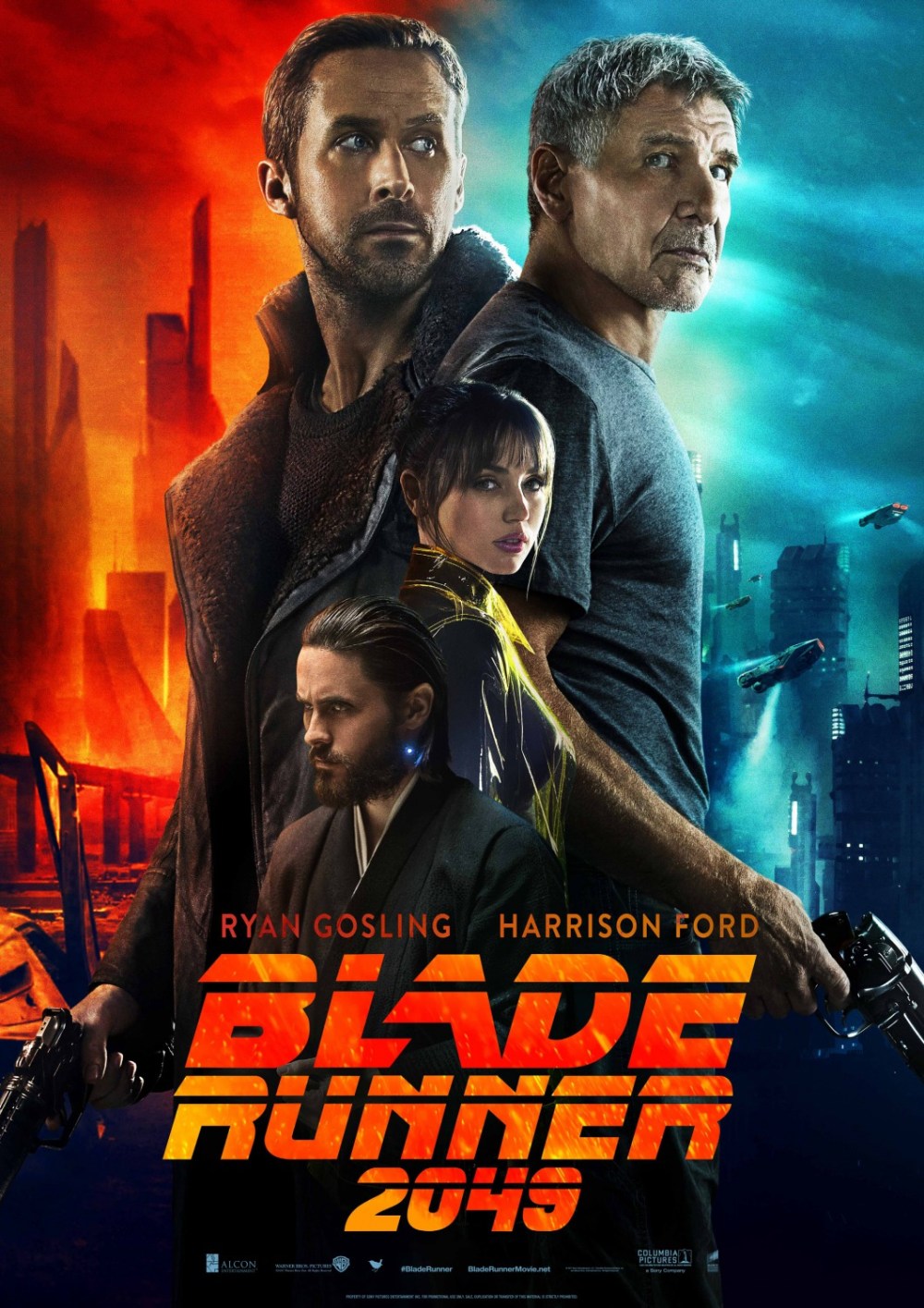
Blade Runner 2049 movie poster

Many words come to mind when describing “Blade Runner 2049.” Among them are mesmerizing, amazing, glorious, beautiful, and astonishing. I put special emphasis on the word astonishing because it is almost unbelievable to see what director Denis Villeneuve and company got away with here. Not only have they conceived a sequel which does its predecessor, Ridley Scott’s 1982 cult classic “Blade Runner,” proud, but they also got away with making an art house film with a budget of over $150 million and a running time of almost three hours. What were the studio executives thinking? Well, it doesn’t matter as this eagerly awaited sequel proves to be well worth the wait.

Taking place thirty years after the events of the original, the sequel introduces us to a new blade runner played by Ryan Gosling, and he comes to be known by a pair of names for reasons best left unsaid here. After enduring a brutal battle as he attempts to retire rogue replicant Sapper Morton (Dave Bautista), he becomes aware of a long-buried secret which is overdue for a thorough investigation. In the process, he tracks down former blade runner Rick Deckard (Harrison Ford) who has been off the grid for many years as he seeks answers only Deckard can give. What results is a form of evolution no one could have seen coming.

Telling you more about “Blade Runner 2049” will prove to be detrimental to your viewing experience as you should only know so much about its plot before going into the theater. What I can tell you is the future world portrayed is even more beautifully bleak than the one Scott gave us 35 years ago, something I didn’t even think was remotely possible. The colors are vibrant, but everything is still subject to a never-ending rainstorm, the kind we needed in California for the longest time. And in this fictional universe, Pan Am is still a corporate giant even though it ceased operations in the real world back in 1991.

While I was bummed to learn Scott would not be directing this sequel (he serves as executive producer instead), they couldn’t have found a better filmmaker here to fill his shoes as Villeneuve takes on what must have been a truly daunting challenge here. “Blade Runner,” despite being a critical and commercial disappointment, has long since been considered one of the greatest science fiction movies ever made, and it certainly is. Making a sequel to it interested many including myself, and yet it could easily take away from the original as nothing easily compares to what came before. But Villeneuve is the same guy who gave us “Arrival,” another sci-fi masterpiece which invited and deserved comparison with “Close Encounters of the Third Kind,” and this gave me confidence he could bring something special to “Blade Runner 2049.” Indeed, he has made a sequel which will prove to be every bit as memorable as its predecessor as the years go by as he expands on the themes and delivers a cinematic experience which is equally profound.

Furthermore, Villeneuve allows things to go at the same methodical pace Scott went at back in 1982. If you go into “Blade Runner 2049” expecting something along the lines of “Star Wars,” you will be seriously disappointed as the original defied sci-fi conventions with a vengeance. What was unique about “Blade Runner” is how it enthralled audiences with big ideas more than with wall-to-wall action sequences. The same is true with “Blade Runner 2049” as it probes the idea of what it means to be human, and it deals with characters searching for something which doesn’t feel the least bit artificial in a world dominated by technology. For me, the key line of dialogue comes when Lieutenant Joshi (played by Robin Wright) tells Gosling’s blade runner, “We’re all just looking out for something real.” This is certainly the case here, but as we catch up with these characters, their chances of finding anything real seem very small.

By the way, if Roger Deakins does not get this year’s Oscar for Best Cinematography, I will be seriously miffed. For far too long, this man has been the Randy Newman of the cinematography category, and this feels criminal as has given us beautiful and extraordinary images in “Sicario,” “Skyfall,” “No Country for Old Men,” and “The Shawshank Redemption” to where it is not easy to compare his work to others. Deakins, however, really outdoes himself here as he gives each scene in “Blade Runner 2049” a stunning look which shows both the beauty and the emptiness of the world these characters are forced to inhabit. What he has accomplished here is simply extraordinary as it all feels incredibly unique.

Gosling has long since proven to be as good an actor as he is a tremendously sexy one, and he is superb in a role which is very tricky to pull off. Again, I can only say so much about his character as it is too easy to spoil certain aspects of this movie, but once you understand who this blade runner is, it becomes clear as to the kind of balancing act Gosling has to play here. While life in the rainy and futuristic city seems to have burned this blade runner out completely, there are still glimpses of humanity to him which come out in a way which feels spontaneous and never forced. As a result, the “Drive” actor proves to be a genius at playing someone who is no longer certain as to how he should feel about the discoveries he has made.

Harrison Ford doesn’t show up as Deckard until the movie’s third act, but he makes it worth your time to wait for his first appearance. After watching him have tremendous fun playing Han Solo again in “Star Wars: The Force Awakens,” it’s great to see him bring another of his iconic characters back to life. Ford makes Deckard into a burned out shell of a man who is forced to hide not just from those threatening his existence, but also from the things he yearns to connect with most of all, and he illustrates the character’s never ending internal conflict without ever having to spell everything out for the audience.

The rest of the cast is superb as they bring a unique quality to roles which have them acting in both human and inhuman ways. Robin Wright kicked ass earlier this year in “Wonder Woman,” and she does it again here as Gosling’s superior officer who is a no-nonsense Lieutenant and eager to keep a war from being ignited. Ana de Armas, whom you might remember from Eli Roth’s “Knock Knock,” is perfection as Joi, Gosling’s hologram girlfriend who is definitely even better than the real thing as she comes equipped with a humanity which strikes at your emotions. Sylvia Hoeks is riveting as Luv, a replicant who can appear charming at one moment and incredibly lethal in the next, and she makes this character vicious and frightening as she is determined to make discoveries before others do. Jared Leto and Dave Bautista have essentially cameos here, but they make the most of their time onscreen and show the depth they are willing to give to even the smallest of roles.

My only real disappointment with “Blade Runner 2049” is we will never get to hear the music score by Villeneuve’s regular composer, Johann Johannsson. For some odd reason, he was removed from this project and is contractually forbidden from talking about why he was let go. His score to “Sicario” is one of my favorites, and it would have been great to hear what themes he could have brought to this sequel.

Having said that, the score by Hans Zimmer and Benjamin Wallfisch, the latter who recently did the music for “It,” is excellent as it captures the vibe of Vangelis’ score from the original without simply updating it for a new audience. It doesn’t even sound like the typical Hans Zimmer score as his music is usually pretty easy to recognize, although the last few cues do have a bit of “Dunkirk” in it. I feared “Blade Runner 2049” would get a more conventional score than the great one Vangelis composed years ago, but Zimmer and Wallfisch bring something wonderful, beautiful and thrilling to everything we see and listen to here.

The original “Blade Runner” came out in 1982, one of the greatest years for movies and one which many have called the year of the nerd. In addition to “Blade Runner,” we also got “Star Trek II: The Wrath of Khan,” John Carpenter’s “The Thing,” “The Dark Crystal,” “Tron” and “E.T. The Extra Terrestrial” among many others. “Blade Runner” was not a commercial hit and critical reaction to it was sharply divided, but like “The Thing” and “Tron,” its stature has grown over time to where it is now revered as the great motion picture it always was.

“The Thing” and “Tron” managed to generate a prequel and a sequel more than 20 years later, but neither could equal the power of their predecessors. This makes the achievements of “Blade Runner 2049” all the more profound as it equals the original film and digs even deeper into its theme which Scott explored to brilliant effect. What Villeneuve and company have come up with here feels as unique in today’s cinematic landscape as “Blade Runner” did in the 1980’s. I had every reason to lower my expectations on this one as sequels which come out decades later are typically doomed to failure, but this one defies the odds and I am so thankful everything worked out so well. It may not have Rutger Hauer, but very few movies can ever be perfect.

And for God’s sake, give Deakins the Cinematography Oscar! No excuses!

* * * * out of * * * *

‘Paranormal Activity,’ a Movie Not to Be Watched Before you Go to Bed

Paranormal Activity movie poster

“I know something about opening windows and doors

I know how to move quietly to creep across creaky wooden floors

I know where to find precious things in all your cupboards and drawers

Slipping the clippers

Slipping the clippers through the telephone wires

The sense of isolation inspires

Inspires me

I like to feel the suspense when I’m certain you know I am there

I like you lying awake, your baited breath charging the air

I like the touch and the smell of all the pretty dresses you wear

Intruder’s happy in the dark

Intruder come

Intruder come and leave his mark, leave his mark

I am the intruder…”

                                                                                                       -from “Intruder” by Peter Gabriel

                                                                         (sounds even scarier when he sings it in German!)

I finally got around to watching “Paranormal Activity” on Blu-Ray, and I truly regret not seeing this movie while it was on the big screen. How great it must have been to take in the audience’s reaction; watching all the ladies shriek and recoil into their lovers’ arms, and seeing guys who think they are so fearless jump out of their seats during some of this movie’s scariest scenes. I imagine the experience would have been like when I first saw “The Blair Witch Project” back in Irvine at a crowded art house movie theater. The last scene of that indie horror film had the audience completely freaked out, wondering if what we saw was real or fiction.

“Paranormal Activity” is an ingenious little horror movie which cost only $15,000 (excluding marketing costs of course) to make and made over $140 million dollars worldwide. It has joined the likes of “The Blair Witch Project” and John Carpenter’s “Halloween” as one of the most profitable independent films ever made and was released through Paramount Pictures which employed a unique strategy where audiences had to “demand” for it to be shown in their area via the internet. This strategy is probably what kept me from seeing the movie initially because prints of it had already been sent out to theaters all over the country, so the whole idea of participation was just an illusion to get people excited as they are led to believe they have the power. But getting past the overblown promotion which threatened to upstage it completely, “Paranormal Activity” is one of the most unnerving horror movies I have ever seen.

The word paranormal is a term used to describe unusual experiences that are outside of science’s ability to explain or measure (I think Dan Aykroyd has a PHD in this). This is exactly what’s going on in the home of Micah and Katie, a normal looking couple when we first meet them. Micah has recently purchased a video camera to capture what happens while they sleep at night. Katie has confessed to Micah and a psychic that a ghost has been haunting her since she was little, and she now believes it has followed here to their house in San Diego. They are both told by the psychic this ghost is a demon which feeds off of negative energy, and it will pursue poor Katie everywhere she goes. From the start, you know this is not going to end well for anybody.

Micah Sloat, like Katie Featherston, uses his first name for the character he plays. With him parading around the house with the camera, he could have easily been a character in George Romero’s “Diary of The Dead.” Like those college students studying film, Micah seems more interested in catching paranormal activity happening more than in helping Katie until later on, and he complete annoys Katie in the process. But he soon discovers there is a mysterious force intruding on their well-being as they sleep, and it puts them in the most vulnerable position possible.

Don’t worry, I’m not going into a scene for scene breakdown where I give away the best moments of “Paranormal Activity” as it is full of many hair-raising, jump out of your seat moments which deserve to be discovered with your own eyes if you dare. With a budget similar to the cost of hiring a celebrity bodyguard, director Oren Peli utilizes special effects very simple in their construction, yet incredibly effective when used. By filming in a typical suburban house, it feels no different from homes we grew up in. There’s nothing extravagant shown here, and that’s exactly the point. The more this home reminds you of your own, the scarier this movie becomes.

The suspense and tension which continually escalates throughout “Paranormal Activity” is accomplished through the power of suggestion. It does not contain the gallons of blood and gore most horror films employ. Not that I have any issues with gory movies, but what makes a horror movie all the more effective is when the filmmakers don’t you show everything. It’s what you think you see that really messes with your head as it forces your own fears and superstitions onto these characters throughout the film’s 90-minute running time.

Watching “Paranormal Activity” reminded me of a story my dad said he heard as a kid which scared him half to death. It involved some guy on TV talking directly to the camera about how that sound you heard behind you was probably nothing, or so you would think. But what if it was something sinister? What if that feeling of someone coming up from behind you was not just a feeling? Anyway, the more my dad talked about, the scarier it seemed.

Anyway, I bring this up because “Paranormal Activity” gets at a fear so universal and primal as we try to get a good night’s sleep, something which seems impossible these days without Ambien. Those little noises you hear right around you… What if they’re not just noises? What if someone is in the room with you? What if you didn’t lock all the doors and bolt all the windows? Peli plays will all the sounds which keep us awake at night, and the shocks these characters end up enduring easily resemble ones we have all experienced. It was a huge mistake to watch this film at night before I went to bed. I figured it would not be so scary as it was said to be while in theaters, but then again, I made the same mistake with “The Texas Chainsaw Massacre.”

Movies often benefit from a music score which can really escalate the powerful emotions the director has already captured. But as “The China Syndrome” and Michael Haneke’s “Cache” demonstrated, sometimes they benefit by not having one. I honestly think “Paranormal Activity” would have suffered if it had a score as one would have made several moments seem anticlimactic and premature as a result. The sound of loud footsteps from someone you’re not sure you know is scary enough as it is.

What Micah Sloat and Katie Featherston do act as much as they inhabit their characters here. They are not called upon to be Meryl Streep or Daniel Day Lewis. If we were to actually catch them acting, the illusion of the movie would have been completely destroyed. What both succeed in doing is acting naturally, and they make us recognize ourselves in them. We quickly come to recognize their fear and relate to it in a way we would rather not experience on a daily basis. These two were complete unknowns when this movie was released, and this elevates the sheer terror we feel for them as casting known actors would have taken away from the proceedings.

I also have to give credit to Mark Fredrichs who plays the psychic who visits Micah and Katie’s home. This role could have been an absolute cliché, one guy who comes across as a madman no one ever fully believes until it is too late. Seriously, this guy could have been just like that crazy old man from the first and second “Friday the 13th” movies who kept warning all those camp counselors, “You’re doomed! YOU’RE ALL DOOMED!!!!” But Fredrichs makes this character into a down to earth guy whose fear is quite palpable once he enters the peaceful looking home. Mark never overdoes anything here, and he more natural he is, the scarier this movie becomes. While the psychic is only on screen for a brief time, it is long enough to where he makes a forceful impression of impending doom.

They say “silence is golden,” but what is truly golden about “Paranormal Activity” is how silence is used so effectively. We’ve all had nights where we lie in bed and hear something fall in another part of the house, but maybe that something didn’t fall on its own. Maybe someone pushed it off to get our attention, to lure us out of our safety zone. Most movies are jam packed today with noise, but Peli recognizes how powerful the lack of sound can be, and he uses it to brilliant effect. I don’t know about you, but I need to be listening to something like soft music as I fall asleep. The quietness of the night has my mind racing when it should be resting.

Some will despise “Paranormal Activity” as nothing more than a gimmick while lacking the blood, gore, and occasional impalements and decapitations they feel are mandatory in a horror film. Others will hail it as a new horror masterpiece which will leave audiences extremely unsettled after leaving the theater. For me, this movie is definitely on the same level with “The Blair Witch Project,” a movie this one owes a huge debt to. It doesn’t try to blow us away with an overabundance of special effects, but with simplicity as the ordinary things are far more terrifying than monsters who wear hockey masks. Seeing a chandelier swaying back and forth definitely throws off my balance and makes me feel wide awake because I get so used to seeing it staying so still. Seeing a chandelier move from side to side in this movie gives the events an especially unsettling feeling.

Okay, I’m going to stop writing about this movie now. The thought of it is freaking me out, and I’m going to end up ripping down my shower curtain if I’m not careful.

* * * * out of * * * *

Mike Flanagan Makes the Unfilmable ‘Gerald’s Game’ a Cinematic Reality

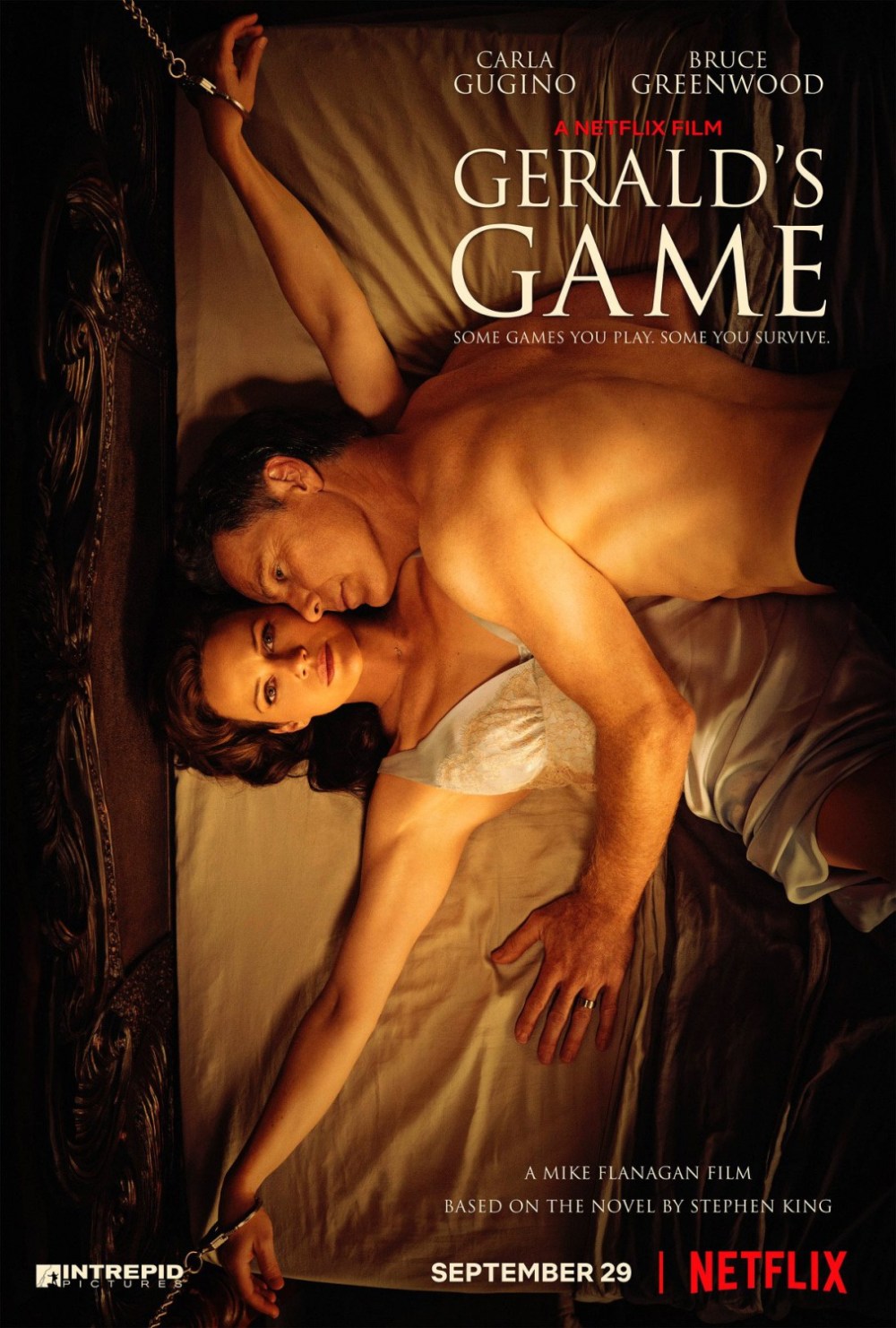
Geralds Game movie poster

Of the many Stephen King novels, “Gerald’s Game” is one of my favorites. Hearing the author talk about it on an episode of Fresh Air with Terry Gross, I was instantly intrigued by its premise of a couple’s sex game gone wrong to where the husband dies and the wife is left handcuffed to the bedpost with no means of escaping. The more King talked about it, the quicker I was to leap out to the bookstore to buy a copy (albeit, when it came out in paperback).

I was also intrigued at the possibility of “Gerald’s Game” being made into a movie as it presented unique challenges to daring filmmakers; how can you stage the action when much of it takes place in the character’s head? Furthermore, how many actresses would be willing to play such an emotionally draining role? Many have described this particular King novel as “unfilmable,” but I always had a feeling this would be proven wrong.

Well, Mike Flanagan, the director of “Oculus,” “Hush” and “Ouija: Origin of Evil,” accepted the challenge of adapting “Gerald’s Game” as he is also one of its biggest fans. Along with screenwriter Jeff Howard, he has made this seemingly unfilmable novel a cinematic reality as he puts us right in the head of its main character as she is trapped in a predicament which presents her with physical and emotional terrors we live to avoid in real life.

We are introduced to Gerald (Bruce Greenwood) and Jessie Burlingame (Carla Gugino) as they pack their bags for a weekend getaway to their house by the lake. It is filmed to look like an average vacation with them gathering their things. That is, until Gerald puts two pairs of handcuffs in his bag. Once they arrive, it doesn’t take long for them to get up to the devil’s business as Gerald cuffs Jessie to the bed. You can see in her eyes she is really not into this sex game of his, and she tells Gerald to stop. Gerald, however, suddenly suffers a fatal heart attack as the result of taking one Viagra pill too many, and he drops dead right there on the bedroom floor. Just like Renton told Begbie in “Trainspotting 2,” “Remember not to exceed the stated dose.”

Jessie is then trapped in a most unfortunate situation as she and her husband picked a time to vacation when everyone else is not, so it’s unsurprising to realize is no one around for miles to hear her screaming for help. I have seen this a lot in horror movies, a married couple vacationing at a time when the tourist season is non-existent, and it’s like they have the whole place to themselves. Heck, “Gerald’s Game” would make for an inspired double feature at New Beverly Cinema along with “Honeymoon” as both deal with the same predicament.

Flanagan sets up things for us cleverly as he shows how isolated Jessie and Gerald are from regular society. We meet the dog who will later become hungrier than ever even after Jessie offers him a piece of steak which Gerald tells her costs $200 a pound.  Beyond that, the two of them even leave the front door open as if the house represents Pandora’s Box. This all adds to the growing tension as we know how badly this game will turn out for the two of them.

Once the action focuses on Jessie being handcuffed to the bed, Flanagan gleefully tightens the screws. A cellphone is on the nightstand next to her, but it’s just out of her reach. There is a glass of water nearby, but she cannot bring it to her lips. And then we become witness to her hallucinations as her situation becomes increasingly precarious to where we feel every bit as vulnerable as she does.

The way Flanagan handles Jessie’s hallucinations is quite brilliant as they take the forms of herself, her dead husband, and even her younger self (played by Chiara Aurelia). Flanagan also edited the film, and he keeps us guessing as to where we should be looking next as the focus changes before we realize it. I loved how successful he was at catching the audience off guard as the POV shifts constantly as I had no idea where it would go next.

“Gerald’s Game” does feature a music score by The Newton Brothers, but the film works best when the only sound, other than what’s outside Jessie’s window, is silence. I don’t know about you, but I need some form of sound, soothing or otherwise, to calm my brain just to even fall asleep. When everything is silent, I cannot help but be all too aware of my surroundings and feel like Dee Wallace’s son hiding under the covers in “Cujo.” Flanagan seizes on this silence as every single sound takes on a new, and much more frightening meaning.

Things get even more unnerving when we are taken back to a time when young Jessie was watching a total eclipse with her father. While watching it with special glasses, her father ends up doing something no father should ever do to their child. We don’t see exactly what he’s doing, but it’s enough to make us squirm in our seats as we know it’s something very inappropriate. Henry Thomas, years removed from “E.T.” and “Cloak & Dagger,” turns in a fantastic performance as Jessie’s father, Tom. Just watch him as he carefully manipulates Jessie into keeping this event a secret from her mother. The way he slyly gets Jessie to see things his way reminds me of what a good actor Thomas still is, and that’s even when you want to break his character’s nose.

Some horror movies either show very little or show everything, and with “Gerald’s Game,” Flanagan finds a balance between this. We never see much of Gerald’s body once it flops onto the floor and out of Jesie’s eyesight, nor do we get a specific view of which body parts the dog is feasting on (what did you expect? He almost got to eat a $200 steak). He does, however, show us Jessie’s ever-so-delicate movements as she retrieves a glass of water without breaking it just as Eddie Murphy had to carry one over a bottomless cavern in “The Golden Child.” Of course, this moment is completely dwarfed by the method Jessie undertakes to free herself as it provides us with a cringe-inducing scene on the level of James Franco amputating his arm in “127 Hours.”

If there is anything wrong with “Gerald’s Game,” it is the inclusion of the Raymond Andrew Joubert character (played here by Carel Struycken) whom another describes as “the man made of moonlight.” Indeed, this was also a big problem with the novel as Raymond figures prominently in its last half to where it felt like I was reading a whole other book. Flanagan would have been best to leave this part out of the movie as it never fits here in any meaningful way, and the ending suffers because of it. Having said this, the character’s inclusion is almost worth the trouble as Struycken makes him a terrifying presence, especially when he first appears out of the shadows in the corner of Jessie’s bedroom. It is truly the stuff nightmares are made of.

Carla Gugino would not have been my first choice to play Jessie, and this ends up saying more about me than anyone else. Her work in the “Spy Kids” movies, “Sin City,” and on television shows like “Spin City” and the short-lived “Karen Sisco” should have made her a bigger star, and yet she still seems to be flying below everyone’s radar. Her performance in “Gerald’s Game,” however, should quickly remind us all of how fearless an actress she can be. This is not the most appealing role for anyone to take on as it is emotionally draining, and actors can fall into the trap of emoting rather than acting here. Gugino never does fall into this trap though, and she never backs away from portraying Jessie’s most agonizing moments as her privacy is invaded in different ways.

As for Bruce Greenwood, you can never go wrong with him. While he in no way fits the physical description of Gerald in the novel, it doesn’t matter because he makes the character both loving and undeniably creepy. Just wait until you see the look in his eyes. Even after Gerald dies, Greenwood remains a strong presence as he takes the form of one of Jessie’s hallucinations, and he makes Gerald as creepy in death as he was in life.

The images King evoked in “Gerald’s Game” still remain strong in my mind even though it has been over 20 years since I read it. Thanks to this novel, I will never listen to the Steve Miller Band’s “The Joker” in the same way ever again. I even got my dad to read it, and he later told me, “Why did you make me read this? It’s so revolting!” While many consider this novel one of King’s lesser works, I completely disagree as it still permeates my consciousness to this very day.

With this cinematic adaptation of “Gerald’s Game,” Flanagan has succeeded in making a motion picture both compelling and agonizing to sit through. Even though I know how the story turns out, my eyes were glued to the screen as I wondered how the director would visualize the novel’s most extreme moments. In a year where King adaptations have ranged from excellent (“It”) to utterly disappointing (“The Dark Tower”), this one delivers as it prods at our deepest fears in the real world as they prove more terrifying than anything from the supernatural realm.

Speaking of “The Joker,” I kept waiting for that song to come on. Maybe issues with song rights kept Flanagan from using it. Or perhaps, after our first look at Raymond and his box of bones, it is clear he is not about to speak of the pompatus of love.

* * * ½ out of * * * *

Is ‘Blade Runner: The Final Cut’ Ridley Scott’s Solution to his Masterpiece?

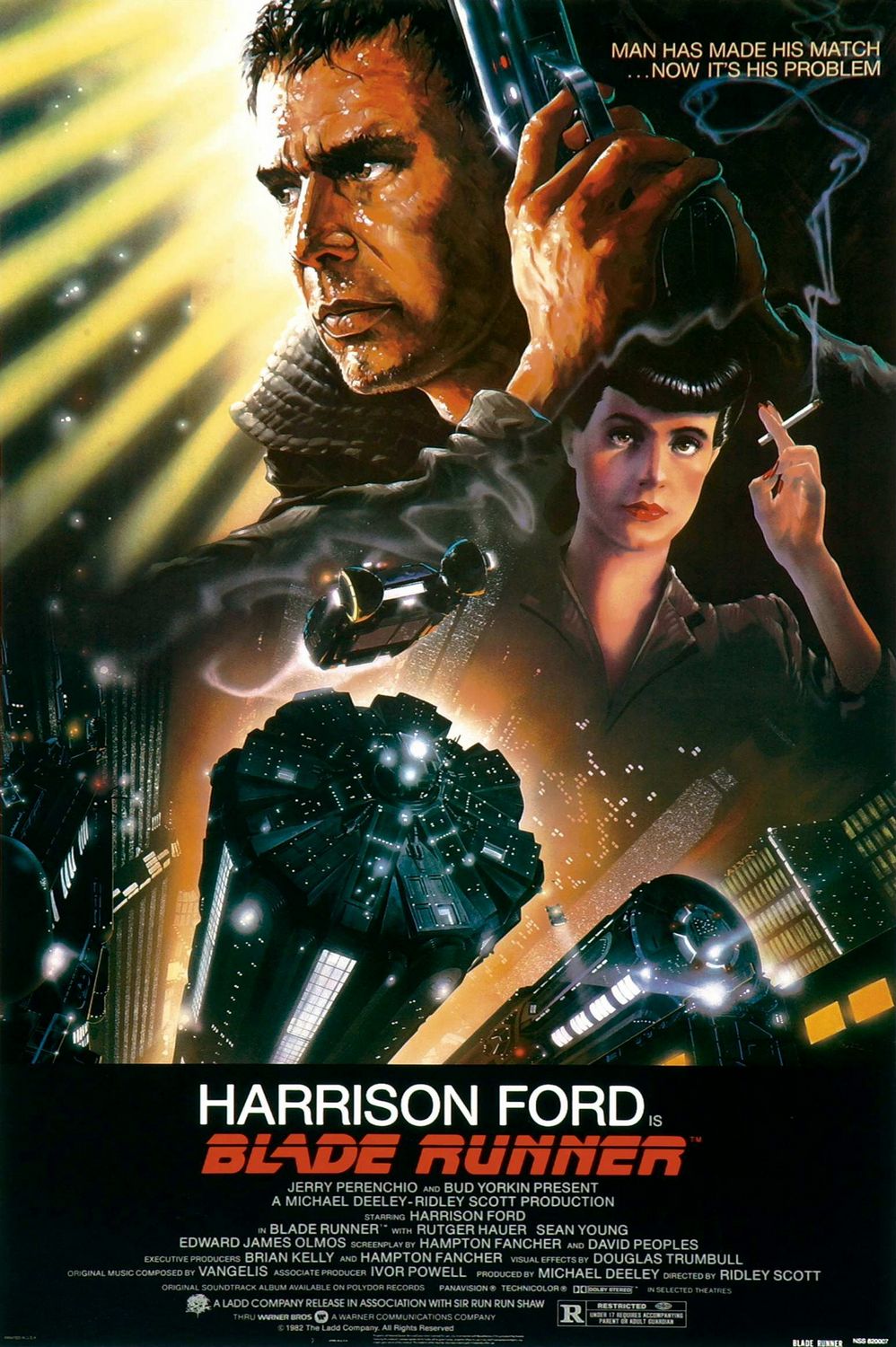
Blade Runner movie poster

I always wondered why Ridley Scott could never leave “Blade Runner” well enough alone. It was released back in 1982 and, at that time, was one of the few Harrison Ford movies to bomb at the box office. But, like many great science fiction movies, it has gained a well-deserved cult following which appears to be getting bigger and bigger each year.

One of my close friends is a die-hard fan of this movie, and he believes Scott went back to do another cut because the acclaimed filmmaker realized he would never ever have it this good as a director ever again. Ridley has made a lot of great movies since this one, but I can see what he meant.

“Blade Runner” remains, after all these years, one of the best science fiction films ever made as it has a look which is so unique to where I cannot easily compare it to any other movie from its genre. It puts a lot of other futuristic movies to shame; especially those made so cheaply (remember “Cyborg” with Jean Claude Van Damme?), and seeing it on the silver screen in all of its visual glory was a sight to behold.

Harrison Ford stars as Rick Deckard, a blade runner who is hired to track down and kill replicants who have escaped and are looking for their maker. Replicants are human clones created to serve colonies outside of Earth, and this shows how far we have gone in terms of space travel in regards to the time this movie takes place in. As a blade runner, Rick specializes in terminating replicants who have been labeled illegal after a bloody mutiny which they caused.

Ford embodies the character of Fred Decker as though he walked out of a detective story from the 1940’s. Decker is from a long line of burned out detectives who are the best at a job they no longer want to be the best at. But of course, they have to come out of retirement as no one else can do what they do so well. Ford looks as though he has had the life sucked out of him at the movie’s start, but he becomes resurrected upon becoming involved with a female replicant named Rachael, and she is played by Sean Young.

Watching Young in this movie is something else as she is perfect here as a female who is so clearly a replicant when we first meet her. However, as the movie goes on, we find ourselves forgetting this as she exhibits human emotions which we would not expect to see from someone like her. Decker becomes utterly infatuated to her, and you want to say he is falling in love with what is essentially a robot. But I guess when a robot is as pretty as Young is here, and she was in her 20’s when the movie was released, I guess you can’t really argue with that.

Seeing “Blade Runner” for the first time in years, it is funny to see how its themes have been used over and over again in popular culture This movie seems to suggest we made these replicants to remind ourselves of how human we used to be. Like U2 said, they threaten to be even better than the real thing. They exhibit a life force which has long since been burned out of us as we have become numbed to how brutal real life can be on our conscious mind. Or maybe they are here to remind of us how much of a slave we have become to technology. There are points where you have to wonder if any of these characters can tell the difference between what is real and what is not.

The leader of this group of renegade replicants is Roy Batty, a viciously passionate replicant played to the hilt by Rutger Hauer. He has ten times more passion than the humans he relentlessly torments, and his last speech in “Blade Runner” is one of the most beautiful moments ever in a 1980’s film. The “tears in the rain” part of it was something he actually improvised on the spot.

So, what is it about this “final cut” which makes it different from the other versions? To be honest, I’m not sure. My understanding is the director’s cut which came out previously did not have Scott’s input on it. So, it is safe to say this cut is his final statement, so far, on this movie.

After all these years, “Blade Runner” remains a true sci-fi classic which is ever so deserving of its huge cult following. Again, there is really no other movie I can easily compare it to on a visual level. Thematically speaking, there are many movies which deal with the future, dystopian or otherwise, but none of them will ever look like the one Scott conjured up here.

* * * * out of * * * *

Save

Exclusive Video Interview with Matthew Heineman on ‘City of Ghosts’

City of Ghosts poster

Of the documentaries released in 2017, “City of Ghosts” is one of the most important to witness. It follows the journey of “Raqqa is Being Slaughtered Silently” (RBSS), a group of anonymous activists who came together after their peaceful hometown was taken over and decimated by ISIS in 2014. What results is a film which is as astonishing as it is harrowing to sit through. We watch as Raqqa goes from being a town whose inhabitants celebrate weddings for a whole week to one laid in ruins as the radical terrorist group ISIS uses every weapon available to suppress the population and silence those who would speak out against them. Despite being threatened by one of the greatest evils in the world today, this group of citizen journalists continue to stand up against the atrocities ISIS has committed, and the images they have captured show just how far they will go which includes executing the father of one of the journalists.

“City of Ghosts” was directed by Matthew Heineman who previously gave us “Cartel Land,” a documentary which examined the ongoing drug war at the U.S./Mexican border and of the vigilante groups fighting the Mexican drug cartels. Heineman was inspired to make a documentary about RBSS after reading an article about them in the New Yorker, and he managed to gain their trust very quickly to where it didn’t take long for filming to begin. We watch as these journalists and activists flee their homeland and struggle to keep their spirits up as the threat of death continues to hang over them no matter how far they manage to get away. Also, we view the horrifying footage they have captured of the horrific acts ISIS has committed in Raqqa which includes executing and crucifying its citizens in public view. What is shown cannot be easily erased from our minds, but these crimes of humanity need to be seen as this threat needs to be stopped, and the actions of RBSS need to be commended in a time when journalism is being attacked by those who do not want to hear the truth.

It was an honor to speak with Heineman while he was in Los Angeles to talk about “City of Ghosts,” and he spoke of how he became inspired to create this documentary as well as the current state of the war in Syria which will hopefully end sooner rather than later. Check out the interview below as well as the documentary’s trailer. “City of Ghosts” will make its streaming debut on Amazon starting October 13, 2017.

‘Prisoners’ is Not Your Average Child Abduction Thriller

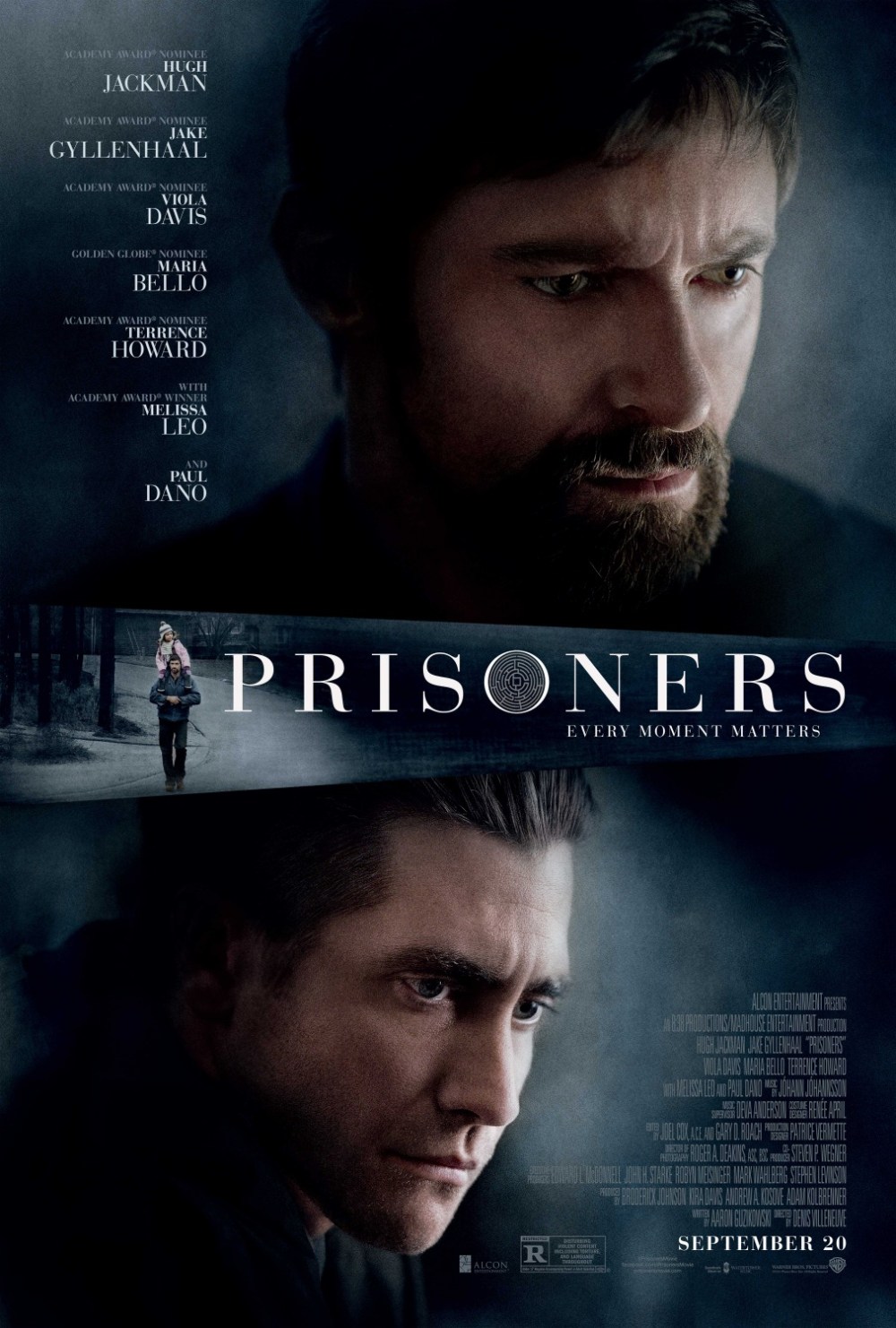
Prisoners movie poster

From the trailers, “Prisoners” looked like just another average child abduction movie with a strong cast which would hopefully make it seem slightly above average. I have seen so many movies like this to where they now seem like the same one no matter who is starring or directing. Boy, was I wrong about this one! “Prisoners” is a heavy-duty character driven drama which generates an agonizing amount of tension and never loses any of it throughout its two and a half hour running time. In a time when many movies are in serious need of an editing job, this one manages to make every single minute count.

It’s a snowy day when Keller Dover (Hugh Jackman) takes his family over to his friend Franklin Birch’s (Terrence Howard) house to celebrate Thanksgiving with a big feast. Both men have loving wives, two teenaged children who are unsurprisingly not all that interested in hanging out with their parents, and they have two beautiful six-year old daughters named Anna and Joy who can never seem to sit still for a single moment. But when Anna goes back to her home with Joy to fetch her safety whistle, both of them disappear without a trace and their families begin a desperate search to find them before it is too late.

The only suspect in the case is Alex Jones (Paul Dano), a man with the IQ of a 10-year old, whose RV Anna and Joy were playing around earlier in the day. When the police and Detective Loki (Jake Gyllenhaal) are not able to get any answers from Alex as to where the girls are, they are forced to let him go for lack of evidence. Keller, however, becomes convinced Alex does know where they are at, and he becomes infinitely, and frighteningly, determined to make Alex give him the answer he wants. Suffice to say, some moral boundaries are definitely crossed.

It should be no surprise Hugh Jackman gives a seriously intense performance here as a father obsessed with finding his child as we have gotten used to him playing the Wolverine in all those “X-Men” movies. But as furious as he got in “Logan” this past year, Jackman seems even more frightening here as he loses his moral perspective while desperately searching for answers. Just watch him as he bashes a bathroom sink with a hammer.

Jake Gyllenhaal also gives one of his best performances ever as Detective Loki, a man equally obsessed with getting the girls back even as he struggles with an uneasiness which will not let him be. What I especially like about Gyllenhaal here is how he implies certain things about this character without ever having to spell it out for the audience. Loki is a man with a troubled past who has his own demons to fight, and while we don’t always know what those demons are, this allows Gyllenhaal to add another layer to his character which only increases Loki’s complexity.

Terrence Howard, who gave a terrific performance in “Dead Man Down,” gives another one here as the other desperate father. It’s interesting to see him go from playing an intimidating crime lord to a helpless dad who finds himself in a morally dubious position when he is presented with a way of getting the answers, but he becomes increasingly unnerved at the way Keller is trying to obtain them. Howard is great at showing how helplessly conflicted his character is, and he makes you feel his inescapable pain and confusion as he is forced to go down a path he becomes convinced is the wrong one to go down.

Kudos also goes out to Maria Bello and Viola Davis who play the wives to Jackman and Howard. Bello portrays Grace Dover, and she has an especially difficult to watch scene in which she completely falls apart emotionally as she faces the worst nightmare no parent ever wants to face. As for Davis, she once again proves how powerful she can be in the smallest of roles. It should also be noted how each of these actors is a parent in real life, and I cannot even begin to think of what emotional depths they went to give such authentic portrayals.

Paul Dano continues to astonish in each film he appears in, and his performance as Alex Jones is one of his most enigmatic to date. Dano could have just fallen into the trap of making an Alex a caricature or the clichéd mentally disabled character we have seen too many times, but he is much too good an actor to do that. We can never figure out if Alex is truly helpless or cleverly manipulative, and Dano keeps us guessing as to what the answer is for the majority of the movie.

“Prisoners” was directed by Denis Villeneuve, a Canadian writer and director who won the Genie Award (Canada’s equivalent of the Oscars) for Best Director three times for his films “Maelström,” “Polytechnique” and “Incendies,” the latter which earned an Academy Award nomination for Best Foreign Film. In recent years, he has given us the brilliant “Sicario” and “Arrival,” and it makes sense he is at the helm of the eagerly anticipated “Blade Runner 2049.” Like I said, I have seen many movies involving child abduction, but he succeeds in making this one of the most intense and agonizing ever made. The fact he is able to main such a strong level of suspense and tension for over two hours is very impressive, and “Prisoners” would make for a great, albeit an emotionally exhausting, double feature with Ben Affleck’s “Gone Baby Gone.”

The screenplay by Aaron Guzikowski seems well thought out and has characters who don’t seem like anything the least bit stereotypical. Looking back, this could have been one of those scripts where the writer would come out saying, “Look how clever I am! I kept you guessing, didn’t I?” Guzikowski, however, is not out to make us feel like an idiot and instead gives us a fairly realistic scenario of just how harrowing a kidnapping situation can get.

The filmmakers have also employed the brilliant cinematographer Roger Deakins, who should have gotten the Oscar for “Skyfall,” and he makes the snowy climate these characters inhabit all the more vividly freezing. Even as the setting gets bleaker, Deakins still manages to find a haunting beauty in everything going on.

Child abduction movies can be very difficult to pull off because it is easy to fall into the realm of exploitation. It’s a credit to the filmmakers and actors that “Prisoners” never falls into this trap as it instead focuses on how frayed and unraveled emotions can get when parents have no idea where their children are. This is definitely not a film for new parents or those with small children to watch as I’m sure it will make them seriously uncomfortable. But for those who like their movie going experiences to be infinitely intense, “Prisoners” is definitely worth checking out. It was not at all what I expected it to be, and that’s a good thing.

* * * ½ out of * * * *