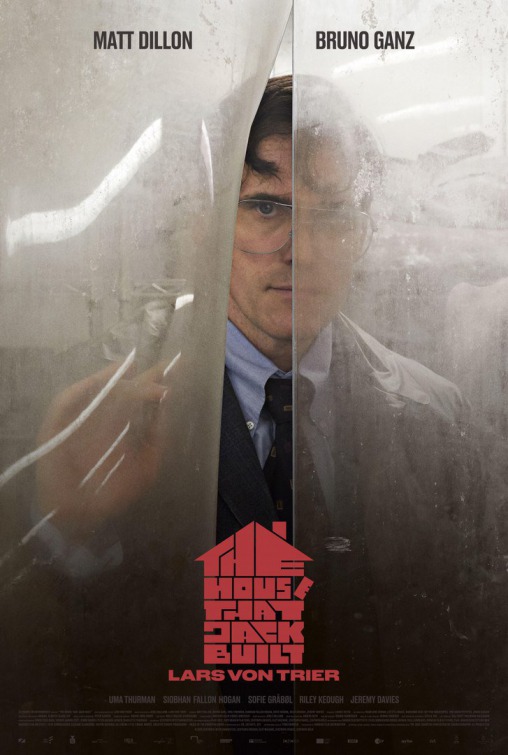
For years Lars Von Trier was considered persona non grata at the Cannes Film Festival, but in 2018 he returned to it with a vengeance. His latest film, “The House That Jack Built,” premiered there recently, and it was reported that a hundred people walked out of the screening in utter disgust. Of course, it wouldn’t be a Von Trier film if it didn’t cause some strong visceral reaction, let alone polarize the first audience to witness it. Now, those of us who were not lucky to go to Cannes this year get to watch the first trailer for “The House That Jack Built,” and it is made clear right away how this film is not at all for the faint of heart.
The trailer opens with Jack (Matt Dillon), an unrepentant serial killer, talking with Verge (Bruno Ganz) who I can only assume is a therapist of some kind. In their conversation, Jack assumes there are rules he must follow, but Verge assures him this is not the case but also says “don’t believe you’re going to tell me something I haven’t heard before.” But after I watched this trailer, I wondered if this would be the case. Many of us have grown up on serial killer movies like “The Silence of the Lambs,” “Seven” and “Copycat,” but this one seems a bit different and far more visceral than any I have seen in the past.
We see Jack pick up a lady played by Uma Thurman whose car has broken down. She holds a broken car jack in her hands, and she puts it down beside Jack once she gets in his car. From there, she talks openly about how she might have made a mistake getting into Jack’s car as he may very well be a serial killer. This reminded me of when a friend of mine shared his experience of watching “Friday the 13th Part VII: The New Blood” and of a particular female character who was there for the audience to utterly hate. When it looked like Jason was ready to kill her, my friend told me the audience started a chant of “kill the bitch, kill the bitch, kill the bitch,” and it looks like Von Trier is going for the same thing here as Thurman is just asking for Dillon to bash her head in with that car jack.
This trailer is filled with enough snippets to inform you “The House That Jack Built” will be an especially grisly adventure as Jack drags Thurman’s corpse into what looks like his secret lair, tortures another lady played by Riley Keough to where she screams helplessly, and takes aim at a pair of children and their mother. It should be clear before even watching this trailer that Von Trier is a filmmaker who never plays it safe, but those who are unware of this will be made very aware long before the last image.
For myself, there a couple of moments which stand out unforgettably. One is when Jack looks out the window of an apartment and yells how “nobody wants to help,” and the camera zooms out to where it looks like not a human being is in sight. The other comes when Jack says the following:
“Some people claim that the atrocities we commit in our fiction are those inner desires we cannot commit in our controlled civilization, so they are expressed instead through our art. I don’t agree. I believe heaven and hell are one and the same. The soul belongs to heaven and the body to hell.”
The way I see it, everyone has a dark side, and the world of art allows us to exorcise our most shameful desires. With “The House That Jack Built,” Von Trier gives us an individual who cannot separate the line between what is real and what is not, let alone fact and fiction. I have been a big admirer of this filmmaker since being introduced to his work through “Breaking the Waves,” and I cannot wait to see what he has in store for us here.
Please feel free to check out the trailer below at your own risk.
I want to say that when “Deadpool” was released, it was a breath of fresh air in a time of endless comic book/superhero movies, but this description doesn’t do it justice. The air coming from the 2016 box office hit was filthy, and we loved how Ryan Reynolds, Tim Miller and company refused to play it safe with this Marvel Comics character to where a PG-13 rating just wasn’t going to do it for them. But in addition to being so gleefully profane, the movie also had a big heart as it ended with a message of loving someone inside and out instead of just admiring what is on the surface. If there ever was an R-rated movie for today’s teenagers to sneak into, “Deadpool” was it.
Now we finally have its long-awaited sequel, “Deadpool 2,” which was preceded for the longest time by a pair of jokey trailers which didn’t have much in the way of new footage, but instead put its wisecracking hero in situations which didn’t always put him in the best light, and we laughed our asses off all the same. Surely this sequel couldn’t match the inventiveness and comedic genius of the original, right?
Well, I am very happy to report that “Deadpool 2” proves to be just as funny and entertaining as its predecessor, and in some ways, I thought it was even better. While this one looked as though it would suffer from overkill as the recent “Kingsman” sequel did, everyone in front of and behind the camera keeps the energy level high and the laughs coming in rapid succession. With Reynolds constantly breaking the fourth wall and a plot which refuses to make clear right away of where this sequel is heading, I was never sure of what would come next. As a result, I could never take my eyes off the screen.
So, what has Wade Wilson/Deadpool been up to since his last expletive-laden adventure? Quite a bit actually, and it has thrust him into a realm of despair he doesn’t see himself escaping from. What ends up giving him a reason to live is helping to protect Russell Collins (“Hunt for the Wilder people’s” Julian Dennison), a young mutant who goes by the name of Firefist for reasons which become immediately clear to where Pyro’s penchant for lighting everything up pales in comparison. But in the process, they are both met by Nathan Summers/Cable (Josh Brolin), a time-traveling cybernetic mutant soldier who is looking to right a terrible wrong, and his main target might not be who you think.
The amount of pop culture references is countless in “Deadpool 2,” and you may need to watch this sequel twice to catch all of them. Right from the start, Wade wastes no time in skewering popular icons like Wolverine who made his swan song in last year’s “Logan.” From there, we watch as this particular comic book character lays waste to gangsters to the tune of Dolly Parton’s “9 to 5,” gleefully provides a spoof of the James Bond opening titles which include such classics as “directed by one of the guys who killed the dog in ‘John Wick,’” and he makes you look at Barbara Streisand’s song “Papa, Can You Hear Me?” from “Yentil” in a very unnerving way. Also, he is quick to call you out on obvious references such as a line from “Robocop,” and by that, I mean the original, not the remake. Whether it’s a good or bad guy you are talking about here, at least they have great taste in movies.
However, the laughs and action come at us so quickly in “Deadpool 2” to where it takes longer than usual to figure out what the movie’s main plot is. At times, it seems like the filmmakers are geared towards throwing jokes, action scenes and filthy jokes and the expense of an actual story, and it looks as though we won’t find a story until the third act. Even Wade at one point says if he and his newly-appointed X-Force achieve their goals, there won’t even need to be a third act. Of course, I was having too much with this sequel to criticize this point all that much, and a story does indeed emerge.
Reynolds has come a long way from his “Van Wilder” days to get to this point. He’s given memorable performances in “Buried” and “The Proposal,” but his career has been overshadowed by having starred in one of the worst comic book movies ever, “Green Lantern.” “Deadpool” served as his redemption for that cinematic misfire, and his dedication to staying true to Wade Wilson and his alter-ego has been commendable considering the ill-fated debut he made as this character in “X-Men Origins: Wolverine.” Watching Reynolds here is a reminder of what a gifted comedic actor he can be when given the right material, and it is impossible to picture anyone else in this role instead of him.
Tim Miller stepped out of the director’s chair for “Deadpool 2,” and in his place is David Leitch who assisted Keanu Reeves and Charlize Theron in their path to ass-kicking glory in “John Wick” and “Atomic Blonde.” I was impressed at how he managed to keep this sequel’s energy and laugh quotient up and running throughout as I kept waiting for the whole thing to burst at the seams. It’s no surprise “Deadpool 2” lacks the freshness of the original, but it does have the same level of insane energy and even more to spare beyond it.
And there’s Josh Brolin who appears in his second Marvel movie in two months as Cable. Just as he did in “Avengers: Infinity War,” he gives this iconic comic book character a wounded humanity which makes especially complex and threatening throughout. Even when Cable undergoes a change of alliances which is almost as unbelievable as any in “The Fate of the Furious,” Brolin keeps a straight face throughout the proceedings which become increasingly over the top. It’s also great to see how Brolin has a good sense of humor about himself as he endures barbs relating to “The Goonies,” and looking at his scared face here made me want to say, “Who do you think you are, Thanos?”
It’s also nice to see a variety of new and familiar characters here like Karan Soni whose character of taxi driver Dopinder has developed a bit of a blood lust which Wade is not quick to take all that seriously. Stefan Kapičić gets a bit more to do as Colossus in this sequel as this character does what he can to make Wade a better person. The character of Peter, a regular person with no superpowers, is an inspired addition to this series, and I would love to have seen Rob Delaney play him in more scenes here. T.J. Miller also returns as bar owner and Wade’s best friend, Weasel, but considering his penchant for making fake bomb threats, I believe this will be the last time we see him in this role.
“Deadpool 2” could have been too much of a good thing, but I had so much fun with it to where it didn’t matter if it was. I can’t remember the last time I laughed so hard at a movie, and it is nice to watch a movie where the jokes hit far more often than they miss. Reynolds, like Ben Affleck, have a strong sense of humor about his past mistakes in the world of cinema, and its fun seeing a movie star crack a few laughs at their own expense However, I am curious as to why he did not lay waste to “Blade: Trinity.” That misbegotten sequel was every bit as bad as “Green Lantern.”
And as always, be prepared for a post-credit sequence which is by the funniest of its kind since “Spider-Man: Homecoming.” It is too damn hilarious to spoil here, and you have got to see it for yourself.
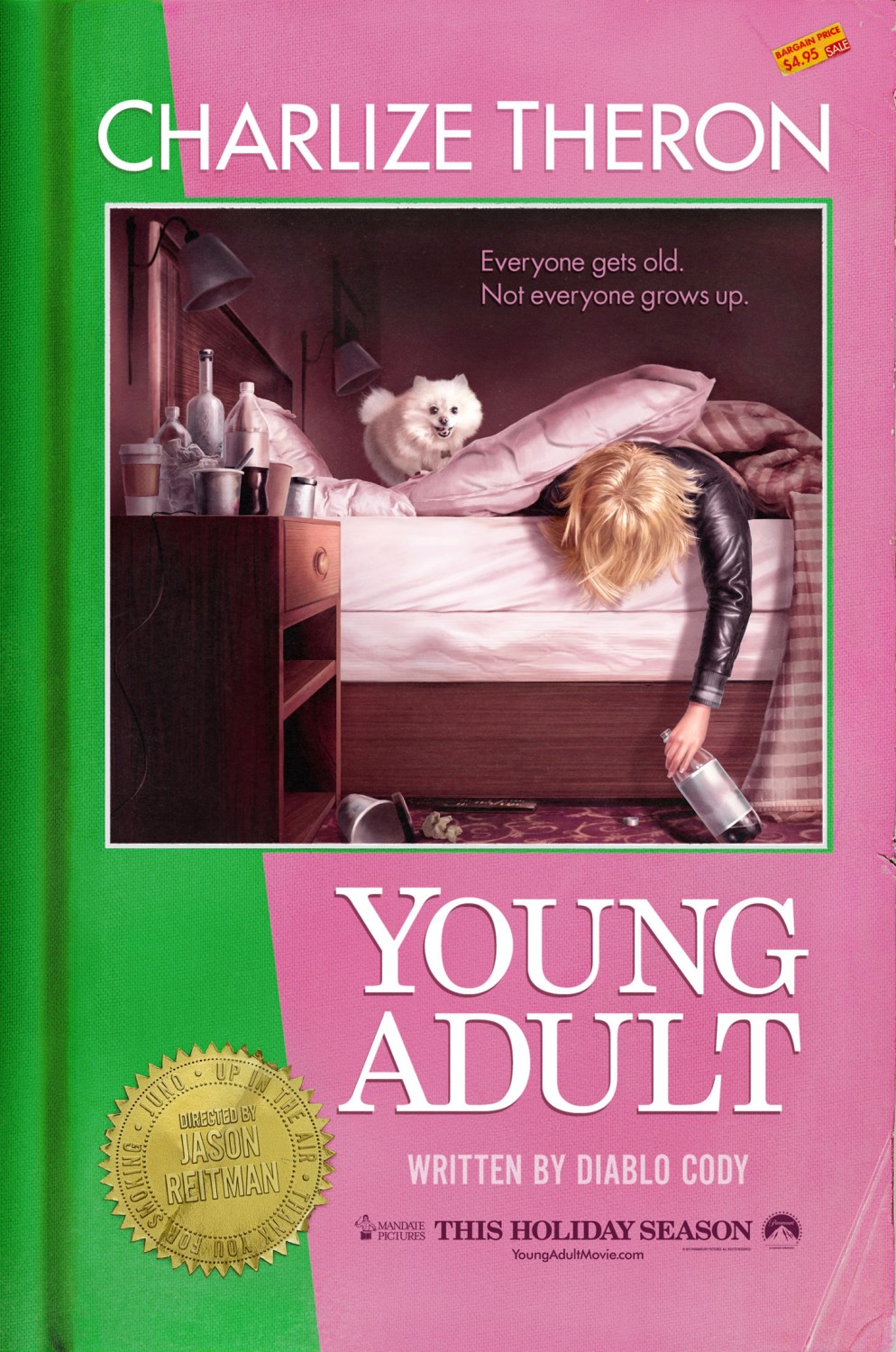
“Young Adult” comes to us from Jason Reitman and Diablo Cody who gave us “Juno,” but this is a very different movie. This collaboration of theirs is a bruise-black comedy starring Charlize Theron as Mavis Gary, a writer of young adult novels which resemble those “Sweet Valley High” books many read years ago (I did not). She finds out her high school boyfriend Buddy Slade (Patrick Wilson) has become a dad, and she travels back to her hometown in a mission to steal Buddy away from his wife and rekindle their long-lost romance.
Both Reitman and Cody dare us to share some time with a most unlikable character. Mavis is a recent divorcee who spends her mornings chugging down Diet Coke, her nights getting drunk on premium whiskey (Maker’s Mark should see an increase in sales from this movie), and she can barely hide her contempt for the town she grew up in. That she writes young adult books is a metaphor for her arrested development as her best years were in high school, and she has never gotten past them.
Theron is one of the best actresses working in movies right now, and her performance as Mavis Gary is one of her bravest. This is not a likable character, but Theron finds the humanity within Mavis, and this makes us want to follow her journey. While we despise Mavis’ desperation in reclaiming a past which has long since passed her by, Theron digs deep into the pain and depression which has long since engulfed this character, and she succeeds in making “Young Adult” more unforgettable than it already is.
But as great as Theron is, she is almost outdone by comedian Patton Oswalt who plays Mavis’ former classmate, Matt Freehauf. His character got beaten up very badly in high school, and his injuries have kept him from moving forward in life. Oswalt inhabits his character fully and never allows Matt to turn into a caricature. His sense of humor acts as a defense against the hurt he can quickly be reminded of, and he too finds the humanity in a character who could have easily turned into a cliché.
Cody’s script is excellent in mining the humor out of incredibly awkward and pitiful situations. This is a cathartic story which perfectly captures the dynamic between those who have moved on from high school and those who have not. This feels like a very personal script for her as it ponders those formative years which define us more than we want them to. While we would love to see those popular kids suffer tremendously, we can’t get past the sadness of Mavis’ current situation.
Reitman bravely moves out of his safety zone with this movie. As with his other movies, he succeeds in making all the characters seem as real as those we know in real life. While the beginning may seem slow and unnecessarily cold, he brilliantly highlights the sad state of Mavis’ life as much of it has been stolen from her.
Whether or not you think “Young Adult” reaches out to all those who loved “Juno,” it does show off the tremendous talents of Reitman and Cody. What results is a movie which dares to go down roads we would rather not revisit, and it finds a humor and humanity many will not see coming. Some will strongly dislike this movie as its main character is far from likable, but you don’t need likable characters to make a good movie, let alone a great one.
Ever since he played Johnny Lawrence in 1984’s “The Karate Kid,” actor William Zabka has forever burned himself into our collective memories as the quintessential school bully. From there he went on to play characters who were equally antagonistic in movies like “Back to School,” “Just One of the Guys” and “National Lampoon’s European Vacation” in which he does the unthinkable when he dumps Audrey Griswold as his girlfriend. All these movies serve to make you completely forget that Zabka started off his career acting in commercials which portrayed him as the all-American nice guy.
But the truth is there is more to Zabka than just playing the bully we all love to hate. Ever since “The Karate Kid,” he has gone on, unlike many of his co-stars, to earn a black belt in Tang Soo Do. On top of that, he speaks Czech fluently and is also an accomplished musician. Furthermore, he has gone on to become a noted filmmaker, and his short film “Most” earned numerous awards as well as an Academy Award nomination for Best Live Action Short Film.
All these years later, we catch up with Zabka in “Where Hope Grows,” a film written and directed by Chris Dowling, which has him playing Milton Malcolm. Milton looks like a successful businessman, but we come to see his life is falling apart very quickly. He descends into alcoholism with his best friend Calvin Campbell (Kristoffer Polaha), a former major league baseball player whose career was undone by panic attacks. But when Calvin finds a way to sobriety thanks to his newfound friendship with a simple-minded supermarket employee with Down syndrome who is known by his nickname of Produce (David DeSanctis), Milton ends up feeling more isolated than ever, and this sends his life into an even deeper downward spiral.
Looking at this, it becomes clear Zabka has a more complex role than any other actor in “Where Hope Grows,” and I told so during a roundtable interview held at the Four Seasons Hotel in Los Angeles, California. Unlike his most famous characters, Milton cannot be easily labeled as a good or bad guy in this movie. I asked him what the challenges were for him in playing such a complex character, and he liked that I found this to be the case with Milton.
William Zabka: This character is very complex. He has it all or appears to have it all. He’s got a beautiful wife and kids but he’s in trouble at work, he’s in the bottle, neglecting his wife, there are all kinds of stuff going on. To live in the moment of that and to feel the pain of that… The one scene where I almost come off really brazen in the scene at the golf course, I was saying to Chris, “Give me another line.” We were banned from saying the “R” word on the set. It was like no “R” words and here I am delivering it. I said, “Can’t we just find something softer? Can we be ignorant but not so brazen?” Chris really wanted that contrast for the ending and payoff. That’s a vulnerable place to go as an actor because as an actor you want to be liked or at least relatable. I’m glad you said that you could see the complexities because he wasn’t a good guy and he wasn’t a bad guy. He was misinformed. Produce’s story is kind of a second story to him. He is struggling with his own stuff, and it’s later when they come face to face and this kid gives him a gift. So, hanging onto that was the key to allow me to go down to some of those darker places.
It was a real honor to be in the presence of Zabka whose performance in “The Karate Kid” remains forever burned into my memory. But while many remember him best for playing such a hateful bully, there’s certainly much more to him than we realize.
“Where Hope Grows” is now available to own and rent on DVD, Blu-ray and Digital. And of course, you can see him on the YouTube Red series “Cobra Kai” as Johnny Lawrence.
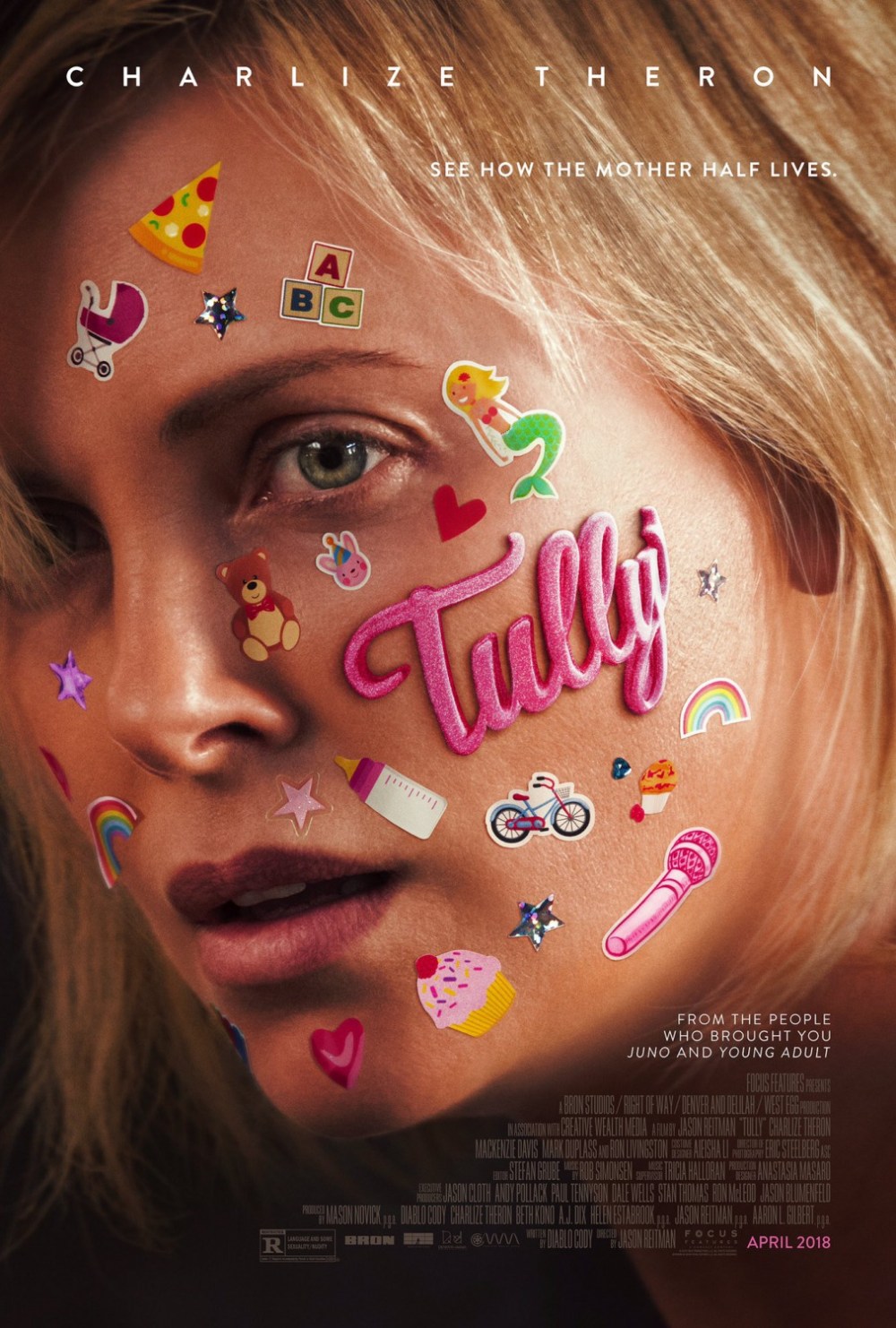
Okay, as I write this review for “Tully,” the latest collaboration between filmmaker Jason Reitman and writer Diablo Cody, I have to confess I am not a parent. I have not experienced restless nights with a crying newborn who constantly needs a bottle of milk or a quick diaper change, and if I ever do become a parent, I am certain I will deal with it as well as my friends with kids have (which is to say, not at all). But after watching “Tully,” I feel confident in saying it is one of the more honest depictions of what a mother goes through before, during and after she gives birth. Whereas most movies conclude with the birth of a child, this one starts with one and goes from there.
Charlize Theron plays Marlo, a mother of two and with a third on the way. Her belly is so big to where she looks ready to burst at any second, and we also see how overwhelmed she is with everything and anything. Her son Jonah (Asher Miles Fallica) is an overly-sensitive boy who freaks out loud noises he is exposed to, and she is forced to give him more attention at the expense of her daughter Mia (Lia Frankland). When Marlo visits the principal at Jonah’s school and tells her this third child is “such a blessing,” you can tell she doesn’t fully believe it.
When Marlo does give birth to a girl she names Mia, it is one of the more unique birth scenes in movies. Most filmmakers treat the arrival of a newborn with unfettered joy, but “Tully” treats it dispassionately as Marlo is too wiped out and depressed to be happy about anything. For a moment, I feared this movie would venture into “We Need to Talk about Kevin” territory, but neither Reitman or Cody are out to make this story about a sociopathic child.
From there, Reitman presents us with a furious montage of Marlo constantly getting up in the middle of the night to take care of her crying baby, feed her, change her diapers (always an unappealing task), and pump milk out of her breasts. Sure, Marlo does have a loving husband in Drew (Ron Livingston), but he has yet to fully see the heavy toll motherhood is taking on her. It’s an unnerving montage as we keep waiting for Marlo to explode in frustration, and when she eventually does, you cannot blame her.
Marlo’s brother, Craig (Mark Duplass), comes to her rescue by offering to hire a night nanny. Marlo is at first very hesitant to let Craig do this as the thought of anyone else raising her children is terrifying, but one day after she is unable to stop Mia’s crying, she relents. The night nanny comes in the form of Tully (Mackenzie Davis), a youthful woman who quickly proves to be wise beyond her years. Once she comes into Marlo’s life, things begin to change for the better, but as the movie goes on, you wonder more about who Tully is and if she is too good to be true.
Watching “Tully” reminded me of many scenes in movies and television where I witnessed a mother losing her patience. We watched Marge Simpson roar like a lion at anyone who couldn’t possibly understand her frustrations, we were taken aback when Dee Wallace yelled at her son “alright I’ll get your daddy!” while being stalked by a rabid St. Bernard in “Cujo,” and we watched helplessly as Brie Larson tried to explain to her son what is really going with them in “Room.” Mothers will often explode in frustration, and many of the best movies about parenting portray this. As we see Marlo get upset with her kids, it is highly likely we will be reminded of the agony we put our own mothers through to where a long overdue apology may be required from us. “Tully” has several moments like these, and they are fully earned throughout.
Theron has long since proven to us what a phenomenal actress she can be. As Marlo, she gives a fully realized performance as a mother who looks like the joy she has for life has been completely sucked out of her. The Oscar-winning actress makes you feel the pain of Marlo’s situation as the character has long since reached her breaking point to where she seems like she cannot take another challenge thrown in her general direction. As the movie goes on, we see Marlo rise out of her depressed state to where she experiences happiness for what seems like the first time in ages. Theron makes us feel every note of Marlo’s anguishes and triumphs to where we cannot come out of this motion picture saying we were not the least bit moved.
As the night nanny, Mackenzie Davis proves to be such a luminous presence as Tully to where we realize this movie doesn’t just need her, it deserves her. A modern-day Mary Poppins, Tully predicts Marlo’s every move and need and gives her just what she needs to make it to the next stage in her life. Davis is best known for her work on “Halt and Catch Fire” and for appearing in one of my favorite movies of 2017, “Blade Runner 2049.” She gives off such a warm glow in “Tully” to where you just want to hug here and never let her go.
I also have to give credit to Ron Livingston who plays Marlo’s husband, Drew. It could have been a thankless role of a husband and father completely ignorant of his wife’s suffering, but the “Office Space” actor makes him more than the average movie dad. Even as Drew loses himself in video games which have him battling and killing zombies, Livingston makes us see he is a man with a good heart even with all his flaws. In his penultimate scene, Livingston doesn’t make Drew into a total schmuck who berates his wife when things go haywire, but instead into a spouse eager to admit he doesn’t know everything his wife is going through and is desperate to hear her out. I love it when Livingston says “I love us” instead of “I love you” as it shows the perspective and honesty Reitman and Cody are committed to giving this particular parental adventure, and it makes this moment between these two characters all the more special.
If I have any problems with “Tully,” they come in the second half when revelations are made to where we have no choice but to question everything we just saw I would tell you which movies these revelations reminded me of, but this would be giving away way too much. But while these revelations could have wrecked any other motion picture, they do little to take away from this one.
“Tully” marks a big comeback for Reitman and Cody after a few years of cinematic misfires. “Labor Day” and “Men, Women & Children” put a few dents in Reitman’s resume as a director, and Cody’s directorial debut “Paradise” and screenplay for “Ricki and the Flash” (0ne of Jonathan Demme’s last films before his death) were ill-received to put it mildly. But when these two artists come together, they create something which is never easily forgotten.
Reitman makes the struggles these parents go through all the more vivid without making them seem the least bit glamorous. “Tully” does not have the look of a motion picture to where you feel like you are watching one, but instead of a real life setting with all its messiness and imperfections on display. At times, I felt like I was watching a home movie, and this made everything I saw feel all the more powerful.
As a writer, Cody still comes up with some classic zingers like “abandoned trash barge” or describing someone as a “book of fun facts for unpopular fourth graders,” but her screenplay also shows her rising to another level of thoughtfulness and maturity. Being the mother of three children herself, Cody clearly understands the journey such a person ends takes to where the mother/newborn connection is not forged right away. There has been some controversy over “Tully’s” portrayal of mental illness, and it is never made clear if Marlo is suffering from post-partum depression or something similar. Cody, however, is not out to make Marlo a special case study, but instead to share the challenges she was forced to overcome to be the mom she is today.
I think it is more than appropriate that “Tully” has arrived in theaters just in time for Mother’s Day. Lord knows we owe our mothers a great deal of gratitude for all they have done for us, let alone all they have gone through to get us to where we are today. Sure, dads deserve a lot of credit too, but being a mother comes with a lot more challenges and obstacles to overcome. If this Reitman/Cody film cannot make you see this, then what will?
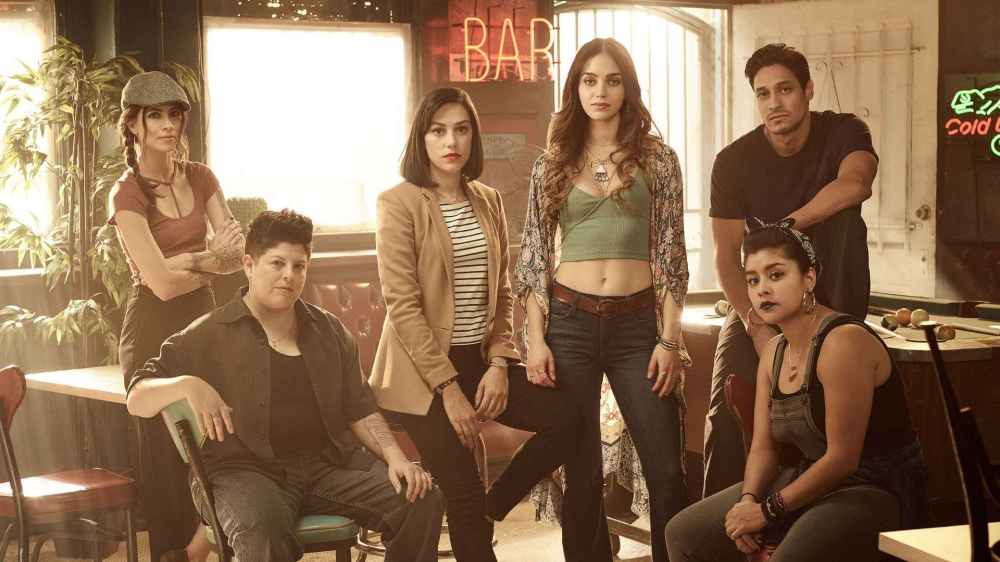
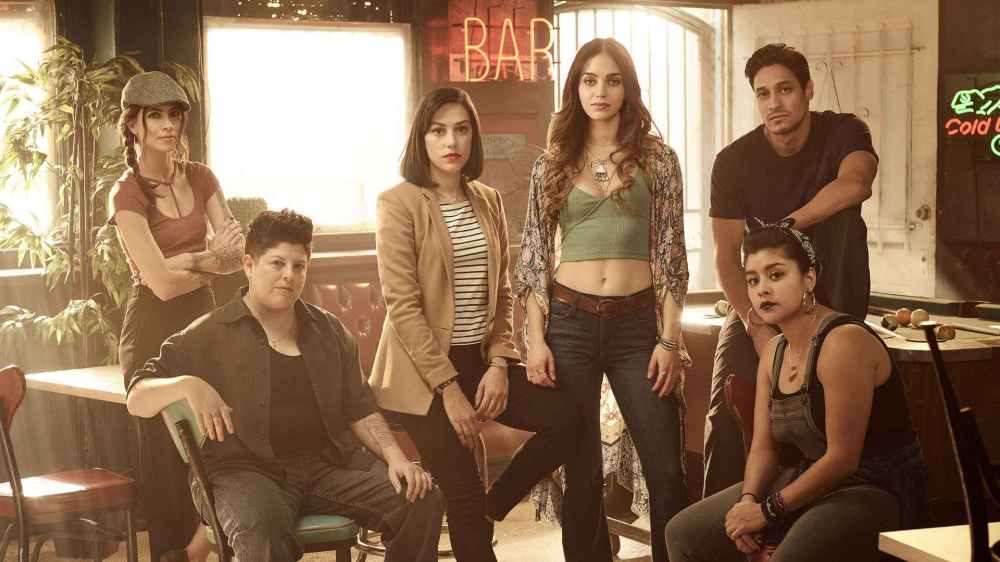
Among the talented actors to be found in the new Starz series “Vida” are Puerto Rican actress Maria Elena Laas and Latinx actor and playwright Ser Anzoategui. The two portray characters caught up in the vibrant and changing area of East Los Angeles, and their lives are suddenly disrupted by the appearance of two estranged sisters who have come back home for their mother’s funeral. Anzoategui plays Eddy, a sensitive and trustworthy person who was married to the sisters’ mother and who proves to be the heart of the community as well as an intimidating presence upon first glance. Laas stars as Cruz, and enigmatic lesbian who was a mentor to one of the sisters, Emma (Mishel Prada), before she left Los Angeles for Chicago. Now that Emma is back in town, she and Cruz will come to terms with the things left unspoken between them for far too long.
Laas has appeared in the movies “The Hot Chick,” “Suffering Man’s Charity” and “Airplane Disasters,” and she has appeared on the television shows “Chicago PD,” “How to Get Away with Murder” and TNT’s “Dallas.”
Anzoategui has had a gained a strong recognition due to her success in the theatre, and this led to Anzoategui being cast as a recurring character on the Hulu show “East Lost High.” In addition, Anzoategui has appeared on “Crazy Ex-Girlfriend,” “The Fosters” and “Shameless.”
While talking with Laas and Anzoategui at the “Vida” press day in Los Angeles, they spoke enthusiastically of how lucky they are to be a part of a show which blows away the stereotypes Hollywood has typically had of Latinos.
Please be sure to check out the interview below. “Vida” is now available to watch and stream on Starz, and the show proves to be an excellent case study in authenticity.
While at the press day for the new Starz show “Vida,” I got to talk with two of its stars, Chelsea Rendon and Carlos Miranda. Rendon plays Marisol, a young woman who is passionate about her politics and determined to fight against any and every injustice thrown into her path. Miranda stars as Johnny, a well-meaning guy who is busy running his dad’s auto shop and is on the verge of getting married to his pregnant girlfriend. However, when Johnny’s ex-girlfriend, Lyn (Melissa Barrera), arrives back in town, his plans for being a good husband and dad are challenged to a large degree. Both characters reside in East Los Angeles and in a community filled with pride and passion, and while they are certain of the paths in life they are meant to take, everything gets turned upside down for them.
Rendon began acting at the tender age of six years old, and she has won numerous awards for her role as Cristina on “No Turning Back.” She was featured on the shows “The Bridge,” “Major Crimes” and “Code Black,” and she also has a recurring role on “The Fosters.”
Miranda was born in raised in San Francisco, California, and he has appeared in such movies as “Warrior,” Sofia Coppola’s “The Bling Ring” and “Grandma” which starred Lily Tomlin. On television, his credits include “Chicago PD,” “How to Get Away with Murder” and on the TNT revival series “Dallas.”
Please check out the interview below and be sure to watch “Vida” when it debuts on the Starz network on May 6th.
She has served as a writer on “How to Get Away with Murder” and on the HBO TV series “Girls” and “Looking.” And now, playwright Tanya Saracho presents us with her very own television series, “Vida.” Set in East Los Angeles, it follows a pair of estranged sisters who reunite for their mother’s funeral. Their hometown is a vibrant area and features a strong Latinx community with residents who find an empowerment in this place they cannot easily find anywhere else. As “Vida” goes on, we discover just how much history this part of Los Angeles contains and of the changes others threaten to make which can erase a past which needs to be preserved.
In addition to her work on television, Saracho has had her plays produced at New York City’s Primary Stages and 2nd Stage, Steppenwolf Theater, The Denver Theatre Center, and the Oregon Shakespeare Festival. She was named one of nine national Latino Luminarios by Café Magazine and was given the first Revolucionario Award in Theater by the National Museum of Mexican Art. In addition, she is the founder of the Alliance of Latino Theatre Artists (ALTA).
I got to speak with Saracho while she was in Los Angeles to promote “Vida.” She talked of how she went about creating such complex characters, how she likes to give her cast only so much information before they receive the next episode’s script, and of how excited she is about filming the show in East Los Angeles. I often say there is always something new to discover about Los Angeles no matter how long you have lived there, and Saracho agreed as she is still learning of how far back the history of this particular community extends.
Please check out the interview below and be sure to watch “Vida” when it premieres on Starz May 6th.
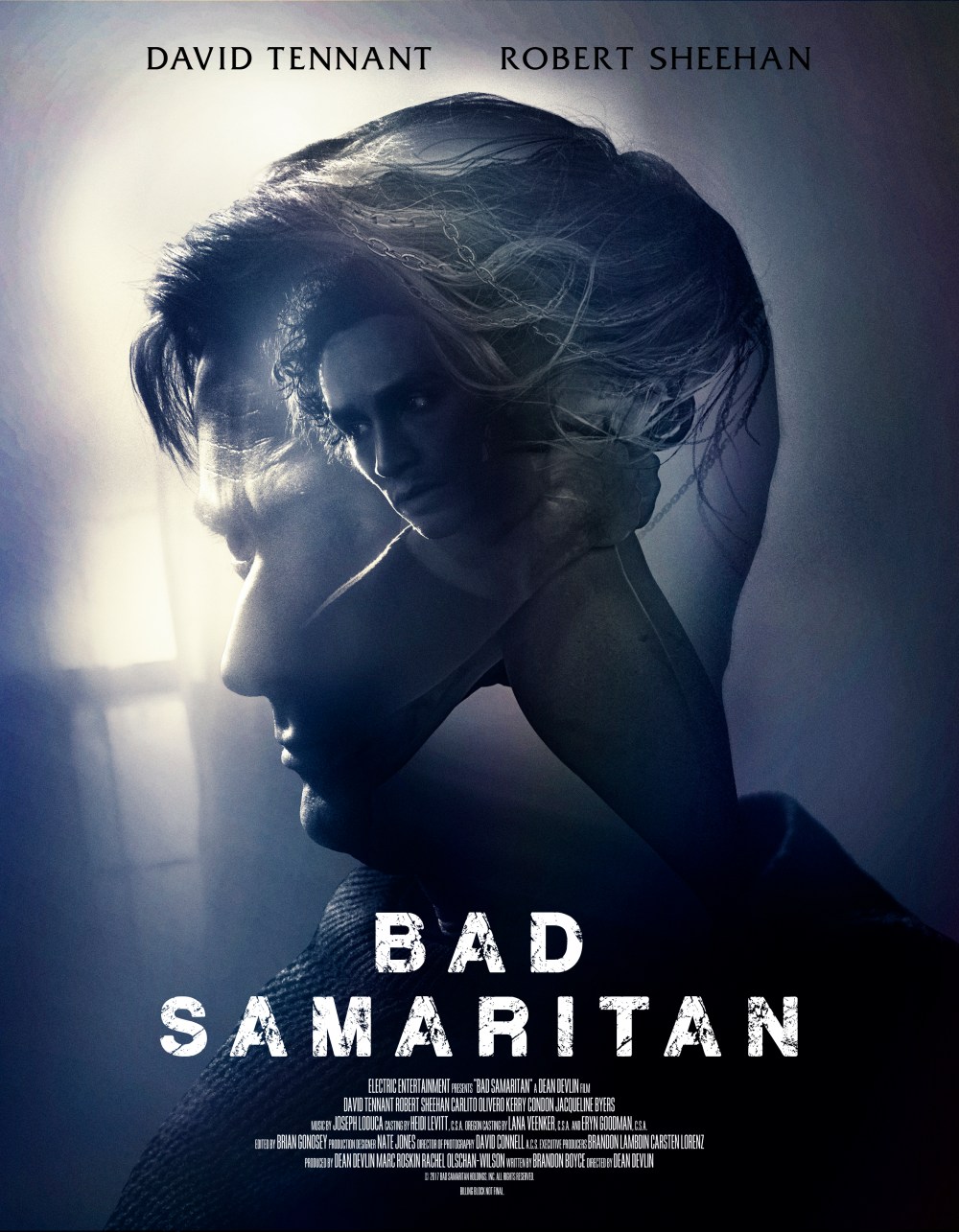
We know him best for playing the Tenth Doctor on the never-ending BBC television series “Dr. Who,” and for playing the sociopathic Kilgrave on Netflix’s “Jessica Jones.” Now in “Bad Samaritan,” David Tennant plays Cale Erendreich, a far more psychotic character than any he has played in recent years. When we first lay eyes on Cale, he is incredibly rude to a pair of valets at a local Italian restaurant. When he hands the keys to his Maserati over to them, he makes it clear his car is not be messed with or smoked in, and this leads the valets to invade his house and rob him, but they soon discover Cale has a woman chained up in his office. From there, we learn just how screwed up on an individual Cale is as this particular victim clearly is not his first, and he even tells her at one point, “You have earned the next stage in your evolution.”
Watching Tennant in “Bad Samaritan” reminded me of Ben Kingsley’s performance as Don Logan in “Sexy Beast.” As Don Logan, Kingsley gave us a character who truly was the anti-Gandhi and, in the process, he gave us one of the greatest and most fearsome villains the world of cinema has ever seen. In an interview, Kingsley talked about how he played the wound of the character as this was the thing which gave Don Logan the most ferocity. Hearing him say this remains fascinating to me to this very day as it gave me a stronger idea of how to play a villain in a movie or a play.
When Tennant appeared at the “Bad Samaritan” press day at the London Hotel in West Hollywood, I got to ask him what he felt Cale’s deepest wound was. His answer showed just how much research he did on this character and of how complex Cale is.
David Tennant: Well Cale certainly doesn’t know. A lack of self-awareness is probably right up there. Obviously, there is a lot of damage in his background and a lot of it, I’m sure, goes back to his parents and upbringing. Doesn’t it always? I think he’s a broken human being who doesn’t realize he is. He’s fatally damaged and believes he’s the only one who isn’t, so I suppose it’s that. It’s the gap between where he really sits in society and where he believes he sits in society I guess.
It is never enough to play a villainous character who revels in being so evil as it does nothing but make such an antagonist so one-dimensional and infinitely boring. Thank goodness we have actors like Tennant who are eager to explore the dark side of humanity to where they can give audiences a villain who is never easily forgotten.
Be sure to check out “Bad Samaritan” which is now playing in theaters everywhere.
With Roland Emmerich, he helped bring “Independence Day,” “Godzilla” and “The Patriot” to the silver screen. In 2017, he struck out on his own and made his directorial debut with the disaster film “Geostorm.” Now filmmaker Dean Devlin follows that up with his sophomore directorial effort, a horror thriller named “Bad Samaritan” which was written by Brandon Boyce (“Apt Pupil”) and stars former “Dr. Who” actor David Tennant, Robert Sheehan and Carlito Olivero. Whereas “Geostorm” was a big budget Hollywood blockbuster, “Bad Samaritan” sees Devlin taking the independent film route to create his most intimate motion picture yet.
We get introduced to Sean Falco (Sheehan), an aspiring photographer who works as a valet with longtime friend Derek Sandoval (Olivero) at a local Italian restaurant. What his employers do not know, however, is Sean and Derek have more on their minds than parking cars. Once customers give them their keys, they drive out to their homes to burglarize them, and among the items they abscond with is a diamond ring which Sean gives to his girlfriend, Riley (Jacqueline Byers). But one night, when Sean breaks into the home of an especially rude customer, Cale Erendreich (Tennant), he discovers a woman chained to a chair. From there, it becomes a cat and mouse game as Sean tries to find a way to save her without getting arrested as a thief in the process.
I was lucky enough to speak with Devlin at the London Hotel in Los Angeles, California where he was doing press for “Bad Samaritan.” Devlin talked about how making this movie reminded him of why he got into filmmaking in the first place, the twisted psychology of Tennant’s character, what made him especially interested in working with Boyce, and of the advantages he had in shooting the film in Portland, Oregon.
Please check out the interview below.
AN ULTIMATE RABBIT NOTE: This interview was recently updated in order to rectify any potential copyright issues and to make it available to the largest audience possible.









 The Ultimate Rabbit