No, I Haven’t Seen It Until Now: ‘Super Fly’ (1972)
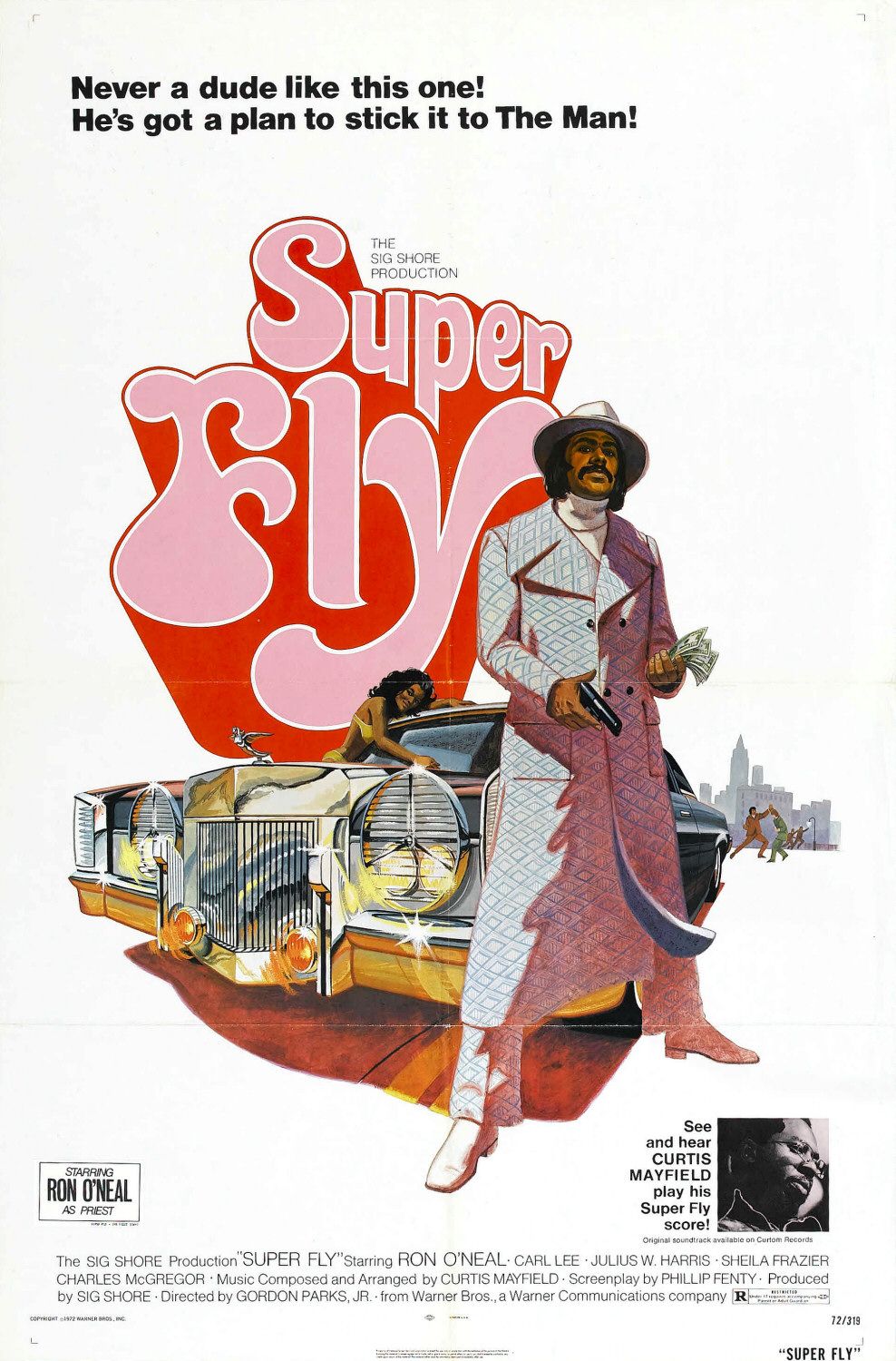
Super Fly 1972 poster

With the remake about to be released, it was time to check out “Super Fly,” the 1972 blaxploitation crime drama which is considered one of the biggest classics of the genre. I have been aware of this film’s existence for years, and the photo on its VHS cover of Ron O’Neal holding a gun and looking ever so cool in his white suit and pants has been burned into my memory for decades. But like many movies I perused at local video stores, all of which have since vanished, I never got around to watching it until now.

While I certainly understand why “Super Fly” is long considered a classic blaxploitation film, it is not necessarily a great movie. On one hand the signs of its low budget are very much on display throughout to where I was reminded of what John Carpenter once said about the rule of making independent movies: “Shoot as little film as possible and make it as long as you can.” But on the other, it presents us with a New York time which no longer exists in modern day America, and the gritty realism of the city streets is on display throughout to where the movie’s existence is especially important as you can only fake this kind of realism in today’s cinematic world.

Ron O’Neal plays Youngblood Priest, an African-American drug dealer who enjoys a luxurious lifestyle in Harlem, New York. He got the name Priest because of the cross he wears around his neck. While this cross may or may not reflect his belief in God or any religious deity, a closer inspection reveals that the tip of the cross is fashioned in the shape of a spoon, and this allows him to do lines of cocaine whenever he needs a hit. In addition to his high-class apartment, the kind which would fetch at least a million in today’s New York real estate market, he also has a dedicated girlfriend in Georgia (Sheila Frazier), a white girl mistress named Cynthia (Polly Niles), the best set of clothes any man would be lucky to own and wear at the time, and he drives around town in a 1971 customized Cadillac Eldorado. Looking at Priest is to be convinced this is a man who has a lot of power and confidence you would be foolish to question, and this is something he does not have to spell out to anyone in words.

But as successful as Priest is, he yearns for a life outside of the underground drug business. This, of course, leads to him to plan one last “big score” which he believes will allow him to retire and go straight, but those of us who have watched countless gangster movies know this last big score will be the one fraught with the most danger. It gets to where there I expected the one scene where Priest just shakes his head as if to say to himself, “I should have gotten out of the life sooner, and now it’s too late.” Still, Priest is much smarter than his friends and foes realize, and we watch as he plots his way to his biggest drug deal ever, and then attempt to stay one step of everyone else who wants to do him in.

It has been said that the screenplay for “Super Fly” was only 45 pages long, and this is why we get exposed to so many shots of people walking, driving and talking in restaurants. This is the kind of film editing you would never see today as everything needs to move at a fast pace. This ends up dragging the movie down a bit as certain moments play themselves out for much longer than is necessary. Still, it allows us to take a look back at the New York that was before it, for better or worse, was cleaned up to where much of the state if unaffordable to live in. This helps to make up for other scenes which are staged rather pathetically, especially one in which a character gets hit by a car.

O’Neal immediately comes across as the personification of cool from the first moment he appears onscreen. He was in his 30’s when starred in “Super Fly,” but his face has the look of a man who has seen a lot in life up to that point, and this makes his performance as Priest feel all the more powerful and authentic. I never got the feeling he was trying to glamourize Priest’s lifestyle, and he was not afraid to make this character a rough and unlikable dude at times. He simply portrays Priest as a man who makes his way through life the only way he knows how, and his methods as you can imagine are not always morally sound.

As for the rest of the cast, their performances range from okay to pretty good. Charles McGregor, who was released from prison before “Super Fly” began filming, has some good moments as Fat Freddie, and Carl Lee, who plays Eddie, has a strong scene in which he tells Priest if it wasn’t for him, he would have overdosed. This line of dialogue would later prove to be tragically ironic as Lee became a heroin addict, and he died of a drug overdose back in 1986.

When “Super Fly” was released, many African-Americans were said to have been displeased with the way the movie glamourized people like themselves as drug dealers and pimps, but it resonated deeply with others who saw the movie as an example of how to rise up in the American class system. Does this movie glamourize the lifestyles of drug dealers? Well, perhaps it does, but the scary truth is there is always an allure to a life like this as it affords us a wealth which constantly seems out of our reach. Still, it should be noted how we never really see Priest enjoying himself much in the movie. While he has many things a person would want in life, we see right from the start how he has long since tired of his role in society to where it is believable and understandable why he yearns to do something legitimate for a change.

For those who think “Super Fly” provides audiences with a rather ambiguous look at the world of drugs and drug dealing back in the 1970’s, you need to take the time to listen Curtis Mayfield’s soundtrack to it which, by the way, is one of the best of its kind ever. An exhilarating fusion of soul and funk music, Mayfield also provided lyrics which were very socially aware and took an even closer look at drugs and poverty in society. When you read the lyrics of the song “Freddie’s Dead,” you can see the evidence of this very clearly:

“Everybody’s misused him

Ripped him up and abused him

Another junkie plan

Pushing dope for the man

A terrible blow

But that’s how it goes

A Freddie’s on the corner now

If you want to be a junkie, wow

Remember Freddie’s dead

We’re all built up with progress

But sometimes I must confess

We can deal with rockets and dreams

But reality, what does it mean

Ain’t nothing said

‘Cause Freddie’s dead.”

Looking at this, it is no wonder the soundtrack ended up making more money than the movie itself, and the movie did make a huge profit.

So “Super Fly” may not be an example of great filmmaking, but it should be noted how its production succeeded in offering advances for African-Americans. The city of Harlem went out of its way to back the movie financially, and many black businesses helped with production costs. Furthermore, the majority of the crew were in fact African-American, something which was very rare at this time in cinema. Taking all this into account makes “Super Fly” all the more enjoyable as it was a movie made with passion and respect as the filmmakers sought to tell it like it is. Despite its glaring flaws, it is a very cool movie to experience, and I am glad I finally got the chance to check it out, especially before I went out to see the remake.

* * * out of * * * *

David Fincher’s ‘The Girl with the Dragon Tattoo’ Stands On Its Own

The Girl With The Dragon Tattoo 2011 poster

To call David Fincher’s “The Girl with The Dragon Tattoo” a remake of the excellent 2009 Swedish thriller wouldn’t be fair. Yes, it too is based on the runaway bestseller by the late Stieg Larsson, but Fincher has taken this material and, with the help of ace screenwriter Steve Zaillian, made it his own. His version proves to be one which is neither better nor worse than the original, but one which effectively stands on its own two feet to where any comparisons are not really necessary.

Daniel Craig takes on the role of Millennium Magazine writer Mikael Blomkvist who, at the movie’s start, has lost a libel case against the wealthy but corrupt businessman Hans-Erik Wennerström, a defeat which will seriously deplete his savings account. To escape the prying eyes of the press, he accepts an invitation from retired CEO Henrik Vanger (Christopher Plummer) to investigate the mysterious disappearance of his great-niece Harriet. Vanger believes she may have been murdered by a member of his family, one which proves to be far more dysfunctional than any you may know.

Fincher’s film takes its time in establishing the characters of Blomkvist and Salander, who is played here by Rooney Mara. In fact, they don’t meet face to face until an hour into the movie. While studio executives were probably begging to see these two come together a lot sooner, it gives these actors time to establish their characters to where we feel like we understand them and are eager to see each work with one another.

Stepping outside of the James Bond franchise, Craig is terrific in conveying Blomkvist’s single-mindedness in finding answers which need to be uncovered. This is not a heroic character taking out the bad guys with relative ease, but one who is dedicated to finding out the truth and soon comes to realize just how much danger he is in. But as frightened as he is, Blomkvist is in no position to just give up and go home.

As for Mara, her performance as Lisbeth Salander is nothing short of a revelation. She must have given one hell of an audition for Fincher because very little in her resume, certainly not the bland “Nightmare on Elm Street” remake, could have prepared us for how good she is here. That is, except for her performance as Max Zuckerberg’s girlfriend who dumps him without remorse at the beginning of “The Social Network.”

Having watched Noomi Rapace inhabit this character previously, it was hard to think of another actress who could be anywhere as good in playing Lisbeth Salander. Mara, however, is more than up for the challenge, and her commitment in portraying this understandably anti-social character is utterly complete. I kept trying to find traces of Mara in this film, but I came out of it feeling like I never saw her. Instead, I felt like was watching Lisbeth Salander and no one else. Now this is a performance worthy of awards consideration!

Not to take away from Rapace’s star-making performance, but Mara has the advantage here of dealing with this character’s complexities which were not as deeply explored in the 2009 film. While Mara puts up a tough exterior, she simultaneously allows you to see those cracks of vulnerability hiding just beneath the surface. You fear for Lisbeth even though you know she eventually will kick ass.

There are many other great performances to be found here, and the actors have the fortune of playing characters which are given more depth in this version. Plummer has had quite the year with this and “Beginners,” and he gives Henrik a biting sense of humor which has aided him in dealing with the emotionally sordid history of his family. Robin Wright pulls off a surprisingly confident Swedish accent as Blomkvist’s co-worker and lover Erika Berger. Steven Berkoff of “Beverly Hills Cop” and “A Clockwork Orange” fame is a strong presence as Henrik’s lawyer Dirch Frode, Stellan Skarsgård remains one of the most reliable actors in movies with his performance as Martin Vanger, and Joely Richardson is fantastic as Anita.

Director of Photography Jeff Cronenweth does a superb job of capturing the frozen landscapes of Sweden to where you get frigid just looking at the screen. The scene where Blomkvist desperately tries to warm up the cottage Vagner has provided for him pushes this point across than it would ever need to. I haven’t shivered this much since after I finished swimming the 2011 Los Angeles Marathon.

Fincher’s movie also has a mesmerizing score from Trent Reznor and Atticus Ross, both whom won the Best Original Score Oscar for their work on “The Social Network.” They give the story and its characters a sonic soundscape unlike the typical orchestral score, and it brilliantly captures the growing emotions which get stronger and stronger as the movie reaches its brutal climax.

Speaking of brutal, Fincher never sugarcoats this story or makes it easy to digest down to a PG-13 rating. In retrospect, I’m not sure there was a way he could as it deals with serial killers and features a vicious rape perpetrated on the main character. As with the majority of his movies, Fincher’s vision of the world is a dark one where the characters can be as cold as the snowy weather, but his vision also remains one of the most powerful in today’s cinematic world.

When it comes to comparing the 2009 and 2011 movies, this one has an upper hand in that it’s far more cinematic. The original Swedish film was actually a television miniseries which got shortened when released theatrically. That one remains a great thriller worth watching, but David Fincher’s version of “The Girl with The Dragon Tattoo” threatens to be more compelling as it builds on the original without taking away from it. I have yet to see him make a truly bad motion picture, and yes, that includes “Alien 3.”

* * * * out of * * * *

‘Ocean’s Thirteen’ is a Better Than Expected Sequel

Oceans Thirteen movie poster

Ocean’s Thirteen” was one of the few threequels from 2007 which really delivered without any frustration, and I was relieved how it did not suffer from an overabundance of plot and characters. True, the story and twists in plot are a bit hard to follow at times, but this was also the case in the last two movies in this trilogy, so why should this one be any different? This is a movie which invites you to sit back and relax and to have some fun, and for me it delivered.

The gang is back with the exception of Julia Roberts who was in the previous two movies, and Catherine Zeta-Jones who appeared in the last one. It’s just as well because there really is not much they could do here. They would have been wasted in bit parts which would not have required much from their presence. As George Clooney and Brad Pitt point out at the beginning in regards to the characters Roberts and Jones played, “IT’S NOT THEIR FIGHT!”

This one starts off with their friend Reuben Tishkoff (Elliot Gould) in the hospital where he is recovering from a nasty heart attack. This was brought on when he got screwed out of a partnership by the devious Willie Bank (Al Pacino) who is legendary in Las Vegas for stabbing everyone who ever worked for them in the back without any remorse. None of Ocean’s gang is happy about this, and they quickly begin to plot their revenge against him. Their plan is to essentially bankrupt Willie on the opening night of his new casino, and whether or not they win is irrelevant as long as he loses big time.

Clooney and Pitt are as cool as ever in returning to Las Vegas, the scene of their insidiously clever crime from the first movie. They never miss a beat as their confidence remains unbreakable while they attempt to screw over Pacino’s character. Matt Damon is great as always as Linus, the guy who always wants to put more into the plan, and he remains convinced of how he can pull it off if those around him would just give him a chance. However, I could easily spot who his character’s father was from a mile away. Don Cheadle has some great scene stealing moments as Basher Tarr, especially when he tries to divert Pacino’s attention in one key scene.

Pacino has been ridiculed for some time now as he is constantly accused of giving the same bombastic performance over and over again. Ever since his Oscar winning turn in “Scent of a Woman,” people keep saying he overplays every role given to him, and while there is a lot of evidence to this fact, I don’t think it’s always the case (“Donnie Brasco” anybody?). He succeeds in underplaying his role here, and his usual bombast is not on display as much. He has a quiet menace in some scenes which really works, and Clooney plays off of it very effectively to where they both generate some good chuckles along the way.

It’s also great to see Ellen Barkin again and reuniting with her “Sea of Love” co-star Pacino as his chief assistant, Abigail Sponder. She still looks very hot, and it’s nice to see her acting again instead of hearing about all those divorce stories between her and her millionaire ex-husband. She is a lot of fun to watch here, and there is a great moment where she ends up getting seduced by Matt Damon’s character, and the way she plays her inevitable seduction is both hilarious and quite believable.

Carl Reiner and Elliott Gould return as well to the Ocean’s franchise, and their presence is very welcome. Hollywood is as always obsessed with youth, so it’s nice to see two older guys still being allowed to make their mark in a big Hollywood movie like this. And I don’t want to leave out Shaobo Qin who plays Yen. Qin gets more to do here than he has in the other Ocean’s movies, and his acrobatic skills come into focus when he has to make his way across a very unpredictable elevator system.

Andy Garcia is also back as Terry Benedict, and the Ocean crew is forced to partner with him in order to complete their revenge against Pacino’s character. How Garcia’s character gets done in is too good to spoil here, and it results in one of this sequel’s most inspired moments.

Steven Soderbergh, or Peter Andrews if you really want to call him that, keeps the coolness factor up and running, and he provides us with what this movie is supposed to give, a good time at the movies. With a movie like this, you can’t ask for much more. This must serve as a vacation for Soderbergh from all his more serious movies like “Traffic” and “The Good German,” and it is always great to see him jumping from one genre to another.

Whereas a lot of sequels have underwhelmed mostly because of constant overhyping, this one is smart enough not to fall victim to that. I was always surprised when I heard they were going to do a sequel to “Ocean’s Eleven,” and then another sequel after “Ocean’s Twelve.” Each one delivered for me, and this one does as well.

* * * out of * * * *


‘Men in Black 3’ Has as Much Heart as it Does Laughs

Men in Black III poster

Ten years between sequels is almost too long for many franchises to remain relevant, but “Men in Black 3” proves to have been worth the wait. While it doesn’t quite reach the inventive heights of the original, it is easily better than the last movie which didn’t stay in the audiences’ collective consciousness for very long. This sequel has a good dose of humor, excellent casting, and is more emotional an experience than I could have expected it to be.

Will Smith and Tommy Lee Jones return as MIB Agents J and K, and their relationship is as cantankerous as ever. This time they are pursuing an intergalactic criminal named Boris the Animal (Jermaine Clement) who has just escaped from a prison on the moon and prefers to be called “just Boris.” But while in pursuit, Agent K suddenly disappears and no one seems to remember J having him as a partner. The new boss, Agent O (Emma Thompson), informs J that K has been dead for forty years, and she deduces from J’s refusal to believe, as well as his sudden thirst for chocolate milk, that there has been a fracture in the space time continuum. This leads J to discover how Boris traveled back in time and K in the year 1969. Upon being made aware of how time travel does exist, and has long since been rendered illegal, J ends up going back in time to save his partner and help him do what he should have done years ago, kill Boris.

Time travel has always been a tricky plot device in science fiction movies, and it hasn’t always been used well. However, it gives “Men in Black 3” an edge as we have come to know these characters over the course of a few films, the first which came out in 1997. Seeing Smith get transported back to 1969 gives the movie endless possibilities and story lines to follow, and director Barry Sonnenfeld explores as many of them as he can.

At 106 minutes long, “Men in Black 3” is the longest movie in this franchise and certainly feels like it too. The previous entries had a more economical running time and went by quickly, but this one takes its sweet time getting started as there is a good deal of exposition for Smith to go through before he travels back to the past. But once he does, this sequel really hits its stride as he gets to be a fish out of water in a time which was not always kind to African Americans.

Smith is still great fun to watch as Agent J, constantly improvising terrific one-liners as he explains to people why an enormous fish broke out of a Chinese restaurant (his explanation for this is classic). His boundless energy people know him best for is still very much intact as he deals with situations which, in any other case, would be completely unbelievable. But Smith is smart as he doesn’t play everything for laughs, and certain revelations about his character come to light which forever change his perception of the things he has been led to believe.

Agent K as a character has always presented Jones with a welcome opportunity to have fun with the straight-laced persona he is best known for in movies like “The Fugitive.” What’s great about his performance in this sequel is how he shows the deep sadness which lingers in those eyes of K’s even while his line delivery never betrays any sort of emotion. While his appearance in “Men in Black 3” proves to be a more of a cameo than anything else, his presence is always felt even when he is not onscreen.

But the best thing about “Men in Black 3” is Josh Brolin who gives an inspired performance as the younger version of Agent K. He nails all of Jones’ mannerisms perfectly and succeeds in making the character his own. Like Jones, Brolin gives off some of the most wonderfully dry expressions and reactions which have made this character so much fun to watch from one movie to the next.

Some of the newest members to the “Men in Black” franchise include Emma Thompson as Agent O who steps in as the leader of MIB after the death of Zed (Rip Torn who played the character in the two previous MIB movies). Thompson has a brilliant moment where she has to speak in a ridiculous sounding voice, and seeing her do it with a straight face is a wonderful reminder of how brilliant an actress she is.

Bill Hader from “Saturday Night Live” also shows up here as Andy Warhol who turns out to be another MIB agent and is tired of being all artistic and stuff. It’s a small role but Hader makes the most of it and is a delight to watch as always. Alice Eve is as delectable as can be as the younger version of Agent O, and she makes the audience want her to get it on with K just so he can loosen up.

As “Men in Black 3’s” main antagonist, Jermaine Clement (best known for “Flight of The Conchords”) is terrific as an inherently dangerous alien whose main flaw is taking his nickname of Boris the Animal a little too seriously. While he doesn’t quite compare to Vincent D’Onofrio’s bug alien from the first movie, he is easily an improvement over Lara Flynn Boyle’s character from “Men in Black II” which never left much of an aftertaste. Clement infuses Boris with a dark sense of humor which keeps him from becoming like any other alien the MIB Agents have fought previously.

Sonnenfeld fills the screen with a lot of visual gags which will make you want to see “Men in Black 3” more than once. The passing of time between sequels has given planet Earth a whole new set of aliens including Lady Gaga and Justin Bieber. When it comes to going back to the 60’s, he never goes for the obvious gag. He also makes better use of man’s mission to the moon than Michael Bay ever did with “Transformers: Dark of The Moon.”

But what makes this sequel work so well is how deep it gets into the relationship between Agents J and K to where the audience comes to realize how much of a part they play in each other’s lives. For fans who have watched Smith and Jones from the beginning, seeing their relationship get defined in a whole other way makes for an especially fulfilling cinematic experience. This is especially commendable for this movie as it was reported to have begun production without a completed screenplay.

“Men in Black 3” shouldn’t work as well as it does since it’s the third movie in a franchise as filmmakers at this point are usually out of fresh ideas of where to take the action. But while it might seem best relegated to the 1990’s where it started, there is still enough energy and creative work in this movie series to keep things going for another sequel. After watching this, a “Men in Black 4” does feel like a welcome possibility.

* * * ½ out of * * * *

‘Solo: A Star Wars Story’ is Not the Droid You Are Looking For

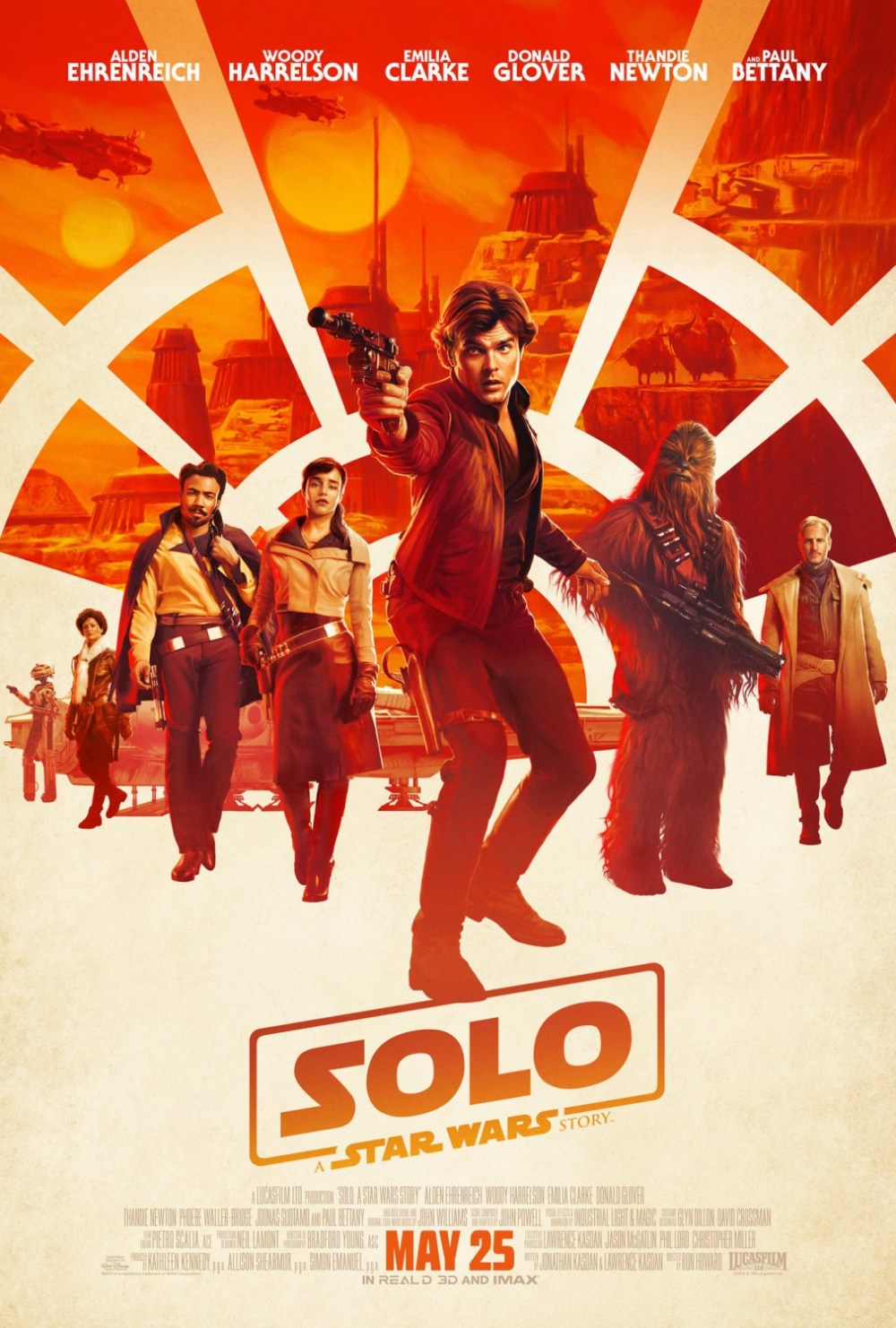
Solo movie poster

Here we are again in a galaxy far, far away, and it is the third time we have ventured there in three years. We also head back to an even longer time ago when one of our favorite “Star Wars” characters, in this case Han Solo, was young, full of vigor and demographically desirable. But while the “Star Wars” movies have always been filled with tremendous imagination and unforgettable characters, I have to be honest and say that “Solo: A Star Wars Story” proved to be an underwhelming space adventure. While I am as big a Han Solo fan as the next person, seeing his early years portrayed here felt strangely ordinary to where this didn’t feel like a “Star Wars” movie, but instead an average science fiction movie yearning to be.

This movie begins with a routine chase sequence in which Han (Alden Ehrenreich) and his girlfriend Qi’ra (Emilia Clarke) attempt to escape a criminal gang, and from there I started to have a bad feeling about this. Usually these movies have me totally hooked in right from the start, but I did not feel the same kind of excitement I usually feel with the average Lucasfilm adventure. When Qi’ra and Han are suddenly separated at a transport station, Han tells her he will come back for her. Will he? Well, she is played by Emilia Clarke. Will Qi’ra and Han live happily ever after? Did Greedo really shoot first?

“Solo” reminded me of the problems I have with most prequels as they seem more concerned with connecting the dots between their story and the ones we have seen a thousand times. Like “X-Men Origins: Wolverine” and “The Thing” prequel, the filmmakers are saddled with a cinematic history they are forced to adhere to, and it results in a lack of surprise and suspense as we know how things will turn out. And, like “Hannibal Rising,” it tells us more than we need to know about an iconic character to where I walked out feeling how certain things are best left to the imagination instead of being made into a movie.

Alden Ehrenreich has been an actor on the rise ever since his scene-stealing role in “Hail, Caesar,” and he certainly has a strong screen presence as Han Solo. At the same time, he ends up giving a one-note performance as the intergalactic smuggler which lacks the charisma Harrison Ford brought to the role. While he tries to play it cool throughout, Ehrenreich never quite comes to life here, and what results is a disappointing case of miscasting.

We do get introduced to some new characters, and among which is Tobias Beckett who is played by Woody Harrelson. As always, I am reminded of how Harrelson can play just about any character he takes on, and he provides us with the mentor Han Solo was always destined to have. Tobias, like Han, is a smuggler, but he also represents the darker road Han could find himself on if he is not careful.

Other actors are not as lucky. Thandie Newton shows up as Val Beckett, Tobias’ wife and partner in crime, but she is gone way too soon. Jon Favreau voices the alien character Rio Durant, but Rio merely functions as an easily disposable member of Tobias’ crew who we know will not last long. Paul Bettany makes Dryden Vos into a wonderfully ruthless crime lord, but his presence in “Solo” feels a bit uneven as if he is there to fill in the missing blanks. It should be noted how Bettany took over this role after the original actor cast, Michael K. Williams, was unable to return for reshoots. Things had to be changed to accommodate Bettany, and it shows.

Production problems kept plaguing “Solo” before its release, the biggest of which was the firing of the original directors, Phil Lord and Christopher Miller, both of whom still received an executive producer credit. It was one of several instances which showed how protective Lucasfilm was of this franchise. The word behind the scenes was that Lord and Miller were looking to mix things up and did not want to give audiences the same old thing, but Kathleen Kennedy was not about to let anyone change things up. While I commend Kennedy and Lawrence Kasdan for taking extra special care of this franchise, I came out of “Solo” thinking they should shake things up in the future if they want it to maintain the relevance it still has.

Replacing Lord and Miller is Oscar-winning director Ron Howard, and this had me excited as this is the same man who directed “Apollo 13.” That film was based on a real-life event everyone knew the outcome of, and yet he turned it into a riveting piece of entertainment. I figured he would bring this same energy to “Solo,” but even he is saddled with the characters’ history which he cannot easily maneuver around. Apparently, Howard reshot 70% of this movie, and I came out of it wondering how much of the finished product was his. As a result, the whole movie feels inescapably uneven.

For what it is worth, “Solo” does improve when Donald Glover, a man of many talents, arrives on the scene as Lando Calrissian. Glover brings the kind of charisma to this role I expected Ehrenreich to bring a wealth of to Han, and it makes me want to see Lando get a film of his own. From the first moment he appears onscreen, Glover makes this character the epitome of cool to where he does not need a can of Colt 45 to prove it, and he brings an infectious joy to a movie which needed it sooner.

We also get to meet another unforgettable droid here, L3-37. As voiced by Phoebe Waller-Bridge, she is a sardonic delight as she shows more attitude and resilience than any other droid I have seen in any previous installment. It is also a kick to see L3-37 discuss the possibilities of sexual compatibility between her and Han with Qi’ra. After all these years, the “Star Wars” movies are proving to be more progressive than ever before! As for Lando, I think it is safe to say this is the droid he was looking for.

While certain moments like the first time Han meets Chewbacca (played here by Joonas Suotamo) and the initial appearance of the Millennium Falcon end up feeling uninspired and anticlimactic, the scene where Han makes the infamous Kessel Run in less than twenty parsecs is thrilling to watch, and it reminded of why I love the “Star Wars” movies so much. Yes, we know how things will turn out, but Howard keeps us on the edge of our seats as he subverts our expectations and plays with our emotions with glee.

Sure, “Solo” does have its moments, but they only served to remind of everything about it which does not work. The screenplay by Jonathan Kasdan and Lawrence Kasdan features dialogue which feels lifeless even when spoken by talented actors. Granted, there is none of the god-awful dialogue Hayden Christensen was forced to utter in “Attack of the Clones,” but it still feels derivative of lesser sci-fi movies which cannot even compare to “Star Wars” in general. I was also surprised at how uninspired the film score by “Jason Bourne” composer John Powell ends up sounding, and it only comes to life when he utilizes the immortal themes of John Williams.

“Rogue One” was also a prequel, but it had a cast of characters you really cared about, and its story of sacrifice pushed all the right buttons as we came to deeply admire the heroic actions they took. Even though we know the secret plans of the Death Star would end up in the hands of the Rebels, getting there was more than half the fun. “Solo,” however, is nowhere as effective, and what results is a big disappointment and a missed opportunity. This marks the first time I have ever given a negative review for a “Star Wars” movie, and yes, I have seen “The Phantom Menace.”

Lucasfilm would be better off looking to the future instead of going back to the past. Enough backstory has been established for these iconic characters to where we don’t need any additional information. We will certainly be looking forward when “Episode IX” is released in December of 2019, but it appears other “Star Wars” origin movies are in the works such as one on Obi-Wan Kenobi. Seriously, I am with Ralph Garman when he said, wouldn’t a movie about Obi-Wan watching Luke Skywalker growing up from a distance be a little too creepy?

* * out of * * * *

‘Filmworker’ Serves as a Love Letter to Stanley Kubrick’s Right-Hand Man

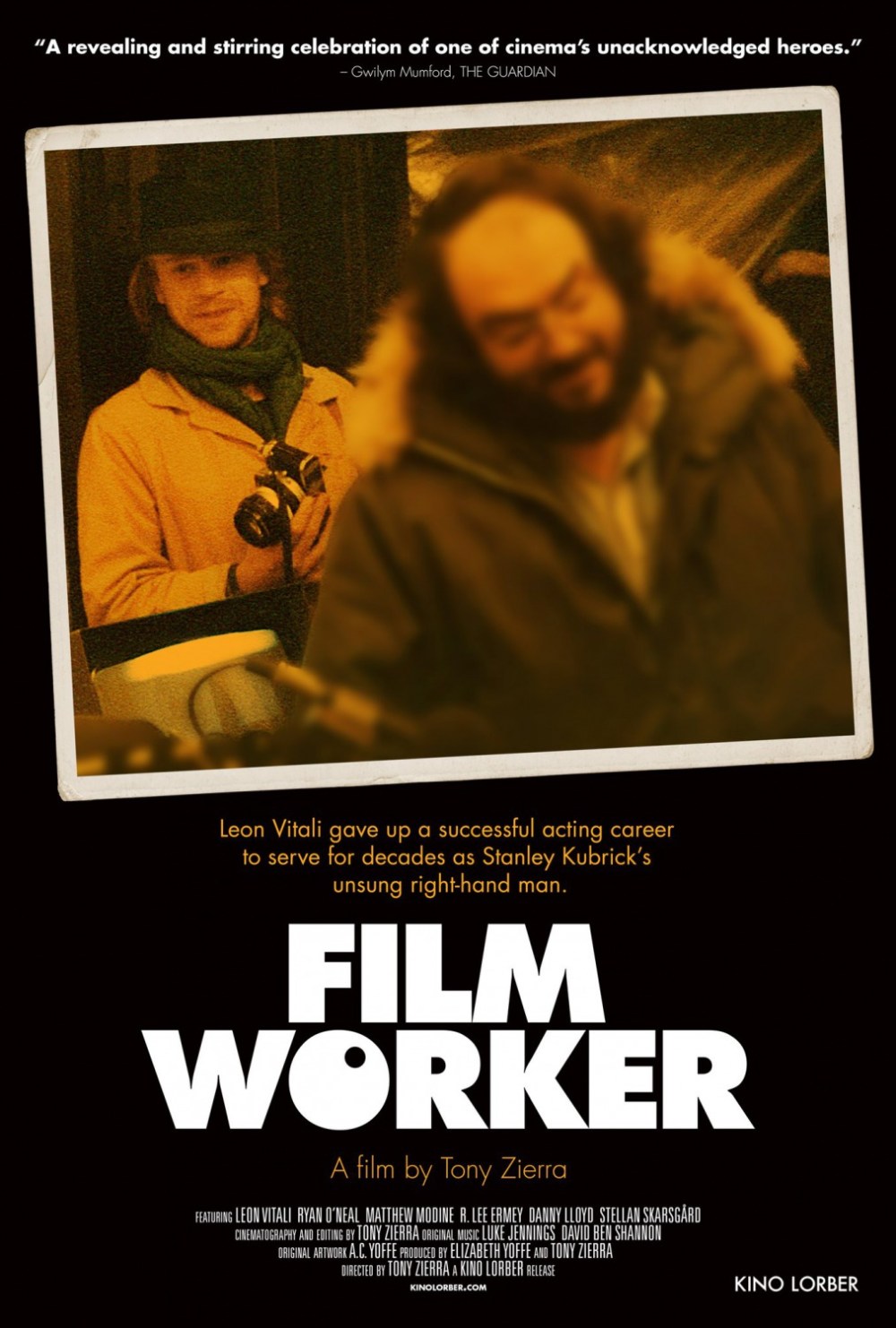
Filmworker poster

It has been almost 20 years since Stanley Kubrick passed away, but his presence is still deeply felt among cinephiles. Some may say this is because “2001: A Space Odyssey” is being re-released in honor of its 50th anniversary, but it goes much further than that. Kubrick had a singular vision, and stories of his directorial methods, such as getting an actor to do dozens upon dozens of takes of a single scene, remain legendary as only a handful of filmmakers could have gotten away with this. And as the documentary “Room 237” showed, people continue to share their interpretations of “The Shining” and of the meanings they believe certain images in it have. Indeed, Kubrick’s films had a large degree of ambiguity in them, and watching them just once is never enough.

But just when you thought you had heard every story about Kubrick, along comes Tony Zierra’s documentary “Filmworker” which looks at the life and times of Kubrick’s right-hand man, Leon Vitali. As an actor, he worked a lot in British television, but after appearing in Kubrick’s film “Barry Lyndon,” he dedicated his life to helping the famed director any which way he could. What results is a movie about working with such a meticulous human being, and of the overall effects it had on Vitali to where it is shocking to see he is still above ground.

“Filmworker” starts with a look at Vitali’s early life as an actor, and it shows how o often he worked in British television and movies to where he was never ever lacking for a job, a position I and my actor friends get to enjoy at some point in this lifetime. Then he got the role of Lord Bullingdon in “Barry Lyndon,” and this introduced the actor to the Kubrick life he was quick to embrace. In a scene where Ryan O’Neal ends up punching Vitali in the back, O’Neal says Kubrick told him, “You’re not hitting him hard enough.” From there, they did the scene 30 more times, and it served as Vitali’s introduction to Kubrick’s obsessive nature in getting things just right down to the smallest of details.

It is very easy to see why Vitali became such a die-hard Kubrick fan after he watched “2001” and “A Clockwork Orange.” Both films reflected a singular vision no other director could have conjured, and Vitali remarked how “2001” dared to have no dialogue in its first 20 minutes, something which seems unthinkable in this day and age. Following their collaboration on “Barry Lyndon,” Kubrick sent him a copy of Stephen King’s “The Shining” to see if it would be worth turning into a movie. Once Vitali told Kubrick it was, the director brought him on so he could search for the perfect child actor to play Danny Torrance. From there, he abandoned his acting career and dedicated his life to Kubrick all the way through his last movie, “Eyes Wide Shut.”

Vitali ended up doing just about every kind of job for Kubrick including casting director, acting coach, location scout, sound engineer and color corrector to name a few. Upon Kubrick’s passing, he became the only person to restore his films. To say he dedicated his life to Kubrick’s work would be the understatement of the millennium. We watch as he works tirelessly to get all the details right, and we see the toll it takes on him and his body. He speaks of how he worked two 36-hour shifts on one project and of how he slept on the floor to catch a two-hour nap while fully dressed so that, when he woke up, he could get right back to work.

Watching “Filmworker,” I wasn’t always sure if I should thank Vitali for all the work he has done or pity him. Some describe him as Igor to Kubrick’s Dr. Frankenstein. I prefer to see him as Waylon Smithers to Kubrick’s Mr. Burns. This man gave up a thriving acting career to work for the director of “Dr. Strangeglove,” and their relationship certainly had a bit of Dr. Jekyll and Mr. Hyde to it. Vitali shows us the note Kubrick wrote to him in thanks for his work on “Barry Lyndon,” and he remarks at how his first handshake with the filmmaker proved to be “very warm.” But once they began working on “Full Metal Jacket,” Vitali admitted he came to see another side of Kubrick, one which few others got to see up close.

Many like to talk about the Stanley Kubrick they met and of how he was so different compared to all the rumors which were circulating throughout Hollywood about him, but Vitali makes it abundantly clear how he knew Kubrick in a way no one else could. At one point, he even describes Kubrick as the film industry’s equivalent to Gordon Ramsey, the chef from “Hell’s Kitchen” and a man who is always in serious need of anger management classes. People keep asking Vitali how he handled Kubrick, but he responds to this by saying he never handled him but instead handled himself so that he could exist in Kubrick’s world.

Actors like Matthew Modine, Danny Lloyd and the late R. Lee Ermey are interviewed at length here, and they have great stories to share about both Kubrick and Vitali. Lloyd and Ermey credit Vitali for helping them with their performances in a way no one else could, and Modine remarks at how selfless Vitali is when it comes to his work for Kubrick. Modine is just one of several individuals who freely admit they are too selfish to dedicate their lives to Kubrick the way Vitali did. O’Neal goes out of his way to say he “fled” the set of “Barry Lyndon” once his work there was done as he was terrified of being subjected to reshoots.

Indeed, the level of dedication Vitali gives Kubrick is both commendable and scary. You also have to feel for him as he suffers under the heavy hand of Warner Brothers while working to give Kubrick’s films the attention they deserved. I remember when the first DVD’s of his work came out and how bad they were, and Vitali spent his precious time getting the color just right. Hearing how Kubrick got incensed if the green was off reminded me of Robin Williams in “One Hour Photo” when his character of Sy went off at a repairman for not taking a difference of three points in color all that seriously. If you are passionate enough about something, you will see it through to the very last detail.

As you can imagine, there is a good deal of trivia about Kubrick on display here. Among the most interesting bits come from Ermey who played Gunnery Sargent Hartman in “Full Metal Jacket” as he discusses how he went about getting actors for the movie, and it is eerie to see him describe what the movie did for his career and of how he has led a great life as it was only a few weeks ago he died due to complications from pneumonia. We also get to hear from Tim Colceri who was originally cast as Hartman before being replaced by Ermey. He ended up playing the doorgunner who shoots away at any and every Vietnamese individual regardless of whether or not they are the “enemy.” Watching Colceri’s face as he reflects on the role he could have had is heartbreaking as his disappointment looks to last a lifetime.

In a lot of ways, “Filmworker” serves as a love letter to Vitali as his work on Kubrick’s films is extraordinary, and we should be thankful for what he has done as this documentary shows how no one else could have preserved the iconic director’s work the way he has. But beyond that, it also acts as a love letter to those who work tirelessly behind the scenes on film sets as they often do not get the respect they deserve. To many, they simply appear as names on a movie’s end credits, and some of those credits move at lightning speed when those movies are shown on the Sundance Channel. But after watching this documentary, we have every reason to thank Vitali for his devotion to Kubrick as, without him, no one could have been able to give “Eyes Wide Shut” the release it deserved. But more importantly, it provides Vitali with the happy ending he has long since earned.

While watching “Filmworker,” I was reminded of what Homer Simpson told his family while they watched the end credits for “The Simpsons Movie:”

“A lot of people worked hard on this film, and all they ask is for you to memorize their names!”

This is, of course, completely unrealistic, but when it comes to “Filmworker,” I want to believe such a thing could be possible.

* * * * out of * * * *

‘Deadpool 2’ Ups the Ante and Leaves You Begging for More

Deadpool 2 poster

I want to say that when “Deadpool” was released, it was a breath of fresh air in a time of endless comic book/superhero movies, but this description doesn’t do it justice. The air coming from the 2016 box office hit was filthy, and we loved how Ryan Reynolds, Tim Miller and company refused to play it safe with this Marvel Comics character to where a PG-13 rating just wasn’t going to do it for them. But in addition to being so gleefully profane, the movie also had a big heart as it ended with a message of loving someone inside and out instead of just admiring what is on the surface. If there ever was an R-rated movie for today’s teenagers to sneak into, “Deadpool” was it.

Now we finally have its long-awaited sequel, “Deadpool 2,” which was preceded for the longest time by a pair of jokey trailers which didn’t have much in the way of new footage, but instead put its wisecracking hero in situations which didn’t always put him in the best light, and we laughed our asses off all the same. Surely this sequel couldn’t match the inventiveness and comedic genius of the original, right?

Well, I am very happy to report that “Deadpool 2” proves to be just as funny and entertaining as its predecessor, and in some ways, I thought it was even better. While this one looked as though it would suffer from overkill as the recent “Kingsman” sequel did, everyone in front of and behind the camera keeps the energy level high and the laughs coming in rapid succession. With Reynolds constantly breaking the fourth wall and a plot which refuses to make clear right away of where this sequel is heading, I was never sure of what would come next. As a result, I could never take my eyes off the screen.

So, what has Wade Wilson/Deadpool been up to since his last expletive-laden adventure? Quite a bit actually, and it has thrust him into a realm of despair he doesn’t see himself escaping from. What ends up giving him a reason to live is helping to protect Russell Collins (“Hunt for the Wilder people’s” Julian Dennison), a young mutant who goes by the name of Firefist for reasons which become immediately clear to where Pyro’s penchant for lighting everything up pales in comparison. But in the process, they are both met by Nathan Summers/Cable (Josh Brolin), a time-traveling cybernetic mutant soldier who is looking to right a terrible wrong, and his main target might not be who you think.

The amount of pop culture references is countless in “Deadpool 2,” and you may need to watch this sequel twice to catch all of them. Right from the start, Wade wastes no time in skewering popular icons like Wolverine who made his swan song in last year’s “Logan.” From there, we watch as this particular comic book character lays waste to gangsters to the tune of Dolly Parton’s “9 to 5,” gleefully provides a spoof of the James Bond opening titles which include such classics as “directed by one of the guys who killed the dog in ‘John Wick,’” and he makes you look at Barbara Streisand’s song “Papa, Can You Hear Me?” from “Yentil” in a very unnerving way. Also, he is quick to call you out on obvious references such as a line from “Robocop,” and by that, I mean the original, not the remake. Whether it’s a good or bad guy you are talking about here, at least they have great taste in movies.

However, the laughs and action come at us so quickly in “Deadpool 2” to where it takes longer than usual to figure out what the movie’s main plot is. At times, it seems like the filmmakers are geared towards throwing jokes, action scenes and filthy jokes and the expense of an actual story, and it looks as though we won’t find a story until the third act. Even Wade at one point says if he and his newly-appointed X-Force achieve their goals, there won’t even need to be a third act. Of course, I was having too much with this sequel to criticize this point all that much, and a story does indeed emerge.

Reynolds has come a long way from his “Van Wilder” days to get to this point. He’s given memorable performances in “Buried” and “The Proposal,” but his career has been overshadowed by having starred in one of the worst comic book movies ever, “Green Lantern.” “Deadpool” served as his redemption for that cinematic misfire, and his dedication to staying true to Wade Wilson and his alter-ego has been commendable considering the ill-fated debut he made as this character in “X-Men Origins: Wolverine.” Watching Reynolds here is a reminder of what a gifted comedic actor he can be when given the right material, and it is impossible to picture anyone else in this role instead of him.

Tim Miller stepped out of the director’s chair for “Deadpool 2,” and in his place is David Leitch who assisted Keanu Reeves and Charlize Theron in their path to ass-kicking glory in “John Wick” and “Atomic Blonde.” I was impressed at how he managed to keep this sequel’s energy and laugh quotient up and running throughout as I kept waiting for the whole thing to burst at the seams. It’s no surprise “Deadpool 2” lacks the freshness of the original, but it does have the same level of insane energy and even more to spare beyond it.

And there’s Josh Brolin who appears in his second Marvel movie in two months as Cable. Just as he did in “Avengers: Infinity War,” he gives this iconic comic book character a wounded humanity which makes especially complex and threatening throughout. Even when Cable undergoes a change of alliances which is almost as unbelievable as any in “The Fate of the Furious,” Brolin keeps a straight face throughout the proceedings which become increasingly over the top. It’s also great to see how Brolin has a good sense of humor about himself as he endures barbs relating to “The Goonies,” and looking at his scared face here made me want to say, “Who do you think you are, Thanos?”

It’s also nice to see a variety of new and familiar characters here like Karan Soni whose character of taxi driver Dopinder has developed a bit of a blood lust which Wade is not quick to take all that seriously. Stefan Kapičić gets a bit more to do as Colossus in this sequel as this character does what he can to make Wade a better person. The character of Peter, a regular person with no superpowers, is an inspired addition to this series, and I would love to have seen Rob Delaney play him in more scenes here. T.J. Miller also returns as bar owner and Wade’s best friend, Weasel, but considering his penchant for making fake bomb threats, I believe this will be the last time we see him in this role.

Deadpool 2” could have been too much of a good thing, but I had so much fun with it to where it didn’t matter if it was. I can’t remember the last time I laughed so hard at a movie, and it is nice to watch a movie where the jokes hit far more often than they miss. Reynolds, like Ben Affleck, have a strong sense of humor about his past mistakes in the world of cinema, and its fun seeing a movie star crack a few laughs at their own expense However, I am curious as to why he did not lay waste to “Blade: Trinity.” That misbegotten sequel was every bit as bad as “Green Lantern.”

And as always, be prepared for a post-credit sequence which is by the funniest of its kind since “Spider-Man: Homecoming.” It is too damn hilarious to spoil here, and you have got to see it for yourself.

* * * ½ out of * * * *

‘Young Adult’ Deals With a Serious Case of Arrested Development

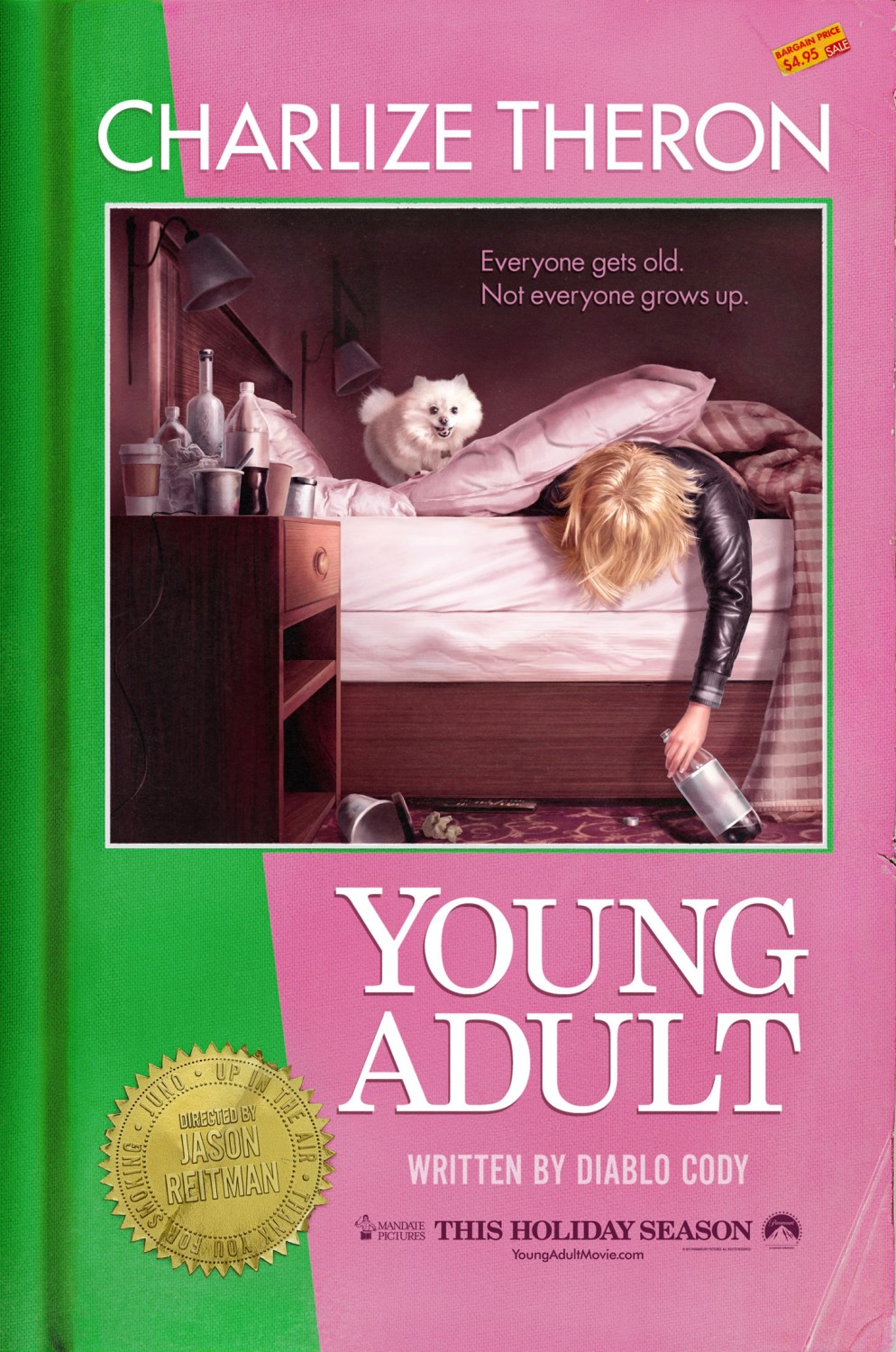
Young Adult movie poster

Young Adult” comes to us from Jason Reitman and Diablo Cody who gave us “Juno,” but this is a very different movie. This collaboration of theirs is a bruise-black comedy starring Charlize Theron as Mavis Gary, a writer of young adult novels which resemble those “Sweet Valley High” books many read years ago (I did not). She finds out her high school boyfriend Buddy Slade (Patrick Wilson) has become a dad, and she travels back to her hometown in a mission to steal Buddy away from his wife and rekindle their long-lost romance.

Both Reitman and Cody dare us to share some time with a most unlikable character. Mavis is a recent divorcee who spends her mornings chugging down Diet Coke, her nights getting drunk on premium whiskey (Maker’s Mark should see an increase in sales from this movie), and she can barely hide her contempt for the town she grew up in. That she writes young adult books is a metaphor for her arrested development as her best years were in high school, and she has never gotten past them.

Theron is one of the best actresses working in movies right now, and her performance as Mavis Gary is one of her bravest. This is not a likable character, but Theron finds the humanity within Mavis, and this makes us want to follow her journey. While we despise Mavis’ desperation in reclaiming a past which has long since passed her by, Theron digs deep into the pain and depression which has long since engulfed this character, and she succeeds in making “Young Adult” more unforgettable than it already is.

But as great as Theron is, she is almost outdone by comedian Patton Oswalt who plays Mavis’ former classmate, Matt Freehauf. His character got beaten up very badly in high school, and his injuries have kept him from moving forward in life. Oswalt inhabits his character fully and never allows Matt to turn into a caricature. His sense of humor acts as a defense against the hurt he can quickly be reminded of, and he too finds the humanity in a character who could have easily turned into a cliché.

Cody’s script is excellent in mining the humor out of incredibly awkward and pitiful situations. This is a cathartic story which perfectly captures the dynamic between those who have moved on from high school and those who have not. This feels like a very personal script for her as it ponders those formative years which define us more than we want them to. While we would love to see those popular kids suffer tremendously, we can’t get past the sadness of Mavis’ current situation.

Reitman bravely moves out of his safety zone with this movie. As with his other movies, he succeeds in making all the characters seem as real as those we know in real life. While the beginning may seem slow and unnecessarily cold, he brilliantly highlights the sad state of Mavis’ life as much of it has been stolen from her.

Whether or not you think “Young Adult” reaches out to all those who loved “Juno,” it does show off the tremendous talents of Reitman and Cody. What results is a movie which dares to go down roads we would rather not revisit, and it finds a humor and humanity many will not see coming. Some will strongly dislike this movie as its main character is far from likable, but you don’t need likable characters to make a good movie, let alone a great one.

* * * * out of * * * *


‘Tully’ Finds Jason Reitman and Diablo Cody Creating Unforgettable Cinema Once Again

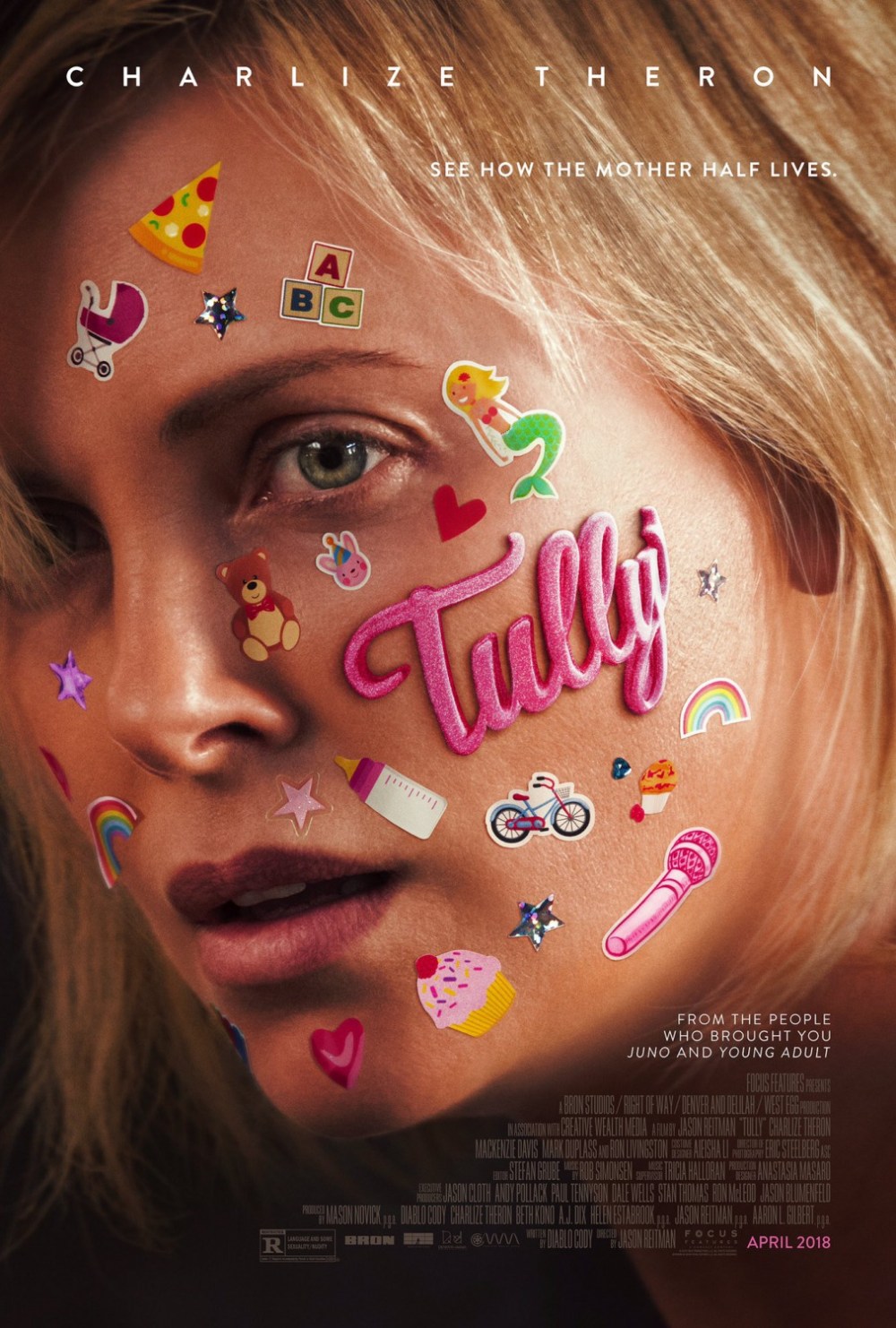
Tully movie poster

Okay, as I write this review for “Tully,” the latest collaboration between filmmaker Jason Reitman and writer Diablo Cody, I have to confess I am not a parent. I have not experienced restless nights with a crying newborn who constantly needs a bottle of milk or a quick diaper change, and if I ever do become a parent, I am certain I will deal with it as well as my friends with kids have (which is to say, not at all). But after watching “Tully,” I feel confident in saying it is one of the more honest depictions of what a mother goes through before, during and after she gives birth. Whereas most movies conclude with the birth of a child, this one starts with one and goes from there.

Charlize Theron plays Marlo, a mother of two and with a third on the way. Her belly is so big to where she looks ready to burst at any second, and we also see how overwhelmed she is with everything and anything. Her son Jonah (Asher Miles Fallica) is an overly-sensitive boy who freaks out loud noises he is exposed to, and she is forced to give him more attention at the expense of her daughter Mia (Lia Frankland). When Marlo visits the principal at Jonah’s school and tells her this third child is “such a blessing,” you can tell she doesn’t fully believe it.

When Marlo does give birth to a girl she names Mia, it is one of the more unique birth scenes in movies. Most filmmakers treat the arrival of a newborn with unfettered joy, but “Tully” treats it dispassionately as Marlo is too wiped out and depressed to be happy about anything. For a moment, I feared this movie would venture into “We Need to Talk about Kevin” territory, but neither Reitman or Cody are out to make this story about a sociopathic child.

From there, Reitman presents us with a furious montage of Marlo constantly getting up in the middle of the night to take care of her crying baby, feed her, change her diapers (always an unappealing task), and pump milk out of her breasts. Sure, Marlo does have a loving husband in Drew (Ron Livingston), but he has yet to fully see the heavy toll motherhood is taking on her. It’s an unnerving montage as we keep waiting for Marlo to explode in frustration, and when she eventually does, you cannot blame her.

Marlo’s brother, Craig (Mark Duplass), comes to her rescue by offering to hire a night nanny. Marlo is at first very hesitant to let Craig do this as the thought of anyone else raising her children is terrifying, but one day after she is unable to stop Mia’s crying, she relents. The night nanny comes in the form of Tully (Mackenzie Davis), a youthful woman who quickly proves to be wise beyond her years. Once she comes into Marlo’s life, things begin to change for the better, but as the movie goes on, you wonder more about who Tully is and if she is too good to be true.

Watching “Tully” reminded me of many scenes in movies and television where I witnessed a mother losing her patience. We watched Marge Simpson roar like a lion at anyone who couldn’t possibly understand her frustrations, we were taken aback when Dee Wallace yelled at her son “alright I’ll get your daddy!” while being stalked by a rabid St. Bernard in “Cujo,” and we watched helplessly as Brie Larson tried to explain to her son what is really going with them in “Room.” Mothers will often explode in frustration, and many of the best movies about parenting portray this. As we see Marlo get upset with her kids, it is highly likely we will be reminded of the agony we put our own mothers through to where a long overdue apology may be required from us. “Tully” has several moments like these, and they are fully earned throughout.

Theron has long since proven to us what a phenomenal actress she can be. As Marlo, she gives a fully realized performance as a mother who looks like the joy she has for life has been completely sucked out of her. The Oscar-winning actress makes you feel the pain of Marlo’s situation as the character has long since reached her breaking point to where she seems like she cannot take another challenge thrown in her general direction. As the movie goes on, we see Marlo rise out of her depressed state to where she experiences happiness for what seems like the first time in ages. Theron makes us feel every note of Marlo’s anguishes and triumphs to where we cannot come out of this motion picture saying we were not the least bit moved.

As the night nanny, Mackenzie Davis proves to be such a luminous presence as Tully to where we realize this movie doesn’t just need her, it deserves her. A modern-day Mary Poppins, Tully predicts Marlo’s every move and need and gives her just what she needs to make it to the next stage in her life. Davis is best known for her work on “Halt and Catch Fire” and for appearing in one of my favorite movies of 2017, “Blade Runner 2049.” She gives off such a warm glow in “Tully” to where you just want to hug here and never let her go.

I also have to give credit to Ron Livingston who plays Marlo’s husband, Drew. It could have been a thankless role of a husband and father completely ignorant of his wife’s suffering, but the “Office Space” actor makes him more than the average movie dad. Even as Drew loses himself in video games which have him battling and killing zombies, Livingston makes us see he is a man with a good heart even with all his flaws. In his penultimate scene, Livingston doesn’t make Drew into a total schmuck who berates his wife when things go haywire, but instead into a spouse eager to admit he doesn’t know everything his wife is going through and is desperate to hear her out. I love it when Livingston says “I love us” instead of “I love you” as it shows the perspective and honesty Reitman and Cody are committed to giving this particular parental adventure, and it makes this moment between these two characters all the more special.

If I have any problems with “Tully,” they come in the second half when revelations are made to where we have no choice but to question everything we just saw I would tell you which movies these revelations reminded me of, but this would be giving away way too much. But while these revelations could have wrecked any other motion picture, they do little to take away from this one.

“Tully” marks a big comeback for Reitman and Cody after a few years of cinematic misfires. “Labor Day” and “Men, Women & Children” put a few dents in Reitman’s resume as a director, and Cody’s directorial debut “Paradise” and screenplay for “Ricki and the Flash” (0ne of Jonathan Demme’s last films before his death) were ill-received to put it mildly. But when these two artists come together, they create something which is never easily forgotten.

Reitman makes the struggles these parents go through all the more vivid without making them seem the least bit glamorous. “Tully” does not have the look of a motion picture to where you feel like you are watching one, but instead of a real life setting with all its messiness and imperfections on display. At times, I felt like I was watching a home movie, and this made everything I saw feel all the more powerful.

As a writer, Cody still comes up with some classic zingers like “abandoned trash barge” or describing someone as a “book of fun facts for unpopular fourth graders,” but her screenplay also shows her rising to another level of thoughtfulness and maturity. Being the mother of three children herself, Cody clearly understands the journey such a person ends takes to where the mother/newborn connection is not forged right away. There has been some controversy over “Tully’s” portrayal of mental illness, and it is never made clear if Marlo is suffering from post-partum depression or something similar. Cody, however, is not out to make Marlo a special case study, but instead to share the challenges she was forced to overcome to be the mom she is today.

I think it is more than appropriate that “Tully” has arrived in theaters just in time for Mother’s Day. Lord knows we owe our mothers a great deal of gratitude for all they have done for us, let alone all they have gone through to get us to where we are today. Sure, dads deserve a lot of credit too, but being a mother comes with a lot more challenges and obstacles to overcome. If this Reitman/Cody film cannot make you see this, then what will?

* * * ½ out of * * * *

‘Avengers: Infinity War’

Avengers Infinity War poster

You know how many advertisements for movies say how “everything has led to this” from time to time? Well, for once, this statement makes perfect sense with “Avengers: Infinity War” which is, thus far, the biggest Marvel Cinematic Universe movie yet as it gives us their most threatening foe yet in Thanos. This particular Marvel character, an intergalactic despot from the planet Titan, has been hinted at in post-credit sequences from Marvel movies past, and now he is here to take center stage in a never-ending franchise which typically sees its greatest heroes get the majority of attention.

Thanos longs to get his hands on the Infinity Stones, six incredibly powerful, not to mention beautiful, gems which will allow him to impose his will on all of reality. Clearly, this is a character determined to gain unlimited power at any cost, and he is determined to re-balance the universe in the process. Thanos is looking to create his own version of Year Zero, and this means many characters will die whether we want them to or not.

Not only does “Avengers: Infinity War” arrive with a wealth of anticipation and expectations, but we also come into it with a sense of dread as we know some of our favorite characters may not survive this particular adventure. Then again, these Marvel movies do exist within the science fiction genre, and you can never be sure if anyone can ever truly stay dead. Spock died in “Star Trek II,” but he did come back to life in “Star Trek III.” Knowing “Avengers: Infinity War” will get a sequel, I can’t help but believe we will see some of these superheroes again. Besides, many of them have sequels in pre-production, so their fate is not exactly sealed. Who will live and die for certain? Well, we will find this out in the summer of 2019.

Directors Anthony and Joe Russo, both responsible for the “Captain America” sequels which rank among the best of the MCU, have a near impossible task with this “Avengers” movie as it features dozens upon dozens of main characters we have been introduced to in the past. The fact these characters are not all equally represented here is not a surprise, but what surprised me was how well the Russos were able to balance things out to where it felt like everyone had a good dose of representation throughout. Perhaps certain characters get more screen time than others, but I was too wrapped up with what was going on to really analyze this movie all too closely.

It is also worth noting how while these characters all inhabit the same cinematic universe, they do exist on different tonal levels. Some Marvel movies like “Iron Man” and “Thor” have their moments of levity, but they are generally serious adventures as their heroes are faced with obstacles both physical and psychological. Then again, there is “Guardians of the Galaxy” which came out at a time where Marvel movies in general were threatening to become as deadly serious as anything coming out of the DC Comics Extended Universe. James Gunn’s film of Peter Quill and his merry band of Han Solo-like bandits proved to be a comedic blast from start to finish, and it proved to be much lighter than the average superhero/comic book movie.

I bring this up because “Avengers: Infinity War” could have ended up being a very uneven motion picture in terms of tone as John Krasinski’s “The Hollars” was (granted, Krasinski did score a rebound with “A Quiet Place,” but still). The Russos, however, make everything blend together in a satisfying way to where nothing felt completely off-balance, and this is very commendable.

The way I see it “Avengers: Infinity War” gets off to a good start, but things feel just a little bit off to where this movie threatens to be more episodic than its filmmakers intended. But as it goes on, things improve to where the Avengers are given a real depth which reminds us they are as vulnerable as anyone else. Sure, they may be endowed with tremendous powers, but when faced with their greatest foe, they become as mortal as anyone else, and this makes their latest adventure all the more perilous.

There are many performances worth noting here, and this Marvel movie is overflowing with strong ones which would take forever to point out. Robert Downey Jr. continues to revel in the evolution Tony Stark/Iron Man as he gives his most soulful performance yet as this iconic comic character which got the MCU off to such a strong start. Zoe Saldana gets to take Gamora to an even more epic level as her character has a much closer relationship to Thanos than she would like to admit. The same goes for Chris Pratt who, as Peter Quill/Star Lord, finds even more depth than in the previous “Guardians of the Galaxy” movies to where it makes me look forward to the third movie in that franchise more than ever before.

But the one performance worth singling out above all others is Josh Brolin’s as Thanos. This could have been the typical one-dimensional antagonist bent on obtaining the most power any individual could ever obtain, but the “No Country for Old Men” actor makes him into an almost tragic figure who has yet to discover what price he has to pay for his quest for power, and it is a heavier one than he could ever expected. As a result, Brolin forces this character into the center stage in a way audiences could not have easily expected, and the final scene he has is a frightening reminder of the prominence Thanos has in the realm of Marvel Comics. Seeing this makes me believe no other actor could have portrayed Thanos as effectively as Brolin does here.

“Avengers: Infinity War” ends on a cliffhanger, and it feels like a bold move on the part of the Russo brothers and Marvel Studios to do so as it concludes on a note which truly left me breathless. We do get the typical post-credits sequence and the message of how so-and-so will return, but both these things take on a different meaning to where you almost wish this Marvel movie ended without them. In a year from now we will see the follow up to “Infinity War,” but until then we will be reminded of how our heroes will not always be there for us. Can they return for another round? We have yet to find out.

* * * ½ out of * * * *