‘Judas and the Black Messiah’ Movie and Blu-ray Review

The following review was written by Ultimate Rabbit correspondent, Tony Farinella.

Judas and the Black Messiah” is certainly a timely film with all of the issues that exist in the world today regarding racism.  Even though some strides have been made, we still have a long way to go until things are where they need to be in this world.  Systemic racism is a serious issue, and it doesn’t seem like there is a day that goes by where we are not hearing about a black man or woman being killed by someone in a position of power.  It is why films like this one are so important.  Many people do not watch or read the news.  When they see it in a major motion picture, it can sometimes raise their level of awareness.  That is the power of cinema at its finest.

Our film starts off in the late 1960’s when we meet William O’Neal (Lakeith Stanfield), a small-time criminal who goes around waving a badge in order to steal cars.  As he says in the film, the badge carries more weight than a gun because everyone knows there is an army behind that badge. When he is caught, he is forced to enter into a deal with Roy Mitchell (Jesse Plemons) to work undercover for the FBI.  If William does not accept this deal, he is facing eighteen months in prison for stealing a car along with five years for impersonating an officer.  He has to go undercover to keep an eye on what is happening with the Black Panther Party in Illinois, which is run by the charismatic and powerful Fred Hampton played by Daniel Kaluuya in an Oscar-winning performance.

Both Kaluuya and Stanfield were nominated for Best Supporting Actor for their work here, but I would have to say that I’d give the edge to Stanfield as he has to play a dual-role as a member of the Black Panther Party while also trying to keep Roy and the FBI happy.  While Kaluuya had to give more of a boisterous and in-your-face performance, Stanfield has to balance all of the moral dilemmas his character has to endure throughout the film. He wears all of this on his face and on screen with his stunning performance.  That being said, I understand it can be difficult to compare performances in different films let alone the same film and the same category.

As soon as Fred Hampton starts to gain some steam and bring people together to form the Rainbow Coalition, which is all-inclusive and a real threat to the infrastructure, greed, and abuse of power which is happening all around Illinois, he is sent to jail on some phony ice-cream theft charges.  This is when William O’Neal starts to have more responsibility put on his plate with the Black Panther Party.  He is up for the task, and he holds his own especially when it comes to security.  There is another element for Fred to consider and that is his budding romance with Deborah (Dominique Fishback).  She gives a vulnerable yet commanding performance as a young woman who is not afraid to have Fred’s back.

When Fred is finally released from prison, things get even more complicated with the Black Panther Party and the FBI’s director J. Edgar Hoover (Martin Sheen).  They are starting to see that Fred Hampton is a real threat and is bringing about real change for people.  The fact he is able to unite so many people of different races and cultural backgrounds is nothing short of amazing. He’s a true hero. At this point, William O’Neal is forced to make some difficult decisions for himself.  He has the Black Panther Party, which is, at times, suspicious of him.  He also has the FBI, which wonders if he really believes in what Fred Hampton is fighting for, each and every single day.

I’m a huge fan of the adult drama that is inspired by true events in Hollywood.  I think whenever a film can entertain and educate an audience, it’s really something to behold, and this film really stayed with me long after it was over.  It’s a powerful piece of filmmaking that is one of the best films of 2020. It features fantastic performances from top to bottom.  I mentioned the two supporting actors earlier, but to me, they are both the leads in this film.  I just feel as though Stanfield is on screen longer and has a meatier role than Kaluuya in this film.  There also must be credit given to Plemons.  Even though he is the bad guy in the film, there are a lot of layers to him.  It’s not a cardboard cutout bad guy. It must also be noted from a historical point of view, this was the first film with an all-black producing team to be nominated in the Best Picture category at the Academy Awards.  This is a well-acted, well-written, and supremely intense film from start to finish. I can’t recommend it enough.

* * * * out of * * * *

Blu-Ray Special Features:

Fred Hampton for the People

Unexpected Betrayal

Blu-Ray Info:

“Judas and the Black Messiah” is released on a single-disc Blu-ray with a digital copy from Warner Brothers Home Entertainment.  The film has a running time of 126 minutes and is rated R for violence and pervasive language.

Video/Audio Info:

The film has a 1080p/2.39:1 High-Definition transfer which really enhances the look and feel of the late 60’s into the early 70’s.  The audio is featured on the following formats: DTS-HD MA: English 5.1 and English Descriptive Audio with subtitles in English, French, and Spanish.

“Judas and the Black Messiah” is the kind of film which reminds me of why I love moves in the first place.  This is not a feel-good movie if you are familiar with the story at all, which I was not prior to watching it, but it proves a serious point that needs to be made.  It creates conversation, and it shows off some of the best acting I’ve seen in a very long time.  As mentioned earlier, I’ve always felt film is at its best when it tells stories which are worth telling and can open minds to what others in the world and are going through in their day-to-day lives.  The Blu-ray looks and sounds great, but I would have enjoyed a few more special features and maybe a detailed documentary on the real-life story.  Still, this is a film that you should add to your collection for the phenomenal acting and storytelling which is on display throughout.

Luca Guadagnino’s ‘Suspiria’ is a Truly Baffling Remake

I have to admire the hutzpah of any filmmaker who dares remake Dario Argento’s “Suspiria.” The 1977 horror classic remains one of my favorite movies ever as well as one of the most beautiful films, let alone horror films, I have ever seen. Having just purchased and watched it on 4K Ultra HD, I love it even more as the lavish and exaggerated colors Argento utilized now feel more orgasmic than ever. Who would dare step into the shoes of Jessica Harper who portrayed Suzy Bannion? Is there an artist or a band that can create a music score as original and haunting as what Goblin gave us? Is there a cinematographer, other than Roger Deakins, who can match the incredible lighting design of Luciano Tovoli? And, most importantly, is there a filmmaker who take this material and make it their own?

David Gordon Green, who hit horror gold with his reboot of “Halloween,” was originally set to helm this version of “Suspiria,” but it ended up falling into the hands of “Call Me by Your Name” director Luca Guadagnino who was determined to make something which was more of an homage than a remake. It certainly has its own look, a terrific cast, an original and haunting score from Radiohead’s Thom Yorke, and Tilda Swinton among other things. But long before the end credits came up, this “Suspiria” became one of the most perplexing motion pictures I have sat through in a long time. And as this two hour and 32-minute horror film lurched its way to a rather baffling conclusion, I found myself impatiently waiting for Jessica Harper’s cameo to come up as I had given up trying to make sense of everything going on in the story.

This “Suspiria” takes us to 1977 Berlin which was at the height of German Autumn, and here we find Susie Bannion (Dakota Johnson) auditioning for the Markos Dance Academy. Unlike Harper’s Suzy from the original, this Susie proves to be far more confident in her dancing abilities as she wows the teachers almost immediately, especially Madame Blanc (Swinton). Meanwhile, another student, Patricia Hingle (an unrecognizable Chloe Grace Moretz) confesses to her psychotherapist, Dr. Josef Klemperer (I’ll let you figure out who plays him), that the academy is run by a coven of witches who worship the Three Mothers – a trio of witches who once roamed the Earth (Mother Tenebrarum, Mother Lachrymarum, and Mother Suspiriorum), and we all know this cannot be good. Once the main players have been established, we wait for hell to boil over and students to die the most painful of deaths because a story like this cannot have a happy ending. Or can it?

The first thing I should note about Guadagnino’s “Suspiria” is its visual style as he, along with cinematographer Sayombhu Mukdeeprom, has gone out of his way to go in the polar opposite direction of the visual palate Argento gave us. Perhaps this is because it was the only real way for Guadagnino to make this film his own without it seeming like a copy. He uses little in the way of primary colors and instead opts for a winter-ish approach to highlight the bleakness of the setting and time period the story is situated in. But as unrelentingly bleak as this approach is, both Guadagnino and Mukdeeprom do give us some striking images as they delve deeper into the lives of the characters and the academy’s strange history. Still, I wonder if the cinematography was much bleaker than it ever needed to be.

The screenplay by David Kajganich delves into themes involving motherhood, the nature of evil and matriarchies, but neither he or the director ever seem clear about what they want to say precisely about them. A friend of mine attended a Q&A with Guadagnino, and he described the director as looking like a deer caught in the headlights when he asked questions about the themes. In retrospect, I wonder if everyone involved with this remake succeeded in making it so abstract to where even they could not describe what they intended.

There is also the inclusion of real-life events such as hijacking of Lufthansa Flight 181, bombings, and numerous kidnappings perpetrated by the Red Army Faction, and they feel like unneeded distractions as they are brought up. The terror of real life doesn’t quite mesh with the terror at the dance academy, and it would have been better for the filmmakers to focus on the academy instead of adding historical elements which deserve their own movie.

It’s all a real shame because the cast of this remake makes many scenes worth watching. Dakota Johnson, completely unrecognizable from her role in those god-awful “Fifty Shades of Grey” movies, who gives everything she has physically and emotionally to her performance as Susie Bannion. I read she spent two years training in ballet in preparation for her role, and it shows from start to finish. Watching her enter the academy with such elegant confidence as she goes through a violent period of self-discovery is something I could never take my eyes off of.

The other cast members include Moretz, Mia Goth, Angela Winkler, Ingrid Caven, and Fabrizia Sacchi who succeed in throwing themselves completely into their characters with complete abandon. And then there is Tilda Swinton, one of the few actresses my dad would pay to read names from the phone book to him. She remains a stunning presence in each project she appears in, and this film is no exception.

And yes, the dancing, which played only a small part in the original, is brilliant in the way it is staged. Like I said, these actresses didn’t just inhabit these characters, they threw themselves into them both physically and emotionally. For what its worth, this remake does boast quite the ensemble.

Still, I have to be honest and say, despite its positives, this “Suspiria” proved to be a great disappointment. I did not go into it with a mission of comparing to Argento’s original as Guadagnino as made something which stands on its own, but none of it ever struck me as being the least bit scary. Sure, there are some shocking moments like when a young dancer finds her body forcibly contorted into excruciatingly painful positions Ronny Cox would never have been able to pull off in “Deliverance,” but one or two scenes does not a horror film make. Instead, this remake proves to be a meandering mess which never quite knows how to deal with its numerous themes in a satisfying or truly fulfilling way.

There is no doubt in my mind that Guadagnino and everyone else here will bounce right back from this misguided film, and I look forward to what he has in store for us next.

Oh, and just one more thing: I just love how these movies involving dancers always have teachers who smoke an endless number of cigarettes. Here they are mentoring these passionate students to keep their bodies at their peak and make sure they remain healthy throughout their training, and yet they do nothing to hide their intense nicotine addiction. I have seen this in so many movies to where I wonder if being a dancer or a dance instructor is as stressful as it looks. The drinking I get, but the smoking? Hopefully someone will be able to explain this to me someday.

* * out of * * * *

‘Hard Candy’ Strikes You Right At The… Well, Just Watch The Movie

Hard Candy” is a low budget psychological thriller released back in 2005, and it was one of the many movies which I rented from Netflix which has gathered far too much dust before I finally took the time to view it. But view this movie I finally did, and shame on me for putting it off for so long. These days, it feels so rare to find a thriller which touches on such controversial issues like pedophilia or the uncertainty of online dating. I mean, do you have any idea who is on the other end of the computer screen? Aren’t you afraid to find out? I’m not saying you shouldn’t go through with it, but after watching this movie, you’ll be going into it with extreme caution even from the waist up.

We see 14-year-old Hayley Stark (Ellen Page, now Elliot Page) meeting up with 32-year-old photographer Jeff Kohlver at a nice modern café. They have been communicating with each other via the internet, but this is the first time they have seen one another in the flesh. After the inevitably awkward introduction, they get comfortable enough to where Hayley goes back with Jeff to his house on the hills. In the process of having so much fun, however, Jeff passes out and awakens to find himself tied to a chair. Hayley has turned the tables and makes her intentions to him very clear; she accuses Jeff of being a sexual predator and is aiming to make him pay for the hideous crimes she believes he has committed.

Watching “Hard Candy” reminded me a lot of Ariel Dorfman’s “Death and The Maiden” which was later made into a Roman Polanski film starring Sigourney Weaver and Ben Kingsley. Weaver ends up interrogating Kingsley because she believes he was the one who viciously tortured and raped her years before. The problem is she only has his voice to go on as she was blindfolded and never saw who it was assaulting her. You spend your time wondering if he is innocent or not, and if Weaver’s character is overreacting.

“Hard Candy” is a lot like “Death and The Maiden” because, until the very end, you are not sure what to believe. Hayley seems pretty damn certain of Jeff’s dark nature, but he is very convincing in proving to her and the audience that she has the wrong guy. But if Jeff really is the bad guy, you have to wonder who is the sicker of the two. Hayley is more than prepared to turn this guy into a late blooming opera singer with quite a falsetto, and her lack of hesitation in doing so suggests she is not mentally balanced.

When these two first appear onscreen, we know as much about them as they about one another, so we are put into their mindset as we try to figure out what their intentions might be. Can they trust one another? Can we? If so, which one should we trust more? “Hard Candy” teases us with the possibilities of what could go wrong with this date. It’s unsettling enough that you have a 30-year-old guy hanging out with a girl who’s not even of legal driving age, but how vulnerable will she allow herself to be around him? Then again, teenagers are not as dumb as many make them out to be.

“Hard Candy” is one of those movies which stayed with me long after I have finished watching it, and there are sequences that play more on what you think you see instead of what you actually see. The effect of those moments is truly unsettling to where I almost would compare “Hard Candy” to Michael Haneke’s “Funny Games.” Furthermore, the two main characters are not just two stock characters that could only exist in the movies; they are real people thrown into a situation which we ourselves hope never to get caught in. The questions it raises of justice, conscience, sickness of the mind, and others on top of them will have you delving into long conversations with those you just witnessed the movie with.

Now a 14-year-old person taking control of an older man and having a surprisingly strong knowledge of medical procedures may feel totally unbelievable as it may seem like something out of a John Grisham novel like “The Client.” This, however, just highlights the brilliance of Page’s performance as Hayley Stark. “Hard Candy” proved to be her big breakthrough in America, and she made this one before “X-Men: The Last Stand” and “Juno.” Page handles all the complexities of this character like a pro, making her seem all the more frighteningly real. The camera locks right into Page’s gazing eyes which show a determination of action she can never be easily pulled away from. She is truly amazing to watch here.

Patrick Wilson essentially plays the more reactive role, and watching him is painful as it truly looks like he is suffering more than he is acting. It’s not surprising to hear he passed out in one very intense scene (trust me, you will know which one I am talking about), and he gives an excellent performance in a role most actors are not necessarily in a hurry to play. Over the past few years, Patrick has given strong performances in movies like “Little Children” and “Watchmen,” but this easily stands out as some of his best work. You remain suspicious of his character throughout, but darn it, seeing him suffer makes you feel for the guy even if you don’t want to.

“Hard Candy” marked the directorial debut of David Slade who made music videos for various artists including Stone Temple Pilots and Tori Amos. I liked how he captured the sterile appearance of Jeff’s post-modern apartment and of how it is forever changed by the vicious actions of these characters. He also maintains a strong level of suspense and tension throughout the movie, something which never seems easy to do these days. Since this film, he since gone on to direct “30 Days of Night” and “The Twilight Saga: Eclipse,” but I’m guessing neither have the power this one film has.

Made for around $1 million, “Hard Candy” is a very effective thriller for those willing to plumb its dark psychological depths. The power of suggestion of certain scenes will be more than enough to drive those lacking a strong stomach out of the room, but if you like this kind of movie, it no doubt delivers. It’s also a hell of an acting showcase for Wilson and Page, but even more so for Page who has since gone on to a great acting career. The movie leaves its mark on your consciousness and will stay with you long after the credits are done. There are only so many movies I can say that about these days.

* * * ½ out of * * * *

‘The Rules of Attraction’ Invites You to Look Beneath Its Seedy Surface

I was flipping through what was available to watch on cable one day. I rarely go there unless there is a television show involved. There were no good horror movies on, and I was hoping there would be, but then I came across one called “The Rules of Attraction.” Based on the novel of the same name by Bret Easton Ellis, it was written for the screen and directed by Roger Avary, the same filmmaker who directed a kick ass heist movie named “Killing Zoe.” While this one is not quite as good as “Killing Zoe,” it has a number of memorable moments and takes a lot of risks which many films don’t often bother to.

“The Rules of Attraction” ensnares the audience in a world of spoiled rotten brats who have been handed everything to them on a silver platter. Witness their insane antics as they spend their time getting high and hopelessly inebriated at endless parties which take place at their preppy New England college. Obviously, they don’t seem to realize they are not superhuman, nor do they care about what will happen to their shallow souls assuming they ever survive their infinite decadence. These selfish and spoiled characters are a common fixture of the Ellis’ work, and he has since proclaimed this film to be the best adaptation of any of his novels.

While I want to despise these characters for what they do to others and themselves, both Ellis and Avery show their inescapable humanity and consciousness which lies not all that far beneath the surface, and each of them desperately wants to open themselves up to another they cannot stop thinking about. It’s this humanity which gives “The Rules of Attraction” another dimension, and it kept me from being completely repelled by all the characters’ shenanigans. As much as you want to see these young adults get their just desserts, none of them really deserve the severe consequences they end up receiving.

This film certainly offered many young actors a much-desired opportunity to shed their nice or squeaky-clean images for something completely opposite. We have actors here from “Dawson’s Creek” and “7th Heaven” who are clearly desperate to break from the shackles of their all-too-polite characters before they end up becoming permanently inseparable from them. It is not surprise they want to be seen as more adult than their ages would suggest as no one ever acts their age. Then again, who wants to?

I do, however, have to be honest and say Fred Savage, who plays a junkie named Marc, feels a bit out of place here. Please don’t get me wrong; he has a great cameo here, but the image of him as Kevin Arnold from “The Wonder Years” is impossible to wipe from my conscious mind. While watching him inject something lethal into his veins, all I could think of was him getting back together with Winnie Cooper. Still, Savage is always welcome to prove to me there is far more to him than that classic show in the future.  

For me, the biggest surprise of “The Rules of Attraction” was James Van Der Beek who plays Sean Bateman, a drug dealer and distant relative of Patrick Bateman from “American Psycho.” Like the other characters, Sean is selfish, greedy and more worried about his own problems than anyone else’s. Throughout, Sean presents himself as an opportunist who preys on the weaknesses of others, but Van Der Beek makes you see him as someone desperately longing for something pure and someone to connect with in a world where everyone seems more content living in their own tiny bubble.

Van Der Beek was very believable in this role to me, and there was nothing of Dawson to be found throughout. Looking back, I bet he was just dying to play a character like this so he could shatter the image which could have forever defined him to millions.

I imagine this was the same case with Jessica Biel of “7th Heaven” fame. She has more than shed whatever nice girl image she had from that show, and I bet this film was her first real opportunity to do so. Biel plays Lara Holleran, roommate to Lauren Hynde (Shannyn Sossaman) whom shares a lot of experiences with, including snorting cocaine until their noses bleed (“rusty pipes!”). Lara comes off as the most shamelessly selfish character in this film as she manipulates both the men and women around her to get what she wants. Her comeuppance near the end was richly deserved and almost had me cheering in my apartment.

Shannyn Sossaman portrays perhaps the purest character in all of “The Rules of Attraction” in Lauren Hynde. Lauren is a virgin, and we see her constantly looking through a book with pictures of venereal diseases perhaps to protect herself by reminding herself of the consequences which could befall her if she does not play it safe. Sossaman is a beauty to behold but her beauty is toned down here to make her seem a bit more ordinary, and it works effectively in her performance.

And then there is also Paul Denton, played by Ian Somerhalder, a gay man more concerned about a date he has, or thinks he does, with Sean to where a gay friend overdosing on drugs is more of annoyance than a genuine concern for him. Paul thinks he knows how Sean feels about him, and he cannot get him out of his mind. But as selfish as Paul may be, to see him get his heart broken in two is very sad, and Somerhalder makes his heartbreak all the more vivid.

When it comes down to it, “The Rules of Attraction” is essentially a love triangle of obsession as we watch several characters desperately pine for another, and yet the one they are pinning is instead more interested in someone else. In an atmosphere filled with shallow pursuits, all of them want something purer, more honest and real than why they have already been given, and there is something about this which I cannot help but relate to. That they may end up never getting what they want, and I found myself terrified by this realization. In the end, they may have to reevaluate where they are in their lives where they can go from here.

If this film proves anything the most strongly, it is this: Unrequited love is a bitch! When you are young, those painful emotions can feel far too epic.

Avary hides no taboos here as there are drugs, drinking, sex, date rape, suicide, attempted suicide, etc. He uses a lot of split screens which are effective in separating different moods in the same scene. One moment has him bringing the split screens for Sean Bateman and Lauren Hynde together, and it is brilliantly seamless to where I would love to know how the filmmakers accomplished it.

I also have to say “The Rules of Attraction” contains one of the most emotionally devastating suicide scenes I have ever witnessed in a motion picture. As a result, I will never listen to the Harry Nilsson song “Without You” ever again without thinking of this scene. Seriously, it proves to be as scaring a scene as watching that horse drown in “The Neverending Story.”

The one thing Avary ends up overdoing here is the time reversal effect. He rewinds the film at given moments to get to another point or character in the same setting, and these moments end up going on for too long. After a while, part of me was saying, “ALRIGHT! WE GET THE POINT ALREADY!”

“The Rules of Attraction” received mostly mixed reviews upon its release back in 2002, and I can certainly understand why. People reacted negatively to the characters here, and it is true many of them have few, if any, redeeming values. Then again, do characters need to be likable in order for a film to work effectively? I think not. At the very least, we come to understand their desperate yearnings to where we cannot help but see ourselves in them. That’s why I think the movie works as it never supplies us with one-dimensional characters, but instead with ones we find ourselves relating to even if we are not quick to do so. Seriously, I can sum up the frustrations of the characters with the title of a Nine Inch Nails song, “I just want something I can never have. “

If I have made “The Rules of Attraction” sound like the average Lars Von Trier depression extravaganza, I apologize. While this is essentially a black comedy with some very funny moments, it does contain some very serious scenes which have burned into my memory. Granted, the scene with the two men dancing on the bed to George Michael’s “Faith” is a big highlight as well as the restaurant scene which follows it, but this movie is an acquired taste and is not about to appeal to a mainstream audience. But if you have the stomach for it and are into the black comedy, you cannot avoid or easily dismiss this particular motion picture.

It’s interesting to watch this movie after having watched “The Sopranos” series finale. Like that last episode, this movie comes to an abrupt stop. We will never know what happens to these characters when, and if, they ever leave college. Then again, what more is there to say?

* * * out of * * * *

‘Wrong Turn’ Reboot Has More On Its Mind Than Easy Jump Scares

With this latest installment of “Wrong Turn,” I come into this long-running franchise a complete virgin. I have not seen the original which came out in 2003 and stars Eliza Dushku and Jeremy Sisto, nor have I viewed the sequels, several of which went straight to video. As a result, this puts me at an advantage as I won’t be comparing this one to its predecessors. Instead, I may be comparing to so many other horror and slasher flicks which continue to overcrowd this at times underappreciated genre, and those comparisons are usually inescapable.

This “Wrong Turn,” directed by Mike P. Nelson, is actually a franchise reboot which does not connect to any of the previous films, but instead features a new set of characters who end up taking exactly what the title implies, but while it contains many archetypes and cliches horror movies often have to offer, this one surprised me by giving us characters who were not all they appear to be and grounding its terror in a reality we are all familiar with. Whether or not I had expectations before screening this film, I certainly was not expecting this as filmmakers often go for the jugular, but these ones have more on their mind than a few jump scares.

“Wrong Turn” starts off with Scott Shaw (the always reliable Matthew Modine) driving into a small town in Virginia to search for his missing daughter, Jen (Charlotte Vega), and her boyfriend, Darius (Adain Bradley). It turns out these two were with their college friends on vacation which included hiking the Appalachian Trail. Scott is met with indifference by the town’s sheriff who, when he sees Darius with Jen in a photo, replies, “Who’s the black fella?” Then he goes to the motel where the group stayed, and the manager tells him, “The quieter the town is, the more the sheriff gets to fish.” But of course, he finds the most resistance from a local resident named Nate Roades (Tim DeZarn) who informs him, “Out there, nature eats everything it catches, right down to the bone.” So, the setting has been set, and Scott now looks to be lucky to find any body which can be identified through dental records,

Following this prologue, the film then jumps to six months earlier. Now if there is another horror film which has done this recently, I have not seen it. But anyway, we are introduced to Jen and her friends who are reveling in their time off and taking selfies. From the outset, they look like your average college kids who have yet to graduate and have the whole world ahead of them and, of course, they think they are invincible. Then we see them in a bar where they are berated by Nate who believes they have yet to work a real job in their lives. It is then that Jen says the following:

“Your wrong. My boyfriend Darius runs a sustainable energy non-profit, Mila is an oncologist, Adam is in app development, and Gary and Louis are a couple of New York bistros. I don’t know but I call those real jobs.”

In this moment, Jen helps to render herself and her friends as more than your average horror movie characters as they prove to be more intelligent than I could have given them credit for upon first sight. There is even an LGBT couple here in Gary and Louis, and I would like to think this is more of a regular thing than I have seen in this genre. With movies like this, “Love, Simon” and “Booksmart,” I am led to believe audiences in general are largely comfortable with LGBT characters just as they always should have been. As for those who still have complaints about these people, take a good long look in the mirror. That’s where you will see what the real problem is.

But as expected, these young adults do indeed take a wrong turn and end up in the clutches of a group of people who have lived in the mountains for countless years, and it is no surprise to discover how indifferent they are to strangers or outsiders. From there, “Wrong Turn” becomes a picture which delves into the divisions which separate people from one another, and it is these same divisions which have pulled us apart over the past four years. This makes the tension all the more palpable as we have long since realized we have long lived in a country which is not as united as we would like to believe.

Now some horror films are content to follow familiar conventions as the filmmakers and studios feel the fans want them more than anything else. Perhaps they do, but I really liked how “Wrong Turn” went out of its way to challenge those conventions as it provides us with characters and scenarios which feel very close to real life than many would anticipate. This is not a motion picture in which we wait and root for these characters’ demise, but one in which we fear it because we know it will be painful and not the least bit pretty. Just look at one character who gets his smashed by a large tree. Now that’s a sight which will not leave my mind for a very long time.

The screenwriter for this reboot, Alan B. McElroy, also wrote the screenplay for the 2003 original “Wrong Turn” as well as the one for “Halloween 4: The Return of Michael Myers.” This is a writer who has worked in the horror genre for quite some time and knows how to revive a franchise which finds itself running on fumes. Like I said, I have not seen the original, but I have read it dealt with cannibalistic inbred mountain men. With this reboot, McElroy has made the antagonists much more earthbound and this makes the horror all the more impactful. They even have their own court system, and it is one which deals out very definitive punishments and has no use for appeals. Whether or not there is inbreeding is another story, but they prove to be as human as us even as they waste to trespassers. Survival can be such a brutal thing.

My hat also goes off to the cast of young actors which include Charlotte Vega, Adain Bradley, Emma Dumont, Dylan McTee, Vardaan Arora and Adrian Favela who get to do more than portray the average archetypes. Each of them gets to invest deeply in their characters to where they can be seen as multi-dimensional, and this continues throughout the film even as it ventures into familiar genre territory. And yes, it is always nice to have Matthew Modine around as he gives the proceedings of any movie he appears an integrity it might not always have.

“Wrong Turn” is not a great movie, and while it does try some fresh things with its well-trodden story, it’s not quite as scary as it wants to be. And yes, I did find myself rolling my eyes when the young adults did go off the trail as they were just asking for trouble like many characters ask for this in the average slasher film, Still, I was very much taken in by this reboot which held my attention throughout all the way to its unnerving ending which involves a haunting version of the song “This Land Is Your Land” which I was convinced was sung by Nana Vernon (it was actually sung by Ruby Modine).

I do have one major criticism though, and it’s how these characters lose their cell phones while sleeping one evening. No one loses their cell phone this easily, ever. We all live in a time where we can no longer imagine living without our mobile devices, and if I ever lose mine, I go ballistic. You don’t even want to be around me when this happens. Calm me down all you want, it infuriates me when I don’t know where my cell phone is, and I expected the characters to be as angry as me when they lost theirs.

Anyway, I at least have to forgive the filmmakers for using the old cliché of how cell phones don’t get reception in the wilderness. That still makes a significant amount of sense.

* * * out of * * * *

“Wrong Turn” is now available to watch On Demand, Digital, Blu-ray and DVD.

‘The Hangover Part II’ – Not Bad For a Remake

I think by now everyone has figured out that “The Hangover Part II” is essentially a remake of the first film. This creates a dilemma; do we dislike this sequel automatically because it brings nothing new to what came before or the characters we have come to love? Or, do we just accept it for what it is and have fun regardless? Most sequels are pale imitations of the movies which somehow justified their existence, and they usually have the actors and filmmakers just going through the motions for an easy paycheck. You can either bitch and moan about it, or just put up with what has ended up on the silver screen.

For myself, “The Hangover Part II” was actually pretty good for a remake, and it helps that the same director and actors are on board for this sequel. Granted, the law of diminishing returns does apply to this installment as the surprise is no longer there, but I did laugh hard at many scenes, and this was enough for me. It also threatens to be even raunchier than the original to where you laugh more in shock than anything else. Seeing what they got away with before, this time it looks like they got away with murder.

This time the Wolfpack are messing things up in Thailand, or Thighland as Alan (Zach Galifianakis) calls it (I have made this same mistake many times myself). The occasion is the wedding of Stu (Ed Helms) to the love of his life, someone other than Heather Graham (WHA??!!). Both Phil (Bradley Cooper) and Doug (Justin Bartha) are invited, and Alan comes along even though the guys are seriously uncomfortable in bringing him after what happened in Las Vegas. Before the wedding, they have a bonfire on the beach with some bottled Budweiser to celebrate.

Next thing they know, the three of them (Doug was smart enough this time to go back to his hotel room) find themselves waking up in some disgusting apartment in Bangkok. Alan finds his head shaved, Stu now has the same face tattoo Mike Tyson has, and Phil just wakes up all sweaty because he’s just too sexy to do anything reckless. There’s one big problem though; the younger brother of Stu’s fiancée who went along with them is now missing. Once again, they need to find the missing member of their party before the wedding commences.

The first thing going through my mind when they end up getting hung over again was this, how can Budweiser beer get our main characters this messed up? Once they come to see the things they did which they cannot remember, I seriously thought these guys were the cheapest drunks imaginable. They can’t bother to get any Thailand beer instead? They don’t even have to wait for this stuff to be imported to them! Of course, the real reason they got wasted does come to light later on, and it has nothing to do with Budweiser. Regardless, they are none the wiser than last time.

I really can’t talk too much about “The Hangover Part II” as I will simply be giving away the funniest parts of the film. Many of the events which befall our characters do have some resemblance to the original, and some of them come with a seriously eye-opening twist. Just when you thought movies could not be any more shocking or raunchy, this one shows how far the envelope can be pushed.

Zach Galifianakis once again steals the show as Alan Garner, the man child who means well but is seriously demented in the way he gets closer to people closest to him. His endlessly awkward ways guarantee this wedding will have serious problems, but his reaction to what goes on around him is constantly priceless. You know he’s gonna do something screwy, and the tension which builds up to those moments had me in hysterics.

Actually, the one actor who threatens to steal this sequel from Galifianakis is Ken Jeong who returns as gangster Leslie Chow. For some bizarre reason, Leslie and Alan became really good friends despite the stuff which went down between them in Vegas. Some may find Jeong’s character of Chow offensive, but he is so off the wall and hard to pin down to where labeling him as some sort of caricature feels impossible. Under the circumstances, Jeong’s bigger role in this sequel is very well deserved.

It is also fun to see Ed Helms back as Stu, and that’s even though he’s no longer with Heather Graham’s character of Jade. Having conquered and left his annoyingly snobby girlfriend from the first movie, he now has to face down his future father-in-law who compares him to rice porridge in front of the wedding guests. What the hell is it about being a dentist which makes one pummel on them like they have no reason to live? Do these characters even known how hard it is to become a dentist?

Bradley Cooper is fun to watch as well as Phil, but I still cannot understand how he gets out of these incidents relatively unscathed compared to Phil’s friends. I mean, nothing bad happens to him right away, but unlike Alan and Stu, all that happens is he wakes up with a headache and all sweaty, ruining a perfectly good white-collar shirt. Even when his character acts like a jerk, Cooper still has us along for the ride.

Director Todd Phillips knows what made the first “Hangover” work, and he keeps things snappy throughout. There is a bit of a lull in the middle when the laughs start to feel few and far in between, but things do pick up in the last half. Regardless of how well we know the formula, this sequel is still entertaining from start to finish.

To say “The Hangover Part II” is not original is beside the point. It’s a sequel, and it is coming out at a time when Hollywood does not seem to be all that interested in anything original. What matters is everyone involved still put on a good show, and many laughs will be had. I don’t know about you but I can’t really argue with that.

There was of course “The Hangover Part III,” and my reaction to it involves a whole other review. While I’m happy to give these guys a pass for doing the same thing this time around, even they knew they had to take things in a different direction if there was to be another installment.

Perhaps Phil, Stu and Alan could form a group helping those with hangovers they cannot come to grips with. These three could help others from making complete asses of themselves, and help them cover up their more embarrassing moments. I can see it now: “If someone’s hung over in your neighborhood, who you gonna call?  HANGOVER-BUSTERS!!!”

* * * out of * * * *

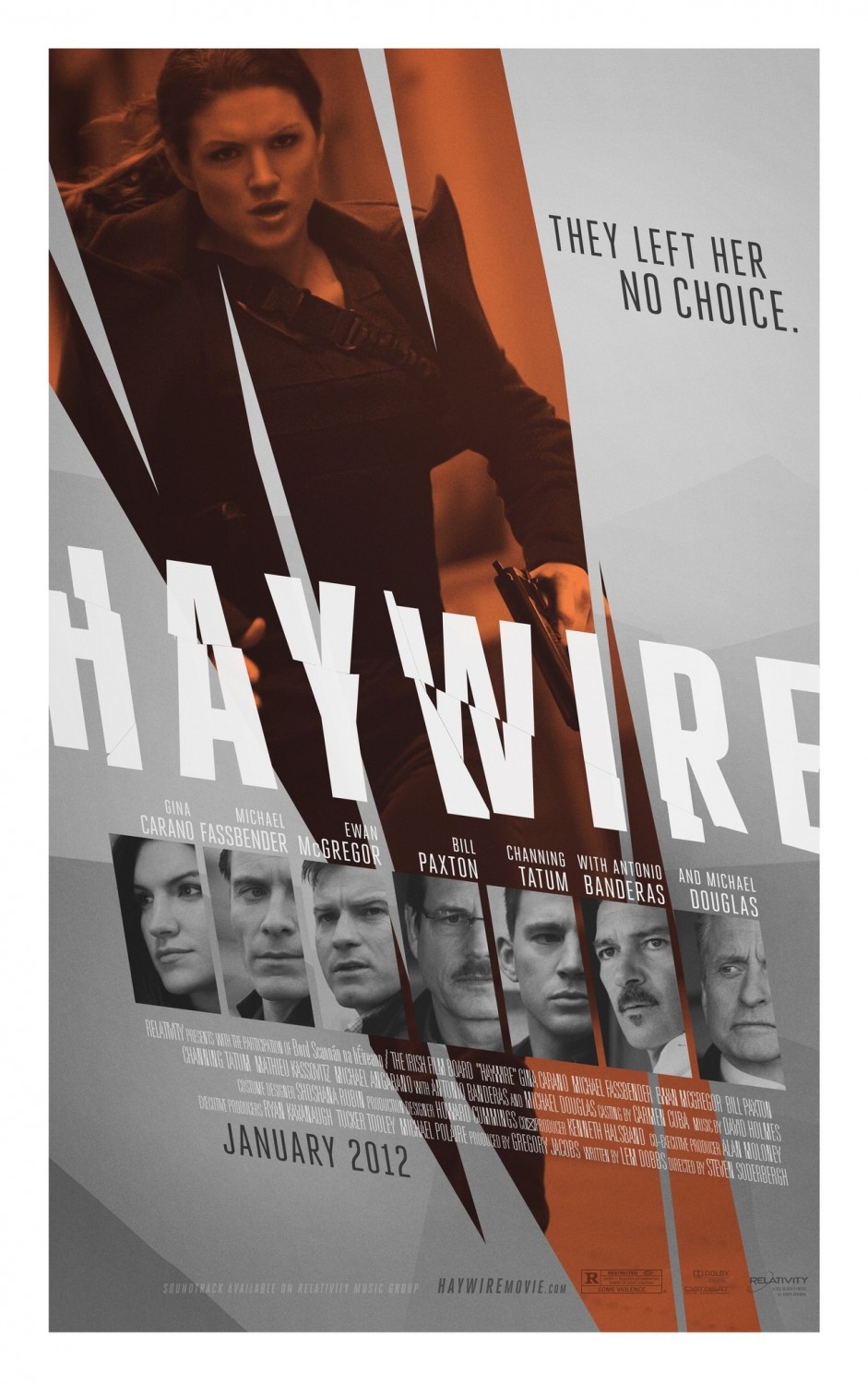
Steven Soderbergh Teams Up With Gina Carano For ‘Haywire’

WRITER’S NOTE: This review was written back in 2012, long before Gina Carano’s acting career went in a certain direction which she did not benefit from.

Watching Steven Soderbergh’s “Haywire” brought back a lot of great memories I have of watching action heroes kicking serious ass in movies. I grew up watching Steven Seagal snap arms in half in “Hard to Kill” and “Marked for Death,”, and I always found in intensely satisfying to see him lay waste to those enemies who dared to cross him. There was also Chuck Norris who you could always count on to inflict serious pain on his adversaries and perform a pitch perfect roundhouse kick in “The Delta Force.” Those films came out in the 1980’s and 1990’s. Now we are in the year 2011, and it feels like it has been far too long since we have had an action star who can punch and kick in ways I can only dream of doing myself.

With “Haywire,” Soderbergh introduces us to Gina Carano, a now retired mixed martial arts fighter. As he did with Sasha Grey in “The Girlfriend Experience,” he throws Carano into her first mainstream acting role to see how she swims in the competitive world of Hollywood. But whereas Grey had unknown actors to work with, Carano is placed in a sea of top-notch actors which include Ewan McGregor, Michael Fassbender, Antonio Banderas, and Michael Douglas. Taking this into account, I cannot help but think Grey had it a lot easier than Carano.

“Haywire” is another one of those innocent people framed for a crime they didn’t commit movies with Carano playing Mallory Kane, a black ops agent who is assigned to covert operations. Kane is quick to discover she has been set up to take a fall, and she plots her revenge against those who foolishly underestimated her vicious talents. You know she will eventually get the upper hand on her betrayers, and seeing her take them on is terrific fun as she performs stunts which I don’t always see Stallone or Schwarzenegger doing as well.

Yes, Carano’s acting range only goes so far, but she does have a strong presence whenever she’s onscreen. Furthermore, she manages to hold her own against actors who could have easily run her over and embarrass her without remorse. Having said that, she really comes alive during the action sequences which are exhilarating as she doesn’t have some stunt person filling in for her. It should be no surprise that, being MMA fighter, she can really take a punch and dish one out which looks far more painful than the one she was forced to endure.

Actually, when you think about it, Carano gives all the actors opposite her a tough acting challenge as they have to appear as tough, if not tougher, than she is. Certain actors (you’ll know them when you see them) look inescapably sheepish around her, and they look even worse when they prepare to throw punches in her general direction. Even when she’s not strangling a guy with her legs, tackling another, or smothering an unluck bastard with a pillow, those eyes of her stare at you like shiny daggers to where you feel like you should have known better than to mess with her.

The one actor who gives Carano a run for her money is Fassbender with whom she shares a dynamo fight scene where they literally beat the crap out of each other. Fassbender never makes it easy for his co-stars as he challenges them to be better than they already are, and this takes on a new meaning when they tangle to where one character’s victory is truly earned and not easily predicted.

“Haywire” may never be ranked among Soderbergh’s greatest works, but it is diverting fun as it plays around with the action movie conventions set up by the Bourne trilogy and various spy movies released over the years. It also allows him to team up again with his “Ocean’s Eleven, Twelve and Thirteen” composer David Holmes for another groovy music score which always proves to be so much to play on my stereo system. It will be interesting to see where Carano’s acting career goes from here. Will she advance to action star status, or will she end up in straight to video realm where many stars past their prime end up? Whatever you may think of her acting skills, she did create a memorable presence here onscreen.

At the very least, Carano is bound to have more luck on the silver screen than Howie Long has had to date. He may have been a cool dude in “Broken Arrow,” but his lead role in “Firestorm” left little to be desired.

* * * out of * * * *

Underseen Movie: ‘What If’ – A Romantic Comedy I Actually Enjoyed

Okay, this is getting scary. I’m starting to enjoy romantic comedies again, and that is so not like me. Recent years have given us a few actually worth watching like “Obvious Child” and “Trainwreck,” both which went far beyond my expectations. This all started to happen as the genre began finding itself suffering from burnout thanks to a lot of banal movies which have made me roll my eyes on a regular basis, many of them adaptations to Nicholas Sparks novels. Then there was “What If” (or “The F Word” as it is known in certain circles) which is by no means an original romantic comedy. It owes quite a bit to “When Harry Met Sally” among other classics, and it does follow a lot of the same conventions I have come to expect from this genre. But what keeps it from feeling ordinary is a terrific screenplay, smart direction and wonderful performances from its two undeniably adorable leads: Daniel Radcliffe and Zoe Kazan.

Radcliffe plays Wallace, a medical school dropout who has been in one failed relationship too many, and this makes him take a long break from the game of love. But while at a friend’s party, he ends up bumping into Chantry (Kazan), an animator with a sparkly personality which more or less matches his own. After walking her home, Chantry informs Wallace she has a boyfriend named Ben (Rafe Spall) whom she has been with for a few years, and that she would love for her and Wallace to just be friends. Wallace agrees, but as time goes on, he wonders if they can be more than just friends. Lord, I have had many friendships with women where I wondered the same damn thing.

The questions of whether or not men and women can be friends still seems to come up from time to time, and that’s even though the answer should be a resounding yes. But there is always that one friend who belongs to someone else whom you endlessly pine for. “What If” really digs into this state of mind to where I could not help but feel Wallace’s passionate longings which he tries to cover up with a seemingly cynical take on love. We all have had crushes on others, and we are constantly aware of how painful crushes can be when they turn into shattering examples of unrequited love. It all reminds me of some dialogue from John Hughes’ “Sixteen Candles:”

“It just hurts.”

“That’s why they call them crushes. If they were easy, they’d call ’em something else.”

I was reminded of this while watching “What If” because, unlike other romantic comedies, I really found myself desperately rooting for Wallace and Chantry to become a couple. A lot of it is thanks to the fantastic chemistry between Radcliffe and Kazan as they bring this movie to such vivid life. Both play off one another wonderfully, and once you see the two discussing the ingredients of a Fool’s Gold sandwich (Elvis Presley’s favorite sandwich of all), you can tell they were made for each other.

Radcliffe may always have the shadow of Harry Potter hanging over him, but it’s really past the point where we have to recognize what a truly talented an actor he is. As he heads from one genre to the next, the young actor shows all the on-the-job training he got from playing J.K. Rowling’s unforgettable wizard has really paid off. While Wallace tries to put a solid front in an attempt to show how love has not gotten him down, Radcliffe shows what’s going on beneath the surface without ever having to spell it out for the audience.

Kazan has a uniquely adorable beauty about her, and she continues to do great work in every project she’s in. As Chantry, she gets the opportunity to take a character who appears to be comfortable with where she’s at in life, and we follow her through a journey of self-discovery which is honestly long overdue. She has a nice boyfriend and doing the work she loves to do, but throughout “What If” we watch her as she begins to discover what she really wants out of life. As she makes these subtle changes in her character, Kazan shows us just how wonderful an actress she can be.

There’s also a great scene-stealing performance from Adam Driver as Wallace’s best friend, Allan. Always giving bad advice on women and yet having a lot more success with them than Wallace, Driver has a wonderfully dry sense of humor here which is irresistible, and it’s a blast watching him stumble over his words on a regular basis.

I also have to give credit to Rafe Spall who plays Chantry’s boyfriend, Ben. This could have been the usual douchebag boyfriend who deserves to be dropped flat, but Spall makes him a good hearted man who just doesn’t have his priorities straight.

“What If” was directed by Michael Dowse whose other films include the two “FUBAR” movies, “Goon” and “Stuber.” While he doesn’t go out of his way to reinvent the romantic comedy wheel here, he does freshen up the formula and gives us something which does not feel like something you have seen a hundred times before. Along with screenwriter Elan Mastai, who based this screenplay on the play “Cigars and Toothpaste” by T. J. Dawe and Michael Rinaldi, he does a good job of keeping us emotionally involved in the plight of these should-be lovers all the way up to its end.

I still have issues with romantic comedies from time to time, but “What If” shows what good filmmakers can do with a formula that has been done to death. Even though I have seen this kind of film so many times before, this one proved to be a lot more emotionally involving than I ever could have expected it to be.

* * * out of * * * *

CHECK OUT THE VIDEO BELOW TO VIEW THE EXCLUSIVE INTERVIEW I DID WITH DANIEL RADCLIFFE ON “WHAT IF.”

Underseen Movie: ‘Music From The Big House’ – A Glorious Prison Musical

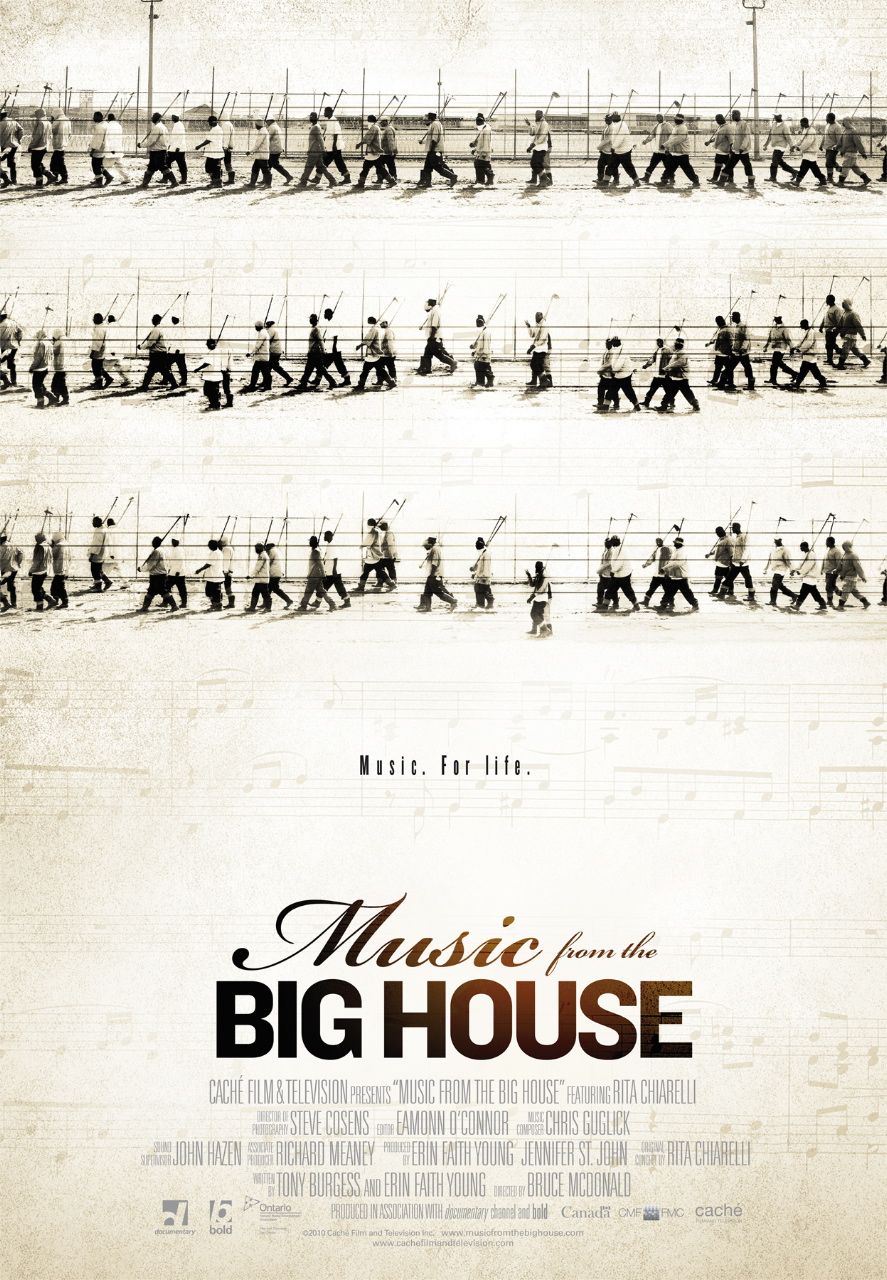
Music From The Big House” follows Rita Chiarelli, or “the goddess of Canadian blues” as she is known, as she visits what is considered to be the birthplace of blues music: Louisiana State Maximum Security Prison (a.k.a. Angola Prison). What she finds once there is a number of inmates who have long since found solace through their love of music, and this leads her to stage a concert at the prison with them. But unlike when Johnny Cash did his performance at Folsom Prison, Chiarelli performs with the inmates instead of just for them.

Cinematographer Steve Cosens originally filmed this documentary in color, but the decision was later made to show it in black and white which suits this documentary perfectly. McDonald goes over the history of this prison which was at one time known as the bloodiest in America. The descriptions given to us of how it operated years before gives you a picture of what hell on earth must seem like. The fact the filmmakers and Chiarelli were allowed access inside this prison is amazing to say the least, and it almost seems like a miracle they made it out of there as well.

We get a chance to meet the individual inmates who end up playing in the concert, and they are a fascinating bunch. It is not until the very end when we are told what crimes they have committed which got them sentenced to time behind bars, and this was a smart move on the part of the filmmakers. By not learning of their crimes right at the start, we are forced not to judge them ahead of their musical performances. Some of them do allude to their crimes without too many specifics, and one in particular hints at how he isn’t apologizing for what he did because he’s not sure he is yet.

Some might consider this project to be a self-serving one for Chiarelli so she can get good press and sell a lot of records, but that is not the case. Her love for blues music is never in doubt, and those who have seen her perform live can verify what a powerful musical presence she can be. Those not familiar with her work will be blown away by her performances, and there is no forgetting her once the lights go up. There are also moments where Chiarelli questions why she is doing this concert as she’s not blind to what these felons have done to earn long prison sentences. Still, none of it deters her from performing with them in what turns out to be a joyous occasion, and the kind many do not expect to see from hardened inmates.

Speaking of the concert, we do get to see a lot of it here. The musical numbers are utterly invigorating, and the audience I saw this documentary with couldn’t help but clap along with the music. They even applauded at the end of the songs and for good reason; the music is incredibly thrilling to take in even if you are not a fan of the blues. I haven’t been to many movies over the years where the audience really got into what was onscreen, so this is not a cinematic experience I am going to forget any time soon.

“Music From The Big House” is one of those small movies, let alone documentaries, which deserves a bigger audience than it has already received thus far. While you could just get away with buying the soundtrack (and please do buy it), this documentary invites more than one viewing, and it would make a wonderful double feature with the Talking Heads concert film “Stop Making Sense.” You will not be able to keep your feet still while watching either film, nor should you.

* * * * out of * * * *

Christopher Nolan’s ‘Tenet’ – A Bit Too Cerebral, But Still Very Entertaining

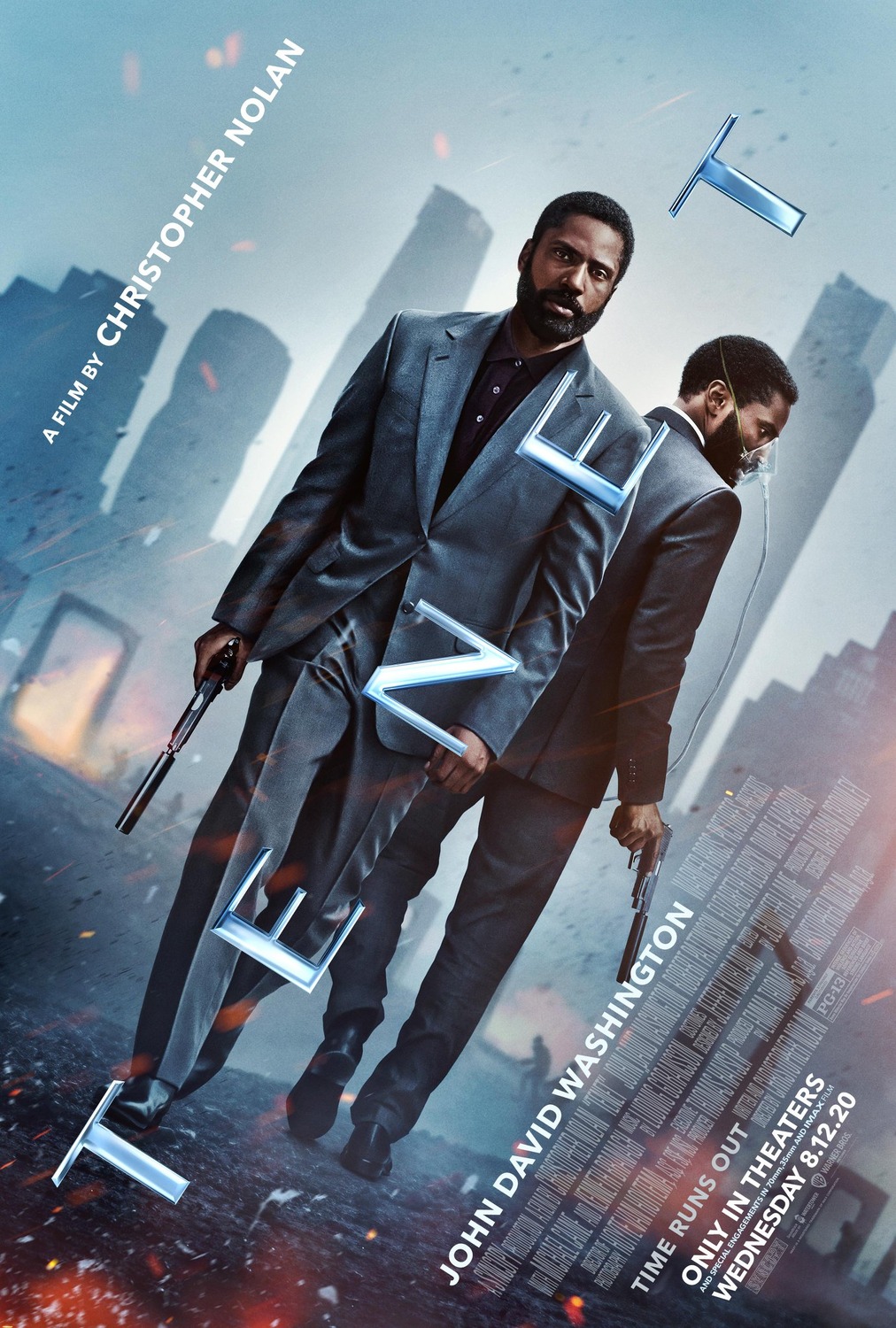
Tenet” is a film which should come with Cliff’s Notes or its equivalent as it is more challenging than the average Hollywood blockbuster. Thankfully, I was able to follow the gist of the story which has the good guys fighting the bad guys in an effort to prevent World War III, but I am at a loss for explaining how the characters learn to manipulate the flow of time. I imagine it all makes perfect sense to writer and director Christopher Nolan and his good friend, theoretical physicist Kip Thorne, but I have already watched this film twice and I still cannot fully understand all of which happened. While “Inception” and “Interstellar” did make a good deal sense over the course of a few viewings, it will take a few more for me to completely decipher all of which “Tenet” has to offer.

Black Klansman’s” John David Washington stars as a CIA agent who is only known as the Protagonist, and “Tenet” opens with him taking part in an extraction mission which ends up going awry as he is captured and ends up sacrificing himself after an extended torture session. But instead of arriving in the afterlife, he finds himself in bed and informed by his boss, Fay (Martin Donovan), that he has been recruited by an organization called Tenet which, as a word, can open the right doors and some of the wrong ones too.

The Protagonist’s meeting with scientist named Barbara (Clémence Poésy) helps him to learn about technology with inverted entropy, meaning technology which moves backward in time. At this point, I found myself digging this premise as it is always fascinating to find characters wondering if they exist not in the present, but instead a past which has been far removed from what is considered to be the future. It also calls into the question the concept of free will as the Protagonist is made to wonder if we are part of a story with a pre-determined ending. I love it when free will is dealt with as I am always rooting for it to be shown as real even in a work of pure fiction.

The rest of “Tenet” acts as Nolan’s version of a spy movie as the Protagonist seeks to infiltrate the treacherous realm of Russian oligarch Andrei Sator (Kenneth Branagh) who communicates with the future and is planning to give Earth a fate worse than nuclear Armageddon. In the process, he comes to meet Andrei’s wife, Katherine (“Widows’” Elizabeth Debicki), as well as Neil (Robert Pattinson), his partner in all things inverted or otherwise.

It is tempting to label “Tenet” as a time travel film, but Nolan has made it clear it is not. While Marty and Doc Brown can travel from one point in time to another in the “Back to the Future” trilogy, the characters here do not have the same power of instantaneous travel. To get to a certain point, they have to travel backwards in the past to get to it, and it is never an easy trip as the challenges prove to be quite draining physically. Keep in mind, this is one of the few motion pictures you will see where a character is saved from certain death thanks to hypothermia.

Like I said, I have already seen “Tenet” twice and still cannot explain all that goes on in it. We watch as characters live through moments portrayed both forwards and backwards in time, and the concept of inversion remains the kind of puzzle I am not quick to put together. With this film, Nolan may have bitten off far more than he can chew as the concepts here prove to be more cerebral than the first “Star Trek” pilot known as “The Cage.” Having said this, the film proves not to be too heady for me as such films can drive me to complete insanity or make me fall asleep while watching them. In the end, I am glad I did not come out of “Tenet” in the same way the average filmgoer came out of Darren Aronofsky’s “mother!,” desperate to make a lick of sense out of the cinematic chaos they just witnessed.

Nolan employs many of his regular collaborators here such as cinematographer Hoyte van Hoytema and production designer Nathan Crowley, and they provide us with visuals which would have been great to see on the big screen or in IMAX had any theater in Los Angeles been open a few months ago. This is the first film from “The Dark Knight” director which I have been forced to watch on my television due to the never-ending Coronavirus pandemic, and it feels like such a missed opportunity to not have viewed it on the silver screen. Once movie theaters open up again, hopefully I will get another chance.

One Nolan’s newest collaborators on “Tenet,” other than editor Jennifer Lame, is composer Ludwig Göransson who won an Oscar for scoring “Black Panther.” Hans Zimmer was unavailable due to his commitment on scoring Denis Villeneuve’s “Dune,” but Göransson comes up with something as propulsive and percussive as what Zimmer would have likely given us. In many ways, his music is as much a character as any other in “Tenet,” and this is one of those music scores which deserves a more in-depth study than it has already received. Like Nolan, Göransson presents his music to us both forward and backward motions, and the result is endlessly fascinating to take in.

Right now, “Tenet” may likely be seen as lesser Nolan as its plot is more complicated than he would ever care to admit, but even the least of his works prove to be more ambitious and original than much of what Hollywood puts out on a regular basis. Even though I was a bit frustrated in trying to understand everything which unfolded before me, I was still deeply enthralled in what Nolan had to offer this time around.

When it comes to making sense out of this particular film, please keep a few things in mind: the word tenet is a palindrome, and the term Sator Square gave this film its title and is a two-dimensional word square which contains a five-word Latin palindrome. If you want to learn more, go online and find out for yourself. As much as I would like to explain everything for you, it is best you discover certain definitions on your own. The actor Andre Braugher once said that “if your vocabulary is limited, then your thoughts are limited.” Be like Braugher and don’t be limited.

* * * ½ out of * * * *