‘Bad Lieutenant: Port of Call New Orleans’ – No, it is Not a Remake

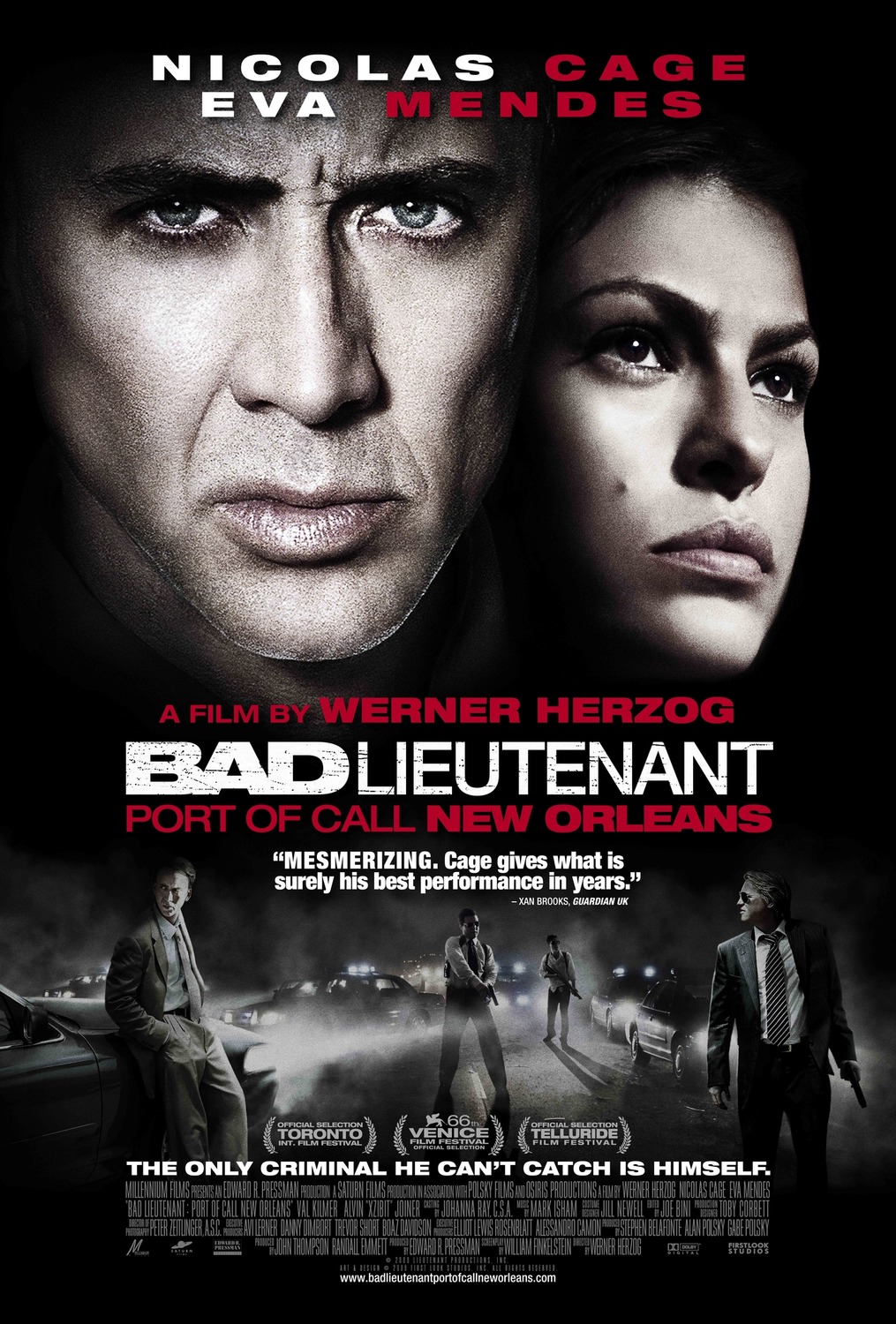
Alright, let’s get this out of the way; Werner Herzog’s “Bad Lieutenant: Port of Call New Orleans” is not a remake of Abel Ferrara’s 1992 film “Bad Lieutenant” which, as a friend of mine from high school pointed out “made ‘Taxi Driver’ look like ‘Alice in Wonderland!’” The only thing these films have in common is they have a main character who is a police lieutenant with serious gambling and drug addictions which suck them deep into a realm of immorality. Other than that, they are completely different cinematic works which somehow ended up with the same darn title. Comparing the two films, while in some respects inevitable, does neither any favors. Then again, they do have the same producer, Edward R. Pressman.

I do have to confess this is the very first feature length movie from Werner Herzog I have ever watched. Yes, I did see “Grizzly Man” and “Encounters at the End of the World,” but they were documentaries (brilliant ones might I add). Being the big movie buff that I am, you will likely find this shameful on my part, and it probably is, but you won’t have to worry about me comparing “Bad Lieutenant: Port of Call New Orleans” to all his other works. From what I have heard, Herzog’s films deal with human psyches in a most extreme and uncontrollable state, so this film must be right up his alley in terms of themes he has dealt with throughout his career. It also allows Nicolas Cage a role where he can (and does he ever) go completely crazy in the only way Cage can.

Cage stars as Terence McDonagh a sergeant with the New Orleans police force. We watch as Terence enters the severely damaged police department with his partner Stevie Pruit (Val Kilmer) as they try to salvage some stuff which was not laid waste in the aftermath of Hurricane Katrina. They end up coming across a prisoner still in his cell who should have been evacuated, and he is running out of time as the water level rises. Bothe Terence and Stevie seem perfectly willing to let this unlucky schmuck drown, but when Terence sees him start to pray, he quickly jumps into the contaminated water to rescue him. While he succeeds and is later made a lieutenant as a result, he also ends up with a serious back injury which requires medication he is told to take indefinitely, probably for the rest of his life.

Terence starts off being prescribed Vicodin by his less than hopeful doctor, something I had when I got my wisdom teeth taken out, and which my mother became terrified I would get addicted to. It’s all downhill from there as Terence quickly moves from Vicodin to cocaine, and then to crack or whatever else he can smuggle out of the evidence room. And just when you think he could not sink any deeper, he does. Eventually, he gets involved with local drug dealer Big Fate played by rapper Xzibit, looking livelier here than he did in “The X-Files: I Want to Believe.” By collaborating with Big Fate, Terence hopes to pay off his mounting debts. Throughout this twisted voyage, he is also met by a pair of iguanas who keep following him. Of course, no one can see them except him.

As dark and immoral as the plot and the characters are, I actually found this film to be shockingly funny. Seriously, “Bad Lieutenant: Port of Call New Orleans” has moments which are laugh out loud funny, and I couldn’t believe how much I was enjoying myself while watching this insanity. What’s on display here gives “Observe and Report,” the blackest of black comedies, a big run for its money in the perversely funny department. The audience I saw it with were also laughing as loud as I was as the utter madness constantly left us in complete hysterics.

But the big delight I got was watching Cage act in a totally unhinged state to where you would think this was a sequel to “Wild at Heart.” This collaboration with Herzog brought Cage back to the kind of role he does best. In films like “Leaving Las Vegas” and “Face/Off” among others, he proves to be a master of pulling off over the top performances which are infused with endless creativity. Herzog simply sets him loose to play a character whose mind is in a constant state of implosion which exposes a soul most corrupted.

One key scene comes when Terence pulls over a young couple driving home from a club. Cage plays the scene straight as he gets from these two what he wants and knows they have on them, and then he switches gears when the lady gives him a hit from what she is smoking. In the process, he begins to make out with her while her stunned schmuck of a boyfriend is forced to watch. This scene is as horrifying as it is hilarious, and only an actor as risk taking and reckless as Cage could possibly sell us on it.

So, what’s Herzog’s “Bad Lieutenant: Port of Call New Orleans” really about? I’m not entirely sure. It could be he is forcing us to look at a man whose soul is as toxic as the water that submerged much of New Orleans after Hurricane Katrina, and of how this man is forced to descend into hell in order to find of redemption. But considering how over the top this film is in portraying Terence’s increasingly manic state, you have to wonder if Herzog is more interested in the journey Terence is taking as opposed to where he ends up. It didn’t matter much to me in the end because I was enjoying myself too much, and that’s even if it was for all the wrong reasons.

Cage is also surrounded by a good cast of actors who do memorable work here as well. It was nice to see Brad Dourif here, having seen and liked him in Rob Zombie’s “Halloween II,” as Terence’s bookie whom he is heavily in debt to. Kilmer is very good as Terence’s corrupt partner, and that’s even if he has to stand in the shadow of Cage throughout. I have to say I was very surprised to Jennifer Coolidge cast as Terence’s stepmother. Having seen her in so many comedic roles, it was interesting to see her to take on something different and more dramatic. Vondie Curtis-Hall appears as well playing Terence’s superior, Captain James Brasser, and Tom Bower rounds out the cast by portraying his alcoholic father, Pat McDonagh.

Eva Mendes is also on board here as Terence’s prostitute girlfriend, Frankie. She previously co-starred with Nicholas Cage in “Ghost Rider,” and she plays the same kind of role she played in “We Own the Night;” a party girl whose boyfriend supplies her with all the fun and drugs she ever needs. On the basis of her performance here, I hoped she would get stronger roles in the future as she makes Frankie’s transition from being selfish to getting saved from herself very believable. She has since gone on to give excellent performances in “The Other Guys,” “Holy Motors” and “The Place Among the Pines.”

Herzog gives this film a rough and dirty look which all but suits the characters and the sleaze they submerge themselves in. The whole shebang could have been ruined if he shot the whole thing in high definition, for it would have made the visuals look much too tidy. This is not a movie you want to look all smoothed over and polished at the surface. It requires an atmosphere thick with humidity and with slime dripping off of everything as it eats away what is left. For all I know right now, Herzog is not a director who is even remotely interested in sweetening up story and characters in order to make his movies more available to a mainstream audience.

“Bad Lieutenant: Port of Call New Orleans” deserves to be taken on its own terms and not compared to Ferrara’s film in which Harvey Keitel went for the “Full Monty.” Its story is not always easy to follow, but it is endlessly entertaining for those in the mood for something bizarrely funny and far from normal. It also allowed Cage a temporary haven from the junk he has been forced to star in, and he gets free rein to go wild and crazy like no one else can. Thus, Cage reminds of us here that he is still more than capable of giving a brilliantly entertaining performance, not that we should have doubted that in the first place. While his career looks to having him churn out one straight to video movie after another, there is always those gems like this, “Joe” and “Pig” to remind us of what a tremendous talent he is.

Now, if you will excuse me, I have a ton of Herzog films to catch up on. I am behind enough on his work as it is.

* * * ½ out of * * * *

‘Public Enemies’ – Michael Mann and Johnny Depp Take on John Dillinger

“The reason you caught me, Will, is we’re just alike! You want the scent? Smell yourself!”

-Dr. Hannibal Lecktor (Brian Cox) speaking to Will Graham (William Peterson) from a scene in Michael Mann’s “Manhunter.”

After all these years, Michael Mann still has a strong fascination with criminal masterminds and those who spend their careers chasing them down. Film after film, he has spent his time delving into how the “good guys” and “bad guys” feed off of one another, and if they could not exist without one another. “Public Enemies” reminded me a lot of “Heat” in that respect, and it shares a lot of similarities as it looks at the famous John Dillinger, played here by Johnny Depp, and at the man sent to catch him, Melvin Purvis. It’s not as great a film as “Heat” was, but it is still a masterful piece of filmmaking and the kind we have come to expect from director Michael Mann.

“Public Enemies” starts with Dillinger and his friends breaking out of a maximum-security prison, something which seemed easy to do back in 1933. It turns out Dillinger is actually quite the celebrity and can find safe havens in one town or another. To many he is seen as a hero, and to others he is nothing more than a criminal. But as Dillinger continues to rob more banks, the FBI and J. Edgar Hoover (played by Billy Crudup) become increasingly persistent in bringing him to justice. In the process, Hoover turns to Melvin Purvis (played by Christian Bale) who subsequently leads a manhunt to take down Dillinger, and in the process changes from the person he thought he could be to the one he is chasing after.

One thing which has not changed about Mann’s movies is he still knows how to stage one hell of a gunfight. Back in 1995, he gave us one of the greatest in Downtown Los Angeles with “Heat,” and he has lived in the shadow of that brilliantly staged moment ever since. Sure, he has choreographed gun battles every bit as effectively brutal like in “Collateral” and his film version of “Miami Vice.” In his films, you don’t just watch guns go off, you feel them going off. When a bullet hits a body, characters don’t just fall down like in an old western. Their bodies are forever shattered, and the wounds they carry last long after the end credits have finished. There are a lot of strong action scenes like this throughout “Public Enemies,” and each one is equally hair raising. While “Heat” may remain his masterpiece, his other works do not pale in comparison necessarily.

Having Johnny Depp cast as Dillinger must have seemed like a no brainer. They appear to share some similar tastes minus the heavy gunfire, given Depp’s previous reputation as a “wild boy:”

“I like baseball, movies, good clothes, fast cars… and you. What else you need to know?”

-Johnny Depp as John Dillinger from “Public Enemies”

Depp remains one of the best actors of his generation, and he has constantly challenged himself to where this particular role is no exception. Dillinger was a criminal celebrity, perhaps one of the first, and Depp effortlessly shows you how Dillinger made this seem possible. With his eyes, Depp can still seduce the most knowledgeable and naïve of women without even having to try too hard. The actor also clearly brings out the joy Dillinger gets out of life, and he also gets at the depth of pain he experiences as those closest to him leave him, cut him loose, or get killed.

As Melvin Purvis, Christian Bale delves into many of the same situations which haunted Bruce Wayne/Batman in “The Dark Knight.” Melvin starts off as a man who is dedicated to the law and follows the rules and regulations to the letter. But after some serious setbacks, Melvin finds he has to use different methods in order to get his man. These methods include acts and people which and who work outside of the law. In the process, he comes to see what he has to become in order to capture Dillinger. But unlike Bruce, Melvin may not be able to live with himself when this is all through. Bale pulls off a really solid accent while playing Melvin, and he has a much more nuanced character to play here than he did in movies like “Terminator Salvation.”

But the one performance I enjoyed most in “Public Enemies” was Marion Cotillard’s who plays Dillinger’s girlfriend, Billie Frechette. Cotillard won the Best Actress Oscar for giving one of the greatest performances of all time in cinematic history in “La Vie En Rose.” She shares great chemistry with Depp throughout, and she is delightful to watch as Billie is ever so quickly drawn into Dillinger’s dangerous world. Billie does sense the trouble which lies ahead, but everything happening is too exciting for her to pass up. Showing both fear and excitement in a film scene without words is easier said than done, and she pulls it off like it’s no big deal.

If there’s anything which takes away from “Public Enemies,” it is that it doesn’t delve as deeply into the characters’ lives as I had hoped it would. If anything, this film would have benefited more from a back story, especially for Dillinger as to why and how he became a bank robber. It was also said that Dillinger was a hero because the banks he robbed ended up freeing things up for those who were economically challenged because of the Great Depression. I would have liked to have seen more of this because Mann may have thought this was clear from the way regular people treat Dillinger, but it doesn’t feel like they have a good enough reason to. Had there been a little more depth to these characters, this could have been as great a movie “Heat.”

Still, “Public Enemies” is fine filmmaking and continues Mann’s theme of looking at how the line between cops and criminals is often blurred and how both are actually one and the same. You could almost call this “Heat” as a period piece. Mann makes you wonder if a criminal can ever find and hang onto a love despite their law-breaking nature, and if the cop can ever lead a normal life outside their career of going after the crook. From William Petersen trying to think like the killer in “Manhunter” to James Caan trying to leave a life outside of crime in “Thief,” it’s a thin line indeed. Perhaps Mann keeps pursuing this theme in hopes that there will be a tomorrow for characters like these regardless of their opposing natures. Maybe he will find the answer in a future motion picture, and hopefully we will not have to wait too much longer for such a cinematic work.

* * * ½ out of * * * *

‘Dog Soldiers’ Movie and 4K/Blu-ray Review

The following review was written by Ultimate Rabbit correspondent, Tony Farinella.

It’s amazing what a 4K upgrade can do for a film like “Dog Soldiers.” I remember renting the DVD many years ago, and the quality was so poor that it was hard to even watch the film, let alone enjoy it.  Now, with this 4K Collector’s Edition from the fine folks at Scream Factory, the film is much improved from an image standpoint.  This one comes with a 4K scan of the original negative, and it has never looked better. Keep in mind, it is a low-budget film, so some of the grain and messiness of the film is included here, but that is intentional and adds to the guerrilla filmmaking style of director Neil Marshall. It’s supposed to look that way.  This was Marshall’s debut film, and he came onto the scene with a bang.

After an unsuspecting couple is killed by a werewolf, we are introduced to Cooper (Kevin McKidd) who is being recruited to join a special forces unit.  However, they don’t think he has the killer instinct necessary to do the job because he won’t kill a dog.  This was a direct order from Captain Ryan (Liam Cunningham) who was in charge of picking his team.  Cooper thought the process of killing a dog was unnecessary and didn’t understand the reasoning behind it.

Four weeks later, Cooper is part of a training exercise with six other men in the Scottish Highlands when he happens to discover that Captain Ryan is in bad shape.  Ryan’s team was attacked by something they don’t quite understand.  They receive shelter thanks to a zoologist named Megan (Emma Cleasby) who takes the remaining men along with Captain Ryan to a house where they will figure out what to do in order to survive.

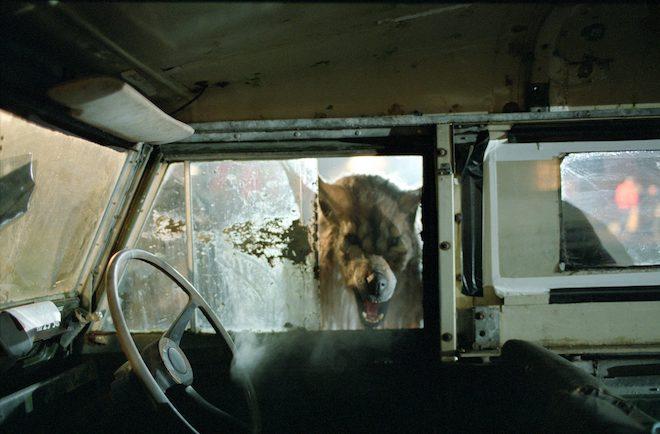
At first, this group of men can’t believe what they have seen.  They don’t know what has attacked them, and they have a hard time believing it was werewolves.  Once Megan explains the situation with the house and the werewolves, they learn they must survive by sunrise while fending off the werewolves that are coming for them.  The film does a great job of letting us get to know Cooper, Megan, Ryan, Sergeant Wells (Sean Pertwee), Joe, and Terry. We are right there with them, and we know all of their quirks and personality traits, such as the fact Joe is really upset about having to miss a football game between England and Germany. We are right there with them in the house, fighting off the werewolves.

At this point, the soldiers are wondering what their best course of action is. Do they wait until sunrise, or do they fight back against the werewolves? There isn’t any help for miles, and it’s not exactly safe to leave the house because the werewolves are ready and willing to maim and kill. They wait for this time of the month where it’s a full moon, and they usually make quick work of whoever gets in their way.

A huge positive about “Dog Soldiers” is that it has a sense of humor about the werewolves. Make no mistake about it, the filmmakers take these animals seriously, but they also realize the absurdity of the situation without making it too campy. It’s a fine line, and the film nails it perfectly by trying to ease the tension with humor while also not mocking the seriousness of the action.

As mentioned earlier, this film had a low budget, but that is part of “Dog Soldier’s” charm.  There is something truly magical and exciting about watching a film make up for its lack of budget with creativity.  The werewolves are very twisted and creepy, and they come out at just the right time.  The fact the majority of the action is set in this house also adds to the terror and tension.  The third act is also filled with a ton of twists and turns where you don’t really know who is going to survive, who can be trusted, and what their individual motives are as things come to a close.  The film is also not afraid to splatter blood all over the screen.  It’s a hugely entertaining ride.

“Dog Soldiers” starts off a little slow at the beginning, but once they enter the house, there is not a wasted scene or moment throughout.  It’s remarkable and has just the right amount of anxiety, humor, heart, and gore. It’s also not afraid to go balls-to-the-wall. With many first-time directors, they don’t know if they will get a chance to make another feature, so they throw a lot into their first project.  All the ingredients work here to make a magnificent horror film where the action is timed just perfectly. We get to spend time with all of these characters, so we care about what happens to them. 

The more I thought about “Dog Soldiers,” the more I loved it.

* * * ½ out of * * * *

4K/Blu-Ray Info: This is the 20th anniversary of “Dog Soldiers,” and it’s released on a two-disc 4K and Blu-ray combo pack from Shout Factory/Scream Factory. The film has a running time of 105 minutes and is rated R for strong violence, gore and language. There are two discs here: one featuring the 4K version, and the other one featuring the Blu-ray.

Audio Info/Video Info: The 4K comes with a 2160p Ultra High-Definition HDR Widescreen (1.85:1) transfer while the Blu-Ray comes on 1080p High-Definition Widescreen (1.85:1). The audio for both films comes on the following formats: DTS-HD Master Audio 5.1 and Stereo 2.0.  I found the video quality to be much improved from the original DVD I watched many moons ago. The film is grainy and dirty at times, as mentioned earlier, but it’s also clear and bright during the rare outdoor scenes. When I say it’s grainy and dirty, I am acknowledging that it adds to the look of the film and that is a positive, not a negative. The high dynamic range is also a huge bonus with any 4K release. You can also watch the 4K of the film in Dolby Vision as well.

Special Features:

DISC ONE (4K UHD):

NEW 4K Restoration from The Original Camera Negative by Second Sight Films – Approved by Director Neil Marshall and Director of Photography Sam McCurdy-Presented in Dolby Vision

NEW Audio Commentary by Writer and Associate Professor of Film Alison Peirse

Audio Commentary with Director Neil Marshall

Audio Commentary with producers David Allen and Brian O’Toole

NEW 4K Restoration from The Original Camera Negative by Second Sight Films Approved by Director Neil Marshall and Director of Photography Sam McCurdy

NEW Audio DISC TWO (BLU-RAY):

Commentary by writer and associate professor of Film Alison Peirse

NEW Werewolves, Crawlers, Cannibals and More – an interview with Neil Marshall

NEW A History of Lycanthropy – author Gavin Baddeley on Werewolf Cinema

NEW Werewolves, Folklore and Cinema – a video essay by author Mikel J. Koven

Audio Commentary with Director Neil Marshall

Audio Commentary with producers David Allen and Brian O’Toole

Werewolves vs. Soldiers – a look at the making of “Dog Soldiers” featuring Interviews with Director Neil Marshall, Producers Christopher Figg and Keith Bell, Actors Kevin McKidd, Sean Pertwee, Darren Morfitt, Leslie Simpson and Emma Cleasby, Special Effects Artist Bob Keen and more!

A Cottage in the Woods – a look at the production design with production designer Simon Bowles

UK Theatrical Trailers and U.S. Home Video Promo

“Combat” – A short film by Neil Marshall

Two Still Galleries – Photos from the film and rare photos from Production Designer Simon Bowles and Special Effects Artist Dave Bonneywell’s archives

Should You Buy It?

Considering there are over three hours of special features, both new and old, and the quality of the film, I cannot recommend this special edition of “Dog Soldiers” enough.  One thing I will say with a great deal of confidence:  Please watch the HDR version over the Dolby Vision version. This is a dark film to begin with, and the Dolby Vision version is too dark at times to fully enjoy the experience.  Dolby Vision is great for certain films, but I don’t think it fully works here. The HDR version is miles ahead in terms of clarity, mood, and picture quality.

As far as the film itself, with the 4K upgrade, I felt like I was watching a whole new movie.  “Dog Soldiers” is in-your-face and unrelenting.  I truly had a blast with it.  I look forward to September and October with some of the releases from Scream Factory, as there are some really cool horror titles coming out. As of right now, if you are a hardcore collector of boutique labels like myself, this one is going to be right up your alley. If you pick up this film, you won’t regret it!

The ‘Total Recall’ Remake is as Unnecessary as Many Remakes Are

After watching Len Wiseman’s remake of “Total Recall,” I wanted to ask my fellow audience members what they thought of it in hopes of finding a few who hadn’t seen the original directed by Paul Verhoeven. I actually found myself getting bored while watching this particular cinematic interpretation of Philip K. Dick’s short story “We Can Remember it for You Wholesale,” and I figured it was because I had seen the original dozens of times. But in retrospect, I don’t think it would have made a difference because my attitude towards this new version would have been the same in that it does not work in the slightest.

This is really a shame because Wiseman, best known for his “Underworld” movies and “Live Free or Die Hard,” had me coming into this remake with high hopes. I figured he would make this material his own and create an endlessly entertaining action flick. Instead, he drains all the fun out of the story, and what we get is a depressingly bland and uninspired motion picture which will be easily forgotten regardless of its excellent visual effects.

The story remains the same as before. Construction worker Douglas Quaid (Colin Farrell) is living an ordinary existence with his loving wife, Lori (Kate Beckinsale), and wonders why his life isn’t further along than it already is. He attempts to remedy this by going to Rekall, a company which specializes in artificial memory implants, but it all goes haywire when he is met by a SWAT team whom he quickly eliminates. From there, he is on the run as he comes to discover is life was never what he thought it was to begin with.

The only real difference between this “Total Recall” and the original is that Wiseman keeps the action earthbound. No one gets their ass to Mars this time around as the future presented here shows Earth having been decimated by a global chemical war which has divided it into two superpowers: the United Federation of Britain and The Colony. They are both battling one another for supremacy, and transportation to and from each nation is done via “The Fall,” an enormous gravity elevator which functions like the Lex Luthor’s Escape ride at Six Flags Magic Mountain.  If there is a difference, it is that the characters here have long since gotten used to the speed of the drop.

With this “Total Recall” not taking its story to Mars, I was convinced Wiseman would be giving us something other than the same old thing with this remake. Having said that, events here are not much different from what Verhoeven gave us years ago. Even if this particular version did get its ass to Mars, I’m not sure it would have made things all that more interesting. Even with actresses like Kate Beckinsale and Jessica Biel, I’m surprised this remake didn’t go all the way to Uranus (sorry, I couldn’t resist).

Speaking of Beckinsale, she is one of “Total Recall’s” best assets. Some will say her Lori is not much different from her character of Selene from the “Underworld” movies, and that the only difference is that Lori is not wearing any tight-fitting leather clothing here. Whatever the case, I don’t really care because it’s a lot of fun watching Beckinsale kick butt at any chance she gets. That fierce look in her eyes is hard to pass up as she aims to eliminate her antagonists, particular Douglas Quaid, with extreme prejudice.

Biel is also fun to watch as Melina, and that’s even though her character feels like the same one she played in “The A-Team.” Other actors like Bryan Cranston who plays President Vilos Cohaagen and Bill Nighy who portrays rebel leader Matthias are wasted in roles which are ridiculously underwritten. This is a shame in the case of Cranston who looks to be having some fun playing such a corrupt leader.

Now Colin Farrell is a far more accomplished actor than Arnold Schwarzenegger, but even the former Governor of California proves to be the better Douglas Quaid. Farrell isn’t bad, but Schwarzenegger had such a strong screen presence in the 1990 film which is hard for anyone to compete with.

I’m guessing that ever since Christopher Nolan’s “Batman” trilogy, filmmakers have done their best to avoid campiness in action films. The original “Total Recall” did have a level of campiness about it, but that made ir all the more entertaining to watch.

For Wiseman, his “Total Recall” represents a total immersion into the realm of CGI effects. With “Live Free or Die Hard,” he didn’t rely on as he was determined to use the real thing as much as possible. That made the action in that sequl all the more invigorating, and I wish he got more of an opportunity to go in that direction with “Total Recall.” True, the special effects are amazing especially in the design of the cities which the characters inhabit, but the action scenes lack friction as you cannot past the fact that you are watching something which is nothing more than a visual effect.-

With Verhoeven’s “Total Recall,” you could never figure out if what you were watching was real or a dream, and he teased you with the possibilities throughout. but Wiseman instead makes the story more straightforward which frustratingly robs the story of its more suspenseful moments. The tension ends up disappearing at key moments which makes what we see utterly frustrating as a result.

In a sea of endless Hollywood remakes, “Total Recall” proves to be one of the most unnecessary. Someone like me is at a disadvantage here because I’m huge fan of the 1990 version, but this one is nowhere as much fun.

As for Wiseman making more movies which are dominated by CGI effects, he should consider this a divorce. Come on Wiseman, you are so much better than this!

* * out of * * * *

‘Passenger 57’ – Wesley Snipes is Great, The Movie is Not

There was a time long ago, before he decided against paying taxes, when Wesley Snipes was one of the biggest action stars working in movies. When you see an actor like that suddenly sink into the almost inescapable realm of direct-to-video films, you cannot help but feel a little sad. Seriously, Snipes is a better actor than many give him credit for these days. He wowed us in “New Jack City” and the “Blade” movies among others. But in between all that, he starred in crappy movies he usually proved to be the most watchable thing in. “Passenger 57” is one of those crappy movies but, for what it is worth, it is never boring for a second.

Snipes stars as John Cutter, a security specialist for an airline corporation who is taking a flight to Los Angeles to take a new job. He is the kind of character you might see in Sylvester Stallone movies like “Cliffhanger;” a man who has suffered a terrible tragedy and is now heading on to the road to redemption. Cutter watched his wife get shot to death in front of him during a convenience store robbery, so you can understand why he doesn’t smile a lot. Along with him on the plane is flight attendant, don’t dare call her a stewardess, Marti Slayton, played by Alex Datcher. Cutter just got through a training session with her where he chewed Slayton out for improvising a move where she succeeded in disarming a terrorist. Now he is trying to make it up to her, but she is not making it easy for him. Ironically, the thing Cutter chewed Slayton out about becomes their only option for survival.

Unbeknownst to Cutter, aboard the plane is terrorist Charles Rane (Bruce Payne) who is being shipped under the guard of FBI agents to await trial where he will most certainly be found guilty. Payne plays the villain of the piece with a seething glare you can find in any Stanley Kubrick film. It is a one-note performance, even if his character has the excuse of feeling no pain. At the same time, Payne does create a threatening presence as a villain to where he has us desperately wanting him to experience the most intense pain humanly possible. Seriously, karma has got to visit this asshole at some point.

Now this brings me to one of the key idiotic moves in this film. Charles Rane is responsible for all of these terrorist acts of destruction, many of them involving airplane explosions. So of course, the FBI has the bright idea of transporting him to trial via airplane. Not by car, train, or even in a cage or some contraption that they would use for Hannibal Lecter. Of course, if they didn’t take him on a plane, there would be no movie. I doubt it would have been anywhere as exciting to see Mr. Rane hijack a 1970’s Pinto. Then again, that might have made for some interesting fight scenes between him and Cutter.

Some movies have gaping holes in plot logic which don’t bother me because I don’t always realize they are happening while I am watching a movie. But when you have plot holes as big as the ones those dinosaurs could have walked through, it’s kind of hard to not notice them. “Passenger 57” is full of plot holes, and they left me scratching my head constantly. We have already gone over transporting an airline hijacker by airplane, but how does this terrorist manage to get on board after being taken off by the police? He has some guy shooting the officers taking him back on board, but how did he get all the way out there? Did the FBI even bother checking the backgrounds of the flight crew and passengers? Really, you can see it in the eyes of Rane’s henchmen. Then again, looks can be deceiving. And is it really possible for Cutter to get inside an airplane by sneaking up through the landing gear while the plane is taking off and not get crushed or blown away in the process?

To a certain extent, it almost shouldn’t matter as “Passenger 57” is entertaining enough. But if these logic loopholes give you a big enough headache, like being in the front row and staring right up at a movie like “JFK,” then it does. You can only be allowed to insult the intelligence of the audience so much before they get right back up in your face.

The other really big problem is that the majority of the acting here is God awful. Granted, Snipes is always fun to watch, and I even have good things to say about Elizabeth Hurley as well. The other actors, however, all speak as if their feet are nailed to the floor, and they emote more than anything else. This is especially evident on the ground when Snipes is confronted by a bunch of hillbilly cops that are clichéd and racist in inescapable ways. How rare it is that you see this much bad acting in a motion picture which was released theatrically.

Then again, you do have Tom Sizemore on board as Cutter’s friend of sorts, Sly Delvecchio. Even if he was on drugs while acting in this movie, he is never ever boring and raises the acting level ever so slightly for the rest of the cast. Then again, that helped only so much.

The movie was directed by Kevin Hooks who has done a lot more work these days in television than he has in feature films. But considering that he has worked on such shows as “24,” “Alias,” and “Homicide – Life on The Street” among others, it is clear he has a good hand for action and character than this particular motion picture would quickly suggest. Maybe the movie was so low budget that they didn’t have time to work on things more. If they did have more time, it would have ended up being far more entertaining and enthralling than what ended up onscreen here.

As I write this, Snipes has since gone through a career renaissance thanks to the combined efforts of Craig Brewer and Eddie Murphy who allowed him to let loose and go crazy in “Coming 2 America” and “Dolemite is My Name.” Seeing him in “Passenger 57” serves as a reminder of the kind of action movie star he was once upon a time, and he does make this one more watchable than it might be otherwise. Thanks to Snipes, he keeps me from giving this particular movie a more brutal review.

In the end, I can’t say I hated “Passenger 57,” but I never got bored by it either. This was made back when we had dozens of “Die Hard” knock-offs, and this one can safely be described as “Die Hard on A Plane.” If you want a better version of this movie, check out “Executive Decision” with Kurt Russell and Steven Segal which has better acting and characters. Better yet, check out “Air Force One” which stars Harrison Ford and was directed by Wolfgang Peterson.

After all this time, I can’t believe Roger Ebert liked this movie more than “Air Force One.”

* * out of * * * *

‘Bullet Train’ – A Bumpy but Entertaining Ride Thanks to Brad Pitt

Bullet Train” is one of those movies which takes you on an adrenaline-fueled ride and leaves you wrung out at its incredibly chaotic conclusion. Now I usually begin writing movie reviews soon after I watch one, but I had to sit down for a bit after and gather my thoughts when it came to this particular feature film. Yes, it is furiously entertaining, but the story does drag from time to time and there are moments which defy simple logic. Also, some have accused the film of trying to be Tarantino-esque as the director wants the characters to look and sound cool when they talk. My response to those criticisms is this: didn’t the trailers spell out to you that this is a motion picture which you will need to check your brain at the door while watching it?

Based on the Japanese novel “Maria Beetle” by Kōtarō Isaka, “Bullet Train” is not a perfect movie, few movies are for crying out loud, but for the most part I found myself really enjoying the chaos on display as we watch Brad Pitt portray an American assassin who makes his way through a Japanese train going at a speed of about 200 miles an hour through the country’s vast railway system.

Pitt’s character has no name here, but he is given the codename of Ladybug by his contact and handler, Maria Beetle (voiced by an Oscar winning actress whose voice you will recognize). His mission is a snatch-and-grab one as he is to collect a suitcase on a train heading to Kyoto and then get off at the next stop. Ladybug is also an experienced assassin who has been doing his job for far too long, and this looks to be one of those last mission before retirement gigs for him. Also, he is trying to find some inner peace in the midst of all his deadly deeds and is quick to encourage others to do the same. Yes, “Bullet Train” is that kind of movie.

Now Ladybug is quick to acquire the briefcase which acts as this movie’s McGuffin, but getting off the train quickly turns into an insane comedy of errors as he keeps running into other assassins whose missions prove to be very similar to his. Among them are British assassins Lemon and Tangerine (Brian Tyree Henry and Aaron Taylor-Johnson), Japanese assassin Yuichi Kimura (Andrew Koji) who looks to avenge his son who lies in the hospital in critical condition, a Mexican assassin known as The Wolf (Benito A. Martinez Ocasio, a.k.a. Bad Bunny) who has a special grudge against Ladybug, and Prince (Joey King) who is a British assassin who received her codename only because her parents really wanted a boy instead of a girl.

With everything set up, we know these characters will eventually collide with one another in inventive and creative ways as their individual missions have an inevitable connection. Seeing it all happen on a train traveling at a very high speed is especially exciting as, while these assassins are trying to kill or trick one another, the rest of the passengers are sitting in their seats as, to quote a line from another movie starring Pitt, “calm as Hindu cows.” Oh yeah, there is a venomous snake which manages to escape its cage and slither about the train in the same way that spider crawled around the McCallister house in “Home Alone,” and you sit in fear of it striking at the least suspecting passenger.

Directing “Bullet Train” is David Leitch who helmed the very first “John Wick” film, the insanely entertaining “Deadpool 2,” and “Atomic Blonde” which starred Charlize Theron who gave a performance which should have had you saying, “not bad for a human.” Clearly, he is out to give us a fun-filled ride, and he delivers for the most part. Not everything lands in the way it should as some moments fall flat, but those which do hit had me enthralled and laughing my ass off. While it may not be as thrilling as “Top Gun: Maverick” or the vastly underappreciated “Ambulance,” Leitch for my money gives this motion picture more entertaining set pieces than not, and that makes it worth seeing in my opinion.

The other actors go out of their way to fully inhabit their roles regardless of whether or not their screen time is long or short. Both Taylor-Johnson and Henry work off of one another very well, and that’s even though I could not always understand every word coming out of their mouths. As for Henry, his character of Lemon goes out of his way to give us all a special appreciation of the British children’s television series “Thomas & Friends” and of all the different kinds of trains there are in the world.

One of my favorite performances comes from Joey King as the oddly named Prince. From the first time we see her, she proves to be an alluring presence as she uses her disguise as a schoolgirl to gleefully throw her antagonists off-balance in an almost sublime manner. Her eyes show us a character who is infinitely dedicated to taking out her main target with extreme prejudice, but she also succeeds brilliantly in deceiving those around her ever so easily. Seriously, King steals every scene she is in.

But yes, the one person who manages to connect everything together here is Brad Pitt who once again proves why he is one of Hollywood’s best and most dependable of movie stars. Even if his performance threatens to be too broad at times, he made this film especially fun and looks to be having the time of his life. There’s also a scene where we see him traveling through the train cars in slow motion (you will now what I am talking about when it happens), and the expressions he gives off prove to be absolutely priceless.

Now I cannot say that “Bullet Train” will remain in the mind long after you have watched it but watching proved to be a blast for the most part. While many may say it pales in comparison to other films from its genre, I was never quick to compare it to others. There may a few bumps and lags on this particular train ride, but I still enjoyed this film for what it was, and that was enough for me. And, like “Where the Crawdads Sing,” it makes me want to read the book it is based on.

Oh, there are some truly brilliant celebrity cameos to be found here, especially towards the end. Seriously, they are alone worth the price of admission, particularly when it comes to the one actor playing an assassin named Carver.

* * * out of * * * *

Underseen Movie: ‘Paul Williams Still Alive’

Going into this documentary, I thought it would be one of those great comeback stories of a fallen celebrity who gets their dormant career resurrected through the help of one die-hard fan. But while filmmaker Stephen Kessler seems intent on reminding the world of what this gifted songwriter has given us, “Paul Williams Still Alive” is not that kind of documentary. Instead, it’s a story of a man whose life was run into the ground by a strong addiction to fame and drugs, and of his journey back to a place of happiness and fulfillment he is ever so thankful for today. This is not an artist looking to make a comeback, but of one who appreciates what they have to where not much more is needed than that. As a result, this makes “Paul Williams Still Alive” one of the sweetest and most life affirming documentaries I have seen in some time.

Kessler is best known for having directed many popular television commercials and “Vegas Vacation,” a sequel which rated high in test screenings, but still turned out to be a dud. Kessler starts off this documentary recounting how he grew up being such a big fan of Williams and of how the songwriter seemed to be everywhere in the 1970s. Williams appeared on “The Muppet Show,” made numerous appearances on television shows such as “Beretta,” and he became an incredibly popular guest on “The Tonight Show” with Johnny Carson. On top of that, he composed the music for “The Muppet Movie,” the cult classic “Phantom of The Paradise,” and eventually won an Oscar along with Barbara Streisand for the song “Evergreen.”

Somewhere along the line, Kessler assumed Williams had passed away at far too young an age. But while ordering one of Williams’ albums on the internet one night, he discovers to his surprise that the singer and songwriter is still very much alive and continues to create and perform music throughout the world. From there, Kessler makes it his mission to make a movie about Williams in an effort to let the world today know how much of an impact his music has had on all of us and still does to this day. Remember, he was a featured artist on Daft Punk’s “Random Access Memories.”

Kessler started filming Williams when the songwriter visited Winnipeg, Canada where a fan convention for “Phantom of The Paradise” was taking place. This collaboration gets off to a rocky start as Williams shows a sharp reluctance to being filmed. There’s even a moment where he is singing in a San Francisco nightclub and gets the house manager to dim the lights so Kessler can’t get a good view of him onstage. As for Kessler, his solution to this problem provides this documentary with one of its funniest moments.

In some ways William’s reluctance is refreshing because, in a time where we are constantly flooded with reality shows with people becoming famous just for the sake of being famous, he is not keen about being part of this. In fact, it doesn’t take long to see he is not the least bit interested in becoming famous again like he once was as he has described the pursuit of fame as being in his own words, “pathetic.” As this documentary goes on, the narrative focuses much more on the person he is today, a much healthier human being who is humble and thankful for what he has.

“Paul Williams Still Alive” does give us a brief biography of the songwriter and of how he grew up with an alcoholic father who made him sing “Danny Boy,” and that his being so short ended up ostracizing him from his classmates at school. He comes to blame his lack of height on hormones being injected into him early in life. This was done to make him taller, but it ended up having the exact opposite effect. After moving out to Los Angeles to become a film actor, he ended up finding success as a songwriter which eventually turned him into a huge celebrity. The attention it gave him was something he came to live for, and it would eventually become an even bigger addiction for him than drugs.

As time goes on, Williams eventually warms up to Kessler, and this becomes clear during a trip to the Philippines. Williams even encourages Kessler to join him in front of the camera instead of just staying behind it, and that is saying a lot. Now this might have proven disastrous as “Paul Williams Still Alive” could have ended up becoming more about the filmmaker than his subject, but Kessler’s increased involvement proves to be a major plus. The relationship between these two men helps to define Williams as he is today.

While Kessler constantly looks to the past, Williams only wants to look forward. The one scene which makes this clear is when Williams watches himself guest hosting Merv Griffin’s talk show. Clearly high on drugs and making an absolute fool of himself, the realization of what he was doing back then forces him to stop watching the rest of the footage. The person Williams was back then is so different from who he is today, and the pain which crosses his face over his embarrassing past deeds is impossible to hide.

Near the end, Williams gives Kessler a whole bunch of videotapes he has in storage, having no idea of what’s on them. One particularly disturbing video has Williams celebrating Christmas with his family, and then later going upstairs to film himself getting high. Watching this illustrates just how far down the songwriter’s drug addiction took him and, looking at him today, it’s almost like we’re looking at a completely different person.

It should be clear by now that Kessler is not out to embarrass Williams in the slightest. Instead, his intention is to bring the songwriter back to the world’s attention, and this is a noble intention indeed. Williams is the same man who wrote the song “Rainbow Connection” for Kermit the Frog, “We’ve Only Just Begun” for the Carpenters, and “An Old-Fashioned Song” and “Rainy Days and Mondays” for himself. Heck, he even did the music for “Emmett Otter’s Jug Band Christmas,” one of my favorite holiday specials ever.

Today, Williams continues to make beautiful music which deals with themes like love, loneliness and alienation, and he definitely deserves to be recognized for the countless music contributions he has given us. Maybe not everyone has forgotten who he is, but we do need to be reminded of what he has created.

Now some have accused “Paul Williams Still Alive” of not including more of his music, but this documentary is not intended to be a career retrospective. In actuality, it becomes more about how Williams is a better, not to mention a far more interesting, human being today compared to when he was an overindulgent celebrity. He has been clean and sober for over 20 years, and he is even a certified drug and alcohol counselor. Looking back, it seems as though he lives to be a counselor more than he wants to create new music, and that is saying a lot.

With “Paul Williams Still Alive,” Kessler has given us far more than the average showbiz documentary. He has given us an individual worth appreciating who, while having made some serious mistakes in life, has come out of it on the other side a proud and happy person. All of this is all accomplished without Kessler ever trying to be manipulative or play at our heartstrings unnecessarily. This is a warts-and-all documentary which doesn’t hide anything, and I came out of it with not just a deep respect for Williams, but also for his healthy perspective on life.

During a time which sees certain celebrities desperately grasping for whatever fame is available to them, here is one who has found the happiness we all mistakenly thought we would get when we became a super star in everyone’s eyes. In the end, “Paul Williams Still Alive” is more about what it means to be happy, and Williams has more than earned the happiness he has today. Like he says, he does not need “another cup of fame” to make him a satisfied man.

* * * * out of * * * *

No, I Haven’t Seen It Until Now: Akira Kurosawa’s ‘Ran’

I pride myself on having a vast knowledge of movies. While my many of my friends stumble across a movie they don’t recognize, I am usually quick to name it even if I have never watched it before. Everyone is amazed at how I could know such things. Still, when it comes to older movies and the great filmmakers who ever lived, there are still many I need to catch up on.

One of those filmmakers I really need to catch up on is Akira Kurosawa who is considered by many to one of the greatest of all time. Until I saw “Ran,”, the only movie of his I had previously watched was “The Seven Samurai” which really is one of greatest movies ever made. Of course, I got exposed to the American remake, “The Magnificent Seven,” beforehand, but anyway.

“Ran” was the very last movie Kurosawa made on such an epic scale, and as amazing as it looked when it was first released, this is even more the case more than 30 years later. Kurosawa clearly had the power to request literally thousands of extras, and it is easy to see well-dressed studio executives looking at him to where, had he made this movie today, would have asked him:

“Can’t you just add all these people in with CGI? Wouldn’t it be easier and cheaper just to hire like 50 guys instead of 1200?”

If they didn’t ask them that, they would obviously come up with the obvious solution:

“We’ll solve it in post!”

Looking at the title and scenes from the movie trailer, I figured the title “Ran” meant the main characters were running from certain doom throughout like it was a big chase. This should show you what I know about the Japanese language, and that is not much. “Ran” actually means “revolt” or “chaos,” and Kurosawa’s movie is filled with so much of both to where this is ends up being a cinematic experience both physically and emotionally draining.

Kurosawa based the story on the legends of the daimyo Mori Motonari and of how he had three sons who were intensely loyal to him. This led him to look at the story a little differently and say the following:

“When I read that three arrows together are invincible, that’s not true. I started doubting, and that’s when I started thinking: the house was prosperous and the sons were courageous. What if this fascinating man had bad sons?”

Of course, anyone familiar with William Shakespeare will say that “Ran” is heavily influenced by the tragedy of “King Lear.” Indeed, the story very much resembles that of “King Lear” as we watch a powerful leader abdicate his throne, and he ends up being betrayed by his own blood in the process.

The powerful leader at the center of “Ran” is Hidetora, leader of the Ichimonji clan. The story starts with Hidetora abdicating his throne to his three sons Taro, Jiro, and Saburo. The majority of the power is given to Taro who is his eldest son, and Jiro and Saburo are ordered by their father to support him no matter what. Saburo, however, does not agree with Hidetora’s decision to disperse all of his powers, reminding him how his kingdom came about through his own treachery and massacre of others. Hidetora starts acting all uppity as if he’s a superstar celebrity who is not used to hearing the word “no” much, and he banishes Saburo from the clan as well as his servant Tango who speaks in Saburo’s defense. It’s amazing what breaking three arrows together can do to a man’s ego.

From there, it is a vicious downfall for Hidetora as he is banished from his kingdom ever so coldly. Many characters here profess to believe in a god, be it Buddha or someone else, and they pray for their assistance in this little world which is quickly collapsing. If there is a god watching over them, he, or she, is blind to their sufferings or deaf to their endless prayers. Hence, this is quite a bleak movie from a thematic and visual standpoint.

After watching “Ran,” I was compelled to learn more about it. While researching the movie more deeply, It turns out “King Lear” never really entered Kurosawa’s mind until he was deep into pre-production. Along the way, he did incorporate different elements of the play into it, and he had this to say about Shakespeare’s classic tragedy:

“What has always troubled me about ‘King Lear’ is that Shakespeare gives his characters no past. … In Ran, I have tried to give Lear a history.”

Now this is what gives Hidetora, among others characters, such gravity throughout the nearly three-hour running time. He was not a leader who earned his kingdom through family succession, but through the pillaging of villages and murdering those who were against them. Perhaps he would like to forget this, but his power and family are forever stained by his deeds, and he is reminded of this in the most painful of ways.

With this in mind, it is no wonder two of Hidetora’s three sons end up turning against him. What his legacy has taught them is you can’t get anywhere in life without beating the crap out of the other guy and stealing everything he and his followers have. Only Saburo is fearless and selfless in telling him this and of pointing out the fact he will always be seen as a killer. Saburo at least cares enough to tell him this instead of just sucking up to him like his brothers do. Some people hear the word “yes” once too often when they need some others say “no” every once in a while.

As we see Hidetora losing his mind and in a state of disbelief, I was reminded of Will Munny, Clint Eastwood character from “Unforgiven.” Both these characters become sick, and in their feverish state they become haunted by the lives they ended ever so coldly. They have tried to convince themselves they are not the same people they once were, and Hidetora appears to develop amnesia in an effort to block his mind of his past deeds. But nightmares abound in his sleep reminding him of the price he has yet to pay. You could even compare this character to Anakin Skywalker who becomes the very thing he fought against in “Star Wars Episode III: Revenge of the Sith.” In the process of trying to prevent the love of his life from dying, he gives up everything he believes in. Hidetora believes that by passing the leadership duties to his oldest son his clan will continue to prosper. The more we fear of something bad happening, the more likely that bad thing will happen.

Taking this into account makes me realize one of the most important elements in the Kurosawa movies I have seen; they are very dependent on the depth of their characters as much as they are on spectacle. Granted, this is only the second movie of his I have seen, but it feels like just enough to understand why his cinematic works made such a strong impression on Steven Spielberg and George Lucas (“The Hidden Fortress” is said to have been a huge influence on “Star Wars”). Most movies today are just about spectacle, and the characters are usually a distant second to it. But it is this focus on character which makes “Ran” so involving and gives its epic scope much more meaning.

But let’s talk about the spectacle of “Ran” which is incredible to say the least. One of the key sequences is the horrific massacre which takes place at the third castle where Hidetora takes refuge. What really struck me was how Kurosawa put Tōru Takemitsu’s music score over the sounds of violence perpetrated by his sons as it gives what is being presented to us with far more emotional power. Takemitsu’s music further illustrates the immense tragedy tearing this powerful clan apart which leaves Hidetora in an endless state of shock. Without the music, it would still be a cinematic high mark of capturing battle on celluloid, but it would not have the same effect.

The bloodbath of the massacre is made all the more vivid by Kurosawa as “Ran” was made long before the advent of CGI effects. With this sequence, Kurosawa brilliantly captures the ugliness and viciousness of war, and of the cruel nature which dominates these characters’ humanity.

All the acting is nothing short of excellent from as the entire cast invests each of their characters with various complexities which allow them to surprise us in unexpected ways. Hidetora is played by Tatsuya Nakadai, and he immerses himself completely into playing a man whose own pride and self-righteousness proves to be his undoing. Without saying a word in the last half of the massacre, Hidetora communicates his utter regret of his thoughtless decision making which has led to the decimation of what he once had. Nakadai makes Hidetora’s eventual descent into madness all the more vivid, and his performance never ever descends into camp.

I also loved Mieko Harada’s performance as Lady Kaede, Kurosawa’s version of Lady Macbeth. Through her deceitful ways, viciousness and endless manipulation, she always seems to get her way and turn the men around her into quivering jelly. Harada’s moments onscreen are among my favorites as she exploits the fears of the men around her and seduces them despite their mistrust of her. Never let it be said that Kurosawa ever writes weak roles for women because it certainly isn’t the case here. Lady Kaede wants to maintain her high status in the clan, and she is ruthless in how she pursues it.

You could say they don’t make movies like “Ran” anymore, but it did come out in a time when they weren’t being made much. For many, it serves as the culmination of all his talents, of what he has accomplished in his career, and of all the struggle and tears he shed while making this movie. During the making of “Ran,” Kurosawa’s wife passed away. By the time he got around to shooting the movie after working on the script for ten years, he was almost completely blind. Regardless of these setbacks, nothing stopped him from making this movie.

Years after its release, “Ran” stands as one of the classic movies from one of the best filmmakers ever. No one can or should doubt the heart and soul Kurosawa put into it for years and years, and getting to see it on the silver screen was a real treat. When all is said and done, the silver screen is where this movie belongs.

* * * * out of * * * *

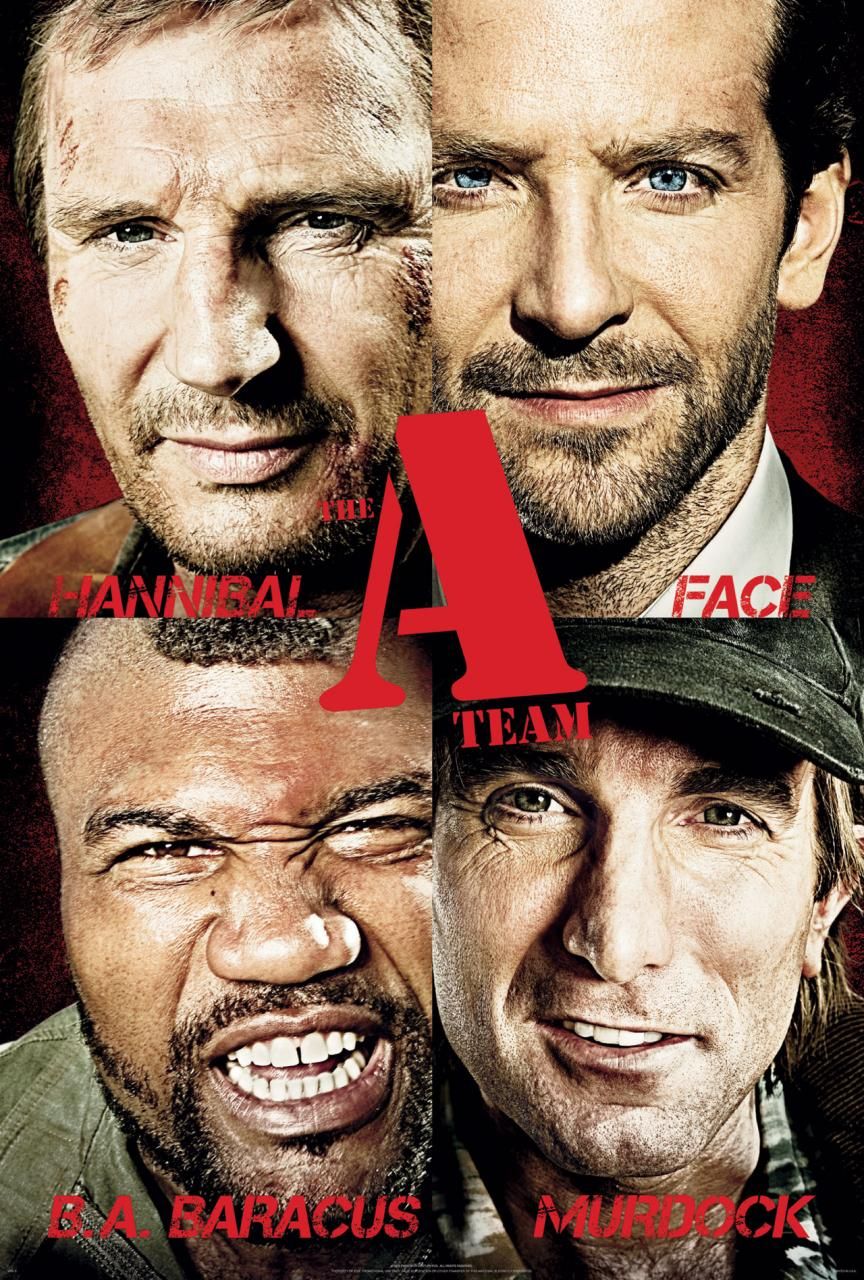
Underseen Movie: ‘The A-Team’ – A Ralph Report Video Vault Selection

The movie version of the 1980s television show “The A-Team” is one of those examples of how, as U2 put it in their song “Numb,” too much is not enough. The plot is razor thin, and the stunts defy all things we see as logically possible. And you know what? I didn’t care because I HAD SUCH A BLAST WATCHING IT!!! Many reviewers have been bemoaning how it was not what it could have been. I, on the other hand, prefer to see it for what it is, a highly entertaining film and the kind we usually expect to watch during the summer season.

After a prologue that shows how this team of Army rangers came together, we get thrust right into the action as we catch up with Hannibal, Faceman, B.A. Baracus, and the consistently insane Murdock as they are about to wrap up their tour of duty in Iraq. But before they can leave, they are given another mission to retrieve U.S. treasury plates that insurgents intend on using to make counterfeit money; the same kind of plates we would love to have in our possession as they would allow us to quit our day jobs. Without going into much detail, the plan goes awry, and they get set up to take the fall for something they are completely innocent of. The rest of the movie has them going on a mission to get the plates back and clear their names.

The director behind this unrestricted mayhem is Joe Carnahan. This is the same filmmaker who began his career with the $7,500 budgeted “Blood, Guts, Bullets and Octane” and later directed one of the best crime thrillers with “Narc.” Not once does he allow us to take the characters or what they are doing at all seriously, and it is clear from the get-go how he wants us to take joy in the utter insanity of everything going on. For those who think this movie could have been more serious and reality-based, you came into it with the wrong expectations.

Just look at the insane things these guys do here. They parachute out of a plane in a tank, and they are forced to steer it by firing the turret. There are other moments that defy simple description, and you just have to watch it without wondering too much over how they pulled this insanity off without a hitch. These are characters who prepare for their missions by doing the impossible, or so it would seem. While Carnahan at times gets caught up in the current trend of action film editing which features quick shots that leaves us a little confused as to what we are watching, he keeps us entertained throughout and even allows us to breathe when we need to. Not every filmmaker allows us to pause for a moment, so this is worth pointing out.

Seeing Liam Neeson here as John “Hannibal” Smith was great fun as it allows him to let loose in a way he doesn’t often. Typically, we see him as a mentor in movies like “Star Wars: The Phantom Menace” and “Batman Begins,” but as Hannibal, he doesn’t have to be his old serious self. Once you see him pop a cigar into his mouth and light it up, you can see why Neeson was eager to join this project. The “Taken” actor wanted to have fun and lighten up for a change.

Bradley Cooper plays Templeton “Faceman” Peck, the Casanova of the group who, despite his womanizing ways, still has eyes for Charisa Sosa (Jessica Biel). Cooper has come a long way from beating the crap out of Vince Vaughn in “Wedding Crashers,” and he manages to convince us of his various intentions and has us believing this despite all the craziness he keeps getting caught up in.

The part of B.A. “Bad Attitude” Baracus is played by Quinton “Rampage” Jackson, former UFC Light-Heavyweight champion. I kept thinking that his nickname of “Rampage” won him the part. Taking on a part made famous by Mr. T could not have been an enviable position to be in, but Jackson pulls it off. Is this role a stretch for him? It doesn’t matter because he has us believing in Baracus, and that’s even when this character says he has become a pacifist. We all know that can’t last, and Jackson does surprisingly good work here and without the use of gold chains. Not one is he ever a fool we have to pity.

But the real scene stealer of “The A-Team” is Sharlto Copley who takes on the role of H.M. “Howling Mad” Murdock. It is only when he slips back into his South African accent that you remember he was in one of the very best movies of 2009, “District 9.” Having said that, he actually pulls off a compelling southern accent here, showing us he is a far more talented actor than we first realized. Watching him go utterly nuts, be it jump-starting a car with a defibrillator or singing a Dead or Alive song while hanging onto a rotor blade of a helicopter had me in stitches.

Jessica Biel is on board as Faceman’s eternal love interest Charisa Sosa, and she makes for a convincing badass female soldier here. It’s in some ways the same kind of role she played in “Blade Trinity,” and it is nice to see her doing it again in an infinitely better movie.

For those of you wondering if the show’s famous theme song is at all featured, it is. While some say it is not in this movie enough, they should be happy it was included. The score was composed by Alan Silvestri, famous for writing the music for such classic movies like “Back to The Future” and “The Abyss.” Listening to his work here, it is great he still has it in him to create such rousing action scores to keep our adrenaline up and running.

“The A-Team” also proves what I have been saying about how the US military is treated in movies today; they are not anti-troop in the slightest, they are anti-mercenary. Whether it is “Rambo” or “The Hurt Locker” or “Green Zone” we are dealing with, troops are shown to be a dedicated bunch to their country. The main villains are mercenaries who don’t even try to hide the fact they make more in one day than an American soldier makes in a year. Now tell me, who do you think is more patriotic?

You could complain about how absurd this movie version of “The A-Team” is, but Carnahan plays on what made the show so appealing back in the 1980s, and he pays homage to it without making a simple carbon copy of what many of us grew up on. Every once in a while, we need a movie that is brainless fun and does not require us to overthink everything going on. “The A-Team” succeeds on this front, and I enjoyed it much more than I thought it would.

Oh, by the way, be sure to stay through the end credits. You’ll see why. Like the average Marvel movie, it has some surprises up its sleeve.

Like Eddie Pence of “The Ralph Report,” I very much appreciated this cinematic adaptation of this 1980s television classic. What a shame it is that this movie never got a sequel.

* * * ½ out of * * * *

Underseen Movie: ‘The Men Who Stare at Goats’ – A Highly Unusual War Movie

WRITER’S NOTE: This review was written in 2009.

“More of this is true than you would believe.”

You know something? It’s really nice to see a movie use a phrase other than “based on a true story” or “inspired by true events.” Those descriptions have all but lost their meaning because even if what we are seeing actually did happen, it has all been watered down into a formulaic feel-good movie we have seen over and over again to where we want to gag. Even worse, we keep getting suckered into seeing them even when we should know better. Either that, or there’s nothing better to watch. But this year has proven to be great as filmmakers have worked hard to subvert those worthless phrases with movies like “The Informant.” That Steven Soderbergh film made it very clear how it was based on actual events but that certain parts had been fictionalized, and it ended by saying:

“So there!”

Now we have “The Men Who Stare at Goats” which opens with the sentence at the top of this review. The story behind this one is so bizarre to where it’s almost impossible to believe any of what we are watching could ever have happened. All the same, it appears a good portion of these happenings did take place, and it makes for what is truly one of the more unique war movies I have seen in a while. The film is based on a non-fiction book by Jon Ronson which looked at how US military forces used psychic powers against their enemies. They look at New Age concepts as well as paranormal activities to achieve these goals, and of how they worked to use these methods to their advantage. The movie takes place during the Iraq war, but not to worry, the filmmakers is not trying to shove any politics down your throat (not consciously anyway).

Ronson serves as the inspiration for Bob Wilton, an investigative journalist played by Ewan McGregor. Bob’s wife has just left him for his editor and, of course, he is depressed and decides he needs to do something more important with his life in the hopes he can win her back. As a result, he travels to Kuwait to do firsthand reporting of the Iraq War, with hopes of finding someone who can get him across the border. Bob ends up having a chance meeting with a Special Forces operator named Lyn Cassady (George Clooney) who was in the military, but now runs a dance studio. Lyn reveals to Bob he was part of an American unit that was trained to be psychic spies or, as he eventually calls them, “Jedi warriors.” From there, Bob learns everything about this special unit which sounds like something out of a science fiction novel.

I love the irony of all the talk about “Jedi warriors” here, especially since McGregor played one in the “Star Wars” prequels.

Anyway, “The Men Who Stare at Goats” is really a cross between a war movie and a road movie as Lyn and Bob traverse the sandy dunes of the Middle East to where not everything is as it appears. This film is also a mix of comedy and drama the same way “Three Kings,” another war movie which starred Clooney, was. While the tone is largely uneven, especially towards the end, this was definitely an inspired film which kept me entertained throughout and proved to be quite unpredictable.

McGregor is playing the main character here, but let’s face it, Clooney steals the show right out from under his feet. His performance as Lyn Cassady is truly one of his most surprising and inspired. Despite how ridiculous Lyn may seem, Clooney plays him straight and never appears to be self-conscious. Seeing Clooney trying to burst clouds with his mind, and trying to reach into his enemy’s mind by staring right at them has the actor going through emotions ranging from serious to funny to downright tragic. Having gone from playing dramatic roles in movies like “Syriana” to “Michael Clayton,” Clooney once again shows he is really good at comedy and never has to strive hard for a laugh.

I don’t want to take away from McGregor though, who pulls off a convincing American accent. In many ways, his role is more of a reactionary one as he is subjected to conditions one is never fully prepared for. Bob is bewildered at what Lyn is telling him, and yet he still wants to journey further and further into Lyn’s head. I also have to give McGregor a lot of credit because he could have made it look like he was consciously aware of all those “Star Wars” references, but he never did.

But one of the great delights is watching Jeff Bridges channel his inner-dude-ness from “The Big Lebowski” into his role of Bill Django, a military leader who, after being wounded in Vietnam, has a New Age vision of combat he wants to develop. This leads him to study concepts which he incorporates into a special unit called the New Earth Army. Bill becomes a teacher of using non-lethal techniques to gain advantage over the enemy, and his training techniques are unorthodox to say the least. Bridges plays the character broadly, but not too broadly. As funny as Bridges is, he infuses Django with a disappointment which threatens to render him useless to those around him, and with a deep sense of fear and tragedy as his techniques are misused or taken advantage of by those who seek to profit from them.

Having been in London doing tons of theater, it seemed like it would require a herculean effort to bring Kevin Spacey back to the big screen. Seeing him here is a kick as he plays the real antagonist of the film, Larry Hooper. Larry is basically the Darth Vader to Bill’s Obi Wan Kenobi and Lyn’s Luke Skywalker as he takes the non-lethal methods of the New Earth Army and ends up using them for more lethal purposes. Larry ends up doing this not so much out of greed as he does resentment since Django does not consider him in the same light as Lyn. His actions bring about the downfall of the New Earth Army, and he turns all these abilities they developed into something far more insidious. From there, you will see why the movie and the book it is based on has the title it does.

Spacey has great fun as he channels the inner smugness which has enveloped Larry over time. While his role is a little more serious than the others, he still has great moments of comedy which remind us of what a talented actor he is as he balances out the serious and comedic aspects of Larry without tilting too much in one direction.

“The Men Who Stare at Goats” was directed by Grant Heslov, Clooney’s business partner on many films. He has his work cut out for him here as he must find a balance between the humorous and dramatic aspects of the story. Granted, Heslov doesn’t always succeed but he creates a most unusual war movie, and it is all the more entertaining as a result. Even more telling is the way he portrays the Iraqi people in certain scenes. They are not shown as gun toting terrorists, and he captures the look of their helplessness in having to deal with a military occupation they did not ask for.

Like I said, there’s no serious politicizing of the Iraq war in this movie, so don’t feel like you are walking into some sort of trap. Like “The Hurt Locker,” it merely focuses on what those Americans in Iraq were doing in the midst of the chaos, albeit in a more comical way. “The Men Who Stare at Goats” seems almost far too bizarre to be real, but a part of you just might want it to be real. One thing’s for sure, you will never look at “Barney and Friends” in the same way ever again, assuming you ever watched it in the first place (c’mon! Don’t deny it!).

* * * ½ out of * * * *