Matthew Goode on Portraying Such an Evil Character in ‘Stoker’

Matthew Goode in Stoker

WRITER’S NOTE: This article was written back in 2013.

Matthew Goode’s performance as the enigmatic Uncle Charlie in “Stoker” brings to mind the one Joseph Cotton gave as Charlie Oakley in Alfred Hitchcock’s “Shadow of a Doubt.” Both men show a pleasant and courteous exterior, but there’s something in their eyes which tells you they are really twisted. Goode has delivered many strong performances in movies like “Match Point,” “Watchmen” and “A Single Man,” but it’s going to be impossible to forget him after seeing him playing a very frightening sociopath in this one.

Now playing a character as evil as Uncle Charlie has got to be a lot of fun for actors, but at the same time they really can’t judge a character like this too much. Once they do, they fail to portray them in a truthful way and their performance eventually rings false. Goode, in an interview with Nigel M. Smith of Indiewire, however, made it clear he was not about to fall into the same trap.

“I’m not a method actor; I think that would be rather exhausting on this sort of a project. But I don’t judge the character; I think that’s safe to say,” Goode told Smith. “You’re conning yourself between action and take. I don’t think about it too much, I just do what you have to do. You know there’s a camera in your face, and there are times when you can just get completely lost in it and the take is over. Then sometimes it’s very choreographed and you have to get your head in there to match with someone’s eye line, and I love that. I love the technique.”

“So with a darker character like this, it’s quite fun,” Goode continued. “It’s something that’s very different to who I am. I’m not a sociopath and I don’t go around strangling people. It’s just like kids playing. That’s really what our job is. We haven’t grown up.”

The other important thing to remember with a role like this is not to play it as evil. Yes, Uncle Charlie is evil as can be, but to portray just that one side of him would make for a very boring performance. You have to look at this character like you would any other and examine their wants, needs and motivations. In doing so, you will give yourself different areas to explore, and your performance will be all the better for it. In talking with Katie Calautti of Spinoff Online, Goode explained how he went about preparing to play Uncle Charlie.

“You can’t just play bad,” Goode told Calautti. “I wouldn’t even know how to start playing bad, or what that even means – it’s so two-dimensional. So you have to find some sense, despite his despicable acts, some kind of psychological truth of why. And director Park (Chan-wook) talked about bad blood and the idea that there was a predisposition within the family bloodline to want or need to commit these acts, and where does evil come from, is it nature or nurture? And for me they’re all very lonely, isolated characters. So I felt like, as much as this is a coming-of-age story for Mia (Wasikowska’s) character, Charlie’s kind of trapped in the past.”

The best scene in “Stoker” comes when Goode joins Wasikowska on the piano, and the two engage in a duet which can be best described as beautifully intense. Watching these two actors duel with one another while pounding away at those black and white keys was exhilarating, and it was the one scene from this film I wanted to know the most about. Karen Benardello of We Got This Covered was at the film’s press conference and asked Goode what it was like shooting this particular scene.

“It became liberating in the end,” Goode said. “I hadn’t played the piano in 20-odd years. So coming back into the fold of the piano, it was unbelievably daunting. Luckily, I don’t have a bad-sized hand, so I didn’t have to leap or anything like that. But it was hard work, but it was great working with Mia. We learned about three quarters of it, because some of it was just too hard, and too much going on with both hands. But we were able to fake some of that, and he was able to shoot the whole thing from whatever angle he wanted. We kind of recognized that in the vocabulary of filmmaking. When someone starts playing, you think, is he actually playing that? (laughs) He was able to dip down, and you go, they are! It’s not a trick on the audience, so it was nice.”

Hopefully Matthew Goode’s performance in “Stoker” will help burn his name into our collective consciousness because every moment he is onscreen is filled with a rising tension which never lets up. While he doesn’t let you in on all his character’s secrets, you know he is like a snake waiting to strike. He has already worked with a number of well-known directors such as Woody Allen, Tom Ford and Zack Snyder, but Goode makes it clear how a lot of the opportunities which have come his way so far have been the result of sheer luck.

“I’m not the person who’s able to pick and choose their roles,” Goode said. “But I know that Nicole [Kidman], for example, has said that she’s interested now – there might be a film in the studio system, but she loves independent film and she thinks that’s much more where her desires are, and the films she kind of likes. And so I think she is able to say to herself, ‘I like to choose projects not only based on the material but also the filmmaker,’ which is wonderful for her. And I think I just happen to have been quite lucky in the fact that the material that I gravitate towards or the people that have thought I am going to be better suited to it – because it’s not my choice, they’ve picked me. I’ve been lucky as hell, and the parts have been quite varied.”


SOURCES:

Nigel M. Smith, “‘Stoker’ Star Matthew Goode On the Joys of Playing a Sociopath and Working for Park Chan-Wook,” Indiewire, March 5, 2013.

Katie Calautti, “‘Stoker’ Star Matthew Goode on Evil, Parenting and, Yes, Belts,” Spinoff Online, March 1, 2013.

Karen Benardello, “Interview with Mia Wasikowska, Matthew Goode And Chan-wook Park On ‘Stoker,'” We Got This Covered, March 8, 2013.

Jennifer Lawrence on Her Oscar-Winning Role in ‘Silver Linings Playbook’

Jennifer Lawrence in Silver Linings Playbook

WRITER’S NOTE: This article was originally written in 2012.

She played a hard-bitten young woman in “Winter’s Bone” and portrayed the heroic Katniss Everdeen in “The Hunger Games,” but now actress Jennifer Lawrence gets her most challenging role yet in David O. Russell’s “Silver Linings Playbook.” Starring opposite Bradley Cooper, she plays Tiffany who has been recently widowed and speaks bluntly about what’s on her mind without a single apology. The eccentricities and quirkiness of the character required an actress who is wise beyond her years, and Lawrence proved to be the one who could pull it off.

Lawrence ended up auditioning for Russell via Skype from her father’s home in Louisville, Kentucky. In talking with Rebecca Ford of The Hollywood Reporter, she said what attracted her to the role was that she didn’t understand who Tiffany was. I think this is what made her performance in “Silver Linings Playbook” especially good because this lack of understanding forced her to make some important discoveries along with the character. A lot of times actors are expected to know their characters inside and out, but here is a case where an actor can grow along with who they are playing.

“I was very confused by her,” Lawrence told Ford. “She was just kind of this mysterious enigma to me because she didn’t really fit any basic kind of character profile. Somebody who is very forceful and bullheaded is normally very insecure, but she isn’t. I was driven to her to kind of discover that personality a little bit more.”

“Silver Linings Playbook” is based on the book of the same name by Matthew Quick, and in the book, Tiffany is described as being a goth chick. Lawrence told Ramin Setoodeh of The Daily Beast how in addition to getting her hair dyed black, she was also going to get her tongue, and possibly other parts of her body, pierced. But Lawrence later came to see how Tiffany needed to be made less intense of a character because, just like with Cooper’s character of Pat Solitano, she needed to be made relatable enough for the audience to want to follow her.

But unlike Cooper’s character who is diagnosed with bipolar disorder, Lawrence did not try to discover what Tiffany’s psychological diagnosis was. In the film we learn Tiffany’s husband was a cop who was killed in the line of duty three years ago, and she still hasn’t gotten past his death. Both she and Cooper benefitted greatly from focusing on what their characters’ personal problems were as opposed to what a doctor may have described their problems as being.

“I didn’t ever feel like Tiffany had a condition. I felt like Tiffany did something and made no apologies,” Lawrence told Setoodeh. “She’s like, ‘Yeah, I fucked everyone in my office. I was mourning the death of my husband.’ For me, I gained weight and lay around.”

Yes, Lawrence had to gain weight to play Tiffany in “Silver Linings Playbook.” However, Lawrence ended up telling Melena Ryzik of the New York Times she was actually thrilled to put on the pounds as “that never happens in a movie.” There is something really refreshing about hearing an actor, any actor, get excited about putting on weight as there are far too many svelte individuals in Hollywood. Actresses are especially held up to a ridiculous physical standard which can be far from healthy, so seeing Lawrence defy such standards makes her seem both refreshingly intelligent and down to earth.

Ironically, the thing which almost kept Lawrence from being cast was she was much younger than her character. On top of that, she is also 15 years younger than her co-star Cooper which complicated matters even further. Russell, however, told Ford of The Hollywood Reporter how he was won over by Lawrence because she is “wise beyond her years.”

“She plays kind of ageless. She can be 30 or 40 or 20,” Russell told Ford.

Russell also told Ryzik that Lawrence is one of the “least neurotic people” he has ever met in his life. The more he talked about the actress’ confidence and vulnerability, the more it seems like Lawrence was the only logical choice to play Tiffany in “Silver Linings Playbook.”

“She (Lawrence) always offers her opinion,” Russell said to Ryzik. “She’s not afraid to talk to anybody about anything, and yet she can also turn around and have an 18-year-old’s ‘nevermind.’ That’s their version of being vulnerable.”

Jennifer Lawrence’s quick ascent to becoming one of Hollywood’s biggest stars today was no mistake. After her breakthrough turn in “Winter’s Bone,” she has continued to impress audiences with her talent in films like “The Beaver,” “The Hunger Games” and “X-Men: First Class.” But “Silver Linings Playbook” shows us all just how far her range as an actress goes. It looks like another Oscar nomination is in store for her in the near future.

SOURCES:

Rebecca Ford, “‘Silver Linings Playbook’: Jennifer Lawrence Wins Her Role via Skype, Learns to Dance Like an Amateur,” The Hollywood Reporter, November 21, 2012.

Ramin Setoodeh, “Jennifer Lawrence on ‘Silver Linings Playbook,’ ‘Hunger Games’ & More,” The Daily Beast, November 19, 2012.

Melena Ryzik, “Shooting the Sass Easily as an Arrow,” New York Times, November 9, 2012.

Emmanuelle Riva Faces the Subject of Death Head On in ‘Amour’

Emmanuelle Riva in Amour

WRITER’S NOTE: This article was written back in 2013.

French actress Emmanuelle Riva has given us astonishing performances in movies like “Hiroshima mon amour,” “Thérèse Desqueyroux” and Krzysztof Kieślowski’s “Blue,” but now she has received the greatest acclaim of her career at age 85 in Michael Haneke’s “Amour.” In the movie she plays Anne Laurent, a retired music teacher who suffers a debilitating stroke, and we watch as her body and mind slowly deteriorate. The performance Riva gives is magnificent and not the least bit melodramatic, and she more than deserves to be among the nominees for Best Actress at the Academy Awards.

“Amour” actually marks the first movie Riva has headlined years as she tends to be picky about the projects she chooses. In talking with Scott Feinberg of The Hollywood Reporter, Riva said she only wanted to work on projects which were good, and she ended up doing more work in the theater than in film. However, she did not hesitate at the opportunity to be in Haneke’s movie as she responded strongly to the screenplay and found that the role came to her at the right time.

“I’m sure you know that roles for older women in cinema are not that numerous. And when you’re 84 years old? It’s not very often that you find a role that matches you. I felt that since I am really in the last stage of my life, this was a tremendous gift that was given to me,” Riva told Feinberg.

“Fortunately for me, my own age corresponded exactly to the age of the character that was going to be portrayed in the film. It was really a very miraculous kind of thing that this role should come to me when it did,” Riva continued. “I thought that the script was very, very strong. The writing was very powerful, and it was very authentic, and it was the authenticity that touched me very much.”

Considering how “Amour” does deal with the theme of mortality and is an emotionally draining movie to sit through (many said they cried during the movie and after it had ended), this must have made it seem like the kind of project actors would be quick to shy away from doing. No matter how good the screenplay is, this movies deals with questions many of us don’t want to know the answers to for a long, long time. While humans can suffer from a stroke at just about any age these days, most people still believe they only happen to the elderly. But in an interview with Sharon Waxman of The Wrap, Riva said she accepted this role without any hesitation.

“Afraid? No, not at all,” Riva told Waxman. “Why would I be afraid? This role presents the subject of the film that touches each of us, every human on the planet. As an actress, it’s so exciting to be engaged in a role like this. I would never have felt fear for this. If an actress is afraid, she should head for the door right away.”

“I was so happy in the work,” Riva continued. “Every day, every day. Two months of work. It was such happiness-a feeling of complete fullness. Of life, of death, of love. I never lost the excitement of the work. I was so infinitely happy during this shoot. So serious, but it wasn’t sad at all.”

It’s also easy to assume the mood on the set of “Amour” must have been very tense considering the grim subject matter. You might also think the cast and crew would approach each day with a stone faced serious as they dealt with characters who are at death’s door, and this especially seemed to be the case with Haneke directing. His films “Cache,” “Funny Games” and “The White Ribbon” have dealt with the darkest parts of the human existence, and on the surface “Amour” looks to be not much different. Riva, however, told Xan Brooks of The Guardian of how things on the set were not severely strict, and that the mood at times was actually quite playful.

“The subject matter is obviously intense. But we had a lot of fun along the way,” Riva told Brooks. “So much laughter, so many funny things. I remember once, when I was playing dead, I had to stay quite still. But when the crew went to look at the monitor, they came back laughing. I said, what’s so funny? And they told me that my toes were wiggling. My toes! I didn’t even know they could see them. So, I had to do the whole scene again and concentrate very carefully. I think my feet have a will of their own.”

Indeed, it’s movies like this one which test not just our emotions, but also how we see and treat diseases of any kind. Riva has spoken very highly of Haneke as a director and said he knows exactly what he wants and is not a bully about making his vision become a reality. And while this movie may seem infinitely sad, Riva never saw it as a scary one to be in or watch. She made this abundantly clear while talking with Tracy McNicoll of The Daily Beast.

“Because it is about a lady who becomes very sick, people believe it is difficult [to play]. But no, no. We incarnate a role and voilà,” Riva told McNicoll. “I knew people stricken like this. I knew, I saw; there are many. And performing that seemed fascinating. Sure, it wasn’t easy. But there is a rigor, there is a conductor in Haneke, a conductor who knows the right note to strike in things. He told me, ‘no sentimentality.’ So, I understood right away. No sentimentality. So that becomes really very interesting to perform. Because there is a restraint, a distance that is a pleasure to experience.”

While “Amour” remains the least watched of all the Best Picture nominees of the year, many are still rooting for Emmanuelle Riva to win the Best Actress Oscar. Right now, the front runners look to be Jennifer Lawrence for “Silver Linings Playbook” and Jessica Chastain for “Zero Dark Thirty,” but this is a year where anything could happen at the Oscars. It would certainly be a great cap to an extraordinary career for this French actress who has appeared in many classic movies throughout the years, but Riva right now is taking all the acclaim and potential job offers in stride.

“If by chance people would still offer me roles, I’d still like to do them. But if not, that’s OK. I love life,” Riva says. “I love life to death. If I don’t act in another film, who cares? I’m 85, it doesn’t matter. I’m still alive and that feels great.”

SOURCES:

Scott Feinberg, “‘Amour’ Star Emmanuelle Riva, on Brink of Making Oscar History, Looks Back at Career,” The Hollywood Reporter, February 17, 2013.

Sharon Waxman, “Oscar’s Oldest Nominee, Emmanuelle Riva, on ‘Amour’: It’s a Gift in the Last Stage of My Life,” The Wrap, February 13, 2013.

Xan Brooks, “Emmanuelle Riva: ‘You don’t say no to a film like Amour,'” The Guardian, November 8, 2012.

Tracy McNicoll, “Oscar’s 85-Year-Old Darling: A Talk with Emmanuelle Riva of ‘Amour,’” The Daily Beast, February 15, 2013.

Mel Brooks Unveils ‘Young Frankenstein’ Mural at Fox Studios

Mel Brooks Young Frankenstein mural

WRITER’S NOTE: This article is about an event which took place in 2014. I am presenting it here in honor of Mel Brooks’ 93rd birthday. Happy Birthday Mel!

The career of iconic filmmaker Mel Brooks was celebrated at Twentieth Century Fox Studios on October 23, 2014, and it was done in conjunction with the 40th anniversary of one of his best and funniest films, “Young Frankenstein.” This event brought out a big crowd on the Fox Lot and Jim Gianopulos, CEO of Fox Filmed Entertainment, introduced Brooks by saying he is one of 12 people to win an EGOT (an Emmy, a Grammy, an Oscar and the Tony) and that the 80-year-old studio was welcoming back its 2,000 year-old-man.

To commemorate this occasion, the studio painted a mural on Stage 5 where the movie was shot, and it features stars Gene Wilder, Marty Feldman, Teri Garr and Peter Boyle in a scene which depicted them re-animating the creature. On the other side of the mural was an illustration of Mel Brooks who looked over the proceedings with a big smile on his face. This made Brooks remark amusingly, “That’s a beautiful, beautiful mural, really. I wish we were in Italy, it would last forever. They keep them on church walls in Italy. This will be good for 18 months and then they will get something else.”

Young Frankenstein mural

After all these years, Brooks remains a consummate storyteller, and the was delighted to hear of how the idea for “Young Frankenstein” first came about.

Mel Brooks: While I was doing “Blazing Saddles,” Gene Wilder, who played the Waco Kid, was in a corner of the soundstage scribbling on a legal pad. And I said, what are you doing? And he said I have an idea for a movie. I’ve always wanted to play this nutty, wonderful character Frankenstein, and in my concept I call him Frankenstein because he’s ashamed of the family fooling around with occult nonsense, trying to take dead tissue and turn it into living matter. He says that’s my story, sucked in again to the Frankenstein destiny.’ I said that’s a good story, do you need any help?’ He said well, I don’t know how to write. So, we wrote it together while we were filming “Blazing Saddles,” and most of it while I was in the editing process of “Blazing Saddles.”

Brooks’ first pitched the idea to Warner Brothers, but the studio was ultimately not interested. Keep in mind, this was before “Blazing Saddles” was released. Brooks said if he pitched the idea after “Blazing Saddles” came out, there’s no doubt Warner Brothers would have made any movie he offered them. So instead Brooks and Wilder took it over to Columbia Pictures, but it resulted in a rather strange situation.

MB: So, Columbia liked the idea and they said they would make it, and we made a deal for roughly $1,750,000, not even $2 million to make “Young Frankenstein.” And as I left the room at Columbia, I said thank you, this is wonderful! We’ll start Monday. Just one thing, just one little thing – we’re gonna make it in black and white, and then I left. Down the hall after me were a thundering herd of Jews screaming, “PERU JUST GOT COLOR!” So, we went back in the room for six hours of arguing about black and white or color and finally they said, we’ll compromise. We’ll make it on color stock and we’ll diffuse the stock and it’ll be in black and white, and those countries that are up to color like Peru will issue it in color. I said, well it’s a good compromise, and then somebody told me it’s never black and white. It’s blackish like the show, actually bluish. I said no, it has to be on Agfa black and white thick film. They said that’s a deal breaker, and I said break the deal. So that night Mike Gruskoff (the movie’s producer) got the script over to Alan Ladd Jr. who was running the feature aspect. We met with Ladd and he said, we’ll do it. What do you need? We said about $2 million. He said I’ll give you $2.2 (million). So, Fox bought it and no interference, just support, and I have tried to be at Fox ever since.”

This led Brooks to talk about another one of his best-known comedies which spoofed the work of Alfred Hitchcock, and of how Hitchcock himself was actually involved in its making.

MB: I made “High Anxiety” here and Hitchcock was helping me write it, and Hitchcock gave me a joke. I said hey, Hitch is pitching! Look at this! And I said what’s the joke Hitch? He said, a guy is running, he’s at the end of a dock and the ferry is about 12 or 14 feet away, and he leaps into the air and he lands on the deck of the ferry. Ah, made it! Except the ferry is coming in. That’s a great joke, and if I had the money, I would have filmed it. Hitchcock saw a rough cut of “High Anxiety,” and he didn’t say a word and he literally waddled past me (makes waddling sounds), got to the end of the aisle, walked out the door and I said, he didn’t like it? He liked it? He didn’t like it?’ I was just heartbroken and I thought it’s a failure. Next day a guy comes with a wooden box. On the box it says Château Haut-Brion, 1961. Priceless! Six magnums of Château Haut-Brion with a note: “Dear Mel, have no anxiety about ‘High Anxiety.’ It’s a wonderful film. Love Hitch.”

In addition, Fox permanently renamed the street adjacent to Stage 5 “Mel Brooks Boulevard” in honor of the director. The event came to an end after Brooks unveiled the new street sign for everyone to see, and he couldn’t help but say the following,

MB: Now that they’ve got a street named after me, people are going to walk all over me. Terrible.

Nevertheless, it was a fitting tribute to a man who has given us some of the funniest movies ever made.


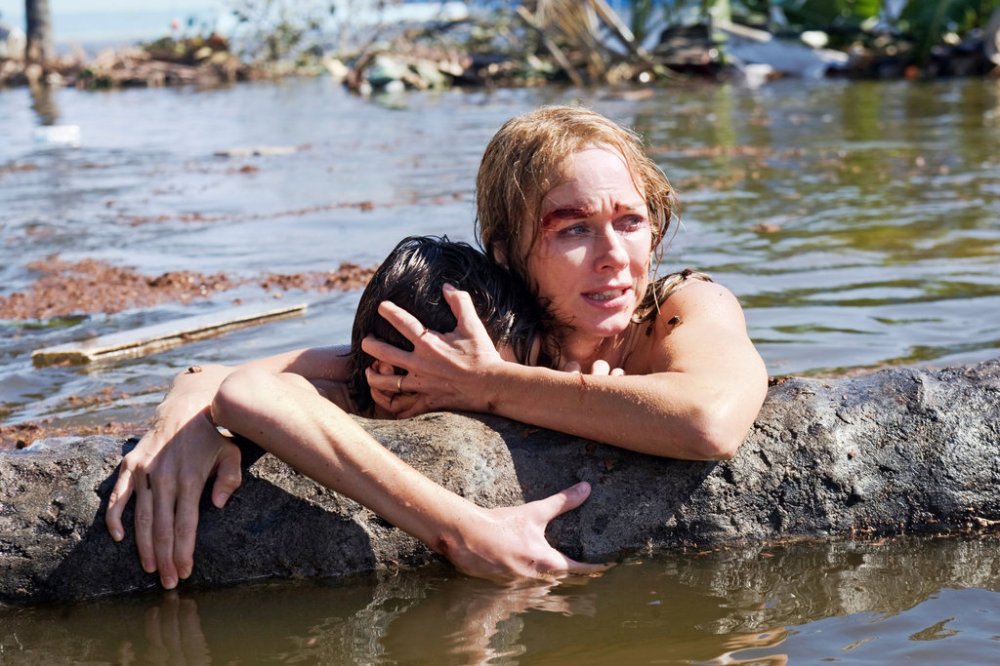
Naomi Watts on Portraying a Tsunami Survivor in ‘The Impossible’

Naomi Watts in The Impossible

WRITER’S NOTE: This article was written back in 2012.

Australian actress Naomi Watts gives an emotionally pulverizing performance in J.A. Bayona’sThe Impossible,” a film which chronicles one family’s struggle for survival in the aftermath of the 2004 Indian Ocean tsunami. In it, Watts plays Maria, a doctor who is staying with her husband and children in a beautiful resort in Thailand for the Christmas holiday. This vacation comes to a horrific end when the tsunami decimates the country’s coastal zone and separates Maria and her son Lucas from the rest of her family. The role has Watts dealing with her fear of water, playing a character based on a real-life person, and the immense difficulty of shooting in not one, but two giant water tanks.

While at the movie’s press conference which was held at The Four Seasons Hotel in Beverly Hills, Watts described playing Maria as being “the most physically, emotionally draining role” she has ever taken on since “King Kong.” Considering she has played such equally draining roles in “21 Grams” and “Mulholland Drive,” that’s saying a lot. After doing “King Kong” she said she would never take on a role like that again, but even she couldn’t say no this script or working with Bayona who made the acclaimed horror movie “The Orphanage.”

Unlike the tsunami sequence in Clint Eastwood’s “Hereafter,” the one in “The Impossible” was done with real effects and no CGI. This makes the sequence all the more harrowing to watch, and seeing Watts hang onto a tree for dear life while water keeps rushing furiously by here makes for one of the most emotionally intense sequences in any 2012 movie. In an interview with Steven Rea which was featured on the Philly.com website, Watts talked about what it was like shooting the sequence which itself took four weeks to complete.

“I didn’t know it was going to be so difficult,” Watts told Rea. “They had it all very well prepared – we had allegedly the second largest water tank in the world, and they had these giant cups that we were anchored into . . . so you were just above water level, you could use your head, and you can use your arms so you looked like you were swimming. . . . And you’re on this track, and then a giant wave was coming towards you . . . and then side pumps were shooting more water, and all the garbage and debris. . ..”

“So, it got increasingly difficult, and then we noticed that we couldn’t actually act, or speak,” Watts continued. “We were lucky if we could get one word out, and that word would be ‘LU-CAS!’ It was tough, and then the underwater stuff was even more difficult. That was very scary.”

You have to give Watts a lot of credit not just for the brave performance she gives, but also for how making this movie made her deal with her fear of water. This was not the result of watching “Jaws” several dozen times, but of a near drowning accident she had when a teenager. She related this story to NPR’s Melissa Block.

“When I was about 14, my family emigrated from England to Australia, and we decided to stop in Bali on the way through. And having grown up in England, we were not great swimmers and knew nothing about riptides,” Watts told Block. “Anyway, we got caught in a riptide, and I didn’t know what to do other than swim against it, and got to the point of exhaustion, and then just about gave up. But then my mother, somehow, miraculously found sand beneath her feet and just managed to pull me in. And so, as a result of that experience, I’ve always been afraid of the waves and strong currents, so it’s quite interesting that I ended up doing this.”

It’s very interesting indeed, and it makes you admire Watts all the more for playing this character. After learning about her near-death experience, it becomes clear the fear which crosses the actress’ face onscreen was not at all faked.

Another big challenge for Watts in playing this role was it was based on a real-life person, Maria Belon, who, along with her family, amazingly survived the tsunami which claimed thousands of lives, and she herself suffered some serious injuries which had her at death’s door a few times. It’s always intimidating to portray a person from real life, especially one who’s still alive and has been through an experience we are grateful not to have gone through ourselves. While at “The Impossible” press conference, Watts talked about what it was like to meet Belon.

“Originally when I met Maria, I was incredibly nervous and I didn’t know where to begin. I felt like, I’m just an actor and you have lived through this extraordinary horrendous thing, and I just don’t know where to start,” Watts said of their first meeting. “But we sat there in front of each other for five minutes, she didn’t feel the need to speak and I couldn’t, and then she started just welling up and the story was told just through a look. I started welling up and then we just thought okay, let’s get on with this, and she continued to speak for three and a half hours and time just went by like that.”

“She stayed with me the whole time,” Watts continued. “I don’t just mean physically, but we were connected. We sent emails back and forth, and she would write endless letters about all the details that took place. The thing that she talked about was her instinct and her ability to trust herself which I think we lose so often. I feel like I am full of self-doubt and second guessing which is why this story becomes an interesting one because you wonder how you would deal with this.”

Naomi Watt’s performance in “The Impossible” deserves a Purple Heart as much as it does an Oscar. As an actress, she appears to be plumbing the depths of her soul to pull off roles like this one, and I think she’s one of the bravest actresses working today. While she may be yearning to stay away from roles like this in the future, it’s hard to think of many other actresses who can go to the places she goes to portray raw emotion so honestly.

SOURCES:

Ben Kenber, “Interview with Naomi Watts On The Impossible,” We Got This Covered, December 19, 2012.

Steven Rea, “Naomi Watts endured physically harrowing work for ‘The Impossible,’” Philly.com, December 20, 2012.

Melissa Block, “Naomi Watts, Mulling ‘The Impossible,’” NPR, December 12, 2012.

Mia Wasikowska Fearlessly Dives Into the Dark Side in ‘Stoker’

Mia Wasikowska in Stoker

WRITER’S NOTE: This article was written in 2013.

After watching her in Tim Burton’s “Alice in Wonderland” and seeing her portray the highly intelligent daughter of Annette Bening and Julianne Moore in “The Kids are All Right,” Australian actress Mia Wasikowska goes from lightness to darkness in “Stoker.” In it she plays India, a mysterious, dark-haired teenager whose father has just been killed in a car accident on her 18th birthday. Throughout the movie we see India trying to deal with both her emotionally unstable mother Evelyn (Nicole Kidman) and her enigmatic uncle Charlie (Matthew Goode) who has arrived to stay with them. Thanks in large part to Wasikowska, India is one of the most original and haunting teenage characters to appear in movies in quite some time.

It’s fascinating to watch Wasikowska’s transformation in “Stoker” as there is very little trace of the good-natured characters she has portrayed previously. Even her work in “Jane Eyre” felt like a fairy tale compared to the creepy nature of this film. Going into it, I wondered if Wasikowska was really looking to distance herself from the roles she has played in the past. It turns out she was, but in an interview with Helen Brown of The Telegraph, she also said it was because she was drawn to the character’s ambiguity.

“You don’t know if India’s a hero or a villain, the hunter or the hunted,” Wasikowska told Brown. “The film toys with your perception. It’s a weird love triangle between a mother, an uncle and a daughter. That feels very modern and very classic, at the same time.”

“It’s less about evil being in the bloodline than an idea of evil as contagious,” Wasikowska continued. “I think violence is something that catches on. I was interested in something India’s father says: ‘Sometimes you have to do something bad to stop you from doing something worse.'”

I loved how Wasikowska avoided making India seem like the average sullen, anti-social or Goth-like teenager we’ve seen in so many movies and TV shows. There’s something about India which feels wholly original, and it is a wonderfully complex character you spend all of “Stoker” constantly trying to figure out. Wasikowska explained to Brown what she was aiming for when she decided to play India.

“Stereotypes are much more prominent in teen movies,” Wasikowska said. “As a teenager, it’s more attractive to watch something you don’t necessarily feel you are, to watch movies about pretty people in love. But it was always exciting for me to find roles that gave me an opportunity to express what I felt was the more realistic side of teenagers.”

The most memorable scene in “Stoker” comes when Uncle Charlie joins India on the piano for one of the most exhilarating duets ever filmed. The whole moment feels like a cross between the “Dueling Banjos” scene from “Deliverance” and David Helfgott playing Sergei Rachmaninoff’s blisteringly difficult Concerto No. 3 in “Shine;” it’s a moment of harmony combined with a psychological unraveling which reaches a fever pitch. This is a movie scene I will be studying for a long time, and while talking with The Hollywood Reporter’s Rebecca Ford, Wasikowska described what it was like filming it.

“That’s sort of one of the scenes that you’re always anticipating during the shoot,” Wasikowska told Ford. “It was almost my favorite one to film, because we had the music there, playing really loudly for us, and then, to a certain extent, I felt like I didn’t have to do anything because so much of the emotion and the feeling was in the music, and if I just sort of surrendered to that, it was all there.”

“Stoker” marks the English-language debut of South Korean filmmaker Park Chan-Wook who is best known for his “Vengeance Trilogy” of movies which includes “Sympathy for Mr. Vengeance,” “Oldboy” and “Sympathy for Lady Vengeance.” Both he and Wasikowska worked closely together on India to make sure they were on the same page throughout filming, and Wasikowska told Ford they kept sending each other pictures back and forth through email which helped to illustrate their thoughts on the character.

“Some of the images were from India’s perspective, so things that I thought would explain the way that she sees the world,” Wasikowska said. “And then the other images would be something that had an essence of her physicality or her emotionally, so that was really helpful.”

Now with a movie as dark and disturbing as “Stoker” is, you would think the atmosphere on set would be very serious as to not break the mood of the piece. But as we found out on this movie and many others before it, the dark nature of the script was counterbalanced by a lot of humor amongst the cast and crew. Wasikowska made this abundantly clear to contactmusic.com while at a press conference.

“I’ve often found on the films that have a more serious nature, the more light-hearted and silly and goofy it becomes in between the scenes out of necessity to counter the intensity of the scenes and material,” Wasikowska said. “I felt like we were pretty good at that!”

Watching Mia Wasikowska in “Stoker” gives you an idea of what great work lies ahead for her. Here she digs deep into a character she hasn’t previously portrayed, and she completely disappears into the part as a result. While India is still a hard character to figure out at the movie’s end, it is Wasikowska’s journey into the role which renders it all the more fascinating.

“The best way to explain it is when I’m filming, I have a definite story that I follow for her, but then when I finish and I let go of the project a bit, it’s sort of up to interpretation,” Wasikowska said. “So one of the interesting things has been seeing how people have interpreted her (India) and her character in the story. And the only thing that’s consistent is how different everybody’s opinion is of her.”

SOURCES:

Helen Brown, “Stoker’s Mia Wasikowska, interview: ‘It’s a weird love triangle between a mother, an uncle and a daughter…,'” The Telegraph, March 1, 2013.

Rebecca Ford, “‘Stoker’s’ Mia Wasikowska on Her Mysterious Character and Sexualized Piano Playing,” The Hollywood Reporter, February 28, 2013.

Mia Wasikowska: ‘Stoker’ shoot was fun,” contactmusic.com, February 28, 2013.

Juno Temple on Getting Seriously Greedy in ‘The Brass Teapot’

Juno Temple in The Brass Teapot

WRITER’S NOTE: This interview took place in 2013.

The wonderful Juno Temple has left an indelible impression in movies like “Atonement,” the controversial “Killer Joe,” and as Selina Kyle’s BFF in “The Dark Knight Rises.” Now she gets to move up to a starring role in Ramaa Mosley’s “The Brass Teapot” in which she plays the happily married Alice. She and her husband John (Michael Angarano) are madly in love with each other but also seriously broke, and she is desperately looking for a job but is constantly turned down for other applicants who have more experience, usually in the form of a master’s degree. But one day she discovers a beautiful brass teapot at an antiques store which ends up spewing out money whenever she hurts herself, and from there Alice does everything she can to generate all the money she and her husband could ever need.

I got to catch up with Temple during a roundtable interview at “The Brass Teapot’s” press conference which was held at the SLS Hotel in Beverly Hills. She described Alice as being a “confused creature” because while she is not doing well financially, she does have a wonderful husband to lean on during tough times. Temple talked about the similarities and differences between her and Alice and how they each came to inform the way she played this character.

Juno Temple: It’s interesting for me because she’s someone that I find myself very different from, but that’s the challenge isn’t it? That’s the joy of being an actress. At the beginning she can’t see what is in front of her. She just can’t open her eyes and see that actually, in the grand scheme of the universe, she’s bloody lucky. She’s very ambitious and she expects a lot more for herself, and she’s frustrated that she is not where she thinks she should be at. So, her ego is kind of hurt and she’s almost embarrassed to be who she is which I understand, but it’s almost like c’mon, look at this amazing husband you have! Look at this person who adores you, and people can only dream of people that look at you that way sometimes.

Now once the brass teapot, which Temple described as being “magical, mythical and a devil,” comes into the picture, Alice undergoes a major switch as she and her husband acquire a wealth which has long been denied to them. She becomes insatiably greedy as they stand to make so much money through the pain and misery they willfully inflict on themselves and each other. As Temple continued to talk, I really came to admire the objectivity she had about Alice and how the character fits into the overall story.

JT: It’s interesting because she almost kind of deserves to go through what you go through to open her eyes to reality a little bit because I think she’s being a bit lazy with the teapot. The whole joy of booking a job as an actress, auditioning and then coming back and maybe doing a screen test and then actually getting cast and then getting to shoot the same for real, is you earn it. You earn that moment and it’s joyous. With Alice, she’s getting in a muddle that she thinks that this money is hers, but actually it’s the teapot’s and it’s feeding off some really, really important emotional nasty shit that is inside of this couple and giving them money. But actually, it’s destroying these people and give them what they think is awesome and useful and makes life like a good thing like a big house, posh dresses, nice dresses, etc. In the end, she really takes it too far.

The other great thing about Alice as a character is she does have an arc. In acting classes, teachers tell their students to map out the journey the character they are playing has in a play or script. Each character starts off at a certain point and ends becoming a different kind of person at the conclusion, and as an actor you need understand where your character is going from start to finish. This way it becomes not about the end result but more about the journey you take when you finally come to play your character on stage or screen. Temple took the time to describe the journey Alice has in “The Brass Teapot” and of where it eventually leads her to.

JT: I like the arc that she has because she really does learn about herself. It’s almost like she grows up from being a child to a grown-up, and I think it’s ultimately a story about love and about someone really, really loving someone else and helping someone through this crazy addiction, and love kind of conquering everything, I guess.

Speaking of addiction, Temple did quite a bit of research into drug addiction as she felt Alice was essentially an addict herself. The teapot of the movie’s title is an object of greed as well as a narcotic of the most inviting kind. Once it has a grasp on Alice, it almost completely consumes her and her husband in the process.

JT: What I learned about it was that you cannot control it. Your body becomes completely dependent on it that it almost hurts to get rid of it. So that was a really interesting thing for me of it almost being a painful process to sever the tie between her and the teapot. But the tie between her and her husband wasn’t as painful. Drug addiction destroys a lot of relationships, and sometimes it can create new relationships when people get it out of your lives. That was a major research thing for me and a major thought behind it.

But while “The Brass Teapot” deals with the dangers of an addiction, Temple is quick to stress the movie is really a comedy with a lot of humor. It’s a fable at its heart of how money can change you, but it can’t make you happy all the time. Temple is a joy to watch throughout as she takes Alice from being a frustrated and unemployed young woman to an endlessly greedy human being willing to do anything to keep those dollar bills flying in.

As the interview came to an end, she shared with us what keeps her going as an actress.

JT: We’re all in this business because we love it, because we’re passionate about it. If it’s a 20-hour day, tomorrow could be another one, but guess what? There’s a weekend coming. I think you’re in it for the right decisions if you’re willing to do a 20-hour day, and if you need a few extra tears are just going to ask them to wait for 15 minutes. I definitely want to be at giving actress and that’s something I really, really, really treasure.

CLICK HERE TO CHECK OUT THE EXCLUSIVE INTERVIEW I DID WITH THE DIRECTOR OF “THE BRASS TEAPOT,” RAMAA MOSLEY, WHICH I DID FOR WE GOT THIS COVERED.

Selena Gomez Reflects on ‘Spring Breakers’ and Ditching Her Good Girl Image

Spring Breakers Selena Gomez

WRITER’S NOTE: This article was originally written in 2013.

There comes a time in a young Disney star’s life when they are faced with the great challenge of transitioning from being a child actor to an adult one. Many are not able to make this switch because either their talent only goes so far, or their fans just don’t want to accept them as anything else. Anne Hathaway managed to go from playing a nerdy princess in “The Princess Diaries” to portraying a single mother forced into prostitution in “Les Miserables,” and she won an Oscar in the process. Now Selena Gomez gets to shed her good girl image in Harmony Korine’s controversial film “Spring Breakers.” After playing the outgoing Alex Russo on “Wizards of Waverly Place” for several years, she gets to join three other young actresses on a holiday of drunken debauchery.

Gomez plays Faith, an evangelical Christian who is encouraged by her three friends Brit (Ashley Benson), Candy (Vanessa Hudgens) and Cotty (Rachel Korine) to go with them to Florida for the spring break holiday. The fact her friends end up robbing a restaurant located near their college to get the money for this vacation doesn’t seem to faze Faith much as she looks forward to going wild and releasing all her inhibitions. Once there, the girls have the time of their lives as they party like there’s no tomorrow, and they never want the party to end.

It turns out it was Gomez’s mother, Amanda Dawn “Mandy” Cornett, who brought the script of “Spring Breakers” to her attention as she was already a big fan of Korine’s movies. From there, Gomez watched his movies “Gummo” and “Trash Humpers” as she traveled to Nashville to audition for him. In an interview with Justin Harp of Digital Spy, Gomez made it clear she had no reservations about working with the filmmaker who is known for shocking his audiences and pushing the envelope so to speak.

“I was excited and enticed to work with Harmony,” Gomez told Harp. “When I auditioned for Harmony, we talked about how he wanted to leave my lifestyle behind and have me go on this adventure with him. I knew it was going to be crazy, but I was comfortable with it. Harmony wanted an innocence because he thought it would be creepier. I agree with him.”

For any human being, be it an actor or otherwise, it is always scary to step outside of your comfort zone. One has to wonder what it was like for Gomez to step outside of entertainment geared towards children and to take on something far more risqué with “Spring Breakers.” But for an actress who started off her career with an episode of “Barney and Friends,” Gomez told Zorianna Kit of Yahoo! News she very much enjoyed the change of pace this role had to offer.

“It was completely liberating,” Gomez told Kit. “Up until this film, everything I’ve been a part of definitely has been a bit more processed, like how many pieces of jewelry I have on, what my hair looks like. With Harmony, I never wore makeup and he never cared about my hair.”

“I feel like I did grow up shooting this,” Gomez continued. “This was the first movie I shot by myself without my mom coming. It was the first time I got to improvise as much as I have.”

Korine ended up throwing Gomez and the other actresses into a real spring break holiday where everyone was getting obscenely drunk, going crazy and tearing up their hotel rooms without any remorse. This must have seemed incredibly terrifying for the cast and crew as they were dealing circumstances they could not easily control. But despite the majority of the participants being drunk beyond all repair, Gomez told Harp that things were actually pretty cool on set even as she wore little more than a bikini.

“When we did the spring break scenes, we were surrounded by hundreds of spring breakers in bikinis who wore even less, so that was okay,” Gomez said. “I was more uncomfortable in the scenes where I was getting arrested, in jail and in the pool hall with strangers. It added vulnerability and helped me feel grossed out, which was what my character is supposed to feel.”

But despite how crazy things got while filming “Spring Breakers,” Gomez still formed a very close-knit bond with her fellow co-stars. Now sometimes on a film like this, you would expect there to be a lot of catfights between actresses, but that was not the case on this one. Perhaps many just wish it was the case as it makes for press which generates a lot of page views, but Gomez made clear to Marlow Stern of The Daily Beast just how devoted she is to her fellow cast members.

“These girls have my back till death,” Gomez told Stern. “They’re so amazing, sweet, and protective. We did a lot of partying in the movie, so after we partied for 18 hours straight on set, we would like to go home, have great food, and watch movies. We’re not nearly as crazy as they are in the movie.”

Whether or not her role as Faith in “Spring Breakers” comes even close to gaining her any Oscar consideration, Selena Gomez has certainly picked the right project to make it known to the world she is in show business to stay. While she intends to spend more time in 2013 focusing on her music career, she is co-starring with Ethan Hawke in the upcoming action film “The Getaway.” The transition from child actor to adult actor may remain a very difficult one to make, but Gomez sounds intent on making it happen for her.

“The transition is a little weird, but I’m honored to be a part of things that allow me to grow,” she says. “I want to continue doing that, and if it works out and people like it, that’s awesome, and if not, I’m trying to do all I can. I’m just hoping for the best!”

SOURCES:

Justin Harp, “Selena Gomez on ‘Spring Breakers’: ‘I left my lifestyle behind,'” Digital Spy, March 25, 2013.

Zorianna Kit, “A Minute With: Selena Gomez about growing up with ‘Spring Breakers,'” Yahoo! News, March 20, 2013.

Marlow Stern, “Selena Gomez on Playing a Bikini-Clad Vigilante in ‘Spring Breakers,'” The Daily Beast, March 20, 2013.

‘Judgment at Nuremberg’ Anniversary Screening at New Beverly Cinema

Judgment at Nuremberg movie poster

Stanley Kramer’s classic movie “Judgment at Nuremberg” got a very special screening at New Beverly Cinema on October 1, 2012. At the time, the movie was celebrating its 51st anniversary, and introducing it was Stanley’s widow, Karen Kramer. She took the time to talk not just about “Judgment at Nuremberg,” but also of her husband’s other work and the impact his films have had overall.

Karen was actually at the Cinerama Dome in Hollywood the night before where they were showing another of her husband Stanley’s best-known works, “It’s a Mad, Mad, Mad, Mad World.”

“That film was all about greed,” Karen said. “And of course, globally we thought that was bad in 1963 when that film was made. But of course, globally now it’s become a national pastime.”

“Judgment at Nuremberg” is a different film, Karen said, and one which audiences of all kinds owe it to themselves to see again and again. Like “It’s a Mad, Mad, Mad, Mad World,” this movie is as important to watch today as it was when it first came out.

“I don’t think any of us thought that genocide would ever exist again after World War II,” Karen said. “We knew all the facts and we knew all the heinous crimes that had been committed, but genocide unfortunately is running rampant again. So, this film is unfortunately very relevant (to today’s world events).”

Stanley had made “Judgment at Nuremberg” 14 years after World War II ended, and back then no studio wanted to make it and he had a very difficult time raising the money for its production. But Karen said Stanley thought it was very interesting to explore what happened with the judicial system during that time. The movie was inspired by the trail of four German Judges at Nuremberg who were tried for crimes perpetrated by the Nazi party. The question, however, becomes one of whether or not these particular Judges were fully aware of what Adolf Hitler was doing to the Jews.

“This (trial) is the one he chose because the judicial system was supposed to represent globally men of honor, men with education, men who were supposed to be fair to humanity, and these men of the Third Reich sanctioned all those heinous crimes,” Karen said. “But then I wonder about this and I think, yes of course they’re guilty but then you think about their position which was also explored in this film; if you were a member of a judicial system of the Third Reich, what would happen if you said no, I’m not going to participate? Would you lose your life, your reputation, your financial security? I suppose there was pressure put upon these men, but it doesn’t make it right.”

Karen was correct in saying Stanley explored this subject very well in “Judgment at Nuremberg.” The movie was nominated for 11 Academy Awards and Stanley himself got a Best Director nomination. It took home two Oscars, one for Maximilian Schell who won for Best Supporting Actor as defense attorney Hans Rolfe, and the other for Best Adapted Screenplay written by Abby Mann. Stanley made over thirty movies which were mostly socially conscious films, and they garnered over eighty Oscar nominations. Karen remarked how Stanley himself never got an Oscar, but that he did receive the Irving Thalberg Award which is the most important award anyone can get from the Academy of Motion Picture Arts and Sciences.

Karen went on to tell a story about Montgomery Cliff who gives an astonishing performance as Rudolph Peterson and of how he had trouble remembering his lines on the day his scene was shot.

“Stanley and Spencer Tracy (who played Chief Judge Dan Haywood) got together and they said look, I think we can handle this but a little bit differently,” said Karen. “So, Spencer went over to Montgomery and said look, I know you can’t remember the lines but you know what this scene is about. I’ll sit very close to the camera and just look into my eyes and just play from the heart, which of course he did.”

Karen also talked about Judy Garland whose performance as Irene Wallner garnered her an Oscar nomination. Clift did his performance on the stand first and then Garland did hers, and Clift came to watch Garland perform.

“I think he wanted to make sure she wasn’t better than he was, but that’s how actors were then,” Karen said. “So, he’s watching this and he’s crouching down in a corner someplace watching her perform, and he’s crying and she’s crying. He’s just undone and the minute she finished of course everyone applauded her, and he just went over to Stanley and he says, ‘you know Stanley, she played it all wrong!'”

Karen said “Judgment at Nuremberg” is one of her late husband’s better films and that he used film constantly as a tool or weapon to fight against discrimination, bigotry and man’s inhumanity. She also made it clear how Stanley didn’t make a movie unless it had something to say.

“He didn’t think of himself as a message filmmaker which is what interested him, and he took risks,” Karen said. “His life was threatened often, and when we made ‘Guess Who’s Coming to Dinner’ our lives were threatened because interracial marriage was against the law in sixteen states when he made that movie. He was always questioning things like in ‘High Noon;’ he would question standing up even if you’re alone to do the right thing even if people don’t support you. He often risked his financial security and his reputation to tell his stories.”

A big thank you to Karen Kramer for taking the time to talk about her late husband Stanley Kramer and this movie of his which continues to stand the test of time. “Judgment at Nuremberg” is as riveting to watch today as it was when it first came out a half a century ago. Don’t let the black and white photography turn you off of seeing this classic film because the issues it ponders are the same ones we are forced to deal with today.

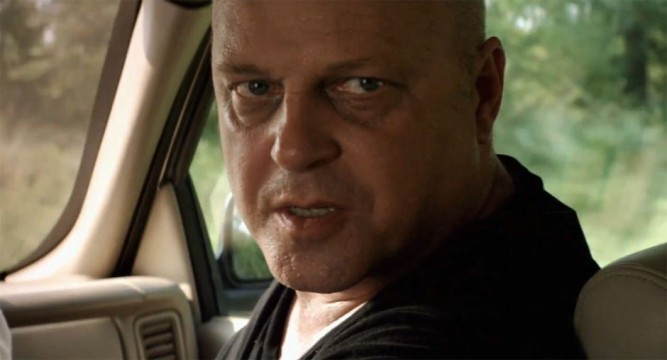
Michael Chiklis Talks About His Acting Career and ‘Parker’

Michael Chiklis in Parker

WRITER’S NOTE: This article was written in 2013.

Michael Chiklis has been a very busy actor lately. Ever since the transformation his career took when he played Vic Mackey on “The Shield,” he has gone on to appear in two “Fantastic Four” movies as the Thing, and he now stars alongside Dennis Quaid on the CBS television show “Vegas.” But now he’s back on the silver screen in “Parker” which stars Jason Statham and is directed by Taylor Hackford, and in it he plays the vicious bank robber Melander. Chiklis has become one of the few actors working today who can go from television to film and from playing a hero to portraying a villain with relative ease. Many actors get typecast to where audiences won’t allow themselves to see them as anything else, and this is why we admire Chiklis because he appears to have completely bypassed that hurdle.

I got to catch up with Chiklis when he was at the press conference for “Parker” which was held at the Four Seasons Hotel in Beverly Hills, California. He told us he would soon be directing an episode of “Vegas,” but this is nothing new for him as he previously directed episodes of “The Shield.”

Michael Chiklis: I have fun with it. I deliberately boss everybody around… No, I’m kidding. I don’t make a big deal of it. It’s usually I take a lot of gut from my fellow actors because they want to give you a hard time. It’s to be expected and I just take it.

One of the reporters told Chiklis that Melander is “a real dick,” and he responded to this description with a big laugh. It was never lost on the actor how his character was a complete bastard, and he reveled in the opportunity to play a full out bad guy. While Vic Mackey from “The Shield” may have been an antihero, Melander has no redeeming qualities whatsoever.

MC: This guy’s a malevolent prick and great. I can just sort of unabashedly get to be a dick which is fun. When you get to do that in real life? You don’t unless you want to be a pariah. One of the wonderful things about being an actor is you get to walk a mile in another man’s shoes, and the other great thing is that you get to step out of them and not be in the shoes anymore. It was wonderful to sort of step into a pair of shoes of a guy who’s all about himself; a narcissistic, sociopathic douche bag and just let that be.

Since he’s become known for playing such hard boiled or douche bag-like characters, it is tempting to think Chiklis is not much different from the ones he played on “The Shield,” “Vegas” or “Parker.” But he didn’t need to convince us he isn’t because if he was like Melander in “Parker,” he would be in jail or even on death row. Chiklis does get a kick out of how people can mistake him for the characters he has played, but it’s clear he’s not out to live up to this image we have of him either.

MC: I think Vic Mackey in particular had an effect on people. I’ve had grown men shake my hand like this (and he showed their handshakes to be full of nervous energy), and I’m like, oh dude it’s all right, I’m not gonna hurt you. That’s happened, but as the father of daughters that’s not such a horrible thing. There are benefits to that. Sometimes it’s scary though because some people really don’t have a capacity to separate truth from fiction. It is a movie and we’re actors playing parts, and I’m not fucking Vic Mackey, I’m not. I’m not a malevolent prick, I’m just not, but I have fun playing one and I’m sure I’ll play others in the future. I like to mix it up and play all kinds of people.

Like I said, Chiklis is one of those actors who can go from playing a good guy to playing a bad one, and we never doubt he will give a strong performance as either kind of character. All of us at this roundtable interview couldn’t help but wonder if he likes playing bad guys more than good ones, or if he likes playing both types of characters equally. But like any other actor, famous or not, Chiklis is not looking to play the same type of person over and over again.

MC: The reason why that’s true is because I don’t prefer to do one or the other. I like to all of that. I’m terrified of complacency and I do not like to be boxed in. I’ve always wanted be diverse, and the more diverse you are, the more of an opportunity you’ll have to play a wide variety of roles. Some people thrive in an area that they have their note in and their terrific at it, and they just sing the note all the way to the bank and good for them. That’s just not my way. I can’t do that.

Chiklis compared his interest in acting roles to his iPod which he said has music by The Tubes and Sergei Rachmaninoff on it. What he ended up saying made perfect sense as none of us like to listen to the same type of music all the time. We need variety, and it’s this same type of variety which Chiklis demands as an actor. Now most actors don’t get to indulge in any kind of variety, but he admits many give him strange looks when it comes to his taste in things.

MC: I have eclectic taste in film and television and musicals. People freak out because I went to see “Glengarry Glen Ross” when I was just in New York, and then the next night I was at “Newsies and they were like, what the? And I dig both because that’s life. I’d hate like hell to look at the same flower every day no matter how beautiful it was. It just makes to me a more interesting life and career, and I’m just blessed that I’ve been able to afford the opportunity to play these characters.

Now Chiklis didn’t always have this diversity in his career as for years he was known for being on the comedy-drama TV series “The Commish” which had him playing a suburban police commissioner in upstate New York named Tony Scali who worked through various problems with humor and creativity. This led to Chiklis to being typecast as a nice guy in film and television, and to him playing the same type of character in many projects like the ill-received television series “Daddio.” It took someone very close to make him realize what he had to do to change his future as an actor.

MC: A lot of the diversity in my career which I always desired, but I didn’t necessarily know how to attain, I credit to my wife because she made the statement to me years ago: it’s not incumbent upon the studios to reinvent you, it’s incumbent upon you to reinvent yourself. And I just looked at her and went that’s right, that’s correct and that’s brilliant. Actors become puzzle pieces in that he fits there, she’s fits there, and you can understand that. So, I was fitting in the rolly polly affable guy place for a lot of these people, and I couldn’t just expect them in osmosis to go like, oh yeah, Chiklis, bad ass mother fucker because they’ve never seen that from me. So, she simply pointed out, you want them to see you that way? You’ve got to show them that and you’ve got to demand that.

Demanded it he did, and Michael Chiklis’ acting career is now stronger than it has ever been. He plays a remorseless bank robber in “Parker,” and at the same time he portrays a Chicago mobster on “Vegas.” It doesn’t look like this actor will ever lack for a variety of roles at this point in his life, and this says a lot about his talent as well as his perseverance in an industry as fiercely competitive as this one is. More power to him!

CLICK HERE TO CHECK OUT THE EXCLUSIVE INTERVIEW WHICH I DID WITH MICHAEL CHIKLIS FOR THE WEBSITE WE GOT THIS COVERED.