‘Tron: Legacy’ Digs Deeper into the World of the Computer
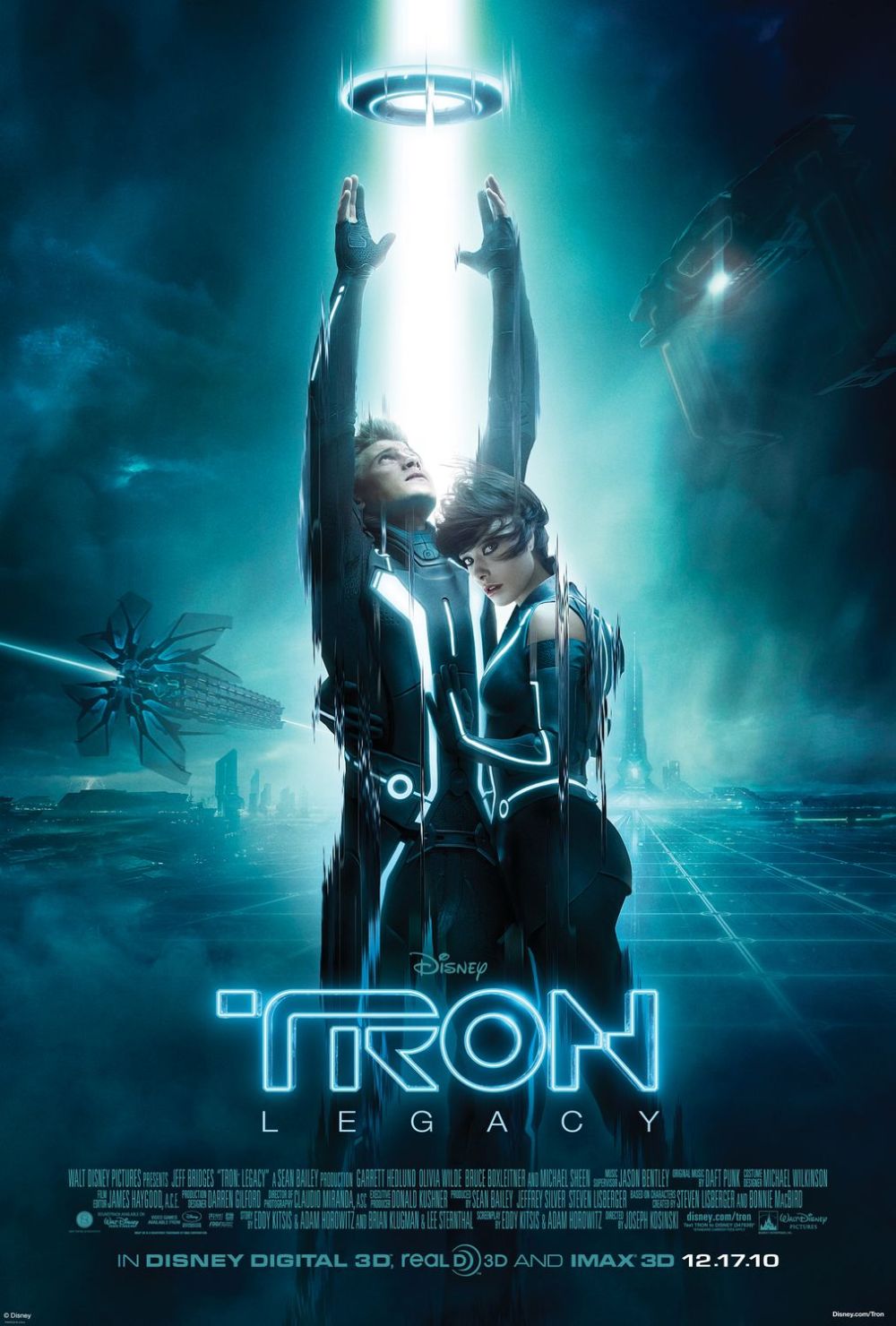
Tron Legacy movie poster

“There is no better moment than this moment, when we’re anticipating the actual moment itself. All of the moments that lead up to the actual moment are truly the best moments. Those are the moments that are filled with good times. Those are the moments in which you are able to think that it is going to be perfect, when the moment actually happens. But, the moment is reality, and reality always kinda sucks!”

-Lewis Black

I include this quote up above because it more or less symbolizes what I feel about the promotion Disney did for the long-awaited sequel to “Tron.” The company overhyped it to an alarming degree, making several different movie trailers and spent a good three years promoting it. With this kind of marketing, many may go into “Tron: Legacy” thinking it will be one of the greatest movies ever made.

As for myself, I weary of the hype and try to go into most movies with little to no expectations whatsoever. In fact, I think it’s better to watch most films with the lowest expectations possible. With the hype which has greeted movies like this or the “Star Wars” prequels or even “Indiana Jones and the Kingdom of the Crystal Skull,” it is way too easy to be incredibly disappointed by the finished product. Nothing ever does come out as well as it does in our imaginations.

Well, reality may suck, but “Tron: Legacy” did not. I walked in expecting a fun time, tickled to death Walt Disney Pictures even bothered to make a sequel to a movie which was not a huge box office success back in 1982. At the very least, this sequel, which has been in the making for over 25 years, is more of a continuation of what came before. What it may lack in a fully coherent storyline, it more than makes up for with amazing visual effects, a fantastic score by Daft Punk, and a pair of great performances from the always reliable, and no longer underappreciated, Jeff Bridges.

So, here’s the story behind “Tron: Legacy:” after saying goodnight to his son Sam, Kevin Flynn rides off to Encom to work on a new digital frontier which will revolutionize the world of technology. Instead, he disappears without a trace. Shift to more than 20 years later, and Sam has become a rebellious young kid with strong technology skills he gleefully uses to thwart the executives at Encom who intend to profit and exploit Flynn’s work, work which Flynn wanted to make available to everyone for free.

Alan Bradley (Bruce Boxleitner) comes to Sam’s domicile one night to inform him he got a page from his dad the other night, and that it came from a line at Flynn’s Arcade which has been shut down for 20 years. Sam goes to the arcade to see what’s what, and we all know what happens from there as he gets sucked into “the grid” the same way his father was, and he is forced to fight for his life by hurling discs and racing light cycles in games which are deadlier than ever.

The premise behind “Tron: Legacy” is actually quite interesting. Kevin Flynn ends up developing a more advanced version of his Clu program who, of course, looks exactly like him. Together, they work to create the perfect system meant to bring about a new kind of life form, but somewhere along the line Clu grew resentful and comes to see a world of perfection far more different than his creator does. Soon afterwards, Clu turns against Flynn, making himself the ruler of all programs, and Flynn is trapped inside “the grid” with no way out.

Throughout, we watch as Clu coldly eliminates those programs which do not meet his high standards. It’s an interesting Frankenstein motif in how a creation runs amuck despite the master’s best intentions, and we all know what this leads to). It also reminded me of a line from “Star Trek: First Contact” which the Borg Queen says, “You’re an imperfect being created by an imperfect being. Finding your weakness is only a matter of time.”

The visual effects are unsurprisingly amazing, and they clearly reflect how far technology has come since the 1980’s. This time, they are much more fluid to where not everything is shown going in a straight line, and this gives the action scenes far more friction than they had in the original. The use of dark and neon-like colors doesn’t feel dated, and the costumes have been given a much-needed upgrade. There’s no more of those bulky suits which Sark’s guards and the MCP had, and the digital world presented here is a dark one and very un-Disney like.

By having “Tron: Legacy” focus on Flynn’s son, it seemed like Disney was desperately trying to court the youth demographics and would have been happy to cast the hottest teen or young adult heartthrob the role. Garrett Hedlund, however, turns out to be quite good and holds his own with Bridges. It’s not a great performance, but he does solid work here and keeps his character from becoming some annoyingly whiny brat whose daddy issues get the best of him. He does, however, have the disadvantage of saying the movie’s cheesiest lines like “this isn’t happening” and “this can’t be good.”

Another actor I enjoyed was Olivia Wilde who plays the warrior program, Quorra. She is a strong and engaging presence here, and her role as a Data-like figure eager to learn about the real world leads to some of the movie’s more intimate, as well as some of its funniest, moments. And yes, she does kick serious ass in the action scenes, easily derezzing those evil programs without even breaking a sweat.

But one actor I truly got a kick out of was Michael Sheen who plays Castor, the owner of the End of The Line Club. Stealing every scene he is in, Sheen holds nothing back as he gleefully hams it up as the life of the party, completely unbound by the soulless machinery at his disposal. We never really did see a program like this in the original “Tron,” did we?

And then there is Bridges who remains one of my all-time favorite movie actors. His performance here reminded of just how good he was in the original as he never let the special effects overwhelm his work as Flynn. Even though he was acting against a green screen more than he wasn’t, he makes himself feel like part of the reality to where it seems like nothing is impossible for the Oscar-winning actor. Oh, and if you listen close enough, there is a line designed to remind you of his famous role as The Dude. Trust me, you will know it once you hear it.

Yes, “Tron: Legacy” does have plot holes and some wooden dialogue, but so did the original. Thankfully, none of the dialogue is as cringe-inducing as the kind George Lucas gave us in the “Star Wars” prequels. Also, the story does get slowed down by exposition which could have been shortened. All the same, I’m glad the writers didn’t get lazy and bring back the Master Control Program (MCP) as if it was never defeated back.

Joseph Kosinski made his directorial debut with this sequel. In the past, he has received acclaim for the “Mad World” commercial for the video game Gears of War, and he has since gone on to direct “Oblivion” and “Only the Brave.” For my money, he does a much better job of blending actors with special effects in a way Lucas never could, and he does well in keeping “Tron: Legacy” from becoming overly-cheesy or infinitely monotonous.

The soundtrack by Daft Punk is infinitely awesome, and the duo is a perfect fit for this kind of material which serves as their first official film score. Like the brilliant score Wendy Carlos did for the first film, their music is a strong mix of orchestral and electronic elements which, and brings a strong sense of humanity and emotion to a wholly technological world.

Could “Tron: Legacy” have been a better film? Sure, but why can’t we just be happy Disney took the big risk of making this sequel? For what it is, I enjoyed it and admired the fact it was made by people who respected its predecessor. More than two decades is a massively long period of time to wait for any sequel, but “Tron: Legacy” was worth the wait for me, and I would certainly be open to seeing it again.

Still, I have to wonder, can human beings really exist in a digital world even though they are users instead of programs? Can a program actually be brought into the real world? Oh, who cares! I had fun!

End of line.

* * * ½ out of * * * *

Exclusive Interview with Simon Curtis about ‘Goodbye Christopher Robin’

Goodbye Christopher Robin Simon Curtis

Filmmaker Simon Curtis gave us one of the best adaptations of the Charles Dickens’ novel “David Copperfield” back in 1999, he brought Marilyn Monroe back to life along with the help of Michelle Williams with “My Week with Marilyn,” and he directed Helen Mirren to one of her many great performances in “Woman in Gold.” Now he gives us his latest directorial effort, “Goodbye Christopher Robin,” which looks at the creation of Winnie-the-Pooh and the other characters who inhabit the 100 Acre Wood. But while it looks to be a simple biopic focusing on the creation of classic literature, it also proves to be an examination of the scars war leaves behind, the importance of having a regular childhood, and of the damages fame can cause before others can realize it.

I got to speak with Curtis while he was in Los Angeles recently, so please feel free to check out the interview below.

Goodbye Christopher Robin poster

Ben Kenber: From a distance, this movie looked like it would be a simple story of how A.A. Milne came up with Winnie-the-Pooh, but what I really liked though was how the story developed from the effects of fame to a childhood being stolen. Was this inherent in the screenplay (written by Frank Cottrell-Boyce and Simon Vaughan) when you first read it?

Simon Curtis: That’s a good comment. Yes is the answer. I loved the script from the get-go because you think it’s going to be exactly that, but it is about so many other things: family and creation and the impact of war. And yes, Christopher Robin was almost like the prototype child celebrity. And to be fair to the Milne family, it was such an unknown territory. They couldn’t have predicted that the stories would become so popular and the attention it would bring to the boy.

Ben Kenber: There’s no way they could have been prepared for it, and this is what makes A.A. Milne and his wife, Daphne, so incredibly complex. On one hand, you want to get mad at them for robbing Christopher of his childhood, but at the same time, they both come to realize the damage being done. But by the time they stop it, it is too late.

Simon Curtis: Yes, that’s right.

Ben Kenber: I found it very fascinating, and I liked how the movie deals with the PTSD flashbacks. If you’re in a theater with really good sound, you feel the impact of each bang and balloon pop.

Simon Curtis: Yeah, you do. I was trying to make the point that war doesn’t only impact on the men and the women who fight in the war, but their families and their descendants as well. So, the boy is a victim of World War I even though he wasn’t born until it ended.

Ben Kenber: When it comes to introducing the stuffed animals, I loved how Margot Robbie and Domhnall Gleeson introduced them. She had the voices, and he came up with Eeyore’s name. Was there anything about the stuffed animals which you wanted to include in the movie but were unable to?

Simon Curtis: I don’t think so. I love how it’s this almost accidental thing that they buy bear at Harrods or wherever it was, and suddenly it becomes this iconic thing. One of my favorite moments, in terms of when she first gives him the tiger and she says “happy” and then she hands it to him. Then the father says, “Well what should we call it?” “Tigger.” “Why?” “Because it’s more tiggerish” (laughs). It’s just lovely writing.

Ben Kenber: It is. The names all come by accident. It is not some pre-destined thing.

Simon Curtis: Absolutely. They were just little puppets, and that’s the great thing about art. There’s a surprising element to it.

Ben Kenber: A.A. Milne is very eager to say something about war and reality. The interesting thing is, in terms of the way the Pooh stories were written, he found a way of dealing with reality of writing readers with an escape from it.

Simon Curtis: Yes, good.

Ben Kenber: The young actor who plays Christopher Robin Milne, Alex Lawther, was excellent, and he is a very tough role to play here as you see him revel in seeing this stuff animals come to life, and yet he is thrust into a spotlight you couldn’t be less prepared to deal with. Was it hard casting this role?

Simon Curtis: It was lengthy. But I cast a nine-year-old boy would never acted before, do you know that was? Daniel Radcliffe (Curtis cast him in “David Copperfield”), and he had never acted before, so that gave me some confidence. But this boy Alex was a joy and a gift. He was fantastic.

Ben Kenber: Domhnall Gleeson brings a lot of depth to this role.

Simon Curtis: He does.

Ben Kenber: He has scenes where he says one thing, but his eyes have to say something else. How do direct an actor in scenes like those?

Simon Curtis: I don’t know is the answer. You just try to make every scene as good as possible and help the actor to do their best work, and Domhnall is one of those actors who thinks a great deal about it in advance. It brings a lot to the dad, and he was a real partner. The film improved because of his work in the scenes and elsewhere.

Ben Kenber: Margot Robbie has a very tricky part to play here because in some cases the audience may find her to be not for a likable, but she does come across as a very loving mother. It’s a British thing that they hold back. Some of my friends said Daphne is not very likable.

Simon Curtis: But that’s missing the point because that’s the way people were. Not everyone has to be likable in the world, and that’s the way people were mothers in those days. They had the baby, handed it over to a nanny, and waited for the wedding.

Ben Kenber: I always tell people it is not a question of whether a character is likable or not in a movie. It’s whether or not they are interesting.

Simon Curtis: Exactly.

Ben Kenber: Robbie’s performance is really good because she delves into the unlikable parts of her character, but you never doubt the love Daphne has for her son.

Simon Curtis: Yes, and she doesn’t shy away from it. She has such natural warmth herself as a woman, and that kind of balances it out on another level.

Ben Kenber: For many years, there has been a long battle between the Milne family and Walt Disney over the rights to the Winnie-the-Pooh stories. Was this something you considered including in this film?

Simon Curtis: No because that’s in the future, that story.

Ben Kenber: The movie’s ending could have been too sentimental with two characters hugging, but they don’t hug and I like that they didn’t because it would’ve seemed too manipulative.

Simon Curtis: Yeah, that’s England. Someone said astutely I thought how in England we are the world storytellers from Shakespeare to JK Rowling, but we can’t say I love you to our kids (laughs).

Ben Kenber: I loved the scene where A.A. Milne tells Christopher you will not write another word about Winnie-the-Pooh. The way the same was played was brilliant because it’s straight to the point.

Simon Curtis: I agree. That was Domhnall’s idea for him to be seated and looking up at Christopher who is standing. It was a really good idea. As a director I look like a genius, but it was totally the actor’s idea.

Ben Kenber: Do you give a lot of freedom to your actors?

Simon Curtis: Yeah. Plus, to be perfectly honest, there are so many little things, you can’t have them all solved in your head.

Ben Kenber: The stuffed animals we see in this movie are replicas of the original ones which are now part of a museum exhibit in New York. Did you have any issues with Disney over the rights to show these stuffed animals here?

Simon Curtis: I don’t think so in this case because they all predate Disney. They are not Disney. Winnie-the-Pooh doesn’t have his little red vest. We just wanted him to be this Victorian toy.

Ben Kenber: Were there any dramatic liberties you took with the factual material?

Simon Curtis: Well I think the fame comes much more quickly than a probably would’ve done, so it was that sort of thing.

Ben Kenber: The movie takes a real left turn when the books become incredibly popular, and the sun becomes an unwitting celebrity to where A.A. Milne begins to question the effect fame is having on Christopher.

Simon Curtis: I love that scene where he thinks he is speaking to his dad on the phone, and it is revealed to be a radio interview.

Ben Kenber: It is such a painful moment because you see in the dad’s eyes that he really shouldn’t be doing this.

Simon Curtis: That’s exactly right.

Ben Kenber: Kelly Macdonald’s character of the nanny, Olive, is wonderful as she serves as the Mary Poppins of this story.

Simon Curtis: She is certainly the emotional heart of it.

Ben Kenber: How did you come to cast Macdonald in this part?

Simon Curtis: Well she did a play with my wife about 10 years ago so I’ve always loved her work, and she just struck me as the perfect person at the perfect time.

Ben Kenber: I like how you portrayed England as still recovering from World War I.

Simon Curtis: Very much so, and I think it chimes in now because it feels like were living in wounded times now.

Ben Kenber: Was that something you planned?

Simon Curtis: It just happened in a way.

Ben Kenber: There are a number of things about A.A. Milne I didn’t know before watching this movie such as the fact he was a soldier and a playwright.

Simon Curtis: Yeah, I didn’t know he was a successful playwright.

Ben Kenber: At the beginning of the movie, A.A. Milne does not look the least bit prepared to be a parent. It’s almost like the movie “Kramer vs. Kramer.”

Simon Curtis: Yes, it is. We talked about that actually. There’s the first breakfast and then there’s the expert breakfast in “Kramer vs. Kramer.”

Ben Kenber: The arc of this movie goes from father and son being strangers to them coming together and then later becoming estranged from one another.

Simon Curtis: The thing that bonded them became the thing that tore them apart.

Ben Kenber: The segment where Chris for a sent off to school was handled very quickly. Was this a segment you ever wanted to expand on?

Simon Curtis: Not really because the last thing you want at that point in the film is to be slow.

Ben Kenber: “Goodbye Christopher Robin” has a running time of 107 minutes. I usually expect biopics like this one to go one for over two hours as filmmakers seem desperate to get every little about their subject’s life onto the silver screen. Did you ever feel this pressure when making this movie?

Simon Curtis: I don’t know really how to answer that. I was just doing the script.

Ben Kenber: This movie is dedicated to Steve Christian. Can you tell me more about him?

Simon Curtis: He was one of the producers who supported this script through years of development and who unfortunately passed away after he saw the first cut.

Ben Kenber: Well, it’s nice to know he did see a cut of the film.

Simon Curtis: Yes, it is nice.

Ben Kenber: The way I see this movie, I feel it is about the long journey to happiness. When father and son come together again, they realize to get to a point of happiness, they have to experience a lot of sadness and pain in order to better appreciate joy.

Simon Curtis: To me, the theme is pay attention to your loved ones while they are around because they won’t be around forever. And also, we punish ourselves over getting this or getting that done, and actually just being with your loved ones is the greatest gift of all. Somehow, that’s embedded in the film. I’m so glad when my kids were young because it was before these (cell)phones because I would’ve been totally on them the whole time.

Ben Kenber: In the movie’s postscript, it is revealed A.A. Milne did get to write his anti-war piece. Was this something you wanted to include in the movie as well?

Simon Curtis: Yeah. He didn’t intend to be known only as the writer of Winnie-the-Pooh. There’s a quote (by A.A. Milne) in the “Goodbye Christopher Robin” book introduction by Frank Cottrell-Boyce. Just read that.

Ben Kenber: “…little thinking

                     All my years of pen-and-inking

                    Would be almost lost among

                    Those four trifles for the young.”

Simon Curtis: Yeah. In fact, it’s not almost, it’s now completely. So that’s good, isn’t it?

I want to thank Simon Curtis for taking the time to talk with me. “Goodbye Christopher Robin” will arrive in movie theaters on October 13, 2017. Click here to check out my review of the film.

‘Cars 2’ Outpaces its Predecessor

Cars 2 movie poster

I’m a little befuddled at the critical notices being hurled at “Cars 2.” It’s the first Pixar movie to ever get a rotten score on Rotten Tomatoes. Granted, neither this sequel nor its predecessor represent Pixar at its best or most adventurous, but even the least of their movies are infinitely better than most of what Hollywood puts out. “Cars” was essentially an animated “Doc Hollywood,” but as predictable as the story was, it was still wonderfully entertaining and had many memorable characters. Its being made was also worth it just to hear my niece say “ka-chow!” on a regular basis.

But “Cars 2” is easily more fun because the story is not as formulaic as its predecessor’s, and it takes the characters in a refreshingly different direction. This one has Lightning McQueen (Owen Wilson) going with his best friend Mater (Larry The Cable Guy) to the World Grand Prix to race against the arrogant Italian Formula One car named Francesco Bernoulli (John Turturro). During this time, Mater is suspected of being a spy by British Intelligence officers Finn McMissile (Michael Caine) and Holley Shiftwell (Emily Mortimer), the latter whom he takes a strong liking to. What starts off as another racing movie turns into an espionage adventure which circles the globe in an amazingly animated style.

Make no secret, “Cars 2” truly belongs to Mater more than anyone else. I’ve never been a huge fan of Larry The Cable Guy or his kind of humor, but he’s great fun here. Mater is not the brightest car in the world, but his heart shines through everything he does even as it continually gets the best of him. Most of the movie’s funniest scenes come from him dealing with customs unlike those in his home country, and his mistaking wasabi for ice cream is funnier than anything I saw in “Bad Teacher.”

Pixar continues to outdo itself in the field of animation, and the visuals they come up with are brilliant. I’ll go even further and say there were times I stared at the screen and wondered if certain things being shown were actually real instead of animated. Seriously, the resemblance between what’s real and what’s not disappeared for me at certain points,

Directing “Cars 2” is John Lassiter, and this marks the first full length Pixar film he’s directed since the original. His love of all things cars is as evident here as it was in the first film, and he also has race car drivers and announcers like Jeff Gordon, Lewis Hamilton, Darrell Waltrip, Brent Musburger, and David Hobbs voicing characters. You don’t even have to look at, or listen, hard to discover which characters they are voicing as character names are not particularly subtle. For example, we have Jeff Gorvette, Darrell Cartrip, Brent Mustangburger, David Hobbscap, and the subtlest of all, Lewis Hamilton.

I loved the addition of Michael Caine to this sequel as he makes Finn McMissile a cross between James Bond and the character he played in “Get Carter.” Years after playing Jack Carter in the 1971 classic, Caine remains as cool as ever, and not just because his car has an endless number of gadgets Bond could only wishes he had in the real world. His cockney accent is welcome in any movie he does, and this is certainly the case here.

Other additions in this automotive universe include Emily Mortimer who makes Holley Shiftwell tough and sensitive in believable fashion. Mortimer is such a sweet presence in movies like this and “Lars and the Real Girl,” and I always look forward to seeing and hearing her in any movie she does. It’s also great to have Cheech Marin, Jenifer Lewis, Tony Shalhoub, Joe Mantegna, and Bruce Campbell among others on board, and listening to them made me believe they had a blast working on “Cars 2.”

If I had any issues with “Cars 2,” it’s in regards to the character of Fillmore. This really has to do with the fact George Carlin voiced him in the original, and he has since passed on, and that Fillmore has little to do other than to say, “Wow man!” Out of respect for the late Carlin, who I still miss, I wished they had retired the character. This is nothing against Lloyd Sherr who has the unenviable task of replacing one of the great comedians ever as Fillmore, but this is one Pixar character which should have been put to rest. They retired Paul Newman’s character of Doc Hudson as he has also passed into the great beyond, and no one could have replaced him. I mean, I can understand why Pixar kept Slinky Dog on board for “Toy Story 3” even though Jim Varney died long before filming started, but Slinky had more to do in that sequel than Fillmore does here.

“Cars 2” does not equal Pixar’s artistic highs of “Up,” “Ratatouille,” or “Wall-E,” but so what? All that matters is it’s fun, and it easily outdoes the original. While its messages like the importance of being true to yourself may seem cheesy from a distance, they are handled here with a lot of heart and genuine emotion. Whatever you thought of the first one, you have to admit that you cared about the characters, and you will care for them even more in this sequel.

You can waste your money on “Green Lantern,” or you can take the family out to this one. The kids will be restless and noisy whether we like it or not, but I’m used to that by now. I saw “Cars” at the El Capitan Theatre in Hollywood, and parents were incapable of shutting their children up there. That I did not make the same mistake with this sequel is largely why it’s getting a particularly high rating.

* * * ½ out of * * * *

Two Days Before September 11, 2001…

country-bear-jamboree-poster

As much as I want to talk about what I was doing on September 10, 2001, I can’t remember the specifics of that particular day. Back then I was more consistent in keeping a diary of what I did from day to day, but September 10th was a day I never got to write about. So instead, allow me to go back two days before those planes crashed into the twin towers of the World Trade Center on September 11th

Back in 2001, I was working at Disneyland in an attraction called Innoventions. It was in the spinning building located in Tomorrowland where America Sings and Carousel of Progress used to be. That particular attraction was about technology of the future, but others described it dismissively as a corporate playground, and I was an interactive host doing game shows and helping guests have the best day possible at “the happiest place on Earth.” (Writer’s note: Innoventions finally closed down on March 31, 2015.)

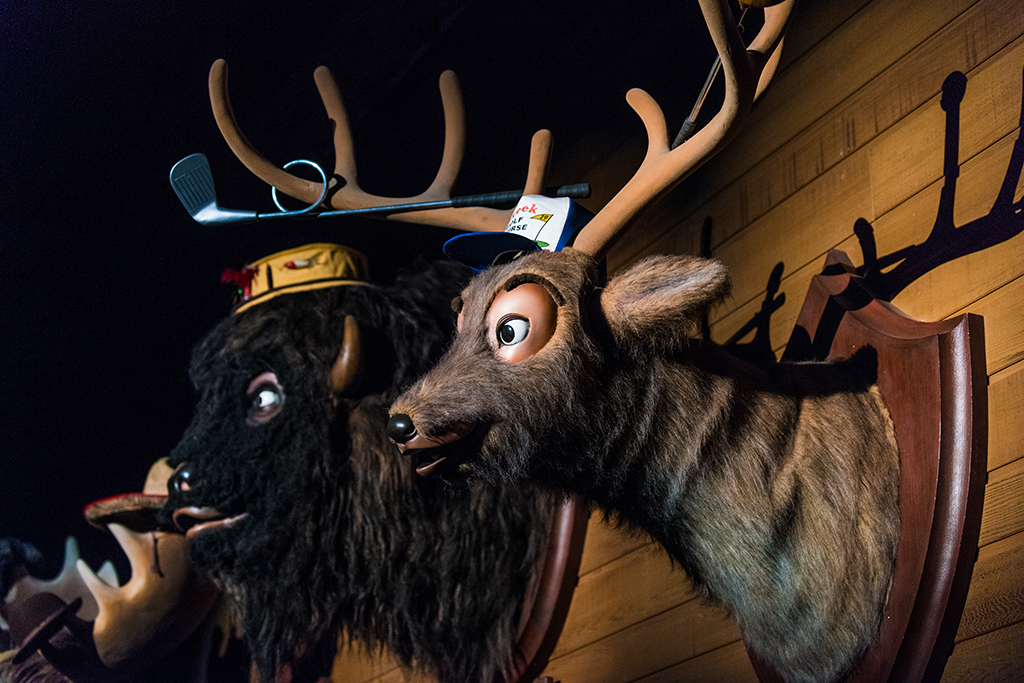
Anyway, this particular day stood out because, right after the park closed, cast members, Disney lingo for employees, were invited to catch the very last performances of the Country Bear Jamboree attraction, the famous audio-animatronic show with bears and the mounted heads of dead animals singing country music. This one was close to reaching its 30th anniversary, and while Walt Disney never got to see it come to fruition, he really loved the characters who were part of it.

Country Bear Jamboree was being closed down to make room for a new attraction which seemed sacrilegious to those who worked at the park, but change was in the air and we couldn’t stop it. Some said what would replace it would be one-part Circle-Vision, that 360-degree theater in Tomorrowland which had railings for guests to hold on to instead of seats as they were made to feel like they were moving along with the images shown onscreen. Others said the other part would be “Captain Eo,” the sci-fi 3D short film directed by Francis Ford Coppola and starring Michael Jackson.

Now when I was working at Disneyland, “Captain Eo” had not been shown there for years, but guests were still constantly asking us where they could see it. We all figured all the guests would know the movie was no longer showing at the park, but no one is quick to look at the map to see what is and what isn’t there. Sadly, it would take Jackson’s death to bring it back to Tomorrowland in all its technologically dated glory.

While I was never a big fan of the Country Bear Jamboree, I felt obligated to attend its final performances. At the very least it gave me the unique privilege of allowing me to say I attended the last show, something millions of visitors would never get to lay claim to. It was like when the dorm I stayed in during college got a zero score on the first week of back to school contests. No else got a score as low as ours, and we wore this fact with pride as only we could lay claim to having accomplished that.

country-bear-jamboree-teddi-barra

After all these years, the bear I remembered most was Teddi Barra who descended from the ceiling on a swing decorated with roses and wearing a yellow raincoat. This soon made perfect sense as she began to sing “Singin’ in the Rain.” Many will want the starring role in a production, but it’s always the supporting players who command the most attention. Trust me, I speak from experience.

country-bear-jamboree-animal-heads

Also, the mounted heads of animals on the wall left a vivid impression on me. These were animals shot for sport, and yet they still sang with a lot of heart and spirit despite the fact they were now forever nailed to a wall. And keep in mind, Walt Disney also made “Bambi,” and we know what happened to the title character’s mother. Why didn’t they have Bambi’s mother’s head up there? I’d like to think it would have made a difference for all the children forever traumatized by the movie.

Many in attendance were wearing “Save The Country Bears” t-shirts which, while well-intentioned, proved to be utterly pointless as the decision to close the attraction down was made a long time in advance. Still seeing this attraction being closed down felt very sad because a part of Walt Disney’s spirit which brought about this park’s creation seemed to be going away with it. But change keeps coming for better or worse, and Disneyland would never have survived without the corporate world backing it up.

When the final performance came to a close, the cast members operating the attraction asked if we wanted to see it one more time. Of course, we said yes as it was not lost on any of us how we were a part of something many others would never get to experience. Seeing it for a final time made us feel lucky and special, and when it was all over we gave the attraction a long lasting and an ear-splittingly loud standing ovation. I personally felt privileged to be a part of this because many other jobs never would have allowed for such an opportunity like this.

walt-disney-with-friends

There are those cast members who say Walt is spinning in his grave with all the changes being made to his land of imagination. We still wonder how much of him is left in the park, and I’m not just referring to those urban legends like the one which says he’s buried underneath it or cryogenically frozen. I had the great opportunity of working with cast members who truly want to preserve the magic Walt brought to the park as it seems the damage Michael Eisner left in his path feels irreparable.

In retrospect, the closing of the Country Bear Jamboree served as an accidental allegory for the change which forever enveloped us in the wake of September 11th . Back then, I felt so lucky to be catching the bears’ unfortunate end when so many others couldn’t, and at least we had to chance to say goodbye to something or somebody. How ironic it was that a couple of days later we said a horrific and unexpected goodbye to the twin towers and many innocent lives in a way we didn’t see coming. It proved to be a time where we wanted to change the course of events, but of course we could not. The world can be very cruel, and 15 years have now passed since we were greeted with the worst terrorist attack in American history. Here’s hoping we continue to learn from the events of September 11th to where we can finally keep history from repeating itself.

Writer’s note: The Country Bear Jamboree attraction was eventually turned into the Winnie the Pooh ride. Truth be told, I am a die-hard Eeyore fan, so I have to admit I was really excited at what it would look like. It proved to be fun, but there could have been a lot more of Eeyore featured in it, a lot more.