‘Tron: Legacy’ Digs Deeper into the World of the Computer
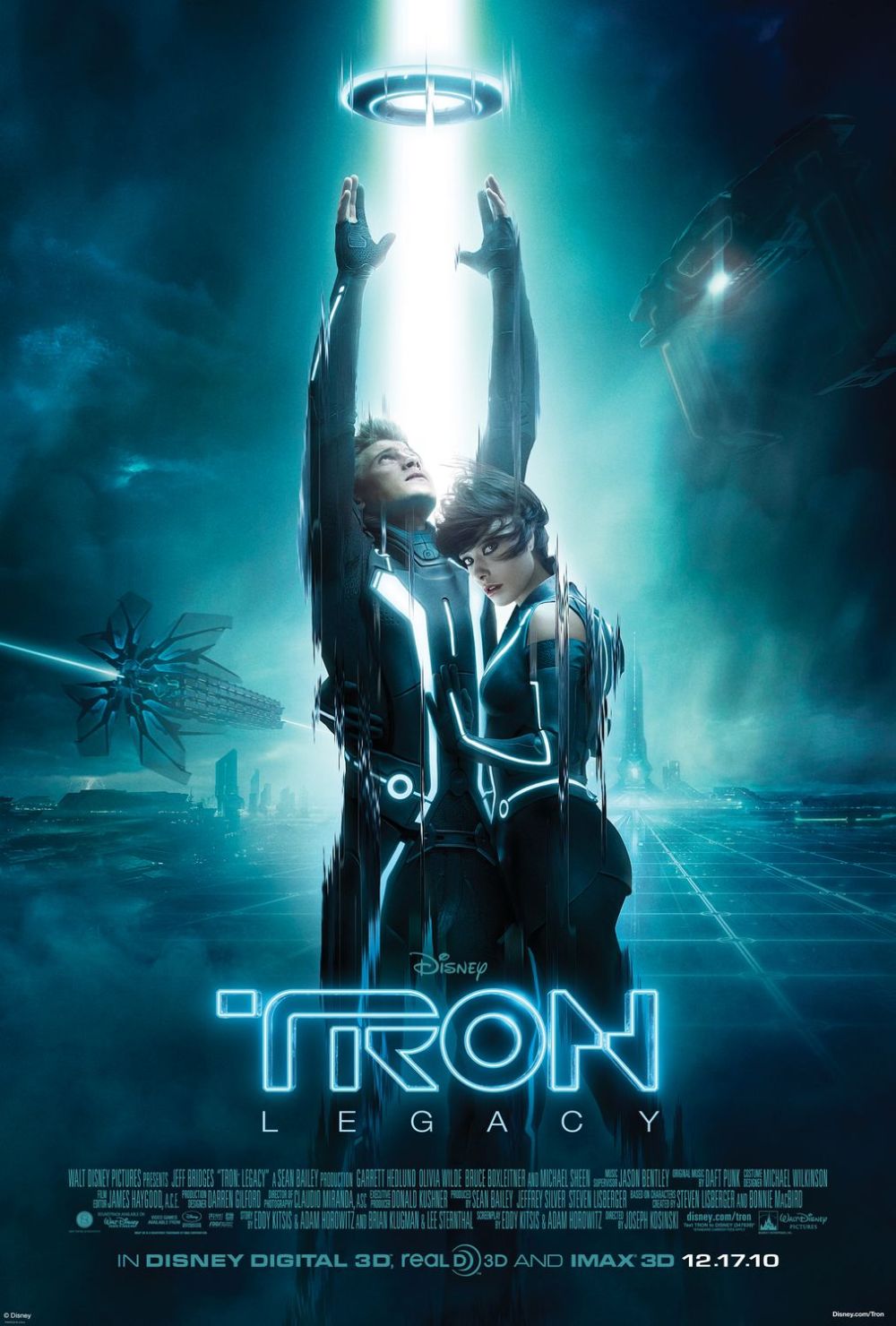
Tron Legacy movie poster

“There is no better moment than this moment, when we’re anticipating the actual moment itself. All of the moments that lead up to the actual moment are truly the best moments. Those are the moments that are filled with good times. Those are the moments in which you are able to think that it is going to be perfect, when the moment actually happens. But, the moment is reality, and reality always kinda sucks!”

-Lewis Black

I include this quote up above because it more or less symbolizes what I feel about the promotion Disney did for the long-awaited sequel to “Tron.” The company overhyped it to an alarming degree, making several different movie trailers and spent a good three years promoting it. With this kind of marketing, many may go into “Tron: Legacy” thinking it will be one of the greatest movies ever made.

As for myself, I weary of the hype and try to go into most movies with little to no expectations whatsoever. In fact, I think it’s better to watch most films with the lowest expectations possible. With the hype which has greeted movies like this or the “Star Wars” prequels or even “Indiana Jones and the Kingdom of the Crystal Skull,” it is way too easy to be incredibly disappointed by the finished product. Nothing ever does come out as well as it does in our imaginations.

Well, reality may suck, but “Tron: Legacy” did not. I walked in expecting a fun time, tickled to death Walt Disney Pictures even bothered to make a sequel to a movie which was not a huge box office success back in 1982. At the very least, this sequel, which has been in the making for over 25 years, is more of a continuation of what came before. What it may lack in a fully coherent storyline, it more than makes up for with amazing visual effects, a fantastic score by Daft Punk, and a pair of great performances from the always reliable, and no longer underappreciated, Jeff Bridges.

So, here’s the story behind “Tron: Legacy:” after saying goodnight to his son Sam, Kevin Flynn rides off to Encom to work on a new digital frontier which will revolutionize the world of technology. Instead, he disappears without a trace. Shift to more than 20 years later, and Sam has become a rebellious young kid with strong technology skills he gleefully uses to thwart the executives at Encom who intend to profit and exploit Flynn’s work, work which Flynn wanted to make available to everyone for free.

Alan Bradley (Bruce Boxleitner) comes to Sam’s domicile one night to inform him he got a page from his dad the other night, and that it came from a line at Flynn’s Arcade which has been shut down for 20 years. Sam goes to the arcade to see what’s what, and we all know what happens from there as he gets sucked into “the grid” the same way his father was, and he is forced to fight for his life by hurling discs and racing light cycles in games which are deadlier than ever.

The premise behind “Tron: Legacy” is actually quite interesting. Kevin Flynn ends up developing a more advanced version of his Clu program who, of course, looks exactly like him. Together, they work to create the perfect system meant to bring about a new kind of life form, but somewhere along the line Clu grew resentful and comes to see a world of perfection far more different than his creator does. Soon afterwards, Clu turns against Flynn, making himself the ruler of all programs, and Flynn is trapped inside “the grid” with no way out.

Throughout, we watch as Clu coldly eliminates those programs which do not meet his high standards. It’s an interesting Frankenstein motif in how a creation runs amuck despite the master’s best intentions, and we all know what this leads to). It also reminded me of a line from “Star Trek: First Contact” which the Borg Queen says, “You’re an imperfect being created by an imperfect being. Finding your weakness is only a matter of time.”

The visual effects are unsurprisingly amazing, and they clearly reflect how far technology has come since the 1980’s. This time, they are much more fluid to where not everything is shown going in a straight line, and this gives the action scenes far more friction than they had in the original. The use of dark and neon-like colors doesn’t feel dated, and the costumes have been given a much-needed upgrade. There’s no more of those bulky suits which Sark’s guards and the MCP had, and the digital world presented here is a dark one and very un-Disney like.

By having “Tron: Legacy” focus on Flynn’s son, it seemed like Disney was desperately trying to court the youth demographics and would have been happy to cast the hottest teen or young adult heartthrob the role. Garrett Hedlund, however, turns out to be quite good and holds his own with Bridges. It’s not a great performance, but he does solid work here and keeps his character from becoming some annoyingly whiny brat whose daddy issues get the best of him. He does, however, have the disadvantage of saying the movie’s cheesiest lines like “this isn’t happening” and “this can’t be good.”

Another actor I enjoyed was Olivia Wilde who plays the warrior program, Quorra. She is a strong and engaging presence here, and her role as a Data-like figure eager to learn about the real world leads to some of the movie’s more intimate, as well as some of its funniest, moments. And yes, she does kick serious ass in the action scenes, easily derezzing those evil programs without even breaking a sweat.

But one actor I truly got a kick out of was Michael Sheen who plays Castor, the owner of the End of The Line Club. Stealing every scene he is in, Sheen holds nothing back as he gleefully hams it up as the life of the party, completely unbound by the soulless machinery at his disposal. We never really did see a program like this in the original “Tron,” did we?

And then there is Bridges who remains one of my all-time favorite movie actors. His performance here reminded of just how good he was in the original as he never let the special effects overwhelm his work as Flynn. Even though he was acting against a green screen more than he wasn’t, he makes himself feel like part of the reality to where it seems like nothing is impossible for the Oscar-winning actor. Oh, and if you listen close enough, there is a line designed to remind you of his famous role as The Dude. Trust me, you will know it once you hear it.

Yes, “Tron: Legacy” does have plot holes and some wooden dialogue, but so did the original. Thankfully, none of the dialogue is as cringe-inducing as the kind George Lucas gave us in the “Star Wars” prequels. Also, the story does get slowed down by exposition which could have been shortened. All the same, I’m glad the writers didn’t get lazy and bring back the Master Control Program (MCP) as if it was never defeated back.

Joseph Kosinski made his directorial debut with this sequel. In the past, he has received acclaim for the “Mad World” commercial for the video game Gears of War, and he has since gone on to direct “Oblivion” and “Only the Brave.” For my money, he does a much better job of blending actors with special effects in a way Lucas never could, and he does well in keeping “Tron: Legacy” from becoming overly-cheesy or infinitely monotonous.

The soundtrack by Daft Punk is infinitely awesome, and the duo is a perfect fit for this kind of material which serves as their first official film score. Like the brilliant score Wendy Carlos did for the first film, their music is a strong mix of orchestral and electronic elements which, and brings a strong sense of humanity and emotion to a wholly technological world.

Could “Tron: Legacy” have been a better film? Sure, but why can’t we just be happy Disney took the big risk of making this sequel? For what it is, I enjoyed it and admired the fact it was made by people who respected its predecessor. More than two decades is a massively long period of time to wait for any sequel, but “Tron: Legacy” was worth the wait for me, and I would certainly be open to seeing it again.

Still, I have to wonder, can human beings really exist in a digital world even though they are users instead of programs? Can a program actually be brought into the real world? Oh, who cares! I had fun!

End of line.
* * * ½ out of * * * *

Tom McLoughlin Revisits ‘Friday the 13th Part VI: Jason Lives’ at New Beverly Cinema

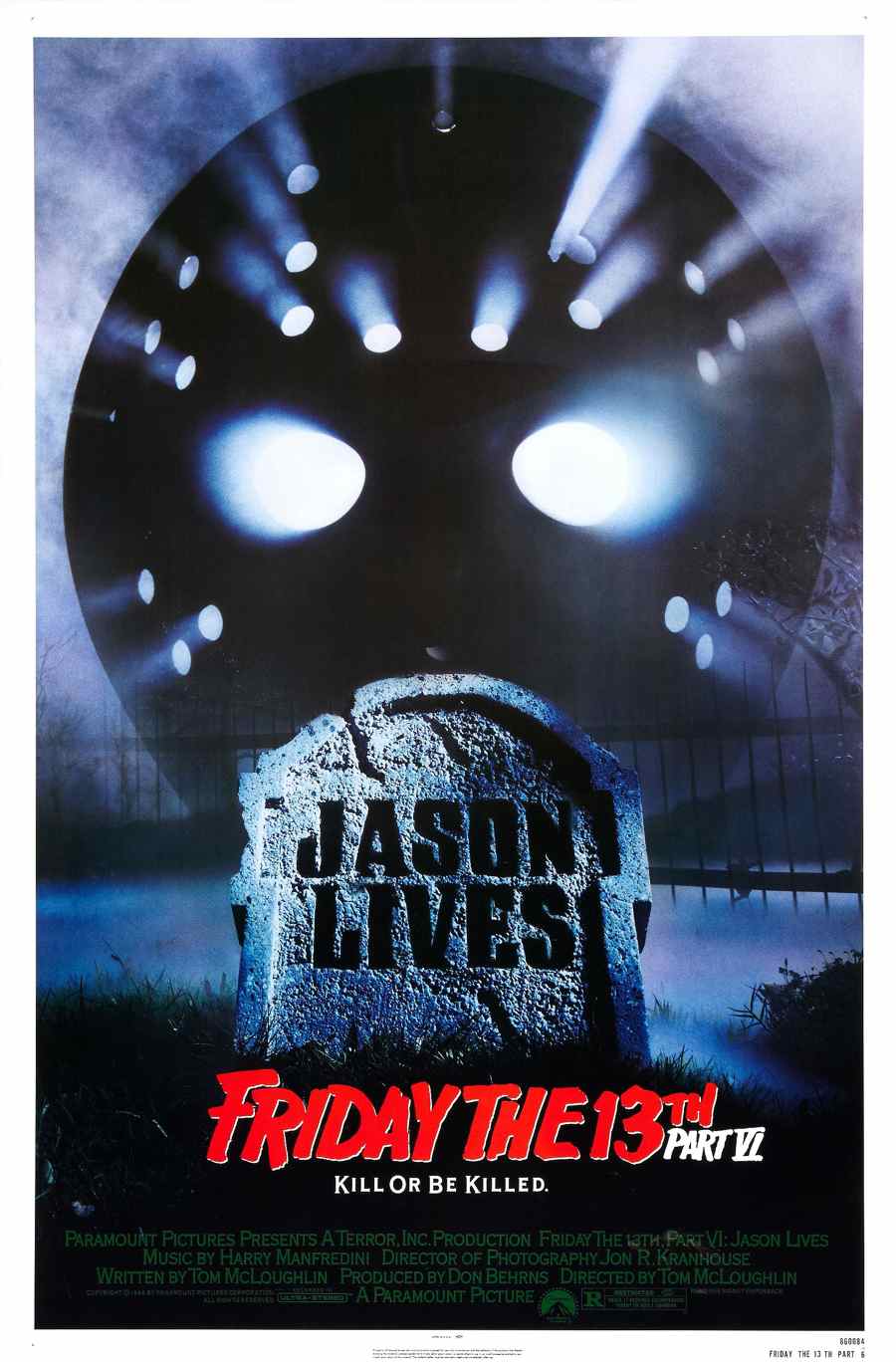
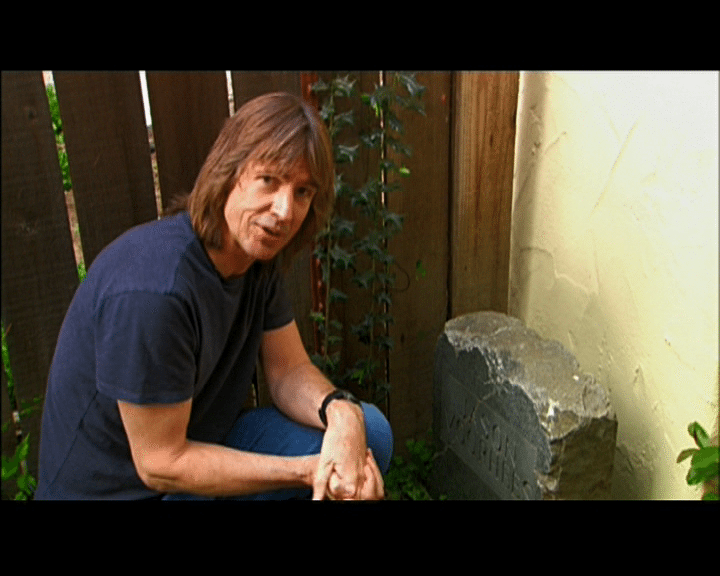
Tom Mcloughlin Jason Voorhees tombstone

On Friday June 5, 2009, Phil Blankenship presented a triple feature for horror fans at New Beverly Cinema with “Friday the 13th Parts IV, V, & VI.” The fourth film was called “The Final Chapter,” and seeing its title on the screen induced uncontrollable laughter in every member of the audience for obvious reasons. The fifth film, “A New Beginning” remains the most despised of the sequels as it tried to continue to the series without Jason, and it proved to be an embarrassing failure. “Jason Lives,” on the other hand, is one of the best in the series thanks in large part to the great sense of humor the filmmakers brought to it. All the sequels which came after this one turned out to be completely stupid and unintentionally hilarious with a few exceptions. In retrospect, these three movies marked the franchise’s peak as well as the start of its downward spiral.

As time went on, these three “Friday the 13th” sequels became known as the Tommy Jarvis trilogy. We first meet Tommy Jarvis in “The Final Chapter” where he is played by a very young Corey Feldman and spends his time playing on his computer or indulging in his hobby of making masks. Tommy ends up killing Jason with his machete, and then he can’t get himself to stop bashing him with it. In “A New Beginning,” we see an older Tommy, now played by John Shepherd, still dealing with the intense psychological damage his encounter with Jason thrust upon him. And then in “Jason Lives,” Tommy (this time played by Thom Matthews) is convinced Jason is not dead despite having been buried for years. But of course, he ends up accidentally resurrecting Jason and has to take him down yet again.

Blankenship gave the crowd a special treat by bringing out the writer/director of “Friday the 13th Part VI: Jason Lives,” Tom McLoughlin, to talk with the audience about its making. McLoughlin started off by saying how glad he was to be at New Beverly Cinema as he got all of his film education here, that shooting this sequel remains the most fun he has had as a filmmaker, and he confessed he has not seen a print of it since 1986.

Friday the 13th Part VI Jason Lives poster

When first hired to direct “Jason Lives,” McLoughlin admitted the only “Friday the 13th” movie he had seen previously was the first one. As a result, the executives at Paramount Pictures forced him to watch the other four. With “Jason Lives,” McLoughlin was intent on ignoring the events of “A New Beginning” because he said it really pissed him off. The audience at the New Beverly was in complete agreement with this, and they applauded him loudly.

McLoughlin also said he had originally planned to introduce Jason’s father, Elias Voorhees, into this sequel in order to give the iconic slasher more of a back story. We all know about his crazy mother, but not much has ever been said about Jason’s poppa. But Paramount Pictures was not crazy about this plot element because they weren’t sure which direction it would take the franchise in, so they put the kibosh on it. However, the DVD reissue of “Jason Lives” does have the film’s original ending with Jason’s father in the form of storyboards, and it is a must see for fans.

One fan asked McLoughlin how he got Alice Cooper to contribute songs to “Jason Lives.” It turns out Cooper is a big fan of the “Friday the 13th” series and was more than happy to participate, even allowing McLoughlin to use any of his songs in the movie. Cooper gave “Jason Lives” its end title song of “The Man behind the Mask,” but McLoughlin said the original version was much faster.

Blankenship asked McLoughlin the inevitable question about how he dealt with the Motion Picture Association of America (MPAA) and of what it took to get “Jason Lives” an R rating. Surprisingly, the MPAA didn’t want McLoughlin to cut scenes, but frames instead. McLoughlin said the frames didn’t have blood or gore in them, but the MPAA found them to be too intense. In the end, he made no secret he wanted this movie to be a “huge bloodbath.”

Thom Matthews was cast as Tommy Jarvis in “Jason Lives” as McLoughlin wanted someone who seemed more heroic. Plus, John Shepherd, who played Tommy in “A New Beginning,” didn’t want to return because, as McLoughlin put it, “he got all religious.” Shepherd had since become a born again Christian and his church didn’t feel like doing a slasher movie was in his best interest.

With this particular “Friday the 13th” sequel, McLoughlin admitted he tried to give it a strong sense of humor. This is apparent right from the start when you see how the opening title shot is a clever homage to the gun barrel sequences in the James Bond movies. Indeed, you come out of this sequel feeling like McLoughlin actually took the time to work on the script instead of just throwing something together at the last minute. Plus, the interplay with the kids, and this is one of few movies in this franchise which actually had kids in it, was great like when they hide under the beds and one boy asks another, “So, what were you going to be when you grew up?”

Ron Palillo, who plays Allen Hawes, is best known for playing Arnold Horshack on “Welcome Back, Kotter.” This got McLoughlin talking about how everyone in the city kept calling Palillo “Horshack” wherever he went. Looking back, he said this made him realize how hard it is for actors to get past a character they played which was so popular.

Another fan asked McLoughlin if he had any favorite on-set stories he could share. This got him to talk about a stunt man who came on the set dressed like Evel Knievel and said, “I’m here to crash something. So what do you want me to do?” The stunt he performed was an especially dangerous one as it required him to drive a big RV (is there any other kind?) over a ramp at 90 miles an hour. McLoughlin said this was the scariest time he ever had on a film set as he worried this guy would get killed. Fortunately, the stunt came out perfectly with the RV crashing on its side the way it was supposed to, and the stuntman pulled himself out of the wreckage and said, “Did I do alright?”

It turns out there were different endings thought up for “Jason Lives,” but McLoughlin made it clear he always intended for Jason to end up back in Crystal Lake. One of those endings did include Jason’s father bringing him back to life with voodoo magic. In the end, McLoughlin decided to keep it simple and used the image of Jason’s good eye suddenly opening up wide to show the audience that, surprise, he’s not done killing camp counselors yet.

As for the man behind the mask, two actors were hired to play Jason. The first was Dan Bradley who has since become known as the premier stunt coordinator for Hollywood movies like the Jason Bourne franchise. The powers that be at Paramount Pictures, however, after watching some dailies, decided he should be replaced because they felt he didn’t have the character’s build. Enter C.J. Graham who had just finished a stint as a United States Marine and had no previous acting experience. McLoughlin said Graham came onto the set answering all of his questions with “yes sir.” Today, Graham is a casino manager in Las Vegas.

In regards to his favorite death in “Jason Lives,” McLoughlin replied it was when Sheriff Michael Garris (David Kagen) gets folded in half. This came about because he wanted Jason to kill in ways he thought would seem “superhuman.” The fact Jason starts off being struck by lightning makes it seem all the more logical he would kill people this way. It certainly made for many memorably gruesome moments!

The last question for McLoughlin was if Paramount asked him to direct another installment, and why this didn’t happen. He said he was actually approached by Frank Mancuso to do the next sequel, and Mancuso asked him, “How about Jason vs. Freddy?” To this, McLoughlin replied, “How about Cheech & Chong vs. Jason?”

Later on, McLoughlin did get the offer to direct “Freddy vs. Jason,” but he said he didn’t like the script given to him. New Line Cinema, which ended up buying the rights to “Friday the 13th” from Paramount, invited him for a meeting to talk about it. However, the meeting lasted only ten minutes after which he walked out, and he has not been involved with the movie franchise since.

Since making “Friday the 13th Part VI: Jason Lives,” McLoughlin has gone on to make movies like “Date with An Angel” which featured Emmanuelle Béart at her most beautiful, and he also directed episodes of the “Friday the 13th” television series. His other credits include the Stephen King TV movie “Sometimes They Come Back.” Outside of his contribution to the “Friday the 13th” franchise, he has made a good and comfortable career as a director. Having him speak to the fans at New Beverly Cinema was a real treat, and he really enjoyed the time he spent with them. Special thanks go out to Phil Blankenship for putting this screening together. This particular sequel still remains one of the best of this series, and McLoughlin’s appearance made sitting through “Friday the 13th Part V: A New Beginning” somewhat bearable.

‘Blade Runner 2049’ is Astonishing, Glorious and Mesmerizing

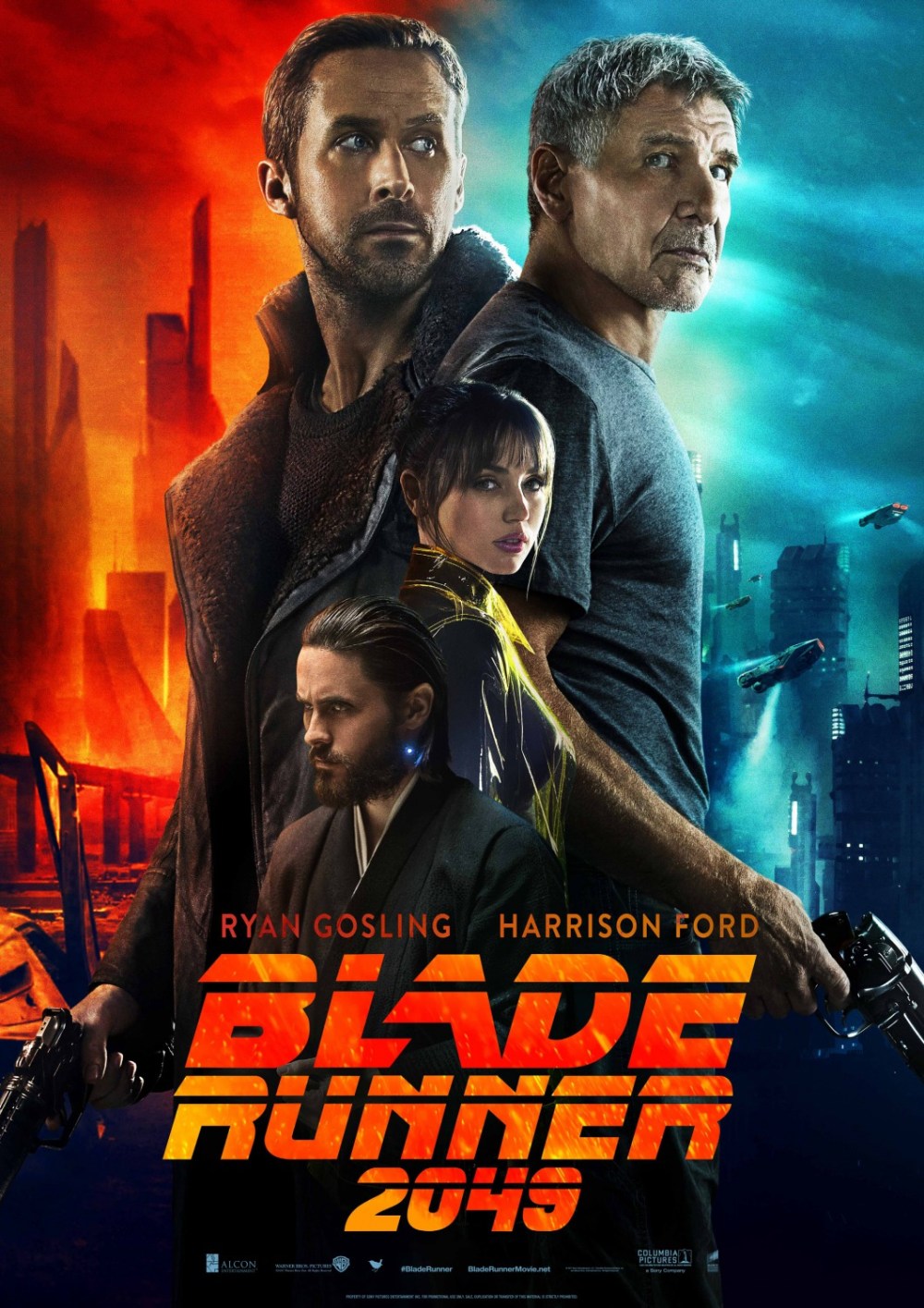
Blade Runner 2049 movie poster

Many words come to mind when describing “Blade Runner 2049.” Among them are mesmerizing, amazing, glorious, beautiful, and astonishing. I put special emphasis on the word astonishing because it is almost unbelievable to see what director Denis Villeneuve and company got away with here. Not only have they conceived a sequel which does its predecessor, Ridley Scott’s 1982 cult classic “Blade Runner,” proud, but they also got away with making an art house film with a budget of over $150 million and a running time of almost three hours. What were the studio executives thinking? Well, it doesn’t matter as this eagerly awaited sequel proves to be well worth the wait.

Taking place thirty years after the events of the original, the sequel introduces us to a new blade runner played by Ryan Gosling, and he comes to be known by a pair of names for reasons best left unsaid here. After enduring a brutal battle as he attempts to retire rogue replicant Sapper Morton (Dave Bautista), he becomes aware of a long-buried secret which is overdue for a thorough investigation. In the process, he tracks down former blade runner Rick Deckard (Harrison Ford) who has been off the grid for many years as he seeks answers only Deckard can give. What results is a form of evolution no one could have seen coming.

Telling you more about “Blade Runner 2049” will prove to be detrimental to your viewing experience as you should only know so much about its plot before going into the theater. What I can tell you is the future world portrayed is even more beautifully bleak than the one Scott gave us 35 years ago, something I didn’t even think was remotely possible. The colors are vibrant, but everything is still subject to a never-ending rainstorm, the kind we needed in California for the longest time. And in this fictional universe, Pan Am is still a corporate giant even though it ceased operations in the real world back in 1991.

While I was bummed to learn Scott would not be directing this sequel (he serves as executive producer instead), they couldn’t have found a better filmmaker here to fill his shoes as Villeneuve takes on what must have been a truly daunting challenge here. “Blade Runner,” despite being a critical and commercial disappointment, has long since been considered one of the greatest science fiction movies ever made, and it certainly is. Making a sequel to it interested many including myself, and yet it could easily take away from the original as nothing easily compares to what came before. But Villeneuve is the same guy who gave us “Arrival,” another sci-fi masterpiece which invited and deserved comparison with “Close Encounters of the Third Kind,” and this gave me confidence he could bring something special to “Blade Runner 2049.” Indeed, he has made a sequel which will prove to be every bit as memorable as its predecessor as the years go by as he expands on the themes and delivers a cinematic experience which is equally profound.

Furthermore, Villeneuve allows things to go at the same methodical pace Scott went at back in 1982. If you go into “Blade Runner 2049” expecting something along the lines of “Star Wars,” you will be seriously disappointed as the original defied sci-fi conventions with a vengeance. What was unique about “Blade Runner” is how it enthralled audiences with big ideas more than with wall-to-wall action sequences. The same is true with “Blade Runner 2049” as it probes the idea of what it means to be human, and it deals with characters searching for something which doesn’t feel the least bit artificial in a world dominated by technology. For me, the key line of dialogue comes when Lieutenant Joshi (played by Robin Wright) tells Gosling’s blade runner, “We’re all just looking out for something real.” This is certainly the case here, but as we catch up with these characters, their chances of finding anything real seem very small.

By the way, if Roger Deakins does not get this year’s Oscar for Best Cinematography, I will be seriously miffed. For far too long, this man has been the Randy Newman of the cinematography category, and this feels criminal as has given us beautiful and extraordinary images in “Sicario,” “Skyfall,” “No Country for Old Men,” and “The Shawshank Redemption” to where it is not easy to compare his work to others. Deakins, however, really outdoes himself here as he gives each scene in “Blade Runner 2049” a stunning look which shows both the beauty and the emptiness of the world these characters are forced to inhabit. What he has accomplished here is simply extraordinary as it all feels incredibly unique.

Gosling has long since proven to be as good an actor as he is a tremendously sexy one, and he is superb in a role which is very tricky to pull off. Again, I can only say so much about his character as it is too easy to spoil certain aspects of this movie, but once you understand who this blade runner is, it becomes clear as to the kind of balancing act Gosling has to play here. While life in the rainy and futuristic city seems to have burned this blade runner out completely, there are still glimpses of humanity to him which come out in a way which feels spontaneous and never forced. As a result, the “Drive” actor proves to be a genius at playing someone who is no longer certain as to how he should feel about the discoveries he has made.

Harrison Ford doesn’t show up as Deckard until the movie’s third act, but he makes it worth your time to wait for his first appearance. After watching him have tremendous fun playing Han Solo again in “Star Wars: The Force Awakens,” it’s great to see him bring another of his iconic characters back to life. Ford makes Deckard into a burned out shell of a man who is forced to hide not just from those threatening his existence, but also from the things he yearns to connect with most of all, and he illustrates the character’s never ending internal conflict without ever having to spell everything out for the audience.

The rest of the cast is superb as they bring a unique quality to roles which have them acting in both human and inhuman ways. Robin Wright kicked ass earlier this year in “Wonder Woman,” and she does it again here as Gosling’s superior officer who is a no-nonsense Lieutenant and eager to keep a war from being ignited. Ana de Armas, whom you might remember from Eli Roth’s “Knock Knock,” is perfection as Joi, Gosling’s hologram girlfriend who is definitely even better than the real thing as she comes equipped with a humanity which strikes at your emotions. Sylvia Hoeks is riveting as Luv, a replicant who can appear charming at one moment and incredibly lethal in the next, and she makes this character vicious and frightening as she is determined to make discoveries before others do. Jared Leto and Dave Bautista have essentially cameos here, but they make the most of their time onscreen and show the depth they are willing to give to even the smallest of roles.

My only real disappointment with “Blade Runner 2049” is we will never get to hear the music score by Villeneuve’s regular composer, Johann Johannsson. For some odd reason, he was removed from this project and is contractually forbidden from talking about why he was let go. His score to “Sicario” is one of my favorites, and it would have been great to hear what themes he could have brought to this sequel.

Having said that, the score by Hans Zimmer and Benjamin Wallfisch, the latter who recently did the music for “It,” is excellent as it captures the vibe of Vangelis’ score from the original without simply updating it for a new audience. It doesn’t even sound like the typical Hans Zimmer score as his music is usually pretty easy to recognize, although the last few cues do have a bit of “Dunkirk” in it. I feared “Blade Runner 2049” would get a more conventional score than the great one Vangelis composed years ago, but Zimmer and Wallfisch bring something wonderful, beautiful and thrilling to everything we see and listen to here.

The original “Blade Runner” came out in 1982, one of the greatest years for movies and one which many have called the year of the nerd. In addition to “Blade Runner,” we also got “Star Trek II: The Wrath of Khan,” John Carpenter’s “The Thing,” “The Dark Crystal,” “Tron” and “E.T. The Extra Terrestrial” among many others. “Blade Runner” was not a commercial hit and critical reaction to it was sharply divided, but like “The Thing” and “Tron,” its stature has grown over time to where it is now revered as the great motion picture it always was.

“The Thing” and “Tron” managed to generate a prequel and a sequel more than 20 years later, but neither could equal the power of their predecessors. This makes the achievements of “Blade Runner 2049” all the more profound as it equals the original film and digs even deeper into its theme which Scott explored to brilliant effect. What Villeneuve and company have come up with here feels as unique in today’s cinematic landscape as “Blade Runner” did in the 1980’s. I had every reason to lower my expectations on this one as sequels which come out decades later are typically doomed to failure, but this one defies the odds and I am so thankful everything worked out so well. It may not have Rutger Hauer, but very few movies can ever be perfect.

And for God’s sake, give Deakins the Cinematography Oscar! No excuses!

* * * * out of * * * *

Exclusive Interview on ‘The Houses October Built 2’ with Bobby Roe and Zack Andrews

The Houses October Built 2 poster

Just as the found footage movie looked to be taking its final breath, “The Houses October Built’ came along and provided horror fans with a unique angle on it as a group of friends ventured across America in search of the ultimate haunted house attraction. While the movie ended with these friends suffering a fate not all that different from what Gene Bervoets experienced in “The Vanishing,” “The Houses October Built 2” shows them to be alive and also internet superstars thanks to the videos of them being buried alive on YouTube. Vendors are now offering to pay them to visit Halloween haunts, and Zack, Bobby, Mikey and Jeff jump at the opportunity to cash in on their celebrity. Brandy, however, opts out as the trauma she suffered in the first film is something she is still coping with.

But alas, the Blue Skeleton, the group which takes the extreme haunt to another level and who kidnapped the group in the last film, are hot on their tails as they look determined to top everything they pulled off before. The stakes are raised even higher when Brandy changes her mind and decides to join her friends. But as they get closer and closer to the ultimate Halloween haunt known as Hellbent, one has to wonder if these friends will once again survive their haunted house travels, or will they instead meet their doom.

It was a pleasure speaking with “The House October Built 2’s” director, writer and star Bobby Roe recently, and he was joined by his co-star and co-writer Zack Andrews. As the original ended on an ambiguous note, coming up with a sequel must have been a serious challenge for them as you have to wonder what could possibly motivate these same characters to do another round of Halloween haunt exploring after the horrors they previously experienced. Both Bobby and Zack explained how they came up with the sequel, how they managed to find a way to get Brandy to rejoin her friends, and of the kind of Halloween haunts they wanted to explore this time around.

Check out the interview below:

Ben Kenber: This is a sequel I never thought would ever be made considering how the first film ended. With part two, you answered some questions which some may say would have been best left unanswered. When you were making the original, did you have a sequel to it in mind?

Bobby Roe: The haunt world is so huge, and we just wanted to be able to… Expanding is probably the primary goal of a sequel, expanding the world, and hopefully that is done with the Blue Skeleton. I know the ambiguity of the ending of part one is a real pro for some, and then for others, without having a bow on it, it was a real problem. So hopefully this part two services everyone. In some ways, it’s just about, at the end of the day, how extreme can you get.

Zack Andrews: I think the original stands on its own, but Bobby’s and my vision was always to have that kind of as an intermission and then have part two kind of pick up at that place and continue to tell the story and, as he was saying, that world is so big. In the first movie, we go to big businesses but they are more ma and pa operations. And in this film, as you can see, we kind of expand the world and end up at the Zombie Pup Crawl with 30,000 people. Just being able to see Halloween in a bigger scope, we continue to do that in this world.

Ben Kenber: After the first movie, you became celebrities to these Halloween haunts, and we can see this in part two. Did the first movie make going to these haunts easier or more challenging?

Bobby Roe: Sometimes it is more challenging because, if they recognize us, people try to up their game or at least make sure they are extra scary. Sometimes for us, we are thinking how far are people going to go. We received emails weekly since the first film came out which asked us to come and visit.

Zack Andrews: The community is… There are all these little families who come together to put these haunted houses on, and everybody has been really receptive to us through the first movie and the second movie. I think it is a win – win situation because they respect what we are trying to do by making the movie, and we respect their business. We love meeting all these people and coming into their world, and it feels like, so far, they like having us.

Ben Kenber: It certainly looks like they love having you guys around. When you were filming this sequel, did you talk with these Halloween haunt people ahead of time to let them know what you were going to do, or did you proceed incognito and went from there?

Bobby Roe: We had to go the legal route and get permission, but I think a lot of times they let us have free range which is really important because some of the sets were really beg. The owners, there is a lot of gratitude towards them because they have allowed us this blank slate on their haunts, and hopefully in return it brings a lot of business to them as well.

Ben Kenber: It’s amazing how big some of these haunts are, especially the haunted hay ride.

Zack Andrews: Oh yeah. It had thousands and thousands of people every night. That haunted hay ride was pretty awesome.

Ben Kenber: With this sequel, you are clearly moving on to bigger game as these haunts are much bigger than the ones we saw in the original. Were there any criteria you set for yourselves in terms of selecting haunts this time out?

Bobby Roe: It was important for us and to the characters’ story in there because of Brandy’s situation. Her deal for coming along is no haunted houses, so I think the guys try to loophole that by going to these more events until things go awry. So, to make her a little more comfortable, and we know that’s kind of a watermelon to swallow for the audience, why Brandy would come back having gone through the trauma that she did in part one, with her newfound success, with money or with whatever that you would think that character would eventually be brought back would ease her in. With these dark mazes and indoor haunts, as amazing as some of them are, they kind of bleed together on-screen. We thought using the Zombie 5K or the pub crawl would kind of give it a different range, and we made sure that it didn’t feel as episodic or that you were watching the same haunt over and over again. We wanted to make sure that didn’t happen.

Ben Kenber: I really dug the Marilyn Manson quote you opened this movie with: “Times have not become more violent. They have just become more televised.” What made you decide to use that quote?

Bobby Roe: We started part one with a quote that we felt summed up the entire movie really well, and that was the quote “I’m not afraid of werewolves or vampires or haunted houses. I’m afraid of what real human beings do to other real human beings” (Walter Jon Williams). That was what part one was, and I think for part two, this quote summed up everything we talked about, and I just thought it was very interesting on top of it being an influence on us and the macabre horror world as well. We always really liked Marilyn Manson.

Ben Kenber: Considering what the characters, especially Brandy, went through in the first film, it must have been very tricky to come up with a good story line in which they would go through a situation very similar to what they endured before. How long did it take you to come up with a good reason for Brandy to rejoin the group while writing this film?

Zack Andrews: Well we knew this, as Bobby said earlier, would be the biggest watermelon to swallow. Why in the world would she do this again? We show up at her house, and I would think that it’s kind of the roll your eyes moment of okay you are just going to convince her, so it was important to us to try and be as authentic as possible and have Brandy just say no, and then we go out on the road on our own. But when we can’t do what we have set out to do because they are not going to pay us, that felt like an authentic way to call back and do a little begging and pleading because that’s how this would go down in real life (laughs).

Bobby Roe: Exposition in found footage is very tough. If you play by the rules, it’s very hard to give people those side stories where there shouldn’t be a camera. We had early on in the script that she needed money for school, her mom was sick, things like that, and they just become heavy-handed than they would in a normal narrative. So we kind of just went the more organic route and just had her say no, and then when she’s coming around we understand that money comes into play. Hopefully you understand the chemistry and the love for everybody as friends, and I think she’s coming for Zach and I because we need it. She’s coming along and being a good friend, and at the end of the day the simplest answer is sometimes the correct one. So hopefully people understand her journey and why she came along with us.

Ben Kenber: This sequel has a number of different POV’s from the characters, Blue Skeleton, and of course the drone. What was it like balancing out those various POV’s?

Bobby Roe: Well you still have to be conscious of where the camera crew has the camera. If you have seen the movie, you can understand a little bit more, call it our cheats, about certain ones, but for the most part we played by the rules. The drone was a character, and we showed the opening of the drone and that Jeff got it as a present. We thought it would be really cool to have him pilot it in the RV, so all these great wide established shots that you see in every other movie with helicopters, why can’t you do that in found footage while you’re driving? We were able to drive it from inside the RV as long as the drone stays within a certain range from us and follow us and tail us. So that’s very realistic, so why can’t we get those big pretty shots that you can in these giant features? We wanted to make sure that it made sense and that you believe in it as an audience and who’s filming this. As long as you make the drone a character, then hopefully we have a bigger and wider scope in part two as much as we can get. When there were 30,000 zombies in Minneapolis, we wanted to capture that the best that we could, and that was from the sky.

Ben Kenber: Do you see yourselves making a part three?

Bobby Roe: The haunt world is so huge and vast that the story is not done as long as the Blue Skeleton is growing, and hopefully at some point the legend of the Blue Skeleton starts to grow bigger. There’s much more story to tell, and there’s definitely a lot more haunts to show.

Ben Kenber: Have you thought about going outside of America to other countries to explore their Halloween haunts?

Zack Andrews: No comment.

Bobby Roe: We have thought about that. Without saying too much, we went over to ScareCON in London and spoke to a bunch of haunted house owners last year and it was really cool to see their take on a holiday that’s way bigger in America, and they really embrace this culture all year. It’s not just Halloween. We experience some things over there I think people would want to see.

I want to thank Bobby Roe and Zack Andrews for taking the time to talk with me. “The Houses October Built 2” will open in theaters and be available On Demand/Digital HD on September 22, 2017.

Click here to check out the interview I did with cast, writers and director of “The Houses October Built” which I did for We Got This Covered.

‘Poltergeist III’ Shows Just How Unnecessary Certain Sequels Can Be

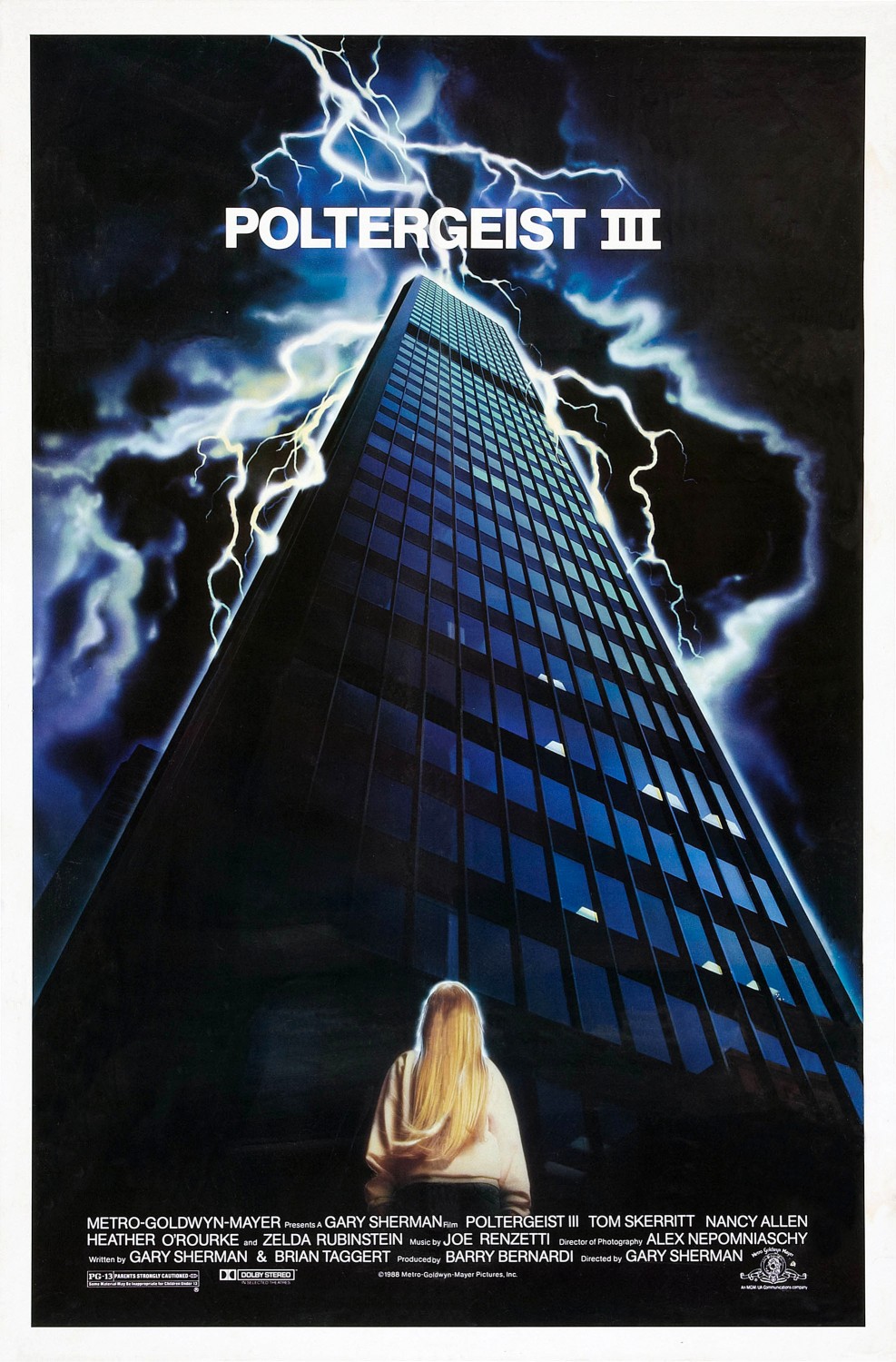
Poltergeist III poster

It’s only with an obscene amount of free time, combined with a morbid curiosity, which had me watching “Poltergeist III” on cable. My only real memories of it beforehand were a behind the scenes show detailing the special effects and Siskel & Ebert’s scathing review of it. By the time this sequel came out in 1988, the series had already worn out its welcome. I don’t remember anyone liking “Poltergeist II: The Other Side,” and it was said to have been one of 1986’s big losers at the box office. Nevertheless, the powers that be at MGM decided they could wring just a little more money out of this franchise with one more sequel.

Once again, Carol Anne (Heather O’Rourke) is at the center of the story which has her shipped off to Chicago to live with Aunt Pat (Nancy Allen) and her husband Bruce (Tom Skerritt) who manages the luxurious high rise building they reside in. However, it doesn’t take long before those evil spirits and Reverend Henry Kane find Carol Anne and start their nasty little tricks to get her to come to the other side.

Now I can’t help but wonder if Carol Anne’s parents just dumped her in Chicago so they could be rid of those evil spirits for good. What if this series continued on? Would Carol Anne have resided with a different family member in each successive sequel to where she would become the ultimate unwanted house guest? Just imagine what Aunt Pat’s conversations with the girl’s parents (played by Jo Beth Williams and Craig T. Nelson) were like. I mean, Pat at one point says all she heard was they were caught up in a land deal gone bad, but maybe it went more like this:

“Pat, we love our daughter, but this poltergeist problem is really just rubbing us the wrong way.”

“Oh come on, stop kidding around sis! Your daughter is being bothered by a poltergeist! You expect me to fall for that?”

“Oh yeah Pat? You think I’m joking?! C’mon! I dare you to let her stay with you! I double dare you!”

“Yeah right! So that the ghosts or spirits or whatever the hell they are can haunt me and my family?”

“What are you, chicken?”

“Pat, stop teasing me! You called me a chicken all the time when we were kids! I AM NO CHICKEN!!!”

“Alright, prove it!”

Now guess what happened after that…

Apparently, Carol Anne was told by her mommy and daddy she was to attend a school for “gifted children with emotional problems” in Chicago. Once there, she meets up with one of the dumbest psychiatrists in cinematic history, Dr. Seaton (Richard Fire). He’s the one who foolishly opens Pandora’s Box by getting Carol Anne to talk about her experiences from the first two movies. By doing so, a slimy hand bursts out of his desk and throws a coffee cup at him while an evil voice cackles away.

So, what’s Dr. Seaton’s explanation for this? He says Carol Anne is a manipulative child who has the power to create mass hysteria and perform mass hypnosis on people to make them think they see ghosts. What?! Are you serious?! People pay this guy money to say shit like that? Where’s this guy’s degree? Is he a legitimate psychiatrist, or is he like Leonardo DiCaprio’s character in “Catch Me If You Can,” faking his lifestyle while forging checks?

The character of Dr. Seaton basically exists for the audience to despise him whenever he opens his mouth. His disbelief in all the strange and bizarre things happening in the building is excruciating to sit through, and you just want these evil spirits to strangle him to death so he’ll shut up. Seriously, it says a lot about a movie when you start siding with evil spirits against the humans.

In fact, this is the big problem with “Poltergeist III;” you don’t care much for the majority of these characters. They exist merely as clichés instead of living breathing human beings, and seeing them suffer becomes more fun than fearing for their safety which all but kills the suspense. You have the teenage guy Scott (Kipley Wentz) who’s slobbering over his girlfriend Donna (Lara Flynn Boyle of all people), and they look like they’ve come out of a thousand movies from this genre. Then there are Pat and Bruce’s hopelessly self-absorbed and shallow friends who are too interested in their own needs to notice signs of evil spirits invading the building. And where exactly are the cops in all of this?

Looking back at the Siskel & Ebert review, the one major complaint they had about this sequel, which I am in total agreement with, was all the characters kept incessantly crying out for one another:

“CAROL ANNE!!! CAROL ANNE!!!”

“SCOTT!!! SCOOOOOOOOOT!!!”

“BRUCE!!! BRUCE!!!”

“CAROL ANNE!!! CAROL ANNE!!! CAROL ANNNNNNNE!”

I swear, Carol Anne’s name is mentioned as many times as Al Pacino used the F-word in “Scarface.” It didn’t take long for me to figure out what Kane was saying to his fellow evil spirits as well as their quick reply:

“We must bring her to the other side!”

“Yes Reverend, but we also got to get this screaming bitch to shut the hell up!”

Remember the bottomless pit that opens up in the garage? Those slimy hands reaching out to grab the main characters look like those rubber gloves you buy at the supermarket but with extra makeup applied to them. The overall budget for “Poltergeist III” was just under $10 million, but it looks like it cost a lot less. While the other “Poltergeist” movies have state of the art special effects, the filmmakers here get short served and have to work with whatever’s available. Yes, some of those mirror scenes are cool as characters pass by without their reflections showing up on them, but that’s just an old trick.

Directing “Poltergeist III” is Gary Sherman who made “Dead & Buried” which has since become a cult classic. He also made the superb exploitation feature “Vice Squad” which featured one of the scariest and most vicious pimps ever played by Wings Hauser. A lot of Sherman’s skill isn’t evident here, and even he admits this is his least favorite film of the ones he made. Perhaps the studio played around with the sequel more than he liked, and with a franchise like this you know he’s never going to get complete control over the final product.

My hat is off, however, to Skerritt and Allen who came out of this movie relatively unscathed. They overcome the ridiculous material and manage to keep a straight face as the movie becomes increasingly laughable and confusing as it heads towards its unnecessarily reshot climax which leaves the fate of certain characters up in the air.

Aside from O’Rourke, the only other cast member to appear here from the previous “Poltergeist” movies is Zelda Rubinstein as Tangina. I find it funny how she received both Saturn and Razzie Nominations for her work here. I for one can’t figure out if she’s good or bad in this movie, but her mystical dialogue gets a bit ponderous with her overzealous delivery of it.

Of course, the lasting significance of “Poltergeist III” is the fact it was O’Rourke’s last movie before her tragic death at far too young an age. Her loss is inadvertently emphasized in the film’s final scene in which she is substituted with a body double. Since she passed away during post-production, you know it’s not her being held by Allen. For what it’s worth, she is very good here despite the cruddy material, and the film was dedicated to her memory.

Who knows what would have happened if O’Rourke lived to see another “Poltergeist” sequel. With Carol Anne quickly growing up, it would have been a kick to see her turn into an Ellen Ripley type of character who is prepared to go to war with these evil spirits. While others will be horribly terrified by them, she’ll see it as just another day at the office. I can just see her talking with girls her age:

“You think you have it rough? I got sucked into another dimension by evil spirits when I was five! Going through puberty was a piece of cake compared to that! Stop. complaining about the run in your nylons!!!”

I wonder what the tagline was for “Poltergeist III.” The tagline for the first one was:

“They’re here.”

With “Poltergeist II,” it was:

“They’re back.”

I guess the tagline for the third film was:

“I’m screwed!”

* ½ out of * * * *

No, I Haven’t Seen It Until Now: ‘Creepshow 2’

Creepshow 2 movie poster

Creepshow” proved to be a great deal of ghoulish fun, and it’s a film which had me begging for a sequel. There are many other short horror stories worthy of a cinematic adaptation regardless of whether or not they are written by Stephen King. Plus, at the time, it seemed to be a given George Romero would have had easier luck in securing financing for this than for a sequel to “Day of the Dead.” And with the same gothic-looking title, what could possibly go wrong? Even if it’s not one of the greatest horror movies ever, we can still enjoy this sequel for what it is, right?

Well, perhaps you can, but for me, “Creepshow 2” is a serious disappointment. Sure, the three stories contained in it are based on the works of King, and Romero did write the screenplay, but this sequel suffers right from the get go. It falters due to a budget much lower than a horror film deserves, a cast of actors who emote more than act, a weak music score, and animation which just reeks of cheapness.

The movie’s prologue has a young blonde boy named Billy (Domenick John) peddling fast on his bike as he chases a delivery truck into town to deliver the latest edition of Creepshow magazine. The back of the truck opens up to reveal The Creep played by Tom Savini, but voiced by Joe Silver. The makeup on this devilish character is less than convincing, and he is nothing compared to the ghostly apparition from the first movie. Even worse, he is made to crack jokey one-liners which will have you groaning more than laughing. Clearly, this character is “Creepshow 2’s” answer to the Crypt Keeper from “Tales from The Crypt,” or perhaps even John Carpenter’s Coroner from “Body Bags,” but it would have been to this sequel’s benefit had it not featured a wisecracking character as this kind had already started to wear out its welcome back in 1987.

One other thing, if you are going to have Savini playing a ghoulish character, do you really have to put makeup all over him? The infamous makeup artist and actor has a wonderfully devilish look about him, and the mask he wears just takes away from him.

“Creepshow 2’s” first story, “Old Chief Wood’nhead,” is its weakest by far. George Kennedy and Dorothy Lamour play Ray and Martha Spruce, an elderly couple who run a general store in Dead River, a town which, as we can tell from its first appearance, is finally living up to its name. One day they are visited by a Native American elder named Benjamin Whitemoon (Frank Salsedo) who gives the Spruces turquoise jewelry, his tribe’s sacred treasures, to look after. Unfortunately, not long after Benjamin leaves, a group of thugs arrive at the store, killing the Spruces and making off with the jewelry. Oh yeah, the Spruces also have an Indian statute standing prominently outside of their store named Old Chief Wood’nhead, and it doesn’t take long for us to see he will avenge the Spruces as you don’t mess with Indian spirits, ever.

Directing “Creepshow 2” is Michael Gornick who served as Director of Photography on its predecessor. As this first story demonstrates, he doesn’t quite have Romero’s panache or wicked sense of humor as he can’t balance out the horrific aspects with the comedic ones, and everything feels off balance as a result. Also, he shows far too much of Old Chief Wood’nhead coming to life which was a mistake. Gornick starts off by giving us glimpses of this character, played by Dan Kamin, to where we can tell the Chief is more than just another statute. But as the Chief goes on a mission of bloody justice, the character becomes cartoonish to where his bloody revenge isn’t the least bit fulfilling.

For what it’s worth, Holt McCallany, who plays Sam, the leader of the thug gang, does have beautiful hair here, and seeing him show it off as he sees it as his ticket for making it in Hollywood makes him all the more drolly hilarious. Still, MCCallany has nothing on Melissa Leo as her hair was infinitely beautiful from one episode of “Homicide: Life on the Street” to the next.

The second story, “The Raft,” is a bit of an improvement. Based on one of King’s scariest short stories from “Skeleton Crew,” it features our college kids who drive out to a predictably isolated lake, located a good 50 miles away from their school, for a swim. The lake’s only real notable feature, at first anyway, is a wooden raft in the middle of it. This raft, however, is soon upstaged by what looks like a slimy oil slick which begins to make its way over to the kids once they get in the water, and they soon find themselves stranded on the raft as the slick surrounds them.

“The Raft” has a lot of cinematic possibilities, and seeing these kids getting consumed by the oil slick provides “Creepshow 2” with some of its most horrifying moments. But in the end, it is undone as Gornick isn’t able to generate enough of a claustrophobic terror this story demands. Plus, the performances of Paul Satterfield, Jeremy Green, Daniel Beer and Page Hannah are weak as they are forced to emote more than act, and this just takes away from the situation and terror their characters are trapped in. Granted, this is not a movie which demands Oscar worthy performances, but it does need good acting to help bring you fully into such a terrifying story.

I do have to give the actors some credit though as they don’t have to do any acting when they first get in the water as it does appear to be very cold. Beer even said he almost died from hypothermia while filming “The Raft,” and keeping this in mind while watching this segment makes it even more unnerving. But despite a bravura conclusion, I came out of “The Raft” feeling like it could have been much better than it was. Perhaps this is partly due to having read King’s short story beforehand, and what he came up with couldn’t possibly be matched here.

The final story, “The Hitchhiker,” proved to be my favorite as it featured Lois Chiles, the Bond woman Dr. Holly Goodhead from “Moonraker,” in a strong performance as businesswoman Annie Lansing. The story begins with Annie leaving a hotel after having an adulterous fling with a gigolo, and she begins thinking of ways to explain to her husband why she is arriving home so late. But as she fumbles around with a lit cigarette while driving her expensive Mercedes down a lonely highway, she accidentally hits a hitchhiker played by Tom Wright. Did Annie kill him? She isn’t sure, and with oncoming headlights heading in her direction, she isn’t keen to wait around. From there, she goes from wondering how to cover up her affair to finding ways to justify leaving the scene of an accident, and then the hitchhiker reappears…

This story reminded me of the “Creepshow” segment entitled “They’re Creeping Up on You!” which starred E.G. Marshall as Upson Pratt, a ruthless businessman whose fear of bugs comes to haunt him big time. Like that segment, “The Hitchhiker” plays with your mind as you ponder if what you saw actually happened, or if it was all in the mind of the main character instead. On first glance, the story doesn’t make much sense as Annie keeps coming across this man she accidentally ran over for no real reason, but, in retrospect, perhaps the hitchhiker represents Annie’s conscience torturing her for hitting a pedestrian and failing to take responsibility for her actions.

This final segment for me reminds me of why I liked the first “Creepshow” so much; it’s a wickedly gleeful mix of horror and black comedy as Annie tries to kill off a hitchhiker who won’t stay ahead. In the process, she also lays waste to her precious Mercedes as her priorities shift from protecting her most valuable possession, a car, to defending herself from a crime which becomes something even worse. It is so over the top to where I was infinitely eager to see where the story would end up, and had the rest of “Creepshow 2” been like this, it would have been so much better. Chiles gets to show more life here than she got to in “Moonraker,” and she steals this sequel easily thanks to her unrestrained turn.

Horror movies in general tend to be made on low budgets, and this was certainly the case with “Creepshow” as Romero only had $8 million to work with. Gornick, however, had a budget half the size of that on “Creepshow 2” ($3.5 million to be exact), and he is unable to stretch it out the way Romero did. I’m always fascinated with what filmmakers are able to pull off creatively with little money, but this sequel shows that sometimes a low budget can be too low to work with. This has the appearance of a motion picture where the filmmakers were forced to cut corners at every turn due to limited funds, and it makes me feel sorry for Gornick as I’m sure he could have accomplished more if the budget allowed him to. While Warner Brothers distributed the first movie, the sequel was instead released by New World Pictures, a small independent production company which inched closer and closer to bankrupt around the time “Creepshow 2” came out.

I also didn’t care for the film score by Les Reed and Rick Wakeman as their themes came across as unbearably generic. Both are very talented musicians, but their music here just made me pine for John Harrison’s music from “Creepshow” as well as “Day of the Dead.” Back in the 1980’s, Harrison came up with some wonderfully creepy cues, but Reed and Wakeman have no such luck here.

“Creepshow 2” does have its inspired moments, but I came of it feeling like it could have been so much better. Instead of enjoying what I saw, I spent more time analyzing things which could have been easily improved. I do, however, have to applaud the filmmakers for including the following quote from Colliers Magazine in the end credits:

“Juvenile delinquency is the product of pent up frustrations, stored-up resentments and bottled-up fears. It is not the product of cartoons and captions. But the comics are a handy, obvious, uncomplicated scapegoat. If the adults who crusade against them would only get as steamed up over such basic causes of delinquency as parental ignorance, indifference, and cruelty, they might discover that comic books are no more a menace than Treasure Island or Jack the Giant Killer.”

This quote was from the year 1949, and yet all these years later many still seek scapegoats, be it comic books or Marilyn Manson, instead of dealing with things in a more rational manner. I loved that the filmmakers included this quote, but I would have loved it even more if they had opened the movie with it.

* * out of * * * *


Mad Monster Celebrates 30th Anniversary of ‘Jaws 3-D’ with Guests

Jaws 3D Mad Monster poster

Okay, “Jaws 3-D” is not a great movie (I’m being generous here), but I couldn’t pass up the opportunity to see it on the big screen where it was being shown in 3D. I had seen it on television so many times and kept wondering if the experience of watching it with the extra dimension would make it more exciting. Mad Monster put together the 30th anniversary screening for this much-maligned sequel together at TCL Chinese Theatres in Hollywood back in 2013, and they presented fans with a beautiful DCP 3D print to watch. I have a hard time believing the 3D effects looked as good in 1983 as they did that evening.

In addition, Mad Monster also brought along guests who were involved in the making of “Jaws 3-D:” director Joe Alves, screenwriter Carl Gottlieb and producer Rupert Hitzig. All three were eager to talk about the making of this sequel, but they never did discuss how it was received when it was released 30 years ago.

The original plan for the third “Jaws” movie was to make it into a spoof to be called “Jaws 3, People 0.” Plans for this, however, fell through due to conflicts with Universal Studios, and this led to David Brown and Richard Zanuck resigning from the studio. Alves remarked how the pre-production on “Jaws 3-D” showed how smart Hollywood executives are. Of course, he said this with a bit of sarcasm.

“They really didn’t want to make ‘Jaws,’ and we fought to get that made. They tried to stop it four times,” Alves said of the executives. “’Jaws 2,’ after they fired the first director, they closed it down and Verna Fields (who won the Best Editing Oscar for “Jaws”) and I had to convince Ned Tanen (then President of Universal Studios) that we should go ahead and make it. And then here comes the third one, and they think so much of their biggest movie that they title it ‘Jaws 3, People 0’ which means they are making fun of their most successful film.”

Fields, who later became Vice President of Universal Studios, contacted Alves and told him, since Brown and Zanuck left, the rights to “Jaws” were sold to Alan Landsburg, a television producer best known for “That’s Incredible,” and he was making a mess of everything. Fields asked Alves to talk with Landsburg, which he did, and Landsburg offered him the chance to produce the sequel. But having worked 100 days as a Second Unit Director on “Jaws 2,” Alves was far more interested in directing it. But the conversation became very interesting when Landsburg told Alves of what his plans were for this sequel.

“I said you have to think about making a big shark,” Alves told Landsburg. “And he said, ‘oh no, no, no, no, no. I just want to use real sharks from what I have from ‘That’s Incredible’ and mechanical people.’ So that’s how great the thinking was when this production started.”

Alves then went to visit various aquatic parks for research, and he came across an underwater exhibit which was in 3D. He thought it was great and loved the depth of the technology being used. After exiting the exhibit, he started to think about the possibilities of filming “Jaws 3” in 3D.

“With ‘Jaws 3-D,’ you accomplish two things,” Alves said. “You take the onus off the third because there were very few thirds back then; I think ‘Rocky III’ was the only one at the time. And then you introduce a fresh look at it (the franchise). I went home and did a shark drawing in 3D and I took it to Landsburg and to Sid Sheinberg, and he looked at it and said, ‘Can I have this?’ I said ‘Sid, you’re President. You can have whatever you want! I just got to show it to Lew Wasserman first.’ I got the directing job and that’s how it started.”

Gottlieb had written the screenplays for the previous two “Jaws” movies, but he originally was not brought on board to write the third. The original script was credited to the late, great Richard Matheson whom Gottlieb said he great respect for, but at the same time he found his script to be “problematic” at best. As a result, the studio called him to see if he could help them out once again.

“When Joe (Alves) and Rupert came on, they all agreed on me,” Gottlieb said. “I had done the other two under difficult circumstances, and they said, ‘Can you do it again?’ So off I went to Florida and looked at Sea world, surveyed the situation and thought, yes I can do the script.”

Once everything was ready to go, the cast and crew proceeded to Orlando, Florida to film “Jaws 3-D,” and Gottlieb said the only food down there was “deep fried, refried or just fried.” Making the movie proved to be challenging not only because they were filming in 3D, but also due to the fact they were dealing with water and a big shark. Alves described the process of working with 3D to the audience.

“We worked with one film and not two cameras,” Alves said. “You take and split 35mm film one way that you have a proportion that is really difficult to compose. A shark is very difficult to get out into the audience because it has a dorsal fin. If you cut the dorsal fin off, you could float it right into the audience. You could take a snake through it, but as soon as something hits that frame it jumps back. So, the shark could come out as far as the dorsal fin and that was it.”

Hitzig went into further detail about the complexities of working with 3D back in 1983.

“This film was so different because we were so awed by the concept of 3D, but you only see in 3D those frames that work; you don’t see the ones that don’t work,” Hitzig said. “Now there is a point of convergence, and the two lenses of the camera have to be put into convergence. So if I’m focusing on you and you’re in vertical in the back, then I’m focused on you but you’re gonna be two images in the back. Joe had to watch out that there were no verticals in the back because they were going to be too strong. So we go to the motel room in Orlando and we would be watching the movie and going ‘that shot is beautiful’ and ‘oh no!’ Our eyes would go cross eyed or walleyed and we ducked to the floor. Nobody was looking at the performances. So, after the third week, I put a sign in the motel room that said ‘just when you thought it was safe to open your eyes – Jaws 3-D!’”

Now its 30 years later, and 3D has come back to life thanks to new technologies which have made it far more effective than ever before. Then again, not everyone is a big fan of 3D and many are tiring of seeing every other movie with the extra dimension. Gottlieb shared with us his thoughts on 3D.

“I haven’t seen it (‘Jaws 3-D’) in 30 years and I’m looking forward to it,” Gottlieb said. “Every 3D movie is an experience, and sometimes I like to see them twice; once in 3D to have the stuff whizzing by, and a second time flat so that I can enjoy the story and the performances and everything else without the distractions of shooting for effects.”

Before the screening of “Jaws 3-D” began, Hitzig wanted to remind the audience of something.

“Remember that its 30 years ago,” Hitzig said. “We didn’t have CGI, we didn’t have video editing and everything was cut on film which was a problem with 3D. I remember in the very beginning, Sid Sheinberg said, ‘If you can get the shark to come through the screen and land in the audience’s lap, we’ll all be rich. So try and get that shark (which was so huge) through that little screen.’ Instead of CGI, we had to composite on videotape and then go back to 3D which was almost an impossible technical stunt. It’s not an apology, it’s just a realization of what you’re going to see.”

Alves also remarked on a conversation he once had with film critic Gene Shalit.

“I had talked to him on ‘Jaws 2,’ and he wanted to know what we were doing on the third one,” Alves said of Shalit. “I was showing him the 3D stuff and was saying, ‘If it was a snake I could get it into the audience.’ A couple of years later I happened to be working on another movie and I saw Gene and he yelled over, ‘It should have been a snake!’”

Gottlieb left us with one last technology note.

“This script was typed on a typewriter. Fingers on keys, an IBM electric, clickety-clack, clickety-clack.”

Well, “Jaws 3-D” will never go down as one of the finest motion pictures ever made, but watching it reminded us of how much better it is than “Jaws: The Revenge.” Plus, seeing it in 3D made the experience more fun than without it, and this is saying a lot because these days 3D isn’t worth the extra money. The film may not have been a critical success, but it still did turn a profit at the box office and people have not forgotten about it. Big thanks to Joe Alves, Carl Gottlieb and Rupert Hitzig for taking the time to talk about their experience making “Jaws 3-D.”

‘Jaws 2’ Proves to Be a Pretty Decent Sequel

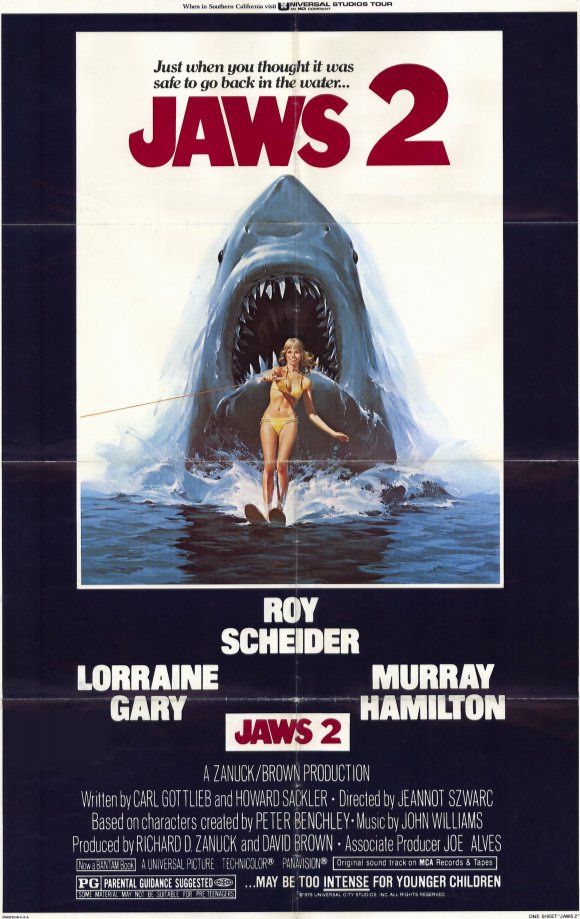
Jaws 2 movie poster

WARNING: THIS REVIEW DOES CONTAIN SPOILERS, BUT YOU PROBABLY KNOW WHAT THEY ARE ALREADY.

“Just when you thought it was safe to go back into the water…”

Ah, what a great tagline to a halfway decent sequel. “Jaws 2” is easily the best sequel to Steven Spielberg’s horrifying classic which became the first movie to make over $100 million dollars, so of course a sequel had to be made. Another shark is off the coast of Amity Bay, to get revenge or just to feed or just to scare the crap out of the residents who depend on the summer months for their very existence.

Some people seem to think this is the same shark from the first movie… What are you, stupid? IT GOT BLOWN UP! This is probably the wife of that shark, or maybe it’s his mother. Maybe it was the shark’s gay lover or something. We never do learn about the shark’s relatives, do we? I am assuming that the shark in “Jaws 3-D” was not a distant relative, but someone who just hates Florida theme parks with a passion. As for the shark in “Jaws: The Revenge,” that one was definitely a relative. It had to be to swim all the way to the Bahamas to go after the damn Brody family!

Anyway, back to this shark, also a relative who waited a little while after the first one to strike. This sequel takes place a couple of years after the original and opens with some divers exploring the wreckage of the Orca who get attacked by the shark. Immediately, we zoom ahead to Chief Brody (Roy Scheider) rushing off to the opening of a new hotel on Amity Island which his wife (Lorraine Gary) has helped out with. We meet up again with Mayor Larry Vaughn (Murray Hamilton) who is as excited about the summer months as he was previously. We also get to see the two Brody boys, Mike and Shaun, who have grown up a lot since we saw them last.

Then the darn shark appears again when he (or is it a she?) is least expected. There is a good scene involving a water skier which is “Jaws 2’s” first big action sequence. Of course, no one actually sees this shark attack the skier, so they just assume it was some sort of boating accident. Otherwise they would have found out earlier and got rid of the shark sooner, and there wouldn’t be a movie to watch. But then some kids find a beached killer whale on the sand which has had huge chunks of his skin bitten off, and this catches the eye of Chief Brody who becomes convinced there is another shark on the hunt. He has no proof and only his instincts to go on, so naturally no one believes him.

One of the many great things about “Jaws” was the human drama on the island was very strong. Spielberg wasn’t just interested in giving us shark attacks. That brings me to this film’s biggest weakness; the scenes on dry land suffer without the buddy relationship between Scheider and Richard Dreyfuss. The characters are more like clichés this time around instead of fully realized human beings, and the story is more contrived. One guy standing in Brody’s way is Len Peterson (Joseph Moscolo) who doubts his sanity every step of the way. He is the movie’s key idiotic character, and the one guy we desperately want to see get eaten by the shark. When movies have characters like these, it doesn’t take long for audiences to get aggravated by them.

You’d also think Mayor Vaughn would know better this time around. He went through all this crap with the first shark, and now he thinks Brody is misguided in his assumptions yet again. He urges Chief Brody not to press it this time around, and their working relationship in “Jaws 2” ends up seeming completely ridiculous. If the Mayor is not going to be trusting of Brody’s instincts, then he should have fired him a long time ago.

There was a naturalness to the characters and acting in “Jaws” which unfortunately does not carry over to “Jaws 2,” and this sequel is deeply affected as a result. It would have been great to have Spielberg and Dreyfuss back for this one, but they had better things to do like making “Close Encounters of the Third Kind.” Actually, it would have been a huge shock if Spielberg came back to direct this one, considering the hell he went through making the original.

However, if you can get past the contrived screenplay, there are still plenty of shark attacks to enjoy. The shark is still a very threatening villain like its predecessor. Every time that fin comes out of the water, I get goose bumps all over my skin. The tension is still pretty taut as the shark sneaks up on its prey stealthily. There are also a couple of good jump out of your seat moments here, especially one involving Scheider slowly going into the ocean to retrieve some boat wreckage.

While the first shark was indiscriminate in who he, or she, killed, the shark in “Jaws 2” seems to have a big hankering for teenagers, especially ones who won’t stop screaming. One critic, I can’t remember who, said this movie would be a good time for those who enjoy seeing teenagers getting eaten, so I can only imagine what parents around the globe feel about this sequel. After a while, it just seems like the shark is going after these teenagers in order to get them to shut up. It makes you wonder what the shark is thinking throughout, “WHAT ARE YOU STUPID?! I CAN HEAR EXACTLY WHERE YOU ARE YOU STUPID SHITS!!”

The teenagers do a great job of screaming and acting when they are in shock. The moments where they are in shock are very effectively done, and it helps quiet things down before the great white pops up again. Among the kids is Keith Gordon who later went on to star in “John Carpenter’s Christine” and “Back to School” with the late Rodney Dangerfield. Seeing him looking so young here is a bit of a shock after all these years.

The last half of “Jaws 2” has the teenagers out sailing, basically laying themselves out as shark meat. Among these kids are the Brody boys, both who have been grounded from getting into the water because of their father’s suspicions. But what’s a boy to do when a girl’s cousin wants to go with him to the lighthouse? She tempts Michael with that line we often hear teenagers say, “Do you always do what your parents tell you to do?”

Furthermore, why should the older brother have all the fun? Little Sean hitches a ride with Mike who really doesn’t want him around. So, they have the typically brotherly relationship which adds quite a bit to the story. When the teenagers find their lives in danger upon the appearance of the shark, how they feel about each other becomes completely irrelevant as they have to band together in order to survive.

Actually, I wonder if the filmmakers went with teenagers as shark meat in response of the sudden popularity of the slasher genre. I mean, the great white shark is in many ways the ultimate serial killer. He has sharp knives for teeth, and he (or she) can cut you up good. This one leaves no leftovers even if we wanted any, and much blood is spilt.

“Jaws 2” was directed by Jeannot Szwarc, and it is a good thing I am writing down his name instead of trying to pronounce it. He takes on daunting task of following a Spielberg masterpiece with a sequel which can only hope and pray to match the power of the original. The fact he does not entirely succeed is not altogether his fault. No one could ever have expected this sequel to be better than the original, and this certainly could have been a lot worse. Szwarc pretty much films “Jaws 2” in the same manner Spielberg did in terms of the shark attacks, but he also shows us more of the shark as well. While showing the shark takes some of the suspense away, he still does a good job of keeping the viewer on edge as we wonder when the shark will strike next.

Scheider made it clear on several occasions of how he did “Jaws 2” as a contractual obligation to Universal Pictures. I doubt he was all that excited about doing the sequel while the other key players went off to do other things. At least Robert Shaw had a good excuse; his character got eaten in the original. All the same, Scheider is still very strong here as Brody as he tries to convince the town there is another shark out there and makes it clear he’s not going to wait around for everyone to realize this. Scheider is one of the best reasons to watch “Jaws 2,” and he gives the audience a lot to cheer for as the film reaches its inevitable conclusion.

Of course, we all know what happens to the shark at the end. If you haven’t seen the movie yet and don’t want to know, don’t read any further. But it is a very cool death as Brody gets the shark’s attention by banging on a power line and drawing it in by sound. Holding the power line out for the shark to take a bite out of, his glee and anxiety are ever so apparent as he invites the shark to “SAY AHH!!!!!” The death of the shark by electrocution is right on a par with the way the first shark died, and it’s a scene I’m sure audiences cheered like crazy.

Another key ingredient of “Jaws 2” was also one of the main ones from Spielberg’s film, John Williams’ music. His score to the original remains one of the best and most frightening pieces of music ever created for a movie. With “Jaws 2,” Williams takes those themes from the first film and mixes them up with new ones for the characters inhabiting this sequel. It’s another great score which captures the heart and terror which unfolds onscreen. None of the other composers in this franchise came close to matching what Williams did. They simply lost the heart of the music and relied too much on the main “Jaws” theme to carry them through.

“Jaws 2” is understandably no masterpiece, but it is “Citizen Kane” when you compare it to the other sequels which followed it. “Jaws 2” was the last good movie in a series which soon descended into mediocrity. If you have to watch something on cable in the afternoon, you could certainly do worse than watch this one. Besides, it gave us one of the greatest taglines in movie history:

“Just when you thought it was safe to go back into the water…”

Of course, by the time “Jaws: The Revenge” came around, the tagline sounded more like this:

“Just when you thought it was safe to go back to a movie theater…”

* * * out of * * * *

‘Spider-Man 3’ is a Major Disappointment

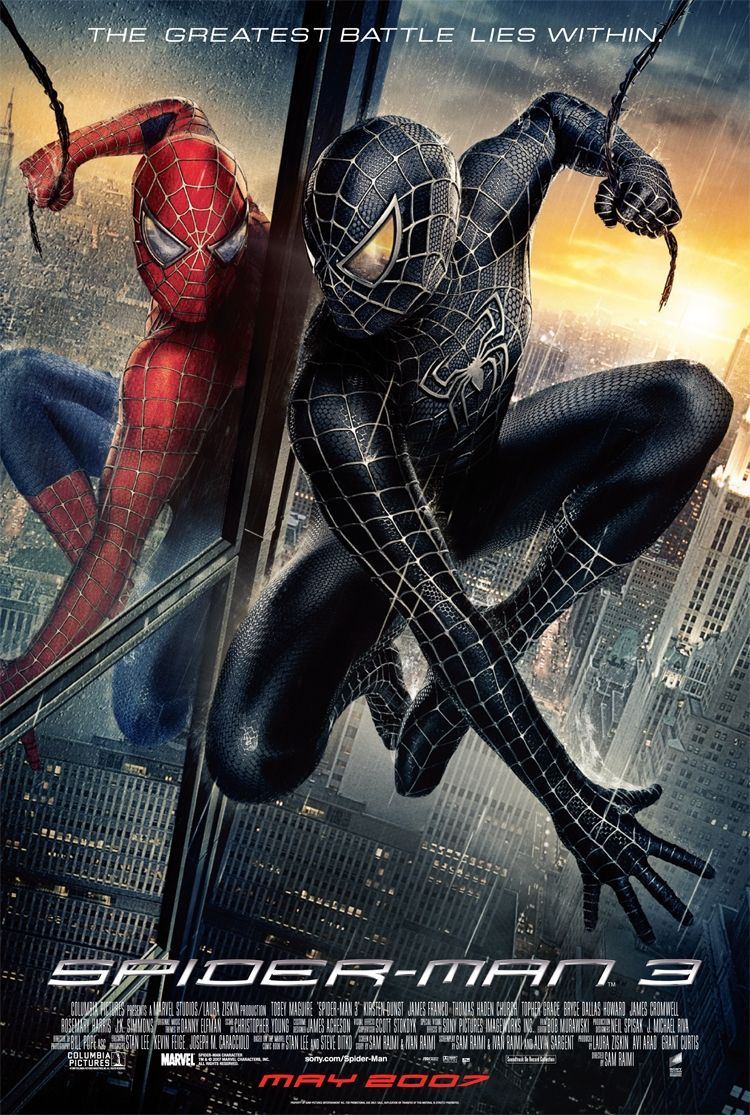
Spiderman 3 poster

After the brilliance of “Spider-Man 2” one of the best comic book movies ever made, “Spider-Man 3” proves to be an astonishing disappointment. Even though this sequel has the same actors and directors as its predecessors, they are faced with a screenplay with too many characters, too many subplots which don’t reach a satisfying conclusion, villains who are not very satisfying, and some character choices which feel out of place in a movie like this.

I already had a problem with “Spider-Man 3” before I went in as there were too many villains for one motion picture. It would have been better for it to have just one villain for Spider-Man to face because it allows the filmmakers to give more attention to the characters to where they can become unforgettable. You can get away with two villains sometimes, but you are better off with one as this movie shows.

This ended up being the last “Spider-Man” movie Sam Raimi directed, and my original thought was he knew this would be the case, so he ended up putting in everything but the kitchen sink. In retrospect, I think the studio forced him to add characters who were big comic book fan favorites, and Raimi obliged even though there was little chance of those characters getting enough screen time. In the process of pleasing the fans, “Spider-Man 3” succeeded in alienating them by throwing things at us the filmmakers assumed we would like.

Spider-Man’s first nemesis is the New Goblin, same as the Old Goblin. We all know the New Goblin is actually Harry Osborn, played once again by James Franco, and he ends up giving his best performance in all of the “Spider-Man” movies here. Franco revels in going all over the place as he seethes at Peter Parker whom he is still convinced killed his father. In the process of trying to kill Peter, Harry gets amnesia and forgets about what Peter supposedly did. But this doesn’t keep Harry from messing with Peter’s life or stealing away those closest to him.

Then comes Spidey’s next darn nemesis, Sandman/Flint Marko played by Thomas Haden Church who was on a roll after his Oscar nominated performance in “Sideways.” This is an interesting villain as you can clearly see what drives him: his love for his sick little girl. While Church does what he can with an underwritten part which has him disappearing from the screen for far too long, he is nowhere as compelling as Alfred Molina was as Doc Ock was in “Spider-Man 2.” Flint never gets the chance to revel in his new-found powers, and he doesn’t feel as threatening as a result.

After that, we get yet another antagonist in the form of Eddie Brock who later turns into one of the most famous comic book villains ever, Venom. Now while I can see how Venom is such an immensely popular character in the “Spider-Man” universe, his appearance in “Spider-Man 3” feels like an afterthought. Furthermore, he is portrayed by Topher Grace who, while having given terrific performances in movies like “Traffic,” is completely miscast. Eddie Brock/Venom feels too broad as he is portrayed here, and we don’t get to invest emotionally in this character as much as we would like to.

Tobey Maguire has long since proven to be one of the best Spider-Man’s we have ever seen on the big screen, and the best acting he does here is with his eyes and face. He can get you right in the heart with just one look, and he never gives you a false emotion in any scene. This is especially the case in a pivotal moment between him and Mary Jane Watson which is truly heartbreaking to watch.

“Spider-Man 3” also sees the famous web-slinger exploring his dark side when an alien symbiote lands down on earth in his vicinity and infects him and changes his behavior. But things soon degenerate as Maguire is forced to play Peter as if he is some sort of emo dude to where he is suddenly struck with the urge to dance in public for no particularly special reason. Some of these scenes are amusing to watch, but they belong in a different film.

It also sucks to see the female characters underused here. Kirsten Dunst is back as Mary Jane Watson, and it’s great to see her again as she has been fantastic in this series. But in “Spider-Man 3” she doesn’t have much to do here other than end up in a perilous state and hanging on for dear life. You’d think at this point Mary Jane would realize she’s better off without Peter as her life remains in constant danger while they are together. How many times do you think you could take fighting for your life when your boyfriend is Spider-Man? Well, if you’re Jack Bauer, I guess you could do it quite a bit. This is regardless of the fact Mary Jane Watson is not Jack Bauer’s girlfriend, but anyway…

Bryce Dallas Howard co-stars as Gwen Stacy, a huge fan favorite of the Spider-Man series, but she gets even less to do than Dunst. I think Gwen ended up here because Marvel and Columbia Pictures insisted on her inclusion as they figured the fans were ever so eager to see this character in any “Spider-Man” movie at that point. Howard is a fantastic actress and makes for a very good Gwen Stacy, but this character has little purpose for being in “Spider-Man 3” other than to please the most die-hard fans.

There are other welcome returns in “Spider-Man 3” like Rosemary Harris who plays Aunt May, the Yoda of Peter Parker’s life who gives him the wisdom he needs to hear. J.K. Simmons remains the consummate scene stealer as J. Jonah Jameson, and he had me in hysterics from his first scene where his secretary reminds him to watch out for his high blood pressure. And yes, Bruce Campbell does his usual “Spider-Man” cameo, this time as a waiter desperate to help Peter and Mary Jane have the most wonderful of times at a restaurant. It’s always good to see Campbell in a movie no matter what kind of role he plays.

The climax has the Sandman teaming up with Venom to take down Spider-Man, and while it is an emotionally charged climax, we still come out of this movie very disappointed as it feels like there are so many missed opportunities. Once again, each of these villains are very underdeveloped to where the stakes don’t feel high, and everything ends up feeling far less exciting. Plus, we have seen Mary Jane in danger far too many times to where everything going on begins to feel boring and redundant. I ended up going on a bathroom break during the movie, something I usually never do, but I’m positive I didn’t miss much.

For what it’s worth, I liked how Raimi deals with the futility of revenge and how it destroys the soul, and he also shows how it is better to forgive. This is something I need to remind myself of more often. It makes for a strong moment between Peter and the Sandman as well as with Harry. It’s these moments where you feel the strength and pain of the characters ever so purely, and this movie could have used many more moments like these.

I couldn’t help but come out of “Spider-Man 3” feeling completely let down. “Spider-Man 2” was so good to where I couldn’t help but come into this one with high expectations. The fact everyone involved screwed this motion picture up feels utterly baffling considering what came before, and the disappointment this sequel generates really stings. I’d like to think that “Spider-Man 3” stands as an example of how not to make a comic book movie, but after watching “The Amazing Spider-Man 2,” it is still a lesson everyone needs to learn.

* * out of * * * *

‘War for the Planet of the Apes’ Caps Off a Truly Great Trilogy

War for the Planet of the Apes poster

The summer 2017 movie season hasn’t necessarily been a bad one, but so far it has been overrun by franchise fatigue. Did we really need another “Transformers” sequel? Was the wait for the latest “Pirates of the Caribbean” really worth it? Can’t Pixar do more than just give us another sequel to “Cars?” Some franchises have seriously overstayed their welcome to where it feels like we need to take a LONG break from sequels of any kind, except of course for the next ones coming from the Marvel Cinematic Universe.

But now we have “War for the Planet of the Apes,” the third in the rebooted “Apes” franchise which is not only the best one to date, but also one of the best movies of 2017. Unlike other sequels which essentially repeat the same story to nauseating effect, “War” is not out to give us a replica of everything which happened before. From the start, we see how far the apes have evolved, and we also see the humans going through a state of de-evolution as well. In this war, it won’t matter who wins because nothing will ever be the same for anybody.

Taking place two years after the events of “Dawn of the Planet of the Apes,” “War” finds the conflict between the apes and the humans getting bloodier and bloodier. Both sides have taken heavy casualties, and the humans have resorted to recruiting apes to betray their own in a desperate effort to gain the upper hand in an escalating conflict. Caesar (Andy Serkis) has now reached a mythic status on the planet as a strong leader, and he now speaks as well as any human. When the movie starts, he has just survived another battle which leaves many dead in its wake, but instead of killing the remaining human soldiers, he sends them back to their base with a message to their leader, leave us alone. At this point, Caesar merely wants to protect his fellow apes and everything which is rightfully theirs.

But after being reunited with his loving family, Caesar suffers an unimaginable tragedy perpetrated by a military unit led by the ruthless Colonel McCullough (Woody Harrelson), and he heads out on a mission of revenge which, to quote a Klingon proverb, will be best served cold. Joined by several of his closest friends which include the wise and benevolent Maurice (Karin Konoval), Caesar comes not just to understand the world around him, but also about himself and of how he may be the maker of his own fate.

Whereas “Rise” dealt with evolution and how humans may not be a superior race of beings, and “Dawn” observed how humans and apes can be their own worst enemies, “War” focuses on the themes of vengeance and hate and what they do to the soul. Caesar’s quest for revenge is completely understandable, but his friends worry about what his hate for the Colonel is doing to his inner self. Caesar finds his strength from within and is as wise as he is strong, but we can see his soul is being corrupted on this mission as he is determined to exterminate his enemy with extreme prejudice.

The cost of revenge is a common theme in many stories, but “War” treats it with a great deal of intelligence. Caesar is constantly haunted by visions of Koba (Toby Kebbell) whose treacherous actions led Caesar to drop him to his death in “Dawn.” Maurice, the Obi-Wan Kenobi of these “Apes” movies, reminds Caesar of how Koba never got past his hate for humans to see the need for peace. But while Caesar convinces himself his motives are far purer than Koba’s, he comes to realize he is no different from Koba as his need to exact revenge takes precedence over everything else which holds great meaning in his life. The question is, can Caesar pull out of this moral nosedive before it’s late, or will he sink into an abyss of hatred which will rob him of all he stands for?

Not enough can be said about Andy Serkis’ performance as Caesar, and his work should have netted him at least one Oscar by now. We have seen Caesar go from being a frightened young ape into a hardened warrior, and Serkis has made every emotional beat count for something deep and true. While the visual effects help to illustrate how he has paid a price for the war being fought, it is Serkis who gives these effects soul and meaning as he plumbs the depths of Caesar to give us a character who is wonderfully complex and haunted by past deeds which cannot be simply washed away.

Woody Harrelson once again reminds us how he can play just about any role given to him these days with his portrayal of Colonel McCullough. His performance draws a bit from Marlon Brando’s in “Apocalypse Now” as, like Colonel Kurtz, McCullough has become a rogue soldier as his need to wipe out the apes and save the humans comes from a place of pain and delusion instead of from a higher military authority. Part of me expected to McCullough to be the usual military antagonist movies of this kind typically employ, but Harrelson gives this character much more dimension than you might be anticipating, and he matches Serkis scene for scene as their characters come to discover how alike they really are.

In addition, Serkis and Harrelson get strong support from Karin Konoval who makes Maurice far wiser than CGI can ever convey, Steve Zahn whose character of “Bad Ape” is kind of the equivalent to “Harry Potter’s” Dobby, and Amiah Miller is a scene-stealer as the mute war orphan who comes to be known as Nova.

Matt Reeves, who directed “Dawn,” returns to helm “War” and tops what he gave us before. The third movie in a franchise usually falls back on a well-trod formula, but he instead advances the plight of the apes to another level which furthers their evolution, and of the humans’ furious attempts to eradicate them which reveals their failings and a tremendous lack of understanding about where we all came from. And while the visual effects are tremendous in how they make the apes look ever so real, they are not the point. Reeves’ focus is more on character and performance more than ever before, and it is those things which make “War” especially epic. A lot of summer blockbusters are geared towards wowing us with special effects to where the human element is lost, but Reeves and company have the special effects serving the movie and its characters in a wonderfully effective way. On top of all this, “War” is well-served by one of Michael Giacchino’s best film scores to date.

The “Apes” reboot trilogy now joins the company of great cinematic trilogies such as Episodes IV, V and VI of “Star Wars,” the Jason Bourne trilogy, and “The Lord of the Rings” among others. It’s so pleasing to see filmmakers give us the kind of summer blockbuster many don’t always expect to see, one filled with great performances and intelligence as well as characters who are very interesting and whom you want to root for. Many blockbusters are the equivalent of a fast food meal which you may have enjoyed eating but which does not leave much of an aftertaste, but this is epic filmmaking which you can’t help but be emotionally drawn into. In a summer movie season which has been lacking to say the least, “War for the Planet of the Apes” is a real winner.

I also have to say “War” kept reminded of a Talking Heads song called “(Nothing But) Flowers.” As apes and humans traverse a landscape dominated by trees, rocks and lakes to where you can’t remember the last time you saw a building, the following lyric kept playing in my head:

“If this is paradise, I wish I had a lawnmower.”

* * * * out of * * * *