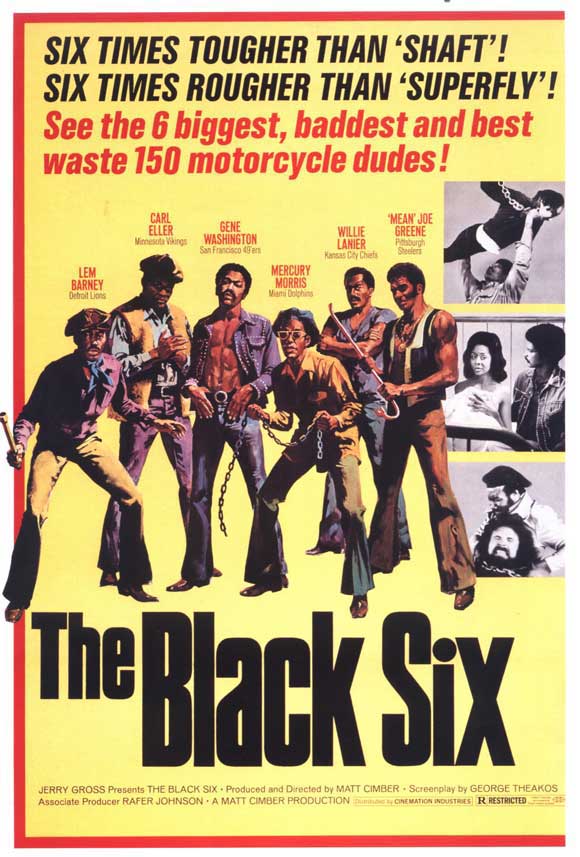
On February 22, 2011, the Grindhouse Film Festival presented their answer to Black History Month with the blaxploitation classic “The Black Six.” This took place at New Beverly Cinema, and the organizers of the festival, Eric Caidin and Brian Quinn, had this to say, “As white guys, we find this an important part of black culture.”
Joining them was the director of “The Black Six,” Matt Cimber. He announced to the audience this was the first time he has seen the movie in 40 years, and he said he “suffered through it.” The film is best known for starring football players who were at their peak: Gene Washington, Mean Joe Greene (his name generated the biggest applause), Mercury Morris, Lem Barney, Willie Lanier, and Carl Eller. Cimber’s agent at the time told him he could put together a bunch of football players if he could put together a movie. The only catch was there could be no drugs, no swearing, and no naked women.
Cimber said all the guys were game and that he wrote a good script for them to work with. When he started as filmmaker, he was encouraged by a friend to make “black films” because the thought was most people didn’t understand black people. It was fun making “black pictures” for him because there was a lot of great talent in the black community, and many actors weren’t really getting hired.
“The Black Six” also had actual members of the Hell’s Angels in it, and they had to be paid at the end of each day in cash. But there was an even bigger problem: they didn’t like blacks. However, it turned out they were also big NFL fans, and everyone ended up getting along great. The film crew had to work hard though to keep the Hell’s Angels quiet during takes. One of them ended up driving his motorcycle through a hotel!
This film had a budget of $90,000, but each of the NFL players got $10,000 each. Cimber ended up being forced to cut corners wherever he could. The lady playing the farm owner was actually the one who owned the farm they filmed at, and that’s why she’s in the film. Triumph also gave the production some motorcycles to work with although the players said they looked like “little toys.”
The movie came out in 1974 long before the days of VHS, DVD, or any other kind of home entertainment. Back then, if you didn’t get your movie into theaters, you didn’t get your money back and you were dead. When it opened on Broadway in New York, many other movies were opening at the same time, but Cimber proudly said this was the only one with a line around the block.
Matt Cimber went from “The Black Six” to create a “varied” resume which was the result of him never focusing on just one idea or one thing. He also created and directed the successful TV series “GLOW: Gorgeous Ladies of Wrestling” which was a satire of the sport (Quentin Tarantino is said to be a big fan of it). While his work may not cry out for an Oscar, he has had a strong career which has lasted several decades and shows no signs of stopping anytime soon.
On Friday, February 19, 2010, Jason Reitman began his program of movies at New Beverly Cinema in Los Angeles. The first double feature of his program was “Ferris Bueller’s Day Off” and “Election,” great movies dealing with high school and teenagers in an intelligent way and which starred Matthew Broderick. “Ferris Bueller’s Day Off” was one of John Hughes classic films from the 1980’s which everyone has seen at least nine times. Reitman remembered wanting to see it with his dad when it first came out, but his father, Ivan Reitman of “Ghostbusters” fame, was busy shooting “Legal Eagles” and couldn’t get away from the set. They ended up going to the movies later, but instead they watched “Big Trouble in Little China,” John Carpenter’s ode to martial arts movies which was not as successful, but later become a beloved cult film.
Reitman said he considers “Ferris Bueller’s Day Off” to be Hughes’ love letter to Chicago. Indeed, Chicago does look very beautiful as shown here. These days, it’s rare to see it without snow covering it. Richard Belzer has a brilliant quote when he played John Munch on “Homicide: Life on the Street,” “Chicago has two seasons, winter and St. Patrick’s Day.”
Reitman saw Ferris Bueller as the guy who knows everyone is dying from a terminal disease. Knowing this, he lived every day as if it were his last. He then went on to say “Ferris Bueller’s Day Off” is a movie about people dying, and the last moment of joy anyone has comes at the end of the parade when Broderick is out shaking his bod to The Beatles’ version of “Twist and Shout.” The acclaimed director was serious about this and even said, “If you came out of this movie happy, THEN YOU MISSED THE ENTIRE POINT!”
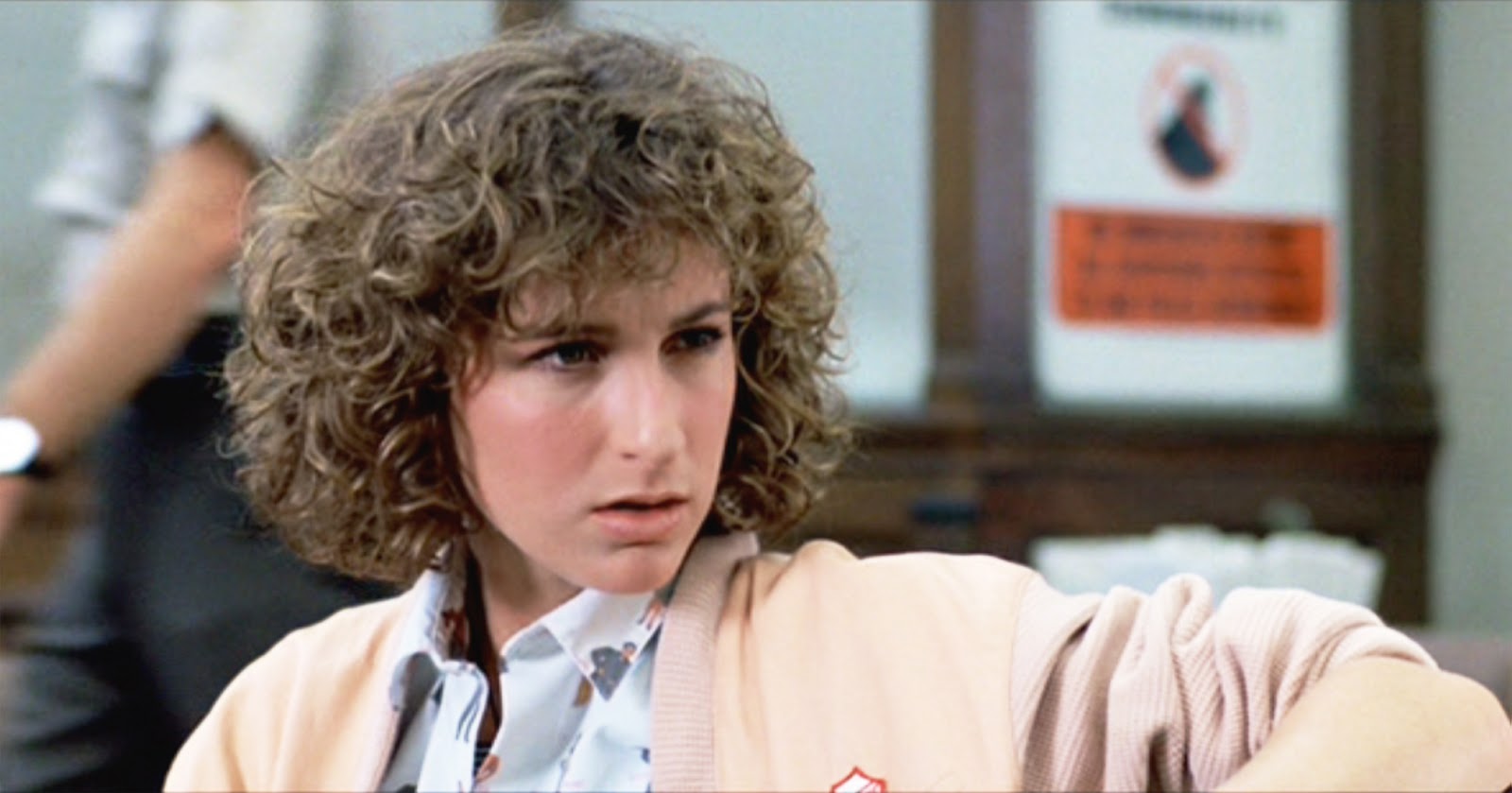
Before the movie began, Reitman brought out a special guest, Jennifer Grey. She played Jeanie Bueller, Ferris’ largely unpleasant and infinitely resentful little sister. Grey would go on to become a big star when she starred in “Dirty Dancing” opposite the late Patrick Swayze. Reitman said he asked Grey to come just this morning, and she was very gracious to appear at such short notice.
Grey warned Reitman upfront she smoked a lot of pot during the movie’s making, so she doesn’t remember a lot of it. However, during her brief time with Reitman, she did remember quite a bit, so maybe all the smoking helped.
One of the big revelations was that Grey admitted was never really a big fan of Hughes before she got cast. She had just seen “Pretty in Pink” which he wrote the screenplay for but didn’t direct, and she declared she didn’t get it. As a result, Grey went into the audition not really caring if she got the part or not. She didn’t even try to hide her attitude towards Hughes when talking to him about how she didn’t really care for his films. It was this attitude which got her cast as the bitchy little sister of Broderick’s iconic character.
Another big revelation we learned was Hughes and Broderick were always at odds with one another, and the tension between them was always high. Broderick found it very hard acting to the camera, one of the signature devices of this movie. Grey also said Broderick was “very slow” in putting a performance together, and this was certainly the case when he played Ferris. It got to where Hughes was constantly waiting for Broderick to start giving him what he wanted, and there were points where Grey said Hughes leaned over to her and said, “Is he ready now? Is he warmed up? Is he gonna give us ‘Brighton Beach Memoirs?!’”
Still, Grey recalled her experience of making “Ferris Bueller’s Day Off” as being “heaven on earth,” and she felt very safe with Hughes as a director to where she never felt self-conscious about anything she did. She admitted she loved every single experience she had making this classic, and she even developed a big crush on Hughes, describing him as being a “Baby Huey.”
Reitman asked how Charlie Sheen got cast as the drug addict who befriends Jeanie Bueller while waiting at the police station. Grey explained she was the one who got Sheen involved as she had just done “Red Dawn” with him. There was actually a lot of improvisation during the police station scene, and Grey said the moment where Jeanie says some people call her Shawna was born out of that.
One of the questions really burning on Reitman’s mind was what it was like for Grey when she worked with “her brother.” Broderick and Grey were actually dating for a time during this movie’s making, and she replied the only time you see her character and Ferris together in the same room is at the very beginning and right near the end.
Before the movie started, Grey finished by saying Hughes did such a great job in capturing the voice of the time and of teenagers in general. She pointed out what we all came to see, that Hughes very much understood the gravitas of being a teenager and of how difficult and frustrating those years can be.
It was great to see Grey come out for this special screening of one of the best and most entertaining movies of the 1980’s. Reitman went on to say we all must be wondering what became of Ferris Bueller after he graduated from high school. There was always talk of a sequel which would show Ferris as a burned-out executive of some corporation, and a day off from this kind of job is always welcome no matter what day of the week it is. What did Reitman think? For that, he said to check out Alexander Payne’s “Election.”
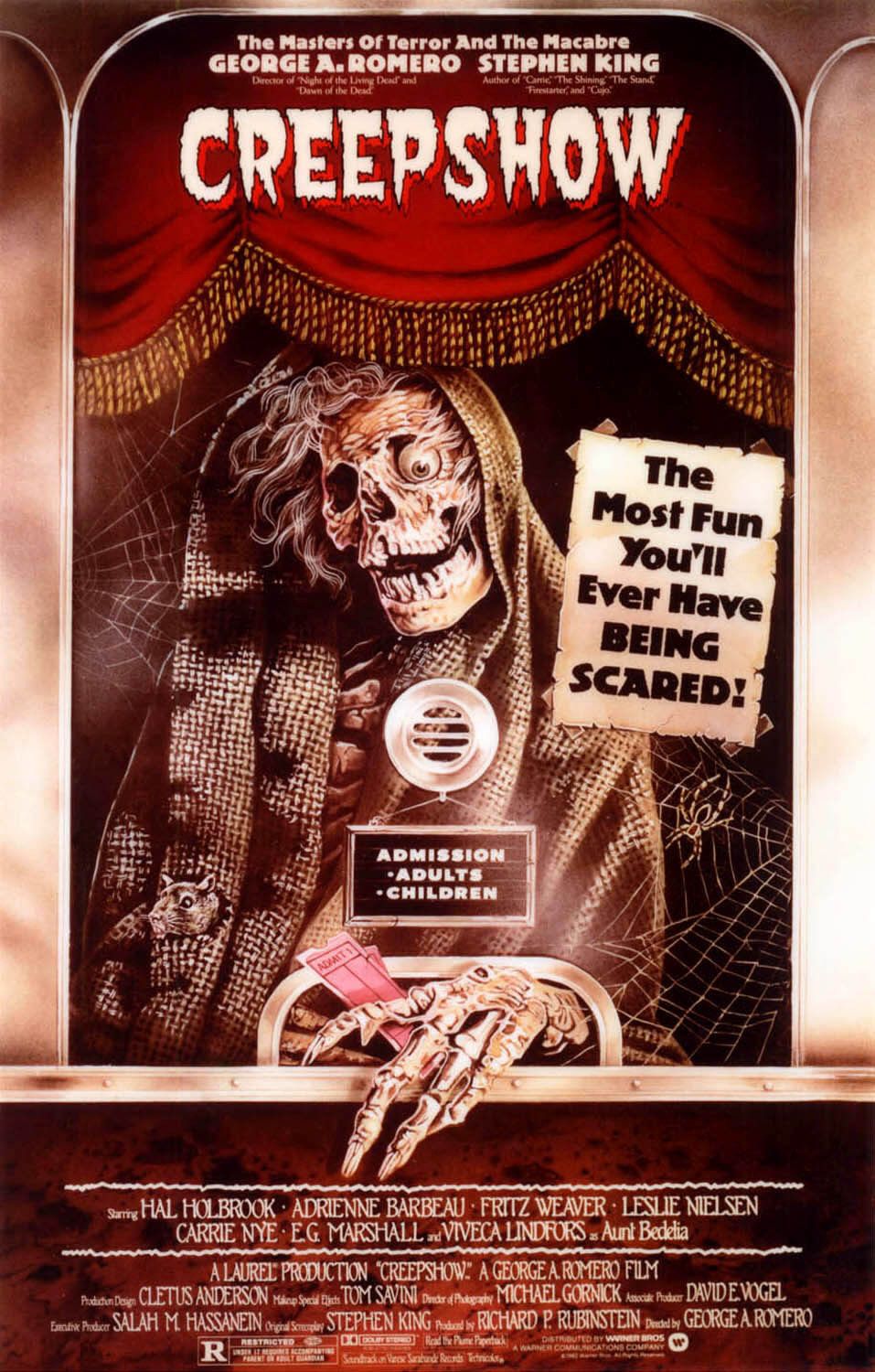
Ah, “Creepshow!” One of the best horror anthologies to come out of the 1980’s, and it is immensely enjoyable if you’re into this sort of movie. It brings us the combined talents of Stephen King and George Romero as they give homage to the E.C. comics of the 1950’s with five different stories of terror. In some ways, this can be seen as more of a comedy than a horror movie. Granted, it does have its scary moments, and a hand coming out of a grave is always good for a jolt, but it is presented in such an over the top fashion to where you have to thank both King and Romero for not taking the things too seriously.
As I write this review, filmmaker Eli Roth is having a two-week festival of his favorite movies at New Beverly Cinema in Los Angeles. This film was playing on a double bill with “Mother’s Day” which I missed, unfortunately, but it was probably because I was more excited about seeing this one. I vividly remember seeing the trailer for it when I went to see, and cry again at, “E.T.” When the image of The Creep first appeared, my brother responded by saying, “Whoa!”
The trailer was amusing and funny, at least until those cockroaches came in during which I had to cover my eyes. Granted, it would years and years before I would have the stomach, let alone the time, to check this one out. Anthology movies and series like “Masters of Horrors” are always intrigued me because they were filled with so many possibilities. Going from one story to the next, you are eager to see where it takes you. The only downside with anthologies is there is usually a weak story among the whole bunch which can weigh down the whole enterprise, but “Creepshow” doesn’t have this problem and is endlessly enjoyable to sit through.
The movie opens with a prologue where a father (Tom Atkins) berates his young son (Joe King, Stephen King’s son) for reading these “crappy” horror comics. The kick of the scene comes from the son calling out his dad for the hypocrite he is when he points out it’s a lot better than the magazines he reads. I couldn’t help but think this kid’s dad has a wide variety of porno magazines hidden where his wife can’t find them. It’s funny how we see fathers not wanting their kids to read “crap,” and then they sit in a recliner with a can of beer boasting of how God made fathers. Poor schmuck.
“Creepshow” then goes straight into its first episode entitled “Father’s Day,” a story of revenge. The patriarch of a family was murdered for being an annoying prick as he furiously demanded his cake to be brought out to him, and now he’s come back from the dead to get that tasty cake he has long been denied. Of all the stories, I consider it the weakest because “Father’s Day” is very short and threatens to be pointless. It does, however, succeed in defining the look of the movie. The acting is over the top, and there is a fantastic use of colors which dominates the movie and gives it a wonderfully pulpy feel. If Dario Argento had ever created a comic book, I’m sure it would look like this.
The great about “Father’s Day” is it allows us to see Ed Harris in a role where he is loosened up. Harris is a great actor who plays mostly dramatic roles in movies, and one day he will win an Oscar. But here, we see him get his boogie on while dancing to some crappy disco music which somehow sneaked its way into a 1980’s movie. You listen to that music, and you’d figure it would have died a fiery death before the 70’s ended. No such luck.
The next story, “The Lonesome Death of Jordy Verrill,” is both funny and sad. It features King in one of his few acting performances as the title character, a dimwit farmer who discovers a meteor which has crashed into his backyard. Jordy gets excited at the prospect of selling this meteor to the local college for a handsome profit, but when he tries to salvage it, it breaks into two and a liquid quickly seeps into the barren ground of the farm. Soon after, everything it touches starts growing green plant life which cannot be contained. It also grows on anything it touches, including Mr. Verrill himself. Seeing King turn into a bush is frightening and morbidly amusing. King may say he is a better writer than an actor, but you can also say he is a better actor than a director (“Maximum Overdrive” anyone?). In the end, he is perfectly cast as the seemingly brainless farmer, and his performance fits both the story and the film.
After that, we get “Something to Tide You Over,” and this one was my favorite of all the stories in the movie. It stars Leslie Nielsen, before his image was permanently altered by “The Naked Gun” movies, as a millionaire husband who takes his revenge on Harry (Ted Danson), the man having an affair with his wife. The way he lures Danson’s character out to the beach and gets him to bury himself in the sand up to his neck is priceless, and you can say there is a bit of “The Vanishing” here as we have a man willing to do anything to find out the fate of his loved one. Danson’s fate, being stuck in the sand as the tide rushes over him is frightening and unnerving to witness. You feel stuck in the sand with him, and it shows how fiendishly clever both King and Romero are at exploiting what we fear the most in life.
Watching this segment today may seem weird as Nielsen is forever known as Lt. Frank Drebin of “The Naked Gun” movies, and Danson is best known for playing Sam Malone on “Cheers.” Seeing them in a serious, albeit a highly exaggerated, story might be hard, but these actors have their serious chops as well as their comedic ones, and both talents serve them well here. Nielsen is a particular hoot as a man so confident of his deviant plan of revenge, yet quickly haunted by the possibility of his crimes coming back to do him in. Nothing can stay buried forever.
Next, we have “The Crate” which features Hal Holbrook as a Professor at a New England college who is saddled with an eternally inebriated wife (played by Adrienne Barbeau) who constantly embarrasses him and herself in front of anybody who happens to be watching. Holbrook’s character is a coward who doesn’t have the cojones to stand up to his wife, but then a colleague of his and a janitor discover a crate beneath the stairs which has not been opened for decades. It turns out to contain a monster who eats human beings whole. After Henry hears of this, he concocts a plan to lure his abusive wife over to the crate.
Holbrook is great at making you feel sorry for his character even while we berate him for being a wimp and not standing up to his wife. Barbeau gives a one-note performance as a humongous bitch with no real redeeming features whatsoever. In the end, this is not a big criticism because Barbeau is given a one-dimensional character to play. The characters are not meant to be complex in the way they handle themselves, and they are here to represent different types of people who meet their predestined fate.
Then comes the last story of the movie, appropriately titled “They’re Creeping Up on You.” This one I had the hardest time sitting through, and I doubt it will be easy for you either if you have an intense phobia of bugs. E.G. Marshall plays Upson Pratt, a thoughtless and hateful bigot who has no sympathy for anyone other than himself. He gleefully takes delight in the suffering of others and lives in a completely sterile apartment which makes him look like he’s a doctor. But his problem now is with the bugs in his apartment, specifically cockroaches. They keep popping up out of nowhere, and their numbers keep growing and growing…I found myself looking at my shoes a lot during this segment, and it reminded me I need to get a new pair soon.
I remember watching one of those “scariest moments in movies” episodes on the Bravo channel. They featured the cockroach segment from “Creepshow” in it, and it turned out the segment was more of a socially conscious piece than people realized. This is after all a Romero film whose “Dead” movies are loaded with social commentary, and the whole point of the “Creeping” segment was to look at bigotry how what we fear the most we end up empowering. We invite our fears to mess with us, and sometimes they eat us whole. Suffice to say, this is very much an anti-racism piece, and it’s the strongest episode in the movie. Marshall gives a brilliantly zany performance as a man who cannot control the world around him any longer, and who could never really control it in the first place.
Eli Roth had programs for his festival entitled “The Greats of Roth,” and in it he summed up this “criminally underrated” movie perfectly:
“It’s amazing to see how many comic book and graphic novel adaptations today are praised for getting the ‘look’ of the comic perfect, and nobody ever seems to mention this film. This was the first time that Romero was really surrounded with a star-studded cast, and you see Romero, King and Tom Savini all coming together to create one of the most visually spectacular and fun horror films of all time. They set out to recreate the look and feel of the old E.C. Comics and nailed it perfectly.”
“Creepshow” is indeed one of the most deliriously entertaining horror movies ever made, and it is a visually stunning achievement made on what must have been an especially low budget. There were many other movies to come out of this which tried for the same look, but none of them succeeded at it quite like this one did. This is just a fun, fun, fun movie for people who dig this sort of thing, and to see it on the big screen was a real treat. As the movie’s tagline says, it is the most fun you will ever have being scared.
* * * * out of * * * *
WRITER’S NOTE: This review was originally written in 2008.
Nicholas Meyer was the guest of honor at New Beverly Cinema on August 12, 2012 where “Star Trek II: The Wrath of Khan” was being shown. This classic sequel was being screened as a double feature with John Carpenter’s “The Thing” as part of the New Beverly’s tribute to movies from the summer of 1982. Meyer thanked the sold-out audience for showing up and admitted it was “preferable to being outside in this weather” where the temperature was inching closer to triple digit territory.
Actually, seeing Meyer appear in person for a screening for “Star Trek II” was a bit of a surprise. Last year, American Cinematheque presented a film program of the first six “Star Trek” movies, but Meyer politely declined to appear for the “Star Trek II” screening because he felt his head would explode if he was asked another question about it. In a sense, you have to be sympathetic to him because this is now a 30-year-old movie, and he has probably been asked every conceivable question about it. Meyer even went out of his way to tell audiences at the start, “I’m sorry if you’ve heard all these stories before. These stories can also be found in my memoir entitled ‘The View from The Bridge: Memories of Star Trek and a Life in Hollywood.’”
Meyer recalled how, after directing “Time After Time,” he wanted to do an adaptation of a Robertson Davies novel and would not consider anything else. But one evening while he was “flipping burgers” in his backyard, Meyer said a friend of his, an executive at Paramount Pictures, encouraged him to meet with producer Harve Bennett about the new “Star Trek” movie. Meyer ended up asking his executive friend, “Is that the show with the man with pointy ears?”
He met with Bennett who had gotten his start as a television producer on shows like “The Mod Squad” and “The Six Million Dollar Man,” and Meyer said they both remain friends to this day. Bennett ended up getting Meyer to watch “Star Trek: The Motion Picture” and episodes of the original “Star Trek” series so he could get familiar with the show and its characters.
Watching the show, Meyer said, “reminded me of something I loved as a kid” but he couldn’t recall what exactly. But it was late one night when he woke up at 4 a.m. in the morning that Meyer suddenly remembered: “Star Trek” reminded him of Captain Horatio Hornblower, a fictional sea captain who sailed the sea during the Napoleonic Wars in novels written by C.S. Forester. Meyer then envisioned this movie as “Captain Hornblower in space,” and from there he said he got a “hard on for doing a space opera.”
Four drafts had already been written for “Star Trek II,” and Bennett told Meyer Paramount was currently waiting on number five. Meyer said he had asked Bennett for the fifth draft and eventually got it after a delay, describing it as being 180 pages long and that he didn’t understand what he was reading. Meyer said he then asked Bennett if he could read the fourth draft, and he said Bennett ended up telling him, “Look kid, you don’t understand, all those previous drafts were just attempts at making a second ‘Star Trek’ movie.”
Meyer said he then suggested to Bennett they get all the previous drafts, read them over and then make a list of things they liked so he could try and weave them into a new script. The only problem was Industrial Light & Magic needed a script in 12 days so they could prepare the special effects for the opening. Meyer said he then asked Bennett, “What opening?”
“Star Trek II” already had a date it was set to arrive in theaters on, and this made writing a new script problematic. Bennett said it would take too much time to make Meyer a deal to get an additional writing credit, and Meyer ended up telling him, “Look, forget about the deal, forget about the writing credit, forget about the money. We don’t work on this new script now, there will be no movie.” Among the ideas kept from the previous drafts were the Genesis Device, Lieutenant Saavik (played by Kirstie Alley), and Captain Kirk as a dad.
When asked about what it was like working with the “Star Trek” actors, Meyer responded, “Have you seen the movie ‘Galaxy Quest?’ That movie was made for me!”
Meyer said the actors were very helpful in terms of crafting the script as they had already inhabited these characters for many years. Much of the talk, however, was on William Shatner whom Meyer described as “a very good actor.” Meyer also said Shatner was “very protective” of Kirk and that he is always the hero and in your face. In directing Shatner, Meyer described him as getting better the more he did a scene because he started getting bored to where he stopped striking an attitude and just became Kirk. This led Meyer to creating excuses to shoot scenes with Shatner over and over again like saying, “The sound’s not right there…”
There was also much talk about the late Ricardo Montalban who played Khan, and Meyer recollected he gave Montalban a copy of “Moby Dick” when they first met to talk about the movie. As an actor, Meyer said Montalban “hit all his marks” perfectly, but that he had to rein the actor in during Khan’s introduction. The character’s opening scene sounded like a rant, Meyer said, when Montalban first performed it, and he ended up taking the actor to the side and told him about a famous piece of acting advice once given by Sir Laurence Olivier:
“You shouldn’t show the audience your top because if you do, then you will have nowhere to go.”
When asked why Kirk and Khan never shared a scene together, Meyer said he didn’t realize this was the case while he was writing the script, and he found it impossible to put them together in a two-shot. Meyer then joked that these characters have Skype and that their conversations had to take place this way. He also answered the question he is most asked when it comes to talking about Montalban, “Yes, that is his real chest.”
Looking back at “Star Trek II: The Wrath of Khan” these days, it does appear to represent one of Hollywood’s first attempts at a franchise reboot as the original, while a commercial success, was not well-received critically. While he probably has answered every conceivable question regarding this movie, it was still great to see Nicholas Meyer at New Beverly Cinema as he has been responsible for some of the very best “Star Trek” movies made so far, and his talent as a writer and director remains strong to this day.
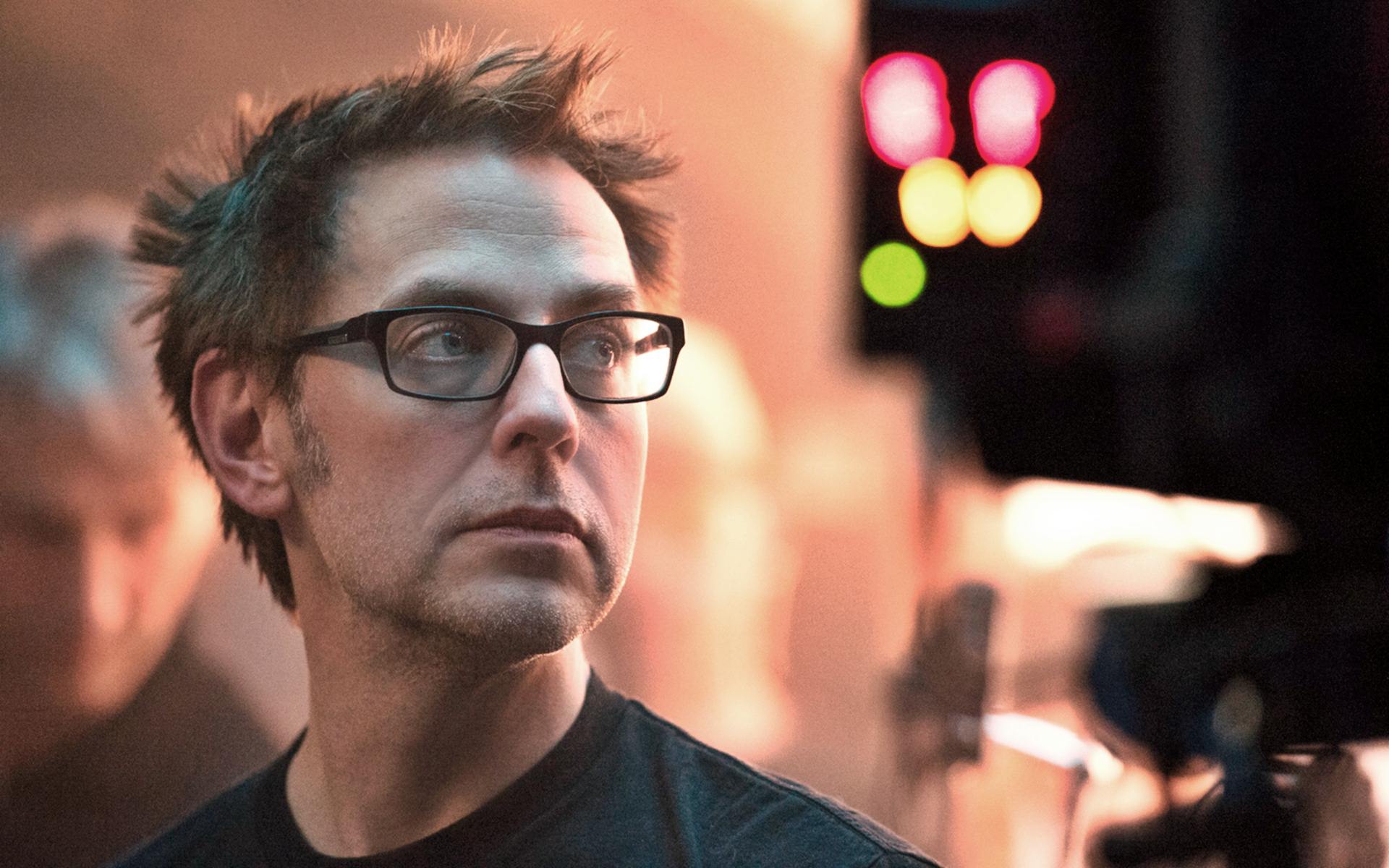
The screening of “Tromeo and Juliet” at New Beverly Cinema brought many people to the theater who were involved in its making. Among them were the movie’s director and co-founder of Troma Entertainment Lloyd Kaufman, actor Will Keenan who played Tromeo, and actors Sean Gunn and Stephen Blackheart among others. But the real star of the evening was filmmaker James Gunn who entertained the devoted audience with many anecdotes about “Tromeo and Juliet’s” making. Best known these days for his films “Slither,” “Super,” for writing the script to the “Dawn of the Dead” remake and most especially for “Guardians of the Galaxy,” “Tromeo and Juliet” was one of his first jobs in the movie business.
“Tromeo and Juliet” is, of course, loosely inspired by William Shakespeare’s classic “Romeo and Juliet,” and Kaufman said he and Troma Entertainment had tried to write the script for three or four years and could not get it right. It was his sister’s best friend who sent Gunn’s resume to Kaufman’s attention, and at that point Gunn had already graduated from Columbia University with an MFA in Writing Fiction. Kaufman, however, noticed something different about him.
“What caught my attention was he vomited onstage, that he was a performance actor who vomited onstage,” Kaufman said about Gunn. “I didn’t know whether he vomited because he was nervous or because it felt it was entertaining or because perhaps he had studied all the work of Terence Malick. But whatever it was, it was sort of like that moment in ‘The Producers’ when Zero Mostel sees his Hitler and says ‘you’re my Hitler!’ James Gunn was ours.”
Gunn said he didn’t actually vomit onstage and that Kaufman may have read someone else’s resume, but it didn’t matter because he got the job.
Keenan said he had not seen “Tromeo and Juliet” in fifteen years before this night and he joked that it looked twenty years old when it first came out. But for Gunn, this was part of the movie’s design.
“When we were doing the movie, I remember that I wanted it to look really dated,” Gunn said. “I used to love ‘Valley Girl’ and I loved looking back at it because it looked so 80’s. And I wanted to make this one look as 90’s as possible (it came out in 1997).”
Gunn recalled writing the first draft for “Tromeo and Juliet” in about a week and a half, and he gave it to Kaufman and assumed he was going to love it. Kaufman, however, found Gunn’s script to be “too filthy,” and this is saying a lot because Troma Entertainment movies usually revel in being filthy. Kaufman said there were about “8 scenes of urination” in the script, and Juliet was originally written to make her first appearance in a porno booth which is where the initial conversations between her and Tromeo would have taken place. Kaufman complained “Shakespeare didn’t have that in mind” when he wrote “Romeo and Juliet.”
There was also a bit said about Jane Jensen who played Juliet. She was not able to attend this screening, but Gunn talked of how he joked around with her throughout shooting. One scene from “Tromeo & Juliet” has her character’s stomach opening up to reveal popcorn and then rats and maggots. Jensen apparently had a near nervous breakdown shooting it as she had a major phobia of the maggots and was screaming her head off as the cameras rolled. Gunn recalls exactly what was going through his head at that moment.
“Wow! Jane’s acting is really good in this scene,” Gunn said. “And then all of a sudden I go ‘holy shit! I think that maybe this is real!’ And then I had that evil filmmaker moment where you go ‘do I keep filming?’”
Gunn ended up reminiscing about a review of “Tromeo and Juliet” he read in Film Threat Magazine, and he felt it captured the movie perfectly.
“They said, ‘I don’t know how to review this film because you can’t win,’” Gunn reminisced. “’If you say that there’s something stupid in here, they (the filmmakers) are going to say yeah, we meant to do that. And if you say there’s something great in here, they’re going to say yeah, we meant to do that.’ And that’s totally true! That is what it is!”
For those of us who have seen “Tromeo and Juliet,” we have to agree the review is really dead on. The movie wallows in bad taste and never apologizes for it, and it becomes all the more entertaining as a result. It was great to see James Gunn at New Beverly Cinema talking about this cult classic because his enthusiasm for this project was contagious. It’s this same enthusiasm which carried over to the movies he worked on from there, and not just “Guardians of the Galaxy.”
While Veronica Cartwright was at New Beverly Cinema to talk about “The Right Stuff,” filmmaker Brian McQuery couldn’t help but ask her a question about another famous movie she starred in, “Alien.” Specifically, he wanted to know more about the “chestburster” scene which is one of the film’s most horrifying moments. The story behind this scene has been told over and over again throughout the years, but Cartwright was still willing to talk and clear up a few things about it.
Legend has it neither Cartwright nor the other actors in “Alien” had any idea of what exactly was going to erupt from John Hurt’s chest. Cartwright, however, said the actors had read the script and knew something was supposed to come out of there. Also, she and Sigourney Weaver had a scene where they were supposed to know what it looked like, but they had no clue what they were going to be talking about. As a result, they visited the studio where the infant alien was being built.
“A few weeks earlier we had gone down and seen the little mockup of that little penis guy with the tail, but it wasn’t working at that point,” Cartwright said of the alien. “It was sort of a gray thing and the artists were saying ‘oh his teeth will be like this and he breathes…’ It was just like a little puppet thing that came out.”
Then came the day when the chestburster scene was shot, and Cartwright described it as though she had just filmed it yesterday.
“We’re all upstairs in the dressing room and they take John (Hurt) down, and for four hours we never saw John. John was having his false chest made,” Cartwright said. “When we were told that we could come down to the set, the entire set was dressed in plastic, everybody’s wearing raincoats, and there were big buckets of this awful stuff that smelled like formaldehyde. It stank and you gagged when you first went in there.”
“So, here’s John packed in this thing, and they had four cameras so that they would get everybody’s reaction,” Cartwright continued. “What happens is that they cut the t-shirt so that the puppeteer could push the thing through, so we all start leaning forward because you’re just fascinated to see what’s going to happen. One of the effects guys told me, ‘oh you’ll be getting a little blood on you,’ and I said, ‘oh okay.’ Not thinking, I leaned right into it. I had a jet pointed at my face, and it just shot me square in the face. It was unbelievable, and then I backed up and (in the dailies, it’s the most hysterical thing) my knees hit the back of a set piece and I flipped upside down to where you can see my cowboy boots sticking up above. I did not expect to get shot with a full blast of blood.
Cartwright pointed out that the scene was done in just one take, and McQuery replied how her reaction looked “really real!” The audience at the New Beverly laughed loudly in agreement with him.
“Years later I worked with that same guy and he said, ‘sorry about that!’ How rude,” Cartwright said.
Looking back, Cartwright described “Alien” as being a very “sweaty” movie because the cast would come on the set in the morning and get covered in glycerin from a pumper. She described this as being “so gross,” but that in the end it was an experience.
While she was primarily at New Beverly Cinema to talk about “The Right Stuff,” the audience was glad McQuery asked Cartwright about the making of Ridley Scott’s classic 1979 film. Just when you think you have heard the definitive story about a classic movie scene, one of its participants comes around to inform you of one or two details you might have missed.
It was a huge shock to learn Bill Paxton just passed away at the age of 61 due to complications following heart surgery. He was an actor who was always working and never seemed to be lacking for jobs in front of or behind the camera. His sudden passing sent shock waves through Hollywood and movie fans everywhere, and we are all mourning the actor who was unforgettable in “Aliens,” “Apollo 13,” and the HBO series “Big Love.” The following article is one I wrote after I attended a screening of vampire movie he was gleefully fantastic in, “Near Dark.”
Bill Paxton and Jenette Goldstein stopped by New Beverly Cinema on Thursday, May 6, 2010, to introduce a screening of “Near Dark.” The cult classic was a vampire western horror hybrid made back in 1987 by Kathryn Bigelow, and it was being shown as a double feature with her Oscar-winning triumph, “The Hurt Locker.” It was not a sold-out screening, but this ended up making it all the more intimate for those who showed up. Paxton looked especially happy to be there as he was astonished there was actually a print of this movie still in existence.
When Paxton and Goldstein made “Near Dark,” they were just coming off of James Cameron’s “Aliens.” Paxton played Hudson, the soldier who thought he was so bad ass, and later turned into perhaps the single most annoying coward in cinematic history. Goldstein played Private Jenette Vasquez, one of the fiercest soldiers you could ever hope to meet and who, unlike Hudson, remained just as fierce when things got worse. Bigelow, who would later marry and divorce Cameron, called him to ask if it was okay to use some of his “Aliens” actors for “Near Dark.” Clearly, he said yes, so Paxton and Goldstein, along with Lance Henriksen, got parts in Bigelow’s movie. Paxton even said in one scene from “Near Dark,” the man who ends up sticking his hand out the car and giving him the finger was Cameron himself.
Having gone through what Paxton described as the “baptism of fire” with Cameron on “Aliens,” he, Goldstein and Henriksen formed a strong family unit as a result which made the making of “Near Dark” feel like a homecoming. When someone asked what the difference was in directing styles between Cameron and Bigelow, Paxton said bluntly, “No one else is like Cameron.”
As for Bigelow, Paxton described her as the prettiest director he has ever worked with. According to him, she absolutely loves actors and encouraged them to come up with stuff for their characters throughout the shoot. Goldstein went on to talk about how the actors did an improvisation on how they would block out the sun in the car while driving around town in broad daylight. They came up with the idea of putting aluminum foil on the windows which blocked out the rays that would have immediately broiled their fragile skin and reflected them away so they could live on to do what they did best, suck the blood out of clueless human beings. The way Paxton saw it, most of “Near Dark” was improvised, and he said it was great to work with a director who was so excited to work with actors.
In regards to Henriksen, Paxton described him as “a guy you could never really read.” Back then, Henriksen had these intense finger nails which he had to cut off as Paxton described it, and Paxton even went on to talk about the time he and Henriksen were driving down the highway and got pulled over by the police. As the police officer was getting out of his patrol car, Paxton said Henriksen looked at him and said, “Should we take this guy out?”
Actually, that led to Paxton telling a story which Henriksen just loves to tell about “Near Dark.” During the times they were shooting at night, Paxton, who was made up in his gory vampire makeup as though half his face was chopped off, kept going up to people driving through town, telling them he had just been in a horrible car accident. This little prank always ended with Henriksen saying, “If you think he looks bad, you should see the other guy!”
Paxton said he saw “Near Dark” as a “Bonnie & Clyde” vampire movie. Tangerine Dream composed the movie’s score which is fantastic, and the movie is filled with other memorable musical selections. There was a great cover of “Fever” by The Cramps which was used in the pivotal bar scene where everything gets turned into a bloodbath. But Paxton said his favorite piece of music used was “Naughty, Naughty” by John Parr as it really sets the scene for when the vampires end up depriving a saloon in the middle of nowhere of its customers and employees. Apparently, Bigelow ended up paying for the rights to the song out of her own pocket.
One audience member asked Paxton and Goldstein if they had any Tim Thomerson stories to tell us. Thomerson played Caleb’s father in “Near Dark,” but he is best known for portraying Jack Deth in “Trancers” and its numerous sequels. Both actors said they had many great stories about Thomerson to tell us but basically summed him up as a great guy to hang out with who did so many great impersonations, his best being of John Wayne forcing himself on Walter Brennan.
In regards to character, Paxton saw his character of Severen as a Billy the Kid kind of vampire, wild and reckless in how he conducted business. He also said “Near Dark” owes a great debt to Anne Rice and her Vampire Chronicles which includes the books “Interview with A Vampire” and “Queen of The Damned.” To get into character, Paxton said he read Rice’s books throughout the shoot.
Goldstein said she saw her character of Diamondback as someone out of the Depression era or “The Postman Always Rings Twice,” someone who got by and survived any which way she could. She was perfectly cast in the role as very few actresses back then were allowed to play tough female characters who didn’t need a man to defend them at all.
Another audience member told Paxton he was a big fan of “Frailty,” his directorial debut from a few years back, and wanted to know if he was planning to direct again. Looking back on “Frailty,” Paxton said he had a great experience making it and would love to direct again if he can ever get out of “this damn show” he’s on (you may have heard of it – “Big Love” on HBO). Currently, he is looking over a few projects he is interested in helming and hopes to work behind the camera again really soon.
It was great to see Paxton and Goldstein come out and speak with the fans. Surprisingly, a large portion of the audience had never seen “Near Dark” before, so neither of them wanted to keep the audience waiting too long to see it on the big screen. “Near Dark” may not have been a big hit when first released, but it has more than earned its cult following especially in light of Bigelow’s deserved Oscar win, something which was a long time coming.
Actually, my favorite moment of the evening happened as Paxton and Goldstein were on their way out of the theater when an audience member brought up the subject of another HBO show, to which Bill replied, “Fuck ‘True Blood!’ We were doing this 20 years ago!”
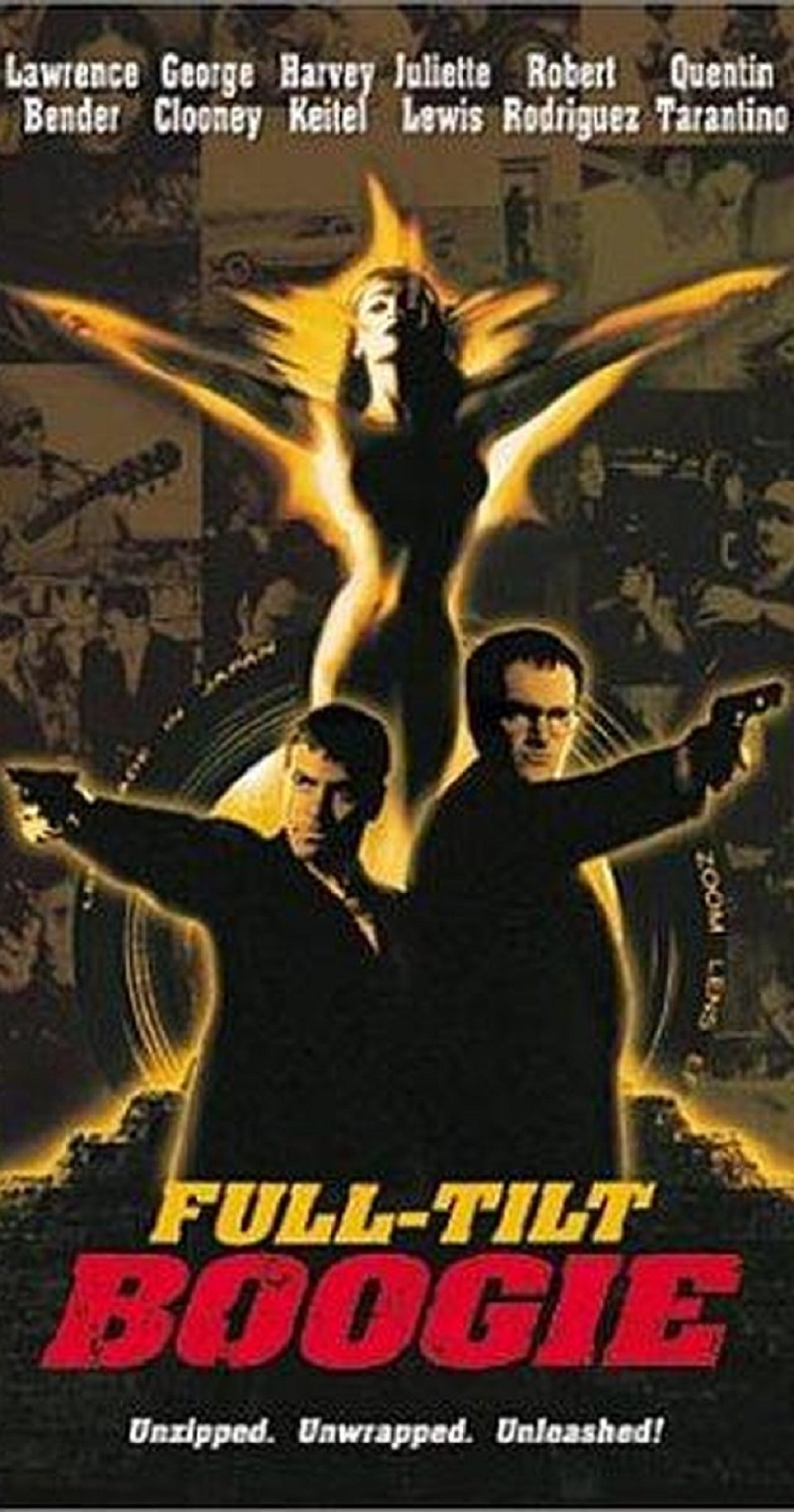
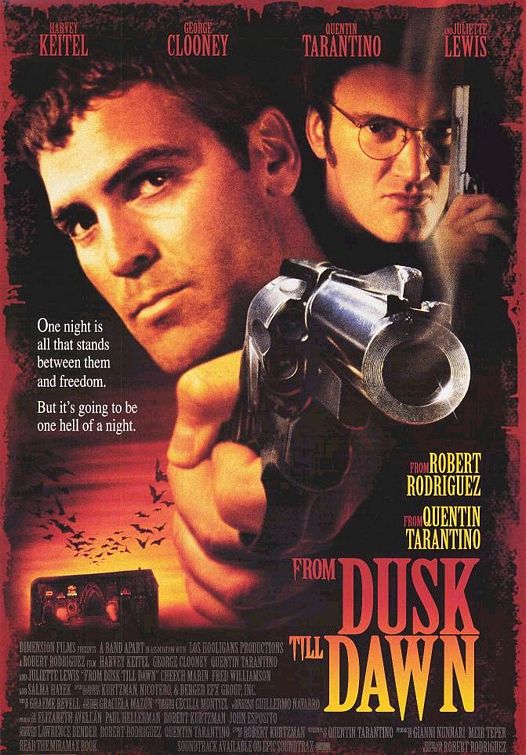
After a double feature of William Friedkin’s “To Live and Die in L.A.” and “Rampage,” which is not currently available on DVD, the audience members at New Beverly Cinema were in for a special midnight treat as the theater held a screening for the 20-year-old documentary “Full Tilt Boogie.” Directed by Sarah Kelly, it chronicles the making of Robert Rodriguez’s action horror cult classic “From Dusk till Dawn” which starred George Clooney and Quentin Tarantino as outlaw brothers who, along with a vacationing family, end up at a rowdy Mexican bar which turns out to be infested with vampires. The documentary introduces us to those people who worked behind the scenes on the movie, of why they want to be a part of show business, the fun they have when the cameras are not rolling, and of the complicated relationship between movie studios and unions.
Introducing this screening of “Full Tilt Boogie” was Kelly, and she was joined by her producer and friend Rana Joy Glickman. The emcee who welcomed them remarked about how cool it was this documentary was playing at the New Beverly and that it was sharing a marquee with Friedkin’s “Cruising.” To this, the emcee said about Kelly, “Whoa! She scored good!”
Kelly welcomed all the “insomniacs” who came out to see her documentary and explained how it became a reality.
“The reason this movie came about was that Robert Rodriguez and Quentin were about to start shooting ‘From Dusk till Dawn,’ and it was an $18-million-dollar independent movie and the unions were pissed,” Kelly said. “They were like, ‘What do you mean? No, you have to go union.’ And so, there was a big threat of a strike, and Quentin thought it would be cool to document it.”
“I had worked for him on a little movie called ‘Pulp Fiction’ and a couple of other movies he was involved with,” Kelly continued, “and he knew that I was studying to be a director so he gave me a shot. At the time, I was taking a break from production and I was working part-time in a law firm and I was like, ‘So is this for real? Should I quit my job?’ And he said, ‘Uh, quit your job yesterday.’ So, I did. We wrangled our little, tiny, hardcore crew and we started shooting, by the way, on 16mm film. Nobody shoots documentaries on 16mm film anymore, but we did. The union threat kind of turned into a cold war and I asked Quentin if we could keep shooting and just do a love letter to the crew. I pitched it as kind of like ‘Hearts of Darkness’ (Eleanor Coppola’s documentary on ‘Apocalypse Now’), but not that dark. Quentin said, ‘Yeah, that’s really fucking cool!’”
As for Glickman, she claimed to have hundreds of stories to tell about the documentary and “From Dusk till Dawn,” but she chose to tell only this one.
“When we finished ‘Full Tilt Boogie’ we were just so pleased that we finished and we got to make the posters for the film, not the one that Harvey Weinstein had selected,” Glickman said. “Our favorite poster is Sarah’s design, and it was Ken (Bondy), the craft service guy on ‘From Dusk till Dawn,’ standing there with a tray of lattes and it said, ‘From the maker of coffee on Pulp Fiction, we bring you Full Tilt Boogie.’”
Kelly responded, “That’s a great poster, right?”
“Full Tilt Boogie” may not be the masterpiece “Hearts of Darkness: A Filmmaker’s Apocalypse” is, but it’s still a very entertaining documentary which takes you behind the scenes of a movie’s production in a way few others do. We get to see the challenges crew members constantly face on a movie set, and we also get to take in the fun they have outside of it as well. For these people, this is a job done out of love and far more preferable than working a 9 to 5 job which has them sitting at a desk all day. Kelly certainly did create a love letter to these crew members, and we revel in the festivities they have from one day to the next.
Thanks to Sarah Kelly and Rana Joy Glickman for taking the time to come out, and at such a late hour, to talk about “Full Tilt Boogie” at New Beverly Cinema.
Jason Reitman, director of “Juno” and “Up in The Air,” started the first night of his movie program at New Beverly Cinema with a double feature of “Ferris Bueller’s Day Off” and “Election.” “Election” was released in 1999 and directed by Alexander Payne who would later go on to give us “About Schmidt” and “Sideways.” Reitman said he considers this film to be the unofficial sequel to “Ferris Bueller’s Day Off” as it answers the question; what ever happened to Ferris after high school? Reflecting on what Edward R. Rooney, Dean of Students, said of how Bueller’s life would be in a ruinous state 20 years from now, “Election” shows this wasn’t far from the truth. Here we see Matthew Broderick, still stuck in high school, as Civics teacher Jim McAllister. There is no escaping the hell that is high school for him this time, and he is confronted with a go-getter named Tracy Flick (Reese Witherspoon) who is running for Student Body President.
Reitman started off talking about how Volkswagen was willing to pay a lot of money for Broderick to drive a VW Bug in “Election,” but Payne was adamantly against it. This was proof, Reitman said, of how this was a director who stuck to his guns and never strayed from his cinematic vision.
Whereas “Ferris Bueller’s Day Off” was John Hughes’ love letter to Chicago, “Election” was Payne’s love letter to Omaha. This city in Nebraska has been the setting for just about every movie Payne has made, and Payne told Jason he loves to shoot in the Midwest of America because of “the wind.”
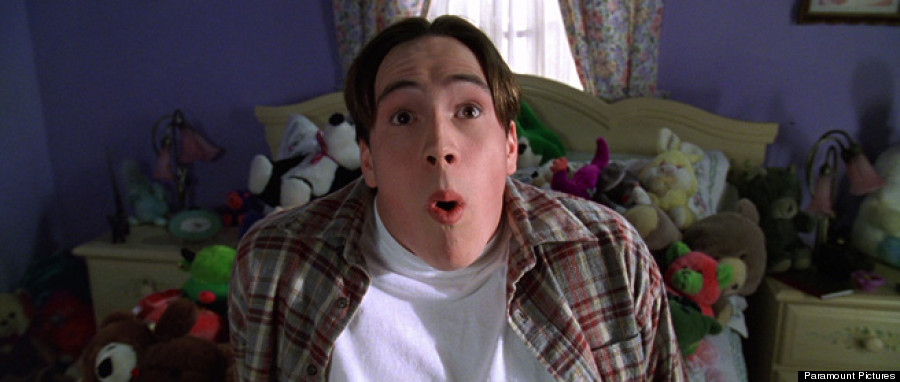
Before “Election” started, Reitman brought out a special guest to talk about the making of Payne’s movie: Chris Klein. Klein played the well-meaning but hopelessly dim high school football star Paul Metzler. After “Election,” Chris went on to star in “American Pie” and later went against type in John McTiernan’s remake of “Rollerball.” That movie was never mentioned during the Q&A, and probably for a good reason.
“This may sound hokey, but this is what dreams are made of.”
That’s how Klein described being cast in this film, and he ended up being plucked from obscurity as a result. At the time, he was living in Omaha and going to high school. People would never take him seriously when he said his dream was to be a professional actor. You have to wonder what those same people must think of him today.
During pre-production for “Election,” Klein said Payne was scouting out high schools and other locations in Omaha when his high school principal, who was essentially acting as his agent at that point, brought Klein to the director’s attention. While Paul Metzler was a football star, Klein had become the star of the plays and musicals at his school. One day, his teacher was instructed to tell Klein to get some papers which he forgot to bring with him. As he was walking down the hallway, Payne passed by him as he headed in the opposite direction. The next day, Payne called Klein up and asked him to audition and do a cold reading for him. Klein said he actually didn’t know what he was reading for and had he known it was for “Election,” he’s sure he would have blown the entire thing.
Klein said he had not seen any of Payne’s previous films, so the director gave him a copy of “Citizen Ruth” which he ended up watching with his mother. For those not familiar with this particular film, it starred Laura Dern as a glue-sniffing drug addict who ends up becoming pregnant, and she spends the movie deciding whether or not to get an abortion. Keep in mind that Omaha, Nebraska is a very conservative area, so neither Klein nor his mother were adequately prepared for this motion picture. His mother ended up saying, “WHAT IS THIS MOVIE??!! IS THIS REALLY THE GUY YOU ARE ABOUT TO WORK WITH???!!”
“Election” marked the first time Klein had ever been on a film set, and he remarked how he never realized they played music during a scene. Also, when he read the screenplay, he told Payne he didn’t know it was supposed to be funny. Payne responded by saying this was exactly what he wanted. He told Klein his character Paul Metzler was nervous and never comfortable in front of people, and this characterization worked out perfectly for this movie.
For Reitman, Klein’s experience making “Election” reminded him of various panels he has been on with actors from his own movies. Many of them said they had no idea what Reitman was doing until the whole thing was over. Klein described what Reitman pointed out as being very similar to his experience making “Election.” It never occurred to him what kind of film they had made until he went to the premiere and saw it with an audience. Afterward, he exclaimed, “HEY! WE ACTUALLY DID SOMETHING FUNNY!”
Admittedly, having grown up in conservative Omaha for most of his life, Klein said there were several scenes which concerned him. But none concerned him more than when Paul gets a blow job. Reitman, however, pointed out how the blow job is a huge moment for Paul in that it is the first one he has ever gotten. But this is the way Klein saw the whole scene:
“Believe me; I have gotten A LOT of blow jobs! The thing though is none of them were ever put up on the big screen before!”
Reitman remarked how directing an actor, not an actress mind you, to do an orgasm in a film is “really hard.” This was a challenge Reitman faced when he directed Michael Cera in “Juno” in a scene where he was very intimate with the title character. Reitman said Cera is a wonderful guy and a great actor, but getting that expression on his face of the thing we want to experience multiple times throughout our lives proved impossible, so the scene ended up on the cutting room floor. All this talk about blow jobs led Reitman to remark, “This has turned into an amazing Q&A!”
Klein learned many lessons about being on a movie set when making “Election.” Throughout it all, he spent just about every hour on location to where Payne ended up telling him, “Don’t worry, you can go home. We’ll call you when we’re ready for you.”
Another thing which really altered his perception of moviemaking was when the actress originally cast Paul’s sister, Thora Birch, got replaced. As Klein saw it, she was basically fired, and he became very fearful he would be next to go. Payne may have been watching a young actor growing right before his eyes, but Klein described the whole process as him taking it all so seriously so he wouldn’t get fired.
Klein finished by saying working on “Election” was an amazing experience as well as a lucky one, and watching professionals like Matthew Broderick and Reese Witherspoon, both of whom he described as being “very generous” to him and others, made this one of the very best experiences he has ever had. To all this, Reitman remarked, “I’m so glad you two (Klein and Payne) ran into each other at your high school!”
Before the Q&A concluded, Reitman he has since become friendly with Payne as they constantly meet up at film festivals. Payne has been very complimentary on Reitman’s work, and Reitman said this has meant so much to him. Now they text each other on a regular basis, so he had asked Payne if there was one shot in “Election” which best describes the whole movie. Jason read the entire text he received from Payne to the audience:
“The entire movie rests on the one shot of the protagonist washing his genitalia in the shower of that motel room.”
On Thursday, August 16, 2012, Oliver Robins dropped by New Beverly Cinema to talk about the making of “Poltergeist.” Robins played Robbie Freeling, the boy who was terrified of that weird looking tree looming outside his bedroom window. These days Robins works as a filmmaker, but he explained how his time on the set of “Poltergeist” truly inspired him to make movies, and he helped debunk certain myths which continue to surround it years after its release.
Robins came up to the front of the audience after “Poltergeist” finished showing, and he talked about how he grew up at the New Beverly and discovered many movies which he might not have seen otherwise. He also remarked at how Steven Spielberg, who wrote and produced “Poltergeist,” gave him an 8mm camera as a present, and how the camera and the movie inspired him to become a filmmaker.
In talking about how he got cast, Robins said he had no real acting experience beforehand and that his only previous acting job was in a fertilizer commercial. The audition for “Poltergeist” was actually an open call which had hundreds of people coming down to be considered. Robins recalled having to wait for hours before he got inside to talk with the casting directors. When he did, they looked at him as being the true incarnation of Robbie as he talked about how he had lived in a haunted house while in New York.
Spielberg and director Tobe Hooper, however, were concerned because Robins couldn’t really scream, and they ended up getting a coach to help him learn how to. It got to where Robins was practicing his screams in his closet, and the neighbors began to wonder if there was any child abuse going on in his home. When he proved to the filmmakers he could indeed scream, Robins was informed he got the part.
When asked if a bond had formed between him and his fellow cast members, Robins told the audience “Poltergeist” was rushed into production and that there was no time for rehearsal. He did say, however, that JoBeth Williams, who played his mother Diane, really was a mother to him throughout the production.
One scene which really stands out is when Robbie’s father, Steven (played by Craig T. Nelson), teaches him how to count after lightning strikes to determine the distance between it and the sound of thunder. Robins remarked how Nelson was a comedy writer before he became an actor and that he made the set of “Poltergeist” very light-hearted as a result. Robins even remarked how working on the movie allowed him to stay up all night which he loved, and Nelson ended up telling him after one crazy night of filmmaking, “This is just another night in Simi Valley!”
Another famous scene from “Poltergeist” is when the tree comes through the window. Robins explained what ended up being 30 seconds of screen time where he got attacked by the tree ended up taking two weeks to film. Now this was back when digital effects were far from being a reality, so all the effects we see in the movie are real. Robins also pointed out there were several different trees being used for this sequence; one with roots, one where the branches reached out at him, and another which tried to eat him.
Robins described the tree sequence as being the most tedious and complex to film, and that he ended up spending much of the time being covered in molasses. He said being covered in that substance makes your body temperature drop precipitously and that he had to emote in his scenes in order create believability.
Now there is an infamous story on IMDB of how when Robins gets attacked by the toy clown, he got choked for real and yet Hooper and Spielberg thought he was really acting. It was later said that when Robins face began turning purple, the filmmakers rushed over to remove the clown’s hands from around his neck. To this, Robins response was, “Maybe that did happen, but I can’t remember. Maybe I blocked it out of my conscious mind.”
When asked what it was like working with his sisters who were played by Heather O’Rourke and Dominique Dunne, Robins said it was great and that they both felt like real sisters to him. He also remarked at how Hooper and Spielberg were cool to him and other actors about wanting to change their dialogue. As a result, there proved to be a lot of ad-libbing on the set of “Poltergeist.”
There is also this ongoing story of how there were two directors on the set of “Poltergeist.” While Hooper’s name is listed as the film’s director, many believe Spielberg had the most influence. Robins, however, cleared up these rumors once and for all:
“There was only one director on set, and that was Tobe Hooper. Spielberg did write the story, but Hooper was the only one who directed me. It does feel like a Spielberg movie and he did work closely with Hooper on this project. In many ways it was a team effort, but Hooper was the true director of ‘Poltergeist.’”
Robins was also asked what it was like filming the scene between him and Beatrice Straight who plays Dr. Lesh where she tells him what she felt the true nature of ghosts were. He said Straight made him feel like he was really talking with someone who knows about ghosts, and this kept their performances from ever feeling forced.
It was great to hear Oliver Robins talk about the making of “Poltergeist” and to hear him dispel several myths about the 1982 movie. Since making that classic movie, Robins has retired from acting and went on to graduate from USC’s film school to where he has since become a very gifted filmmaker in his own right. His work in the Tobe Hooper-directed movie will continue to stand the test of time.






 The Ultimate Rabbit