‘Joker: Folie a Deux’ Movie and 4K Review
The following review was written by Ultimate Rabbit correspondent, Tony Farinella.

Joker: Folie à Deux” is an ambitious film to say the least. It’s a musical, a courtroom drama, a character study, a love story, and a thriller all-in-one.  Before I even put the film in my 4K player, I was well aware of how poorly it was received by critics and audiences alike.  I was also well aware that some people considered it a misunderstood masterpiece. I tend to fall somewhere in the middle with “Joker: Folie à Deux,” as I thought there were individual moments in the film which were powerful, well-acted and intense.  There were also moments where I was shaking my head and wondering what the hell was going on, and why they decided to go in this particular direction.  Overall, it’s a mixed bag, but I would say there is more bad than good in here.

I was a big fan of 2019’s “Joker” which surprised me, as I’m not usually a fan of comic book films.  I liked it because it didn’t feel like a comic book movie, and it was more of a character study.  I know film critics and fans like to criticize and call it a “Taxi Driver” rip-off, but I thought it was an impressive film with a standout performance from Joaquin Phoenix.  I was excited to watch the sequel, even with all the negative press it had received, because I thought the character was interesting, layered and complex. I wanted to see what they would do next with Arthur Fleck/Joker and what he’s been up to since we last visited him.
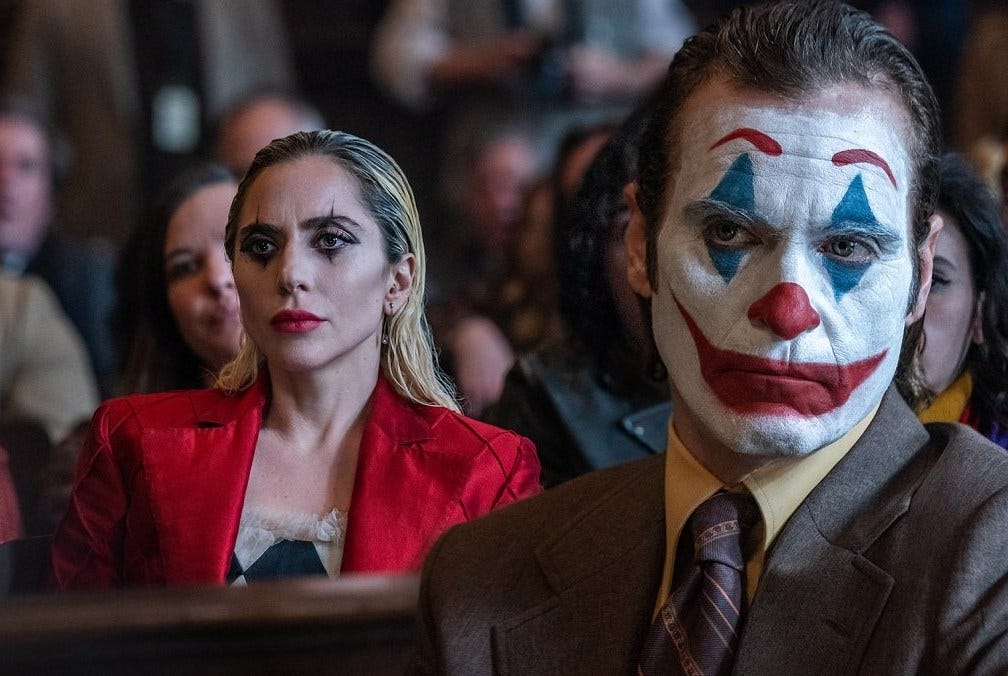
When “Joker: Folie à Deux” opens up, we see Arthur adjusting to life in Arkham State Hospital. He’s become a local celebrity because of the TV movie on his life, and the guards and fellow patients alike are fascinated by him.  While in the heavily guarded hospital, he’s awaiting trial for the five murders he committed.  Arthur’s lawyer, Maryanne Stewart, played by Catherine Keener, is not exactly sure what to make of him.  Her case is going to center around the fact that she believes Arthur suffers from dissociative identity disorder, which means his Joker persona is responsible for the murders. I found this part of the film to be the most intriguing, especially when Arthur is interviewed by a reporter, played by Steve Coogan.

One day, Arthur meets Lee Quinzel (Lady Gaga), and it is love at first sight.  They connect over their love of music, and she’s also a fan of Arthur.  She tells Arthur she’s watched the TV movie about his life twenty times and reveals they have a lot in common. Arthur is smitten with Lee, and they hit it off right away.  This gives him new life as he prepares for his upcoming trial.  He trusts anything that comes out of Lee’s mouth and believes she knows what is best for him. His lawyer, on the other hand, is looking out for Arthur’s best interests and warns him to keep his guard up.
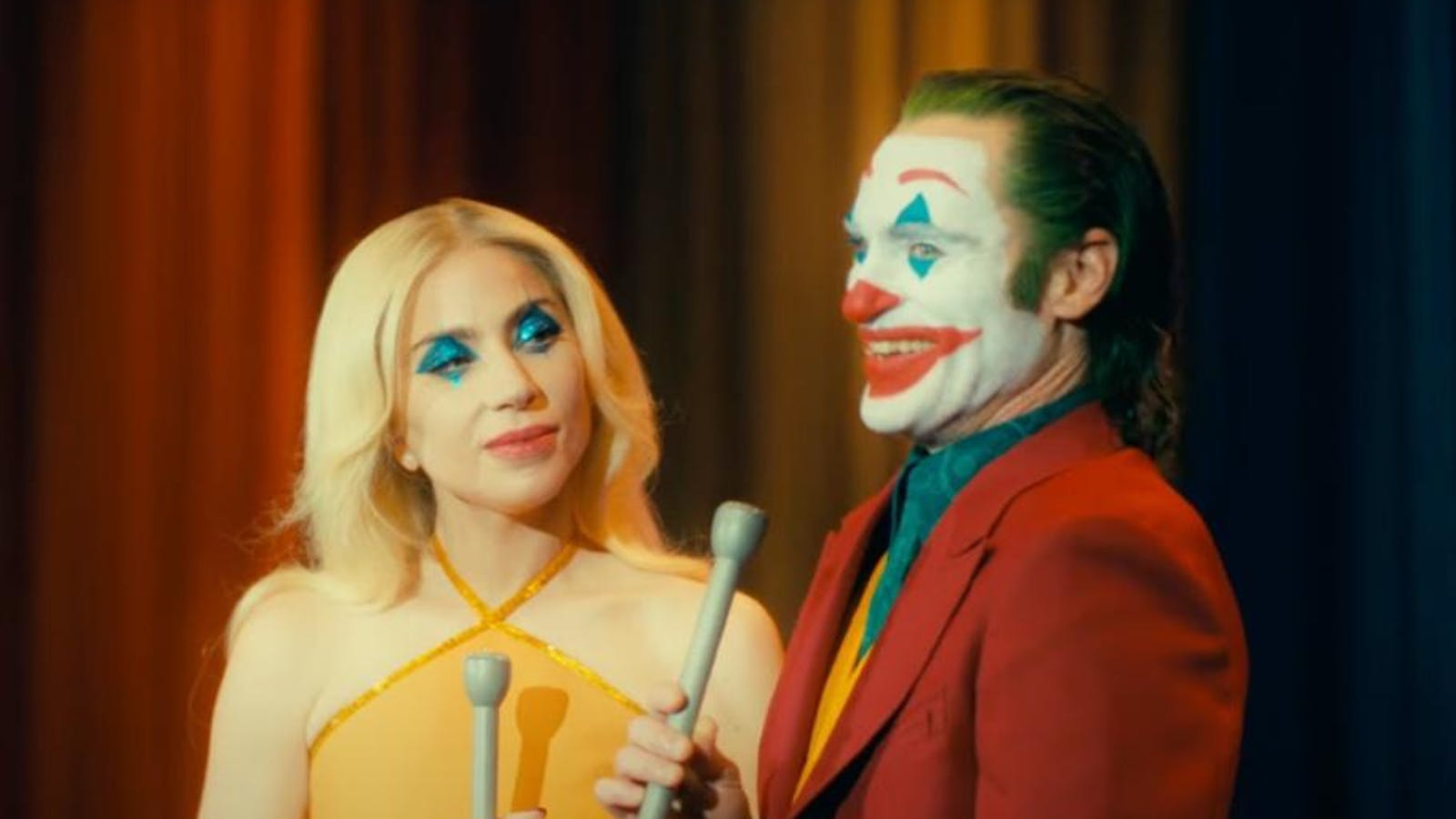
Let’s start with the positives—”Joker: Folie à Deux” has a lot of big ideas.  I enjoyed the exploration of mental health.  I thought the way they presented it was done in a way that was compelling and multifaceted. I also liked the way the film dealt with how society becomes obsessed with fame and how villains and killers are worshipped by the public. I thought the film had a terrific cast.  The performances were nuanced and believable. All of this made this sequel even more frustrating because there are true moments of brilliance on screen from the actors and the people behind the scenes.

Whenever the film started to get interesting or capture my attention, it would seem to have a moment where it felt like the director and the screenwriter were messing with the audience. It was almost as if we entered another film. I didn’t understand why they didn’t have the conviction and nerve to just make this a straight-up sequel without all of the random musical scenes and gimmicks. I have nothing against musicals, but these scenes made me lose my focus because they didn’t add to the story and instead took away from what was happening on screen.  Again, I felt like the director and the screenwriter were just messing with the audience and playing games.
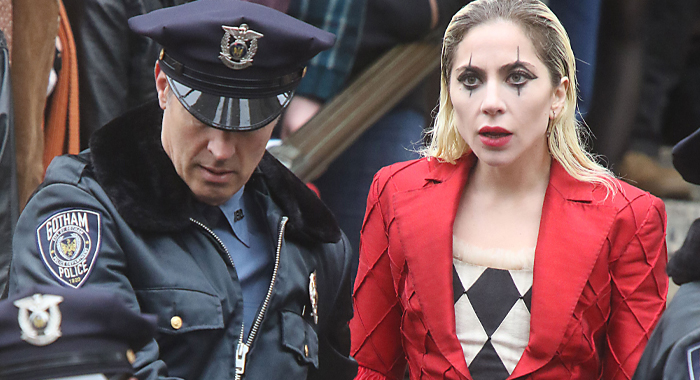
Overall, I can’t recommend “Joker: Folie à Deux” because the film is all over-the-place and wildly inconsistent.  It’s even more infuriating because, like I stated previously, there are some really, really powerful and well-acted scenes throughout. However, they are not in the film nearly enough to recommend it.  Lady Gaga, for example, is great, but she doesn’t have enough screen time.  I was hoping she would have just as Phoenix did, but she’s in and out of this film far too often.  This is one of the most disappointing films of 2024.  I didn’t hate it, but I sure was disappointed by it.

* ½ out of * * * *

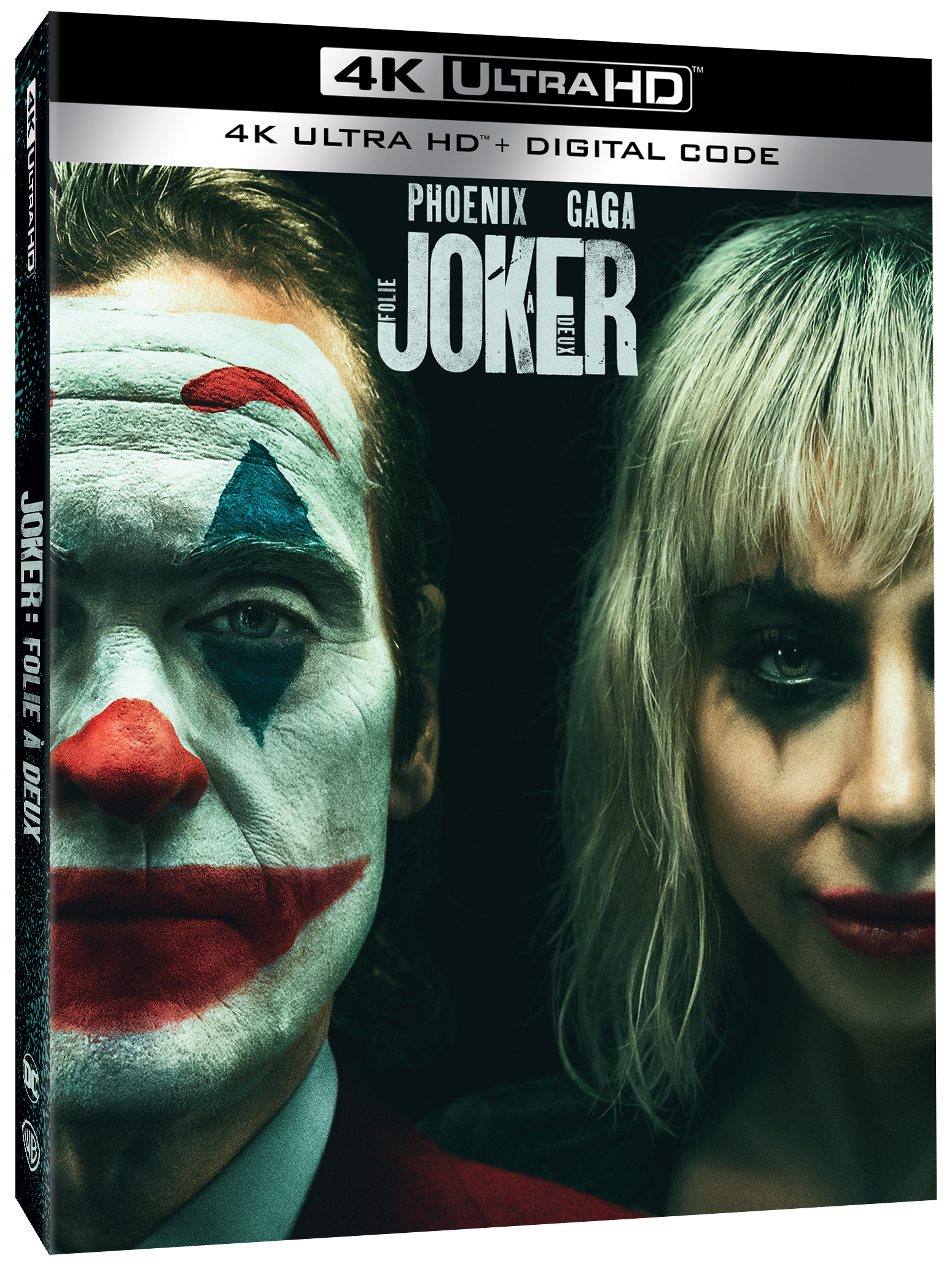
4K Info: “Joker: Folie à Deux” is released on a single 4K disc from Warner Brothers Home Entertainment. It also comes with a digital copy of the film. The film has a running-time of 138 minutes and is rated R for some strong violence, language throughout, some sexuality, and brief full nudity.

4K Video Info: Much like 2019’s “Joker,” this is a top-notch visual experience.  It is crystal clear from start-to-finish.  The film also has deep blacks which really set the moody and atmospheric tone of what unfolds. From a visual standpoint, this film gets an A. The Dolby Vision transfer is perfect.

4K Audio Info: The Dolby Atmos track is also perfect. This is a theatrical movie in every sense of the word, and the audio is perfect. It’s perfect for your at-home theater set-up.  Subtitles are included in English, Spanish and French.

Special Features:

Everything Must Go (Four Part Longform Documentary)

   – Can I Have a Cigarette?

   – Finding Lee

    – A Hundred Films in One

    – King of Nothing

The Character of Music

Live! With The Joker

Colors Of Madness

Crafted With Class

Should You Buy It?

This is going to be a hard pass from me unless you loved the film and thought it was brilliant.  I know John Waters and Quentin Tarantino have praised it, and it has been a source of controversy in the film community. Overall, I didn’t think it was great, and I also didn’t think it was one of the worst films of the year either. I think it’s below average, but it’s watchable, despite its lengthy running time. Joaquin Phoenix gives another top-flight performance as Arthur Fleck, and it’s hard to keep your eyes off him on screen. As mentioned earlier, I wish they would have given Lady Gaga more to do, as I thought she was fantastic when she was on-screen.  Overall, I’d say watch it on Max and see how you feel about it. If you do like it, you will be very happy with this 4K release.

**Disclaimer** I received a copy of this film from Warner Brothers to review for free.  The opinions and statements in the review are mine and mine alone.

‘Joker: Folie a Deux’ – Yes, It Is That Disappointing

After spending too much time watching its critic and audience scores sink like stones on Rotten Tomatoes, I took the time to check out “Joker: Folie a Deux” at my local movie theater. Regardless of its horrific reception and the fact it is now one of the biggest box office bombs of 2024, I had to see it for myself as, and I am in agreement with Tony Farinella, the original was one of the very best movies of 2019. Surely it could not be as bad as many were making it out to be, and perhaps its Cinemascore grade of a D might prove to be a badge of honor. And perhaps it may be a misunderstood masterpiece which will only grow in stature like other box office debacles have in the past. Anything is possible.

Well, in the meantime, I have to be honest and say “Joker: Folie a Deux” is a tremendous disappointment. In its attempt to retain the anarchic spirit of its predecessor, it instead becomes a miserable and lifeless spectacle which many have described as being inert. This reminds me of some dialogue uttered by Hal Williams in “Private Benjamin:”

“Beware, there are mine fields out there. Most of them are inert. However, some are ert.”

Well, this sequel could use way more of those ert moments.

We catch up with Arthur Fleck (Joaquin Phoenix) two years after the murders he committed, and he is in custody at Arkham State Hospital, the place where all DC Comic villains end up residing in at some point. While he awaits trial where he is expected to answer for his crimes, his lawyer Maryanne Stewart (Catherine Keener) looks to prove he suffers from dissociative identity disorder and that his alter ego of Joker is far more responsible for the heinous acts he has committed.

While passing by a musical therapy session, Arthur catches the eye of Harleen “Lee” Quinzel (Lady Gaga), a patient who becomes instantly smitten with him. From there, these two form an unshakeable bond as they revel in one another’s chaos and fight against a society which seems infinitely determined to break them down in any and every way. But can this love affair survive the legal ramifications Arthur may have to answer to?

The big question many have about “Joker: Folie a Deux,” as I do, is this: is this sequel really a musical? Ever since the commercial failure of Steven Spielberg’s remake of “West Side Story” and the underperformance of the movie version of “In the Heights,” Hollywood has been shy about declaring any of its upcoming releases as being anything resembling a music video, let alone a musical. I can easily imagine a conversation between a film buff and a movie executive sounding something like this:

“Is this film a musical or not?”

“Well… it has music in it…”

When it comes down to it, “Joker: Folie a Deux” has a number of musical moments where Arthur and Harleen sing and dance to such tunes as “What the World Needs Now is Love,” “For Once in My Life,” “If My Friends Could See Me Now” and “That’s Entertainment” among others. Some are rehearsed to where the actors are not expected to be as well-rehearsed as the average Broadway actor, and others prove to be more theatrical in ways I expect from someone like Lady Gaga. Regardless, I felt this sequel did not engage the musical form in any kind of enthralling manner. It’s like it wanted a musical, and then it didn’t want to be as it went straight into a courtroom drama which simply regurgitated the events of the previous film.

This is a real shame as there is a lot to admire about “Joker: Folie a Deux.” The cinematography by Lawrence Sher is truly Oscar worthy, the production design by Mark Friedberg is impressive, and Hildur Guðnadóttir, who won an Oscar for her work on the previous film, gives this installment strong musical compositions. As for the actors, Joaquin Phoenix remains one of the best working in movies today, Lady Gaga remains an amazing talent, and we get terrific performances from infinitely reliable actors like Catherine Keener, Brendan Gleeson, Steve Coogan and Zazie Beetz throughout.

And let us never forget Leigh Gill who returns as Gary Puddles, Arthur’s former clown co-worker whose life he spared despite very brutal, not to mention horrifically bloody, circumstances. Seeing Gary testifying against Arthur is quite painful as he is testifying against a former friend and one who was always kind to him when no one else was proves to be moving and painful, and also one of the few moments this sequel has with any kind of invigorating emotion.

But as “Joker: Folie a Deux” reaches its final act, I became completely bewildered at what unfolded before me. We watch Arthur Fleck, decked out in his Joker makeup, apologize for his murderous actions to where he renounces his Joker persona. The problem is, “Joker” dealt with all the forces and a cruel, unforgiving Gotham city which turned Arthur into the menace he became to where it acted as an indictment of a society which renders his mental health a minute concern. By that film’s end, Arthur has fully embraced his alter ego to where his former life is just a memory, and he no longer feels any shame forced on him. But here, it is almost like the first film is treated like a joke when it never should have been.

Todd Phillips described the first “Joker” film as being an origin story, but not the  origin story of this particular villainous DC Comics character. To him, these two films were based on an idea of this character not actually being the Joker, but instead being an inspiration for the Joker. This is an interesting idea, but he doesn’t do a good job of communicating this idea to us. Instead, I came out of it feeling like the rug was ripped out from under me, and its conclusion left me feeling as emotionally wrung out as the one from “Alien 3” did, and that one made me want to shoot myself.

I don’t know; perhaps time will be kind to “Joker: Folie a Deux.” It was released the same year as Francis Ford Coppola’s “Megalopolis” and, like that one, received a terrible critical and commercial reception. It pains me to think this will be the last time in a while where a filmmaker will have unchecked power when making such a big-budgeted motion picture. While Coppola has the excuse of self-financing his passion project, Phillips is not so lucky as a major film studio backed him on this one, thinking they had another billion dollar hit on their hands. This feels like an implication that future movies like this one will be rendered more formulaic and safer in the process. That sucks, doesn’t it?

For what it is worth, “Alien 3” has grown on me a lot since its theatrical release, and maybe this one will too. Then again, it doesn’t have Marc Maron whose character survived the last one. Could the man with the WTF podcast have saved this one? Okay, that’s wishful thinking,

* ½ out of * * * *

‘The Color Purple’ (2023) Movie and 4K Review

The following review was written by Ultimate Rabbit correspondent, Tony Farinella.

It wasn’t that long ago when I had the pleasure of reviewing 1985’s “The Color Purple” on this very website, and I absolutely adored the film.  When I heard there was going to be another adaptation, I was eager to see how it was going to turn out, especially because it was going to be a musical.  Musicals are tricky, as they need just the right amount of music to make it work.  The music needs to really lend itself to the scenes instead of taking over the film entirely. If it’s one song after another without any time to let them breathe, it can take away from the performances on screen. I’m happy to report “The Color Purple” has all of the right ingredients to succeed with flying colors.

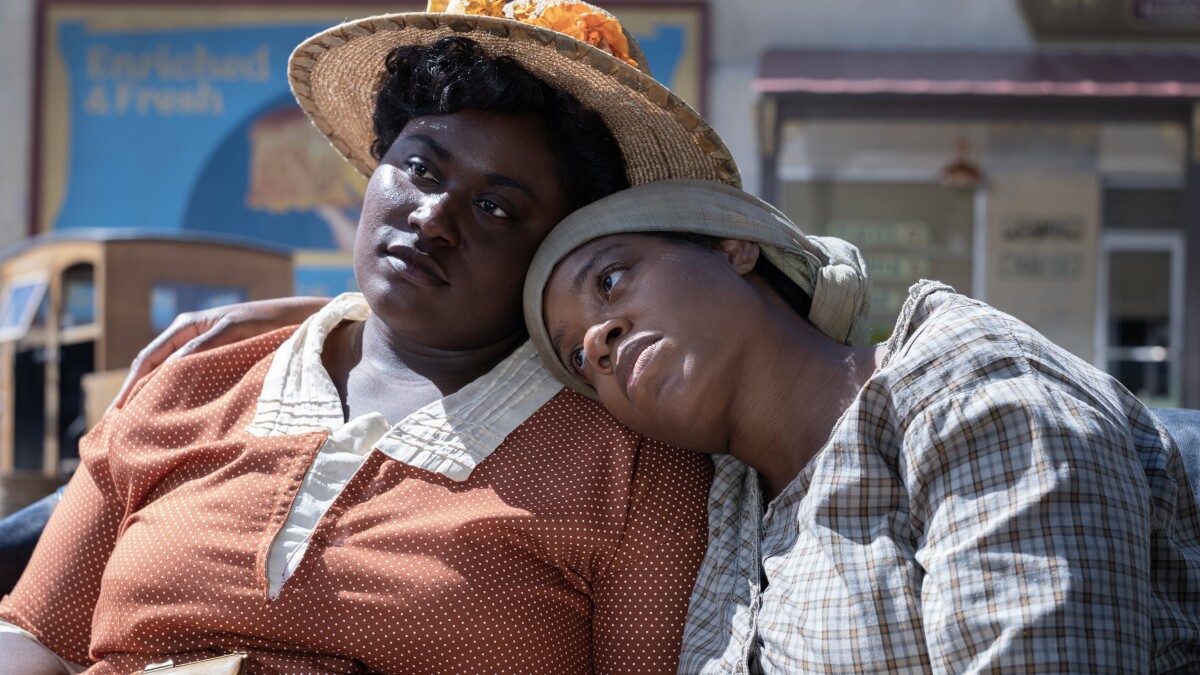
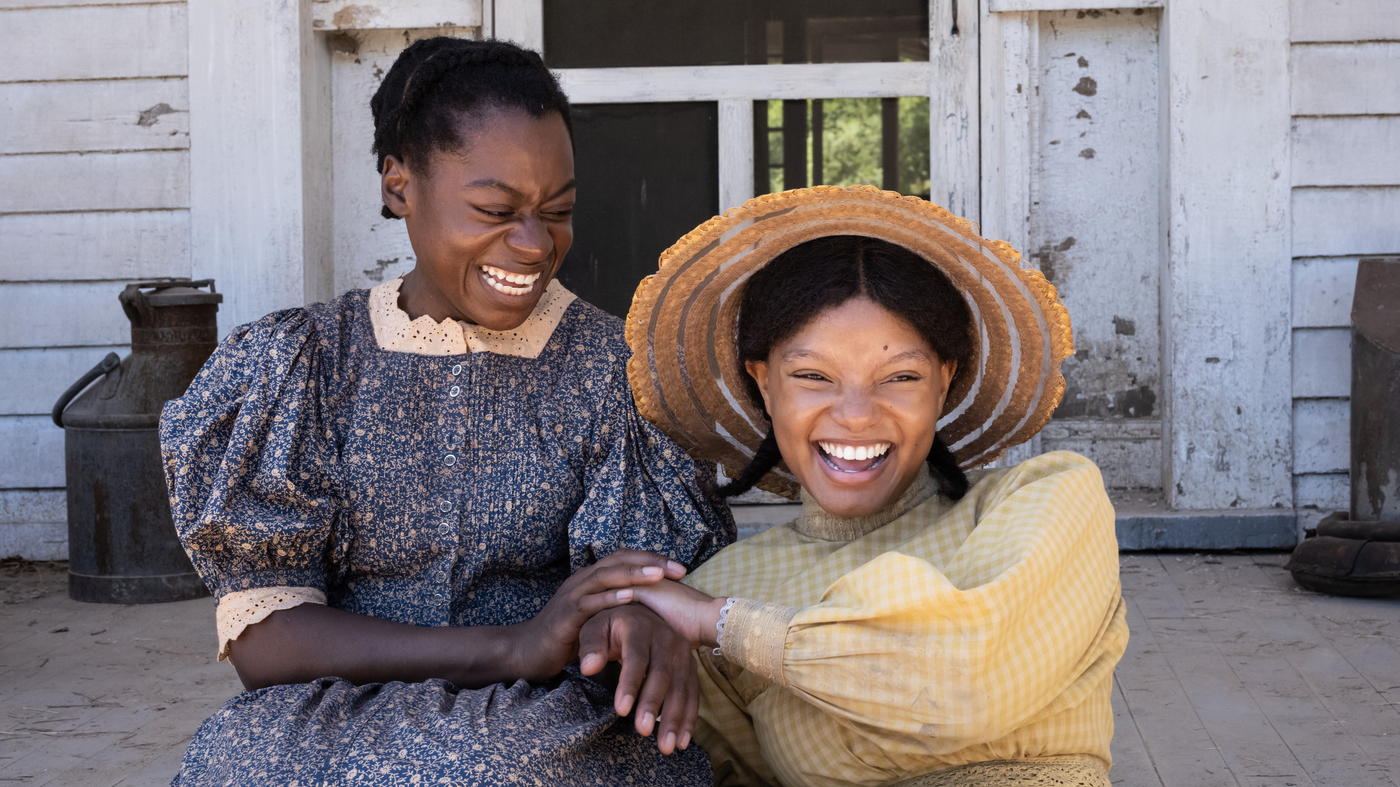
The film follows two sisters, Celie and Nettie Harris (Phylicia Pearl Mpasi and Halle Bailey) who are stuck living with an angry and abusive father named Alfonso, played by Deon Cole. He’s especially hard on Celie, who has two children after being raped by her own father.  He separates her from her children, which causes her much distress and agony. It isn’t long before the two sisters are separated after their father gives away Celie to a man by the name of Mister, played by Colman Domingo.

Mister is a farmer who already has three children of his own, and he’s equally as rough on Celie as her father.  She’s basically doing everything for him, and she feels defeated from the years of abuse from both her father and her current husband. In addition to this, Mister is also hiding all the letters she receives from her sister Nettie, so they have no contact with one another.  Between not being able to see her children or her sister, she feels like life is nothing but misery and pain for her each and every day.

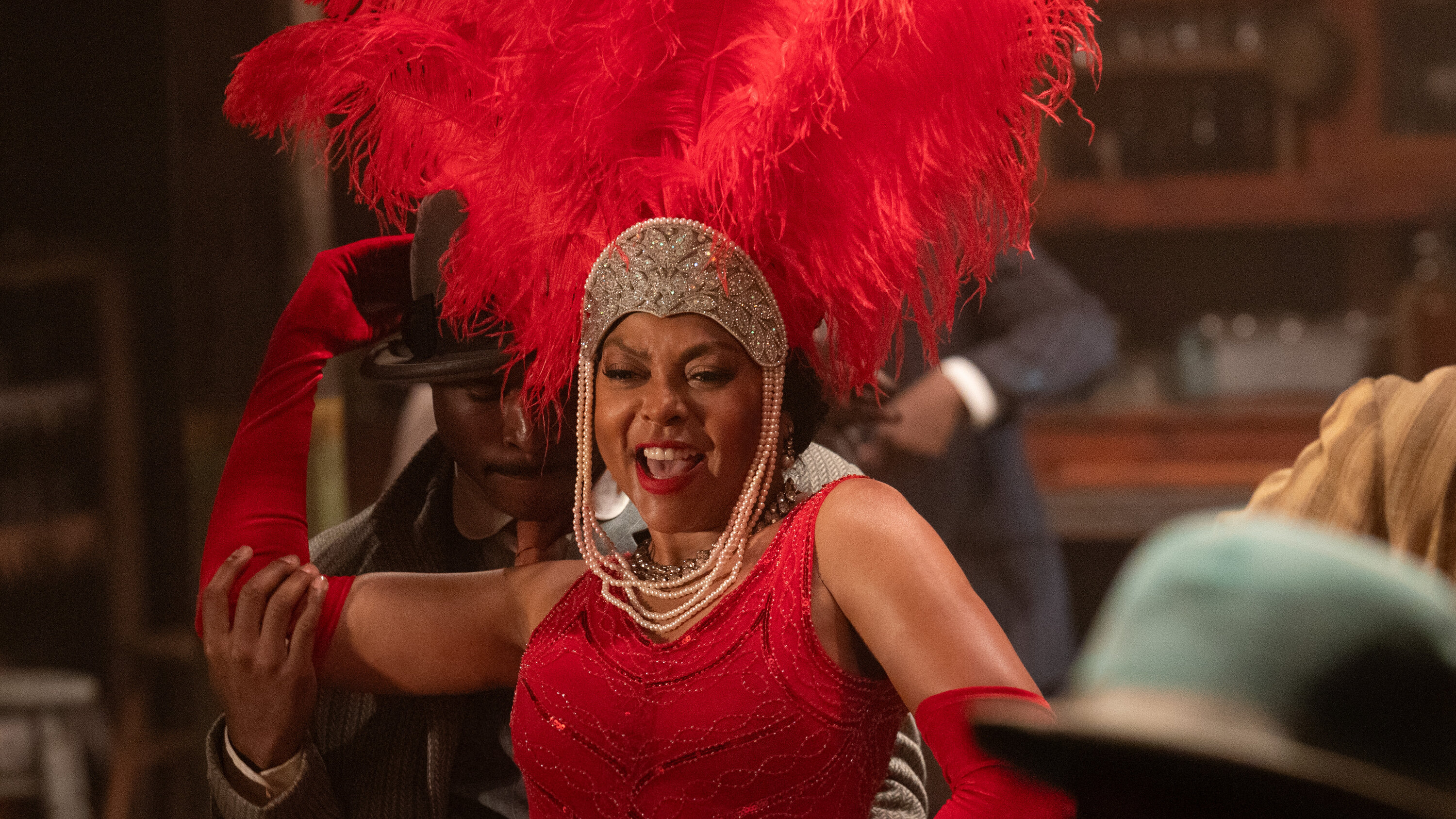
As Celie gets older, she is played by “American Idol” winner Fantasia Barrino.  She definitely has the emotional range as an actress to pull off this incredibly demanding performance. When it comes to the musical numbers, it is second nature to her.  Along the way, she gets to know Sofia, played by Danielle Brooks. She is married to Mister’s son, Harpo (Corey Hawkins), and she is not afraid to whip him into shape.  This is the first time that Celie has seen a strong female in her life.  She is used to women having to take everything from their husbands without being able to defend themselves.  It is certainly not the case with Sofia.  One day, Celie hopes to be as strong as Sofia.  She also meets another strong and confident woman in Shug Avery (Taraji P. Henson), a jazz singer who completely captivates Mister.

During this film, we see a journey which starts in 1909 and goes all the way until 1947, and it’s one of two sisters who are bound and determined to meet up with one another again, no matter what it takes. Along the way, even Sofia deals with some hardships of her own and feels defeated and drained by her new circumstances.  Celie learns to grow and finds out how to stand on her own two feet.  Heck, even Mister learns a thing or two about himself and how he needs to modify his own behavior.  Everyone’s character arch is worth watching throughout the course of the film’s two hour and twenty-minute run time. 

This is a film that never feels boring, stale, or repetitive because these are fleshed out characters whom, as an audience, you care about and root for throughout the course of the story.  For the most part, the film is pretty true to the original 1985 film in terms of its major moments.  As a whole, it works on so many levels. It starts with this tremendous cast of actors and actresses from Fantasia Barrino to Taraji P. Henson to Danielle Brooks to Colman Domingo to Corey Hawkins to Gabriella Wilson ‘H.E.R.’. Everyone brings their heart and soul to the project in addition to their lungs. They were very diligent about putting this cast together from top-to-bottom. Ciara also appears as an older version of Nettie.

“The Color Purple” is ultimately a story about sisterhood, resiliency, strength, and the human spirit. I don’t think it’s fair to compare the two films as they are trying to accomplish the same thing while going about it in completely different ways. The music enhances the story and adds a different take to the material while also keeping the essence of Steven Spielberg’s original film alive and well.  For my money, this is a perfect film.  I was emotional during it, I laughed at the appropriate moments, and the songs stayed with me as well.  I wanted to listen to the soundtrack as soon as the film was over, and I played it on repeat.

Remakes of popular films are tough to pull off, especially when it’s from a novel, a nearly forty-year-old film, and a successful Broadway musical as well. However, when the new version is a fan of the original film, you have what is known as a labor of love.  If you enjoyed 1985’s “The Color Purple,” you will certainly enjoy 2023’s “The Color Purple.” It is about perspective, though.  I believe this film needs to be seen as its own entity.  If you are able to do that, you will enjoy the heck out of it. 

The filmmakers know the audience cares about these characters, knows them, and wants to see them succeed.  It takes you on an emotional journey from start to finish with a tremendous payoff in the end which is very satisfying. You very much live through these characters. You feel their pain, their happiness, and you root for them to succeed. Along the way you laugh, you cry, and you never lose hope.  That, in my opinion, is the beauty of a great film like “The Color Purple.”  There is a reason why this story has stayed with people for so many years and still resonates with viewers to this day.

* * * * out of * * * *

4K Info: “The Color Purple” is released on a single-disc 4K from Warner Brothers Home Entertainment. It also comes with a digital copy of the film. It has a running time of 141 minutes and is rated PG-13 for mature thematic content, sexual content, violence and language.

Video Info:  There is a beautiful Dolby Vision transfer on the film here, and it looks magnificent. This is a film filled with life and color, and it’s on full-display with this flawless transfer. The HDR really brings out the richness of the picture quality.

Audio Info:  We are also treated to a pitch-perfect Dolby Atmos soundtrack here which allows us to enjoy each and every single song the way it was intended to be heard.  It stays at just the right bass and volume throughout the film, as it’s never too loud or too soft.

Special Features:

Creating The Color Purple: A Bold New Take on the Beloved Classic

Hell Yes! The Iconic Characters of The Color Purple

In the Flow: Creating The Color Purple’s Biggest Musical Moments

 A Story For Me: The Legacy of The Color Purple

Should You Buy It?

If you enjoy the power of cinema, do yourself a favor and pick up “The Color Purple” on the day of its release.  It is worth every penny, especially with the special features that are included here along with a Dolby Vision transfer and a Dolby Atmos soundtrack.  This is also a terrific film that really tugged at my heartstrings.  I wasn’t really sure what to expect when I put this movie in my 4K player and sat down to watch it.  However, I was blown away by its high-energy, its music, the intense drama, and the phenomenal performances. This version of “The Color Purple,” which was directed by Blitz Bazawule, is the kind of movie I wish Hollywood made more of these days.  It’s an adult drama that invigorates the spirit and is good for the soul.  “The Color Purple” on 4K comes highly recommended as a day one purchase.

**Disclaimer** I received a copy of this film from Warner Brothers to review for free.  The opinions and statements in the review are mine and mine alone.

‘South Park: Bigger, Longer & Uncut’ – One of the Best Musicals Ever!

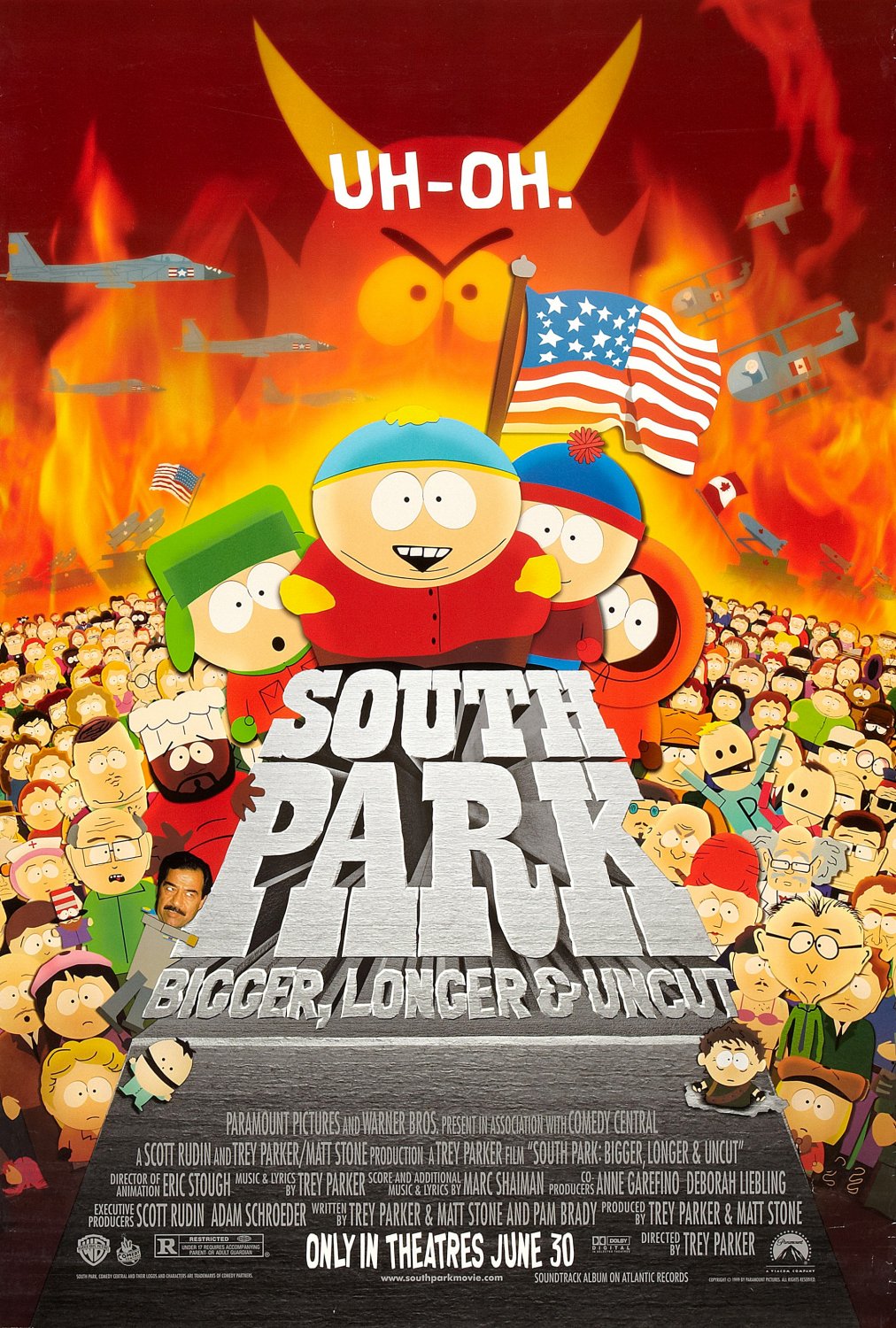
Walt Disney Pictures has released many classic animated movies over the years, but none of them compare to the sheer anarchic lunacy of Trey Parker and Matt Stone’s “South Park: Bigger, Longer, & Uncut.” While “Beauty and the Beast, “Aladdin” and “The Lion King” have given us songs not easily forgotten, so many other Disney animated musicals have only stayed in our minds for so long before they are easily forgotten, and they only dream of being as tuneful as this 1999 animated musical. It takes advantage of its big screen format to mercilessly satirize the MPAA (or the MPA as it is known as these days), hypocrisy, and of various musicals we all grew up with.

One does not have to be a fan of “South Park” to enjoy this movie. The characters of Stan, Cartman, Kenny and Kyle are introduced to the audience in wonderful fashion through the opening song “Mountain Town,” and they go off to the local movie theater for the opening day premiere of “Asses of Fire,” a Canadian film starring their favorite comedy duo of Terrence and Phillip. They are, however, denied admission as the movie has been rated R by the ever-reliable MPAA. But instead of paying for a PG-13 movie and sneaking into “Asses of Fire,” they pay a homeless guy to be their adult guardian. It sure saves on the anxiety of getting caught and kicked out of the theater by that one usher who actually bothers to follow the rules.

All four of them love “Asses Of Fire,” and this movie could be seen as the way parents view “South Park” on Comedy Central. The song “Uncle Fucka” ends up outdoing anything Parker and Stone ever did on the show. Hilariously profane without setting any limits for decency’s sake, it sets off this powder keg of a musical in an unforgettably hilarious style. Stan, Cartman, Eric, and Kenny brag of how cool they are for seeing Terrence and Phillip on the silver screen, and they gleefully spout off the vulgar profanity from the film to the shock and delight of their fellow classmates.

But it does not take long for their parents to discover what their kids been up to, and they end up doing what just about any loving parent would do; blame someone other than themselves. Parental hypocrisy is one of the big targets of “South Park: Bigger, Longer & Uncut” as the parents here all refuse to take any sort of responsibility for their children’s behavior. Instead, they launch an all-out war against Canada as Terrence and Phillip originated from the country, and also because, you know, why not?

Kids are far more of aware of hypocrisy when it confronts them, and in many ways this movie is seen through the eyes of a child. Their parents’ intention to obliterate a country just because a comedy duo inadvertently taught kids some utterly hideous words is completely ridiculous, but so was George W. Bush’s invasion of Iraq. The media, movies and music are such easy targets even though they are emotional outlets, and those in power are quick to criticize them and suggest legislation to limit what they seem as their immoral influence for no good reason other than to put the more conservative population of America (a.k.a. white people) at ease.

Kenny also gets a bigger part than he ever had in the television show as he, of course, dies and ends up going to hell. When he arrives, he meets Satan who is far more vulnerable and sensitive than various depictions of him in popular culture have led us to believe. But the bigger problem though is Satan’s boyfriend who is none other than Saddam Hussein as he is shown to have died years before he actually did in real life. Saddam treats Satan like crap while Satan begs for him to be an affectionate partner in all things love. Satan also does his “Little Mermaid” number of how he yearns to be “up there” on Earth and above ground. Where else can one find Satan be more kind hearted than Saddam Hussein, let alone groups of parents?

This movie also satirizes those most famous of Broadway musicals such as “Les Miserables” on top of all those Walt Disney animated musicals we were raised on. In the process, both Parker and Stone, along with composer and lyricist Marc Shaiman, created the best musical Hollywood has seen in years. The songs are brilliant and insidiously, let alone gleefully, inspired as they stay with you long after you have finished watching this particular animated classic.

Seriously, after watching “South Park: Bigger, Longer & Uncut,” who can forget songs like “Blame Canada,” which should have won the Best Original Song Oscar over “You’ll Be in My Heart,” or “What Would Brian Boitano Do?” For me, however, the real showstopper here is “Uncle Fucka” in which Parker, Stone and Shaiman deign to portray from their critics’ point of view of how the critics view the show “South Park” as opposed to the rational way any other decent human being would. Perhaps it might be easy to say that the music and songs here are brilliant because of the uninhibited profanity on display, but each song gets at a deeper meaning beneath its shamelessly filthy lyrics.

The other great thing about this “South Park” movie is how it is proof Parker and Stone did not sell out. They could have made this into a PG-13 comedy and would have made three times more money in the process, but they both resisted Paramount Pictures urging to tone things down and succeeded in taking the show beyond the stifling confines of television. Seeing them stick to their guns is highly commendable, but perhaps it should not be seen as a surprise as they go after everything and everyone, and the show no hesitation in biting the hand that feeds them (Comedy Central).

All these years later, “South Park: Bigger, Longer & Uncut” remains uproarious as ever. The MPAA (a.k.a. the MPA) remains an overly conservative bunch of hypocrites who give NC-17 ratings to movies for all the wrong reasons, and parents continue to blame others for the ills of their children and society. Thankfully, this is not a motion picture that can be easily relegated to the Disney vault for an “anniversary release” twenty years into the future. Trey Parker and Matt Stone still fight the good fight, and the big screen version of their brilliant television show became a brilliant musical, which later led to others like “Team America” and the Broadway smash “The Book of Mormon.”

Like Kenny, “South Park: Bigger, Longer & Uncut’s” legacy will never die. But, like Kenny, if it ever does die, it will eventually be resurrected sooner than we think.

* * * * out of * * * *

‘Singin’ in the Rain’ Movie and 4K/Blu-ray Review

The following review was written by Ultimate Rabbit correspondent, Tony Farinella.

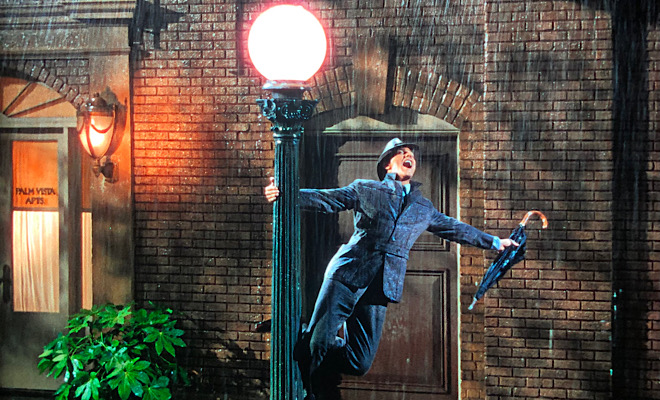
Even though “Singin’ in the Rain” is celebrating its 70th anniversary with this 4K release, in my 36 years on this planet, I have yet to see it until now. I was familiar with a few of the songs from the film, as they are part of cinema history, but I never sat down to view it from start to finish.  It’s better late than never!  That is the beauty of film: even if you think you have seen all of the classics out there, there is always one that slips through the cracks from time-to-time.  “Singin’ in the Rain” is one of the best 4K releases of this year so far with its vivid colors, lifelike images, and crystal-clear picture.  It is truly a treat to enjoy.

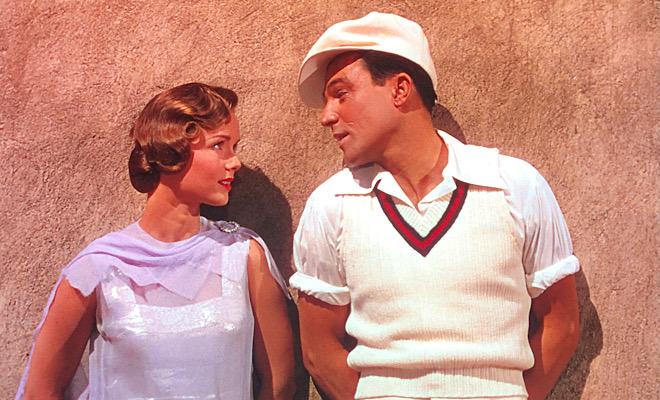
The film stars Gene Kelly as Don Lockwood, a Hollywood stuntman and hoofer.  He is quite popular in silent films and lives by the motto, “Dignity. Always dignity.”  It’s appropriate for his performance in this film, as it’s dignified and classy.  You can’t keep your eyes off him whether he is dancing, singing, or acting.  He has the “it” factor on screen in this film. He was also the co-director on the film along with Stanley Donen. Don’s leading lady, Lina Lamont (Jean Hagen) is the complete opposite of him as she’s superficial, selfish and rude throughout their time together.  Monumental Pictures, the studio behind Lockwood and Lamont, tries to put out this image of the two of them together as a happy couple in order to better increase the gate on their films together.

Don, on the other hand, sees right through Lina and tries to distance himself from her as much as possible. Don’s best friend is Cosmo Brown, played brilliantly by Donald O’Connor. He’s always there to listen, come up with ideas for Don and support him.  He understands why Don has to get as far away as possible from Lina at times.  It causes him to jump into the car of Kathy Selden (Debbie Reynolds), a stage actress who doesn’t think too highly of the movies Don Lockwood is putting out there.  She is there to tell him the truth about exactly what she thinks of him, which opens up Don’s eyes, as he’s used to people telling him how great he is all the time. He sees she is talented and smart, and he quickly takes a liking to her.

With the success of “The Jazz Singer,” talking pictures are becoming more and more popular in Hollywood.  This puts Lamont and Lockwood in a position where they have to learn a new way of doing things. Don is a natural and is also willing to put in the work to adapt to the new way of Hollywood.  Lina, on the other hand, has a voice which is rough on the ears.  However, people are used to seeing the two of them in films together.  Because of this, Cosmo comes up with the idea of dubbing over Lina’s lines with Kathy’s voice in an upcoming musical.  This idea is spawned after the public laughs at a screening when they hear Lina’s voice and mistakes throughout one of their films.

Kathy and Don start to become closer and closer, which does not make Lina happy at all.  She is still unwilling to see her flaws or work on her craft to get better.  Kathy, on the other hand, is immensely skilled and talented.  I must admit I am not the biggest fan of musicals as it’s not one of my favorite genres.  The beauty of “Singin’ in the Rain” and why it’s a classic is the fact they know when to have music and dancing, but also know when to focus on the actors and give them the space they need to act and develop their characters.  When the musical numbers hit, they are out of this world.  The songs are memorable, and they will stay in your head after the film is over.  That is huge in a musical.

The dancing is also top-notch and terrific. There are certain scenes where they keep the camera on the actors dancing, and my eyes were glued to their movements and the poetry in which they were moving.  It was truly something to behold.  The amount of work, preparation, and time it took to pull this off is why people are still interested in watching this movie 70 years later.  It holds up incredibly well.  I’ve always been a fan of old-Hollywood.  The 50’s created some of the most iconic movies, and “Singin’ in the Rain” is up there.  I’m just disappointed it took me this long to check it out.  Now, I want to watch it again and again.

For me, the two stand-outs in the film are Gene Kelly and Debbie Reynolds.  Kelly has an effortless charm and is so darn likable.  He’s the perfect actor for this role.  Reynolds is elegant and pure class in her role.  As an audience member, I was really rooting for them to end up together. Of course, the “Singin’ in the Rain” moment is one even I was familiar with, even though I hadn’t seen the film.  It’s a gorgeous scene to watch and it just put a big smile on my face.  This film has it all: humor, romance, heart, love and great, great music. People will still be talking about “Singin’ in the Rain” 70 years from now.

* * * * out of * * * *

4K Info: “Singin’ in the Rain” is released on a two-disc combo pack from Warner Brothers Home Entertainment. It has a running time of 103 minutes and is rated G.  It comes with the 4K, Blu-ray and a digital code as well.

4K/Blu-ray Info: The film is released in 2160p High Definition, and it’s leading the way as one of the best 4K releases of 2022.  The film might be 70-years-old, but it looks incredible. With high dynamic range, you see every color come to life on screen.  This is a visual feast for the eyes.  As mentioned earlier, this film was made for 4K.  It is a huge improvement over the previous releases.

The Blu-ray comes in 1080p High Definition. The 4K comes with the following audio formats: DTS-HD MA: English 5.1, English Mono, Dolby Digital: French and Spanish. Subtitles are in English, French and Spanish. For the Blu-ray, it comes on DTS-HD MA: English 5.1 and Dolby Digital: French and Spanish. The subtitles are also in English, French, and Spanish.

Special Features:

Commentary by Debbie Reynolds, Donald O’Connor, Cyd Charisse, Kathleen Freeman, Stanley Donen, Betty Camden, Adolph Green, Baz Lurhmann and Rudy Behlmer

“Singin’ in the Rain:” Raining on a New Generation Documentary

Theatrical Trailer

Should You Buy It?

If you are a hardcore physical media collector like yours truly, this one is a no-brainer.  If you have seen the film before and don’t own it, it’s an even bigger no-brainer.  The one disappointment I always bring up with some of these 4K releases is they are still using previously released special features.  I know it’s a 70-year-old film, but I still think you can add a modern-day special feature with new interviews from film historians and actors to the 4K release instead of just recycling the old ones.  For the price point and the look of the film, Warner Brothers has knocked it out of the park with this 4K release.  It’s simply mesmerizing.  As far as the film itself, it’s one of the greatest of all-time for a reason.  If you own a 4K TV and player, this is the movie you need to buy right now.  You won’t be able to take your eyes off the screen.  This one comes highly recommended!

**Disclaimer** I received a 4K/Blu-ray copy of this film from Warner Brothers to review for free.  The opinions and statements in the review are mine and mine alone.
Underseen Movie: ‘Music From The Big House’ – A Glorious Prison Musical

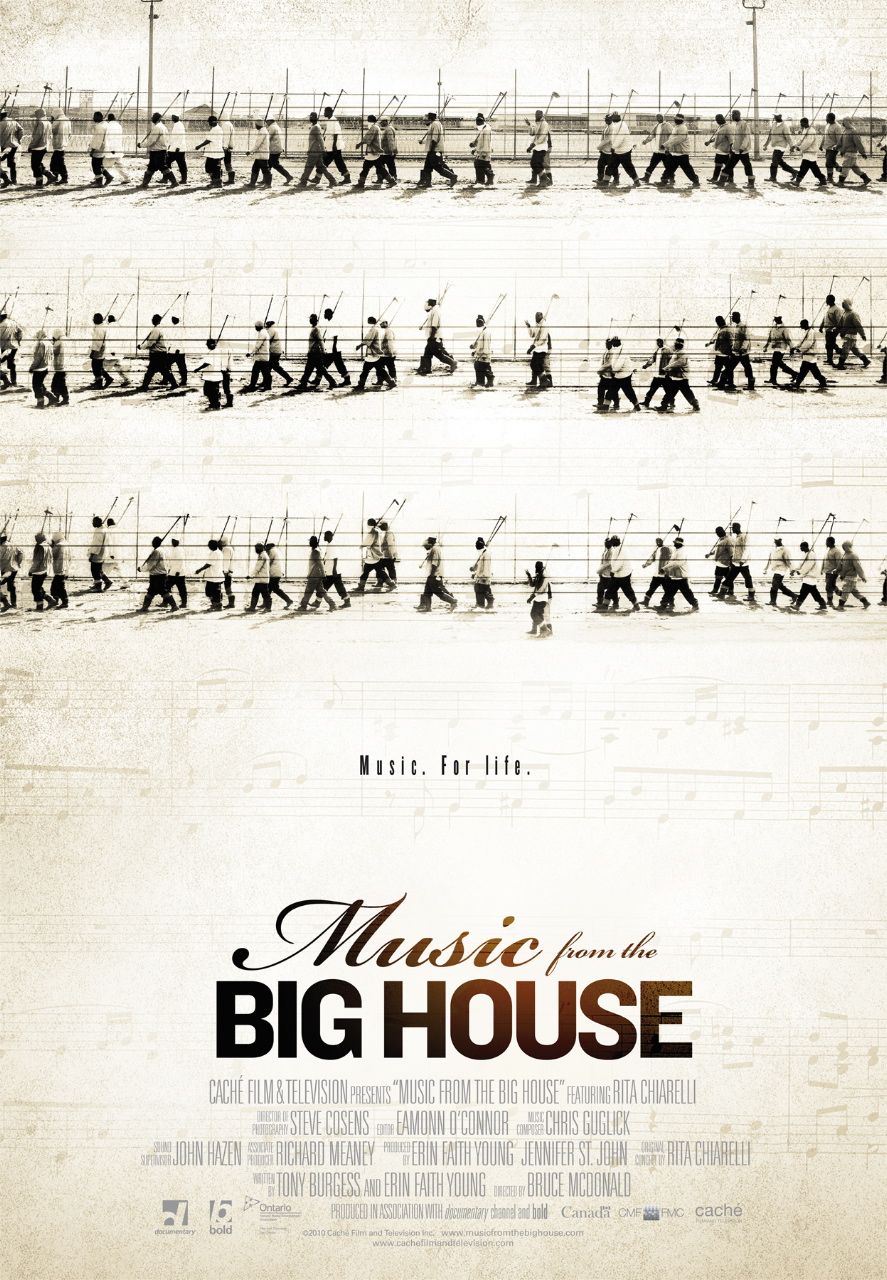
Music From The Big House” follows Rita Chiarelli, or “the goddess of Canadian blues” as she is known, as she visits what is considered to be the birthplace of blues music: Louisiana State Maximum Security Prison (a.k.a. Angola Prison). What she finds once there is a number of inmates who have long since found solace through their love of music, and this leads her to stage a concert at the prison with them. But unlike when Johnny Cash did his performance at Folsom Prison, Chiarelli performs with the inmates instead of just for them.

Cinematographer Steve Cosens originally filmed this documentary in color, but the decision was later made to show it in black and white which suits this documentary perfectly. McDonald goes over the history of this prison which was at one time known as the bloodiest in America. The descriptions given to us of how it operated years before gives you a picture of what hell on earth must seem like. The fact the filmmakers and Chiarelli were allowed access inside this prison is amazing to say the least, and it almost seems like a miracle they made it out of there as well.

We get a chance to meet the individual inmates who end up playing in the concert, and they are a fascinating bunch. It is not until the very end when we are told what crimes they have committed which got them sentenced to time behind bars, and this was a smart move on the part of the filmmakers. By not learning of their crimes right at the start, we are forced not to judge them ahead of their musical performances. Some of them do allude to their crimes without too many specifics, and one in particular hints at how he isn’t apologizing for what he did because he’s not sure he is yet.

Some might consider this project to be a self-serving one for Chiarelli so she can get good press and sell a lot of records, but that is not the case. Her love for blues music is never in doubt, and those who have seen her perform live can verify what a powerful musical presence she can be. Those not familiar with her work will be blown away by her performances, and there is no forgetting her once the lights go up. There are also moments where Chiarelli questions why she is doing this concert as she’s not blind to what these felons have done to earn long prison sentences. Still, none of it deters her from performing with them in what turns out to be a joyous occasion, and the kind many do not expect to see from hardened inmates.

Speaking of the concert, we do get to see a lot of it here. The musical numbers are utterly invigorating, and the audience I saw this documentary with couldn’t help but clap along with the music. They even applauded at the end of the songs and for good reason; the music is incredibly thrilling to take in even if you are not a fan of the blues. I haven’t been to many movies over the years where the audience really got into what was onscreen, so this is not a cinematic experience I am going to forget any time soon.

“Music From The Big House” is one of those small movies, let alone documentaries, which deserves a bigger audience than it has already received thus far. While you could just get away with buying the soundtrack (and please do buy it), this documentary invites more than one viewing, and it would make a wonderful double feature with the Talking Heads concert film “Stop Making Sense.” You will not be able to keep your feet still while watching either film, nor should you.

* * * * out of * * * *

So Bad Its Good: Josh Olson on His Favorite Cult Movie Musicals

WRITER’S NOTE: This article is about a screening which took place back in 2012.

Writer Josh Olson, best known for penning the screenplay to David Cronenberg’s “A History of Violence,” dropped by New Beverly Cinema to introduce two of his favorite cult movie musicals: “The Apple” and “Sgt. Pepper’s Lonely Hearts Club Band.” These films were not well received critically or commercially when first released, but they have since gained a cult following, and the fans have come to appreciate them for reasons the filmmakers did not exactly intend. This was especially the case with “The Apple” which has since become one of the most unique movie musicals ever made.

Olson thanked those who came to this double feature and made clear to us he worships at the altar of “The Apple” and shows it to those unfamiliar with it (a.k.a. virgins) everywhere. He even remarked how two close friends of his, after they saw it, had a baby. The movie tells the story of two young Canadian musicians, Alphie (George Gilmour) and Bibi (Catherine Mary Stewart), who travel to America to participate in an infinitely popular music festival. They are approached by the powerful entertainment agent Mr. Boogalow (Vladek Sheybal) to sign with him, but Alphie sees the dark side of the music industry and refuses to be a part of it. Bibi, however, finds herself caught up in the wild lifestyle this industry has to offer, and it is up to Alfie to rescue her from Boogalow’s evil clutches.

In addition to screenwriting, Olson works for a website run by filmmaker Joe Dante called Trailers from Hell, and he talked about how the trailer for “The Apple” was one of the first he did a commentary track for.

Josh Olson: I stand by almost everything I said on that commentary except at one point I did use the phrase “it’s so bad it’s good,” and I regret that today. This movie has taught me that that phrase is meaningless. Intention does not matter. There are great movies out there that are so much better than the filmmakers intended them to make or had a right to make. Everything is accidental in this business so I don’t think it matters. I think either a movie is great or it is not, and there are movies that people think are wonderful that just won’t entertain you one iota as much as “The Apple” will.

Olson made it clear to the audience he will never again use the phrase “so bad its good” in reference to “The Apple” as he considers it to be one of the greatest movies in the history of the world. Once it was shown, he came back to the front of the audience to introduce the movie version of “Sgt. Pepper’s Lonely Hearts Club Band” and said there was no way to top “The Apple,” so he wasn’t going to even try.

Olson talked briefly about “Sgt. Pepper’s Lonely Hearts Club Band” before it started. It was directed by Michael Schultz who previously made “Car Wash” which Olson described as a “weird, urban Robert Altman film,” and also “Cooley High” which he called one of the most formative films from his childhood. Olson told the audience at the New Beverly how Schultz got involved in making a cinematic adaptation of the Beatles’ classic album.

Josh Olson: Robert Stigwood (one of the most successful movie producers of the 1970’s) came to him and offered him “Grease” to direct, and Schultz looked at it and said, “This is fucking horrible and I don’t want anything to do with it.” So, he passed on “Grease” and it then went on to make a trillion dollars, and Robert Stigwood came back to him with the idea of turning the Beatles’ “Sgt. Pepper’s Lonely Hearts Club Band” into a movie starring the Bee Gees and Peter Frampton. To this, Schultz said, “Wow, this sounds like a worse idea than ‘Grease.’ But what do I know, I passed on ‘Grease.’”

After watching the “Sgt. Pepper” movie, we were all in agreement with Olson that it was one of the most “batshit” ideas for a feature film, and it remains one of the biggest critical disasters in motion picture history. Olson, however, did try to rationalize this particular movie’s existence as it was made back in the 1970’s.

Josh Olson: It was a better time back then, and you have to have the yin to balance out the yang. The really good ones (movies) were almost indistinguishable from the really bad ones. But we had people thinking “Sgt. Pepper” was a good idea for a movie, and we also had people who were making “Apocalypse Now” back then, so it was a small price to pay.

Big thanks to Josh Olson for putting this crazy double feature together. “The Apple” isn’t so much a movie musical as it is an experience, and you won’t find another one quite like it. As for “Sgt. Pepper,” we may never get another opportunity to see it on the big screen again, so those who stayed could not quite say they regretted sitting through it. But yeah, it really was a bad idea for a movie.

Anna Kendrick on Playing Beca in ‘Pitch Perfect’

Anna Kendrick in Pitch Perfect

WRITER’S NOTE: This article was originally written back in 2012.

She has been a fixture of the “Twilight” movies and got an Oscar nomination for her role in “Up in the Air,” but now Anna Kendrick gets one of her biggest roles to date in the musical comedy film “Pitch Perfect.” In it she plays Beca who aspires to be a famous Los Angeles DJ but is instead made to attend the college her dad teaches at as he does not approve of her career choices. While there, she comes in contact with the school’s all-girl singing group known as The Bellas and in the process becomes its newest member. Kendrick talks about how she went about preparing to play Beca and of what the singing rehearsals were like.

The screenplay for “Pitch Perfect” was written by Kay Cannon, and Kendrick said she found it to be “so unbelievably surprising and subversive.” Just when Kendrick thought she knew where the script was going, Cannon ended up doing something which completely surprised her. When talking about Beca, Kendrick described her as a loner who is the audience surrogate for the craziness which ensues in this movie.

“You get to be kind of repulsed by this aggressively geeky world at the beginning of the movie and then fall in love with it while Beca does,” said Kendrick. “The interesting thing to me about the idea of a character that on paper is supposed to be what really ‘cool’ is, when you bring it to life, breaking her down and making her seem less cool, because that’s when I think the audience really connects with her. I don’t think you can just say, ‘Hey audience, this is a cool character so you’re supposed to like her.’ For me, I fall in love with characters when they’re out of their element or are uncomfortable and you really feel for them in a knee-jerk sympathetic way. So, I had a lot of fun trying to make Beca less cool. It’s fun to take a girl who fancies herself a little bad-ass and kind of embarrass her.”

For Kendrick, the role of Beca also allowed her to revisit her musical theatre days where she started out as an actress. She sang onscreen before in the movie “Camp,” but being the lead in “Pitch Perfect” made her understandably nervous as this was something new for her. Still, her love of singing and dancing made the experience of making this film all the more fun.

“One of the things I was really insistent on was that whenever I’m singing alone in the movie, I’m singing live on set,” Kendrick said. “Because I think something is a little bit lost in the recording studio, and frankly I’m just not good in the recording studio, like I don’t know how to do that. I think I’m just… I’m used to singing in front of people and singing in a recording booth was a little isolating and sterile. So, I was looking forward to the days when I got to sing live. Somebody would just blow a pitch pipe and then I would do the thing.”

Kendrick also confirmed she and the other actresses in “Pitch Perfect” did go through sort of an acapella boot camp, but it wasn’t as bad as it may sound. It consisted of singing rehearsals, and the only real problem after a while was the shoes everyone wears for the performances proved to be very uncomfortable. They were told by the production team how their shoes were “like sneakers,” but Kendrick made it clear “they’re like heels is what they’re like” and everyone ended up getting some serious blisters.

Of course, “Pitch Perfect” did have its drawbacks for Kendrick especially when it came to singing pop songs like “The Sign” by Ace of Base over and over again. After having sung this song so much, she hopes to never hear it again as it now haunts her dreams. She did, however, look at singing Miley Cyrus’ song “Party in the USA” as being important to Beca’s evolution in the film.

“I think that scene was brilliant because it’s such a painfully corny song that Beca should hate, but it’s a telling moment,” Kendrick said. “Is she going to pretend to be too cool for school, or is she going to go along with it and bond with these girls? I love that she’s willing to embarrass herself out of love for these new friends that she has.”

On the surface, “Pitch Perfect” looks to be a sort of “Glee” wannabe and cheesy beyond repair, but so far audiences have fully embraced it as a very entertaining movie. Kendrick has already left us with a number of terrific performances, and her role as Beca is yet another noteworthy addition to a resume which will continue to grow.

SOURCES:

Jen Yamato, “Anna Kendrick On ‘Pitch Perfect,’ Singing Onscreen, And How Being ‘Aggressively Dorky’ Paid Off,” Movieline.com, September 26, 2012.

Steve ‘Frosty’ Weintraub, “Anna Kendrick Talks PITCH PERFECT, Singing Live on Set, Interacting More on Twitter, Her Love of Reddit, and More,” Collider.com, October 5, 2012.

Sharon Knolle, “Anna Kendrick, ‘Pitch Perfect’ Star, On ‘No Diggity,’ ‘Fraggle Rock’ And Ace Of Base,” Moviefone.com, October 4, 2012.

‘Mamma Mia!’ – Maybe You’ll Like It, Maybe You Won’t

Mamma Mia movie poster

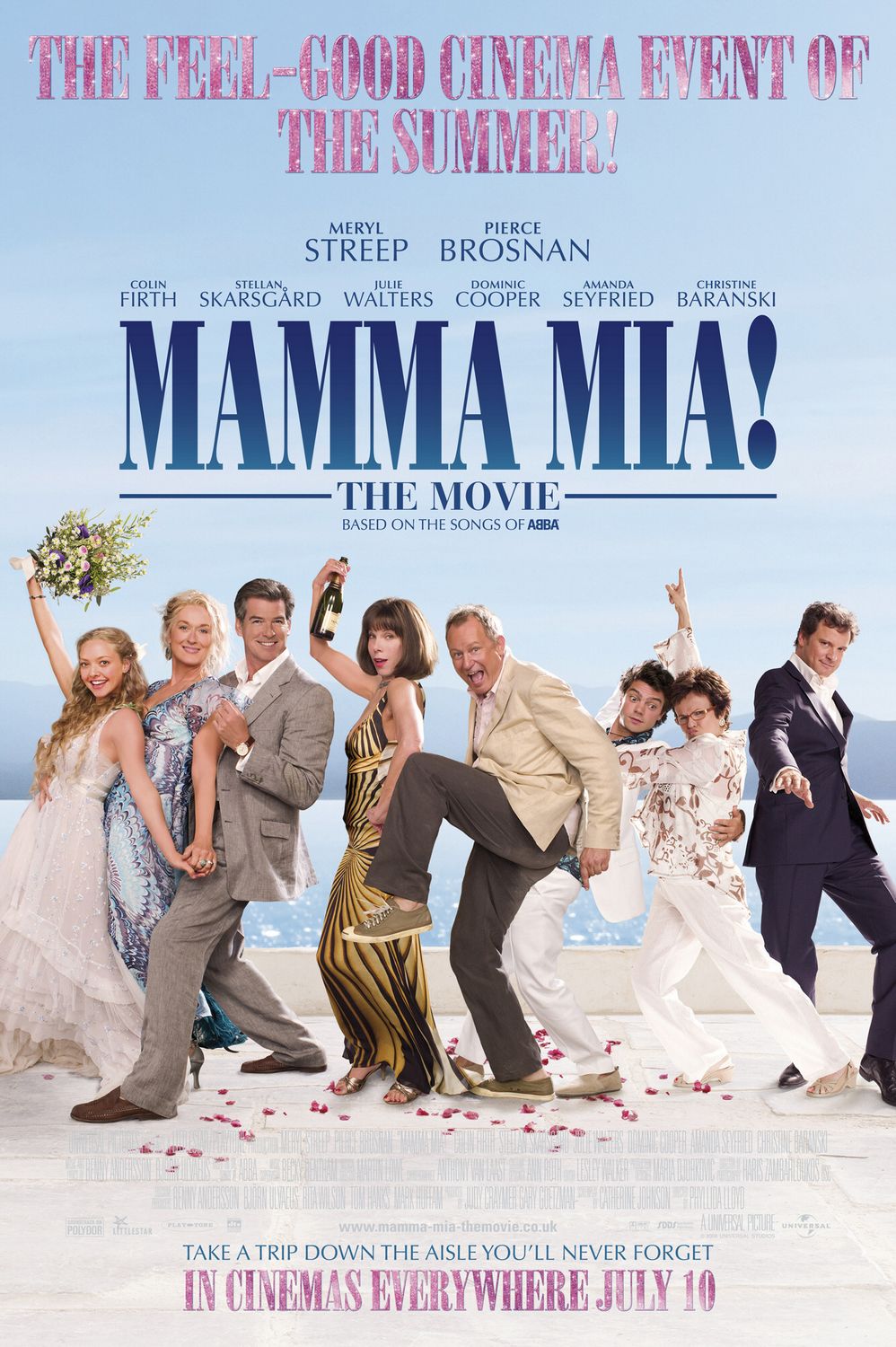
I never got to see the musical of “Mamma Mia” when it was onstage, but I’m not really surprised it became a big hit. The musical tells the story of a young girl on the verge of getting married and of how she ends up secretly inviting three of her mom’s previous boyfriends to her wedding. The catch is one of these men may actually be her father, and she would like whoever it is to give her away at her wedding. But when her mother realizes these three men have arrived, it makes her weep for the past she thought she had forever lost, and all of this is done to the tune of ABBA’s greatest hits which include “Dancing Queen,” “Take A Chance on Me,” and “S.O.S.” among others.

I’m not sure I am the right person to be reviewing this movie because I don’t fit into its demographic, and I have never been a big fan of musicals. I don’t despise them, they just never really appealed to me as much as they do to my friends. There are a few musicals like “Evita” and “West Side Story” which appeal greatly to me, and the film adaptation of the “Hairspray” musical provided me with one of the most entertaining times I had at the movies in 2007. But “Mamma Mia” is not in the same league as “Hairspray” or even “Moulin Rouge.” Maybe it’s because those movies brought us into their musical world so deeply while we watched them and did things others in this genre dare not do.

“Mamma Mia” on the other hand, didn’t draw me in as much, and this is regardless of the boundless energy that all the actors had when onscreen. You come out of it thinking that they must have had the time of their lives while making it. I certainly don’t want to take away from the effort put into the movie by everyone involved, but instead of feeling excited by all that was going on, I instead felt alienated from the whole venture. There was this cloying feeling I kept feeling throughout which made me believe this movie was less than genuine in its emotions.

The other big issue I had with “Mamma Mia” is the fact it is basically a musical founded upon a gimmick: centering an old-fashioned love story around a number of ABBA songs which people all over the world have listened to over and over again. Plus, seeing other actors sing ABBA songs feels a bit off putting as it reminds me of how infectiously good the original versions are. The actors certainly do their best, and Meryl Streep belts out a tremendous version of “The Winner Takes It All” which reminds us again of the great singing voice she has. We should have never forgotten this fact, but it has been a long time since we saw Streep go country in “Postcards from The Edge.”

The one thing that I really did admire about “Mamma Mia” is it shows without a doubt how actresses over 40 do have a place in today’s Hollywood, and that their experience is invaluable to movies like these. Hollywood is ruthlessly notorious for going after the youngest of actresses to star in movies, but many of these actresses have no real-life experience to draw on as of yet. The actresses in “Mamma Mia,” however, end up stealing every single scene they are in. Whatever you think about the movie as a whole, the elder actresses (if you really want to call them that) are the best reason to check it out.

Streep continues to make us all aware of the fact she is one of the best actresses, period. She brings a strong life force to her role of a woman working alone on an island with her daughter, feeling she is past her prime in life while her two sisters convince her nothing could be further from the truth.

Two of my favorite performances in come from Christine Baranski and Julie Walters, and they are a gas to watch throughout. Baranski has basically been a professional scene stealer ever since she co-starred as Cybil Sheppard’s best friend on “Cybil.” Since then, she has stolen scene after scene in movies like “Bulworth” and “Bowfinger” among others. Her performance as Tanya, the often-divorced sister of Streep’s character is a hoot, and there is no doubt she had a blast playing this role.

Julie Walters is probably best known to today’s audiences as Ron Weasley’s mother in the “Harry Potter” movies, but never forget she can be a hell of an actress when you give her the right part. Watching her shamelessly trying to seduce Stellan Skarsgard’s character to the tune of “Take A Chance on Me” is a highlight, and she plays her role with no inhibitions whatsoever. I hope we see her in movies which use her for more than just a supporting role.

The role of the bride to be, Sophie Sheridan, is played by Amanda Seyfried. She is very fetching here and she has a wonderful voice to boot. She also has the wonderful privilege of working with Meryl Streep, and they play off of each other wonderfully.

The three potential fathers of Sophie are played by Colin Firth, Stellan Skarsgard, and Pierce Brosnan. Colin’s effortless charm has never faded in the slightest ever since he played Mr. Darcy on the BBC miniseries “Pride & Prejudice.” As for Skarsgard, it is great to see him in a role where he is acting ever so serious like he did in “Insomnia” (the original) or “The Hunt for Red October.” This brings me to Pierce Brosnan, and while he is always a good actor, I need to be honest and say the man cannot sing. He just can’t! After watching him sing “S.O.S.,” I got that cringe inducing feeling as did the rest of my family while we were all watching this movie. As a result, we watched the rest of the movie in fear of him singing yet again. Did he sing again? Oh yes! Brosnan has had a long and celebrated career which included playing James Bond, but please, please, please don’t let him sing in the future! PLEASE!

In spite of all the strong elements “Mamma Mia” has, I still felt indifferent to it. In the end, I don’t think I fit its target audience. If you like musicals, then I would not stand in your way of watching it, but I can see why I didn’t bother with the film while it was in theaters. I certainly don’t hate “Mamma Mia” as there is a lot about it to admire, but it didn’t affect me in the same way as “Hairspray” or “Moulin Rouge” did. I enjoy the music of ABBA as much as the next person but listening to it here does not leave me with the same musical exhilaration. Perhaps you will feel differently.

* * ½ out of * * * *

‘The Greatest Showman’ Reminds Audiences Hugh Jackman is the Real Deal

The Greatest Showman movie poster

When it comes to singing, I still consider it to the most challenging of all the performing arts. You can be a good singer technically by hitting all the notes just right, but none of it will matter if you don’t put your heart and soul into each of those notes. You can only hide behind technique for so long before the teacher makes you see that you have to be emotionally open and show the audience you are living the song and not just singing it.

I was strongly reminded of this while watching “The Greatest Showman,” the musical drama which stars Hugh Jackman as P.T. Barnum, the infinitely ambitious showman and entrepreneur who created the Barnum & Bailey Circus which ran for over 140 years before shutting down in 2017. Once Jackman sings his first note, it becomes abundantly clear there is no other actor who could inhabit a man who command an audience to where no one could dare take their eyes off him. The scene threatens to be overwhelmed by a rousing musical number, strong choreography and beautiful cinematography, but nothing can upstage the passion Jackman brings to the role as he dominates every filmmaking element to command the stage like no one else can.

For those of you expecting a complex look at P.T. Barnum, you will need to look elsewhere or, better yet, read a book on the man. Director Michael Gracey along with screenwriters Jenny Bicks and Bill Condon are not out to give us a multi-layered portrayal of a man whose success in life was beset by allegations of abuse of his circus animals among other things. Instead, they are more focused on him as a man eager to break out of the shackles of modern life so he can embrace a lifestyle some would say he is undeserving of. At the very least, you have to give the filmmakers credit for not saying this is “based on a true story,” a phrase you all know I abhor with a passion.

We watch as P.T. captures the heart and affection of Charity (Michelle Williams) from a young age even though they come from two different classes of people, P.T. from the poor and Charity from the rich. Nevertheless, their love for one another breaks through barriers, and they marry and bring two beautiful daughters into the world whom they share a powerful love of imagination and possibilities with.

The scene in which we watch P.T. Barnum work in an office and trying not to becoming completely numbed by a redundant work environment resembles the suffocating office Jonathan Pryce was an employee at in Terry Gilliam’s “Brazil,” and from there I was sucked into his quest to escape a life where, as Trent Reznor put it, every day is exactly the same. Of course, his mission in starting an adventurous life is stifled by struggles new beginnings bring about. Barnum ends up buying a museum, but it’s a constant struggle to get anyone to purchase a ticket. Then he employs a number of performers which so-called “normal” people quickly dismiss as freaks of nature. But by giving the public something different, Barnum finally succeeds in making his mark to where nothing he does can be easily ignored.

I found Barnum’s story as presented here fascinating as he tries to find acceptance in a society which pretty much banished him from the day he was born. Barnum even goes out of his way to entice famous Swedish singer Jenny Lind (Rebecca Ferguson) to do a series of concerts in America in the hopes that critics who constantly bash his circus act will come to accept him as an upper-class citizen. The question is, will he leave his circus performers and business partners in the dust in the process?

The plot of “The Greatest Showman” is actually quite thin to where the narrative feels more rushed than you might expect in a movie with a running time of 105 minutes. The story of P.T. Barnum is one deserving of a complex and deeply researched screenplay, but the filmmakers here were instead determined to give us a story about a dreamer who defied the odds and led a life of adventure we all hope to live. If you can accept what they were attempting to do here, this movie will prove to be an enjoyable one, and I was willing to accept it for the movie it was trying to be.

The advertisements boast of how “The Greatest Showman” features music by the lyricists of “La La Land,” another movie dedicated to the risks dreamers take. The songs, which include “Come Alive” and “This is Me,” are rousing and will get you into a wonderfully invigorated state as you sit and take in the spectacle. Having said this, this is not the kind of musical which will remain in your mind long after you have watched it. Perhaps my standards for musicals are too high as “South Park: Bigger, Longer & Uncut” remains the best movie musical Hollywood has released in years (“La La Land” is not far behind).

Aside from Jackman, the other actors acquit themselves nicely. Michelle Williams remains one of the bravest actresses, let alone actors, working today as she never hesitates to lay herself emotionally bare in a scene. Just check out her heartbreaking scene from “Manchester by the Sea” (you’ll know it when it comes up). Williams shares the screen with Jackman to where it should be no surprise she can hold her own with Jackman as their characters’ love is threatened more often than not.

Zac Efron, while I sometimes hoped he would be livelier than he was, certainly has all the right moves as Phillip Carlyle, a playwright who becomes Barnum’s business partner. Zendaya plays Anne Wheeler, an acrobat whom Phillip quickly gains a strong affection for, and she makes her presence in this movie a memorable one. I also have to single out Keala Settle who portrays Lettie Lutz, a bearded lady, as her performance of the song “This is Me” proves to be a real show stopper as we root for her and her fellow freakish performers to come out of the shadows to where no one can ignore or easily dismiss them.

With “The Greatest Showman,” you have a movie musical which has flaws not hard to miss, but I was still enthralled with it even though I am not in a rush to buy the soundtrack. Much of this is due to the actors as there is no denying they put all their heart and soul into their roles. Jackman, who has already has had one heck of a year with his penultimate Wolverine performance in “Logan,” remains a powerful presence whether he is appearing on stage or screen, and even if you have issues with this motion picture, there’s no denying there are few actors like him working right now.

As I walked out of the theater, I was reminded of something Groucho Marx once said:

“I wouldn’t want to belong to a club that would have me as a member.”

Does Barnum believe the same before this movie’s end? I leave it to you to find this out.

* * * out of * * * *