The Guest

the-guest-movie-poster

I went into “The Guest” knowing almost nothing about it. I was expecting something very artistic and the kind of movie Hollywood studios wouldn’t have the guts to finance these days, but what I got instead was the kind of thriller similar to those from the 1980’s like “The Hitcher.” I kept wondering why the Sundance Next Festival would allow something so formulaic to play at this festival, but when the filmmakers came out after a screening to talk about “The Guest,” it then became clear it was actually meant to be an homage to those thrillers we all grew up on. As a result, I quickly saw the movie in a different light.

But even before this revelation, I had to admit “The Guest” is a thriller which packs a mighty punch and left me on the edge of my seat throughout. It grabs you by the throat and holds you tightly within its grasp, and a lot of that is due to the infinitely charismatic performance by Dan Stevens who portrays the guest of the movie’s title.

“The Guest” starts off with an introduction to the Peterson family who are still grieving over the loss of Caleb who was killed in Afghanistan. Then a man knocks at their door and politely introduces himself as David (Dan Stevens), a friend of Caleb’s from the military, and he is here to fulfill a promise to his fallen comrade. David tells Laura (Sheila Kelley) and her husband Spencer (Leland Orser) he has no wish to overstay his welcome, but they become insistent he stay at their house to where he quickly becomes the best houseguest anyone could ever hope to have as he helps out wherever and whenever he can. But just as in life, we can’t help but think no one can be this nice without being somewhat psychotic.

Some of “The Guest’s” best moments come when David looks out for the Peterson children, Anna (Maika Monroe) and Luke (Brendan Meyer). Luke is having some major problems at school as he is the target of bullies who beat him up at any given opportunity. Now I have seen this scenario played out in many movies, and it used to tug at my emotions in a very strong way. But watching it in “The Guest” gave me that primal beat up the bullies feeling I haven’t felt in the longest time. It doesn’t take a rocket scientist to see David is going to give these jerks a taste of their own medicine, and watching him do so is a perverse thrill.

Anna is less quick to warm up to David even after he goes out of his way to get a keg of beer for her high school friends. From the start she is suspicious of who he really is, and those suspicions are confirmed when a number of strange events start happening around town. Of course, her dad can’t see him doing anything bad and chides his daughter for even thinking such a thing. After all these years, teenagers are still forced to deal with their parents’ hypocrisy, and that’s even with actors like Leland Orser playing the father.

As you can see, “The Guest” travels down the road of familiar genre conventions and delivers them to the audience in a way which feels both potent and fresh. The violence in the movie is more brutal than in others I’ve seen recently, and there are several scenes which shocked me I haven’t been shocked in a while. No character is on safe ground here, and anyone is expendable in a way those actors in “The Expendables” movies ever are. At the same time, the movie has a sharp sense of humor which shows just how much fun its filmmakers were having with the material.

“The Guest” comes to us from director Adam Wingard and writer Simon Barrett, the same two who gave us “You’re Next.” I came out of this movie wondering if they had as much playing around with the slasher genre in “You’re Next” as they did with the thriller genre here. Having interviewed them both the following day for the website We Got This Covered, I can tell you they absolutely did as they talked about combining elements from “The Terminator” and John Carpenter’s “Halloween” to make this movie a reality.

Furthermore, “The Guest” comes equipped with a terrific electronic score courtesy of Steve Moore which recalls the great 80’s electronic film scores like Mark Isham’s “The Hitcher” and the “Halloween” scores of John Carpenter and Alan Howarth, particularly the one they did for “Halloween III: Season of the Witch.” Anyone who knows me best knows how much of a sucker I am for this kind of movie music, and I was digging’ Moore’s score right from the first note as it adds the ominous atmosphere we will be venturing through when David makes his entrance into town.

Seriously, this movie really does belong to Stevens who is best known for playing Matthew Crawley on “Downton Abbey,” the TV show everyone seems to be watching except me. He exudes endless charisma and makes you believe how lethal David can be when you look right into those beautifully steely eyes of his. I’m not kidding when I say he has a stare which can cut through you with a laser from a mile away. Stevens also infuses a number of his scenes with a twisted sense of humor, and this is especially the case when he coolly manipulates Luke’s principal to where he realizes suspending this young man from school might actually be hazardous to his health.

“The Guest” falters a little towards the end as the filmmakers get too enamored of the foolishness of their character’s decisions. It also has one of those horror movie endings which imply how evil can never die, and it feels a little soft compared to what we have seen in other films of its ilk. At the same time, it could mean that Wingard and Barrett will reteam for “The Guest 2,” and it would be fun to see how they would play around with the conventions of a sequel.

Seriously, “No Good Deed” could only dream of being as thrilling as this movie, and it starred Idris Elba for crying out loud. “The Guest” gleefully plays around with all the things we remember from the ultra-violent movies from our past, and I found myself enjoying it a lot even as things got increasingly nasty. Just when I thought I knew how this movie would play out, it quickly shifted gears and took me for a loop.

Now if you’ll excuse me, I have to buy this movie’s soundtrack.

* * * ½ out of * * * *


I Saw The Light

I Saw the Light movie poster

Watching “I Saw the Light” reminded me of when I saw Oliver Stone’s “The Doors.” Both movies have a great cast, a lead actor who perfectly embodies an iconic singer, and scenes which vividly bring to life the classic songs of the artists. At the same time, both movies keep their main subjects, in this case country singer Hank Williams, at arm’s length to where we come out feeling like we never really got to know them. Considering the talent involved, this particular music biopic proves to be a major disappointment.

Writer and director Marc Abraham, whose previous film was “Flash of Genius,” eschews Hank’s childhood and goes straight to when he married Audrey Sheppard, a divorcee and single mother. They look like the perfect couple, and this is especially the case when you consider the palpable chemistry between stars Tom Hiddleston and Elizabeth Olsen. But like many biopics, we know everything is heading downhill for these two, and Hank’s life got cut short by alcoholism and a painful medical condition. He was only 29 years old when he died, but he looked much, much older.

The movie gets off to a wonderful start as we see Williams singing one of his most famous songs in a sequence which is beautifully lit by the brilliant cinematographer Dante Spinotti. We are instantly hooked as the country icon’s lyrics capture our attention right away, and it makes us look like we’re in for quite the biopic. Unfortunately, this proves to be its high point as nothing else ever measures up.

One of the big problems with “I Saw the Light” is it is so sloppily edited to where it’s hard to tell what part of Hank’s life we are looking at. It goes from one section of his life to another before we can ever fully digest what is going on. This makes the movie very confusing, and it keeps us from getting to know Hank and the other people in his life more intimately. I felt like I never really understood what fueled his music, and he became the kind of person who is not at all fun to hang out with.

Also, the movie feels undercooked to where Abraham has his cast of actors underplay every single scene they appear in. Nothing ever comes to life in the way it should, and everything in “I Saw the Light” eventually becomes an exercise in tedium. It’s bad enough we never get deeper into Hank’s psyche, but to see this story portrayed in such a passionless way makes this whole project come across as an unforgivably missed opportunity.

“I Saw the Light” does, however, have Hiddleston as Hank Williams, and his performance is in some respects amazing. We all know him for playing Loki in the “Thor” and “The Avengers” movies, and at first he seems like an odd choice to play the man who made “Lovesick Blues” such an unforgettable song. But he succeeds not only in mastering Hank’s accent, but in getting the audience to feel the songs as much as he does when he sings them. That’s right, Hiddleston does his own singing here, and this makes his work here all the more admirable.

I was also impressed with Olsen’s performance as she makes Audrey perhaps the only human being who could possibly deal with Hank’s alcoholism and womanizing. Watching her here makes one realize what a powerful actress she can be, and she brings this movie to life in a way others are unable to.

As for the supporting characters, they are given short shrift and serve little purpose other than to further Hank and Audrey’s exploits. Cherry Jones, a tremendous actress, is wasted here as Hank’s mother Lillie as she has almost nothing to do other than sneer at any woman who grabs her son’s immediate affection. Bradley Whitford makes a bit of an impact as Fred Rose, the man who helped Hank rise to stardom, but Fred’s contributions to Hank’s career are made to feel smaller than they were. Maddie Hasson fares better as Billie Jean, the young woman who eventually becomes Hank’s second wife, and it’s a shame we didn’t get to see more of her here.

For what it’s worth, “I Saw the Light” did give me a good appreciation of Hank Williams’ songs. I have never been much of a country music fan, but the movie made me see why his music struck such a strong chord in so many people. Hank understood the pain of love in a way others didn’t want to experience firsthand, and it was not hard to connect with the feelings he so deeply expressed through music.

Still, the movie never digs deep enough into his life, and what results is a inescapably frustrating cinematic experience. This could have been one of the best biopics of recent years, but the filmmakers treat their main subject with kids’ gloves to where he feels like a complete stranger from start to finish. Coming out of “I Saw the Light,” I wanted to read more about Hank Williams on Wikipedia among other places on the internet as there’s got to be much more information on him there than what we got here.

Copyright Ben Kenber 2016

* ½ out of * * * *

Exclusive Interview with Olga Szymanska on Marcin Wrona’s ‘Demon’

It was very sad to learn of Polish director Marcin Wrona’s passing on September 18, 2015. He committed suicide before a screening of his latest film, “Demon,” the last in a trilogy which began with “My Flesh, My Blood” and “The Christening.” Like those two films, “Demon” deals with the nature of evil and a fate the protagonist is forced to deal with. Itay Tiran stars as Piotr (a.k.a. Python) who is on the verge of getting married to the beautiful Zaneta (Agnieszka Zulewska) and moving into a family home which has survived from one generation to the next. But on the day of his wedding, Piotr suddenly becomes possessed by a spirit which will no longer remain silent, and what should be a joyous day soon turns into the wedding from hell as the past will no longer remain buried.

While Wrona is no longer with us, his “Demon” is a tremendously well-made horror film which allowed him to leave his mark on the world of cinema, and it provides us with an interesting take on the Jewish legend of the dybbuk. It is a beautifully filmed movie with incredible vistas and an all-encompassing darkness as a bad situation gets even worse, and that’s not just because the wedding guests have drunk far too much vodka. Watching “Demon” also reminds us of the power of ambiguity as not all questions are answered here, and this forces the viewer to think more deeply about what they have just witnessed.

I got to speak with Olga Szymanska, the producer of “Demon” and Wrona’s widow, while she was in Los Angeles to promote the film. I applaud her for supporting her late husband’s work while dealing with a loss which is still hard for many to accept. She talked about what went into the making of “Demon,” how it relates to Wrona’s previous two films, if she was ever worried about people not understanding the legend of the dybbuk, and of how Wrona and his cinematographer Pawell Flis gave the film such a striking look.

Please check out the interview above, and be sure to check out “Demon” which is playing at the Nuart Theatre through September 15.

demon-movie-poster

AN ULTIMATE RABBIT NOTE: This video interview was updated in 2023 to add certain visual elements and to avoid copyright issues which never intended or inferred.

Exclusive Interview with Dana Ben-Ari on her Documentary ‘Breastmilk’

breastmilk-documentary-poster

The documentary “Breastmilk” marks the directorial debut of Dana Ben-Ari, and it deals with a subject we think we know a lot but really don’t: breast feeding. It follows first-time mothers of different ages and backgrounds as they deal with the breast feeding process in various ways, and it documents the successes and struggles they are forced to endure. While some are pro-breast feeding, others find themselves relieved at not having to go through with it. But throughout “Breastmilk,” Ben-Ari never judges the families and prefers to present their stories as objectively as possible. Sure, there are a number of instructional videos, books, experts, lactation experts and do-it-yourself guides you can find on YouTube, but there really hasn’t been a film which explores real people going through this process before this one.

I got to speak with Ben-Ari while she was in town to do press for “Breastmilk,” and I congratulated her on making a documentary which will appeal to both women and men. It certainly promotes a lot of discussion on breast feeding, and it will be interesting to hear what people who see this documentary have to say about it. We talked about what drew her to make “Breastmilk,” how she went about choosing its participants, what surprised her most about the making of it, and the importance of including gay couples in this debate as well.

Ben Kenber: What was your main inspiration for wanting to make this documentary?

Dana Ben-Ari: Well I am a mother myself and I am pro-breastfeeding, and I’ve seen many women in many families struggle and go through these similar experiences. I thought that this would be fun and interesting to explore on camera because I think that it is part of a larger conversation around feminism, and I thought that voicing and making these experiences visible would be very helpful and important.

BK: In regards to the people who participated in this documentary, how did you go about selecting them?

DBA: We posted various flyers and we posted on parent sites and groups and word-of-mouth and friends. We had an overwhelming amount of emails and stories shared, and then we realized that we wanted to find pregnant women who were carrying their first child so that we could have a more immediate first time experience. We started with that, and then I wanted to have a few other families participate in the conversation because I thought that families with slightly older kids, as you see sprinkled throughout the film, just provide a little bit of a different perspective than the young families who are going through it for the first time. That’s how we came out with that balance.

BK: Have you kept in touch with the participants since you finished making this documentary?

DBA: Yeah, a few of them came to one of the Saturday night screenings and then the Sunday screening. We’ve been in touch. A few people have moved out of New York, but the ones in New York try to come to the screenings when they can.

BK: Were there any really big surprises while you were making this documentary?

DBA: I learned a lot about filmmaking because this is my first film, so that was quite interesting. I had a great cinematographer (Jake Clennell) who taught me how to be in the room but still respect the space and the experience, and we really learned a lot about being patient and giving that families time. What also stood out was how vulnerable all of these families are and how women are still oppressed.

BK: One woman talks about how women are still made to feel bad about their bodies, and that’s a shame. You get the feeling that people who say that probably don’t understand what the experience is like, and we are seeing that experience in front of us. They are doing the best they can.

DBA: Right. All of these families are doing the best that they can.

BK: One of my favorite scenes is when a white couple goes to one of the black mothers and gets bags of breast milk. It reminded me of picture I saw in a magazine where a heart from a white person was placed next to a heart from a black person, and you see that there’s no difference between them. It’s the same thing with the breast milk because, in the end, milk is milk. How did you come to get that scene?

DBA: We knew that we wanted to show some donations, and I looked for women who were looking for milk donations. One of the women that we had been following did have a lot of milk that she wanted to donate, and I asked her if she wanted us to help her find somebody. So we followed the adoptive mother through a number of attempts, and then we also had this one. We had a couple more milk donations scenes that didn’t make the cut, and we were just left with this one which was really a great scene because so much gets covered. There’s so much you can discuss from that one little moment, and that was very natural actually (those reactions).

BK: Was there anything in particular that you wanted to capture but were unable to for one reason or another?

DBA: Not so much. I’m quite happy with everything. We packed so much in. I wish we’d have more time to develop more stories, but as far as 90 minutes go I think we covered quite a lot. There’s so much there that I think people may not have thought of, and it just inspires these questions and their interest.

BK: Going back to what the cinematographer told you about respecting the space, can you talk a little bit more about that?

DBA: He is very good and very talented at what he does, but he also is very good at being very social and knows how to make people feel comfortable. But then also, as a mother myself, I had some experiences with what some of these families were going through, and I really did not get too involved in their journey. So even if some couples were arguing over a formula I really stayed out of it, and that was something he and I discussed that we were not going to get involved in. We were just going to let things play out. Of course, if somebody had asked me privately off camera certain things I would tell them, but we really didn’t want to affect their decisions and their experiences. So I think we did a good job with respecting their choices and their decisions.

BK: I also liked how the documentary dealt with gay couples, both male and female, and you sort of wonder how certain couples deal with that or not being able to give their children breast milk (men can’t, but they do keep trying). It’s great to see them in the groups because what they go through is no different from what anybody else is going through. Was that what you were hoping to show?

DBA: Yeah, I loved that too. I think it’s like dropping certain things without an editorial just to make people think about what is family and what is community and what does it mean to be male, what does it mean to be female, all of those questions. While there are some differences, the similarities sometimes are really much greater than we realize. I think that those are wonderful moments in the film, and I think it’s important to include a diverse group because our country is diverse. If we just focused on the one or two examples I think we miss a lot.

BK: A couple of days ago I saw the movie “Neighbors” which stars Seth Rogen and Rose Byrne, and there is a scene where Seth gets sprayed with Rose’s breast milk. I was reminded of that when you show the montage of women squeezing the breast to show how much milk can come out of them, and it made the scene from “Neighbors” seem more realistic as a result. What was it like filming that montage?

DBA: Oh that was a lot of fun (laughs). That was a lot of fun and a lot of women had not really had that experience before, so we left those women feeling very satisfied that they got something of the experience. But really, this movie is about community and the body and how we’ve become and how nice it is for women to get reacquainted with their bodies and also just accept themselves as women. That was one of those celebratory moments in the film and humorous as well.

BK: Are you planning a follow up documentary to “Breastmilk” or do you have different plans for the future?

DBA: Well I have some ideas but not a follow-up to this. Some people are asking if there’s going to be a “Breastmilk 2;” no, I don’t think so. But I hope to be involved in something fun again soon. I do have to see this through, you know? It’s the first film so I have to do the short film tour and be available for press as much as possible.

BK: How involved were the executive producers, Ricki Lake and Abby Epstein, in the making of this documentary?

DBA: Well they came on after everything was done, and they’ve been very helpful and supportive in promoting it. That’s really more of our relationship, promoting and reaching a wider audience. They’ve been great.

I really want to thank Dana Ben-Ari for taking the time to talk with me. “Breastmilk” is now available to watch on DVD, Blu-ray and Digital. Click here to view the movie’s website for more information.

Save

The 9th Life Of Louis Drax

the-9th-life-of-louis-drax

The 9th Life of Louis Drax” is a seriously confused movie. It is billed as a supernatural thriller, but it also contains elements of horror, fantasy, and it also has the essence of children’s movies in its DNA. Watching it was the equivalent of playing with a Transformers toy as a kid. While it was lots of fun to see it turn from one thing to another, I was constantly reminded of Robin Williams’ routine of playing with a Transformer while on drugs:

“It’s a truck, it’s a robot, it’s a… WHAT THE FUCK IS IT?”

Based on the best-selling novel by Liz Jensen, it delves into the strange and very troubled life of Louis Drax who was celebrating his ninth birthday when he suffers a near-fatal fall off of a cliff into the water below. As a result, he ends up in a coma from which he is never expected to awaken from. From there we are given a window into his short life which is full of endless mishaps and a truckload of dysfunction. His father Peter (Aaron Paul) is a caring dad and a self-destructive alcoholic, and his mother Natalie (Sarah Gadon) also cares deeply about her son even while she comes across a very cold fish. Into the picture comes prominent child psychologist Allan Pascal (Jamie Dornan) who delves very deeply into Louis’ infinitely dysfunctional life to see if he can help the child rise out of his deep sleep.

Now I didn’t know much about “The 9th Life of Louis Drax” before I sat down in a darkened theater to watch it. Sometimes this proves to be an advantage as it keeps me from bringing unrealistic expectations to a motion picture, but with this movie I found myself at a complete disadvantage because I couldn’t figure out what it was trying to be. Was I watching a medical drama or a fantasy movie? I couldn’t say for sure, and my confusion was even more pronounced as the movie reached its honestly predictable conclusion.

The other problem is the Louis of the movie’s title is not altogether likable. Despite a strong performance by Aiden Longworth, he is more creepy than sympathetic or empathetic. While Louis certain didn’t deserve the fate which has befallen him, watching him in flashbacks acting all weird makes this film more cringe worthy than emotionally involving.

There’s also a rather twisted romance between Louis’ doctor, Dr. Allan Pascal (Jamie Dornan), and his mother Natalie (Sarah Gadon). This all leads a lot of drama between and Allan and his wife to where it feels like we have entered another movie. Dornan looks almost as lifeless here as he did in “Fifty Shades of Grey” (he fares much better in “Anthropoid”), and Gadon has little more to do than look lovely and lost. Both Barbara Hershey and Oliver Platt appear in supporting roles as well, but they are wasted playing characters they can play in their sleep.

This is all a shame because “The 9th Life of Louis Drax” was directed by Alexandre Aja who gave us the blisteringly intense “High Tension” and the two of the best and most entertaining horror remakes in recent years, “The Hills Have Eyes” and “Piranha 3D.” With this film he looks to break free of the horror genre, and he does it give a striking look with the help if cinematographer Maxine Alexandre. But while its story is compelling, it features way too many elements to where the movie has no chance of being the least bit satisfying. Aja ran into the same problem with his last film “Horns” which, despite featuring another in a long line of strong performances from Daniel Radcliffe, had him failing to find a balance between its horror and comedic elements.

If there is one truly great thing about this movie, it is Aaron Paul. The “Breaking Bad” star pulls off a wonderfully complex performance as Louis’ father, Peter. While Peter at first looks like your typically drunk and neglectful father, Paul makes him into one cannot be easily judged. Despite his self-destructive tendencies, Peter proves to be the adult Louis needs in his increasingly dysfunctional life. Paul’s performance will no doubt remind viewers of his time as Jessie Pinkman, but it also shows them just how gifted an actor he is when given the right material.

By the time this movie reaches its “Sixth Sense” like ending, one which I couldn’t help but see coming a mile away, I was pretty much ready for it to be over. I have not read Jensen’s book, but I imagine she did a much better job of handling all the different elements of the story much better than everyone did here. “The 9th Life of Louis Drax” has the makings of a fabulous movie, but it stretches out in too many directions to where you don’t feel like you’re watching several different movies searching for the same cinematic plateau. Considering the talent involved behind the scenes, it should have been so much more.

Copyright Ben Kenber 2016.

* * out of * * * *

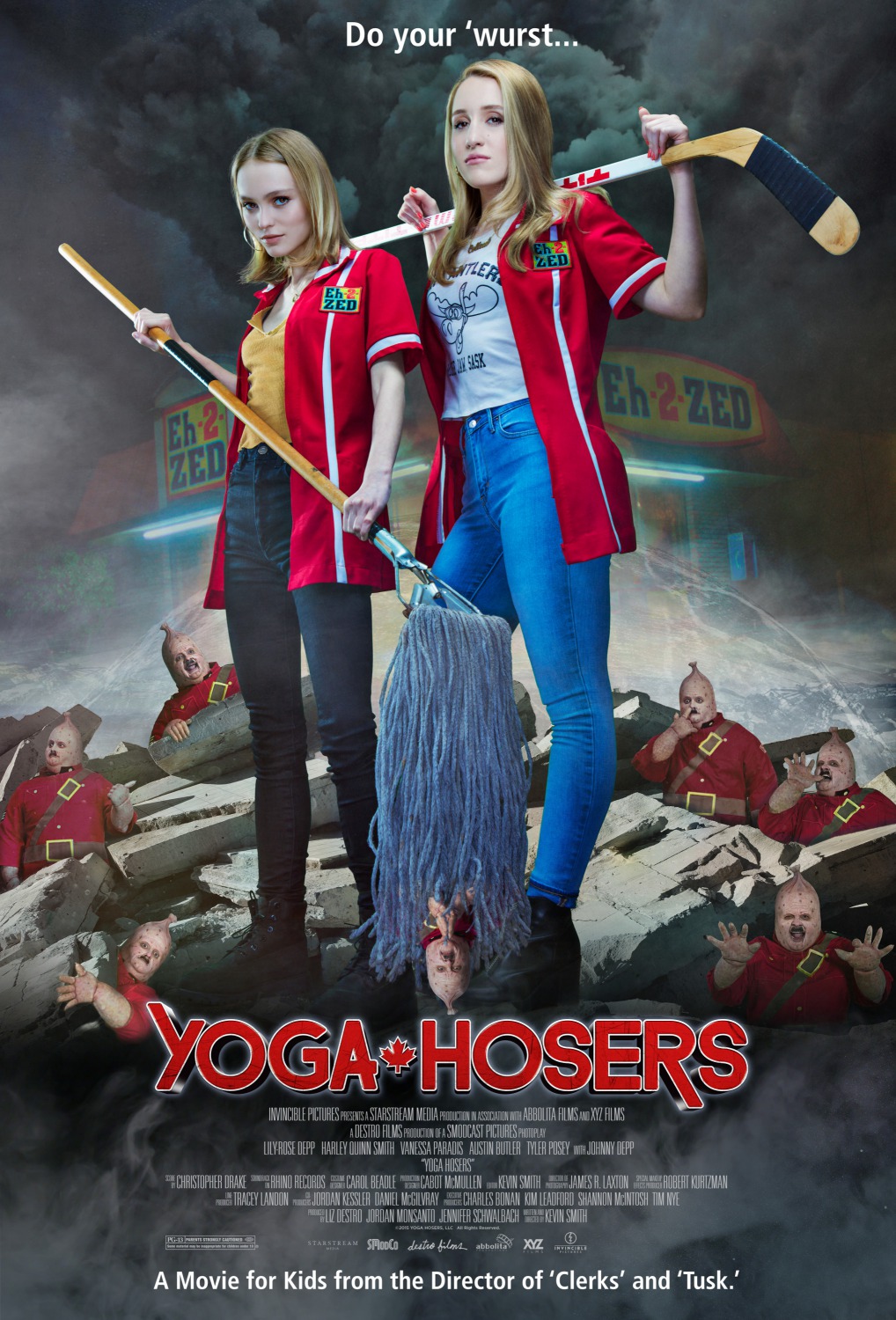
Yoga Hosers

Yoga Hosers poster

I like Kevin Smith. I’ve always liked him ever since he unleashed “Clerks” on audiences worldwide. “Chasing Amy” and “Dogma” were wonderful movies as they delved into personal matters in both intelligent and hilarious ways. “Red State,” his best movie to date, showed him breaking out of his comfort zone and giving us something we could not have seen coming. I’m also a big fan of his various podcasts, especially “Hollywood Babble-On” which has him and Ralph Garman laughing at the expense of celebrities of all kinds (especially Justin Bieber). I even have good things to say about “Tusk” which most people hated.

But when it comes to “Yoga Hosers,” I’m afraid I can’t give it a positive review, darn it. The movie has some inspired moments and appealing performances, and there were scenes which had me laughing quite loudly. Still, this motion picture is nowhere as inspired as Smith thinks it is. It’s not as bad as his misbegotten “Cop Out,” but it does run out of gas long before it arrives at the end credits.

“Yoga Hosers” is the second film in Smith’s “True North” trilogy, and it has the two teenage female clerks from “Tusk,” Colleen Collette (Lily-Rose Depp) and Colleen McKenzie (Harley Quinn Smith), returning to the silver screen. The two still work at the Manitoba convenience store Eh-2-Zed, but they occasionally use excuses like having a urinary tract infection to escape the register and go to the backroom where they sing songs like Anthrax’s “I’m The Man.” Being teenagers, they obsess over cute boys almost as much as they do over their cell phones and texting. When one of the hottest looking boys at school, Hunter Calloway (Austin Butler), invites them to a senior party, they couldn’t be more excited if they tried.

But of course, something gets in the way of their well-laid party plans, and it’s not just their parents. The Colleens soon discover an ancient evil rising from beneath Canada’s crust, one which proves to be a product of Canadian Nazis. Soon, an army of Bratzis (little Nazis made out of bratwursts) are unleashed, and it is up to these two clerks who are not even supposed to be here today to save the world from destruction and salvage their social standing at school in the process.

Knowing that Smith has quite the love for weed, I can’t help but describe “Yoga Hosers” as half baked. There are some wonderfully creative ideas on display in the movie, but they are never fully realized. The Bratzis are at best one joke characters, and Smith (who plays the Bratzis) can’t wring much in the way of laughs out of them. The whole Canadian Nazi flashback is beautifully filmed, but it is also rushed to where only so much of it stays with you. And when the movie ended, I came out it saying, “That’s it?” I hate, hate, hate, hate coming out of any movie like that.

The special effects are incredibly cheesy, but then again this movie only had a budget of $5 million dollars so it’s pointless to expect “Avatar” visual effects here.

On the upside, the cast is very good. Harley and Lily are of course best known for being the children of famous people, but enough of that already. Both are best friends in real life, and they share a great chemistry together onscreen. Even when the material fails them, they are very appealing throughout and make you want to keep watching “Yoga Hosers” in the hopes it might improve. Harley herself has one of the movie’s best moments when she utters a famous line from “Clerks,” and you will definitely know it when you hear it.

Johnny Depp returns as legendary man-hunter Guy LaPointe, the same character he portrayed in “Tusk.” Depp must have relished the opportunity to be in a movie, any movie, which wasn’t bankrolled by a studio for millions and millions of dollar to where the weight of the world was weighing on him to the tune of another box office bomb. While Guy seemed like a bit of an unnecessary addition to “Tusk,” the character is a more welcome presence here as he teams up with the Colleens to bring an end to the Canadian Nazis promise of domination.

Justin Long also has some hilarious scenes as the Colleens’ yoga guru and mentor, Yogi Bayer. This character is so far removed from the one he played in “Tusk” as Long revels in playing an over the top character whose teaching methods in the way of yoga, while not exactly sound, do come to aid these ladies when danger looms large.

But the one man who steals every scene he has in “Yoga Hosers” is Ralph Garman who plays Andronicus Arcane, a resurrected Canadian Nazi who is also very good with celebrity impressions. Garman has a blast doing his various impressions, some of which are excellent, and it generated a lot of laughter and near applause at the screening I attended.

Still, despite all the fun everyone seems to have had making “Yoga Hosers,” not enough of it translates over to the audience. More jokes miss than hit, and the movie never works as a comedy, fantasy or horror movie. Looking back, I wonder what Smith was hoping to accomplish with it other than to make the kind of teen movie he wished he saw as a kid. At times the story feels like it is all over the place, and the humor after a while becomes too broad for its own good.

All the same, I do have hope for Smith as I’m confident he can recover from this missed opportunity. The writer/director plans to conclude his “True North” trilogy in the future with “Moose Jaws,” and the title already has me excited. While he looks to be making amends to all those movie critics who bashed “Tusk” and “Cop Out” without an ounce of remorse, they will still be coming after him on this one. Here’s hoping we get “Clerks III” sooner rather than later.

* * out of * * * *

Copyright Ben Kenber 2016.

Save

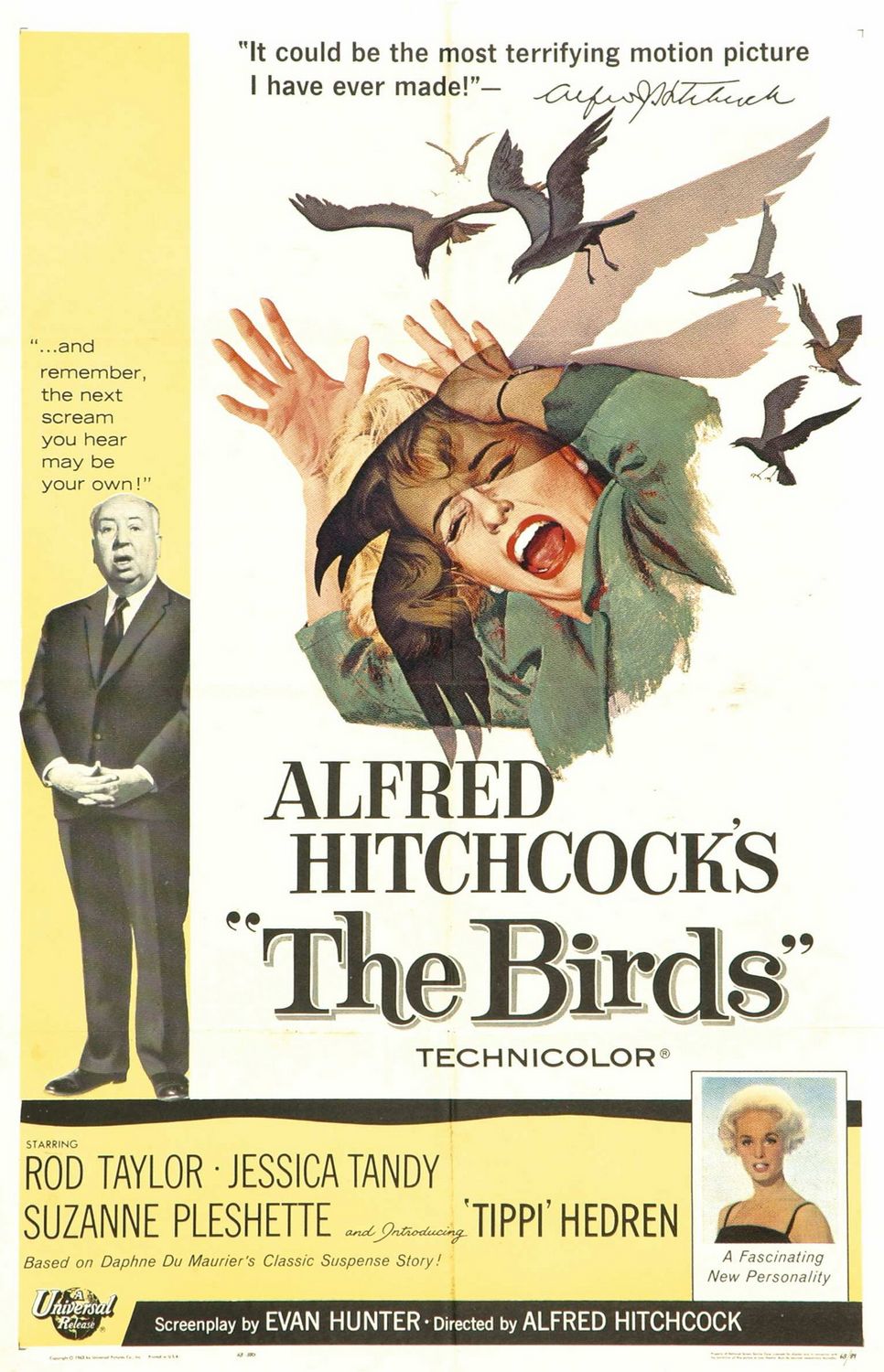
No, I Haven’t Seen It Until Now: The Birds

The Birds movie poster

I spent a large portion of my youth growing up in Northern California, and we were always reminded of Alfred Hitchcock’s “The Birds” when we saw a flock of them fly by. I’ve been to a number of the locations in San Francisco and Bodega Bay where this classic movie was made, but I have never actually seen it all the way through until recently. Still, it was one of those films we felt we all had seen as we are aware of its story and are constantly reminded of its existence when we see birds in the sky or in a park feeding on leftover crumbs.

It took a 50th anniversary screening of “The Birds” at Grauman’s Chinese Theatre to finally give me a reason to actually see it. Seeing the movie at the world famous theater made it all the more entertaining as this Hitchcock classic probably hasn’t looked this good in years. But I was especially impressed with the movie’s sound design which proved to be of an assault on our eardrums. It made you wonder if the birds were going to kill the humans by pecking them to death, or if their insane chirping and screeching would be the end of us instead.

Tippi Hedren is absolutely sublime as Melanie Daniels, a socialite who strikes up a conversation with Mitch Brenner (Rod Taylor), a lawyer who “mistakes” her for a salesperson at a bird shop. When it turns out Mitch was just teasing Melanie as he knew all along she wasn’t an employee but instead someone he remembered from a court case, she gets all pissed and looks to one up him. So she drives out to Bodega Bay, a small coastal town in Northern California where Mitch spends the weekends with his mother Lydia (Jessica Tandy) and his sister Cathy (a very young Veronica Cartwright). And that’s when the birds start to attack…

Bodega Bay is really a perfect location for a horror movie; a small seaside town which looks so peaceful and isolated from the rest of the world. But it’s this isolation which dooms the humans in “The Birds” as many of them can’t see outside their little town for any possible escape. Many people come to these small towns to get away from big city life, but if it’s bad in Bodega Bay when these birds attack, imagine how bad it must be in San Francisco with them all perched over the Golden Gate Bridge, just waiting to launch another bloodthirsty assault.

The first bird attack actually doesn’t happen until about a half hour or so, and I don’t imagine any filmmaker, even Hitchcock, getting away with this today except Steven Spielberg. Studio executives would probably be saying, “Can you introduce the bird attacks any sooner?” But this is okay because Hitchcock is clearly having fun with Melanie and Mitch as they play cat and mouse games with each other. The scene where Melanie sneaks into Mitch’s home so she can secretly give him a present is very suspenseful as I kept expecting Mitch to pop up in the doorway at any second. His reaction to what Melanie has gotten away with is priceless.

When a seagull attacks Melanie while she is on a boat, it completely catches us off guard as we have become so wrapped up in the chemistry between her and Mitch. Indeed, it’s the human characters I wondered more about than the birds themselves. Each person Melanie comes into contact with appears to have some sort of hidden agenda you are itching to figure out before the movie ends. With the birds, it’s not hard to figure out what their agenda is.

Hitchcock made “The Birds” a few years after “Psycho,” and it shows him still having a thing for overbearing mothers. Tandy is wonderful in portraying her deep-seated suspicions about Melanie without words, and I kept thinking she had some evil plan going on behind those eyes of hers. Like Mrs. Bates, she’s a little too overprotective of who her son goes out with.

Then there’s the local schoolteacher Annie Hayworth (the alluring Suzanne Pleshette) who was once in a relationship with Mitch, and she keeps eyeing Melanie ever so seductively when talking about him. Annie tells Melanie she and Mitch remain the best of friends as she smokes a cigarette (which, like it or not, still looks glamorous onscreen), but what does Annie really mean? Pleshette makes Annie a very enigmatic character, and it’s like she’s daring you to look deeper into those beautiful eyes of hers.

Granted, the special effects in “The Birds” these days look a bit campy and haven’t aged well. Then again, they still look better than anything in “Birdemic: Shock and Terror.” Hitchcock shoots the bird attacks in the same way he shot the shower scene in “Psycho;” with a lot of quick cuts which gives you the illusion you’re seeing more than what’s onscreen. This is especially the case when Melanie ventures upstairs to the room which the birds have broken into. The editing is all over the place, and it makes the attack seem all the more painfully brutal as a result.

I loved how Hitchcock just strings the audience along throughout and manages to stay one step ahead of them. M. Night Shyamalan has been desperately trying to do this with many of his movies, but Hitchcock remains the master when it comes to generating suspense. He’s careful not to give too much away, and he always keeps you wondering what will happen next. At the movie’s end, many questions are left unanswered and the fates of certain characters remain up in the air, but this makes the experience all the more terrifying even after the lights come up in the theatre. Hitchcock is not interested in giving the audience an easy way out, and “The Birds” stays with you long after it has ended.

One image which will forever stay with me is the scene at the school where Melanie waits outside as the children sing “Wee Cooper O’Fife,” and she doesn’t notice the dozens of birds which are perched on the jungle gym behind her. You want to yell at her and say “look behind you,” and when it is revealed just how many birds are there, you feel her sheer terror as she sees for herself the danger everyone is in. Keep in mind, this movie was made long before CGI effects were even a tiny thought in somebody’s head, and this makes Hitchcock’s work with the birds all the more impressive.

Actually, looking back at the scene makes me wonder what would be more horrifying. Could it be that those birds are ready to fly up and attack the children at any given moment, or that someone is going to have clean up all the bird shit that you know will be covering the jungle gym after they fly away? With so many birds, that piece of equipment is never going to get fully cleaned. Once the kids find out what happened, you will be lucky to get any of them playing on it again!

I loved the movie’s last half where Melanie and Mitch are hiding in his family’s home which has been completely boarded up to keep the birds from getting inside. It’s at this point the film becomes a master class in sound design as the birds’ screeching (much of it created with an electroacoustic Trautonium) becomes far more unnerving than seeing them attack humans. We don’t see many birds, but we hear them and see all sorts of holes being poked in the doors as they fight their way inside. It’s one of the many brilliantly staged scenes Hitchcock has ever put together as he sticks us right inside the house with the characters to where we feel their isolation and terror over what will happen if the birds find a way inside.

I also loved how cool Hedren is as Melanie Daniels. She gives this icy blonde a seductive confidence which makes you want to follow her to ends of the earth, and it’s easy to see how this type of character came to inform many of Paul Verhoeven’s movies (“Basic Instinct” in particular). It’s a tragedy Hitchcock ruined Hedren’s career out of his unhealthy obsession with her, and his treatment of her casts a dark shadow over the legacy of “The Birds.” Needless to say, Hedren still walks through life with her head held high which says a lot about her.

It’s also a kick to see Veronica Cartwright here as it helps to certify her status as one of the great scream queens in horror movies. These days we know her best from her terrifying turns as Lambert in “Alien” and in Philip Kaufman’s remake of “The Invasion of the Body Snatchers,” but this was the first horror movie which she appeared in, and she was only 12 years old at the time (she turned 13 during its making). After all these years, Cartwright remains a fascinating actress to watch.

Perhaps “The Birds” would have had a stronger effect on me had I watched it on its 25th anniversary instead. But the fact it holds up so well after half a century says a lot about Hitchcock’s brilliance behind the camera, a brilliance many filmmakers still pray to have in their own careers. Still, more than thirty years after his death, there is still no topping Hitchcock as the master of suspense. To those who wish to try, all I can say is good luck. You’re gonna need it.

* * * * out of * * * *


Tom Hiddleston Discusses ‘I Saw The Light’ and Singing Like Hank Williams

I Saw the Light movie poster

We all know him as the villainous Loki from the Marvel Cinematic Universe, but now British actor Tom Hiddleston takes on his most challenging role yet as iconic country singer Hank Williams in “I Saw the Light.” Written and directed by Marc Abraham, the movie starts with Hank getting married to the lovely and business savvy Audrey Williams (Elizabeth Olsen), and it follows him from there as he works his way from singing on the radio to becoming a big time star at the Grand Ole Opry. The movie also shows the pain, challenges and addictions he suffered through which led to him creating some of the most memorable country music and his premature death at age 29.

In preparing to play Hank Williams, Hiddleston had to learn his songs and sing them himself. Working extensively with musical coach and veteran country singer and songwriter Rodney Crowell, Hiddleston immersed himself in Hank’s music and worked tirelessly to match his vocals to Hank’s as much as he could. There’s no doubt it was a difficult process for the actor, but watching him in “I Saw the Light” makes you see the tremendous effort he put into his performance.

I attended the movie’s press conference at the London Hotel in West Hollywood, California where Hiddleston was joined by Abraham and Olsen. I was very interested in how Hiddleston managed to get past all the technical aspects of the singing to where he could put all the rehearsal behind him and just sing his heart out. Izumi Hasegawa, a reporter for What’s Up Hollywood and Hollywood News Wire asked him which of Hank’s songs was the hardest to sing, and this would later lead in to my question for him.

Tom Hiddleston: The most challenging song was probably “Lovesick Blues.” “Lovesick Blues” is, I think, of all the songs Hank sang, the hardest, and he probably sang that the most. It was a huge hit for him. He once went up on stage somewhere, it’s on an album called “The Lost Concerts,” and he’s about to introduce it. He says, “I’m going to play a little song for you. I sang this 13,000,001 and a half times and it’s earned us quite a few beans and biscuits.” It was obviously this real hit maker for him and he sang with such control and such authority that he must have done it in his sleep, and I had to accelerate that process because it’s a very technically difficult song. You are yodeling and you are jumping octaves, and so to be on pitch in every note of that song was really challenging. I had days where I felt like I was bashing my head against a brick wall because Rodney Crowell and I would do take after take after take because if I was rhythmically precise the pitch was off, but if the pitch and the rhythm were right Rodney would say, “Well, you weren’t really feeling it. I kind of lost your sincerity, I lost the twinkle, so could you put that back?” And then I’d have the twinkle and I’d go off rhythm again. So yeah, that was probably the most challenging.

Ben Kenber: Clearly you did a lot of vocal work in preparing to sing like Hank Williams. When do you think you got to the point where you stopped worrying about the singing technicality and started to feel the songs instinctually?

TH: It goes back to what I was saying about “Lovesick Blues.” We had to pre-record certain tracks because of the way we were going to shoot them. If Marc was covering a concert performance, it meant he was going to be cutting from wide shots to close-ups to handheld which meant that we had to be very technically precise about the musical track and therefore couldn’t play it live in order for it to cut in. So we had to pre-record the tracks which I would then play and sing along to myself. They each had to have different atmosphere because some of them are radio station tracks, some of them are studio tracks, some of them are live concert performances, and there were some that came very quickly and very easily to me and some that didn’t. I had recorded “Why Don’t You Love Me” in about an hour. It took me about 10 days to record “Lovesick Blues” and I can’t explain why (laughs). Rodney and I used to say that it was like swimming through the ocean, and that I would have to swim for miles and miles through seaweed in order to get to clear water. And that’s how it felt vocally; there would be cracks and strains in my voice. Singing is a physical thing, and once your body and your resonance and your lungs are sufficiently warm, you can actually get to a place where it feels like you’re up at altitude where you are finally in control of the airplane if that makes sense. It’s a fascinating experience for me because I still believe singing is the most naked form of emotional expression. Actors can hide behind characters, writers can hide behind their writing, painters can hide behind paintings, but singers are purely open. The reason we revere the greatest singers is because we feel a raw power to the transmission of their emotions whether it’s Johnny Cash or Amy Winehouse or Nina Simone or Hank Williams or whoever it may be for you. That was challenging because even though there was a technical discipline to it in manipulating my baritone voice to sound like Hank’s tenor, there was still a commitment to emotional sincerity which was really new for me.

Following Hiddleston’s response, Abraham spoke up about what he specifically wanted for this movie.

Marc Abraham: I just want to add something to that because it was a big deal when we decided how we were going to do the music. From the very moment I wrote the script and decided to make the movie, I was intent that we would not have any lip-synching and that whoever played the part was going to have to sing it. I didn’t know they would be able to do it as well as Tom did. I was hoping that would happen, but what’s important to understand and that Tom understood and Elizabeth to some extent when she was even pretending to sing badly even though she gets mad at me for saying she can sing well (she can). Tom and I both knew from the very beginning that he would never sound exactly like Hank Williams. I know Hank Williams like my mother knows her kitchen. There are people who can imitate Hank Williams better than Tom Hiddleston can imitate Hank Williams because he is a natural baritone and Hank’s a tenor, and that’s just reality. What Tom was able to do was to create the feeling not just in his voice and replicate the sounds and the modulations and to get close enough for us, but to inhabit the character. So in the end it didn’t matter that he didn’t sound exactly like Hank Williams. What we wanted was for you to feel that he was Hank Williams, and that was magic. The magic was that he got so close to the music and put so much energy and time and devoted himself so deeply to becoming that character and bring his vocal representation that close, knowing from the very beginning he couldn’t be exactly like Hank. It’s not possible. That was what was really important, and that’s why we didn’t lip-synch it because then you are watching it and you may think you know what it sounds like, but in the end you feel it and you see that character at play and you see Hank singing “Your Cheating Heart” which is done live. That’s Hank Williams.

I want to thank Tom Hiddleston and Marc Abrahams for sharing their thoughts on the making of “I Saw the Light.” The movie is now available to own and rent on DVD, Blu-ray, and Digital.

Copyright Ben Kenber 2016.

Blazing Saddles

Blazing Saddles poster version 2

Blazing Saddles” is one of Mel Brooks’ funniest comedies and one which invites repeat viewings as there are always jokes still waiting to be discovered. It acts as a satire of the western genre as well as the racism which was obscured by Hollywood’s creation of myths regarding the American West. But as funny as it is, it also offers the viewer a moving story about a black sheriff who manages to win over a town on the verge of being taken over by murderers and thieves. It also gleefully breaks the rules to where places and people are added that were never really part of the American West in the first place.

The wonderful Harvey Korman plays Hedley Lamarr, the State Attorney General who wants to get his hands on the town of Rock Ridge where the land is worth millions. His attempts to frighten the people out of their town includes getting cowboys to ride in and shoot their guns, creating a havoc which makes everyone living there fearful and anxious. But when that doesn’t work, Lamarr comes up with what he believes is an ingenious idea; he hires a black man to become the new Sheriff of Rock Ridge with the belief his “mere presence” will scare everyone out of there. Of course, things do not go as planned.

Looking back at “Blazing Saddles” all these years later, it still stands up mainly because Brooks is not out to make the actors simply go for the joke. Instead they play many scenes straight instead of trying to be funny, and this makes the humor work even more than it already does. With a satire like this, it helps to have characters you care about regardless of how ridiculous their actions may be. Most movie satires and spoofs these days keep forgetting this as they are more persistent in selling the joke to the audience instead of giving the story any real substance.

The late Cleavon Little portrays Bart who becomes the Sheriff and immediately meets resistance to his presence because of the color of his skin. Regardless of how infinitely intelligent and cool he is compared to the idiotic residents of Rock Ridge, he has to work real hard to win them over. Little has so many inspired moments in the movie like when he sings a Cole Porter song instead of the “Camptown Races” which the racist cowboys assume blacks sing all the time.

Many may accuse “Blazing Saddles” of playing up black stereotypes in order to get easy laughs, but they completely miss the point. Brooks and his team of writers, which included Richard Pryor, turn those stereotypes upside down and expose them for the falsehoods they have always been. Seeing the residents of Rock Ridge overzealous reactions to Bart’s behavior, such as him saying “excuse me while I whip this out” when he takes out his written speech, are indicative of their overt racism more than anything else. Seeing them act so stupidly out of fear and sheer ignorance gives the movie some of its most side-splitting moments.

Another memorable performance comes from the great Gene Wilder who plays Jim, a.k.a. The Waco Kid, the fastest gun in the world. While Wilder is best remembered at times for playing neurotic characters, he is as cool as can be in this film. Seeing him play it so cool in moments where his precision with a pistol is stupidly questioned by others who don’t know him is so much fun to take in. His character is a riff on the one Dean Martin played in “Rio Bravo,” and Wilder is such a blast to watch throughout.

“Blazing Saddles” also provided the late Madeline Khan with one of her most famous roles, the German singer Lili von Shtupp whose name is inexplicably censored on the movie’s television version. She is endlessly brilliant in her rendition of the song “I’m Tired,” and it makes for one of the most unforgettable comic performances ever captured on film.

There are many unforgettably hysterical scenes throughout “Blazing Saddles” which stand up to repeat viewings. The campfire scene is as obscene as it is gut-bustlingly hilarious, and you may find yourself laughing harder than you ever have before. Brooks himself plays a couple of parts like the severely lacking in intelligence Gov. William J. Le Petomane and an Indian Chief who, for some bizarre reason, speaks Yiddish. Other actors like the great Slim Pickens and Burton Gilliam have us gasping with laughter just by looking at the befuddled expressions on their faces.

Along with a great music score by John Morris and beautiful cinematography by Joseph F. Biroc, “Blazing Saddles” has more than earned its place on the list of greatest comedies ever made. There is tremendous delight in watching Brooks throw caution and logic to the wind as he throws in the unexpected like Count Basie and his orchestra performing in the desert while Bart rides by, or having Nazis sign up for Lamar’s final battle at Rock Ridge. It doesn’t matter if it makes sense or because you just want the laughs to keep on coming (and they do). With a comedy like this, you can never be sure what will happen next!

By the way, be sure to watch “Blazing Saddles” in the widescreen version. Brooks shot the movie in Panavision scope, and it has never ever translated well to the realm of pan-and-scan.

Blazing Saddles poster version 1

Copyright Ben Kenber 2016.

* * * * out of * * * *

Save

Molly Shannon revisits Mary Katherine Gallagher and ‘Superstar’ in Los Angeles

Superstar poster

Molly Shannon had quite the run on “Saturday Night Live,” giving us such hilarious characters like the 50-year-old Sally O’Malley, self-proclaimed “Joyologist” Helen Madden, “Goth Talk” co-host Circe Nightshade and “Delicious Dish” co-host Terri Rialto. But her best character by far was the social outcast Catholic schoolgirl Mary Katherine Gallagher whose severe mood swings and love of TV movies she would always do monologues from still have us in hysterics to this day. Mary’s popularity became so huge to where she eventually got her own movie called “Superstar” in which she attempts to live out her dream of getting a kiss from the most popular guy at school, Sky Corrigan (Will Ferrell). Despite a middling reception upon its release in 1999, the movie has since earned a cult following.

Shannon got to revisit Mary Katherine Gallagher and “Superstar” when American Cinematheque, in partnership with Alamo Drafthouse, screened the movie at the Egyptian Theatre in Hollywood. Joining her was the movie’s director Bruce McCulloch and its screenwriter Steve Koren. Shannon, who hasn’t aged much since her “SNL” days, was all smiles and showed no hesitation in doing Mary’s signature “Superstar” pose to the delight of the audience.

The first question on everybody’s mind was how Shannon came up with Mary Katherine Gallagher, and she replied the character was originally a version of herself, albeit a very exaggerated one. Like Mary, Shannon attended Catholic school, was never really comfortable there and got very nervous when going to confession. She also said the idea for Mary putting her fingers into her armpits came from a friend of hers she used to go on vacation with in Palm Springs. They were at the age where body odors began emanating from their bodies, and Shannon’s friend got her to smell her armpits and vice versa. Shannon also added she is no longer a practicing Catholic.

McCulloch, best known for being on “The Kids in the Hall,” originally turned down the opportunity to direct “Superstar.” Shannon at the time was co-starring opposite Drew Barrymore in “Never Been Kissed,” and Barrymore begged her to go after him and stop the airplane he was on from taking off. McCulloch said his reason for turning down this movie was because he was scared he wouldn’t be able to deliver the goods. He was also concerned he would be taking on another person’s project as well as their life and a significant part of that person’s career. Still, Shannon managed to track McCulloch down and he agreed to direct.

Koren had worked with Shannon on “SNL” and had written the Mary Katherine Gallagher sketches, so it seemed appropriate that the two of them wrote the screenplay for “Superstar.” Actually, it was Lorne Michaels who was “really into the movies,” as Koren put it, who wanted to see Mary get her own film. Koren said when writing the screenplay, it came down to thinking about the history of Mary and where she came from. After that, it was about giving the screenplay a three-act structure and going through a number of rewrites to where they had too much material. In the end, McCulloch said they managed to simplify things by making “Superstar” into a girl movie about finding yourself and of Mary getting her first real kiss.

McCulloch remarked how Shannon never wanted to stop even after shooting 11 takes of the same scene due to the ferocious energy she brought to Mary. He found this to be refreshing as other actors he worked with were not like that. In fact, he even recalled when he finished a third take with an actor and wanted to do another, and the actor looked at him and asked, “Don’t you have it yet?”

One of the many things we love about Shannon’s portrayal of Mary is how fearlessly she threw herself into the physical comedy and crashes into any and every object in her path. Shannon said she grew up watching John Ritter on “Three’s Company” which became a huge inspiration for her. She also added she always made sure to stretch out beforehand and that physical comedy can be very dangerous when doing it with another person.

Shannon also confirmed that when it came to making out with the tree, it was never sterilized beforehand. McCulloch even added he “had to pull her off that goddamn tree” more often than not.

As for her favorite moments in “Superstar,” Shannon said one of them was when Mary was watching the television movie “The Boy in the Plastic Bubble” starring John Travolta as it proved to be her escape from sadness. She also loved the scene where Mary was in her bedroom talking about her breasts as it reminded her of when she was a little girl and thought about “bras” and “big boobs” most of the time.

When “Superstar” was released in 1999, Shannon admitted to seeing it in the theater “so many times.” She kept thanking God for the opportunities given to her, and she reveled in the audience’s reaction to the movie. At one particular showing, she remembered a little boy who saw her and then quickly looked at the screen and then back at her. He leaned over to his mom and said, “Mom, I think that’s the girl in the movie.”

Each of the night’s guests had worked on “SNL,” and an audience member asked how hard it was for them to leave the show. McCulloch recollected that after a season or two he wasn’t sure if he wanted to come back, and he later moved on “The Kids in the Hall.” Koren replied he left when he was hired to be a writer for “Seinfeld,” and it was very tough on him emotionally to move on from “SNL.” As for Shannon, she said she loved the show and wanted to leave while still in love with it. She had nothing planned when she left, and her reasons for leaving were more personal as her father was dying from cancer. Quitting the show allowed her to spend more time with him before he passed away.

It was great to see such an enthusiastic audience come out to see “Superstar” at the Egyptian Theatre. Shannon proved to be a delight as she has lost none of her enthusiasm for Mary Katherine Gallagher or acting. It was also a lot of fun to see McCulloch and Koren share their insights about the movie’s making as it proved to be better than its reputation suggests. As for where Mary would be today, Shannon is convinced she would be in a lot of therapy, but she also hoped Mary would have found love. Regardless, there’s no denying that after all these years, Mary is still a superstar.

Copyright Ben Kenber 2016.