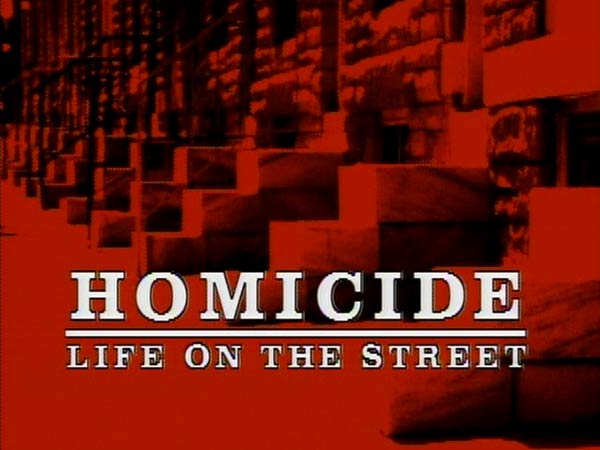
Recently, “Homicide: Life on the Street” has undergone a major renaissance of sorts. The show is now finally available to stream on Peacock, and we have two new podcasts dedicated to the acclaimed series. First, there is “Homicide: Life on the Set” which is hosted by filmmaker and podcaster Chris Carr and Susan C. Ingram who worked as a union camera assistant on “Homicide,” and they have interviewed actors, writers, directors and technicians who worked behind the scenes and have made unforgettable stories to tell. Then there is “Homicide: Life on Repeat” which has actors Reed Diamond and Kyle Secor reviewing each episode of the show from start to finish, and that’s regardless of whether they are in said episode or not. With all this going on, “Homicide” looks to be gaining a new generation of fans and may even become a bigger hit with viewers than ever before.
With this “Homicide” commentary, I focus on the fifth episode of the first season entitled “A Shot in the Dark.” Directed by Bruce Paltrow and written by Jorge Zamacona, it follows multiple plot threads back when the show could get away with that. Stanley Bolander (Ned Beatty) and John Munch investigate the double shooting of a drug dealer, Frank Pembleton (Andre Braugher) and Beau Felton (Daniel Baldwin) join forces reluctantly to look into a theory regarding Adena Watson’s murder, Tim Bayliss remains convinced that the arabber Risley Tucker murdered Adena and wants to bring him in for questioning, and Steve Crosetti (Jon Polito) and Clark Johnson continue to look into the shooting of Chris Thormann (Lee Tergesen) who has miraculously survived his nearly fatal wounds. It’s amazing just how much the writers got into one single episode!
In the midst of all this, Bolander seems unable to deal with the aftermath of his date with Dr. Blythe (Wendy Hughes), Felton and Pembleton battle with one another over how they see things, and Bayliss gets revenge at Captain Barnfather for releasing information he shouldn’t have released. Of course, Bayliss still pays a price for going after a superior officer. And Munch? Well, let’s just say he steals the show at the very end.
Please check out the commentary below. “Homicide: Life on the Street” is now available to stream on Peacock, and the entire show is still available on DVD through Shout Factory.
It has been a bit, but I am now back with another “Homicide: Life on the Street” commentary track. This time it is for “Son of a Gun,” the fourth episode of the first season. This episode contains several plot threads as the detectives furiously investigate the shooting of Officer Chris Thormann (Lee Tergesen), Tim Bayliss (Kyle Secor) and Frank Pembleton (Andre Braugher) continue to investigate the murder of Adena Watson, Stanley Bolander (Ned Beatty) goes out on a date with Doctor Carol Blythe (Wendy Hughes), and there is also the case of Calpurnia Church (Mary Jefferson) who has murdered many people for the insurance money. This is a lot for any hour-long drama to handle, but everyone involved seems to find the right balance to where nothing feels superfluous.
“Son of a Gun” was directed by Nick Gomez who helmed a couple of indie crime dramas back in the 1990’s: “Laws of Gravity” and “New Jersey Drive.” It marked the first appearances of Sean Whitesell who portrays Dr. Eli Devilbiss, Edie Falco who portrays Chris Thormann’s wife, Eva, and Walt McPherson who plays an patrolman who may or may not be Roger Gaffney, the most odious and bitter character in the “Homicide” series.
This episode was the first thing I ever saw Edie Falco in, and she previously appeared in Gomez’s “Laws of Gravity.” From here, Falco would go on to play a role in Tom Fontana’s HBO prison drama “Oz,” and she would eventually make her breakthrough a few years later on “The Sopranos.”
There are also other memorable performances to be found in this episode. The great Luis Guzman appears as Bolander’s next door neighbor, Lorenzo “Larry” Molera, who has quite the love for wood. Then there is the late Wendy Hughes who plays a potential girlfriend to Bolander in Carol Blythe, and seeing her and Beatty together provides this episode with the series’ more intimate moments.
Check out the commentary below. The complete series of “Homicide: Life on the Street” is currently available to purchase from Shout Factory. To this date, it is still not available to stream on any service. This is likely due to music rights.
I am back with my latest audio commentary on an episode of “Homicide: Life on the Street,” and the one on display here is “Night of the Dead Living,” a nice little play on words on the title of the classic horror film, “Night of the Living Dead.” It was directed by Michael Lehmann who gave us one of the greatest black comedies ever made, “Heathers” which starred Christian Slater and Winona Ryder. Lehmann also directed “Hudson Hawk” which starred Bruce Willis and proved to be a critical and commercial bomb, but has since become a cult classic of sorts. The teleplay was written by Frank Pugliese who won a WGA Award for his work on this episode. Pugliese is a writer and playwright, and his plays include “Aven’U Boys” which an Obie Award, and he wrote the screenplay for the 2006 film “Infamous.”
“Night of Dead Living” was the third episode of “Homicide’s” first season, but NBC decided to air it as the season finale due to its slow pace and the fact they were trying hard to “woo” more viewers for this show which was already suffering a decline in ratings. For me and many others, the airing of this episode in this order was confusing as hell as it looked as though Tim Bayliss and Frank Pembleton had another chance at closing the Adena Watson case. Watching it now, it feels like the cruelest of teases.
What I love about this particular episode is how unusual it is for “Homicide” let alone any other police drama as it is one without any murders or crimes committed. The detectives are working the night shift during a hot summer night, and Lieutenant Al Giardello is furious because the air conditioning is off in the office and everyone is sweating like crazy to where they are taking off their ties. That is, except for Frank Pembleton who remains as cool as can be despite the heat.
Please check out the commentary track below and let me know what you think about this episode.
So here I am with another commentary track for an episode of “Homicide: Life on the Street.” This one is titled “Ghost of a Chance,” and it is the second episode of the first season. The story is by Tom Fontana, the teleplay was written by Noel Behn, and the episode was directed by Martin Campbell. Campbell would later go on to direct to James Bond films, “Goldeneye” and “Casino Royale.” After the brilliance of “Gone for Goode,” I wasn’t sure the next episode would be anywhere as good. Thankfully, it was.
“Ghost of a Chance” starts off with the murder of Adena Watson, the first case for rookie detective Tim Bayliss (Kyle Secor), and the one case which would haunt him the most throughout this series. There are also some other plotlines explored here. John Munch (Richard Belzer) and Stanley Bolander (Ned Beatty) investigate the death of Thomas Doohen whose widow, Jessie (Gwen Verdon), cannot wait to be rid of him, Kay Howard (Melissa Leo) and Beau Felton (Daniel Baldwin) work to find much-needed evidence in a murder case, and Bolander develops a crush on Carol Blythe (Wendy Hughes) which has him acting rather awkwardly.
We are also introduced to Officer Chris Thormann (Lee Tergesen), a character who will become especially important in later episodes.
So here I am with another commentary track after the one I did for “Pump Up The Volume.” But this time, it is for an episode of one of my favorite television shows of all time, let alone of the 1990’s, “Homicide: Life on the Street.” Specifically, the commentary is on this show’s very first episode, “Gone For Goode,” which did a brilliant job of introducing us to various Homicide detectives, and also showed how it was not going to be your usual cop show. Instead, it was initially designed to be one without onscreen violence, something which executive producer and showrunner Tom Fontana thought was crazy, and he quickly signed up with the show as a result.
What hooked me onto this show was the fact it was being developed by Barry Levinson, the Oscar winning filmmaker of “Rain Man.” He also directed the “Gone For Goode” episode and introduced its cinematic style which no other director could direct their way out of.
With this commentary track, I express my thoughts on this episode and the show at large. Upon watching “Gone For Goode,” I was immediately hooked into what this groundbreaking series had to offer, and I did my best to provide as much trivia about its making as I could. I’m not sure there will ever be a perfect commentary track to anything unless it is done by Martin Scorsese or Bruce Campbell, but I would like to think this one comes close. If you say it does, it will do wonders for my fragile ego.
Please feel free to listen to the commentary track below as you watch this episode on your DVD player. At this time, “Homicide: Life on the Street” is not available to stream, most likely due to music rights, but you can purchase the complete series on DVD from Shout Factory. It was previously available in a box set from A&E Home Video, but it has long since gone out of print.
WRITER’S NOTE: As the opening paragraph indicates, this article was written back in 2011.
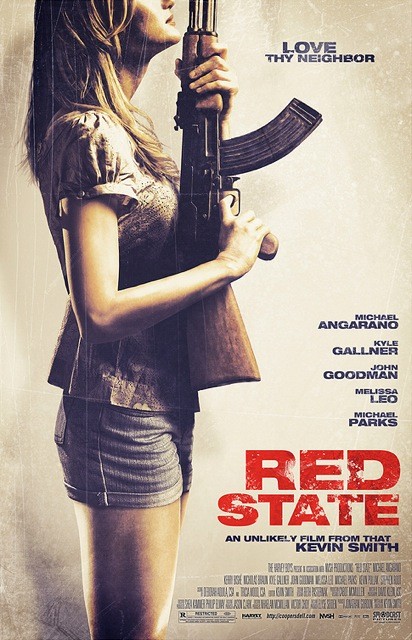
On August 19, 2011, Kevin Smith began a one-week run of “Red State” at New Beverly Cinema making it eligible for Academy Awards consideration. Smith also came to just about every showing there to do a Q&A afterwards as he came to love “sitting back and loudly appreciating the movie.” Of course, this led one audience member to confront him at a local Coffee Bean & Tea Leaf and say, “You were yelling ‘genius’ at your own movie?”
“Red State” is astonishingly different from any movie Smith has previously helmed including the Bruce Willis starring “Cop Out.” This is largely the result of him and his longtime director of photography Dave Klein, who also shot “Clerks,” making use of the Red One digital camera. Smith said he loved chasing around the set with it, and he remarked how the camera looked like something out of “The Bourne Identity.” Smith, however, was aiming for “Red State” to look more like “Half Nelson” and less like “NYPD Blue,” and he told Klein him he wanted it to look unlike any movie they had made before. To this, Klein said, “Thank God!”
Smith felt he improved as a filmmaker with the Red One, and he figured the company which made them would give him one for free. However, it turned out getting a free camera was as likely as getting anything for free from Apple.
When it came to the actors, Smith saw himself as more of a cheerleader than a director. He made this blunt in saying, “You don’t direct mother fuckers like these! Who am I to tell John Goodman or Melissa Leo about acting?!”
The actor he talked about most was Michael Parks who played Abin Cooper, Pastor of the Five Points Trinity Church, a highly fanatical and conservative church which makes the Westboro Baptist Church look tame by comparison. Smith, like many of us, first saw him as Texas Ranger Earl McGraw in “From Dusk Till Dawn,” and he declared that Parks “owned the first ten minutes” of it. Parks, however, told Smith he didn’t want impersonate Fred Phelps as he described him as being “boring.” Instead, Parks wanted Cooper to be “charismatic,” and his brilliant performance has Phelps only wishing he could be as such.
Speaking of the Phelps family, five of them came to a midnight screening of the movie. Or at least, five of them planned to until Megan Phelps contacted Smith and asked for 15 more tickets. Smith couldn’t resist having a laugh at the inescapable contradiction:
“God may hate fags, but the Lord loves a bargain!”
Megan described “Red State” as being “filthy” even though she kept watching it for ten minutes as a gift to Smith before walking out. She did, however, send him a couple of signs with the sayings “God Hates Fag Enablers” and “Red State Fags” on them. Smith’s wife, Jennifer Schwalbach, ordered him to throw them out, but he pointed out they were signed by all the WBC church members. Their daughter Harley ended up coming across the “Red State Fags” sign by accident. While he and his wife were looking at each other, Harley asked them, “Is this the sequel?”
Kevin Smith said “Red State” exists because of Quentin Tarantino. The Madonna speech at the beginning of “Reservoir Dogs” was such a big thing to him, and it made filmmaking seem all the more fun and possible to do. He sees “Red State” as the “true spiritual sequel” to “Clerks,” and he has had a joyous experience taking it out on the road. It’s very easy to believe to him when he said no one has had a bad experience with a premium ticket they bought for it.
It’s amazing how Denzel Washington has gone through his career without ever having made a sequel. Then again, do many of his films cry out for one? “Glory” and “Training Day,” didn’t leave much room for follow-ups as the characters he played met a very violent end. Last I checked, William Shakespeare never penned a sequel to “Much Ado About Nothing.” “The Pelican Brief,” “Philadelphia,” “Courage Under Fire” and “Crimson Tide” tell self-contained stories which are perfectly resolved at their conclusions. “Unstoppable” came to a full stop at the end to where a continuation would have insultingly involved another runaway train. As for “Remember the Titans,” we still remember them 18 years later, so there’s no need for a sequel to remind us of what we never forgot about in the first place. And regardless of what its title may imply, “Malcolm X” is not a sequel to anything.
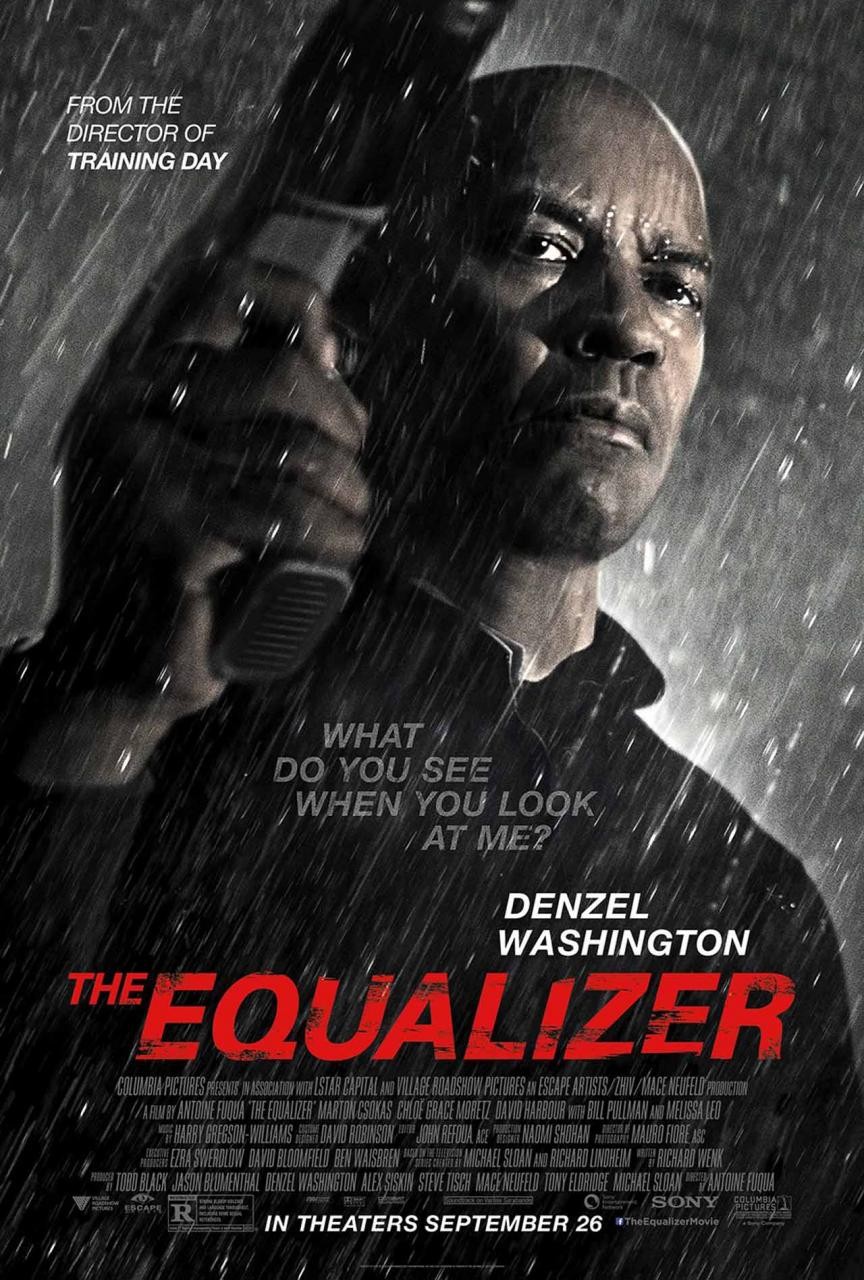
But with “The Equalizer’s” Robert McCall, Washington has found a character whose story can last beyond one movie, and this was made clear in the final scene where he replied to someone’s plea for help over the internet. Now we have “The Equalizer 2” which reteams Washington with director Antoine Fuqua for another round of brutal retribution against those foolish enough to cross McCall’s path. While not much is different this time out, this sequel still proves to be as entertaining and thrilling as its predecessor.
We catch up with McCall who still resides in Boston, Massachusetts but now works as a driver for Lyft. This particular job allows McCall to befriend people like Sam Rubinstein (Orson Bean), a Holocaust survivor who is still trying to come to grips with what he has lost. Rubinstein also gives McCall an invaluable piece of advice which rings ever so true:
“Be nice to anyone who has access to your toothbrush.”
Among McCall’s victims this time around are a group of men who have kidnapped a little girl, and a bunch of young men afflicted with white privilege that have taken advantage of a female intern. Once again, these characters think they have McCall figured out and consider him as someone way past his prime, but we all know he is going to leave them in a world of pain because that’s why we paid money to see this sequel. The question is, will he take them out in 15 seconds or 29? Either way, McCall has found a very effective method to obtain a five-star rating from a Lyft passenger. Whether he gets a tip on top of that remains to be seen.
Things, however, get very personal for McCall when he learns his dear friend Susan Plummer (Melissa Leo) has been murdered while on assignment in Brussels, Belgium. The attack on Susan is especially brutal, but it’s nice to see her get a few punches in. With “The Equalizer 2,” Leo gets to remind us how she once portrayed one of television’s most unforgettable female police detectives, Sgt. Kay Howard, on “Homicide: Life on the Street” as she inflicts painful scars on her attackers. While at the press screening I wanted to yell out “Kay Howard lives!” But knowing from the trailers how Susan was going to meet a tragic end left me with anxiety and some despair as her fate was clearly sealed.
As you can expect, McCall goes on a mission of revenge which leads him to meet up and work with a former partner of his from the CIA, Dave York (Pedro Pascal). What he discovers is a complex web of corruption in which loose ends are being tied up to where the perpetrators are higher up the government ladder than he realized. Watching certain characters get eliminated in ways they do not see coming reminded me of what Captain James T. Kirk said in “Star Trek VI: The Undiscovered Country:”
“First rule of assassination, kill the assassins.”
Denzel is simply the best, and he return to the role of Robert McCall as if he just made the original film yesterday. Is it even possible for this Oscar-winning actor to disappoint us? Well, anything is possible, but seeing him in the scene where he takes young Miles (Ashton Sanders), an aspiring artist, aside and gives him a strong lecture about the dangers of gang life reminds us why he is one of the best actors working. We have seen this scene of an older man telling a young one not to join a gang many, many times before, but Denzel brings a raw emotional power to this one which makes it feel as visceral as when Laurence Fishburne demanded Cuba Gooding Jr. give him back his gun in “Boyz n the Hood.”
Ashton Sanders proves to be a strong addition to “The Equalizer” franchise as he portrays Miles as someone clearly caught between two worlds and unsure how to navigate either of them. We learn his brother was senselessly murdered, and he looks to be on the hustle when it comes to painting buildings and apartments, something McCall sees right through. Ashton also figures in one of this movie’s most suspenseful scenes when Miles is trapped in McCall’s apartment as a couple of assassins break in. Fuqua wrings all the suspense out of this scene to excellent effect, and it left me pinned to my seat as I began to feel as unsafe as Miles did.
Fuqua has since proven to be a top-notch action film director as he takes average set pieces in formulaic motion pictures and gives them a jolt of energy and tension. Right from the opening sequence on a train in Istanbul, Fuqua shows once again how he and Denzel mean business, and he gives us a number of thrilling moments throughout like when McCall fights a knife-wielding Lyft passenger while trying to avoid oncoming traffic, or when he faces off against a trio of bad guys whom he promises to terminate with extreme prejudice.
“The Equalizer 2” culminates in an action set piece much like the one in the first film as McCall leads his pursuers into territory he is far more familiar with than they are. Last time it was in a hardware store, and this time it’s at seaside town which is getting battered by severe winds and heavy rainfall. But whereas those Russian gangsters were too late to discover how out of their league they were, McCall now finds himself hunted by those with the same military training. As a result, the odds are even and this makes the sequel’s climax especially thrilling.
Also returning for this sequel is screenwriter Richard Wenk who infuses scenes with subversive jabs I could not ignore. When one military character talks about how he was essentially cut off by the government to where he was forced to do things he never would have done otherwise, I was reminded of how politicians kept telling us to support our troops during wartime and then would later cut their veteran benefits. Wenk is certainly not out to bash us over the head with any political statements, but it is little moments like those which provoke my consciousness to a strong extent.
And Wenk once again has McCall reading a number of classic books among which, quite appropriately, is Ralph Ellison’s “Invisible Man.”
Like I said, “The Equalizer 2” is basically more of the same, but I was fine with that as Washington and Fuqua are simply out to give us an action-packed thriller, and they have succeeded once again. If there is to be a third “Equalizer” movie with these two on board, I would certainly welcome it.
Looking back, it’s almost a shame they didn’t make McCall an Uber driver. Just imagine how he would have reacted to his earnings statement as Uber is known for taking a ridiculously high percentage from their drivers. This could have resulted in a terrific climax in which McCall visits the company’s corporate headquarters and tells the CEO, “I understand you pay more attention to your profit motive than to the safety of your drivers.” If there is anyone who could punish Uber for this and make them update their policies for the drivers’ benefit, it would definitely be McCall!
When actors get to a certain point, they find themselves playing older men with a violent past which they have long since renounced, but we know they will jump back into action when the occasion arises. Whether it’s Liam Neeson in “Taken,” Sean Penn in “The Gunman,” Keanu Reeves in “John Wick” or even Clint Eastwood in “Unforgiven,” these characters end up falling back into their violent ways as life has left them little else to fall back on. A song by Eminem, “Guts Over Fear,” spells this out perfectly:
“It’s too late to start over. This is the only thing I know.”
This is certainly the case for Robert McCall, the main character of “The Equalizer” which was a popular show from the 1980’s. Now Denzel Washington makes this character his own in this cinematic adaptation which shows McCall leading a decent life at a Home Depot-like store named Home Mart where he befriends its many employees, and who spends his time outside work at his bare apartment or at the local diner reading a book. But a look into his eyes tells of a dark past he would rather not tell you about, and we all know this past is going to come roaring back.
This dark past comes to the surface when Alina (Chloe Grace Moretz), a teenage prostitute McCall becomes friendly with, ends up in the hospital after a severe beating. Seeing the damage done to her, McCall goes to the Russian mobsters who employed her to beg for her freedom. Even after he presents them with an envelope filled with over nine thousand dollars in cash, they are quick to dismiss him as just some old guy who is way past his prime. Unlike the “John Wick” movies where the villains react in embarrassment upon realizing who they inadvertently pissed off, the antagonists of “The Equalizer” have yet to realize how brutal McCall as they believe youth counts for more than age. By the time they come to see their mistake, the chance to make an apology is quickly rendered moot. Just ask the man whom McCall forcefully shoves a corkscrew under his chin to where you can see it inside his mouth.
Of course, the road to hell is paved with good intentions, and McCall’s actions have infuriated the Russian Mafia to where they send out theiir chief enforcer Nicolai Itchenko (Marton Csokas) to deal with the situation. It is important to note one of the books McCall reads is Ernest Hemmingway’s “The Old Man and the Sea” which is about an aging Cuban fisherman who struggles to catch a giant marlin out in the Gulf Stream. As the book begins, the fisherman has been unable to catch a fish for over 80 days, and “The Equalizer” starts with McCall leading a peaceful life which suggests he has not beaten the crap out of anyone for a long, long time. But we all know a giant marlin of sorts will be thrown into his path, and we are left wondering just how badly his antagonists will get their due justice.
There is no denying Washington is one of the best film actors ever, and “The Equalizer” could not have come to him at a better time. His career has lasted for several decades, and he has surpassed the point where he has nothing else left to prove. Washington was 59 when he played Robert McCall, and helps him give the character more gravitas as he now has the face of a man who has seen more than any person should in life. All he has to do is give off a look with his eyes or speak words with his still smooth voice to let us know he means business. And when he starts the timer on his watch of his, we know things are about to get nasty.
Watching “The Equalizer” reminded me of “The Gunman” which starred Sean Penn as a former special forces officer and mercenary whom we see at points apologizing to others for being so good at killing people, a skill he wishes he was never taught. Penn is another one of our finest actors, but his performance was laughable as his character displayed himself in a way which felt insulting to our intelligence. Washington, however, does not make this same mistake in playing McCall. There’s a scene in which he admits he has done things he is not proud of and that he gave up on doing them out of respect for his late wife, but a look into his eyes is enough to tell us he is not about to apologize for who he is and that he accepted this part of himself a long time ago.
“The Equalizer” also allows Washington to reteam with his “Training Day” director Antoine Fuqua, and this continues to be a match made in cinematic heaven. Let’s be honest, the plot of this movie is formulaic and hits all the notes we expect it to hit throughout, and we have a good idea of how things will turn out to where expect this to be a run of the mill action thriller. As long as it delivers the goods, this is enough.
Still, both Washington and Fuqua, along with screenwriter Richard Wenk, add their little touches to the material to where “The Equalizer” proves to be anything but average. Washington sells himself easily in this role, but he also adds a strong humanity to the character as we watch him help his friend Ralph (Johnny Skourtis) pass the security guard exam and keep a fellow employee calm while she is being robbed at gunpoint. Washington makes McCall a wonderfully rounded character in a way which could have come off as inescapably cheesy in the hands of another actor.
While Nicolai Itchenko comes off as just another overconfident gangster, let alone a Russian gangster, Fuqua gives Csokas some strong moments where a look at his tattoo-covered body reveals a man who has long since been rendered into a cold-hearted bastard to where any sense of empathy within him no longer exists. Csokas also has a scene where he stares off with Washington in the same way Al Pacino and Robert De Niro did in “Heat” as their characters try to figure the other one out, and he shows how deep Nicolai’s psychosis stretches in a way we do not often see in the typical action extravaganza.
Other actors make a sizable impact in their small roles, and it reinforces the saying of how there are no small roles, only small actors. David Harbour, before he became famous on “Stranger Things,” plays a corrupt cop whom McCall gives a chance to do the right thing in a coldly calculated way. Harbour makes the most of his moment opposite Washington when he yells out how life has given little in the way of choices to where he survives the only way he knows how. Sure, it may seem like a cliched moment, but Harbour sells it for all it is worth to where you cannot dismiss his performance as you walk out of the theater.
You even have Bill Pullman and Melissa Leo, two actors you can always depend on, showing up as Brian and Susan Plummer, a married couple and former CIA employees who were instrumental in McCall’s life and remain there for him in the aftermath of the tragedy he has suffered. Leo in particular brings a strong dramatic energy to her few scenes as she makes us see how Susan sympathizes with McCall’s situation to where she understands him in a way few others can or are willing to.
What I admired about Fuqua’s direction is that he has succeeded in making a slow burn thriller and not an action movie which hits the ground running like most do these days. Fuqua takes his time and is not quick to reveal everything about McCall to where the mystery of this man empowers the ultra-violent scenes to where we are constantly left on edge. When it comes to the movie’s climax at Home Mart, Fuqua keeps us as off-guard as the bad guys to where we cannot help but feel we are in their shoes as McCall takes them out with cruel precision. Ever since “Training Day,” this filmmaker has proven to be excellent at making action set pieces feel more visceral than they usually do, and he gets away with moving the story at a pace that seems unthinkable in today’s cinematic world which overflows with superheroes and comic book characters.
I’m not sure where I would place “The Equalizer” in the pantheon of Washington’s and Fuqua’s careers. It may not be among their best works, but it shows the care and intelligence they are willing to put into a typical genre film to where we got more out of the final product than we expect. I never did get the watch the television show which had Edward Woodward starring as Robert McCall, but I think it is safe to say Washington and Fuqua have taken this story and its main character and have safely made them their own.
The advertisements for Robert Zemeckis’ “Flight” are actually quite deceptive. It almost looks to be a mystery movie as we wonder if Denzel Washington’s character of Whip Whitaker was drunk or not when he crash-landed the commercial airplane he was flying. Whip ended up saving a lot of lives, but is the company which owns the airline he flies for trying to make him take the blame so they can reduce their loses? Looking at the commercials and trailers for “Flight,” it looked as if the film was being sold as a relatively easygoing cinematic affair. However, it turns to be something far more complex and ambiguous than what Hollywood is used to putting out.
“Flight” isn’t a mystery in the slightest, but instead a character study about a man who is overwhelmed by his addictions and has yet to be honest not only with others, but most of all with himself. From the start, we can see Captain Whip Whitaker is one messed up dude. Waking up in his hotel room after an evening tryst with stewardess Katerina Marquez (Nadine Velazquez), we see him drink some beer, smoke a cigarette, and arguing with his ex-wife over their son’s school tuition while snorting some cocaine. All of this happens before he puts on his uniform and heads over to his plane to get ready for takeoff.
Whip clearly has no business flying an airplane under these conditions, but fly it he does. When a malfunction suddenly forces it into a vertical dive, he manages to roll the plane over to where he’s flying upside down, and he does so just long enough to stabilize the descent and land it in an open field. Next thing Whip knows, he is waking up in a hospital room only to discover the real nightmare for him is about to begin.
It says a lot about the star power of Washington and Zemeckis that they could get a movie like “Flight” made today. Made for only $30 million, far less than what it cost for Zemeckis to make “The Polar Express” or “A Christmas Carol,” this is more of a character driven drama from the 1970’s as it gives us a main character who is not particularly likable, and yet we are compelled to follow him all the way to the movie’s end.
What I loved about the screenplay by John Gatins is how it revels in the ambiguity of its characters and the situations they are stuck in. We know Whip was far from sober when flying the plane, and yet we cannot help but wonder if his heroic act can somehow excuse his personal sins. His lawyer, Hugh Lang (Don Cheadle, terrific as always), tells him how ten other pilots were placed in flight simulators which recreated the event, and of how they ended up killing everybody on board. But there is one big difference between Whip and all those pilots: they were all sober.
We can always count on Washington to give us some of the best performances in movies today, and his work in “Flight” is unsurprisingly superb. It’s also the riskiest role he has played in a long time as his character is far from likable and apparently determined to drive everyone who tries to reach him away. Heck, Detective Alonzo Harris from “Training Day” almost seems like a nicer person than Whip as Alonzo tried to have his partner killed, but we always find ourselves rooting for Washington no matter which character he plays, and he does an exceedingly brave job in uncovering this character’s wounded humanity for all of us to see.
I do have to say, however, how amazed I am at the enormous amount of alcohol Whip consumes throughout the movie. Any normal person would have likely experienced liver failure long before this story reaches its final act.
Much has been said about how this is Zemeckis’ first live action movie since the year 2000 when he made “Cast Away” and “What Lies Beneath,” but people should really take note of how this is the first R-rated movie he has directed since “Used Cars” and that one came out in 1980. Having made so many films largely geared towards the whole family, it’s tempting to think he was no longer in a position to helm one with such complex characters and issues. But with “Flight,” Zemeckis does some of his most memorable work behind the camera in some time. There are moments where he paints some dramatic strokes broader than they need to be, but he never once shies away from the ambiguous nature and fascinating questions which Gatins’ screenplay elicits. He also does a brilliant job in one crucial scene involving a minibar in a hotel room, and the suspense of it had the audience I saw the movie with absolutely enthralled. And, of course, he stages a very frightening plane crash that tops the one he put together in “Cast Away.” Even from the safety of a movie theater, this sequence is truly harrowing to sit through, and its images hang over the rest of “Flight” like an ominous shadow.
Another superb performance comes from Kelly Reilly who plays Nicole Maggen, a former photographer trying to free herself from the throes of a nasty heroin habit. Reilly may be best remembered for her role in the deeply unsettling horror film “Eden Lake,” and her portrayal here feels very honest in how she presents an addict’s day to day struggle to stay clean.
There’s also a number of other terrific supporting performances to be found here from actors like John Goodman who looks to be channeling Jeff Bridges’ Dude character from “The Big Lebowski” for his role of Harling Mays. Goodman provides the movie with its much-needed scenes of comic support, and he proves to be as entertaining here as he was in “Argo.”
Bruce Greenwood, who increasingly lends the movies he appears in a strong integrity, is also really good as Whip’s longtime friend, Charlie Anderson. Also showing up in a small but pivotal role is the great Melissa Leo whose sweet voice can’t hide her relentless pursuit of the truth as FAA investigator Ellen Block.
I didn’t think I’d see another movie in 2012 other than Paul Thomas Anderson’s “The Master” which offered an equal amount of complex characters in ambiguous situations. As a result, “Flight” turned out to be a big surprise for me as it challenges viewers in ways a strong dramatic film should. It offers us yet another great Denzel Washington performance, and it reminds us of what a terrific director Robert Zemeckis can be regardless of whether or not the characters in his films are computer generated.
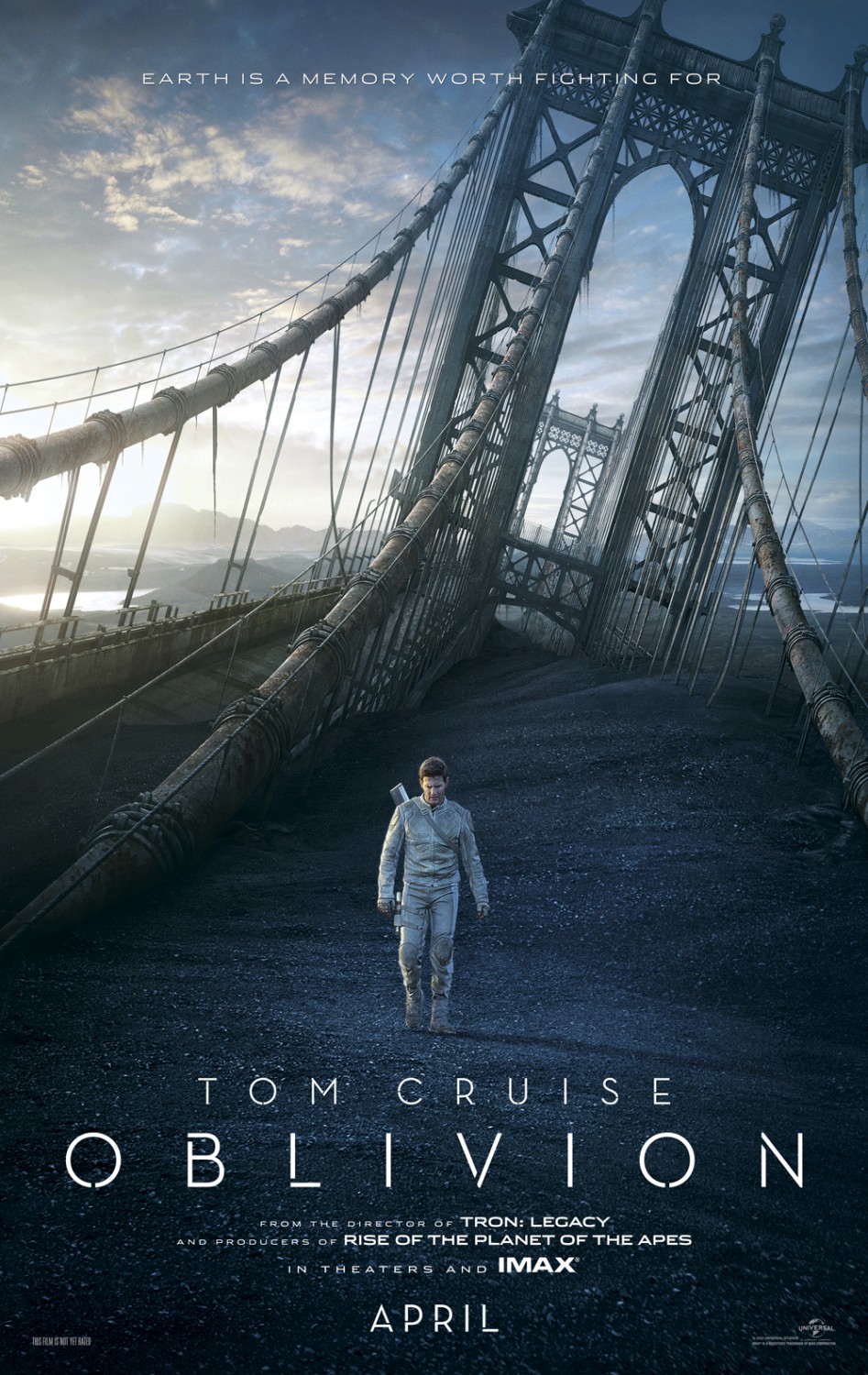
On one hand, I feel like I should be punishing “Oblivion” for its lack of originality as the story will easily remind viewers of other science fiction movies like “Total Recall” (the original, not the remake), “Moon,” “The Matrix” and “Logan’s Run.” On the other, I found Joseph Kosinski’s film to be a compelling piece of entertainment, and I liked how he took various elements from those sci-fi movies and put them together to create something which feels more original than I expected it to. The look of “Oblivion” is incredible, and the film benefits from a very strong cast, great visuals, and a truly awesome music score.
Like many science fiction movies, this one takes place in a distant future. The year is 2077, and sixty years earlier an alien invasion destroyed the Moon, which in turn decimated Earth and left it in shambles. Jack Harper (Tom Cruise) is one of the last human beings left, and he and his communications officer Victoria Olsen (Andrea Riseborough) spend their days helping to harvest what’s left of the planet’s natural resources and repairing drones which help protect it from further alien invasions. They are due to leave Earth in two weeks so they can rejoin the rest of humanity which has long since relocated to another planet. Of course, we all know what happens when people say they only have a few weeks before they leave Earth; they don’t.
Talking about “Oblivion” from here gets complicated because I don’t want to give away the story’s twists and turns and have it seem like a plot summary stolen from Wikipedia, but I’ll do my best. One day, a spaceship crashes on Earth which carries a number of capsules with astronauts sleeping inside them. One survivor is astronaut Julia Rusakova (Olga Kurylenko) who, once awoken from her deep sleep, she makes Jack see he has a past which has long since been denied to him.
This is all I’m going to say about the plot as telling you more would be spoiling the fun. Granted, I have seen many science fiction movies, so when the plots twists and turns came here, I wasn’t surprised. At the same, I was very much enthralled by what was going on. Even if I had a pretty good idea of what was coming next, I was still glued to my seat and eager to see what direction the film was going to head in next.
Much of the success with “Oblivion” comes from its distinct visuals which are very striking, and a lot of the credit for this goes not just to Kosinski but also his director of photography Claudio Miranda. I’ve lost count of how many post-apocalyptic movies which show Earth obliterated beyond all repair to where everything is dark, grey and gloomy. Many famous landmarks like the Empire State Building are shown to be either barely standing or covered up with a lot of dirt in “Oblivion,” but this is the first movie of its kind I can remember which takes place mostly in the daylight. While Earth isn’t in one piece in “Oblivion,” there is still a unique beauty to how it looks here. Those snowy mountains still look worth skiing on, and I found it rather comforting to see plants, grass and trees still growing even after an alien invasion, and this gives the movie an uplifting feel.
The other thing I really liked about “Oblivion” was the architecture of the buildings and the design of the spaceships. The Sky Tower which Jack and Victoria live in is beautiful, and I would love to live in it. This tower looks like the world’s most unique condominium, and I’ve never seen anything quite like it before. Also, it has the coolest swimming pool ever, and it makes me more excited about swimming pools than I have been in ages. Plus, I doubt I will see a cooler looking spaceship than the Bubbleship Cruise flies all over the place.
This is only Kosinski’s second movie as a director, but here he seems to have found his filmmaking voice this time around. His first film was “Tron: Legacy,” and like many eagerly awaited science fiction events, it was greeted with an obscene amount of hype and a lot of fan indifference. With “Oblivion,” however, he is not restricted to staying within certain boundaries dictated by a previous film or a long-running franchise, and he also has a stronger story (based on the graphic novel of the same name by him and Arvid Nelson) to work with as well.
Kosinski also benefits greatly from having M83 and Joseph Trapanese as his music composers here. Their score to “Oblivion” is much like what Daft Punk’s was to “Tron: Legacy:” a beautiful combination of electronic and orchestral music which sounds far more original than any other film score I have listened to recently, and it adds so much to the striking visuals of “Oblivion” as well as the emotion inherent in the story.
Much has been said about Cruise as a person these past few years, but I’m still happy to defend him as an actor. His work as Jack Harper is actually quite understated, and he never descends into the state of “grinning like an idiot every fifteen minutes” (as Dougray Scott described him in “Mission: Impossible II”) for too long. That grin does come along from time to time, but not in a way which ends up annoying half the audience. Along with his strong performance in “Jack Reacher,” his work in “Oblivion” proves he’s still a better actor than people tend to give him credit for.
Kurylenko, since her performance as a Bond woman in “Quantum of Solace,” has proven to be far more than a pretty face. This should have been made clear after we saw her in Terrence Malick’s “To the Wonder,” but there’s no mistaking her talent in “Oblivion” as she creates a complex portrait of someone who knows more than she lets on. I also very much enjoyed Riseborough’s performance as Victoria which was sweet and yet somewhat devious, and I look forward to seeing more of her work in the future.
Then there’s the great Melissa Leo who plays Sally, the mission control commander with a thick accent who oversees Jack and Victoria’s work from afar. Just like in “Flight,” she gives her character a sweet voice tinged with serious intentions which leaves the viewers on edge. As nice as she sounds, you can tell there’s some evil plot lurking behind her eyes. Some may see the role of Sally as a small one, but in Leo’s hands, no role can ever seem small when she plays it.
Oh yeah, Morgan Freeman shows up as well as Malcolm Beech. To say more about his character would further give away certain plot points, but I can confirm he gives the usual strong performance we always come to expect from him. Also, it was really cool to see him shooting a heavy-duty pair of fifty caliber machine guns as I’m not sure I have seen him do so before.
“Oblivion” may seem overly derivative, but then again, most movies released these days are far from original. What matters to me is that a filmmaker can take elements from the movies which inspired him/her and make them their own, and Kosinski has succeeded in doing so here. I very much enjoyed how “Oblivion” took me down the rabbit hole films often do, and I absolutely loved the visual look of it. It also benefits from a number of strong performances and a fantastic film score which sounds epic in a way other scores can only aspire to. When all is said and done, this film is quite a cinematic accomplishment.


 The Ultimate Rabbit