David Cronenberg’s ‘The Fly’ Proves to Be More Than the Average Gross-Out Movie

The Fly 1986 movie poster

David Cronenberg’s remake of “The Fly” was released in 1986, a year filled with everlasting cinematic classics like “Aliens,” “Ferris Bueller’s Day Off,” “Star Trek IV: The Voyage Home,” “Platoon,” and “Top Gun.” More importantly, it came out during a time where remakes were very rare compared to today, and also when remakes were actually worth watching. Whereas remakes these days serve to capitalize on a known quantity or are being exploited for the sake of some potential franchise, “The Fly” is one where the director took what came before and made it completely his own.

You should all know the story by now. Seth Brundle (Jeff Goldblum) is a brilliant and eccentric scientist who has invented a set of telepods which allow objects to travel instantaneously from one pod to another. Seth shares the story of his invention with science journalist Veronica Quaife (Geena Davis) as he attempts to test teleportation on living subjects. Eventually, Seth decides to test it on himself, but he doesn’t realize a common housefly has entered the telepod with him, and the computer gets confused and ends up merging the two lifeforms at a molecular-genetic level. Seth believes the teleportation has purified his body as he discovers a strength he didn’t previously have, but it’s all a build up for a transformation which becomes all the more horrifying as “The Fly” reaches its gruesome climax.

What I love about “The Fly” is its slow build as Cronenberg makes Seth’s transformation into “Brundlefly” all the more unnerving by taking it one step at a time. We first see him engaging in an extraordinary set of gymnastics we would all love to be capable of, and then we watch as he puts an enormous amount of sugar into his coffee at a local diner. This leads Veronica to ask him, “Do you normally take coffee with your sugar?” While I expected a reply along the lines of Christian Slater’s in “True Romance” where he said, “I’m not satisfied until the spoon is standing straight up,” it is immediately clear that Seth is too involved in his own process to see the damage it is doing to his body.

Seth’s face comes to look like it is riddled with severe acne scars, and this brought about a number of PTSD flashbacks for me of when I dealt with my own acne outbreaks back in high school. But the key moment doesn’t come when Seth snaps a guy’s arm in half during an arm wrestle contest (it’s always painful to see a bone sticking out of a person’s body), but instead when he finds himself pulling out his own fingernails. Just the idea of pulling out your own fingernails is painful in itself, but seeing Seth pulling his out to where a great deal of puss explodes from his fingers proves to be even more painful than watching George Clooney getting his fingernails pulled out with a pair of plyers in “Syriana.”

At this point, I want to point out one of “The Fly’s” biggest stars which is Chris Walas. Walas won an Academy Award for Best Makeup for his work here, and it should go without saying just how much he deserved it. As Seth’s body continues to deteriorate in the midst of an unwanted, let alone unexpected, transformation, Walas makes each moment sting with a thankfulness we are not going through what this misguided scientist is. He also gives you the assurance that he and his colleagues have researched all there is to know about this kind of metamorphosis, and this makes Seth’s transformation all the more horrifying. Walas makes you believe something like this could actually happen to where you cannot help but react strongly to everything unfolding before you.

1986 was a big year in science fiction as Sigourney Weaver not only had the lead role in “Aliens,” back when it was rare for an actress to have such a role in a movie, but she also scored an Oscar nomination for her performance which was well-deserved. It’s a shame Goldblum didn’t get the same respect from the Academy as his performance is truly brilliant and wholly original. Just as Weaver dominated all those special effects in “Aliens,” Goldblum makes it clear the makeup is not doing all the acting for him as he fully inhabits Seth Brundle at every stage of his transformation. For the actor, the makeup becomes a costume which comes to inform his character throughout, and Goldblum is fearless in portraying this scientist’s descent into an unwanted fate.

Scientists in movies tend to be either over the top or exceedingly modest and timid, but Goldblum gives us one whose eccentricities make him more alluring than the average one. The actor even sells us on a wonderful moment where he explains why he wears the same suit, shirt and tie each day, and seeing his closet reminded me of a number of movie spoofs where this same situation was used for sheer comedic effect. Even as Seth becomes increasingly unpredictable, let alone unlikable, to be around, Goldblum seduces us deeply into his strange plight which brings about a change he never saw coming.

But let’s not leave out Geena Davis who shares a strong chemistry with Goldblum throughout, and this only makes sense as they were a couple at the time and were briefly married. As Veronica Quaife, Davis creates a complex character whom is eager to take advantage of Seth’s invention for the story of the century, but she soon finds herself falling for him to where she cannot tear herself away from his hideous transformation. The scene where she hugs him after getting her first glimpse at the horrific changes his body is going through brought about a loud gasp of disgust from the audience I watched this movie with at New Beverly Cinema, but it shows just how powerful her performance is. Veronica is at once mortified at how bad things are getting for Seth, and yet she can’t tear herself away from him because she is too emotionally involved to just give up on him. Davis’ commitment to her performance shows the range which would eventually earn her an Academy Award for her work in “The Accidental Tourist.”

Many see Cronenberg as a filmmaker who makes nothing more than gross-out horror movies, but they neglect to see the intelligence and thought he puts into each movie he makes. Whether it’s “The Fly” or “Rabid” or “Scanners” or “Dead Ringers” or “eXistenZ,” Cronenberg has fearlessly explored the phobias we all have of bodily transformation and disease to unforgettable effect. His movies are not designed to make you throw up, but instead to confront how our bodies deteriorate in one way or another. His remake of “The Fly” is one of his most unforgettable motion pictures as we can’t take our eyes off the screen even as Seth Brundle’s transformation becomes all the more disgusting. Its power comes from how it draws you in emotionally more than anything else, and we have as much luck at disconnecting ourselves from Seth’s unnerving plight as Veronica does.

Watching “The Fly” again, it is clearer than ever that this movie is about a tragic romance more than anything else. Heck, Shakespeare would have been proud to have written a tragedy like the one presented here. While much of the attention on this remake is forever directed at the makeup design which still grosses audiences out to this very day, it is the romance between Seth and Veronica which drives the story more than anything else. The two of them want to tear themselves away from one another, but deep down neither of them can truly bare to do so, and they are the kind of couple U2 sang their song “With or Without You” about.

If there’s anything wrong with “The Fly,” it’s the ending as things are resolved in a way which is not altogether satisfying. We are left with questions which would not be answered until “The Fly II,” and while that sequel had its moments, it’s no surprise how it paled in comparison to Cronenberg’s remake.

Horror movie remakes are a dime a dozen these days, but Cronenberg’s “The Fly” remains one of the best and most visceral. It is still the director’s biggest commercial hit to date, and I prefer to see this as proof of how his unique style of filmmaking can reach a wider audience than we typically realize. All these years later, Cronenberg remains one of the most original filmmakers working today, and we eagerly await his next cinematic opus with great anticipation.

* * * * out of * * * *
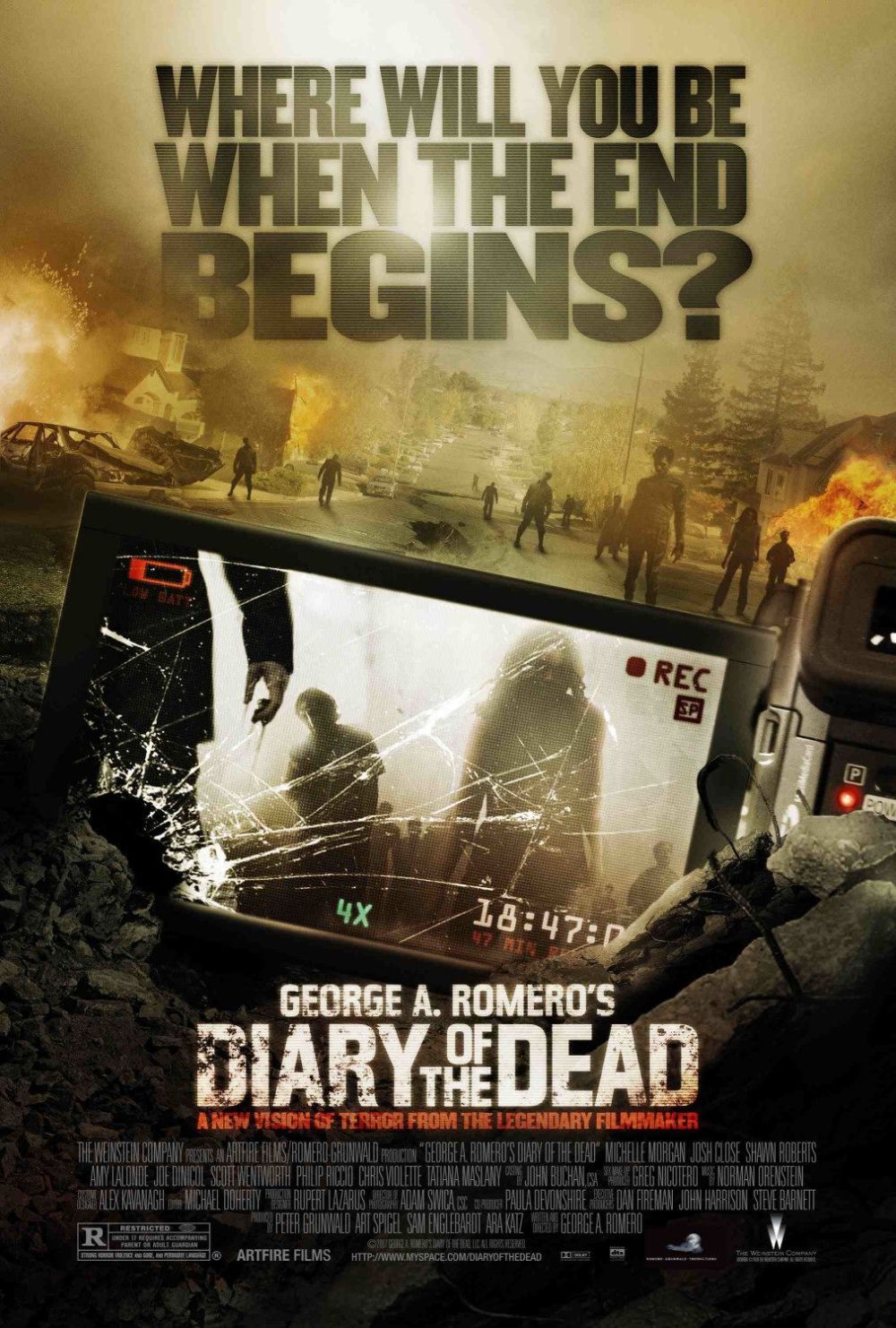
 

‘Diary of the Dead’ Has Romero Taking Aim at the Internet Generation

Diary of the Dead movie poster

I had an English teacher who once said, “We have all been mediatized. This is a generation that has been robbed of its innocence.” This has stayed with me since because nothing could be truer. She said this back in 1994, back when we had yet to fully discover the internet, and we were not yet addicted to Facebook, You Tube or our cell phones. She remarked of when she watched a trailer for “Far from Home: The Adventures of Yellow Dog.” It looked like a very innocent movie, and yet there were teenagers in front of her who said, “This looks so lame!” As a result, she felt they were robbed of any chance of enjoying this movie as they were more interested in watching something which was its polar opposite. When you combine the loss of innocence to the ever-growing world of technology, it is apparent there is no going back to the way things were. We are now more “mediatized” than ever, and it’s hard to imagine what it would be like to live without the internet or cell phones.

This is the main sticking point of George Romero’s zombie flick, “Diary of The Dead,” as he takes aim at a generation so sucked into You Tube and of watching things not just from a distance, but an emotional distance as well. We have become so enamored of watching disasters and car crashes from afar to where it appears we have been robbed of our ability to actually help others. As a result, Romero’s vision of humanity is especially bleak as he wonders if it is even worth saving.

The movie starts off as a film within a film as we watch a horror movie turned documentary called “The Death of Death.” The horror film itself is not going well as everything is behind schedule and the crew and actors are restless. All of a sudden, they hear on the news of the dead coming back to life, and everything changes forever. Some head home, and others head to the college to rescue their girlfriends. From then on, it’s a race for survival as the world is soon overrun by zombies, or so the internet and television tells them. What are they gonna believe?

“Diary of The Dead” could be seen as being released too late as “Cloverfield” had arrived in theaters just before. Both films are shot in a handheld style, but whereas “Cloverfield” used the technique as a gimmick, “Diary of The Dead” uses it as a commentary on our fascination with watching the worst life has to offer. Many people went crazy and beyond nauseous with the camerawork in “Cloverfield,” but those same people will be relieved to see Romero and his Director of Photography Adam Swica have reined it in to where it shouldn’t alienate the audience.

The film crew on “The Death of Death” is made up of different characters. There’s the director, Jason (Joshua Close), who believes if it didn’t happen on camera, it never happened at all. There’s his girlfriend, Debra (Michelle Morgan), who gets increasingly annoyed at his filming everybody, Tony (Shawn Roberts) who always looks like he is prepared to beat Jason to death, and there’s the drunken film professor, Maxwell (Scott Wentworth), who looks upon everything with a bemused detachment. What Romero succeeds in doing as a writer is giving us characters who aren’t simply types. If they come across as clichéd, he and the actors subvert those clichés as each character becomes increasingly unpredictable in their actions.

Romero also gives us strong characters who are females and minorities. He started doing this years ago with “Night of The Living Dead,” and he continues this tradition here. The female character who is the strongest in “Diary” is Debra as she is driven to get back to her family and is not about to get sucked into watching everything through a camera lens. Michelle Morgan gives this movie its best performance, and she also narrates the film within the film which gives you a pretty good idea of what happens to her character in the end (or does it?).

While the crew ventures home in an old and stuffy Winnebago, they run into all sorts of people who are quickly learning how to survive in a world being overrun by zombies. They run into a squad of African Americans who have taken over a small town and refuse to leave. This is because, for once, they have power over something they have never power over before, and you could see it as a revenge for all they have been put through over the years. There is also a deaf Amish man who provides some of the funniest moments as he blows up zombies with dynamite before introducing himself to the frenzied group of film students.

What makes these “Dead” movies so relevant even after four decades is they are really social commentary movies designed as zombie movies. Romero looks at how society is enslaved by its own wants, needs, beliefs and prejudices in. “Night of the Living Dead” dealt with civil rights and gave us a black man as the chief protagonist, something you didn’t see in movies back then. His ultimate destiny at the film’s climax said much about the times when the movie was released. “Dawn of The Dead” dealt with our quest for materialism, wealth, and of having everything we could possibly want, and it looked at how it leaves us feeling as empty and dead as the zombies who look to tear their way into the mall for fresh human flesh. “Day of The Dead” dealt with the paranoia and crazed determination of the military and its inherent sexism. Then you had “Land of The Dead” where Romero went after the wealthiest people of all and how selfishly involved they are in their own interests, and it served as a huge criticism of Reganomics which gave us the great lie of how this great wealth and riches could be yours even though this would never be the case.

Now with “Diary,” Romero looks at our addiction to watching the unthinkable instead of doing anything to stop it. You have to look at all of Romero’s “Dead” movies in context to see they are really a long chronicle about the decline of western civilization. It all started with civil rights and the reaction to it, and it’s been downhill ever since. To call this latest film bleak is a severe understatement. Romero doesn’t seem to hold out much hope for the human race, and the last scene questions whether humans are really worth saving.

If you’re wondering about the blood and gore, there is a good deal of it in “Diary” even though it is not on the same level as “Dawn” or “Day.” Still, there are some good kills throughout, and the characters make good use of a scythe as well as a bow and arrow. Romero, after all these years, doesn’t skimp on the gory stuff. However, it still takes these characters way too long to figure out the best way to defeat a zombie, which is to shoot it in the head.

The other interesting thing about “Diary” is the way the characters and their reality are drawn out. Whereas in “Cloverfield” where there was a chance for safety and victory against what was attacking New York, there is no real hope for anyone in here. Whether or not they make it home, they quickly realize this is a conflict which will never cease. It will just get worse and worse until there is nothing left. “Diary” forces you to think about what you would do if you were in this situation, and this makes the movie all the more terrifying.

One big difference in this specific “Dead” film is, unlike the others, there is no military presence. None of the characters have a clear idea of whether or not there is even a military left. They are left to fend for themselves in a world which has gone dead on them, and their only link to the world is technology and the internet. But with everyone voicing their opinions through videos and blogs, who is to be believed when they’re so many different opinions circling all over? All you have left is chaos and anarchy, and every man and woman for themselves. The characters in this movie are smart enough to recognize this, and this makes the events for them all the more suffocating.

I liked “Diary of The Dead” a lot, and it shows Romero is still a strong force in the realm of independent filmmaking. While the first three “Dead” movies are pretty much untouchable at this point, I would put this one ahead of “Land of The Dead” which I thought was good but may have been encumbered by too much studio interference from Universal Pictures. While Universal gave Romero the money he had been begging for years to get, he’s back to his indie roots this time around and seems a lot more comfortable as a result. The movie’s pace does slow in its last half which had me a bit restless, and some moments last longer than they should have, but these are minor complaints at best.

Regardless of how bleak Romero’s worldview continues to get in each “Dead” movie, there is something to be said for his efforts to spend decades raising money to make them. There was a big lull between “Day” and “Land,” and this shows his endless determination to see his vision reach the screen one way or another. And here he is 40 years later, making a new zombie movie for generations old and new. There may be room for another one Romero zombie yet, and there is hope to be had even if our world continues falling apart. I wouldn’t mind seeing him do one more, but I hope it comes out before the apocalypse hits us.

* * * ½ out of * * * *

‘The Thing’ Prequel Should Have Been a Sequel

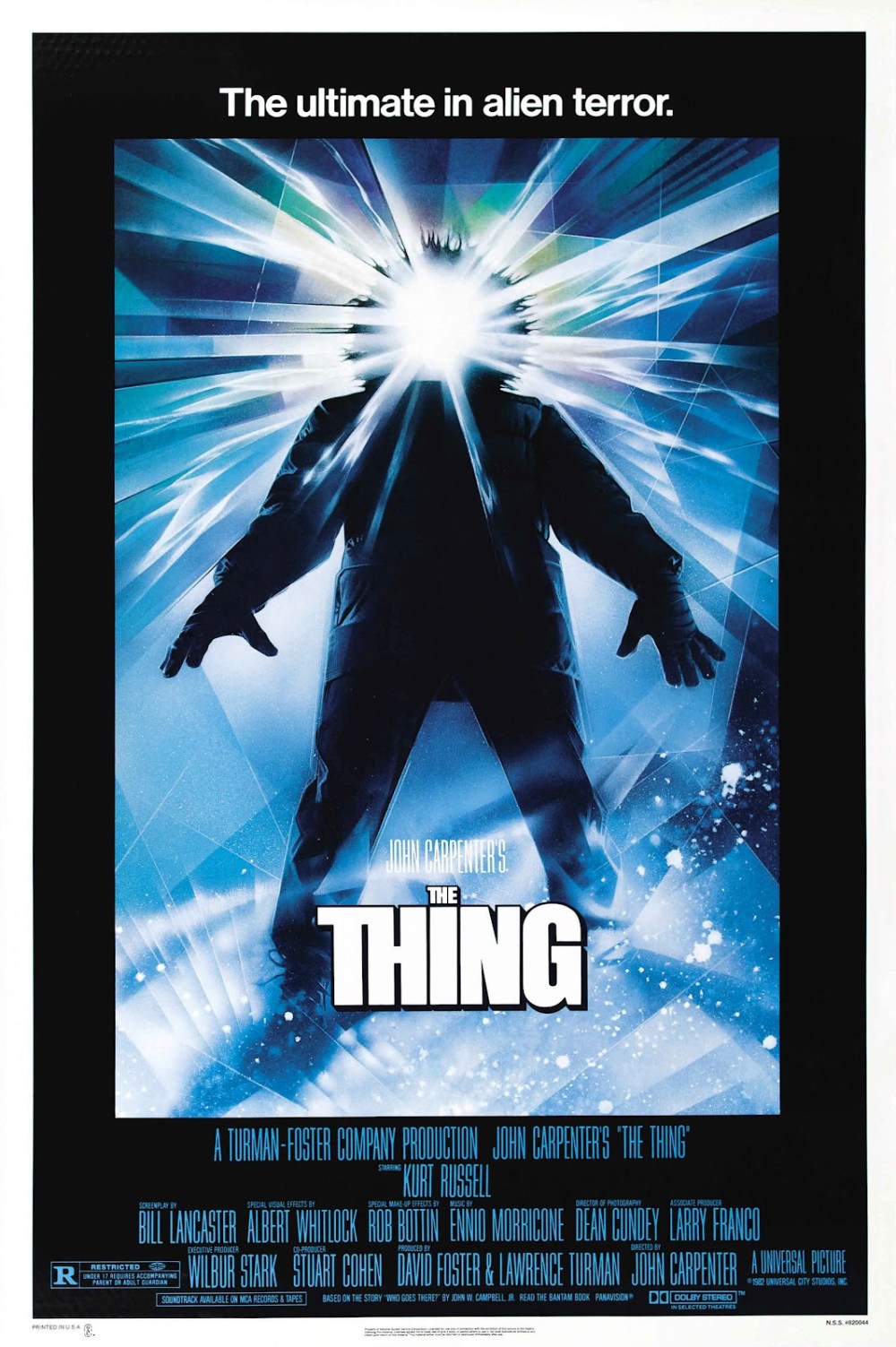
The Thing 2011 poster

It says a lot about John Carpenter’s “The Thing” that it could generate a prequel almost 20 years after its release. A critical and commercial failure back in 1982, it has since been justly reappraised as a true horror classic and remains Carpenter’s masterpiece. It proved even more terrifying than “Halloween,” and it also holds a special place on my list of my top ten favorite movies of all time. These days, it is even more frightening as the scenario it presents feels all too possible.

Now we have Matthijs van Heijningen Jr.’s “The Thing,” a prequel to Carpenter’s movie which explores the events leading up to it. Remember the Norwegian camp Kurt Russell and Richard Dysart visited which had been completely burned down? Now we get to see how it got laid waste by both the thing and the humans. But therein lies the problem; knowing the events precede those of the 1982 movie and who survives, much of the potential suspense and tension gets drowned out almost immediately.

Frankly, I would much rather see a sequel to Carpenter’s “The Thing” instead of this. His film was very effective because we never had a clear idea of who to trust. But in Heijningen’s film, we know the characters on display will eventually bite the dust, and it becomes a question of when these characters turn into the thing. After a while, it becomes more shocking when a character dies but doesn’t turn into a gooey alien. What spoils it even more is we know of at least one character who will survive what happens very early on, and all we can do is wait impatiently for him to get on the helicopter with his rifle and take shots at the wolf.

Heijningen is respectful of Carpenter’s movie and pays homage to it throughout, but I kept wondering if this was a remake instead of a prequel. Various scenes are clear imitations of the 1982 movie’s most classic moments, and I wish he had worked harder at distinguishing the prequel from it instead of just presenting us with something way too similar. He does wring some suspense and strong tension at different points, and his unique take on the blood test scene is very clever, but he is unable to sustain the tension which made Carpenter’s movie so utterly terrifying.

The special effects are very good, but they pale in comparison to the genius of Rob Bottin. Audiences are always quick to tell when CGI effects are overused. As for the performances, they are generally good even though the characters could have come out of any monster movie.

The best performance comes from Mary Elizabeth Winstead as paleontologist Kate Lloyd. Such a terrific presence in “Scott Pilgrim vs. The World” and “Live Free or Die Hard,” she holds our attention throughout and is one of the best reasons to see this prequel. While Lloyd is predictably inspired by Ellen Ripley from “Aliens,” Winstead makes the character her own and more than just another tough chick which movies like these typically rely on.

“The Thing” prequel is not terrible, but it will be of interest more to those who haven’t seen the 1982 film which itself was a remake and made back in a time when remakes were rare and actually worth watching. This particular version of John W. Campbell’s “Who Goes There?” feels like a lost opportunity, and it gets caught in the prequel trap of busily matching everything up to the film it leads into. It really sucks when you can see a movie’s ending long in advance. I did however admire the ambiguous ending shown before the end credits as it leaves you wondering if the alien really infected one of the last characters standing. Not knowing is always more unnerving than knowing, and at least the director got this right.

* * ½ out of * * * *

John Carpenter’s ‘The Thing’ is One of the Best Horror Movies Ever Made

The Thing movie poster

Many of you probably know the story behind John Carpenter’s “The Thing.” It came out in the summer of 1982, two weeks after Steven Spielberg’s “E.T,” and while the alien from Spielberg’s movie was warm and cuddly, the one in Carpenter’s was cold, ugly, and utterly vicious. As a result, “The Thing” was quickly derided by both critics and fans alike, and no one hid their disgust towards Carpenter for what they saw as pornography of violence. In all fairness, however, the movie was released at the wrong time of the year. To release it during what Carpenter called the “summer of love” opposite not just “E.T.,” but also “Star Trek II” and “Tron” was a big mistake on the part of Universal Pictures, and they would have had more luck had they released it in the winter of 1982.

Years later, “The Thing,” like many of Carpenter’s movies, found the audience it deserved through home video and digital media. Perhaps it was ahead of its time, but it is now considered, and rightly so, one of the best horror and sci-fi movies ever made, and it is easily the best horror remake in a sea of horrendously crappy ones. It certainly plays better today than it did when first released, and it is still utterly terrifying 35 years after its release.Unlike the original Howard Hawks version of “The Thing,” Carpenter’s movie hews much closer to the short story “Who Goes There?” by John W. Campbell, Jr. The movie takes place at an American scientific research outpost in Antarctica, perhaps the coldest place on Earth. We are introduced to a bunch of men who are studying the surrounding area, and they look bored and listless as they pass the days smoking, drinking scotch, watching “Let’s Make a Deal” reruns, and playing ping pong. One day, they are met by a wolf being shot at by a Norwegian for no discernable reason. This later leads to events which make them realize they have encountered an alien of unknown origin unearthed from the ice after thousands and thousands of years. It then proceeds to imitate every creature it comes into contact with, and it is revealed any of them could be the thing. They have to destroy the thing before it reaches civilization because, once it does, it would mean the end of the world.

The premise of “The Thing” is genius because it allows for an unending escalation of tension and suspense throughout. Like the characters, you have no idea who to trust. The paranoia which closes in on the characters puts them in an airtight cage, and this cage gets smaller and smaller as it heads to its infinitely bleak climax. There are no women to be found which eliminates any sexual tension and could have added an unnecessary element to the movie. Many say this makes the movie sexist, but it is a ridiculous charge.

“The Thing” was released when the whole world started to become aware of the AIDS virus. The idea of any virus infecting us completely and rearranging our body to the point may have seemed unreal to us back in 1982. But today, it is a reality more horrifying than ever, and it presents itself with no cure. This makes “The Thing” even scarier to take in when watching it now. The scene where Dr. Blair (Wilford Brimley) observes a computer image of the virus infecting a human host is one of the movie’s scariest moments, and it feels like an all too real a possibility today. The only thing truly dated about the scene is the computer graphics look like they are from some old Atari game, but it doesn’t change anything.

This movie also marks one of several collaborations between Carpenter and Kurt Russell who started working together on the TV movie “Elvis.” After all these years, Russell can still make you believe he is a regular guy like the rest of us, and his role as helicopter pilot R.J. MacReady is one of his best. You never get the feeling Russell is acting here. Instead, he inhabits the character he plays, and you follow him every step of the way without any doubt of who the hero really is.

Carpenter cast “The Thing” perfectly with actors like Richard Masur, Richard Dysart, Donald Moffat and David Clennon. But one of the best performances comes from Brimley as Dr. Blair. In the past, we have seen him in countless oatmeal commercials and in roles as the grandfather we wished we had in our lives. But his role in “The Thing” offered him an opportunity to go completely against type. Brimley goes from curious to utterly horrified by what this unknown creature can do, and he ends up wreaking havoc in a way you would never ever see in an oatmeal.

Another great actor in this movie is Keith David who plays Childs. David has a don’t mess with me intensity, and he matches Russell’s intensity every step of the way. The tension between them is as frightening as is waiting for the thing to make its next horrifically gory entrance.

But let’s talk about who the real star of “The Thing” really is, and that is Rob Bottin who designed the movie’s horrifically brilliant special effects and makeup designs. Long before the advance of computer technology, Bottin had to make all these designs from scratch, and what he came up with is now considered a benchmark in his field. The thing mimics everything it touches, and this must have been a huge inspiration for him as it allowed his imagination to run amuck with infinite possibilities. You never know what’s coming next, and this makes “The Thing” even scarier.

Some have called this movie a “geek show” made only with the intention of grossing people out. Granted, a good case could be made for that, but “The Thing” explores a theme that is commonplace in many of Carpenter’s movies; the struggle to maintain one’s individuality. Of never letting go of who you are because it allows you to survive in a world which keeps finding new ways of robbing your individuality at any given opportunity. The threat of this loss is very real, and the characters have the unfortunate disadvantage of being stuck in one of the most remote and desolate places on Earth.

I also imagine a big complaint people have about “The Thing” is we never learn about the alien or where it came from. Basically, we know it’s from outer space which imitates whatever it comes in contact with, and it clearly deals with the cold better than any of us do. Here’s the thing, do we really need to know everything about this creature? Maybe not knowing is more terrifying than knowing. It leaves a lot of things to the viewer’s imagination which I love because it leaves so many possibilities open for how this horrific situation is going to play out.

“The Thing” truly is Carpenter’s masterpiece as it shows him to be a true master of horror and suspense. He endlessly generates unbearable tension throughout, and just when you think the movie has peaked, you realize it has not. Carpenter’s goal here is not just to make us jump out of our seats, but to make us feel the terrifying isolation and complete lack of trust these characters are forced to endure.

Carpenter has said “The Thing” was the first in his apocalypse trilogy (the other two were “Prince of Darkness” and “In the Mouth of Madness”), and it does have an unrelentingly bleak tone which made it seem completely out of place back in 1982. As time goes on though, many of us keep thinking the world is coming to an end with more deadly diseases like the Ebola Virus among others, and the scenario this movie presents us feels all the more frightening and immediate as a result.

Some movies are robbed of their greatness through the passage of time, and we watch them and wonder why we liked them in the first place. But “The Thing” is an exception as the passage of time has made it all the more effective. You can’t help but think its story was ahead of its time, and it remains one of those movies I never ever tire of watching. It has more than earned its place on the list of my all-time favorite movies.

* * * * out of * * * *


John Carpenter Revisits ‘The Thing’ at the Aero Theatre

John Carpenter Dummy Magazine photo

“Escape Artist: A Tribute to John Carpenter” was held a few years ago by American Cinematheque at the Aero Theater. In addition to being treated to a double feature of “The Thing,” which is widely regarded as his best film, and “The Fog,” the writer, director and composer also showed up in between both films to give us more insight on their making and took questions from the audience. Even though these movies are now twenty to thirty years old, they still resonate deeply for movie fans today. This was proven true by the fact these screenings were sold out and packed with Carpenter’s biggest fans.

While “The Thing” was not a big hit upon its release, it has since developed a huge cult following and been critically re-evaluated as the masterpiece it always was. Eighty percent of the audience had probably seen this movie several dozen times, but they still jumped during its most shocking moments.

The Thing movie poster

After the movie ended, Carpenter came to the stage and was met with a standing ovation and thunderous applause. He thanked them for coming on out to see this movie when they could have just watched it at home. One fan in turn thanked him for coming on out to visit with us as he has millions of fans all over the world, and yet he chose to hang out with us.

Today, as the emcee pointed out, many are surprised “The Thing” was not a big hit when released back in 1982. Carpenter put it all the more bluntly:

“It tanked! 1982 was supposed to be the summer of love. It was the summer of ‘E.T.’ and it was the summer of freedom and hope, and ‘The Thing’ was about as bleak a movie as any that could have been released that year. People hated it for that, and all the sci-fi fans out there absolutely hated it and trashed it when it first came out.”

As Carpenter pointed out to actor and friend Kurt Russell on the movie’s DVD commentary, “We came out two weeks after ‘E.T.’ And while there’s was all warm and cuddly, ours was ugly and hideous.” Universal Pictures, which released both movies that summer, attempted to make it the summer of extra-terrestrials, but the timing did not work at all in Carpenter’s favor and it later cost him the job of directing the Stephen King adaptation, “Firestarter.”

One fan pointed out how “The Thing” was unique in a sense as it is one of the few Carpenter movies he did not compose the score for. While the score does have the Carpenter sound, it was actually composed by Ennio Morricone. Carpenter said Morricone is one of the greatest film composers ever, and he did point out there is one synthesizer piece of music which was not composed by Morricone. Now he wouldn’t say who composed it, but it’s safe to say he did, and in association with Alan Howarth.

Another fan pointed out several of Carpenter’s movies have been remade like “Assault on Precinct 13,” “The Fog” and “Halloween,” and a remake of “Escape From New York” is in the works. This fan said he found remakes blasphemous, and to this Carpenter replied, “I actually find it flattering. They also have to pay me a lot of money when they do that.”

Dean Cundey, director of photography on “The Thing,” worked on several of Carpenter’s movies including “Halloween.” Carpenter has not worked with Cundey for some time now, and one man asked why and if there had been a falling out between them. Carpenter replied they have not fallen out, and he recently caught up with Cundey at a movie shoot in Canada. Carpenter did, however, point out why they haven’t worked together for a while, “Dean wanted to be a director. And when you have a director on a movie, and a director of photography who wants to be a director, that’s just not going to work out.”

Everyone who knows Carpenter knows he is a big fan of westerns, and he recently recorded a commentary track for the special edition release of “Rio Bravo.” Many wonder why he still hasn’t directed a western of his own, and Carpenter replied he honestly didn’t know but that he came close several times. The closest was when he wrote the script for “El Diablo” which was made into a cable movie that earned him a Cable Ace Award. If you look closely, all of his movies do have western elements to them. The closest he has ever gotten to making a western is “Vampires” with James Woods.

Many also wondered, and it was asked, what future projects he has on tap and of what his current passions are. His reply was, “Current passions? I’m playing Ninja Gaiden, I just got Metal Gear Solid 4 for PlayStation 3… No seriously, I have a couple of things I’m looking at doing, so we’ll see what happens.”

Before he left, he did have some things to say about “The Fog,” “I have heard that the print for this movie is not in the greatest shape, and that it is pretty faded. But keep in mind that when we made this movie, we made it for only $1 million dollars, so please be kind.”

‘It Comes at Night’ is Not Your Average Psychological Horror Movie

It Comes at Night movie poster

“It Comes at Night” cannot and should not be mistaken for your average psychological horror movie. Whereas the average genre film aims to delineate who the good guys and the bad guys are, no such distinction is made here as writer and director Trey Edward Shults has rendered the characters to be all too human. We understand their wants, needs and motivations very well, and this makes the movie even more unsettling than it already is.

We are introduced to Paul (Joel Edgerton), his wife Sarah (Carmen Ejogo) and their teenage son Travis (Kelvin Harrison Jr.) as they lay Sarah’s father, Bud (David Pendleton), to rest in a most uncomfortable way. We soon learn the family has secluded themselves in their country home as some highly contagious disease has since laid waste to the world. Along with their dog, Stanley, the family keeps themselves out of danger by staying locked up at night when the danger which threatens humanity is at its most powerful point.

But their bubble is suddenly threatened when a stranger named Will (Christopher Abbott) breaks into their home, believing it to be unoccupied and in desperate need of supplies for himself and his family. After tying Will to a tree overnight to confirm he is not infected by the disease, Paul decides he is worth helping and succeeds in bringing Will’s wife, Kim (Riley Keough), and their son, Andrew (Griffin Robert Faulkner), to safety to where they are all leaving under the same roof. But even as they come to settle down comfortably with one another, the inevitable conflicts arise which will force them into a game of survival no one can back away from peacefully.

Shults made an unforgettable directorial debut with “Krisha” which was one of my favorite movies of 2016. While “Krisha” was an emotionally pulverizing motion picture, “It Comes at Night” is one which mercilessly plays with your head as it taps into your fears of the things you can’t see or understand. Paul, Sarah and Travis rarely stray far from their country home as just about everything outside of seems all too threatening to confront. Whether or not you think Shults gives the “it” of the movie’s title a clear definition, it won’t matter. The it could be anything. It could be a supernatural force, an incurable disease, or perhaps it is the realization of the violent deeds we are capable of committing when pushed to our breaking point.

“In order to appease the gods, the Druid priests held fire rituals. Prisoners of war, criminals, the insane, animals… were… burned alive in baskets. By observing the way they died, the Druids believed they could see omens of the future. Two thousand years later, we’ve come no further. Samhain isn’t evil spirits. It isn’t goblins, ghosts or witches. It’s the unconscious mind. We’re all afraid of the dark inside ourselves.”

                                                                                                                           -Donald Pleasance

                                                                                                                            “Halloween II”

I put the above quote from “Halloween II” up above because those words were playing in my head while watching “It Comes at Night.” Looking at these characters, you can tell they were once decent people who wanted nothing more than to raise their families and live in peace, but the state of the world has forced them to defend what is theirs in a way they never thought they would resort to. This is especially the case with Paul who has long since become handy with a shotgun and disposing of corpses. But Edgerton, who is excellent as Paul, eventually shows the character at his most vulnerable state as he comes to see not just the person he has become, but the person he always was.

Shults shows the fears of all these characters reaching their peak at nighttime when fear and paranoia combine to create a more hostile environment than the one outside their front door. Speaking of the front door, it is painted a dark red as horror movies always feature a red door or two, and Paul makes it clear to everyone how the door must always stay locked at night, always. As Roger Corman once said, one of the scariest images in any movie is the closed door. So, when the door moves suddenly is ajar, Shults has us right in his grasp to where we are sitting straight up in our chairs.

In addition to Edgerton, Carmen Ejogo and Kelvin Harrison Jr. provide strong support as Paul’s wife, Sarah, and their son Travis. Together, they portray a family much like any other, struggling to survive in an increasingly insane world. Christopher Abbott, so good in “James White,” inhabits the character of Will with both a tense desperation and an easy-going attitude as he settles in with Paul and his family. This is an actor incapable of faking an emotion, and his performance in “It Comes at Night” is the latest example. Riley Keough is also excellent as Will’s wife, Kim, as she makes her an enigmatic presence to where you don’t know whether to hug her or keep your distance from her.

In making everything seem so down to earth, “It Comes at Night” does suffer as things become more underplayed than they should have been. There were times where I wished Shults had injected more energy into the story as things begin to feel way too subtle. Still, when the movie works, it really works as the tension builds to a fierce climax where I could not find myself rooting for one person over the other. Shults is also assisted by his “Krisha” collaborators Drew Daniels whose cinematography makes the darkness these characters live in all the more threatening and claustrophobic, and by composer Brian McOmber who provides another unsettling score which builds up an already intense motion picture into something feverishly intense.

The ending of “It Comes at Night” proves to be both infuriating and utterly haunting as we are left to wonder what will become of whoever is left. It feels like the movie ended sooner than it should have, but perhaps it would have been unfair to ask Shults to give us something more definitive. Still, it’s nice to see something like this occupying the local movie houses alongside the summer blockbusters as it gives us a lot to ponder once the lights come up.

As for myself, the post-apocalyptic setting of this movie is almost secondary to the one thing which should matter the most to these characters – trust. Whether we are living in the best of times or the worst of times, trust is the one thing we need more than anything else to survive one hard working day after another. Without trust, how can we survive in a crazy world? “It Comes at Night” confronts the issue of trust head-on, and it is devastating to see it break down amongst characters who might otherwise have no problem living under the same roof.

* * * ½ out of * * * *

Ridley Scott’s ‘Alien’ Remains an Exceptionally Intense Experience

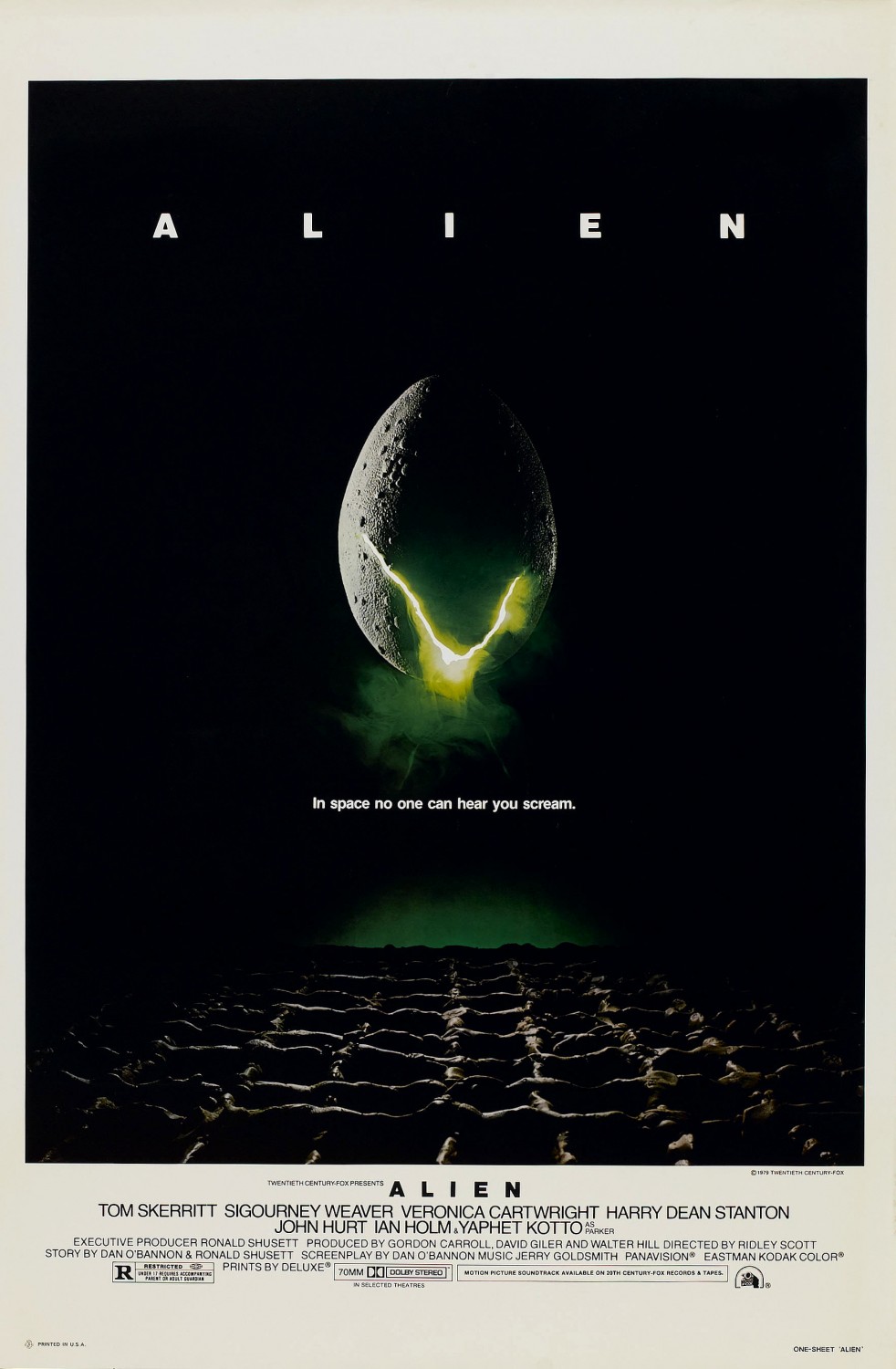
Alien movie poster

In regards to horror movies, “John Carpenter’s The Thing” ranks highest on the list of my all-time favorite movies in general. However, if you were to ask me what I consider to be the scariest movie ever, the first that quickly comes to mind is Ridley Scott’s “Alien.” Now considered a classic haunted house kind of movie, it freaked me out far more than I had expected it to. These days, if I come across someone who hasn’t seen “Alien,” I would be desperate to take the time and watch it with them just to see the look on their face. What may seem like a harmless old science fiction movie still has the power to unnerve and creep up on its audience when they least expect it.

Now when I say that this movie freaked me out more than I expected it to, there are a number of reasons why: I ended up seeing James Cameron’s sequel “Aliens” beforehand, so I already knew Ellen Ripley (played by Sigourney Weaver) was the sole survivor from the original. When I watched “Alien” for the very first time, it was back in the days of VCR’s and VHS tapes, and the one I obtained from my favorite video store was a fairly old copy which showed a bit of wear and tear. When it came to watching it, I got consigned to my parents’ bedroom as they had already called dibs on the big television in the family room which was connected to a “super cool” stereo system. The TV set in their bedroom was tiny by today’s standards. As I remember, it was a 13-inch set which was already on its last legs after years of use. This one didn’t have any surround sound system to enhance the experience, so I just tried to be happy I had a TV to view it on at all.

Having said all this, “Alien” still had my hairs standing on end throughout. Even though I knew who would live and die, the suspense and tension were extreme throughout, and you never ever felt safe on board the spaceship Nostromo. I can still remember hiding my eyes and would be turning the volume down at certain points because my heart threatened to stop beating a few times. Imagine if I had watched it for the first time on a big screen TV with surround system, or better yet, in a movie theater when it originally came out! I wouldn’t have slept for days! Some movies play better on the silver screen than on your television, but “Alien” appears to work on either format with the same degree of success.

There are many different reasons why Scott’s film remains such an effective sci-fi horror classic to this day. For me, it starts with the characters and how down to earth they are. While other outer space movies have characters who revel in the wonder of what’s out there, all the workers on the Nostromo treat their dark habitat as just another office job they take to get by. When we meet up with them, they are on their way back to Earth and just want to be home already. The writers also gave the actors dialogue which was never too heavy on the technobabble and hearing the characters talk about how they deserve full shares for the work they did defines them as blue collar workers. These are not brilliant scientists looking to discover new planets; they’re just people working for the man. The time Scott takes in introducing all these individuals pays off by the time we are given a visceral introduction to the alien of the movie’s title.

Now let’s talk about this alien which was designed by H.R. Geiger, a Swiss surrealist artist. I can’t really compare it to other movie creatures I’ve seen in the slightest because it looks so frighteningly unique in its construction. Its mouth hides an additional set of jaws that lunges out at unsuspecting victims as if they are “faster than a speeding bullet.” Furthermore, there is something quite phallic about that jaw in how it juts out at you without warning or of any thought of the damage it is about to inflict. Its lethal penetration is highly unnerving in how it reminds the viewer of what we all agree constitutes a serious and unconscionable violation to the human body.

But one of Ridley’s most brilliant moves with “Alien” was in not showing the creature fully. We only got glimpses of it throughout the film until the end, and even then we weren’t entirely sure of all that we saw. It was all up to our imaginations to figure out what kind of a threat this creature is. This added immeasurably to the film’s infinite suspense and unending tension. Plus, with the spaceship Nostromo designed to look all dark and shabby with not much light to be found in certain sections, this made it easier for the creature to hide. When it leaped up at the cast member about to meet his maker, it was completely unexpected and defined the jump out of your seat moment for me.

As the movie goes on, we get to an even more frightening aspect; of how corporations can put profits above their workers so coldly. When Ripley discovers the Nostromo crew was made to pick up an alien organism to bring back for further study and that they were expendable, it only further demonstrates just how much alone everyone is on the ship. To realize the company which has employed you couldn’t care less about your existence makes you fully aware of your immediate surroundings, and the instinct to survive becomes stronger than ever. Of course, are cynicism today has us expecting this from any corporation we work with, so we’re more prepared for this than the Nostromo crew was.

A lot of credit also goes to the late Jerry Goldsmith for creating a music score which adds subtly to the action, or at least until the film’s last half hour when the realm of outer space feels even smaller than before. His music touches on the tension inherent in each character without becoming melodramatic, and at times it sounds like invisible ghosts hovering over the unprepared crew waiting to strike. Also, the use of silence in certain scenes makes it even more frightening as we are reminded of how unsettling things can be when our surroundings become far too quiet for comfort.

All of this leads to one of the most intense climaxes in cinema history as we are fully aware of time running out. Just when you think the movie’s over, there’s still another horrendous challenge to overcome. It’s in the movie’s last minute where you can finally breathe a much-needed sigh of relief. Even if you know how of this movie will end, it is still an intensely riveting experience that never lets up for a second. The look in Ripley’s eyes as she makes her way to the escape shuttle perfectly mirrors our own emotions as she is forced into a situation which leaves her with no other options to consider.

I still have very vivid memories of seeing this movie on that unspectacular little television set in my parents’ bedroom while they enjoyed something on Masterpiece Theater with more advanced technology. As the beginning credits began to roll, I was convinced that sitting through this would be a piece of cake. Coincidentally, I also felt the same way about the original version of “The Texas Chainsaw Massacre” when I rented it through Netflix. “Alien” remains one of the most truly terrifying experiences I have ever had watching a movie either on the big screen or the small one. To this day, it remains an effectively scary movie which has lost none of its power. Now if 20th Century Fox had fully realized how all these elements had added to make such a great movie, those hopelessly pathetic “Alien vs. Predator” films might have actually been worth watching.

* * * * out of * * * *


‘Red State’ is the Best and Most Unlikely Film from Kevin Smith

Red State movie poster

“Red State” is to Kevin Smith as “Unforgiven” was to Clint Eastwood; a game changer in the way we perceive him as an artist. Any shred of Jay and Silent Bob is completely absent here as he probes the horror of an ultra-fundamentalist church whose fear of God prompts a siege of destruction which tests its members as well as those ordered to bring them down. Nothing Smith has done previously will prepare you for what he comes up with in “Red State.” We know he’s been looking to do something other than “Clerks” or those formulaic comedies he has spent far too long apologizing for. With this one, his creativity and passion for moviemaking are completely reinvigorated.

The movie starts off innocently enough with one of Smith’s favorite subjects: young men talking about sex. Three teens named Travis, Jared, and Billy Ray drive out to a remote area and meet up with a woman named Sarah (Melissa Leo) who has promised to make out with each of them. But after a couple of beers, they pass out and wake up to find themselves prisoners of the Five Points Church, a fundamentalist cult led by God-fearing pastor Abin Cooper (Michael Parks) who seeks to punish those who have morally corrupted America whether they be homosexuals or adulterers among other sinners. But when things get out of hand, as they always do, the church is forced to make a last stand as the police and FBI intervene in a showdown destined to have a bad ending.

The Five Points Church is Smith’s not so subtle representation of that church which is known for protesting funerals of homosexuals and dead soldiers. You probably know the church he’s referring to. For those of you who don’t, you can just figure it out on your own. While we see them for the fascist hate mongers they are, you have to wonder what draws anyone to a church with such unrealistic and obscene views. Some are just looking for an answer, and any answer after a while will do to give their life meaning. Whether or not you believe in the beliefs of the Five Points Church or that church is beside the point; what should concern you is there are people out there who do believe in the ridiculously hateful things they have been taught, and they will do anything to defend those values at any cost.

The leader of that church can only dream of being as charismatic as Abin Cooper. Michael Parks performance is nothing short of brilliant as he makes you believe that people can fall under the spell of a religious pervert. Parks was introduced to a whole new generation of fans when he played Texas Ranger Earl McGraw in “From Dusk till Dawn,” “Kill Bill Vol. 1,” and “Grindhouse.” After watching him in “Red State,” you come out wondering why he is not a bigger star. Parks doesn’t just give us a mere impersonation of some maniac preacher. Instead, he gives us an infinitely charismatic portrayal of a deeply religious man who is as seductive as he is dangerous.

With the actors, Smith just lets them loose to do their own thing, and the results are enthralling. Melissa Leo, who deservedly won an Oscar for her performance in “The Fighter,” gives it her all as Cooper’s daughter Sarah. Her emotional conviction in this role is proof of how far Cooper’s influence as a preacher goes, and Leo remains one of the best actresses working today.

Another big standout is John Goodman who plays ATF Special Agent Keenan. Goodman has always been a great actor, but you get the sense after so many years that most people don’t recognize him as such. His work in “Barton Fink” and “The Big Lebowski” should be more than enough to convince you of his greatness. Anyway, he gives some of the film’s best speeches as his character is forced into a situation which goes against his moral values, but it is a situation he cannot simply override. Goodman inhabits this character perfectly, giving him the emotional turmoil and confusion etched all over his face.

Other great performances come from Kerry Bishé as Sarah’s daughter, Cheyenne, and she is ever so intense in her desperation to save the women and children whom she feels will fall victim to the government’s actions for the wrong reasons. Kevin Pollak provides memorable support as Keenan’s right-hand man, Special Agent Brooks. You also have to give credit to the three young actors playing the teens: Michael Angarano, Kyle Gallner, and Nicholas Braun. The roles they are given appear one-dimensional, but they bring more to the material than what is on the page, and they give you a reason to care about what happens to them.

Smith’s movies in the past have dealt with conversations about pop culture, but there’s none of this in “Red State.” He instead exploits certain movie conventions which have us believing we’ve figured the whole story out, and then he pulls out the rug from under us. The violence is truly shocking as characters meet their fates in a way we don’t see coming. This is not your typical good guys versus bad guys story as everyone here is morally flawed in one way or another. The events of David Koresh’s demise in Waco, Texas hang heavily over the proceedings, and no one looks to come out of this a hero.

This movie could have been a simple look at the damage caused by religious perversion, but there are different levels at work here. We see how the church, the government, and the local police react to the violent situation they are all immersed in. Look closely at the end credits; the cast is divided by religion, police, and politics. It becomes about containment by any means necessary. So, when all is said and done, no one’s coming out of this battle in one piece.

Working with his longtime director of photography Dave Klein, Smith finds a unique look for this movie thanks to the RED digital camera. Both are able to get shots which give the material a visceral feel you wouldn’t expect from the director of “Jersey Girl.” The flexibility they find with this device feels inspirational as it allows them to do things they couldn’t do previously.

Smith still seems determined to retire from making movies, and that’s a shame. “Red State” represents a new chapter in his long career which has me begging him to keep on going. It’s not a horror movie in the usual sense of things jumping out at you to give you an easy scare. Instead, it shows horror we find in everyday life. Who knew he would capture it to such powerful effect? In a time when the voices of independent movies appear to be gasping their last breath, Smith shows himself to be the last man standing and gives us a reason why we can’t let movies like his simply fade away.

* * * * out of * * * *


‘Creepshow’ Remains a Benchmark in Horror Anthologies

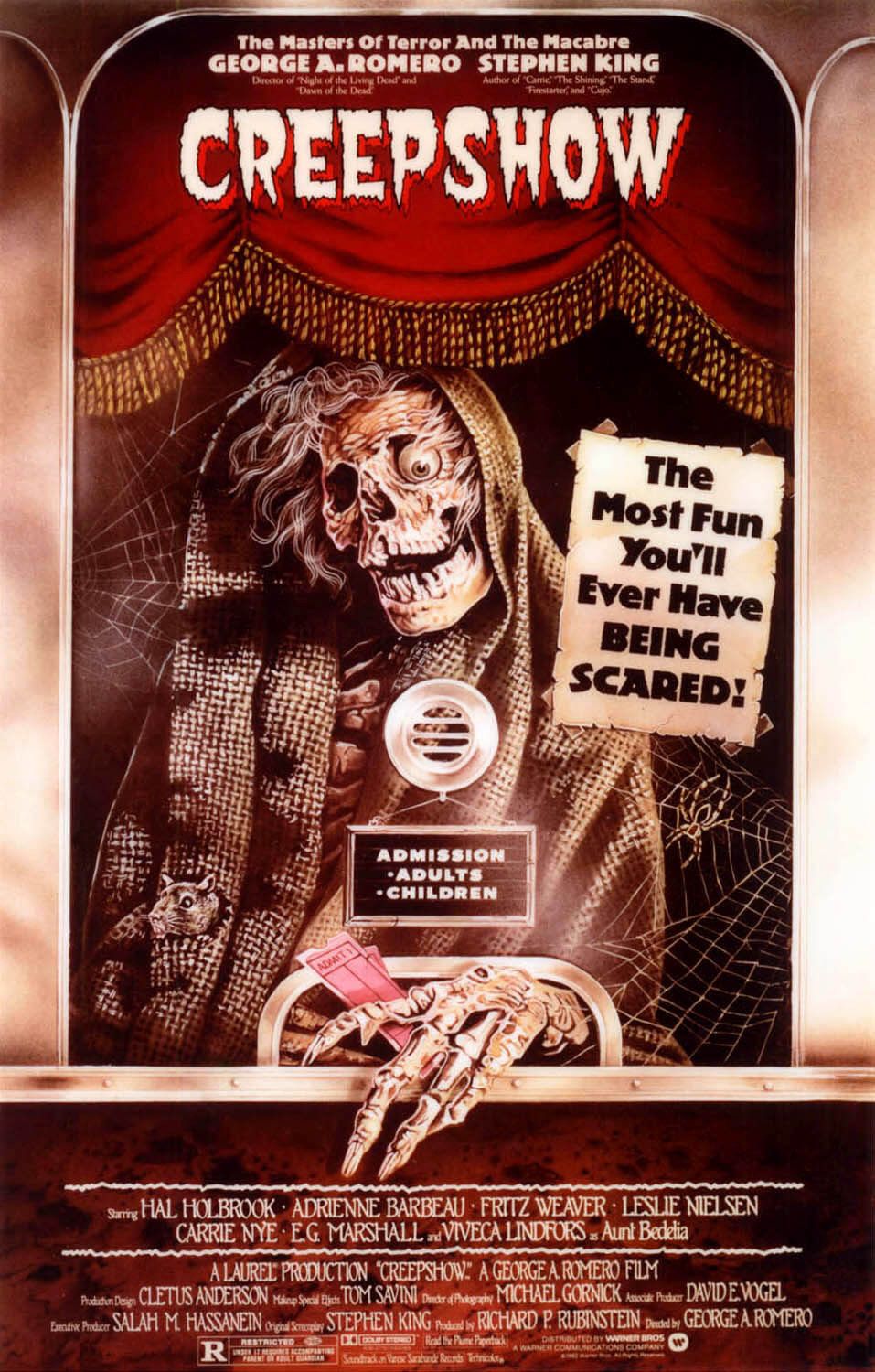
Creepshow movie poster

Ah, “Creepshow!” One of the best horror anthologies to come out of the 1980’s, and it is immensely enjoyable if you’re into this sort of movie. It brings us the combined talents of Stephen King and George Romero as they give homage to the E.C. comics of the 1950’s with five different stories of terror. In some ways, this can be seen as more of a comedy than a horror movie. Granted, it does have its scary moments, and a hand coming out of a grave is always good for a jolt, but it is presented in such an over the top fashion to where you have to thank both King and Romero for not taking the things too seriously.

As I write this review, filmmaker Eli Roth is having a two-week festival of his favorite movies at New Beverly Cinema in Los Angeles. This film was playing on a double bill with “Mother’s Day” which I missed, unfortunately, but it was probably because I was more excited about seeing this one. I vividly remember seeing the trailer for it when I went to see, and cry again at, “E.T.” When the image of The Creep first appeared, my brother responded by saying, “Whoa!”

The trailer was amusing and funny, at least until those cockroaches came in during which I had to cover my eyes. Granted, it would years and years before I would have the stomach, let alone the time, to check this one out. Anthology movies and series like “Masters of Horrors” are always intrigued me because they were filled with so many possibilities. Going from one story to the next, you are eager to see where it takes you. The only downside with anthologies is there is usually a weak story among the whole bunch which can weigh down the whole enterprise, but “Creepshow” doesn’t have this problem and is endlessly enjoyable to sit through.

The movie opens with a prologue where a father (Tom Atkins) berates his young son (Joe King, Stephen King’s son) for reading these “crappy” horror comics. The kick of the scene comes from the son calling out his dad for the hypocrite he is when he points out it’s a lot better than the magazines he reads. I couldn’t help but think this kid’s dad has a wide variety of porno magazines hidden where his wife can’t find them. It’s funny how we see fathers not wanting their kids to read “crap,” and then they sit in a recliner with a can of beer boasting of how God made fathers. Poor schmuck.

“Creepshow” then goes straight into its first episode entitled “Father’s Day,” a story of revenge. The patriarch of a family was murdered for being an annoying prick as he furiously demanded his cake to be brought out to him, and now he’s come back from the dead to get that tasty cake he has long been denied. Of all the stories, I consider it the weakest because “Father’s Day” is very short and threatens to be pointless. It does, however, succeed in defining the look of the movie. The acting is over the top, and there is a fantastic use of colors which dominates the movie and gives it a wonderfully pulpy feel. If Dario Argento had ever created a comic book, I’m sure it would look like this.

The great about “Father’s Day” is it allows us to see Ed Harris in a role where he is loosened up. Harris is a great actor who plays mostly dramatic roles in movies, and one day he will win an Oscar. But here, we see him get his boogie on while dancing to some crappy disco music which somehow sneaked its way into a 1980’s movie. You listen to that music, and you’d figure it would have died a fiery death before the 70’s ended. No such luck.

The next story, “The Lonesome Death of Jordy Verrill,” is both funny and sad. It features King in one of his few acting performances as the title character, a dimwit farmer who discovers a meteor which has crashed into his backyard. Jordy gets excited at the prospect of selling this meteor to the local college for a handsome profit, but when he tries to salvage it, it breaks into two and a liquid quickly seeps into the barren ground of the farm. Soon after, everything it touches starts growing green plant life which cannot be contained. It also grows on anything it touches, including Mr. Verrill himself. Seeing King turn into a bush is frightening and morbidly amusing. King may say he is a better writer than an actor, but you can also say he is a better actor than a director (“Maximum Overdrive” anyone?). In the end, he is perfectly cast as the seemingly brainless farmer, and his performance fits both the story and the film.

After that, we get “Something to Tide You Over,” and this one was my favorite of all the stories in the movie. It stars Leslie Nielsen, before his image was permanently altered by “The Naked Gun” movies, as a millionaire husband who takes his revenge on Harry (Ted Danson), the man having an affair with his wife. The way he lures Danson’s character out to the beach and gets him to bury himself in the sand up to his neck is priceless, and you can say there is a bit of “The Vanishing” here as we have a man willing to do anything to find out the fate of his loved one. Danson’s fate, being stuck in the sand as the tide rushes over him is frightening and unnerving to witness. You feel stuck in the sand with him, and it shows how fiendishly clever both King and Romero are at exploiting what we fear the most in life.

Watching this segment today may seem weird as Nielsen is forever known as Lt. Frank Drebin of “The Naked Gun” movies, and Danson is best known for playing Sam Malone on “Cheers.” Seeing them in a serious, albeit a highly exaggerated, story might be hard, but these actors have their serious chops as well as their comedic ones, and both talents serve them well here. Nielsen is a particular hoot as a man so confident of his deviant plan of revenge, yet quickly haunted by the possibility of his crimes coming back to do him in. Nothing can stay buried forever.

Next, we have “The Crate” which features Hal Holbrook as a Professor at a New England college who is saddled with an eternally inebriated wife (played by Adrienne Barbeau) who constantly embarrasses him and herself in front of anybody who happens to be watching. Holbrook’s character is a coward who doesn’t have the cojones to stand up to his wife, but then a colleague of his and a janitor discover a crate beneath the stairs which has not been opened for decades. It turns out to contain a monster who eats human beings whole. After Henry hears of this, he concocts a plan to lure his abusive wife over to the crate.

Holbrook is great at making you feel sorry for his character even while we berate him for being a wimp and not standing up to his wife. Barbeau gives a one-note performance as a humongous bitch with no real redeeming features whatsoever. In the end, this is not a big criticism because Barbeau is given a one-dimensional character to play. The characters are not meant to be complex in the way they handle themselves, and they are here to represent different types of people who meet their predestined fate.

Then comes the last story of the movie, appropriately titled “They’re Creeping Up on You.” This one I had the hardest time sitting through, and I doubt it will be easy for you either if you have an intense phobia of bugs. E.G. Marshall plays Upson Pratt, a thoughtless and hateful bigot who has no sympathy for anyone other than himself. He gleefully takes delight in the suffering of others and lives in a completely sterile apartment which makes him look like he’s a doctor. But his problem now is with the bugs in his apartment, specifically cockroaches. They keep popping up out of nowhere, and their numbers keep growing and growing…I found myself looking at my shoes a lot during this segment, and it reminded me I need to get a new pair soon.

I remember watching one of those “scariest moments in movies” episodes on the Bravo channel. They featured the cockroach segment from “Creepshow” in it, and it turned out the segment was more of a socially conscious piece than people realized. This is after all a Romero film whose “Dead” movies are loaded with social commentary, and the whole point of the “Creeping” segment was to look at bigotry how what we fear the most we end up empowering. We invite our fears to mess with us, and sometimes they eat us whole. Suffice to say, this is very much an anti-racism piece, and it’s the strongest episode in the movie. Marshall gives a brilliantly zany performance as a man who cannot control the world around him any longer, and who could never really control it in the first place.

Eli Roth had programs for his festival entitled “The Greats of Roth,” and in it he summed up this “criminally underrated” movie perfectly:

“It’s amazing to see how many comic book and graphic novel adaptations today are praised for getting the ‘look’ of the comic perfect, and nobody ever seems to mention this film. This was the first time that Romero was really surrounded with a star-studded cast, and you see Romero, King and Tom Savini all coming together to create one of the most visually spectacular and fun horror films of all time. They set out to recreate the look and feel of the old E.C. Comics and nailed it perfectly.”

“Creepshow” is indeed one of the most deliriously entertaining horror movies ever made, and it is a visually stunning achievement made on what must have been an especially low budget. There were many other movies to come out of this which tried for the same look, but none of them succeeded at it quite like this one did. This is just a fun, fun, fun movie for people who dig this sort of thing, and to see it on the big screen was a real treat. As the movie’s tagline says, it is the most fun you will ever have being scared.

* * * * out of * * * *

WRITER’S NOTE: This review was originally written in 2008.

Save

Sandy King Revisits John Carpenter’s ‘Body Bags’ at Cinefamily

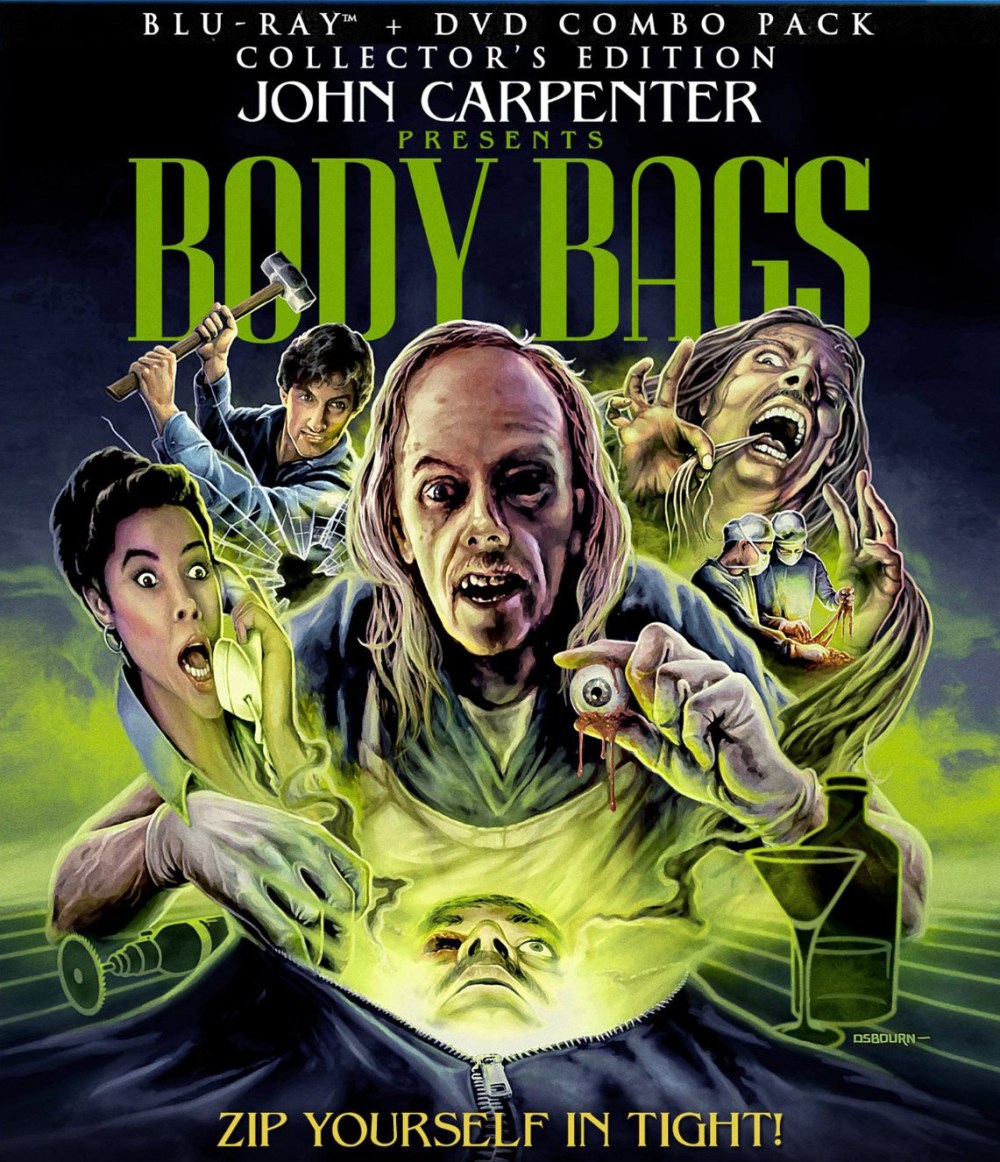
Body Bags Blu-ray cover

Remember John Carpenter’s “Body Bags?” It was a horror anthology containing three stories: “The Gas Station” which has a female college student working a graveyard shift and getting terrorized by a serial killer, “Hair” about a hair transplant which goes horribly wrong, and “The Eye” where a baseball player loses an eye and gets a new one from a recently executed murderer. Many see it as Showtime’s answer to HBO’s “Tales from the Crypt” as it featured Carpenter as a creepy-looking and deranged coroner who introduces the three stories while drinking formaldehyde as if it were a martini, and it looked like the start of a wickedly demented series. Was it meant to become a series, or was it simply intended to be a single movie? These questions were answered by Sandy King, the producer of “Body Bags” and Carpenter’s wife, when she dropped by Cinefamily which showed 1993 horror anthology as part of its Friday Night Frights series.

King told the audience Showtime originally wanted a 3-story movie and that it was supposed to be a one-shot movie for her and Carpenter. As soon as they were done, they would be off and running to their next project. King remarked how anthology movies were very hard to finance as they were typically not successful at the box office, so bringing one to a cable channel like Showtime made more sense. When it was finished, Showtime then decided they wanted to turn it into a series, but King explained why she and Carpenter decided against it.

“We shot it in California, mostly in Los Angeles, which allowed us to get a lot of the great cameos with Wes Craven, Sam Raimi and Roger Corman,” King said. “Showtime, however, wanted to lower the budget and shoot the series in Canada, and we felt the amount of money they were putting into was not going to be enough to get it right. Plus, shooting in Canada would have made it enormously difficult to get the cameos we got. So, we basically told Showtime thanks, but no thanks.”

“Body Bags” was in many ways a family affair as it involved King and Carpenter working with people they worked with in the past. King had previously worked with Bobby Carradine and Stacey Keach on the Walter Hill western “The Long Riders,” and she had worked with Mark Hamill as well. Peter Jason has appeared in many of Carpenter’s films, and he even used his own car for his appearance in “The Gas Station.” As for the cameos from Craven, Raimi and Corman, she reminded the audience that the horror community is a small and tightly-knit one as everyone knows each other in it.

Carpenter has never seen himself as much of an actor for those who have listened to his various commentary tracks on the movies he has done. After making a Hitchcockian cameo at the beginning of “The Fog,” felt he would be better off behind the camera instead of in front of it. Still, King said she wanted him to play the Coroner in “Body Bags” and that it actually didn’t take much to convince him. She also described Carpenter as an “inner looney” to where he allowed himself to let loose, with the help of Rick Baker’s makeup, on set. Also, Carpenter did not direct himself as the Coroner as King said a friend was brought in to handle his performance and to make sure he hit all his marks. Truth be told, casting him as the Coroner was very inspired.

King said she and Carpenter worked on “Body Bags,” “In the Mouth of Madness” and “Village of the Damned” all in a row. It was originally planned that Carpenter would direct all three stories in “Body Bags,” but as he was already in post-production on “In the Mouth of Madness,” she said Carpenter told her he couldn’t direct all three. To this, she replied, “Okay, we’ll get Tobe.”

The Tobe she was referring to was Tobe Hooper, director of the horror classics “Poltergeist” and the infinitely terrifying “Texas Chainsaw Massacre.” Getting Hooper to direct “The Eye” was a bit tricky as he was very disturbed by the material which had a husband attempting to kill his pregnant wife, but King told him it would be fun and that he could make it work. She also said it was fun to watch Hooper do comedy as he had a cameo at the end with Tom Arnold in which they play two morgue workers who perhaps enjoy their jobs a little too much.

It was great fun to watch “Body Bags” on the big screen and with an audience at Cinefamily, and it was especially nice to see Sandy King drop by and talk about its making and development. She even brought some Shout Factory Blu-rays of Carpenter’s movies to give away, and this writer was lucky enough to win a copy of the one for “Body Bags.” For Carpenter fans, the Blu-ray is a must as it features a great commentary track, a wonderful making-of documentary, and a trailer for the movie as well. It had been out of print for years, and the previous DVD released by Artisan Entertainment gave us a severely edited version which took out a lot of things like Craven’s inspired cameo and some especially gruesome moments. “Body Bags” may not be epic filmmaking, but it sure is a lot of fun for horror fans.

Poster and trailer courtesy of Shout Factory.

Save