While Veronica Cartwright was at New Beverly Cinema to talk about “The Right Stuff,” filmmaker Brian McQuery couldn’t help but ask her a question about another famous movie she starred in, “Alien.” Specifically, he wanted to know more about the “chestburster” scene which is one of the film’s most horrifying moments. The story behind this scene has been told over and over again throughout the years, but Cartwright was still willing to talk and clear up a few things about it.
Legend has it neither Cartwright nor the other actors in “Alien” had any idea of what exactly was going to erupt from John Hurt’s chest. Cartwright, however, said the actors had read the script and knew something was supposed to come out of there. Also, she and Sigourney Weaver had a scene where they were supposed to know what it looked like, but they had no clue what they were going to be talking about. As a result, they visited the studio where the infant alien was being built.
“A few weeks earlier we had gone down and seen the little mockup of that little penis guy with the tail, but it wasn’t working at that point,” Cartwright said of the alien. “It was sort of a gray thing and the artists were saying ‘oh his teeth will be like this and he breathes…’ It was just like a little puppet thing that came out.”
Then came the day when the chestburster scene was shot, and Cartwright described it as though she had just filmed it yesterday.
“We’re all upstairs in the dressing room and they take John (Hurt) down, and for four hours we never saw John. John was having his false chest made,” Cartwright said. “When we were told that we could come down to the set, the entire set was dressed in plastic, everybody’s wearing raincoats, and there were big buckets of this awful stuff that smelled like formaldehyde. It stank and you gagged when you first went in there.”
“So, here’s John packed in this thing, and they had four cameras so that they would get everybody’s reaction,” Cartwright continued. “What happens is that they cut the t-shirt so that the puppeteer could push the thing through, so we all start leaning forward because you’re just fascinated to see what’s going to happen. One of the effects guys told me, ‘oh you’ll be getting a little blood on you,’ and I said, ‘oh okay.’ Not thinking, I leaned right into it. I had a jet pointed at my face, and it just shot me square in the face. It was unbelievable, and then I backed up and (in the dailies, it’s the most hysterical thing) my knees hit the back of a set piece and I flipped upside down to where you can see my cowboy boots sticking up above. I did not expect to get shot with a full blast of blood.
Cartwright pointed out that the scene was done in just one take, and McQuery replied how her reaction looked “really real!” The audience at the New Beverly laughed loudly in agreement with him.
“Years later I worked with that same guy and he said, ‘sorry about that!’ How rude,” Cartwright said.
Looking back, Cartwright described “Alien” as being a very “sweaty” movie because the cast would come on the set in the morning and get covered in glycerin from a pumper. She described this as being “so gross,” but that in the end it was an experience.
While she was primarily at New Beverly Cinema to talk about “The Right Stuff,” the audience was glad McQuery asked Cartwright about the making of Ridley Scott’s classic 1979 film. Just when you think you have heard the definitive story about a classic movie scene, one of its participants comes around to inform you of one or two details you might have missed.
“Grindhouse” is a double feature of movies written and directed by Robert Rodriguez and Quentin Tarantino, and it is their ode to the exploitation movies of the 70’s and 80’s which used to play in all those seedy movie theaters in New York and Los Angeles. Now a lot of those movies were poorly made and had bad acting, writing and directing, but this is not the case here as this crazy love letter to all things exploitation gets brilliant treatment from two renegade minds of Hollywood cinema. To put it mildly, “Grindhouse” was an awesome experience. How great it is to see some kick ass movies made by two guys who have such a love for movies and who love making them.
“Grindhouse” starts off with the first of four fake movie trailers. This is part of Rodriguez’s and Tarantino’s plan to immerse you in the experience of watching grindhouse movies like they did as kids; the scratched-up prints, those missing reels, the restricted ratings, the film breaking apart, and of course those insane coming attractions trailers which at times were more memorable than the movies they were promoting.
Anyway, the first trailer was for “Machete” which was done by Rodriguez and stars Danny Trejo as a Mexican framed for a crime he didn’t commit, and he ends up going after the bad guys with a bloody vengeance. This was a blast to watch and the best of all the fake trailers in “Grindhouse” as it captures the ridiculous one-liners we gleefully remember from all those over the top action movies from the 80’s. I especially liked how they had Cheech Marin playing a priest who Machete gets to kill the bad guys with him. He almost succeeds in stealing the trailer right out from under Trejo’s feet.
Then things get underway with “Planet Terror,” Robert Rodriguez’s addition to the “Grindhouse” movie. It is basically his ode to all those zombie movies which came out before we met the fast-paced zombies of “28 Days Later,” and it’s a cross between a George Romero movie and a John Carpenter movie. “Planet Terror” even features a score composed by Rodriguez himself, and he wrote and shot a lot it while listening to Carpenter’s music from “Escape From New York.” In fact, you can even hear a small part of Carpenter’s score in “Planet Terror” if you listen very closely.
“Planet Terror” was a total blast, a flashback to those go for broke action and horror movies that didn’t even try to hold anything back. It reminded me of the “Evil Dead” movies among others where everything and everybody were going nuts. Then again, with the characters running for their lives away from zombies chasing them, can you blame them?
Rodriguez has put a great cast together for “Planet Terror.” The one person who will be remembered forever from it is the ever so luscious Rose McGowan who plays Cherry, a dancer at a strip club who can’t keep from crying as she dances in front of customers. As you know from the movie’s trailer, one of her legs ends up getting chopped off and it eventually gets replaced by a machine gun which she uses to gleefully sadistic effect. It makes for some hilarious moments as Cherry doesn’t even hesitate in blowing away as many zombies as she can.
Also great in “Planet Terror” is Freddy Rodriguez who brings a total rebel quality to his role as El Wray who is a very cool customer indeed. You also have Michael Biehn playing the sheriff, Josh Brolin who plays Dr. Block whose wife, Dakota (played by Marley Shelton), has been cheating on him with another woman, and even Bruce Willis shows up as a military commander who knows more than he is willing to let on.
One of the people I was especially impressed with was Jeff Fahey who I have not always been a big fan of as he always seemed to me to be playing himself in every role he takes on. But here he is loads of fun as J.T., a gas station and restaurant owner who continually claims to have the best barbecued meat in all of Texas. It ended up making me look at Fahey in a whole new light, and as a character actor, he proves to be invaluable.
“Planet Terror” is one gory ride, to put it mildly, but then again what do you expect when you have Tom Savini playing one of the sheriff’s deputies? Have you even seen the movies he has worked on in the past? Rodriguez gets all the gross details down like body parts getting blown or ripped off in an ever so disgustingly precious fashion. Those same body parts are, as a man, the last things I ever want to lose! Ever!
After “Planet Terror” ended, we were treated to the other three fake movie trailers that “Grindhouse” had to offer. Edgar Wright, who directed “Shaun of the Dead,” did the trailer for “Don’t,” and it was endlessly hilarious as it showed us all the things we shouldn’t be doing when we’re in a horror movie. Then there was Rob Zombie’s “Werewolf Women of The S.S.” which was as funny as it was bizarre. Don’t worry, I won’t spoil this one for you as there are cameos here that are too inspired to just give away. And finally, there was “Thanksgiving” which was directed by Eli Roth, the same man who gave us “Hostel.” Thanksgiving does seem to be one of the few holidays left which have yet to be turned into a horror franchise where horny teens get slaughtered in a creatively bloody fashion.
Then we get to Tarantino’s addition to the “Grindhouse” movie: “Death Proof.” It stars Kurt Russell as Stuntman Mike, a serial killer who uses a car instead of a knife to murder young women. No reason is really given as to why he does this, but in a movie like this does it even matter?
“Death Proof” has its share of gruesome moments including a car crash that is shown from different angles as you see how each person gets horribly injured in a head-on collision. Suffice to say, if you have been in a nasty car accident, you probably won’t want to see this. It also features one of the more exhilarating car chases in recent memory where Russell tries to run a Dodge Charger which is occupied by a trio of women off the road. One of these women, Zoe Bell (Uma Thurman’s stunt double in “Kill Bill”) is riding on the hood of the Charger like the insane stunt woman she is. Seeing her struggle to stay on the car makes the scene all the more frightening and exciting as a result. Tarantino clearly has no interest in throwing all sorts of CGI effects at us. He wants to give us the real thing, and that he does.
Of the two movies in “Grindhouse,” I have to say that “Death Proof” was my favorite. Although it takes a while to get to the action, the dialogue is fabulous in a way only Tarantino can come up with. He continues to come up with great lines which make the characters much more distinct than those in your average action movie filled with stock characters. One of the actresses involved with “Death Proof” said Tarantino really knows how to write for women and knows how they think. Now, this might be open to debate for a lot of people, but I think that is absolutely true as it is shown here and in other movies like “Pulp Fiction” and “Jackie Brown.”
Russell remains one of the most underrated actors working in movies today as he can go from genre to genre and from playing a good guy to a bad guy pretty easily. He is great in this role where he plays a pure psychopath who is clearly schizoid as he goes after his next trio of soon to be victims, and it resembles the kind of work he did in movies like “Escape From New York.” Russell is perfect as Stuntman Mike that it got to where I just could not see Mickey Rourke playing this same role even though he was originally cast in it. Rourke wouldn’t have been bad, but this role feels like it was tailor-made for Russell.
So overall, “Grindhouse” was a kick-ass experience that I am ever so eager to see again. I already have the soundtracks to both “Planet Terror” and “Death Proof” which are fantastic to listen to. Then again, I did actually get them before I even saw “Grindhouse” because I was pretty confident that I would not be disappointed, and I wasn’t. Although it drags a little in spots, it is never boring. It’s not going to appeal to everyone, and it is as politically incorrect as any movie in recent years, but it will definitely appeal to those who have been eagerly and patiently awaiting the resurrection of grindhouse cinema they grew up watching in the past. Many had no choice but to watch those exploitation classics on video and DVD, but with Rodriguez’s and Tarantino’s “Grindhouse,” we finally get to see movies like them again on the big screen where they belong.
Sure, everybody deals with anxiety, but for others it can be a very serious disorder. Anxiety is not the same thing as fear because fear is more of a feeling about something which is realistically dangerous, and it is an appropriate response to a perceived threat. But anxiety is more about anticipating disaster and excessively worrying about everyday things like health, money, relationships with friends and family or troubles at your job. The problem is many of these worries are irrational, and much of what you fear never becomes a reality. Still, it’s not something you can just flip off like a light switch as those who are saddled with this disorder end up suffering from many physical symptoms like fatigue, insomnia, fidgeting, difficulty concentrating, trouble breathing and nausea among other things. They find themselves unable to control their anxiety, and it can seriously affect how they deal with daily life.
I bring this up because I suffer from anxiety, but I typically don’t talk about it much outside of a doctor’s office. There is a stigma attached to mental disorders in general, and many who suffer from them don’t want to admit they have a problem. Explaining this to others is frustrating because not many have a full understanding of what you’re going through, and the advice you are likely to get is “get over it.”
So, I had the opportunity to speak with Leigh Whannell, an actor and writer who wrote the screenplays for “Saw,” “Dead Silence” and “Insidious,” all of which were directed by James Wan. Whannell was in Los Angeles for the “Insidious: Chapter 2” press junket, and I was lucky enough to have a 1-on-1 interview with him at the Four Seasons Hotel thanks to the website We Got This Covered. Whannell himself suffers from anxiety as well, and I asked him how he dealt with it and if it influenced his writing in any way. Part of me was worried this might seem like too personal a question, but he was actually very open to talking about it.
Leigh Whannell: When I was in my mid-20’s, I was having these physical symptoms. To me I didn’t think it was anxiety, I thought it was a health problem. I was getting these headaches and heart palpitations, and at that age I was too young to understand psychological problems. Especially in Australia, we don’t really have a big therapy culture in the sense that I don’t know if people really address their problems as much as they do here. So, I was very confused, and when a doctor told me that all these things that are happening are because of anxiety, that was hard. I think the way I dealt with it in the end was to chisel away at the elements of my life that were adding to the stress. I was working in a job I didn’t like very much, and I got out of the job. It was hard because no one wants to be unsure where their next paycheck is coming from, but I knew that if I got out of that job that would help so I did that. In terms of influence, it was very influential in the writing of ‘Saw.’ I look at ‘Saw’ now and I realize that it’s not exactly a critically acclaimed film, but a lot of people would maybe see it as a B-movie. But for me, at the time, I didn’t see it that way. It was so meaningful to me because, even though it’s this thriller, I was looking at this character that was dying, and all these anxieties about death really were an influence. I think it can end up being good therapy in a lot of ways. When you get out your subconscious on paper, it’s like a mental sauna. You sweat out all the dark stuff and I think that ‘Saw’ is very much a product of who I was in my early to mid-20s. I think I had a pretty dark nihilistic worldview, hence the movie ‘Saw’ (laughs).
I told Whannell it was great he was able to channel his anxiety into his work as it proved to be beneficial for his health and career overall. As I walked out of the hotel room, he wished me the best of luck in dealing with it as he deeply understood what anxiety was all about, and he also gave me some good advice to follow:
Leigh Whannell: I think it’s similar to a physical health problem in that you need to take steps like meditation or long walks or days where you don’t have to focus on it. You need to carve out time for yourself.
Since the interview, I have started taking a mindfulness class which is a form of meditation that focuses your mind to be more attentive and aware of what your body is going through. Essentially, it gives your brain a much-needed rest and to not judge the thoughts which keep running through your head on a regular basis. I have also sought treatment through therapy and other methods, and all of it has been largely beneficial. I still have a way to go in dealing with my anxiety, but I can honestly say I have made a lot of progress.
I really want to thank Leigh Whannell for his time and for being so open about what he went through while dealing with overwhelming anxiety. Honestly, it looks like he’s feeling great and doing much better than when he was younger. Hearing him talk about this issue and seeing him looking very healthy certainly gives me a lot of hope.
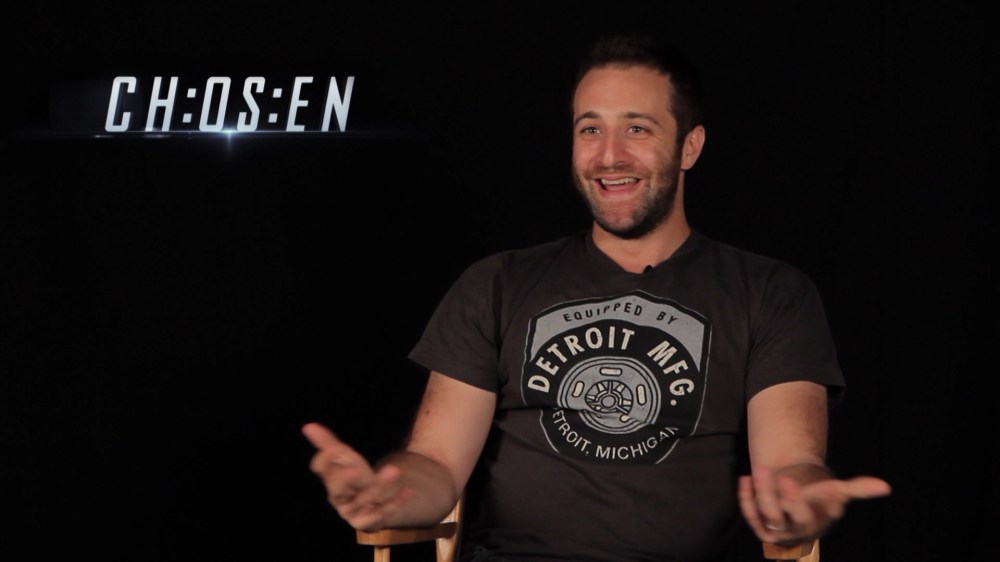
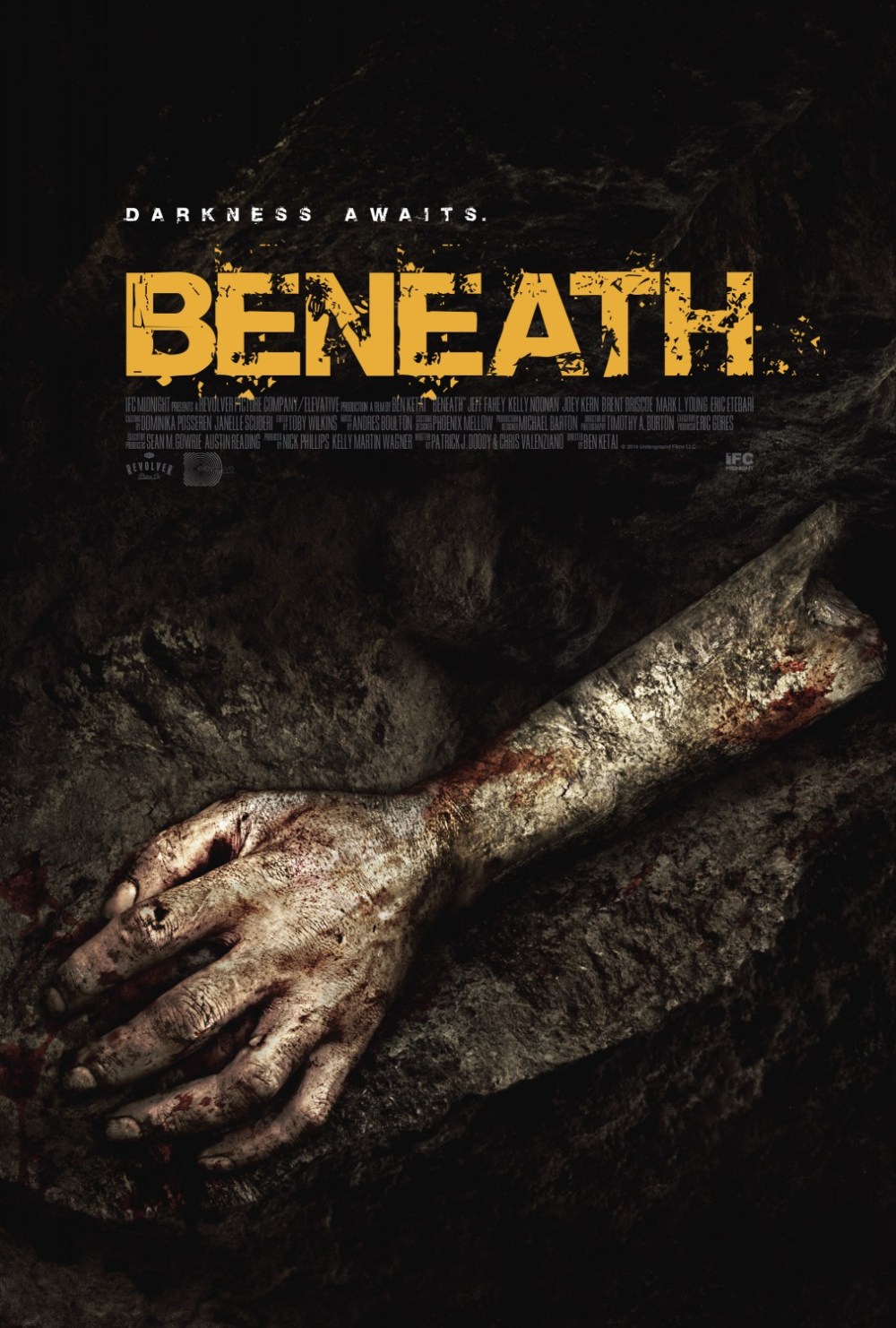
He has made a place for himself in the horror genre with the “30 Days of Night: Dust to Dust” miniseries and the web series “Chosen.” Now with “Beneath,” Ben Ketai breaks into the feature film realm with a story about a bunch of coal miners who get trapped several hundred feet underground after a catastrophic accident. The movie stars Jeff Fahey as veteran coal miner who spends the last day on the job with his co-workers and his daughter Samantha (Kelly Noonan) when the accident happens, and they have to work together to escape the mine before madness and toxic gasses kill them.
I got to speak with Ketai over the phone, and it was great fun talking with him as he explained what it was like working with Fahey, the challenges of maintaining a strong level of suspense for ninety minutes, and the research he did on coal miners for this movie. “Beneath” might look like your typical horror movie, but in many ways, it isn’t.
Ben Kenber: I thought this movie was very riveting and I like how you managed to keep the suspense up until the very end. How much of a challenge was it to maintain that suspense from start to finish? It could not have been easy.
Ben Ketai: One of the challenges when doing a horror movie like this where you are stuck in one space for the entire film, and I give all the credit to Chris (Valenziano) and Patrick (Doody), the writers, is figuring out how to build a proper level of escalation that keeps the story moving without breaking the suspense until the very, very end. It definitely makes my job much easier when you have a creative group of people like that.
Ben Kenber: This is definitely an interesting story for a horror movie. There have been a lot of stories in the news over the past years of mines collapsing and miners being trapped for an agonizing period of time. Was there a specific event that inspired the story for this film?
Ben Ketai: It was really, for Patrick and Chris, the Chilean coal miners and what they went through was the first seedlings of the idea. And then while they were working on it, I think there were a couple more incidents that came along and so we had a lot of different unfortunate happenings that allowed us to draw inspiration from. A lot the inspiration for the film also comes from just coal miners who haven’t been in collapses, and Chris and Patrick did extensive research while writing the script talking to coal miners and visiting coal mines in West Virginia. We had a recently retired coal miner talk to our cast before production. It was like a little seminar on what it’s like to be a coal miner. There were lots of wonderful sources of inspiration.
Ben Kenber: Where exactly was this movie shot? It looks like a real coal mine, but I came out of it not knowing if it was actually a movie set or not.
Ben Ketai: We actually shot it on a soundstage in Culver City, and pretty much everything you see inside the mine was constructed by our brilliant and very resourceful production designer Michael Barton.
Ben Kenber: At times, I thought it looked so real.
Ben Ketai: I had to remind myself sometimes when we were actually on set. I would start to get claustrophobic, and I had to remind myself that we were on a soundstage and that there was sunlight outside.
Ben Kenber: While watching “Beneath,” I was reminded of a number of other movies like “The Descent” where a group of women went cave dwelling and encountered a bunch of vicious monsters. Was there any movie which inspired you or played through your mind while you were making “Beneath?”
Ben Ketai: We actively tried to avoid “The Descent” and other movies like it because we knew it would draw such strong comparisons just because of the subject matter. But of course we watched “The Descent” and we looked at what works best in that movie, and then also what signifies what that movie is and what that movie looks like it feels like. It sounds too derivative, but while making the movie and immersed in the experience I tried to pull from movies that aren’t actually entirely of the genre. I wanted to try to put something more human to the horror experience. Honestly, one of the movies that my crew and I watched the night before we shot was “Friday Night Lights” simply because it’s a film to me that just does a great job of capturing real camaraderie, and also it has a very piece of life feel to it. That was something that we wanted to bring to a movie like this and to try to make the characters feel like real people that we love and care about, and if we can do that then the horror is going to take care of itself. “The Wrestler” was another movie we watched, and it did such a great job of getting the camera to capture the world of wrestling in such a personal way. I wanted to do that same thing with coal miners and have that same sensation.
Ben Kenber: I’m assuming that you did a lot of research on coal miners and mining accidents, and I imagine that when you have a lack of oxygen down there beneath the earth that you start seeing things that may or may not actually be there. What kind of research did you do in preparation for directing this film?
Ben Ketai: All sorts really. The writers had a great head start obviously and they worked on the script for about a year and a half. When I came onto the project just a couple months out from production, they kind of dumped all the research into my lap and I had to do a crash course and catch up fast with them. We were developing the script through craft and with the actors. We just gathered as much information as we could about what happens to your brain during oxygen deprivation, and not only that but what happens when you were trapped in a coal mine. It’s not just that you are running out of oxygen, but the air itself is becoming toxic. There are always toxic gasses that are leaking into the coal mine, and usually if the mine hasn’t collapsed there is stuff that extracts that from the working environment. When the collapse happens, it basically cuts off their flow of fresh air, and things like methane and poisonous gasses continue to build up. All the crazy things that can happen to you like hallucinations to total personality changes, that was really the most exciting thing to me. We had this great device that creates a real-life thing that could explain away all those supernatural things. We really wanted to make it all ambiguous, and we did.
Ben Kenber: The cast for this movie is really spot on. All the actors look like they have worked in a mine for a long, long time. What was it like casting this film?
Ben Ketai: The casting process on this movie was awesome. It was probably the most enjoyable process that I ever had working on movies because we didn’t have a studio looking over our shoulder and we didn’t have foreign sales companies to answer to. So we really just got to do it the old school way and we just had auditions. We really took our time to figure out who were the best people to embody these characters, and we managed to assemble what I felt was a cast of just all incredibly talented and incredibly realistic people/actors.
Ben Kenber: What was it like working with Jeff Fahey?
Ben Ketai: It was a really, really incredible experience. I’ve always been a fan of his. I was probably 12 years old when I first saw “Lawnmower Man.” I grew up with Jeff Fahey. It’s kind of a dream to get to work with a guy like this, and not only that but he’s got so many years of experience under his belt and so much passion for his craft that working with him is sort of like… You turn him loose in a scene and his energy and his expertise kind of permeates to the rest of the cast. I think it really helped pull everything together. I feel like, as a director, I’m just lucky to be able to put that in front of the camera.
Ben Kenber: Robert Rodriguez once said having less money to work with forces you to be more creative. Was that the case for you on this movie, and did you have to cut any corners to get the shots that you wanted?
Ben Ketai: It definitely forces you to be more creative, and I really actually think in many ways it’s what gives the movie its voice and personality. We had to spend so much money building the set itself because we couldn’t film in a coal mine. There really wasn’t much left for anything else. When I came onto the film as director, my first role was to try to make everything feel as real as possible. Myself and Tim Burton, my cinematographer, we wanted to make it feel like we were down in the coal mine with flashlights and headlamps. So what you actually see onscreen is lit with practical lights. Instead of spending our time and our electric budget on a huge lighting truck like you would get on a big studio movie, we were at Home Depot looking at different kinds of flashlights.
I want to thank Ben Ketai for taking the time to talk with me. “Beneath” is now available to own and rent on DVD, Blu-ray, and Digital.
I count Stephen King’s “It” as one of my all-time favorite novels, and I very much enjoyed the 1990 miniseries based on it, and that’s even though the ending was incredibly disappointing. Now, after many false starts which saw actors and directors come and go from the project, “It” is finally making its way to the silver screen courtesy of Warner Brothers and New Line Cinema, and now we the first trailer for the film.
After watching this trailer several times, my interest in this new adaptation has tripled. Pennywise the Clown, this time portrayed by one of the many actors from the Skarsgard family, Bill Skarsgard, comes across as far more lethal than the one Tim Curry gave us, and seeing Pennywise leap out at us in the trailer’s final moments has me believing anyone with a clown phobia should seriously consider not seeing this movie. We never get to see all of Pennywise here, and he is instead shown through quick flashes throughout, but it’s enough to send a chill down my spine.
The cast of actors is led by Jaeden Lieberher, who left a strong impression on audiences with his performances in “St. Vincent” and “Midnight Special,” who plays Bill Denbrough, the leader of the Loser’s Club who vows revenge against Pennywise for murdering his little brother Georgie. It’s hard not to be reminded of the Netflix series “Stranger Things” while watching these young actors as they too are on a mission to find out what evil lurks in the underbelly of their hometown of Derry, Maine. The story has also been moved up from the 1950’s to the 1980’s (the slide projector is a dead giveaway), so the filmmakers look to be playing on our collective nostalgia which should make this movie extra fun.
Cary Fukunaga was set to direct this adaptation, but although he eventually dropped out due to those “creative differences” filmmakers just love to throw out there, he is still listed in the credits as one of the screenwriters. Directing “It” is Andrés Muschietti who previously directed Jessica Chastain in the box office hit “Mama.” From this trailer, it looks like he is having lots of fun exploring the many ways Pennywise terrorizes the young children of Derry, Maine as he gets at their deepest fears and exploits them for all they are worth. My hope is he focuses on the characters of King’s classic novel as well as on the scares. One thing’s for sure, he certainly knows how to make a red balloon look especially ominous.
“It” is clearly covering the first part of King’s novel when the members of the Loser’s Club were kids. Here’s hoping this adaptation scares us silly enough to where we get follow-up which will follow them into adulthood as we all know the past stays with us in one way or another. Adaptations of King’s novels range from brilliant (“The Shining,” “Misery,” “The Shawshank Redemption”) to horrendous (“Maximum Overdrive,” “Graveyard Shift”), so let’s hope this is not just one of the better ones, but one of the best.
You know the main characters of this movie are in trouble once they hit a deer. Of this, I speak from my own experience as my dad drove me to the airport one time and ran over a deer which walked into his traffic lane. It was not his fault as the deer came out of nowhere, and there wasn’t any time to hit the brakes to avoid an animal oblivious to the Volvo station wagon heading straight at him (or her). Nevertheless, a week later I got laid off from my job. Looking back, hitting the deer proved to be an omen of bad things to come, and losing my job was one of them.
I was reminded of this as I watched the opening minutes of “Get Out,” an insidiously clever horror movie with the occasional dose of humor thrown in. Chris Washington (Daniel Kaluuya) and Rose Armitage (Allison Williams) are driving up an empty stretch of road to meet her parents when they slam into a deer. There’s nothing they can do to help the animal, and the police officer who arrives at the scene asks for Chris’ license even though he wasn’t driving. Rose encourages the officer to let Chris be, and he eventually leaves the scene while advising her to fix her broken rearview mirror. But as the movie goes on, this turns out to be the least of their problems.
I should probably point out that Chris and Rose are an interracial couple, and Chris is concerned Rose’s parents have no idea her daughter is dating a black man. His nervousness is understandable, and it is elevated further when Rose’s parents, Dean (Bradley Whitford) and Missy Armitage (Catherine Keener) try to make him feel welcome by telling him they would have voted President Barack Obama for a third time if it were possible. Basically, the Armitages are well-meaning white folks who support the fight against racism, but they have yet to understand the damage, however unintentional, they are doing to African-Americans.
Things get even weirder when Chris meets two other black people who work for the Armitages, Georgina (Betty Gabriel) and Walter (Marcus Henderson). Both act very strangely and in a manner which threatens to redefine passive-aggressive, and the way they stare at Chris is unnerving as they look like snakes ready to strike at their pray without much notice. It doesn’t take long for Chris to realize something is terribly wrong, but his attempts to escape the Armitage household are not exactly successful.
There is a lot of racial tension burning right underneath the surface in “Get Out,” and this is on purpose. The movie plays on the stereotypes whites have of blacks and vice-versa. Everyone is trying to be polite, but you can sense what’s really going on by looking into the eyes of each character as they project darker intentions or sheer terror, and sometimes both. We are left in suspense as we constantly wonder what the Armitages truly have in store for the helpless Chris, and when their intentions are revealed, it makes a scary, and an oddly amusing, amount of sense.
“Get Out” marks the directorial debut of Jordan Peele, one-half of the famous comedy duo “Key & Peele,” who also wrote the screenplay. It’s a very strong debut as he takes satirical elements and places them into a story which ratchets up the intensity throughout and keeps it up to the end. But Peele doesn’t just give us a flat-out satire as he never set out to play everything just for laughs. He digs deep and touches at our own preconceptions of race in America and plays around with the unintentional ways we reveal ourselves to be more prejudice than we ever realized.
Daniel Kaluuya, whom you might remember from “Sicario” and “Kick-Ass 2,” is excellent as Chris, a young man caught up in a situation we hope he fully comprehends before it is too late. He also has good chemistry with Allison Williams to where you can’t doubt they are believable as a couple. “Get Out” also has the benefit of having two terrific actors playing Rose’s parents, Bradley Whitford and Catherine Keener. Both have a warm presence here which eventually turns into something more sinister before you even know it.
I especially have to single out Keener as she remains one of the most underrated actors working today, and the scene where she hypnotizes Chris is a huge reminder of that inescapable fact. She doesn’t have to do too much to get our attention, and as Missy, she seduces us to a place we didn’t plan on going to, and it’s a place where we fear we will never rise up from.
There’s also a terrific scene-stealing performance from Lil Rel Howery as Chris’ best friend, Rod Williams, a TSA agent who has seen it all. In any other movie, Rod would be the one to overact in the most annoying way possible, but Howery turns the character into a welcome form of comic-relief the movie needs to ease the at times unbearable tension, and he is hilarious.
In many ways, “Get Out” is a clever riff on movies of the past like “The Stepford Wives” which dealt with the unusual behavior of female residents in a little Connecticut town, and Peel takes risks with the material you wish other filmmakers would take on a more regular basis. What results is a motion picture which is not perfect, but still a very good one which will stay with and unsettle you in the way a good horror movie should. It also plays with the ways white people try to show how non-racist they are and yet fall into an inescapable pit of hypocrisy before they even know it.
And for the record, I’m a white guy and I would definitely have voted for Barrack Obama for a third term as President. Think what you will of that statement. I’m just going to leave it here.
On Monday, August 13, 2012, the Chinese Theatres in Hollywood presented a screening of “A Nightmare on Elm Street 3: Dream Warriors” in honor of its 25th anniversary. This event was put together by Mad Monster, a monthly genre print magazine made by and for the modern monster fan, and they ended up giving us quite a show. They had several giveaways of signed posters and tickets to horror conventions, a costume contest which had the audience cheering loudly for those best dressed, a musician doing an acoustic version of the Dokken theme song “Dream Warriors” and the evening culminated with the appearance of the sequel’s co-stars Rodney Eastman and Jennifer Rubin.
Eastman played Joey Peterson, the mute patient who refuses to speak or sleep after experiencing horrific nightmares. Rubin portrayed Taryn White, a former drug addict who also suffers from nightmares and is harassed by male orderlies at the hospital she is at. Both actors were asked if they were aware of the other “Nightmare” movies before they were cast in this one.
“I was 19 and I came of age during the era of the original slasher movies,” Eastman said. “I had almost given up on acting and this audition came to me out of the blue. I was excited to be a part of it, but it still felt like just another low-budget horror movie. It was not an iconic movie then like it is now.”
As for Rubin, she said, “I knew of the other two ‘Nightmare’ movies, but I did not see either of them before I auditioned for this one.”
Eastman and Rubin were then asked if anything happened during filming; like if any actors fell in love with one another or some other gossipy stuff. Both Eastman and Rubin had the same answer to that question, “No.”
When this sequel was released, it lifted the “Nightmare on Elm Street” franchise out of cult film status and into mainstream commercial success. Eastman and Rubin were asked if they were surprised by this sequel’s success.
“I had done the ‘Never Sleep Again’ documentary, and after that people were jumping out at me from the bushes,” Rubin said. “I had no idea it was for this film.”
“I was blissfully unaware of the world around me back then,” Eastman said. “It’s only in retrospect that I see the impact it has had. I wasn’t stopped in the streets and no one jumped out at me back then.”
Eastman got to reprise his role of Joey in “A Nightmare on Elm Street 4: The Dream Master,” and he was asked by an audience member which he preferred more; being in “Part 3,” or getting killed in his water bed in “Part 4.” Eastman made his answer crystal clear, “I prefer ‘Nightmare 3’ over the water bed death scene. Plus, Patricia Arquette was the hottest girl in that movie.” Then he remembered that Rubin was standing right next to him and quickly added, “I mean Arquette was the sexiest actress on set next to Jennifer here.” Of course, by then, the audience agreed it was a little late for Eastman to find forgiveness.
One audience member asked the two actors if they ever got to meet the members of Dokken. Eastman replied he, unfortunately, didn’t have the pleasure of meeting them, but Rubin ended up telling a funny story regarding the 80’s heavy metal band. “Their mail ended up coming to a house that I was house sitting at the time,” Rubin said. “So, I took the mail to their house, and it turns out there was nobody home.”
When asked what it was like working with Robert Englund, the actor who gave life to Freddy Krueger, Eastman said it was pretty incredible and went on to describe him as one of the smartest, most entertaining and brilliant conversationalists he has ever met. He also added that Englund was a wild man back in the 80’s. Rubin agreed with what Eastman on that, and she also had this to say about another important person in the “Nightmare on Elm Street” franchise, “Wes (Craven) was weird!”
All in all, this was an endlessly entertaining evening for fans of “A Nightmare on Elm Street 3: Dream Warriors.” Granted, the screening of the movie elicited many laughs which were not present when it came out in 1987, and it’s safe to say that certain parts of it have not aged very well. But none of that mattered because everyone came to have a great time at the movies, and that’s what they got.
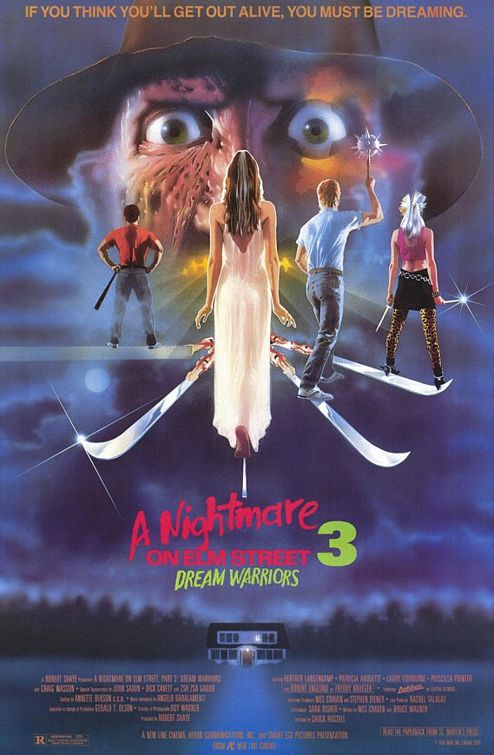
As soon as you see the above quote which opens “A Nightmare on Elm Street 3: Dream Warriors,” you know Wes Craven is back on board in some capacity. After directing the original, one of the all-time great horror classics, he bailed out of the first sequel which he felt betrayed the logic of Freddy Krueger’s character and how he existed in the realm of dreams. This third entry ended up defining the look of the rest of the series until “Wes Craven’s New Nightmare” came along. This one brought forth a Freddy who, while still scary, was more of a stand-up comic with one-liners flying out from his charred face in rapid succession.
“A Nightmare on Elm Street 3” starts off with the character of Kristen Parker (Patricia Arquette, in her film debut) having the first of many nightmares. Freddy’s attack on her is made to look like she tried to commit suicide, and it gets her thrown into a psychiatric hospital with others suffering from serious mental health issues. Of course, when doctors try to give her a sedative to help her sleep, she naturally freaks out and grabs a knife to fight off those who don’t have a clue as to what she’s really up against. This is where she meets up with Nancy Thompson, played once again by Heather Langenkamp.
We learn Nancy has since gone to graduate school where she studied extensively about the nature of dreams. Here she gets assigned to this psychiatric ward where young teenagers are being stalked by the man with razors for fingers. They are being cared for by Dr. Neil Gordon (Craig Wasson) who has long since gained their trust, but he has yet to realize how he can really help them. Nancy sees right away it has everything to do with Freddy, and when she shares this information with the kids they stand at attention and are shocked to realize they have all been dreaming about the same person.
With a budget of around $5 million dollars, the special effects are more impressive than you would expect them to be. It’s always a gas to see what people can do with very little money. There’s one great effect where Freddy comes to life as a marionette, and he immediately returns the favor to its creator by pulling out the veins in his arms to use as strings. Ouch! The sets never reek of cheapness, and the imagination put into this movie is always on display as we see the dreams of the different characters and the forms they each take.
Bringing Craven back to help write the screenplay was a smart move, and he changes the formula to keep it from being just another single kid being chased by Freddy. Also, these kids fight back to stay alive and prepare themselves a lot quicker than the others did in the previous films. One of the screenwriters on “Dream Warriors” is Frank Darabont who later made one of the greatest movies ever, “The Shawshank Redemption.” There is a good amount of work done with the characters here to where they are not your usual one-dimensional horny teenagers which make up the average “Friday the 13th” movie.
The movie also digs deeper into Freddy’s past to make us see how he came to be. Before this film, we knew he was a child murderer who was brought to court but got off on a technicality, and he was later burned by the parents of the town. Dr. Neil Gordon is visited by a mysterious nun who informs him Freddy’s mother, Amanda, was accidentally locked in an insane asylum with the most mentally unstable people one could ever find, or hope to avoid, on the face of the earth. Amanda was raped over and over, and this led to the conception of Freddy who, as the nun puts it, is “the bastard son of a hundred maniacs!” This would make a great title for a movie.
Unlike other horror movies, you care about the characters and what happens to them. Most of these slasher movies have stock characters you hate and root for to die. In all fairness, it makes watching them more fun to watch in a theater, but here the characters, while dealing with obvious stereotypes, are interesting in their own way. Some are geekier than others (don’t get me started on the “Wizard Master”), but they are more real than your average teenagers dealing with ballistic hormones.
“Dream Warriors” is also proof of how wet dreams never end the way we want them to. One of the characters has an understandable crush on a nurse, and he ends up getting seduced by her. Some people get so lucky, but not this kid. What happens to him gives new meaning to the term “tongue-tied.”
Also in the cast is Laurence Fishburne who did this movie before “Boyz N the Hood.” He plays male nurse Max who is one of the more down to earth characters you could ever hope to find in a horror movie. The great John Saxon also returns as Nancy’s father, Lt. Donald Thompson. His character figures prominently in the film’s climax as they find that the only way to defeat Freddy is by burying his remains in consecrated grounds.
It’s hard to believe this was Patricia Arquette’s first film. She has since gone on to a successful career and appeared in great movies like “True Romance,” David Lynch’s “Lost Highway” and “Boyhood” which won her the Oscar for Best Supporting Actress. She creates one of the more sympathetic heroines in a horror movie who has a mother that, of course, does not understand what her daughter is actually going through. No one does initially, but if they did, there wouldn’t be a movie.
And, of course, we have Robert Englund returning as Freddy. In many ways, this was the last “Nightmare” movie where Freddy felt like a truly threatening presence. Just the thought of him was scary, and you didn’t need to show much of him to prove that. After this movie, he became more of a standup comedian than anything else. We had to wait until “Wes Craven’s New Nightmare” for him to come across as a viciously scary presence again. Still, Englund embodies this character in a way no one else could.
While Freddy ended up having an artistic downslide from here, “A Nightmare on Elm Street 3: Dream Warriors” is still one of the best movies in this long-running franchise, and it’s always fun to revisit this entry whenever it is showing on cable.
On Thursday, August 16, 2012, Oliver Robins dropped by New Beverly Cinema to talk about the making of “Poltergeist.” Robins played Robbie Freeling, the boy who was terrified of that weird looking tree looming outside his bedroom window. These days Robins works as a filmmaker, but he explained how his time on the set of “Poltergeist” truly inspired him to make movies, and he helped debunk certain myths which continue to surround it years after its release.
Robins came up to the front of the audience after “Poltergeist” finished showing, and he talked about how he grew up at the New Beverly and discovered many movies which he might not have seen otherwise. He also remarked at how Steven Spielberg, who wrote and produced “Poltergeist,” gave him an 8mm camera as a present, and how the camera and the movie inspired him to become a filmmaker.
In talking about how he got cast, Robins said he had no real acting experience beforehand and that his only previous acting job was in a fertilizer commercial. The audition for “Poltergeist” was actually an open call which had hundreds of people coming down to be considered. Robins recalled having to wait for hours before he got inside to talk with the casting directors. When he did, they looked at him as being the true incarnation of Robbie as he talked about how he had lived in a haunted house while in New York.
Spielberg and director Tobe Hooper, however, were concerned because Robins couldn’t really scream, and they ended up getting a coach to help him learn how to. It got to where Robins was practicing his screams in his closet, and the neighbors began to wonder if there was any child abuse going on in his home. When he proved to the filmmakers he could indeed scream, Robins was informed he got the part.
When asked if a bond had formed between him and his fellow cast members, Robins told the audience “Poltergeist” was rushed into production and that there was no time for rehearsal. He did say, however, that JoBeth Williams, who played his mother Diane, really was a mother to him throughout the production.
One scene which really stands out is when Robbie’s father, Steven (played by Craig T. Nelson), teaches him how to count after lightning strikes to determine the distance between it and the sound of thunder. Robins remarked how Nelson was a comedy writer before he became an actor and that he made the set of “Poltergeist” very light-hearted as a result. Robins even remarked how working on the movie allowed him to stay up all night which he loved, and Nelson ended up telling him after one crazy night of filmmaking, “This is just another night in Simi Valley!”
Another famous scene from “Poltergeist” is when the tree comes through the window. Robins explained what ended up being 30 seconds of screen time where he got attacked by the tree ended up taking two weeks to film. Now this was back when digital effects were far from being a reality, so all the effects we see in the movie are real. Robins also pointed out there were several different trees being used for this sequence; one with roots, one where the branches reached out at him, and another which tried to eat him.
Robins described the tree sequence as being the most tedious and complex to film, and that he ended up spending much of the time being covered in molasses. He said being covered in that substance makes your body temperature drop precipitously and that he had to emote in his scenes in order create believability.
Now there is an infamous story on IMDB of how when Robins gets attacked by the toy clown, he got choked for real and yet Hooper and Spielberg thought he was really acting. It was later said that when Robins face began turning purple, the filmmakers rushed over to remove the clown’s hands from around his neck. To this, Robins response was, “Maybe that did happen, but I can’t remember. Maybe I blocked it out of my conscious mind.”
When asked what it was like working with his sisters who were played by Heather O’Rourke and Dominique Dunne, Robins said it was great and that they both felt like real sisters to him. He also remarked at how Hooper and Spielberg were cool to him and other actors about wanting to change their dialogue. As a result, there proved to be a lot of ad-libbing on the set of “Poltergeist.”
There is also this ongoing story of how there were two directors on the set of “Poltergeist.” While Hooper’s name is listed as the film’s director, many believe Spielberg had the most influence. Robins, however, cleared up these rumors once and for all:
“There was only one director on set, and that was Tobe Hooper. Spielberg did write the story, but Hooper was the only one who directed me. It does feel like a Spielberg movie and he did work closely with Hooper on this project. In many ways it was a team effort, but Hooper was the true director of ‘Poltergeist.’”
Robins was also asked what it was like filming the scene between him and Beatrice Straight who plays Dr. Lesh where she tells him what she felt the true nature of ghosts were. He said Straight made him feel like he was really talking with someone who knows about ghosts, and this kept their performances from ever feeling forced.
It was great to hear Oliver Robins talk about the making of “Poltergeist” and to hear him dispel several myths about the 1982 movie. Since making that classic movie, Robins has retired from acting and went on to graduate from USC’s film school to where he has since become a very gifted filmmaker in his own right. His work in the Tobe Hooper-directed movie will continue to stand the test of time.
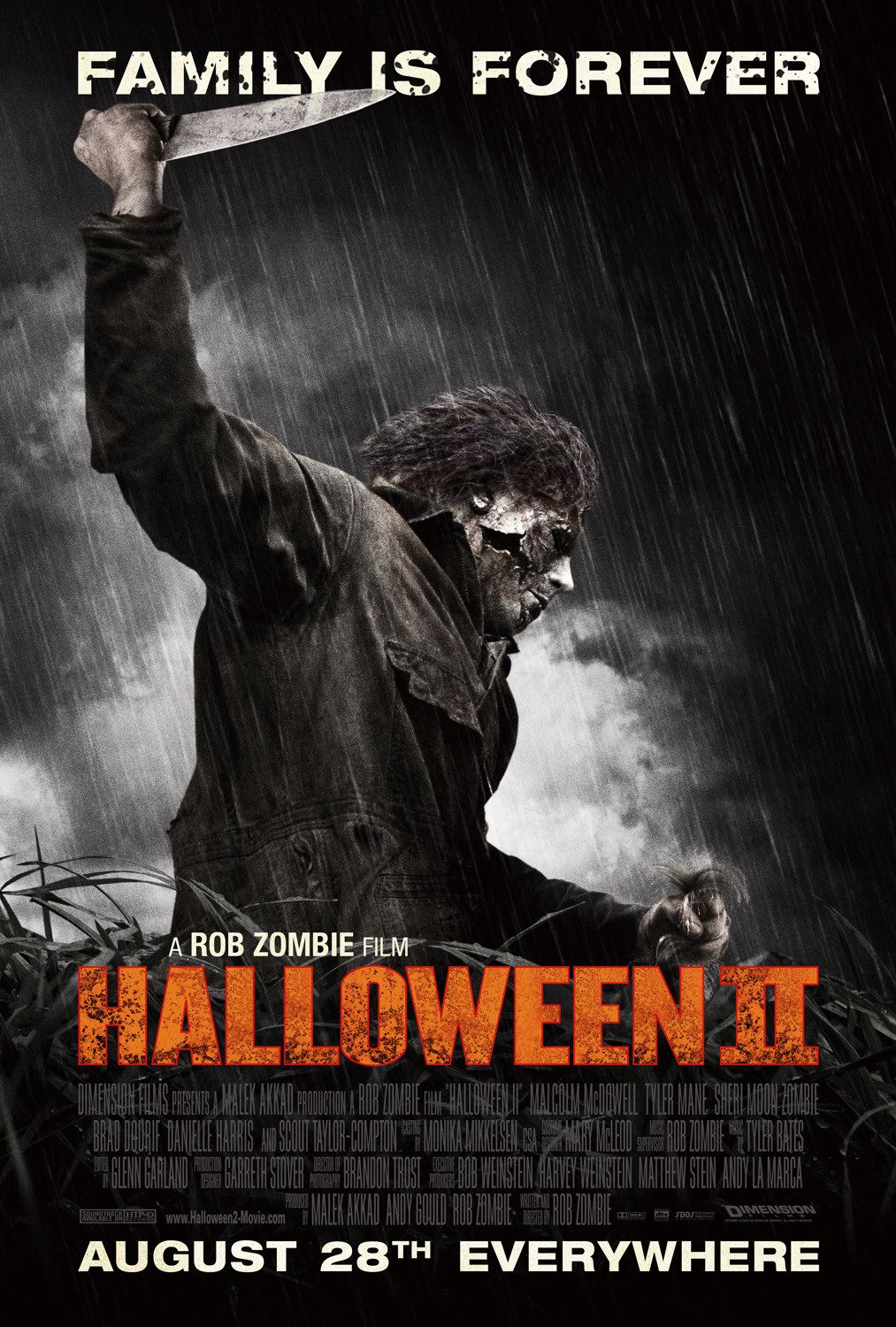
It’ll be interesting to see what people think of Rob Zombie’s “Halloween II.” With this sequel to his remake, he has not made your typical slasher flick even though it does contain some amazingly brutal and bloody moments. One crushing death plays like an homage to the fire extinguisher scene from Gaspar Noe’s “Irreversible.” I have also heard some complain because this sequel doesn’t even feel like a “Halloween” movie to them, but wasn’t that the whole point of this re-imagining? Do you really want the same old slasher formula we have long since gotten burned out on? Isn’t this why Zombie was brought on to do the remake? You know, to give this long running series a much-needed re-invigoration?
Zombie’s vision of Michael Myers may not be as scary as John Carpenter’s was, but I wasn’t expecting that to be the case. With Zombie’s take on the “Halloween” saga, what have here is more of a character study of how Michael became so infinitely evil, and this something we have seen much of in this never-ending franchise. “Halloween II” is definitely on a par with Zombie’s previous film, and everything comes around full circle to where there’s no doubt family is forever.
“Halloween II” starts moments after the previous film with Laurie Strode (Scout Taylor-Compton) walking down the street all bloodied up after shooting Michael dead at close range. However, it turns out Laurie didn’t kill him. The bullet must have bounced off his skull knocking him unconscious or something else along those lines. This seems to be a reasonable excuse to bring Michael back, and it is step from previous “Halloween” movies which managed to come up with ridiculous excuses to bring Michael back for another round with horny teenagers.
As Laurie is wheeled into the hospital crying hysterically, the first of many times she does so, shades of Rick Rosenthal’s “Halloween II” emerge, but this cannot be mistaken as a remake of sequel. Meanwhile, the drivers of the coroner van carrying Michael’s body end up smashing into a cow leaving them severely injured. This allows Michael to escape to live and see another October because, in the end, what is Halloween without Michael Myers?
Meanwhile, we see Laurie getting patched up in surgery, and the extent of her injuries is unsettling. The detail given to the doctors working on her is horrific very realistic, just the way Zombie wants it to appear. You look at Laurie’s mangled body, and you think to yourself it’s a miracle she lived through this dark, dark night.
“Halloween II” then moves to a year later as Laurie, still deeply traumatized by that horrific evening, struggles to go on with her life. She has since been adopted by Sheriff Lee Brackett (Brad Dourif) and lives with him and his daughter, Annie (Danielle Harris). While the previous movie was told through Michael’s eyes, this one is seen through Laurie Strode’s perspective, and she is no longer the person she once was.
One of the big differences with this sequel is the way it was filmed. Whereas Zombie’s “Halloween” was filmed in 35mm, he instead filmed “Halloween II” is in 16mm which gives everything a much harsher edge. This worked very effectively for him on what is still his best movie, “The Devil’s Rejects,” and it makes the killings in “Halloween II” feel all the more brutal. Michael doesn’t just slash his victims; he pounds them to a bloody pulp.
Tyler Mane once against gives us the most lethal and threatening Michael Myers ever unleashed on the big screen. Being as tall and hulking as Mane is, it’s a wonder why anyone would be foolish to take him on. Here’s another interesting thing about Michael in this one, he has a beard. That’s right, for the first time ever we get to see this iconic character with facial hair. This is ironic because Michael has proven to be very useful with knives to where I am convinced he can give himself the closest shave without ever having to use any shaving cream. Then again, Michael has more on his mind than facial hair.
Taylor-Compton’s Laurie Strode is not the chaste and resourceful character Jamie Lee Curtis gave us in the original, but she digs deep into this role and takes Laurie to places no ordinary person would dare go. You think she is at bottom when the movie starts, but she’s not anywhere near it. Taylor-Compton makes you care about Laurie as she comes to the realization of who she really is, and you want her to escape the abyss she is drowning in. You want to help her.
One especially good performance comes from Brad Dourif as he gets more screen time here. The sheriff he portrays here is not your typical clichéd stupid cop who makes all the wrong decision, but instead a caring adult and who is constantly looking out for Laurie and Annie. Dourif is great here in a way you would not usually expect an actor to be in a film like this, and he is one of the most underrated character actors working today.
That’s the great thing about Zombie’s “Halloween” movies; he is not out to give us the usual slasher flick. With these two films, he has taken the time to develop his characters to where they are not the usual pack of one-dimensional stereotypes the horror genre keeps relying on. While he still does employ the usual white trash characters who utter disgusting dialogue, it is clear he is moving beyond them now. This shows growth on his part which makes me look forward to his future work.
Zombie also conjures up some truly weird imagery throughout as we get a closer look into Michael’s deeply disturbed psyche. Sheri Moon Zombie returns as Michael’s mother, but this time she speaks to her murderous son from the grave and convinces him that if he kills Laurie, he can bring the whole family back together. Some may still criticize her acting abilities, but she is better than people tend to give her credit for.
Danielle Harris also returns as Annie Brackett, but Zombie doesn’t have her doing the same old things she did previously. Considering how Annie almost died, she is nowhere as foolish this time around (not completely anyway). Annie, along with her dad, is desperate to life Laurie out of her emotional abyss even as Laurie makes it incredible for them to even try to do so.
But of course, we cannot forget Malcolm McDowell who returns as Dr. Sam Loomis. This time around, the “Clockwork Orange” actor gives us a Sam Loomis who is a pure asshole getting high off the fame he obtains by exploiting his involvement with Michael and his family. Loomis is no longer the helpful psychiatrist he was before and is instead a profiteer off the misfortunes of others. His sudden change of heart towards the film’s climax may feel a little forced, but McDowell sells it to where we really feel his pain when he comes to accept the damage he has wrought on others.
The brilliant sound design in “Halloween II” also needs to be mentioned as well. Michael doesn’t just crash through windows and walls in this one. You feel him bashing his way through everything in his path, and it this movie a visceral thrill the other “Halloween” sequels could only dream of offering. Zombie is not out to give you a bunch of cheap scares, but is instead out to horrify you as much as possible as we suffer along with Laurie as Michael continues his endless pursuit of her.
Zombie also does a better job with suspense this time around, and it really boils in certain moments when our anticipation gets the best of us. We know Michael is going to strike, and we fear the bloody damage we know he will brutally inflict. I’m glad Zombie came back to do this sequel even though he originally wasn’t planning to. Having anyone else direct this follow up would have been a mistake.
John Carpenter’s “Halloween” was a one of a kind film which was never intended to start a horror franchise. Zombie is not trying to outdo Carpenter, but to merely make Michael Myers and all these characters his own. While “Halloween II” is not a masterpiece, he does stay true to his vision of this unstoppable monster and improves on his previous film quite a bit.
NOTE: The DVD and Blu-ray release of “Halloween II” contains the director’s cut of the movie. This version changes a few things and adds more scenes which focus on the characters more, and it’s even better than the theatrical version as it gives you an even clearer sense of what Zombie was trying to accomplish.