No, I Haven’t Seen It Until Now: ‘Dracula’ (1931)
Dracula 1931 poster

While at a party celebrating the DVD, Blu-ray and Digital release of “Ouija,” I was one of several people who won the DVD box set of “Universal Classic Monsters,” a complete 30-film collection of all the movies from Universal Pictures’ Monster Universe which played in theaters from 1931 to 1956. These movies included such iconic characters as Frankenstein, The Wolf Man, The Mummy, The Invisible Man, Phantom of the Opera, and Creature from the Black Lagoon. With the occasion of Halloween rapidly approaching, I decided to sit down and watch the 1931 English-language version of “Dracula.” While I am familiar about Count Dracula and how he says “I want to suck your blood” on what seems like a regular basis, this marks the first time I have taken the time to sit down and watch this particular movie.

Having grown in a time of horror movies like “Jaws,” Halloween,” “Friday the 13th,” and “A Nightmare on Elm Street,” I wondered how this would affect my enjoyment of this horror classic which was first released back in 1931. Watching “Dracula” today made me wonder if I would react to it in disdain, and I came out of it wondering how I would have reacted to it were I alive and watched it when it first came out. Nevertheless, I can see why this version of “Dracula” remains such an unforgettable cinematic classic. While certain aspects of its production seem cheap by today’s standards (we all know it took a fishing pole to make the bat fly), time has been kinder to this version than I expected.

“Dracula” begins with a group of people riding in a stagecoach to a local village, and among them is Renfield (Dwight Frye), a solicitor on his way to Transylvania to visit Count Dracula for business purposes. The mention of Dracula’s name, however, has everyone reacting with wide-eyed expressions (and we are talking really wide) as his reputation for sucking blood is never in doubt, and the townspeople beg Renfield to reconsider going to his residence. But unlike some stupid kid in an 80’s horror flick eager to tempt fate because he thinks he is invincible, Renfield has actual business to do with Dracula, so it’s understandable how the man will not be deterred from meeting with the man everyone rightfully believes is a vampire. Of course, by the time Renfield discovers this, it is too late.

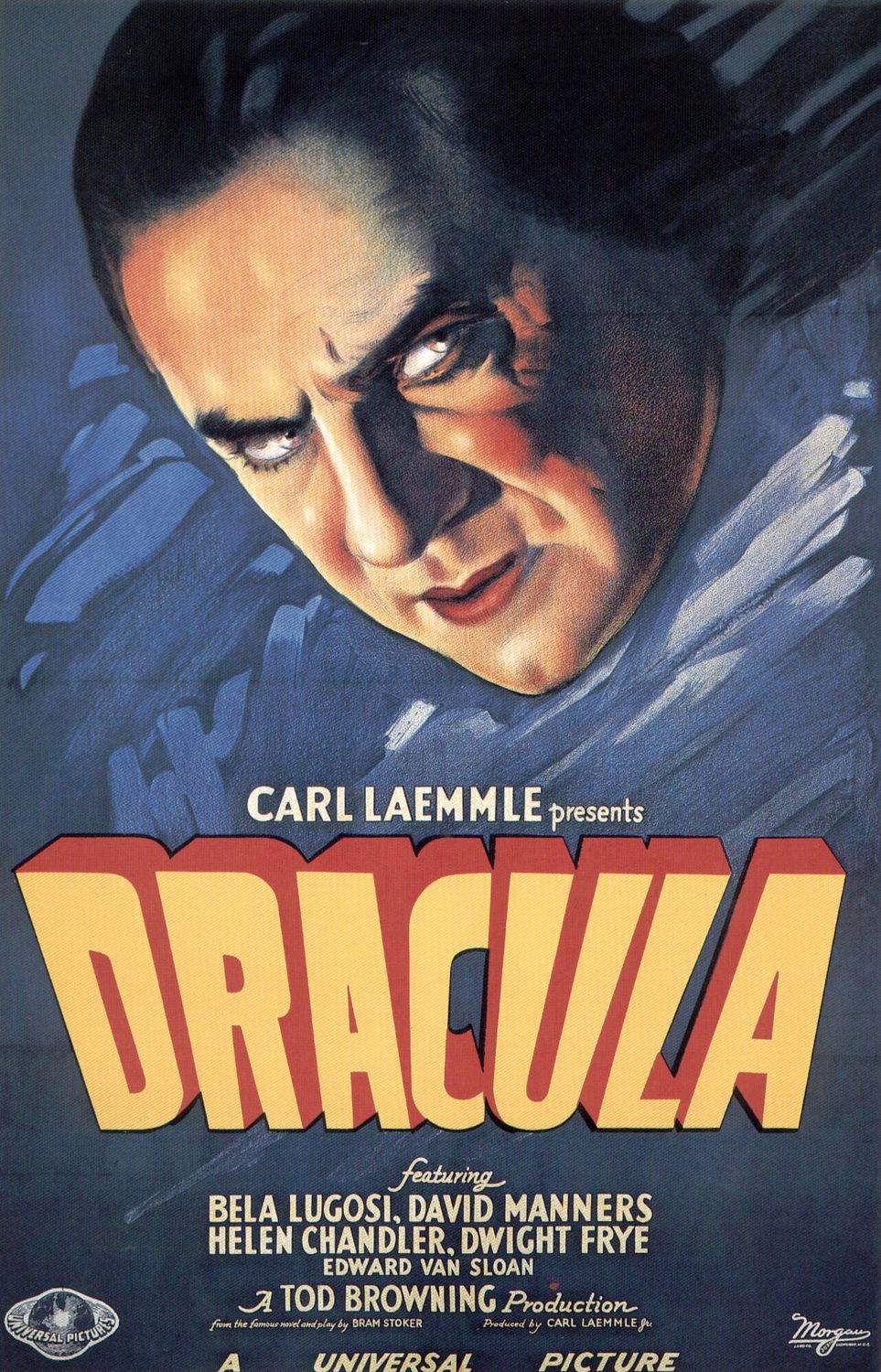
The first thing I want to talk about in regards to this particular version of “Dracula” is the man who plays Bram Stoker’s iconic character, Bela Lugosi. Before watching this movie, I was more familiar with what happened to Lugosi’s career after he played Dracula than what came before it. A victim of typecasting, he would later descend into oblivion to where he appeared in Ed Wood’s infamous films, “Plan 9 From Outer Space” being the most memorable, and people in Hollywood had long since assumed he had died. Lugosi would be memorialized years later by the late Martin Landau who played him in Tim Burton’s delightful and thoughtful biopic “Ed Wood.”

But seeing him here made me realized just how perfectly cast Lugosi was why he remained forever typecast as a result. From his first appearance, Lugosi is an insidiously frightening presence as all he has to do is stare in the distance to give you an idea of how threatening he can be if you dare cross him. When he claims his first onscreen victim, he simply waves his arm to let his three undead wives know this one is his to turn. When it comes to movies, this is an example of showing power as the character doesn’t need words to show how commanding they are.

Lugosi is wonderfully mesmerizing throughout “Dracula” as he just needs to give off a look with his eyes to let you know what is going on in his obsessive mind. Every physical step he takes is tinged with a sheer menace, and the actor also benefits from the wonderful cinematography by Karl Freund, whom many consider an uncredited director on this film. When he tells a character to “come here,” the power in his voice more than suggests you should take his order very, very seriously as he doesn’t need any additional dialogue from David Mamet or Aaron Sorkin.

It should be noted how when this film was made, Hollywood had just emerged from the era of silent movies.  As a result, the acting is more emotive than the kind we often see in movies today. The transition from silent films to talkies was not without its bumps, so the actors we see here are still used to a process of trying to get things across to an audience by acting out emotions instead of inhabiting their characters. Still, I did get a kick out of Dwight Frye’s performance as Renfield as he is clearly having a blast playing an infinitely possessed human being whose suffering, caused by a vampire’s bite, comes close to equaling Nicolas Cage’s present-day theatrics.

“Dracula” was directed by Tod Browning, a filmmaker who these days is better known for his 1932 cult classic, “Freaks,” one of the movies which is impossible to erase from the mind once you have seen it. I really liked how he used silence to the film’s advantage instead of giving us a music score. The tension is still taut as he follows Dracula’s every step, and this is a vampire who moves ever so gracefully because he doesn’t have to move quickly for anybody.

There was a score composed for the film by Philip Glass in 1998 and performed by Kronos Quartet, and you can tell it’s a Philip Glass score right from the start. It suits “Dracula” well, but I enjoyed the film more without it.

If there is anything disappointing for me about “Dracula,” it was the ending. Now this is largely the result of me being spoiled by countless slasher movies from the 80’s, but I think things could have been handled in a far more spectacular fashion than just driving a stake into a character’s heart and the happy couple running off together. It seems such like am abrupt ending to a classic motion picture, but then again, I am watching it close to a hundred years after its release.

There are many other versions of “Dracula” I need to watch now as I am eager to see how this character has evolved cinematically from one generation to the next. Browning’s 1931 version is a good one to start with, and lord knows there are also many other classic horror movies I need to watch. In order to better understand and appreciate the present, we at times have to go back to the past to discover how things got started.

* * * ½ out of * * * *

‘Paranormal Activity 4’ Sees the Franchise Running Out of Clever Ideas

Paranormal Activity 4 movie poster

With “Paranormal Activity 4,” the law of diminishing returns has finally caught up with this found footage franchise. Granted, all the films have revolved around the same old story of people taping themselves and their homes while they sleep so they can see what goes bump in the night, but this same old story has now become all too familiar for me. This sequel does have its moments, appealing characters and some clever twists, but the scares are a hell of a lot easier to spot this time around.

Whereas “Paranormal Activity 2 & 3” revolved around the events of the original film or came before them, “Paranormal Activity 4” marks the franchise’s first real sequel. Moving us forward to the year 2011, 5 years after the events in Parts 1 and 2, the story takes place in a small neighborhood in Nevada where the very pretty Alex (Kathryn Newton) lives with her parents, who are having marital difficulties, and her younger brother Wyatt (Aiden Lovekamp). Alex appears to be pretty happy for a teenager, and she has a cool boyfriend in Ben (Matt Shively) with whom she confides in every night via webcam.

But, of course, things are destined to get weird as they always do in a “Paranormal Activity” movie, and the weirdness begins with the appearance of a young boy named Robbie (Brady Allen) who appears one night in Alex’s tree house. Robbie is the son of their neighbor who lives across the street, and his mother has just been hospitalized for some unknown reason. As a result, he is sent to stay over with Alex’s family until she recuperates. After that, it doesn’t take long for those ominous sounds and loud thumping noises to start haunting this suburban household.

With each “Paranormal Activity” movie, the filmmakers have managed to use different forms of technology to tell the story like video cameras and surveillance equipment. In this fourth movie, they use several: laptop computer cameras, Kinect, a MacBook, smart phones and a Canon XA10. The Kinect proves to be especially interesting as it uses some kind of scanning system which puts out these green lights to map the game player’s physical environment. Those same green lights end up capturing sights not easily visible to the human eye. There’s also the automated voice which keeps saying “FRONT DOOR OPEN.” When you hear that, you know things are going to get bad.

I really liked the way the younger characters were drawn out here. Kathryn Newton is especially appealing as her character of Alex shows a maturity her mother and father seriously lack. I also enjoyed Matt Shively’s performance as Ben, and not just because he shares the same first name as me. The boyfriends in these “Paranormal Activity” movies threaten to be seriously annoying at times, but Ben has just the right amount of cool to keep him interesting. Furthermore, Alex and Ben are wearing Beastie Boys and Metallica t-shirts, so you have to applaud their taste in music!

As for Alex’s parents, I spent most of this movie wanting to smack them in their faces. They are made out to be like some generic bickering couple, and they keep making foolish assumptions and decisions to where you just want to yell at them. When that chandelier comes crashing down in front of Alex (and I know I’m not spoiling anything because we’ve all seen this in the trailers), you’d think they would be a little more suspicious about this strange kid they let stay in their house. It’s like some demonic force has to come out of the ground and throw fireballs at this couple before they finally get the picture. This is nothing against Alexondra Lee and the late Stephen Dunham (who passed away from a heart attack in September 2012) as they do their best with the material they’re given, but the “Paranormal Activity” movies have succeeded in giving us characters who feel real, and these two feel like cardboard cutouts from other horror flicks.

Directors Henry Joost and Ariel Schulman, who directed “Paranormal Activity 3,” return to helm this fourth entry. You can feel them struggling to keep the material fresh here, but the series is now becoming more formulaic than ever before, and things become frustratingly predictable as a result. They also rely on cheap scares too much this time around. This was a problem in the previous film as well, but here they just go overboard to a very annoying extent.

“Paranormal Activity 4” does get better as it goes along as things become more eerie, leading to a climax which feels predestined but still makes you jump out of your seat. There is a lot of mystery still left in this series as the whereabouts of Katie and Hunter remain hard to pin down, and this entry is not about to answer all the questions we have. As for the next “Paranormal Activity” movie, stay through the end credits and you will get a glimpse of what it may be.

But as of now, this franchise is running on fumes. The fact these “Paranormal Activity” movies have lasted this long is a testament to our collective fears of those weird sounds we hear late at night when all our electronic distractions have been turned off. However, “Paranormal Activity 4” proves to be a lot less viscerally frightening than its predecessors as we’ve become all too familiar with how these movies work. For the next one, Blumhouse Productions and Paramount Pictures really need to shake things up, and I don’t mean in the way they handle the “demand to see it first” crap. I can’t believe people are still buying that malarkey.

* * ½ out of * * * *

‘Paranormal Activity 3’ Avoids the Curse of the Prequel

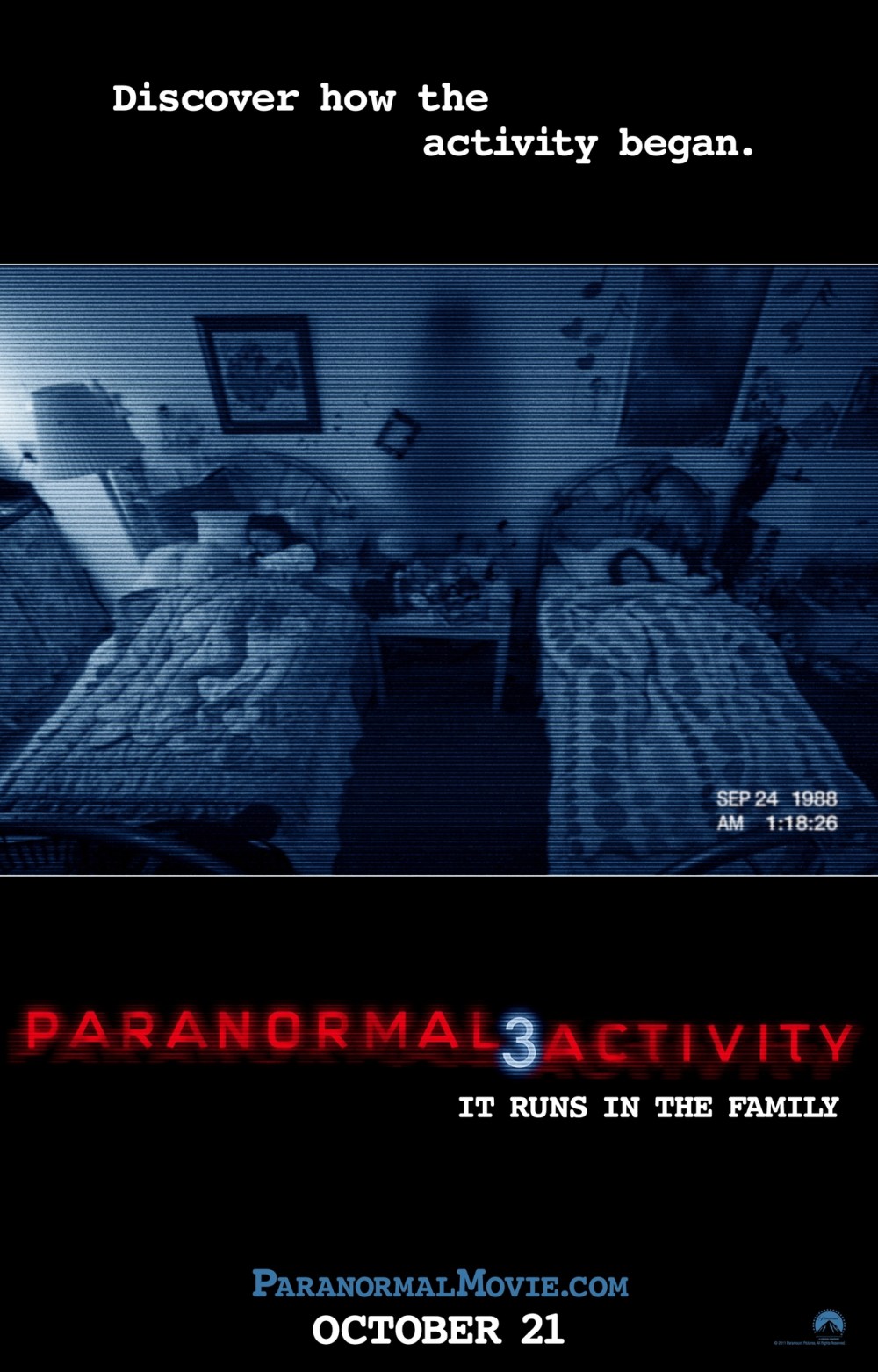
Paranormal Activity 3 movie poster

In a lot of ways, “Paranormal Activity 3” shouldn’t work. It’s the third movie in an astonishingly popular series which eventually replaced “Saw” as the official franchise for the month of October each year. The third in a trilogy is also when the series starts running out of creative juices and becomes bound by an increasingly worn out formula. Maybe it’s time to move on to the next big thing in horror, right? Not quite.

Despite the inescapable feeling of déjà vu, “Paranormal Activity 3” still has the power to scare and unnerve viewers, and I knew exactly what I was doing when I watched it at night. This one comes from the makers of “Catfish,” and they follow the familiar found footage setup to where nothing may be new, but they still generate a number of jump-out-of-your-seat moments which will freak out even the most jaded of moviegoers.

Whereas “Paranormal Activity 2” was a prequel and a sequel, this third movie is a flat-out prequel which takes place 18 years before the events of the original. Sisters Katie and Kristi, played by Katie Featherston and Sprague Grayden in the previous films, are seen here as children who live with their mother Julie (Lauren Bittner) and stepdad Dennis (Christopher Nicholas Smith). Things get weird, however, when Kristi gets an invisible friend named Toby, and strange occurrences develop in their home with increasing volatility.

Since this prequel takes place in 1988, the filmmakers get to work technology now seen as prehistoric as this was a time of video cameras and VHS tapes. Part of it serves as a needless reminder of how Betamax got its ass kicked years ago. While the technology is limited compared to what the characters had at their disposal in the previous films, this forces everyone here to get creative with what they have.

Once again, the man of the house (and it’s always the man) sets up a barrage of video cameras in various rooms to figure out what craziness is going on in order to put a stop to it. The only disadvantage is VHS tapes only allow for 6 hours of recording at the most. But somehow the spirits do make their appearance before the tape runs out which is rather convenient for everyone involved.

The one new thing in “Paranormal Activity 3” is how Dennis comes up with the idea of attaching one video camera to the base of a fan. As the camera veers from side to side, we have another reason to be tense about what we’re watching. Will there be something on the other side about to jump out at us? This quickly becomes a clever device which distinguishes this film from its predecessors.

“Paranormal Activity 3” does, however, get off to a shaky start. There were a bunch of cheap scares which, whether they worked or not, had me worrying this prequel would be overrun with them. While they provided the audience with a several good jolts, it made me wonder if the series was beginning to descend into self-parody. Once this happens, the series might as well end. Fortunately, things straighten out as the happenings inside the house become increasingly unrelenting in their viciousness.

There are many moments which had my hair standing on end. We see furniture moving around by itself, a character running into something not visible, and someone’s hair getting grabbed. “Paranormal Activity 3” may seem like business as usual, but this business is still producing terrifying moments just as things are beginning to look old. Like the previous entries, I’m not entirely sure how the filmmakers pulled off certain special effects (the one at the very end is very painful to witness), and I don’t want to know for fear of breaking the illusion.

I recently watched “The Thing” which was a prequel to John Carpenter’s 1982 film. It reminded me of the problems with prequels in general as you know from the start who is going to live and die, and the suspense gets diluted as a result. The advantage “Paranormal Activity 3” has is, while we know the little girls will survive and live on in future installments, we aren’t sure what the fate of the adults will be. Katie and Kristi only reveal so much about what happened to them as children in the second film, so we are left to guess if any adults hanging around these kids will ever live to see tomorrow. Had the girls revealed the exact chronology of events, this prequel would have been screwed from the get go.

Many critics have voiced that they have had their fill of the “Paranormal Activity” films it, but the formula behind them still works very well and has me pinned to my seat. That invisible spirit can still scare the crap out of me, and it made me look forward to “Paranormal Activity 4.” Granted, Paramount Pictures and Oren Peli can only keep this franchise going for so long, but they have made it this far without losing any of the power which made the original so damn scary. Here’s hoping the filmmakers don’t trip over themselves in the future. We all know what happened to “Blair Witch 2: Book of Shadows.”

By the way, you’ll never look at a Bloody Mary (the drink I mean) the same way after this prequel is over. Watch the movie and you’ll see what I mean.

* * * out of * * * *

‘Paranormal Activity 2’ Proves to be as Effective as the Original

Paranormal Activity 2 movie poster

We had every reason to expect the sequel to the surprise hit “Paranormal Activity” would be horrid. Movies like this come out of nowhere and make more money than anyone could have ever expected, so a sequel has to follow, right? God forbid the money train stops at just one movie! Even in the new millennium, greed is still king. Most people were expecting this to be as terrible as “The Blair Witch Project 2: Book of Shadows” which itself was a giant insult to its predecessor, hence giving more fuel to the “Blair Witch” haters who somehow felt tricked out of their money. Besides, how can you expect a story like this to remain fresh, let alone terrifying? We weren’t expecting what got hurled at us last time, literally and figuratively speaking, but now we feel more prepared than ever to scan every scene of this sequel in an effort to predict when the scares come.

Well, it is to my astonishment to say “Paranormal Activity 2” is no “Blair Witch 2.” Heck, it’s not even an “Open Water 2” or a “Jaws 2” or even an “Exorcist 2” for that matter. This sequel turns out to be as scary and unnerving as the original, and it respects Oren Peli’s film for what it was and does nothing to detract from it. In fact, this sequel adds additional layers to the original which enhances the experience of watching it all the more.

“Paranormal Activity 2” opens up in Carlsbad, California where we meet Dan and his second wife Kristin as they arrive home with their newborn son, Hunter. Once there, we also get to meet Ali, Dan’s daughter from another marriage, the family housekeeper and nanny Martine, and the loyal family dog Abby. A couple of days later after going out of town, they come back to find the house ransacked, but nothing has been stolen. As a result, Dan has security cameras installed to make his family feel safe, and maybe even catch whoever did this. After that, things get increasingly scary as the ominous hum which haunted Katie’s and Micah’s abode starts to show its presence in the family dwellings, and things begin to go bump in the night. Just like the original, the men never take the women or their fears seriously, and it makes the rest of us guys look like bad boyfriends and husbands.

Katie Featherston and Micah Sloat return from the first movie, but Katie is the one who is more prominently featured. It turns out Kristin is Katie’s sister, and they both shared a scary past as they were terrorized by an evil spirit. Both are hesitant to talk to explain what they went through as children because the thought of it coming back is too terrifying to consider.

The really clever thing about “Paranormal Activity 2” is it turns out to be a prequel as well as a sequel. It takes place several weeks before the events portrayed in the original, and the ending more or less coincides with what Katie and Micah went through. This, I thought, was an inspired decision because it gives more weight to not just this film, but the original as well. This is not just some dumb follow up with the same old story filled with unrelated characters making the same stupid mistakes. The fate of this family is very much interlocked with the fate of Katie and Micah, and their inevitable doom makes this sequel all the more haunting.

Whereas “Paranormal Activity” had just the one camera which Micah put in his and Katie’s bedroom for the most part, this second film has us looking through various security cameras which record the house from different angles, each revealing little things going on around the house. Then there are other scenes where characters are holding the camera and making us see everything as they search through the house late at night. The security cameras by themselves present images freaky enough to gives us goose pimples, but when we get the first-person perspective, things get even more intense than they already are.

You know what really gets to me about these movies? The silence around the house and the lack of a film score. For me, being alone in a room or a house without any noise gets my anxiety up and running as I suspect something bad is about to occur which I won’t be able to prevent from happening. Both “Paranormal Activity” movies understand this anxiety perfectly and play on it without ever relying on blood and gore. Plus, your home is where you and your family are supposed to feel the safest. What happens when the safety of your home is violated? Where can you feel safe after that?

The choice of director for “Paranormal Activity 2” is a surprise and not who I expected. Tod Williams is best known for directing “The Door in The Floor,” a criminally under seen drama with powerful performances by Jeff Bridges and Kim Basinger. How the producers thought of Williams for this film is beyond me, but he gives this sequel a strong suspenseful tone, and he keeps the tension at a high pitch throughout. Williams also gives us several excellent jump out of your seat moments which will make your hair stand on end, especially the one in the kitchen (trust me, you’ll know it when you see it).

The performances are nothing spectacular, but they are perfect for a film like this. I also have to give special props to Katie Featherston and Micah Sloat who still succeed in acting ever so naturally in front of the camera. After the first film, you’d think they would have a tougher time with this and be even more self-conscious than they were before. But they both act normal as if the first movie never happened which I found very impressive.

I’m not sure I can go on describing “Paranormal Activity 2” for fear of giving away too much. I was pleasantly surprised at how effective this sequel was because I expected it to be nothing more than a scam designed to produce a bigger profit than the original. The surprise of the first “Paranormal Activity” is gone, and there’s not much which is new brought to the material here. This sequel also has end credits which the original did not, although there is an elongated pause for those who want to escape the theater before they come up. But the premise is still very scary for those who were infinitely terrified by the first film. I left the theater with my nerves jangling, feeling very much like I did after I saw the original. A good deal of care was put into making this sequel work because everyone was prepared to tear it apart even before they saw it.

If you liked the first “Paranormal Activity,” I think you’ll like the sequel. For those of you who didn’t like it and can’t understand what the fuss was all about, don’t even bother.

I am also proud to say I didn’t make the same mistake of watching it before I went to bed like I did with the original. I saw it in the early afternoon when the sun was still out. It still freaked me out though. Getting to sleep that evening was not any easier.

* * * ½ out of * * * *

Tom McLoughlin Revisits ‘Friday the 13th Part VI: Jason Lives’ at New Beverly Cinema

Tom Mcloughlin Jason Voorhees tombstone

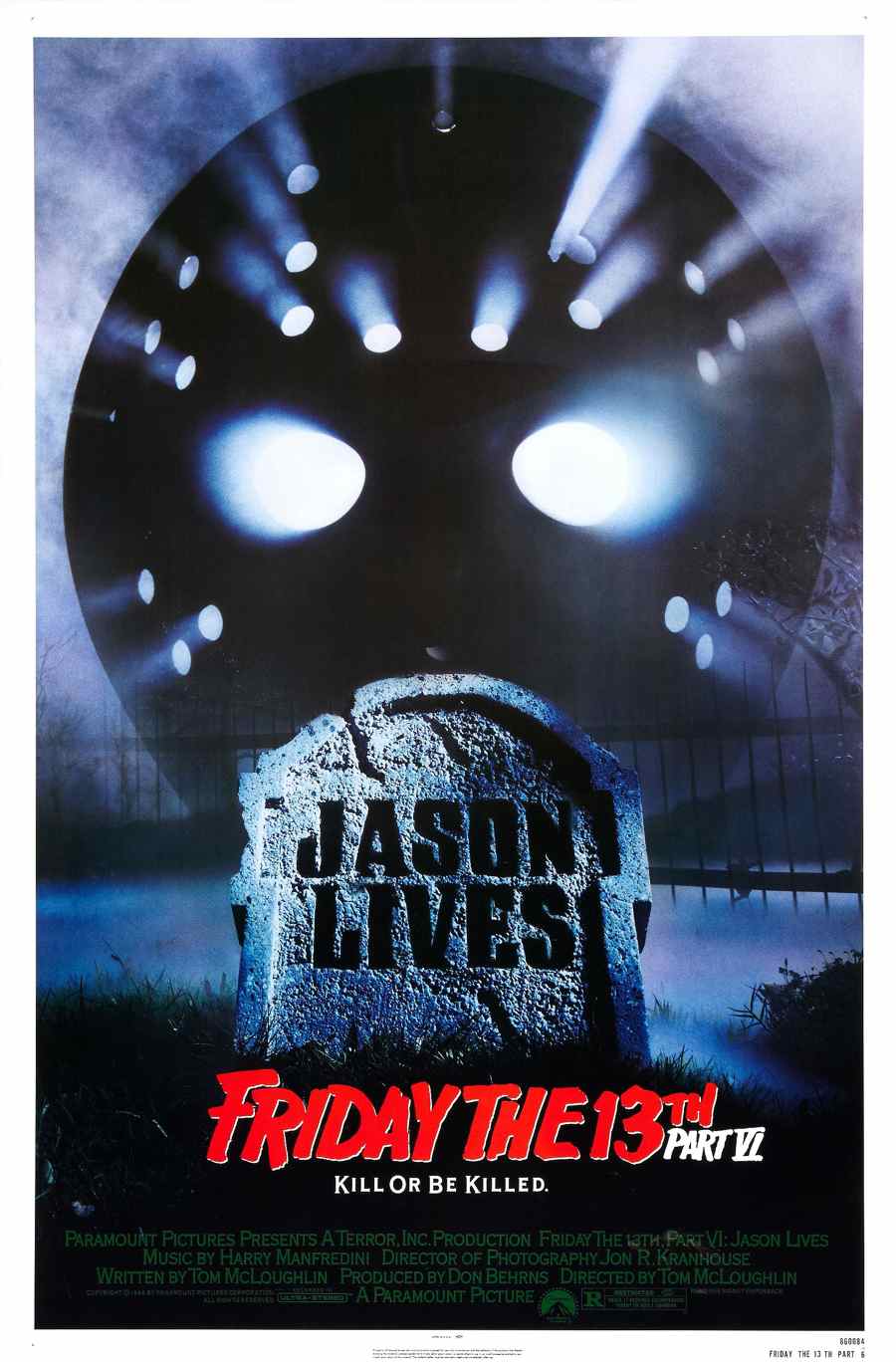
On Friday June 5, 2009, Phil Blankenship presented a triple feature for horror fans at New Beverly Cinema with “Friday the 13th Parts IV, V, & VI.” The fourth film was called “The Final Chapter,” and seeing its title on the screen induced uncontrollable laughter in every member of the audience for obvious reasons. The fifth film, “A New Beginning” remains the most despised of the sequels as it tried to continue to the series without Jason, and it proved to be an embarrassing failure. “Jason Lives,” on the other hand, is one of the best in the series thanks in large part to the great sense of humor the filmmakers brought to it. All the sequels which came after this one turned out to be completely stupid and unintentionally hilarious with a few exceptions. In retrospect, these three movies marked the franchise’s peak as well as the start of its downward spiral.

As time went on, these three “Friday the 13th” sequels became known as the Tommy Jarvis trilogy. We first meet Tommy Jarvis in “The Final Chapter” where he is played by a very young Corey Feldman and spends his time playing on his computer or indulging in his hobby of making masks. Tommy ends up killing Jason with his machete, and then he can’t get himself to stop bashing him with it. In “A New Beginning,” we see an older Tommy, now played by John Shepherd, still dealing with the intense psychological damage his encounter with Jason thrust upon him. And then in “Jason Lives,” Tommy (this time played by Thom Matthews) is convinced Jason is not dead despite having been buried for years. But of course, he ends up accidentally resurrecting Jason and has to take him down yet again.

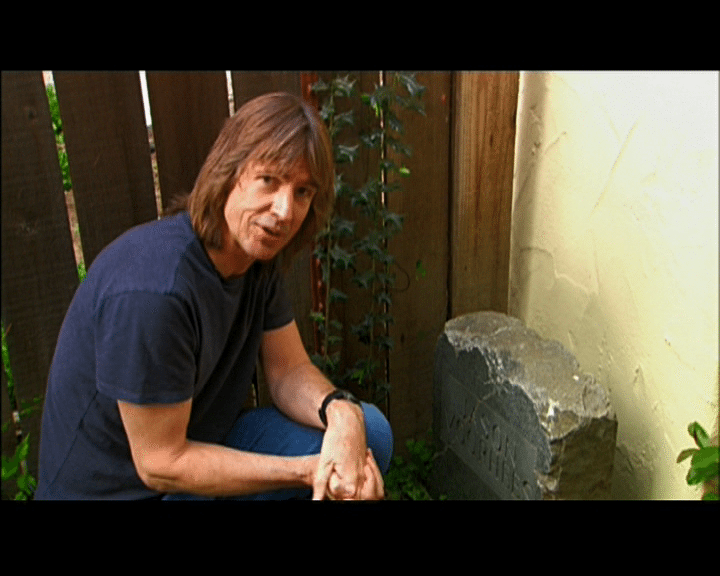
Blankenship gave the crowd a special treat by bringing out the writer/director of “Friday the 13th Part VI: Jason Lives,” Tom McLoughlin, to talk with the audience about its making. McLoughlin started off by saying how glad he was to be at New Beverly Cinema as he got all of his film education here, that shooting this sequel remains the most fun he has had as a filmmaker, and he confessed he has not seen a print of it since 1986.

Friday the 13th Part VI Jason Lives poster

When first hired to direct “Jason Lives,” McLoughlin admitted the only “Friday the 13th” movie he had seen previously was the first one. As a result, the executives at Paramount Pictures forced him to watch the other four. With “Jason Lives,” McLoughlin was intent on ignoring the events of “A New Beginning” because he said it really pissed him off. The audience at the New Beverly was in complete agreement with this, and they applauded him loudly.

McLoughlin also said he had originally planned to introduce Jason’s father, Elias Voorhees, into this sequel in order to give the iconic slasher more of a back story. We all know about his crazy mother, but not much has ever been said about Jason’s poppa. But Paramount Pictures was not crazy about this plot element because they weren’t sure which direction it would take the franchise in, so they put the kibosh on it. However, the DVD reissue of “Jason Lives” does have the film’s original ending with Jason’s father in the form of storyboards, and it is a must see for fans.

One fan asked McLoughlin how he got Alice Cooper to contribute songs to “Jason Lives.” It turns out Cooper is a big fan of the “Friday the 13th” series and was more than happy to participate, even allowing McLoughlin to use any of his songs in the movie. Cooper gave “Jason Lives” its end title song of “The Man behind the Mask,” but McLoughlin said the original version was much faster.

Blankenship asked McLoughlin the inevitable question about how he dealt with the Motion Picture Association of America (MPAA) and of what it took to get “Jason Lives” an R rating. Surprisingly, the MPAA didn’t want McLoughlin to cut scenes, but frames instead. McLoughlin said the frames didn’t have blood or gore in them, but the MPAA found them to be too intense. In the end, he made no secret he wanted this movie to be a “huge bloodbath.”

Thom Matthews was cast as Tommy Jarvis in “Jason Lives” as McLoughlin wanted someone who seemed more heroic. Plus, John Shepherd, who played Tommy in “A New Beginning,” didn’t want to return because, as McLoughlin put it, “he got all religious.” Shepherd had since become a born again Christian and his church didn’t feel like doing a slasher movie was in his best interest.

With this particular “Friday the 13th” sequel, McLoughlin admitted he tried to give it a strong sense of humor. This is apparent right from the start when you see how the opening title shot is a clever homage to the gun barrel sequences in the James Bond movies. Indeed, you come out of this sequel feeling like McLoughlin actually took the time to work on the script instead of just throwing something together at the last minute. Plus, the interplay with the kids, and this is one of few movies in this franchise which actually had kids in it, was great like when they hide under the beds and one boy asks another, “So, what were you going to be when you grew up?”

Ron Palillo, who plays Allen Hawes, is best known for playing Arnold Horshack on “Welcome Back, Kotter.” This got McLoughlin talking about how everyone in the city kept calling Palillo “Horshack” wherever he went. Looking back, he said this made him realize how hard it is for actors to get past a character they played which was so popular.

Another fan asked McLoughlin if he had any favorite on-set stories he could share. This got him to talk about a stunt man who came on the set dressed like Evel Knievel and said, “I’m here to crash something. So what do you want me to do?” The stunt he performed was an especially dangerous one as it required him to drive a big RV (is there any other kind?) over a ramp at 90 miles an hour. McLoughlin said this was the scariest time he ever had on a film set as he worried this guy would get killed. Fortunately, the stunt came out perfectly with the RV crashing on its side the way it was supposed to, and the stuntman pulled himself out of the wreckage and said, “Did I do alright?”

It turns out there were different endings thought up for “Jason Lives,” but McLoughlin made it clear he always intended for Jason to end up back in Crystal Lake. One of those endings did include Jason’s father bringing him back to life with voodoo magic. In the end, McLoughlin decided to keep it simple and used the image of Jason’s good eye suddenly opening up wide to show the audience that, surprise, he’s not done killing camp counselors yet.

As for the man behind the mask, two actors were hired to play Jason. The first was Dan Bradley who has since become known as the premier stunt coordinator for Hollywood movies like the Jason Bourne franchise. The powers that be at Paramount Pictures, however, after watching some dailies, decided he should be replaced because they felt he didn’t have the character’s build. Enter C.J. Graham who had just finished a stint as a United States Marine and had no previous acting experience. McLoughlin said Graham came onto the set answering all of his questions with “yes sir.” Today, Graham is a casino manager in Las Vegas.

In regards to his favorite death in “Jason Lives,” McLoughlin replied it was when Sheriff Michael Garris (David Kagen) gets folded in half. This came about because he wanted Jason to kill in ways he thought would seem “superhuman.” The fact Jason starts off being struck by lightning makes it seem all the more logical he would kill people this way. It certainly made for many memorably gruesome moments!

The last question for McLoughlin was if Paramount asked him to direct another installment, and why this didn’t happen. He said he was actually approached by Frank Mancuso to do the next sequel, and Mancuso asked him, “How about Jason vs. Freddy?” To this, McLoughlin replied, “How about Cheech & Chong vs. Jason?”

Later on, McLoughlin did get the offer to direct “Freddy vs. Jason,” but he said he didn’t like the script given to him. New Line Cinema, which ended up buying the rights to “Friday the 13th” from Paramount, invited him for a meeting to talk about it. However, the meeting lasted only ten minutes after which he walked out, and he has not been involved with the movie franchise since.

Since making “Friday the 13th Part VI: Jason Lives,” McLoughlin has gone on to make movies like “Date with An Angel” which featured Emmanuelle Béart at her most beautiful, and he also directed episodes of the “Friday the 13th” television series. His other credits include the Stephen King TV movie “Sometimes They Come Back.” Outside of his contribution to the “Friday the 13th” franchise, he has made a good and comfortable career as a director. Having him speak to the fans at New Beverly Cinema was a real treat, and he really enjoyed the time he spent with them. Special thanks go out to Phil Blankenship for putting this screening together. This particular sequel still remains one of the best of this series, and McLoughlin’s appearance made sitting through “Friday the 13th Part V: A New Beginning” somewhat bearable.

‘Paranormal Activity,’ a Movie Not to Be Watched Before you Go to Bed

Paranormal Activity movie poster

“I know something about opening windows and doors

I know how to move quietly to creep across creaky wooden floors

I know where to find precious things in all your cupboards and drawers

Slipping the clippers

Slipping the clippers through the telephone wires

The sense of isolation inspires

Inspires me

I like to feel the suspense when I’m certain you know I am there

I like you lying awake, your baited breath charging the air

I like the touch and the smell of all the pretty dresses you wear

Intruder’s happy in the dark

Intruder come

Intruder come and leave his mark, leave his mark

I am the intruder…”

                                                                                                       -from “Intruder” by Peter Gabriel

                                                                         (sounds even scarier when he sings it in German!)

I finally got around to watching “Paranormal Activity” on Blu-Ray, and I truly regret not seeing this movie while it was on the big screen. How great it must have been to take in the audience’s reaction; watching all the ladies shriek and recoil into their lovers’ arms, and seeing guys who think they are so fearless jump out of their seats during some of this movie’s scariest scenes. I imagine the experience would have been like when I first saw “The Blair Witch Project” back in Irvine at a crowded art house movie theater. The last scene of that indie horror film had the audience completely freaked out, wondering if what we saw was real or fiction.

“Paranormal Activity” is an ingenious little horror movie which cost only $15,000 (excluding marketing costs of course) to make and made over $140 million dollars worldwide. It has joined the likes of “The Blair Witch Project” and John Carpenter’s “Halloween” as one of the most profitable independent films ever made and was released through Paramount Pictures which employed a unique strategy where audiences had to “demand” for it to be shown in their area via the internet. This strategy is probably what kept me from seeing the movie initially because prints of it had already been sent out to theaters all over the country, so the whole idea of participation was just an illusion to get people excited as they are led to believe they have the power. But getting past the overblown promotion which threatened to upstage it completely, “Paranormal Activity” is one of the most unnerving horror movies I have ever seen.

The word paranormal is a term used to describe unusual experiences that are outside of science’s ability to explain or measure (I think Dan Aykroyd has a PHD in this). This is exactly what’s going on in the home of Micah and Katie, a normal looking couple when we first meet them. Micah has recently purchased a video camera to capture what happens while they sleep at night. Katie has confessed to Micah and a psychic that a ghost has been haunting her since she was little, and she now believes it has followed here to their house in San Diego. They are both told by the psychic this ghost is a demon which feeds off of negative energy, and it will pursue poor Katie everywhere she goes. From the start, you know this is not going to end well for anybody.

Micah Sloat, like Katie Featherston, uses his first name for the character he plays. With him parading around the house with the camera, he could have easily been a character in George Romero’s “Diary of The Dead.” Like those college students studying film, Micah seems more interested in catching paranormal activity happening more than in helping Katie until later on, and he complete annoys Katie in the process. But he soon discovers there is a mysterious force intruding on their well-being as they sleep, and it puts them in the most vulnerable position possible.

Don’t worry, I’m not going into a scene for scene breakdown where I give away the best moments of “Paranormal Activity” as it is full of many hair-raising, jump out of your seat moments which deserve to be discovered with your own eyes if you dare. With a budget similar to the cost of hiring a celebrity bodyguard, director Oren Peli utilizes special effects very simple in their construction, yet incredibly effective when used. By filming in a typical suburban house, it feels no different from homes we grew up in. There’s nothing extravagant shown here, and that’s exactly the point. The more this home reminds you of your own, the scarier this movie becomes.

The suspense and tension which continually escalates throughout “Paranormal Activity” is accomplished through the power of suggestion. It does not contain the gallons of blood and gore most horror films employ. Not that I have any issues with gory movies, but what makes a horror movie all the more effective is when the filmmakers don’t you show everything. It’s what you think you see that really messes with your head as it forces your own fears and superstitions onto these characters throughout the film’s 90-minute running time.

Watching “Paranormal Activity” reminded me of a story my dad said he heard as a kid which scared him half to death. It involved some guy on TV talking directly to the camera about how that sound you heard behind you was probably nothing, or so you would think. But what if it was something sinister? What if that feeling of someone coming up from behind you was not just a feeling? Anyway, the more my dad talked about, the scarier it seemed.

Anyway, I bring this up because “Paranormal Activity” gets at a fear so universal and primal as we try to get a good night’s sleep, something which seems impossible these days without Ambien. Those little noises you hear right around you… What if they’re not just noises? What if someone is in the room with you? What if you didn’t lock all the doors and bolt all the windows? Peli plays will all the sounds which keep us awake at night, and the shocks these characters end up enduring easily resemble ones we have all experienced. It was a huge mistake to watch this film at night before I went to bed. I figured it would not be so scary as it was said to be while in theaters, but then again, I made the same mistake with “The Texas Chainsaw Massacre.”

Movies often benefit from a music score which can really escalate the powerful emotions the director has already captured. But as “The China Syndrome” and Michael Haneke’s “Cache” demonstrated, sometimes they benefit by not having one. I honestly think “Paranormal Activity” would have suffered if it had a score as one would have made several moments seem anticlimactic and premature as a result. The sound of loud footsteps from someone you’re not sure you know is scary enough as it is.

What Micah Sloat and Katie Featherston do act as much as they inhabit their characters here. They are not called upon to be Meryl Streep or Daniel Day Lewis. If we were to actually catch them acting, the illusion of the movie would have been completely destroyed. What both succeed in doing is acting naturally, and they make us recognize ourselves in them. We quickly come to recognize their fear and relate to it in a way we would rather not experience on a daily basis. These two were complete unknowns when this movie was released, and this elevates the sheer terror we feel for them as casting known actors would have taken away from the proceedings.

I also have to give credit to Mark Fredrichs who plays the psychic who visits Micah and Katie’s home. This role could have been an absolute cliché, one guy who comes across as a madman no one ever fully believes until it is too late. Seriously, this guy could have been just like that crazy old man from the first and second “Friday the 13th” movies who kept warning all those camp counselors, “You’re doomed! YOU’RE ALL DOOMED!!!!” But Fredrichs makes this character into a down to earth guy whose fear is quite palpable once he enters the peaceful looking home. Mark never overdoes anything here, and he more natural he is, the scarier this movie becomes. While the psychic is only on screen for a brief time, it is long enough to where he makes a forceful impression of impending doom.

They say “silence is golden,” but what is truly golden about “Paranormal Activity” is how silence is used so effectively. We’ve all had nights where we lie in bed and hear something fall in another part of the house, but maybe that something didn’t fall on its own. Maybe someone pushed it off to get our attention, to lure us out of our safety zone. Most movies are jam packed today with noise, but Peli recognizes how powerful the lack of sound can be, and he uses it to brilliant effect. I don’t know about you, but I need to be listening to something like soft music as I fall asleep. The quietness of the night has my mind racing when it should be resting.

Some will despise “Paranormal Activity” as nothing more than a gimmick while lacking the blood, gore, and occasional impalements and decapitations they feel are mandatory in a horror film. Others will hail it as a new horror masterpiece which will leave audiences extremely unsettled after leaving the theater. For me, this movie is definitely on the same level with “The Blair Witch Project,” a movie this one owes a huge debt to. It doesn’t try to blow us away with an overabundance of special effects, but with simplicity as the ordinary things are far more terrifying than monsters who wear hockey masks. Seeing a chandelier swaying back and forth definitely throws off my balance and makes me feel wide awake because I get so used to seeing it staying so still. Seeing a chandelier move from side to side in this movie gives the events an especially unsettling feeling.

Okay, I’m going to stop writing about this movie now. The thought of it is freaking me out, and I’m going to end up ripping down my shower curtain if I’m not careful.

* * * * out of * * * *

Mike Flanagan Makes the Unfilmable ‘Gerald’s Game’ a Cinematic Reality

Geralds Game movie poster

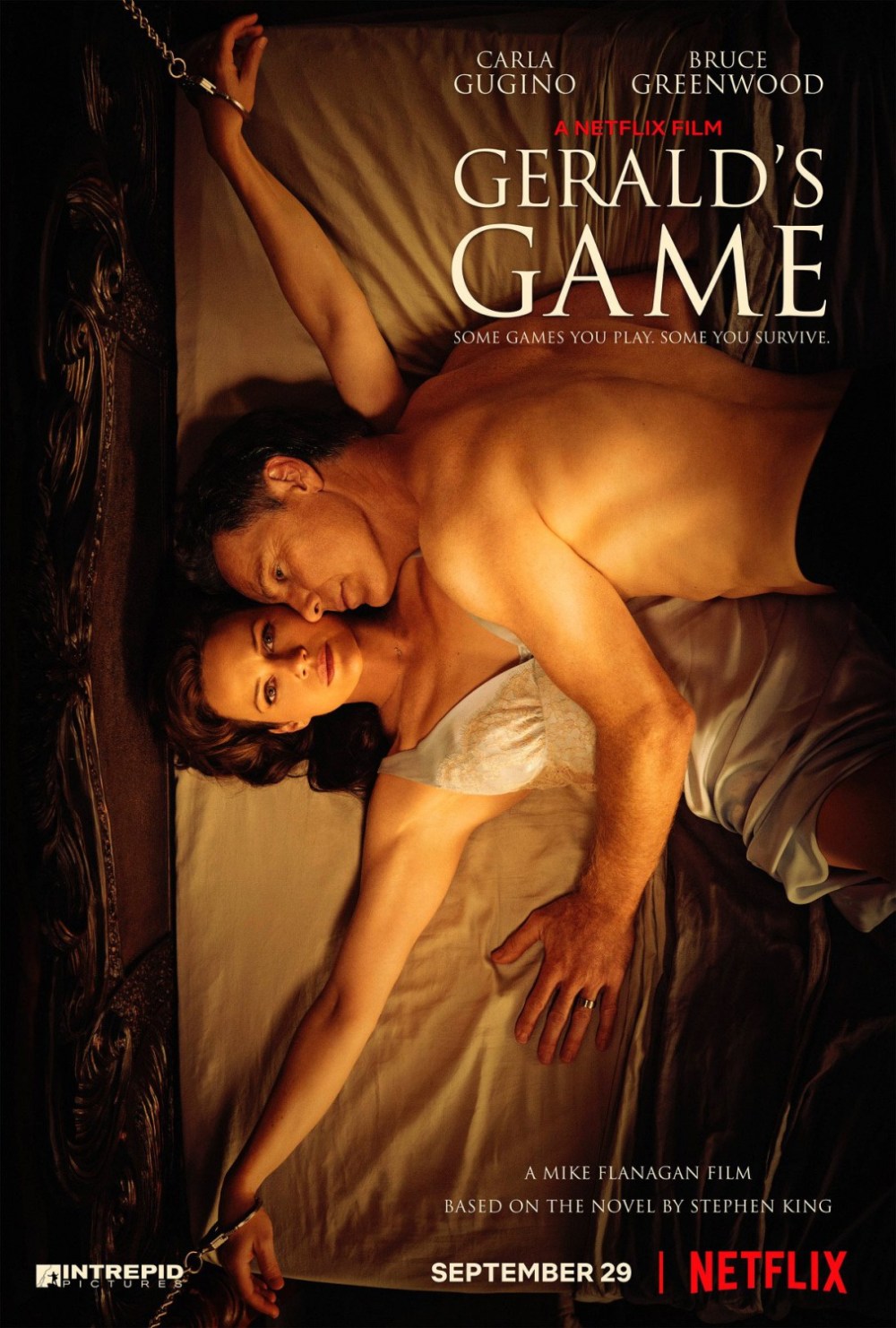
Of the many Stephen King novels, “Gerald’s Game” is one of my favorites. Hearing the author talk about it on an episode of Fresh Air with Terry Gross, I was instantly intrigued by its premise of a couple’s sex game gone wrong to where the husband dies and the wife is left handcuffed to the bedpost with no means of escaping. The more King talked about it, the quicker I was to leap out to the bookstore to buy a copy (albeit, when it came out in paperback).

I was also intrigued at the possibility of “Gerald’s Game” being made into a movie as it presented unique challenges to daring filmmakers; how can you stage the action when much of it takes place in the character’s head? Furthermore, how many actresses would be willing to play such an emotionally draining role? Many have described this particular King novel as “unfilmable,” but I always had a feeling this would be proven wrong.

Well, Mike Flanagan, the director of “Oculus,” “Hush” and “Ouija: Origin of Evil,” accepted the challenge of adapting “Gerald’s Game” as he is also one of its biggest fans. Along with screenwriter Jeff Howard, he has made this seemingly unfilmable novel a cinematic reality as he puts us right in the head of its main character as she is trapped in a predicament which presents her with physical and emotional terrors we live to avoid in real life.

We are introduced to Gerald (Bruce Greenwood) and Jessie Burlingame (Carla Gugino) as they pack their bags for a weekend getaway to their house by the lake. It is filmed to look like an average vacation with them gathering their things. That is, until Gerald puts two pairs of handcuffs in his bag. Once they arrive, it doesn’t take long for them to get up to the devil’s business as Gerald cuffs Jessie to the bed. You can see in her eyes she is really not into this sex game of his, and she tells Gerald to stop. Gerald, however, suddenly suffers a fatal heart attack as the result of taking one Viagra pill too many, and he drops dead right there on the bedroom floor. Just like Renton told Begbie in “Trainspotting 2,” “Remember not to exceed the stated dose.”

Jessie is then trapped in a most unfortunate situation as she and her husband picked a time to vacation when everyone else is not, so it’s unsurprising to realize is no one around for miles to hear her screaming for help. I have seen this a lot in horror movies, a married couple vacationing at a time when the tourist season is non-existent, and it’s like they have the whole place to themselves. Heck, “Gerald’s Game” would make for an inspired double feature at New Beverly Cinema along with “Honeymoon” as both deal with the same predicament.

Flanagan sets up things for us cleverly as he shows how isolated Jessie and Gerald are from regular society. We meet the dog who will later become hungrier than ever even after Jessie offers him a piece of steak which Gerald tells her costs $200 a pound.  Beyond that, the two of them even leave the front door open as if the house represents Pandora’s Box. This all adds to the growing tension as we know how badly this game will turn out for the two of them.

Once the action focuses on Jessie being handcuffed to the bed, Flanagan gleefully tightens the screws. A cellphone is on the nightstand next to her, but it’s just out of her reach. There is a glass of water nearby, but she cannot bring it to her lips. And then we become witness to her hallucinations as her situation becomes increasingly precarious to where we feel every bit as vulnerable as she does.

The way Flanagan handles Jessie’s hallucinations is quite brilliant as they take the forms of herself, her dead husband, and even her younger self (played by Chiara Aurelia). Flanagan also edited the film, and he keeps us guessing as to where we should be looking next as the focus changes before we realize it. I loved how successful he was at catching the audience off guard as the POV shifts constantly as I had no idea where it would go next.

“Gerald’s Game” does feature a music score by The Newton Brothers, but the film works best when the only sound, other than what’s outside Jessie’s window, is silence. I don’t know about you, but I need some form of sound, soothing or otherwise, to calm my brain just to even fall asleep. When everything is silent, I cannot help but be all too aware of my surroundings and feel like Dee Wallace’s son hiding under the covers in “Cujo.” Flanagan seizes on this silence as every single sound takes on a new, and much more frightening meaning.

Things get even more unnerving when we are taken back to a time when young Jessie was watching a total eclipse with her father. While watching it with special glasses, her father ends up doing something no father should ever do to their child. We don’t see exactly what he’s doing, but it’s enough to make us squirm in our seats as we know it’s something very inappropriate. Henry Thomas, years removed from “E.T.” and “Cloak & Dagger,” turns in a fantastic performance as Jessie’s father, Tom. Just watch him as he carefully manipulates Jessie into keeping this event a secret from her mother. The way he slyly gets Jessie to see things his way reminds me of what a good actor Thomas still is, and that’s even when you want to break his character’s nose.

Some horror movies either show very little or show everything, and with “Gerald’s Game,” Flanagan finds a balance between this. We never see much of Gerald’s body once it flops onto the floor and out of Jesie’s eyesight, nor do we get a specific view of which body parts the dog is feasting on (what did you expect? He almost got to eat a $200 steak). He does, however, show us Jessie’s ever-so-delicate movements as she retrieves a glass of water without breaking it just as Eddie Murphy had to carry one over a bottomless cavern in “The Golden Child.” Of course, this moment is completely dwarfed by the method Jessie undertakes to free herself as it provides us with a cringe-inducing scene on the level of James Franco amputating his arm in “127 Hours.”

If there is anything wrong with “Gerald’s Game,” it is the inclusion of the Raymond Andrew Joubert character (played here by Carel Struycken) whom another describes as “the man made of moonlight.” Indeed, this was also a big problem with the novel as Raymond figures prominently in its last half to where it felt like I was reading a whole other book. Flanagan would have been best to leave this part out of the movie as it never fits here in any meaningful way, and the ending suffers because of it. Having said this, the character’s inclusion is almost worth the trouble as Struycken makes him a terrifying presence, especially when he first appears out of the shadows in the corner of Jessie’s bedroom. It is truly the stuff nightmares are made of.

Carla Gugino would not have been my first choice to play Jessie, and this ends up saying more about me than anyone else. Her work in the “Spy Kids” movies, “Sin City,” and on television shows like “Spin City” and the short-lived “Karen Sisco” should have made her a bigger star, and yet she still seems to be flying below everyone’s radar. Her performance in “Gerald’s Game,” however, should quickly remind us all of how fearless an actress she can be. This is not the most appealing role for anyone to take on as it is emotionally draining, and actors can fall into the trap of emoting rather than acting here. Gugino never does fall into this trap though, and she never backs away from portraying Jessie’s most agonizing moments as her privacy is invaded in different ways.

As for Bruce Greenwood, you can never go wrong with him. While he in no way fits the physical description of Gerald in the novel, it doesn’t matter because he makes the character both loving and undeniably creepy. Just wait until you see the look in his eyes. Even after Gerald dies, Greenwood remains a strong presence as he takes the form of one of Jessie’s hallucinations, and he makes Gerald as creepy in death as he was in life.

The images King evoked in “Gerald’s Game” still remain strong in my mind even though it has been over 20 years since I read it. Thanks to this novel, I will never listen to the Steve Miller Band’s “The Joker” in the same way ever again. I even got my dad to read it, and he later told me, “Why did you make me read this? It’s so revolting!” While many consider this novel one of King’s lesser works, I completely disagree as it still permeates my consciousness to this very day.

With this cinematic adaptation of “Gerald’s Game,” Flanagan has succeeded in making a motion picture both compelling and agonizing to sit through. Even though I know how the story turns out, my eyes were glued to the screen as I wondered how the director would visualize the novel’s most extreme moments. In a year where King adaptations have ranged from excellent (“It”) to utterly disappointing (“The Dark Tower”), this one delivers as it prods at our deepest fears in the real world as they prove more terrifying than anything from the supernatural realm.

Speaking of “The Joker,” I kept waiting for that song to come on. Maybe issues with song rights kept Flanagan from using it. Or perhaps, after our first look at Raymond and his box of bones, it is clear he is not about to speak of the pompatus of love.

* * * ½ out of * * * *

‘The Texas Chainsaw Massacre 2’ is a Mixed Bag, But It’s Never Boring

The Texas Chainsaw Massacre 2 poster

After I finished watching “The Texas Chainsaw Massacre,” I was in no hurry to watch part two. The 1974 horror classic still probes to be an intensely unsettling cinematic experience decades after its release, and Tobe Hooper’s film was far more terrifying than I expected it to be. Recovering from the original was no different than when I slowly pulling myself back together after watching Darren Aronofsky’s “Requiem for a Dream” or just about any Lars Von Trier film. But with Hooper having recently passed away, the time had come for me to check out “The Texas Chainsaw Massacre 2,” a sequel heavily criticized when it opened in 1986, but which has since become a cult classic in the eyes of many.

“The Texas Chainsaw Massacre 2” takes place over a decade after the original, and an opening narration tells us the police searched for Leatherface and his cannibal family but never found any trace of them. But of course, it doesn’t take long for this sequel to reintroduce us to Leatherface as he gleefully slices away at a pair of obnoxious high school seniors who harass on-air radio DJ Vanita “Stretch” Brock (Caroline Williams). Stretch captures the audio of these kids’ murders and passes it on to Lieutenant Baude “Lefty” Enright (Dennis Hopper), uncle to Sally Hardesty and her wheelchair-bound brother Franklin who were victims of Leatherface’s chainsaw wrath. From there, the two of them become determined to end Leatherface and the Sawyer family’s reign of terror once and for all.

How you enjoy this sequel largely depends on what your expectations are when you go into it. If you think Hooper planned to match the claustrophobic terror and unnerving power of the original, you are in for a serious disappointment. But if you are able to accept this sequel in regards to what Hooper intended to accomplish with it, I think there is a good deal of fun to be had even if feels like there is a lot missing from this follow-up.

With “The Texas Chainsaw Massacre 2,” Hooper wanted to focus more on the black comedy he said was inherent in the original. Was there black comedy in the original? Yes, but it took a couple of viewings to realize this was the case. This sequel, however, was made to satirize both horror movies and the excess of the 1980’s. Since this one came out in 1986, the time had come to take aim at the greed which came to define this particular decade. Also, when you take into account how the poster gleefully parodies the one for “The Breakfast Club,” you should know this a film which will not take itself too seriously. Plus, this was released by Cannon Films, so you could count on it being entertaining, and maybe for reasons its director didn’t intend.

Looking back at “The Texas Chainsaw Massacre 2,” my feelings about it are decidedly mixed. I did enjoy the frenzied energy Hooper and company brought to the proceedings, and the actors look like they had great fun committing onscreen mayhem. At the same time, it feels like a missed opportunity as the style and substance of this sequel proved to be much too distant from the original. Its links to the 1974 film are very weak to where this feels like a sequel in name only. Sally Hardesty (Marilyn Burns’ character from the original) is only mentioned in the opening narration as having since gone into catatonia. It would have been cool to see her come back in one way or another, perhaps as some badass hardened warrior eager to get revenge. Heck, this sequel came out in the summer of 1986 not long after Sigourney Weaver set a new standard for female action heroes in “Aliens.” Had Burns come back, it could have been the summer of the vengeful female warrior.

One thing which especially bummed me out was the lack of actors returning from the original. In fact, the only actor from the original to appear here was Jim Siedow who reprises his role as Drayton Sawyer. While his creepy face alone is the kind which inspires wicked nightmares, Siedow doesn’t get as much to do this time around. As for Leatherface, he is portrayed by Bill Johnson and not Gunnar Hansen who brought a twisted realism to the iconic horror character. Johnson isn’t bad as he can wield a rusty chainsaw like the best of them, and his sudden appearance from a room filled with vinyl records results in one of this sequel’s scariest moments, but Hansen is sorely missed here as no other actor can possibly match what he brought to the first film.

The rest of the cast, however, does rise to the frenzied challenge Hooper laid out for them. Bill Moseley, who has since appeared in Rob Zombie’s “House of a 1,000 Corpses” and “The Devil’s Rejects,” looks to be having the time of his life as Chop-Top Sawyer as he gleefully tortures Stretch even after a part of his skull gets accidentally sawed off by Leatherface. Speaking of Stretch, Caroline Williams brings a wonderfully spunky energy to the role as she uses her smarts to outwit the Sawyer family in an effort to escape with her life, and her last moment in this sequel is a memorable one to say the least.

But the actor I got the biggest kick out of watching in “The Texas Chainsaw Massacre 2” was Dennis Hopper who played former Texas Ranger Baude “Lefty” Enright, a man deeply obsessed with finding the Sawyer family and avenging the suffering they and Leatherface inflicted on his kin. Hopper was in the midst of a major comeback in 1986 as he appeared in “Hoosiers,” “River’s Edge” and, most famously, David Lynch’s “Blue Velvet.” While those films are better examples of his acting, his performance in this sequel is equally inspired as he clearly knew he was in an over-the-top horror movie and relished the opportunity to go mano-a-mano with Leatherface. Seeing the “Easy Rider” battle Leatherface with a chainsaw is wickedly gleeful fun as a battle with chainsaws is something this sequel just had to have.

So, when all is said and done, I did admire “The Texas Chainsaw Massacre 2,” but certainly not it in the same way I admired the original. Hooper’s vision wasn’t lacking here in the slightest, but he instead took things in direction fans were prepared for 30 years ago. It is only with the passing of time we can look at it differently and understand how it attained cult status. I don’t think it’s a bad film, but it does feel strange compared to what came before.

Looking back, “The Texas Chainsaw Massacre 2” represented one of several attempts by Menahem Golan and Yoram Globus of taking a well-received motion picture and turning it into a hopefully long-running franchise. Clearly, they had more luck commercially, if not critically, with “Death Wish,” but at least this sequel fared much better than “Superman IV: The Quest for Peace,” the film which pretty much put the final nail in the coffin for Cannon Films.

Of course, “The Texas Chainsaw Massacre” franchise didn’t stop there as the buzz of the saw is still an inviting sound to horror fans all over the world, and filmmakers have continued on with other sequels, a remake, prequels and, yikes, an upcoming origin story. People still want to experience the visceral thrill the 1974 horror classic in one way or another, but when it came to “The Texas Chainsaw Massacre 2,” perhaps Hooper realized from the start that it was not possible to top the original or match its terrifying power. Instead, he felt it was better to try something a little different, and that’s what he did with this sequel for better and for worse.

* * ½ out of * * * *

Exclusive Interview on ‘The Houses October Built 2’ with Bobby Roe and Zack Andrews

The Houses October Built 2 poster

Just as the found footage movie looked to be taking its final breath, “The Houses October Built’ came along and provided horror fans with a unique angle on it as a group of friends ventured across America in search of the ultimate haunted house attraction. While the movie ended with these friends suffering a fate not all that different from what Gene Bervoets experienced in “The Vanishing,” “The Houses October Built 2” shows them to be alive and also internet superstars thanks to the videos of them being buried alive on YouTube. Vendors are now offering to pay them to visit Halloween haunts, and Zack, Bobby, Mikey and Jeff jump at the opportunity to cash in on their celebrity. Brandy, however, opts out as the trauma she suffered in the first film is something she is still coping with.

But alas, the Blue Skeleton, the group which takes the extreme haunt to another level and who kidnapped the group in the last film, are hot on their tails as they look determined to top everything they pulled off before. The stakes are raised even higher when Brandy changes her mind and decides to join her friends. But as they get closer and closer to the ultimate Halloween haunt known as Hellbent, one has to wonder if these friends will once again survive their haunted house travels, or will they instead meet their doom.

It was a pleasure speaking with “The House October Built 2’s” director, writer and star Bobby Roe recently, and he was joined by his co-star and co-writer Zack Andrews. As the original ended on an ambiguous note, coming up with a sequel must have been a serious challenge for them as you have to wonder what could possibly motivate these same characters to do another round of Halloween haunt exploring after the horrors they previously experienced. Both Bobby and Zack explained how they came up with the sequel, how they managed to find a way to get Brandy to rejoin her friends, and of the kind of Halloween haunts they wanted to explore this time around.

Check out the interview below:

Ben Kenber: This is a sequel I never thought would ever be made considering how the first film ended. With part two, you answered some questions which some may say would have been best left unanswered. When you were making the original, did you have a sequel to it in mind?

Bobby Roe: The haunt world is so huge, and we just wanted to be able to… Expanding is probably the primary goal of a sequel, expanding the world, and hopefully that is done with the Blue Skeleton. I know the ambiguity of the ending of part one is a real pro for some, and then for others, without having a bow on it, it was a real problem. So hopefully this part two services everyone. In some ways, it’s just about, at the end of the day, how extreme can you get.

Zack Andrews: I think the original stands on its own, but Bobby’s and my vision was always to have that kind of as an intermission and then have part two kind of pick up at that place and continue to tell the story and, as he was saying, that world is so big. In the first movie, we go to big businesses but they are more ma and pa operations. And in this film, as you can see, we kind of expand the world and end up at the Zombie Pup Crawl with 30,000 people. Just being able to see Halloween in a bigger scope, we continue to do that in this world.

Ben Kenber: After the first movie, you became celebrities to these Halloween haunts, and we can see this in part two. Did the first movie make going to these haunts easier or more challenging?

Bobby Roe: Sometimes it is more challenging because, if they recognize us, people try to up their game or at least make sure they are extra scary. Sometimes for us, we are thinking how far are people going to go. We received emails weekly since the first film came out which asked us to come and visit.

Zack Andrews: The community is… There are all these little families who come together to put these haunted houses on, and everybody has been really receptive to us through the first movie and the second movie. I think it is a win – win situation because they respect what we are trying to do by making the movie, and we respect their business. We love meeting all these people and coming into their world, and it feels like, so far, they like having us.

Ben Kenber: It certainly looks like they love having you guys around. When you were filming this sequel, did you talk with these Halloween haunt people ahead of time to let them know what you were going to do, or did you proceed incognito and went from there?

Bobby Roe: We had to go the legal route and get permission, but I think a lot of times they let us have free range which is really important because some of the sets were really beg. The owners, there is a lot of gratitude towards them because they have allowed us this blank slate on their haunts, and hopefully in return it brings a lot of business to them as well.

Ben Kenber: It’s amazing how big some of these haunts are, especially the haunted hay ride.

Zack Andrews: Oh yeah. It had thousands and thousands of people every night. That haunted hay ride was pretty awesome.

Ben Kenber: With this sequel, you are clearly moving on to bigger game as these haunts are much bigger than the ones we saw in the original. Were there any criteria you set for yourselves in terms of selecting haunts this time out?

Bobby Roe: It was important for us and to the characters’ story in there because of Brandy’s situation. Her deal for coming along is no haunted houses, so I think the guys try to loophole that by going to these more events until things go awry. So, to make her a little more comfortable, and we know that’s kind of a watermelon to swallow for the audience, why Brandy would come back having gone through the trauma that she did in part one, with her newfound success, with money or with whatever that you would think that character would eventually be brought back would ease her in. With these dark mazes and indoor haunts, as amazing as some of them are, they kind of bleed together on-screen. We thought using the Zombie 5K or the pub crawl would kind of give it a different range, and we made sure that it didn’t feel as episodic or that you were watching the same haunt over and over again. We wanted to make sure that didn’t happen.

Ben Kenber: I really dug the Marilyn Manson quote you opened this movie with: “Times have not become more violent. They have just become more televised.” What made you decide to use that quote?

Bobby Roe: We started part one with a quote that we felt summed up the entire movie really well, and that was the quote “I’m not afraid of werewolves or vampires or haunted houses. I’m afraid of what real human beings do to other real human beings” (Walter Jon Williams). That was what part one was, and I think for part two, this quote summed up everything we talked about, and I just thought it was very interesting on top of it being an influence on us and the macabre horror world as well. We always really liked Marilyn Manson.

Ben Kenber: Considering what the characters, especially Brandy, went through in the first film, it must have been very tricky to come up with a good story line in which they would go through a situation very similar to what they endured before. How long did it take you to come up with a good reason for Brandy to rejoin the group while writing this film?

Zack Andrews: Well we knew this, as Bobby said earlier, would be the biggest watermelon to swallow. Why in the world would she do this again? We show up at her house, and I would think that it’s kind of the roll your eyes moment of okay you are just going to convince her, so it was important to us to try and be as authentic as possible and have Brandy just say no, and then we go out on the road on our own. But when we can’t do what we have set out to do because they are not going to pay us, that felt like an authentic way to call back and do a little begging and pleading because that’s how this would go down in real life (laughs).

Bobby Roe: Exposition in found footage is very tough. If you play by the rules, it’s very hard to give people those side stories where there shouldn’t be a camera. We had early on in the script that she needed money for school, her mom was sick, things like that, and they just become heavy-handed than they would in a normal narrative. So we kind of just went the more organic route and just had her say no, and then when she’s coming around we understand that money comes into play. Hopefully you understand the chemistry and the love for everybody as friends, and I think she’s coming for Zach and I because we need it. She’s coming along and being a good friend, and at the end of the day the simplest answer is sometimes the correct one. So hopefully people understand her journey and why she came along with us.

Ben Kenber: This sequel has a number of different POV’s from the characters, Blue Skeleton, and of course the drone. What was it like balancing out those various POV’s?

Bobby Roe: Well you still have to be conscious of where the camera crew has the camera. If you have seen the movie, you can understand a little bit more, call it our cheats, about certain ones, but for the most part we played by the rules. The drone was a character, and we showed the opening of the drone and that Jeff got it as a present. We thought it would be really cool to have him pilot it in the RV, so all these great wide established shots that you see in every other movie with helicopters, why can’t you do that in found footage while you’re driving? We were able to drive it from inside the RV as long as the drone stays within a certain range from us and follow us and tail us. So that’s very realistic, so why can’t we get those big pretty shots that you can in these giant features? We wanted to make sure that it made sense and that you believe in it as an audience and who’s filming this. As long as you make the drone a character, then hopefully we have a bigger and wider scope in part two as much as we can get. When there were 30,000 zombies in Minneapolis, we wanted to capture that the best that we could, and that was from the sky.

Ben Kenber: Do you see yourselves making a part three?

Bobby Roe: The haunt world is so huge and vast that the story is not done as long as the Blue Skeleton is growing, and hopefully at some point the legend of the Blue Skeleton starts to grow bigger. There’s much more story to tell, and there’s definitely a lot more haunts to show.

Ben Kenber: Have you thought about going outside of America to other countries to explore their Halloween haunts?

Zack Andrews: No comment.

Bobby Roe: We have thought about that. Without saying too much, we went over to ScareCON in London and spoke to a bunch of haunted house owners last year and it was really cool to see their take on a holiday that’s way bigger in America, and they really embrace this culture all year. It’s not just Halloween. We experience some things over there I think people would want to see.

I want to thank Bobby Roe and Zack Andrews for taking the time to talk with me. “The Houses October Built 2” will open in theaters and be available On Demand/Digital HD on September 22, 2017.

Click here to check out the interview I did with cast, writers and director of “The Houses October Built” which I did for We Got This Covered.

‘It’ Proves To Be one of the Best Stephen King Movies in a Long Time

It teaser poster

It” isn’t just one of my favorite Stephen King novels, it’s also one of my favorite books ever. On one hand, it is a terrifying tale of a malevolent force who takes the form of a clown and feeds on the fearful children living in Derry, Maine. On the other, it is a thoughtful and deeply felt examination of kids who are forced to endure a tougher childhood than anyone ever should. I read King’s massive novel (1,138 pages) back when I was a teenager, and it made me realize it was okay to be different than others. Looking back, it also reminded me of a line of dialogue from one of my all-time favorite movies, “Pump Up the Volume:”

“High school is the bottom. Being a teenager sucks, but that’s the point. Surviving it is the whole point.”

For those who have read this novel, you can see how it is more about the kids than it is about Pennywise the Dancing (not to mention incredibly vicious) clown. Thank goodness director Andy Muschietti realized this when he came on to direct the long-awaited film version of “It.” While Muschietti delivers the requisite thrills and chills a horror film like this one demands, he keeps a very observant eye on the kids and the conflicts they are forced to endure, and I don’t just mean Pennywise.

The film focuses on the book’s first half when the members of “The Losers’ Club” were suffering the slings and arrows of daily life at school. But while King set this half in the 1950’s, Muschietti moves things up to the 1980’s, a time of Ronald Reagan, calculator watches, New Kids on the Block, and movies like “Gremlins” and “Beetlejuice” which, like “It,” were released by Warner Brothers. This was a decade defined by greed, but for these kids, it was a time of innocence which would be destroyed for them far too quickly.

“It” was previously made into a wonderfully entertaining television miniseries by Tommy Lee Wallace, but Muschietti lets you know right from the start how the censorship of American television was not going to apply here. Little Georgie Denbrough suffers a most terrible fate when Pennywise bites his arm off and drags his body into the sewer, and even if you know this event is coming, it is still chilling to witness as this is the kind of thing movies typically avoid showing. From there, I couldn’t help but remain in a state of heightened anxiety as while I knew what was going to happen, the safety of network television was not around to reassure me about the horrors I was going to witness.

The misery and sufferings of The Losers’ Club feel much more unnerving on the silver screen than on television. It’s especially galling to see poor Beverly Marsh get wet garbage poured all over her in the bathroom as she has become the victim of unsubstantiated rumors that she is promiscuous. But judging from the moment she when she puts her backpack over her head for protection, she has been dealing with this stigma for a very long time. Or how about Ben Hanscom, the overweight new kid in town who has zero signatures in his yearbook, one of the saddest sights the audience is forced to take in here. While these kids’ sufferings don’t feel as raw as what Sissy Spacek endured in “Carrie,” it’s still easy to feel for these kids who have been cast out of what is perceived to be the realm of normal.

Heck, even their parents prove to be an emotionally distant, and if they are not, they instead prove to be ridiculously overprotective. Beverly’s father seems to care for her a little too much, and this care seems to imply crimes more insidious than our imaginations can ever handle. Eddie Kaspbrak’s mother is determined to keep him safe from any and every germ planet Earth has to offer, and at times she threatens to be as scary as Pennywise due her raising her son as if he is the reincarnation of Howard Hughes. As for William Denbrough, things will never be the same between him and his parents following the death of his brother Georgie.

There’s some passage in the Bible which says God only gives you what you can handle, but the members of The Losers’ Club have far more than anyone should ever be made to handle, and this is made clear before Pennywise begins to disrupt their unfairly depressing lives. As a result, they need each other to get from one day to the next, and the strength they have together allows them to be a formidable force against Pennywise. Muschietti’s attention to these kids’ struggles makes this film very effective as we come to care for them deeply, and this makes their stand against this homicidal clown all the more involving.

Speaking of Pennywise, Bill Skarsgard makes him into the freakiest clown and scarier than any clown Rod Zombie could come up with. Whereas Tim Curry’s Pennywise was at first approachable and then murderous, Skarsgard’s is vicious right from the get go whether the kids realize it or not. Even before those set of jaws come out, Skarsgard more than reminds the audience of how clowns have always been creepy, and he makes Pennywise into the clown who gleefully inhabits all our nightmares.

So where do I rank this particular Stephen King adaptation among the many already unleashed on the public? Hard to say. It is easily one of the best King adaptations in a while, but it is not as scary as “The Shining” or “Carrie.” This is not a motion picture filled with jump scares every 5 minutes as Muschietti is more in creating something which is infinitely chilling and suspenseful. What results is a highly entertaining movie which never feels like a simple remake of the miniseries. He is also blessed with a terrific cast of actors who are not afraid to embrace the depressing natures of their characters. I just hope none of them have to deal with this shit in real life.

I’m also thrilled no one tried to fit the whole book into one movie. There’s no way you could have done that without messing everything up. There was already talk of a sequel long before this movie even opened, and this is a sequel I am more eager to see than any “Star Wars” movie which has yet to be released. It’ll be interesting to see how The Losers’ Club will transition from childhood to adulthood as they attempt to put the past behind them. But as Peter Gabriel once sang, “Nothing fades as fast the future. Nothing clings like the past.”

* * * ½ out of * * * *