‘Final Destination: Bloodlines’ Movie and 4K Review

The following review was written by Ultimate Rabbit correspondent, Tony Farinella.

It has been a while since I’ve sat down and watched a good old-fashioned horror flick that was gory fun from start-to-finish. The last movie which comes to mind, for me, is 2023’s “Saw X.” Now, I know there have been other horror movies which have been critically acclaimed since then, but I like my horror movies, most of the time, to be rather straightforward without any underlying message or heavy-handed agenda. I’m looking to laugh, see some gruesome deaths, and have a good time. “Final Destination: Bloodlines” was a movie that allowed me to sit back, shut off my brain, and have a good time.  I had a blast with this movie, and the filmmakers, cast and crew delivered beyond my wildest expectations.

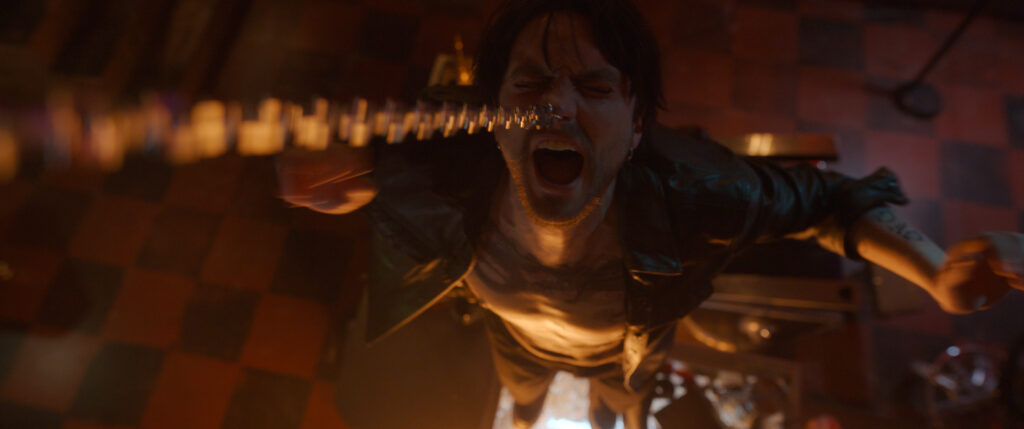
The film opens up in the late 1960’s at a high-rise restaurant tower, which hasn’t been properly built to house the number of people that are dancing and having a good time. Before long, the shit hits the fan and everyone is fighting for their lives. This sets the tone for the entire film, as it’s clear its directors, Zach Lipovsky and Adam Stein, understood the assignment given to them. They do a masterful job of building up the anxiety of what will happen next. If you are familiar with this franchise, you know anything and everything could lead to a possible death. They build up the suspense while also winking at the camera in a way that isn’t too cutesy or silly. It’s the perfect balance of comedy and terror.
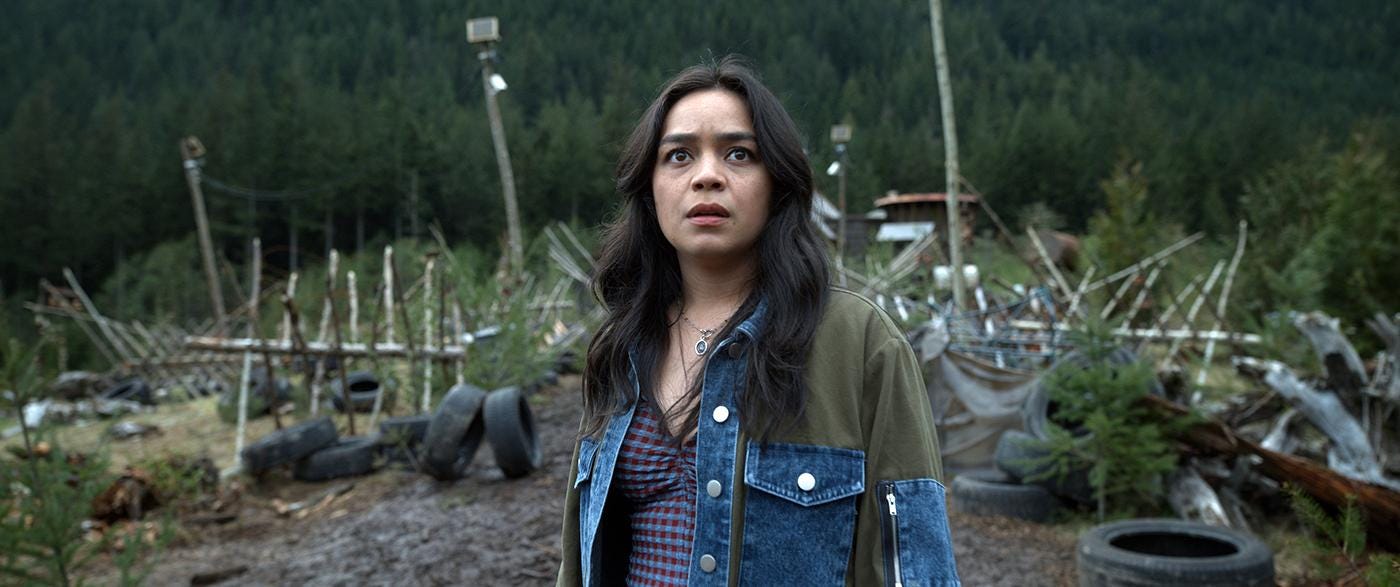
We are then introduced to a struggling college student, Stefani Reyes (Kaitlyn Santa Juana), who keeps having a dream about that night in the 1960’s where mayhem and death were on the menu at this high-rise restaurant. She’s been having this recurring dream for over two months, and it’s causing her to almost flunk out of college. Because of this, she decides to go home and look for answers to what is plaguing her dreams. She discovers that one of the women in her dream is her grandmother, Iris (Gabrielle Rose), who messed with Death’s plans that night by saving everyone at the restaurant. However, Death doesn’t take too kindly to those who mess with its plan, so everyone who was supposed to die that night has now perished slowly but surely.

Iris has survived by being ultra paranoid and knowing how to plan and look for any signs of danger. She lives off the beaten path and doesn’t let anyone get too close to her. She’s on high alert, and her family sees her as a loon who has lost her mind. Stefani doesn’t know what to believe, but after seeing more and more signs, it’s coming into focus for her–she needs to follow her grandmother’s advice and save her family, who isn’t supposed to be here. Because Iris lived, everyone in her bloodline is in danger of having Death knock on their door. Using her grandmother’s years of meticulous planning and her research into Death’s plans, Stefani’s going to try her damnedest to save her family, which includes her brother, mother, uncle and cousins.  It will be even harder to convince all of them to believe her.

“Final Destination: Bloodlines” is a near-perfect horror film as it is terrific at building genuine suspense. At every turn, you never know what will happen to someone or how it will happen. I’m a professional wrestling fan, and the film utilizes what is known in the wrestling business as “false finishes.” When you think someone is down for the count in the ring, they kick out. In movie terms, when you think someone is going to die, they end up living.  As soon as you are lured into a false sense of security, they die in a gruesome way. However, it’s all about the build-up, the anxiety, and dread that is on screen.  When it finally does happen, it means that much more because you have been played like a piano. It’s a rollercoaster ride of emotions.

My one issue with the film is the CGI deaths. While they are creative, clever and a lot of fun, they look very bad visually because they are filled with CGI. If they used more practical effects and less CGI, I would have given the film four stars. However, the CGI deaths are hard to take seriously, as they end up looking like they were done in 3D. It reminded me of “Saw: The Final Chapter” which was done in 3D.  When you watched the film without 3D, the blood looked pink, and the effects didn’t have the same impact. Here, the gore and the blood looked like cranberry juice. The film is still a great horror movie, but this detail is impossible to ignore.

This image released by Warner Bros. Pictures shows Kaitlyn Santa Juana, left, and Rya Kihlstedt in a scene from “Final Destination Bloodlines.” (Warner Bros. Pictures via AP)

Overall, “Final Destination: Bloodlines” is a throwback to when horror films were fun, over-the-top and kept you guessing. The way the film uses comedy during the gotcha moments is absolutely perfect. This is a film that doesn’t take itself too seriously, but it respects the audience enough to blend comedy and genuine terror together without leaning too much in one direction. It’s a tightrope act for the filmmakers, but they pass this test with flying colors. This is the best installment the franchise has released in a long time. The acting is solid, the kills are unique (minus the bad CGI), and the story makes sense. Tony Todd also makes its final appearance in the franchise in a moving and poignant cameo.  It is clear this was not just a cash grab sequel. This is a film that was made with love and respect to the franchise.

* * * ½ out of * * * *
4K Info: “Final Destination: Bloodlines” is being released on a single-disc 4K from Warner Brothers Home Entertainment. You can purchase the film with either a 4K slipcover or a 4K steelbook, and both come with a digital copy to redeem the film. The film has a running time of 110 minutes and is rated R for strong violent/grisly accidents, and language.

4K Audio/Video Info: The 4K has a fantastic Dolby Atmos soundtrack that lends itself perfectly to this film. Its use of music is essential to the suspense and uneasy feeling that is permeating throughout the entire film. It’s a big soundtrack with a lot of bass to it, and the film’s soundtrack is a thing of beauty, as you hear it all perfectly. The Dolby Vision visual transfer is slick, clean, and vivid throughout. This is an A+ home theater experience for 4K movie lovers.

Special Features:
Death Becomes Them: On the Set of “Final Destination Bloodlines” – featurette
The Many Deaths of Bloodlines – featurette
The Legacy of Bludworth – featurette
Director’s Commentary

Should You Buy It?

I’m grinning from ear-to-ear as I’m writing this review. This is 4K at its finest in so many ways: The film is really good, the audio and visual elements are top-notch, and there are special features included here as well! There is a director’s commentary! I can’t remember the last time I’ve heard a director’s commentary on a new 4K release. This is a welcome addition, and it’s a lot of fun to hear their passion and energy for the project while watching “Final Destination: Bloodlines.” This is a great horror film, and it made me excited about the horror genre after feeling disappointed by it for two years. I watched it with my wife, and it was a great at-home horror movie to watch as we were laughing, screaming, and hooting and hollering during the crazier moments. I can’t recommend this film enough. They have put so much care into not only the movie but also its 4K release. This one comes highly recommended. It was so close to getting a full four-star rating if not for the bad CGI.  Other than that, you’d be hard-pressed to find a more enjoyable film to watch this year. This was old-school horror done in 2025.

**Disclaimer** I received a copy of this film from Warner Brothers to review for free.  The opinions and statements in the review are mine and mine alone.
‘Pale Rider’ Movie and 4K Review

The following review was written by Ultimate Rabbit correspondent, Tony Farinella.

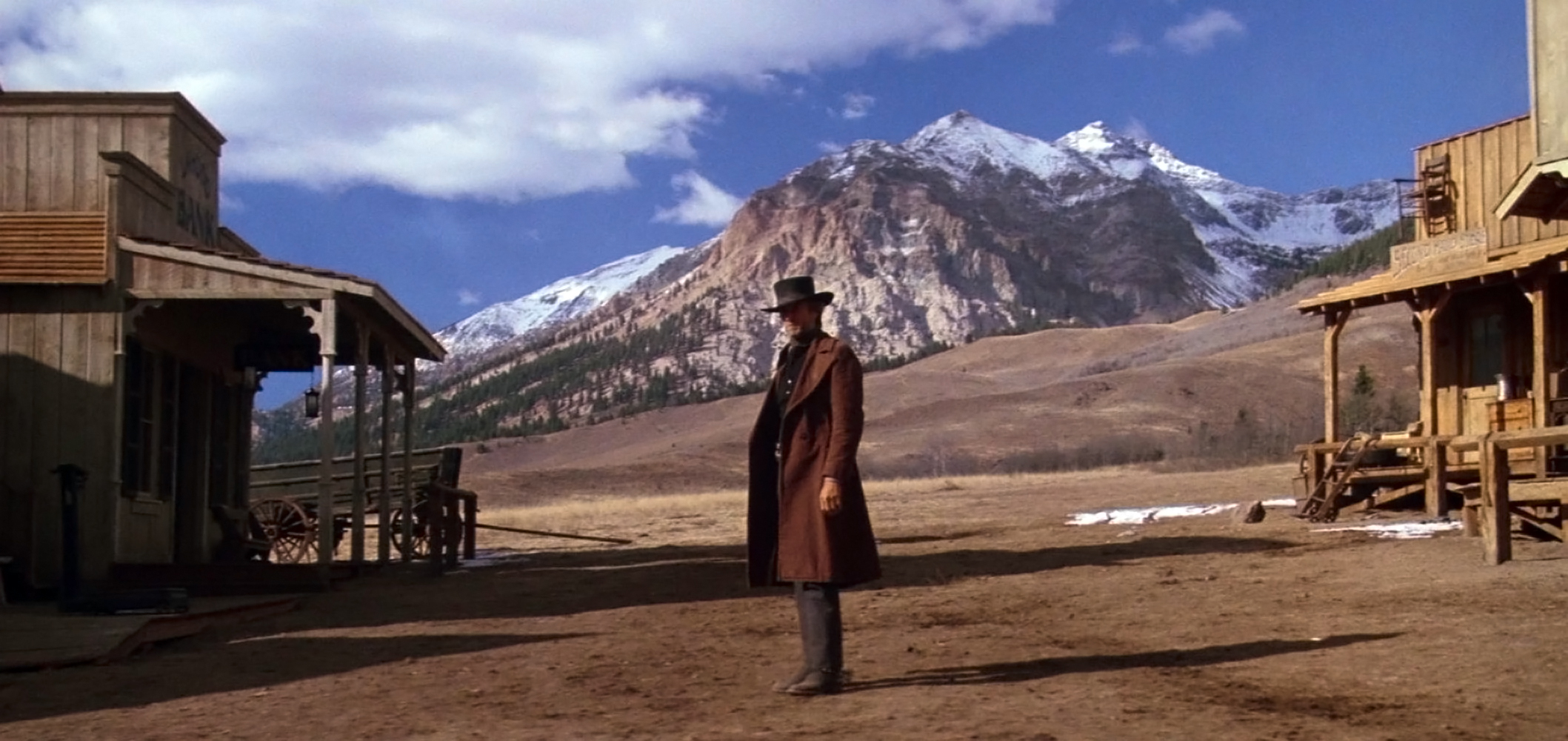
Clint Eastwood is synonymous with the Hollywood western in American cinema. For my money, the westerns of Eastwood are far superior than those of John Wayne. There is a subtlety and nuance to his films and his performances. While not all of them are Hollywood classics, they are a great example of old-school craftsmanship, especially when he’s behind the camera.  He is behind the camera for “Pale Rider,” which is celebrating its 40th anniversary with this 4K release.  It is a film I have not seen before, but after watching it for the first time, I fell in love with it immediately.

Our film is set in LaHood, California in Carbon Canyon, which is being run by an malevolent banker and a crooked marshal. The banker is named Coy LaHood, played by Richard Dysart. Since he doesn’t have the legal rights to kick the miners out of their homes, he uses violence and intimidation in an attempt to gain complete control of the land. This doesn’t sit right with Hull Barret, played by Michael Moriarty, as he’s trying to take care of his fiancée Sarah (Carrie Snodgress) and her daughter Megan (Sydney Penny). However, he’s finding little to no support in his battle against LaHood.

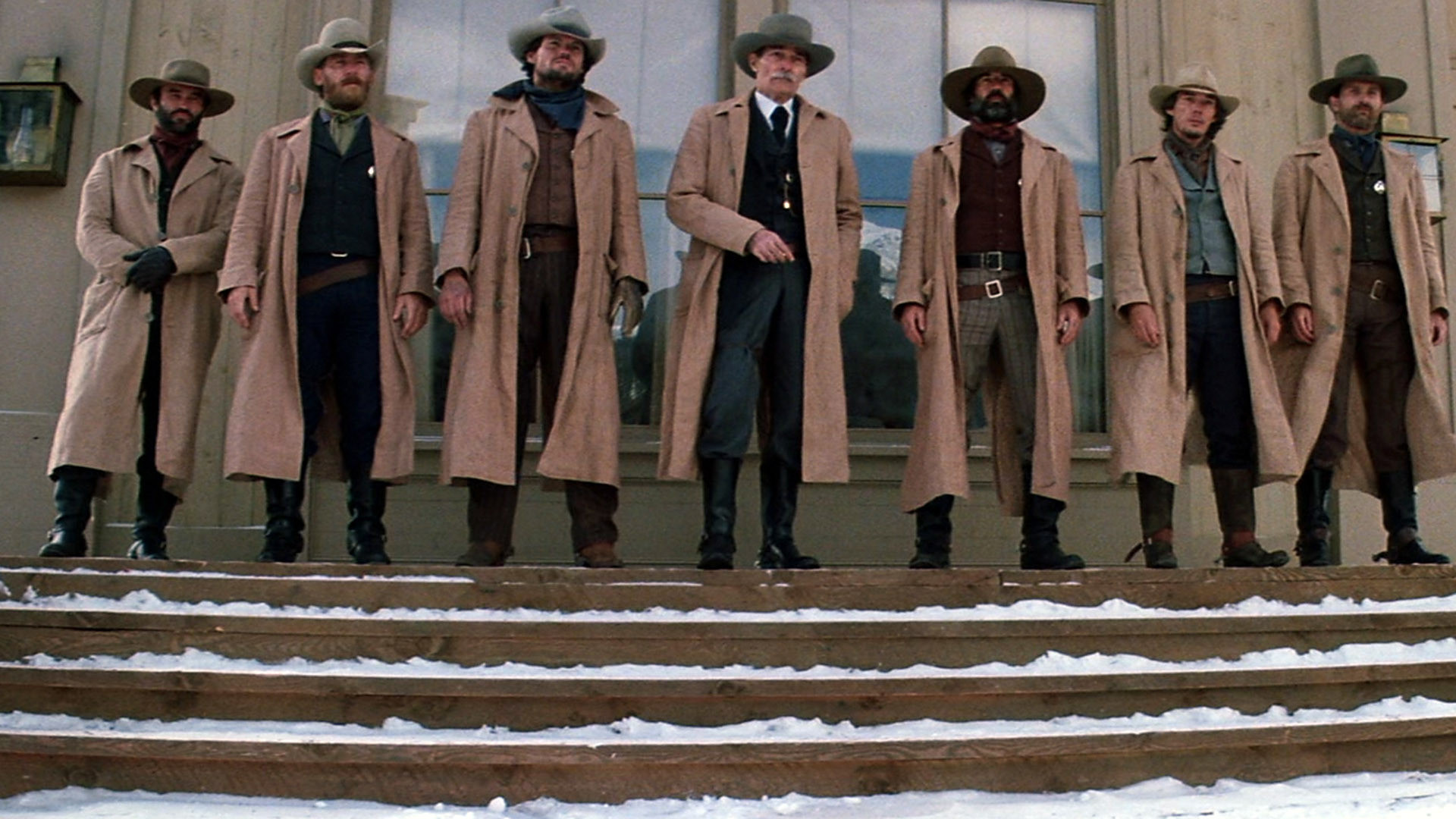
Megan’s prayers for peace are answered by a man known as the Preacher, played by Eastwood. He’s a mysterious and shadowy figure who shows up to save Hull after he’s attacked by four of LaHood’s men. Megan was having a hard time seeing the silver lining in much of anything after her father left, her grandfather passed away, and her dog was killed.  LaHood has brought nothing but mayhem and destruction to Carbon Canyon.  The Preacher, however, is not only giving Megan hope, but he’s also giving hope and faith to everyone in Carbon Canyon. They are not going to be kicked out of their homes, and they will not be bought off.

Westerns are often hit or miss with me as a film critic. When they are done with interesting characters, beautiful cinematography and focus on the quiet introspective moments, they connect with me and I’m completely absorbed.  One of my favorite Westerns of all time is “Unforgiven,” which was also directed by Eastwood. It deals with the aftermath of the violence and the effect it has on those who have inflicted it on others. “Pale Rider” is about the people of Carbon Canyon and how they are trying to exist, survive, and live while under the thumb of LaHood.   Eastwood, in many ways, is a supporting character in his own film.  I imagine this was by design. When he does appear on screen, everything he does is thoughtful and understated. He has a terrific scene with Sydney Penny where he describes why they can’t be together romantically. It’s delicate and, in the hands of any other filmmaker, it would have been awkward and out of place.

It all leads to the big shootout between the Preacher and LaHood’s men along with Stockburn, the Marshal, played by John Russell.  The shootout scene is impactful because Eastwood is a patient director and he takes his time in building up to the grand finale.  At the end of the day, movies are simple—introduce us to characters we are invested in, set the stage, let the actors do their work, and get out of the way. Eastwood is one of the best in the business at doing that as a director, which is one of many reasons why he’s a Hollywood legend.

I’d also like to mention the work of Chris Penn in the film as LaHood’s son, Josh. Even though Sean Penn is more well-known and established as an actor, his brother Chris was a terrific character actor who really knew how to play a slimy and underhanded villain. I’ve always been a big fan of his work.  Michael Moriarty plays a good man who is trying to do the right thing while simultaneously trying to maintain his manhood at the same time.  In many ways, even though Eastwood receives top billing, he’s the lead in the film when it comes to screen time. Carrie Snodgress and Sydney Penny bring vulnerability, strength, and warmth to their performances. This is a terrific cast.

From start to finish, I was utterly engrossed in “Pale Rider,” and I couldn’t take my eyes off the screen. There is a sense of mystery surrounding the Preacher character, and it is what keeps the story moving in a unique and captivating way.  I like to be kept on my toes. Overall, this is the kind of movie I love as a moviegoer.  The acting, from top-to-bottom, is phenomenal, the scenery is gorgeous, and the story is simple yet powerful. This is another in a long line of classic films from the great Clint Eastwood. The great thing about his filmography is there are still films of his I haven’t seen. He’s the gift that keeps on giving.

* * * ½ out of * * * *

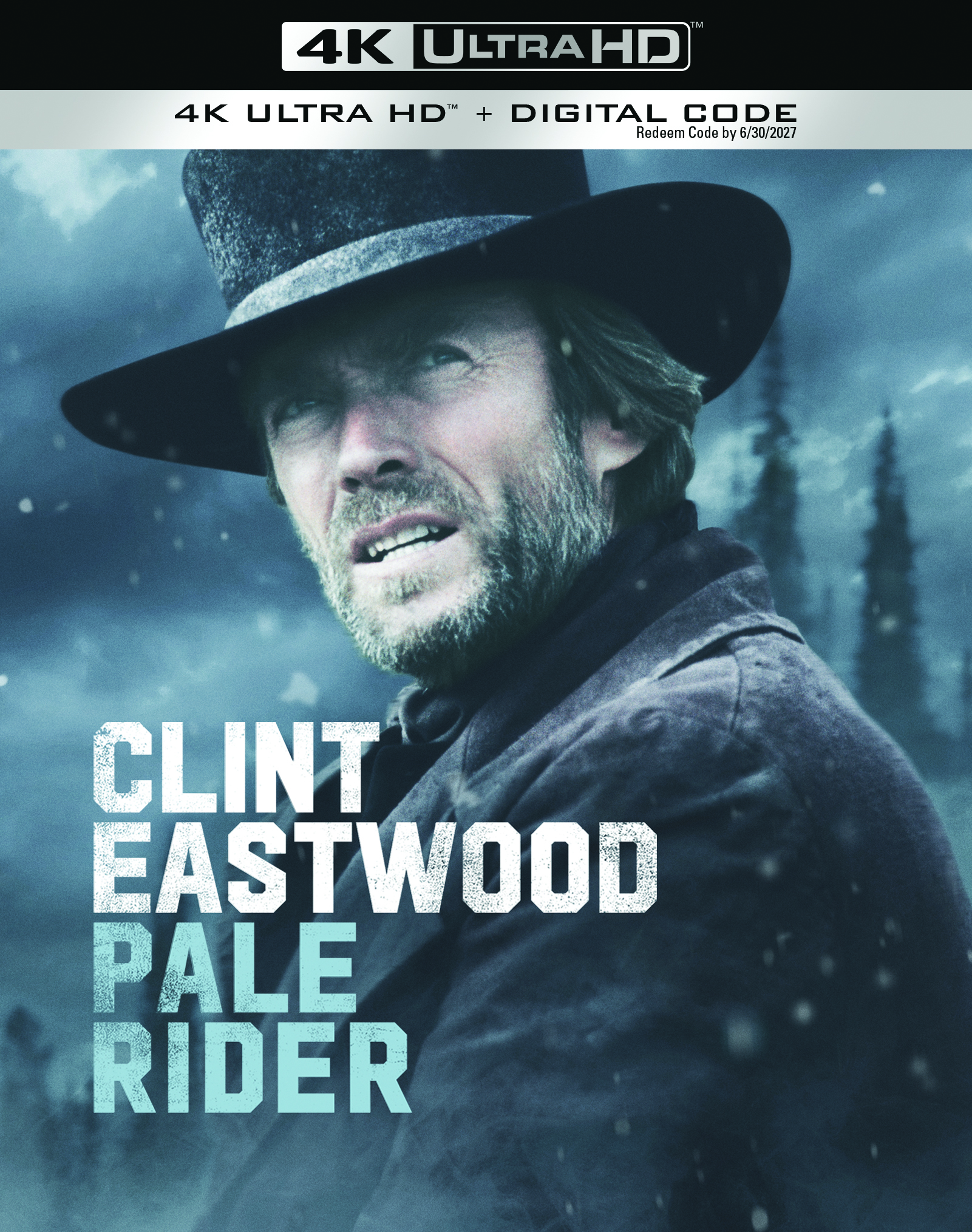
4K Info: “Pale Rider” is being released on a single disc 4K from Warner Brothers Home Entertainment. The release comes with a beautiful slipcover and a digital copy as well.  There is a steelbook version of the film available for purchase if you are interested in steelbooks over slipcovers. I prefer slipcovers myself. The film has a running time of 116 minutes and is rated R.

4K Video Info: “Pale Rider” comes with a jaw-dropping 4K HDR transfer. The film looks magnificent. Westerns, in particular, are always a welcome addition to 4K.  The landscapes are enthralling to look at and the colors are lively and vivid.

4K Audio Info: The Dolby Atmos track is out of this world as it is peaceful during the quieter moments in the film but it comes to life during the action sequences. Subtitles are included in English, Spanish and French.

Special Features:

The Diary of Sydney Penny: Lessons from the Set – NEW

Painting the Preacher: Bruce Surtees and Pale Rider – NEW

Clint Eastwood: A Cinematic Legacy – Reinventing Westerns

Eastwood Directs: The Untold Story

The Eastwood Factor

Should You Buy It?

HELL YES! “Pale Rider” is a great film.  It was almost a perfect film, and I was very close to giving it four stars. In the end, I decided to give it three and a half stars, but when it comes to owning the 4K, it’s a no brainer.  There are also new special features on this disc! So many physical media collectors often complain about the lack of new special features, but there are two new special features on this 4K disc. In total, there are over three hours of special features here! Clint Eastwood and Warner Brothers have a special relationship, and this is one of their finest films.  The audio and visual aspects of the 4K are magnificent.  This is one of my favorite 4K releases of 2025 so far, and I can’t wait to watch “Dirty Harry” and “The Outlaw Josey Wales” on 4K from Warner Brothers. They hit a home run with this release, and you owe it to yourself to add this film to your collection. This one comes highly recommended.

**Disclaimer** I received a copy of this film from Warner Brothers to review for free.  The opinions and statements in the review are mine and mine alone.

Terrence Malick’s ‘To the Wonder’ – Meandering but Still Unforgettably Beautiful

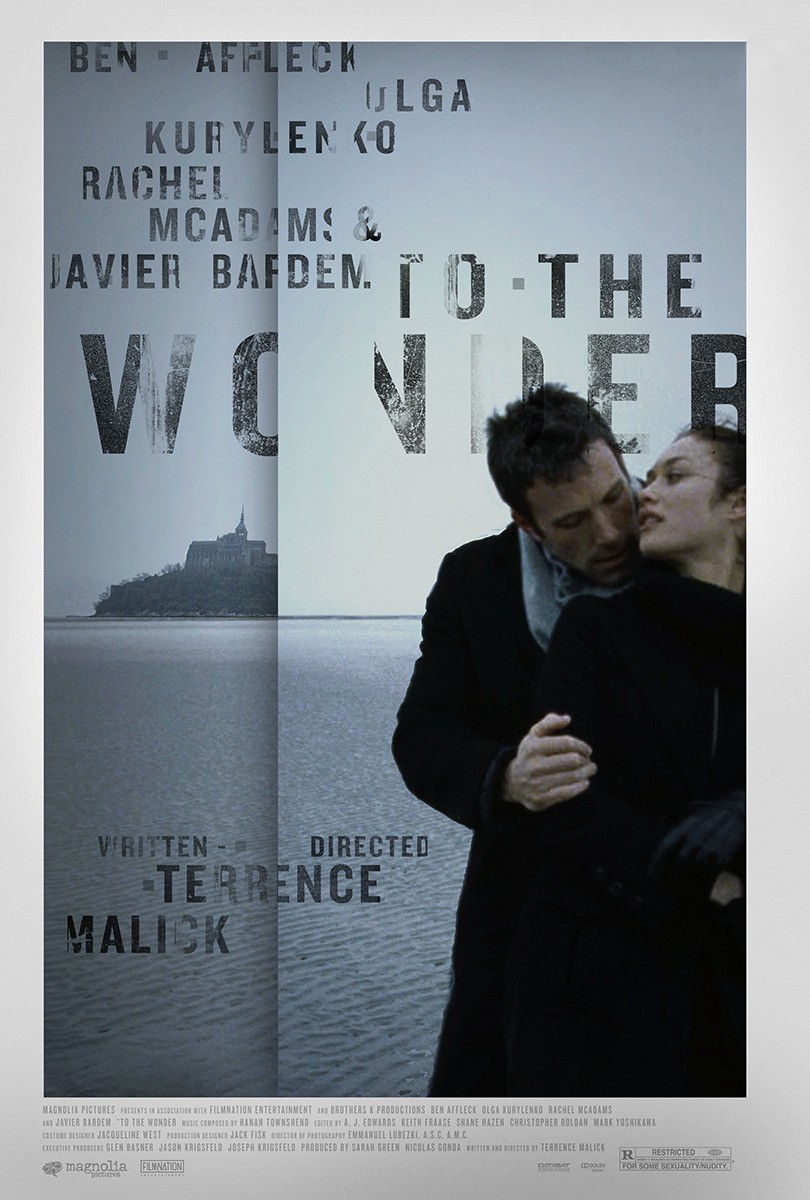
Terrence Malick’s “To the Wonder” is, in many ways, a mixed bag of a film. Not all of its parts go together in a way which feels entirely cohesive. It focuses on a couple played by Ben Affleck and Olga Kurylenko who fall in love and come to America to start a new life, but they eventually find themselves falling out of love, and they constantly struggle to understand how something so wonderful can go so awry. And then we have Father Quintana (Javier Bardem), a Catholic priest who is struggling to keep his faith even as he feels the presence of God eluding him at a time when he is desperate to believe in an afterlife. The balancing act between these characters is wobbly at best, but Malick still gives us many beautiful and wondrous images which are very powerful, and these images quickly remind me of how brilliant he is at capturing nature on film.

“To the Wonder” starts off in Europe where Marina (Kurylenko) finds herself completely enamored by her American boyfriend, Neil (Affleck), as they take a tour around town. Along with them is Marina’s daughter, Tatiana (Tatiana Chiline), who is thrilled when Neil asks her if she and her mom would like to move with him to the United States to live. After briefly viewing the European sights, the film then heads over to Neil’s home state of Oklahoma where the flatlands appear to stretch out as far as the eye can see. Heck, it almost looks like hardly anybody lives there, so it is a huge relief when we see t Neil and Marina actually have neighbors.

As with “The Tree of Life,” “To the Wonder” functions mostly as a silent film as the majority of the dialogue we hear is as a voiceover. Malick is far more interested in the inner thoughts of his characters than anything else as they struggle with the things they want and which are constantly outside of their grasp. We feel their passion for one another, and we also feel their pain and disappointment when their love eventually fades away.

Having read up on Malick as a filmmaker and as a person, it is clear to me how this film and “The Tree of Life” are his most autobiographical works overall. What the characters go through is not much different from what he has experienced in his own life, and with these films, it looks as though he is still trying to pick up the pieces of what went wrong.

Kurylenko first came to my attention in “Quantum of Solace,” and she has made the most of being a Bond woman as her performance here shows. It is thrilling to watch her dancing around the streets of Europe as well as in a corporate drug store which typically sucks the life out of everyone who shops at one. In many ways, Kurylenko is the best thing about this film as she takes us through Marina’s transcendent highs and her emotionally draining lows with complete conviction throughout.

Back in 20123, people had serious issues with Affleck as an actor, and this is even after his film “Argo” won the Academy Award for Best Picture. I myself have never had any issues with his acting abilities, and he gives a strong, understated performance as Neil, and it is never his fault we come to know less about this character than the others we are introduced to here. I really wish Malick had given Neil as much attention as he did to Marina as this would have made Neil’s journey in this story all the more illuminating. Nonetheless, Affleck is still very good in here.

Rachel McAdams is inescapably luminous as Jane; a childhood sweetheart of Neil’s who shows up after Marina has gone away. Malick makes Jane look beyond beautiful as he frames her against fields of wheat, and it is emotionally draining to watch Jane bear her soul to Neil and try to melt his heart in the process. McAdams ends up disappearing from “To the Wonder” a little bit too soon, but she is a vision to watch throughout.

Bardem’s character of Father Quintana at first feels a little out of place as much of the focus seems to be on the relationship between Marina and Neil, but his presence makes more sense as this film goes on. With this character, Malick seems to be saying how our loss of love for one another may have to do with our relationship to God, or lack thereof. Bardem does some of his subtlest work as he portrays a man struggling to hold onto whatever faith he has left, and it results in some of this film’s most emotionally draining scenes.

When we watch Quintana visit the sick, the elderly and the dying, I found myself being reduced to tears as these moments ring so emotionally true in a way I would rather not realize as death is becoming all too common for me to deal with. Plus, Malick just had to use Henryk Górecki’s third symphony entitled the “Symphony of Sorrowful Songs” which Peter Weir used to such great effect in “Fearless.” It remains a piece of music which is as beautiful as it is infinitely sad, and it always reduces me to a weeping wreck whenever I listen to it. I also have to admit I was very angry at Malick for using this piece of music here as it felt so unfair that he reduced me to a complete wreck in an inescapably manipulative way. Then again, I was in the midst of a very deep depression at the time, so that did not help matters.

But as mournful as “To the Wonder” is, there are still many beautiful moments to watch for as Malick remains a master of capturing the unpredictability of nature and animals on film. This includes moments like when Affleck and McAdams are suddenly surrounded by more buffalo than Kevin Costner dealt with in “Dances with Wolves,” the sunlight piercing through the colored glass in a church, or watching Kurylenko walking across the beach as the water covers the sand. These are moments which still will not fade away from my memory anytime soon. Working again with his “Tree of Life” cinematographer, Emmanuel Lubezki, Malick still captures moments of visual poetry in ways few other filmmakers can ever hope to equal.

It is those incredible visual moments which make me want to forgive how meandering “To the Wonder” is as it unfolds before us. I have learned Malick actually shot this movie without a screenplay, and this made me wonder how the actors dealt with this style of filmmaking. Considering that Jessica Chastain, Rachel Weisz, Amanda Peet, Barry Pepper and Michael Sheen all had roles in this film which were eventually removed from the final cut has me believing there was a whole lot more to this film than what ended up onscreen. While “The Tree of Life” had several different story lines going on, Malick was able to rein them all in to where everything seemed to fit perfectly. With “To the Wonder,” he has a little too much going on, and the film ends up losing focus more often than it does not.

Still, if you are willing to tolerate those flaws, “To the Wonder” is still a profound experience filled with great performances and beautiful images which will stay with you long after this film has concluded. I really wish the audience I saw it with all those years ago felt the same way I did. I bring this up as one audience member remarked at how the lives of these characters proved to be far more boring than anyone else’s. Well hell, some people enjoy the simple pleasures in life more than others, but many are still insistent about how theirs are better than the average human being, and that is even though there is plenty of evidence to prove otherwise.

Seriously, it seems very fitting that “To the Wonder” was the last film Roger Ebert reviewed and gave to the Chicago Sun Times before he passed away in April of 2013. Rest in peace, Roger.

* * * out of * * * *

Underseen Movie: ‘Things I Don’t Understand’

“You’ve got to get yourself together,

You’ve got stuck in a moment

And now you can’t get out of it.

Don’t say that later will be better…”

-U2

“Nothing fades as fast as the future,

Nothing clings like the past.”

-Peter Gabriel

 “More Than This”

What really happens to us when we die? It almost seems like a foolish question to ask because we will only get to find out when we depart this mortal coil, and we won’t be able to tell anyone what it’s like. The only thing people can seem to agree on is that they move towards a “bright light,” but this only tells us so much. Nevertheless, we still look for an answer to this question mainly because we hope it will confirm the things we are led to believe. At the same time, thinking about the future this deeply is not much different from being stuck in the past.

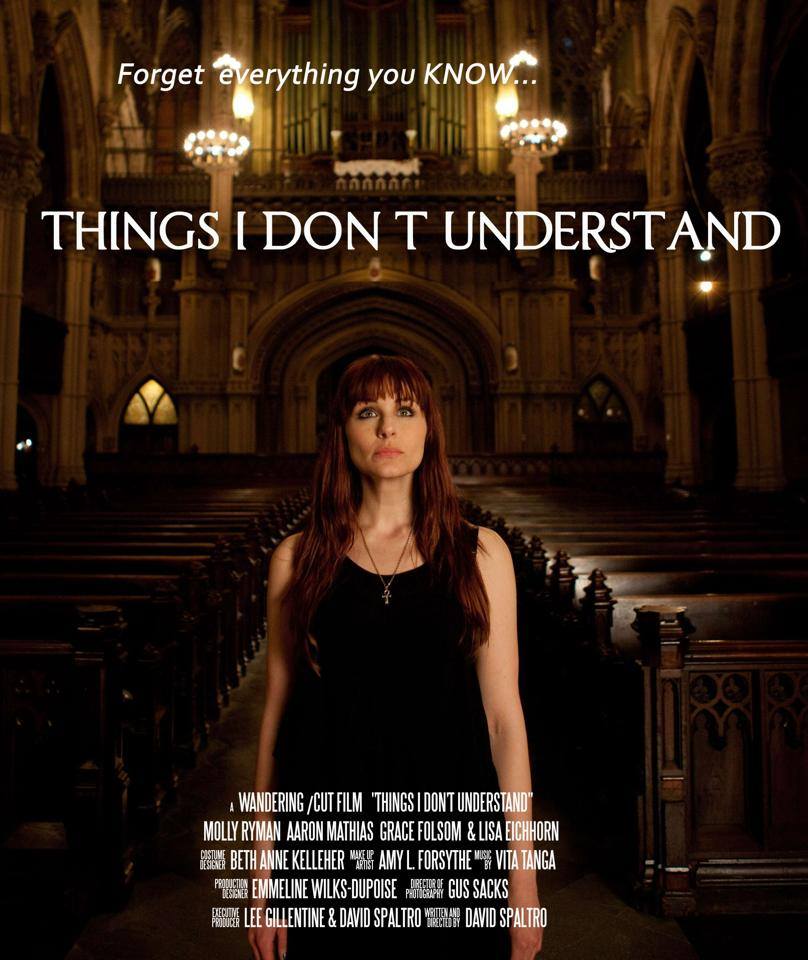
Movies like “Flatliners,” “The Sixth Sense” and even “Heaven Can Wait” have explored this subject in various ways, but David Spaltro’s “Things I Don’t Understand” is one of the more thoughtful I have seen on it in recent years. It’s not interested in coming up with some supernatural answer to this question, but instead in how our curiosity can somehow rob us of what meaning our lives have. Here we meet a variety of characters whose mind and thoughts are broken as their present lives seem unfulfilling because of physical and emotional scars, and their futures all seem relentlessly bleak as a result.

Molly Ryman stars as Violet Kubelick, a graduate student working on a thesis of what becomes of us after death. Over time, Violet has emotionally detached from the world and those around her after surviving a failed suicide attempt, and she has since developed a pessimistic attitude about life and what it has to offer. She lives to avoid every customer who enters the bookstore she works at and freely embraces a life of drugs, alcohol and promiscuous sex as though she is daring death to take her away from this ever so cruel world.

Things come to a head for Violet as she and her obsessively artistic roommates, bi-sexual musician Remy (Hugo Dillon) and hypersensitive artist Gabby (Melissa Hampton), face eviction from their home in Brooklyn and have to quickly come up with the money to save it. As this is happening, Violent comes to interview Sara (Grace Folsom), a girl with end stage cancer who approaches the end with a sardonic sense of humor, and she forms a friendship with lonely bartender Parker McNeil (Aaron Mathias) who is trapped by a tragic past that won’t leave him be. All these relationships bring about a much needed catharsis for everyone as they need to break free of what holds them back.

What I really liked about “Things I Don’t Understand” is how it doesn’t come to us with easy answers about the afterlife as it is far more interested in raising questions about life after death. To define what happens when you die in a movie is tricky because you threaten to lose half your audience with your own interpretation. Spaltro avoids this trap and examines how our questions about life after death come to define how we live life day by day. For these characters, it has seemingly robbed them of a positive outlook on life and has frozen their emotions at a moment in time to where they may never fully thaw.

The acting all around is very good, and Spaltro has given each actor a challenging role regardless of how big or small it is. Ryman has the tough job of portraying a character who is not altogether likable, and she simultaneously (and without words mind you) has to indicate the psychological trauma which has come to define her life. As Spaltro has us guessing as to what that is, Ryman gives us a deeply felt complex portrait of an individual we might easily, and thoughtlessly, dismiss as damaged goods, but who is fighting a battle within herself to find a reason to keep on living.

The best performance in “Things I Don’t Understand,” however, belongs to Grace Folsom as Sara. The role of a terminally ill person can be a thankless one as we have seen it so many times to where it often feels like a shamelessly manipulative device filmmakers use to lay waste to our emotions for no really good reason. But Folsom fully inhabits this character with a hard-won dignity and a biting sense of humor that keeps what is left of her spirits up. Everything Folsom does here feels genuine and real, and her emotions never ever appear faked in the slightest.

Aaron Mathias also has a tough role of someone whose happiness came to an abrupt stop years ago, and the shadow of his past hovers over everything he does. As Parker, he comes across as genuinely nice but still struggling with guilt he cannot put to rest. Mathias succeeds in capturing the complexities of his role in giving us a good-natured guy whose eyes betray a deep sadness which still overwhelms him. I could have done without his line of how being a bartender is like being a psychiatrist spiel, but that is only because I have heard it so many times before.

As for the supporting performances, they at first seem too broad for a movie like this, but in retrospect, they feel just about right. Hugo Dillon and Melissa Hampton play artists so dedicated to their art that they have foolishly denied other outlets which could very well add to it. Their characters strive not just for artistic truth but for acceptance from others, something they feel completely lacking in. In a world which can be so cold and unfeeling to their desires, they have forgotten to respect themselves. As much as Dillon and Hampton go over the top, they both inhabit their characters fully and are more than willing to experience their longings and horrific embarrassments (just wait until you see Gaby’s play) in order to reach a new level of understanding about themselves.

Other performances worth noting include Eleanor Wilson’s as Darla, the new to town actress who looks and sounds dumb, but who turns out to have a positive view of life by choice to where she cannot be mistaken as a victim of blissful ignorance. Lisa Eichhorn takes what could have been a throwaway roll as Violet’s psychiatrist, Anne Blankenship, and gives it a nice edge you don’t always see in characters like this one. And let’s not forget Mike Britt who gives great comic support as Parker’s good friend, Big Felix.

“Things I Don’t Understand” is one of those movies wandering around in the overcrowded world of independent cinema which I hope finds the audience it deserves. While it looks like yet another movie wondering about what happens when we die, it takes this question and uses it to define how we can live for today. The more I think about this film, the more it reminds me of the lyrics of one of my favorite Pearl Jam songs:

“You can spend your time alone, redigesting past regrets, or you can come to terms and realize you’re the only one who can’t forgive yourself. Makes much more sense to live in the present tense.”

* * * ½ out of * * * *

Gaspar Noe’s ‘Vortex’ – An Unflinching Descent into Oblivion

This movie starts off simply enough with an elderly couple outside of their apartment in northeast Paris, having what looks like lunch and some wine as they are enjoying the long life they have had together. The wife then asks her husband, “is life a dream?” He responds, “life is a dream within a dream.” Seeing these two together in such a simple setting spoke to me of a couple who have lived what looks like a very successful life. It also proves to be the happiest scene this movie has to offer.

Vortex” is the latest piece of cinema from Gaspar Noe, a filmmaker I very much admire and have no problem nor hesitation in defending. This particular movie is his most mature one to date, but do not for one second think he has lost a single ounce of his audaciousness here. With “Vortex,” he takes us on a cinematic journey which I can best describe as being unflinching as we follow this couple as their mental and physical health are on a permanent downward slope. Gaspar begins this movie with a dedication which states: “To all those whose brains will decompose before their hearts.” This is then followed by Françoise Hardy singing “Mon Amie La Rose,” a song about going from life to death. Suffice to say, you know from there that this movie will not have a happy ending, and there is no music score from Thomas Bangalter to elevate us out of the bleakness on display.

With “Vortex,” Gaspar goes out of his way to utilize the split screen approach, which Brian DePalma used to great effect in his movies, and a line is slowly drawn down between these two characters to where their existence together will never be the same. They go about their daily activities in what seems like the usual mundane way as the husband works on a book he calls “Psyche” which deals with movies and dreams, and the wife goes shopping at local stores near Stalingrad Station where they live. But as she travels through the aisles of one store, we see on her face how lost she is to where it quickly become clear she has no idea where she is at. Keep in mind, this is just the start of the story. We have yet to see how truly bad things will get.

As for the husband, the work on his book is constantly being undermined by his wife’s deteriorating condition which shows itself in the most horrifying of ways. In addition, he is suffering health problems of his own as his heart condition has him checking his blood pressure every other day. Their only hope is the help they get from their son, Stéphane (Alex Lutz, playing one of the few characters here with an actual name), but he can only deal with so much as he has problems of his own which includes raising his son, Kiki (Kylian Dheret), and recovering from his mental breakdown and a drug addiction which threatens to overtake him in the face of inevitable mortality.

We know Dario Argento best for being one of the best horror filmmakers ever which such classics as “Suspiria,” “Deep Red” and “The Bird with the Crystal Plumage” among others. As for Françoise Lebrun, she is a highly acclaimed French actress who has appeared in a plethora of movies, most notably in Jean Eustache’s “The Mother and the Whore.” Together, these two do not act their roles as much as they inhabit them. With the split screen setup, this makes perfect sense as every single moment in this couple’s time together counts for everything. Even the most mundane of details carries a lot of meaning as these two experience a deterioration neither is prepared to accept or fully deal with.

I also have to give Alex Lutz a lot of credit as well. Not only does he inhabit his role alongside Argento and Lebrun, but he never overacts in the slightest as his character of Stéphane has to carry the weight of his parents’ mental and physical demise all on his shoulders, and anyone who has been through a similar situation can certainly relate. Still, the scene where he relapses without even knowing his son is watching him freebase proves to be quite devastating.

With “Vortex,” Gaspar is not out to pass judgment on these two characters or those around them. Instead, he makes us follow them are inevitable journey to death which we know is coming. Is it cruel of him to do this? No, not really as we have a certain denial when it comes to the finality of life. We know it is coming, but who is prepared to deal with it? While we say we will be there for our loved ones when they breathe their final breath, who exactly looks forward to that?

Watching this movie, I was reminded of some dialogue from one my favorite television shows, let alone one of my favorite HBO shows, “Oz:”

“Let me tell you, dying is a lot harder on the living than it is on the dead. Death really only hurts those left behind.”

“Do we care for people when they’re sick because we actually care about them? Or do we care for them because when our time comes, we want someone to care for us?”

“The state’s attitude to the elderly, any elderly, in or out of prison is… hurry up and die.”

With “Vortex,” Gaspar is not out to suggest any course of action, but to instead offer us an unflinching look at a couple’s last moments before they expire. Even if I felt the urge, I could never look away from the screen as these two individuals breathed their last breaths. Now while it might sound like I am spoiling this film for you, I am not. Some films you watch to enjoy, and others are meant to be experienced. “Vortex,” like all of Gaspar’s films, is meant to be experienced more than anything else, and I applaud it for that.

I would also like to add how “Vortex” makes me want to look at my parents and tell them the following:

“If you ever get dementia, I will kill you. You understand?”

Filmmaker Lars Von Trier was once quoted as saying the following:

“A film should be like a rock in the shoe.”

That is certainly the case with “Vortex.” This is not the first Gaspar Noe film to give you this feeling, and it certainly will not be the last.

* * * * out of * * * *

Five Nights in Maine

Five Nights in Maine poster

When it comes to dealing with grief, there is no textbook with instructions on how to cope. In movies we often see characters react to the death of loved one in a way that feels overly dramatic and never real. Sometimes the tears come right away, but other times you are simply in shock as accepting the reality of a death takes a long time. We are lead to believe everyone grieves in the same way, but that is simply not true as writer and director Maris Curran shows us in “Five Nights in Maine.”

We are introduced to Sherwin (David Oyelowo) while he is having a wonderfully intimate moment with his wife, Fiona (Hani Furstenberg), and then a few scenes later he gets a call from the police informing him she was killed in a car accident. Overwhelmed by this sudden loss, Sherwin goes on alcoholic binge to deaden the pain which seems never ending. Out of the bluw, he receives a call from his estranged and terminally ill mother-in-law, Lucinda (Dianne Wiest), who invites him to stay with her at her secluded home in rural Maine in order to find a way to deal with the loss of someone they cared so much about.

Now at this point “Five Nights in Maine” looks to be one of those Hollywood movies where two people from different parts of life come together to sort out their differences and come to see what makes their suffering the same. Well, this movie is and isn’t that. What’s fascinating is how Sherwin and Lucinda don’t share grief as much as they compete with each other over who is grieving the most. It’s almost like a variation on a classic Ethel Merman song:

“Any grief you can feel, I can feel greater. I can feel it greater, greater than you.”

“No you can’t!”

“Yes I can!”

“No you can’t!”

“Yes I can!”

“No you can’t!”

“YES I CAN! YES, I CAN!”

Is this the best way to deal with grief? Perhaps not, but it is the way Sherwin and Lucinda decided to take. Sherwin tries to reason with Lucinda who is cantankerous and difficult to deal with, and it turns out Lucinda’s last meeting with her daughter did not go well at as Fiona returned from it very upset. As the movie goes on, you wonder if it is possible for either of them to find any common ground on Fiona’s passing. After a while, you just hope and pray they find a way through their immense pain to move on with their lives or, especially in Lucinda’s case, what’s left of them.

If there is one reason to see “Five Nights in Maine” other than the wonderful cinematography by Sofian El Fani, it’s the performances. David Oyelowo, criminally robbed of an Oscar nomination for his performance in “Selma,” reaches some deep emotional depths as Sherwin. The reaction Sherwin gibes off upon learning of Fiona’s death feels so amazingly genuine that you wonder how Oyelowo was able to portray it with such piercing honesty. This is clearly not an actor who takes the easy way out when it comes to any role he takes on.

Wiest, an actress we don’t see enough of these days, gives her strongest performance in quite some time as a mother facing death’s door and trying to understand why her daughter made it through there before she did. She is not out to make Lucinda an easily likable person, but she does show the cracks in her stern face as the reality of Fiona’s death begins to settle in.

There’s also a wonderfully understated performance here by Rosie Perez who plays Lucinda’s nurse, Ann. This character serves to fill in the missing blanks of which Sherwin was not witness to when Fiona met with Lucinda for the last time. Knowing how sassy Perez can be on screen or during her time on “The View,” her performance in “Five Nights in Maine” is a compassionate one which doesn’t require her unbridled enthusiasm to make it work. Watching her here serves as a reminder of her Oscar nominated performance years ago in Peter Weir’s “Fearless,” and how dare we forget how good she was in that one.

Curran, just as Josh Mond did with his film “James White,” sticks the camera right in his actors’ faces to where their every little gesture and facial movement comes to speak volumes when words cannot do the same. She is also not a director looking to spell out everything for the audience which I admire, and she doesn’t bang them over the head with a shamelessly manipulative film score. Speaking of which, David Boulter’s music helps heighten how lost the characters are in their own wilderness of pain and guilt.

Having said all that, I cannot help but have mixed feelings about “Five Nights in Maine.” While the acting is stellar and the direction strong, Curran’s screenplay feels strangely incomplete. While the actors are able to plumb the depths of their characters, Curran ends up keeping us at an arms-length distance from them. I came out of this movie feeling like I could have gotten to know them better, and their resolution over the loss they experienced does not feel entirely fulfilling. Like I said, Curran doesn’t spell everything out for the audience, but I wished she had dug even deeper into the characters’ psyches to give us something more memorable.

There is a lot to like about “Five Nights in Maine,” but I found some time after watching it that it didn’t leave much of an aftertaste. Overall the movie is a near miss for me. The performances are strong, but the story and the screenplay are an incomplete puzzle with pieces which shouldn’t be that hard to find. This movie quickly reminded me of the Peter Gabriel song “I Grieve” which offered a far more complete journey through grief in just a few minutes’ time. When this movie concludes, it still feels like Sherwin and Lucinda still have a long way to go to find peace with what happened.

Five Nights in Maine Oyelowo and Wiest

* * ½ out of * * * *

Copyright Ben Kenber 2016.