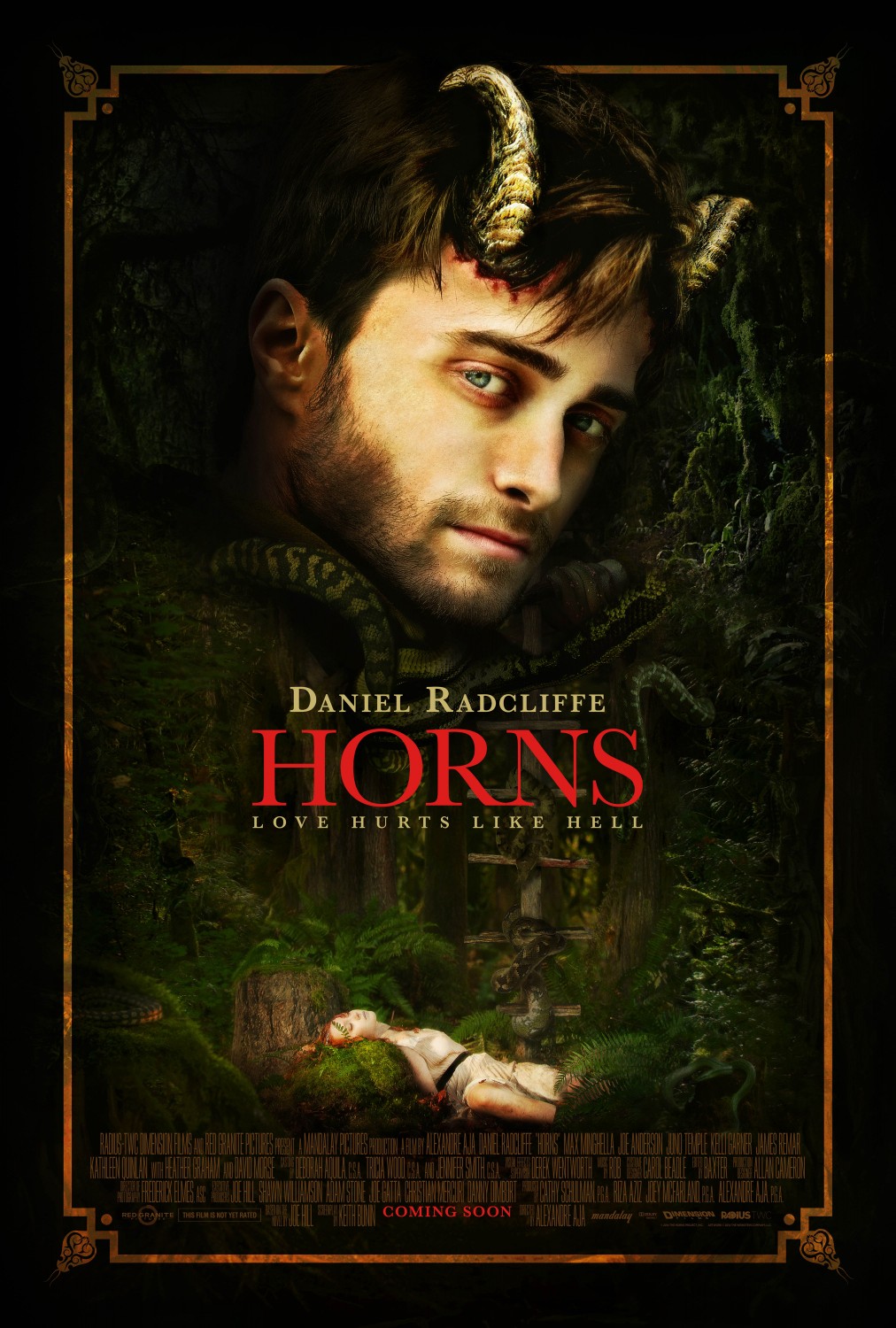
John Krokidas and Austin Bunn Discuss ‘Kill Your Darlings’
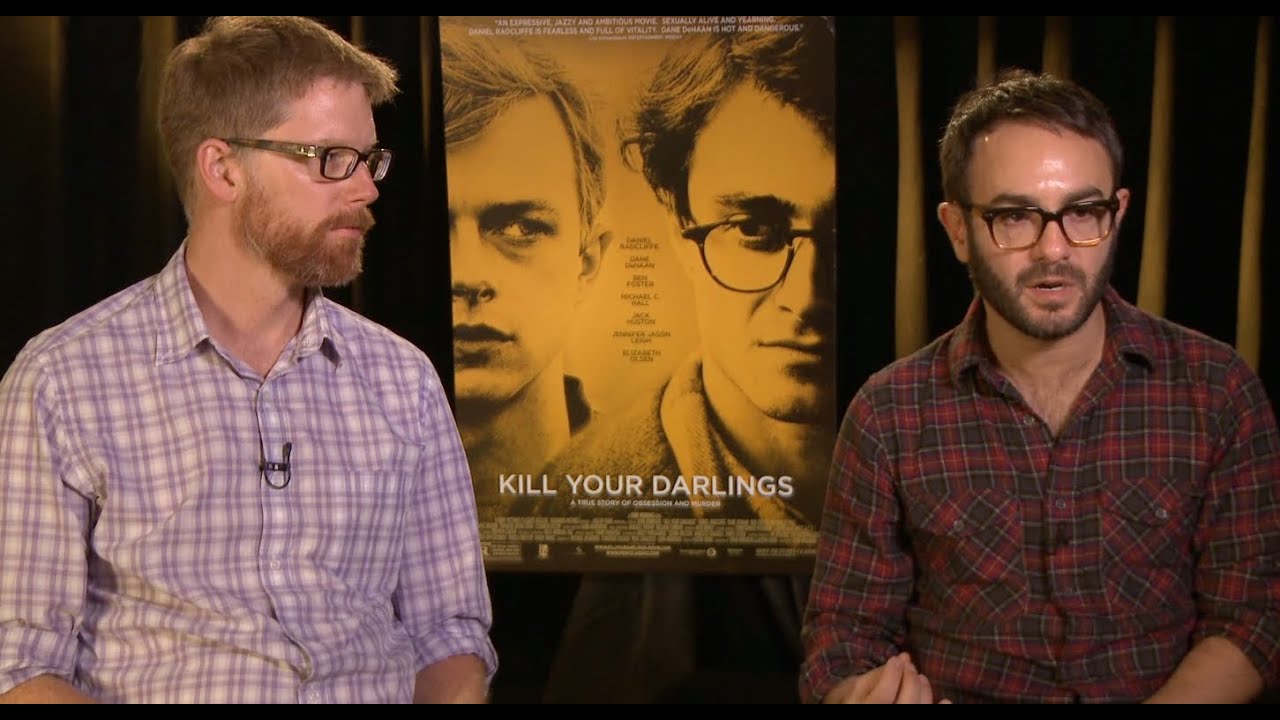
WRITER’S NOTE: This interview took place back in 2013.

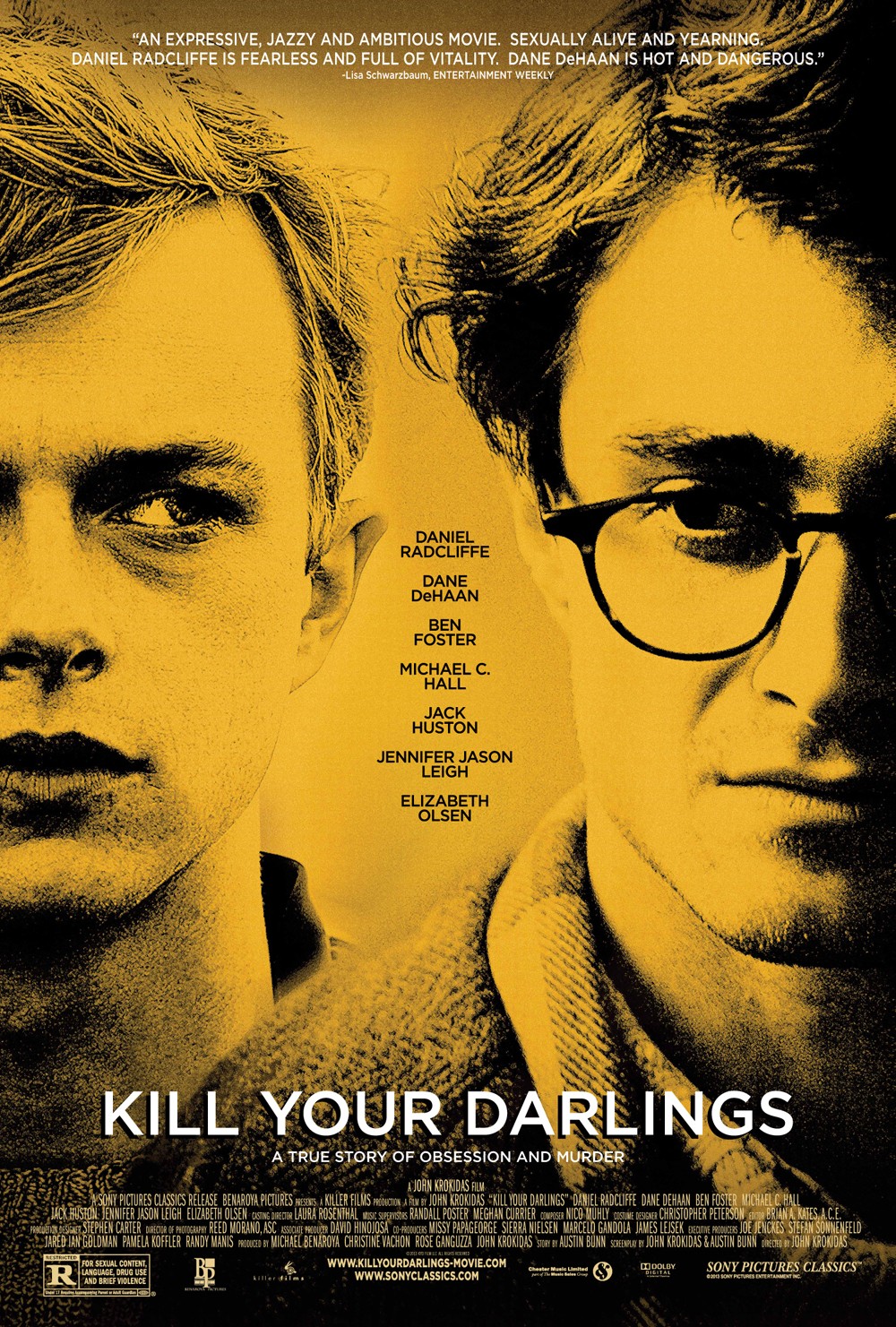
John Krokidas makes his feature film directorial debut with “Kill Your Darlings” which stars Daniel Radcliffe, Dane DeHaan and Michael C. Hall. The movie is about a murder that occurred in 1944 which brought three poets of the beat generation (Allen Ginsberg, Jack Kerouac and William Burroughs) together for the first time. Radcliffe portrays Ginsberg as a 17-year-old who is about to start college at Columbia University, and he ends up falling under the extroverted spell of fellow classmate Lucien Carr (DeHaan) who introduces him to the poets who would later bring a new vision to writers everywhere. It is when Carr murders his love David Kammerer (Hall) that their relationship starts to become unglued.

Krokidas co-wrote the script for “Kill Your Darlings” with his Yale University roommate Austin Bunn. A former magazine journalist, fiction writer and reporter, Bunn graduated from Yale and went on to get his master’s degree at the University of Iowa Writers’ Workshop. As for Krokidas, he later attended New York University’s Graduate Film Program where he made the short films “Shame No More” and “Slo-Mo.”

I got to hear how Krokidas and Bunn made the film under challenging circumstances when they appeared at the “Kill Your Darlings” press conference held at the Four Seasons Hotel in Los Angeles, California.
Question: What was the division of creative responsibility between you two like?

Austin Bunn: Probably like a lot of people in this room, I discovered the beats in college. I used to go to the campus bookstore and just track down the poetry collection, find Allen’s books and read them like they were some secret transmissions from the future version of myself. I was a closeted, young creative writer from New Jersey so Allen Ginsberg’s work meant the world to me. So, I had this really strong connection with Allen and of beat biographies and the history. I read a lot of the back catalog and I had come to John with the idea. So, in terms of the division of responsibility, I would write the first draft and then John would come in. The thing about John, as you will soon learn, he wanted to raise the emotional decibel level in every scene. John is one of the most riveting and vital and least hagiographic version of this story. We didn’t want to take the beats’ greatness as a given, so John sort of demanded that we write a really emotional roller coaster. Then we just went back and forth. John talks about it as the Postal Service, like the band version of producing a script. We were living in different cities at the time; I was at the University of Iowa Writers’ Workshop as a graduate student and John was in New York finishing film school.

John Krokidas: Austin wanted to do this as a play first. He was a playwright and a short story writer of some renown, and we were college roommates and we shared ideas with each other as college roommates and good friends do. But I, of course, started seeing the movie version in the back of my head and I had just gotten out of NYU film school and started convincing him that the play would be really flat and undramatic, but as a movie…

Austin Bunn: The Jedi mind trick!

John Krokidas: This would be amazing. But I would say I’m the structure guy I think, coming from NYU’s film program. I’m very traditionalist in terms of Sidney Lumet’s “find your spine,” and Austin is really wonderful with character and dialogue. If anything, he’s on a religious crusade against expository dialogue, and I would write these three paragraph monologues for each character expressing their emotion like that scene where Jennifer Jason Leigh finally turns to Allen to give him advice. I had a two-page monologue version and Austin crossed it all out (Austin laughs) and wrote the one line that’s in the movie, “The most important thing your father ever did was fail me,” which said everything.

Question: The movie is also very visual too because of the beats’ energy and such. How did you go about creating the look with cinematographer Reed Morano?

John Krokidas: I’m so proud of what we brought to this film. The movie is set in 1944 and it’s a murder story. Even in the writing process, I looked up and saw that “Double Indemnity” won Best Picture that year, and it was the year of “Laura” and “Gilda” and all these great American Film noirs. So, I said, “Why don’t we incorporate this even in just the fabric of the movie and start with the jail scene in a place of heightened tension flashback to more innocent times, and then build again to see whether or not these characters can escape or not escape their fate?” So, I started looking at noir style at first, but I thought an academic recreation of Film noir, who wants to see that? Going back to spine and theme, I thought what this piece was really about was young people finding their voice. So, what about going from conformity, the row houses of New Jersey and the pillars of Columbia, to nonconformity? And of course, where film noir went in the hands of the French was the New Wave. So I thought, “Okay well let’s start off with these controlled, composed, expressionistic-lit shots, and then as the boys go down the rabbit hole together, let’s take the camera off the tripod. Let’s get some jazzier free-form style.” So, I made this book of the 1940s. I had learned that Ang Lee, for “The Ice Storm,” did a 50 page book on the 1970s with colors, fonts and important historical events, you name it. So, I did that with the 1940s and then gave it to Reed. The great thing that I have learned on this is you can do all the academic treatises you want, but then you hire great people. She saw the goal post of what I wanted and then she showed me Jean-Pierre Melville’s films. She showed me films that meant a lot to her and then let kind of what I wanted filter through her own imagination. What I am amazed by specifically in her work is we did this movie in 24 days. Each scene was done in two hours or less, and she has the instincts to be like a documentary camera person and is able to light like that at the same time. We wanted to make sure this film felt relevant and contemporary as opposed to just being a traditional biopic.

Austin Bunn: (We didn’t want it to be) the greatest hits version of their lives.

John Krokidas: It was looking at Ryan McGinley photographs and contemporary, counterculture, young images of today and then finding what connected them to the 1940s. What was resonant in counterculture then and today at the same time.

Question: What was the direction that you were giving your actors? We were told that sometimes you would pull them aside for a more dramatic scene, but was there a consciousness you went into to direct the film and the actors? Were they any kind of specific kind of notes you gave them?

John Krokidas: Here’s the embarrassing story; Austin and I actually met freshman year because we were both acting in a production at Yale of “The Lion in Winter.”

Austin Bunn: Yes.

John Krokidas: Neither of us were the greatest actors in the world which is, I think, why we went into writing and directing. But I trained as an actor as an undergraduate and what you learn is that each actor has their own method and way. It’s whatever it takes for them to get the emotions to the surface. So, when I met with each actor that I cast, I would just simply ask them, “Have you trained? How do you like to work and what don’t you like?” Michael C. Hall gave me one of the greatest lessons in directing in which he said, “If what I am doing is not making you happy, don’t tell me that because that will make me self-conscious and it will make me think about what I’m doing. Just tell me to add whatever you want to what I’m doing.” That’s just a great lesson for life. Dan and I, when we were working together, we spent time before production (he was so generous and hard working on this) and he wanted to approach this like it was his first film which was very poignant to me. I said, “Would you like to try learning a new method and approach acting in a different style?” He said, “Absolutely!” So, with Dan, he’s so bright and in his head, and for the intellectuals Meisner works really well in focusing your action on what you are trying to do in the scene. Dane had trained extensively, and what he does is create a Bible for the character and does tons of research before production. Then he burns it and starts really becoming the character on set. Ben Foster (who plays William Burroughs) has something I’ve never seen another actor do which is, once we’ve basically got the scene up on its feet, he goes and he does the blocking of the scene by himself in the location several times. He calls it “the dance” because once he’s memorized the dance and knows the physicality (“I need to pick up the fork here, I need to put it down there”), he doesn’t have to think about it anymore and that’s completely freeing to him. So it’s like cooking this huge seven course meal where you have to get everything done at exactly the right time, but every plate needs a little bit of love in a different way. To me the greatest thing was being able to get this dream cast and then just to work with them to find how they like to work and what got the best out of them.

Austin Bunn: John had a really intuitive idea which was to keep the actors from reading past this point in the biographies, so none of the actors came in burdened by the mythology of who these guys would become. They were just 19-year-old kids. So, I think that was really smart and it released the actors from having to play the later decisions in their lives and the kinds of writers they would become. They just got to be young people, and that was a great relief I think for them.

John Krokidas: Yeah, and for us too as writers. I had a talk with Jack Huston once when he and I shared the same room and I’m saying, “Oh my god, I’m directing you as Jack Kerouac.” But we were like, “No. You are Jack who is a college student on a football scholarship who hates the other jocks, who just wrote a book which he thinks might be completely trite and he just wants to get out of college and have some real-life experience and join the war so he could begin to have real material to write his next book. That’s who you are.” That just liberated all of us.

Question: When writing the script, how much are you tied to the truth and how much are you allowed to take creative license?

John Krokidas: We did so much research for this. We felt we had to, and I think part of it’s our academic background because there’s so much in the biographies. There are so many biographies of them out there, but then also we would find different accounts online for example from David Kammerer’s friends. They said that that relationship between him and Lucien was never portrayed accurately and that Lucien actually kept coming back to David and David was asking him to end the relationship. And then we may have broken into Jack Kerouac’s college apartment together. We did the trick of pressing all the buzzers and then somebody let us in. But what’s interesting is Columbia students were living there and they had no idea that they were in Jack Kerouac’s apartment. So, we physically went to all of the locations in which this movie took place, and that just helped inform our writing process as well; getting to be able to visualize the actual spaces. Add to that, we went to Stanford University to the Allen Ginsberg archives. It wasn’t about the lack of material out there. If anything, it was about making sure that we really just focused on who they were up until the point which the movie takes place.

Austin Bunn: Just to add to that, the people that I know that have seen the film have been really surprised at how much is actually totally accurate. The day after the murder, Allen Ginsberg went to the West End Bar, “You Always Hurt the One You Love” was playing on the jukebox and he wrote the poem that ends the film. It ends with “I am a poet;” that is a line from August 20, 1944 so we worked really hard to weave it in. But like John was saying before, we didn’t want to do the dutiful, stuffy, every box checked kind of biopic that has been around for a while. We wanted to do something that felt more in line with the spirit of the beats that was more specific and honest and transgressive, and I hope we got there.

Question: Did you two have a specific goal of what you wanted to portray and what you wanted the audience to leave with either of the time or of the characters themselves?

John Krokidas: What I want the audience to leave with is that feeling of when we were 18 and 19 years old just like these guys were in the movie; when everything seemed possible and you knew that you had something important to say about with your life. That you wanted to do something different and unique and not just what your parents taught you, not just what school taught you, but you wanted to really leave your mark on the world. The fact that after the movie these guys actually did it and created the greatest counterculture movement of the twentieth century is amazing. I have had plenty of people come up to me after seeing the movie and said, “This movie made me want to be a better writer” or “this movie made me want to go back and start playing music again.” That to me means everything. That’s ultimately, deep in my heart, why I wanted to make this movie.

Austin Bunn: The pivot point was this murder. I loved Allen Ginsberg for his openness and his honesty, and to think that at one point in his life he was called upon to defend his best friend in an honor slaying of a known homosexual, the very thing that Ginsberg went on in his life to defy and radically create change about the idea of being in the closet and the shame around that issue, that contradiction was really exciting to us dramatically.

John Krokidas: You know this movie took, from the time that we started talking about this until the time that we are getting the chance to be with you all today, over 10 years to make. When I really think about it, the thing that kept me going and kept me wanting to tell this story is that there needs to be something that pisses me off at night. The fact that in 1944 you could literally get away with murder by portraying your victim as a homosexual, that pissed me off to no end. This isn’t a political movie and it’s one scene and it’s obviously what informed how Lucien Carr got away with murder, but for me that was the thing that kept me up all night that said, “No, I have to tell the story.”

Question: The movie has different kinds of music playing throughout it like jazz and contemporary music. Did you envision using different musical styles when it came to making this movie?

John Krokidas: I originally wanted a bebop jazz score similar to Miles Davis’ score for Louis Malle’s “Elevator to the Gallows” because the transition from swing to bebop at this time was exactly what these guys wanted to do with words; to go from rhythms to exploding them into something beautiful. My music supervisor, Randal Poster, said to me, “John put down your academic treatise, put down your paper. Go make your movie. Your child’s going to start becoming the person that he or she wants to be.” So I went and I made my movie, and then I put jazz music on the film and it didn’t work at all. And then I went and did only period accurate music and it felt like Woody Allen’s “Radio Days” which is a great movie but it’s not the young rebellious movie about being 19 and wanting to change the world that we wanted to make. So, I actually went back to the playlists that Austin and I used a while writing this movie and I used Sigur Rós and stuff that was timeless but contemporary, and it brought the movie to life. Then I realized that the composer Nico Muhly had arranged all of those albums and worked with Grizzly Bear and Björk and other people that we were using as temp track. So, we got the movie to Nico and just thankfully he loved it. Now that I knew that I had contemporary music in a period film, then we get to that heist sequence. I had heist period music on it, it was so corny. The sequence didn’t work, it didn’t have any stakes to it, and I can academically tell you when the beats come on, they led to the hippies which led to the punks, and the punks led to Kurt Cobain and the 90s, etc. But the truth is that while I can intellectualize it, you go with what’s visceral and what feels honest and true to you. For me, the biggest lesson in making my first film is to do all of your homework, do all your research, know what you’re doing, but then don’t be afraid to get out of the way if your movie starts to tell you what you should be doing.

Question: How did you decide on what literary quotes to put in, and how did you work with the actors in establishing the cadence and the elocution on those?

Austin Bunn: What a great question! If you know any of the beat history, this new vision was real for them and they have written volumes about it, none of which makes any sense. We couldn’t make heads or tails of it.

John Krokidas: Do you all remember your journals when you were 20 years old or those conversations you had at three in the morning with other college students? We got to read their version of it, and there’s a reason that we hide all of our journals and don’t let them see the light of day.

Austin Bunn: It was challenging. With the uninhibited, uncensored expression of the soul, that’s actually a credible quote directly from the Ginsberg new vision manifesto. So in some ways we knew we had to distill some of that material from the Ginsberg journals to help make the argument for how valuable this manifesto was and the irony honestly of what transpires in the plot which is the very thing that Allen’s called to do which is to create this censored version of history. But in terms of the poetry itself, it was really challenging because as we all know there are movies about poets and writers where recitations happen and they are really flat and they can be corny and there’s a time where you tune out of the movie when you’re waiting for the poetry to end. Specifically, I think of Allen’s first poem that happens on the boat. We were really challenged to find a poem that would speak to audiences but was genuinely an Allen Ginsberg poem written in his voice. So what we had to do was really channel Allen. His early work is quite rough and burdened by trying to impress his dad and his professors. John had the concept of this isn’t a poem that he’s just reading to impress people, it’s a poem he’s reading to Lucien Carr. The audience knows that, you know that and Lucien finds it out on the boat at that moment. That really gave me permission to kind of rethink what the poem was going to do and how we would make it, so we came upon Allen’s method which was kind of magpie; stealing from the American vernacular and going out and finding common speech and repurposing it, creating this Whitman-esque inclusion. So you hear in the poem things that you’ve already heard in the film just like Ginsberg did himself. Things like Allen in wonderland is reworked in the poem, unbloomed stalwart is the very thing that David said to him at the party. So we’re kind of hopefully paying off not just a poem that is emotionally powerful, but also something of the method that Ginsberg would use for the rest of his life.

John Krokidas: Radcliffe was such a hard worker. While he was on Broadway doing a musical, we would meet once a week for two months before even preproduction and rehearsals began to work on the accent and to work together. I have him on my iPhone reading “Howl.” We didn’t look at the later recordings, we looked at the earliest vocal recordings possible of Allen Ginsberg to make sure that we weren’t capturing the voice of who he became, but his voice at that time and what his reading voice was like. To be honest, it’s just really telling the actor, “You’re not performing a poem. You are letting Lucien know that he is loved with this poem and that you love him and that you can see inside him.” It’s playing the emotion underneath the poem which was the direction.

Question: What does it do for you when all the main characters are gay? Normally you got the female characters who can be a love interest but they are not going to be a rival. Usually, even now in films and in life, there is a separate role where as if you are all the same gender, you can all be anything to each other.

John Krokidas: I think this is a movie with every character is discovering what their sexuality is (gay, straight, bi or all over the place), and more importantly whether or not they are worthy of being loved. I personally don’t know if Lucien Carr was straight or gay, and to me it’s irrelevant because I have seen this relationship play out amongst gay people I have known so many times where an older man who is gay and a younger man of questionable sexuality develops such a close bond. The stereotype I think would be is that the young man had an absent father figure or finds the older man’s confidence and just the care and nurturing qualities of them very attractive. What happens though is that those two get so intimate that ultimately there’s nowhere else to take the relationship but sexual, and when that happens then the power position in that relationship twists and the younger man suddenly realizes that he holds the power because he’s the sexually desired one. That’s where a lot of conflict ensues. Whatever you read about that relationship between Lucien and David, everyone knew that they were codependent. Everyone knew it was toxic and going to end badly. Nobody knew it was going to end in murder.

Austin Bunn: I think a lot of the biopics we see are kind of denatured of their sexual qualities and the edginess of the relationships in them. So, I think we were trying to do something that restored some of that ambiguity, lust, desire and confusion that is genuinely in the beats’ history. We were not making that up.

Kill Your Darlings” is available to own and rent on DVD, Blu-ray and Digital.

Underseen Movie: ‘What If’ – A Romantic Comedy I Actually Enjoyed

Okay, this is getting scary. I’m starting to enjoy romantic comedies again, and that is so not like me. Recent years have given us a few actually worth watching like “Obvious Child” and “Trainwreck,” both which went far beyond my expectations. This all started to happen as the genre began finding itself suffering from burnout thanks to a lot of banal movies which have made me roll my eyes on a regular basis, many of them adaptations to Nicholas Sparks novels. Then there was “What If” (or “The F Word” as it is known in certain circles) which is by no means an original romantic comedy. It owes quite a bit to “When Harry Met Sally” among other classics, and it does follow a lot of the same conventions I have come to expect from this genre. But what keeps it from feeling ordinary is a terrific screenplay, smart direction and wonderful performances from its two undeniably adorable leads: Daniel Radcliffe and Zoe Kazan.

Radcliffe plays Wallace, a medical school dropout who has been in one failed relationship too many, and this makes him take a long break from the game of love. But while at a friend’s party, he ends up bumping into Chantry (Kazan), an animator with a sparkly personality which more or less matches his own. After walking her home, Chantry informs Wallace she has a boyfriend named Ben (Rafe Spall) whom she has been with for a few years, and that she would love for her and Wallace to just be friends. Wallace agrees, but as time goes on, he wonders if they can be more than just friends. Lord, I have had many friendships with women where I wondered the same damn thing.

The questions of whether or not men and women can be friends still seems to come up from time to time, and that’s even though the answer should be a resounding yes. But there is always that one friend who belongs to someone else whom you endlessly pine for. “What If” really digs into this state of mind to where I could not help but feel Wallace’s passionate longings which he tries to cover up with a seemingly cynical take on love. We all have had crushes on others, and we are constantly aware of how painful crushes can be when they turn into shattering examples of unrequited love. It all reminds me of some dialogue from John Hughes’ “Sixteen Candles:”

“It just hurts.”

“That’s why they call them crushes. If they were easy, they’d call ’em something else.”

I was reminded of this while watching “What If” because, unlike other romantic comedies, I really found myself desperately rooting for Wallace and Chantry to become a couple. A lot of it is thanks to the fantastic chemistry between Radcliffe and Kazan as they bring this movie to such vivid life. Both play off one another wonderfully, and once you see the two discussing the ingredients of a Fool’s Gold sandwich (Elvis Presley’s favorite sandwich of all), you can tell they were made for each other.

Radcliffe may always have the shadow of Harry Potter hanging over him, but it’s really past the point where we have to recognize what a truly talented an actor he is. As he heads from one genre to the next, the young actor shows all the on-the-job training he got from playing J.K. Rowling’s unforgettable wizard has really paid off. While Wallace tries to put a solid front in an attempt to show how love has not gotten him down, Radcliffe shows what’s going on beneath the surface without ever having to spell it out for the audience.

Kazan has a uniquely adorable beauty about her, and she continues to do great work in every project she’s in. As Chantry, she gets the opportunity to take a character who appears to be comfortable with where she’s at in life, and we follow her through a journey of self-discovery which is honestly long overdue. She has a nice boyfriend and doing the work she loves to do, but throughout “What If” we watch her as she begins to discover what she really wants out of life. As she makes these subtle changes in her character, Kazan shows us just how wonderful an actress she can be.

There’s also a great scene-stealing performance from Adam Driver as Wallace’s best friend, Allan. Always giving bad advice on women and yet having a lot more success with them than Wallace, Driver has a wonderfully dry sense of humor here which is irresistible, and it’s a blast watching him stumble over his words on a regular basis.

I also have to give credit to Rafe Spall who plays Chantry’s boyfriend, Ben. This could have been the usual douchebag boyfriend who deserves to be dropped flat, but Spall makes him a good hearted man who just doesn’t have his priorities straight.

“What If” was directed by Michael Dowse whose other films include the two “FUBAR” movies, “Goon” and “Stuber.” While he doesn’t go out of his way to reinvent the romantic comedy wheel here, he does freshen up the formula and gives us something which does not feel like something you have seen a hundred times before. Along with screenwriter Elan Mastai, who based this screenplay on the play “Cigars and Toothpaste” by T. J. Dawe and Michael Rinaldi, he does a good job of keeping us emotionally involved in the plight of these should-be lovers all the way up to its end.

I still have issues with romantic comedies from time to time, but “What If” shows what good filmmakers can do with a formula that has been done to death. Even though I have seen this kind of film so many times before, this one proved to be a lot more emotionally involving than I ever could have expected it to be.

* * * out of * * * *

CHECK OUT THE VIDEO BELOW TO VIEW THE EXCLUSIVE INTERVIEW I DID WITH DANIEL RADCLIFFE ON “WHAT IF.”

Movies Which Explore the Reality of White Supremacy

American History X Edward Norton

The tragic and horrific events which came about during a white supremacy rally held in Charlottesville, Virginia were a sad reminder of how hate can ever so easily take over the weak-minded. But moreover, it has shown how the power of white supremacists has grown over the years. While the current Presidential administration has allowed this movement, whether they admit or not, to gain strength, this network of racism has been growing for far longer than most people realize. While politicians continue to exploit our fears of international terrorists, it should be clear by now that domestic terrorism is an even bigger threat than what we are dealing with overseas. The question is, can we get more Americans to realize this sooner rather than later?

For years, we believed the white supremacy movement was one which was dying a much-needed death, but this is not the case. It got me to thinking of movies released over the years which dealt with this particular form of racism head on. While many saw Neo-Nazis and Anti-Semites as mere fringe groups on their way out, the filmmakers here saw them as still powerful as their leaders were skillful in gaining new recruits and keeping them on board even if they wanted out.

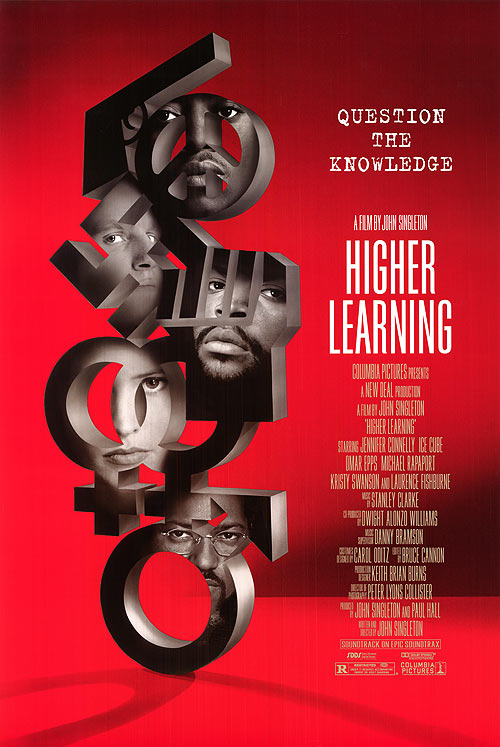
Higher Learning movie poster

Higher Learning

This was John Singleton’s third film following his Oscar-nominated “Boyz n the Hood” and “Poetic Justice,” and it takes place at the fictional college of Columbus University where people from different walks of life and races are forced to deal with one another in different ways. One particular subplot has a freshman named Remy (played by Michael Rappaport) having trouble fitting into his new environment. One night, while sitting alone on campus, he is approached by Scott Moss (Cole Hauser), a white supremacist who invites him to hang out with his friends for a drink. From there, Remy finds a sense of belonging he initially had trouble finding, but the other skinheads begin to wonder if he is all talk and no action, and this leads to a devastating climax which has him committing an act of violence he will never be able to take back.

When “Higher Learning” was released back in 1995, many critics did not take the white supremacy storyline all that seriously, thinking it was dated or dealing with something which no longer seemed like much of a threat. But watching this movie now in 2017, the actions of Scott Moss and Remy feel more real and scarier than ever before. Scott senses Remy is capable of violence from their first meeting, and he exploits this knowledge at every given opportunity. The last time we see Scott in the movie, right after Remy has shot at people with a high-powered rifle, he stares at the camera and smiles in a way which is truly chilling. Looking back, I think Scott saw this as the start of a new wave of white supremacy power, and the realization unnerves me to where I can’t get this movie out of my head.

American History X poster

American History X

Tony Kaye’s powerful 1998 film is impossible to forget about once you have seen it. Edward Norton stars as Derek Vinyard, a young man who becomes a member of the white supremacist gang called the Disciples of Christ following the murder of his firefighter father who was killed by black drug dealers. “American History X” follows Derek as he grows in power as a Neo-Nazi, goes to prison after he kills thieves trying to steal his truck, the abuses he suffers while in prison which make him rethink his racist philosophies, and his efforts to keep his brother, Danny (Edward Furlong), from following this same misguided path.

“American History X” is a fascinating study in how someone becomes enamored with a racist movement which he later seeks to abandon upon realizing the cost is greater than his soul can bear. Norton has given many great performances, but this is one of his best as he convincingly takes Derek from being a hateful individual to one who is compassionate and eager to escape the racist realm he has ensnared himself and his brother in. Furlong is equally effective as Danny, a young boy eager to follow in his brother’s footsteps, but who is dissuaded by him to follow such a path. Danny’s last lines in the movie, as he recites the final part of a paper he has written for school, ring true: “Hate is baggage. Life’s too short to be pissed off all the time. It’s just not worth it.”

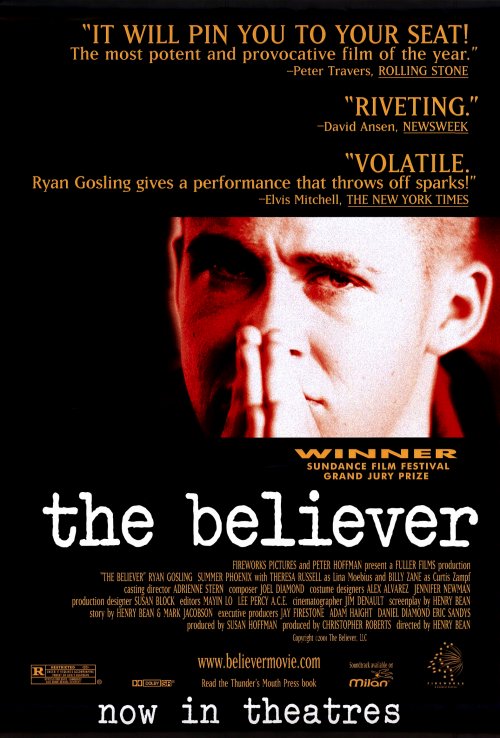
The Believer movie poster

The Believer

This 2001 film was written and directed by Henry Bean, a Conservative Jew from Philadelphia who was the screenwriter behind “Internal Fears,” “Deep Cover,” and, yes, “Basic Instinct 2.” It stars Ryan Gosling, in what proved to be his breakout performance, as Daniel Balint, a brilliant but troubled Jewish yeshiva student who becomes a fanatically violent Neo-Nazi in New York. The story is based on the true-life story of Dan Burros, a member of the American Nazi Party and the New York branch of the United Klans of America who committed suicide after a New York Times reporter revealed he was Jewish.

What’s particularly fascinating about “The Believer” is how its main character of Daniel is so deeply conflicted over his own identity. He presents himself as a Neo-Nazi skinhead capable of vicious violence, but he cannot escape the fact he is Jewish and is still respectful of this religion’s history. When Daniel and a group of skinheads vandalize a synagogue, they trample on a copy of the Torah which he later takes home and carefully repairs. Like “American History X,” “The Believer” shows how someone can be easily swept up into a realm of hate, but we also come to see how Daniel believes hate is the Jews chief defense against utter annihilation.

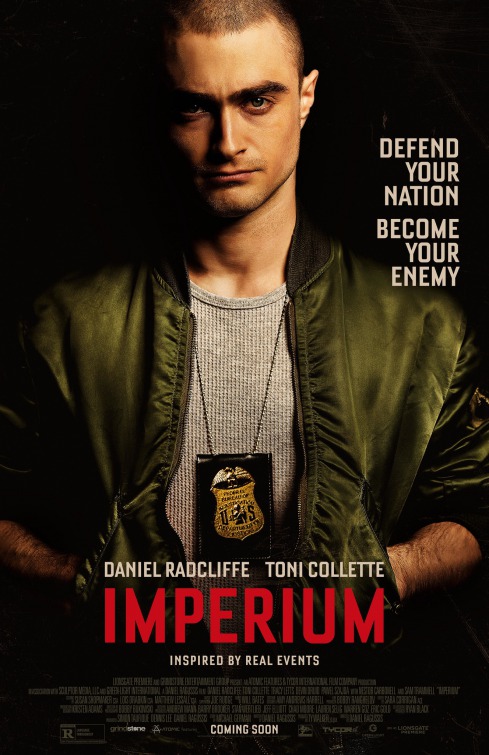
Imperium poster

Imperium

One of the more recent movies on this list, it stars Daniel Radcliffe as Nate Foster, an FBI agent who is recruited by Angela Zamparo (the infinitely cool Toni Collette) to infiltrate a white supremacist group. Nate is eager to prove to himself and others he can be an excellent undercover agent, but as he gets deeper into his role as a Neo-Nazi, he becomes unsure if he can escape it in one piece.

In some ways, “Imperium” is a routine undercover cop movie as the protagonist goes through the conflicts of becoming someone he is not outside of work, but it also shows how much of a threat white supremacy has become in America. There’s a montage near the beginning which shows images of racial hatred in America and of Neo-Nazi groups coming together, and it gets to where you cannot dismiss white supremacists as being a part of a mere fringe group. Seeing those images makes this movie worth the price of admission as they show much of a threat they are against the values this country was founded upon.

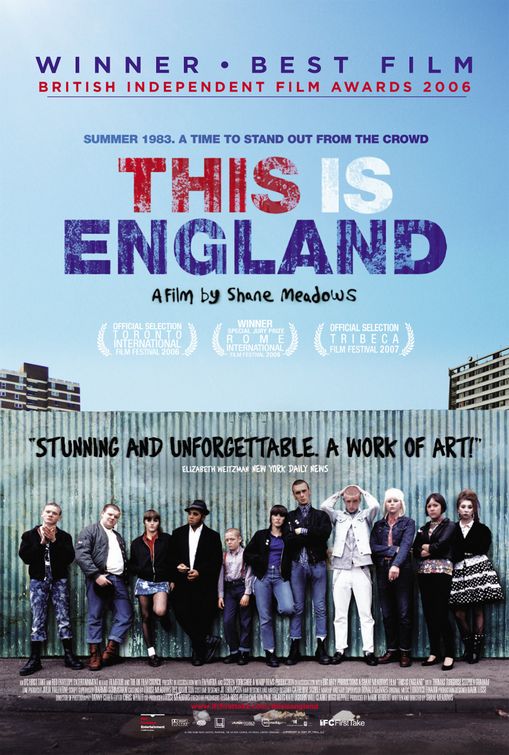
This is England movie poster

This is England

Of all the movies on this list, it is the only one which doesn’t take place in America. “This is England” was written and directed by Shane Meadows who himself was involved in white supremacy groups as a kid. The movie takes place in 1983 and follows 12-year-old Shaun Fields (Thomas Turgoose) as he gets picked on by bullies at school, and we learn his father was killed in the Falklands War. One day, he comes across a gang of skinheads led by Woody (Joseph Gilgun) who sympathize with his struggles and invite him to join their group. From there, Shaun finds himself a part of a family which gives him a sense of belonging and a rise in his own self-esteem. But then Andrew “Combo” Gascoigne (Stephen Graham) returns to this group after serving a prison sentence, and he proves to be a charismatic personality as well as a sociopath. Andrew’s eagerness to take leadership over the group causes many of its members to jump ship, but Shane stays on as he is too much a part of this family to simply abandon it.

“This is England” takes an incisive look at how this skinhead subculture had its roots in the 1960’s West Indies culture and later became adopted by white supremacists. This movie shows this leading to a division amongst skinheads, and of the ways they could attract new members to their movement. It received tremendous critical praise upon its release in 2006, and it inspired a spin-off television series which took place three years later.

Seeing the disgusting rally in Charlottesville, Virginia and its aftermath reminded me of an episode of “Law & Order” entitled “Charm City” in which Detectives Lenny Briscoe (Jerry Orbach) and Rey Curtis (Benjamin Bratt) investigate the murders of several subway riders who were killed by a poisonous gas bomb set off on a train. Eventually, they find and arrest Brian Egan (Kevin Greer), a white supremacist who is later convicted for the crime. Attorney Jack McCoy (Sam Waterston) informs Brian, “You’re a racist and a murderer, and you just found out your country won’t tolerate it.” To this, Brian says the following:

“You mean your country won’t. Mine is growing. You think you can stop it? You can’t stop anything.”

This “Law & Order” episode aired back in 1996, but these lines of dialogue now seem more chilling than ever before.

Daniel Radcliffe on the Young Actor who Played Him in ‘Horns’

Horns movie poster

The “Horns” press conference held at the Four Seasons Hotel in Beverly Hills, California proved to be a lot of fun as stars Daniel Radcliffe, Juno Temple and writer Joe Hill, whose book the movie is based on, shared great memories about the making of this dark fantasy. Radcliffe plays Ig Perrish, a young man madly in love with Merrin Williams (Temple) and who will do anything for her. But as the movie opens, we discover Merrin was brutally murdered, and everyone thinks Ig was the one who killed her.

In addition to scenes where we see Ig and Merrin being intimate with one another, we also get to see a flashback where these two lovers first met. This resulted in two younger actors being hired to play these characters: Mitchell Kummen as Ig and Sabrina Carpenter as Merrin, and both look a lot like Radcliffe and Temple. While watching this sequence, I started thinking of the movie “Contact” in which Jodie Foster plays Eleanor Arroway and Jena Malone plays the same character as a young girl. In her commentary track on the “Contact,” Foster said the following:

“I always love watching actors play me, and actually it’s always the reverse; whenever you hire a child actor to play the adult actor, you just ask the adult actor to copy the kid. That’s certainly what Tom Hanks did in ‘Forest Gump,’ and that’s what I tried to do a little bit in this movie.”

That remark stayed with me long after the first time I heard it, and I wondered if Radcliffe or Temple had the same experience with the actors playing the younger versions of themselves in “Horns.” I asked Radcliffe about that, and his answer led to one of the funniest moments of the day.

Daniel Radcliffe: That’s interesting because we didn’t really see a huge amount of what the kids were doing. I was often, when they would be doing stuff, getting made up or de-made up or something would be going on so they would try and time it like that, so I didn’t really get to see a lot of what they were doing. I got to spend quite a lot of time particularly with Mitchell on the movie, and it was funny because Sabrina lives in L.A. now and she’s 13 going on 21. She’s incredibly mature and well above her years, and Mitchell is like I was when I was like 13. He’s a kid from Winnipeg, and he’s like a kid and he’s incredibly sweet. He’s awesome and I just like the fact that… Obviously, Mitch is blond naturally and he’s got much fairer hair than I do, and they dyed his hair on the first day. He went back to his hotel in Vancouver and nobody knew what he was doing, and then one of the girls just happened to say, ‘Oh you look like Harry Potter.’ That just made his day. He was so happy.

So, while Radcliffe didn’t necessarily take anything specifically from Kummen’s performance, he did illustrate how difficult it can be for casting directors to find an actor to play him as a younger person. Still, both Radcliffe and Kummen took the same character and made it their own in this movie. Thanks to their performances, we succeeded in getting the best of both worlds in “Horns.”

‘Now You See Me 2’ Wants To Be Cleverer Than It Is

Now You See Me 2 poster

There’s a great moment, one of the very few, in the 007 adventure “Die Another Day” when James Bond is being presented with the latest nifty gadget from Q. Upon seeing what the gadget does, Bond tells Q, “You know, you’re cleverer than you look.” To this Q replies, “Still, better than looking cleverer than you are.” Those lines of dialogue kept repeating in my head as I watched “Now You See Me 2,” a movie which tries to be cleverer than its predecessor. But in the process, this follow up become so infinitely exhausting as it heedlessly defies logic more often than not.

We follow up with the Four Horsemen a few years after the events of the first movie, and they have managed to stay in hiding regardless of how impossible it is to stay off the grid these days. But Atlas (Jesse Eisenberg), Merritt (Woody Harrelson) and Jack Wilder (Dave Franco) are soon brought out of retirement to expose a Steve Jobs-like tech guru whose fraudulent practices have caused hardship for millions of people. Henley Reeves is out of the group, due to Isla Fisher’s pregnancy, and in her place is Lula (Lizzy Caplan) who quickly proves to be more than just a wannabe magician.

They work again in conjunction with FBI agent Dylan Rhodes (Mark Ruffalo), who was previously revealed to be the one who brought the Four Horsemen together, but their big comeback show goes awry when it is sabotaged by someone who shows that Jack never died and of Dylan’s role in the whole endeavor. That someone is revealed to be Walter Mabry (Daniel Radcliffe), a tech prodigy who invested a lot of money in companies run by Arthur Tressler (Michael Caine) and lost much of it after the Horsemen stole Tressler’s millions. Walter wants his money back and forces the group to pull off their greatest heist yet, and they run into additional trouble when the imprisoned Thaddeus Bradley (Morgan Freeman) finds a way to get his revenge from behind bars.

“Now You See Me” was a runaway hit back in 2013 and, while it had a number of plot holes, it proved to be a fun ride and had a terrific cast of actors whose charisma made it all the more watchable. But this same cast, even with new additions Caplan and Radcliffe, can’t save this sequel as we come to spend more time debunking their actions than we do in just going along for the ride. While I am prepared to suspend my disbelief through many films, it became impossible to do so with this one.

Watching “Now You See Me 2” becomes increasingly ingratiating as so many random characters try to stay one step ahead of each other. But while we go to a movie like this to see good defeat bad, the filmmakers have tried much too hard to keep the audience guessing from start to finish. Considering how this sequel takes place in a time long after movies like the “Ocean’s Eleven” trilogy have been released, you would think the bad guys would be better prepared. Then again, crime does make you stupid.

If it weren’t for the talented cast, this movie would be almost unwatchable. Ruffalo, Harrelson and Eisenberg have an effortless charisma about them, and they slip back into these roles as if a day hadn’t passed since the original. Both Caine and Freeman could play their roles in their sleep, and that’s what they do here. While it’s a bummer Fisher couldn’t return, Caplan proves to be an engaging presence and her enthusiasm is wonderful to take in. And it’s great to see Radcliffe join in with this ensemble as he reminds us of something which should be abundantly clear by now: there’s much to him than Harry Potter.

Behind the camera this time is Jon M. Chu who previously directed the “Step Up” sequels, “G.I. Joe: Retaliation” and “Jem and the Holograms,” a movie better known for its terrible box office opening weekend than anything else. While Louis Leterrier, who directed the original (he is an executive producer on this one), managed to keep things going at a steady pace, Chu stretches things out to where this sequel overstays its welcome by at least half an hour. He also ends this movie in a way which makes no logical sense considering where certain characters ended up in the original. Long before it ended, I found myself having a headache that had Excedrin written all over it, and I knew taking any would not make me feel any better.

You can only fool an audience for so long until they start analyzing the story very closely. When they start asking questions during the movie’s running time, you are in trouble. “Now You See Me 2” gets undone because the filmmakers didn’t care if it all made sense or not. Instead, they end up insulting our intelligence to where you wonder if it was worth it to even make this sequel.

In the future, I would love to see a prequel to this sequel in which we watch the characters get together and figure out how they will pull all their plans and magic tricks off. It will be worth watching just to see if the characters can convince themselves, let alone the audience, that their mischievous plans make any sense whatsoever regardless of the unpredictable variables which will come their way. If they can accomplish that, you will have one hell of a movie.

Copyright Ben Kenber 2016.

* * out of * * * *


Imperium

IMPERIUMfinalposter

Imperium” is being released not along after “The Infiltrator,” another movie dealing with an FBI agent going undercover and entering a vicious criminal organization in order to stop the bad guys in their tracks. Like “The Infiltrator,” “Imperium” doesn’t break any new ground in the realm of undercover cop movies, but it is a taut thriller which holds our attention as it throws a barely prepared protagonist into a den of snakes who are quicker to kill than trust.

Front and center in “Imperium” is Harry Potter himself, Daniel Radcliffe. Ever since playing the lightning-scarred wizard, the actor has taken on many challenges to prove to the world there is more to him than J.K. Rowling’s infinitely popular literary character. At first he seems out of place as FBI agent Nate Foster, but that’s kind of the point. Nate comes across as a bespectacled and bookish nerd who is more comfortable doing research than going outside of the office. It also doesn’t help he’s the butt of jokes by his fellow agents who have yet to take him the least bit seriously.

But then along comes agent Angela Zamparo (Toni Collette) who sees a strong potential in Nate for undercover work. She is also sick of her superiors devoting all their resources to foreign terrorism instead of putting just as much focus on domestic enemies. Angela brings Nate into her office, tells him what he needs to know and gives him a copy of “How to Win Friends and Influence People” by Dale Carnegie, the only book needed for undercover work. From there, Nate transforms himself into a war veteran turned skinhead and navigates his way into the dangerous underworld white supremacy.

I have to give writer and director Daniel Ragussis a lot of credit as he focuses on something I desperately want America’s politicians to focus on: domestic terrorism. When it comes to the “War on Terror,” much of the focus has been focused on international groups like ISIS or The Taliban, but the threat inside America has proven to be far greater these days. Ragussis makes this very clear as he features video footage and photos of Neo-Nazis at work, be it going on marches or committing heinous crimes against those people who are not white.

Radcliffe may still have the shadow of Harry Potter hanging over him, but this doesn’t affect his performance as Nate Parker in the slightest. He makes Nate’s transformation into an undercover agent not just believable, but at times frightening. Movies like these show their protagonists sinking so deep into their assignments to where they lose contact with who they are and develop strong friendships with criminals they are supposed to bring down. Radcliffe shows, a lot of times without words, just how desperate Nate is to get to the truth. We already know just how great an actor he is, and his performance in “Imperium” goes to show the kind of acting challenges he is willing to step up to the plate to take on.

But there’s also Toni Collette who proves to be every bit as good as Radcliffe in her portrayal of, Angela Zamparo. Collette makes Angela cool as they come, and it’s loads of fun watching her reduce her male colleagues to rubble as they can’t even begin to match her job efficiency. Collette made her big breakthrough back in 1994 with “Muriel’s Wedding,” and ever since then she has immersed herself so deeply into each role she plays to where you completely forget the ones she played previously. The scenes she shares with Radcliffe here are great as we watch a rookie and a veteran slowly start to figure one another out, and nothing is never as it seems.

“Imperium” has the requisite scenes where Nate has to think fast on his feet so his cover doesn’t get blown, and some resonate with intensity more than others. One of the best comes when Nate is going to a potential site for a party along with Andrew Blackwell who is played by “The Knick’s” Chris Sullivan. Blackwell brings his best poker face to this scene as we watch Radcliffe tremble in fear as he is made to feel death is just around the corner. Both actors succeed in creating an almost unbearably intense scene here as if they are about to make the most pivotal move in a chess game.

Now “Imperium” will not go down as one of the best undercover cop movies ever made, but it does get the job done. It also shows Radcliffe taking on a new challenge and growing even more as an actor. Both he and Collette are more than enough of a reason to check this movie out sooner than later. Writer and director Daniel Ragussis also deserves a lot of credit for focusing on domestic terrorism as it feels like a realm in today’s day and age which doesn’t get enough attention. Sometimes the greatest threat to a nation isn’t from outside of it, but from within. Seriously, look at what Donald Trump’s bizarre run for President has brought out into the open.

* * * out of * * * *

Copyright Ben Kenber 2016.

Daniel Radcliffe goes undercover in ‘Imperium’ trailer

IMPERIUMfinalposter

Lionsgate Premiere has released the first trailer for their upcoming thriller “Imperium.” It tells the tale of an idealistic FBI agent (is there any other kind?) assigned to go undercover and infiltrate a radical right-wing terrorist group that is in the process of creating a dirty bomb to set off in a public place. The trailer makes the movie look like something along the lines of “The Departed” or perhaps even “Reservoir Dogs” as those two featured characters who went deep undercover into the criminal lairs of others and almost lose themselves in the process. It is said to have been “inspired by real events,” and it’s a relief to see that phrase instead of “based on a true story.”

But even though “Imperium” looks like an average thriller on the basis of what we see in the trailer, it does have one major selling point: Daniel Radcliffe. While we will always recognize him as Harry Potter, Radcliffe has long since proven there is so much more to him than J.K. Rowling’s infinitely popular character. Ever since “Harry Potter and the Deathly Hallows – Part 2,” he has portrayed a variety of characters that include Allen Ginsberg in “Kill Your Darlings,” Ig Perrish in “Horns,” a conniving individual in “Now You See Me 2,” and a corpse in “Swiss Army Man.” His role as FBI agent Nate Foster in “Imperium” is the kind we have not seen him play before, and that makes what we see in this trailer especially interesting. While the story is a familiar one, it will be fascinating to see what he does here. And perhaps this movie will shed more light on the fact that right wing and Neo-Nazi terrorists represent a bigger threat to the United States than foreign terrorists do.

Also starring in “Imperium” is Toni Collette who plays Angela Zampino, Nate’s superior officer who will help him with his infiltration into this terrorist group. Nate complains throughout the trailer of how he is in over his head, but Radcliffe shows him to be a dedicated agent who will see the job through even if he comes out of it a completely different person. But it also shows how others will be infinitely suspicious of his intentions from one moment to the next.

”Imperium” marks the feature film directorial debut of Daniel Ragussis, and it is set to open in theaters and On Demand August 19, 2016. By the way, imperium is a Latin word which translates roughly as power to command. Check out the trailer below!

Copyright Ben Kenber 2016.