‘Ready Player One’ Revels More in the Virtual World Than in Reality

Ready Pkayer One movie poster

Ernest Cline’s “Ready Player One” is a novel I could see a lot of directors being ever so eager to turn into a motion picture. Edgar Wright, Guillermo Del Toro, Robert Zemeckis and even (gasp) Michael Bay would have had a blast bringing to life the virtual world Cline wrote about to where the possibilities of what they could bring to the silver screen seem infinite. In the end, it makes perfect sense Steven Spielberg was the one to adapt it as no other filmmaker has captured our collective imaginations as much as he has.

The year is 2045, and Earth has long since become consumed by pollution, corruption and climate change (which is real folks, don’t let anyone tell you different), and its inhabitants, those situated in the middle or lower classes, are consigned to mobile trailers which are stacked on top of one another. While this cannot be mistaken for a glamorous lifestyle, many clueless politicians and wives of U.S. Presidents would be quick to describe them as FEMA luxury suites. Looking at how barren their existence has become, it’s no wonder these characters prefer a virtual reality as opposed to the one they are forced to live in and endure on a daily basis.

Everyone, and I mean everyone, manages to escape their depressing reality in the OASIS (Ontologically Anthropocentric Sensory Immersive Simulation), a VR world which allows its users to engage in activities of either an educational, entertaining, or a profitable kind. You can be any avatar you want to be whether it’s Freddy Krueger or Godzilla, and you go into it believing it will allow you to be a somebody instead of a nobody. But eventually, even its most devoted users need to find a way to better deal with the real world as a line between the two needs to be drawn.

One of the OASIS’ most devoted users is Wade Watts (Tye Sheridan), an 18-year-old who lives in the slums of Columbus, Ohio with his aunt. It’s no surprise how quick he is to dive into this virtual world, but his reasons for doing so run much deeper than we initially realize. We learn the OASIS was created by James Halliday (Mark Rylance), an eccentric computer genius with an incredible love for 80’s pop culture. Halliday has since passed away, but he has left behind a trail of bread crumbs in the form of Easter eggs for his fans to discover. The first to find all these eggs is promised full ownership of the OASIS among other desirable gifts. Of course, there is a corporation, or a video game conglomerate if you will, named Innovative Online Industries (IOI) which is determined to gain ownership of the OASIS before anyone else. Will the rebellious users beat the greedy corporation to the finish line? Well, the answer might have seen obvious in the past, but these days it looks like the bad guys get away with far too much in the real world.

“Ready Player One” is essentially a combination of “Willy Wonka and the Chocolate Factory” and “Tron” as our protagonists are on the search for something which will fulfill their wildest dreams, but they have to find it in a world where the laws of nature do not necessarily apply. And when it comes down to it, the winner will not be someone who is the best at gaming, but someone with a good heart who wants to do the right thing, and who has a strong spirit. Finding someone like that in this day and age, let alone in the future, is an ambitious task as everyone appears susceptible to greed and corruption, but the filmmakers went into this project with the full belief such a person still exists, and a world without hope is not one we should be quick to live in.

The challenge Spielberg has with “Ready Player One” is balancing out the real world with the wondrous virtual world the characters are ever so eager to inhabit. But with all the tools he and his fellow filmmakers had at their disposal, it is easy to see how lopsided the balance is here. Spielberg clearly revels in amazing visual effects he can put onscreen. Watching this movie just once is not enough as there are an infinite number of Easter eggs to discover and acknowledge. While you may easily recognize such pop culture artifacts like Freddy Kruger and the DeLorean time machine from “Back to the Future,” there are so many others to acknowledge here to where you will be very surprised at what Spielberg and company were able to fit into a PG-13 movie.

When it comes to the real world, I feel Spielberg could have done more to distinguish it from the OASIS. This man did give us “Jaws,” “Close Encounters of the Third Kind,” “Raiders of the Lost Ark” and “E.T.,” movies which exceeded anything our imaginations could conjure up. Years later, however, he gave us “Schindler’s List,” “Saving Private Ryan” and “Munich,” films which did not shy away from the horrifying reality people are forced to endure. Surely Spielberg would be able to balance out the real world from the imaginary one to where we can see the difference between them or at least determine which one is more important to live in, right?

Well, “Ready Player One” functions a lot like the original “Jurassic Park” in that the spectacle gets the majority of attention while the human element suffers in comparison. But like “Jurassic Park,” Spielberg still has us captivated with incredible visual effects which leave us in complete awe. As the movie goes on, the avatars of the main characters start to look and feel more real than I expected, and this makes up for the limited character development they receive throughout. Cline co-wrote the screenplay with Zak Penn, but it feels like everyone could have gone a bit deeper with the material.

On a personal note, I loved how Spielberg digs deep into 1980’s nostalgia. Being a child of this decade, I still very much enjoy the music and movies which came out of it. To his credit, Spielberg doesn’t reference his own movies here, regardless of the fact they play a big part in Cline’s book. It’s also great to hear the music of Alan Silvestri here as his themes from the 80’s, particularly those from “Back to the Future,” never grow old. Silvestri’s score here references a number of pop culture classics, and I’m sure you will recognize many of them.

Tye Sheridan has turned in terrific performances in “The Tree of Life,” “Mud” and “Joe,” and he fits comfortably into the role of the typical young Spielberg hero who is wise beyond his years and smarter than the average adult. Olivia Cooke is a wonderful and strong presence as Samantha Cook, a fellow OASIS player whose avatar goes by the name of Art3mis. Ben Mendelsohn also shows up as Nolan Sorrento, the infinitely greedy CEO of IOI who is determined to gain full control over the OASIS. It’s a lot like the character Mendelsohn played in “The Dark Knight Rises,” but this time he is playing someone who believes they are in charge and actually is.

But if there is one performance worth singling out here, it is Mark Rylance’s as James Halliday, the main creator of the OASIS. Rylance makes Halliday into a wonderfully eccentric character whose social skills could use a bit of work, but whose heart shines through in everything he has created and accomplished. Not once does this Oscar-winning actor make Halliday into a caricature of Steve Jobs and instead presents us with a human being desperate to find someone in this world who has not been completely corrupted by the powers that be.

“Ready Player One” will not go down as one of Spielberg’s best movies, but it is far from being one of his worst. The visuals alone are worth the price of admission and watching it once will not be enough as there are so many Easter eggs to identify. Heck, if you close enough, you can even spot a poster with Wil Wheaton on it. While its message of how important it is to spend more time in the real world than the virtual one might seem a bit hypocritical, this movie was directed by a man who knows the difference between the two to where he doesn’t have to prove to us that he knows this. Still, on a story and character level, this could have dug deeper beneath the surface.

* * * out of * * * *
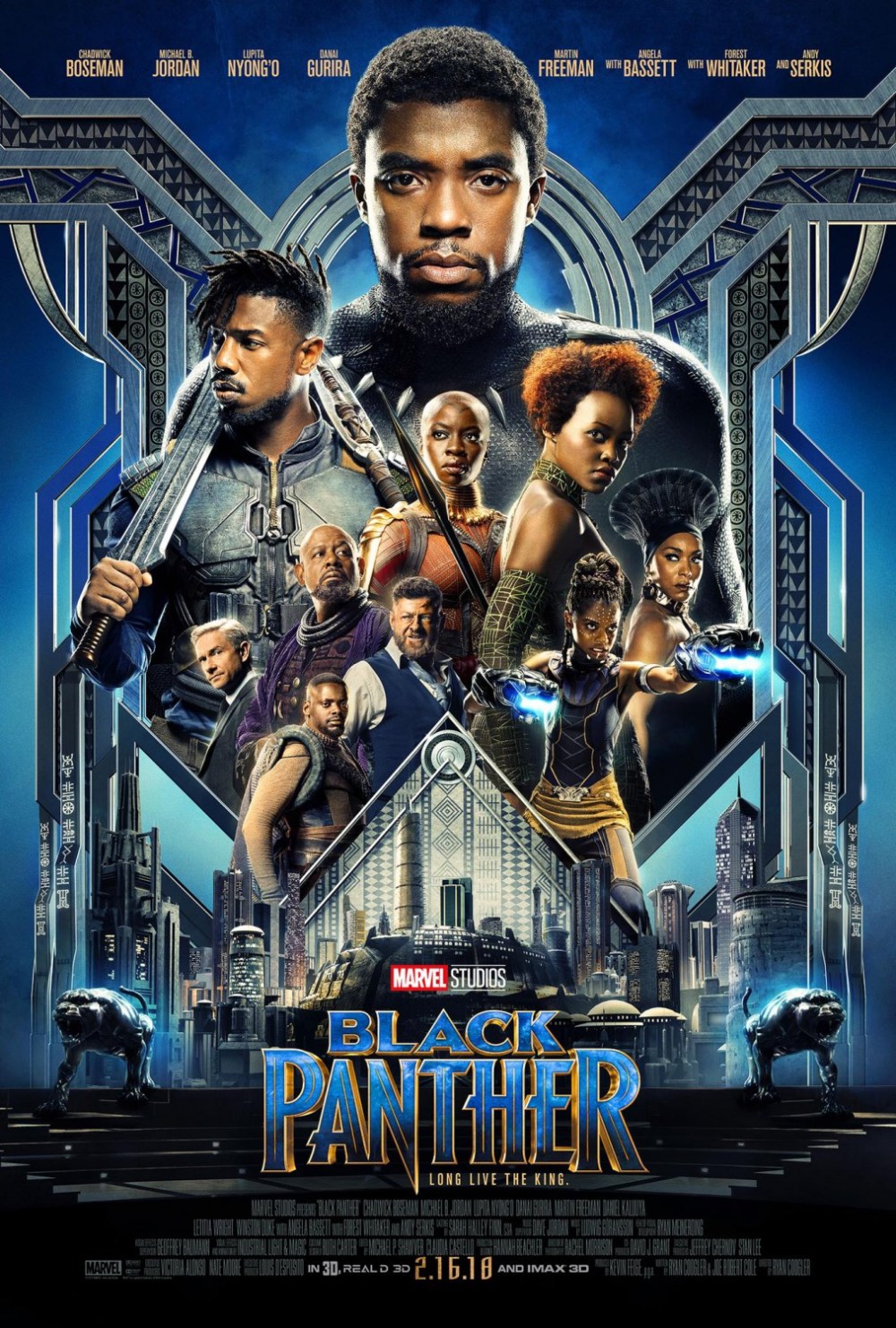
 

‘Black Panther’ Gives Us One of the Best Superheroes Yet

Black Panther poster

Complain all you want about the proliferation of superhero/comic book movies, the last year or so has given us some of the best. In 2017 we got “Logan” which saw Wolverine freed from his PG-13 shackles to where Hugh Jackman and James Mangold gave the “X-Men” character the sendoff he truly deserved. Then came “Wonder Woman” which not only filled our need for a female-led superhero movie, but also succeeded in putting the DC Extended Universe on the right track (of course, then “Justice League” arrived). And with “Thor: Ragnarok,” Marvel Studios allowed themselves to turn this particular franchise upside down and inside out, and what resulted was the most entertaining “Thor” movie yet.

Now it’s 2018 and we have “Black Panther.” You could say it provides audiences with the long overdue African-American-led superhero movie, but having watched it, this description is not entirely appropriate. T’Challa, the Black Panther of this movie, is a hero for everyone. Like Steve Rogers/Captain America, this is a character whose desire to do good in the world comes across with a powerful sincerity which no amount of cynicism can possibly take away. Along with confident direction, terrific performances and slam-bang action, “Black Panther” proves to be one of the best superhero/comic book movies ever made, a true high point in the Marvel Cinematic Universe, and one of the best movies of 2018.

As I write this review, “Black Panther” has been in general release for several weeks and has held the number one spot at the box office for as many times as James Cameron’s “Avatar” did. Clearly you have all seen it at least two or three times by now, so let’s not even bother with a plot description. Let’s just talk about what makes this particular Marvel Studios release so awesome.

Kudos to Ryan Coogler who has now graduated from low and medium-budgeted movies to full on Hollywood blockbusters with tremendous confidence. With “Fruitvale Station” he made us look at the life and tragic death of Oscar Grant in such a powerful way to where he can never be dismissed as a mere statistic. With “Creed” he brought a freshness and energy to the long running “Rocky” franchise which I never could have expected. Now with “Black Panther,” he has given us a movie which supersedes others of its genre to an outstanding degree as he combines the typical spectacle that comes with $200 million budget, and he combines it with a strong story filled with complex characters to where you cannot walk out of this one and say this was just an average motion picture.

Kudos to Chadwick Boseman for inhabiting T’Challa/Black Panther in a way to where there is no doubt he has the world’s best interests at heart, not just Wakanda’s. Through ferocity and feeling, Boseman makes T’Challa into a true hero for everyone and anyone. While this character has doubts about whether or not he is truly ready to be Wakanda’s king, something I have truly come to loathe about origin movies, Boseman never imbues him with the kind of hesitation which would easily destroy another. When the time comes to defend his people, he is most definitely up front and center.

Kudos to Michael B. Jordan for his performance as N’Jadaka / Erik “Killmonger” Stevens. N’Jadaka serves as the chief antagonist in “Black Panther,” but the character is not so much a villain as he is a victim. Jordan makes you see how N’Jadaka was wronged and of why his need for revenge is understandable if not condonable. This character was wronged and abandoned, so his bitterness at what was denied to him ends up feeling justified even when it poisons his soul. We root for N’Jadaka to fail, but we cannot help but feel empathy for him, and Jordan ends up creating a complex villain who can never be mistaken for some one-dimensional schmuck.

Kudos to every single actress in “Black Panther” as they give us badass Wakandans who refuse to run away from impending danger. Whether it’s Angela Bassett as Ramonda or Lupita Nyong’o as Nakia, they fill their characters with a strength and pride which can be wounded, but never easily broken. Special mention goes out to Danai Gurira who steals every scene she has as Okoye, a proud Wakandan who wears her pride on her face for all to see. If you threaten Okoye and she pulls a saber out on you, Gurira makes it clear you best start running in the other direction.

Kudos to Martin Freeman for making his character of CIA officer Everett K. Ross more than just mere comic relief. Even when we see him stumbling about in the midst of warriors who are prepared for conflict, Freeman allows Everett to evolve into a far more capable agent than he was at the movie’s beginning.

Kudos to Andy Serkis for his go for broke performance as gangster Ulysses Klaue. It’s a blast watching the “Planet of the Apes” actor smash through everything in his path. But even though he is not doing a motion capture performance here like he has done unforgettably in the past, he probably won’t snag an Oscar nomination for his work here anyway.

Kudos to Forest Whitaker for not just making Zuri a powerful religious and spiritual figure, but for also letting us see the cracks in the character’s façade when he reveals a burden he can never forgive himself for. Whether you see Zuri as “Black Panther’s” Yoda or Obi-Wan Kenobi, Whitaker lets us know right from the start no one could play Zuri better than he could.

Kudos to Daniel Kaluuya, currently riding high off of the tremendous success of “Get Out,” for making W’Kabi, T’Challa’s best friend, a vivid study of internal conflicts which are constantly pushed in different directions to where common sense can be thoughtlessly tossed aside.

Kudos to Winston Duke for making M’Baku into a ruthless warrior, but also one with a deep conscience. This character could have existed simply as a plot device for “Black Panther” to take advantage of when the going gets tough, but when T’Challa and his closest friends plead with M’Baku to join them in their battle of resistance, Duke makes the character’s eventual decision believable without ever seeming predictable or convoluted.

And kudos to all those filmmakers and artists behind the scenes who made Wakanda look so beautiful in “Black Panther.” Of all the places the Marvel Cinematic Universe has taken us to, this is the one I would like to visit the most. Wakanda forever? Damn straight!

Seriously, I cannot say enough great things about “Black Panther” as Coogler and company have made a film which was so well-thought out and put together. All the characters are complex and interesting, and what could have been just another superhero/comic book movie was elevated into something far more thrilling than I ever could have expected. But more importantly, “Black Panther” gives us a true superhero who everyone, and I mean everyone, can and should look up to. This, among other reasons, should explain why this movie has been such a box office behemoth since its release.

Even better, we won’t have to wait long to see this superhero again as he will appear in “Avengers: Infinity War” whose release is just around the corner.

* * * * out of * * * *

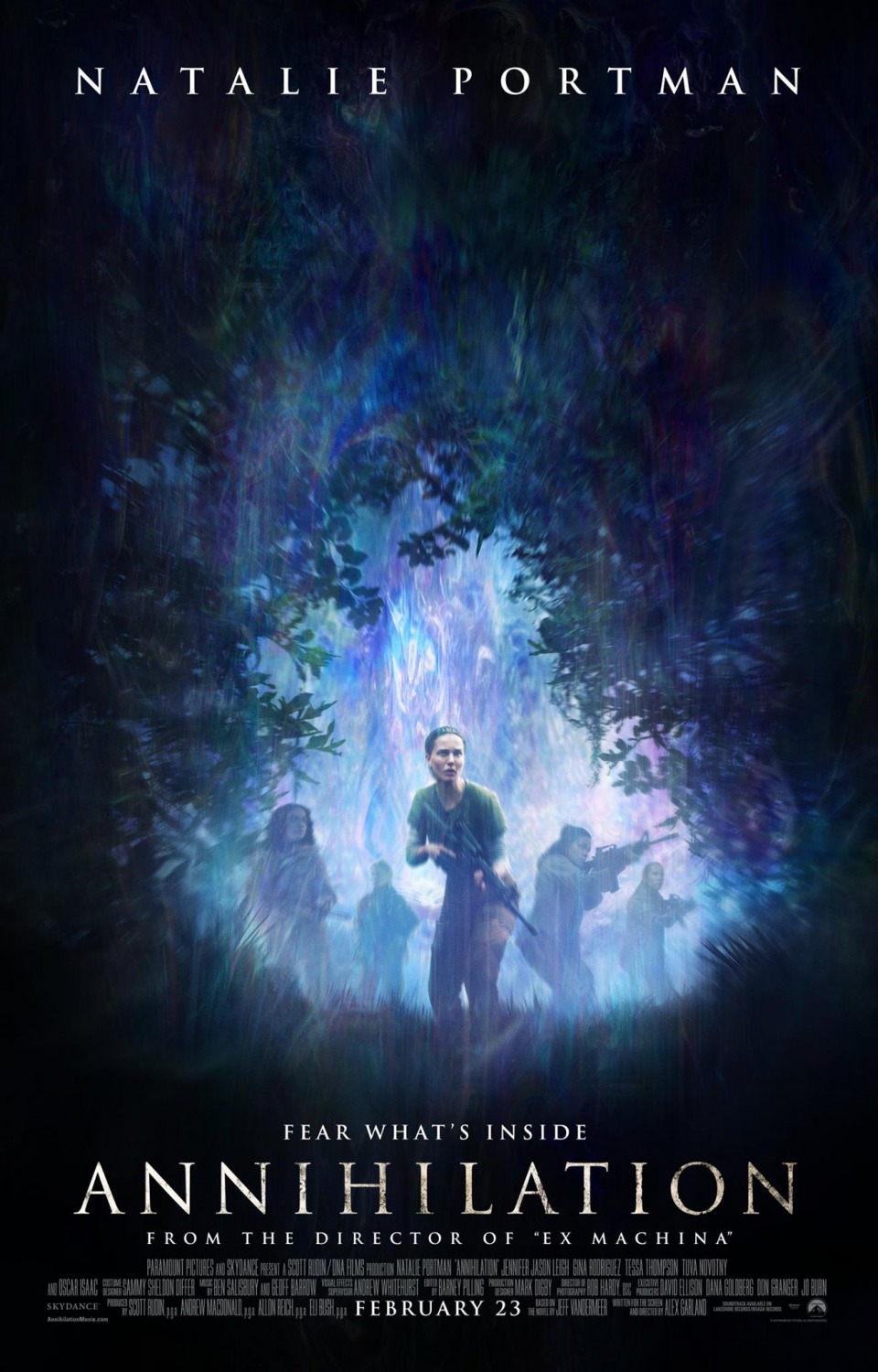
‘Annihilation’ is a Unique Sci-Fi Cinematic Experience

Annihilation movie poster

I have to give Paramount Pictures credit for taking risks in the past year or so on movies which defy what is considered these days to be mainstream entertainment. Last year, they released Darren Aronofsky’s “mother!,” a film which could in no way be mistaken for a comic book movie. Despite it earning a rare Cinemascore grade of an F, Paramount stood behind Aronofsky and his film defiantly, saying they were proud of the work he did. Keep in mind, the studio made this clear even after “mother!” suffered a weak opening at the box office, especially when compared to other movies starring Jennifer Lawrence.

Now in 2018, Paramount has released “Annihilation,” a science-fiction horror film which not only defies what many expect from Hollywood at the moment, but also proves impossibly hard to fit into any specific genre. This has led many to accuse Paramount of not giving the movie the proper promotion it deserved, but we will address this issue at another time. Whatever expectations you have for this cinematic experience, it would be best to leave them at the door as “Annihilation” deals with themes and situations other filmmakers have explored in the past, but this time they are handled in a way which feels truly fresh and not the least bit routine.

Natalie Portman stars as Lena, a biologist and former U.S. Army soldier who, as the movie starts, is in a depressed state as her husband, Army soldier Kane (Oscar Isaac), has been missing for a year, and many presume he has been killed in action. But suddenly, Kane reappears to Lena’s delight, but he resembles one of the pod people from Phillip Kaufman’s remake of “Invasion of the Body Snatchers” as he seems devoid of any emotion and cannot remember where he was. Before Lena can get a satisfactory answer regarding his whereabouts, Kane becomes very sick and is transported via ambulance to the hospital. As you can expect, military officials stop the ambulance, and it becomes clear Lena and Kane have stumbled across something those in power would prefer to keep under a heavy veil of secrecy.

“Annihilation” puts us right into Lena’s shoes as she desperately tries to understand the situation she has been thrust into. Finding herself at the United States’ government facility known as Area X, a name which implies a location always closed off to the general public, Lena is greeted by Dr. Ventress (Jennifer Jason Leigh), a psychologist who finally gives her some answers and introduces her to an area known as “the shimmer.” We see a meteor hit a lighthouse, and from there an electromagnetic field has developed and continues to spread at a rate to where it will eventually absorb everything in its path. Soldiers have been sent into “the shimmer” to better understand this phenomenon, but Kane is the only one who has come back from it alive.

Dr. Ventress ends up recruiting Lena and two other women to join her on the latest mission to enter “the shimmer,” a mission they have every reason to believe is a suicidal one. This is where “Annihilation” becomes particularly unique as these characters are not trying to be heroic but are instead dealing with their own self-destructive tendencies. Indeed, self-destruction is a big theme as these four women are revealed to be individuals deeply wounded by life in one way or another to where they feel as though there’s nothing much left to care about or live for. But as they get deeper into “the shimmer,” their survival instincts become awakened almost immediately.

“Annihilation” was written for the screen and directed by Alex Garland who started out as a novelist with his book “The Beach” which was made into a movie by Danny Boyle and starring Leonardo DiCaprio. Since then, he has graduated to writing screenplays for “28 Days Later,” “Sunshine,” “Never Let Me Go” and “Dredd.” In 2015, he made his directorial debut with “Ex Machina,” a brilliant science fiction thriller which dealt with the subject of artificial intelligence in a way which felt familiar and yet very fresh. Even if the story reminded me of “Frankenstein” in a way, the approach Garland took with the material and the characters felt invigorating and wonderfully unique.

Garland has brought this same kind of energy and enthusiasm to “Annihilation” as it follows a group of people caught in a situation much like the one in John Carpenter’s “The Thing” to where they are dealing with an antagonist who is not quite visible, and this leads them to become increasingly paranoid about one another. Garland does an excellent job of keeping the audience off-balance as he takes us through the story in a non-linear fashion. When Lena awakes in a tent inside “the shimmer,” she admits she has no idea how she got there or of what she experienced in the past few hours. Indeed, we end up feeling as lost as her as we are desperate to better understand the situation everyone has been sucked into, and Garland holds our attention throughout as a result.

Throughout, Garland gives us much to think about such as the differences between suicide and self-destruction as well as the importance and inherent danger of discovery. While watching “Annihilation,” I was reminded of a scene in “Jurassic Park” between John Hammond and Ian Malcolm. Hammond doesn’t understand why anyone would stand in the way of discovery, but Malcolm leaves him with this to chew on:

“What’s so great about discovery? It’s a violent, penetrative act that scars what it explores. What you call discovery, I call the rape of the natural world.”

But while Garland has crafted “Annihilation” as the thinking person’s sci-fi movie, it is not at all lacking in the thrill department. Certain scenes have a visceral feel to where I jumped out of my seat for the first time in ages. On a visual level, it has a look which is as beautiful as it is haunting, and I am having a hard time comparing it to other movies I have seen recently. On top of this, “Annihilation” features a very unique sonic landscape courtesy of composers Ben Salisbury and Geoff Barrow, both of whom combine an earthly sound with an electronic one as they work to separate the real world these characters have left behind and the alien realm they have dared themselves to enter.

Natalie Portman has a tricky role to play here. As Lena, she has to be vulnerable but also exhibit a reserve of strength deeply embedded in a character who has served her time in the military. That Portman manages to pull this off is not the least bit surprising, and she gives us a fully formed character whose experience and pain aid her in the movie’s spellbinding climax. Many still can’t shake the squeaky-clean image they have of Portman, but she has been around long enough to remind audiences of the amazing depth and range she has as an actress.

It’s great to see Jennifer Jason Leigh here as well, let alone in any movie she appears in. As Dr. Ventress, she creates a truly enigmatic character who keeps her emotion in check to where you constantly wonder what is going on in her head. Clearly, this doctor has more interests than in just exploring “the shimmer,” and Leigh keeps you guessing what they are all the way to the end.

I also have to give credit to Gina Rodriguez, Tessa Thompson and Tuva Novotny for creating such memorable characters out of those which, in any other movie, could have been of the easily disposable variety. Some characters exist solely to further the actions of the lead protagonist or serve as mere fodder for an ever so lethal antagonist, but these actresses make theirs stand out in a way they would not have otherwise, and their final onscreen moments are hard to shake once you have witnessed them.

And when it comes to Oscar Isaac, you can always count on him to give an infinitely charismatic performance even in a role where the character looks to have been drained of all emotion. Telling you more about his character of Kane would be detrimental to your viewing experience, but once you watch him here, you will agree he has created a fascinating portrait of a man who once knew his place in the world, but who now is forever lost in it.

It has now been a few days since I have watched “Annihilation,” and I still find myself thinking about the movie quite intensely. Even if its pace lags a little more than it should, the questions it left me with remain endlessly fascinating. When we see Lena reading “The Immortal Life of Henrietta Lacks,” is that a hint of some kind? What led Garland to include the Crosby, Stills & Nash song “Hopelessly Hoping” here? And more importantly, is the movie’s ending a hopeful one, or is it meant to be relentlessly bleak? Garland is not out to give us easy answers, but my hope is you will be open to the unusual experience this movie has to offer. Cinemascore may have given it an average grade of a C, but please remember this is the same research group which gave “America: Imagine the World Without Her” an A+.

Trust me, check this one out, and be sure to come into it with an open mind.

* * * ½ out of * * * *


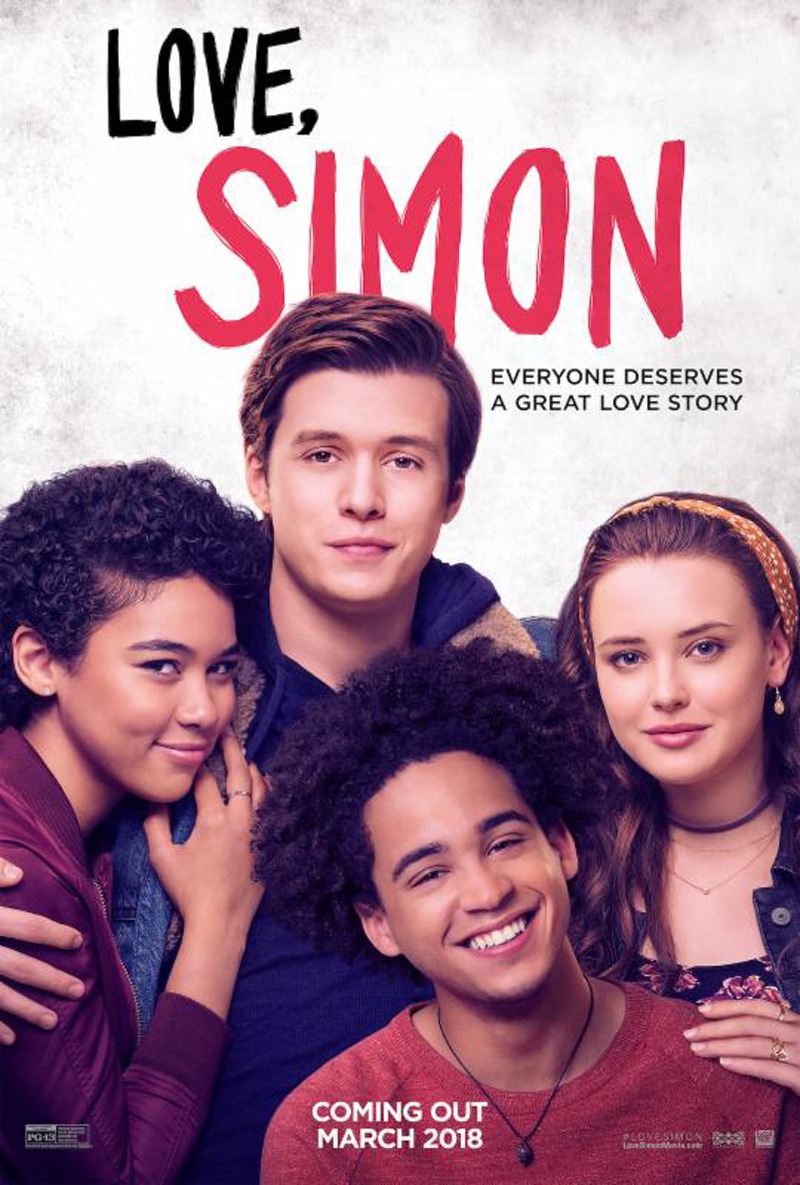
‘Love, Simon’ Digs Deep Enough Beneath the Surface

Love Simon movie poster

When it comes to teen movies, I live for those which take the adolescence seriously. Those years can be rough and tumble ones, filled of strong emotions which can overwhelm our small little worlds to an unbearable degree, and this is reflected in “The Breakfast Club,” “Pump Up the Volume” and “The Spectacular Now.” However, most teen movies deal with those years in a shallow manner to where they do nothing more than magnify the fears we have, or had, of being seen as unpopular or horribly isolated from our peers. Going into “Love, Simon,” which is based on the book “Simon vs. the Homo Sapiens Agenda” by Becky Albertalli, I figured it would be one of the shallower motion pictures involving teen life as its poster features the cast in all their clear-skinned glory. Surely some of these stars had to deal with acne, right?

“Love, Simon” ends up falling into the middle space of realistic and shallow teen movies. Some parts of it feel forced to where they belong more in a network sitcom, but others strike at the truth of growing up in a way few other movies have recently. In fact, this may be the first movie in which we eagerly await to see two guys kiss. Many were revolted by such a sight in the past, but these days we accept it because love is far more an attractive thing than hate. Realizing this, it makes me believe we have evolved as a society even more than we already have.

Simon Spier (Nick Robinson) is your average teenager who comes from a good home with loving parents and a sister who looks to become a world class chef in record time. He also has a great group of friends he can confide in any time, and this made me very envious of his life as it didn’t feel like I always had that when I was his age. But Simon does have a big secret, and he doesn’t need to spell it out for us. He is gay and has yet to tell his family and friends, and the only way he can discuss his sexual orientation dilemma is with his email pen pal who is also contemplating how he can come out to his own family and friends.

Right from the start, I realized “Love, Simon” is a groundbreaking movie as the filmmakers were not about to paint the majority of the characters in such broad or obvious strokes. I was constantly reminded of the scene from “Clueless” in which Murray tells Cher that the boy she wants to have sex with is in fact a “disco-dancing, Oscar Wilde-reading, Streisand ticket-holding friend of Dorothy.” While homosexuals might, and I strongly stress the word might, have been easier to spot in the past, such stereotypes we are now largely irrelevant as we have no business judging anyone as what we say about others speaks far more about who we are.

“Love, Simon” also takes place in a time where our lives have long since become dominated by social media and cell phones. In the past, we could leave our school lives behind once we went home, but kids today cannot do the same as their friends and enemies continue to exert a strong hold over them via the internet, and nobody these days can live without it let alone a cell phone.

Simon is able to keep his sexual orientation a secret even as he reaches out online to another young man who is considering coming out to his parents. Things, however, become complicated when the annoying class nerd, Martin Addison (Logan Miller), discovers Simon’s secret and threatens to blackmail him unless he can set him up with one of his very pretty friends, Abby (Alexandra Shipp). From there, Simon’s life heads into a spiral of sorts as he is forced to lie to his closest friends and comprise their relationships, all in an effort to keep his secret even more secret than ever before.

One of the key elements of “Love, Simon” is how our main protagonist is always trying to find out the true identity of his email pen-pal, Blue. The filmmakers tantalize us with the possibilities of it being this or that person, Director Greg Berlanti teases us with what could be obvious answers, but he instead invites us to see past what we thought we saw and see the bigger picture we have no business denying ourselves. Movies in the past have played on what we think homosexuals look, how they act and dress like, but this one makes how nothing is ever clear cut as it seems.

The only character who you could say exhibits such stereotypes is Ethan, an out-and-proud teenager played by Clark Moore. Ethan doesn’t try to hide who he really is from anyone, nor should he, but he does have a key scene with Simon where he explains how his coming out was not as easy as it seemed. In retrospect, I wished the filmmakers had dug a little deeper into Ethan’s character, but to their credit, they do give him some of the movie’s best one-liners (the “gangbanged by TJ Maxx” line is classic).

I also really enjoyed the camaraderie Simon has with his best friends played by Shipp, Jorge Lendeborg Jr., Miles Heizer, and Katherine Langford, whose character fares much better here than the one she played on “13 Reasons Why.” Seeing these friends have a great time with one another reminded me of the friendships I had during my high school years. It’s those friendships who help us get through the worst of times, and being a teenager can really suck more often than not. When Simon’s friendships become threatened, it’s painful to watch because losing a friend can seem so infinitely painful to where the heartache seems impossible to cure.

As for the character of Martin, he reminds of the kind of guy I never wanted to be seen as in high school. You know, the guy completely unaware of how annoying he is to others and who thinks so highly of himself that he cannot see the truth of what’s going on around him. The scene where he professes his affection to Abby at a football game is one of those horrifically cringe-inducing moments we all hope and pray never to get caught in, and Miller sells the moment for all the humiliation it is worth.

Simon’s parents are played wonderfully by Jennifer Garner and Josh Duhamel, and they present the typical loving couple and parents we always hope to see in movies like these. Garner in particular has a wonderful scene with Robinson as she professes how proud she is of him for coming out. Duhamel, however, has a scene with Robinson where he accepts his son for who he is, and it feels like laughable for reasons I’m sure the filmmakers didn’t intend. Still, it’s fun to see Duhamel come to see how the music he loved in the past is no longer cool.

“Love, Simon” also features a pair of sublime supporting performances from Tony Hale and Natasha Rothwell, both who look like they are having the time of their lives. Hale plays Mr. Worth, the high school’s vice-principal who tries much too hard to fit in with a youthful demographic who will never see him as cool, especially when he is so busy taking away their cell phones at any given opportunity.

As for Rothwell, she plays Ms. Albright, the school’s drama teacher who is directing a production of the musical “Cabaret.” Her reactions to her students’ talent, or lack thereof, are priceless as she wonders how she went from doing “The Lion King” on Broadway to ending up here. Just watch Rothwell as she reprimands a pair of immature students who make fun of others for being different. The way she handles them could have been cliched, but it leads to one of the biggest laughs “Love, Simon” has in store for its audience.

In some ways I wish “Love, Simon” had dug even deeper into its subject manner. Many scenes ring true in the ways teenager act and live their lives, but it only gives so far beneath the surface of things to where this comes close to seeming like a missed opportunity. All the same, to have a movie like this one which the life of an adolescent seriously is always a wonderful gift, and this one definitely qualifies.

In the past, gay-themed or LGBT movies were treated with latex gloves as studios feared general audiences would not be quick to accept homosexuals in love. But with movies like “Brokeback Mountain” and “The Kids Are All Right,” we were not given gay love stories, but love stories as passionate as any we had ever watched before. The audience I saw “Love, Simon” with cheered loudly at the sight of two boys kissing each other, and I like to think this shows how far we have come in accepting things which never should have been quicker to accept in the past. Besides, we should agree seeing two boys kiss is a far more pleasing sight than seeing teenagers gunned down by a madman with an assault weapon, wouldn’t you say?

* * * out of * * * *

‘Red Sparrow’ Thrives on the Presence of Jennifer Lawrence

Red Sparrow movie poster

I will be curious to see what audiences will have to say about “Red Sparrow” after seeing it. Those expecting a Jason Bourne-like adventure or something along the lines of “Salt” which starred Angelina Jolie as a sleeper spy may be disappointed as this film feels more like an adaptation of a John Le Carre novel where the lives of spies are not the least bit romanticized. The movie itself is based on the book of the same name by Jason Matthews who, like Le Carre, was once a member of an intelligence agency. What results is a motion picture which is not as interested in gunfights or car chases as it is in the mind games spies play with one another as the art of manipulation becomes a far more powerful weapon than a bullet. It also serves as yet another reminder of how Jennifer Lawrence is one of the best things in movies these days as she sucks you right into her gaze and never lets you go.

Lawrence plays Dominika Egorova, a gifted Russian dancer who suffers a career-ending injury at the movie’s start. With her dancing now a thing of the past, she and her mother find their future looking particularly bleak as the loss of their apartment and medical care become imminent. As a result, she accepts an invitation from her loving but undeniably devious uncle, Ivan (Matthias Schoenaerts), to work for Russian intelligence. But whereas most spy movies see recruits being trained in the ways of martial arts and weaponry, the recruits we see here are instead trained in the ways of manipulation. Or, more specifically, sexual manipulation.

The scenes where we see Dominika and others being trained in the ways of manipulation help make “Red Sparrow” stand out among other spy movies as I can’t remember many which see new recruits being made to use their minds and bodies as weapons. Heck, the only one I can think of like it is “Remo Williams: The Adventure Begins,” and that film came out back in the 1980’s. As the Headmistress of the spy training school, Charlotte Rampling gives us a passive aggressive version of the sadistic drill instructor from “Full Metal Jacket” as she forces her students into situations which will test their mental defenses instead of their physical ones. We never see her raise her voice or yell at her pupils, but this is because Rampling makes it clear why she doesn’t need to do so. You can question her, but she will make you see why you shouldn’t have in the first place.

Once “Red Sparrow” moves from the school and into Dominika’s mission which involves her meeting up with CIA agent Nathaniel “Nate” Nash (Joel Edgerton), the story enters into familiar territory as we watch these two spies from different countries fall for one another in a way which goes against their training. Still, it’s fascinating to watch Lawrence and Edgerton test one another as each try to crack through the mental they have built to protect themselves. It reminded me of when James Bond went head to head with Vesper Lynd in “Casino Royale” as each tried to learn more about the other. Both kept their guard up as they wondered who would break first.

Ever since her breakthrough performance in “Winter’s Bone,” Lawrence has proven to be an amazing talent as she brings a natural charisma and a raw energy few others can these days. Her work in “Red Sparrow” is no exception as she kept my eyes glued to the screen from start to finish. Seeing her go from a gifted ballerina to a methodical agent is mesmerizing as Dominika looks to get the upper hand in each situation she gets thrust into, and Lawrence nails each note of her character while maintaining a Russian accent which doesn’t fail her. She is not out to give us another variation on Katniss Everdeen here as the character of Dominika takes this acress down a road she has not traveled down before.

Speaking of Katniss Everdeen, “Red Sparrow” was directed by “The Hunger Games’” Francis Lawrence, and he certainly knows how to get the best out of his leading actress. In addition, he also keeps a solid level of tension flowing throughout. Yes, the movie does run a little too long, and the torture scenes we see pale in comparison to those in spy movies of the past. Heck, a similar torture scene in “Casino Royale” was far more painful to endure, and that 007 adventure was PG-13. Still, Francis gets plenty of mileage out of the mind games each character plays on the other.

It’s impossible not to think about the #MeToo movement while watching “Red Sparrow” as Lawrence is greeted with brutal assaults on her character by men prepared to take what they want without anything resembling remorse. Like Lisbeth Salander in “The Girl with the Dragon Tattoo,” her character of Dominika is forced to exist in a male-dominated world which leaves everyone of her gender little in the way of options, something which needs to change now. This makes the character’s revenge all the more fulfilling as she puts those men in their place in sometimes painful ways. Of course, this will most likely make “Red Sparrow” harder to sit through for many audience members.

“Red Sparrow” does have its flaws, and its conclusion is not as fulfilling as I thought it would be, but I find it impossible to deny the compelling effect it had on me overall. And again, Jennifer Lawrence reminds us why she is one of the most enthralling actors working in movies today. She dares you to look into her eyes to see if you could possibly find your way into her soul. Even as the movie goes through the familiar tropes of the spy movie genre, the Oscar winner keeps us watching her every move.

They say the truth shall set you free, but in the world of “Red Sparrow,” the truth is likely to get you killed. Realizing this reminds me of the Depeche Mode song “Should Be Higher” as David Gahan sung about how “lies are more attractive than the truth.” For Dominika and Nate, their lies have to be. Or do they?

* * * out of * * * *

This ‘Peter Rabbit’ is Far From Ultimate

Peter Rabbit 2018 poster

After watching the trailer for Sony Pictures Animation’s “Peter Rabbit,” I kept thinking of the times when brands like KFC and Planter’s Peanuts among others changed their image in commercials to something more hip which made them look ever so desperate to appeal to a youthful demographic. It was both hilarious and cringe-inducing to see these popular brands reduce themselves to current trends they were never created for, and more often than not, it just revealed to us how tone deaf corporate executives can be in their quest for a profit. Those of you who have seen the “Peter Rabbit” trailer can agree this is not quite the same character we grew up reading about in those wonderfully imaginative books by Beatrix Potter. Now that I have seen the movie all the way through, I can confirm Ms. Potter is rolling over in her grave.

This “Peter Rabbit” is nothing more than a bastardization of those innocent tales as the filmmakers go out of their way to modernize this material to such an infinitely nauseating extent, and it hurt to see everyone trying way too hard to be clever. The harder everyone tries to be hip here, the more depressing this movie becomes as its story becomes increasingly convoluted and eventually turns in a poor man’s version of “Home Alone” as Peter tortures his nemesis in the same way Macauley Culkin tortured Joe Pesci and Daniel Stern.

Directed by Will Gluck who previously gave us the ill-advised remake of “Annie,” this movie isn’t so much an adaptation of “The Tale of Peter Rabbit” as it is a story which exists outside of it. Even though Peter Rabbit (voiced by James Corden) came close to meeting his maker the last time he invaded Mr. McGregor’s vegetable garden, we see he has not learned his lesson as he continues to steal every single vegetable he gets his paws on. But when a new McGregor moves into town, things will become even more challenging for him and his furry friends.

The opening minutes of “Peter Rabbit” serve to introduce not only Peter, but also a number of Potter’s other creations like Benjamin Bunny (Matt Lucas), Mrs. Tiggy-Winkle (Sia), Tommy Brock, Mr. Tod and Mr. Jeremy Fisher. Seeing this, I couldn’t help but think Sony Pictures was aiming to create a cinematic universe to rival the one Marvel Studios continues to add to. If this movie succeeds at the box office, we may very well see these characters get their own solo adventures to where they might have their own “Avengers” or “Justice League” movie. Still, I don’t think we should expect “Peter vs. Benjamin: Dawn of Radishes” anytime soon. After all, neither has a mother named Margret.

Peter runs afoul again of Mr. McGregor (a completely unrecognizable Sam Neill), but a heart attack suddenly does the old man in, freeing up the rabbit and his friends to have the equivalent to an endless rave party in his home. But then into the picture comes family relative Thomas McGregor (Domhnall Gleeson) who moves in after being fired from his job at Harrods in London, and no time is wasted before he and Peter wage war against one another which involves, among other things, repeated electrocution.

Perhaps it was too much to expect the filmmakers to remain true to “The Tale of Peter Rabbit” with had its main character being portrayed as being very naughty and later paying a price for being recklessly disobedient to his elders. This particular Potter tale was a great one for kids as it taught them the value of being good, something which Peter did not value in the slightest. “Peter Rabbit,” however, defies the tale’s morality and shows how this rabbit’s rebellious ways are something to cheer on instead of lay caution to. Also, Peter’s sisters Flopsy, Mopsy and Cottontail are shown to be willing participants in his rebellious escapades, something they were not previously.

I was also shocked to see how Neill’s Mr. McGregor was portrayed as a bloodthirsty meat eater who showed no hesitation in making a rabbit pie out of those who failed to escape his clutches. This leads “Peter Rabbit” to have a “Watership Down” scene where we learn how one of his parents became a tasty meal for Mr. McGregor, and this reeks of shameless manipulation on the part of the filmmakers. At the very least, this movie is bound to appeal to vegans as much as it will to children.

Then there is Thomas McGregor, and Gleeson portrays him in a way very similar to his role as General Hux in the recent “Star Wars” movies. Thomas is such an obsessive neat freak to where he wants the toilets at Harrods to be so clean he could drink out of them, and he almost does so with a straw. I expect sick humor like this in “The Human Centipede,” not in a family movie. If you want to see Gleeson in something good, check out “About Time” or the underrated “Goodbye Christopher Robin” instead.

James Corden is a wonderful talent, and I always enjoy watching his late-night sketches which include many unforgettable carpool karaoke episodes. But when it comes to roles like voicing Peter Rabbit, he tries way too hard to be funny and hip. This was the same problem with his work in “The Emoji Movie” which, in retrospect, I gave him too much leeway on. His performance in “Peter Rabbit” is definitely spirited, but seeing him trying to be infinitely clever to where he is desperate to stay one step ahead of the audience becomes painful and exhausting as the movie drags on.

Indeed, the filmmakers try way too hard to make “Peter Rabbit” seem so hip and cool to where they include songs like Len’s “Steal My Sunshine,” a great pop song which has now been officially used once too often in movies. Gluck also includes Big Country’s “In a Big Country,” Rancid’s “Time Bomb,” Vampire Weekend’s “The Kids Don’t Stand a Chance,” and The Proclaimers’ “I’m Gonna Be (500 Miles).” You know, the kind of music Potter listened to endlessly while she wrote. Seeing the animals dancing the latest dance moves here was very dispiriting to me, but at least we never see Flopsy, Mopsy or Cottontail do any twerking.

If there is one real saving grace in “Peter Rabbit,” it is Rose Byrne. As Bea, the McGregor’s next-door neighbor, painter and animal lover, she is so infinitely appealing to where she truly lights up the screen whenever she appears. Byrne gives these proceedings a heart and soul which doesn’t deserve them, and I became infinitely jealous of Peter whenever she picked him up and cuddled him. It’s moments like those which had me wanting to be Peter, but anyway.

The children I saw “Peter Rabbit” with really enjoyed the shenanigans portrayed onscreen, and I am sure many of them will get a kick out of this movie. I, on the other hand, stared at the silver screen feeling dejected as the plot went down a road which filmmakers have traveled thousands of times before. Things get even more ridiculous when Thomas and Peter go from being bitter enemies to much needed allies. Seeing one character attempting to blow up another with dynamite is enough to bring about a restraining order. These two coming together near the end is as ridiculous as the thing which kept a pair of superheroes from beating one another to death in “Batman v. Superman: Dawn of Justice.”

“Peter Rabbit” is the first 2018 movie I have watched, and I’m positive many others which have yet to be released will be far better. Parents right now have a chance to take their children to movies which are far more imaginative and thoughtful like “Paddington 2,” but it looks like they will be quicker to get in line for this one instead. Call me a purist, but this is not how a Beatrix Potter tale should be translated to cinema. Of the many rabbits out there, this one is far from being ultimate.

* out of * * * *