While the Marvel Cinematic Universe (MCU) continues to thrive with one successful motion picture after another, the DC Comics Extended Universe (DCEU) keeps experiencing hits and misses. The latter failed miserably with “Suicide Squad,” then they redeemed themselves and hit a tremendous home run with “Wonder Woman.” But next we got “Justice League” which was their answer to “The Avengers,” and it did not live up to the fans’ expectations. While Marvel took its precious time setting up its cinematic universe, DC could only play catch up constantly to where they had to offer its biggest movie much sooner than they should have.
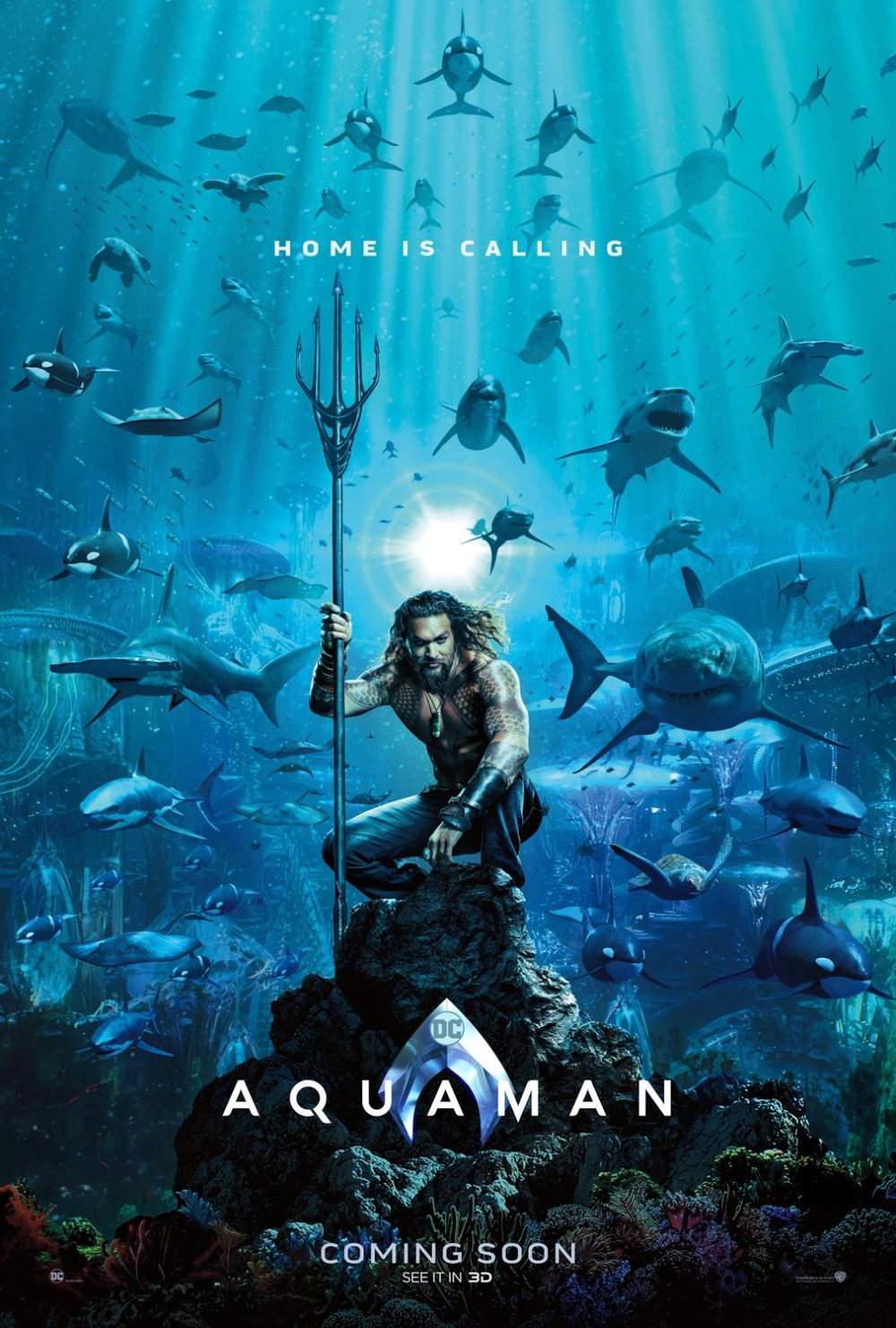
But one of the best things about “Justice League” was Jason Momoa who portrayed Arthur Curry, better known to us as Aquaman. Since then, I have been looking forward to a solo movie for this character, and news of its making has only heightened my anticipation. At Comic-Con this past weekend, the first trailer for “Aquaman” was finally unveiled, and it looks awesome.
“Aquaman” is being directed by James Wan who had worked on the indie horror franchises “Saw” and “Insidious,” and he has since graduated to bigger projects like “The Conjuring” and “Furious 7,” one of the very best “Fast & Furious” movies. From this trailer, he appears to have given “Aquaman” some truly amazing special effects, and he looks to keep the human element of this superhero film in balance with them. In addition, you have Amber Heard co-starring as Mera, Aquaman’s love interest who possesses hydrokinetic and telepathic powers, and she looks dazzling with all that red hair.
The moments I loved in this trailer include when Arthur is getting picked on by the school bullies while on a field trip at an aquarium, and all the fishes, a shark in particular, come to his defense. It really is nice to have Jaws on your side, isn’t it? I also liked how Aquaman and his fellow people are able to speak and move around in water as easily as they do on land. Everyone involved in this film’s making have made this seem very believable.
Of course, we learn in this trailer how Aquaman is reluctant to become king of the underwater nation Atlantis, and I fear this may be another one of those “no I can’t be the one” movies where the hero spends way too much time denying the destiny we know he or she will eventually embrace. A lot of these movies have the hero finally embracing the role society begs him to play in the last third, but by then they can seem like wasted opportunities. Hopefully this DC film will not be one of them.
“Aquaman” is set to be released on December 21, 2018. Please check out the trailer below.
In 1988, John Carpenter made “They Live,” a science fiction horror film about a drifter who discovers the ruling class are actually aliens who have managed to conceal their existence and manipulate the human race into spending money and to “obey” them through subliminal messages in mass media. Years later, when Carpenter was attending a screening at the Egyptian Theatre, he described “They Live” as being his response to his horror at the Ronald Reagan years and his distaste at the increased commercialization of politics and popular culture in the 1980’s. When I was at a screening of “Big Trouble in Little China,” and I got to ask Carpenter the following question:
“You have said ‘They Live’ was your response to your horror at the Reagan years. With George W. Bush currently wreaking havoc around the globe, don’t you think this is the perfect time for a sequel?”
Carpenter’s response stays with me to this day:
“The 80’s never left us.”
Looking back, he was absolutely right. While I am a child of the 80’s and have a great love for that decade, it marked the start of America becoming an infinitely greedy nation as we strove to become very rich, deficits began to explode, and politicians began selling us on trickle down economics which promised that tax cuts on the rich would benefit the middle and lower classes. This proved to be a big lie, and yet politicians still try to sell Americans on it.
All of this went through my head as I watched Lauren Greenfield’s “Generation Wealth.” This documentary comes to us in 2018, and it proves once again how the 80’s still live on as we watch individuals try to become wealthy or at least gain the appearance of being rich. What results is a look at how the American Dream has been corrupted, the cost of greed, and the chance for redemption.
Greenfield is an acclaimed photographer and filmmaker, and “Generation Wealth” starts off with her narrating how through her 25 years of work, she discovers her work has pointed to one uniting phenomenon: wealth culture. From there, she investigates the various pathologies which created the richest society in the world, and she interviews several people who look to increase their bank accounts or change the way they look to where society will view them as sexy.
We meet Florian Homm, a former hedge-fund manager who at one time had a net worth of $800 million and ended up fleeing the United States to avoid getting arrested by the FBI. Watching him sit back on a couch while smoking a cigar with glee makes him look the modern-day version of Tony Montana from “Scarface.” Homm is never shy about just how much he loves money, and he laughingly admits how Harvard Business School didn’t train him to be an ethical businessman but instead to be “fine-tuned to rule the world.”
We also get introduced to Cathy, a bus driver from Virginia who travels to Brazil to get extensive plastic surgery which she charges to a credit card, the successful porn star Kacey who gained notoriety after Charlie Sheen paid her $30,000 for a days long party and drug binge, a young beauty queen who looks like a combination of Honey Boo Boo and JonBenet Ramsey, and former rapper Cliff (G-Mo) who we first celebrating the hip-hop version of the American Dream. They all want the best-looking bodies as well as all the money in the world, but as Greenfield says at one point, those who have everything never feel like they have enough.
I found myself getting sickened by the subjects Greenfield photographed and interviewed as it felt they were doing more damage to themselves than good to where they appeared, if not soulless, very empty on the inside. It proved to be a relief when someone like Chris Hedges shows up to put some much-needed perspective on what we are seeing as he compares America’s obsession with wealth to the end of Rome. At one point he even says, “Societies accrue the most wealth as they face death.” Can America be close to suffering the same fate? It certainly feels like it.
Greenfield doesn’t break new ground with “Generation Wealth” as Michael Moore already compared Rome’s fall with America in “Capitalism: A Love Story,” and “The Big Short” was an entertaining and sobering look at the 2007-2008 financial crisis. Do we need to go through how greed has wrecked America in yet another movie? Oh yes, we do! This country threatens to make the same mistakes yet again as politicians still insist on selling its citizens on trickle-down economics.
One key character from the 1980’s whom Greenfield highlights is Gordon Gekko, the fictional and unscrupulous corporate raider Michael Douglas played in Oliver Stone’s “Wall Street.” But while Stone intended for “Wall Street” to be a cautionary tale about the downside of unchecked greed, Gekko proved to be such a charismatic character to where he became a huge inspiration for those desperate to make it big on Wall Street. It didn’t matter how Gekko set a terrible example for them, these wannabes still looked up to him, and there is a good deal of him in many of the people Greenfield interviews here.
Greenfield to her credit she never judges any of the people featured here. She presents their stories objectively and never tries to manipulate us into thinking about them in one way or another. Whether you are intrigued or repulsed by the things they do, there is a sense of empathy I had for them as they become more and more human as the documentary reaches its final act.
When it comes to “Generation Wealth’s” final act, we see the results and repercussions of the actions everyone has made as they reach a plateau in their quest for money. Greenfield aligns their journey with the catastrophic financial crash of 2008 which left much damage in its wake. Seeing these people on the other side of it has them finding something absolutely priceless while others find tragedy and financial ruin. This proves to be both inspiring and devastating all at the same time.
“Generation Wealth” does lose some of its focus as Greenfield awkwardly inserts herself into her documentary. Is she also interested in being rich and wealthy? Is she well off thanks to her photography? It’s hard to say what she is saying about herself, but it does lead to some very amusing moments as one of her sons admits he knows the name of each Kardashian but not those of his neighbors, and her other little boy ends up inserting a sign in front of her camera as she films everything and anything. I don’t want to spoil the moment for you as it had me laughing endlessly.
Watching “Generation Wealth” kind of reminded of when I first saw “Doc Hollywood” which starred Michael J. Fox as a doctor intent on making tons of money as a plastic surgeon in Beverly Hills, and who later finds a more meaningful life for himself in Grady, South Carolina. But that was a fictional movie, and this one deals with real life, and I came out of it with more hope for the human race than when I went in. This documentary also shows how life is about the journey rather than the final destination. While I wanted to sit some of these characters down and force them to pay close attention to the lyrics of Digital Underground’s “No Nose Job,” it is worth watching their journey as, like them, we come to see what matters most in life.
With that, I leave you with the words Harold Perrineau uttered as Augustus Hill on the HBO series “Oz:”
“We think we know what we need. We spend our time figuring out how to get what we want, who can help us, who’s in the way. We make our moves and sometimes we get lucky. We get exactly what we want. And life gets worse. Simple truth #22, be careful what you wish for, brother. Be very, very careful.”
I remember taking a film class on the works of Alfred Hitchcock, and the instructor talked about how filmmakers often make the same movie over and over again. This is certainly the case with Paul Schrader as “First Reformed” marks his return to the “God’s lonely man” story or, as he would describe it, the “man in a room” stories. Whether it is Travis Bickle in “Taxi Driver,” Julian Kaye in “American Gigolo,” John LeTour in “Light Sleeper,” Wade Whitehouse in “Affliction” or Carter Page III in “The Walker,” Schrader has always been attracted to the lives of men trapped in their own bubble of solitude as they desperately try to find some meaning in life which will rescue them from the crippling isolation and despair which threatens to envelop them.
With “First Reformed,” you could say Schrader is offering his audience variations on a theme here as not everything is as predictable like us movie buffs might expect. But more importantly, he gives us one of the very best movies he has made in years as his exploration of a man in spiritual crisis remain as powerful as ever, and it features excellent performances from its very talented cast as well as a deeply thoughtful screenplay which succeeds in taking us to hell and back. While Schrader has not always had the technical brilliance which Martin Scorsese continues to possess, “First Reformed” shows us the cinematic leaps and bound he has made over the years, and he does it with a story which highlights the eternal conflict between our belief in God and the inescapable realities we can no longer lie to ourselves about.
Ethan Hawke plays Toller, a former military chaplain who works as a priest and provides sermons to a small congregation at the First Reformed Church in upstate New York. We learn he had a son whom he encouraged to enlist in the military, and that he was killed six months after arriving in Iraq. The tragedy of his son’s death destroyed his marriage, and he bemoans how he sent his only child into a war which had no moral justification. With his role at First Reformed Church, he looks to redeem himself in the eyes of not just everyone around him, but in God’s as well.
One of Toller’s regular attendees is Mary (Amanda Seyfried) who is expecting a baby with her husband, Michael (Philip Ettinger). Mary is eager to welcome this baby into the world, but Michael, however, does not share her enthusiasm and thinks it would be better to terminate the pregnancy. Mary asks Toller to counsel Michael to see if he can relieve her husband of his ongoing depression, and it is during their talks that Toller discovers Michael is a radical environmentalist who has long since been convinced of how global warming is destroying the earth, and that time has already past for humanity to effectively reverse the damage. Things become even more tense when Mary invites Toller over to her house to show him something Michael had hidden from her, a suicide vest.
Revealing more of the story from here would be criminal as it would spoil an already immersive cinematic experience which holds you in its grasp from the get go. What you should know more than anything else is this: global warming is real and is an even bigger threat to this planet than ever before. None of this is lost on Toller as he finds himself sympathizing with Michael to where he doesn’t realize how Michael’s despair is infecting him to an increasing degree. As much as he wants to help Michael, Toller finds himself questioning if God can ever forgive humans for what they have done to the planet. As “First Reformed” shows, this will either not be the case, or that forgiveness may come in another and unexpected form.
The brilliant conceit of “First Reformed” is how it deals with the crisis of faith in regards to an environmental issue which continues to get worse and worse with each passing year. Even Toller has to admit how Michael’s fears are becoming a quicker reality than many would want, or even care, to admit, and this leaves him in a state of conflict which pulls him into a dark place which offers no easy exit. Toller feels compelled to do something about this continuing environmental disaster, but he finds himself caught up in a personal struggle which has him drinking an endless amount of alcohol to drown his troubles away. Many see the suffering of an alcoholic as being someone who is too afraid to live and too scared to die, and Toller clearly fits this description as he cannot lie to himself about the apocalyptic path humanity is on.
When it comes to Schrader, his work as a writer typically outshines what he pulls off as a filmmaker. While his sometimes collaborator Martin Scorsese continues to show a filmmaking mastery few others can come close to equaling, Schrader has to make do with whatever is available to him, and this sometimes shows in embarrassing ways (for example, check out the terrible special effects in “Dominion: A Prequel to The Exorcist”). His films have long since been relegated to the independent film realm which thrived in the 1990’s but came to suffer inescapable blows to where you were more likely to see his films on your iPhone instead of the silver screen.
With “First Reformed,” however, Schrader gives us one of his best films ever as everything about it feels perfect. The acting is superb, the cinematography by Alexander Dynan is both beautiful and appropriately haunting, and the music of Lustmord helps to accentuate the conflict between hope and despair shown here. Considering how this film was shot in just 20 days on a budget of $3.5 million dollars, this makes what he accomplished here all the more commendable.
Ethan Hawke has long since proven to be one of the best actors of his generation, and his performance as Toller ranks among his finest. Seeing Hawke trying to hold his sanity together as his faith continually gives way to despair is fascinating to watch as his actions come to speak much louder than words can. Amanda Seyfried beautifully underplays her role as an expectant mother who is trying to come to grips with an increasingly dangerous world she wants to welcome her baby into, and she is such a luminous presence here. Even Cedric Kyles, better known as Cedric the Entertainer, shows up here as Reverend Joel Jeffers, a man who has to balance out his duty to God with the pressing issues from corporate entities that do not want anything to get in the way of profit. Church is a way of life for many people, but make no mistake, it is also a business for others.
“First Reformed” is far and away one of the best films I have seen in 2018, and it may very well be Paul Schrader’s filmmaking masterpiece. It ends on a rather ambiguous note as not everything is wrapped up in a neat and tidy fashion, but with a film like this we are left with more questions than answers and for a very good reason. Schrader seeks to test the faith and beliefs of his audience in an effort to wake them up about climate change and global warming as we have long since become complacent with our elected officials doing little to nothing about reduce the damage it has wrought.
I also have to say that if Hawke had performed a certain action in the film’s last few minutes, I would have been waiting for him to say “corn nuts.” If you have ever seen the cult classic “Heathers” starring Winona Ryder and Christian Slater, you will know what I mean.
I was one of the many who got exposed to “Mister Rogers’ Neighborhood” at a very young age, and I still vividly remember watching its host greeting us with the same song while taking off his coat and changing his shoes. Since then, I have become far more familiar with the show’s parodies, especially the brilliant ones by Eddie Murphy and Robin Williams, to where it seems much easier to ridicule someone who encourages us to see the best in humanity instead indulging in its worst qualities. If Fred Rogers were to start his show today, I’m not sure if he would have had the same impact and instead be a subject of endless ridicule and innuendos.
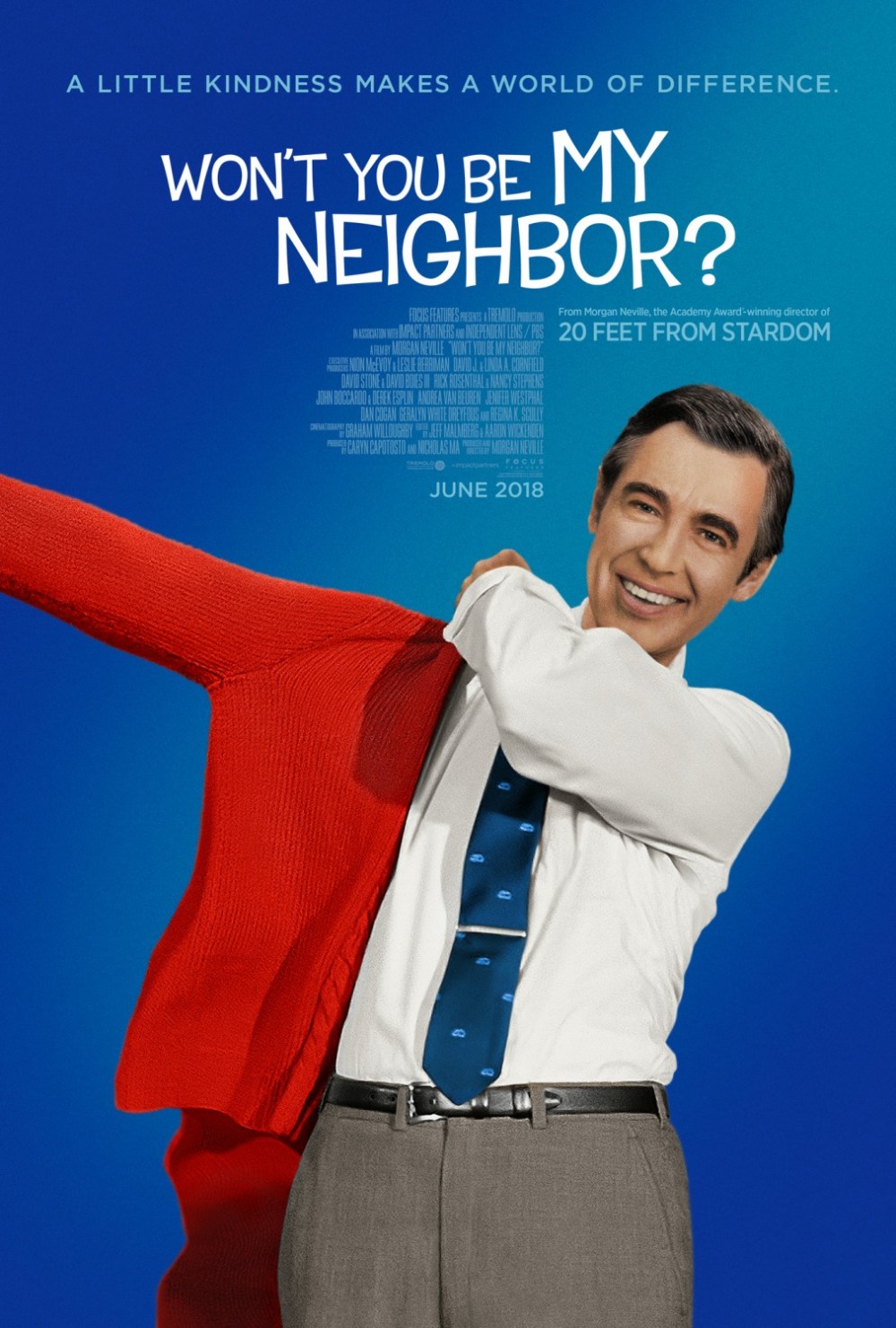
Well, the road to hell may be paved with good intentions, but Morgan Neville’s documentary “Won’t You Be My Neighbor?” shows how Fred Rogers’ good intentions never led him in that direction. The doc shows how he came to inspire generations of children to love one another and to see the good in life even when things seem so bleak and scary. While many have since tried to tarnish his legacy and make him look like a wolf in sheep’s clothing, Neville reminds us of what a good man he was and of how he never lost sight of the strong values he instilled in others.
We learn Rogers was an ordained minister and about to enter the seminary when he discovered the existence of television. Although he initially hated this invention and described it as being “awful,” he quickly came to see it as something he could use to his advantage. With “Mr. Rogers’ Neighborhood,” he used television as a way of helping children through what he called “the modulations of life,” and the lessons he imparted were profound as he dealt with topics other children’s programming would never dare touch.
It’s fascinating to watch the beginning of “Mister Rogers’ Neighborhood” as it debuted back when everything on TV was in black and white. The production values proved to be very low and, unlike Jim Henson, he was not out to break the bounds of puppetry or technology. Instead, this show was an exercise in simplicity as the use of a simple ordinary neighborhood and a land of make believe was more than enough to draw in a large audience as the show proved to be imaginative enough as he probed the more unsettling issues life has to offer.
Rogers didn’t hesitate to deal with the assassination of Bobby Kennedy, nor did he try to ignore the tragedy of the Challenger space shuttle when it exploded. The way he approached these events and issues was almost subversive as he dealt with them in a way which wasn’t necessarily direct, but which acknowledged the trauma many around the world felt. As always, he encouraged us to find ways to channel our anger, despair and sadness into something positive, and his words always rang true.
With people like Fred Rogers, I keep waiting for the seams to show in this documentary as no human being can ever be this perfect. We are all flawed in one way or another, and he certainly is no exception. In an interview with Francois Clemmons, the African-American actor and singer who played Officer Clemmons on “Mister Rogers’ Neighborhood,” Clemmons talks about when Rogers confronted him over his visiting a gay bar and asked him never to go there again. Rogers’ fear was one of the program’s sponsors, Johnson & Johnson, would pull their advertising away if they realized one of the stars was a gay man. I figured this would lead to the exposure of Rogers’ bigotry, but Clemmons says while Rogers advised him to keep his sexuality in the closet, Rogers never judged him over it even if his religion may have, and that he showed his love to him in such a way no one had before.
Looking at the scenes shown here from “Mister Rogers’ Neighborhood” reminded me of how the lessons Rogers gave us proved to be as profound as they were subversive. To protest the treatment of African-Americans being thrown out of “white-only” swimming pools, he is shown in one episode with his feet in a tub of water, and he invites Officer Clemmons to put his feet in as well when he drops by. When the show aired in 1968, the Vietnam War was being fought overseas and he dealt with it in his land of make believe where King Friday XIII kept fighting against change and peace. In fact, Neville reminds us how this show dealt with topics like war, divorce and even the assassination of Bobby Kennedy. Does any of today’s children’s programming do this? If so, please tell me because I can’t think of any single show which does.
Neville touches on Rogers’ own childhood very lightly to where only so much is said about it. We learn how he grew up in a household where he was never allowed to be angry as a kid, and of how he spent a good portion of his life feeling like he didn’t fit in anywhere. Indeed, these struggles made for intelligent fodder on his show as he talked about different ways to deal with anger, and one of the most heart-rending moments in this documentary comes when Henrietta Pussycat asks if she was a mistake. “Mister Rogers’ Neighborhood” didn’t just deal with world and personal issues in an intelligent way, but in a brave one as well.
Few, if any, people can ever lay claim to being too good to be true, and Fred Rogers is shown without a doubt to be good and very true. So, it is painful to see others attempt to rewrite his legacy in an effort to change the narrative of history, and we see this in a FOX News segment in which commentators accuse Rogers of destroying the childhood of many by telling kids they were all special as if it were the equivalent of child abuse. These days, most people will not allow themselves to believe any person could be so well-meaning and thoughtful as they always suspect a do-gooder of being up to something devious.
There is a scene where we see Rogers in a solitary state as if the cruelty of the world threatens to overwhelm him. Were he alive today, I wonder how he would feel about the current political havoc we are suffering under as many of the things he fought against like racism and bigotry have made an unwelcome comeback as they serve as a cruel reminder of how history repeats itself. I would like to think Rogers would have given us ways to overcome this endless stream of negativity, but we see his faith being tested constantly to where he must have been constantly exhausted by all the terrible things he was forced to endure.
While watching “Won’t You Be My Neighbor?”, I was reminded of what an English teacher in my freshman year of college once said:
“This is a generation which has been robbed of its innocence. We have all been mediatized.”
Keep in mind, she said this back in the mid-1990’s before the internet and cell phones became the things they are today, so the damage was already being done. These days we are led to believe more in the worst of people instead of the best, and we are more fascinated with the skeletons in a closet than in good deeds. One of my childhood heroes, Bill Cosby, a man who made us laugh endlessly and gave us life lessons we never forgot, has since been revealed to be a misogynist, a sociopath and a sexual predator who will soon be sent to prison for his crimes. His legacy is now forever tarnished to where much of what he taught us will be permanently lost to future generations.
This all makes “Won’t You Be My Neighbor?” an especially important document of a man who left an indelible mark on our lives. While many of our heroes let us down in thoughtless and horrible ways, Fred Rogers never did. He stayed true to himself, and he never lost sight of how children have very deep feelings and needed guidance in a world which can be very complicated to say the least. This is a life worth celebrating, and Neville gives us many reasons to celebrate Rogers’ life as the lessons he taught us, however dated they may seem today, are ones we need to pass on to others.
Another thing I was reminded of was the “Hate Crimes” episode of “Homicide: Life on the Street” in which Detectives Pembleton and Bayliss investigate the murder of a man they are led to believe was homosexual. By the end of the episode, it is revealed the man was not gay, and they both discuss the effect this case has had on them:
Pembleton: “I broke the first rule of being a detective. I assumed that Zeke Lafeld was homosexual.”
Bayliss: “Well, it’s what people do, Frank. It’s human nature.”
Pembleton: “Yes, it is human nature to kill someone simply because their sexual orientation is different.”
Bayliss: “People get afraid. Threatened.”
Pembleton: “People? That’s you and me, Tim. Grown-ups. Why is it that children don’t care about such things?”
Bayliss: “As adults we get socialized. We learn to behave.”
Pembleton: “No, no, no. We learn to hate.”
Indeed, Pembleton’s last line above speaks to an inescapable truth. However, looking at Rogers’ life through this amazing documentary and of the infinitely positive effect he had on so many makes me believe he never learned to hate, ever. If he did have any negative emotions inside of him, he certainly found creative ways to rid himself of them, and he shared them with his audience in the hopes they would focus more on the positive instead of the negative. Maybe he was different than most people but thank goodness for that. Thank goodness we got to meet Fred Rogers and be his neighbor, and thank goodness we have this documentary which pays loving tribute to his memory.
I think it’s only fair to end this review with one of Rogers’ most famous quotes as it still resonates deeply today:
“From the time you were very little, you’ve had people who have smiled you into smiling, people who have talked you into talking, sung you into singing, loved you into loving. So, on this extra special day, let’s take some time to think of those extra special people. Some of them may be right here, some may be far away. Some may even be in heaven. No matter where they are, deep down you know they’ve always wanted what was best for you. They’ve always cared about you beyond measure and have encouraged you to be true to the best within you. Let’s just take a minute of silence to think about those people now…”
After the one-two punch of “Black Panther” and “Avengers: Infinity War,” I figured the masterminds behind the Marvel Cinematic Universe would give themselves a break for the rest of 2018. Even “Deadpool 2,” which features a Marvel Comics character not a part of the MCU (not yet anyway), showed how dominant these comic book/superhero movies are no matter which studio puts them out. Surely, Marvel Studios and Disney would want to keep themselves from oversaturating the market, right?
Well, now we have “Ant-Man and the Wasp,” a sequel which proves to be one of the MCU’s more lightweight adventures. Whereas “Avengers: Infinity War” was the “Empire Strikes Back” of this infinitely popular franchise, this one has a simple aim which is to entertain you and leave you laughing hysterically. It could not have come at a better time as us movie buffs are still recovering from the damage Thanos wrought on our heroes, and this one is removed from his wrath as it is keen to pick up things following the events of “Captain America: Civil War.”
After helping out Captain America to where he violated the Sokovia Accords, Scott Lang/Ant-Man (Paul Rudd) has been placed under house arrest, and Hank Pym (Michael Douglas) and his daughter Hope van Dyne (Evangeline Lilly) have cut ties with him and gone into hiding. With only the occasional visit from his daughter Cassie (Abby Ryder Fortson) to keep to keep him company, his days are marked by loneliness and desperate attempts to keep himself entertained with various activities like drumming, karaoke and business meetings with his former cellmate and business partner Luis (Michael Pena).
As with any superhero movie, these characters have to deal with mommy and daddy issues because heaven forbid any superhero experiences a trauma-free childhood. It turns out Hope’s mother, Janet van Dyne (Michelle Pfeiffer) had partnered with Hank’s Ant-Man as the Wasp in the past, and she was later presumed dead after becoming trapped in the microscopic quantum realm after disabling a nuclear missile. Scott, however, receives a message from Janet who is still alive and, like Kevin Flynn in “Tron: Legacy” has long since been imprisoned in a realm which offers no easy escape. This forces him to team up with Hank and Hope, who is now the new Wasp, in an effort to rescue her, and it comes with the usual obstacles of bad guys and inescapable scientific facts.
The first thing I have to say about “Ant-Man and the Wasp” is how much I enjoyed the opening which has Scott going on a make-believe adventure with Cassie in his house as they have constructed a simple yet imaginative maze which they travel through with great enthusiasm. This scene reminded me of the wonderful imaginary worlds we created for ourselves as children, and it gets this sequel off to a terrific start as the filmmakers look to indulge in the same childlike imagination which they thankfully never outgrew.
The second thing worth pointing out is how this sequel is the first in the MCU to feature a female superhero in the movie’s title. While the DC Extended Universe can only catch up with the MCU in terms of quality and box office success, they are certainly ahead in terms of battling superhero sexism thanks to the brilliant “Wonder Woman.” It is only now Marvel is getting up to speed with the Wasp, and this is long overdue. It also helps how the Wasp is inhabited a pair of terrific actresses, Evangeline Lilly and Michelle Pfeiffer. Both provide this film with strong heroic characters who overcome their internal and external conflicts to make the world a better place for everyone including immigrants, legal and illegal.
Paul Rudd is one of the most likable dudes in the public eye right now, so it is hard to think of another actor who could inhabit Scott Lang to where we are more than willing to forgive his criminal trespasses. His wonderful sense of humor infects every scene to where he sneaks in jokes we do not see coming. Rudd also has a terrific moment where Scott’s body is inhabited by another, and it is almost as inspired as when Lilly Tomlin invaded Steve Martin’s body in “All of Me.” More power to you Mr. Rudd.
However, “Ant-Man and the Wasp” is almost stolen from Rudd by Michael Pena who returns as Luis. After suffering through the cinematic misfire which was “CHiPS,” Pena gets to use his comedic talents to much better effect here as he speeds through his dialogue with crazy energy while his character gets to experience what it is like to be a superhero with great glee. He is a riot here as he is forced to confess to a wide series of events under duress, and seeing him paint a vivid, if not entirely accurate account, of things past, provides this sequel with fantastic moments.
This time, Ant-Man and his companions have not one, but two antagonists to deal with. One is Ava Starr, a.k.a. Ghost, who has the power to phase through objects which was the result of being afflicted with molecular instability. Ava is played by Hannah John-Kamen who creates a complex portrait of a person whose affliction was not of her own doing, and as someone who acts out of desperation as her life, which has been filled with more pain than pleasure, looks to be cut short. While her goals conflict with those of Ant-Man and the Wasp, Kamen makes us see how Ava can be devilish as well as a victim of circumstances, and she gives a very strong performance as a result.
The other antagonist is Sonny Burch, a black market criminal eager to exploit Hank Pym’s technology for his own benefit. Sonny is played with great relish by Walton Goggins who has shown a flair for delivering dialogue with a special panache in Quentin Tarantino’s “Django Unchained” and “Inglorious Basterds.” Goggins brings this same flair to “Ant-Man and the Wasp,” and it is fascinating to watch his portrayal throughout. Even as Sonny fumbles about in his attempts to steal what does not belong to him, I could not take my eyes off of Goggins as he makes this villain into more than what he must have seemed like on paper.
Peyton Reed, who directed “Ant-Man,” returns to the director’s chair for this sequel, and I got the feeling he had a little more fun here. No long burdened by having to portray this superhero’s origin story or the inescapable question of how the first movie would have turned out had Edgar Wright not walked away from it, Reed gets to indulge his inner child with “Ant-Man and the Wasp” to where this sequel could almost pass for a children’s movie. Having said that, there is plenty for adults to enjoy as we watch these characters battle the bad guys and change the size of things and themselves to an amazing degree. Are there lapses in logic? Sure, but who cares?
Many in Hollywood like to talk about counterprogramming as studios are always carefully looking at when they can release the smaller indie movies in the wake of all these big budget blockbusters. In a sense, “Ant-Man and the Wasp” is Marvel’s way of counterprogramming against itself as it positions this sequel as an easy going alternative to “Avengers: Infinity War” and “Black Panther.” Whereas those two were among the biggest films in the MCU, this one is more like a nice rest stop where we can enjoy ourselves for a few hours and not worry too much about the other Avengers whose fates have yet to be permanently sealed. Some may consider this a disposable Marvel movie, but after ten years, it is clear how none of them can be the least bit disposable.
And yes, there are a couple of post-credit scenes, and if you are curious to see where this Marvel movie takes place in comparison to “Avengers: Infinity War,” one will answer this question in a way which will leave you with a great deal of anxiety. This anxiety ends up increasing with the movie’s coda which adds a question mark to the proceedings in the same way “Flash Gordon” did back in 1980. Yes, “Ant-Man and the Wasp” is designed to be a fun time at the multiplex, but it is in no position to leave any of these Avengers off the hook.
Oh my lord, the poster above just has me howling with laughter. Comparing Abraham Lincoln with Donald Trump to where it combines the faces of both is just asking for endless derision, especially with the Trump Administration continuing to make disastrous policies which would make Lincoln gasp in disbelief.
That’s right folks, political commentator, filmmaker, convicted felon and (sigh) the recently pardoned Dinesh D’Souza has once again teamed up with co-director Bruce Schooley and producer Gerald R. Molen to gives us another cinematic political screed which Alex Jones cannot wait to see, “Death of a Nation.” The title is of course a play on “Birth of a Nation,” the 1915 silent film directed by D.W. Griffith which portrayed the Klu Klux Klan as being heroic and black men as unintelligent. Once again, D’Souza is out to show us the racist beginnings of the Democratic party, and he looks to pay careful attention to American history as he does to the tweets on Twitter which he re-tweets and that contain racist hashtags (which is to say, not carefully enough).
Seeing the trailer open with Abraham Lincoln with his hand moving gracefully through the fields looks like it was stolen from “Gladiator.” From there, we are shown many historical re-enactments featuring moments from the Civil War, a black man being whipped on a white plantation, and moments from Nazi Germany where we are reminded of what a fascist dictator Adolf Hitler was. Having seen “America: Imagine the World Without Her” and “Hillary’s America,” D’Souza’s attempts in giving us compelling historical re-enactments have failed miserablymore often than not as he instead gives us moments both hilarious and boring as they are hobbled by weak acting and poor direction. As for his portrayal of Lincoln, I cannot help but think D’Souza will continue to treat this American president as some sort of superhero instead of as a real person, something I think audiences of all kinds would benefit from seeing just as they did with Steven Spielberg’s “Lincoln.”
As for Trump, who issued a full pardon for D’Souza’s 2014 felony conviction, we do not see much of him here. But it is clear he is out to make Trump look like a heroic President who will “save America” from the Democrats just like Lincoln did back in the 19th century. Whether D’Souza will include anything in regards to Trump’s multiple infidelities, business dealings, numerous bankruptcies, that Access Hollywood video or the Mueller investigation remains to be seen. The movie’s subtitle says, “Can we save America a second time?” Well, perhaps D’Souza isn’t very good with math.
For me, D’Souza’s films (I’m not going to bother calling them documentaries anymore) hold the same fascination for me as it does with people who stop to look at car accidents. As much as I want to look away, there is just too much carnage and damage to ignore. This looks to be just another movie preaching to a particular crowd while its filmmakers attempt to make us see history in a way which doesn’t jive with the facts. D’Souza may want to control the narrative, but he has yet to prove he has any right to do so.
Anyway, “Death of a Nation” is set to arrive in theaters on August 3, 2018, just three months before the 2018 midterm elections (how convenient). I shouldn’t watch it, and I resent it being released the day after my birthday, but with D’Souza I just cannot help myself.
“Sicario” was one of the most intense cinematic experiences I have had in the past few years, and it was one of the best movies of 2015. When I heard a sequel was being made, I was excited but also a bit reserved as I soon learned Emily Blunt, Denis Villeneuve, Roger Deakins and the late Johann Johannsson would not be returning for it. Sure, Benicio Del Toro, Josh Brolin and screenwriter Taylor Sheridan were back for another round, but would this be enough? Sequels at times have an immense power to sully their predecessors in an unforgivable way, and I was praying this one would not be a mere cash in.
Well, “Sicario: Day of the Soldado” (soldado is Spanish for soldier) doesn’t quite equal the brute force and honesty of its predecessor, but it does prove to be a very strong sequel. It also turns out there was a good reason to continue the stories of Alejandro Gillick (Benicio Del Toro) and Matt Graver (Josh Brolin). Whereas “Sicario” was about the militarization of the police, this sequel removes the policing aspect from it to reveal an even darker and more cynical take on the war on drugs and illegal immigration.
“Soldado” gets off to a brutal start as we watch three men enter a grocery store in Kansas City and blow themselves up. The way this scene is set up quickly reminded me of the take no prisoners attitude Villeneuve brought to “Sicario,” and this is made even clearer when one suicide bomber looks to spare a mother and child from certain death, and then does not. Like the original, “Soldado” is not about to offer its audience an easy way out of the harsh reality it presents here.
To combat this terrorism, which Secretary of Defense James Riley (Matthew Modine) defines as “violence used to achieve a political goal,” the United States government gives Graver permission to use extreme measures in combating the Mexican cartels as they are believed to have smuggled Islamic terrorists across the U.S./Mexican border. Graver makes it clear he will need to get “dirty” in order to achieve the goals laid out to him, and considering what we have seen Graver pull off previously, we know things will get dirtier than ever. Seeing Riley tell Graver “dirty is exactly why you are here” makes this scene more chilling as it shows how complicit the U.S. government is prepared to be in bending the rules, and we also know they will be quick to deny any culpability just like the IMF does in “Mission: Impossible.”
Graver decides the best course of action is to start a war between the two drug cartels, and this involves the kidnapping of Isabela Reyes (Isabela Moner), the daughter of one of the cartel’s kingpins. To pull this off, Graver enlists the sicario (Spanish for hitman) Alejandro Gillick, who still hungers for revenge against those who murdered his family. The way these two handle this kidnapping is insidiously clever as they make Isabela believe they did not abduct her in an effort to mess with her head and keep the cartels fighting amongst themselves. Of course, the best laid plans are usually thwarted at the most unexpected moment.
I first off have to say how glad I am to see Del Toro and Brolin back for this sequel. Both actors have cracked and weathered faces which help to do a good portion of the acting for them as their characters have endured endless moral crises which more than shows on the surface of their skin. While many actors are desperate to look younger than their actual age, it’s a nice to see a pair who are not afraid to show the lines in their face. Besides, does it make sense to cast baby-faced models as characters who have seen more than they should in a lifetime? I think not.
In “Sicario,” we were reminded of how brilliant an actor Del Toro can be as he made Alejandro Gillick into a complex character whose soul is deeply wounded, but who still seeks vengeance on those who wronged him. Never does Del Toro have to raise his voice to show the power Alejandro has over others, and seeing him fire a dozen bullets into a cartel lawyer is a fascinating sight as he may seem calm on the surface, but there is still a seething rage which cannot be contained. Besides, when it comes to revenge, one bullet is never enough.
With Brolin, we know he can portray Matt Graver in a way few other actors can as his character interrogates suspects almost effortlessly and carries out secret missions with surgical precision. The Oscar-nominated actor continues to play Graver as a man who has long accepted the fact he has become a lot like the enemies he hunts down, and it marks another great performance from him in a year which has seen him dominate the screen in “Avengers: Infinity War” and “Deadpool 2.”
What I found especially fascinating about “Soldado” is how it examines a particular moral conundrum both Matt and Alejandro find themselves in. When their mission suddenly goes awry, the U.S. government cancels it and orders them ro erase all proof of their involvement in Mexican internal affairs. Of course, this also means assasinating Isabela Reyes, but while Matt is intent on cleaning up the mess he and his team have been caught up in, Alejandro is not about to murder her. Having seen many, many movies throughout my life, I have long since become familiar with the characters in them who are determined to do the right thing and yet end up paying a high price for this as their sins have yet to be paid off. Knowing this makes “Soldado” even more intense as I began to wonder how these characters would suffer before they would be freed from the damage they have wrought.
Speaking of Isabela, I was really impressed with the performance of Isabela Moner who makes this drug kingpin daughter a tough cookie right from the start. When we first meet her, she is fighting a fellow classmate and leaves her bloody and bruised. During a meeting with the principal, she knows he is in no position to expel her because of who she is, and that vicious look in her eyes is all you need to see who has the most power in that situation. When kidnapped, however, Moner makes her character’s predicament all the more palpable as she gets thrust into a violent situation beyond her control, and her reaction to it all feels unmistakably real. And like all my favorite young adult characters in movies, she comes to see through the bullshit adults are dishing out to her.
Directing “Soldado” is Italian filmmaker Stefano Sollima, best known for directing gritty crime movies like “ACAB – All Cops Are Bastards” and “Suburra” as well as episodes of the critically acclaimed television show “Gomorrah.” While Sollima is unable to match the existential dread Villeneuve brought to “Sicario,” he succeeds in grounding the story in the same brutal reality we were introduced to previously. Even when Sheridan’s screenplay looks to strand us in formulaic territory, Sollima makes seemingly predictable scenes especially intense as even he knows how brutal the war on drugs can be.
Taking over cinematography duties is Dariusz Wolski who is known for his work on the “Pirates of the Caribbean” movies, and who gave a very special look to Alex Proyas’ “The Crow” and “Dark City.” It’s near impossible to match the unique look Deakins gave “Sicario,” but Wolski manages to equal the brutal visuals and stark landscapes to where we cannot deny this movie takes place in a reality we like to keep a safe distance from.
Then there is the film score which is composed by Hildur Guðnadóttir, a classically trained Icelandic cellist who collaborated with Johannsson on “Sicario.” Suffice to say, the music ended up in good hands as Guðnadóttir’s has created themes which match the ominous power Johannsson gave us back in 2015, and he brings back “The Beast” theme with tremendous gusto as the harsh realism shown here feels more brutal and chaotic than ever before.
“Sicario: Day of the Soldado” had no real chance of equaling the original, and I accepted this fact as I walked into the theater. But in the end it doesn’t matter because what we got here is a really strong sequel which captures a great deal of the original’s intensity and blunt truths, and it makes for a compelling motion picture. There is already talk of a third “Sicario” movie, so here’s hoping this one does well at the box office to ensure this will happen. And if they can get Emily Blunt to appear in it, that would be great as well.
Granted, this sequel is coming out at an interesting time as politicians are calling for increased security at the border, and immigrants are either being denied entry to the United States because of the country they are coming from, or their children are being separated from them for political leverage. While many may point to one group of people or another as being the biggest problem America has to deal with, the “Sicario” movies show how widespread corruption is and how far it has spread. One key scene to remember in “Soldado” comes when Miguel (Elijah Rodriguez), a Mexican-American teenager and aspiring hitman, gets a ride back across the border, and his driver turns out to be a Caucasian woman with a baby in the backseat. As Miguel pays her, she is quick to tell him, “Give me a job that pays better and I’ll do it.”
In this day and age, it is not so much the truth which matters, but of who controls the narrative.
* * * ½ out of * * * *
The filmmakers dedicated this movie to memory of Johann Johannsson who died on February 9, 2018 at the age of 48. It is a real shame we lost him so soon as his work on “Sicario,” “Arrival” and “The Theory of Everything” was remarkable, and it would have been great to see what themes he would have continued composing had he lived. Rest in peace Johann.
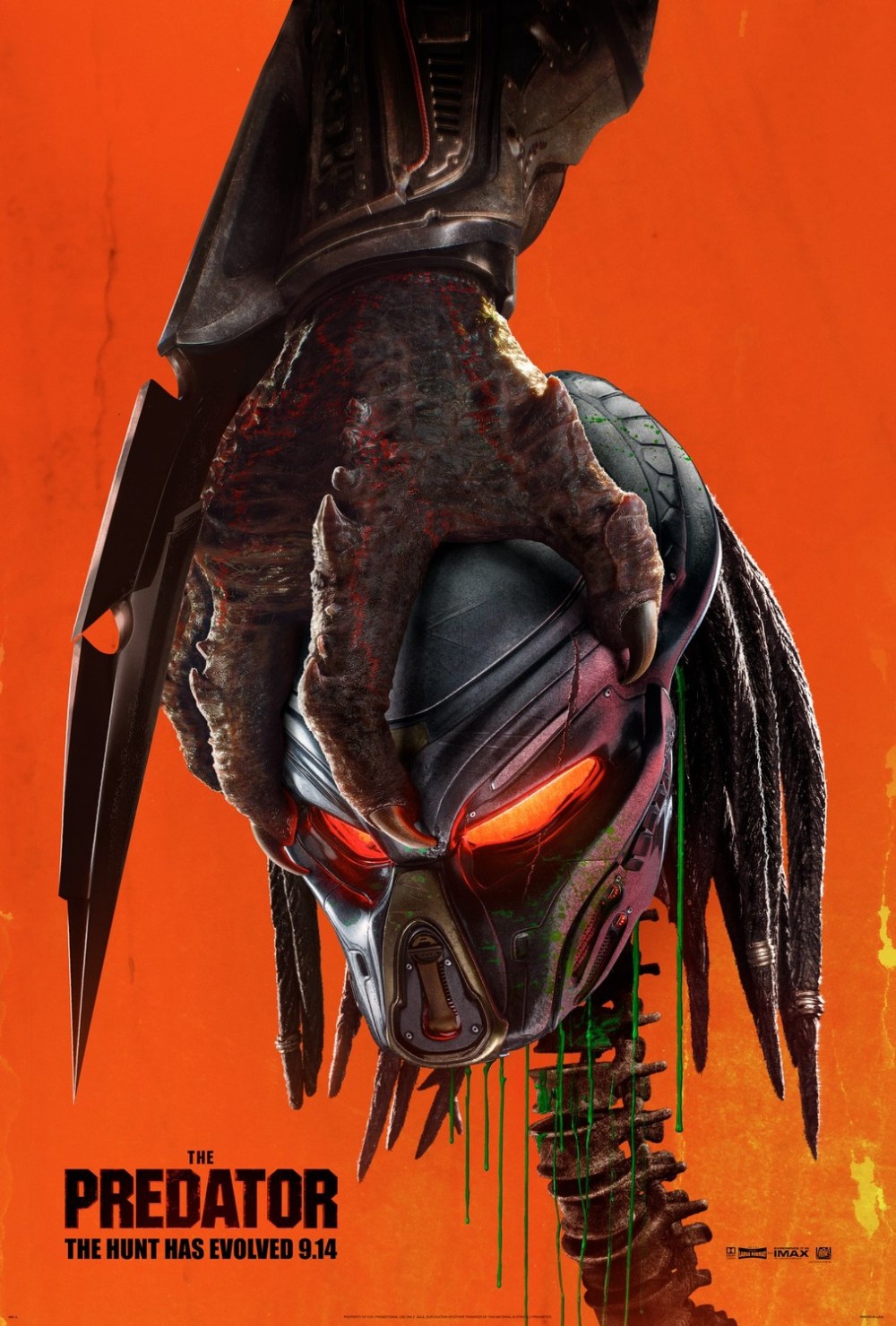
Whereas the teaser trailer introduced us to various characters while keeping the main beast in the shadows, the new trailer for “The Predator” puts the beast front and center. In the process, we also get a closer look at other characters who weren’t featured as much, and with this being a red band trailer, we come out of it thankful this one will not be a PG-13 rated action thriller as the body count is very high. As co-writer and director Shane Black said on Twitter, “PG-13 is for pussies,” and this is something the makers of “Alien vs Predator” forgot to take into consideration.
Actually, the first thing I should point out in this trailer is Sterling K. Brown who plays Will Traeger, a government agent who jails Quinn McKenna (“Logan’s” Boyd Holbrook) but is said to later free him when he needs his help to fight the predators. Brown has the lion’s share of this trailer’s best lines of dialogue as we watch him interrogate Casey Bracket (Olivia Munn). Will starts things off by saying, “Do you know what my job description is? I’m in acquisitions. I look up and I catch what falls out of the sky.” This is a clever way of him describing his job to someone who doesn’t have his level of security clearance. His other great line is, “Predators don’t just sit around making hats out of rib cages. They conquered space.” I loved watching Brown delivering these lines with a confident coolness, and he even did it without shedding a tear as he often does on “This is Us.”
As for the Predator himself (or herself?), the beast is shown to be as lethal as ever, and this is even before we see him lay waste to those foolish humans who, like the ones in “Jurassic World: Fallen Kingdom,” are dumb enough to believe they can handle something which is clearly beyond their understanding. But the big surprise of this trailer is the appearance of another Predator who is even bigger and more lethal than the one we have already been introduced to. Some have speculated this larger Predator is the hybrid from “Alien vs Predator: Requiem,” but a closer inspection confirms this is not the case and thank goodness. Once again, “The Predator” is said to take place after “Predator” and “Predator 2” and before the events of “Predators.” My guess, and hope, is it will not even acknowledge the events of either “Alien vs Predator” movie as both were abysmal.
Seeing this second trailer for “The Predator” makes me more excited for it than before, and September 14, 2018 cannot come soon enough. As usual, I need to work at keeping my expectations in check.
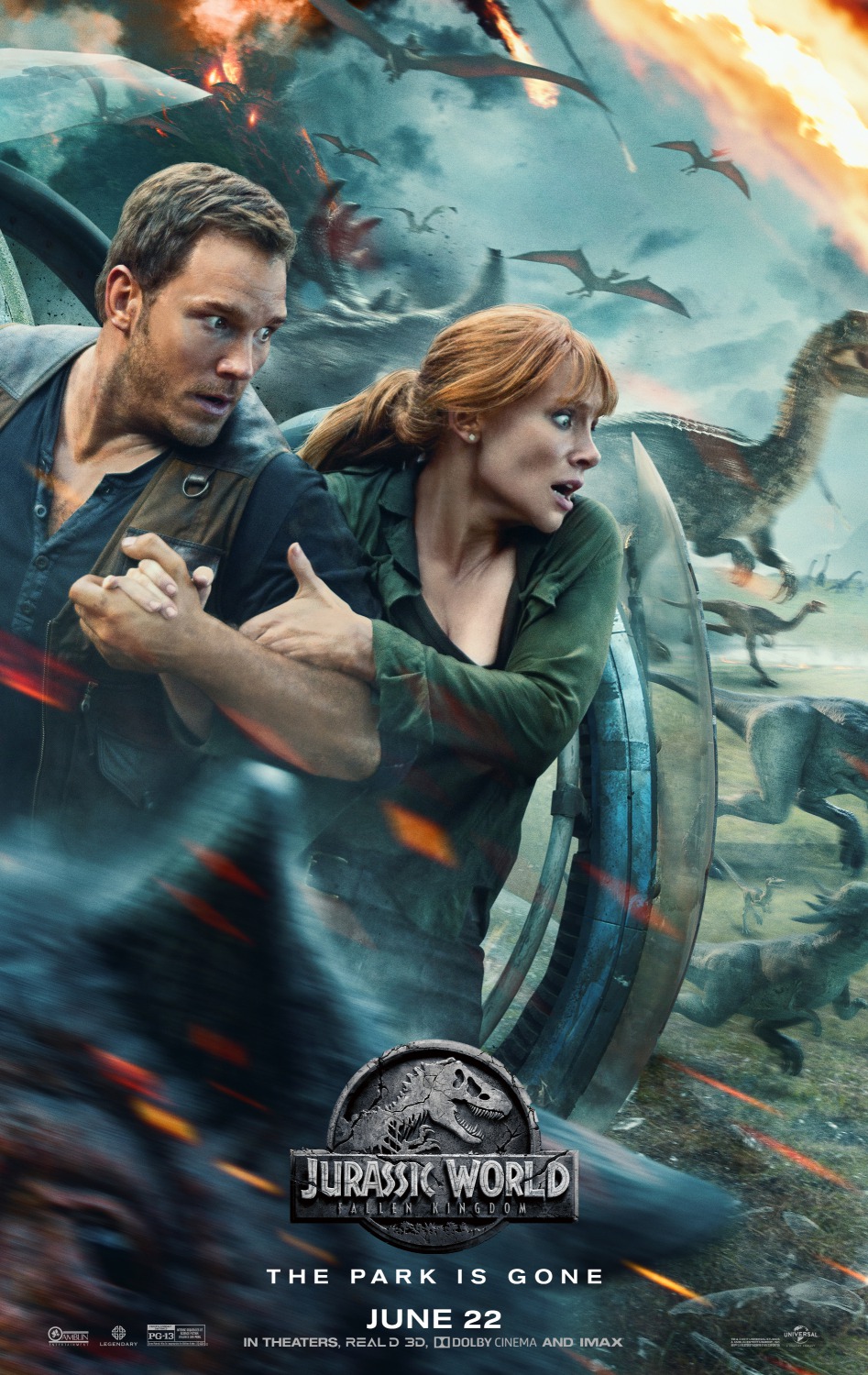
Remember the scene in “The Lost World: Jurassic Park” where John Hammond told Ian Malcolm they were not going to make the same mistakes, and Malcolm quickly replied they were going to be making new ones? Well, “Jurassic World: Fallen Kingdom” doesn’t make new mistakes and instead repeats the old ones as the humans once again try to save the once extinct species in way we have all seen before. Yes, the visual effects are fantastic, but everything else feels astonishingly banal as nothing new is brought to the franchise. As for the storyline, it simply shows history repeating itself, something we see happen in the real world more often than not.
Three years have passed since the events of “Jurassic World,” and the theme park has been left in ruins. Now an active volcano threatens to destroy what’s left of the dinosaurs, and those in the government debate whether it is worth the trouble to save the species from becoming extinct again. Ian Malcolm (Jeff Goldblum) argues it would be best for the volcano to destroy the dinosaurs as he sees this as nature’s way of correcting the mistake Hammond made in cloning them years ago. Meanwhile, Claire Dearing (Bryce Dallas Howard) has formed the Dinosaur Protection Group in an effort to save them. When the U.S. senators do not come through for her, she finds a savior in Sir Benjamin Lockwood (James Cromwell), Hammond’s partner in developing the technology to clone dinosaurs, who is intent on moving the dinosaurs to an island where they will have zero interaction with humans. Of course, this also means she will have to acquire the services of her ex-boyfriend, Owen Grady (Chris Pratt), in the effort to rescue them.
Okay, the “Jurassic” movies have never been heavy on complex characters as the attention is focused mostly on the dinosaurs. The reasoning is understandable, but I have grown weary of letting the filmmakers get away with weak characterizations which are always upstaged by the special effects. Howard and Pratt are fun to watch in anything the appear in, but their talents are wasted as their characters are relegated to the romantic will-they-or-won’t-they scenario which will all know will end with them kissing passionately as they can only fight their intense feelings of love for so long.
The screenplay by Colin Trevorrow and Derek Connolly proves to be “Fallen Kingdom’s” biggest stumbling block as it takes the story of “The Lost World” and follows it to the letter to where the twists and turns the story takes are not the least bit surprising. As I’m sure you have derived from the trailers, the plans to move the dinosaurs to another island are thwarted by a team of mercenaries led by Ken Wheatley (Ted Levine) and Lockwood’s slimy right-hand man Eli Mills (Rafe Spall) who looks to sell the dinosaurs to the highest bidders. You would think after all these movies humans would realize they can never fully control what they have created, but when dollar signs are involved, common sense and morality always take a backseat to greed.
Actually, some characters here had interesting potential which the filmmakers really could have built on. Eli Mills, thanks in large part to Rafe Spall, wins the audience over as he does Claire when he tells her of the plan to save the dinosaurs, but he is later revealed to be a slimy bastard as he looks to profit off them instead. Spall has described Eli as being a victim of high ambitions and of allowing himself to believe he is doing the right thing. He has been entrusted with securing the financial future of the Lockwood estate, and he feels this is the only way he can do it. Still, the character eventually becomes a one-dimensional baddie whom the audience is made to hate, and it got to where I kept waiting for him to say, “Hey look at me! I’m dino-meat!”
The same goes with Gunnar Eversol who is played by Toby Jones. Gunnar is the auctioneer who sells off the dinosaurs, and Jones has compared him to a rogue arms dealer who is morally neutral about the work he is doing. This could have made for an especially fascinating character, but alas, Jones is given only so much to do here as Gunnar is designed to be an appetizer for the “Jurassic” franchise’s newest dinosaur, the Indoraptor. Considering how morally neutral Gunnar is, it would have made more sense for him to take his fate as though he saw it coming instead of screaming like he doesn’t deserve it.
B.D. Wong returns again as Dr. Henry Wu, the chief geneticist of the Jurassic theme parks. Wong plays Henry as a man whose love for science is as big as his own ego, and he is a welcome presence in this deeply flawed sequel. But like the other characters, Henry is given short-shrift to where he just ends up acting like a one-dimensional jerk.
There are some new characters added to the mix such as Dr. Zia Rodriguez, a Marine veteran and a paleo veterinarian, played by Daniella Pineda. Pineda makes Zia into a quirky presence throughout, but the character feels half-realized never fully human. As for Justice Smith, his character of hacker and systems analyst Franklin Webb is this sequel’s most annoying as runs all over the place screaming as if we couldn’t already tell how unprepared he is to be around dinosaurs. I kept wanting to slap Franklin in the face and tell him to grow a pair as his whining made this sequel even more frustrating than it already was.
It is great to see Jeff Goldblum back as Ian Malcolm, one of the most popular and fascinating characters in the “Jurassic” franchise, but his appearance here is a mere cameo as he serves to bookend “Fallen Kingdom.” This is a real shame as the speeches he gives offers us a glimpse at what this sequel could have been: a look at humankind’s abuse of various powers, and at the possibility of if and how humanity and dinosaurs can co-exist. As he makes clear how Jurassic World is no longer the name of a theme park, but of the times humanity now lives in, we are reminded of the opportunities this sequel lost out on exploring.
And yes, there is the little child character named Maisie Lockwood played by Isabella Sermon who constantly sees through the deceptions of the adults and manages to outwit the dinosaurs chasing her. Of course, seeing her being smarter than the adults quickly becomes exasperating, and that’s even though this kind of character serves to remind adults of why they need to listen to children more often. Remember the child from Terry Gilliam’s “Time Bandits” who told his parents “don’t touch it, it’s evil” and they did anyway? Well, you get the picture.
I couldn’t help but walk into “Jurassic World: Fallen Kingdom” with high expectations as it was directed by J.A. Bayona, the Spanish film director who gave us “The Orphanage,” “The Impossible” and “A Monster Calls.” “The Impossible” had an especially profound impact on me as he depicted the devastation of 2004 Indian Ocean tsunami in a way to where I felt I experienced and survived it along with the characters. I guess I was hoping he would bring that same cinematic power to this long-running franchise, but his efforts do little to improve this sequel’s poor story and screenplay.
For what it’s worth, Bayona does give us some memorable moments. The scene where the characters observe one of the vegan dinosaurs crying out to be rescued as the volcano lays waste to Isla Nublar is truly heartbreaking, and the moment where the Indoraptor stalks the helpless Maisie in a sequence which evokes “Nosferatu” as the dinosaur stretches his creepy claws out is wonderfully chilling. I also loved how Bayona started this movie off in near silence as it opens in an underwater environment. It is times like this where I am reminded of how silence is golden, and I was hoping he would use it to his advantage. But as many sequels go, this one is noisy as hell and is at times undone by Michael Giacchino’s overambitious score.
“Jurassic World: Fallen Kingdom” is not this franchise’s worst installment (“Jurassic Park III” still holds that honor), but it is pretty close. “Jurassic World” managed to do the impossible which was bring back much of the awe and wonder from Spielberg’s 1993 classic, but this one finds those things sorely missing to where I wondered if there was ever enough of a reason to make another sequel other than money. What we get here is the same old thing, and the results are depressing as its storyline points out how humans will keep making the same mistakes over and over again as they refuse to learn from history. It left me wondering who would be better off here, the humans or the dinosaurs. As I left the theater, I kept thinking about what Ellen Ripley said in “Aliens:”
“You know, Burke, I don’t know which species is worse. You don’t see them fucking each other over for a goddamn percentage.”
Ripley had a really good point there, and this line was also proof of how James Cameron could come up with good dialogue when he put his mind to it.
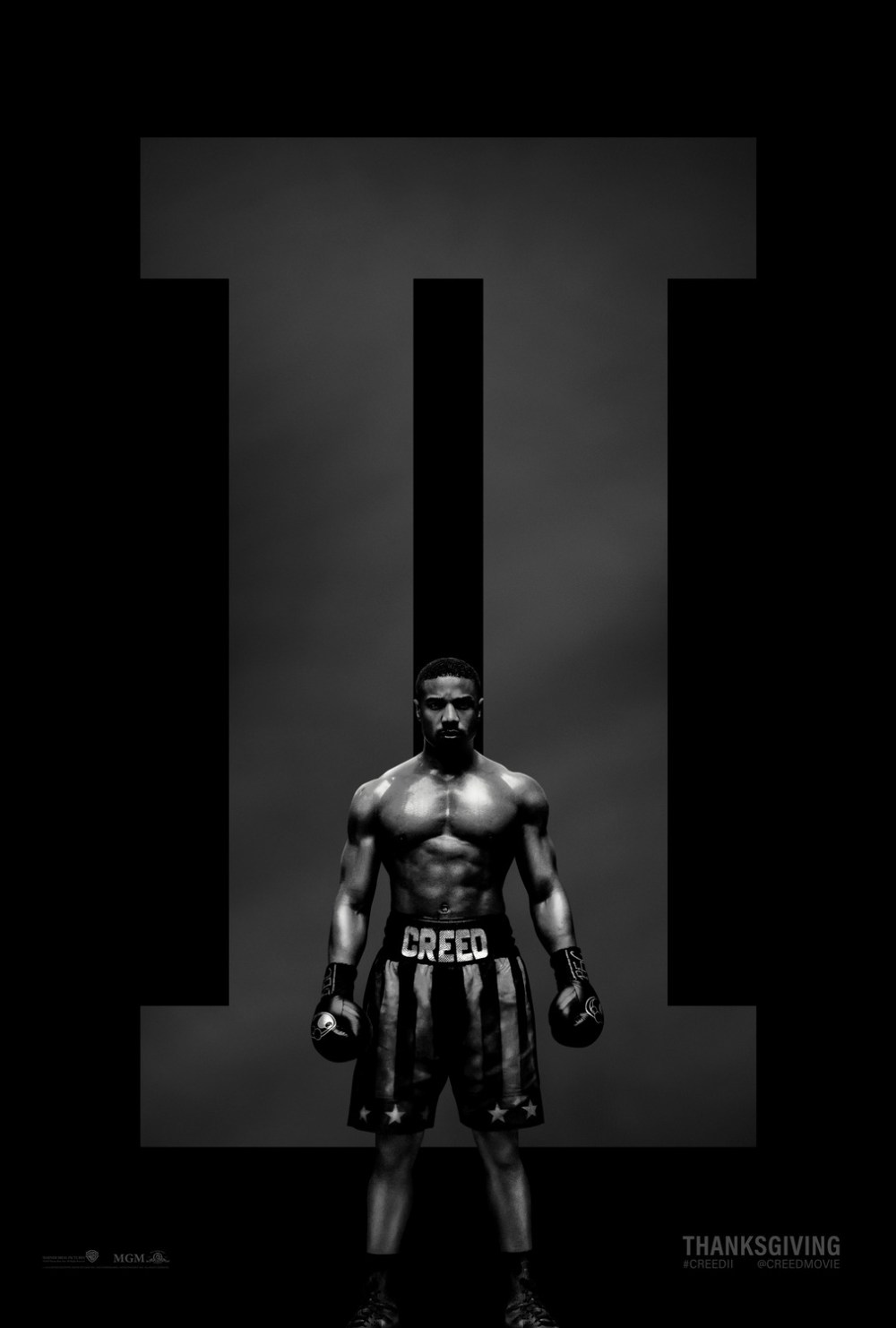
“Creed” may not have reinvented the “Rocky” franchise, but Ryan Coogler and Michael B. Jordan succeeded in making it feel fresh and reinvigorated to where a sequel was not only inevitable, but more than welcome. Now we have the first trailer for “Creed II” which promises a powerful follow-up as Adonis Creed faces the son of Ivan Drago, the man who killed his father Apollo Creed in “Rocky IV,” Viktor Drago.
In some ways this trailer is a bit anti-climatic as we have known for a while already how the son of Ivan Drago was going to Adonis’ next big opponent, and the trailer keeps building up to a reveal we can see coming from miles away. Viktor is played by Florian Munteanu who previously appeared in “Bogat.” Now we never get a clear look at his face, but when he turns around we see “DRAGO” stenciled on the back of his robe. Personally, I was hoping for a little more than just this reveal, but then again, this is a teaser trailer.
I also kept waiting for Dolph Lundgren to reappear as Ivan Drago as he is slated to be co-starring in “Creed II,” but no such luck. One of the things I am really looking forward to is seeing him come face to face with Rocky Balboa (Sylvester Stallone) as I wonder how each character feels about the other following their bloody bout in Russia 30 years ago. I’m guessing Brigette Nielsen will not be back as Ivan’s wife and official spokesperson, so Lundgren will obviously have more dialogue to work with than he did back in 1985.
The trailer does have a lot of cool shots of Adonis training and throwing brutal punches, and the moment where we see him practicing punches underwater is especially cool to where I’m surprised there wasn’t a scene like this in the previous “Rocky” films. Using Kendrick Lamar’s “Loyalty” to score the trailer was a great move as it has a powerful beat which will stay with you to where downloading the song off of iTunes is a must unless you own it or the album it is on already.
But what I really liked about this “Creed II” trailer is how it reflects the challenges Adonis and Rocky face outside of the ring as opposed to in it. Both characters are still stuck in a past which will not let them be. Whether it is the guilt Rocky feels over letting Apollo die in the ring or the feeling of inadequacy which gnaws constantly at Adonis, their struggles are never limited to a boxing match. Seeing this quickly reminded me of when Rocky and Adonis were looking at themselves in a mirror in “Creed” and of Rocky telling him how he will always be his own biggest opponent. And as Rocky talks about the “cheap shots” life is constantly giving him, I was taken back to his great speech in “Rocky Balboa” in which he said the following:
“The world ain’t all sunshine and rainbows. It’s a very mean and nasty place and I don’t care how tough you are it will beat you to your knees and keep you there permanently if you let it. You, me, or nobody is gonna hit as hard as life. But it ain’t about how hard you hit. It’s about how hard you can get hit and keep moving forward. How much you can take and keep moving forward. That’s how winning is done!”
Taking this into account, I believe “Creed II” looks to focus on the characters even over the intense fight sequences we can expect to see. Besides, what’s a fight like without the psychological depth? You can have great choreography, but it won’t mean as much if you are not fully invested in the characters’ plights and of what they stand to win or lose.
Directing “Creed II” is Steven Caple Jr., and the returning cast includes Tessa Thompson and Phylicia Rashad who proves she is still a badass with her brief appearance here. The sequel is set to be released on November 21, 2018.





 The Ultimate Rabbit