Mad Monster Celebrates 30th Anniversary of ‘Jaws 3-D’ with Guests

Jaws 3D Mad Monster poster

Okay, “Jaws 3-D” is not a great movie (I’m being generous here), but I couldn’t pass up the opportunity to see it on the big screen where it was being shown in 3D. I had seen it on television so many times and kept wondering if the experience of watching it with the extra dimension would make it more exciting. Mad Monster put together the 30th anniversary screening for this much-maligned sequel together at TCL Chinese Theatres in Hollywood back in 2013, and they presented fans with a beautiful DCP 3D print to watch. I have a hard time believing the 3D effects looked as good in 1983 as they did that evening.

In addition, Mad Monster also brought along guests who were involved in the making of “Jaws 3-D:” director Joe Alves, screenwriter Carl Gottlieb and producer Rupert Hitzig. All three were eager to talk about the making of this sequel, but they never did discuss how it was received when it was released 30 years ago.

The original plan for the third “Jaws” movie was to make it into a spoof to be called “Jaws 3, People 0.” Plans for this, however, fell through due to conflicts with Universal Studios, and this led to David Brown and Richard Zanuck resigning from the studio. Alves remarked how the pre-production on “Jaws 3-D” showed how smart Hollywood executives are. Of course, he said this with a bit of sarcasm.

“They really didn’t want to make ‘Jaws,’ and we fought to get that made. They tried to stop it four times,” Alves said of the executives. “’Jaws 2,’ after they fired the first director, they closed it down and Verna Fields (who won the Best Editing Oscar for “Jaws”) and I had to convince Ned Tanen (then President of Universal Studios) that we should go ahead and make it. And then here comes the third one, and they think so much of their biggest movie that they title it ‘Jaws 3, People 0’ which means they are making fun of their most successful film.”

Fields, who later became Vice President of Universal Studios, contacted Alves and told him, since Brown and Zanuck left, the rights to “Jaws” were sold to Alan Landsburg, a television producer best known for “That’s Incredible,” and he was making a mess of everything. Fields asked Alves to talk with Landsburg, which he did, and Landsburg offered him the chance to produce the sequel. But having worked 100 days as a Second Unit Director on “Jaws 2,” Alves was far more interested in directing it. But the conversation became very interesting when Landsburg told Alves of what his plans were for this sequel.

“I said you have to think about making a big shark,” Alves told Landsburg. “And he said, ‘oh no, no, no, no, no. I just want to use real sharks from what I have from ‘That’s Incredible’ and mechanical people.’ So that’s how great the thinking was when this production started.”

Alves then went to visit various aquatic parks for research, and he came across an underwater exhibit which was in 3D. He thought it was great and loved the depth of the technology being used. After exiting the exhibit, he started to think about the possibilities of filming “Jaws 3” in 3D.

“With ‘Jaws 3-D,’ you accomplish two things,” Alves said. “You take the onus off the third because there were very few thirds back then; I think ‘Rocky III’ was the only one at the time. And then you introduce a fresh look at it (the franchise). I went home and did a shark drawing in 3D and I took it to Landsburg and to Sid Sheinberg, and he looked at it and said, ‘Can I have this?’ I said ‘Sid, you’re President. You can have whatever you want! I just got to show it to Lew Wasserman first.’ I got the directing job and that’s how it started.”

Gottlieb had written the screenplays for the previous two “Jaws” movies, but he originally was not brought on board to write the third. The original script was credited to the late, great Richard Matheson whom Gottlieb said he great respect for, but at the same time he found his script to be “problematic” at best. As a result, the studio called him to see if he could help them out once again.

“When Joe (Alves) and Rupert came on, they all agreed on me,” Gottlieb said. “I had done the other two under difficult circumstances, and they said, ‘Can you do it again?’ So off I went to Florida and looked at Sea world, surveyed the situation and thought, yes I can do the script.”

Once everything was ready to go, the cast and crew proceeded to Orlando, Florida to film “Jaws 3-D,” and Gottlieb said the only food down there was “deep fried, refried or just fried.” Making the movie proved to be challenging not only because they were filming in 3D, but also due to the fact they were dealing with water and a big shark. Alves described the process of working with 3D to the audience.

“We worked with one film and not two cameras,” Alves said. “You take and split 35mm film one way that you have a proportion that is really difficult to compose. A shark is very difficult to get out into the audience because it has a dorsal fin. If you cut the dorsal fin off, you could float it right into the audience. You could take a snake through it, but as soon as something hits that frame it jumps back. So, the shark could come out as far as the dorsal fin and that was it.”

Hitzig went into further detail about the complexities of working with 3D back in 1983.

“This film was so different because we were so awed by the concept of 3D, but you only see in 3D those frames that work; you don’t see the ones that don’t work,” Hitzig said. “Now there is a point of convergence, and the two lenses of the camera have to be put into convergence. So if I’m focusing on you and you’re in vertical in the back, then I’m focused on you but you’re gonna be two images in the back. Joe had to watch out that there were no verticals in the back because they were going to be too strong. So we go to the motel room in Orlando and we would be watching the movie and going ‘that shot is beautiful’ and ‘oh no!’ Our eyes would go cross eyed or walleyed and we ducked to the floor. Nobody was looking at the performances. So, after the third week, I put a sign in the motel room that said ‘just when you thought it was safe to open your eyes – Jaws 3-D!’”

Now its 30 years later, and 3D has come back to life thanks to new technologies which have made it far more effective than ever before. Then again, not everyone is a big fan of 3D and many are tiring of seeing every other movie with the extra dimension. Gottlieb shared with us his thoughts on 3D.

“I haven’t seen it (‘Jaws 3-D’) in 30 years and I’m looking forward to it,” Gottlieb said. “Every 3D movie is an experience, and sometimes I like to see them twice; once in 3D to have the stuff whizzing by, and a second time flat so that I can enjoy the story and the performances and everything else without the distractions of shooting for effects.”

Before the screening of “Jaws 3-D” began, Hitzig wanted to remind the audience of something.

“Remember that its 30 years ago,” Hitzig said. “We didn’t have CGI, we didn’t have video editing and everything was cut on film which was a problem with 3D. I remember in the very beginning, Sid Sheinberg said, ‘If you can get the shark to come through the screen and land in the audience’s lap, we’ll all be rich. So try and get that shark (which was so huge) through that little screen.’ Instead of CGI, we had to composite on videotape and then go back to 3D which was almost an impossible technical stunt. It’s not an apology, it’s just a realization of what you’re going to see.”

Alves also remarked on a conversation he once had with film critic Gene Shalit.

“I had talked to him on ‘Jaws 2,’ and he wanted to know what we were doing on the third one,” Alves said of Shalit. “I was showing him the 3D stuff and was saying, ‘If it was a snake I could get it into the audience.’ A couple of years later I happened to be working on another movie and I saw Gene and he yelled over, ‘It should have been a snake!’”

Gottlieb left us with one last technology note.

“This script was typed on a typewriter. Fingers on keys, an IBM electric, clickety-clack, clickety-clack.”

Well, “Jaws 3-D” will never go down as one of the finest motion pictures ever made, but watching it reminded us of how much better it is than “Jaws: The Revenge.” Plus, seeing it in 3D made the experience more fun than without it, and this is saying a lot because these days 3D isn’t worth the extra money. The film may not have been a critical success, but it still did turn a profit at the box office and people have not forgotten about it. Big thanks to Joe Alves, Carl Gottlieb and Rupert Hitzig for taking the time to talk about their experience making “Jaws 3-D.”
John G. Avildsen’s ‘The Karate Kid’ is Still the Infinite Crowd Pleaser

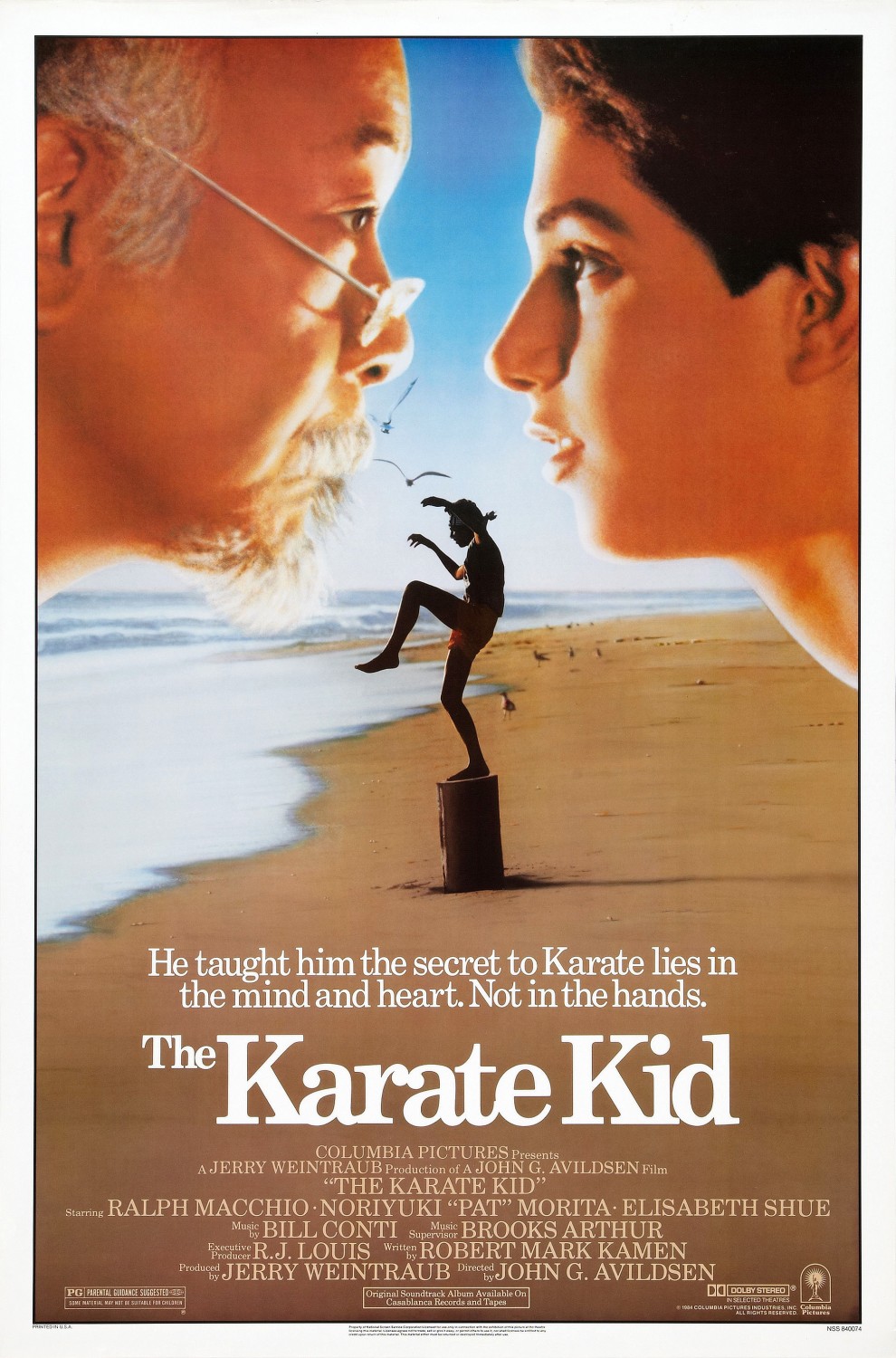
The Karate Kid 1984 poster

I wanted to write about “The Karate Kid” because it’s one of those movies which stays with me to where I know every piece of dialogue in it. I got to see it at the long-gone Melody Theater back in Thousand Oaks where I saw many classic 1980’s movies. I still vividly remember seeing it with my older brother and mom, and it was one of the few movies she would ever take us to see in a theater back then.

It has now been more than 30 years since the original it came out, so I guess it’s safe to say you all know the story by now. Ralph Macchio plays Daniel LaRusso, a high school teenager who moves with his mom from New Jersey to California. Having moved a lot as a kid, I can appreciate his frustration at having to adapt to new surroundings which are not prepared to welcome you with open arms. He runs afoul of a tough gang known as the Cobra Kais, and they are led by Johnny Lawrence (William Zabka). When he sees Daniel flirting with his girlfriend Ali (Elisabeth Shue), Johnny lays down the law and kicks Daniel’s ass without any pity.

“The Karate Kid” had a strong impact on me. I got picked on a bit when I was a kid, and seeing him get messed around with filled me with a sadness and anger in how unfairly people get treated. You want to see him get his revenge against these guys even though it will likely bring the same vicious reaction from the Cobra Kai. When you see him get beat up again, I remember how angrier and angrier I got. But that’s when this movie gave us one of its best moments as Mr. Miyagi came to the rescue and kicked ass. Seeing Miyagi coming from behind in the shadows got my heart and excitement up, and it was a pleasure to see him give those bullies the beating they deserved.

Mr. Miyagi is one of the best characters to come out of the 1980’s, and he remains one of my favorites from that decade. He is basically an Okinawan Yoda, and he is brought to life by the late Pat Morita in a performance I was so hoping would snag him the Best Supporting Actor Oscar he was nominated for. Although this character became a cliché for many other movies, the guy who does a low profile and lonely job but who is actually a war hero with the greatest of skills and training, Morita is brilliant in how he shows the seriousness of Miyagi as well as his joyous and humorous side as well. I did not realize Morita was a stand-up comedian before he did this movie. Then again, he was on “Happy Days” for a while.

After all these years, “The Karate Kid” still proves to be one of the few movies which really shows us the truth about karate. Karate is a spiritual thing more than anything else, and it was not about being trained to attack the way John Kreese (Martin Kove) taught others to do. It was about defense more than anything else. Moreover, it was about making yourself a better person on the inside as opposed to just the outside. I have heard from my closest friends about how studying karate helped raise their self-esteem to where they felt better about themselves. I even studied karate for a bit to experience it for myself, and it’s something I hope to continue in the near future.

The friendship between Daniel and Miyagi is one of the best I have ever seen portrayed onscreen. You are pretty much in Daniel’s shoes as he tries to figure out what the heck is going on when Miyagi has him washing his cars, painting his fence, sanding his floor and painting his house instead of teaching him karate. This leads to one of my favorite moments where Daniel realizes Miyagi has trained him in karate without him even knowing it. All these chores give him reflexes which have become ingrained in his consciousness to where they are practically automatic, and it is then that he realizes he has long since learned how to defend himself.

As Daniel LaRusso, Macchio gave us his quintessential performance from the 80’s. In the first two “Karate Kid” movies, he found a balance between being obnoxious and sincere, and he makes LaRusso a likable guy to where his transformation into a true karate student feels real and authentic.

Shue was so beautiful in this movie, and I liked how she embodied her character to where she practically spits at the clichés of the typical spoiled rich girl we have seen in far too many movies. Shue and Macchio might seem like a highly unlikely couple, but these two convince you they could be together. I always hated how Shue’s character got dumped in “The Karate Kid Part II.” I never really bought how that all came about, and I thought it was really shitty to not include her in the sequel. Shue was a wonderful and vivacious presence here, and she went on to give an unforgettable performance in “Leaving Las Vegas.”

Morita’s career went downhill after appearing in “The Karate Kid.” Seeing him doing local car center commercials was frustrating, but what he does here with Miyagi is amazing. It’s one of those performances where the actor becomes the character to where you never really see him acting, and that’s great film acting.

John G. Avildsen, best known for directing “Rocky,” helmed this movie with the same level of confidence as he did with the one he won a Best Director Oscar for, and he gives us a rousingly good time at the movies in the process. Since he has two great actors in the lead roles, he doesn’t waste time trying to manipulate our emotions because he makes everything in “The Karate Kid” feel very real. You’re not just watching this movie, you’re experiencing it along with the characters.

I also want to mention Kove’s performance as John Kreese as he proves to be the real villain of “The Karate Kid.” He trains his students viciously as if they are in a constant state of military basic training you would rather see end sooner than later. Kreese has programmed these kids to hurt and inflict punishment, any they look up to him for all the wrong reasons. But towards the end, they come to see Kreese is not all he is cracked up to be. There’s a great moment where he looks at Zabka as he is taking a break in the climatic fight with Daniel LaRusso and tells him to “sweep the leg.” Zabka’s character of Johnny Lawrence looks at Kreese like he is out of his mind, and it adds another to where it keeps the characters from becoming a pair of one-dimensional jerks we have seen too often.

“The Karate Kid” is a well written movie directed to near perfection and acted with supreme skill. After all these years, I never get sick of watching it, and I don’t think I ever will.

* * * * out of * * * *

John Carpenter’s ‘The Thing’ is One of the Best Horror Movies Ever Made

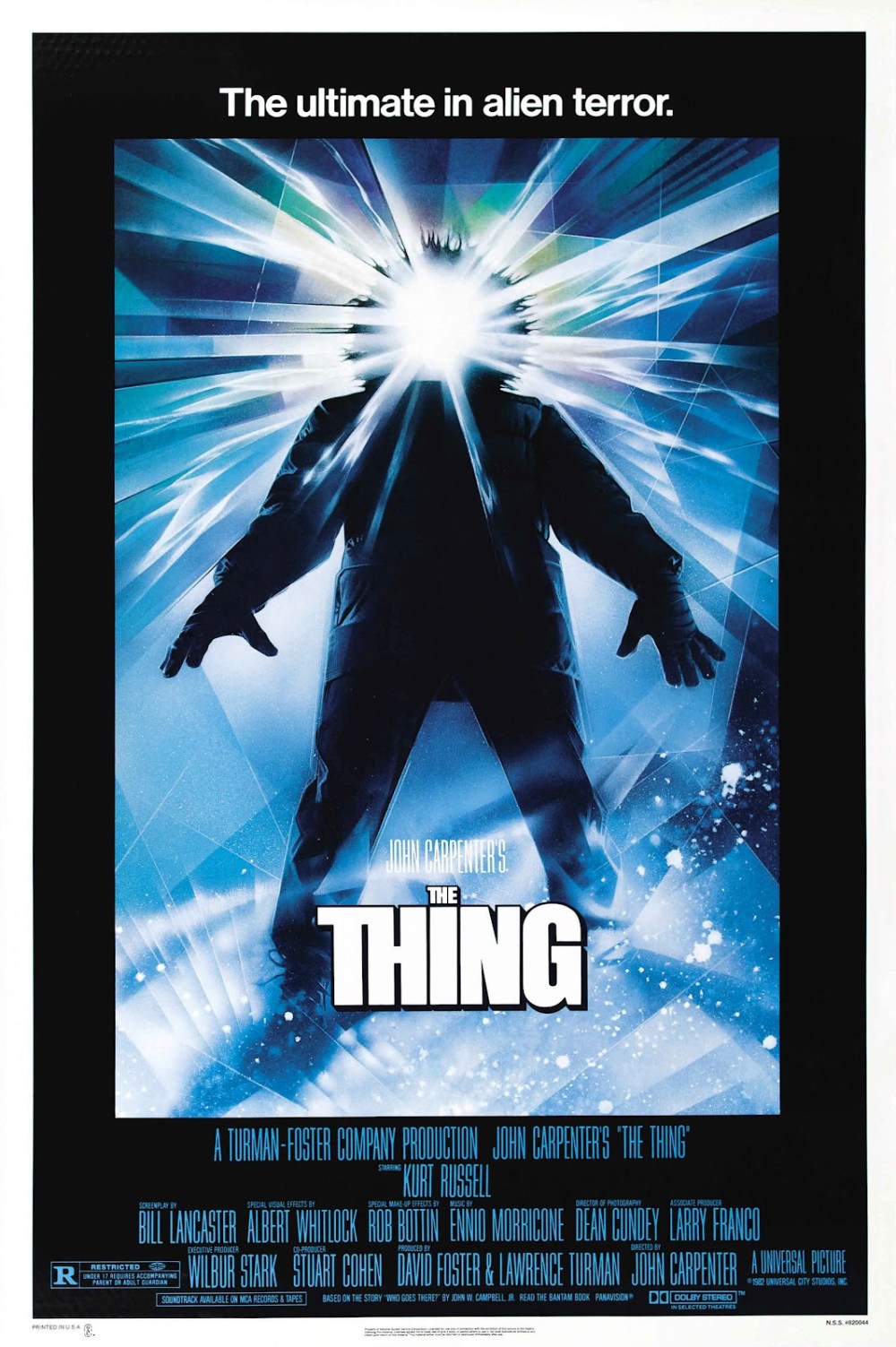
The Thing movie poster

Many of you probably know the story behind John Carpenter’s “The Thing.” It came out in the summer of 1982, two weeks after Steven Spielberg’s “E.T,” and while the alien from Spielberg’s movie was warm and cuddly, the one in Carpenter’s was cold, ugly, and utterly vicious. As a result, “The Thing” was quickly derided by both critics and fans alike, and no one hid their disgust towards Carpenter for what they saw as pornography of violence. In all fairness, however, the movie was released at the wrong time of the year. To release it during what Carpenter called the “summer of love” opposite not just “E.T.,” but also “Star Trek II” and “Tron” was a big mistake on the part of Universal Pictures, and they would have had more luck had they released it in the winter of 1982.

Years later, “The Thing,” like many of Carpenter’s movies, found the audience it deserved through home video and digital media. Perhaps it was ahead of its time, but it is now considered, and rightly so, one of the best horror and sci-fi movies ever made, and it is easily the best horror remake in a sea of horrendously crappy ones. It certainly plays better today than it did when first released, and it is still utterly terrifying 35 years after its release.Unlike the original Howard Hawks version of “The Thing,” Carpenter’s movie hews much closer to the short story “Who Goes There?” by John W. Campbell, Jr. The movie takes place at an American scientific research outpost in Antarctica, perhaps the coldest place on Earth. We are introduced to a bunch of men who are studying the surrounding area, and they look bored and listless as they pass the days smoking, drinking scotch, watching “Let’s Make a Deal” reruns, and playing ping pong. One day, they are met by a wolf being shot at by a Norwegian for no discernable reason. This later leads to events which make them realize they have encountered an alien of unknown origin unearthed from the ice after thousands and thousands of years. It then proceeds to imitate every creature it comes into contact with, and it is revealed any of them could be the thing. They have to destroy the thing before it reaches civilization because, once it does, it would mean the end of the world.

The premise of “The Thing” is genius because it allows for an unending escalation of tension and suspense throughout. Like the characters, you have no idea who to trust. The paranoia which closes in on the characters puts them in an airtight cage, and this cage gets smaller and smaller as it heads to its infinitely bleak climax. There are no women to be found which eliminates any sexual tension and could have added an unnecessary element to the movie. Many say this makes the movie sexist, but it is a ridiculous charge.

“The Thing” was released when the whole world started to become aware of the AIDS virus. The idea of any virus infecting us completely and rearranging our body to the point may have seemed unreal to us back in 1982. But today, it is a reality more horrifying than ever, and it presents itself with no cure. This makes “The Thing” even scarier to take in when watching it now. The scene where Dr. Blair (Wilford Brimley) observes a computer image of the virus infecting a human host is one of the movie’s scariest moments, and it feels like an all too real a possibility today. The only thing truly dated about the scene is the computer graphics look like they are from some old Atari game, but it doesn’t change anything.

This movie also marks one of several collaborations between Carpenter and Kurt Russell who started working together on the TV movie “Elvis.” After all these years, Russell can still make you believe he is a regular guy like the rest of us, and his role as helicopter pilot R.J. MacReady is one of his best. You never get the feeling Russell is acting here. Instead, he inhabits the character he plays, and you follow him every step of the way without any doubt of who the hero really is.

Carpenter cast “The Thing” perfectly with actors like Richard Masur, Richard Dysart, Donald Moffat and David Clennon. But one of the best performances comes from Brimley as Dr. Blair. In the past, we have seen him in countless oatmeal commercials and in roles as the grandfather we wished we had in our lives. But his role in “The Thing” offered him an opportunity to go completely against type. Brimley goes from curious to utterly horrified by what this unknown creature can do, and he ends up wreaking havoc in a way you would never ever see in an oatmeal.

Another great actor in this movie is Keith David who plays Childs. David has a don’t mess with me intensity, and he matches Russell’s intensity every step of the way. The tension between them is as frightening as is waiting for the thing to make its next horrifically gory entrance.

But let’s talk about who the real star of “The Thing” really is, and that is Rob Bottin who designed the movie’s horrifically brilliant special effects and makeup designs. Long before the advance of computer technology, Bottin had to make all these designs from scratch, and what he came up with is now considered a benchmark in his field. The thing mimics everything it touches, and this must have been a huge inspiration for him as it allowed his imagination to run amuck with infinite possibilities. You never know what’s coming next, and this makes “The Thing” even scarier.

Some have called this movie a “geek show” made only with the intention of grossing people out. Granted, a good case could be made for that, but “The Thing” explores a theme that is commonplace in many of Carpenter’s movies; the struggle to maintain one’s individuality. Of never letting go of who you are because it allows you to survive in a world which keeps finding new ways of robbing your individuality at any given opportunity. The threat of this loss is very real, and the characters have the unfortunate disadvantage of being stuck in one of the most remote and desolate places on Earth.

I also imagine a big complaint people have about “The Thing” is we never learn about the alien or where it came from. Basically, we know it’s from outer space which imitates whatever it comes in contact with, and it clearly deals with the cold better than any of us do. Here’s the thing, do we really need to know everything about this creature? Maybe not knowing is more terrifying than knowing. It leaves a lot of things to the viewer’s imagination which I love because it leaves so many possibilities open for how this horrific situation is going to play out.

“The Thing” truly is Carpenter’s masterpiece as it shows him to be a true master of horror and suspense. He endlessly generates unbearable tension throughout, and just when you think the movie has peaked, you realize it has not. Carpenter’s goal here is not just to make us jump out of our seats, but to make us feel the terrifying isolation and complete lack of trust these characters are forced to endure.

Carpenter has said “The Thing” was the first in his apocalypse trilogy (the other two were “Prince of Darkness” and “In the Mouth of Madness”), and it does have an unrelentingly bleak tone which made it seem completely out of place back in 1982. As time goes on though, many of us keep thinking the world is coming to an end with more deadly diseases like the Ebola Virus among others, and the scenario this movie presents us feels all the more frightening and immediate as a result.

Some movies are robbed of their greatness through the passage of time, and we watch them and wonder why we liked them in the first place. But “The Thing” is an exception as the passage of time has made it all the more effective. You can’t help but think its story was ahead of its time, and it remains one of those movies I never ever tire of watching. It has more than earned its place on the list of my all-time favorite movies.

* * * * out of * * * *


John Carpenter Revisits ‘The Thing’ at the Aero Theatre

John Carpenter Dummy Magazine photo

“Escape Artist: A Tribute to John Carpenter” was held a few years ago by American Cinematheque at the Aero Theater. In addition to being treated to a double feature of “The Thing,” which is widely regarded as his best film, and “The Fog,” the writer, director and composer also showed up in between both films to give us more insight on their making and took questions from the audience. Even though these movies are now twenty to thirty years old, they still resonate deeply for movie fans today. This was proven true by the fact these screenings were sold out and packed with Carpenter’s biggest fans.

While “The Thing” was not a big hit upon its release, it has since developed a huge cult following and been critically re-evaluated as the masterpiece it always was. Eighty percent of the audience had probably seen this movie several dozen times, but they still jumped during its most shocking moments.

The Thing movie poster

After the movie ended, Carpenter came to the stage and was met with a standing ovation and thunderous applause. He thanked them for coming on out to see this movie when they could have just watched it at home. One fan in turn thanked him for coming on out to visit with us as he has millions of fans all over the world, and yet he chose to hang out with us.

Today, as the emcee pointed out, many are surprised “The Thing” was not a big hit when released back in 1982. Carpenter put it all the more bluntly:

“It tanked! 1982 was supposed to be the summer of love. It was the summer of ‘E.T.’ and it was the summer of freedom and hope, and ‘The Thing’ was about as bleak a movie as any that could have been released that year. People hated it for that, and all the sci-fi fans out there absolutely hated it and trashed it when it first came out.”

As Carpenter pointed out to actor and friend Kurt Russell on the movie’s DVD commentary, “We came out two weeks after ‘E.T.’ And while there’s was all warm and cuddly, ours was ugly and hideous.” Universal Pictures, which released both movies that summer, attempted to make it the summer of extra-terrestrials, but the timing did not work at all in Carpenter’s favor and it later cost him the job of directing the Stephen King adaptation, “Firestarter.”

One fan pointed out how “The Thing” was unique in a sense as it is one of the few Carpenter movies he did not compose the score for. While the score does have the Carpenter sound, it was actually composed by Ennio Morricone. Carpenter said Morricone is one of the greatest film composers ever, and he did point out there is one synthesizer piece of music which was not composed by Morricone. Now he wouldn’t say who composed it, but it’s safe to say he did, and in association with Alan Howarth.

Another fan pointed out several of Carpenter’s movies have been remade like “Assault on Precinct 13,” “The Fog” and “Halloween,” and a remake of “Escape From New York” is in the works. This fan said he found remakes blasphemous, and to this Carpenter replied, “I actually find it flattering. They also have to pay me a lot of money when they do that.”

Dean Cundey, director of photography on “The Thing,” worked on several of Carpenter’s movies including “Halloween.” Carpenter has not worked with Cundey for some time now, and one man asked why and if there had been a falling out between them. Carpenter replied they have not fallen out, and he recently caught up with Cundey at a movie shoot in Canada. Carpenter did, however, point out why they haven’t worked together for a while, “Dean wanted to be a director. And when you have a director on a movie, and a director of photography who wants to be a director, that’s just not going to work out.”

Everyone who knows Carpenter knows he is a big fan of westerns, and he recently recorded a commentary track for the special edition release of “Rio Bravo.” Many wonder why he still hasn’t directed a western of his own, and Carpenter replied he honestly didn’t know but that he came close several times. The closest was when he wrote the script for “El Diablo” which was made into a cable movie that earned him a Cable Ace Award. If you look closely, all of his movies do have western elements to them. The closest he has ever gotten to making a western is “Vampires” with James Woods.

Many also wondered, and it was asked, what future projects he has on tap and of what his current passions are. His reply was, “Current passions? I’m playing Ninja Gaiden, I just got Metal Gear Solid 4 for PlayStation 3… No seriously, I have a couple of things I’m looking at doing, so we’ll see what happens.”

Before he left, he did have some things to say about “The Fog,” “I have heard that the print for this movie is not in the greatest shape, and that it is pretty faded. But keep in mind that when we made this movie, we made it for only $1 million dollars, so please be kind.”

‘The Emerald Forest’ Makes the Term ‘Based on a True Story’ Mean Something

The Emerald Forest poster

The Emerald Forest” is kind of a spiritual sequel to “Deliverance” as both were directed by John Boorman. Each film deals with man’s tearing apart of nature for their own needs, and of how nature has its own set of rules which forces outsiders to survive by any means. They also take place in a wilderness where the rules of law and justice cease to exist as its inhabitants live defend what is theirs and are not exactly open to strangers. Also, they contain characters who have never been exposed to civilization as we know it. The subject of man versus nature makes for a fascinating subject, and it’s entertaining to see Boorman take it on again.

“The Emerald Forest” is “based on a true story” and was released back in 1985, back when that term actually meant something. Powers Boothe stars as Bill Markham, an engineer who has moved to Brazil with his family to complete the construction of a large hydro-electric dam. This of course necessitates large areas of the Amazon forest be cleared to make room for agriculture and living space. While on a picnic with his family, his son Tommy suddenly gets abducted by an indigenous Indian tribe. Bill ends up spending the next ten years looking for Tommy just as the dam he’s working on nears completion. He ends up finding Tommy alive, and Tommy has long since become fully integrated with the tribe known as the “Invisible People.” But will Tommy end up going home with his real dad, or will he stay with this tribe which he considers family?

I remember seeing commercials for this movie on television, and the fact it was “based on a true story” made it seem all the more frightening at the time. To be stolen from your family is a terrible fate and a horrible burden for any parent to endure, and it’s the last thing anyone should go through. The interesting aspect of “The Emerald Forest,” however, is how Tommy seems to enjoy being part of this tribe which has given his life a meaning it wouldn’t necessarily have in the real world. This makes the conflict between Bill and the tribe especially fascinating; he’s entitled to be angry at these people for kidnapping his son, but it’s not like his son has been treated badly by the tribe. Issues like this are usually black and white, but in this movie, they come to inhabit a morally gray area.

In the process of looking for his son, Bill comes across a rival tribe known as the “Fierce People” whose leader shows his admiration for the hunting skills he shows off with his machine gun, a weapon they are unfamiliar with. As a result, they give him a head start to run for his life before they hunt him down. He is fortunate enough to run into Tommy who has long since become a warrior like the Indian family which “adopted” him, and he takes his father to safety where the “Invisible People” can take care of his wounds.

The scenes showing the tribe and the rituals they perform are among the most fascinating scenes in “The Emerald Forest.” Boorman really makes us feel like we are observing something we would not be likely to see in person as we watch Tommy becoming a man. These are not just a bunch of actors trying to recreate what tribes of Indians did before and after white men stole their land, they look like the real deal. Plus, their description of Bill and those like him as “Termite People” as, like those pesky creatures, they destroy the land they come in contact with gets at the universal truth of life: Man’s attempt to create a new way of life ends up laying waste to our past.

Actually, the one actor who deserves the most credit here is the director’s son, Charley Boorman, who plays Tommy. Much of the movie’s success really hinged on his performance as a stranger to the world he has been abducted to. If you didn’t believe how sincere Tommy was to win the tribe’s respect, then “The Emerald Forest” would never have worked as a movie. But Charley is utterly believable and sucks you into his character’s reality without a second thought. It’s one of those performances where the actor becomes his character as opposed to just playing them.

Boothe was one of those actors who are impossible to cast as a wimp. I mean you could, but would you believe him in such a role? He’s always played tough guys who never go down without a fight, and here he plays a good guy who is no different. It’s hard to think of another actor who could have embodied Bill Markham better than him. Perhaps Sylvester Stallone or Arnold Schwarzenegger could have, but casting either of them would make this become a completely different movie.

Boothe not only has to show the intense dedication this father has in finding his son, but he also has to believably portray a man who is more of a match with the wilderness elements than any other stranger to this environment. He succeeds on both fronts as the tribe accepts him despite their differences with one another, something which isn’t easy. The actor also has to convincingly portray a man who has to go against what he does for a living to protect his son and his way of living. Looking at this makes you realize just how underrated, or perhaps largely underappreciated, an actor Boothe was while he was alive.

Boorman, along with cinematographer Philippe Rousselot, provides the viewer with beautiful scenery throughout. Much of it was filmed in Brazil, and we get to see sights which, all these years later, may not even exist anymore. Just as with “Deliverance,” Boorman wants to explore this part of life before it vanishes forever, and he was lucky to get any of it on film.

Like any movie “based on a true story,” much of “The Emerald Forest” has been fictionalized for dramatic considerations. This results in it having a shootout in which Boothe has to team up with the tribe which took his son so they can rescue their women who have been stolen into slavery. In some ways, it feels like a cop out for the movie to reach its conclusion, but it does have the added bonus of them dealing with another Indian tribe whose ignorance of guns has been exploited to their benefit. It seems to imply how any person who encounters the real world is more likely to corrupt themselves than advance their way of life. This ends up saving “The Emerald Forest” from turning into any other action movie.

John Boorman’s career as a director has taken him all over the critical map from classics like “Deliverance” and “Hope and Glory” to duds like “Zardoz” and “The Exorcist II: The Heretic.” “The Emerald Forest” stands in the middle of all his movies as it’s really good if not quite great. I’m glad I finally got the opportunity to see it even though it took me almost 30 years after its release to do so. It’s also nice to watch a movie “based on a true story” which actually feels like it is. These days, the term is meaningless as it has been used once too often, but back when this movie came out, it meant a lot.

* * * ½ out of * * * *


Jennifer Grey and Jason Reitman Revisit ‘Ferris Bueller’s Day Off’ at New Beverly Cinema

Ferris Bueller Jennifer Grey

On Friday, February 19, 2010, Jason Reitman began his program of movies at New Beverly Cinema in Los Angeles. The first double feature of his program was “Ferris Bueller’s Day Off” and “Election,” great movies dealing with high school and teenagers in an intelligent way and which starred Matthew Broderick. “Ferris Bueller’s Day Off” was one of John Hughes classic films from the 1980’s which everyone has seen at least nine times. Reitman remembered wanting to see it with his dad when it first came out, but his father, Ivan Reitman of “Ghostbusters” fame, was busy shooting “Legal Eagles” and couldn’t get away from the set. They ended up going to the movies later, but instead they watched “Big Trouble in Little China,” John Carpenter’s ode to martial arts movies which was not as successful, but later become a beloved cult film.

Ferris Bueller's Day Off poster

Reitman said he considers “Ferris Bueller’s Day Off” to be Hughes’ love letter to Chicago. Indeed, Chicago does look very beautiful as shown here. These days, it’s rare to see it without snow covering it. Richard Belzer has a brilliant quote when he played John Munch on “Homicide: Life on the Street,” “Chicago has two seasons, winter and St. Patrick’s Day.”

Reitman saw Ferris Bueller as the guy who knows everyone is dying from a terminal disease. Knowing this, he lived every day as if it were his last. He then went on to say “Ferris Bueller’s Day Off” is a movie about people dying, and the last moment of joy anyone has comes at the end of the parade when Broderick is out shaking his bod to The Beatles’ version of “Twist and Shout.” The acclaimed director was serious about this and even said, “If you came out of this movie happy, THEN YOU MISSED THE ENTIRE POINT!”

Before the movie began, Reitman brought out a special guest, Jennifer Grey. She played Jeanie Bueller, Ferris’ largely unpleasant and infinitely resentful little sister. Grey would go on to become a big star when she starred in “Dirty Dancing” opposite the late Patrick Swayze. Reitman said he asked Grey to come just this morning, and she was very gracious to appear at such short notice.

Grey warned Reitman upfront she smoked a lot of pot during the movie’s making, so she doesn’t remember a lot of it. However, during her brief time with Reitman, she did remember quite a bit, so maybe all the smoking helped.

One of the big revelations was that Grey admitted was never really a big fan of Hughes before she got cast. She had just seen “Pretty in Pink” which he wrote the screenplay for but didn’t direct, and she declared she didn’t get it. As a result, Grey went into the audition not really caring if she got the part or not. She didn’t even try to hide her attitude towards Hughes when talking to him about how she didn’t really care for his films. It was this attitude which got her cast as the bitchy little sister of Broderick’s iconic character.

Another big revelation we learned was Hughes and Broderick were always at odds with one another, and the tension between them was always high. Broderick found it very hard acting to the camera, one of the signature devices of this movie. Grey also said Broderick was “very slow” in putting a performance together, and this was certainly the case when he played Ferris. It got to where Hughes was constantly waiting for Broderick to start giving him what he wanted, and there were points where Grey said Hughes leaned over to her and said, “Is he ready now? Is he warmed up? Is he gonna give us ‘Brighton Beach Memoirs?!’”

Still, Grey recalled her experience of making “Ferris Bueller’s Day Off” as being “heaven on earth,” and she felt very safe with Hughes as a director to where she never felt self-conscious about anything she did. She admitted she loved every single experience she had making this classic, and she even developed a big crush on Hughes, describing him as being a “Baby Huey.”

Reitman asked how Charlie Sheen got cast as the drug addict who befriends Jeanie Bueller while waiting at the police station. Grey explained she was the one who got Sheen involved as she had just done “Red Dawn” with him. There was actually a lot of improvisation during the police station scene, and Grey said the moment where Jeanie says some people call her Shawna was born out of that.

One of the questions really burning on Reitman’s mind was what it was like for Grey when she worked with “her brother.” Broderick and Grey were actually dating for a time during this movie’s making, and she replied the only time you see her character and Ferris together in the same room is at the very beginning and right near the end.

Before the movie started, Grey finished by saying Hughes did such a great job in capturing the voice of the time and of teenagers in general. She pointed out what we all came to see, that Hughes very much understood the gravitas of being a teenager and of how difficult and frustrating those years can be.

It was great to see Grey come out for this special screening of one of the best and most entertaining movies of the 1980’s. Reitman went on to say we all must be wondering what became of Ferris Bueller after he graduated from high school. There was always talk of a sequel which would show Ferris as a burned-out executive of some corporation, and a day off from this kind of job is always welcome no matter what day of the week it is. What did Reitman think? For that, he said to check out Alexander Payne’s “Election.”

‘Creepshow’ Remains a Benchmark in Horror Anthologies

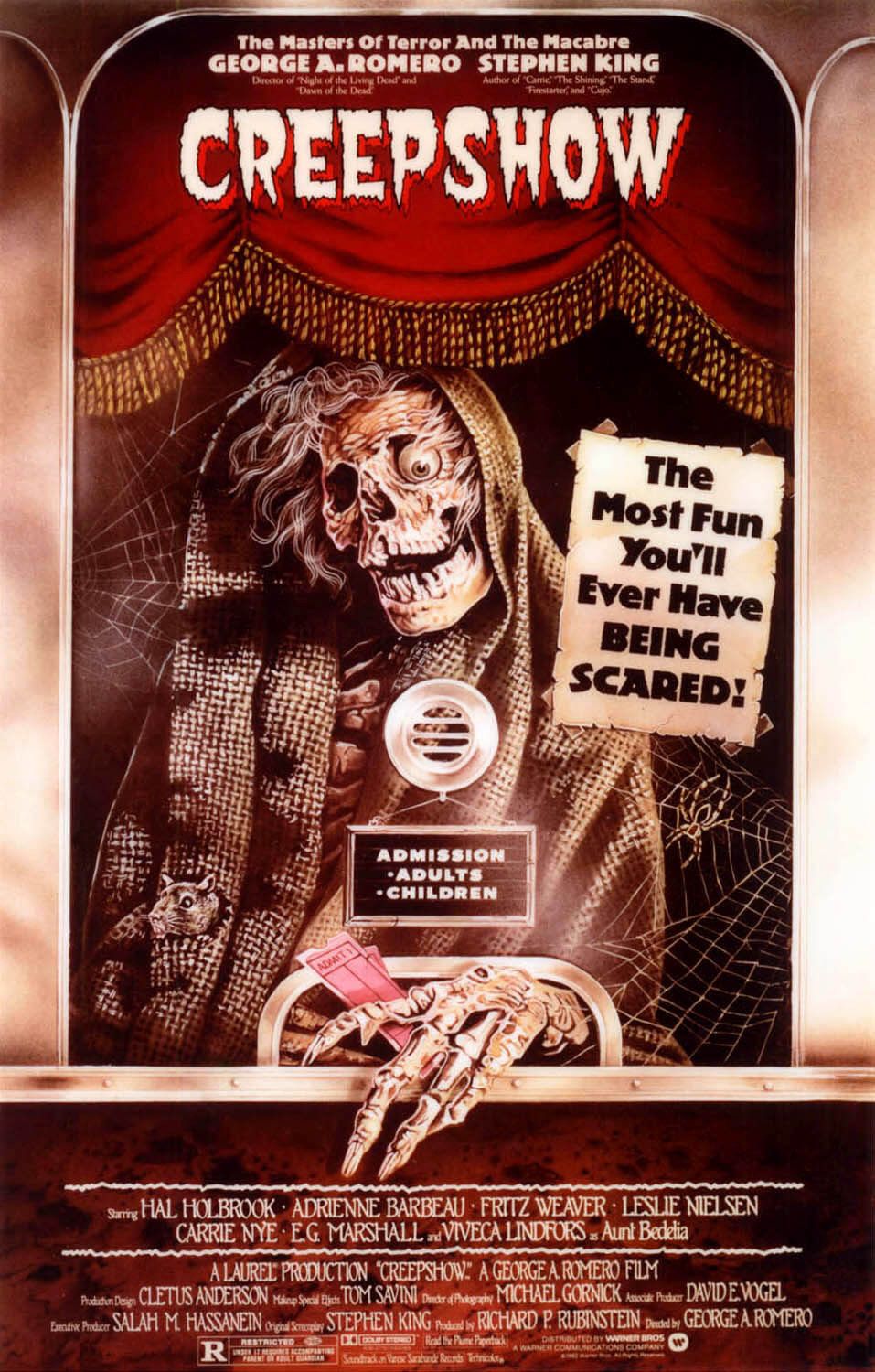
Creepshow movie poster

Ah, “Creepshow!” One of the best horror anthologies to come out of the 1980’s, and it is immensely enjoyable if you’re into this sort of movie. It brings us the combined talents of Stephen King and George Romero as they give homage to the E.C. comics of the 1950’s with five different stories of terror. In some ways, this can be seen as more of a comedy than a horror movie. Granted, it does have its scary moments, and a hand coming out of a grave is always good for a jolt, but it is presented in such an over the top fashion to where you have to thank both King and Romero for not taking the things too seriously.

As I write this review, filmmaker Eli Roth is having a two-week festival of his favorite movies at New Beverly Cinema in Los Angeles. This film was playing on a double bill with “Mother’s Day” which I missed, unfortunately, but it was probably because I was more excited about seeing this one. I vividly remember seeing the trailer for it when I went to see, and cry again at, “E.T.” When the image of The Creep first appeared, my brother responded by saying, “Whoa!”

The trailer was amusing and funny, at least until those cockroaches came in during which I had to cover my eyes. Granted, it would years and years before I would have the stomach, let alone the time, to check this one out. Anthology movies and series like “Masters of Horrors” are always intrigued me because they were filled with so many possibilities. Going from one story to the next, you are eager to see where it takes you. The only downside with anthologies is there is usually a weak story among the whole bunch which can weigh down the whole enterprise, but “Creepshow” doesn’t have this problem and is endlessly enjoyable to sit through.

The movie opens with a prologue where a father (Tom Atkins) berates his young son (Joe King, Stephen King’s son) for reading these “crappy” horror comics. The kick of the scene comes from the son calling out his dad for the hypocrite he is when he points out it’s a lot better than the magazines he reads. I couldn’t help but think this kid’s dad has a wide variety of porno magazines hidden where his wife can’t find them. It’s funny how we see fathers not wanting their kids to read “crap,” and then they sit in a recliner with a can of beer boasting of how God made fathers. Poor schmuck.

“Creepshow” then goes straight into its first episode entitled “Father’s Day,” a story of revenge. The patriarch of a family was murdered for being an annoying prick as he furiously demanded his cake to be brought out to him, and now he’s come back from the dead to get that tasty cake he has long been denied. Of all the stories, I consider it the weakest because “Father’s Day” is very short and threatens to be pointless. It does, however, succeed in defining the look of the movie. The acting is over the top, and there is a fantastic use of colors which dominates the movie and gives it a wonderfully pulpy feel. If Dario Argento had ever created a comic book, I’m sure it would look like this.

The great about “Father’s Day” is it allows us to see Ed Harris in a role where he is loosened up. Harris is a great actor who plays mostly dramatic roles in movies, and one day he will win an Oscar. But here, we see him get his boogie on while dancing to some crappy disco music which somehow sneaked its way into a 1980’s movie. You listen to that music, and you’d figure it would have died a fiery death before the 70’s ended. No such luck.

The next story, “The Lonesome Death of Jordy Verrill,” is both funny and sad. It features King in one of his few acting performances as the title character, a dimwit farmer who discovers a meteor which has crashed into his backyard. Jordy gets excited at the prospect of selling this meteor to the local college for a handsome profit, but when he tries to salvage it, it breaks into two and a liquid quickly seeps into the barren ground of the farm. Soon after, everything it touches starts growing green plant life which cannot be contained. It also grows on anything it touches, including Mr. Verrill himself. Seeing King turn into a bush is frightening and morbidly amusing. King may say he is a better writer than an actor, but you can also say he is a better actor than a director (“Maximum Overdrive” anyone?). In the end, he is perfectly cast as the seemingly brainless farmer, and his performance fits both the story and the film.

After that, we get “Something to Tide You Over,” and this one was my favorite of all the stories in the movie. It stars Leslie Nielsen, before his image was permanently altered by “The Naked Gun” movies, as a millionaire husband who takes his revenge on Harry (Ted Danson), the man having an affair with his wife. The way he lures Danson’s character out to the beach and gets him to bury himself in the sand up to his neck is priceless, and you can say there is a bit of “The Vanishing” here as we have a man willing to do anything to find out the fate of his loved one. Danson’s fate, being stuck in the sand as the tide rushes over him is frightening and unnerving to witness. You feel stuck in the sand with him, and it shows how fiendishly clever both King and Romero are at exploiting what we fear the most in life.

Watching this segment today may seem weird as Nielsen is forever known as Lt. Frank Drebin of “The Naked Gun” movies, and Danson is best known for playing Sam Malone on “Cheers.” Seeing them in a serious, albeit a highly exaggerated, story might be hard, but these actors have their serious chops as well as their comedic ones, and both talents serve them well here. Nielsen is a particular hoot as a man so confident of his deviant plan of revenge, yet quickly haunted by the possibility of his crimes coming back to do him in. Nothing can stay buried forever.

Next, we have “The Crate” which features Hal Holbrook as a Professor at a New England college who is saddled with an eternally inebriated wife (played by Adrienne Barbeau) who constantly embarrasses him and herself in front of anybody who happens to be watching. Holbrook’s character is a coward who doesn’t have the cojones to stand up to his wife, but then a colleague of his and a janitor discover a crate beneath the stairs which has not been opened for decades. It turns out to contain a monster who eats human beings whole. After Henry hears of this, he concocts a plan to lure his abusive wife over to the crate.

Holbrook is great at making you feel sorry for his character even while we berate him for being a wimp and not standing up to his wife. Barbeau gives a one-note performance as a humongous bitch with no real redeeming features whatsoever. In the end, this is not a big criticism because Barbeau is given a one-dimensional character to play. The characters are not meant to be complex in the way they handle themselves, and they are here to represent different types of people who meet their predestined fate.

Then comes the last story of the movie, appropriately titled “They’re Creeping Up on You.” This one I had the hardest time sitting through, and I doubt it will be easy for you either if you have an intense phobia of bugs. E.G. Marshall plays Upson Pratt, a thoughtless and hateful bigot who has no sympathy for anyone other than himself. He gleefully takes delight in the suffering of others and lives in a completely sterile apartment which makes him look like he’s a doctor. But his problem now is with the bugs in his apartment, specifically cockroaches. They keep popping up out of nowhere, and their numbers keep growing and growing…I found myself looking at my shoes a lot during this segment, and it reminded me I need to get a new pair soon.

I remember watching one of those “scariest moments in movies” episodes on the Bravo channel. They featured the cockroach segment from “Creepshow” in it, and it turned out the segment was more of a socially conscious piece than people realized. This is after all a Romero film whose “Dead” movies are loaded with social commentary, and the whole point of the “Creeping” segment was to look at bigotry how what we fear the most we end up empowering. We invite our fears to mess with us, and sometimes they eat us whole. Suffice to say, this is very much an anti-racism piece, and it’s the strongest episode in the movie. Marshall gives a brilliantly zany performance as a man who cannot control the world around him any longer, and who could never really control it in the first place.

Eli Roth had programs for his festival entitled “The Greats of Roth,” and in it he summed up this “criminally underrated” movie perfectly:

“It’s amazing to see how many comic book and graphic novel adaptations today are praised for getting the ‘look’ of the comic perfect, and nobody ever seems to mention this film. This was the first time that Romero was really surrounded with a star-studded cast, and you see Romero, King and Tom Savini all coming together to create one of the most visually spectacular and fun horror films of all time. They set out to recreate the look and feel of the old E.C. Comics and nailed it perfectly.”

“Creepshow” is indeed one of the most deliriously entertaining horror movies ever made, and it is a visually stunning achievement made on what must have been an especially low budget. There were many other movies to come out of this which tried for the same look, but none of them succeeded at it quite like this one did. This is just a fun, fun, fun movie for people who dig this sort of thing, and to see it on the big screen was a real treat. As the movie’s tagline says, it is the most fun you will ever have being scared.

* * * * out of * * * *

WRITER’S NOTE: This review was originally written in 2008.

Save

Nicholas Meyer Talks About ‘Star Trek II: The Wrath of Khan’ at New Beverly Cinema

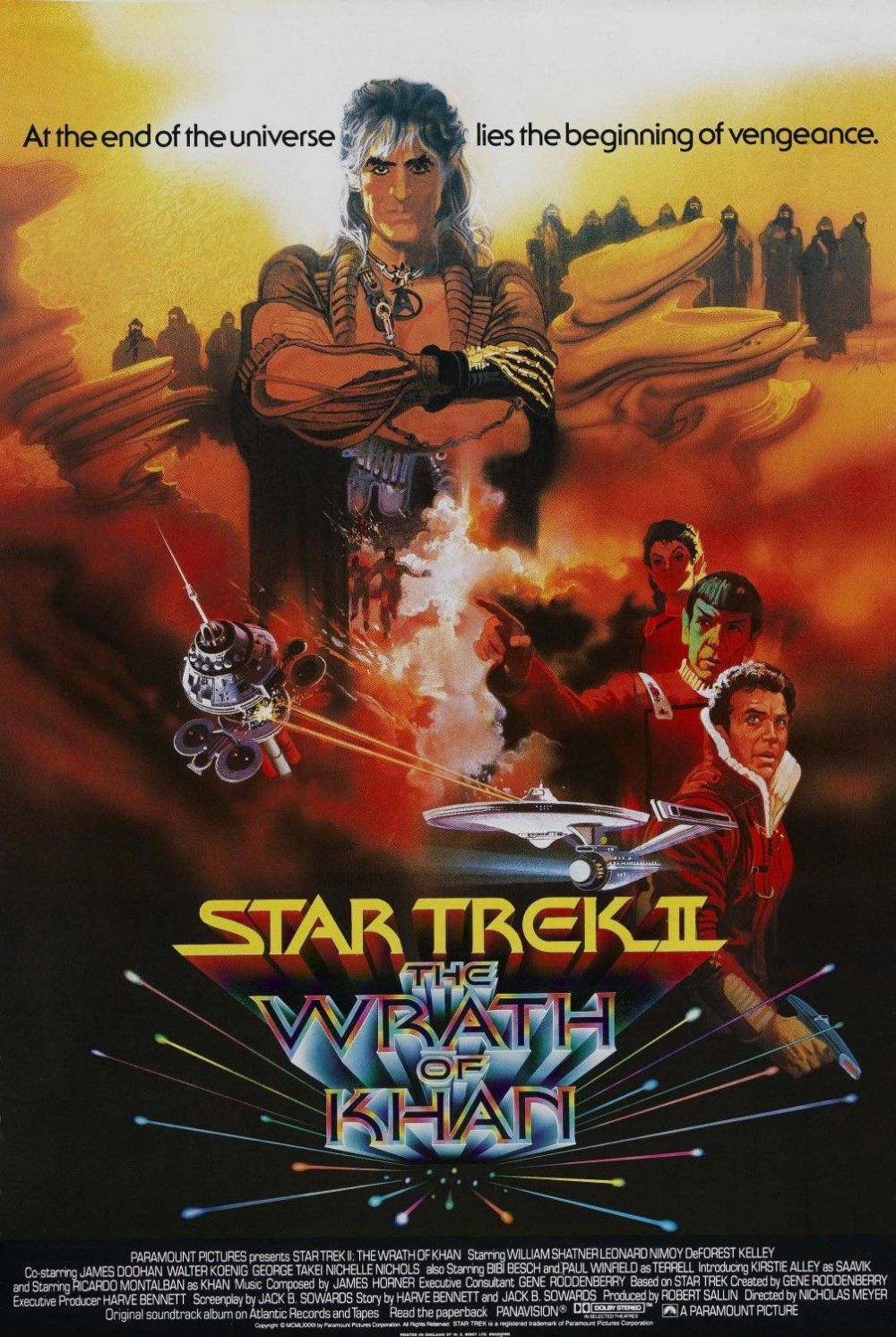
Star Trek II movie poster

Nicholas Meyer was the guest of honor at New Beverly Cinema on August 12, 2012 where “Star Trek II: The Wrath of Khan” was being shown. This classic sequel was being screened as a double feature with John Carpenter’s “The Thing” as part of the New Beverly’s tribute to movies from the summer of 1982. Meyer thanked the sold-out audience for showing up and admitted it was “preferable to being outside in this weather” where the temperature was inching closer to triple digit territory.

Actually, seeing Meyer appear in person for a screening for “Star Trek II” was a bit of a surprise. Last year, American Cinematheque presented a film program of the first six “Star Trek” movies, but Meyer politely declined to appear for the “Star Trek II” screening because he felt his head would explode if he was asked another question about it. In a sense, you have to be sympathetic to him because this is now a 30-year-old movie, and he has probably been asked every conceivable question about it. Meyer even went out of his way to tell audiences at the start, “I’m sorry if you’ve heard all these stories before. These stories can also be found in my memoir entitled ‘The View from The Bridge: Memories of Star Trek and a Life in Hollywood.’”

Meyer recalled how, after directing “Time After Time,” he wanted to do an adaptation of a Robertson Davies novel and would not consider anything else. But one evening while he was “flipping burgers” in his backyard, Meyer said a friend of his, an executive at Paramount Pictures, encouraged him to meet with producer Harve Bennett about the new “Star Trek” movie. Meyer ended up asking his executive friend, “Is that the show with the man with pointy ears?”

He met with Bennett who had gotten his start as a television producer on shows like “The Mod Squad” and “The Six Million Dollar Man,” and Meyer said they both remain friends to this day. Bennett ended up getting Meyer to watch “Star Trek: The Motion Picture” and episodes of the original “Star Trek” series so he could get familiar with the show and its characters.

Watching the show, Meyer said, “reminded me of something I loved as a kid” but he couldn’t recall what exactly. But it was late one night when he woke up at 4 a.m. in the morning that Meyer suddenly remembered: “Star Trek” reminded him of Captain Horatio Hornblower, a fictional sea captain who sailed the sea during the Napoleonic Wars in novels written by C.S. Forester. Meyer then envisioned this movie as “Captain Hornblower in space,” and from there he said he got a “hard on for doing a space opera.”

Four drafts had already been written for “Star Trek II,” and Bennett told Meyer Paramount was currently waiting on number five. Meyer said he had asked Bennett for the fifth draft and eventually got it after a delay, describing it as being 180 pages long and that he didn’t understand what he was reading. Meyer said he then asked Bennett if he could read the fourth draft, and he said Bennett ended up telling him, “Look kid, you don’t understand, all those previous drafts were just attempts at making a second ‘Star Trek’ movie.”

Meyer said he then suggested to Bennett they get all the previous drafts, read them over and then make a list of things they liked so he could try and weave them into a new script. The only problem was Industrial Light & Magic needed a script in 12 days so they could prepare the special effects for the opening. Meyer said he then asked Bennett, “What opening?”

“Star Trek II” already had a date it was set to arrive in theaters on, and this made writing a new script problematic. Bennett said it would take too much time to make Meyer a deal to get an additional writing credit, and Meyer ended up telling him, “Look, forget about the deal, forget about the writing credit, forget about the money. We don’t work on this new script now, there will be no movie.” Among the ideas kept from the previous drafts were the Genesis Device, Lieutenant Saavik (played by Kirstie Alley), and Captain Kirk as a dad.

When asked about what it was like working with the “Star Trek” actors, Meyer responded, “Have you seen the movie ‘Galaxy Quest?’ That movie was made for me!”

Meyer said the actors were very helpful in terms of crafting the script as they had already inhabited these characters for many years. Much of the talk, however, was on William Shatner whom Meyer described as “a very good actor.” Meyer also said Shatner was “very protective” of Kirk and that he is always the hero and in your face. In directing Shatner, Meyer described him as getting better the more he did a scene because he started getting bored to where he stopped striking an attitude and just became Kirk. This led Meyer to creating excuses to shoot scenes with Shatner over and over again like saying, “The sound’s not right there…”

There was also much talk about the late Ricardo Montalban who played Khan, and Meyer recollected he gave Montalban a copy of “Moby Dick” when they first met to talk about the movie. As an actor, Meyer said Montalban “hit all his marks” perfectly, but that he had to rein the actor in during Khan’s introduction. The character’s opening scene sounded like a rant, Meyer said, when Montalban first performed it, and he ended up taking the actor to the side and told him about a famous piece of acting advice once given by Sir Laurence Olivier:

“You shouldn’t show the audience your top because if you do, then you will have nowhere to go.”

When asked why Kirk and Khan never shared a scene together, Meyer said he didn’t realize this was the case while he was writing the script, and he found it impossible to put them together in a two-shot. Meyer then joked that these characters have Skype and that their conversations had to take place this way. He also answered the question he is most asked when it comes to talking about Montalban, “Yes, that is his real chest.”

Looking back at “Star Trek II: The Wrath of Khan” these days, it does appear to represent one of Hollywood’s first attempts at a franchise reboot as the original, while a commercial success, was not well-received critically. While he probably has answered every conceivable question regarding this movie, it was still great to see Nicholas Meyer at New Beverly Cinema as he has been responsible for some of the very best “Star Trek” movies made so far, and his talent as a writer and director remains strong to this day.

Jonathan Demme’s ‘Something Wild’ Takes Us on an Irresistible Journey

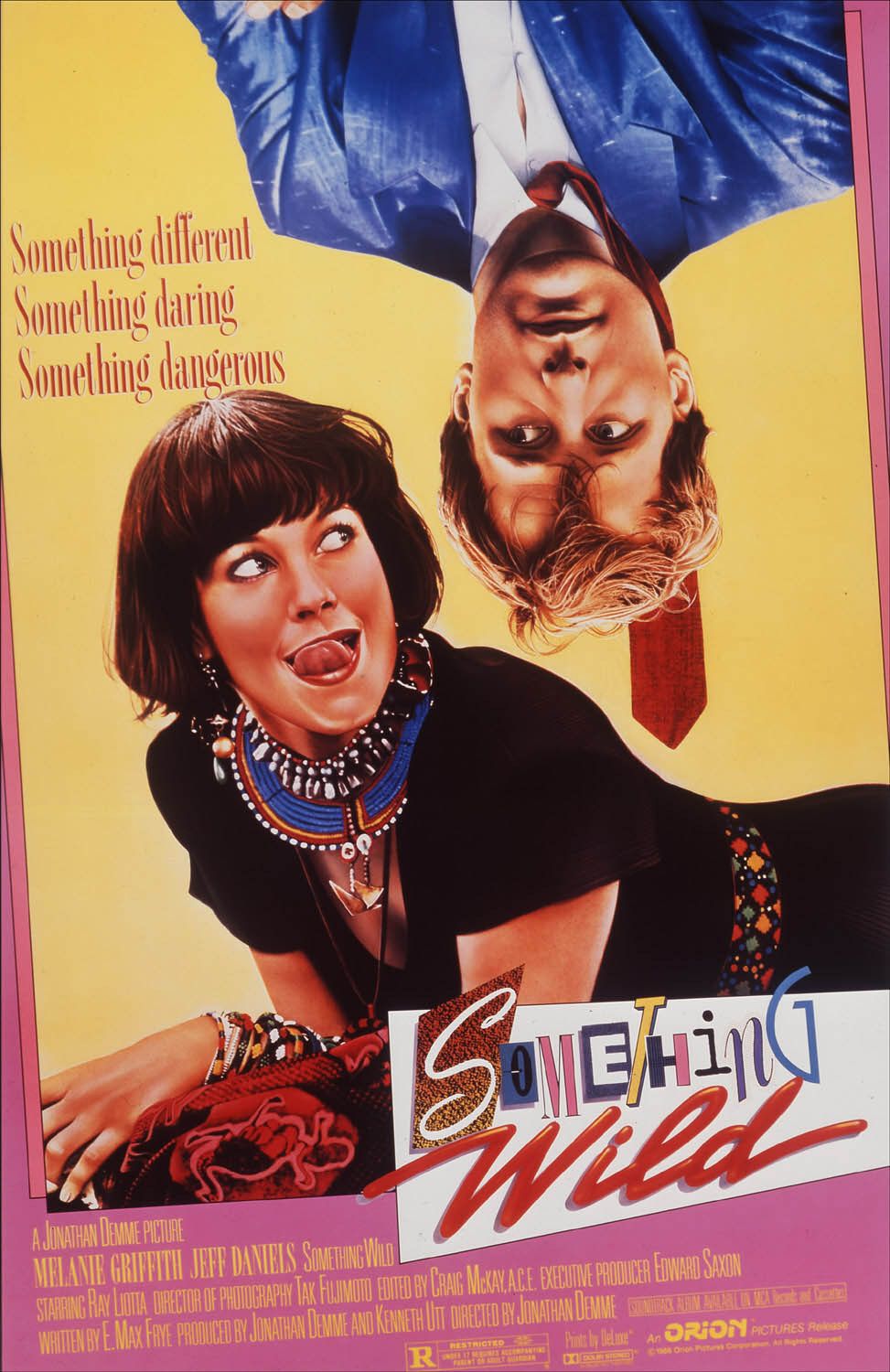
Something Wild movie poster

I got to revisit “Something Wild” recently at New Beverly Cinema, and it quickly reminded me of what a unique filmmaker Jonathan Demme was back in the 1980’s. He had a wonderfully offbeat approach to making movies few others did at the time, and they functioned as parties he gleefully invited us to time and time again. This style of filmmaking disappeared in the 1990’s when he made “The Silence of the Lambs,” and while it is one of the best movies ever made, it marked the beginning of his work having a darker and less playful look to them. This is not to take away from his resume since as it includes such great movies as “Philadelphia,” “Rachel Getting Married” and a number of Neil Young documentaries, but watching “Something Wild” made me realize how much I miss Demme’s earlier style of filmmaking as it was more joyous and anarchic than much of what he has made since.

Jeff Daniels stars as Charles Driggs, a conservative looking banker whose wife and kids have since left him. We catch up with him while he is eating at a diner in the urban part of New York, and he suddenly decides to leave without paying his check. However, he is caught in the act by Lulu (Melanie Griffith) who confronts him about his felonious act and sees a rebellious side in him she is eager to exploit. From there, she offers to drive him back to his office and ends up kidnapping him on an adventure which flies in the face of everything considered conformity.

When Lulu gets a hold of Charles’ pager (yes, this movie was made a long time ago) and throws it out her car window to his utter shock, we are along for the ride as she brings out a side of him he has not exercised for quite some time. What I love about “Something Wild” is that, while Lulu essentially kidnaps Charles against his will, it tapped into something deep within me to where I would be open to her taking advantage of me. What Lulu does is force Charles to abandon his normal lifestyle and engage in something adventurous, and there’s a point in all our lives where we want to break out of a lifestyle which eventually becomes much too stifling for our own good. Granted, common sense usually kicks in as we can’t afford to get into the kind of trouble they get into in this day and age, but this is why we go to the movies: to experience things we have the knowledge to avoid in real life.

We are with Charles as Lulu takes him on an adventure no one could easily prepare for, and it makes what we watch in “Something Wild” all the more exciting. The movie digs into our deepest desires as these two engage in an unexpected road trip which has the two of them falling in love. Things, however, take a sharp turn when Lulu’s husband, Ray Sinclair (Ray Liotta), comes back into the picture and threatens to destroy their newfound coupling with his Svengali and violent ways.

It’s fun to watch Daniels in this role as he makes the squarest of human beings appear more charismatic than what was on the written page. This could have been a thankless role in the hands of another actor, but Daniels makes Charles’ transition from a conventional banker to a love-struck man determined to save the woman he has fallen in love with very believable to where we are with him every step of the way. Daniels’ career had nowhere to go but up from there as he went on to deliver brilliant performances in “The Squid and the Whale,” “Steve Jobs” and “Dumb and Dumber.”

Griffith’s career was at its height in the 80’s as her performances in “Working Girl,” “Body Double” and “Stormy Monday” showed us she was an actress who did not back down from a challenge. Her performance as Lulu, who is later revealed to be Audrey Hankel, is one of her best as she fearlessly portrays a character who is as free-spirited as she is reckless in her law-breaking ways which allow her to live life on the edge. At the same time, Griffith gives Lulu/Audrey a vulnerability which makes her performance all the more fantastic as even she comes to see her fling with Charles has become much more than that.

But then along comes Ray Liotta as Audrey’s violent ex-husband, Ray Sinclair, who steals the show. The audience at New Beverly Cinema applauded loudly when the actor made his first appearance in “Something Wild,” and it’s not hard to understand why. From the moment he arrives onscreen, Liotta gives us an infinitely charismatic villain we can’t take our eyes off of. We know he’s dangerous, but like Daniels’ character we can’t help but go along with him on a ride. You know he’s bad for you, but Liotta’s unpredictability keeps us pinned to our seats. He is mesmerizing as he fights to get Audrey back into his life even as she struggles to break free of him once and for all, and he makes it easy to see why it is not at all easy to get rid of him.

Demme pulls off the impossible here as the screenplay written by E. Max Frye starts off as a road movie and then turns into a domestic thriller. Such a shift can be jarring in a movie, but Demme keeps everything running smoothly even as the story heads into darker territory. By the time we are introduced to the devious Ray Sinclair, we have come too far with Charles and Audrey to just give up on them.

The director also works with a colorful palette which keeps things feeling light even as we head towards a violent conclusion. He also provides us with a terrific soundtrack with choice tunes from Fine Young Cannibals, New Order, Oingo Boingo and David Byrne. This is not to mention Demme’s usual cast of actors he has worked with constantly like Charles Napier, Tracey Walter, Sister Carol and Gary Goetzman who bring their unique energies to the roles they are given, and they make us remember their characters long after we have left the theater. There are also some inspired cameos from filmmakers John Sayles and John Waters, and Waters’ cameo is as priceless as the expression on his face when Audrey offers him a bribe.

Looking back at “Something Wild” makes me realize what a uniquely talented filmmaker is as he cheerfully invites us on a ride which goes against what’s normal and becomes all the more exhilarating as a result. Some filmmakers try to keep you at a distance from their characters’ exploits, but Demme instead offers you a front seat to the action, and it results in a truly irresistible time at the movies. In addition, his casting choices here are perfect, and you can tell the actors are having a blast with the material they have been given.

I find it good to see a movie like this every once in a while as it makes me question whether I have become too complacent in my life. Granted, I wouldn’t be that quick to jump into a car with a complete stranger behind the wheel unless it was a Lyft ride I requested, but to be taken on a ride which allowed me to break out of the routine of life feels absolutely necessary as time continues to speed up as we get older. Demme understands this, and he makes “Something Wild” into an invitation we movie buffs would be foolish to turn down. It remains as entertaining today as it did back in 1986.

* * * * out of * * * *

David Mamet Looks Back at Writing ‘The Untouchables’ on Tax Day

David Mamet photo

There were more than enough film buffs who filed their tax returns, or applied for an extension, on April 15, 2010, in the nick of time to check out a special screening of Brian De Palma’s 1987 classic “The Untouchables” at the Aero Theatre in Santa Monica. Following the story of how Elliot Ness and his select group of men who worked to bring down infamous crime boss Al Capone on tax evasion charges seemed like the perfect way to celebrate Tax Day. Finally seeing it on the big screen in glorious 70 mm was great after first watching it on VHS years ago.

But I do have to admit though that this movie really screwed me up for a time after I first saw it. It was one of the few times my parents let me watch an R-rated movie with them when they rented it on video. Having seen it reviewed on so many different shows like “At The Movies,” “Sneak Previews” and of course “Siskel & Ebert” (which had both hosts clashing over it passionately) had me excited about watching it eventually, and this was back in the day when I rarely, if ever, went out to the movies. But it was one of the first times where I realized the good guys didn’t always make it to the finish line. To see them get killed off in a most gruesome way was painful for a 12-year-old to take in as I always believed the good guys, those who work for justice would be the ones left standing. Back then, I was starting to learn how unfair the world can be.

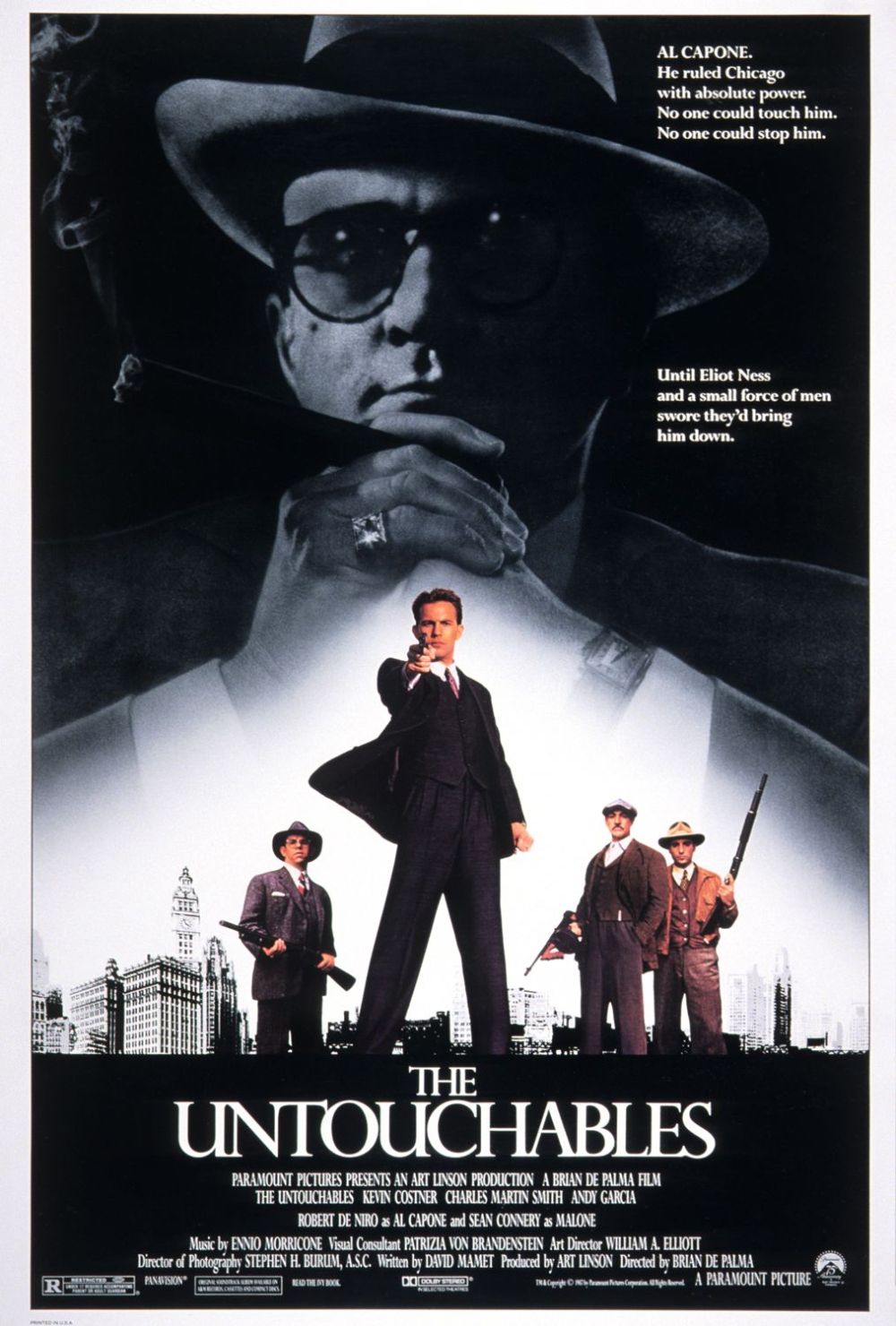
The Untouchables movie poster

Anyway, this evening had a special reason for us to come out other than seeing the film in 70 mm as David Mamet, who wrote the screenplay for “The Untouchables,” was also in attendance to engage in a Q&A. Instantly recognizable in his beret and those huge yellow glasses of his, Mamet had many stories to tell regarding the making of De Palma’s film, writing the script for it and his thoughts on writing and Hollywood in general.

The first question asked was how Mamet got hired to write the script, and he replied that he got the job by default. Apparently, the job was first given to the late playwright Wendy Wasserstein who had won a Pulitzer for “The Heidi Chronicles.” She must have done quite a bit of work on it because Mamet said the Writer’s Guild of America still wanted to give her a credit. But he never hid the fact that what attracted him to writing the script was, as he said, “a lot of money.” The way Mamet described it, writing for someone else is known as “whoring.”

Being one of America’s most acclaimed playwrights and having grown up in Chicago where “The Untouchables” takes place should have made Mamet the most obvious choice for this motion picture. Mamet talked about how he grew up there with gangsters all around him and of how everyone lived and breathed the same air as them. As for the cops, he got to know them better while working as a cab driver. He also went on to say several of his family members kept telling him stories about Capone from time to time.

For years, Chicago has been known to be a city engulfed by corruption, and Mamet did nothing to hide the fact it is full of crooks. He described it as a machine that is run downstate and remarked the mayors occasionally go to jail. He also remembered a saying once told to him when he asked someone in politics what the difference was in running for one office or the other. The politician told him, “the girls get prettier.”

It seems many natives of this city have the same romantic view of Chicago as Mamet did, and he said it best, “In Chicago, we love our crooks!”

 A lot of Mamet’s inspiration for “The Untouchables” came from all of Chicago, he said. He tried to include as many famous landmarks such as The Anchors Restaurant and The Lake. Much of downtown Chicago was used to great effect throughout, and I wonder if there has been a movie since which is as superb in the way it brings Prohibition-era Chicago to life.

With De Palma directing “The Untouchables,” Mamet said he just hoped the director would stick to the script he wrote. Looking back, he said De Palma did actually stay true to his script to a certain extent, but that there were moments where he felt aliens had come down and sucked the brains out of those making the film. In terms of differences from his original script, Mamet said they took out the crawl he put at the end of what happened after the Prohibition Era ended and of how gangsters are still with us today. Mamet also said De Palma was the one who added the “cockamamie baby carriage” sequence.

During the making of “The Untouchables,” Mamet said he was never on the set. He was actually quite happy he wasn’t there which was surprising to here as you’d figure any writer would want to be there even if it annoys the hell out of the director. But while most writers want the opportunity to be on a film set, Mamet said he feels better off staying out of the way.

One of the main sources behind the screenplay was Elliot Ness’ autobiography which Ness wrote with Oscar Fraley. When an audience member asked Mamet if he believed what Ness wrote about, Mamet replied quite simply, “I don’t believe anything anymore.”

At its essence, Mamet described “The Untouchables” as a melodrama. Lest people see this as him looking down on the way De Palma shot this now classic movie, he was quick to quote from Stanislavski, “Tragedy is just heightened melodrama.” Looking at the movie as a melodramatic piece actually makes perfect sense as audiences got so swept up in the story to where it affected them more emotionally than they could have anticipated.

Other tidbits Mamet shared included that aside from Robert DeNiro’s method preparation in playing Al Capone, he ended up saying just what was in the script. The line uttered by Sean Connery’s Malone character of “here endeth the lesson” came from the book of common prayers. But the one which really stood out was what Mamet said Connery first told the producers when he came to make this movie, “Broccoli never paid me a dime to play James Bond!” As for “the Chicago way,” Mamet said it was something he just came up with. The philosophy behind it was when you take something, burn it down to the ground and then build it back up again.

Many in the audience were also eager to hear Mamet talk about the art of writing, and he had much to say on the subject. As a dramatist, he said his job is to take out the narration and go with the plot and characters. Watching the plot for him is where the enjoyment comes from. The problem is actors and directors end up wanting to put all the narration back in. They want to spell out everything for the audience, but dramatists make you want to know more about what’s going on. The way Mamet sees it, you just need a plot and an actor to get the ball rolling. A play or a movie cannot start from an ongoing situation. Of course, writing a plot can be very hard. In terms of plots, he views “Wag The Dog” as his “Casablanca” in that it was the easiest plot for him to write. Once he was finished, Barry Levinson started shooting the movie a month later, and the shoot went very quickly. As for all the other plots he has worked on, they were nightmares.

In talking about some of his other projects, Mamet said the coffee’s for closers speech with Alec Baldwin from “Glengarry Glen Ross” might have come from sitting in an office where he once worked. There was also some talk of how he wrote the script for “Ronin,” which was directed by the late John Frankenheimer, and never got credit for it. Mamet said he had always wanted to write something anonymously, and “Ronin” became that something because he was not originally hired to write it. What happened was Robert De Niro pleaded with him to do a rewrite as he felt the script was not up to speed. Mamet said he eventually caved in and rewrote the whole script in a week.

In addition to being a writer, Mamet is also a director of film and stage. When asked about his approach to directing, he said he wants to know what the story is about and how each beat contributes to the action. From there, everything comes together along with some unforeseen difficulties. When asked if movies would ever become an art form again, Mamet said, “Movies were never an art form, they were entertainment. It just evolved into an art form from there, and it’s still evolving in different ways.”

Mamet was up onstage for almost an hour at the Aero Theatre, and it still didn’t feel like he was there long enough. This writer, who grew up a working-class man and went to Kaminsky Park on a regular basis (yes, he is a Cubs fan) was full of anecdotal moments which made us want to learn more. When it comes to “The Untouchables,” he gives all the credit for its success to De Palma as he made all the elements work perfectly. He said almost everything good that happens is an accident, so it’s safe to say “The Untouchables” is a glorious accident and one which invites repeat viewing.

I personally want to thank David Mamet for saying something he once heard from a judge; that being quoted out of context is “the definition of a quote.” This makes writing articles like these so much easier! As for his line about critics being “illiterate swine taking the bread from my children,” I won’t take that one personally. Oh yeah, he also said the lizards in Hollywood will be the last ones to die, and he believes their last words will be, “I want to know more…”