Beyond Fest Returns with a Vengeance to Hollywood

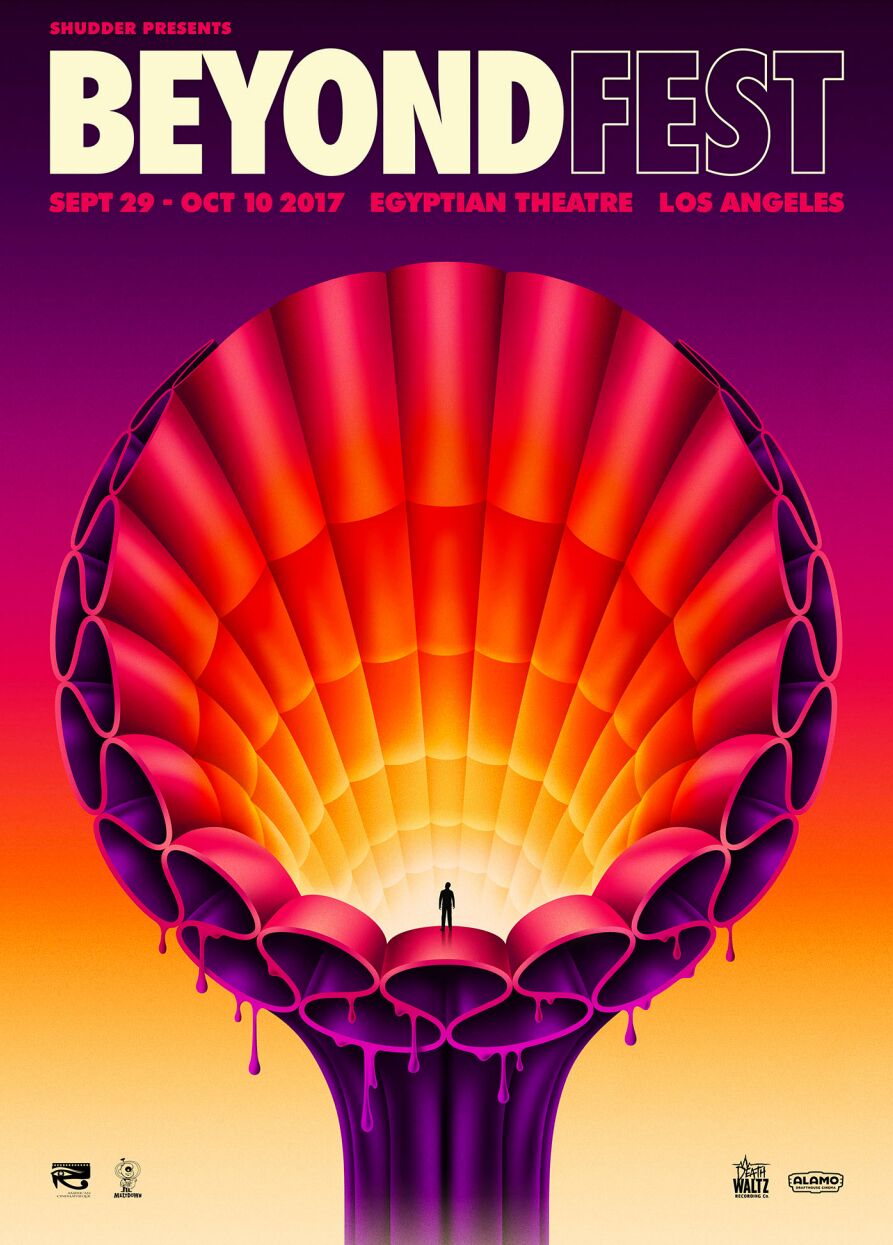
Beyond Fest 2017 Poster Art JPG

The most popular genre film festival in the United States, Beyond Fest, is finally back in Hollywood, and movie fans could not be more excited. Starting on September 29th and going through October 10th, Beyond Fest will be reveling in cinematic madness at the Egyptian Theatre in Hollywood with screenings of classic movies and West Coast premieres of new ones, so you can expect a great 12 days of wonderful mayhem featuring special guests and restored versions of movies which were always meant to be seen on the silver screen. Co-produced by Shudder, the festival aims to raise funds for the non-profit American Cinematheque.

Among the most anticipated events this year will be Dario Argento’s “Suspiria” which will be presented in both its 4K restoration and its 35mm Italian cut. Argento will be making an appearance for this along with Udo Kier and Barbara Magnolfi. Arnold Schwarzenegger will also be on hand for the 30th anniversary of two of his most famous films, “Predator” and “The Running Man.” Two of horror’s greatest directors who passed away this year, George Romero and Tobe Hooper, will be honored with screenings of their most famous movies, “Night of the Living Dead” and “The Texas Chainsaw Massacre.”

As for those new movies making their premiere at the festival, they include “Brawl in Cell Block 99” directed by S. Craig Zahler and starring Vince Vaughn, “The Killing of a Sacred Deer” which is Yorgos Lanthimos’ follow-up to “The Lobster,” and the first couple of episodes of the Amazon Prime series “Jean-Claude Van Johnson” which, of course, stars Jean-Claude Van Damme, the Muscles from Brussels.

Tickets are now available through American Cinematheque and Fandango, and you can keep up with the festival’s latest developments on Facebook, Twitter, and their website.

Here are the movies being shown at Beyond Fest 2017:

BABY DRIVER

Director: Edgar Wright

Country: USA

Runtime: 102 min.

Year: 2017

GUESTS: Edgar Wright & Walter Hill in Person


BAD BLACK (free screening)

West Coast Premiere

Director: Isaac Nawibana

Country: Uganda

Runtime: 60 minutes / Year: 2016


BATMAN: MASK OF THE PHANTASM

Directors: Bruce Timm, Eric Radomski

Country: USA

Runtime: 76 min.

Year: 1993

GUESTS: Andrea Romano plus voice actors TBA in Person


BEST F(R)IENDS

World Premiere

Director: Justin MacGregor

Country: USA

Runtime: 95 min.

Year: 2017

GUESTS: Tommy Wiseau, Greg Sestero and Justin Macgregor in Person


BRAWL IN CELL BLOCK 99

West Coast Premiere

Director: S. Craig Zahler

Country: USA

Runtime: 132 min.

Year: 2017

GUESTS: S. Craig Zahler, Vince Vaughn and Udo Kier in Person


DOUBLE IMPACT

Director: Sheldon Lettich

Country: USA

Runtime: 110 min.

Year: 1991 / 35mm

GUEST: Jean-Claude Van Damme and Sheldon Lettich in Person


THE DRIVER

Director: Walter Hill

Country: USA

Runtime: 90 min.

Year: 1978 / 35mm

GUESTS: Edgar Wright & Walter Hill in Person


HELLRAISER

Co-presented with Death Waltz Records + Friday Night Frights

Director: Clive Barker

Country: USA

Runtime: 94 min.

Year: 1987 / 35mm


ICHI THE KILLER – Digital Restoration

West Coast Premiere

Director: Takashi Miike

Country: Japan

Runtime: 129 min.

Year: 2001


HOWARD THE DUCK – 70mm

Director: Willard Huyck

Country: USA

Runtime: 110 min.

Year: 1986

GUESTS: Lea Thompson in Person


JEAN-CLAUDE VAN JOHNSON – Episodes 1 & 2

Presented by Amazon

World Premiere

Director: Peter Atencio

Country: USA

Runtime: 60 min.

Year: 2016

GUESTS: Jean-Claude Van Damme, Peter Atencio, Dave Callaham, Kat Foster, Moises Arias.


THE KILLING OF A SACRED DEER

West Coast Premiere

Director: Yorgos Lanthimos

Country: UK, Ireland

Runtime: 109 min.

Year: 2017


MAYHEM

West Coast Premiere

Director: Joe Lynch

Country: USA

Runtime: 86 min.

Year: 2017

GUESTS: Joe Lynch and cast in person


NAPOLEON DYNAMITE – THE BOOTLEGGED EDITION

Theatrical Premiere

Director: Jared Hess

Country: USA

Runtime: 96 min.

Year: 2004

GUESTS: Cast and crew in person


NIGHT OF THE LIVING DEAD – 4K Restoration

West Coast Premiere

Director: George A. Romero

Country: USA

Runtime: 96 min.

Year: 1968

GUESTS: Mick Garris & Masters of Horror in Person


OPERA (aka TERROR AT THE OPERA)

Director: Dario Argento

Country: Italy

Runtime: 100 min.

Year: 1987

GUESTS: Dario Argento in Person


PHANTOM OF THE PARADISE

Co-presented with Creature Features

Director: Brian De Palma

Country: USA

Runtime: 92 min.

Year: 1974

GUESTS: Paul Williams in Person


PREDATOR

Director: John McTiernan

Country: USA

Runtime: 107 min.

Year: 1987 / 35mm

GUESTS: Arnold Schwarzenegger in Person


RAWHEAD REX 4K Restoration

Co presented with Cinematic Void and Friday Night Frights

West Coast Premiere

Director: George Pavlou

Country: USA

Runtime: 89 min.

Year: 1986


THE ROOM

Director: Tommy Wiseau

Country: USA

Runtime: 99 min.

Year: 2003

GUESTS: Tommy Wiseau, Greg Sestero and Guests in Person


THE RUNNING MAN

Director: Paul Michael Glaser

Country: USA

Runtime: 101 min.

Year: 1987 / 35mm

GUESTS: Arnold Schwarzenegger in Person


SUSPIRIA – 4K Restoration

Los Angeles Premiere

Director: Dario Argento

Country: Italy

Runtime: 100 min.

Year: 1977

GUESTS: Dario Argento, Udo Kier, Barbara Magnolfi in Person


SUSPIRIA – 35mm Italian Cut

Los Angeles Premiere

Director: Dario Argento

Country: Italy

Runtime: 98 min.

Year: 1977

GUESTS: Dario Argento and Barbara Magnolfi in Person


THE TEXAS CHAINSAW MASSACRE

Director: Tobe Hooper

Country: USA

Runtime: 83 min.

Year: 1974

35mm

GUESTS: Mick Garris & Masters of Horror in Person


SHUDDER THEATRE (at Egyptian Theatre)

78/52 (Free Screening)

West Coast Premiere

Director: Alexandre O. Philippe

Country: USA

Runtime: 91 min.

Year: 2017


BEFORE WE VANISH (Free Screening)

West Coast Premiere

Director: Kiyoshi Kurosawa

Country: Japan

Runtime: 129 min.

Year: 2017


BETTER WATCH OUT (Free Screening)

West Coast Premiere

Director: Chris Peckover

Country: Australia, USA

Runtime: 85 min.

Year: 2016


COLD HELL (Free Screening)

West Coast Premiere

Director: Stefan Ruzowitzky

Country: Austria

Runtime: 92 min.

Year: 2017


THE GRAPES OF DEATH AKA Les Raisins de La Mort (Free Screening)

Director: Jean Rollin

Country: France

Runtime: 90 min.

Year: 1978


HAUNTERS: THE ART OF THE SCARE (Free Screening)

West Coast Premiere

Director: Jon Schnitzer

Country: USA

Runtime: 88 min.

Year: 2017


JAILBREAK (Free Screening)

West Coast Premiere

Director: Jimmy Henderson

Country: Cambodia

Runtime: 92 min.

Year: 2017


LES AFFAMES (Free Screening)

West Coast Premiere

Director: Robin Aubert

Country: Canada

Runtime: 100 min.

Year: 2017


MOHAWK (Free Screening)

West Coast Premiere

Director: Ted Geoghegan

Country: USA

Runtime: 91 min.

Year: 2017


MY FRIEND DAHMER (Free Screening)

West Coast Premiere

Director: Marc Meyers

Country: USA

Runtime: 107 min.

Year: 2017


REVENGE (Free Screening)

West Coast Premiere

Director:  Coralie Fargeat

Country:   France

Runtime:  108 min

Year:  2017


SEQUENCE BREAK (Free Screening)

West Coast Premiere

Director:  Graham Skipper

Country:   USA

Runtime:  108 min

Year:  2017

GUESTS: Graham Skipper, Cast and Crew in Person


THE SLUMBER PARTY MASSACRE (Free Screening)

Co-presented by Etheria and Cinematic Void

Director: Amy Holden Jones

Country: USA

Runtime: 77 min.

Year: 1982

GUESTS: Amy Holden Jones in Person

Double Feature with SLUMBER PARTY MASSACRE II


THE SLUMBER PARTY MASSACRE II

Co-presented by Etheria and Cinematic Void

Director: Deborah Brock

Country: USA

Runtime: 77 min.

Year: 1987

GUESTS: Deborah Brock in Person

Double Feature with SLUMBER PARTY MASSACRE

No, I Haven’t Seen It Until Now: ‘The Texas Chainsaw Massacre’

The Texas Chainsaw Massacre poster

Tobe Hooper’s “The Texas Chainsaw Massacre” is a movie I had heard a lot about over the years, and I have watched numerous documentaries about its making to where it felt like I had seen it even though I had not. It wouldn’t be until the year 2000, just after I graduated from college, when I sat down to watch it on my new 27-inch JVC television set. I just started my subscription with Netflix, and this was one of the first movies I rented from it.

“The Texas Chainsaw Massacre” came out in 1974, so I went into it thinking there was no way it could be as horrifying now as it was when first released. I sat down in front of my TV prepared to eat my dinner, a Cedarline Mediterranean Stuffed Focaccia, while watching this horror classic. One of the first images, however, was of a pair of rotting corpses draped over a gravestone in a cemetery, and I decided it would be better to turn off the TV and finish my dinner before continuing. Once I was done and tossed my plate into the dishwasher, I turned the set back on and continued watching, believing it would be a piece of cake to sit through this lauded horror classic.

It has now been over 40 years since the original “Texas Chainsaw Massacre” was unleashed on the world, but when I watched it on DVD, I had no idea it would prove to be one of the most unnerving and brutal motion pictures I ever sat through. I figured no movie going experience would ever be more intense than “Requiem for a Dream” was when I saw it in Hollywood with a sold-out audience, but then I watched Hooper’s horrifying masterpiece. After it was over, I wondered to myself if I could have possibly endured this film had I first watched it on the silver screen.

“The Texas Chainsaw Massacre” opens with a crawl, narrated by John Larroquette, stating it is based on a true story, but it turns out this was not the case. However, certain plot elements were inspired by serial killer Ed Gein whose acts of violence came to inform many other movies including Alfred Hitchcock’s “Psycho.” We are introduced to a group of two siblings and three of their friends as they travel out to Texas to visit the grave of their grandparents. As you can imagine, what they discover far surpasses any imagined fears anyone could have endured when they were young.

I knew I was in trouble when this group of kids picked up a hitchhiker (played by Edwin Neal). This guy looked like he hadn’t showered in weeks as his face and hair seemed much slimier than anyone else’s on planet Earth. Seeing him cut himself and one of the kids had my hair standing on end, and this was just the beginning. The horror this movie had to offer was just starting, and the intensity would only increase exponentially from there.

By the time everyone got to the house, I was already sweating. I hadn’t seen the movie, but I already knew what was coming. People don’t just die a horrible death in “The Texas Chainsaw Massacre,” they die a realistic one. When Leatherface (Gunnar Hansen) smashes one guy on the head with a hammer, the guy falls down and convulses horribly. Watching this sequence, I felt this is the way a person would react if bashed in the head with the hammer, and it showed me this would not be your average horror movie in the slightest.

What’s especially surprising about this film is it’s not as bloody or gory as you might expect. I figured there would be an ocean of blood on display, but instead it’s what I didn’t see which really messed with my head. We see Leatherface impale the beautiful Pam (Teri McMinn) on a meat hook, but we never see the hook go into her body. The expression you see on Pam’s face ends up feeling all the more unbearably real as a result because you can’t help but wonder how the hook went in and of how long she could hope to last before all her blood drained out.

In some ways, the powerful effect “The Texas Chainsaw Massacre” gives off was something of an accident. When making this movie, Hooper was aiming for a PG-rating and even talked with members of the MPAA to find out how he could earn such a rating for a horror film like this one. A lot of the advice het got was to not show any body penetration or the chainsaw slicing into human flesh, and of course, he needed to limit the amount of blood shown. But instead of getting the PG-rating, Hooper saw his film get an X as these guides he was given proved to have the opposite effect. The fact it managed to get an R seems astonishing even by today’s standards. Still, this seems as welcome an accident as the shark not working on the set of “Jaws” was.

This could have been nothing more than a mere horror flick of the exploitation kind, but there really is a lot of artistry on display throughout. The acting all around is never weak, cinematographer Daniel Pearl gives everything a dirty look which will make you want to take a shower quickly after this movie’s conclusion, and the sound design makes you feel like you are in a real-life slaughterhouse. Hooper may have had a simple mission in mind while making this horror classic, but it turned into something far scarier than he ever intended.

Leatherface remains one of the scariest villains any horror movie could ever hope to have, and it’s a real shame this was the only time Gunnar Hansen played this iconic character as he brought a lot of thought and an instinctual energy to the role. Seeing him wander around in that human flesh-made mask of his, I started to fear what Leatherface looked like without the mask.

But while I want to give credit to all the other actors, I have to single out Marilyn Burns who plays Sally Hardesty. While she has an easy time during the movie’s first half, the last half has her screaming endlessly to where you want to see her get a Purple Heart instead of an Academy Award for her work. She screams and screams and screams to where I wondered just how tortured she felt throughout shooting. The closeup of her eyes while she is a guest at the most devilish of family dinners had me staring at the screen in utter horror. Even though I knew exactly how this movie would end, I was still gripped as I became desperate for Sally to escape any and every which way she could.

The movie’s last half is a frenzy to where I wondered how I could have survived this had I first watched it on the silver screen. Watching it on my television set with the volume turned down was hard enough as I wanted Sally’s hellish experience to end sooner rather than later, but her torture dragged on longer to where I refused to believe “The Texas Chainsaw Massacre” is a mere 84 minutes long. When the screen finally went to black, it felt like such a welcome relief as I wondered just how much more I could have sat through had Hooper extended things out to two hours.

“The Texas Chainsaw Massacre” has long since earned its place alongside the greatest horror movies ever made, and the fact it hasn’t lost any of its power to unnerve and horrify the bravest of film buffs speaks to a power most filmmakers hope to have in their lifetime. The only other horror movies which equal this one’s power to terrify decades after their release are John Carpenter’s “Halloween” and William Friedkin’s “The Exorcist.” Some horror movies play better on the big screen than on television, but this one proves to be every bit as effective on both.

I still have yet to watch any of the sequels as I feel like I am still recovering from this cinematic experience over 10 years later. I did watch the Platinum Dunes remake, but the only thing about it which truly unnerved me was when Leatherface took off Eric Balfour’s face and made it into a mask for himself. As I write this review, the prequel “Leatherface” is about to released in theatres everywhere. Filmmakers can only hope to equal Hooper’s film, but it hasn’t stopped them from trying.

* * * * out of * * * *

No, I Haven’t Seen It Until Now: ‘Platoon’

Platoon movie poster

I think its use of “Adagio for Strings” by Samuel Barber is one of the reasons I stayed away from watching “Platoon” for the longest time. It still is one of the saddest pieces of music I have ever heard, although it would later be eclipsed by the even more emotionally devastating “Symphony No. 3” (subtitled “Symphony of Sorrowful Songs”) by Henryk Górecki which Peter Weir used to powerful effect in “Fearless.” Plus, the way the violence in “Platoon” was described to me by friends at school, like when a soldier gets his arms blown off by a bomb, filled my mind with horrible images which had no business infecting my mind at such a young age.

It took buying the 25th anniversary edition of “Platoon” on Blu-ray for me to finally sit down and watch it. I hadn’t even seen the movie yet, and here I am buying it at Costco for $11.99 By then, I had seen many Oliver Stone movies like “Born On the Fourth of July,” “JFK,” and “Natural Born Killers,” so I was long overdue to give this Best Picture winner a look.

Before “Platoon,” I had seen “Apocalypse Now,” “The Deer Hunter,” and “Full Metal Jacket” which viewed the Vietnam War from different perspectives. The one thing they had in common was they were directed by filmmakers who had never served in Vietnam. Stone, however, had served there, so “Platoon” is largely autobiographical for him. As a result, this is probably the first truly realistic depiction of the Vietnam War anyone could have ever hoped to see in a movie.

Charlie Sheen stars as Chris Taylor, and it’s interesting watching him here as this was long before his days on “Two and a Half Men.” Taylor serves as the narrator and most relatable character as, like him, we are coming into this war fresh-faced, naïve and innocent. The first scene where Taylor comes off a plane with a bunch of newbies is an omen of what is to come. Seeing body bags filled with fallen soldiers and crossing paths with those men who have seen the war up close quickly gives you a good idea of what Taylor will probably end up looking like at the movie’s end.

Sheen is perfectly cast as he makes Taylor go from being a newbie to an experienced combat veteran in little time. It’s a shame Sheen has since pissed away a good portion of his talent to where he’s pretty much playing a version of himself as some drunken womanizer, be it on a television show or a movie. His work here is a strong reminder of how good he can be as he is utterly believable in a role no one would cast him in today.

Seeing Taylor struggle on through the Vietnamese jungle after the opening scene is a quick indication of how unprepared he is for combat. Like many wars Americans have fought, it was on the soil of another country they were completely unfamiliar with. We see how this puts them at an immediate disadvantage as they look completely exhausted and depleted even at the start of the day.

When it comes to Vietnam, Taylor makes it clear he is a unique case as he tells everyone he dropped out of college to volunteer and serve in the war. This makes him seem like part of a generation raised to believe fighting in a war is both noble and infinitely patriotic, something to be proud of. Taylor also feels that not only poor kids should be sent to fight instead of the rich, but he soon learns the truths about war, one of which is given to him by King (Keith David) who tells him something which resonates strongly even today: “You got to be rich in the first place to think like that. Everybody know, the poor are always being fucked over by the rich. Always have, always will.”

The other two performances worth noting are given by Willem Dafoe as Sergeant Elias and Tom Berenger as Sergeant Barnes. Both figure prominently in Taylor’s tour of duty, and even he says these two were fighting for his soul. Dafoe is mesmerizing as the idealistic soldier who sees America’s involvement in Vietnam ending badly. The Christ-like pose he gets in, whether its holding a machine gun over his shoulders or as he runs from the Vietnamese soldiers, is no mistake. Elias ends up dying for the sins of his fellow soldiers while doing his best to protect them.

Berenger’s performance as Barnes ranks among his best ever. He succeeds in getting inside the head of someone who has been shot at so many times to where they are forever psychologically altered. Having seen death up close, Barnes acts as if he has surpassed it. In some ways, Berenger doesn’t need those makeup scars to show you how many firefights his character has been in as watching him walk through the jungle, completely unaffected by explosions going off around him as if he were Colonel Kilgore in “Apocalypse Now,” is more than enough proof of this.

Stone makes you feel the blood, sweat, tears and exhaustion these soldiers experience, and it’s all so vivid to where we come out of “Platoon” feeling like war veterans ourselves. It leaves all those other movies which make war seem like fun to utter shame. Coming from a filmmaker who has seen this particular war up close, we cannot deny the authenticity he puts on display.

“Platoon” also captures how quickly people can lose their moral bearings in the face of war. The scene in the village is by far the movie’s most unnerving moment as we watch Taylor and the other soldiers get overcome by their boiling anger and hatred. What’s so horrifying is that while you would like to believe you would have acted differently than they did, there’s no way you can be sure if you haven’t been in combat. The line between soldier and killer gets seriously blurred here, and it’s not hard to understand why.

Before filming began, the cast was treated to an intensive military training course under the tutelage of former Marine Captain Dale Dye who also served in Vietnam. They were made to dig foxholes and subjected to forced marches and nighttime ambushes which utilized explosions. This succeeded in breaking them down, and you can see and feel the weariness in them throughout. It more than adds to the sheer realism we see here.

There’s no victory to be found in “Platoon,” only death and destruction on both sides of the conflict. The movie gets at the truth of war which Danny DeVito talked about in “The War of the Roses” when he said, “There is no winning! There’s only degrees of losing!”

The violence and death portrayed may not seem quite as visceral as it did when the movie first came out. There have been many other war movies since like “Saving Private Ryan” which featured scenes of such brutal violence that no other filmmaker could possibly match. Plus, we all know about the Vietnam War in general and big a mistake it was for America for many years now. Still, “Platoon” is nothing less than powerful as its vision of the craziness and insanity of war is impossible to shake once you have seen it.

The Vietnam War may be a thing of the past, but the lessons we learned from it still need to be taught over and over again. America keeps fighting wars which, whether necessary or not, continually overstay their welcome and leave a lot of people feeling angry and betrayed. Oliver Stone certainly understands that, and he makes “Platoon” into a movie which shows the damage of war and why we can’t just let the past be the past.

* * * * out of * * * *

‘Encounters at the End of the World’ Takes Werner Herzog to Antarctica

Encounters at the End of the World poster

As a movie buff, I have to admit it is shameful on my part I have not seen more movies directed by Werner Herzog. I did see “Grizzly Man,” a brilliant documentary about Timothy Treadwell and his obsession with the grizzly bears, and like all brilliant documentaries made today, it did not get an Oscar nomination for Best Documentary. Thankfully, the Oscars did not ignore his documentary “Encounters at the End of the World” which is an endlessly fascinating look at his travels and discoveries in Antarctica. It is at times an incredibly beautiful look at an icy landscape, at others a bleak look at the inevitable end of the human race. At the same time, it also a rather humorous and interesting look at the people who risk their lives by living there to study the cutting-edge world of science.

Herzog narrates “Encounters at the End of the World,” and he allows us to go inside his head on how he views the icy wilderness of Antarctica, and of how he views the people and wildlife there. He makes it clear from the onset that when he was asked by Discovery Films to do this documentary, he agreed to it on the condition he would not be forced to do a “fuzzy” movie with penguins in it (a little jab at “March of the Penguins”). The first 10 or so minutes deal with the McMurdo Research Station which is full of buildings and tractors constantly moving all over the place. Herzog finds himself wanting to get away from McMurdo right away as he feels it is corrupting the Antarctic island with the inhabitants’ own self-interests as it is filled with horrors there like “yoga classes.”

Eventually, he ventures out of the encampment and into the far-off research facilities removed from the town. We see him and others there being put through safety drills and emergency preparations to deal with the worst of circumstances. The group leader speaks of how the wind can get so bad to where you can’t see even your hand in front of your face or hear yourself talk. This lends a chilling effect to an already chilled environment, and while it is exciting to be there, you feel the danger of it throughout.

The best part of this documentary, and the reason I wanted to see it, is the underwater footage where you follow divers underneath the glaciers of Antarctica. The visuals on display here are both beautiful and extraordinary to see, and there is a unique beauty to the underwater landscape you would be hard pressed to find anywhere else. This is all reminiscent of James Cameron’s documentary “Aliens from the Deep” in which he went with scientists in submersibles down to the bottom of the ocean to see what things live down there. But while Cameron’s documentary was fascinating, this one is not encumbered with 3D effects and of looks at where the future will take us. It deals with the world we exist in right now, and it doesn’t hide from how everything will disappear in the distant future.

I was also eager to find out how these scientists were able to dive down into waters which they would not be expected to stay alive in for more than 5 minutes. They wear special suits which are heavily insulated to protect them from the cold, and they wear gloves that threaten to make them look like aliens from another planet. Herzog says the water they are diving into is -2 degrees Celsius, and the divers go in with no ropes attached to their bodies as it will give them more room to move around. Still, this is very dangerous work they are doing, and if they get lost underneath the glacier, they will become a permanently frozen resident. You feel the danger of what they are doing, but you end up getting overwhelmed by the spectacular visuals they discover underneath it all.

Another fascinating moment comes when some scientists on the island play recordings of the sounds the local seals make underwater. The seals themselves steal some scenes from the human actors as they lie back lazily in the sun and look too tired to get up and acknowledge anybody. The underwater sounds of the seals seem so unreal, and I could not help but believe they were all computer generated. But they are indeed the real thing, and you experience the sounds along with Herzog and the scientists as they put their ears down to the ground and take it all in. It’s an amazing moment to witness.

The other thing I really loved was how it was just not another average science documentary filled with talking heads telling you all the things you need to know about the environments they are studying. There is science talk throughout the documentary which is fine, but Herzog also looks at the individual personalities he comes into contact with throughout his journey. Along with Herzog, you also wonder what could make all these people come to one of the most isolated places on the face of the earth and of how they stay there for so long.

Among the people Herzog meets throughout his travels are a philosopher who has a great quote at the end of the movie about how the universe is looking at itself through our eyes, and how we give life to everything in the way we view it. We meet one of the scuba divers who has a pensive moment where he takes in the fact he is about to making his very last dive into the icy depths. Then Herzog meets up with a Russian who had escaped the Soviet Union after the fall of the Iron Curtain, and the Russian almost loses it emotionally when he tries to describe to him how bad things were when he left. This Russian also has an escape plan at the ready with a big pack of supplies in case he needs to flee once again.

There are a couple of other people in the documentary who just talk and talk about themselves and the adventures they have been on. Herzog cuts them off in his narration by saying, “To make a long story short…”

“Encounters at the End of the World” does have a bleak view of humanity’s future, and the scientists are fully aware of this as temperatures continue to rise to where it is inevitable that ice will eventually melt completely in the future. This is also shown as we see a group of scientists watching “Them,” a 1950’s B-movie about radioactive ants which have grown to an enormous size. It turns out to be one of the many apocalyptic movies they show to each other from week to week. I wonder if they have ever gotten around to watching John Carpenter’s “The Thing.”

At the center of “Encounters at the End of the World” is not just Antarctica, but Herzog himself. His narration throughout could have been annoying, but it serves to illuminate what a funny and interesting person he is. Clearly, he is attracted to madness in various forms throughout the world as is shown here and also in “Grizzly Man.” I imagine this is a big theme in all of his movies. We discover all there is to see through his eyes, and of how he views the beauty of the ice and how it forms. As a result, it does make me want to see more of his movies.

Just remember what one of the men says in this documentary, and remember it always:

“Global warming is real.”

* * * * out of * * * *

‘Poltergeist III’ Shows Just How Unnecessary Certain Sequels Can Be

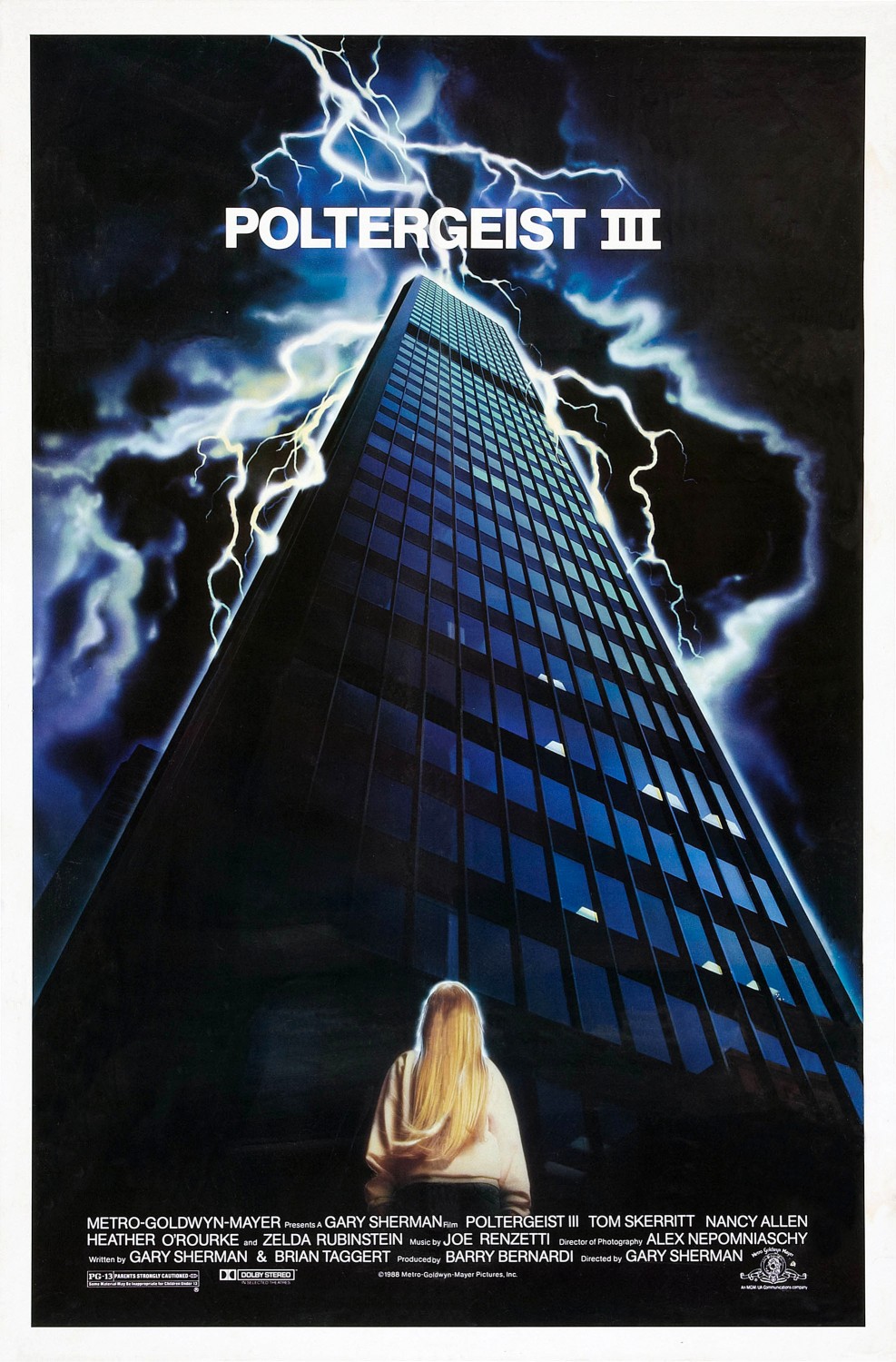
Poltergeist III poster

It’s only with an obscene amount of free time, combined with a morbid curiosity, which had me watching “Poltergeist III” on cable. My only real memories of it beforehand were a behind the scenes show detailing the special effects and Siskel & Ebert’s scathing review of it. By the time this sequel came out in 1988, the series had already worn out its welcome. I don’t remember anyone liking “Poltergeist II: The Other Side,” and it was said to have been one of 1986’s big losers at the box office. Nevertheless, the powers that be at MGM decided they could wring just a little more money out of this franchise with one more sequel.

Once again, Carol Anne (Heather O’Rourke) is at the center of the story which has her shipped off to Chicago to live with Aunt Pat (Nancy Allen) and her husband Bruce (Tom Skerritt) who manages the luxurious high rise building they reside in. However, it doesn’t take long before those evil spirits and Reverend Henry Kane find Carol Anne and start their nasty little tricks to get her to come to the other side.

Now I can’t help but wonder if Carol Anne’s parents just dumped her in Chicago so they could be rid of those evil spirits for good. What if this series continued on? Would Carol Anne have resided with a different family member in each successive sequel to where she would become the ultimate unwanted house guest? Just imagine what Aunt Pat’s conversations with the girl’s parents (played by Jo Beth Williams and Craig T. Nelson) were like. I mean, Pat at one point says all she heard was they were caught up in a land deal gone bad, but maybe it went more like this:

“Pat, we love our daughter, but this poltergeist problem is really just rubbing us the wrong way.”

“Oh come on, stop kidding around sis! Your daughter is being bothered by a poltergeist! You expect me to fall for that?”

“Oh yeah Pat? You think I’m joking?! C’mon! I dare you to let her stay with you! I double dare you!”

“Yeah right! So that the ghosts or spirits or whatever the hell they are can haunt me and my family?”

“What are you, chicken?”

“Pat, stop teasing me! You called me a chicken all the time when we were kids! I AM NO CHICKEN!!!”

“Alright, prove it!”

Now guess what happened after that…

Apparently, Carol Anne was told by her mommy and daddy she was to attend a school for “gifted children with emotional problems” in Chicago. Once there, she meets up with one of the dumbest psychiatrists in cinematic history, Dr. Seaton (Richard Fire). He’s the one who foolishly opens Pandora’s Box by getting Carol Anne to talk about her experiences from the first two movies. By doing so, a slimy hand bursts out of his desk and throws a coffee cup at him while an evil voice cackles away.

So, what’s Dr. Seaton’s explanation for this? He says Carol Anne is a manipulative child who has the power to create mass hysteria and perform mass hypnosis on people to make them think they see ghosts. What?! Are you serious?! People pay this guy money to say shit like that? Where’s this guy’s degree? Is he a legitimate psychiatrist, or is he like Leonardo DiCaprio’s character in “Catch Me If You Can,” faking his lifestyle while forging checks?

The character of Dr. Seaton basically exists for the audience to despise him whenever he opens his mouth. His disbelief in all the strange and bizarre things happening in the building is excruciating to sit through, and you just want these evil spirits to strangle him to death so he’ll shut up. Seriously, it says a lot about a movie when you start siding with evil spirits against the humans.

In fact, this is the big problem with “Poltergeist III;” you don’t care much for the majority of these characters. They exist merely as clichés instead of living breathing human beings, and seeing them suffer becomes more fun than fearing for their safety which all but kills the suspense. You have the teenage guy Scott (Kipley Wentz) who’s slobbering over his girlfriend Donna (Lara Flynn Boyle of all people), and they look like they’ve come out of a thousand movies from this genre. Then there are Pat and Bruce’s hopelessly self-absorbed and shallow friends who are too interested in their own needs to notice signs of evil spirits invading the building. And where exactly are the cops in all of this?

Looking back at the Siskel & Ebert review, the one major complaint they had about this sequel, which I am in total agreement with, was all the characters kept incessantly crying out for one another:

“CAROL ANNE!!! CAROL ANNE!!!”

“SCOTT!!! SCOOOOOOOOOT!!!”

“BRUCE!!! BRUCE!!!”

“CAROL ANNE!!! CAROL ANNE!!! CAROL ANNNNNNNE!”

I swear, Carol Anne’s name is mentioned as many times as Al Pacino used the F-word in “Scarface.” It didn’t take long for me to figure out what Kane was saying to his fellow evil spirits as well as their quick reply:

“We must bring her to the other side!”

“Yes Reverend, but we also got to get this screaming bitch to shut the hell up!”

Remember the bottomless pit that opens up in the garage? Those slimy hands reaching out to grab the main characters look like those rubber gloves you buy at the supermarket but with extra makeup applied to them. The overall budget for “Poltergeist III” was just under $10 million, but it looks like it cost a lot less. While the other “Poltergeist” movies have state of the art special effects, the filmmakers here get short served and have to work with whatever’s available. Yes, some of those mirror scenes are cool as characters pass by without their reflections showing up on them, but that’s just an old trick.

Directing “Poltergeist III” is Gary Sherman who made “Dead & Buried” which has since become a cult classic. He also made the superb exploitation feature “Vice Squad” which featured one of the scariest and most vicious pimps ever played by Wings Hauser. A lot of Sherman’s skill isn’t evident here, and even he admits this is his least favorite film of the ones he made. Perhaps the studio played around with the sequel more than he liked, and with a franchise like this you know he’s never going to get complete control over the final product.

My hat is off, however, to Skerritt and Allen who came out of this movie relatively unscathed. They overcome the ridiculous material and manage to keep a straight face as the movie becomes increasingly laughable and confusing as it heads towards its unnecessarily reshot climax which leaves the fate of certain characters up in the air.

Aside from O’Rourke, the only other cast member to appear here from the previous “Poltergeist” movies is Zelda Rubinstein as Tangina. I find it funny how she received both Saturn and Razzie Nominations for her work here. I for one can’t figure out if she’s good or bad in this movie, but her mystical dialogue gets a bit ponderous with her overzealous delivery of it.

Of course, the lasting significance of “Poltergeist III” is the fact it was O’Rourke’s last movie before her tragic death at far too young an age. Her loss is inadvertently emphasized in the film’s final scene in which she is substituted with a body double. Since she passed away during post-production, you know it’s not her being held by Allen. For what it’s worth, she is very good here despite the cruddy material, and the film was dedicated to her memory.

Who knows what would have happened if O’Rourke lived to see another “Poltergeist” sequel. With Carol Anne quickly growing up, it would have been a kick to see her turn into an Ellen Ripley type of character who is prepared to go to war with these evil spirits. While others will be horribly terrified by them, she’ll see it as just another day at the office. I can just see her talking with girls her age:

“You think you have it rough? I got sucked into another dimension by evil spirits when I was five! Going through puberty was a piece of cake compared to that! Stop. complaining about the run in your nylons!!!”

I wonder what the tagline was for “Poltergeist III.” The tagline for the first one was:

“They’re here.”

With “Poltergeist II,” it was:

“They’re back.”

I guess the tagline for the third film was:

“I’m screwed!”

* ½ out of * * * *

William Friedkin and Guests on Making ‘To Live and Die in L.A.’

To Live and Die in LA

Director William Friedkin declared “To Live and Die in L.A.” to be one of his personal favorites of his career when he dropped by the Aero Theatre in Santa Monica. The film was being shown as part of American Cinematheque’s tribute to him, and it played as a double feature with “The French Connection.” But while Friedkin was scheduled to be there, he brought along two of the movie’s stars as surprise guests: William Petersen who played Secret Service Agent Richard Chance, and Darlanne Fluegel who portrayed his “girlfriend” and informant Ruth Lanier.

With “To Live and Die in L.A.,“ Friedkin worked with casting director Bob Weiner who had also worked on “The French Connection.” With this film, Friedkin didn’t want any stars and could only consider no-name actors as the budget was only $6 million. In a sense though, casting unknown actors was a plus for this film as the characters they play walk a thin line between good and evil, and having recognizable stars might affect how this came across.

Known these days for “C.S.I.,” it was a shock to realize that “To Live and Die in L.A.” was Petersen’s first lead role in a movie (he previously had a small role in Michael Mann’s “Thief“). Weiner discovered the actor when he was playing the lead in a Canadian production of “A Streetcar Named Desire.” Petersen said he hadn’t done any movies nor did he have an agent at the time. All he knew about Friedkin was the films he directed, and they met in New York to do a scene together. But Petersen didn’t ever get around to finishing when Friedkin interrupted him to say, “That’s good enough for me. You got the part!”

From there, Petersen said he didn’t know what to do. Excited as he was for the opportunity, he was already scheduled to be in another play soon and wasn’t sure how to go about negotiating with Friedkin or the studio. It didn’t even occur to him he would be making $400 a week! So, he ended up talking with John Malkovich, who knew him from Steppenwolf, to get advice on what to do. Later, Petersen went back to Friedkin saying he wouldn’t be able to play Richard Chance due to his prior theatrical commitment. To this, Friedkin told him, “No problem. We’ll wait for you.”

Now how cool was that?! Seriously, how many other directors, let alone movie studios, would wait on an actor who is not even an established name yet? Considering the sheer charisma Petersen exudes onscreen just from one look on his face, it makes perfect sense why Friedkin waited on him before he started production.

Although he was used to doing theater more than film, Petersen said he found making “To Live and Die in L.A.” a “freeing, fun experience” and thought all movies would be exactly like it. This, of course, got a good dose of laughter from the audience as we know they are not. Despite the long hours on set, Petersen was never tired at day’s end.

In researching his role, Petersen worked with Gerald Petievich, the former Secret Service Agent who wrote the book this movie is based on, and with criminals including actual counterfeiters. This led Friedkin to tell the audience how Petievich ended up getting a counterfeiter paroled from jail just so he could create the fake money they needed. Friedkin even admitted he passed so many fake bills to where he concluded the government’s money was worthless and only paper. Some kids of the special effects supervisor were not as lucky as they ended up taking some of the fake money to buy candy, and a Treasury Agent got called on them in ten minutes flat.

Fluegel was shocked about getting a part in “To Live and Die In LA,” and she created one of the film’s most unforgettable characters. She said working with Petersen was “so easy,” and they both agreed there never was a moment between them which didn’t feel real. We always hear these stories about how actors don’t like doing sex scenes and how awkward they can get, but Fluegel said they were actually easy to do. She also made it clear neither of them actually had sex onscreen even though it looked like they did. When they worked together, everything always flowed perfectly.

But one great behind the scenes story Petersen told was when they were at the airport and Chance was chasing down John Turturro’s character of Carl Cody. This had Petersen jumping on top of the moving walkway while in pursuit, but in rehearsing it, security came over and told him and Friedkin it was against safety regulations and didn’t want him to do that again. Petersen, however, was insistent as it was easier for him to jump on top, and it worked better for the scene. So, when security was out of hearing range, Friedkin told Petersen to jump on top anyway when he said action, and that after he said cut, Friedkin would yell at him not do it again, making it look like he didn’t forget what security said previously. Once again, Friedkin does movies his way regardless of the warnings others throw at him.

Like several of William Friedkin’s movies which came out after his heyday with “The French Connection” and “The Exorcist,” “To Live and Die in L.A.” was not a big hit when first released. It was only after its debut on video and DVD when it gained a cult following which has gotten bigger and bigger over time. Seeing it on the big screen was a blast, and it deserves to be ranked alongside the best movies of Friedkin’s career. Besides, this is much more preferable to watching him pick his feet in Poughkeepsie.

Exclusive Interview with Lake Bell and Ed Helms about ‘I Do… Until I Don’t’

I Do Until I Don't poster

Lake Bell made a name for herself as an actress in television on “Boston Legal” as well as in movies like “It’s Complicated” and “No Strings Attached.” In 2013, she made her feature film directorial debut with “In a World…” and it showed her to be as talented behind the camera as she is in front on it. She now returns to the director’s chair with the comedy “I Do… Until I Don’t” which she also wrote and stars in as Alice. The story revolves around three couples who are at various points in their relationships, and they end up becoming subjects for a documentary directed by the highly regarded, yet hopelessly pretentious, filmmaker Vivian (played by Dolly Wells). What follows is a well-acted, written and directed movie which looks at marriage and asks if it is an institution worth preserving or instead worthy of a reboot.

Bell was joined by actor Ed Helms at the “I Do… Until I Don’t” press day held at the London Hotel in West Hollywood, California. Helms plays Alice’s husband, Noah. As the movie opens, the two of them have been married for 10 years, and they begin to wonder if boredom has become an overriding factor in their relationship as they discuss the possibility of having children. Just when you think you know where their relationship is heading, things end up taking an unpredictable turn.

I spoke with Bell about how the screenplay seemed to come together organically and how it evolved from when she started writing it to where she finished it. With Helms, we discussed how wonderfully he and the other actors worked with one another as their chemistry onscreen is never in doubt.

Check out the interview below, and be sure to check out “I Do… Until I Don’t” when it arrives in theaters on September 1, 2017.

‘Close Encounters of the Third Kind’ Still Leaves Us in Awe 40 Years Later

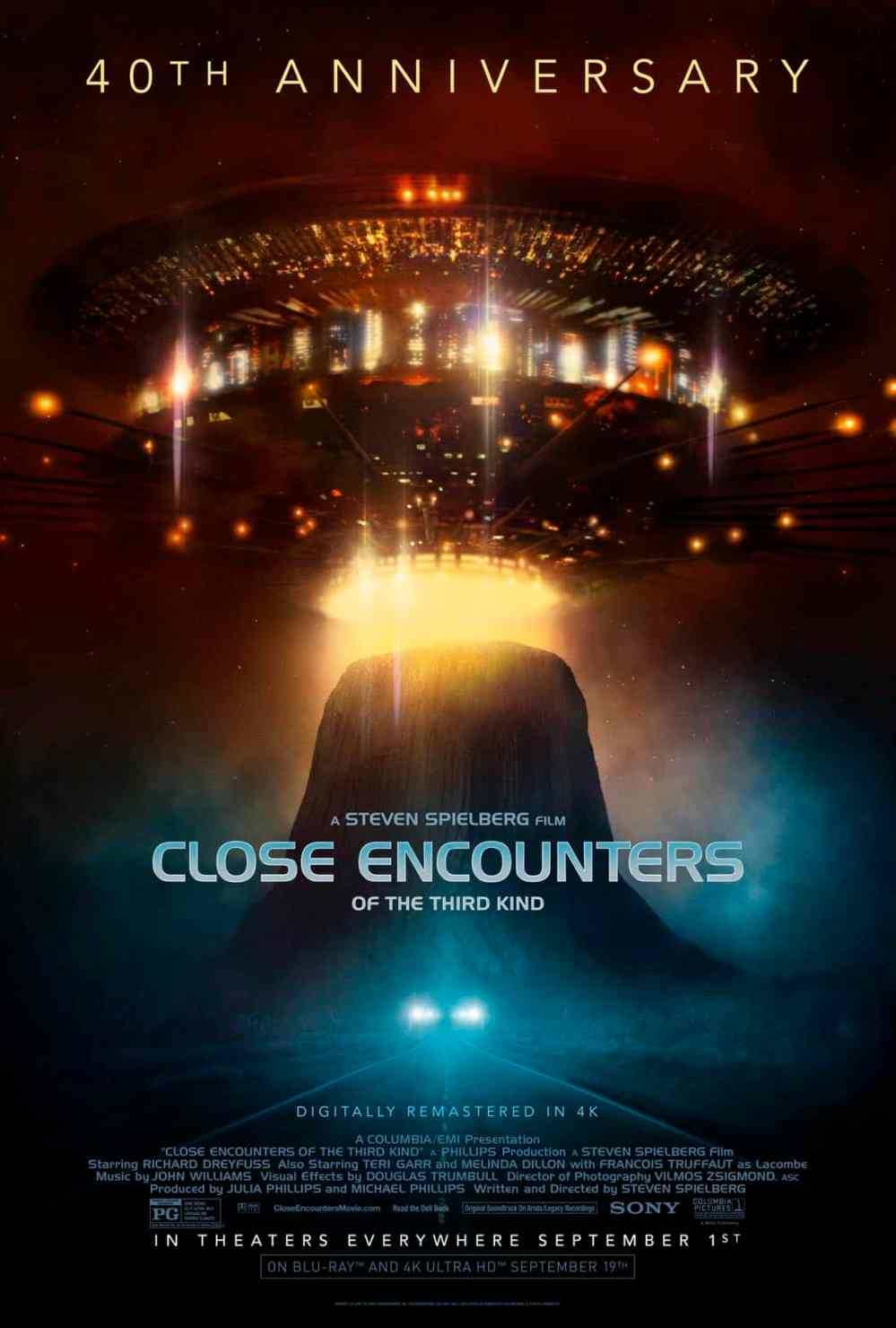
Close Encounters of the Third Kind 40th poster

On this week’s edition of yes, this movie really is that old, we have Steven Spielberg’s “Close Encounters of the Third Kind.” Released back in 1977, it is now being re-released in a new 4K remastered version in honor of its 40th anniversary. I first watched it on laserdisc at a friend’s house back in the 80’s, and I remember being somewhat traumatized by it as there were scenes which proved to be quite scary. I have since watched the film several times, but this 40th anniversary re-release allowed me to see it on the big screen for the first time. Suffice to say, this is the way you should view this particular Spielberg classic.

The film begins with strange discoveries being made in various parts of the world which include the appearance of Army airplanes reported to have gone missing back in the 1940’s, a lost cargo ship which has reappeared in the Gobi Desert for no discernable reason, and witnesses living in India are found singing a five-tone musical phrase which is revealed to be the distinctive sounds of UFO’s. Meanwhile, out in Indiana, Ray Neary a blue-collar worker, husband and father to three very loud kids, is working late at night after a large-scale power outage takes place, and he finds himself having a very close encounter with a UFO, one which lightly burns his face with its bright lights. From there, he becomes obsessed with finding out more about these alien visitors to where he gets left with subliminal messages he is desperate to find answers for.

Throughout the decades, there have been countless movies dealing with human beings and their first contact with extra-terrestrials, many of which feature the last remnants of humanity fighting off an alien invasion determined to wipe them out with extreme prejudice. As I got older, I came to realize how rare it is to have a science fiction movie which deals with aliens in a highly intelligent way. Among them are Stanley Kubrick’s “2001: A Space Odyssey,” Robert Zemeckis’ “Contact,” Spielberg’s “E.T.,” and Denis Villeneuve’s “Arrival” which was one of the very best movies of 2016. Even rarer these days is the motion picture which leaves you in an extended state of wonder and awe from start to finish and even after you leave the theater.

Even 40 years after its release, “Close Encounters of the Third Kind” still has an immense power to enthrall us as its characters come into contact with something they have longed to see. There is nothing about it which comes across as unintentionally laughable, and while technology has evolved to a whole other level since the 1970’s, this movie feels timeless in its exploration of possibilities and discoveries. It also works on many different levels in that it is funny, scary, thrilling, and deeply emotional.

This film is especially unique on Spielberg’s resume as it is one he directed and also wrote the screenplay for. It would also mark the last time he would direct his own screenplay until he made “A.I. Artificial Intelligence” in 2001. As a result, there should be no doubt of just how personal this film is to him. It turns out he wanted to make this one before “Jaws,” but he didn’t have the commercial clout at the time to get the budget he wanted. Of course, when “Jaws” came out, this changed forever.

Spielberg has said “Close Encounters of the Third Kind” is not actually a science fiction film, and watching it again has me agreeing with him completely. Yes, it does feature aliens and UFO’s, but they are not really the point. Also, this film takes place in a reality we all know and relate to. “Close Encounters” does not take place in some future dystopian world, but instead one we all inhabit as the main characters are regular people working regular jobs and supporting their families. They don’t want to see UFO’s, but they did, and now they cannot and will not deny their existence. Throughout this movie, we remain in the human universe and we never enter an alien one, and this is very important to point out here.

“Close Encounters” also deals with stories which would become a hallmark of future Spielberg films and productions such as “E.T. The Extra Terrestrial” and “Poltergeist” among others. Seeing the government conspire to keep this alien visitation a secret is presented in a way which feels not only realistic, but also very possible to pull off back in the 1970’s. But he also shows how the truth of things cannot be kept a secret forever, and, like Ray Neary, we want to see this all the way to the end because we won’t stop and until we get answers to fulfill our curiosities.

When it comes to the actors, Spielberg really just lets them loose here. He doesn’t direct them as much as he lets them run wild, and I don’t just mean the kids who are a noisy bunch as presented here. Richard Dreyfuss is perfectly cast as Ray Neary as he brings a crazed and enthusiastic energy to the role of a man who has seen things he wasn’t supposed to see, and he is not in a position to unlearn what he has learned. Even as Ray’s actions increasingly alienate him from his wife and kids, Dreyfuss makes us empathize with his plight as he is caught up in something he cannot turn his back on.

Melinda Dillon is equally wonderful as Jillian Guiler, another character who, along with her fearless son Barry (Cary Guffey), experiences a close encounter of her own. She also suffers the indignity of her son being kidnapped by aliens, but she is eventually reunited with him in the movie’s last half. It may sound like I’m giving plot points away here, but I’m not because Dillon’s performance is such an emotionally fulfilling one to witness as she takes Jillian through the stages of fright, grief, desolation, and eventually joy and happiness. She makes you experience these emotions with her, and seeing her smile when Barry reappears is a moment of pure elation.

Spielberg’s casting of filmmaker Francois Truffaut as Claude Lacombe, a French government scientist, was truly inspired. Along with Bob Balaban who plays David Laughlin, Lacombe’s assistant and interpreter, he portrays a government official who brings sanity to a situation which has other government officials responding to in a panic to where the quick answer is cover everything up and keep the number of witnesses to a bare minimum. Truffaut brings a strong level of thoughtfulness and wonderment to his character as Lacombe shows an openness to first contact others would not be quick to embrace. While military officers are eager to keep Ray and Jillian out of the area, Lacombe tries to make them see they were invited to be here.

Many images from “Close Encounters” will forever remain burned into my consciousness. The most prominent image of all is when young Barry opens the front door where an alien ship hovers outside, waiting to make contact with someone, anyone. This is still the defining image of who he not just as a filmmaker, but as a human being. Spielberg’s eagerness to make contact with aliens from another galaxy is no secret, and here’s hoping a UFO does make contact with him in his lifetime. Better they meet him than a certain person who is currently occupying the White House.

I think people these days who are seeing “Close Encounters” for the first time might say it takes too long to get to the last half where humans finally get to communicate with aliens. But like Francis Ford Coppola’s “Apocalypse Now,” this film is more about the journey than the final destination. Spielberg wants us to question what we believe and how far we will go to get answers to questions which have plagued us for an infinite amount of time, and we share the awe of the characters once those answers are delivered to us here. And it’s not just that the characters get answers here, they truly earn them as well.

This is also one of those films its director couldn’t stop tinkering with over the years. Ridley Scott couldn’t leave “Blade Runner” alone years after its release, and Oliver Stone continued to tinker with his dream project “Alexander” to where the final cut he gave us still doesn’t feel final. As Spielberg was finishing up “Close Encounters,” Columbia Pictures was in dire straits financially and begged the filmmaker to release his pet project sooner rather than later. What came out in 1977 wasn’t his complete vision, and he eventually got to make a special edition of the film which was released in 1980. The 4K restoration of “Close Encounters” is essentially a combination of both versions, but the scenes with Ray Neary exploring the inside of the mothership have been cut out. Spielberg has said over and over he never should have taken us inside the ship, and I completely agree. While Spielberg provides the characters with many answers, there are still some things better left to the imagination.

Seeing “Close Encounters of the Third Kind” at the Cinerama Dome afforded me the opportunity to see the movie in its most desirable format. The audience I saw it with was left spellbound at what unfolded, and this says so much about this movie’s staying power. Just when I think I have become so jaded and embittered a filmgoer as studios continue in their desperate search for the next big franchise, a motion picture like this comes along to remind us filmmakers still have the power to leave us in a state of sheer wonderment. It feels like we have had an overabundance of movie anniversaries lately to where these celebrations feel more like a ploy to get more money out of our pockets. But this particular anniversary is one worth acknowledging as it continually reaffirms the power of cinema to truly transport to another time and place and, in the process, rescue us from the real world even if it’s only for a temporary time.

The only thing which bugs me about “Close Encounters” these days is Ray’s decision to leave his family behind and travel with the aliens. Essentially, he is presented with the same question Captain Decker is faced with in “Star Trek: The Motion Picture;” Would you leave everything and everyone you have ever known behind just to explore another world and dimension? Seeing Ray getting on board the ship made me wonder how his family would have reacted to this decision, and it plagues my mind long after the end credits have finished. Then again, Spielberg did make this film before he had any kids of his own. Had he made it after he became a father, there’s no doubt Ray would have made a different decision. Still, one could not blame Spielberg or Ray for being tempted to go. I certainly would be tempted.

* * * * out of * * * *

No, I Haven’t Seen It Until Now: ‘Cujo’

Cujo movie poster

It took Cinematic Void putting together a Stephen King film festival at the Egyptian Theatre in Hollywood to give me a reason to finally check out the cinematic adaptation of “Cujo.” It was a movie I have heard a lot about, and I remember the book’s original artwork with those growling teeth which indicated this particular dog was looking for more than puppy chow and snausages. Moreover, the word Cujo has long since been burned into my consciousness, and it seems to exist as a description of a dog who has gone mad and cannot be mistaken for man’s best friend. In “Fletch,” it made perfect sense when Chevy Chase said “Cujo” as he wandered through a seemingly abandoned house in Utah. Considering he was attacked by a Doberman Pinscher earlier in the film, his fear of being attacked again was completely understandable.

“Cujo” was released in 1983 during a decade when adaptations of King’s work were plentiful and varied in quality. While some were exceptional (“Stand by Me,” “The Shining,” and “The Dead Zone”), others like “Maximum Overdrive” just didn’t work. “Cujo,” however, proves to be an above average adaptation of his work as well as one of the more unusual. While many of his books deal with the supernatural, this one deals more with the horrors of real life instead of just monsters.

I’m sure you all know the story to “Cujo” by now. In case you don’t, it involves a beautiful St. Bernard who, at the movie’s start, chases a rabbit through the woods. In the process, he gets his head stuck in a cave filled with bats, one of which bites him on the nose. From there, he goes from being a lovable household pet to an infinitely vicious one as he attacks any and every human being in his sight.

From the outside, “Cujo” seems to have a very straightforward plot which indicates to the viewer it will be one of those animal attack movies we have seen time and time again. But what really surprised me most is how it focused more on the human element to where I realized the dog was really a supporting character more than anything else.

You have Vic and Donna Trenton (Daniel Hugh Kelly and Dee Wallace), a married couple and the proud parents of a highly imaginative boy named Tad (Danny Pintauro). But while they appear to be leading the perfect life in Castle Rock, Maine, there are cracks beneath the surface which will inevitably become visible to everyone. Vic is increasingly concerned with economic security, something even more understandable these days. Donna is having an affair with Steve Kemp (Christopher Stone), her ex-boyfriend from high school, as she is terrified of being trapped in a small town for the rest of her life. And Tad, he is still at an age where it’s far too easy to believe monsters are hiding in the closet and waiting to jump out at him. Seriously, seeing Tad race to his bed after turning off the light and hiding under the covers brings back a lot of memories.

Taking the fears of each character into account, it serves as a reminder of how brilliant King is at examining not just horrors of the unknown, but also the ones we are forced to experience in the real world. This makes “Cujo” especially effective as the obstacles these characters are forced to deal with feel almost as scary as the thought of this dog tearing their flesh apart.

“Cujo” was directed by Lewis Teague who also helmed the Stephen King anthology film “Cat’s Eye” as well as the cult classic “Alligator” and “The Jewel of the Nile.” Teague was lucky he got to make “Cujo” back in the 80’s, a decade where filmmakers had the opportunity to build up to a furious climax instead of being forced to rush straight to one. These days, studio executives would have begged, if not ordered, him to rush right into the sequences where the dog attacks the hapless humans and increase the blood and gore horror fans are expecting. Instead, Teague got to take his precious time introducing us to characters who are not mere stereotypes and whose struggles will soon pale in comparison to the dog whose appearance becomes increasingly dirty and slimy.

This movie’s major set piece comes when Donna and Tad become trapped in a Ford Pinto as Cujo thrashes away at it, trying to get inside. From there, “Cujo” becomes a major exercise in sheer intensity as we watch Donna do what she can to save herself and her son before the dog makes chop suey out of them both. But if the dog doesn’t get to them, the sweltering summer heat may do them in instead. Suffice to say, they cannot stay in the car forever.

It’s interesting King chose a St. Bernard as the type of dog instead of another like a Doberman Pinscher. Of course, casting a Doberman might have seemed like typecasting as they have always been the villains of dogs. St. Bernard dogs seem more like comic relief, and this was made clear back in the 1990’s with those “Beethoven” movies starring Charles Grodin. Therefore, choosing a St. Bernard as a dog is an inspired choice as it shows how easily a dog, any dog, can turn deadly after being bitten by a bat. When we first see Cujo, he is a beautifully groomed dog you just want to hug. But he soon becomes a dog in desperate need of a shower as he looks disgustingly slimy and has what looks like an abundance of snot sliding off his face. Eventually he becomes an evil force to be reckoned with, and it’s easy to understand how no one could have prepared for him.

But while this dog looks to be the main star of “Cujo,” he is not. The real star is instead Dee Wallace who, just as she did in “E.T. The Extra Terrestrial,” gives us a mother who cannot be mistaken for the average movie mother. I love talking about when actors inhabit roles more than play them, and it is certainly the case with Wallace here as she gives a performance best described as emotionally blistering. She makes us feel Donna Trenton’s frantic struggles as well as her mental and physical exhaustion in dealing with a crumbling marriage, an affair, her son and, of course, the dog. Also, she makes us feel every single bead of sweat coming off of her body as she and Tad are trapped not just in the car, but in the sweltering summer heat as well.

There also moments where Donna loses her patience with Tad, and this makes Wallace’s performance feel all the more real. Just as “Cujo” was being released, some associated with its production were keen to cut a scene where Donna snaps at her son as she grows tired of his crying out for daddy. This, however, would have been mistake as all parents lose their patience with their children. Seriously, just as my mom. I’m sure she has tons of stories she would love to share with you.

While I’m at it, let’s not leave out Danny Pintauro whose performance as Tad feels unbearably real at times. Seeing him weep and panic when the dog tries to get at him and his mother makes an already intense motion picture even more intense.

Teague and his collaborators which include composer Charles Bernstein, director of photography Jan De Bont, and editor Neil Travis clearly had more on their mind than giving us the average horror film with “Cujo.” While there is a conventional feel to much of what we see here, the filmmakers were more invested in the human element than the animal one. Lord only knows how this movie would look if it were made today, and I’m stunned it has not been remade yet. As this cinematic adaptation shows, horror movies can’t thrive unless we are emotionally invested in the characters to where they are not just stock or filler. This film may not be a masterpiece, but it proved to be far more effective than I ever could have expected it to be.

* * * ½ out of * * * *

No, I Haven’t Seen It Until Now: ‘Creepshow 2’

Creepshow 2 movie poster

Creepshow” proved to be a great deal of ghoulish fun, and it’s a film which had me begging for a sequel. There are many other short horror stories worthy of a cinematic adaptation regardless of whether or not they are written by Stephen King. Plus, at the time, it seemed to be a given George Romero would have had easier luck in securing financing for this than for a sequel to “Day of the Dead.” And with the same gothic-looking title, what could possibly go wrong? Even if it’s not one of the greatest horror movies ever, we can still enjoy this sequel for what it is, right?

Well, perhaps you can, but for me, “Creepshow 2” is a serious disappointment. Sure, the three stories contained in it are based on the works of King, and Romero did write the screenplay, but this sequel suffers right from the get go. It falters due to a budget much lower than a horror film deserves, a cast of actors who emote more than act, a weak music score, and animation which just reeks of cheapness.

The movie’s prologue has a young blonde boy named Billy (Domenick John) peddling fast on his bike as he chases a delivery truck into town to deliver the latest edition of Creepshow magazine. The back of the truck opens up to reveal The Creep played by Tom Savini, but voiced by Joe Silver. The makeup on this devilish character is less than convincing, and he is nothing compared to the ghostly apparition from the first movie. Even worse, he is made to crack jokey one-liners which will have you groaning more than laughing. Clearly, this character is “Creepshow 2’s” answer to the Crypt Keeper from “Tales from The Crypt,” or perhaps even John Carpenter’s Coroner from “Body Bags,” but it would have been to this sequel’s benefit had it not featured a wisecracking character as this kind had already started to wear out its welcome back in 1987.

One other thing, if you are going to have Savini playing a ghoulish character, do you really have to put makeup all over him? The infamous makeup artist and actor has a wonderfully devilish look about him, and the mask he wears just takes away from him.

“Creepshow 2’s” first story, “Old Chief Wood’nhead,” is its weakest by far. George Kennedy and Dorothy Lamour play Ray and Martha Spruce, an elderly couple who run a general store in Dead River, a town which, as we can tell from its first appearance, is finally living up to its name. One day they are visited by a Native American elder named Benjamin Whitemoon (Frank Salsedo) who gives the Spruces turquoise jewelry, his tribe’s sacred treasures, to look after. Unfortunately, not long after Benjamin leaves, a group of thugs arrive at the store, killing the Spruces and making off with the jewelry. Oh yeah, the Spruces also have an Indian statute standing prominently outside of their store named Old Chief Wood’nhead, and it doesn’t take long for us to see he will avenge the Spruces as you don’t mess with Indian spirits, ever.

Directing “Creepshow 2” is Michael Gornick who served as Director of Photography on its predecessor. As this first story demonstrates, he doesn’t quite have Romero’s panache or wicked sense of humor as he can’t balance out the horrific aspects with the comedic ones, and everything feels off balance as a result. Also, he shows far too much of Old Chief Wood’nhead coming to life which was a mistake. Gornick starts off by giving us glimpses of this character, played by Dan Kamin, to where we can tell the Chief is more than just another statute. But as the Chief goes on a mission of bloody justice, the character becomes cartoonish to where his bloody revenge isn’t the least bit fulfilling.

For what it’s worth, Holt McCallany, who plays Sam, the leader of the thug gang, does have beautiful hair here, and seeing him show it off as he sees it as his ticket for making it in Hollywood makes him all the more drolly hilarious. Still, MCCallany has nothing on Melissa Leo as her hair was infinitely beautiful from one episode of “Homicide: Life on the Street” to the next.

The second story, “The Raft,” is a bit of an improvement. Based on one of King’s scariest short stories from “Skeleton Crew,” it features our college kids who drive out to a predictably isolated lake, located a good 50 miles away from their school, for a swim. The lake’s only real notable feature, at first anyway, is a wooden raft in the middle of it. This raft, however, is soon upstaged by what looks like a slimy oil slick which begins to make its way over to the kids once they get in the water, and they soon find themselves stranded on the raft as the slick surrounds them.

“The Raft” has a lot of cinematic possibilities, and seeing these kids getting consumed by the oil slick provides “Creepshow 2” with some of its most horrifying moments. But in the end, it is undone as Gornick isn’t able to generate enough of a claustrophobic terror this story demands. Plus, the performances of Paul Satterfield, Jeremy Green, Daniel Beer and Page Hannah are weak as they are forced to emote more than act, and this just takes away from the situation and terror their characters are trapped in. Granted, this is not a movie which demands Oscar worthy performances, but it does need good acting to help bring you fully into such a terrifying story.

I do have to give the actors some credit though as they don’t have to do any acting when they first get in the water as it does appear to be very cold. Beer even said he almost died from hypothermia while filming “The Raft,” and keeping this in mind while watching this segment makes it even more unnerving. But despite a bravura conclusion, I came out of “The Raft” feeling like it could have been much better than it was. Perhaps this is partly due to having read King’s short story beforehand, and what he came up with couldn’t possibly be matched here.

The final story, “The Hitchhiker,” proved to be my favorite as it featured Lois Chiles, the Bond woman Dr. Holly Goodhead from “Moonraker,” in a strong performance as businesswoman Annie Lansing. The story begins with Annie leaving a hotel after having an adulterous fling with a gigolo, and she begins thinking of ways to explain to her husband why she is arriving home so late. But as she fumbles around with a lit cigarette while driving her expensive Mercedes down a lonely highway, she accidentally hits a hitchhiker played by Tom Wright. Did Annie kill him? She isn’t sure, and with oncoming headlights heading in her direction, she isn’t keen to wait around. From there, she goes from wondering how to cover up her affair to finding ways to justify leaving the scene of an accident, and then the hitchhiker reappears…

This story reminded me of the “Creepshow” segment entitled “They’re Creeping Up on You!” which starred E.G. Marshall as Upson Pratt, a ruthless businessman whose fear of bugs comes to haunt him big time. Like that segment, “The Hitchhiker” plays with your mind as you ponder if what you saw actually happened, or if it was all in the mind of the main character instead. On first glance, the story doesn’t make much sense as Annie keeps coming across this man she accidentally ran over for no real reason, but, in retrospect, perhaps the hitchhiker represents Annie’s conscience torturing her for hitting a pedestrian and failing to take responsibility for her actions.

This final segment for me reminds me of why I liked the first “Creepshow” so much; it’s a wickedly gleeful mix of horror and black comedy as Annie tries to kill off a hitchhiker who won’t stay ahead. In the process, she also lays waste to her precious Mercedes as her priorities shift from protecting her most valuable possession, a car, to defending herself from a crime which becomes something even worse. It is so over the top to where I was infinitely eager to see where the story would end up, and had the rest of “Creepshow 2” been like this, it would have been so much better. Chiles gets to show more life here than she got to in “Moonraker,” and she steals this sequel easily thanks to her unrestrained turn.

Horror movies in general tend to be made on low budgets, and this was certainly the case with “Creepshow” as Romero only had $8 million to work with. Gornick, however, had a budget half the size of that on “Creepshow 2” ($3.5 million to be exact), and he is unable to stretch it out the way Romero did. I’m always fascinated with what filmmakers are able to pull off creatively with little money, but this sequel shows that sometimes a low budget can be too low to work with. This has the appearance of a motion picture where the filmmakers were forced to cut corners at every turn due to limited funds, and it makes me feel sorry for Gornick as I’m sure he could have accomplished more if the budget allowed him to. While Warner Brothers distributed the first movie, the sequel was instead released by New World Pictures, a small independent production company which inched closer and closer to bankrupt around the time “Creepshow 2” came out.

I also didn’t care for the film score by Les Reed and Rick Wakeman as their themes came across as unbearably generic. Both are very talented musicians, but their music here just made me pine for John Harrison’s music from “Creepshow” as well as “Day of the Dead.” Back in the 1980’s, Harrison came up with some wonderfully creepy cues, but Reed and Wakeman have no such luck here.

“Creepshow 2” does have its inspired moments, but I came of it feeling like it could have been so much better. Instead of enjoying what I saw, I spent more time analyzing things which could have been easily improved. I do, however, have to applaud the filmmakers for including the following quote from Colliers Magazine in the end credits:

“Juvenile delinquency is the product of pent up frustrations, stored-up resentments and bottled-up fears. It is not the product of cartoons and captions. But the comics are a handy, obvious, uncomplicated scapegoat. If the adults who crusade against them would only get as steamed up over such basic causes of delinquency as parental ignorance, indifference, and cruelty, they might discover that comic books are no more a menace than Treasure Island or Jack the Giant Killer.”

This quote was from the year 1949, and yet all these years later many still seek scapegoats, be it comic books or Marilyn Manson, instead of dealing with things in a more rational manner. I loved that the filmmakers included this quote, but I would have loved it even more if they had opened the movie with it.

* * out of * * * *