“Inside Out” is far and away one of the very best movies Pixar has ever made. A story of a girl experiencing conflicting emotions and an ever-growing shyness after she moves with her family from Minnesota to San Francisco, it is bound to have you experiencing a wealth of emotions such as happiness and sadness. Honestly, these animated characters feel more human and real than others you find in the typical Hollywood blockbuster. If you say you came out of this movie unmoved, you are nothing but a flat-out liar. Yes, “Inside Out” is that good.
We are introduced to Riley right out of the womb as she is born to very loving parents. At the same time, we are also introduced to the emotions which occupy her mind: Joy (Amy Poehler), Sadness (Phyllis Smith), Fear (Bill Hader), Anger (Lewis Black) and Disgust (Mindy Kaling). All of them take their turns at the controls of Riley’s mind, but Joy has the most influence as she is determined to keep Riley as happy no matter what. In the end, who wants to be unhappy, you know?
But then things change dramatically for Riley when her family moves from one side of America to the other and to a place which ruins pizza (watch the movie and you’ll see what I mean). While she tries to put on a brave face as the new girl in town, she finds her heart quickly breaking as she misses her old life and friends. This leads to her having an embarrassing moment in class and a hard time making friends and, as a result, Joy feels increasingly threatened as the more negative emotions begin to have increased influence over this pre-teen girl who has yet to discover the horrors of turning 13. Yes, this movie takes place before she hits puberty. Imagine what the sequel will be like!
“Inside Out” affected me deeply as I completed related to what Riley went through. When I was her age, my family moved me and from a town I felt very settled in to one which made me feel like an alien from another world. Being the new kid was no fun at all, and Riley’s emotional state should be completely understandable to those who have been through the exact same situation. In some ways she is lucky because she lives in the age of social media where she can talk with her friends via computer or Skype. I would have loved to have had this when I was her age.
This movie was directed by Pete Docter who helmed two of my favorite Pixar movies, “Monsters Inc.” and “Up,” and it was influenced by two things in his life; when his family moved to Denmark where he had trouble adapting to his new surroundings, and of the shyness his daughter began experiencing as she got older. For an animated movie, the characters like Riley and her parents feel wonderfully complex in a way you don’t necessarily expect. This isn’t the first Pixar movie to give us characters like these, but it is worth noting here.
I also liked how Riley is not portrayed as your stereotypical pre-teen girl. She is big into hockey in a way girls are more than we ever bother to realize, and she doesn’t obsess over the usual things we have been conditioned to believe girls obsess over like dresses and potential boyfriends. Docter has us see her as being like any other individual to where her gender is more or less beside the point. The feelings Riley experiences are universal, and they will quickly remind audience members of the ones they experienced when they were her tender age.
Now while I may be making “Inside Out” sound like an animated remake of “Pump up the Volume,” I assure you it is also very, very funny. This is in large part thanks to the cast which was perfectly chosen. Amy Poehler has always been one of my favorite “Saturday Night Live” stars, and it’s hard to think of another actress who could have voiced Joy better than she does. Her gleeful and spirited banter infects the character fully, and she also humanizes Joy to where she realizes why Riley can’t be happy all the time.
Phyllis Smith turns Sadness into a wonderfully funny character regardless of her infinitely depressed disposition. Bill Hader is absolutely priceless as Fear, Mindy Kaling makes Disgust more fun than she has any right to be, and who else could have done a better voicing Anger than the combustible comedian who is Lewis Black? Black steals every scene he has here as Anger, understandably, has difficulty keeping his cool. And let’s not forget Kyle MacLachlan and Diane Lane who voice Riley’s father and mother and make them into the most loving parents Riley could ever hope to have.
As “Inside Out” probes the memory banks and emotional centers of young Riley’s mind, it proves to be absolutely boundless in its imagination and visual effects. I keep waiting to see what surprises Docter had in store for us as we keep getting introduced to new characters like Riley’s imaginary friend Bing Bong (Richard Kind is fabulous) and other memory centers which are presented to us as if they were giant theme parks.
The filmmakers clearly did a lot of research on the human mind. This leads to many unforgettable moments like when certain parts of Riley’s mind such as Imagination Land crumbles and falls into the Memory Dump where memories are forever forgotten. On one hand it is an amazing piece of animation, but on the other it is a reminder of the things we lose in our lives as we get older. We may want to get some of these things back, but a lot of times we cannot.
But perhaps the most important thing we can get out of watching “Inside Out” is not the fact we can’t be happy all the time, but that Joy and Sadness need to coexist with one another. You can’t have pleasure without having pain, and this is made abundantly clear in one of the movie’s closing scenes which is beautiful and will have at least one tear trickling down your cheek.
Many have said Pixar has lost its footing in the past few years with an overreliance on sequels, but I have yet to see a movie of theirs which I have not liked. “Inside Out,” however, reminds you of how amazing they can be when they focus on giving you a great story more than anything else. It’s a movie for anybody and everybody, and I cannot recommend it highly enough.
There’s a scene early on in “Beverly Hills Cop III” where we see Detroit Detective Axel Foley (Eddie Murphy) walking down a tunnel located beneath the Wonder World amusement park. It’s almost a silent movie scene as Axel just walks and says nothing. In moments like these, Murphy is quick to come up with something very clever to make things lively, let alone funny, but here he does nothing but walk, and it represents the lack of passion he appears to have had for reprising one of his most famous cinematic characters. Murphy was paid $15 million for this long-awaited sequel, and watching him in it made me feel like he just took the money and ran.
When “Beverly Hills Cop III” came out in 1994, the same year I graduated from high school, I was very excited to see Murphy bring Axel Foley back to the silver screen as the first two movies in the franchise were among my favorites to watch over and over as a kid. But after watching him in this second sequel to Martin Brest’s 1984 smash hit, I felt like giving up hope of his career ever making a much-needed comeback.
As with the previous two movies, Axel Foley heads over to Beverly Hills following the death of a friend, in this case his boss, Inspector Douglas Todd (the late Gill Hill). Once there, he is reunited with his friend Billy Rosewood (Judge Reinhold) who has since become promoted to the role of DDO-JSIOC, Deputy Director of Operations for Joint Systems Interdepartmental Operational Command. His partner John Taggart has since retired, and he now partners with Jon Flint (Hector Elizondo) who already knows all about the trouble Foley causes whenever he drops by. Unsurprisingly, Foley raises all kinds of hell as he infiltrates Wonder World, a Disneyland-like amusement park, where the criminal link he is seeking out resides.
The big news about “Beverly Hills Cop III” is it reunited Murphy with John Landis, the director who helmed two of his best movies, “Trading Places” and “Coming to America,” the latter which had them coming to blows to where they promised they would never work together again. Through the graces of the movie gods, they overcame the differences to work together again, but the end result proves to be infinitely depressing as their efforts cannot equal the comic genius which preceded it. Sure, there are some good moments like the mechanics we see singing “Come See About Me” by The Supremes, the hilarious blunder of a police raid at the movie’s beginning and a scene where Foley rescues kids on a ride which has malfunctioned, but they all feel half-realized. Having re-watched this sequel recently, I keep thinking of all the ways this sequel could have been improved, and the list of those improvements is depressingly long.
Years after its release, Landis described the making of “Beverly Hills Cop III” as being “a very strange experience.” He said the screenplay, written by Steven E. de Souza of “Die Hard” fame, was terrible, but he believed Murphy could save it with his unique brand of humor. But while we have come to know Axel Foley as a wise-cracking cop, this sequel sees him become a more mature character. This proved to be a big mistake as I went into this believing Murphy would not hesitate in bringing his unique sense of humor to this project. But in taking Axel Foley in a different direction, Murphy ends up subverting our expectations in a negative way. Some franchises thrive on evolution, but this one is the kind which thrives on familiarity as “Beverly Hills Cop II” did nothing to change the formula of the original.
Seriously, it feels like Murphy isn’t even trying here. Perhaps we have asked too much of him over the years as screenwriters feel they don’t need to provide him with much material because everyone believes Murphy can come up with comedy gold no matter what. Maybe the man who became a star on “Saturday Night Live” and in “48 Hrs.” felt it necessary to remind his fellow filmmakers of how he cannot always come up with the goods. Still, it looks like he is coasting on his ego and fame to get this sequel to the finish line, and he just ends up looking like a fool in the process.
Indeed, there is much about “Beverly Hills Cop III” which feels lacking. The first two movies were produced by Jerry Bruckheimer and the late Don Simpson, but they both bailed on this franchise and were replaced by Mace Neufeld and Robert Rehme, best known for bringing the novels of Tom Clancy such as “The Hunt for Red October” to the silver screen. They seem an ill fit when it comes to the “Beverly Hills Cop” franchise as they make this particular sequel feel bland and infinitely uninspired.
Also missing this time out is Harold Faltermeyer who famously composed the score for the first two movies and made the “Axel F” theme one of the most popular to come out of the 1980’s. In his place is Nile Rogers, but his presence only exacerbates what is not present here. John Ashton was unable to return, so his part was more or less rewritten for Hector Elizondo. Ronny Cox failed to return as Captain Bogomil, but he explained why during a 2012 interview:
“They wanted me to be in ‘Beverly Hills Cop III,’ but…I read the script.”
It is nice to see Reinhold back as Billy Rosewood, but he really doesn’t get much to do here. As for Elizondo, his character of John Flint is essentially John Taggart, and the only thing which has changed here is the last name. The fact these characters share the same first name should give you an idea of how hard the screenwriters worked at distinguishing the characters from one another (which is to say, not at all). For what it’s worth, Elizondo does have this sequel’s best line of dialogue:
“I got a wife and three kids. I haven’t seen a fifty (dollar bill) in twelve years.”
As for the villains of “Beverly Hills Cop III,” they are a bland bunch with little in the way of dimension to make them the least bit interesting. Timothy Carhart has given memorable performances in “Thelma & Louise,” “Ghostbusters,” “Witness” and “Working Girl,” but as Ellis DeWald, he doesn’t get much to work with. His character is essentially the one-dimensional villain who might as well tell the audience, “Hate me! I’m the bad guy and I am greedy. I live for money and nothing else!” Steven Berkoff, Jürgen Prochnow and Brigitte Nielsen had more to work with in the previous “Beverly Hills Cop” movies, so it makes me feel bad for Carhart here.
Did anyone escape the aftermath of “Beverly Hills Cop III” in one piece? Well, Bronson Pinchot does return as Serge in a cameo, and he is a very welcome presence as his character has gone from working in the art gallery to hosting the “Survival Boutique” which features a massive weapon which is even capable of making coffee, something I know a future version of the iPhone will be able to do. Theresa Randle also has some nice moments as Wonder World employee Janice Perkins, and she shares a good deal of chemistry with Murphy which, in retrospect, this sequel could have built more upon. I also remember audience members cheering loudly when Randle punched a bad guy in the face, and this reminds me of how this sequel came out in a time where we didn’t see enough women kicking ass like that. Thankfully, times have changed.
When “Beverly Hills Cop III” reaches its final act, it feels so lazily put together to where you wonder if anybody involved here just gave up before the production wrapped up. The defeat of the bad guy feels completely unfulfilling, and the revelation of another character seems just tacked on for no particularly special reason. Once the end credits came up, I found myself walking out of the theater very disappointed. The first two movies in this franchise were some of the most entertaining of my youth, but this one felt inescapably underwhelming.
Looking back, this seemed like the ending of Eddie Murphy’s career as the wisecracking comedian we came to love so quickly seemed to have disappeared forever. Granted, he scored a huge comeback with the remake of “The Nutty Professor” and went on to score an Oscar nomination for his performance in “Dreamgirls,” but “Beverly Hills Cop III” really felt like the end. We have seen Murphy go through so many ups and downs, and this one felt like the final straw.
As I write this review, the possibility of a “Beverly Hills Cop IV” is still in the air despite many false starts. Murphy has long since admitted how the third entry in this franchise was “atrocious,” so here’s hoping the next entry not only redeems the character of Axel Foley, but is also made with a lot of heart and thought. It’s not enough to please an audience. You need to give them a reason to pay for a movie ticket instead of just banking on their nostalgia. While you are at it, bring back Harold Faltermeyer. His music would be a very welcome addition, and it will serve as a reminder of how the 1980’s never left us.
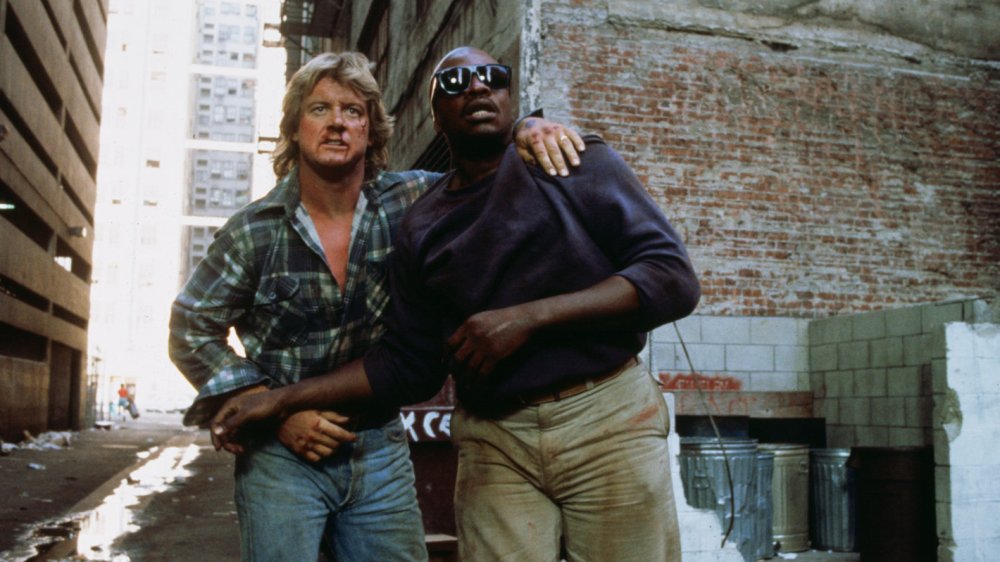
While at New Beverly Cinema for a screening of “They Live” on June 10, 2012, Roddy Piper spent some time talking about how he, director John Carpenter and co-star Keith David staged the alley fight in the movie. At five and a half minutes, it remains one of the longest fight scenes in cinema history.
Piper said that while Carpenter asked him many questions in preparation for “They Live,” the director also made him watch “The Quiet Man” which starred John Wayne and Maureen O’Hara. Aside from its beautiful photography of the Irish countryside, the movie also had one of the longest fight scenes ever filmed. Carpenter was determined to make an even longer fight scene, and to that, Piper said, “Okey dokey.”
Another reason Carpenter asked him so many questions, Piper said, was because “he was trying to figure out whom to put with me.” Keith David ended up being his co-star, and Piper described him as a “220-pound dancer” and of how “he is like Mike Tyson and doesn’t know it.” He also went on to describe David as a “great and wonderful man” and that he “kept laughing at all my mistakes.”
Piper did have a hand in choreographing the fight, and much of the rehearsal between him and David took place in Carpenter’s backyard. He taught David how to throw and take a punch, but knowing how punches on camera can appear faked, Piper eventually told him:
“Listen Keith, just hit me. From here and down (pointing to below his neck and above his waist) just hit me and go as far as you can.”
Piper said David had no problem doing that.
In filming the fight, Piper said he and David worked on three sections of it, and that they took it as far as they could. The day after that, they worked on the close ups for the scene. Rumor has it that it took three weeks of rehearsal to get the choreography of the fight just right. The audience was shocked however to hear that, even with the fight lasting almost six minutes, five minutes were actually taken out of it.
“They Live” also inspired a parody on “South Park” in which Timmy and Jimmy duke it out in a shot-for-shot remake of Piper and David’s fight. Upon learning this particular “South Park” episode featured “little crippled kids” fighting, Piper said he felt so bad about it and refused to watch it for about ten years. What changed his attitude regarding the episode was when he was at an autograph convention a few years ago:
“There was a beautiful little kid in a wheelchair that came up and told me about it, and he was laughing his ass off! Then I watched it and, oh baby Jesus put the hat on, one got hit in the crouch and another with a wheelchair! So you know if he likes it then I like it too! I just didn’t want to offend him.”
Piper did talk about how “They Live” is on the verge of being remade, and this did not please any fans in the sold-out audience at New Beverly Cinema. Apparently the remake will not have a fight scene in it. While some were disappointed to hear this, it’s probably just as well. After watching Piper and David pummel each other with such raw power, it seems impossible to top what they did today.
It was a huge shock to hear of the sudden passing of “Rowdy” Roddy Piper who died on July 31, 2015 from a heart attack at the age of 61. Many of us remember him from his wrestling days with the World Wrestling Federation (WWF, now WWE) where he battled Hulk Hogan and Mr. T in the ring, and for also making Cyndi Lauper’s life (in her music videos anyway) a living hell.
But for me, I’m always going to remember him best for his performance in John Carpenter’s “They Live” in which he played a nameless drifter who discovers that the earth has been taken over by aliens disguised as rich people. While he may have seemed an unusual choice for a movie role, Carpenter said he cast Piper because he had life written all over his face, and that’s a quality that not enough people in Hollywood pay attention to these days.
The following is an article I wrote after I attended a special screening of one of Carpenter’s best movies.
Former wrestler and actor Roddy Piper visited New Beverly Cinema on June 10, 2012 to talk about his role in John Carpenter’s “They Live.” Once the film ended, Piper made his way to the front and leapt onstage and yelled out for all to hear:
“I HAVE COME HERE TO CHEW BUBBLE GUM AND KICK ASS!!! AND I AM ALL OUT OF BUBBLE GUM!!!”
This screening was put together by the horror convention Days of The Dead, and moderating the Q&A was Brian W. Collins from the website Horror Movie a Day. During the time he spent with the audience, Piper looked so incredibly happy to be there.
When Brian asked him how he got cast in “They Live,” Piper said he was doing Wrestlemania III and got asked out to dinner by Carpenter afterwards. Piper had, as he said, “been on the road since he was 15 years old,” and he admitted to the audience he “had no idea of who John Carpenter was.” But once he realized he was a movie director offering him the lead role in a motion picture, Piper was eager to work with him.
In talking about filming the destruction of the shantytown, Piper pointed out how many people in that scene were actually homeless and not your average Hollywood extras. He also said the filmmakers had to pay two gangs off so that, when they left at night, the trailers would still be there in the morning. Piper said he also knew the president of each gang, and that really helped.
Then there was the discussion about the “bubble gum” line which Brian heard was improvised by Piper. Piper confirmed it was his idea and jokingly described it as “lame,” and it came about when Carpenter told him just before the cameras started rolling:
“Roddy, you know you’re going into a bank, you got bullets on, you got a shotgun, you got sunglasses. You gotta say something because you’re not robbing it. Action!”
Piper said the line, and then Carpenter yelled cut and immediately said, “Lunch!”
One audience member asked Piper if he did his own stunts in “They Live,” and he admitted he did all of them except for when Meg Foster pushes him out the window. Piper, however, also said if it was the last shot of the movie, then they would’ve let him do it. Speaking of Foster, he confessed he did indeed trip out over her eyes because they are so beautiful. Looking back, he marveled at how she brings you right in with those eyes.
We never do learn Piper’s character’s real name, and he is called Nada in the end credits which in Spanish means nothing. In describing Nada, Piper said, “You don’t know where he came from, you don’t know why he’s doing what he’s doing, you don’t know why he’s wearing a wedding ring. You know nothing about him.” Carpenter told him the thought behind this was if you don’t know anything about him, it makes him more intriguing to where you want to watch more.
Piper ended the evening by speaking profoundly about his role:
“Nada is you, he is every one of you, not blue collar or white collar. He’s you and that’s why you know nothing about him because it depends on if it’s you, then that’s what’s about him. He’s supposed to represent everybody, not just America, but everybody in the world. And that’s kind of why you as an audience fill in the nothing with whatever ethics and morals you’re fighting for at the time.”
Upon hearing of Piper’s death, Carpenter said he was “devastated to hear the news of my friend Roddy Piper’s passing today. He was a great wrestler, a masterful entertainer and a good friend.”
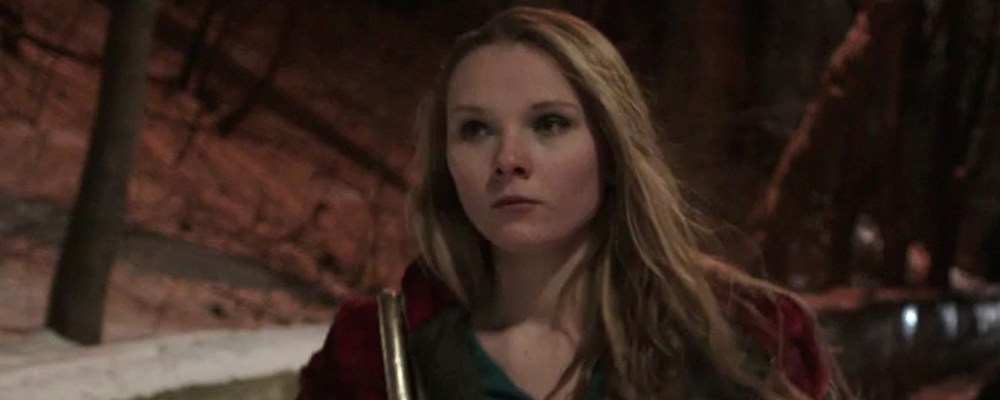
She has played supporting roles in “The English Teacher,” “At Any Price” and “Arbitrage,” but now Sophie Curtis finally gets her first leading role in the horror film “Innocence.” Based on the book of the same name by Jane Mendelsohn, Curtis plays Beckett Warner, a young woman who has just moved with her father to New York City after the tragic death of her mother. Once there she is enrolled in a super elite Manhattan prep school where she makes the acquaintance of the school’s nurse Pamela Hamilton (Kelly Reilly) who helps her settle in to her new environment. But as Pamela begins to insinuate herself into Beckett’s life even more, Beckett comes to discover that the school harbors a deep, dark secret that may end up claiming her life.
It was a lot of fun talking with Curtis back in 2014 on the phone as she was about to start college at UC Berkeley. We talked about how she got cast in “Innocence,” how the movie “Bram Stoker’s Dracula” was a big inspiration for her in playing Beckett, and of what it was like working with established actors like Kelly Reilly and Linus Roache.
Ben Kenber: Congratulations on this being your first lead role in a movie.
Sophie Curtis: Thank you. I’m very excited.
BK: You’re welcome. This is one of the few horror movies I’ve seen recently where a teenager having sex can actually save their life instead of end it because it’s usually the other way around (Sophie laughs). How do you feel about that?
SC: I felt like it was empowering. I think it’s good for kids to see both sides, and I really enjoyed playing a character who wants to overcome all the things that are thrown at her. My experience and my courage for it to be my first film, because I was very nervous about that while I was filming, I think that kind of adds to the veneer throughout the film and I hope people pick up on that one while they’re watching it.
BK: How did you get cast in “Innocence?”
SC: I went through the normal audition process, and then Hilary Brougher, the director, had it down to me and I think two other girls, and she met with all of us separately through lunch. We weren’t really auditioned or reading lines. We were just talking about our perspective of who Beckett is and what she’s struggling with and what that means to us. I think we really connected on our views of Beckett and I think we had an understanding. Hillary is awesome. She actually wrote my college recommendation for me so we were very close on set, and I think that we had an immediate connection and that probably helped with me in getting the role for Beckett. She helped me a lot in getting this character.
BK: Kelly Reilly plays a very enigmatic character, and I loved watching how she was able to say things without speaking a word. You look into her eyes and you know she is trouble. What was it like rehearsing with her? Did she surprise you when it came to certain scenes in the movie?
SC: Yes. It’s really funny because she’s actually super, super sweet when she’s not playing a bloodsucking witch and she gives a very raw performance. I think that really helped me with my character because her and Linus Roache who played my dad are very established actors and it was my first leading role, and I think they knew that everybody has to start somewhere so they were very accepting of that and just helped me to do the best that I could do with my performance.
BK: How long of a schedule did you all have to make “Innocence” in?
SC: I think it took us a month and a half, and we were filming really, really long days. Going in at four or five a.m. and finishing once it was dark out was really intense for me, but it was one of the best summers of my life so I’m absolutely grateful for that.
BK: You said “Bram Stoker’s Dracula” was a big inspiration for you in playing Beckett. What was it specifically about that movie that inspired you so deeply?
SC: I think it’s just the idea of going back to the source of horror. I think that “Dracula” and films like “Frankenstein” are films that have been drawn from so much to create today’s horror films and today’s horror novels. It’s kind of like the grandfather of horror and I think it’s the idea of supernatural love story with a normal girl, Winona Ryder who is one of my favorite actresses, just being trapped in a hyper reality and being misunderstood. I liked the simplicity of it and I like seeing how it’s transformed throughout in trying to create new movies like “Innocence.” That was the inspiration for Beckett.
BK: Are there any movies out right now that you feel are as good as “Bram Stoker’s Dracula?”
SC: Honestly, I really like old horror movies. To me, “Innocence” is not as much of a horror movie. It’s just more of a thriller and a coming-of-age story.
BK: What’s great about Beckett is that she is one of the more down to earth teenagers that we’ve seen in movies recently. Did you add a lot to this character that wasn’t in the script, or did you mostly stick to the script?
SC: She is really down to earth and I think she just has a very innocent demeanor. Hilary had adapted the script from the book as written by Jane Mendelsohn, and Jane was a producer on the film so she was very involved with how she wanted her story to be portrayed in the movie. I think Hilary kind of changed it from the book and she really involved me in that she starts off solemn and at other time she’s very happy. I kind of gave her my opinions on the script and how I felt Beckett should be represented after reading it and studying the character and just having an insight of being a teenager and how I felt Beckett should come off. So I think I did help or least I hoped I helped. I think I tried to make Beckett as much as my own character because she’s just a really awesome character and I had a really fun time playing her. She definitely taught me a lot while I was filming.
BK: Your character goes through a wide range of emotions throughout this movie. What was it like juggling all those different emotions while playing this role?
SC: It was really intense, but I think that me being nervous and excited and scared and happy and all of those things in real life as Sophie for being my first film and just being in this really intense working environment that I wasn’t used to. I think that really added to Beckett’s character and it helped me. I was going through similar emotions to what she was going through just in different circumstances, so you just try to draw from that and apply it to her situation.
BK: I understand that you are now starting college at UC Berkeley. How is that going for you?
SC: I’m here right now in my dorm, so if you hear other people it’s just my roommates. I’m in a triple so it’s really very crowded.
BK: What do you have planned next other than school?
SC: I’m just seeing what happens with “Innocence” right now. It’s just a really exciting time so I’m just reviewing a few possibilities, and there’s some really great opportunities. I just have to figure out which ones are the right ones for me. You have to be really, really dedicated to the project you take on because it’s really long hours and you have to really invest yourself in the character and become the character. It’s hard to wake up every single day and play somebody for hours on end that you don’t enjoy playing. I loved playing Beckett and I’d love to play her again if there’s a possibility of doing an “Innocence 2.”
BK: Well thank you for your time Sophie and good luck at school. It will definitely be a fun time for you for sure.
SC: Thank you, I’m very excited and happy to be here. It’s far from home so it’s been a little bit of an adjustment, but I like it a lot.
“Innocence” is now available to own and rent on DVD, Blu-ray and Digital.
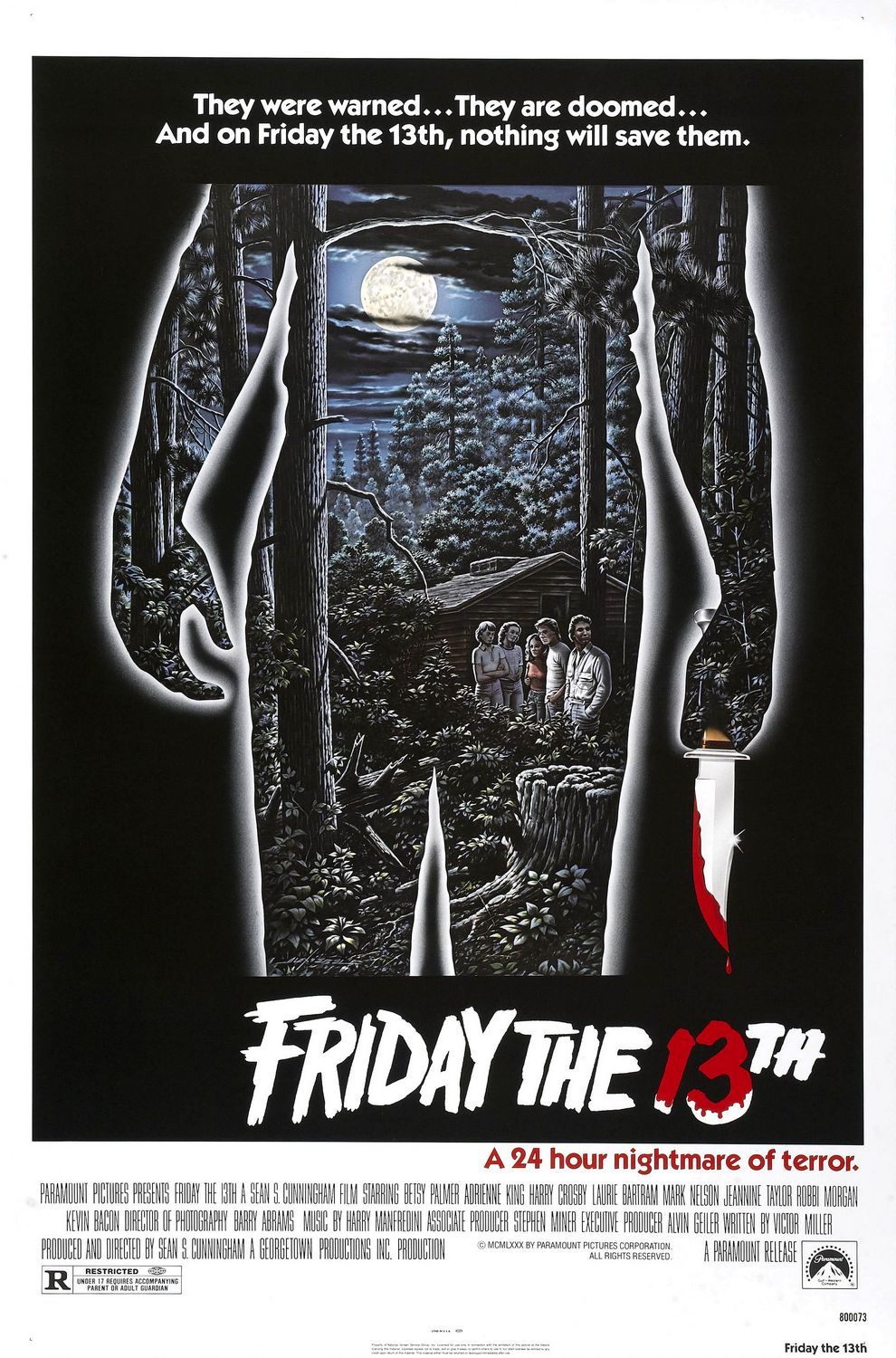
Look, no one is going to mistake any “Friday the 13th” movie for cinema at its best. It started out as a rip off of “Halloween” with a little bit of “Psycho” thrown in for good measure, and it soon became a never-ending franchise which, to this day, still won’t die. We had two of the sequels with the word “final” in them, and each turned out to be a flat out lie. Just when it looks like this franchise has breathed its final breath, it is resurrected once again. Perhaps the world is overpopulated with too many horny teenagers who need to be dealt with in a messy way. In the end, these films touch on our deepest fears and exploit them for all they are worth. We know they’re not good for us, but we can’t help ourselves and want to see what nasty crimes will be perpetrated next.
The “Friday the 13th” movies are essentially the equivalent of a fast food meal, the kind which has an obscene amount of cholesterol in them. You know it’s bad for you, but you keep coming back for more. It’s not just tapping into our deepest desires, but into our willingness to be bad and rebel against what our parents don’t like. Film critics never stopped attacking these movies and continually bashed them to pieces, and yet they made so much damn money on such low budgets. It represented horror being taken to the next level for the children of the 80’s. Our parents hated the movies, and that made us all the more curious about seeing them. Jason Voorhees eventually became as familiar to us as Santa Claus. I remember when “Friday the 13th: The Final Chapter” (LOL) came out when I was in the second grade, and none us had ever looked more forward to a movie none of us would be able to see (nor had we any business to). Yes, these slasher flicks bring back a lot of nostalgia for me.
The original “Friday the 13th” seems much better in retrospect. This is especially the case when you compare them to the sequels, let alone all the endless knockoffs, which came after it. What surprised me is how some of the murders which occur in this movie actually happen off screen. We have no idea they have occurred until we see the carnage put on display right in front of our eyes. It’s pretty vicious what is perpetrated in this film, and this was back when an arrow through an eye actually felt shocking. For the most part, “Friday the 13th” and a couple of sequels felt very real. You have to give the filmmakers credit because none of the slasher movies made today can’t even touch that feeling of reality. We all know we’re watching a movie when it comes to the sequels, but the original was experienced more than watched.
I’m sure we all know by now what Drew Barrymore should have known at the beginning of “Scream;” Jason was not the killer in this one. Instead, it was his mother, played in an over the top performance by Betsy Palmer. Mrs. Voorhees is basically what Norman Bates’ mother would have looked like, had Norman not have killed her off. Those moments where she is clearly schizophrenic and acting as if her son is actually telling her to kill people are both chilling and hilarious at the same time. This is far from a convincing performance, but Palmer is so much fun to watch in her deranged state to where it really doesn’t matter.
The cast of actors were basically hired not so much for their acting talent, but because they resemble, as director Sean S. Cunningham put it, those kids who came out of a Pepsi commercial. In many ways, this casting choice helped give “Friday the 13th” a stronger feeling of reality as they are people we recognize from our own lives. They are not models who have enhanced themselves with endless plastic surgeries (those would appear in the sequels). The ladies look very sweet and fetching, and the men look down to earth and not like those guys who spent way too much time at the gym.
“Friday the 13th” also was the movie which started the cliché of how if you have premarital sex with your boyfriend of girlfriend, you would die. The last person left standing was always a virgin, or the one too shy to ask a boy for a date. As a result, many people think there is some highly conservative Christian value system in place in these movies which one must follow in order to survive an experience with a masked maniac. Some will say Carpenter originated this with the original “Halloween,” but he made it clear in the DVD commentary he was not trying to spread religious dogma. Carpenter said the characters got killed because they weren’t paying attention, but ever since the first “Friday the 13th,” it’s been open season on kids who don’t practice safe sex.
There is also the crazy old man Ralph (Walt Gorney) who warns everybody of how they “are all doomed.” Of course, it’s always some crazy guy no one ever listens to. God forbid it’s some normal person people take the time to listen to. But if everyone were to believe this guy, then there would be no movie.
Of all the actors in this film, let alone the entire series, Kevin Bacon is the one who came out of it with the most successful career. “Friday the 13th” may not show off his best talents, but he does have one of the coolest death sequences in horror movie history. Bacon also gets to have one of the sweetest love making scenes any horror movie could ever hope to have. His character and his girlfriend actually do make love. It’s not one of those humping and pumping moments you can find in so many other movies where one person is doing all the work and the other is not having enough pleasure. It makes their inevitable deaths feel kind of sad. Even if we really wanted to see these two get bumped off, we don’t look forward to it.
Sooner or later, we were bound to see this movie because people couldn’t stop describing the more graphic moments in it. I remember my brother telling me about the scene where Kevin’s girlfriend does finally get it:
“You see her looking into the shower stalls and no one’s there. But while she is looking, you can see in the background the shadow of an ax being raised up. When she turns around, you can see the ax going into her face!”
My reply to this at the time was:
“Whoa! Cool!”
Then you have the unforgettable Harry Manfredini music score which basically sounds like Bernard Herrmann’s “Psycho” score on speed. Never have woodwind instruments been as thoroughly pummeled as they are here. This is not to mention the “chi, chi, chi, ha, ha, ha” sound (it’s actually “ki, ki, ki, ma, ma, ma”) which is so clearly identified with this undying franchise. When you hear it, you know Jason is not far away with a rusty machete in his grasp.
Cunningham is no John Carpenter, and he is a better producer than a director, but he does keep the suspense quota of “Friday the 13th” at a high level and generates a number of good scares. This one does not focus so much on the killings as it did on the messy aftermath. While you did see characters gutted in the most painful places imaginable, there were a couple of others you kept wondering about until you saw their bloodied corpses. The later sequels would get a little more creative with the murders.
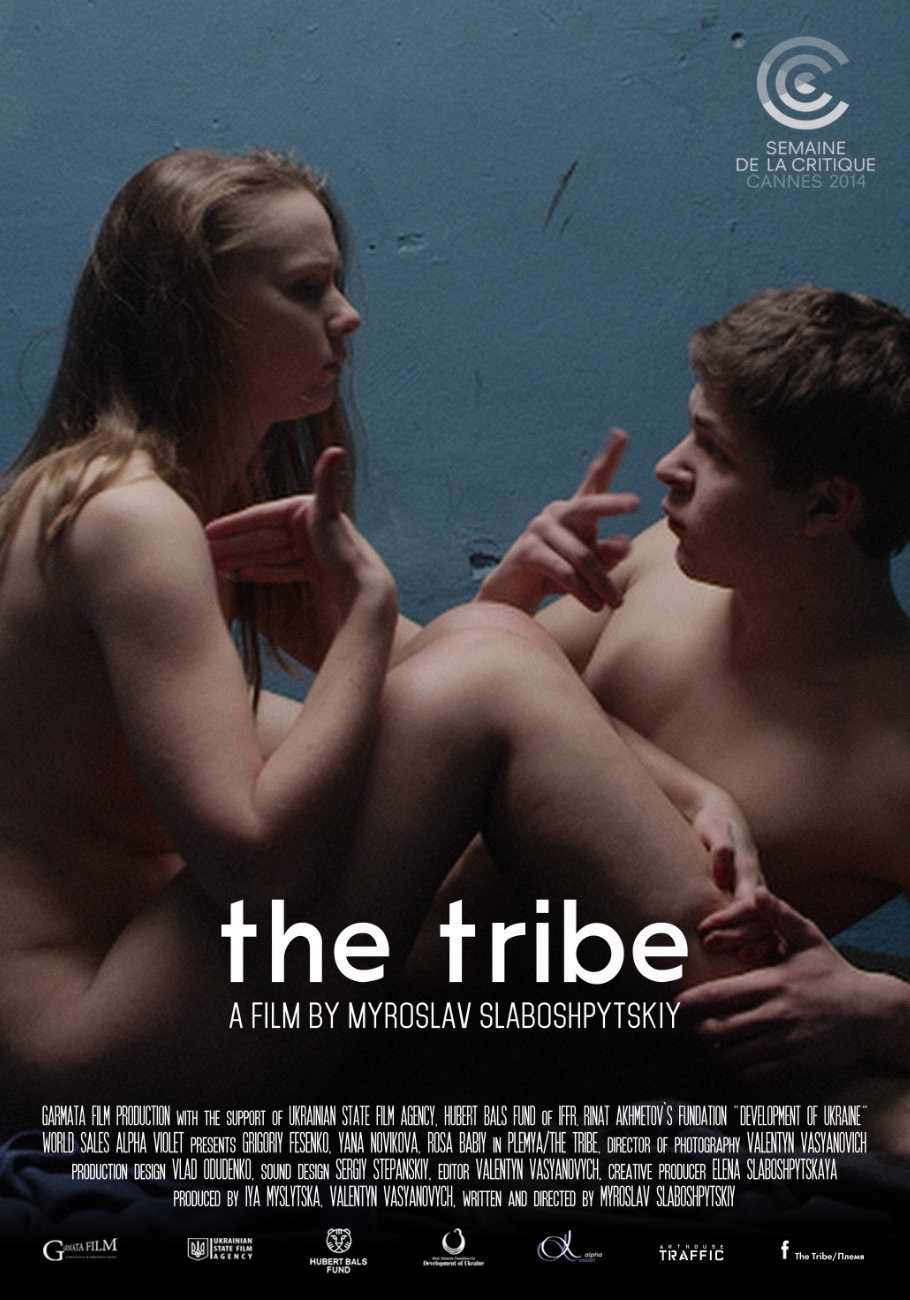
“The Tribe” is one of the most unique cinematic experiences you will ever come across. The movie is told completely through the use of sign language, and it contains no subtitles and no narration of any kind. While this might scare off the average moviegoer, those who dare to watch something outside of the usual Hollywood fare will be in for a movie like few others.
The movie follows a shy deaf teenager who has just arrived at a new boarding school where he is trying to fit in. Soon after he arrives, he is courted by a blond-haired student who turns out to be the leader of a gang which traffics in robbery and prostitution among other illegal activities, and he works his way up the criminal ladder with much success. However, when he falls for one of his female classmates, he finds himself in a dire situation which leaves with little hope of escaping out of it alive.
“The Tribe” was written and directed by Myroslav Slaboshpytskiy, and I got to talk with him on the day it was slated to be screened at Cinefamily in Los Angeles, California. We sat in the theater’s outside patio which Myroslav described as the last place in California where one could smoke.
Ben Kenber: This was a fantastic and very unique movie. How did the idea for “The Tribe” come about?
Miroslav Slaboshpytskiy: In my childhood I studied in the school which is the same school we used to shoot “The Tribe” in, and across the road we had the deaf boarding school. I saw how difficult communication was between the children without the support of sign language. They can directly change by appearance and emotion because the deaf people, when they use sign language, can communicate very emotionally always. It looked like a miracle to me and I really wanted to share this feeling with audiences, and of course it wouldn’t have happened unless I could understand sign language. Many years ago in film school, I thought it was a great idea to make an homage to silent movies, and much later I had the possibilities to shoot “The Tribe.” I once made a short movie about deaf people called “Deafness.” You can find it on YouTube, it is free, and then I had the possibilities to turn it into a feature film. It was a big challenge for me. I’m not sure if it really works, but finally it more or less works. I’m so happy about that.
BK: I think was great you were able to get away with making this movie without using subtitles or voice over or any kind of narration. Mel Gibson had wanted to show “The Passion of the Christ” without subtitles but was unable to. Was it hard to sell potential financiers on a movie like this without subtitles?
MS: In Europe, financing a movie is the same as it is in the Ukraine in that it’s a different system of financing. It works different. I think all European and Ukrainian films spend the money of taxpayers. You must pitch the film in film funds, and film funds support the films so it’s completely different than like in the United States system. When I prepared to shoot “The Tribe” I was a local star in Ukraine because I had made several short films. I had received the Silver Leopard at the Locarno Film Festival. So when I presented the project to the Ukrainian film fund, of course they supported the film. This film looks completely different from any other Ukrainian film, and people were a little bit nervous about what might happen but finally it happened. Considering the subtitles, I never considered this idea to use subtitles and words. We had already sold this film to 44 countries. That’s never happened with a Ukrainian film before. All the distributors signed a contract, and the contract had an article which tells them they have an obligation to prohibit the use of subtitles and narration. I hope nobody will watch “The Tribe” with subtitles, and after my death too (laughs).
BK: What I loved about the movie was that, even if you don’t understand the words being said, you do get the gist of what is going on. The ad line for The Tribe is that love and hate need no translation, and it perfectly describes the movie. Were you ever worried that people wouldn’t understand what was going on?
MS: Actually no. When I shot the short film, I tried to not shoot what I didn’t understand because, if I can’t explain why I’m shooting this film that way, then I am on the wrong track. The audience has a cinema memory, and before I started to do this film the viewers had to understand what I was going to do or else I would lose their attention.
BK: When it came to casting “The Tribe,” you decided to cast non-professional deaf actors in the roles. Was that your plan from the start, or did you ever consider using professional actors?
MS: I never considered the option of hiring professional actors because they can’t communicate in sign language. It’s the same like in American movies with accents. They cannot master the thinking of sign language. They must communicate very organically because, for the deaf people, sign language is an extension of their body and an extension of their being. So for this reason, I needed the deaf people.
BK: There are a number of scenes that you shot in “The Tribe” which last several minutes. What was it like working with the actors on those long scenes?
MS: We had a very long shooting period which was approximately half a year. Because we have an unprofessional cast, we can sign a contract that makes it look they’re at a real job like at an office. It’s much better because you have a rented car for you and a lot of people taking care of you and you’re the big star. Of course I’m joking, but we have this process of a lot of rehearsals. We had them from 7 to 10 days for one scene. When we felt that we were ready to shoot, we ordered this heavy film equipment and started to shoot within days and kept trying to get a better take. Then we started to rehearse the next scene and moving step by step towards the end of the film.
BK: Yana Novikova, who plays Anya, in particular is asked to do a lot of hard stuff in “The Tribe,” and she has a lot of great scenes. Her abortion scene is very well directed and acted. You can see the pain in that sequence very vividly. What was it like directing that particular sequence?
MS: The abortion scene, everybody is asking about it. People were fainting during the scene in Israel, in Moscow and in New York last week. How we shot the scene was completely non-dangerous. I am proud of the scene because it is a total illusion. It’s like when you go to the circus and David Copperfield cuts the woman into two parts. It’s the same. It’s a complete illusion. We had a lot of engineering, a lot of rehearsal and we prepared the scene very well. We visited with Yana to this hospital which had a woman doctor who consulted with us. She doesn’t only do abortions; she likes to deliver babies as well. She made them tour around the hospital through the birthing wing. We had a rubber woman’s body without foots and legs, only vagina, which medical students train on. They train on this rubber body, and this rubber body would scream if you did something wrong. It was very funny. And then this doctor sits closer to me and watched the monitor and screamed much higher than me if something went wrong. For this reason, we can do it very well, but again it’s a complete illusion. The woman who performs abortions told me the story, and I felt that I had to put in this movie because I’m not a big expert in abortions before this.
BK: It’s a very touchy, taboo subject in America, and I found it very brave that you put it in the movie because a lot of filmmakers would’ve found excuses not to include an abortion scene in their movies most likely out of fear. But it is an important sequence because it shows you how hard it is for someone in the country to get an abortion.
MS: Yeah. In fact, it was very funny because when it was shown at the Dublin Film Festival, after the screening there was a beautiful Q&A session. Some woman asked me if someone abused me in my childhood. I said no but I’m very open to new experiences. An old man visited me outside of the cinema and shook my hand and said, “Thank you very much. It was a great sequence and a great scene and we have a lot of them here. It’s very brave that you showed it.”
BK: Was “The Tribe” shot on film or was it shot digitally?
MS: We shot it on an Alexa. It would’ve been impossible to shoot it on film with those very long takes because we would’ve gone bankrupt after two or three days. I always want to shoot on 35 mm film, but we don’t have the financing possibilities. But we have a copy of course on 35mm.
BK: Another shot that stood out to me was the one where we see children doing some sort of show for the parents, and once they clear out Sergey, the new kid at school, comes into the picture. It’s like the last moment of pure innocence to be found in this movie. What was your thinking when you were putting that particular scene together?
MS: In fact, it’s like a tradition. It’s the first day of school when everybody goes to school, and it’s like a celebration. It’s like a social ritual, and it still continues in the Soviet Union. In 2007 when I started my research for “The Tribe,” I witnessed this ritual at the boarding school and made a video for myself. I completely agree with you that this ritual looks completely different. It looks like something more or less cute. And then the scene rapidly changes and you see the dark side of the system.
I want to thank Miroslav Slaboshpytskiy for taking the time to talk with me. “The Tribe” is available to own and rent on DVD, Blu-ray and Digital.
Jason Reitman proudly said he saw Paul Thomas Anderson’s “Boogie Nights” long before everyone in attendance at the New Beverly Cinema on February 21, 2010 had. This was the fourth movie he showed as part of his guest programming at the still standing Los Angeles revival movie theater. It was at a test screening shown at the Beverly Center where he first witnessed this movie which proved to be the breakthrough for Anderson whose previous cinematic effort was the acclaimed but little seen “Hard Eight.” With “Boogie Nights,” Reitman said he saw a filmmaker who knew how to handle all the elements while dealing with twenty characters.
Reitman’s special guest for this screening of “Boogie Nights” was William H. Macy who played Little Bill, the assistant director to Jack Horner (Burt Reynolds) who is married to a porn star (played by Nina Hartley) who sleeps with everyone but him. In many ways, Little Bill is the most empathetic character in this movie even though we keep waiting for him to stand up for himself.
Reitman, who had previously worked with Macy on “Thank You for Smoking,” first asked him how he came upon the script for “Boogie Nights:”
“I got the script through the normal channels,” Macy said. “I think I was still with CAA then, and the script was even more outrageous. I said, ‘Is this a porn film?’ There was actual shtüpping in it! Then I met with Paul and, the actors in the room will love this, I decided I wanted to do it and met with him at the Formosa Café, and it was about ten minutes in when I realized he was selling me. I wasn’t there to audition for him, he was trying to convince me to do it, and it was one of the great moments of my career.”
Reitman replied to this by saying, “I remember having a similar meeting when I was trying to get you to do ‘Thank You for Smoking,’”
From there, Reitman talked about all the great long shots Anderson has used in his movies. Specifically, he talked about the one where Little Bill was at the New Year’s Eve party and found his wife once again sleeping with another guy. It’s a long tracking shot which goes from Little Bill looking for his wife, finding her, and then going back to his car to get a gun after which he goes back inside and shoots his wife and the other guy dead. Watching it years after “Boogie Nights” was first released, it is still amazing Anderson pulled such a shot off. Macy described how this scene was put together.
“Paul does a couple of his gazunga shots in this one and they are not as hard as you would think,” Macy said. “It took forever to set up, but then after three and a half to four hours of setting it up, the shot’s done. No coverage, no nothing and you move on. Four pages just bit the dust.”
Macy then talked about how much he loved Nina Hartley. The first time he met her was when he went into the makeup room, and she had her legs up on the counter and was shaving herself. At the end of the shoot, Hartley had started this series entitled “Nina Hartley’s Guide to Swinging” as well as one on anal intercourse. Macy then added, “In the end, she gave these films as wrap gifts! It was great to see (the reactions); anal intercourse? THANK YOU NINA!”
There was a number of actual adult film actors involved in the making of “Boogie Nights.” One of the girls who had a small scene in the movie came to Macy’s attention while he was having lunch one day with Anderson. She came down and sat between the two of them and asked Paul a career question, “Should I go legit or should I go anal?”
Reitman went back to the long shot which ended when Little Bill puts the gun in his mouth and blows his brains out. What made this shot particularly dangerous was Macy had to wear a squib on the side of his head. With squibs, the crew doesn’t want you to move around at all for your own good, and Macy went into detail over why it was so dangerous.
“What was dangerous about it was they let me do it,” Macy said. “I found out since then that they no longer let actors use that kind of squib. It’s a little explosive device and it’s called a gore gun. So I had this little backpack with all this blood and brains that would come shooting out the back, and it was wired to the pistol so that when I fired the pistol, that’s what set off the ‘gore gun’ and that’s not allowed anymore. A stunt guy sets off the gore gun now, but there is a cut because we couldn’t figure out how to do the whole thing with a loaded gun and the gore pack. So there is a cut.”
The conversation then went to the tone of a movie and what a director actually does. It’s nowhere as simple as Burt Reynolds’ character of Jack Horner makes it look in “Boogie Nights.” Reitman took the time to explain what he thinks tone is.
“Tone is like this inexplicable thing that, if you ask what a director actually does, it’s not like setting up shots or telling actors what to do,” Reitman said. “Really, what a director does is set tone. It’s not about the words; it’s about the feeling that carries through the scenes, and P.T. A’s movies have a very specific tone to them.”
Reitman then asked Macy if this is something he feels on set or if it was something he didn’t realize until he saw the finished product. Macy said he wasn’t aware of how special “Boogie Nights” was until he saw the final cut, and he was understandably very impressed with it. This led him to talk about when he made “The Cooler” (the mention of it got a strong applause from the audience) which contains one of his very best performances.
“The director kept telling me, ‘Wait until you hear the score!’ To where I finally said, ‘Dude, if you think the music is going to save this then you’re in trouble!’ I was wrong, and when he put that lush score over the film it was a different sort of film, and he had that in his head the whole time,” Macy said.
Macy went on to say the tone of the set bleeds onto the film and the way you comport yourself, or how your first assistant director comports his or herself.
“To my mind, it’s always like going to war then making art,” Macy said. “You need a good general. I’ve been known to call in first time directors and I say to them, ‘If I catch you making art on my time, then we’re going to have trouble.’ You better know what you want because it’s more like going to war.”
One of the best moments of the evening came when Macy talked about the extras who were brought in when Anderson shot the scenes at the adult movie awards. They were all told to bring their best 70’s clothes and that they were working on a Burt Reynolds movie. Then there was that moment where actress Melora Waters is about to give an award to Mark Wahlberg, and it was worded a little differently than what we saw in the theatrical version.
“I’ve seen all his movies and I can’t wait to get his cock inside my pussy, MR. DIRK DIGGLER!”
Macy said the whole crowd just sat there in utter silence, completely unprepared for what they heard. It certainly wasn’t your average everyday Burt Reynolds movie.
All in all, it was another fun evening which provided an in depth look into one of the best movies of the 1990’s, and “Boogie Nights” made clear to the world Paul Thomas Anderson was a born filmmaker.
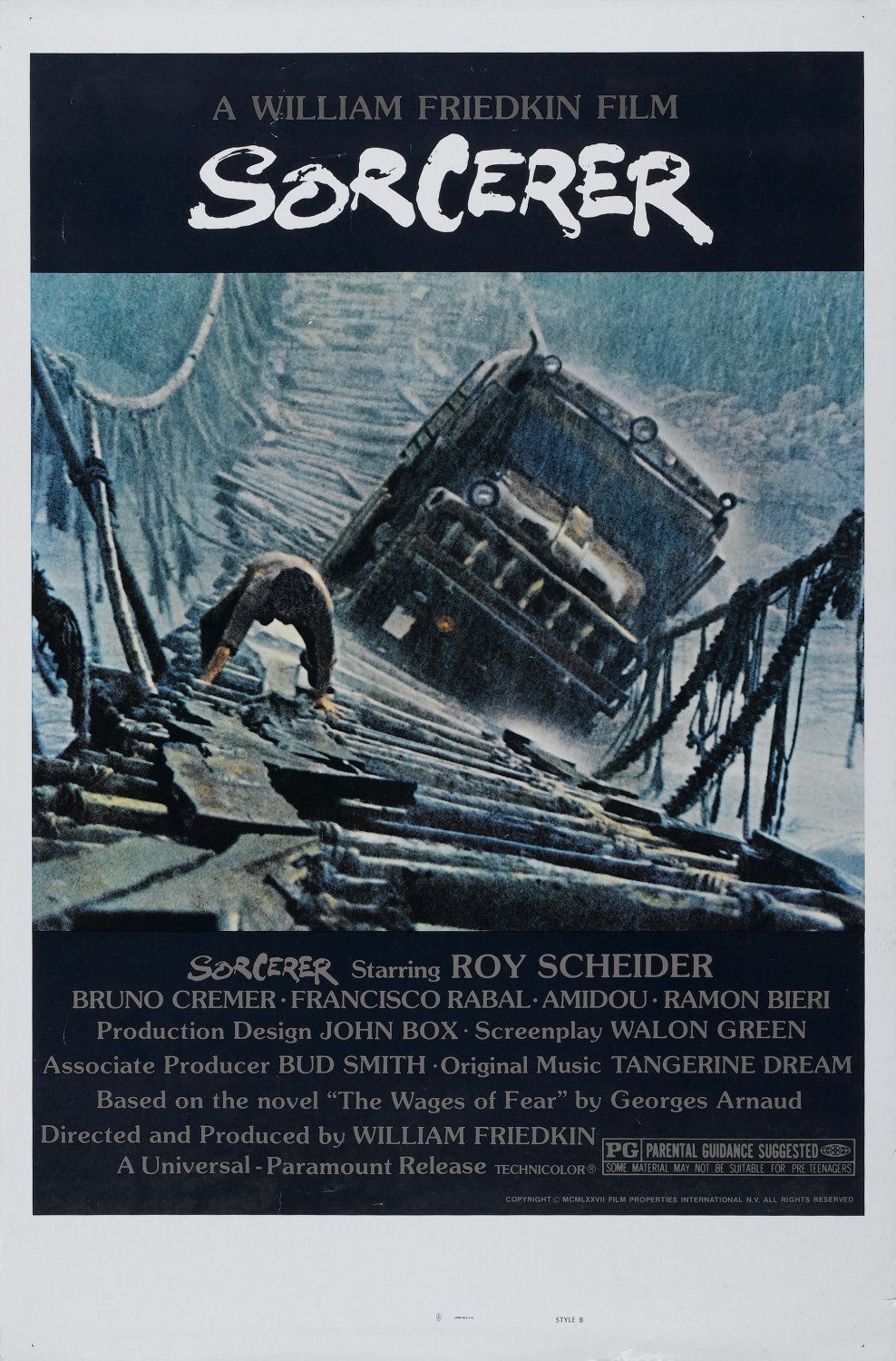
This is the movie that almost completely destroyed filmmaker William Friedkin. “Sorcerer” came into theaters with a high level of anticipation, which was understandable as it was made by the same man who gave us “The Exorcist” and “The French Connection.” Lines were wrapped around the block when it opened at Mann’s Chinese back in 1977, but by the second week the theater was practically empty. “Sorcerer” was considered to be a critical and commercial failure, and Friedkin’s career has never been the same since. Of course, it opened around the same time as a small independent feature which blew away the competition. You may have heard of it, “Star Wars?”
Well, they say time heals all wounds, and “Sorcerer” has been critically re-evaluated to where it has received the critical acclaim it long deserved. The film is quite an accomplishment and a fascinating study in madness and redemption, and you will never look at truck driving the same way again after watching it. Depending on who you ask, it t is a remake of Henri-Georges Clouzot’s “The Wages of Fear” (Friedkin denies it is). The Oscar-winning director put his heart and soul into “Sorcerer,” and it pins you back into your seat and thoroughly exhausts you long before it ends. Like many great movies, it is one you experience more than watch.
“Sorcerer” takes its time getting started as we watch the back stories for its four main characters and of how they ended up at where they are. We meet hitman Nilo (Francisco Rabal) who takes down a target with a simple bullet, Kassem (Amidou) as he bombs a local church with the help of his friends, investment banker Victor Manzon (Bruno Cremer) who is about to be jailed for fraud, and then there’s Jackie Scanlon (Roy Scheider) who is marked for execution after his gang robs a church and accidentally kills a priest.
After this protracted prologue, the action moves to an unnamed location in a Latin American country which these four people have escaped to and seek refuge in. The utter squalor these men are forced to live in is so vivid to where it feels like the flies and stench of the environment doesn’t stop at the silver screen. You know how some people look at a movie and say it really made them want to take a cold shower? One shower is not enough to get past the filth these characters are forced to live in from day to endless day. This place is hell on earth for anyone, but these men obviously prefer it to death. They managed to avoid prison, but they came to a different kind of prison they are now ever so desperate to escape.
The chance for escape comes when an oil refinery suddenly explodes into a fireball, and the firefighters are unable to put the fire out without the help of explosives. Company executives manage to find a surplus of nitroglycerin sticks which can do the job, but the only catch is these sticks have not been turned and, as a result, have become highly sensitive and to where the slightest vibration could make them explode. So when an offer comes to drive this unstable set of explosives to the burning oil field for a high reward, these four jump at the chance to do the job. The rest of the movie follows their treacherous journey in trucks to deliver the explosives and hopefully not lose their lives in the process.
One thing I really admired about “Sorcerer” is how Friedkin dared to give us characters who were not altogether sympathetic. They are criminals of one kind or another, and yet we follow them every step of the way through their treacherous trip. Friedkin saw their incredibly dangerous journey as their chance not to just escape the filthy poverty they were stuck in, but also as an opportunity to redeem themselves for whatever bad deeds they committed. But their entire journey is a lot like sailing down the river Styx as they have to travel to through hell in order to escape it.
Friedkin does a great job of sustaining the tension as these men drive the trucks over terrain which looks like it’s on the verge of collapsing, and who encounter unwanted guests that have no idea of the cargo they are carrying. But the movie’s big action centerpiece is when they are force to drive the trucks over a suspended bridge which looks more than ready to completely fall apart. Add to that some furious rainstorms, and you have yourself one hell of a sequence which leaves you wrung out by the end.
Of all the actors in the cast, the most recognizable is Scheider. As a man on the run from the mob, he gives a performance which is never less than compelling, and you can only imagine the hell Friedkin put him through to play this role. The journey these men go on is not just dangerous physically, but also psychologically. Scheider does great work here as he is constantly on the verge of losing his mind, and this is especially in the movie’s second half.
Francisco Rabal, Amidou and Bruno Cremer are equally as good as they show the exhaustion and determination their characters have to complete this mission, and they too are put through the wringer to where they never seem to be acting their roles, but instead living them. You feel every bead of sweat which drips from their faces, and it makes “Sorcerer” even more of a visceral cinematic experience.
The imagery Friedkin captures is incredible as he shows us the squalor and unhealthy environment these characters live in so well, you can’t help but feel as trapped in it as they are. Friedkin has gone on record to say this film was the toughest for him to make, and I don’t doubt that for a second.
One of the other big pluses of “Sorcerer” is the brilliant score composed and performed by Tangerine Dream. Interestingly enough, they never saw a frame of the movie’s footage while working on the music, and yet they capture the events and psychology of the characters ever so perfectly. Like many of Tangerine Dream’s movie scores from “Thief” to “Risky Business,” this one is highly original and hard to compare to others. The soundtrack is still available on compact disc if you look hard enough for it.
After all these years, “Sorcerer” can no longer be mistaken as one of Friedkin’s misfires as it is now seen as one of his greatest cinematic achievements. It has since gained a strong cult following and is truly one of the most underrated movies of the 1970’s. It is unlikely we will ever get to see a movie made the way this one was ever again, and this makes it a must see for every and any film buff out there.
Yana Novikova is one of the stars of the critically acclaimed Ukrainian drama “The Tribe” which was written and directed by Myroslav Slaboshpytskiy. It opens up on a shy young boy named Sergey (Grigoriy Fesenko) who has just arrived at a boarding school for the deaf, and he soon finds himself being initiated into the school’s gang which deals heavily in robbery, bribery and prostitution. But just as he becomes like any other member, he falls in love with one of his female classmates, Anna (Yana Novikova), and this triggers a series of events which in turn leads to an unnerving and unforgettable conclusion.
The cast of “The Tribe” is made up of deaf, non-professional actors, and it contains no subtitles and no narration. Yana has one of the movie’s most challenging roles as her character works after school as a prostitute in order to save up money for a visa. She dives into her role fearlessly, and it’s a role which required a lot from her in terms of nudity and raw emotions. That’s not even to mention the scene where Anna gets an abortion, a subject which remains taboo in many societies.
It was a great pleasure for me to talk with Yana back in 2014 while she was in Los Angeles, and she was joined by two sign language interpreters who helped bring her beautifully long answers to light. For a first time actress, she gives an exceptionally brave performance.
Ben Kenber: How were you cast in “The Tribe?”
Yana Novikova: During my time in Belarus, which was my hometown, I was going to college and was studying engineering, tailoring and was busy with my studies. There was an acting program nearby. I was not involved with that, but I was called by a friend of mine about the fact that in Kiev, Ukraine they had a college for the deaf. So the Ukrainian friend of mine was telling me about how they had acting classes and you could learn about dance and movement and things like that. My friend told me that there was an audition taking place in Kiev, Ukraine, and it was in two weeks. So, I had two weeks to prepare for this audition before I flew out to Kiev. To start my preparation of my rehearsal I had to tell my parents about the audition, and at first my mom said no, absolutely not. She was shocked this was my plan that I wanted to do. She said, “You don’t have friends out there in Kiev. Do you even know the city?” So mom was very concerned. “You can’t drop out of college, you know? You are working on getting your degree” at the college I was attending at Belarus. I had to strongly express to her that, even though I was involved in my studies at college, I really wanted to get into acting. My mom told me repeatedly no and I had to calm her down and convince her, so I changed my story a little bit and told my mom that I was going to be visiting friends in Kiev. So, I had to lie a little bit and I did everything secretive. But I made my preparations, I flew to Kiev and stayed with a group of deaf friends and there was a group of writers there. I didn’t know who the writer was, I didn’t know who the director was, but that director was looking at who had auditioned. He was just sort of incognito. We didn’t know that he was there and he was watching all this. I got completely involved and completely absorbed in rehearsing in preparing for the audition. They tell me that, after the audition, they were going to be selecting three people and I was like, “Three people? That’s it, out of this whole group of 10?” They said there’s just not enough scholarship money to audition for this program. There’s only enough scholarship money to accept three deaf people for this acting program. I was so upset when I wasn’t chosen. I cried and I asked them questions about why I wasn’t selected, “What were you looking for? Were you more concerned about my logistical issues about living so far away? Was that an issue; would I be able to pay for the dorm or not or things like that? What were the selections based on?” And they said, “Well you’re better off staying in Belarus and continuing on with your college and your studies.” And I said, “No, my heart is not in engineering. My heart is not in sewing and tailoring. I really want to get into acting.” So we went back and forth and back and forth, and they repeatedly told me no and that they were not selecting me. But the director, who was present, made time and came up to me and said “Well perhaps if you’re willing to fly to Kiev for the next production and try out for that audition, we have an audition for another project coming up called The Tribe.” So, I ultimately did that. I flew back to Kiev and auditioned. There were about 300 people who auditioned for the film, a long line of people all deaf. They took photographs of us as part of the audition process, they got our profiles and everything, they got information, and after the audition they told us to check the Internet to look and see if your name shows up on the list to see if you were selected. So, for about a week I kept my close eye on the casting list, and when I finally saw my name on that list and that I was chosen I was thrilled. During that process there was actually another very small film project that was going on that I was given a very, very small role in. It gave me an opportunity to do some rehearsal and do some practice in the role as a boy actually, a little rebellious boy character. So I had this real short, small role in this other project, so while I was filming and preparing for that, the director really took a hard look at me and evaluated me during that whole process, and then in September I was already chosen for my role in The Tribe. I was so happy. I completely dropped out of college and I told one of my professors and he was like, “Why are you quitting? You don’t like college? You don’t like what you’re doing?” And I said, “No. I’m actually an actress and I’m getting into acting.” And I let the professor know that I got a job and the professor was like, “Are you joking?” I said, “No I’m actually going to be acting in a film.” So, once I did that I went home and packed, and still my mom didn’t know at that time what had taken place and that I was chosen for this film. So I was in the middle of my packing process and mom came in and said, “What are you doing?” And I said, “Well I was chosen to be an actress in a film.” My mom said, “Are you joking? You dropped out of college and you are completely shifting your plan?” I said yeah and my mom obviously got very, very upset and told me no I don’t want you to do this. So I ignored what she told me and I flew to the Ukraine and started filming The Tribe, and I actually didn’t see my parents for the whole month of September. I did stay in contact with my parents, but I didn’t see them in person. Once the production was done, I found out that it was chosen to be shown at the Cannes Film Festival and won some awards and things like that. Finally, through that process and learning about that on the Internet, my parents finally started to believe in me and that’s when the nudity issue came up and that I had to be nude in the film. I said, “Well mom and dad, that’s part of the acting work and life.” So I was so happy that finally I was actually a real actress and that I was a real thing.”
BK: Speaking of the nudity, you were asked to do some things that are not easy for any actor to do. How did you manage to get comfortable with the actors and the crew during the scenes where you had to be nude?
YN: The very first scene, I was just nude from the top up when the boy pushed the new student into our dorm room. But the script actually said that I was just going to be wearing a small little bra type thing, so that was what I was expecting at first during the filming of the first scene. And the director said, “Well actually, do you mind… Let’s time out for a second. I think the scene would do better with nude from the top up without the bra.” So I was like whoa, really? That was really overwhelming. I was upset at that point. I considered myself an actress and I wanted to get into my role, but I wasn’t expecting that. The director and his wife, they talked me down and calmed me down and said this was part of acting, “You don’t need to feel uncomfortable. Just focus on the beauty of the film in its entirety.” They gave me some different films to watch and to help get myself more into my preparation and into the role to help give me some ideas, and there is one specific French film called “Blue is the Warmest Color.” That specific film I watched and it had a significant impact on me. That really, really got me to change my point of view. The director decided to tell me more about the film itself which also went to the Cannes Film Festival and explained the process it had gone through, and I was full of questions about it. So, after seeing and learning more about that movie, “Blue is the Warmest Color,” I started to ask Myroslav, “So is it possible that ‘The Tribe’ could be that successful? Could it make it to Cannes and have the same level of success that the French film for that?” At that point in the whole process I hadn’t been finally selected for that full role, so we were just in rehearsals in that part of the process. So then when it was suggested to me that I watch that other film and started asking Myroslav those questions, it was at that point in time that my point of view completely changed. I got completely into the role during the rehearsals and everything, and I decided at that point I was fine with going with Miroslav’s direction of going full nude, and I wanted to prove to him that I could do it and that I was capable and that the film could make it to Cannes. So, it was a change in my point of view and my focus. During the scene where Sergey and I had to practice nudity, what we did to rehearse for that part was that we got into the nudity slowly so day by day by day we would remove more and more clothing as we rehearsed that scene. So we did all the rehearsal and then the actual filming took place, and finally everything just came together. Everything just melded so we filmed, and little by little by little by little the clothes came off as part of the filming process of that scene, and after we had done that scene it was no problem for me. We just completely filmed the whole thing, and then the next scene was the sex scene where we were in the 69 position. Our characters really grew. We became closer with one another and love developed. Our characters started to love one another, and love requires so many different ingredients and all these small and different elements being in tune with one another and showing that connection to the camera. Both myself and Sergey, it was our very, very first experience doing that type of thing and we were able to connect, and the rest is history.
BK: Another big scene for your character is when she has the abortion, and it’s a very brave scene in the movie. Myroslav explained to me that it was all an illusion, but your acting and the nurse there made it seem very real. How did you go about preparing for that particular scene?
YN: Thank you for that complement on that scene. When I learned that the abortion scene was part of the film, I didn’t have a problem doing it. I knew that it was part of the movie, but the challenge for me was that I didn’t have any real life experience with an abortion. So I had to do my research. I checked on the Internet, I interviewed and spoken to other women who had been through that experience and I tried to incorporate all those different elements into myself and then actually put those into that very scene. The other girl who was active in the film, she and I were in the same boat. She had never had that personal experience, so she and I and a director went to an actual medical clinic where they do those types of things, and the doctor there shared with us everything we needed to know about the abortion process. So, when the filming began the very next morning, it was a very long day. There were many, many takes and many retakes. We had to start from the beginning of the scene, walk-in and take off my clothing and go through the emotional part of it; the crying and the whole thing. And then we had to cut many, many times. We had to stop. Filming that scene went from morning until night. We went through a lot of tissues. I went through a lot of tissues that day. I was completely exhausted. I had to really try my best to conserve my energy before filming and then film the scene, be completely exhausted and then try and find that energy again and film the emotional parts again. It was exhausting and at that time I was trying to connect with the character and going through that abortion experience, and as a woman I tried to really reflect what it was really like and really tried to show it accurately. The director really worked with me to really draw out my genuine emotions to reflect that character. The goal was so that the audience could connect with that character and really connect with what she was really going through, and that scene was very, very important. It had a big impact in the movie. It actually was showing the beauty of what that person was going through. That’s how I would describe it. It was very, very hard work, and it was something I wanted to share.
BK: Were you aware from the get-go that this movie was going to be shown without subtitles or any narration, and how did you feel about that?
YN: I definitely was aware of that fact and I thought it was cool. I liked it because, for myself, when I watch a film I don’t like to look at the action and then have to look down and read. It’s work to do that to watch a film. It’s almost impossible sometimes to get everything all at once. I thought it was cooler because then the audience could really focus on the actual character and all the different elements of the character and really get into that, and so I absolutely completely supported Myroslav in his position to make the film without subtitles.
BK: It’s great because, even if you don’t know sign language, you still get the gist of what’s going on in the movie from scene to scene.
YN: Yes, absolutely. You get the gist, you get the story, you get the emotion, you see the facial expressions and all of that is obvious. It’s impossible to not understand from the beginning to the very, very end. It’s a very colorful film. It’s easy to understand. Everything is right there and presented visually for you. It’s like a person kind of going through and really experiencing that life and gives them that idea of getting into that story.
BK: In the end this is not a movie about deaf people but about people trapped in a situation that does not offer them an easy escape, and that’s what’s great about it. It’s not about one kind of people because it’s really universal in its themes.
YN: Yes, it is universal, absolutely. It’s both. It incorporates the deaf world and there was no interpreting needed actually. You understand the concepts and it’s beautiful. There’s no interpretation of language and it applies to all walks of life and the emotional parts of it as well. It applies to everyone. The emotions are universal. Everyone feels the same emotions. It’s very explicit.
I want to thank Yana very much for taking the time to talk with me. “The Tribe” is now available to own and rent on DVD, Blu-ray and Digital. For those movie buffs who are very interested in having a unique cinematic experience, this is a must see.






 The Ultimate Rabbit