The Best Movies of 1998

1998 logo

Now it’s time to go to take a look back at the movies of 1998, the same year when California started the ban on smoking in bars and restaurants. What else happened that year? John Glenn became the oldest astronaut to go into space, and it gave us a reason to watch the space shuttle launch on television for the first time in years. The Denver Broncos became the first AFC team in 14 years to win the Super Bowl when they beat the Green Bay Packers (I’m so glad I didn’t bet on that game). The whole controversy of President Bill Clinton’s affair with Monica Lewinsky exploded, which the President’s enemies seized upon like teenagers going through their dads’ Playboy magazine issues while he is out of town. And, most ironically, a court in Taliban-controlled Afghanistan ruled Osama Bin Laden was “a man without a sin” in regard to the 1998 U.S. embassy bombings in Kenya and Tanzania. Well, we knew better.

As for myself, I was in my second year at UC Irvine and my fourth year in college. I still had a dorm room all to myself, and I was busy with school work and appearing in plays like “Enrico IV,” “The Scarlet Letter” and “Twelfth Night.” Of course, I tried to get out to the movies as much as humanly possible. Many of the movies on this list were ones I actually didn’t get around to seeing until years later, so it’s probably best I am giving you this list now.

10) There’s Something About Mary

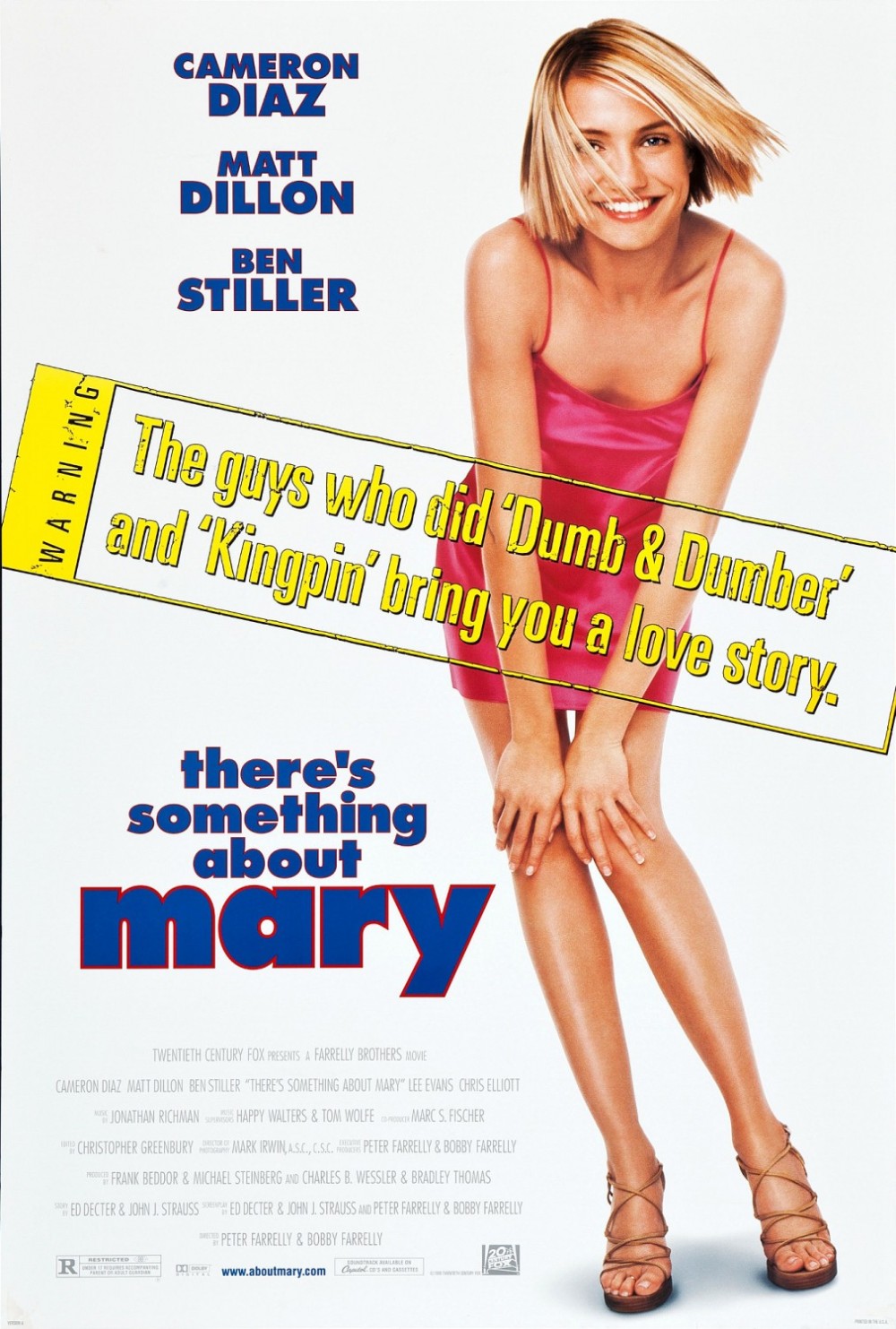
Theres Something About Mary poster

Bobby and Peter Farrelly gave us one of the most gut bustlingly hilarious movies ever made with “There’s Something About Mary.” I was dying with laughter while watching this, and I wasn’t expecting to. In retrospect, I should have though since this came from the same directors who gave us “Dumb and Dumber” as well as “Kingpin.” On top of having so many funny moments, the movie also has a lot of heart in the way it portrays the two main characters played by Ben Stiller and Cameron Diaz. Those of you who think Diaz can’t act need to revisit this one because she is so good at playing a teenager who we later see as a well-meaning adult with a few too many stalkers.

9) American History X

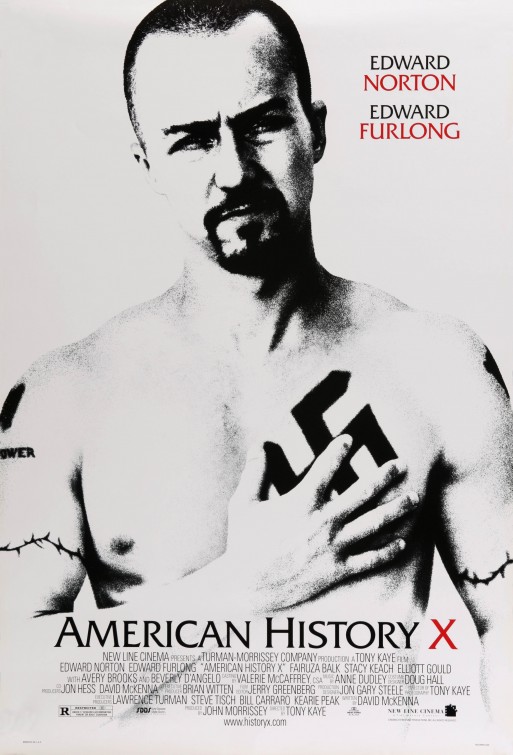
American History X poster

So much has been said about the making of “American History X” and the bitter disagreements between director Danny Kaye and actor Edward Norton. Regardless of whoever deserves the majority of the credit, there is no denying this is a powerful and unforgettable motion picture. Norton gave one of his very best performances as white supremacist Derek Vineyard, and the look he gives the camera after killing two people is a very chilling moment which is not easily erased from the conscious mind. Norton also gets great support from Edward Furlong who plays Danny, Derek’s brother, who threatens to tread down the same hateful path Derek has. Kaye, even if he didn’t get final cut, gives the movie an amazing look in black and white which captures the escalating tension of Derek’s journey from a world of hate to a place of compassion.

8) Dark City

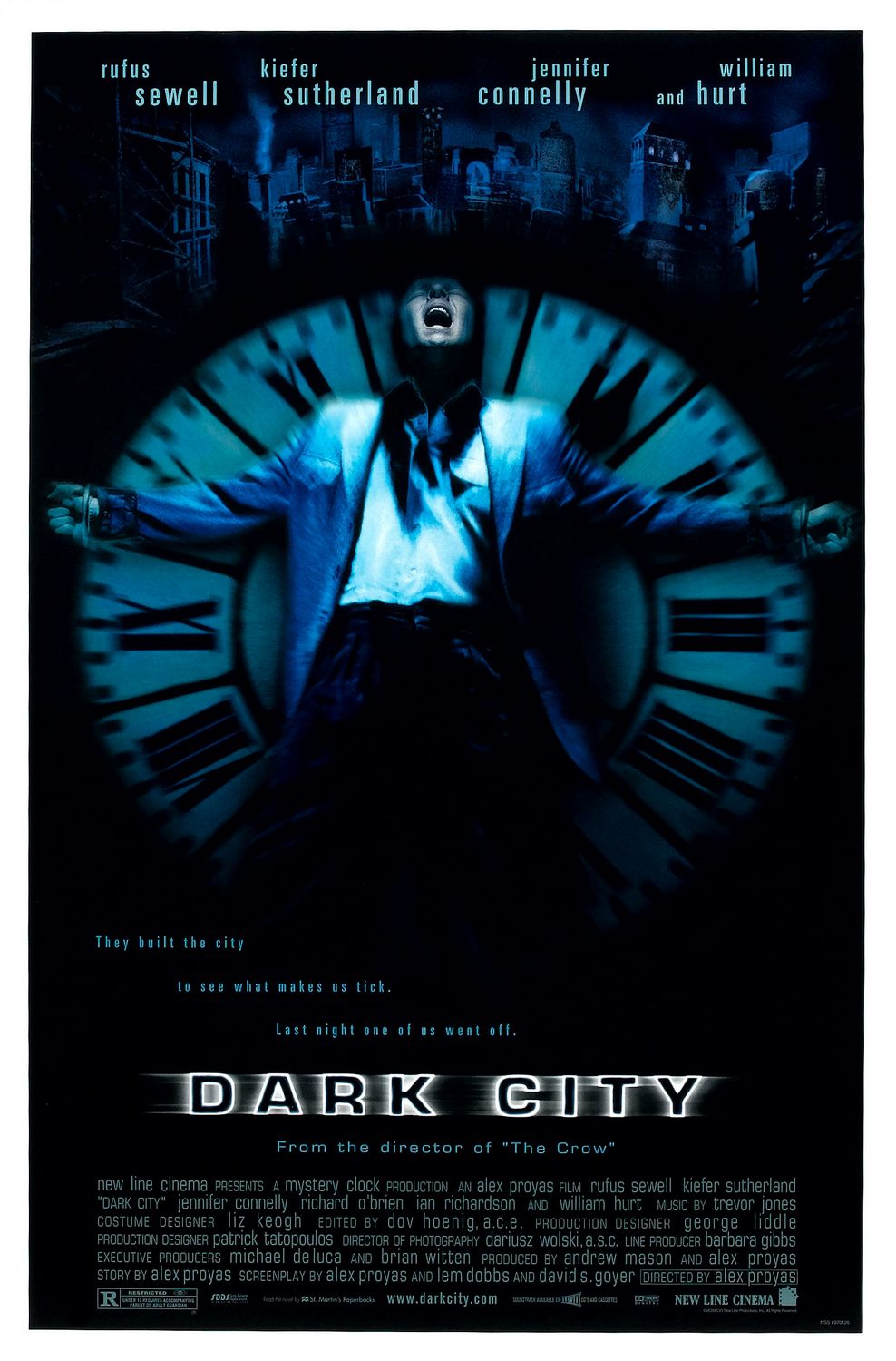
Dark City movie poster

Alex Proyas followed up his brilliant adaptation of “The Crow” with this visionary sci-fi epic about a man who wakes up not knowing who he is, and of those who seek to capture him for their own twisted experiments. Like many great sci-fi movies “Dark City” was a box office flop upon its release, but it has since found an audience to where there’s no denying it is a cult classic. You’re along for the ride with Rufus Sewell as he tries to understand his place in a world ruled over by the Strangers. This movie remains suspenseful to the very end, and the look of the movie feels like no other I have ever seen. Jennifer Connelly also stars in the film and looks beautiful as always, and it is interesting to watch Kiefer Sutherland play a complete wimp after watching him for so long on “24.”

7) Out Of Sight

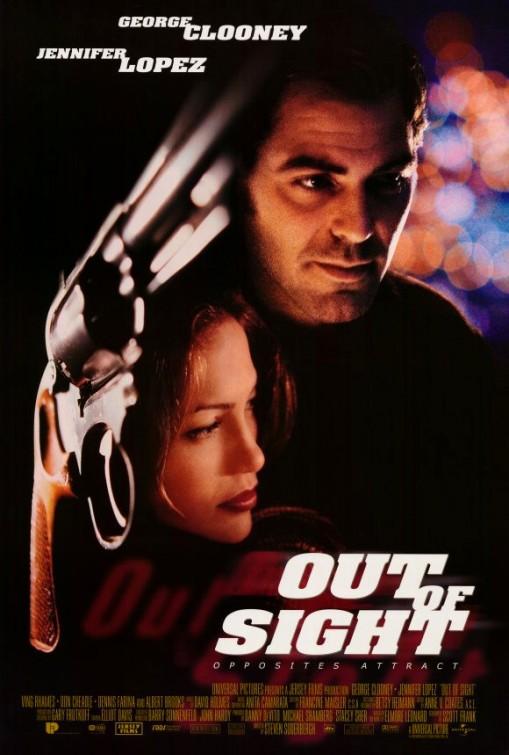
Out of Sight movie poster

Here’s the film which brought Steven Soderbergh and George Clooney together, and it also serves as one of the very best adaptations of an Elmore Leonard novel. With “Out of Sight,” Clooney proved without a doubt there was going to be life for him after “ER” with his performance as Jack Foley, the most successful bank robber in America. When Jack escapes from jail, he ends up sharing some trunk space with Federal Marshall Karen Sisco (Jennifer Lopez). “Out of Sight” also marked the beginning of a career resurgence for Soderbergh, and he got to work from a truly great screenplay written by Scott Frank. Also starring is the fantastic Catherine Keener, Ving Rhames, Steve Zahn, Dennis Farina, Isaiah Washington, and the always reliable Don Cheadle. This movie was a lot of fun, and Clooney and Lopez had such great chemistry together.

6) Rushmore

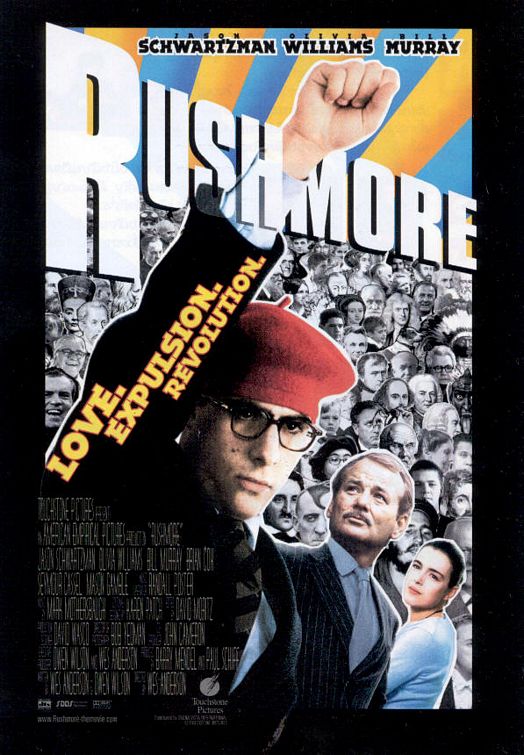
Rushmore movie poster

This was my introduction to the highly creative world of Wes Anderson. “Rushmore” is an instant comedy classic with more depth to it than many others of its genre at the time. Max Fischer is an original eccentric character; a young man involved in just about ever extra-curricular activity at school, all at the expense of his report card. Jason Schwartzman is great fun to watch as Max, and Bill Murray gives a performance which damn well should have earned him an Oscar nomination for Best Supporting Actor. With Anderson, his comedy is fueled by the sadness and isolation of his characters, and of the things they desperately want in life. “Rushmore” is filled with as much meaning as it does laughter as both Schwartzman and Murray battle over the same woman played by Olivia Williams. It also owes a lot to the late Mike Nichols’ enduring classic “The Graduate.”

5) Happiness

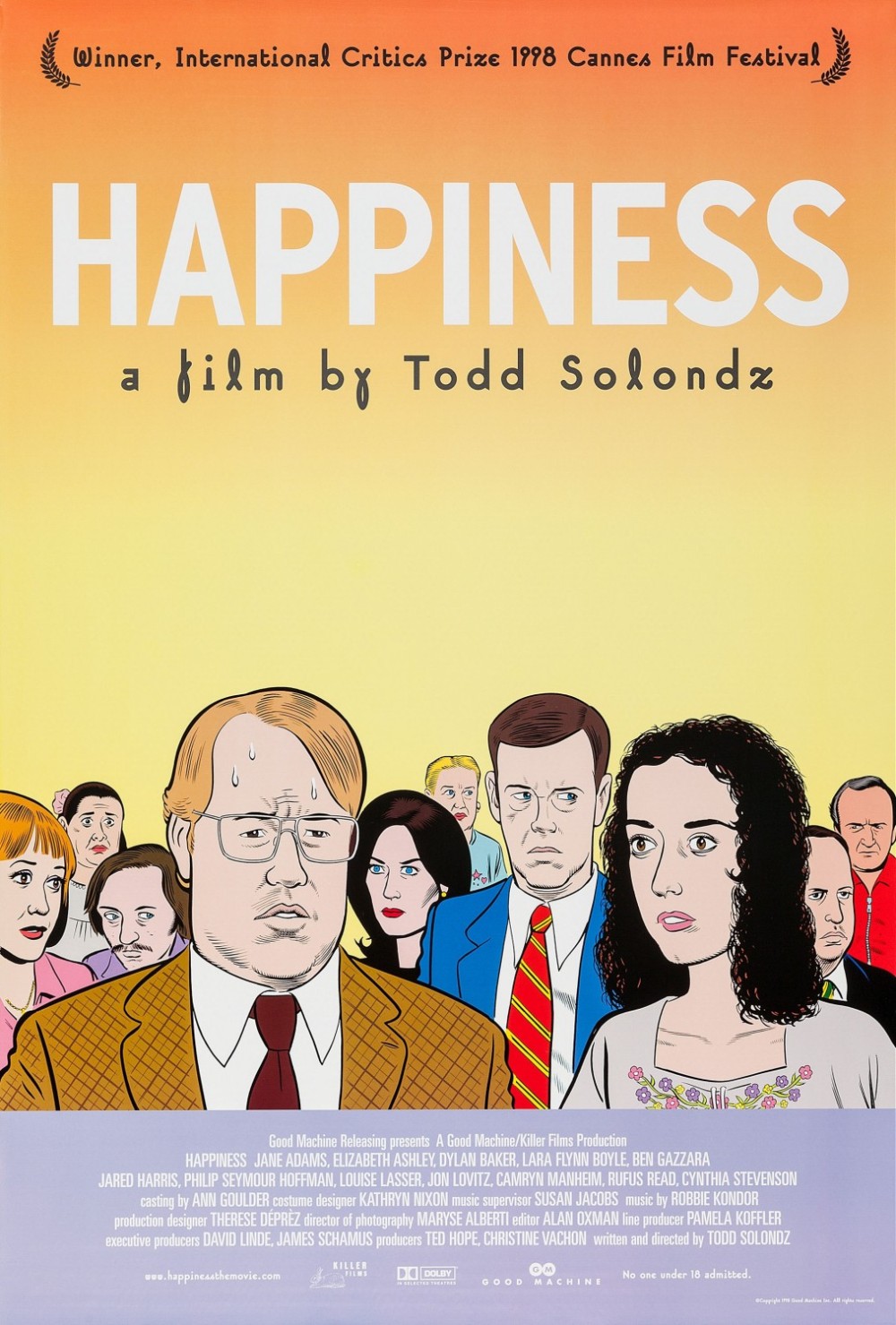
Happiness movie poster

Todd Solondz’s follow up to “Welcome To The Dollhouse” may very well be the most ironically titled film in cinema history. Controversy followed “Happiness” all the way to its release, and the MPAA of course just had to give it an NC-17 (it ended up being released unrated). One of the blackest of black comedies ever, it follows the lives of three sisters and the various people who are a part of their fragile lives. The late Philip Seymour Hoffman gives a frighteningly memorable performance as an obscene phone caller, and it was one of the first real examples of the brilliant character actor we came to see him as. But the bravest performance comes from Dylan Baker who plays Bill Maplewood, a psychiatrist, husband and loving father who, unbeknownst to his family, is a pedophile. Baker ends up making you empathize, but not sympathize, with a man who we would instantly despise once we discovered his terrible secret. As unappealing as these characters may seem, Solondz makes us see ourselves in them and to where we cannot see we are not all that different.

4) The Big Lebowski

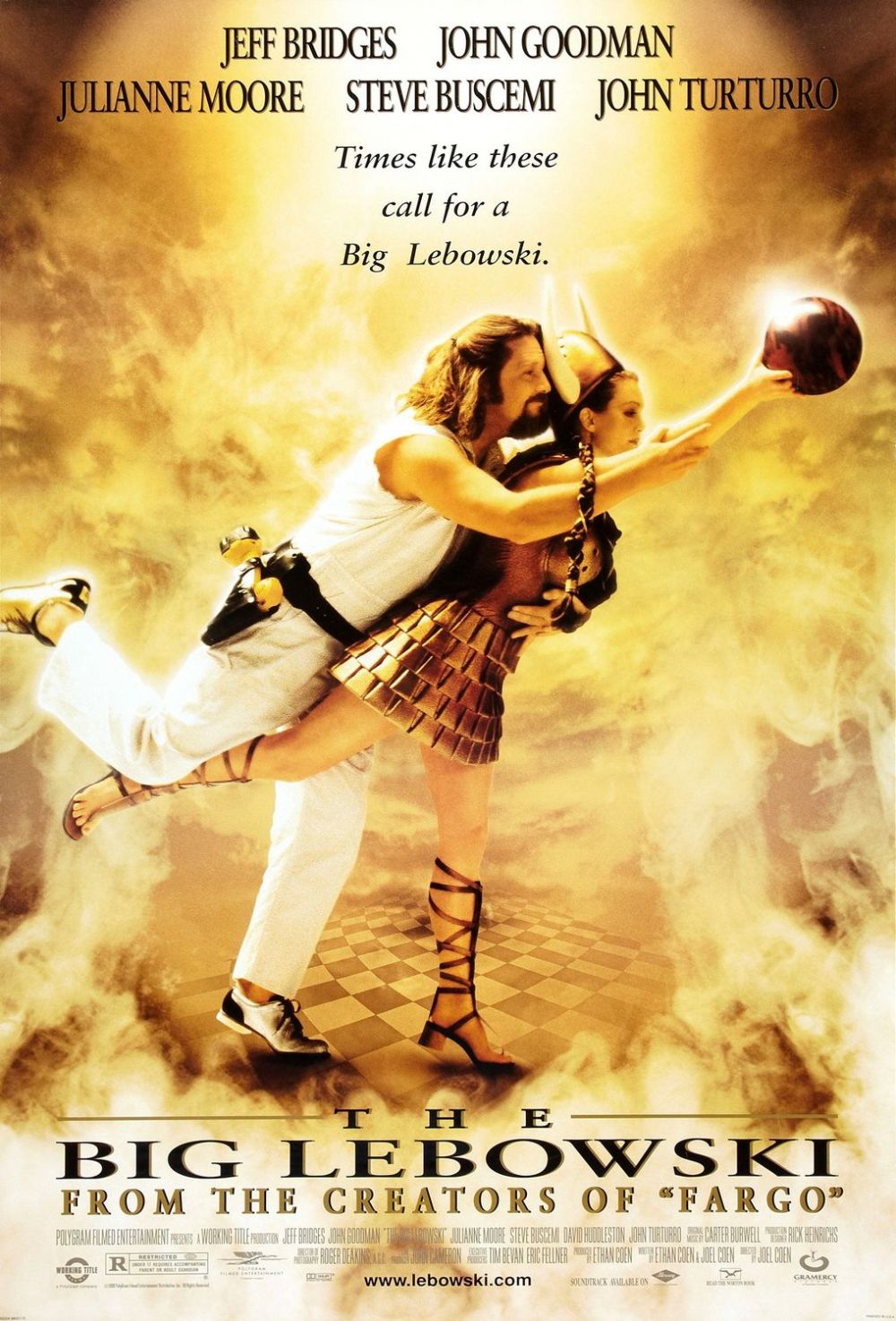
The Big Lebowski movie poster

I didn’t get to see this when it first came out in theaters, but my parents did eventually strap me down in a chair to watch it, and this should give you an idea of how much they love it. The Coen brothers follow up to “Fargo” did not get the same reception when originally released, but it has since built up an amazing cult following. Much of this is thanks to Jeff Bridges’ brilliant performance as Jeffrey Lebowski, aka “The Dude.” What could have been a performance built on stereotypes of the slackers we know in life turns out to be perhaps the most memorable character in Bridges’ long and underappreciated career. It’s an ingenious comedy with not so much a plot as a connected series of events which start with the theft of Lebowski’s carpet which he says “tied the whole room together.”

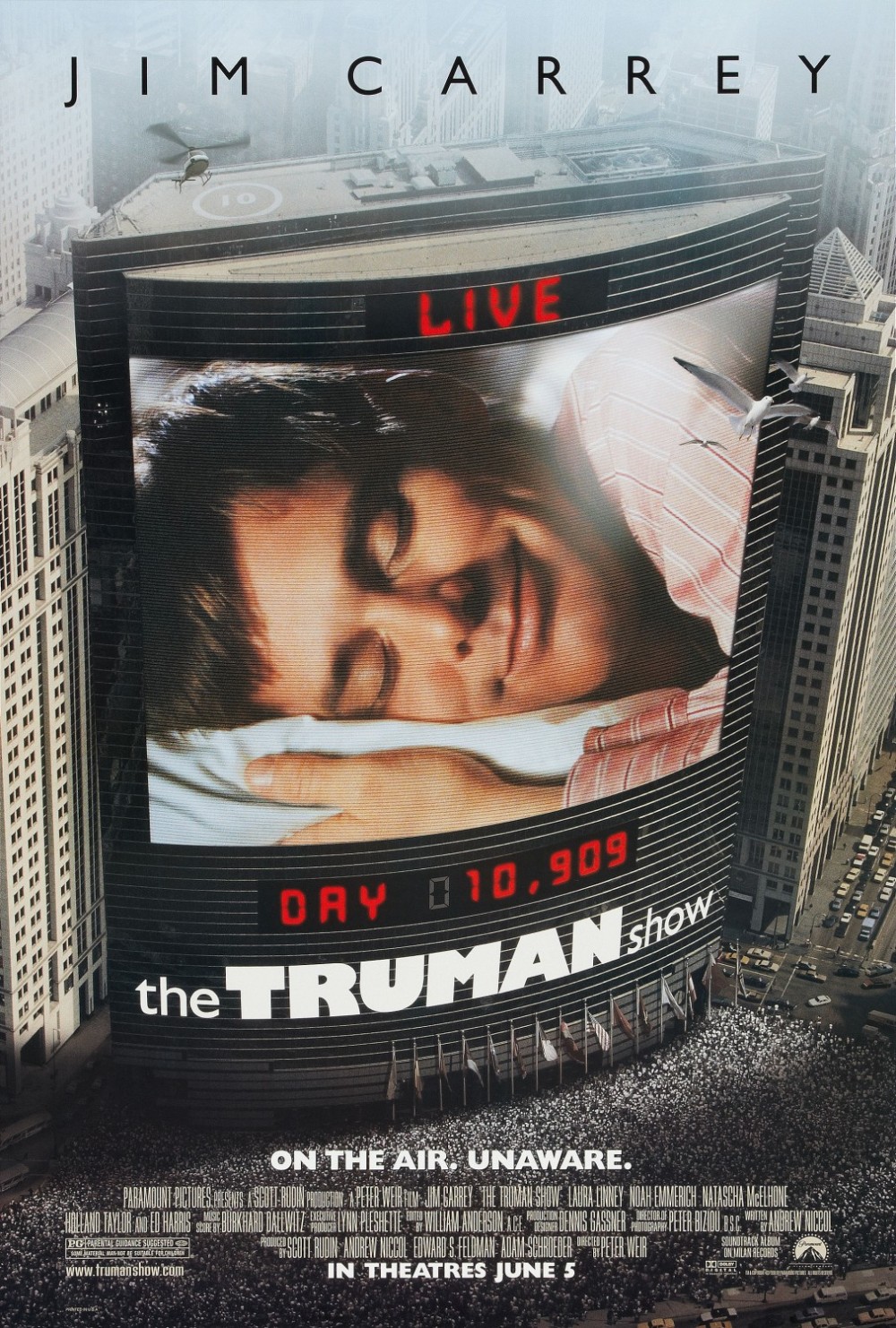
3) The Truman Show

The Truman Show movie poster

It still seems criminal how Peter Weir’s film was surprisingly, and infuriatingly, snubbed for a Best Picture nomination. Jim Carrey gives a truly astonishing and powerful performance as Truman Burbank, a man who slowly becomes aware he is the star of a reality show about his life. Yes, he should have been nominated for an Oscar alongside his co-star Ed Harris, but there will always be the unforgivable snubs. “The Truman Show” has become a prophetic movie of sorts as reality shows are the norm in today’s culture, and this obsession we have over them remains very strong to this day. Andrew Niccol’s screenplay was a brilliant examination of how we might view our own life if we found out it was based on a lie, and that everything we know is actually wrong. This stands as one of Weir’s best American movies in a long and justly acclaimed career.

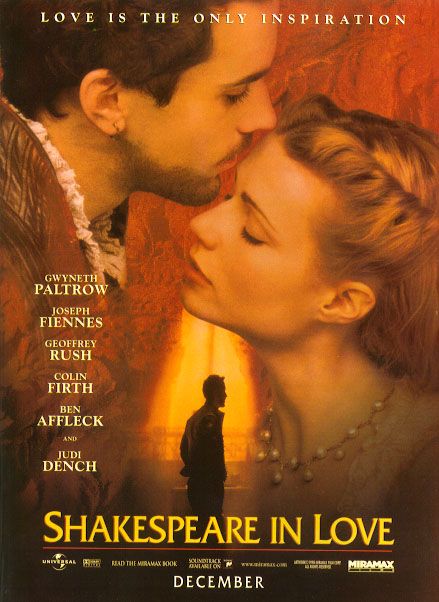
2) Shakespeare In Love

Shakespeare in Love movie poster

While it may have gotten overwhelmed by Miramax’s Oscar campaign, there’s no denying “Shakespeare In Love” is a brilliant and highly entertaining romantic comedy. The film tells the story of how Shakespeare goes about writing “Romeo & Ethel The Pirate’s Daughter” which eventually evolves into “Romeo & Juliet.” Gwyneth Paltrow gives a most entrancing performance, and I loved watching her every second she appeared onscreen. Joseph Fiennes is perfectly cast as Shakespeare himself, a passionate writer who is hopelessly enamored with Paltrow’s Viola. I also got a huge kick out of Geoffrey Rush’s performance as theater manager Philip Henslowe, a brilliant comic creation who steals every scene he is in. “Shakespeare In Love” serves as not just a great story of how Shakespeare may have written one of the most immortal plays ever, but also as a great satire of the film industry and how it deviously profits from unsuspecting participants.

And now, drum roll please…

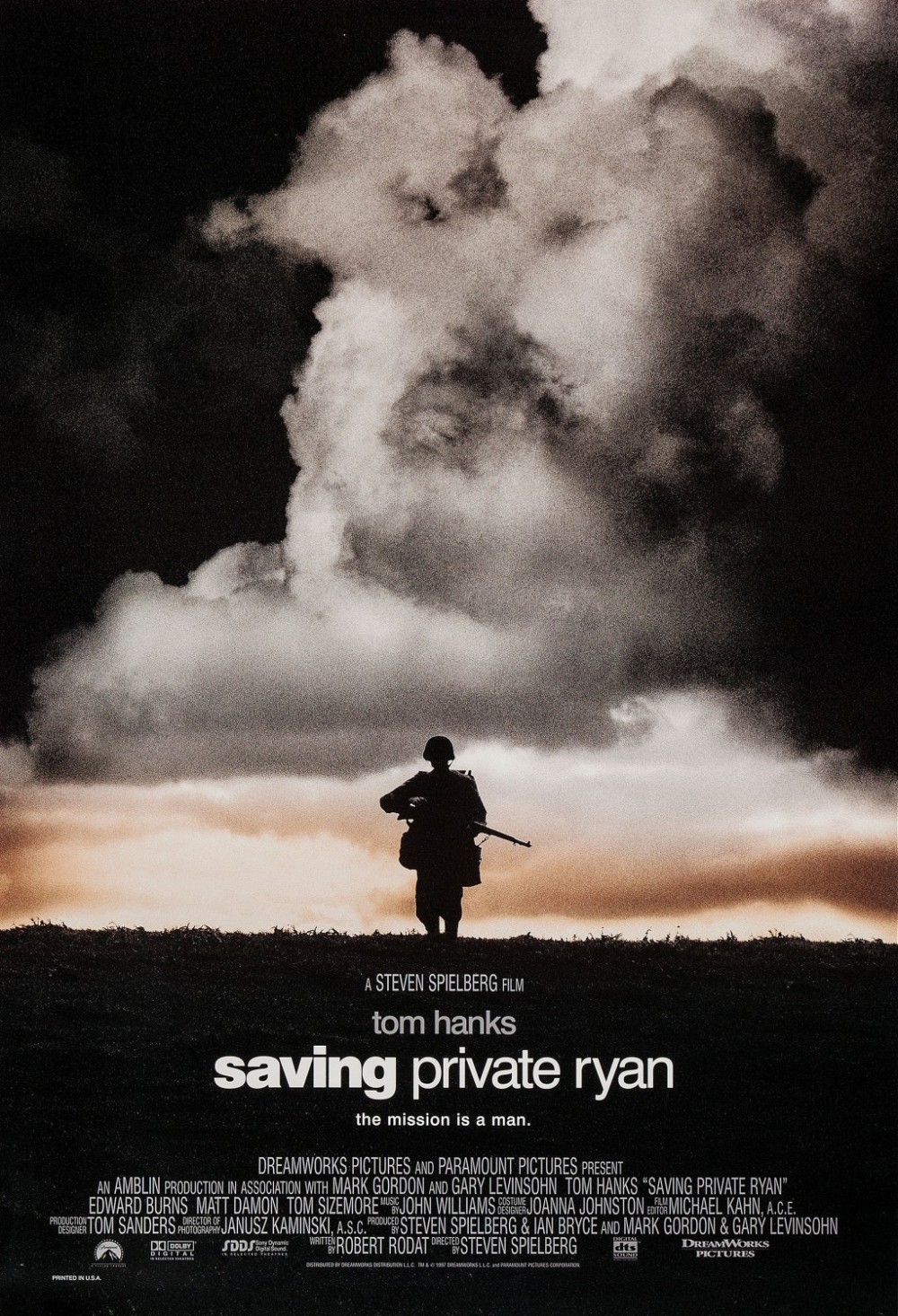
1) Saving Private Ryan

Saving Private Ryan movie poster

It would be so easy to put this as my top choice thanks to some of the greatest and most vividly realistic depictions of war ever put on film. Steven Spielberg’s depiction of the landing on D-Day is nothing short of amazing, and it was one of the reasons why I saw this film five times before it came out on DVD. But moreover, it is a deeply respectful salute to those war veterans who served in the armed forces during World War II. “Saving Private Ryan” is filled with great performances from a great cast of actors including Edward Burns, Jeremy Davies, Giovanni Ribisi, Tom Sizemore, Adam Goldberg, Vin Diesel, Matt Damon, and Barry Pepper among others. But it also has one of Tom Hanks’ best performances ever as Captain John Miller, a military man who leads his men to find Private Ryan and bring him back home to his grieving mother. Just when you thought Spielberg had peaked with “Schindler’s List,” he gives us yet another astonishing piece of filmmaking which shows him at the height of his powers.

Honorable Mentions:

Primary Colors – Great Mike Nichols movie based on the book by Joe Klein. It features great performances from John Travolta, Emma Thompson, Kathy Bates as well as an extraordinary cameo from Mykelti Williamson.

Bullworth – Warren Beatty’s scathing political satire may be a bit too broad, but it is a very effective indictment of how the Democratic Party let the American people down.

Elizabeth – Definitely worth mentioning for the brilliant breakthrough performance of Cate Blanchett as Queen Elizabeth.

Fear & Loathing in Las Vegas – Terry Gilliam’s adaptation of Hunter S. Thompson’s crazy novel is a true acid trip nightmare with Johnny Depp channeling the reporter all the way to what he was famous for wearing and smoking.

God Said, Ha! – Wonderful concert film of Julia Sweeney’s one-woman show which deals with the time her brother got cancer, and of how she later got cancer herself.

Hurlyburly – Film adaptation of David Rabe’s play dealing with Hollywood players and their dysfunctional relationships with one another. Features a great cast which includes Sean Penn, Chazz Palminteri and Anna Paquin among others.

Affliction – Another emotionally bruising movie from Paul Schrader which is based on the novel by Russell Banks. Features career high performances from Nick Nolte and the late James Coburn who deservedly won an Oscar for his work.

Next Stop Wonderland – An eccentrically unusual kind of romantic comedy which helped introduce actress Hope Davis to a wider audience.

Ronin – One of the last films from the late John Frankenheimer which stars Robert De Niro, Jean Reno, and Jonathan Pryce among others. It also features some of the very best car chases of the 1990’s.

Run Lola Run – Kinetic German thriller with Franka Potente that views her attempts to save her boyfriend’s life in three different ways. This was a great teaser for what would come in 1999, when movies of different kinds proceeded to change the rules of where a story could go.

The Thin Red Line – Terrence Malick’s first movie in over 20 years threatened to be more meandering than anything else, but it is filled with such powerful imagery and to where many considered it more anti-war than “Saving Private Ryan” was.

John Carpenter’s Vampires – It was advertised as a horror movie, but it is really a more of a western and the closest John Carpenter has ever come to making one. James Woods’ performance alone is worth the price of admission as he plays the most badass of vampire hunters, Jack Crow.

Star Trek: Insurrection – Much better than its reputation may suggest, being an odd numbered Star Trek movie and all.


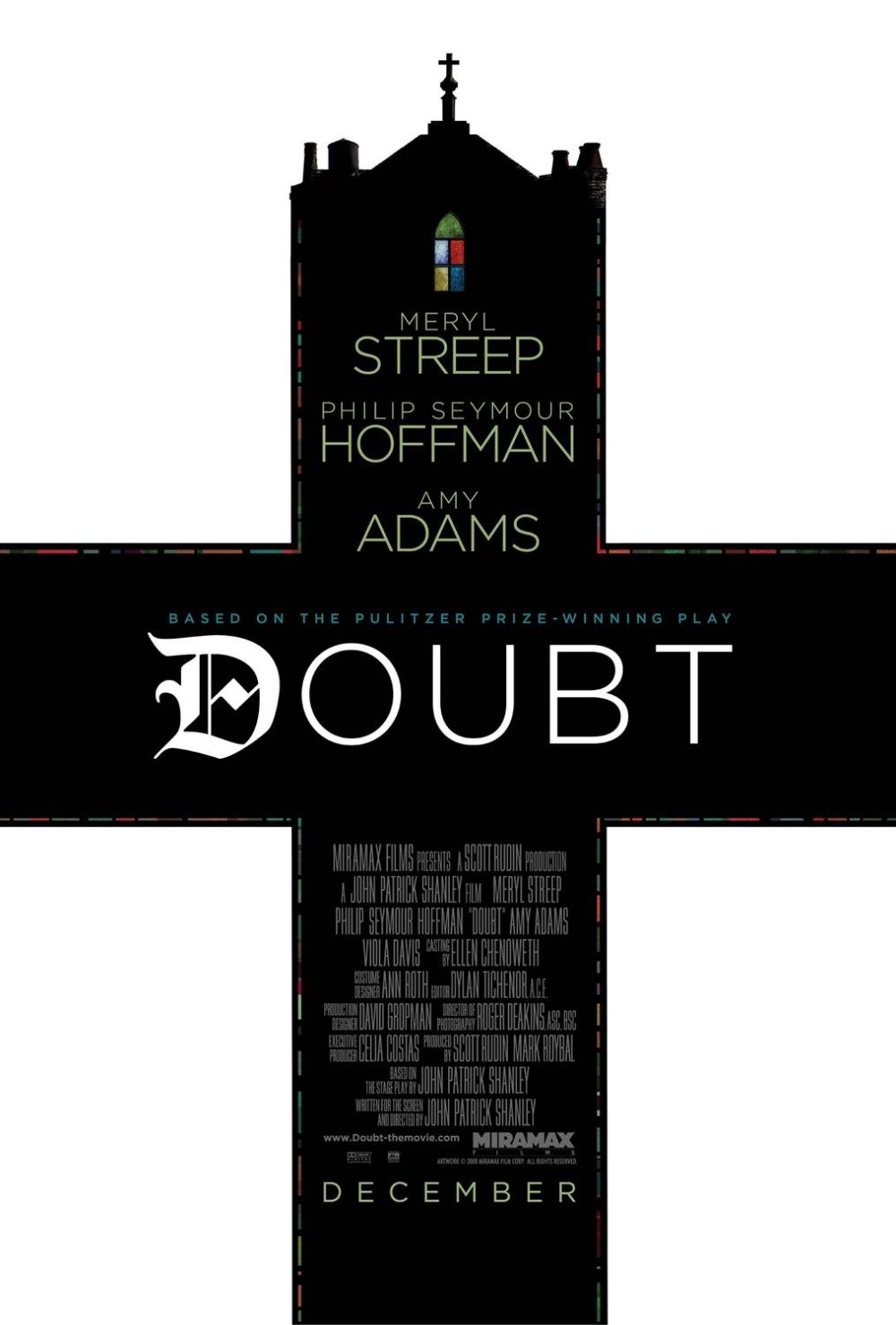
‘Doubt’ Examines The Crippling Power of Uncertainty

Doubt movie poster

Doubt” follows the goings on at the St. Nicholas Catholic school in the Bronx of New York back in 1964. Sister Aloysius Beauvier (Meryl Streep) becomes concerned Father Flynn (Philip Seymour Hoffman) may have developed an unhealthy relationship with the school’s sole black student, Donald Muller (Joseph Foster). This is brought to her attention when Sister James (Amy Adams) notices Donald acting strangely after he has been in the private company of Father Flynn, and Sister James also mentions she smelled alcohol on Donald’s breath. Sister Aloysius becomes convinced of Father Flynn’s guilt even though she has no real proof, but he denies any wrongdoing on his part. From there, it becomes a battle between Aloysius and Flynn which involves not just the accusations, but the state of the school and its students as well.

The fascinating thing about “Doubt” is how its story is simple in its construction, but the characters and the situations they get caught up in prove to be very complex. As the fight goes on between Aloysius and Flynn, you begin to wonder if the conflict doesn’t involve any specific student as it does the direction things are going as the threat of change often frightens people into defending what they believe to be their domain. Sister Aloysius represents the old guard and of the way things have always been. Father Flynn, on the other hand, represents the change many are quick to resist. When he suggests to Aloysius that they need to be nicer to the students, she takes it as an insult.

To watch Meryl Streep and Philip Seymour Hoffman face off with each other is to watch a master class in acting. God only knows how hard these parts were for them to play. But the fact these two were among the best actors working back in 2008, you come into this movie knowing they are more than up to the challenge. It’s not just the delivery of Shanley’s dialogue they have to work at; it’s also what they show the audience through their eyes. The eyes are the window to the soul, and I’m sure that these two actors have thought their roles out through and through to where they never have to spell anything out to the audience, and it makes their journey all the more enthralling as we can never be absolutely certain of the thing they have and have not done.

Streep has given us an endless number of great performances in which she created characters so memorable which can never be easily erased from our conscious minds once we have seen her onscreen. Sister Aloysius Beauvier is another character she can rack up with her most memorable work, and the character’s introduction is brilliant as we see know from the back of her head who she is as she gets the young children to pay full attention to Father Flynn’s sermon. Without even seeing her face right away, Streep quickly makes an impact as a strong and frightening authority figure to the students and the nuns under her tutelage. Her performance will quickly bring back memories of the awful teachers you were forced to learn under to where you realize the psychological scars are still very raw. She’s the kind of teacher where everything she says is right, and the students are wrong. I hated teachers like that! Hated them!

Hoffman, as always, is brilliant here and matches Streep from one scene to the next. We keep waiting to see if there will be a slip where all will be revealed, but Hoffman keeps his cards close to his chest. Flynn’s explanations for the private meeting between him and Donald are not implausible, but Aloysius remains unconvinced. Hoffman is great at showing how the simple feeling of doubt can easily destroy a person to where guilt and innocence doesn’t matter. Flynn’s fight to prove his innocence threatens to bring out the worst in him, and he continues to sink deeper into a hole he is desperately trying to climb out of.

Along for this morally complex ride is Amy Adams who plays Sister James, and her character is essentially stuck in the middle between these Aloysius and Flynn. Watching Adams here made me wonder if there was another actress who could the same empathy and kindness which she gives off here, and no one quickly comes to mind. Adams shows the love Sister James has for her job as a history teacher ever so perfectly, and she also shows the desperation her character exudes in her search of absolutely certainty. Sister James is the first to suspect Father Flynn is up to no good when she sees him put an undershirt worn by Donald in his locker, but she knows this proves nothing. At times, Sister James seems rather naïve when it comes to how people act around each other, but she proves to be the most morally grounded of the three main characters as she never loses her sense of right and wrong.

There is also a fantastic performance from Viola Davis who plays Mrs. Miller, Donald’s mother. She shares a tense scene with Streep as they discuss their individual suspicions which proves to be one of “Doubt’s” most unforgettable moments. Mrs. Miller likes how Father Flynn has been so nice to her son because she admits her husband beats him severely when he misbehaves. When Sister Aloysius confides her suspicions to Mrs. Miller, it doesn’t change the level of worry for her son’s welfare as it is already extremely high. Instead, she fears more about what Donald’s father will do to him if the allegations against Father Flynn prove to be true. With only ten to twenty minutes of screen time, Viola does a brilliant job of making you feel her character’s heartbreaking dilemma, and of how she has been with left little choice over how to resolve this potentially unhealthy situation she is just now being made aware of. It’s one thing for an actor to show what their character is going through, but it is quite another for them to make you feel what they are experiencing.

With “Doubt,” Shanley brilliantly shows how the state of doubt affects everyone equally. No character comes out of this story the same, and we are left with a deep uncertainty which cannot be easily dismissed while walking out of the theater. Everyone is harmed deeply here, and it binds them as strongly as it tears them apart. You have to feel for those caught in its ugly wake because they end up having to live with something they did not necessarily bring on themselves. It’s a brilliant play which has been made into a great movie filled with outstanding performances, and of this I have no doubt.

* * * * out of * * * *

Dinesh D’Souza Unveils the First Trailer For His Lincoln/Trump Love Letter, ‘Death of a Nation’

Death of a Nation movie poster

Oh my lord, the poster above just has me howling with laughter. Comparing Abraham Lincoln with Donald Trump to where it combines the faces of both is just asking for endless derision, especially with the Trump Administration continuing to make disastrous policies which would make Lincoln gasp in disbelief.

That’s right folks, political commentator, filmmaker, convicted felon and (sigh) the recently pardoned Dinesh D’Souza has once again teamed up with co-director Bruce Schooley and producer Gerald R. Molen to gives us another cinematic political screed which Alex Jones cannot wait to see, “Death of a Nation.” The title is of course a play on “Birth of a Nation,” the 1915 silent film directed by D.W. Griffith which portrayed the Klu Klux Klan as being heroic and black men as unintelligent. Once again, D’Souza is out to show us the racist beginnings of the Democratic party, and he looks to pay careful attention to American history as he does to the tweets on Twitter which he re-tweets and that contain racist hashtags (which is to say, not carefully enough).

Seeing the trailer open with Abraham Lincoln with his hand moving gracefully through the fields looks like it was stolen from “Gladiator.” From there, we are shown many historical re-enactments featuring moments from the Civil War, a black man being whipped on a white plantation, and moments from Nazi Germany where we are reminded of what a fascist dictator Adolf Hitler was. Having seen “America: Imagine the World Without Her” and “Hillary’s America,” D’Souza’s attempts in giving us compelling historical re-enactments have failed miserablymore often than not as he instead gives us moments both hilarious and boring as they are hobbled by weak acting and poor direction. As for his portrayal of Lincoln, I cannot help but think D’Souza will continue to treat this American president as some sort of superhero instead of as a real person, something I think audiences of all kinds would benefit from seeing just as they did with Steven Spielberg’s “Lincoln.”

As for Trump, who issued a full pardon for D’Souza’s 2014 felony conviction, we do not see much of him here. But it is clear he is out to make Trump look like a heroic President who will “save America” from the Democrats just like Lincoln did back in the 19th century. Whether D’Souza will include anything in regards to Trump’s multiple infidelities, business dealings, numerous bankruptcies, that Access Hollywood video or the Mueller investigation remains to be seen. The movie’s subtitle says, “Can we save America a second time?” Well, perhaps D’Souza isn’t very good with math.

For me, D’Souza’s films (I’m not going to bother calling them documentaries anymore) hold the same fascination for me as it does with people who stop to look at car accidents. As much as I want to look away, there is just too much carnage and damage to ignore. This looks to be just another movie preaching to a particular crowd while its filmmakers attempt to make us see history in a way which doesn’t jive with the facts. D’Souza may want to control the narrative, but he has yet to prove he has any right to do so.

Anyway, “Death of a Nation” is set to arrive in theaters on August 3, 2018, just three months before the 2018 midterm elections (how convenient). I shouldn’t watch it, and I resent it being released the day after my birthday, but with D’Souza I just cannot help myself.

Check out the trailer below if you dare.

‘Sicario: Day of the Soldado’ Proves to Be a Powerful and Worthy Sequel

Sicario Day of the Soldado movie poster

Sicario” was one of the most intense cinematic experiences I have had in the past few years, and it was one of the best movies of 2015. When I heard a sequel was being made, I was excited but also a bit reserved as I soon learned Emily Blunt, Denis Villeneuve, Roger Deakins and the late Johann Johannsson would not be returning for it. Sure, Benicio Del Toro, Josh Brolin and screenwriter Taylor Sheridan were back for another round, but would this be enough? Sequels at times have an immense power to sully their predecessors in an unforgivable way, and I was praying this one would not be a mere cash in.

Well, “Sicario: Day of the Soldado” (soldado is Spanish for soldier) doesn’t quite equal the brute force and honesty of its predecessor, but it does prove to be a very strong sequel. It also turns out there was a good reason to continue the stories of Alejandro Gillick (Benicio Del Toro) and Matt Graver (Josh Brolin). Whereas “Sicario” was about the militarization of the police, this sequel removes the policing aspect from it to reveal an even darker and more cynical take on the war on drugs and illegal immigration.

“Soldado” gets off to a brutal start as we watch three men enter a grocery store in Kansas City and blow themselves up. The way this scene is set up quickly reminded me of the take no prisoners attitude Villeneuve brought to “Sicario,” and this is made even clearer when one suicide bomber looks to spare a mother and child from certain death, and then does not. Like the original, “Soldado” is not about to offer its audience an easy way out of the harsh reality it presents here.

To combat this terrorism, which Secretary of Defense James Riley (Matthew Modine) defines as “violence used to achieve a political goal,” the United States government gives Graver permission to use extreme measures in combating the Mexican cartels as they are believed to have smuggled Islamic terrorists across the U.S./Mexican border. Graver makes it clear he will need to get “dirty” in order to achieve the goals laid out to him, and considering what we have seen Graver pull off previously, we know things will get dirtier than ever. Seeing Riley tell Graver “dirty is exactly why you are here” makes this scene more chilling as it shows how complicit the U.S. government is prepared to be in bending the rules, and we also know they will be quick to deny any culpability just like the IMF does in “Mission: Impossible.”

Graver decides the best course of action is to start a war between the two drug cartels, and this involves the kidnapping of Isabela Reyes (Isabela Moner), the daughter of one of the cartel’s kingpins. To pull this off, Graver enlists the sicario (Spanish for hitman) Alejandro Gillick, who still hungers for revenge against those who murdered his family. The way these two handle this kidnapping is insidiously clever as they make Isabela believe they did not abduct her in an effort to mess with her head and keep the cartels fighting amongst themselves. Of course, the best laid plans are usually thwarted at the most unexpected moment.

I first off have to say how glad I am to see Del Toro and Brolin back for this sequel. Both actors have cracked and weathered faces which help to do a good portion of the acting for them as their characters have endured endless moral crises which more than shows on the surface of their skin. While many actors are desperate to look younger than their actual age, it’s a nice to see a pair who are not afraid to show the lines in their face. Besides, does it make sense to cast baby-faced models as characters who have seen more than they should in a lifetime? I think not.

In “Sicario,” we were reminded of how brilliant an actor Del Toro can be as he made Alejandro Gillick into a complex character whose soul is deeply wounded, but who still seeks vengeance on those who wronged him. Never does Del Toro have to raise his voice to show the power Alejandro has over others, and seeing him fire a dozen bullets into a cartel lawyer is a fascinating sight as he may seem calm on the surface, but there is still a seething rage which cannot be contained. Besides, when it comes to revenge, one bullet is never enough.

With Brolin, we know he can portray Matt Graver in a way few other actors can as his character interrogates suspects almost effortlessly and carries out secret missions with surgical precision. The Oscar-nominated actor continues to play Graver as a man who has long accepted the fact he has become a lot like the enemies he hunts down, and it marks another great performance from him in a year which has seen him dominate the screen in “Avengers: Infinity War” and “Deadpool 2.”

What I found especially fascinating about “Soldado” is how it examines a particular moral conundrum both Matt and Alejandro find themselves in. When their mission suddenly goes awry, the U.S. government cancels it and orders them ro erase all proof of their involvement in Mexican internal affairs. Of course, this also means assasinating Isabela Reyes, but while Matt is intent on cleaning up the mess he and his team have been caught up in, Alejandro is not about to murder her. Having seen many, many movies throughout my life, I have long since become familiar with the characters in them who are determined to do the right thing and yet end up paying a high price for this as their sins have yet to be paid off. Knowing this makes “Soldado” even more intense as I began to wonder how these characters would suffer before they would be freed from the damage they have wrought.

Speaking of Isabela, I was really impressed with the performance of Isabela Moner who makes this drug kingpin daughter a tough cookie right from the start. When we first meet her, she is fighting a fellow classmate and leaves her bloody and bruised. During a meeting with the principal, she knows he is in no position to expel her because of who she is, and that vicious look in her eyes is all you need to see who has the most power in that situation. When kidnapped, however, Moner makes her character’s predicament all the more palpable as she gets thrust into a violent situation beyond her control, and her reaction to it all feels unmistakably real. And like all my favorite young adult characters in movies, she comes to see through the bullshit adults are dishing out to her.

Directing “Soldado” is Italian filmmaker Stefano Sollima, best known for directing gritty crime movies like “ACAB – All Cops Are Bastards” and “Suburra” as well as episodes of the critically acclaimed television show “Gomorrah.” While Sollima is unable to match the existential dread Villeneuve brought to “Sicario,” he succeeds in grounding the story in the same brutal reality we were introduced to previously. Even when Sheridan’s screenplay looks to strand us in formulaic territory, Sollima makes seemingly predictable scenes especially intense as even he knows how brutal the war on drugs can be.

Taking over cinematography duties is Dariusz Wolski who is known for his work on the “Pirates of the Caribbean” movies, and who gave a very special look to Alex Proyas’ “The Crow” and “Dark City.” It’s near impossible to match the unique look Deakins gave “Sicario,” but Wolski manages to equal the brutal visuals and stark landscapes to where we cannot deny this movie takes place in a reality we like to keep a safe distance from.

Then there is the film score which is composed by Hildur Guðnadóttir, a classically trained Icelandic cellist who collaborated with Johannsson on “Sicario.” Suffice to say, the music ended up in good hands as Guðnadóttir’s has created themes which match the ominous power Johannsson gave us back in 2015, and he brings back “The Beast” theme with tremendous gusto as the harsh realism shown here feels more brutal and chaotic than ever before.

“Sicario: Day of the Soldado” had no real chance of equaling the original, and I accepted this fact as I walked into the theater. But in the end it doesn’t matter because what we got here is a really strong sequel which captures a great deal of the original’s intensity and blunt truths, and it makes for a compelling motion picture. There is already talk of a third “Sicario” movie, so here’s hoping this one does well at the box office to ensure this will happen. And if they can get Emily Blunt to appear in it, that would be great as well.

Granted, this sequel is coming out at an interesting time as politicians are calling for increased security at the border, and immigrants are either being denied entry to the United States because of the country they are coming from, or their children are being separated from them for political leverage. While many may point to one group of people or another as being the biggest problem America has to deal with, the “Sicario” movies show how widespread corruption is and how far it has spread. One key scene to remember in “Soldado” comes when Miguel (Elijah Rodriguez), a Mexican-American teenager and aspiring hitman, gets a ride back across the border, and his driver turns out to be a Caucasian woman with a baby in the backseat. As Miguel pays her, she is quick to tell him, “Give me a job that pays better and I’ll do it.”

In this day and age, it is not so much the truth which matters, but of who controls the narrative.

* * * ½ out of * * * *
The filmmakers dedicated this movie to memory of Johann Johannsson who died on February 9, 2018 at the age of 48. It is a real shame we lost him so soon as his work on “Sicario,” “Arrival” and “The Theory of Everything” was remarkable, and it would have been great to see what themes he would have continued composing had he lived. Rest in peace Johann.

Red Band Trailer for ‘The Predator’ Shows This Will Not Be an Average PG-13 Action Extravaganza

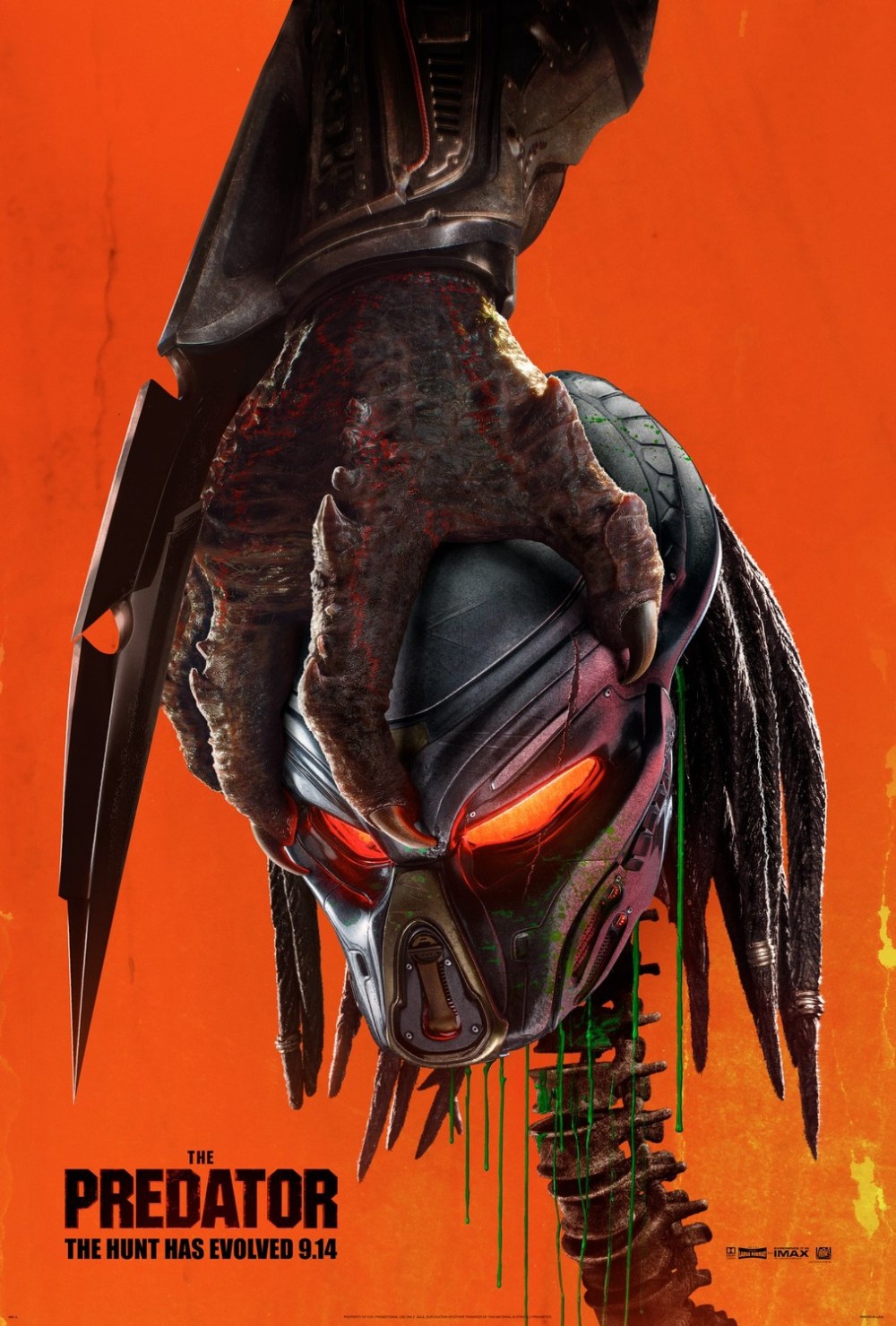
The Predator movie poster

Whereas the teaser trailer introduced us to various characters while keeping the main beast in the shadows, the new trailer for “The Predator” puts the beast front and center. In the process, we also get a closer look at other characters who weren’t featured as much, and with this being a red band trailer, we come out of it thankful this one will not be a PG-13 rated action thriller as the body count is very high. As co-writer and director Shane Black said on Twitter, “PG-13 is for pussies,” and this is something the makers of “Alien vs Predator” forgot to take into consideration.

Actually, the first thing I should point out in this trailer is Sterling K. Brown who plays Will Traeger, a government agent who jails Quinn McKenna (“Logan’s” Boyd Holbrook) but is said to later free him when he needs his help to fight the predators. Brown has the lion’s share of this trailer’s best lines of dialogue as we watch him interrogate Casey Bracket (Olivia Munn). Will starts things off by saying, “Do you know what my job description is? I’m in acquisitions. I look up and I catch what falls out of the sky.” This is a clever way of him describing his job to someone who doesn’t have his level of security clearance. His other great line is, “Predators don’t just sit around making hats out of rib cages. They conquered space.” I loved watching Brown delivering these lines with a confident coolness, and he even did it without shedding a tear as he often does on “This is Us.”

As for the Predator himself (or herself?), the beast is shown to be as lethal as ever, and this is even before we see him lay waste to those foolish humans who, like the ones in “Jurassic World: Fallen Kingdom,” are dumb enough to believe they can handle something which is clearly beyond their understanding. But the big surprise of this trailer is the appearance of another Predator who is even bigger and more lethal than the one we have already been introduced to. Some have speculated this larger Predator is the hybrid from “Alien vs Predator: Requiem,” but a closer inspection confirms this is not the case and thank goodness. Once again, “The Predator” is said to take place after “Predator” and “Predator 2” and before the events of “Predators.” My guess, and hope, is it will not even acknowledge the events of either “Alien vs Predator” movie as both were abysmal.

Seeing this second trailer for “The Predator” makes me more excited for it than before, and September 14, 2018 cannot come soon enough. As usual, I need to work at keeping my expectations in check.

Please check out the trailer below.

‘Jaws’ – Peter Benchley’s Novel vs Steven Spielberg’s Film

Peter Benchley’s novel “Jaws” is much darker in tone as the main characters come across as unhappy and have harsh tempers which constantly get the best of them. There are also a number of subplots that bring out the negative sides of each character throughout. When it came to turning “Jaws” into a movie, Spielberg worked with different screenwriters to make the characters more likable, and he eliminated many of the novel’s subplots. In the process, he changed much of the story to where the movie focused on the terror the shark wreaks on the helpless townspeople and tourists, and on the last act where Brody, Hooper and Quint go on a hunt to destroy it.

The movie has the married couple of Martin and Ellen Brody more or less settled on Amity Island, and Ellen seems to be happier than Martin about their relocation from New York City to their current residence as her husband has a big fear of the water. Benchley’s novel, however, has them at odds with one another to where they argue most of the time, and it is Ellen who is more dissatisfied with the move to Amity Island as she misses her former life in the city.

One major subplot which did not transfer over to the movie is when Ellen Brody has an affair with marine biologist Matt Hooper (played by Richard Dreyfuss). It turns out she used to date Matt’s older brother and being with Matt vividly reminds her of the life she used to have. While Spielberg’s film portrays Matt and Martin as being friends, Benchley’s novel has them becoming enemies as Martin struggles with getting older along with his envy of Hooper who represents the man he used to be.

Quint, who was unforgettably portrayed by Robert Shaw, is described much differently and barely speaks at all. Suffice to say, his speech about being on board the USS Indianapolis when it sank is not in the book. Even Quint’s death is different as, instead of him being eaten by the shark after it jumps on board the Orca, he gets his foot caught in a rope attached to the great white and drowns after he is pulled underwater.

As for Hooper, who survived his ordeal in the shark cage in the Spielberg movie, he is killed off in the book as well. Perhaps it is karmic justice as Benchley portrays him as an obnoxious man who Martin almost chokes to death at one point.

Another subplot which did not carry over from the book is when Mayor Vaughn is found to be seriously in debt to the mafia, hence his strong need to keep the beaches of Amity open despite the shark attack. Spielberg’s movie, however, has him resisting Martin’s urges to close the beaches as Amity Island is seriously dependent on tourist dollars during the summer for its very existence.

When it comes to the ending of “Jaws,” Martin Brody does not kill the shark by shooting a bullet into the air tank stuck in its mouth which causes it to explode. In the book, he is helplessly stuck in the water after the Orca sinks, and the shark heads straight for him. In the process of Brody accepting his fate, the shark ends up passing away just mere inches away from him. After battling these men for several days while having barrels stuck in it and suffering from blood loss, the shark just gives in and dies which makes for a rather anti-climactic ending.

Many of the changes came about because Spielberg set out to make an audience pleasing movie, and he didn’t want the main characters battling one another as they battled the shark. But for those who have seen the movie hundreds of times, it is worth reading the book as Peter Benchley uses the shark as a metaphor for Martin Brody’s realization of his mortality and how it comes to affect his actions on the job and in his marriage.

Despite its differences, Benchley’s novel remains a riveting tale of suspense and terror worth reading while you sit on the beach and getting a nice suntan.

‘Ratatouille’ Awakens Your Taste Buds Like Few Movies Can

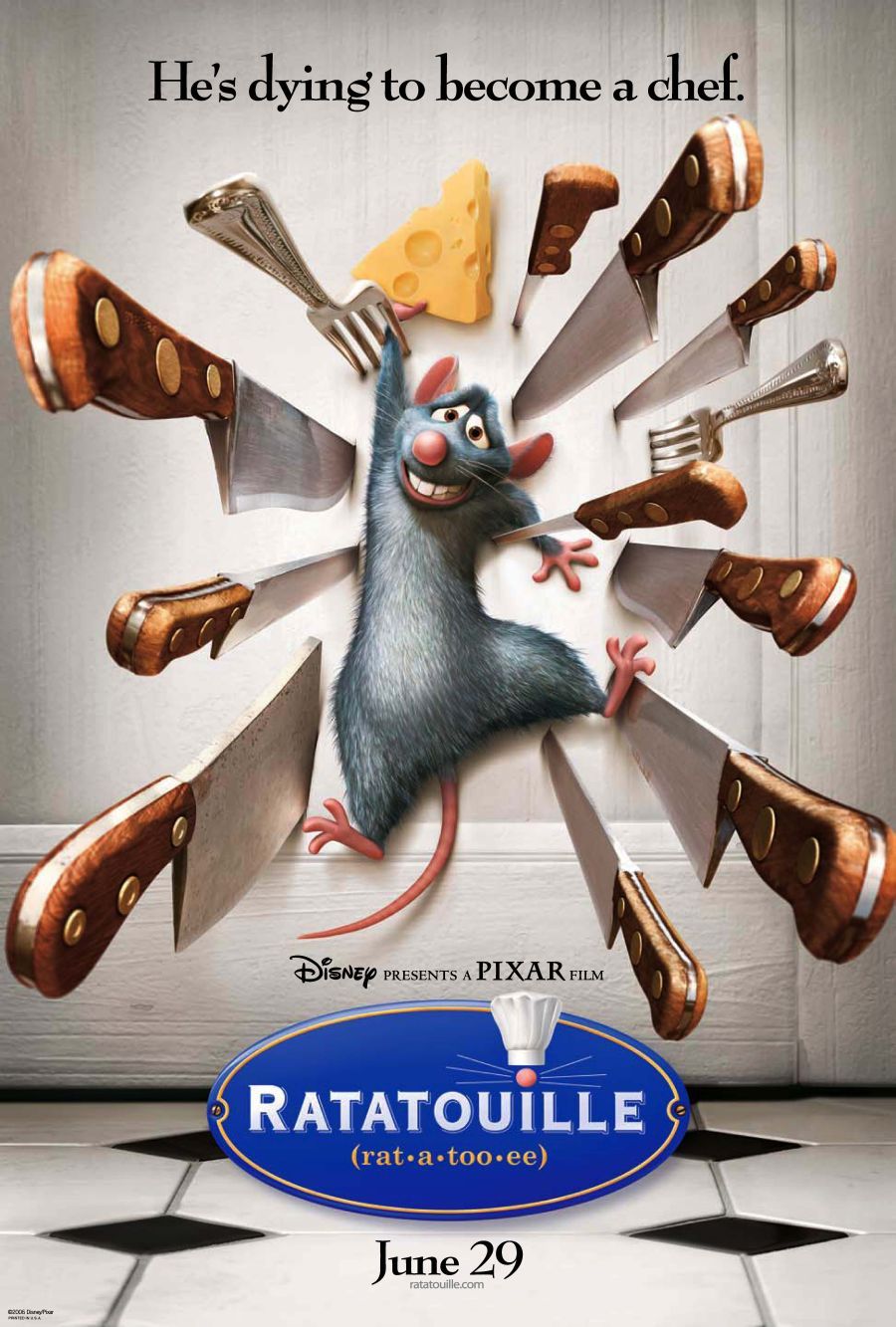
Ratatouille movie poster

Ratatouille” was written and directed by Brad Bird who also directed another Pixar movie, “The Incredibles,” which was one of the few movies made which actually lived up to its name. With this “Ratatouille,” we follow the story of Remy, a rat who ends up getting separated from his family and is washed away to where he ends up in Paris. The moment where he arrives and sees Paris is a truly brilliant scene of amazing imagery, and Pixar continues to outdo themselves in terms of this. The look of Paris is astonishing, and it had me wondering how the hell they managed to put this together. The wonder of movies still exists after all these years of cynical blockbusters, and I am ever so thankful for that!

Anyway, Remy ends up sneaking into a restaurant named after a famous cook, Auguste Gusteau (voiced by Brad Garrett), who has written a book entitled “Anybody Can Cook.” From there, he befriends a new employee named Linguini (voiced by Lou Ramano) who cannot cook to save his life. Through Linguini, Remy creates a system where he can make him cook the way he wants by pulling at his hair like he is a marionette while remaining hidden inside his hat.

Along the way, he infuriates the head chef of the restaurant who is busy selling off Gusteau’s name and likeness through frozen burritos which offers him the promise of becoming very wealthy. Linguini also meets Colette, the only female chef in the restaurant who makes it clear she is here to stay. All the other rats help Remy in a way which, if the restaurant patrons realized, would have had them running out of there at a relentless pace.

“Ratatouille” is filled with wonderful vocal characterizations which did not immediately have me thinking about the people who did them. At the time this movie was release, I was not familiar with either Patton Oswalt or Lou Romano who voiced Remy and Linguini. Both are very memorable characters who stand out among many others in animated movies. Remy himself is a genius creation who just might make you think twice about rat traps and poison. I am very tempted to go out right now and get a stuffed animal version of the character, and this is in large part thanks to Oswalt’s very enthusiastic performance.

For a while, I thought that Remy’s father Django was voiced by Jason Alexander. However, it turns out Brian Dennehy voiced this character, and he is wonderful in giving Django different layers and realizations to work with. The biggest surprise for me though was learning who voiced Colette Tatou, the restaurant’s only female chef – Janeane Garofalo. I didn’t even recognize Garofalo’s voice and thought it was Elizabeth Pena doing it with a very realistic French accent! Collette does look a bit like the character Pena voiced in “The Incredibles.” All the same, Garofalo does terrific work here, and it is so nice to see her doing something other than joking about her period.

The one voice I did recognize was Peter O’Toole’s who plays perhaps the harshest restaurant critic ever to walk the face of the earth, Anton Ego (a very symbolic name actually). His character becomes quite pivotal to the movie’s climax as the restaurant is forced to come up with a spectacular dish which will keep Mr. Ego from savaging the restaurant and its staff in a review.

Pixar continues their winning streak of great movies. Even if you were disappointed by “Cars” which really wasn’t bad, it was proof how even their weakest movies put so many other Hollywood movies to shame. They are to me what the Jim Henson’s Muppets were to me when I was a kid, creators of projects which appealed simultaneously to children and adults.

* * * * out of * * * *

‘Tomorrowland’ is Imaginative, But it Also Feels Incomplete

Tomorrowland movie poster

Tomorrowland” is to Brad Bird as “Interstellar” was to Christopher Nolan, an opportunity for a well-regarded filmmaker to wear their heart on their sleeve and give us a motion picture which aims to inspire and lift us up from the cynical worldview we have grown accustomed to for far too long. But whereas Nolan found success with “Interstellar,” Bird comes up short with “Tomorrowland” as his love letter to all the dreamers out there becomes undone by a thin plot lacking in narrative drive.

Britt Robertson stars as Casey Newton, a highly optimistic and tech savvy teenager who lives in Cape Canaveral, Florida and gets into trouble while trying to save a launch pad from being demolished. In the process, she comes into contact with a “T” pin which takes her to a futuristic place where imagination is infinite and possibilities for a better world are endless. When the pin suddenly loses the power to take her to that place, she seeks out Frank Walker (George Clooney), an inventor who showed a lot of promise while living in Tomorrowland but was later banished from there when his work started to frighten people off. Together, they find their way back to this wondrous place and work to save it before it is forever destroyed.

Now I love how Bird has made a movie which encourages all the dreamers out there to keep on dreaming. Despite how dark the world can seem at times, his encouragement to those who want to use their imagination to make it a better place is commendable. Many will snicker at this optimism, but their snickering will end up saying more about them than it will Bird.

Having said that, “Tomorrowland” isn’t entirely sure of what it wants to say or how to say it, and it takes forever for the movie to get to where it needs to go. By the time we do make it back to the futuristic place, the movie has devolved into a typical good versus evil plot which robs it of any uniqueness it could ever hope to have. In this kind of movie, we know good will triumph over evil, so the stakes never feel very high as a result.

It’s a real shame because Bird gets things off to a fantastic start with the movie’s prologue which introduces us to Frank Waller when he was a young boy who gets invited into the magical world of Tomorrowland, and our imaginations are quickly aroused by what we see. Watching Frank discover a place that exceeded his wildest dreams had me thinking about when I was a child and where my imagination often took me, and it was a time where anything seemed possible. Now while we find ourselves trading fantasy for reality as we get older, I like to think I have not lost any childlike innocence after all these years and watching this part of “Tomorrowland” made me realize I have not.

But after the prologue is over, “Tomorrowland quickly becomes a film unsure of what tone it wants to set, and it devolves into a typical story of an optimistic teenager trying to get a broken-down adult to reignite their potential before everything goes to hell. Furthermore, we are introduced to a number of evil robots who aim to take Casey out with extreme prejudice, but it feels like they belong in a different movie. In the process of trying to balance out the darker elements with the lighter ones, “Tomorrowland” becomes a total mess.

I felt sorry for Clooney as he is forced to play a character who has long since become embittered about the sour lemons life has handed him. As a result, he gives one of his weakest performances to date as he is forced to take Frank Walker from a state of disbelief to one of true belief in a very unbelievable way. Clooney remains one of the most dependable actors working in movies, and if he can’t make a character like this work on the big screen then no one can.

“Tomorrowland” also has a scene with Clooney and other actors travelling to another dimension in a rocket, and this is bound to bring back bad memories “Batman & Robin” which had the Oscar-winning actor in a similar situation. I guess some bad movie memories can never be permanently erased.

Robertson makes for an appealing heroine as Casey, and she is one of the reasons why “Tomorrowland” works to a certain extent. Even as the movie suffers through its various flaws, she keeps us engaged as we root for her character to triumph over those who are far too quick to crush the wonder she has about life. Without her, this movie could have been worse.

When we do get to the end of “Tomorrowland,” the whole venture ends up feeling incomplete as the writers appear to be uncertain as to how to tie everything up. You could say the ending gives hope to all the dreamers out there, but it frustrates more than anything else as “Tomorrowland” feels like it ended sooner than it should have. Judging from this movie’s opening box office weekend, the odds of it getting a sequel are pretty bad.

It really sucks to give a movie like this a bad review. “Tomorrowland” has its heart in the right place and has some wonderful images, but its story seems stuck in stasis and lacks the imagination to really inspire us. Bird remains a gifted filmmaker and has directed a number of highly entertaining movies like “The Iron Giant,” “The Incredibles,” “Ratatouille” and “Mission Impossible: Ghost Protocol.” “Tomorrowland” marks his first directorial misfire, but I have no doubt he will be back on top before we know it. It’s just a shame he made a movie about wide-eyed optimism which was constructed in a half-hearted way.

I would also like to add this movie’s commercial failure made Disney cancel a third “Tron” movie. Blasphemy!

* * out of * * * *

History Repeats Itself to a Depressing Extent in ‘Jurassic World: Fallen Kingdom’

Jurassic World Fallen Kingdom movie poster

Remember the scene in “The Lost World: Jurassic Park” where John Hammond told Ian Malcolm they were not going to make the same mistakes, and Malcolm quickly replied they were going to be making new ones? Well, “Jurassic World: Fallen Kingdom” doesn’t make new mistakes and instead repeats the old ones as the humans once again try to save the once extinct species in way we have all seen before. Yes, the visual effects are fantastic, but everything else feels astonishingly banal as nothing new is brought to the franchise. As for the storyline, it simply shows history repeating itself, something we see happen in the real world more often than not.

Three years have passed since the events of “Jurassic World,” and the theme park has been left in ruins. Now an active volcano threatens to destroy what’s left of the dinosaurs, and those in the government debate whether it is worth the trouble to save the species from becoming extinct again. Ian Malcolm (Jeff Goldblum) argues it would be best for the volcano to destroy the dinosaurs as he sees this as nature’s way of correcting the mistake Hammond made in cloning them years ago. Meanwhile, Claire Dearing (Bryce Dallas Howard) has formed the Dinosaur Protection Group in an effort to save them. When the U.S. senators do not come through for her, she finds a savior in Sir Benjamin Lockwood (James Cromwell), Hammond’s partner in developing the technology to clone dinosaurs, who is intent on moving the dinosaurs to an island where they will have zero interaction with humans. Of course, this also means she will have to acquire the services of her ex-boyfriend, Owen Grady (Chris Pratt), in the effort to rescue them.

Okay, the “Jurassic” movies have never been heavy on complex characters as the attention is focused mostly on the dinosaurs. The reasoning is understandable, but I have grown weary of letting the filmmakers get away with weak characterizations which are always upstaged by the special effects. Howard and Pratt are fun to watch in anything the appear in, but their talents are wasted as their characters are relegated to the romantic will-they-or-won’t-they scenario which will all know will end with them kissing passionately as they can only fight their intense feelings of love for so long.

The screenplay by Colin Trevorrow and Derek Connolly proves to be “Fallen Kingdom’s” biggest stumbling block as it takes the story of “The Lost World” and follows it to the letter to where the twists and turns the story takes are not the least bit surprising. As I’m sure you have derived from the trailers, the plans to move the dinosaurs to another island are thwarted by a team of mercenaries led by Ken Wheatley (Ted Levine) and Lockwood’s slimy right-hand man Eli Mills (Rafe Spall) who looks to sell the dinosaurs to the highest bidders. You would think after all these movies humans would realize they can never fully control what they have created, but when dollar signs are involved, common sense and morality always take a backseat to greed.

Actually, some characters here had interesting potential which the filmmakers really could have built on. Eli Mills, thanks in large part to Rafe Spall, wins the audience over as he does Claire when he tells her of the plan to save the dinosaurs, but he is later revealed to be a slimy bastard as he looks to profit off them instead. Spall has described Eli as being a victim of high ambitions and of allowing himself to believe he is doing the right thing. He has been entrusted with securing the financial future of the Lockwood estate, and he feels this is the only way he can do it. Still, the character eventually becomes a one-dimensional baddie whom the audience is made to hate, and it got to where I kept waiting for him to say, “Hey look at me! I’m dino-meat!”

The same goes with Gunnar Eversol who is played by Toby Jones. Gunnar is the auctioneer who sells off the dinosaurs, and Jones has compared him to a rogue arms dealer who is morally neutral about the work he is doing. This could have made for an especially fascinating character, but alas, Jones is given only so much to do here as Gunnar is designed to be an appetizer for the “Jurassic” franchise’s newest dinosaur, the Indoraptor. Considering how morally neutral Gunnar is, it would have made more sense for him to take his fate as though he saw it coming instead of screaming like he doesn’t deserve it.

B.D. Wong returns again as Dr. Henry Wu, the chief geneticist of the Jurassic theme parks. Wong plays Henry as a man whose love for science is as big as his own ego, and he is a welcome presence in this deeply flawed sequel. But like the other characters, Henry is given short-shrift to where he just ends up acting like a one-dimensional jerk.

There are some new characters added to the mix such as Dr. Zia Rodriguez, a Marine veteran and a paleo veterinarian, played by Daniella Pineda. Pineda makes Zia into a quirky presence throughout, but the character feels half-realized never fully human. As for Justice Smith, his character of hacker and systems analyst Franklin Webb is this sequel’s most annoying as runs all over the place screaming as if we couldn’t already tell how unprepared he is to be around dinosaurs. I kept wanting to slap Franklin in the face and tell him to grow a pair as his whining made this sequel even more frustrating than it already was.

It is great to see Jeff Goldblum back as Ian Malcolm, one of the most popular and fascinating characters in the “Jurassic” franchise, but his appearance here is a mere cameo as he serves to bookend “Fallen Kingdom.” This is a real shame as the speeches he gives offers us a glimpse at what this sequel could have been: a look at humankind’s abuse of various powers, and at the possibility of if and how humanity and dinosaurs can co-exist. As he makes clear how Jurassic World is no longer the name of a theme park, but of the times humanity now lives in, we are reminded of the opportunities this sequel lost out on exploring.

And yes, there is the little child character named Maisie Lockwood played by Isabella Sermon who constantly sees through the deceptions of the adults and manages to outwit the dinosaurs chasing her. Of course, seeing her being smarter than the adults quickly becomes exasperating, and that’s even though this kind of character serves to remind adults of why they need to listen to children more often. Remember the child from Terry Gilliam’s “Time Bandits” who told his parents “don’t touch it, it’s evil” and they did anyway? Well, you get the picture.

I couldn’t help but walk into “Jurassic World: Fallen Kingdom” with high expectations as it was directed by J.A. Bayona, the Spanish film director who gave us “The Orphanage,” “The Impossible” and “A Monster Calls.” “The Impossible” had an especially profound impact on me as he depicted the devastation of 2004 Indian Ocean tsunami in a way to where I felt I experienced and survived it along with the characters. I guess I was hoping he would bring that same cinematic power to this long-running franchise, but his efforts do little to improve this sequel’s poor story and screenplay.

For what it’s worth, Bayona does give us some memorable moments. The scene where the characters observe one of the vegan dinosaurs crying out to be rescued as the volcano lays waste to Isla Nublar is truly heartbreaking, and the moment where the Indoraptor stalks the helpless Maisie in a sequence which evokes “Nosferatu” as the dinosaur stretches his creepy claws out is wonderfully chilling. I also loved how Bayona started this movie off in near silence as it opens in an underwater environment. It is times like this where I am reminded of how silence is golden, and I was hoping he would use it to his advantage. But as many sequels go, this one is noisy as hell and is at times undone by Michael Giacchino’s overambitious score.

“Jurassic World: Fallen Kingdom” is not this franchise’s worst installment (“Jurassic Park III” still holds that honor), but it is pretty close. “Jurassic World” managed to do the impossible which was bring back much of the awe and wonder from Spielberg’s 1993 classic, but this one finds those things sorely missing to where I wondered if there was ever enough of a reason to make another sequel other than money. What we get here is the same old thing, and the results are depressing as its storyline points out how humans will keep making the same mistakes over and over again as they refuse to learn from history. It left me wondering who would be better off here, the humans or the dinosaurs. As I left the theater, I kept thinking about what Ellen Ripley said in “Aliens:”

“You know, Burke, I don’t know which species is worse. You don’t see them fucking each other over for a goddamn percentage.”

Ripley had a really good point there, and this line was also proof of how James Cameron could come up with good dialogue when he put his mind to it.

* * out of * * * *


‘Jurassic World: Fallen Kingdom’ Director J.A. Bayona Talks About Making ‘The Impossible’

The Impossible JA Bayona photo

Spanish film director Juan Antonio Bayona, or J.A. Bayona for short, made a name for himself in 2007 with the horror movie “The Orphanage.” It earned him the respect of his fellow Spaniard Guillermo Del Toro who helped produce the film, and it became a big box office hit worldwide. These days he is known for directing “Jurassic World: Fallen Kingdom” which is expected to be one of the biggest hits of the 2018 summer movie season.

Following “The Orphanage,” Bayona was offered a number of movies to direct including “The Twilight Saga: Eclipse,” but he was really interested in doing something far more challenging to take on. Bayona found the challenge he was looking for with “The Impossible,” a movie based on the true story of a family that survived the devastating 2004 Indian Ocean tsunami in Thailand. What Bayona accomplished showed him to have great skill in getting strong performances out of an incredibly gifted cast, and he staged a tsunami scene so horrific, it puts the one in Clint Eastwood’s “Hereafter” to utter shame. The movie proves to be a cinematic experience as brilliant as it is gut wrenching to watch, and you won’t be able to ignore Bayona’s talent after you have seen it.

Bayona was at the Los Angeles press conference for “The Impossible” which was held at the Four Seasons Hotel in Beverly Hills, California back in 2012, and I was fortunate enough to attend his roundtable interview. We all thanked him for making this film which we agreed was one of the very best of the year.

The Impossible movie poster

Question: This is a great movie. Did you realize the scope of it when you got involved? Did you realize how inspiring it would be to moviegoers in general?

J.A. Bayona: Well it was getting bigger and bigger as much as we were getting into it. The first impact we had when we heard Maria (Belon’s) story was very emotional, and we wanted to figure out where that emotion was coming from. Even though it is a tough story and we’re talking about a tragedy, the emotion was coming not from a dark place. It was something that was coming from the way these people gave to the other ones in the worst moment. So, I thought that was very powerful and it was a very beautiful idea of approaching that. But then you talk to Maria and you realize how much suffering there is still nowadays. They call it “survivor’s guilt” even though she doesn’t like to call it that. She will talk about survival suffering because she doesn’t feel guilty for anything she did, but it’s really that there is a lot of suffering. I thought that would be interesting to tell the story of this family going there and then going back home and not talking about a disaster in a compassionate way and where you only talk about whether you live or you die. There’s a lot of gray space in the middle. From the very first meeting that we had we agreed that this was not just the family story. It was the story of many people, but the whole ending talks about that; how do you go home to the real world when your real world disappears? I like to see the film tell the story about the end of innocence. They don’t feel the same anymore, they lose the sense of security and their life is not the same anymore.

Q: How big of a challenge was this movie for you?

JAB: Well of course there was a huge challenge in the technical aspects of the film, but for me that was exciting and I was not worried about that. The real challenge was how to portray the story of the people who were there and how to give the big picture of what went on there and being respectful of the time.

Q: How much the movie was real and how much what was done with CGI? The movie looks very real even though some of those effects were probably done digitally.

JAB: Well it had to be like that because the story was very simple in reality so it could look like a visual effects movie. It had to feel real all the time. We did a lot of things for real like practical shooting and practical effects, and we also used a lot of CGI for greeneries and digital composition. But the great thing is to always mix several techniques so there’s a moment where everything gets lost so the audience doesn’t know what they are watching.

Q: Was anything done to reduce the carbon footprint of the movie or in trying to conserve resources?

JAB: Everything these days is now very regulated, so you have to be very respectful. For example, in shooting the water sequences in Spain the waters had to be darkened with a coloring used for food because that water had to be sent back again to the sea. Everything had to be natural. The water had to be decidedly desalinated before it got sent back to the sea.

Q: Did you think about shooting the movie in another country other than Spain, or was it always your intention to shoot there?

JAB: We did it in Spain because we found this huge water tank which is the second biggest in the world I think. So it was the perfect place to shoot all of the water sequences and once we finished with that we went to Thailand and we shot in the same places the tsunami took place in.

Q: The sound design in this movie is incredible, especially in the opening sequence. The screen is black but you already feel like you’re underwater. Can you tell us more about the sound design for this movie?

JAB: One of the things that I soon realized is that the characters didn’t have time to stop and think about what was happening. Everything was so fast that we had to deal more with emotions and sensory details. I was intellectualizing the sequence a lot with the actors, but in the end in front of the camera everything had to be sensorial and about the emotions. Sound has a great role in the film, and I talked a lot with Maria about the sounds and she was telling me for example that the sounds of the wave reminded her of the engine of the plane. This is the moment where I had the idea of starting with the sound of the engine because the movie was already starting and finishing on a plane. The way the plane sounds at the beginning and at the end is completely different, and that sets the behavior of the characters of how they go to Thailand and how they came back from Thailand. The sound of the way was very interesting. It sounds wilder underwater than on the surface because that’s where the danger was with all the debris and all the things which were dangerous for the people who were in the water were underwater. Maria was telling the also about the bloody birds, and I said, “What do you mean by the bloody birds?” She told me, “Once the water receded and we were completely alone in the debris and the devastation I started listening to the birds singing like nothing had happened, and I hated them at that moment because nothing happened to them.” This gave me the idea of how nature goes back to normal and that puts the characters very close to reality at the time, so of course we played a lot with this sound and with the music. It’s very interesting to see how music plays a lot with things that the characters can find the words to explain. I remember the moment when Maria was being dragged by this old man, and she sent me a message that was four pages of all these things that she felt in that moment. And in that sequence you only have a man dragging a woman so I focused only on Naomi’s eyes and I put some small music in their going up slowly, and only with that Naomi’s performance and only with their eyes and seeing the connection between this woman and this man. Using some notes of music, I was able to try to create a thought provoking experience in the audience, and that deals a lot with the four pages that Maria sent me.

Q: When this project began it was intended to be a Spanish production with Spanish actors, but then it became this huge thing. When did you decide to make this change?

JAB: Well we wrote the script in Spanish and we soon realized that 80% of the dialogue was already in English because people had to talk in English to be understandable to each other. Also I didn’t want to put the accent on nationalities because I wanted to portray all the people on the same level. I wanted to portray all the people like people, no nationalities. So it felt natural to go to English-speaking actors because first of all to finance a movie like this you need important names, but most of all I never wanted to put an accent on nationalities. If you see the film, they never say where they are from. All the time they talk about going back home. I wanted them to be very universal like a wide canvas so you can project yourself in there.

“The Impossible” is now available to own and rent on DVD, Blu-ray and Digital, and “Jurassic Park: Fallen Kingdom” arrives in theaters on June 22, 2018.