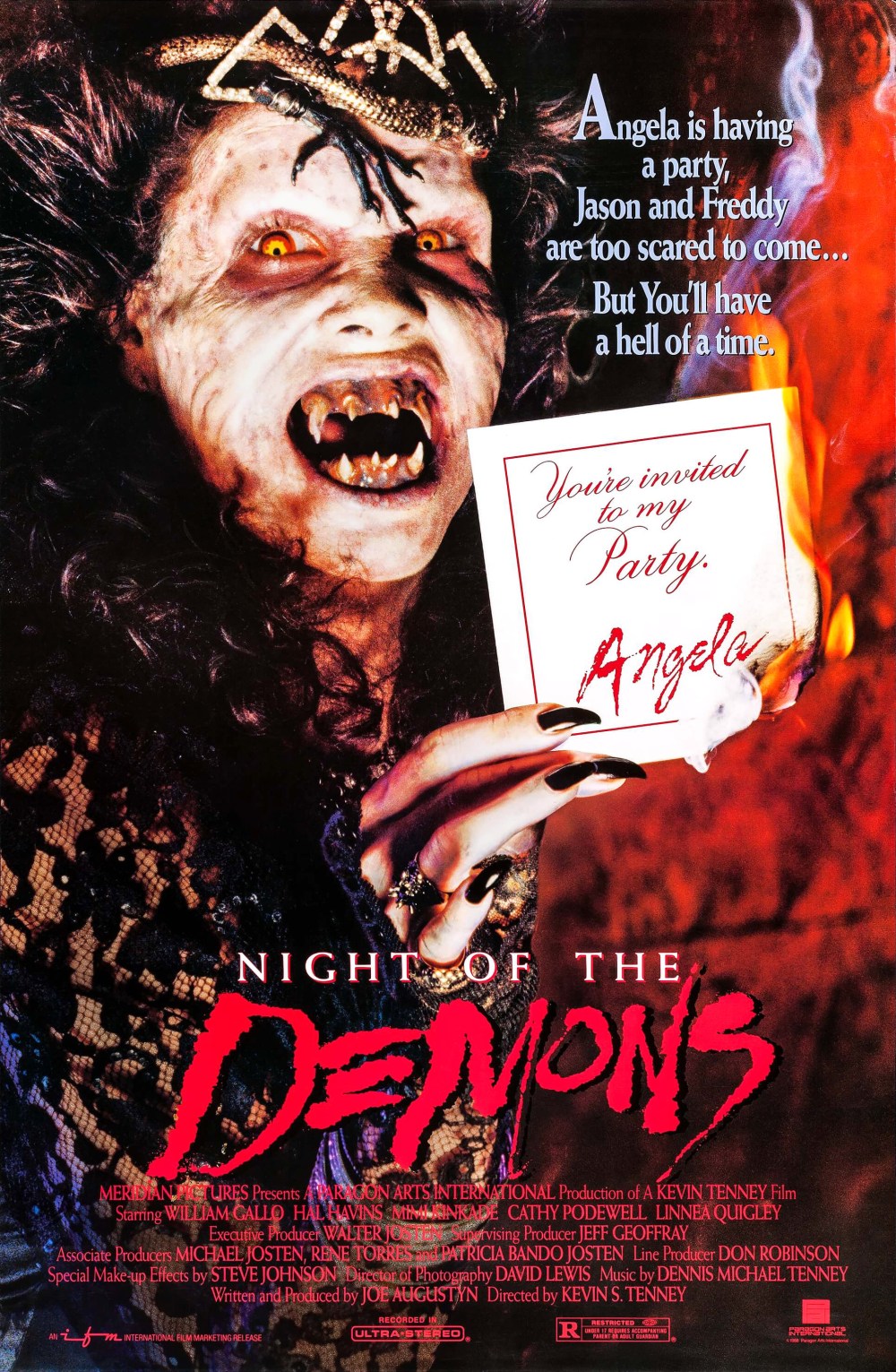
I recently had the pleasure of checking in with Keon Maghsoudi (a.k.a. Keon Kobra), a most excellent friend of mine from high school. We joined up to do an online commentary on the horror movie “Night of the Demons.” Released in 1988, the same year we got “Child Play’s,” “Maniac Cop,” “Halloween 4: The Return of Michael Myers,” “A Nightmare on Elm Street IV: The Dream Master,” “Phantasm II” and the completely unnecessary “Poltergeist III,” it was made for $1.2 million and shot over four weeks in South Central Los Angeles. Despite negative reviews from critics, it went on to gross over $3 million after its debut in Detroit. Since then, it has become a cult classic and was followed by two sequels and an obligatory remake.
Before Keon and I started, I admitted I had not previously seen “Night of the Demons.” I was aware of it, having seen its posters in newspapers and a trailer on television. But back then, I was only slowly getting into horror movies as they were the kind of cinematic experiences I was fascinated by but quick to avoid. These days, I look forward to them as I have long since become deeply fascinated by the dark side of humanity.
“Night of the Demons” tells the twisted tale of a group of high school seniors who decide to celebrate Halloween at Hull House, an isolated funeral parlor which (surprise surprise) is said to be haunted by evil spirits. Despite this, one of the seniors gets the group to participate in a séance which, as you can expect, leads to all hell breaking loose. This demon, which kind of looks like the anglerfish from “Finding Nemo,” rises up and begins to possess these foolish teens, and it is clear from the get go many of them will not survive the night.
This is one of those movies best watched with a group of friends as watching it by yourself serves as a reminder of how a party of one is not much fun. Director Kevin S. Tenney and screenwriter Joe Augustyn employ a large number of horror movie clichés to where we feel like we have a good idea of which characters will live and die. It’s almost like a guessing game as I was tempting to place bets as to which one would bite the dust first. I kept thinking it would be Stooge (played by Hal Havins). Was it? Watch the movie.
Dread Central, in its review of the cult classic, described it as being “fun. Lively. A masterpiece, it’s not.” I think this perfectly sums up “Night of the Demons” as it was made not to ascend to the cinematic heights of “Lawrence of Arabia,” but instead to satisfy its core audience which was into blood, gore and hair/glam metal bands which the 1980’s was famous for producing. I want to thank Keon for inviting me to be part of this commentary as watching the movie with him proved to be a lot of fun.
As we watched the movie, I had its Wikipedia and IMDB pages up on my computer, and I found out the following:
Cathy Podewell, who plays the virginal Judy Cassidy, lived in Walnut Creek, California, a city not far from where Keon and I grew up.
Judy’s boyfriend, Jay, who is portrayed by Lance Fenton, played Kurt Kelly in one of the greatest teen movies ever made, “Heathers.”
Linnea Quigley, who plays teenager Suzanne, was 30 years old when she was cast. Quigley initially turned down the opportunity to audition as she felt much too old to play a teenager. Nevertheless, she was cast.
Quigley is best known for playing teenage punk Trash in “The Return of the Living Dead,” another in a long line of movies I still need to see.
This movie was recorded in Ultra Stereo. Remember Ultra Stereo? That seems to have gone the way of VHS tapes.
I have included the entire video of our commentary down below. I hope you enjoy it.
Alongside Superman and Batman, Spider-Man is one of my most favorite comic book characters. Peter Parker was an ordinary teenager before he got bit by a genetically modified spider, and from there he was gifted with super powers anyone would be envious to have. But in the process, he learns that with great power comes great responsibility, and this includes leaving the love of his life, be it Mary Jane or Gwen Stacy, at a distance in order to keep her safe from his devious enemies. While it must be very cool to be Spider-Man, it is also a very lonely existence as he needs to keep the people he is closest to in the dark as their safety will always be at risk once his identity is revealed to all.
One of the real joys of watching “Spider-Man: Into the Spider-Verse” is realizing Peter Parker’s existence is not as lonely as we believed it to be. While attempting to thwart the efforts of Wilson Fisk/Kingpin (Liev Schreiber) who is using a particle accelerator to access parallel universes in an effort to bring back his deceased wife and son, we learn there are many different versions of Spider-Man here, there and everywhere, and there is something very reassuring about Peter realizing he is not the only one of his kind.
The main character here is Miles Morales (“Dope” star Shameik Moore), an African-American teenager who is at ease in his inner-city neighborhood, but struggles to fit in at the elite boarding school he was enrolled in following a well-received essay he wrote. Miles wants to fulfill the expectations of his police officer father Jefferson Davis (Brian Tyree Henry) and his nurse mother Rio Morales (Lauren Valez), but he looks to his beloved uncle Aaron Davis (Mahershala Ali) to encourage his creative side more than anyone else.
As you can expect, Miles also gets bitten by a radioactive spider and becomes the superhero he admires, Spider-Man, but he is of course not the least bit ready to take on such a part. Who would be anyway? But when the real Peter Parker is eliminated with extreme prejudice by Kingpin, Miles has no choice but to take his place even as he passes off the changes in his body as being a part of puberty. If such things were easily explainable, the realm of adolescence would be easier to live through.
Miles does however get help from Peter B. Parker (Jake Johnson), but being a Spider-Man from an alternate universe, he is not the equivalent of the one portrayed in previous movies by Tobey Maguire, Andrew Garfield and Tom Holland. This Peter has gained a lot of weight and is hopelessly alone after a painful divorce from Mary Jane, and he is not quick to help Miles on the superhero journey he himself has taken, but he slowly becomes enamored at Miles’ spirit and determination to where he ends up helping him put an end to Kingpin’s evil and selfish reign.
With the many parallel universes exposed, we get introduced to the different incarnations of the webslinger which include Gwen Stacy and her spunky alter-ego Spider-Woman (Hailee Steinfeld), Peter Porker and the gleefully animated Spider-Ham (the hilarious John Mulaney), the young Japanese girl Peni Parker (Kimiko Glenn) who hails from an anime universe where she pilots a biochemical suit with a radioactive spider, and the dark and monochromatic Spider-Man Noir (Nicolas Cage in a truly inspired voiceover). Seeing them all interact with one another here adds more heart and laughs to an already highly entertaining film.
The late Stan Lee, who does have an animated cameo here, once said Peter Parker should always be white, but that he wouldn’t have minded if the character were originally “black, a Latino, an Indian or anything else.” What this movie shows us is how anyone can be Spider-Man, and there’s something truly inspiring about that as superhero roles can at times feel ridiculously limited. It also helps that this animated movie comes on the heels of the brilliant “Black Panther” and “Wonder Woman” as the role of superhero is no longer, and never should have been, limited to one gender or ethnicity, and this was especially the case when it came to battling Thanos in “Avengers: Infinity War.”
I was not sure what to expect when walking into “Spider-Man: Into the Spider-Verse” as the thought of an animated “Spider-Man” seemed a little far-fetched and seemed like another attempt by Sony and Columbia Pictures to create a cinematic universe a la “The Amazing Spider-Man 2,” and we all know how that one turned out. In a way it is satirical as it plays around with many comic book tropes and has fun dealing with the web-slinger at his best and worst. The filmmakers even take a hilarious dig at the character’s emo-dance from “Spider-Man 3” which Peter Parker is quick to distance himself from (can you blame him?).
But what makes this movie so good is how deeply it invests us in this particular Spider-Man’s life. Miles Morales is not just another Peter Parker clone as he still has his mom and dad, and he is forced to live in two different worlds the same way Amandla Stenberg’s character had to in “The Hate U Give.” While I have long since grown tired of origin movies which deal with a superhero’s beginning as we know they will eventually accept their anointed role, this one rings true emotionally as we watch Miles be understandably hesitant about becoming the next Spider-Man, but his transition from someone blaming his body changes on puberty to a young man eager to save his universe from the devious acts of Kingpin is never less than compelling.
It really feels great to see Spider-Man on a roll right now. Following the much-too-soon reboot known as “The Amazing Spider-Man,” the webslinger made a terrific rebound in “Spider-Man: Homecoming” and had one of the most achingly emotional moments in the “Empire Strikes Back” of the Marvel Cinematic Universe, “Avengers: Infinity War.” In a time where the franchises of “Star Trek” and “Halloween” seek to alter the timelines of their iconic characters to take things in another direction, it’ll be interesting to see where Spider-Man will go from here. “Spider-Man: Far from Home” is arriving in theaters next year, and I imagine we will see him again in “Avengers: Endgame.” Whatever the case, it puts a smile on my face to see Peter Parker and his alter-ego continue to be infinitely popular in pop culture as this is a hero blessed with super powers as well as with the foresight of the importance of responsibilities. Regardless of whoever takes on the role of Spider-Man, we come out of this movie with the solid belief said person will take it seriously, and we have to be thankful for that.
And yes, there are post-credit scenes for you to enjoy and, like “Once Upon a Deadpool,” this one features a thoughtful tribute to Stan Lee. May his legacy never be forgotten.
This week, I remembered exactly where I parked my car and arrived at Griffith Park in Burbank 15 minutes before the clock hit 7 a.m. Coaches Kerry and Joaquin were there waiting patiently for the Pablove runners in temperatures which were frigid even by Los Angeles standards (yes, we do get cold temperatures from time to time in Southern California). Coach Kerry brought along his dog and had him (or her, I don’t remember) firmly on a leash as this pup was ready to chase after any bicyclists or squirrels in its radar range. Once the first set of bicyclists went by, the dog was ready to hit warp speed, and I think his barks translated into, “Hey, I want to run with you! Yes! Yes! I want to run! Wait up!”
Once Coach Kerry got his dog under control, he suddenly said, “Maybe we should call this run ‘King of the Hill.’” Little did I know what I meant. We have run up and down hills before, and I have come to welcome them as they are part of the LA Marathon. But this week had us going up a hill like none other before it, and it was definitely not the one Kate Bush sang about back in the 1980’s.
This run would be our first double-digit run of the training season as we were running 10 miles, and the coaches had us going up the hill first on the backside of Griffith Park. Good, I thought, we will get the hard stuff out of the way first. Of course, this particular hill always wipes me out long before I reach the top. Even if I wanted to be like Sylvester Stallone in “Rocky IV” when he reached the top of that mountain and yell out “DRAGO!!!” for all to hear, I never have the energy or enthusiasm to do so.
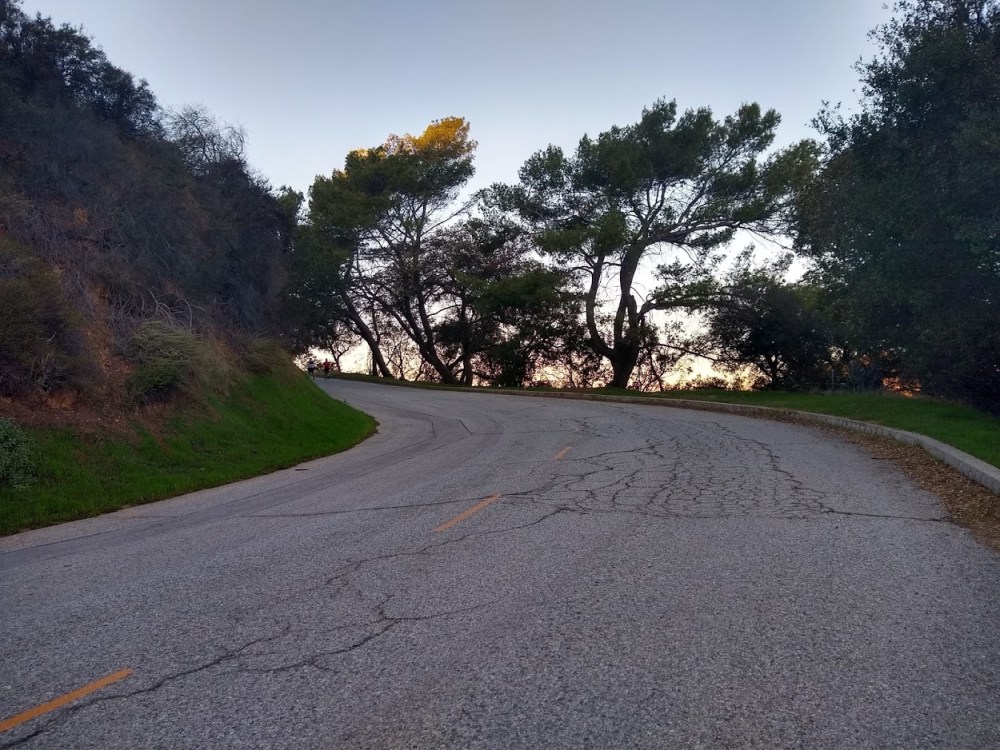
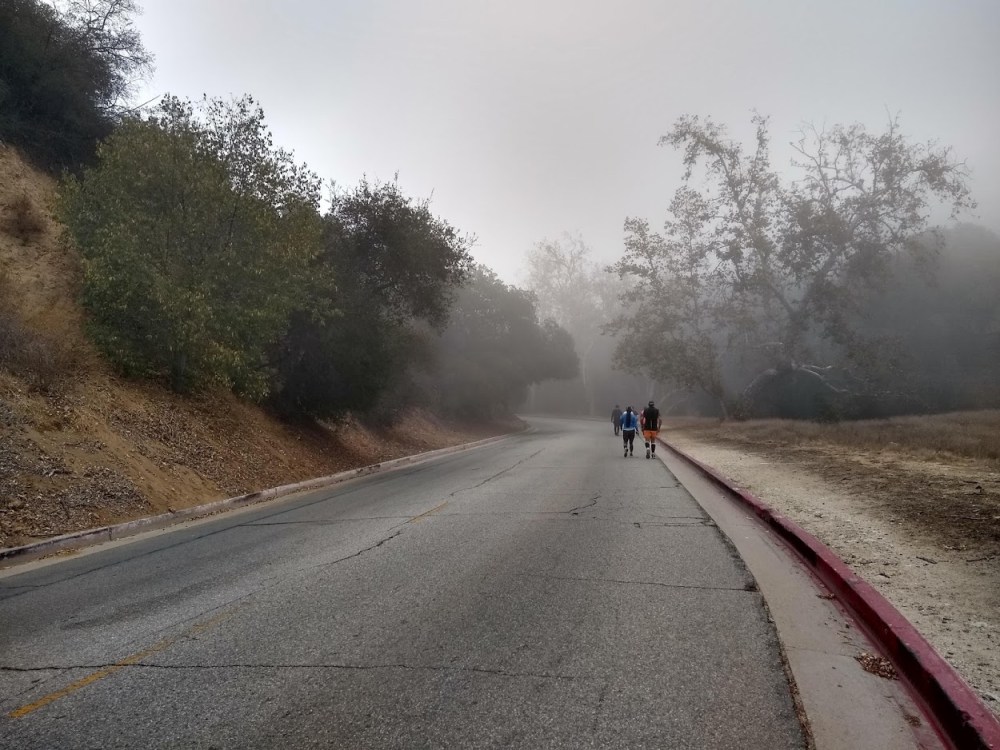
But here’s where the run took a sharp turn both literally and figuratively speaking. Instead of going down the backside of Griffith Park, we took a right onto a paved road which was shut off to cars but not to runners or bicyclists. The only thing is, this road kept going up instead of down. And once I thought I went as far upward as I possibly could, I found I hadn’t. And then later on, I found this out again, and again, and again. As determined as I was to finish these 10 miles, I realized it would probably be longer than the running time of Lars Von Trier’s latest cinematic opus, “The House That Jack Built.”
Look, I am fine with running up hills, but none of those hills we Pablove runners have ascended previously compared to this one. As my walk breaks increased over my running, I wondered if two maintenance runs during the week was even close to being enough to prepare for this or any other marathon. Just imagine if I had hills like this to run up during my cross-country days in high school. Oak Hill Park has nothing on what Griffith Park has to offer!
Nevertheless, I persisted like all those female politicians running for office during the past midterm elections (many of whom won mind you) and did my best. I tried to keep up with everyone else, but as usual I fell behind the rest of humanity and was more than confident nobody would be waiting for me by the time I got back. On the plus side, there was a nice breeze in the air and, even as the sun rose high into the sky, it was neither too hot nor too cold. On the downside, there were no bathrooms or portable toilets nearby, and at one point I had to drop the kids off in the bushes. That’s probably more information than you need, but I don’t want to leave anything out here.
Coach Joaquin was on hand throughout to make certain we were all doing as well as could be expected. Of course, before we started this run, he did tell us all that if we became sick or died on this run, it was not his fault.
Upon approaching Coach Joaquin at one point, I saw a sign which, from a distance, appeared to say “HELL SPOT.” This sign seemed more than appropriate as this was road which people will have better luck hiking up than running up. But once I got closer, I realized it actually said “HELI SPOT.” I don’t know, maybe I’m becoming dyslexic.
One thing this particular course did have going for it was the view it gave us of Burbank and Glendale. Looking at Burbank from a higher elevation, I was reminded of how it is a much bigger city than I ever bother to realize. It’s not at all dwarfed by the IKEA store which, by itself, probably has its own zip code, and the buildings, homes and apartments stretch out for what seem like miles.
I also thought I could see Pasadena from where we were, but Coach Joaquin informed me were looking at Glendale and that Pasadena was further off into the distance. I knew that. Anyway, at least I could tell it wasn’t Russia.
After making a sharp left turn at one point, I assumed we would not be running uphill anymore, but I was incorrect. Still, Coach Joaquin assured me what goes up must come down. You know, like the Trump Administration.
I did catch up with my fellow Pablove runners who encouraged me to keep on going as they made their way back. One of them told me, “I’d tell you the turnaround is right around the corner, but…” Believe me, I appreciated the honesty.
The turnaround point was at this enormous puddle of water which was truly impossible to miss. Looking at it reminded me of a scene from “Stand by Me” in which the four boys come to what looks like a shallow pond they think they can walk across with no problem. River Pheonix even checks to see how deep it is with a stick. Once he convinces everyone it is safe to cross, they walk straight ahead and realize just how deep the water really is. But that’s not all, remember? LEECHES!!!
It was a huge relief to finally reach the turnaround and head back, but there were still some hills to shuffle up and down, and I spent what felt like an obscene amount of time desperately trying to catch my breath. Once I got back to the main road, I knew it was all downhill from there, and in a good way. It’s nice to see “downhill from here” has a couple different meanings and is more than just something adults tell kids when they turn 18.
The coaches were still around when I returned, and this of course meant they could finally pack their things up and go home. I told Coach Joaquin how the maintenance runs I was doing didn’t seem to be enough, and he encouraged me to get in 30 minutes of exercise each day whether it be running or something else. He also made me see that I did good today and pointed out I did complete all 10 miles. I came, I ran and I finished, and this is something I should be proud of. So what if I came in last? I went through all 10 miles with a sheer determination to make it across the finish line.
Coach Joaquin assured me next week’s course will be completely flat and be only six miles. Still, I need to kick up the workouts during the week. I am now past the point of no return.
The end of the year is rapidly approaching, and I encourage you to make one of your last tax-deductible donations to The Pablove Foundation which is dedicated to finding a cure for pediatric cancer. It’s an amazing organization I encourage you all to support, and I still have a way to go with my fundraising. Click here to learn more.
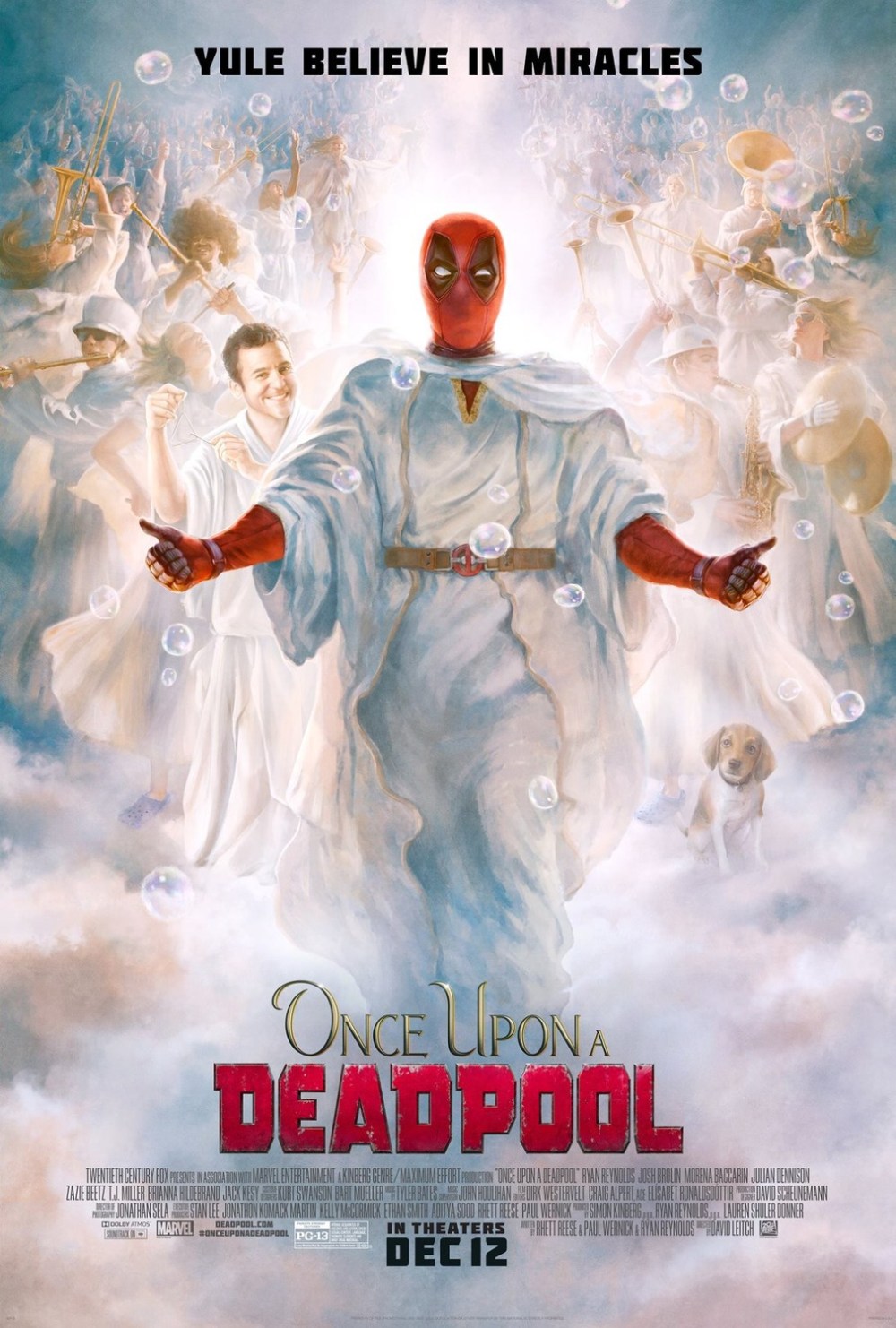
Well, it turns out we didn’t have to wait too long for another “Deadpool” movie to make its way to theaters everywhere. But as I’m sure you know by now, this is actually “Deadpool 2” rechristened as a Christmas movie and diluted down to a PG-13 rating, and it comes with the amusing title of “Once Upon a Deadpool.” This version comes with the added bonus of Wade Wilson/Deadpool reading the story of this sequel to Fred Savage who finds himself trapped in a painstakingly recreated set of his character’s bedroom from “The Princess Bride.” Is it worth the price of admission? Well, yes and no.
What makes this modified version of “Deadpool 2” worth seeing is the interplay between Ryan Reynolds and Savage who still looks like he has only aged so much from his child actor days. As much as Savage tries to convince Wade of how he has long since become an adult and, in addition to acting, also works as a writer and director. It’s also doesn’t help things that Wade has kidnapped Savage and taped him to the bed. But as Wade sees it, this is just “unsolicited location advancement.”
One thing “Once Upon a Deadpool” will forever make you remember is a certain comic book trope known as “fridging.” This refers to a female character, a girlfriend or spouse, getting killed off as a plot device to forward the main character’s actions and evolution. Many criticized “Deadpool 2” for being quick to kill off Wade’s girlfriend, Vanessa (Morena Baccarin), as she was one of the most memorable characters from the original. This was complicated by the sequel’s co-writers, Rhett Reese and Paul Wernick, freely admitting they were never aware of this trope. Well, at least everyone credit here as Savage confronts Wade about this and describes it as “lazy writing.” Even now, he everyone involved in the “Deadpool” franchise is quick to have a sense of humor about the criticisms made about the movie. Whatever the writers’ intentions, it is good for a big laugh.
Even with a PG-13 rating, this revised version takes no prisoners as those in front of and behind the camera lay waste to Nickelback, the fact Deadpool is a Marvel character subsidized by 20th Century Fox and not part of the Marvel Cinematic Universe, and of the number of F-bombs which can be included in a version, excluding of course the 4-letter words which are bleeped out. Then again, those bleeped out words may not be the ones you are thinking of.
As for Nickelback, I’m not sure if I have ever listened to any of their songs. All I know is everyone seems to think they suck. I wonder how they feel about all the derision they get for their music. Maybe the fact they are mentioned in this movie will raise their record sales a little. Remember, any publicity is good publicity.
In many ways, the whole of “Once Upon a Deadpool” is a send-up of the PG-13 rating in general. When you look at what is left of “Deadpool 2” after the removal of certain words and the copious amounts of blood, we are still left with a motion picture which is still pretty violent and features, among other things, characters getting run over by cars, Deadpool exploding into pieces, and T.J. Miller whom I figured would be removed from this version the same way Kevin Spacey was removed from “All the Money in the World.” Besides, we already know this actor will not be around for “Deadpool 3.”
This PG-13 rated version also serves as an amusing reminder of the hypocrisy of the MPAA as they are clearly more comfortable with violence than they are with sex. Imagine if there was a scene of Vanessa getting oral pleasure from Wade. The MPAA would flip over that more than any scene of ultra-violence this sequel has to offer and would be quick to give it an NC-17 for all the wrong reasons.
Having said all this, I have to say “Once Upon a Deadpool” is undone by this rating as scenes are excised and others added, and it throws off the whole rhythm of the film. The narrative feels severely uneven, and what was funny before now feels stilted and out of place this time around. “Deadpool 2” was one of the best times I had at the movies in 2018, but this version makes me wonder why I enjoyed it so much in the first place. If nothing else, it proves how the “Deadpool” movies work better in R-rated territory. When the first one came along, it was a cinematic grenade the realm of comic book/superhero movies needed as many of them were playing it safe. This made the first “Deadpool” all the more welcome as it shook things up and gave us something not all PC, but it was still filled with a lot of heart and taught everyone a great lesson about loving someone from the inside out and not the outside in.
So overall, “Once Upon a Deadpool” is a mixed bag. I loved the scenes between Savage and Reynolds as they add another subversive layer to the proceedings, but the rest of the movie feels off-balance. If you can handle that, then it is worth checking out, and a dollar from your ticket will be donated to the Fudge Cancer charity. It is actually known under another name, but again, we are in PG-13 territory and only so many F-bombs will be tolerated along with onscreen violence.
And yes, there are some enjoyable post-credit scenes to enjoy including an honorable tribute to the late Stan Lee. Yes, he was 95 years old, but he still left us way too soon.
Believe me when I say I was more than ready to take on this latest Pablove run for the 2019 Los Angeles Marathon. I got up especially early, got all my running gear together, and I walked straight to my car which I was convinced was waiting for me on 6th Street. I didn’t drive anywhere the day before, so I had it locked in my mind that my Volkswagen Passat was exactly where I left it.
I am cursed with street parking since the building I live at was built back in the 1920’s, long before anyone thought of the usefulness of parking garages. My car was several blocks away, and as I made my way up towards Fairfax Avenue, I started to wonder if I had passed it. I should have gotten to it already, right? Granted, there have been times in the past when I have forgotten where I parked, but this usually was after a night of heavy drinking. During the marathon training season, my intake of alcohol is restricted to a great extent.
And then I remembered, I actually parked on 3rd Street right near the Coffee Bean & Tea Leaf store where I have purchased many Ice-Blended drinks which are mandatory for me during the summertime (the Cookies & Cream drink is my favorite). So yeah, now I had to haul my ass from 6th Street to 3rd Street, and I knew I was going to arrive at Griffith Park late. But on the upside, I did get a hell of a good warm up walk as a result.
By the time I reached Griffith Park, the runners had already taken off, and I could see Coach Kerry driving away. Thankfully, Coach Joaquin did provide us with the route of our nine-mile run via Google Map Pedometer. Once I convinced myself that I could read the map and was confident of the direction I would be heading in, I ran my ass off. I did have my interval timer watch on, but I decided not to run at any specific pace. Since I started late, I didn’t want to fall behind by too much.
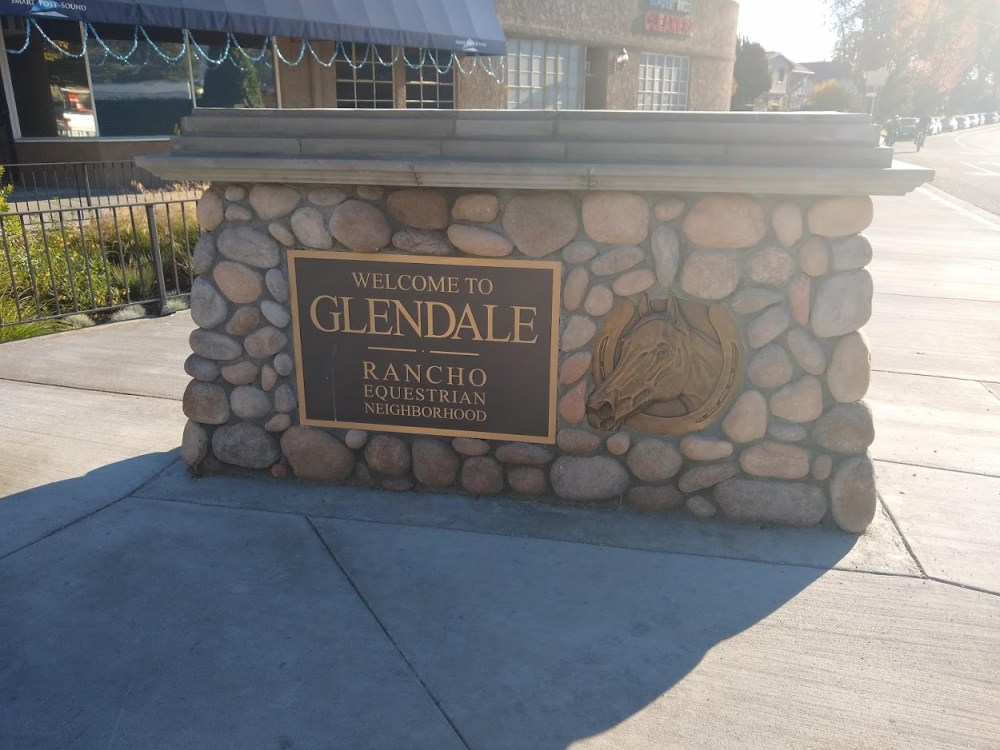
For the first time this training season, we had a run which took us outside Griffith Park and into the streets of Burbank and Glendale. I have run these streets before, but thanks to a new sign which was put up just recently, I came to realize Glendale wasn’t as far away as I thought it was. It makes me wonder, where’s the line which divides Burbank and Glendale? Right now, it’s a bit of a blur.
I did catch up with Coach Joaquin who was happy to see me. I told him why I arrived late, and he got a big laugh out of it. It’s always nice to know you are not the only one who forgets where you parked your car. If there ever is an opportunity to remake “Dude, Where’s My Car,” I truly believe I can write the best screenplay for it.
When I caught up with Coach Kerry, however, he was a bit peeved at me for arriving late to this run. I did apologize and explain to him how I forgot where I parked my car, but he was miffed at how I missed out on the announcements he gave the Pablove runners. I hope he can forgive me as it was never my intention to arrive late, but I am not entirely certain such forgiveness will come easily. As I defended myself to him, my fellow 2018 LA Marathon runner Jasmine appeared, and Coach Kerry told me to run back to Griffith Park with her. For once, I was going to arrive back there where people were still hanging out. I tell ya, Hall & Oates’ “Wait for Me” really did the trick!
One thing I really need to remember on these runs is to stay hydrated more regularly. I kept acting as if I didn’t need water or Pedialyte, or that only a few sips of each were needed. It is in my best interest to increase my intake of liquids throughout even if those endorphins are making me feel wonderfully euphoric. There’s nothing wrong about being confident in your abilities, but feeling overconfident could send me back to urgent care before I know it.
It was nice to be running alongside my fellow Pablove runners, but at one point it felt like they just disappeared. Did they suddenly hit warp speed as we passed by that park? Did they take a bathroom break? Well, the latter proved to be the case I eventually saw them in my wake, and I slowed down long enough for them to catch up with me. Of course, this ended up putting me in the position of falling behind everyone again, and as usual I was the last Pablove runner to finish.
After arriving at the finish line, Coach Joaquin had us do some exercises which included lifting our knees really high and running backwards among others. I felt a little silly doing them, but this meant I was doing them right.
So, my run did get cut short, but I still ran a good long distance. As much as I wanted to indulge in another Sausage McMuffin with Egg meal at McDonald’s, I instead drove home and landed in bed for a couple of hours. Being over 40 really makes me miss the joys of testosterone. I hate that it is much harder to stay in shape as you get older. Still, I have given myself a good reason to stay in shape by running this marathon for the ninth year in a row, so I just need to remain focused from now all the way to March 2019. Here’s hoping I burn off much more flab in the process.
Once again, I implore and humbly beg you to consider making a tax-deductible donation to The Pablove Foundation which I am running this LA Marathon in support of. Their efforts in finding a cure for pediatric cancer are far too important to ignore, and this particular disease doesn’t get nearly as much funding as you may think.
I made it back to Los Angeles the day before, but I still had to make some money as bills will never pay themselves like they should, so I didn’t get as much sleep as I should have for this Saturday’s run. Nevertheless, I managed to wake up before 6 a.m. before the alarm on my cellphone went off. However, I did get a bit distracted by the late Jonathan Demme’s “Married to the Mob” which was playing on television, and it remains one of my favorite movies of his. Michelle Pfeiffer was sheer perfection, Dean Stockwell played one of the few likable mob bosses in cinematic history, and Mercedes Ruehl stole every scene she was in.
Anyway, I arrived at Griffith Park in Burbank just as my fellow Pablove runners were beginning their warm-up exercises. These exercises seem simple in design, but they usually serve as a reminder of how my core muscles need to be strengthened more than I bother to realize. It’s all about the cores people, trust me.
This run had us full marathoners going 8 miles, and it took us up and down the backside of Griffith Park. This of course meant we had to run up that never ending hill which never ceases to punish those who ascend it. It doesn’t matter how good of a runner you are. Going up the backside always sucks the wind out of you. We were encouraged to shuffle up it, but even shuffling had me winded to where my walk breaks lasted longer than my time running.
When I came up to the one-mile sign, I wanted to curse it. This sign never comes soon enough on a run, and when I finally reach it, it looks like it is there just to laugh and sneer at me. There are runs where I feel like I have just completed 3 miles, and the one-mile sign shows up as if to say, “psych!” Damn you, one-mile sign! DAMN YOU!!!
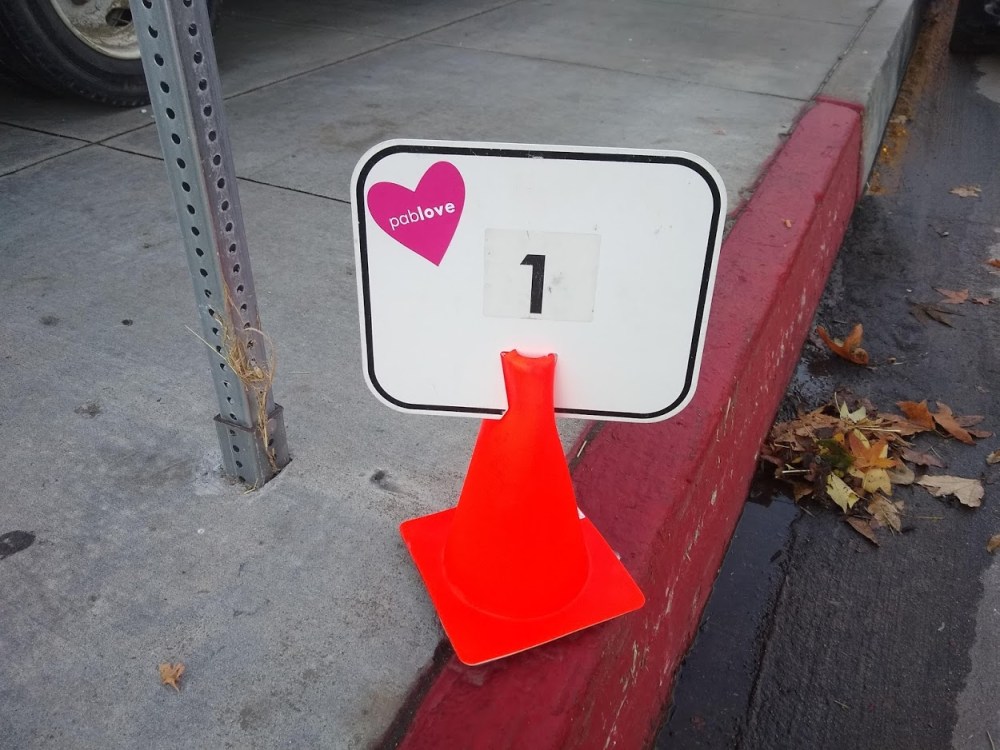
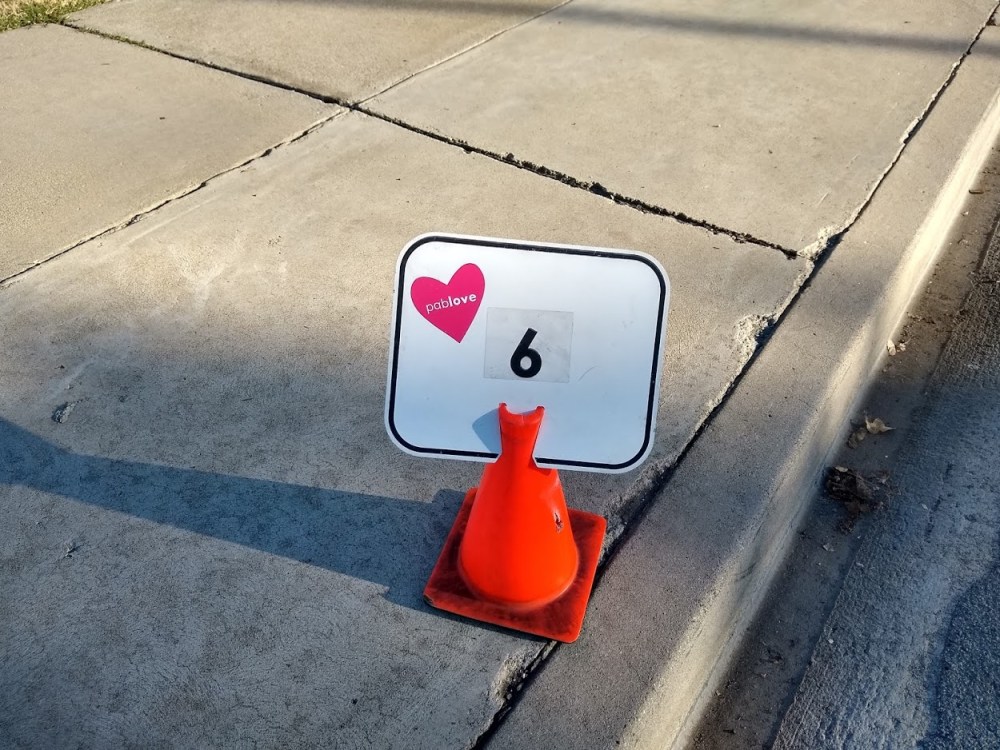
But then, upon closer observation, I realized the sign didn’t have the number one on it, but instead an up arrow. The arrow served as a reminder of the direction we needed to run in, as if it were not already obvious. Naturally, I felt like a schmuck for not noticing this at first glance. We all make mistakes and we are never perfect, and it could have been worse; I could have gone in the wrong direction. All the same, DAMN YOU ONE-MILE SIGN!!!
After finally reaching the top, I kept my speed in check as I descended down the other side. For a moment, I wondered if I was running in the wrong direction as Griffith Park became a little too silent for my taste. The drums of Robin Russell really would have been welcome at this point, but I guess he had a gig elsewhere.
Thankfully, Coach Lourdes was there to assure me I was going the right way. And yes, I did pass my fellow runners as they made their way back to where we started. As I made my way back, Lourdes became a bit concerned as I was coughing quite a bit. She asked if I was sick, and I replied I was not but that my allergies were having their way with me to where I wonder why I keep forgetting to invest in the Kleenex company. Maybe the air was dry or dusty. Lord knows the air quality in Los Angeles is never great, and those devastating wildfires have certainly made it even worse.
I have been thinking a lot about getting one of those Navage nose irrigation devices as I feel it will flush out all of my allergies to where my trash cans won’t be filled to the brim with used facial tissues. The only problem is the device costs $90 dollars, and this is a tiny bit more than I want to spend. Any suggestions? Would this be worth increasing my credit card debt for?
I made it back to where we started in one piece, and I was thrilled to see some of my fellow runners were still hanging around when I arrived. Typically, they are pretty quick to get in their cars and speed off, but I guess including the Hall & Oates song “Wait for Me” in one of my previous articles was enough to guilt trip a few Pablove runners into seeing me cross the finish line.
Regardless of my occasional cough, I came out of this run feeling good to where I felt the need to reward myself with a Sausage McMuffin with Egg sandwich at McDonald’s. As much as I should be avoiding fast food restaurants at my age, the breakfast meals at McDonald’s remain infinitely delicious after all these years. Even my dad loves their breakfast sandwiches, and he hates McDonald’s.
To be honest, this training season for the LA Marathon is going better than I expected. Hopefully I am not getting overconfident here, but I came into this season thinking I was not entirely ready to start training. I was hoping to start training more extensively before the Pablove runners met up for their first run, but balancing out running with making a living is always challenging as the latter wins out more often than not. But this time I want to burn the fat off my belly more than ever before. Here’s hoping I will once again look as svelte as I did back in high school. Anything is possible. Anything.
Once again, I implore you to make a tax-deductible donation to The Pablove Foundation which I am running this LA Marathon in support of. They are dedicated to finding a cure for pediatric cancer, and while millions of dollars are spent by our government each year on cancer research, only a tiny portion of it goes towards pediatric cancer research. This disease will not cure itself, so please lend a helping hand.
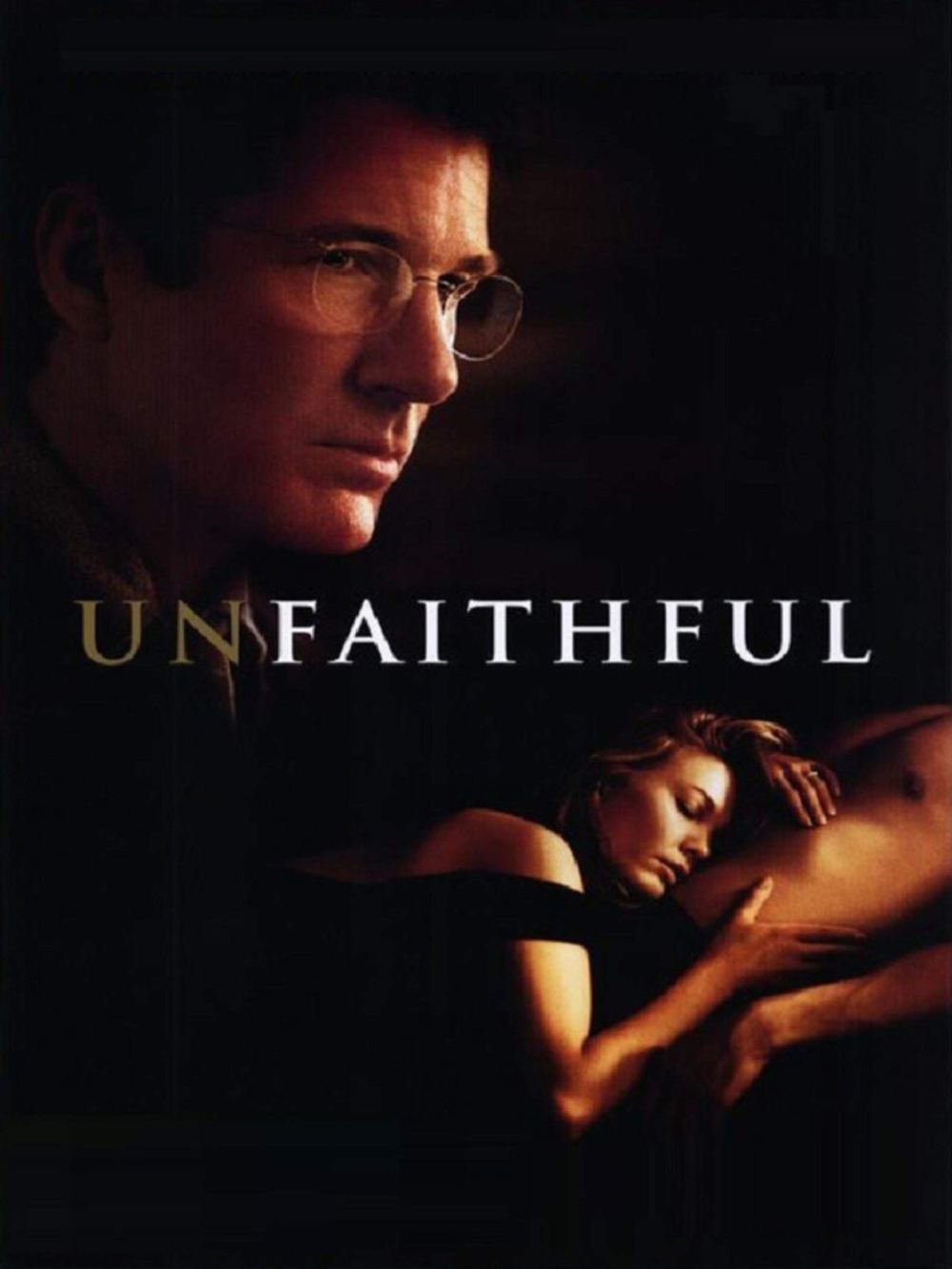
“Unfaithful” could easily be seen as a gender reversal on “Fatal Attraction” as this time the wife cheats on her husband. Plus, both movies were directed by Adrian Lynne, and “Fatal Attraction” inadvertently created a formula of psychotic attraction which lasted for many years to where we got “Unlawful Entry,” “Single White Female” and “Swimfan” among other movies. “Unfaithful,” however, is not held captive to this formula, and it becomes not so much a thriller as it is a drama with profound conflict. It doesn’t end with an audience pleasing conclusion as it does with ambiguity over how to resolve a situation bound by inescapable moral complications.
The movie stars Diane Lane as Connie Summer, a happily married wife to Edward Summer (Richard Gere) and mother to Charlie (Erik Per Sullivan). On one massively windy day in downtown New York, she accidentally runs into French bookseller Paul Martel (Oliver Martinez) who invites her to his apartment to take care of her painfully scraped knees. This ends up with her meeting Paul again several times before they embark on a passionately sexual relationship which contrasts with the loving but average marriage she has with Edward. But it all ends up becoming an addiction she can’t quite tear herself away from, and the destruction of her marriage becomes more and more imminent as a result.
Unlike the average formulaic thriller which clearly delineates good and bad to where the wicked get the punishment they deserve, “Unfaithful” never lets the viewer off easy. It poses questions to the audience which they might not want to answer, and they linger long after the movie is over. The film was adapted from Claude Chabrol’s 1968 French film “The Unfaithful Wife,” and it doesn’t feel like much was changed in the translation. Connie’s affair ends up creating a ripple effect which severely affects those people she loves the most in life.
Edward is no idiot as he suspects something is up, and the stress and confusion we see on his face gets worse and worse. What he discovers leads him to commit an act of which he never felt capable, and we are left to wonder if he should be punished or forgiven. Lynne never leaves us with any easy answers in “Unfaithful,” and this makes this film all the more compelling.
Lane already had a long and successful acting career before this movie came along, but this is the role which brought her the audience she long deserved, and there is no forgetting her after this. The role of Connie Summer is a great one for any actress, and Lane more than rises to the challenge. While she is cheating on her beloved husband, she still makes her character very sympathetic and brilliantly portrays her conflicting emotions. The scene where she is heading home on the subway after her first sexual tryst with Paul is a marvel of film acting as her face is a stunning portrait of regret and excitement. Seeing Lane experiencing various emotions makes for an unforgettable acting moment which deserves much study for future generations of actors.
Gere, considered by People Magazine to be one of the sexiest men alive, is every bit her equal as Edward. It’s almost weird to see him in this kind of role because we have previously seen him play characters who either cheat on their spouse or run off with someone else’s wife. Here, he plays a loving husband who hasn’t done anything wrong, so this situation provides much confusion for him as well as a pain he hoped never to experience.
As for Oliver Martinez, it’s easy to see why anyone could easily fall for him. He exudes sexiness both in appearance and the way he speaks. But more importantly, he never makes Paul Martel a character with overtly evil intentions. This is not a man who can be easily described as a villain, but one who follows through on his passions regardless of the consequences they may bring about. When he comes face to face with those he has hurt, Paul never flaunts his ego or berates them. The way he sees it, he has done nothing wrong and never intended to wound anyone so deeply.
If “Unfaithful” were directed by anyone else, it would have made the wife more sympathetic and the husband a one-dimensional bastard to where you’d want the wife to cheat on him. But Lynne is far more interested in providing a fascinating portrait of a relationship which is not bad off, but instead one which turns out to be more susceptible to temptation than at first glance. The good guys and bad guys are never easily told apart in this story. There is a darkness in all the characters here, and it’s a darkness they don’t see until it’s much too late.
There was much talk after “Fatal Attraction” of how the original ending was changed to something more audience pleasing, but turning Glenn Close’s character from a wronged person into a psychotic menace who met a deadly end never sat well with many people. It’s as if Lynne has been paying a price for this ending ever since, and “Unfaithful” almost serves as a make up for him taking the easy way out back in 1987. Whatever the case, “Unfaithful” is a compelling drama which allows its actors to shine in ways we have not seen previously. Lane is a revelation here, and her performance, like this movie, is hard to shake.
Of course, “Unfaithful” still leaves the audience with one other burning question much like the one posed in “Fatal Attraction:” Why cheat on your spouse when they are played by Anne Archer or Richard Gere? Well, we may never know.
WRITER’S NOTE: This review was written back in 2007.
Now this is a great movie!
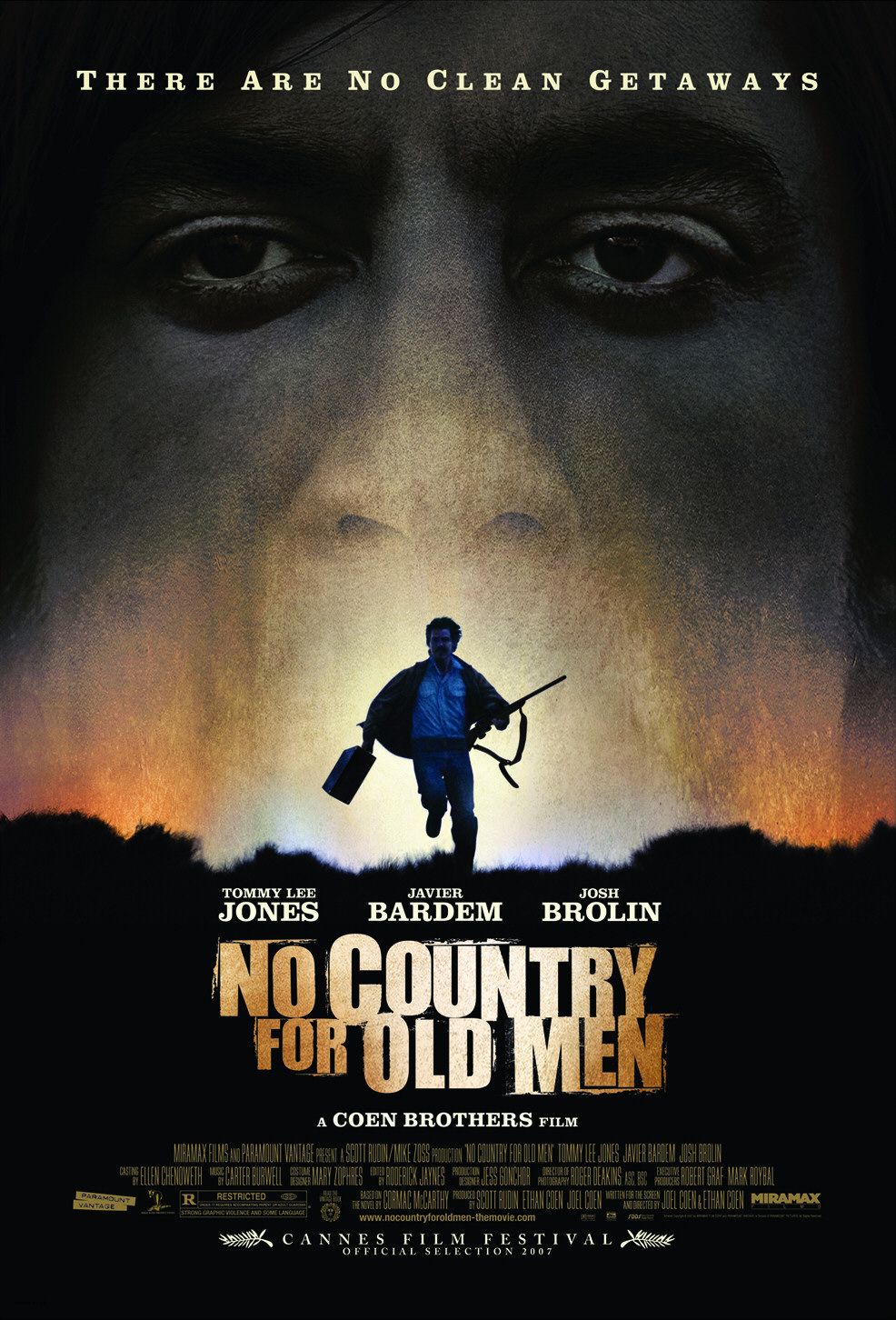
“No Country for Old Man” stands alongside some of Joel and Ethan Coen’s best movies including “Fargo” and “Barton Fink.” Some say it is a return to form for the brothers after their last two movies, “Intolerable Cruelty” and “The Ladykillers,” but they can’t be as bad as people say they are. Even the worst Coen brothers’ movies are far more interesting than most American movies made today. The one thing “No Country for Old Men” proves is they never lost their touch to begin with, and who are we to think that they ever did? I mean really!
This movie is based on the novel by Pulitzer Prize winning author Cormac McCarthy, and he has written a lot of great novels over the years like “All the Pretty Horses.” I have not had the opportunity to read any of his books, but my understanding is they deal with a world where the goodness of human nature is a rarity as the atmosphere is overwhelmed by cruelty. His books have also been described as “unfilmable” by many, but I guess no one told the Coen brothers this (would it have made a difference?).
It all starts off with hunter Llewelyn Moss (Josh Brolin) who stumbles upon a Mexican standoff gone bad where rotting corpses of drug runners and dogs are impossible to ignore (think of the ending of “Reservoir Dogs”). There are also a bunch of trucks laying around, and in them Llewelyn finds the only survivor who begs him for some water. But Llewelyn ends up passively avoiding his pleas as he has no water to give. Instead, he finds among the carnage a big stockpile of heroin and $2 million dollars in cash. He doesn’t bother with the drugs, but he takes the cash and stashes it back at his trailer home where he lives with his wife Carla (Kelly MacDonald).
His conscience, however, keeps him from getting any sleep, so he ends up doing what even he openly says may be “the biggest mistake” he could possibly make. He fills up a bottle of water and heads back to the site to give to that Mexican. Instead, he gets ambushed by a faceless gang who take their shots at him as he escapes away. From then on, the movie is a chase to the finish. But this isn’t simply a chase movie, but a movie where the souls of the characters threaten to be every bit as barren as the desert lands in Texas.
“No Country for Old Men” is one of those movies where everything you hear about it is absolutely true. It has great acting, directing, cinematography and a superb screenplay. There isn’t a single wasted moment in it, and it is certainly one of the most quietly intense movies I have seen in some time. I think it is safe to say the Coen brothers have faithfully adapted Cormac McCarthy’s work while adding their own flavor and dark humor to it, and they drive away at one of his main themes in the book; society getting crueler, and of the end of the world as we know it.
In a sea of great performances, the one man who steals the show here is Javier Bardem who portrays Anton Chigurh, a man who is deeply psychotic but not without principles. From start to finish, Bardem gives us one of the scariest villains in cinematic history whose mere presence forces the characters to immediately fear for their safety. Those other characters who fail to do so are either totally naïve or have no idea who they are talking to.
Josh Brolin is having one heck of a great year right now in the movies. He started 2007 off early on as Dr. Block in “Grindhouse,” then we saw him play a very corrupt cop who runs afoul of Denzel Washington in “American Gangster,” and he is probably in another movie right now which I have yet to see. Safe to say, this is the best performance he has given this year as he is perfectly cast as Llewelyn Moss, a hunter who gets in way over his head.
The other performance worth singling out is Tommy Lee Jones’, and he gives one of his very best ever as Sheriff Ed Tom Bell. His character is really the observer of human nature and the decline of it in this story. Jones was pretty much born to play just about any part of a movie adapted from one of McCarthy’s novels. Like the novelist, he clearly understands the worldly feel of Texas and human nature, and this is echoed in the voiceover he gives at movie’s start.
I am not quite sure what to make of the ending. And what is meant by the title “No Country for Old Men” anyway? Is it a metaphor for how the old way of doing things has long since passed the Sheriff Bell by? That the lessons our elders taught us will soon become insignificant? Or is the painful truth that society has no use for men once they qualify for senior citizen discounts? The Coen brothers are not quick to give us answers, but they do give us much to think about as this is a motion picture which will linger with you long after the end credits have concluded.
“No Country for Old Men” is the best movie I have seen in 2007. As I said, there is not a single wasted moment in it.
“Wanting people to listen, you can’t just tap them on the shoulder anymore. You have to hit them with a sledgehammer, and then you’ll notice you’ve got their strict attention.”
-John Doe from “Seven”
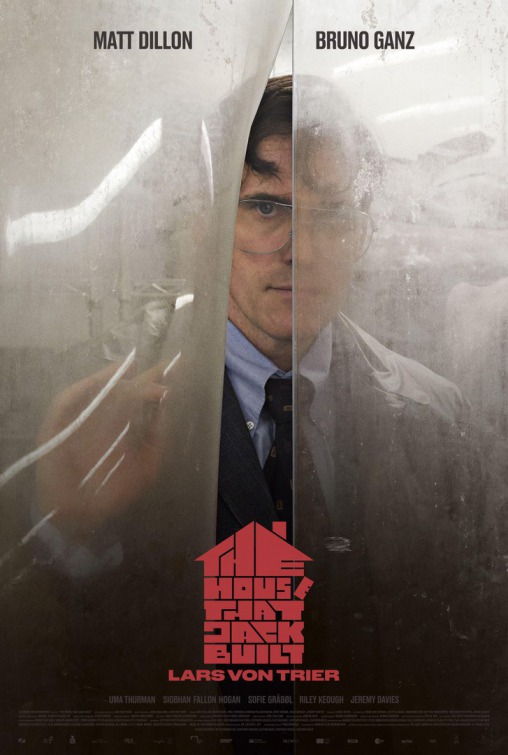
Lars Von Trier loves getting our strict attention too, and he does this yet again with “The House That Jack Built” which stars Matt Dillon as a serial killer. On November 28, 2018, IFC Films presented his director’s cut for one night only, and the advertisements boasted of how over 100 people walked out of it at Cannes, and that those who stayed gave it a 10-minute standing ovation. Give IFC some credit as they have seized upon the film’s controversy to great effect. they are showing Von Trier’s cut before releasing an R-rated version in December, and the advertisements make it clear how this version may not be your cup of tea. As for us proud Von Trier veterans, we know exactly what we are in for. Or do we?
What surprised me most about this cut of “The House That Jack Built,” is that it is nowhere as shocking as I was led to believe. In fact, I found the violence at times rather tame especially compared to the scenes of mutilation in “Antichrist.” This is in many ways the result of many people writing about the movie’s most graphic scenes in scorching detail from one article to the next, but we are also living through a tumultuous time where few things can shock us the way they used to. Or perhaps the images our minds generate will always come across as more shocking than what any filmmaker can put on the silver screen.
The violence shown is extremely brutal and very bloody, and what Jack does with the bodies is just as disturbing. But Von Trier keeps us at a distance from the action to where we are fully in Jack’s mindset, treating his soon to be murdered victims as parts of major work of art. Many may cringe at the images Von Trier thrusts upon us with a twisted glee, but in the end, this is only a movie, not real life.
The movie is constructed of five episodes, each of which shows Jack murdering one or more people and it takes place over 12 years in Washington State. Each murder serves to illustrate Jack’s development as a serial killer, one with a serious case of OCD. And throughout we hear him having a conversation with a man named Verge (played by Bruno Ganz) about the murders he has gotten away with, and their talks take many twist and turns as it leads to a grand finale in one of the darkest places on earth.
The first chapter entitled “1st Incident” has Jack picking up a stranded motorist (played by Uma Thurman) who proceeds to taunt him by saying he might be a serial killer, and it serves to set up an ironic tone which will dominate much of the movie. It’s almost impossible to take things seriously as Von Trier is practically begging us to root for Jack to kill her as she cannot shut her mouth and even goes as far to say where he can bury her body.
Another surprising thing about Von Trier’s serial killer film is that it’s actually quite funny. This is clearly the case in the “2nd Incident” in which Jack attempts to con his way into the home of another woman (played by Siobhan Fallon Hogan, whose expressions are priceless) in a pathetic fashion. He first tries to pass himself off as a policeman, but his explanations for why he doesn’t have a badge on him are just hopeless, and yet he does not give up easily. And thanks to his OCD, he is convinced he has left evidence of her murder to where he keeps going in and out of the house several times.
The violence does become even more brutal and nihilistic as “The House That Jack Built” goes on, and men, women, children and animals are never spared from this wrath. I’m not going to bother going into specific descriptions as, again, the gory details have already been written about in various articles, but I will say this movie is not shock for shock’s sake. If you want that, check out the god-awful “Human Centipede 3.”
Von Trier has said in interviews how he was inspired by “the idea that life is evil and soulless” as well as the rise of Donald Trump. Indeed, many live in anxious uncertainty as the former reality television show host never ceases to give us one headache after another, and seeing him and his cronies (several of whom have since been indicted) threatens to make us apathetic to his inescapable crimes. Jack exists in a world too apathetic to realize the horrible things he is doing to others, and he keeps getting away with murder as a result.
A key scene for me was when Jack corners his girlfriend (played by Riley Keough) who slowly realizes who he really is. She screams for help, and Jack does the same in a mocking fashion. When he opens a window and cries to anyone who can hear how “nobody wants to help,” this helps illustrate just how apathetic the world is to the cries of someone in danger. If there are people willing to help someone, none of them are in a close enough vicinity to do so. If they are, they must have their own problems to deal with.
Another key subject involves art and what constitutes the greatest works of it. Neither Jack or Verge can come to a consensus of what makes great art as Verge believes you cannot have any without love as love, like intimacy, is an art unto itself. Jack, however, sees violence as playing a huge part in art and, he sees the murders he has committed as being more creatively stimulating for him than building a house.
David Bowie’s song “Fame” is played many times throughout, and I kept wondering why. Well, let’s look at the first set of lyrics:
“Fame makes a man take things over
Fame lets him loose, hard to swallow
Fame puts you there where things are hollow (fame)
Fame, it’s not your brain, it’s just the flame
That burns your change to keep you insane (fame).”
Is Von Trier attempting to say something about fame? Perhaps. Jack looks to gain infamy by sending photographs of his corpses to the local newspaper under the name of “Mr. Sophistication,” and they do not go unrecognized by the general public. But whether Jack is a serial killer or a singing star, his life is so cut off from others, and his existence will always be a hollow one. Regardless of how things end up for Jack, any fame he could hope to have will not succeed in making his life different.
There is also a moment where Von Trier features clips of his past movies like “Breaking the Waves,” “Dancer in the Dark,” “Antichrist” and “Melancholia” among others as Jack says the following:
“Some people claim that the atrocities we commit in our fiction are those inner desires which we cannot commit in our controlled civilization, so they’re expressed instead through our art. I don’t agree. I believe Heaven and Hell are one and the same. The soul belongs to Heaven and the body to Hell.”
Is Von Trier explaining how he works or apologizing for the crazy things he has brought to the silver screen? Indeed, the realm of art and fiction are places where we can exorcise our darkest thoughts and angriest emotions, and I for one will always be thankful for this. For the Danish filmmaker, it’s a must as he continues to deal with endless phobias and clinical depression, and he always looks to be exorcising some malady he could do without. But with Jack, he is dealing with a character who is a soulless vessel who can no longer see the line between right and wrong or fact and fiction, so maybe the filmmaker is wondering if he truly has gone too far.
How long have we been watching Matt Dillon onscreen? Have we seen him play a role like this before? If so, none quickly comes to mind. He is in just about every frame of this 155-minute movie, and he gives a frighteningly authentic portrayal of a serial killer at their most banal. Dillon makes Jack into the same kind of killer John Doe described himself as in “Seven” in that he is not special and has never been extraordinary, and it’s fascinating to see the actor refusing any opportunity to chew the scenery as many others would. He mines the role for all its pathos and morbid black humor, and it’s one of the best performances I have seen in a movie this year. Having said that, it is highly unlikely will receive an Oscar nomination. Need I say why?
“The House That Jack Built” will not go down as one of my most favorite Von Trier movies as it does drag on for far too long, but it is as fascinating as any he has previously made. There is much more to this cinematic experience than you will see at its gory surface, and you will ponder the many things Von Trier has dared you to explore on a deeper level.
I am glad Von Trier is still making movies as we need filmmakers willing to push the envelope and unsettle us in an effort to get us to see a bigger truth we too often turn away from. Say what you will of him as a person, but I always look forward to what his movies. As much as he may shock you, he also gets you to think. Right now, there are only so many filmmakers who can do that.
Still, I have a feeling the upcoming R-rated version will be far more shocking. The MPAA will most likely censor the movie’s most graphic moments to where our imaginations may have to spell out what we think we saw. In the process of trying to protect American audiences, this archaic body usually, and thoughtlessly, makes a movie more traumatic than anyone intended it to be. I guess I’ll have to wait and see.
Hirokazu Kore-eda’s “Shoplifters” is one of the most emotionally resonant movies I have seen in 2018, and it is a real gem in a cinematic year dominated by, big surprise, superhero blockbusters and endless sequels. The hope and warm emotions which emanate from it feel like the kind I have not been witness to on the silver screen in ages, and the movie dares you to ponder what the word family really means. While many see families being bound by blood, “Shoplifters” suggests there is more to it than that.
Things start off with Osamu Shibata (Lilly Franky) arriving at a supermarket in Tokyo, Japan, and we will eventually see how this movie got its name. With him is the young Shota (Jyo Kairi), and they use hand signals with each other to indicate when the coast is clear to take what they want and need. Put aside the fact no parent or adult figure should ever be teaching a child to steal; these two have an effective system which leads to them obtaining the goods they need without going through the checkout line or setting off an array of alarms. More importantly, it shows the strong connection between these two, and it is not one which is easily formed.
Upon arriving home, we see they with several other people in a cramped apartment which was made for two people at best. Among them are Osamu’s wife, Nobuyo (Sakura Ando), who works an unforgiving and low-paying job at a local laundromat, their daughter Aki (Mayu Matsuoka) who performs sex shows for anonymous customers, and grandmother Hatsue Shibata (the late Kirin Kiki who steals every scene she is in) whose residence they all reside in. Everyone here is suffering through an unsteady economy dominated by recession, so these characters are forced to steal items such as food and clothes in order to get by. Yes, Hatsue does have her late husband’s pension to fall back on, but it is never enough to fulfill their needs.
Then on one cold evening as Osamu and Shota are returning after another successful day of shoplifting, they come across Yuri (Miyu Sasaki), a 5-year-old homeless girl sitting all alone by herself. As the temperature decreases rapidly, and you could do a drinking game for every time a character says “it’s cold,” they decide to take her home for the night. With their apartment overcrowded, Nobuyo suggests they return Yuri home, but a visit to her residence reveals her parents are abusive to one another and to Yuri as well. As a result, Osamu and Nobuyo find themselves informally adopting her.
What struck me most about “Shoplifters” is how genuine its emotions feel. From a distance, the description of the plot might make it seem something along the lines of “Three Men and a Baby” or maybe even “Raising Arizona,” both of which featured characters who become parents in unorthodox ways. But Kore-eda is not out to manipulate our emotions for a single second as he lets life unfold before us in a way which feels real and unpredictable. No one appears to be acting here, and every single actor inhabits their roles to where you are seduced into the movie’s wonderful atmosphere with what seems like relative ease.
The affection everyone in the small apartment has for Yuri feels wonderful and hopeful to take in, and her presence has a profound effect on them all. The scene where Nobuyo and Yuri burn the 5-year-old’s clothes in an effort to start fresh in life speaks volumes. The two share scars of past abuse, and Nobuyo cuddles her and says how people show their love for one another through hugs, not violence. If there has been a more genuinely sweet scene in a 2018 movie, I missed it.
As for the others, Osamu and Nobuyo find an intimacy in their relationship which has eluded them for far too long, and Aki yearns to get closer to one of her customers as she can no longer keep him at a distance. Shota slowly begins to bond with Yuri to where he feels comfortable calling her sister, but this later leads him on a journey to find himself in a way which will have inevitable consequences for everyone that we don’t really see coming.
Revealing more of what happens in “Shoplifters” would be criminal, but I can tell you the last half is truly devastating as everything we thought we knew about these characters is turned upside down. One of Kore-eda’s masterstrokes as a writer and director is he never judges the characters, and as a result, neither did I. Even as the local news reports of Yuri’s disappearance, Osamu and Nobuyo justify their actions by saying they did not kidnap her since they never asked for a ransom. It’s a weak defense to be sure, but seeing the connection these characters have with one another deeply moved me to where I actually found myself giving them a pass which I never would have in real life.
With “Shoplifters,” Kore-eda aims to look at what makes a family. While we collectively believe it is blood which makes a family, he wonders if there is more to a family than that. At a key moment, one of the characters says if having a baby automatically makes you a parent. Well that goes without saying, but considering the love and affection these characters grace Yuri with, I had a hard time finding enough of a reason to separate her from them.
Kore-eda was also influenced by the Japanese recession, and he uses this to deal with the declining social statuses many are forced to deal with in the country. Then again, “Shoplifters” could be about any country where greed continues to wreak havoc due to corporations valuing the size of their profits over the rights of the workers who helped get them those profits. We Osamu trying to get whatever work he can, and the work he gets never pays enough. Nobuyo’s job offers her a pathetically low wage, and then later we get a scene where her boss forces her and her co-worker to decide amongst themselves who should get fired when it is determined there is only enough money to keep one of them on the payroll.
“Shoplifters” is a movie which will stay with you long after you have watched it. I was deeply moved by it from start to finish as its humanity really made me appreciate the value of family in a way no other movie has in a long time. We are at a point where there are far too many movies to keep up with, but this is one I highly recommend you check out above others. This one took me for quite the emotional ride and left me fully wringed out by its end, and the experience was one of the most rewarding.











 The Ultimate Rabbit