While watching “Blair Witch,” I kept hearing these lines of dialogue between Richard Attenborough and Jeff Goldblum from “The Lost World: Jurassic Park” in my head:
“Don’t worry, I’m not making the same mistakes again.”
“No, you’re making all new ones.”
This particular “Blair Witch” movie came out of nowhere as it was filmed in secret under the title “The Woods,” but over this past summer it was revealed to actually be a direct sequel to “The Blair Witch Project.” With a couple of talented filmmakers at the helm and a cast of unknown actors in front of the camera(s), this third “Blair Witch” movie showed a lot of promise as the memories of watching the original all those years ago remain very vivid to me. But what we end up with here has me paraphrasing the lyrics of a song by The Who: Here comes the new Blair Witch, same as the old Blair Witch.
The movie opens up on James Donoghue (James Allen McCune), the brother of Heather Donoghue, viewing some grainy footage which leads him to believe his sister might still be alive. As a result, he forms an expedition to venture into the Black Hills woods in Burkittsville, Maryland to search for her, and he is joined by Lisa Arlington (Callie Hernandez), an aspiring film student who wants to make a documentary on James’ search, and their friends Peter (Brandon Scott) and Ashley (Corbin Reid). Also along for the ride are Talia (Valorie Curry) and Lane (Wes Robinson), local residents responsible for uploading the grainy footage James watched and who have forever been interested in the legend of the Blair Witch as they do not live far from the events of the original movie.
Once these characters leave their cars behind, we are pretty confident they will never be seen again. Still, we are intrigued at the possibility of James meeting up with Heather as her body, nor Michael’s or Joshua’s, was never found. As expected, this expedition starts with everyone having fun by the campfire, but we all know what will happen from there. Once again, Goldblum’s dialogue from “The Lost World: Jurassic Park” was playing loudly in my head:
“Oh, yeah. Oooh, ahhh, that’s how it always starts. Then later there’s running and um, screaming.”
If there’s anything different about this “Blair Witch” movie, it is the technology. Whereas the trio from the original had video and film cameras at their disposal, these characters have GPS, walkie talkies, digital and DAT cameras, cell phones and a drone which can give them a wider view of the woods. But of course, they are in an area where their cell phones don’t get very good, if any, reception. As for the rest of their gear, it will only do them so much good as they venture deeper into the woods. I mean, we all know what curiosity did to the cat, right?
The beauty of “The Blair Witch Project” was that it never felt like a movie. Instead, it felt more like a unique experience we were not used to having. We were there in the woods with the characters as their situation became increasingly perilous and more terrifying as time went on. Unlike most horror movies, we were not inflicted with cheap scares every five minutes. We were creeped out by the ambiguity of the situation as our imagination ran riot over the things we could not see. This is not to mention the movie’s brilliant marketing campaign which included the fake documentary “Curse of the Blair Witch” and missing photos of the three filmmakers posted at theaters. I’m surprised the studio didn’t put their faces on milk cartons as well.
But “Blair Witch” is unable to match the original’s “you are there” feeling, and I could not escape the fact that I was watching a horror movie. Furthermore, it was a weak horror movie which takes us down a road we have traveled far too often. This time the filmmakers resort to jump scares, and only a few of them work. Also, the characters here are stereotypical ones we usually expect to see in movies like these, and they are none too bright to put it mildly. Then again, horror movies usually thrive on stupid characters because otherwise nothing interesting would ever happen. One character pleads for everyone to head back home, but no one is about to. Just as when Jon Voight suggested to Burt Reynolds in “Deliverance” that they go back home and play golf, we are presented with good advice which is not taken.
After a time, it felt like I was watching a mashup of a “Blair Witch” and a “Paranormal Activity” movie as the soundtrack gets overtaken by dark ominous sound and tents start flying up in the air which has our intrepid characters running for their lives while filming the action any which way they can. I mean heaven forbid they don’t get anything on camera because otherwise there would be no movie.
Let’s face it folks, the found footage genre has long since been beaten to death. It thrived for a time after “The Blair Witch Project,” and it was reignited to very terrifying effect with “Paranormal Activity” and a few of its sequel. But like anything Hollywood gets its hands on, it has been beaten to death to where we are left with diminishing returns in the form of “Paranormal Activity: The Ghost Dimension” and “The Hollows.” There’s nothing new to be found in this genre with “Blair Witch.” Nothing.
When Artisan Entertainment, which later became Lionsgate, decided to make “Book of Shadows: Blair Witch 2,” they hired “Paradise Lost” director Joe Berlinger to co-write and direct it. What resulted was a mess of a movie with bad acting and a poorly conceived story. Either that, or Artisan kept messing around with the movie and recut it behind Berlinger’s back as he has constantly accused them of doing.
This time around, they hired Adam Wingard to direct and Simon Barrett to write this movie, and this had me believing audiences were in for a treat. This is the same duo who gave us the black comedy slasher “You’re Next” and the highly underrated action thriller “The Guest.” Both movies show how familiar they were with the genres they cheerfully exploited, and they succeeded in bringing a freshness to those genres which appeared to have long since reached their peak. With them behind the camera(s) for “Blair Witch,” I felt they could bring something unique and fresh to the found footage genre, but even they can’t help but fall back on tried and true tricks, many of which we can see coming from a mile away.
For what it’s worth, Wingard and Barrett do give us a thrilling climax as the characters run through that creepy house we remember from the original, and we keep guessing as to how long they can last before they are pulled away with only their cameras left behind, recording the floor from an obtuse angle. But this sequence is not enough to save the movie, and what we are left with is, if you’ll excuse the expression, the same old shit.
The directors of the original, Daniel Myrick and Eduardo Sanchez, had often talked about doing a prequel which would show how the legend of the Blair Witch came about. That would be an interesting movie to see. Or perhaps we could get one where we see things from the point of view of the Blair Witch herself as she toys with the foolish humans by scaring them silly before eventually doing them in. One thing is for sure; unlike Donald Trump supporters, she does not discriminate.
Tom Hanks has been the go to guy for playing American heroes and for good reason; he never plays characters as people gunning to become heroes at any given opportunity. Whether it is Captain Miller in “Saving Private Ryan,” Jim Lovell in “Apollo 13,” Andrew Beckett in “Philadelphia,” Forrest Gump or even Jimmy Dugan in “A League of Their Own,” Hanks has long been the master of playing ordinary Americans who are just trying to get by in the rough and tumble real world the best way they know how. None of these characters set out for the adulation of others, but for a sense of purpose and justice in a world which at times seems devoid of it.
Now we can add Chesley Sullenberger to Hanks’ list of noble American characters with his excellent performance in “Sully,” Clint Eastwood’s dramatization of the airline pilot’s dramatic landing of US Airways Flight 1549 in the Hudson River. We all know this story of how the flight suffered dual engine failure shortly after takeoff due to a flock of Canadian geese flying straight at them, but Eastwood and Hanks dig deeper into what went on as Sullenberger and his First Officer Jeffery Skiles (Aaron Eckhart) are soon drilled by the National Transportation Safety Board as tests imply the left engine on the plane did not fail, meaning they still could have landed at LaGuardia Airport or one in New Jersey instead of on the water.
Sullenberger was quickly hailed a national hero for successfully landing the plane and saving all the lives aboard it, but this movie shows him more troubled by what he did than proud. He becomes plagued with nightmares and PTSD over how the flight could have ended in a catastrophic way. Also, with him and Skiles being thrown into instant stardom for their actions, Sullenberger ends up feeling isolated from everyone around him as people are eager to hug him or shake his hand in congratulating him for what he accomplished.
What I especially liked about “Sully” is how it shows the damaging effect sudden fame can have on an individual. While some might be super excited about appearing on “Late Night with David Letterman” or being interviewed by Katie Couric (who plays herself in this movie), Sullenberger finds him retreating from all the media attention as he never asked for it. While he constantly reaches out to his wife Lorraine (Laura Linney), they are separated by thousands of miles as she resides on the other side of the country. Even as they talk on the phone, the space between them feels quite profound and loneliness soon becomes his best friend.
Hanks’ performance as Sullenberger reminds us of why we look to him to play those people we see as American heroes; they are people not quick to jump into the spotlight and appear unsure as to what to do once they are thrust into it. Hanks never sets out to impersonate Sullenberger, but instead seeks to capture his state of mind following this unforgettable incident. The Oscar winning actor does excellent work in showing how Sullenberger is beset by tremendous self-doubt as he is forced to wonder if he made the right decision in light of all the computer generated evidence presented to him.
Hanks is also supported by a strong supporting cast of actors whom can never be expected to let him or Eastwood down at any second. Eckhart is the definition of strong support as his character of First Officer Jeff Skiles stands by Sullenberger every step of the way. There’s also Laura Linney who plays Sully’s wife, Lorraine, who does her best to support her husband over the phone any chance she gets. While in some ways Linney has a thankless role to play here, she justifies Lorraine’s presence in the film as the character is the support Sully needs through the most trying of times.
One of the key things Eastwood gets across here as a director is how the human element has to take precedence of the technological one as not everything can be solved or reasoned out completely by computers. This is especially interesting as Eastwood is best known for directing movies which deal heavily in human nature and its ever-growing complexity, but this time he has some nifty tools to work with. Eastwood got to shoot much of “Sully” with IMAX cameras, and seeing this movie on the nearest IMAX screen is a must.
The plane crash sequence is masterfully directed as we see pilots and flight attendants at their most professional during a moment of crisis. While we all know how things will turn out here, it is still a pulse pounding scene as we are with everyone on this plane from when they take off to when they land on the Hudson. The sound of the engines dying down and of silence in midair is unnerving, and it’s not every day you see a commercial jet land in the water.
Eastwood also makes us remember how the human element plays as big part in movies as do visual effects. He has not set out to give us a biopic on Sullenberger, and that’s even though there are moments sprinkled throughout which show his beginnings as a pilot and other significant experiences which molded him into the pilot he became. Instead, he is far more interested in the impact this one miraculous moment can have on a person’s life and of the obstacles it places in front of them.
Thank goodness Eastwood did not put the term “based on a true story” at the beginning of “Sully.” We all know this happened. Does Eastwood and screenwriter Todd Komarnicki play loose with the facts? Sure, but most movies like this do. The NTSB has objected to the way they have been portrayed here, and they do come across as overly villainous at times. But in terms of the story’s dramatic arc, it makes sense why they were portrayed as such here. To his credit, Sullenberger requested that the names of the real-life NTSB investigators, which were featured in the original draft, be changed as he felt it would be unfair to associate them with the changes in the story. Whatever the case, “Sully” is still a very compelling and gripping motion picture to sit through.
Some still question whether Chesley Sullenberger deserves to be called a hero as they believe he still could have landed at an airport. Others I know personally have accused him of using his pulpit to trash professional pilots for no good reason. But neither Eastwood or Hanks made this movie to deify Sullenberger as to do so would seriously cheapen the story for no good reason. They simply show us an ordinary man who was forced to make a quick decision in order to save the lives of many, and he was not out to call himself more heroic than others for his actions.
But also, “Sully” shows how an entire life can too often be boiled down, often unfairly so, to a single moment which renders all other accomplishments moot. In today’s media and technology saturated culture, people are never defined too broadly anymore but instead by specific actions more than anything else. The Buddha once said the merit of a whole life can be undone in a single moment. This could have been the fate Sullenberger would have been forced to accept, but he rose to the occasion and saved many lives in the process. As this movie shows, he was never out to be a hero. He was simply a human being doing his job.
And if nothing else, the movie shows Americans, especially those in New York, rising to the occasion and helping the passengers get to the shore safely. However which way you want to look at the story of US Airways Flight 1549, it did provide us with a happy ending we desperately wanted to have.
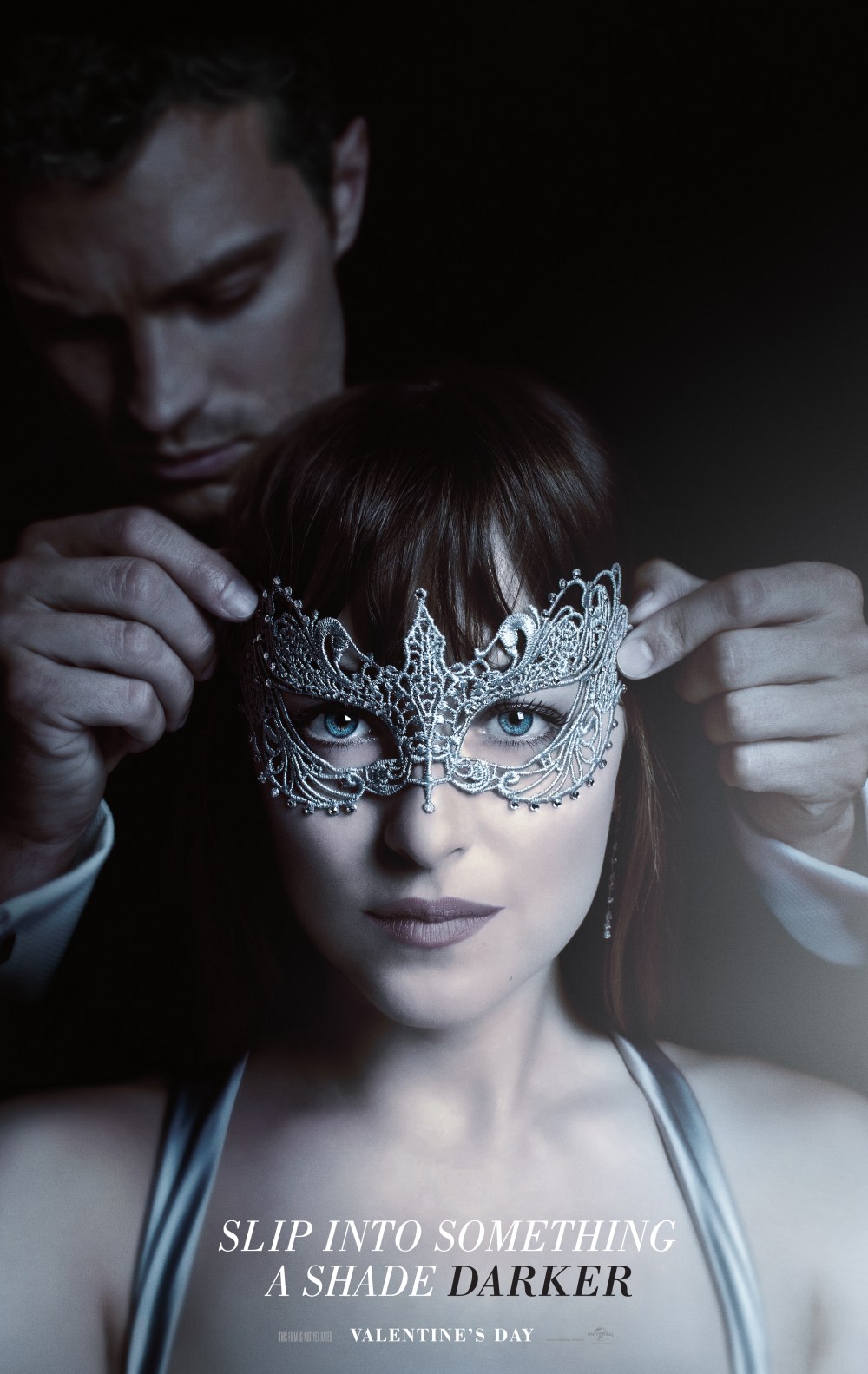
Just when you thought it was safe to go back to the movie theater on Valentine’s Day, another E.L. James novel is about to make its way to the silver screen. The cinematic adaptation of “Fifty Shades of Grey” was not well-received critically and was a big winner at the 36th Golden Raspberry Awards, but it still made over $500 million dollars worldwide, so a sequel was destined. Now Universal Pictures has unveiled the first trailer for “Fifty Shades Darker,” and it promises to be more of a thriller as well as something sexier and more obsessive than its predecessor.
Despite Anastasia Steele (Dakota Johnson) leaving Christian Grey (Jamie Dornan) at the end of the first movie, this trailer shows neither have yet to call it quits on their relationship. Anastasia, a picture of youthful innocence previously, looks much more mature this time around while Christian, as usual, remains engulfed by demons. We see them go to a masquerade party which makes one wonder if the filmmakers are looking to outdo a similar sequence in Stanley Kubrick’s “Eyes Wide Shut” as that movie almost earned an NC-17 rating.
The passion between Anastasia and Christian appears a little healthier this time around as she makes clear there are to be no more rules or secrets between them. As the trailer reaches its midpoint, they certainly look to be having more fun than ever before. But soon Anastasia starts seeing other women looking back at her menacingly even while she sleeps in bed, and it becomes clear there are still many things Christian has to talk to her about.
The “Fifty Shades Darker” trailer is dominated by Miguel’s version of the song “Crazy in Love,” but while Beyoncé sang it to where her uncontainable joy was more than infectious, Miguel makes his interpretation of the song dark and very obsessive as if this love affair is heading to a very dangerous place. Indeed, Miguel’s song may be the most memorable thing about this trailer as he succeeds in making this song his own, and the result is haunting. As we watch Anastasia and Christian come together and fall apart in rapid succession, the song illustrates just how crazy their love affair is and how much crazier it is going to get.
Stepping into the director’s chair for this “Grey” movie is James Foley, the same man who directed one of greatest acting ensembles ever in the cinematic adaptation of David Mamet’s play “Glengarry Glen Ross.” Writing the screenplay is Niall Leonard, husband of E.L. James. Is Leonard a better writer than his wife? Well, here’s hoping. Among Johnson’s and Dornan’s co-stars here is Kim Basinger who plays Elena Lincoln, Grey’s business partner and former lover, and while we don’t see much of Basinger in the trailer, she has its last line which hangs over everything we have seen like the ominous of shadows. Keep in mind, Basinger’s character is also referred to as Mrs. Robinson (hint, hint).
Well, for better or for worse, “Fifty Shades Darker” will be arriving in theaters on February 14, 2017. Check out the trailer above.
Watching “I Saw the Light” reminded me of when I saw Oliver Stone’s “The Doors.” Both movies have a great cast, a lead actor who perfectly embodies an iconic singer, and scenes which vividly bring to life the classic songs of the artists. At the same time, both movies keep their main subjects, in this case country singer Hank Williams, at arm’s length to where we come out feeling like we never really got to know them. Considering the talent involved, this particular music biopic proves to be a major disappointment.
Writer and director Marc Abraham, whose previous film was “Flash of Genius,” eschews Hank’s childhood and goes straight to when he married Audrey Sheppard, a divorcee and single mother. They look like the perfect couple, and this is especially the case when you consider the palpable chemistry between stars Tom Hiddleston and Elizabeth Olsen. But like many biopics, we know everything is heading downhill for these two, and Hank’s life got cut short by alcoholism and a painful medical condition. He was only 29 years old when he died, but he looked much, much older.
The movie gets off to a wonderful start as we see Williams singing one of his most famous songs in a sequence which is beautifully lit by the brilliant cinematographer Dante Spinotti. We are instantly hooked as the country icon’s lyrics capture our attention right away, and it makes us look like we’re in for quite the biopic. Unfortunately, this proves to be its high point as nothing else ever measures up.
One of the big problems with “I Saw the Light” is it is so sloppily edited to where it’s hard to tell what part of Hank’s life we are looking at. It goes from one section of his life to another before we can ever fully digest what is going on. This makes the movie very confusing, and it keeps us from getting to know Hank and the other people in his life more intimately. I felt like I never really understood what fueled his music, and he became the kind of person who is not at all fun to hang out with.
Also, the movie feels undercooked to where Abraham has his cast of actors underplay every single scene they appear in. Nothing ever comes to life in the way it should, and everything in “I Saw the Light” eventually becomes an exercise in tedium. It’s bad enough we never get deeper into Hank’s psyche, but to see this story portrayed in such a passionless way makes this whole project come across as an unforgivably missed opportunity.
“I Saw the Light” does, however, have Hiddleston as Hank Williams, and his performance is in some respects amazing. We all know him for playing Loki in the “Thor” and “The Avengers” movies, and at first he seems like an odd choice to play the man who made “Lovesick Blues” such an unforgettable song. But he succeeds not only in mastering Hank’s accent, but in getting the audience to feel the songs as much as he does when he sings them. That’s right, Hiddleston does his own singing here, and this makes his work here all the more admirable.
I was also impressed with Olsen’s performance as she makes Audrey perhaps the only human being who could possibly deal with Hank’s alcoholism and womanizing. Watching her here makes one realize what a powerful actress she can be, and she brings this movie to life in a way others are unable to.
As for the supporting characters, they are given short shrift and serve little purpose other than to further Hank and Audrey’s exploits. Cherry Jones, a tremendous actress, is wasted here as Hank’s mother Lillie as she has almost nothing to do other than sneer at any woman who grabs her son’s immediate affection. Bradley Whitford makes a bit of an impact as Fred Rose, the man who helped Hank rise to stardom, but Fred’s contributions to Hank’s career are made to feel smaller than they were. Maddie Hasson fares better as Billie Jean, the young woman who eventually becomes Hank’s second wife, and it’s a shame we didn’t get to see more of her here.
For what it’s worth, “I Saw the Light” did give me a good appreciation of Hank Williams’ songs. I have never been much of a country music fan, but the movie made me see why his music struck such a strong chord in so many people. Hank understood the pain of love in a way others didn’t want to experience firsthand, and it was not hard to connect with the feelings he so deeply expressed through music.
Still, the movie never digs deep enough into his life, and what results is a inescapably frustrating cinematic experience. This could have been one of the best biopics of recent years, but the filmmakers treat their main subject with kids’ gloves to where he feels like a complete stranger from start to finish. Coming out of “I Saw the Light,” I wanted to read more about Hank Williams on Wikipedia among other places on the internet as there’s got to be much more information on him there than what we got here.
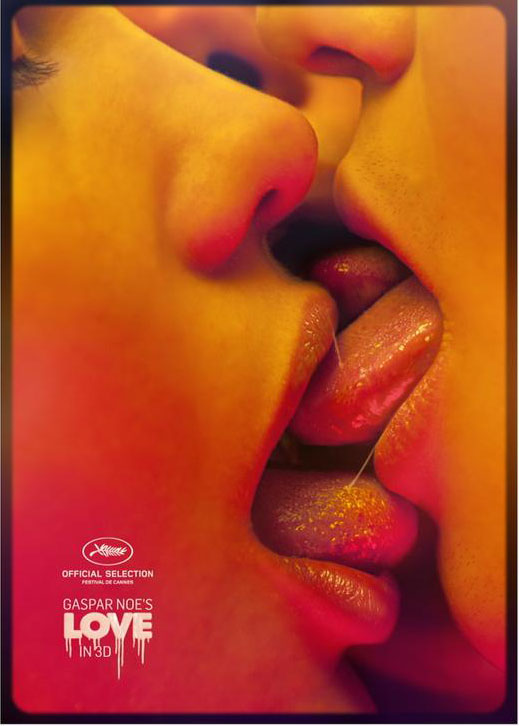
As many will expect, Gaspar Noe’s film “Love” is full of nudity and sex, much of it unsimulated. However, it is also his most personal film as he explores the power love can have over people and how it can be mesmerizing and yet so painful at the same time. Karl Glusman stars as Murphy, a young film student who is in a deeply romantic and sexual relationship with Electra (Aomi Muyock). Then one day they invite another young woman, Omi (Klara Kristin), to their bed to fulfill a sexual fantasy, and soon after everything falls apart. Murphy ends up having sex with Omi which leads to an unplanned pregnancy, and Electra ends their relationship as a result. In the process of trying to get her back, Murphy reflects on the highs and lows of his time with Electra as he sinks into a deep depression.
I got to talk with Glusman over the phone about what it was like to work on “Love.” It marks his debut in a live-action film, and he has since been cast in Nicolas Winding Refn’s “The Neon Demon” and Tom Ford’s “Nocturnal Animals.” Many have asked Glusman about what it was like to be fully naked throughout “Love,” but I was more interested in finding out what it was like for him to give such an emotionally naked performance. He also described in detail the way Noe makes his movies, and he shared his experience of working with Refn on “The Neon Demon.”
Ben Kenber: “Love” is a very hypnotic movie as most Gaspar Noe movies are. The thing I admired most about your performance is how it is more emotionally naked than physically naked, and that’s something I hope people will realize when they watch it. Just how emotionally taxing was the role of Murphy for you?
Karl Glusman: You are the first person to ask me that because the focus is always kind of on the flesh. It was tough. Gaspar liked to surprise us a lot. He wouldn’t tell us what we were going to shoot the day we were shooting. He would kind of put us into position and let us run for 45 minutes at a time and then change the cameras around. There would be screaming at each other and spitting on each other. In Paris I was alone and I didn’t really know anybody, and I don’t really speak very good French at all. I could understand a little more by the end than when we started shooting, but when you are doing stuff like this you become part of a smaller group of people that really understands the work you are doing. It’s hard to talk to friends back home about it because they don’t really know what you’re going through. You feel a little isolated. It’s hard to talk to people about it when they have no concept of what you’re doing. There were definitely times where I felt kind of crazy. I felt like Gaspar was really having a laugh like he was sort of manic and he’s like the master manipulator. I had a nightmare before I went over to France and before he even hired me. In my dream I was in sort of a spherical compartment. The walls were lined with cameras from every angle, and I was being shaken and tossed around. That sort of in a nutshell was what the experience was like at times because he really asked a lot of his actors. He wanted you to cry, he wanted you to strip down naked, he wanted you to scream and spit on each other, and he tried to charm you constantly and get you to fall in love with each other and didn’t really allow you to prepare for it because there is no script. How do you prepare for something like that? You kind of just have to take a breath and jump off a cliff and hope that the parachute is going to open at some point.
BK: I read that you and the actresses didn’t have any dialogue to work with. How would you go about preparing to do a scene with Gaspar?
KG: I’ll take you through one day of shooting. Without giving any of the plot away, there was one day where I got up, I had my little coffee in the morning, I’m waiting for the car to pick me up to take me to set and I get a call from Gaspar and he’s like, “Hey I’m at a café not too far from you. Can you come over and meet me here?” I said, “Yeah but the car is coming to pick me up like right now.” And he’s like, “Oh no, no, no, I called them and I told them not to get you. Just come over to the café which is a couple of blocks down on the left and meet me there. There is somebody I want you to meet.” Okay, so I walk over to the café and there is a young guy there whose name is Juan and he’s actually in the movie. Juan didn’t know it, but Gaspar wanted to put him in the movie so he has me meet him to see if he can play my best friend. So I meet that guy and he’s like nice and we talked for a minute. He had done this with a couple of other actors and I tried to give him the thumbs up. And he turns to Juan says, “So can you come by to the set today for a little screen test? Would you be cool with that?” The guy was like, “Sure, cool.” Gaspar then said, “Cool, just make sure you’re not late.” So then we go to set and a couple hours later Juan shows up and he thinks that he’s just doing a little audition or something, and both the cameras are set up. I don’t know what the shot’s going to be, neither does Gaspar, neither does Benoît Debie (the director of photography). They (Gaspar and Benoît) play with the lights for 45 minutes before they find a shot that they like, and that’s literally how they work. He just knew that if he put me in this position or if he put her in that position, then maybe he could match cut it with a different scene. He is giving himself options in the editing room. And then before Juan knows it he’s signing his NDA and he’s cast in the movie, and like 10 minutes later I’m like screaming at him that I’m going to kill him for like fucking my girlfriend and this and that. It was like that the whole time. We wouldn’t have an actor cast and he’d say we gotta go find an actor, and we would go out that night and go trolling the bars looking for someone who might be able to play the police commissioner and then we would run it through Vincent Maraval, our producer at Wild Bunch. Gaspar would tell them, “Hey you should be in the movie” and they were like “nah, nah, nah.” And Gaspar was like, “No, no, no, you should show up tomorrow.” And that’s how it was. Gaspar would have friends show up on set and make cameos, and it was all very, very improvised, very in the moment, very immediate. The whole nature of the movie and in terms of his process is surprising himself, surprising everybody around him and kind of not planning. That’s kind of the way it was with him. It was just like go, go, go and you never knew what you were going to get that day. His whole mantra was every day is Christmas. What do you want for Christmas today? And I think that he kind of lives by that; that life is short and that the only promise that God ever made to man is that you’re going to die and you might as well enjoy it now because you don’t know what dreams may come.
BK: I imagine many people, especially in America, will be quick to dismiss “Love” as just a porno, but it really isn’t. What’s fascinating is how it portrays sex in its different forms.
KG: Yeah, sex is a necessary component to love. Let’s get real here; real love requires that. You can love someone without having sex with them, but if you are in love with someone, especially when you are young, you’d probably, I think, would want to have sex with them. The whole porno conversation is a bit of a joke and a bit of a marketing thing. I’ve talked to a lot of people who have gotten a lot out of this. They had an experience, and I think those who are patient with the film will see something much bigger than what they might assume is some raunchy porno. I would be hard-pressed to think that Pierre Rissient who runs the Cannes Film Festival would let some piece of trash into his festival. He has high standards usually.
BK: Your character of Murphy is very self-absorbed.
KG: Definitely (laughs).
BK: But that reminded me of how self-absorbed we can get when we are young or when we are in love. It’s like the outside world almost doesn’t exist and the movie does a very good job of making us remember a time like that in our own lives?
KG: He’s a bit of a bitter loser, not making films. He’s a young filmmaker guided by passion.
BK: While Murphy may not be altogether likable, we are still compelled to follow him throughout this movie. How did you approach this character?
KG: I went to school, I studied seriously and I had incredible teachers that I admire. I admire talented and great actors and I have no interest in just being in a porno. Gaspar Noe is someone who I consider to be a brilliant filmmaker and someone I always wanted to work with, and it was all about trusting him and his vision and being part of that. When we talked about the characters I was asking all these questions. Who is this guy? What is he like? What does he want? He’s so secretive and he’s always kind of withholding information. Gaspar was like, “Well he’s kind of like sort of a funny guy, kind of clever at this and that.” At one point he said, “Maybe is kind of like my friend Harmony Korine when he was younger but not so drugged out. He’s just kind of funny in that way.” Gaspar was always complaining that I was too sweet to the girls and said, “I want you to ravage them. I want you to do this.” And I always thought that since we were making what some people might think of as sort of a dirty movie that I should be really sweet and really kinder. I always would try to insert jokes. I was always trying to make the crew laugh as much as possible while we were rolling. It’s kind of my fantasy that 10 years down the line maybe Gaspar will let me have a crack at editing my own version so that I could release a 3-D comedy because I think there is an alternate version where there’s a very sweet, a very funny Murphy which was what I was trying to do. But in the end he didn’t want it to be too funny. He didn’t want Rock Hudson. He wanted someone who was more bitter and had a lot of contradictions and would say one thing and like and then go do something else just like real people, he said. At one point, Murphy has sex with another girl at a party while his girlfriend Electra is in the other room and I was like, what was that? That makes me a total liar and he said, “Yeah, just like real life. People lie and people cheat on each other.” And I really had a moment where I was like, “Yeah you’re right.” We’re really just trying to make something that really felt honest. It’s not the smoothest, most cinematic piece where someone turns to their close-up mark perfectly so that the lover turns their collar and walks off into the rain. It’s not like that. It’s messy and it’s meant to feel much more like an honest depiction of what he or I or our friends relate to.
BK: I kept thinking that your character was more or less based on Gaspar especially in the moment where Murphy says his favorite movie is “2001.”
KG: There’s definitely a lot of that. I’m wearing Gaspar’s clothes in many of the scenes like T-shirts that he didn’t even wash. I would smell like his armpits. And sometimes he wouldn’t like the color of my pants and he would just pull his pants off and we would switch right there. He decided keep my belt because we had slightly different waist sizes. A lot of the story came from his own experiences. Not everything. There are certain things like I don’t think Gaspar ever impregnated the wrong woman, the woman he wasn’t in love with. He drew from some of his friends’ experiences and took them apart and put them together to create this portrait of a love story and tried to hit all aspects of it that he could think of. But as you see, a lot of the characters’ names are… Noe is the gallery owner, Gaspar is the child, and Murphy is actually Gaspar’s mother’s maiden name. He wanted to make what he felt was his most personal film, so there are little tombstones there to his loved ones and friends with the characters’ names. But obviously there’s also visual inside jokes. You can see the model of the Love Hotel from “Enter the Void” somewhere in the movie. I even tried to do little things that I think he kind of got a kick out of. I would change the time on the clocks to Gaspar’s birthday. I pulled out the DVD case of “I Stand Alone” at one point. It’s nice to have those Easter eggs there.
BK: There are a lot of easter eggs throughout this movie. He has all these posters of movies he really likes and which had an effect on him as a filmmaker like “Taxi Driver.”
KG: He’s got a pretty amazing poster collection. He keeps them all sort of rolled up or laid flat. He doesn’t hang them up, but he’s got some really rare ones. That “M” poster that you see at one point in my room is one of four existing “M” posters in the world. I think the Nazis destroyed most of them, and that one is one of four and I think it’s like one the nicest condition ones. I think he goes and does a commercial and get a bunch of money and then blows it all on old movie posters.
BK: I imagine a lot of people tried to dissuade you from doing this movie because of the nudity involved and the potentially negative effect it could have on your career. But you have since been cast in movies directed by Tom Ford and Nicolas Winding Refn.
KG: Nic is awesome.
BK: Working with Nic was fun?
KG: Yeah I would love to plug Nic right now. He, like Gaspar, is an auteur. He has final cut, he works from a script too, and he’s just one of these interesting guys who can paint his own picture. You’re not gonna tell him like, “No I need more green on this. I don’t like that. You need to change that.” He is someone who doesn’t like to be told what to do but however, like Gaspar, he is a collaborator and he’s very inclusive. When I was cast, I had this sort of blank canvas. I told him anyone can do this part and he said, “Karl if we cast you then you and I will build this character together and we will make it something.” And he was bringing me over to his house for meetings along with the other actors. He always asked everybody, what do you think of this? How do you think this should happen? What do you think you should do in the scene? Where should you be from, or how do you feel about that? And Nicolas shoots chronologically which is cool because then you can change where the story goes. I think the ending of the movie is completely different now than the draft I read initially before auditioning for it. He doesn’t know where he’s going, he doesn’t know what’s going to be, so that’s what’s exciting. So in a way I guess in a way he is similar to Gaspar like that in the sense of he wants to surprise himself. I think that’s pretty fun. I think Hitchcock was once quoted as saying “shooting a movie is the least exciting part of making a movie” because he already knew what everything was going to look like whereas I think these two filmmakers were talking about how that in a way they had no idea where they were going. They both want to see how deep the rabbit hole goes. I think Gaspar was really happy with the end product. He said it came out much better than he ever thought, and I think that was in big part because of hiring Aomi who I think is just lovely and just fantastic in the movie and Klara who’s just so brave as well. I think these girls were just so generous and so joyful on set, and we got something much better than what he ever anticipated. And Nic and I have stayed in touch. He needled me a little bit saying that just a hang tight and that we were going to make another movie together, and I told him he can’t fuck with me like that. If we’re going to bed and we’re gonna fuck then we better fuck. Let’s not talk about it. He once said that making a movie with an actor is like going to bed with them because you make this baby with a big movie.
BK: It sounds like “Love” has had a very positive effect on your career so far. How would you describe the overall effect it has had?
KG: Well I mean it’s just kind of like a more immediate and obvious level. I met Tom Ford at Cannes, and so I happened to be in the same venue as him and talked to him about his movie. A couple of months went by before he hired me, but that meeting led to a job. Gaspar actually called Nic Refn personally in front of me and sold him the movie and told him to hire me. He gave me this ridiculous pitch which sounded better than any agent saying “he is the most daring and most professional actor in the world!” I don’t know if he went out on a limb but he didn’t have to do that, and his recommendation meant a lot to Nicolas because Nicolas has a lot of respect for Gaspar. And the movie resonates with certain filmmakers and certain actors who I admire and would love to work with some day. The movie has had nothing but a positive effect. My mother, she cried when I told her that we were going to go to Cannes. That was a big deal for her that her son might get to go to a big international film festival like that. I always wanted to do things that made my mother proud of me and cheer her up. When I was a little kid actually I think that was kind of the first thing that got me into acting is when my parents split up. I used to entertain my mom in the kitchen cleaning pots and pans and putting a chef’s hat on my head and pretending to have a cooking show. I called it Thor’s Kitchen because my mom was really into Norse mythology and I would make imaginary recipes in front of her and try to make her laugh. I think she has always been the driving force for me. So although she hasn’t seen this movie yet, and it will probably be some time before she does, she’s very proud of it and I think my dad kind of understands it better than some people too that there is a theory to cinema. Not every movie is just entertainment. Some movies have political messages or social messages. Some movies have an ambition to do a little bit more than just entertaining for an hour and a half while you’re chewing on popcorn.
BK: And some movies are meant to be an experience more than anything else
KG: Exactly, and this is one of them. It is not an experience for everybody, but some people will like it a lot hopefully.
I want to thank Karl Glusman for taking the time to talk with me. Special thanks also goes to WooJae Chung for the use of his photo at the top of Glusman which comes from his film “Consilience.” Gaspar Noe’s “Love” is now available to own, watch and rent on DVD, Blu-ray, and Digital.
As much as I want to talk about what I was doing on September 10, 2001, I can’t remember the specifics of that particular day. Back then I was more consistent in keeping a diary of what I did from day to day, but September 10th was a day I never got to write about. So instead, allow me to go back two days before those planes crashed into the twin towers of the World Trade Center on September 11th…
Back in 2001, I was working at Disneyland in an attraction called Innoventions. It was in the spinning building located in Tomorrowland where America Sings and Carousel of Progress used to be. That particular attraction was about technology of the future, but others described it dismissively as a corporate playground, and I was an interactive host doing game shows and helping guests have the best day possible at “the happiest place on Earth.” (Writer’s note: Innoventions finally closed down on March 31, 2015.)
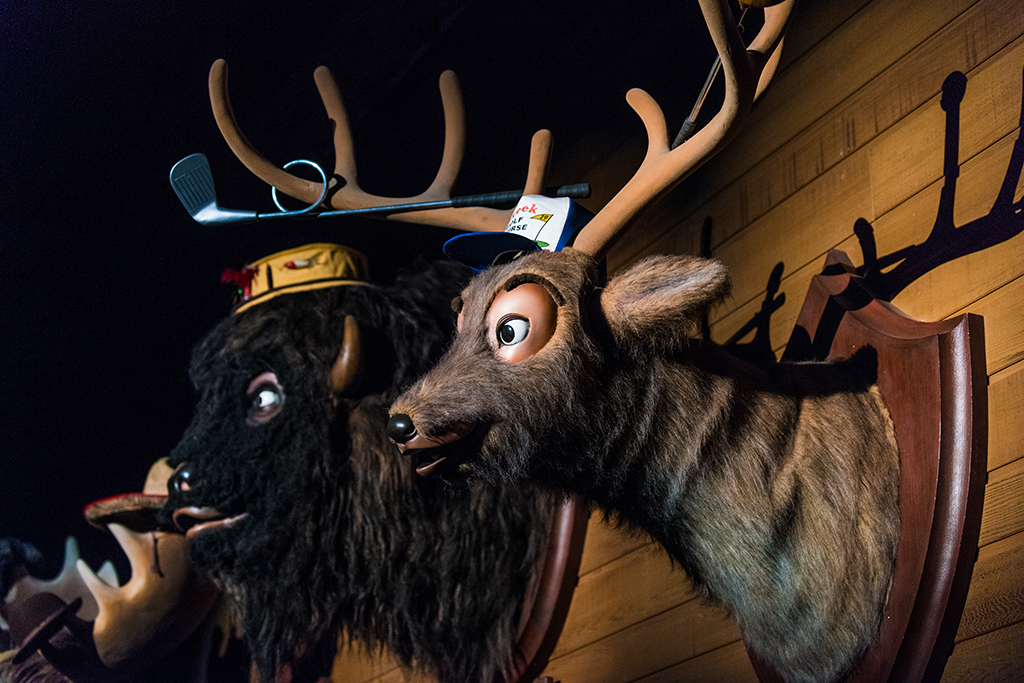
Anyway, this particular day stood out because, right after the park closed, cast members, Disney lingo for employees, were invited to catch the very last performances of the Country Bear Jamboree attraction, the famous audio-animatronic show with bears and the mounted heads of dead animals singing country music. This one was close to reaching its 30th anniversary, and while Walt Disney never got to see it come to fruition, he really loved the characters who were part of it.
Country Bear Jamboree was being closed down to make room for a new attraction which seemed sacrilegious to those who worked at the park, but change was in the air and we couldn’t stop it. Some said what would replace it would be one-part Circle-Vision, that 360-degree theater in Tomorrowland which had railings for guests to hold on to instead of seats as they were made to feel like they were moving along with the images shown onscreen. Others said the other part would be “Captain Eo,” the sci-fi 3D short film directed by Francis Ford Coppola and starring Michael Jackson.
Now when I was working at Disneyland, “Captain Eo” had not been shown there for years, but guests were still constantly asking us where they could see it. We all figured all the guests would know the movie was no longer showing at the park, but no one is quick to look at the map to see what is and what isn’t there. Sadly, it would take Jackson’s death to bring it back to Tomorrowland in all its technologically dated glory.
While I was never a big fan of the Country Bear Jamboree, I felt obligated to attend its final performances. At the very least it gave me the unique privilege of allowing me to say I attended the last show, something millions of visitors would never get to lay claim to. It was like when the dorm I stayed in during college got a zero score on the first week of back to school contests. No else got a score as low as ours, and we wore this fact with pride as only we could lay claim to having accomplished that.
After all these years, the bear I remembered most was Teddi Barra who descended from the ceiling on a swing decorated with roses and wearing a yellow raincoat. This soon made perfect sense as she began to sing “Singin’ in the Rain.” Many will want the starring role in a production, but it’s always the supporting players who command the most attention. Trust me, I speak from experience.
Also, the mounted heads of animals on the wall left a vivid impression on me. These were animals shot for sport, and yet they still sang with a lot of heart and spirit despite the fact they were now forever nailed to a wall. And keep in mind, Walt Disney also made “Bambi,” and we know what happened to the title character’s mother. Why didn’t they have Bambi’s mother’s head up there? I’d like to think it would have made a difference for all the children forever traumatized by the movie.
Many in attendance were wearing “Save The Country Bears” t-shirts which, while well-intentioned, proved to be utterly pointless as the decision to close the attraction down was made a long time in advance. Still seeing this attraction being closed down felt very sad because a part of Walt Disney’s spirit which brought about this park’s creation seemed to be going away with it. But change keeps coming for better or worse, and Disneyland would never have survived without the corporate world backing it up.
When the final performance came to a close, the cast members operating the attraction asked if we wanted to see it one more time. Of course, we said yes as it was not lost on any of us how we were a part of something many others would never get to experience. Seeing it for a final time made us feel lucky and special, and when it was all over we gave the attraction a long lasting and an ear-splittingly loud standing ovation. I personally felt privileged to be a part of this because many other jobs never would have allowed for such an opportunity like this.
There are those cast members who say Walt is spinning in his grave with all the changes being made to his land of imagination. We still wonder how much of him is left in the park, and I’m not just referring to those urban legends like the one which says he’s buried underneath it or cryogenically frozen. I had the great opportunity of working with cast members who truly want to preserve the magic Walt brought to the park as it seems the damage Michael Eisner left in his path feels irreparable.
In retrospect, the closing of the Country Bear Jamboree served as an accidental allegory for the change which forever enveloped us in the wake of September 11th . Back then, I felt so lucky to be catching the bears’ unfortunate end when so many others couldn’t, and at least we had to chance to say goodbye to something or somebody. How ironic it was that a couple of days later we said a horrific and unexpected goodbye to the twin towers and many innocent lives in a way we didn’t see coming. It proved to be a time where we wanted to change the course of events, but of course we could not. The world can be very cruel, and 15 years have now passed since we were greeted with the worst terrorist attack in American history. Here’s hoping we continue to learn from the events of September 11th to where we can finally keep history from repeating itself.
Writer’s note: The Country Bear Jamboree attraction was eventually turned into the Winnie the Pooh ride. Truth be told, I am a die-hard Eeyore fan, so I have to admit I was really excited at what it would look like. It proved to be fun, but there could have been a lot more of Eeyore featured in it, a lot more.
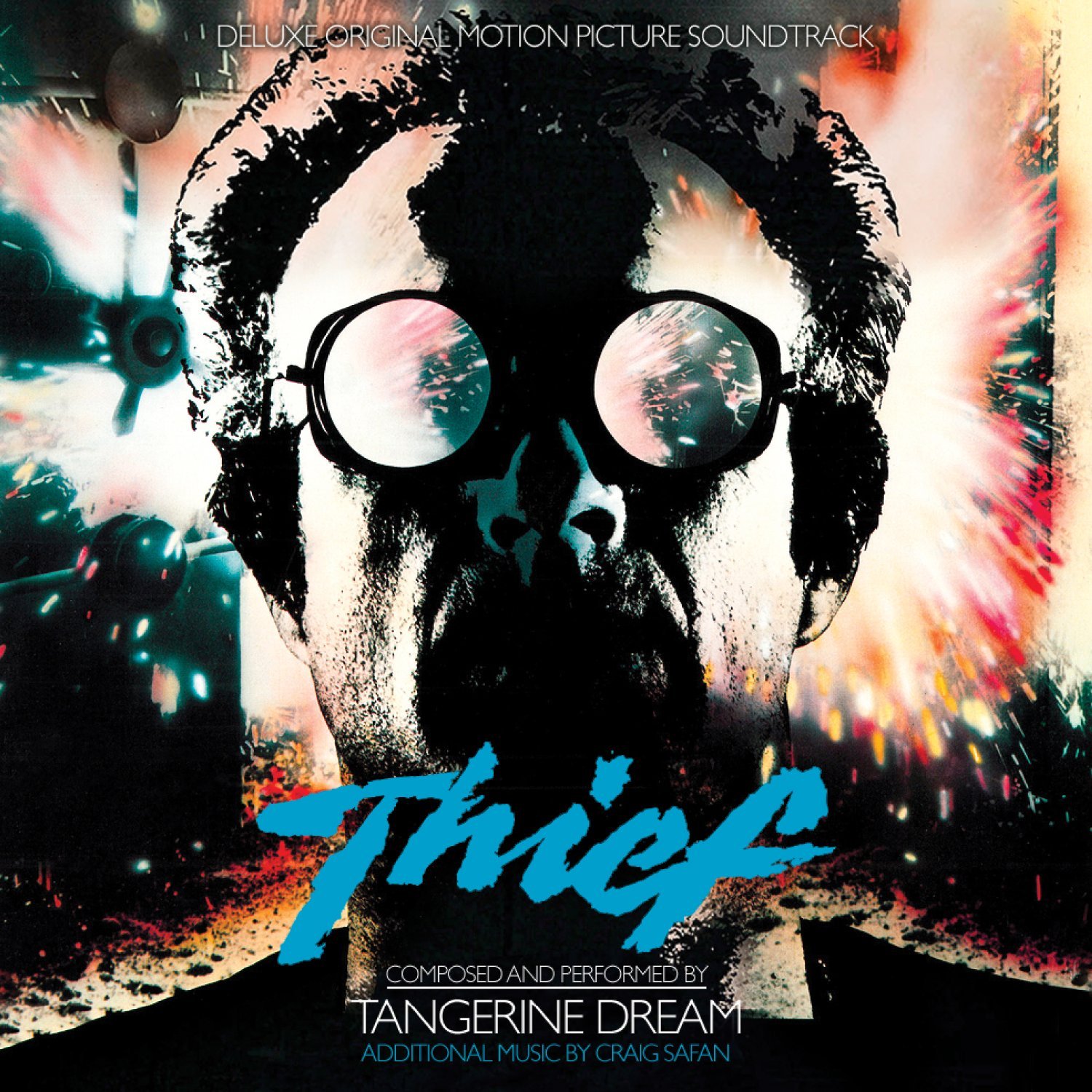
Tangerine Dream kept composing one great film score after another back in the 1980’s. Whether it was “Risky Business,” “Firestarter” or “Miracle Mile,” the German electronic music group lent their own distinctive sound to some of my favorite movies from my youth. One of their best efforts was “Thief” which marked the feature film directorial debut of Michael Mann and starred James Caan as Frank, a highly skilled jewel thief and ex-convict who is looking to achieve the American dream. With Mann’s meticulous detail to cinematography and the ways in which jewel thieves, several of which were hired as technical advisors for this film, carry out a robbery, Tangerine Dream’s music proved to be the perfect complement to the style he ended up capturing to such an unforgettable effect.
“Thief” has now been given a deluxe soundtrack release by Perseverance Records, a small label specializing in film scores which have either not been given the proper releases they deserve or are in need of a remastered edition. Their edition of “Thief,” to no one’s surprise, sounds better than ever, and it also includes the track “Confrontation” by Craig Safan who is best known for composing the score to “Remo Williams: The Adventure Begins.” This particular track has been omitted from previous soundtrack releases, but the good people at Perseverance Records did the right thing by including it here. It would not have earned the status of deluxe soundtrack had it been left out.
Now anyone who knows me best understands how much of a sucker I am for electronic film scores, and “Thief” is one of my favorites which wasn’t composed by John Carpenter. My favorite track is “Diamond Diary” which underscores the first big robbery Frank commits in the movie as it captures the intensity of it as well as the amount of time he has to complete his job in, which isn’t much. Then there’s “Dr. Destructo” which focuses on Frank’s determination to rid others of the control they have over him. As for Safan’s “Confrontation,” it is terrific in scoring how Frank gets his revenge and accepts the inescapable reality of who he is and what he cannot change.
Is there any downside to this edition of the “Thief” soundtrack? Well, there are no additional or alternate tracks to be found here. Since this movie is now over 30 years old, I figured there would be more music included which we haven’t heard on vinyl, cassette tape or compact disc before. Having watched Mann’s movie again recently, there are portions of Tangerine Dream’s score which sound different from what’s on the soundtrack, and I would have loved it if the film versions had made it onto this edition as well. Still, Perseverance Records has gone to great lengths to make this terrific film score sound better than ever before, and it makes revisiting this soundtrack all the more necessary.
“Thief” also comes with liner notes written by James Phillips which looks at what inspired Mann to make this movie, how Tangerine Dream came to compose the score for it, and of how Craig Safan was brought in to write music for the movie’s ever so violent climax. It was a surprise to learn Mann originally considered using blues music to score the criminal lifestyle this movie sucks us into. It turns out it was William Friedkin, who had just worked with Tangerine Dream on his underrated cult classic “Sorcerer,” who recommended the band to Mann for “Thief,” and back then the band was on the cutting edge of a new kind of music.
Phillips quote Edgar Frosse, the founder of Tangerine Dream, as saying he wanted to create “timeless music” and that the “exotic and shifting moods” of “Thief” fit in perfectly with the kind of music the band played. Just from listening to this soundtrack, you can tell Frosse and his collaborators, Christopher Franke and Johannes Schmoelling, were very much into experimenting with music and sounds, and it all makes for an unforgettable score which for some utterly ridiculous reason got a Razzie nomination for Worst Original Score. Go figure.
Another interesting section of Phillips’ liner notes is of how Safan was brought in to compose one piece of music for “Thief.” I was always under the assumption the track Safan composed was actually taken from a soundtrack to another movie as Mann got into the habit of doing this with his later films. However, it turns out Tangerine Dream was unavailable at one point due to their being on tour in Europe, so Safan was brought in to finish things up.
Granted, a lot of electronic scores from the 80’s sound hopelessly dated these days to where you can’t help but snicker at them, but Tangerine Dream’s score and Safan’s contribution to “Thief” really has stood the test of time. It perfectly captures the adrenaline rush of stealing stuff which doesn’t belong to you as well as the inevitably of how you can’t escape the life you were destined to leave. Perseverance Records has done an excellent job in making Tangerine Dream’s music sound better than ever. Like many of my favorite movie soundtracks, I never get sick of listening to this one.
It was very sad to learn of Polish director Marcin Wrona’s passing on September 18, 2015. He committed suicide before a screening of his latest film, “Demon,” the last in a trilogy which began with “My Flesh, My Blood” and “The Christening.” Like those two films, “Demon” deals with the nature of evil and a fate the protagonist is forced to deal with. Itay Tiran stars as Piotr (a.k.a. Python) who is on the verge of getting married to the beautiful Zaneta (Agnieszka Zulewska) and moving into a family home which has survived from one generation to the next. But on the day of his wedding, Piotr suddenly becomes possessed by a spirit which will no longer remain silent, and what should be a joyous day soon turns into the wedding from hell as the past will no longer remain buried.
While Wrona is no longer with us, his “Demon” is a tremendously well-made horror film which allowed him to leave his mark on the world of cinema, and it provides us with an interesting take on the Jewish legend of the dybbuk. It is a beautifully filmed movie with incredible vistas and an all-encompassing darkness as a bad situation gets even worse, and that’s not just because the wedding guests have drunk far too much vodka. Watching “Demon” also reminds us of the power of ambiguity as not all questions are answered here, and this forces the viewer to think more deeply about what they have just witnessed.
I got to speak with Olga Szymanska, the producer of “Demon” and Wrona’s widow, while she was in Los Angeles to promote the film. I applaud her for supporting her late husband’s work while dealing with a loss which is still hard for many to accept. She talked about what went into the making of “Demon,” how it relates to Wrona’s previous two films, if she was ever worried about people not understanding the legend of the dybbuk, and of how Wrona and his cinematographer Pawell Flis gave the film such a striking look.
Please check out the interview above, and be sure to check out “Demon” which is playing at the Nuart Theatre through September 15.
AN ULTIMATE RABBIT NOTE: This video interview was updated in 2023 to add certain visual elements and to avoid copyright issues which never intended or inferred.
The documentary “Breastmilk” marks the directorial debut of Dana Ben-Ari, and it deals with a subject we think we know a lot but really don’t: breast feeding. It follows first-time mothers of different ages and backgrounds as they deal with the breast feeding process in various ways, and it documents the successes and struggles they are forced to endure. While some are pro-breast feeding, others find themselves relieved at not having to go through with it. But throughout “Breastmilk,” Ben-Ari never judges the families and prefers to present their stories as objectively as possible. Sure, there are a number of instructional videos, books, experts, lactation experts and do-it-yourself guides you can find on YouTube, but there really hasn’t been a film which explores real people going through this process before this one.
I got to speak with Ben-Ari while she was in town to do press for “Breastmilk,” and I congratulated her on making a documentary which will appeal to both women and men. It certainly promotes a lot of discussion on breast feeding, and it will be interesting to hear what people who see this documentary have to say about it. We talked about what drew her to make “Breastmilk,” how she went about choosing its participants, what surprised her most about the making of it, and the importance of including gay couples in this debate as well.
Ben Kenber: What was your main inspiration for wanting to make this documentary?
Dana Ben-Ari: Well I am a mother myself and I am pro-breastfeeding, and I’ve seen many women in many families struggle and go through these similar experiences. I thought that this would be fun and interesting to explore on camera because I think that it is part of a larger conversation around feminism, and I thought that voicing and making these experiences visible would be very helpful and important.
BK: In regards to the people who participated in this documentary, how did you go about selecting them?
DBA: We posted various flyers and we posted on parent sites and groups and word-of-mouth and friends. We had an overwhelming amount of emails and stories shared, and then we realized that we wanted to find pregnant women who were carrying their first child so that we could have a more immediate first time experience. We started with that, and then I wanted to have a few other families participate in the conversation because I thought that families with slightly older kids, as you see sprinkled throughout the film, just provide a little bit of a different perspective than the young families who are going through it for the first time. That’s how we came out with that balance.
BK: Have you kept in touch with the participants since you finished making this documentary?
DBA: Yeah, a few of them came to one of the Saturday night screenings and then the Sunday screening. We’ve been in touch. A few people have moved out of New York, but the ones in New York try to come to the screenings when they can.
BK: Were there any really big surprises while you were making this documentary?
DBA: I learned a lot about filmmaking because this is my first film, so that was quite interesting. I had a great cinematographer (Jake Clennell) who taught me how to be in the room but still respect the space and the experience, and we really learned a lot about being patient and giving that families time. What also stood out was how vulnerable all of these families are and how women are still oppressed.
BK: One woman talks about how women are still made to feel bad about their bodies, and that’s a shame. You get the feeling that people who say that probably don’t understand what the experience is like, and we are seeing that experience in front of us. They are doing the best they can.
DBA: Right. All of these families are doing the best that they can.
BK: One of my favorite scenes is when a white couple goes to one of the black mothers and gets bags of breast milk. It reminded me of picture I saw in a magazine where a heart from a white person was placed next to a heart from a black person, and you see that there’s no difference between them. It’s the same thing with the breast milk because, in the end, milk is milk. How did you come to get that scene?
DBA: We knew that we wanted to show some donations, and I looked for women who were looking for milk donations. One of the women that we had been following did have a lot of milk that she wanted to donate, and I asked her if she wanted us to help her find somebody. So we followed the adoptive mother through a number of attempts, and then we also had this one. We had a couple more milk donations scenes that didn’t make the cut, and we were just left with this one which was really a great scene because so much gets covered. There’s so much you can discuss from that one little moment, and that was very natural actually (those reactions).
BK: Was there anything in particular that you wanted to capture but were unable to for one reason or another?
DBA: Not so much. I’m quite happy with everything. We packed so much in. I wish we’d have more time to develop more stories, but as far as 90 minutes go I think we covered quite a lot. There’s so much there that I think people may not have thought of, and it just inspires these questions and their interest.
BK: Going back to what the cinematographer told you about respecting the space, can you talk a little bit more about that?
DBA: He is very good and very talented at what he does, but he also is very good at being very social and knows how to make people feel comfortable. But then also, as a mother myself, I had some experiences with what some of these families were going through, and I really did not get too involved in their journey. So even if some couples were arguing over a formula I really stayed out of it, and that was something he and I discussed that we were not going to get involved in. We were just going to let things play out. Of course, if somebody had asked me privately off camera certain things I would tell them, but we really didn’t want to affect their decisions and their experiences. So I think we did a good job with respecting their choices and their decisions.
BK: I also liked how the documentary dealt with gay couples, both male and female, and you sort of wonder how certain couples deal with that or not being able to give their children breast milk (men can’t, but they do keep trying). It’s great to see them in the groups because what they go through is no different from what anybody else is going through. Was that what you were hoping to show?
DBA: Yeah, I loved that too. I think it’s like dropping certain things without an editorial just to make people think about what is family and what is community and what does it mean to be male, what does it mean to be female, all of those questions. While there are some differences, the similarities sometimes are really much greater than we realize. I think that those are wonderful moments in the film, and I think it’s important to include a diverse group because our country is diverse. If we just focused on the one or two examples I think we miss a lot.
BK: A couple of days ago I saw the movie “Neighbors” which stars Seth Rogen and Rose Byrne, and there is a scene where Seth gets sprayed with Rose’s breast milk. I was reminded of that when you show the montage of women squeezing the breast to show how much milk can come out of them, and it made the scene from “Neighbors” seem more realistic as a result. What was it like filming that montage?
DBA: Oh that was a lot of fun (laughs). That was a lot of fun and a lot of women had not really had that experience before, so we left those women feeling very satisfied that they got something of the experience. But really, this movie is about community and the body and how we’ve become and how nice it is for women to get reacquainted with their bodies and also just accept themselves as women. That was one of those celebratory moments in the film and humorous as well.
BK: Are you planning a follow up documentary to “Breastmilk” or do you have different plans for the future?
DBA: Well I have some ideas but not a follow-up to this. Some people are asking if there’s going to be a “Breastmilk 2;” no, I don’t think so. But I hope to be involved in something fun again soon. I do have to see this through, you know? It’s the first film so I have to do the short film tour and be available for press as much as possible.
BK: How involved were the executive producers, Ricki Lake and Abby Epstein, in the making of this documentary?
DBA: Well they came on after everything was done, and they’ve been very helpful and supportive in promoting it. That’s really more of our relationship, promoting and reaching a wider audience. They’ve been great.
Of the plethora of excellent documentaries to come out in 2016, one of the most fascinating to watch is “Author: The JT Leroy Story.” Directed by Jeff Feuerzeig, it chronicles the rise and fall of literary sensation JT Leroy whose rough and tumble childhood crafted him into a writer of such books as “Sarah” and “The Heart Is Deceitful Above All Things,” the latter of which was adapted into a film by Asia Argento. However, it was eventually revealed that JT Leroy did not in fact exist and was actually an avatar for former phone sex worker turned housewife, Laura Albert. Following this revelation, Albert was considered a fraud and many believed she concocted nothing more than an elaborate hoax. But with this documentary, Albert seeks to set the record straight over how JT Leroy came into existence for her, and she makes it clear that what happened was in no way a hoax.
The beauty of “Author: The JT Leroy Story” is it never judges Albert for a second. The documentary simply lets her tell her side of the story which proves to be more complex than we could ever have imagined. Considering her dysfunctional childhood, it is understandable she needed an outlet of some kind to vent her pain and frustration with life, and with JT Leroy she found a way to express things she was unable to as herself.
It was a real pleasure to talk with Feuerzeig and Albert while they were in Los Angeles, and the two of them talked at length about what possessed them to take on this project and of what went into its making. Albert’s insights into her writing process were especially fascinating as she actually found herself predicting the future through her books.
Check out the interview above, and be sure to catch “Author: The JT Leroy Story” when it arrives in theaters in Los Angeles on September 9. You can also check out a trailer for the documentary below.