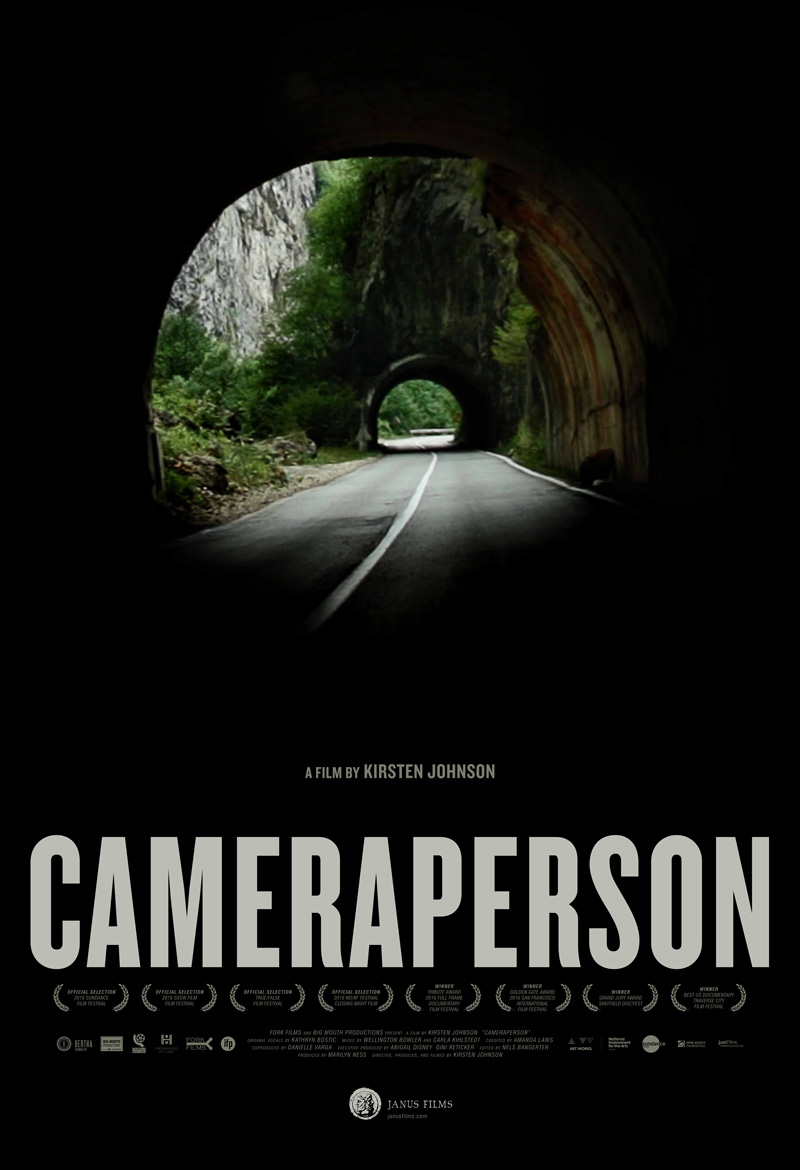
2016 has been a superb year for documentaries, and the latest example of this is “Cameraperson.” Directed by documentary filmmaker and cinematographer Kirsten Johnson, it is a series of images taken from her 20-plus year filmmaking career which she treats as a memoir of her life behind the camera. Among the visuals we get to see are of Brooklyn, a boxing match, postwar Bosnia and Herzegovina, a Nigerian midwife delivering babies as well as moments taken from Johnson’s own life as well. There is even a moment where she shoots footage of the entrance to an Iraqi prison which has a “you are there” feel to it, and it gets to where you are as eager to escape the area as they are. She presents these images to us in a movie without any narration as all these pictures tell a story all their own, and it is impossible to take your eyes off the screen. “Cameraperson” allows us to step into Johnson’s worldview as she takes us on a personal journey, and she acknowledges how complex it is to film and be filmed.
It was a real pleasure talking with Johnson while she was in Los Angeles to promote “Cameraperson,” and it resulted in one of the most fascinating interviews I have conducted this year. I was very eager to learn about how she went about constructing her documentary and of how it evolved from start to finish. This could have just been a movie with a bunch of images thrown together randomly, but there was clearly a lot of thought put into this one. Johnson also explained how she resisted the urge to put narration in her documentary, and she even shared some behind the scenes stories about “Citizenfour” which she was one of the camera people on.
Please check out the interview above, and be sure to watch “Cameraperson” which is now playing in Los Angeles at the Laemmle Royal thru September 29th.
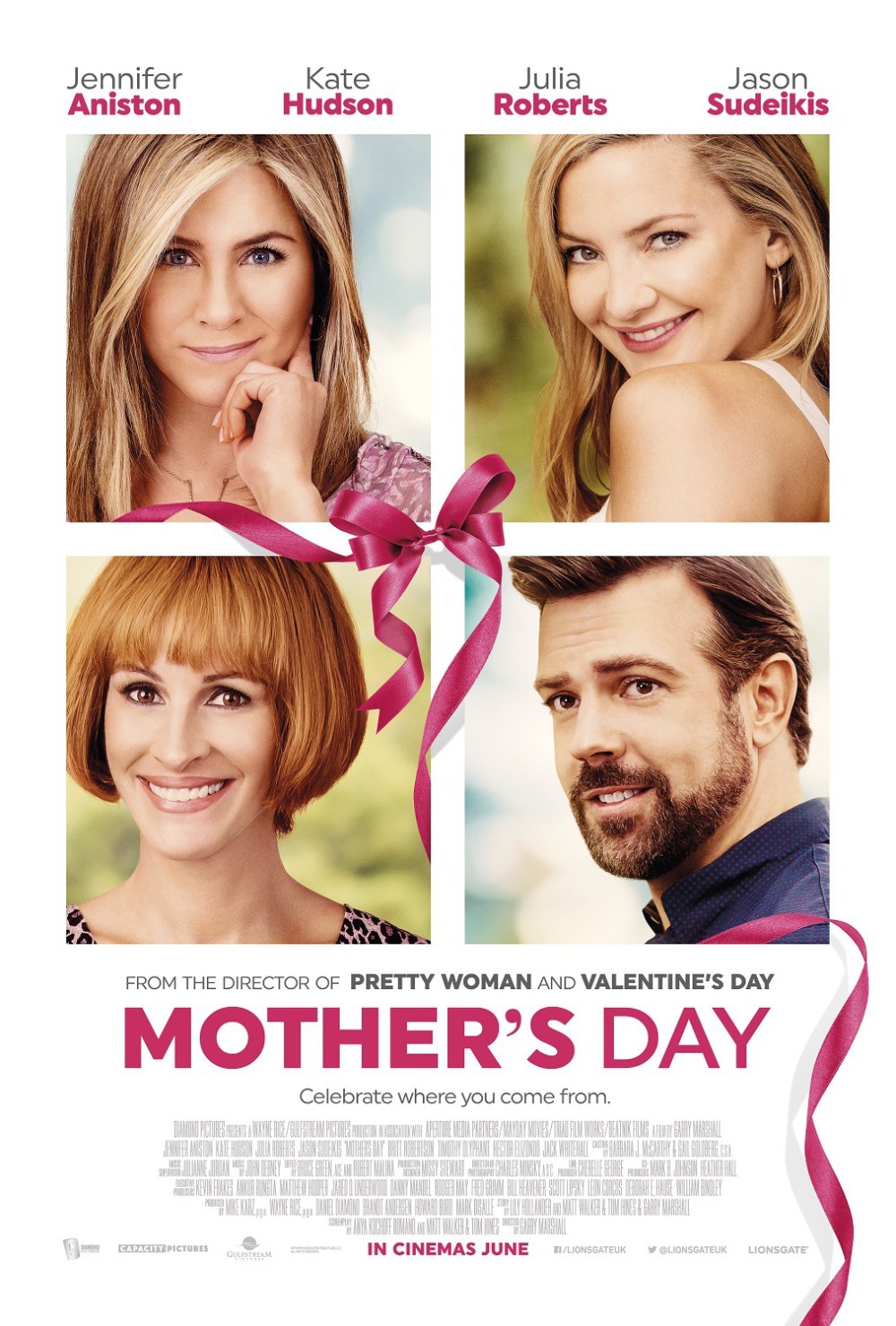
“Mother’s Day” is the kind of movie I feared “The Meddler” would be, a formulaic comedy filled with overused stereotypes and cinematic traps filmmakers easily fall victim to. But even though it was directed by Garry Marshall who is well known for overdoing sentimentality in his films, nothing prepared me for how cloying and utterly contrived this movie ended up being. It’s like a network sitcom which never made it pass the pilot stage but somehow got turned into a movie for no discernable reason. Having already laid waste to New Year’s Eve and Valentine’s Day, Marshall shows no hesitation in belittling another holiday, and one with much more meaning than others.
The movie starts, of course, a few days before Mother’s Day which allows us to meet a group of people who at first have little, if any, connection with one another, but we know this is going to change from the get go. There’s single mother Sandy (Jennifer Aniston) who’s raising her two young boys by herself while her ex-husband Henry (Timothy Olyphant) spends time with his new wife Tina (Shay Mitchell) who looks like she has yet to reach the age of 30. Next we have successful book writer Miranda (Julia Roberts) whom we see selling jewelry on television and is dedicated to her career more than anything else. Then there is Kristin (Britt Robertson) who lives with her boyfriend Zack (Jack Whitehall) and their baby girl. Zack is an aspiring comedian who longs to marry Kristin, but she feels not yet ready to commit for reasons which eventually become clear. And let’s not forget Jesse (Kate Hudson), wife to Indian doctor Russell (Aasif Mandvi) who knows her parents will never approve of him or her sister who has since come out as gay.
Oh yeah, there’s also the grieving widower Bradley (Jason Sudeikis) whose wife died while serving in the military overseas, and he is left to raise their daughters on his own. The women at the fitness club he works at are eager to set him up with somebody, but he is hesitant to start dating again. And then he runs into Sandy at the local supermarket and… well, you have a pretty good idea of what happens from there.
What bothered me so much about “Mother’s Day” was how cloying and artificial the whole movie felt. Granted, not every movie can feature down to earth characters in relatable situations like “The Meddler” did, but everything here felt so one-dimensional and done by the numbers. Marshall has directed great movies in the past like “The Flamingo Kid,” “Nothing in Common” and “Pretty Women” which turned Julia Roberts into a movie star, and he’s the same guy who gave us the television classics “Happy Days,” “Laverne & Shirley” and “Mork & Mindy.” I even have good things to say about “The Princess Diaries” which introduced Anne Hathaway to the world. But after all these years, you’d think he would be able to give us a movie filled with more than standard situations and cardboard-cutout characters. I refuse to deride his horrible direction as the result of old age because that’s just cruel, but he has done so much better than this tripe.
It’s a real shame because the cast is great and they do their best with material which is far beneath them. Aniston is wonderful as a single mom, and that’s even though her work here doesn’t compare to her underappreciated performances in “The Good Girl” and “Cake.” Sudeikis has proven, in a way he should not have had to, how he can be a strong actor thanks to his performance in “Race,” and he’s wasted here in a role he is far more believable in than many would expect. Hudson, who has attracted mediocre material ever since her star-making turn in “Almost Famous,” does look very relaxed in her performance which gives us hope she will eventually star in a movie worthy of her talents.
But if there’s anyone in “Mother’s Day” who pulls off a truly emotionally honest performance, let alone a powerful moment, it’s Roberts. The scene where she explains to her daughter why she gave her up for adoption proves to be more heart-rending than what the rest of the movie ever could have promised us, and it reminds us why she remains a beloved movie star after all these years. Never mind how the situation is completely contrived as it is presented here. Roberts plays it with a lot of heart and wins us over regardless of how bad this movie truly is.
It’s a shame to see Mandvi, so great on “The Daily Show,” playing nothing more than an Indian stereotype who just happens to be a doctor. Loni Love plays Kimberly, an African-American who is taking pole dancing classes but fumbles them as she is overweight. Kimberly proves to be as funny a character as any Eddie Murphy played in “Norbit,” and no one should mistake this as a compliment. The more Marshall relies on stereotypes, the more this movie sinks into an abyss of awfulness.
But the actors I felt sorriest for were Margo Martindale and Robert Pine who played Jesse’s parents in the movie. They are presented as a couple of very conservative parents who are about to wake up to just how liberal their daughters are. Of course, they are shocked by the love partners their daughters have chosen to spend their lives with, but that they eventually come to accept their decisions in life as well as their grandchildren comes across as no surprise whatsoever. Martindale in particular is a tremendous actress, so her role here feels like an enormous waste of her time as she is forced to portray a type rather than an actual character.
The more I watched “Mother’s Day,” the more nauseous I became. This is such an emotionally manipulative movie that I couldn’t wait for it to be over. This movie has a running time of two hours, and it became increasingly torturous the longer it goes on. While it may have its heart in the right place, it still feels like a gigantic insult to the intelligence. Surely everyone involved with this crap could have come up with something infinitely better, right?
“Mother’s Day” is meant to give tribute to all the mothers out there, but there are so many other movies out there like this which put this one to shame. Regardless of its intentions, it is inescapably awful and deserving of the derision bound to come its way. If you are going to take your mother to a movie this year, take her to see “The Meddler” instead. Taking her to see “Mother’s Day” won’t seem all that different from taking her to see the camp classic “Mommie Dearest” or Gaspar Noe’s “Irreversible,” and that’s saying a lot.
Ang Lee’s “Crouching Tiger, Hidden Dragon” is one of those few movies I can describe as being truly exhilarating. It combined amazing martial arts sequences with a great story filled with compelling characters you were eager to follow along with from start to finish. To simply call it a martial arts movie was not fair as Lee gleefully subverted the genre to give us something completely mesmerizing, and it went on to become one of the most successful foreign films ever made.
So it’s a shame to see its eagerly awaited sequel, “Crouching Tiger, Hidden Dragon: Sword of Destiny” doesn’t come even close to recapturing the spirit of the original. Michelle Yeoh returns as Yu Shu Lien and Yuen Woo-ping, who choreographed the action of the original, steps in as director, but those who loved the original are bound to feel like something is missing. While Woo-ping still delivers some amazing action scenes, he lacks Lee’s poetic touch.
“Sword of Destiny’s” greatest strength is definitely Yeoh who looks fantastic at 53 years old and can still kick ass and do her own stunts like nobody else’s business. She is the only cast member from the original to appear in this sequel, and she makes it almost worth a recommendation as her performance is as powerful and heartfelt as it was before.
The movie takes place 18 years after the events of the original and sees Yu Shu Lien coming out of solitude and heading back to Peking where her lover Li Mui Bai’s legendary sword, the Green Destiny, is being held. However, it doesn’t take long for her to encounter resistance as her carriage is attacked by several warriors. In the time she was away, various clans have wreaked havoc in the martial world in an effort to gain control of it, and many have their eye on stealing the Green Destiny which will allow them to rule it with unimpeachable power.
The Green Destiny was a major focal point of the original as Jen Lu (Zhang Ziyi) stole it in an attempt to engage in the warrior lifestyle she had become envious of. That sword is a focal point in the sequel as well to where I began to wonder if perhaps destroying it instead of keeping it safe and locked up would have made more sense. It certainly would have saved the martial world a lot of trouble. Then again, destroying that sword would also have meant destroying the past, so perhaps that’s why the characters are not eager to obliterate it even for their own safety.
We get a lot of characters thrown at us this time around like Wei-Fang (Harry Shum, Jr.) and Snow Vase (Natasha Liu Bordizzo), both of whom want the sword for their own purposes. There’s also Silent Wolf (Donnie Yen) who faked his own death because he was in love with Yu Shu Lien and preferred a life of solitude as he knew Li Mu Bai was the one she loved more. And then we have Hades Dai (Jason Scott Lee), the West Lotus warlord who learns he must obtain the Green Destiny as it will allow him to rule the Martial World.
With all these characters and their various plot threads, it’s hard to get involved in their individual dramas and they are nowhere as compelling as the ones from the original. Many of the characters we see here feel like typical kind martial arts movies tend rely on. Snow Vase in particular feels like a generic version of Jen Lu, and the latter only appears a footnote in this sequel. They all fight like the best warriors, but the action feels ordinary and less than thrilling because we don’t care that much for them.
Another thing about “Sword of Destiny” is the actors speak in English instead of Mandarin, and this proves to be a big mistake. While there are many who can’t stand subtitles, seeing the dialogue spoken in English makes it seem all the more clichéd and uninspired. It’s like watching the original “Crouching Tiger, Hidden Dragon” dubbed in English; it’s still cool to watch, but everything sounds rather laughable in another language. In Mandarin, there was at least a beauty to the words they otherwise would not have had.
But perhaps “Sword of Destiny’s” biggest sin is its overall look. While the original only used CGI effects to remove the wires which helped the actors to fly all over the place, this movie looks like it bathed in them. As a result, everything looks artificial to where “Sword of Destiny” has the appearance of a video game, and not a very good one at that. In fact, the movie at times looks quite ugly because you can easily tell that what’s on the screen is not at all real. While Lee made collapsing buildings look exciting, Woo-ping is not able to recapture that magic as scenes of warriors crashing through floors of a tower looks inescapably fake and all done on a computer.
Coming out of this sequel, I wondered if “Crouching Tiger, Hidden Dragon” even needed one. The stories of both movies connect, but this one looks like it exists on a different planet. Time will only tell if there is to be a “Crouching Tiger, Hidden Dragon 3,” but “Sword of Destiny” doesn’t make much of a case for one. Yeoh is great as always and Woo-ping does pull off some nice stunts, but this sequel feels uninspired and routine at best. Perhaps it’s time for the Green Destiny to be laid to rest once and for all. Just look at what Harry Potter did with the Elder Wand in the “Deathly Hallows;” problems were solved and the wizarding world was balanced out. It’s that simple.
Filmmaker Josh C. Waller has led a very interesting life so far. Born in 1974 to a cattle rancher/businessman and an actress mother, he spent his youth going to theatre rehearsals and watching movies on the weekends where his interest in filmmaking began to peak. After graduating high school, he joined the Marines and eventually worked for a private educational center which dealt with children afflicted with learning disabilities. This job ended up taking through different parts of the United States before he finally settled down in Los Angeles where his career as a filmmaker started to take off.
Waller’s film “Raze” stars Zoë Bell (“Death Proof”) as Sabrina, an abducted woman who wakes up to find herself imprisoned in a bunker where she and other imprisoned women are forced to fight one another to the death. On the surface it looks like another exploitation movie, but it soon becomes clear Waller had a lot more on his mind than that as he takes the characters and their story more seriously than you might expect.
I got to talk with Waller about “Raze” and what it was like to make the movie. Considering it was done on a very low budget, I was curious to see how he managed to pull off all he did with the little he had to work with. We also talked about what fighting styles were used in the movie, how his time in the Marines has influenced his work as a filmmaker, and he told a great story about how he managed to get all the sets for “Raze” built in just one day.
Ben Kenber: From the poster “Raze” looks like a typical exploitation movie, but it ends up going a lot deeper than that. What inspired you to make this film?
Josh C. Waller: To be honest, I had been working for years on another film completely different that I directed called “McCanick” with David Morse and Cory Montieth. That was something that I had been developing for about nine years with my producing partner who also wrote it, Daniel Noah, and it’s a tough project. It’s a drama with some very heavy subject matter and it was a bit of a bitch to get made, but it finally got green lit. But about the same time my friend Kenny Gage, he wrote a little short film called “Raze” which was like maybe seven or eight pages, I can’t remember exactly. He just asked me if I would take it home and he was just like, “Hey man, take a look at this thing and I’d love to hear your thoughts.” It wasn’t like, hey take this home, I think you should produce it, I think you should direct it. He was just like, hey take a look at this, I’d love to hear what you think, and I did. So I took it home that night and checked it out, and I thought there was something there. It was essentially the first fight between Jamie (Rachel Nichols) and Sabrina (Zoë Bell), then that was the short. It was a tad more exploitative of what the film ended up eventually being. Women were wearing a bit more revealing clothes and I think it mentioned something about it being particularly busty, and I brought it back to Kenny the next day and I was like, “Dude, there’s something here. I don’t know if I’m down with all the exploitative stuff, but there’s something here.” It got my mind going, so Kenny and I just started like bouncing things back and forth immediately, and the way that he and I were working together was so organic. The ideas just kept flowing and flowing and flowing, and I think that I really was interested in being a part of it and directing it because it’s not the kind of film that I would normally gravitate to nor is it the type of film that I would normally direct. I didn’t really watch the women-in-prison exploitations films from the 70’s and 80’s stuff, not at all. In fact, I was never really a fan of any of the exploitation films like “Faster, Pussycat! Kill! Kill!” It just wasn’t my thing, the Roger Corman films. So I was like okay, if I am going to do a film that kind of fits within that world, I’m going to have to take it as seriously as I would take “McCanick” or any other film, you know? I think that that was in my mind, then and still now, the only way we could possibly deal with something like this. And also it was incredibly exciting for Kenny and I. Kenny, before he got in the industry, was an undefeated professional boxer, and it was important for him and I and Zoë to try to show the most visceral, intense female fights that we had ever seen on the screen. And because every time you see women in a movie in some kind of fight, it seems to be all over the place in the trades and everything like that. That fight scene from “Mission Impossible: Ghost Protocol” (between Paula Patton and Léa Seydoux), people were like, “There’s the biggest catfight of all time in it!” And I saw it and I was like, “They what?! Man, you guys could have gone like so much further on this!” So we were like let’s see how far we can push this, and trust me when I say that we have so much more footage that we could’ve put in the movie.
BK: Regarding the fight scenes, Zoë said there were different fighting styles used in the movie. Were you looking to employ any particular fighting style or were you just open to whatever worked?
JCW: No, in fact we wanted to avoid looking for fighting styles. But what was interesting to me was to try to use the action… It was a little bit of like an experiment to see how much we could use the action to propel the narrative forward as opposed to dialogue or like emotional sequences. That said, the fight sequences themselves are pretty damn emotional, so being able to use those fights to like propel the movie forward emotionally and the narrative, that was something that was super interesting. So it wasn’t so much about looking for specific fighting styles in terms of like, this girl does Muay Thai and then this girl does Brazilian jiu-jitsu. That didn’t really work. We just needed to make sure that their fighting styles, however their fighting styles were, were a physical representation of who they were as women and what they were going through because they’re supposed to be normal women plucked from society. So occasionally you’ll have like one of the characters that knows how to fight. In the case of Sabrina, she has a military background and is well versed in hand to hand combat, so that’s the way that she fights. She fights very efficiently and she fights like a soldier. But if you start putting different martial arts styles on it… We didn’t want it to be like the female edition of “Best of the Best” or something like that like “Bloodsport” or “Mortal Kombat.”
BK: I read that you served in the Marines for a time, and thank you for your service by the way.
JCW: You’re welcome.
BK: Did any of what you learned in the Marines influence the making of this movie for you?
JCW: The guards down below I definitely fashioned after Marines. They’re most obvious trait are their Marine haircuts. All of those haircuts I maintained. I was the one who was like, “No, no, no,” and then I’d run outside with clippers and be like, “Sit down, sit down while I cut your hair!” Their uniforms, making sure their boots were polished, making sure that their haircuts were clean and not like all nappy and plain looking. Bruce Thomas who plays Kurtz, he and I had a lot of talks about his performance and how he could mimic the sound and the essence of a Marine drill instructor, so we would talk about a lot of stuff like that. I would put all the guards through a little closed quarter drill or boot camp over in a parking lot outside the set. In terms of fighting styles, not really; the military thing didn’t inform too much of that stuff. I can definitely say that, in terms of being a filmmaker, I would not be the filmmaker that I am today without it. Whether people think that’s good or bad, I would not be who I am as a man without the Marines. Almost every day, so many aspects of my life are informed because of my choice to join the corp.
BK: Absolutely. I bring that up because I have a family friend who was in the marines, and it has definitely influenced him in how he lives life today, and I think in a very good way.
JCW: It becomes one of those things because the Marine Corps is so daunting, and you end up graduating from boot camp and when you earn that title, you are filled with such an immense sense of price and accomplishment for earning that title. You feel a little bit like, “Well if I can do this, I can do anything.” So when you look at other tasks throughout your life, you’re kind of like, “This is lame. This is easy!”
BK: Zoë said that the total budget on “Raze” was less than a million dollars, but it looks like it cost more than that. The thing I continually find fascinating about low budget filmmaking is how it forces you to be more creative as a result. Would you say that was the case on this film?
JCW: Absolutely. I mean a perfect example of like how you’re forced to be creative is that like… Zoë was right, the budget was below a million, and if we had 19 action sequences, the shooting ratio on action to straight drama is like 10 to 1. It’s so drastically different. So to say that the shoot was an ambitious shoot is like stating something stupidly obvious. I think in terms of getting creative, there was one time where I was trying to figure out how the hell we were going to be able to afford… Because all of our sets were built, we shot everything on a soundstage, everything. We didn’t know how we were going to be able to pull that off with the money that we had, and I went home one night and I was sitting with my younger brother, and the flipside is as a youth I was the product of a divorce. On the father’s side, I was raised by a Marine cowboy father, and on the other side my mom and stepdad were into theater and dance and jazz and all of that stuff. I would go with my mom to movies on the weekend and I would watch movies like “Arthur” and “Zorro the Gay Blade” and stuff like that. I went home and I was hanging out with my little brother, and we were watching “Seven Brides for Seven Brothers,” and there’s a big musical number in the movie where all the brothers get together and with people in the neighborhood, and like an Amish community they have a big barn raising, dance and a big party, and I was like, “Holy shit man! That’s it! We’ll basically do a barn raising for all of our sets!” So I told the guys, “Look, all we have to do is throw a party, we’ll invite our friends, we’ll make teams of four people each and our production designer will be our foreman. And we’ll give a cash prize to whoever finishes their part of the build the fastest.” We had a DJ, we had food and beer and all that kind of stuff, and we built all of the flats for all of the sets in three hours on a beautiful Sunday afternoon. We all drank beer and barbecued. We never would have been able to do it (the regular way). It would have cost us 2 to 3 weeks of labor costs, so that was one of the creative ways. It was fun.
BK: That’s amazing! IFC Midnight is promoting this movie. How does it feel to have them promoting it, and what can you tell us about IFC Midnight?
JCW: IFC has been amazing. The person that I’ve been particularly involved with at IFC Midnight has been Mike Winton, and I have to say that it’s been an absolute pleasure. IFC Midnight also put up “Maniac” which my producing partner Elijah Wood was in, and they function within the same world that I function and we function in. Working with them is like working with our friends. It’s been a pleasure. I love it and I can’t wait to work with them again.
I thank Josh C. Waller for taking the time to talk with me, and I again want to thank him for his service to our country.
New Zealand native Zoë Bell has long since made a name for herself as a stunt performer having doubled for Lucy Lawless on “Xena: Warrior Princess” and Uma Thurman in the “Kill Bill” movies. But once we saw her play herself in Quentin Tarantino’s “Death Proof,” we saw she was a very entertaining personality to watch onscreen as well. Since then, Bell has been balancing stunt work with acting in films like “Whip It,” “Django Unchained” and “Oblivion.” Now she gets to combine those two talents in the viciously intense “Raze.”
In “Raze,” Bell plays Sabrina who is one of 50 women which have been abducted and imprisoned in a concrete bunker. She soon realizes this bunker is a modern day coliseum of sorts as the women are forced to fight one another to the death. If she doesn’t fight than her daughter will be murdered, so her choices are extremely limited to say the least. From start to finish, Bell is a riveting presence as she is driven to emotional extremes to do things she doesn’t want to do in order to protect the one she loves.
I was lucky enough to talk with Bell when she was doing press for “Raze,” and she proved to be as cool as she was in “Death Proof.” On the surface, “Raze” looks like your typical women-in-prison exploitation flick, but its director Josh C. Waller ends up taking this material much more seriously than you might expect. I talked with Bell about how she got involved in this movie, what kind of fighting styles were used in it and if she was instrumental in choreographing the brutal fight scenes. She also talked about what it’s like to be a stunt performer in show business today as opposed to years before, and she gave us an update on “The ExpendaBelles.”
Ben Kenber: “Raze” was different from what I expected it to be.
Zoë Bell: Well what were you expecting? I hope you weren’t expecting a romantic comedy.
BK: Oh no, I usually avoid those (Bell laughs). With so many different fighting styles around the world, was there any specific style of fighting you used in this movie?
ZB: There are all these action movies out there with samurais and stuff, but we didn’t want to have those kinds of fights at all. We wanted it to be real characters that were plucked from their lives and put in this really shitty situation. But as far as the characters are concerned, Sabrina comes from a military background, Teresa (Tracie Thoms) comes from a boxing background, Phoebe (Rebecca Marshall) is just street, and Cody (Bailey Anne Borders) is just the young girl who has to fight for her life. So the characters’ individual fight styles were less about the styles they were trained in and more about the life experience that they have, and it was really important for us that that come through. That’s what makes the fights different.
BK: What do you want audiences to get out of “Raze?”
ZB: I wanted the audience to have an experience of female fights that they maybe haven’t experienced before. I was looking to get more experience. I wanted to do female fights and stuff in a way that I’ve not done before. We wanted to take everything sort of heightened and strip all of that away. It was more just sort of like an experience I wanted to put out there for people. Ironically what’s ended up coming out of it is the joy that women audiences who have watched this movie have. It’s like they’re living vicariously through this womanhood and these actors, but also the characters and for all the right reasons, obviously the crazy ones, it’s satisfying. All the actors were just like, “This is so fucking cool that we are doing this film!” And that means the world to me because I’ve spent my life doing these kinds of films and I’ve gotten benefits from it as long as I can remember. It’s cool to be able to share that around a bit.
BK: How did the role of Sabrina come to you?
ZB: Sabrina came to me through the project really that was sort of… Kenny (Gage), Andy (Pagana, the producer) and Josh (C. Waller, the director) had also worked together on this project before I came aboard. Josh and I have known each other for a long time and when he threw my name in the mix, Kenny and Andy were excited about it and they brought me in. We all kind of vibed and jived and they asked me if I wanted to come on as a producer, and I got really excited and I said yes. At that stage it was still in a short format, and the role of Sabrina was really… I was just going to work on staging the fights basically. I worked with this woman named Christy and I created this whole story and at some level put a lot of preparations on her (Sabrina) for the short. But as it turned into a feature, a lot of the stuff I worked on before carried over to her in the feature script which was really cool. It’s a really fun way to go about it. It’s kind of an ass backwards way of going about it. We had problems doing it the way we did, but it was still pretty exciting.
BK: Did you work closely with director Josh C. Waller on the fight scenes in “Raze?”
ZB: Everything on this movie was pretty collaborative, but the fight scenes in particular because I have experience in that world and therefore I basically have a convenience when it comes to that stuff. We had a fight choreographer called James Young, and so basically we had James Young and we had me who was never going to be quiet about it. My forte is female action and what works well for women. There’s something about a female character in the way that she moves in the kind of choices that she makes in a fight situation, and Josh was very much about bringing emotional truth to those fights and these women. Kenny, having been a boxer for years and a real ring fighter, was one of the biggest cheerleaders for having female fights that were real that haven’t been seen before, so we had a lot of people that the fights were very important to on the creative side. So fortunately we all worked quite collaboratively together and I think we all ended up getting the fights we wanted. They are pretty cool.
BK: Did you do all your own stunts in this movie or were there some done by a stunt double?
ZB: Oh no, no, no, no. No one had a stunt double. There was one stunt that ended up not even making it into the movie which we brought in a stunt double for. We didn’t have time or the money, so the girls are all bringing it.
BK: Having been a stunt person for quite some time, what kind of changes have you experienced for stunt performers in the industry? Have things gotten better or worse?
ZB: I think work conditions for stunt people across the board have technically improved. There are more challenges in regards to safety and, having said that, when you get more technology it also enables you to push the limits. We’re always trying to do something new and bigger. Work conditions are what they were. As for work opportunities, now compared to 22 or 30 years ago, women were not really allowed to be stunt people. Guys would put on wigs and cover their hairy legs and double for women. As far as female action, it almost feels to me like it kind of goes back to where you’ve got “Xena” and “Alias” and all these… There is more female driven stuff now to where I feel like then there was for a long time. I think the type of action that’s acceptable for what females are doing now has probably shifted too. “Charlie Angel’s” was technically action and it was all females, and the action of the “Wonder Woman” to be done now, the type of action you’d see your committing would be far different to what was in the day.
BK: “Death Proof” really opened doors for you as an actress. At this point, does doing acting appeal to you more than stunts, or are you equally passionate about both?
ZB: “Death Proof” was definitely the catapult for me. It feels like it’s probably a good time to naturally progress over. If I’m being given these opportunities and I’ve worked hard enough to make that change, then that’s the next stage of wherever my career is taking me. I’ve had to be very conscious about not being in the industry as a stunt woman as much as an actress because, for myself certainly, I would very easily kind of slide back into the comfort zone of what I know well which is being a stunt girl and shy away from maybe what’s a little more challenging which has been acting. But also the intention of being seen as an actor and taken seriously by the industry, I think it was sort of important to me to sever ties from one so that I could fully commit to the other. It’s a shame but it’s part of the process, you know?
BK: Yes, it is. What was the budget for “Raze?”
ZB: Well I’m not sure that’s something I am allowed to say. We think it was $600,000 or $700,000. It was definitely well below $1 million.
BK: I was just curious because it looks like it cost a lot more than that.
ZB: Yeah, and it’s very important for us, I think, for people to know that the budget was incredibly low but that we are so proud of what we managed to do with well below $1 million. We are just in the process of doing a general audit just to double check the numbers, so I don’t want to put a number out there because I would be making it up, but I can basically say that it was well below $1 million.
BK: That’s interesting because what I’ve learned from most filmmakers is that working with less money forces you to be more creative. It certainly looks like you got a lot of creative stuff out of the budget that you had.
ZB: Yeah definitely, and we also got really lucky with the people that we had on board.
BK: Regarding the other actresses, did they have any fight training when they came onto this movie or did you help them out with that?
ZB: A lot of the girls had taken themselves and… I know Rebecca has been doing some kickboxing on her own time. Rachel Nichols has done a bunch of action films before. The girls are not meant to be… We didn’t need Rachel Nichols to walk in there and look like she had a black belt. We did a lot of work on the fights together before we shot it. James has done a lot with the choreography, Kenny worked on a lot of boxing with bags, and I just worked with them doing everything and anything they could when I had a minute. And most of when I was of use to the other women was just as a girl in how I approach it. So I spoke their language and that’s the gift I had to give. Everyone was just super dedicated and it was really touching to see these women always so dedicated to their roles.
BK: One last question, is there anything you can tell us about “The ExpendaBelles?” (This is an offshoot of “The Expendables,” and it was reported that Bell had been talking to the filmmakers about being in it.)
ZB: No, absolutely nothing. I have met with those guys. I don’t know if it was specific to… Well here’s what I can tell you about “The ExpendaBelles” and why I’m excited for that movie to be in existence whether I’m a part of it or not: I would love to be a part of it. That’s all I can tell you.
BK: Okay no problem. Well thank you very much for your time Zoë. This has been a lot of fun and you were terrific in “Raze.”
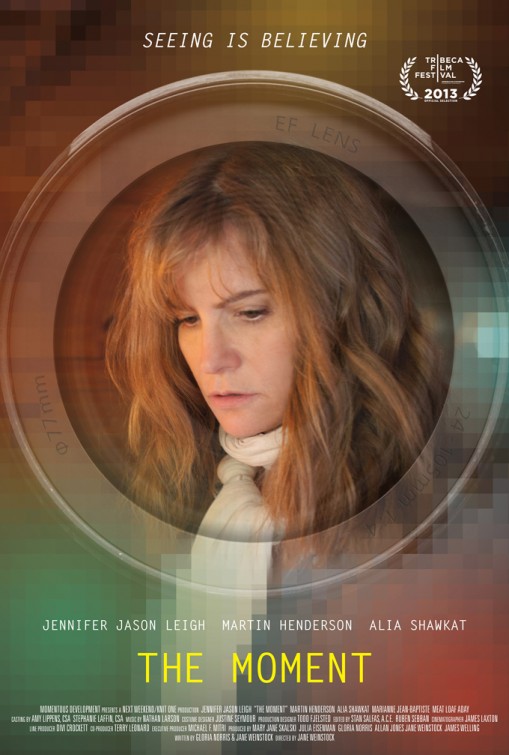
Filmmaker Jane Weinstock follows up her directorial debut of “Easy” with “The Moment,” a compelling psychological thriller starring Jennifer Jason Leigh, Martin Henderson and Alia Shawkat. In the movie, Leigh plays Lee, a photojournalist who has just ended a tumultuous affair with troubled writer John (Henderson). But when she goes to John’s place to get her things, she discovers he has disappeared and is nowhere to be found. The stress of not knowing his whereabouts causes Lee to have a nervous breakdown, which in turn lands her in a mental hospital. During her recuperation, Lee reconnects with her estranged daughter, Jessie (Shawkat), and ends up meeting Peter, a fellow patient who somehow looks a lot like John. As Lee struggles to get a grip on reality and learn the truth behind John’s disappearance, the clues she is given lead her to the most unexpected of places.
Just as with “Easy,” “The Moment” has Weinstock dealing with the contradictions of human nature and psychological realism. It was fascinating talking to her about this movie, and we discussed the challenges of writing a highly complex screenplay, what it was like working with Leigh who is very serious in her approach to playing a character, and how her studies in psychoanalytic theory and semiotics came to inform this film.
Ben Kenber: Regarding the screenplay, how difficult was it for you and your co-writer Gloria Norris to write it?
Jane Weinstock: Well our starting point oddly enough was the Edith Wharton novel “The Mother’s Recompense,” but we weren’t able to get to the rights to that. We didn’t want to do a period piece, but we wanted to sort of take the basic structure of this extremely complicated mother/daughter relationship and make a movie out of it. So once we realized that we couldn’t even get the rights, we just kept that relationship as our starting point and then we went on to write this piece. We decided quite early on to make the character of Lee a photojournalist because we have a fascination with danger, and at the same time a kind of ethical commitment to try to do good in the world. We both love Hitchcock, so I think there were Hitchcockian elements that we gravitated towards, and it also changed in various rewrites. We worked on it for a very long time so we rewrote it a number of times.
BK: When it came to the subject matter, did you do a lot of research on photography as well as depression, anxiety and posttraumatic stress disorder?
JW: Yes, I definitely thought of researching PTSD first. We actually showed it (the movie) in New York to a posttraumatic stress disorder specialist at Hunter College, and she felt that we really got it right so that was very gratifying.
BK: There’s a scene in the movie where Martin Henderson’s character is eating sardines which he says are good for those suffering from depression. Is that true?
JW: No, not really (laughs). They are good for your brain and they don’t have a lot of mercury.
BK: Jennifer Jason Leigh is well known for her method approach to the characters she plays. How did she approach the role of Lee in this movie?
JW: Well I did a lot of research and I gave her my research and she looked through that, and she’s known photographers before and she just was her many ways. During rehearsal we worked on the script together. We made some changes as we were rehearsing, and she’s a writer/director so she’s very, very good at that. She also looked at different cuts of the movie and made suggestions, so she was very involved creatively and not just as an actress.
BK: There is a moment in the movie where Peter is standing in front of his place of work and Lee is taking pictures of him, and he is covering up part of the word “storage” to where only “rage” can be seen. What was your reasoning for shooting the scene like that?
JW: It was just a little reference that I thought not many people would get, but you got it. He is a character who was filled with rage. He was imprisoned for five years for a crime that he didn’t commit, so he’s got a lot of rage that he turns against himself and feels towards the world as well.
BK: Alia Shawkat is fantastic as Lee’s daughter, Jessie. How did she get cast in the film?
JW: Well Jennifer had already been cast, so we had her read with several actresses. They were all great, but when I asked myself, ‘could this actress be capable of murdering somebody,’ I always came up with the answer no except for Alia. I really wanted her to feel like someone who is capable of murder, and I also really liked the fact that she looks like she’s part Iranian, and she is part Iranian, so we could give her an Iraqi father.
BK: How much time did you have to shoot this movie?
JW: We shot it in 22 days, and then we had two days for re-shoots.
BK: With movies like these, the shooting schedule always seems to get shorter and shorter.
JW: I know. It’s crazy.
BK: I read how while you were at New York University you focused on psychoanalytic theory and semiotics. Did any of those studies factor into the making of this movie?
JW: You know it must have especially in terms of the writing and having a psychoanalyst be in the movie. But there’s also a way in which I had to drop a lot of my theoretical knowledge and just make it more organic, and at other times I could get very heady.
BK: In some ways “The Moment” is timely because our reality keeps getting distorted by technology and in other ways as well. By the movie’s end we’re not entirely sure if Lee is even dealing fully with reality. With technology today we are getting closer to the truth, yet at the same time we’re being taken further away from it. Was that something you thought about during the making of this movie?
JW: I guess something I thought about most in terms of that kind of general theme of the movie is that we live precariously in an uncertain world which is partly a function of technology but also a function of the times and all the wars we’ve been living through. The last 20 years has been a very, very uncertain time, and then the reaction to this kind of need for certainty comes up in the form of the Tea Party and other kinds of very fundamentalist types of positions. I thought about it in terms of that more than in just technology specifically.
BK: It seems like these days people are not fighting for the truth necessarily, but more for the truth as they see it. “The Moment” reminded me a bit of David Lynch’s “Lost Highway.” It’s a very different movie, but like with Bill Pullman’s character, Lee is trying to get a grip on all that is happened to her. Still, we’re not entirely sure she has succeeded in doing so.
JW: Yeah, people have compared the film to David Lynch’s work. He’s not somebody who I respond that strongly to. I’m much more of a Hitchcock person, but I can see that. Another big theme in the movie which is definitely Hitchcockian is guilt, and even if none of these people actually killed John, is that really the end of it? Can people carry guilt with them, or for the moments that they have created that may or may not have led to John’s death? For example, the moment where Lee kisses John, at that point there’s no turning back. This has to end badly, right?
Thanks to Jane Weinstock for taking the time to talk with me about “The Moment,” a film that constantly challenges your perception of reality throughout its running time.
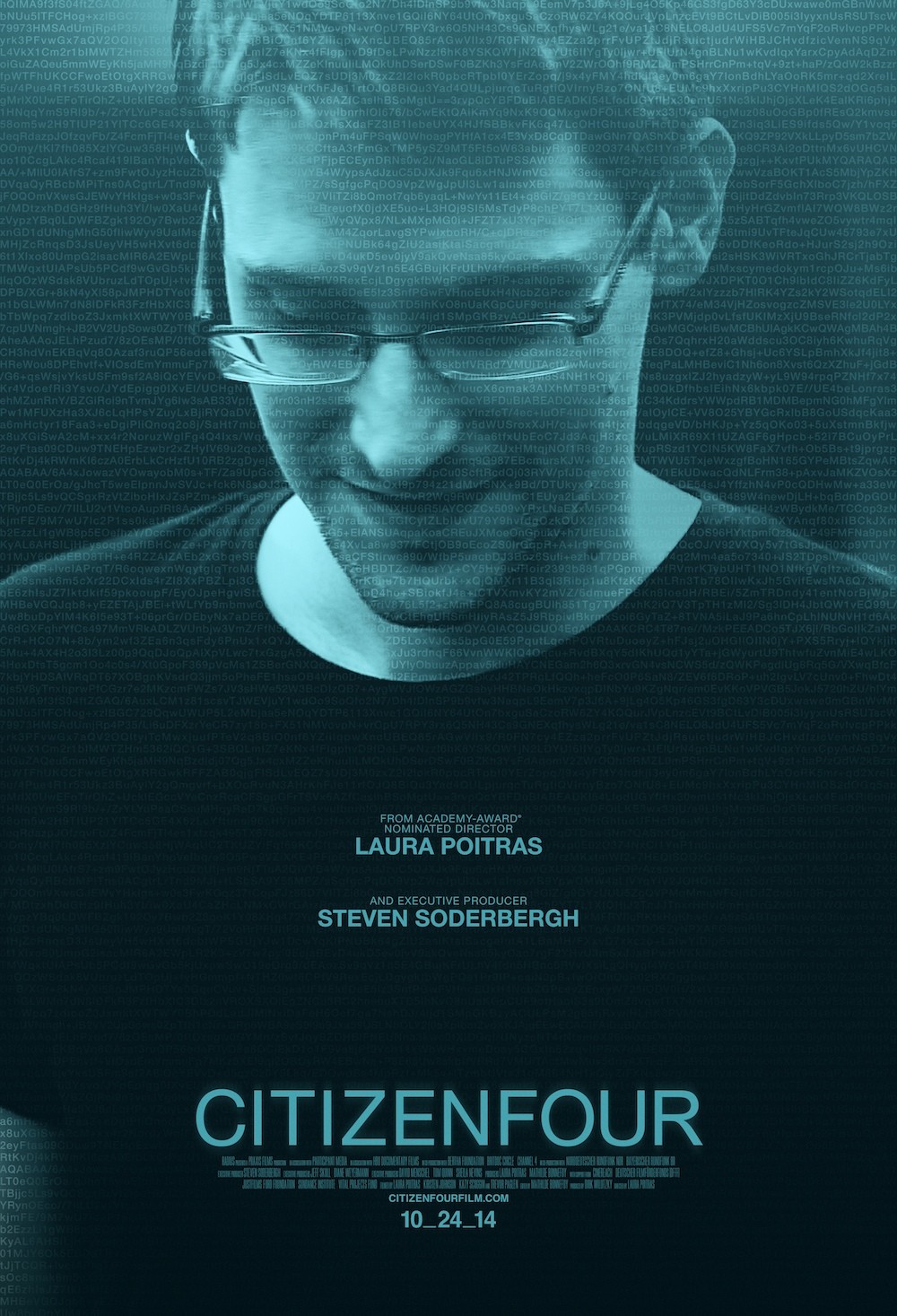
“Citizenfour” is a documentary I should have taken the time watch when it first came out in theaters back in 2014. For one reason or another, I just never got the chance to check it out and life got busier for me as it always does. As a result, my view on Edward Snowden, its chief subject, has remained neutral as I never knew what to make of him when the news of his revelations about the National Security Administration’s (NSA) illegal wiretapping were brought to the public. But with Oliver Stone’s “Snowden” now playing in theaters, the time had come to check out “Citizenfour” as it likely provides audiences with the most objective and unbiased view we could ever hope to have about this particular whistleblower.
Technically, “Citizenfour” is a documentary, but it also works as a nail-biting thriller as we watch Snowden and others doing interviews in secret, but we always wonder why the phone keeps ringing and why the fire alarm keeps going off. Is everyone in the hotel room under surveillance? Are there CIA or NSA agents ready to storm it? Might there be a government assassin prepared to take everyone out from a building across the way? In the movie “Strange Days,” Tom Sizemore told Ralph Fiennes the issue isn’t whether you’re paranoid, the issue is whether you’re paranoid enough. These days, that piece of dialogue is an amazing understatement.
This documentary was directed by Laura Poitras who knows all about being under intense government surveillance. She declares “Citizenfour” to be the final part of her post-9/11 trilogy which includes “My Country, My Country” about the U.S. invasion of Iraq, and “The Oath” which focused on Guantanamo and the “war on terror.” Since 2006, she has been placed on a secret watch list by the U.S. government and was constantly interrogated by border agents every time she traveled internationally. It got to where she had no choice but to move to Berlin in an effort to protect her footage from being confiscated. Suffice to say, “Citizenfour” is a documentary which would never have seen the light of day were these secret interviews conducted in America.
The title refers to the name Snowden used when he attempted to make contact with Poitras and journalist Glenn Greenwald. Eventually, the three meet in a Hong Kong hotel room where Snowden tells them, as well as The Guardian’s intelligence reporter Ewen MacAskill, all he knows about the U.S. government’s illegal wiretapping activities, and it is frightening to see just how far it goes.
What’s fascinating about “Citizenfour” is how calm and collected Snowden appears here as he divulges information which will eventually render him a traitor to many and a hero to others. It’s almost like a ticking time bomb as we are viewing his very last hours of anonymity as he will soon be revealed to the world as a whistleblower, and many will manipulate his image any way they can. But in this day and age, when everyone is so hooked on their cell phones and Facebook, aren’t we a little too quick to give up certain parts of our privacy? We have always felt something or somebody keeping an eye on us to where we accept the fact we are being watched, but we reveal more about ourselves now than we ever did in the past.
Poitras deserves a lot of credit for keeping a firm hand on the subject matter here as she gives “Citizenfour” a dark and ominous tone as we know how much Snowden’s revelations will rock the world. She is also aided by the use of Nine Inch Nails’ instrumental music from the “Ghosts” album which provides an electronic hum which keeps getting louder and louder as the truth is revealed and identities will be forever burned in our conscious minds.
By the time “Citizenfour” ends, the cat has been let out of the bag and Snowden finds himself living in Russia along with his girlfriend. The fact Poitras was able to get him back into the documentary before the end credits started rolling feels remarkable in hindsight. At this point, only he and Greenwald can communicate certain bits of information through pieces of paper which they later rip up. The battle to restore privacy has only just begun, and it will be a long time before it will be resolved. Whether it will be resolved fully is another story.
Poitras makes us see the reach of the U.S. government both through her own struggles and former NSA intelligence official William Binney whose own whistleblowing efforts had people bursting through his door with guns. President Barack Obama is shown in footage saying Snowden should have gone through legal channels and share his information legally, but when you take into account how other government whistleblowers have been treated, even he can’t guarantee Snowden can be brought in safely.
What is particularly frightening about “Citizenfour” is how the different parts of government are constantly watching one another to where it feels like trust in one another can seem like a rare commodity. It all brings us back to the “Watchmen” question, who watches the watchers? Everybody is watching each other, and in many ways it doesn’t matter who the President is because the NSA appears to run by their own rules and no government oversight can easily stop them in their tracks.
Opinions on Snowden still differ as some see him as a hero and others as a traitor. “Citizenfour,” however, shows him to be a selfless man eager to right the wrongs made by people who have betrayed the public’s trust. The fact that Poitras was able to get this documentary made let alone released is astounding, and it should be required viewing for all Americans. At the very least, she, Snowden and Greenwald deserve credit for bringing this wiretapping issue to light as there needs to be more discussion about it. We are still feeling the aftereffects of these revelations, and the dominoes keep on falling. While it helps to have all kinds of information to combat those who threaten our livelihood, you eventually have to wonder if it is worth the price.
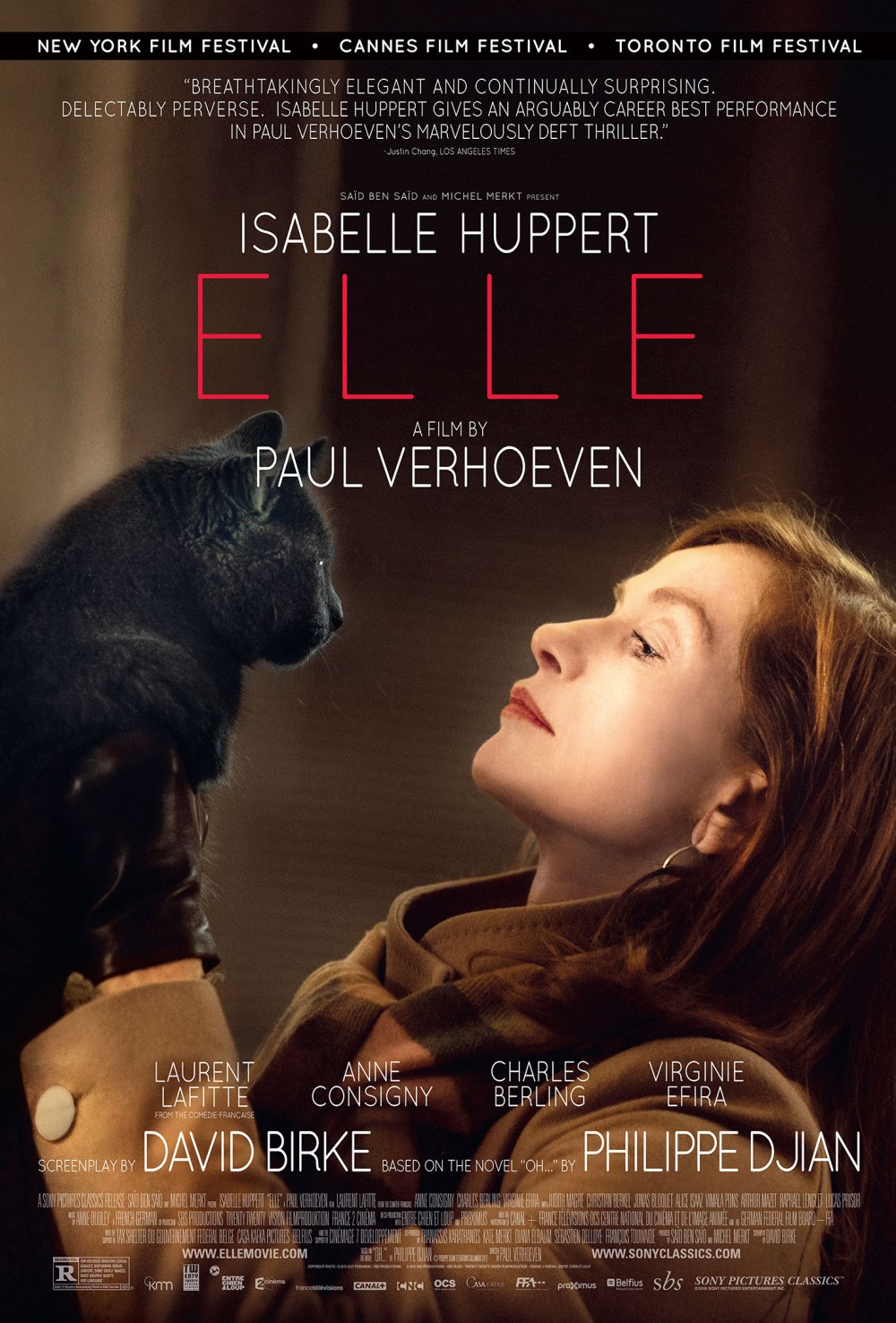
Dutch filmmaker Paul Verhoeven has given us unforgettable movies like “Robocop,” “Total Recall” and “Basic Instinct,” and he had gleeful fun satirizing the war propaganda machine with “Starship Troopers.” Now he returns with his first movie in ten years, his last being the excellent “Black Book,” the psychological thriller “Elle” which stars the brilliant (and not to mention brave) French actress Isabelle Huppert. From watching the trailer, it looks like Verhoeven is up to his usual button-pushing tricks, but the viewer should not go into this expecting “Basic Instinct” redux.
Based on the novel “Oh…” by Philippe Djian, Huppert plays Michèle Leblanc, the head of a leading video game company, and the plot synopsis describes her as seemingly “indestructible” as she “brings the same ruthless attitude to her love life as to business.” As the movie’s trailer begins, Michèle is at a dinner party where she tells a group of friends she was sexually assaulted, and she presents this confession in a calm and collected manner. Whereas you might expect a scene where a rape victim has a nervous breakdown as she accepts the reality of what she’s been through, Michèle doesn’t even blink an eye. Her friends, however, are shocked at this news to where they encourage the waiter, who has just brought a lovely bottle of wine, to come back in a few minutes.
Throughout the trailer, we see Michèle go about her work and life as if nothing has changed, but it becomes clear the attack has forever left a huge psychological scar on her which cannot be wiped away. Her need for revenge is understandable, and Verhoeven’s movies are well known for their characters getting vicious revenge on their attackers, and the trailer shows her as a ticking bomb waiting to go off. In the end, one can remain cool for only so long.
“Elle” is being released by Sony Pictures Classics, and they recently unveiled a clip from the movie titled “Empty Stare.” Watching this clip, there’s no doubt Verhoeven picked the right actress to star here. Huppert has taken on challenging roles in Michael Haneke’s “The Piano Teacher,” Christophe Honoré’s “Ma Mère” and Claude Chabrol’s “La Cérémonie,” and she looks to have risen to the challenges Verhoeven has put in front of her here. As Michèle tells an unsettling story about her father to a male friend, Huppert makes you wonder if she is telling the truth or simply playing around with someone who doesn’t know her very well. The beauty of watching Huppert is how she creates such vivid and frightening imagery with just words. Other directors would add flashbacks to give this scene more emotional power, but Verhoeven doesn’t need to do this when he has Huppert to work with.
“Elle” was shown at the 2016 Cannes Film Festival where it received critical acclaim and a seven-minute standing ovation. Guy Lodge of Variety proclaimed on Twitter that “Isabelle Huppert might be our best living actor, and ‘Elle’ might be Paul Verhoeven’s best film.” Verhoeven has said the movie is not to be mistaken for an “erotic thriller” in the vein of “Basic Instinct,” and that anyone who goes into it thinking it is will be “disillusioned.”
Adventurous moviegoers look to be in for a dark treat when “Elle” opens in New York and Los Angeles on November 11. Please be sure to check out the movie’s trailer and the “Empty Stare” clip below.
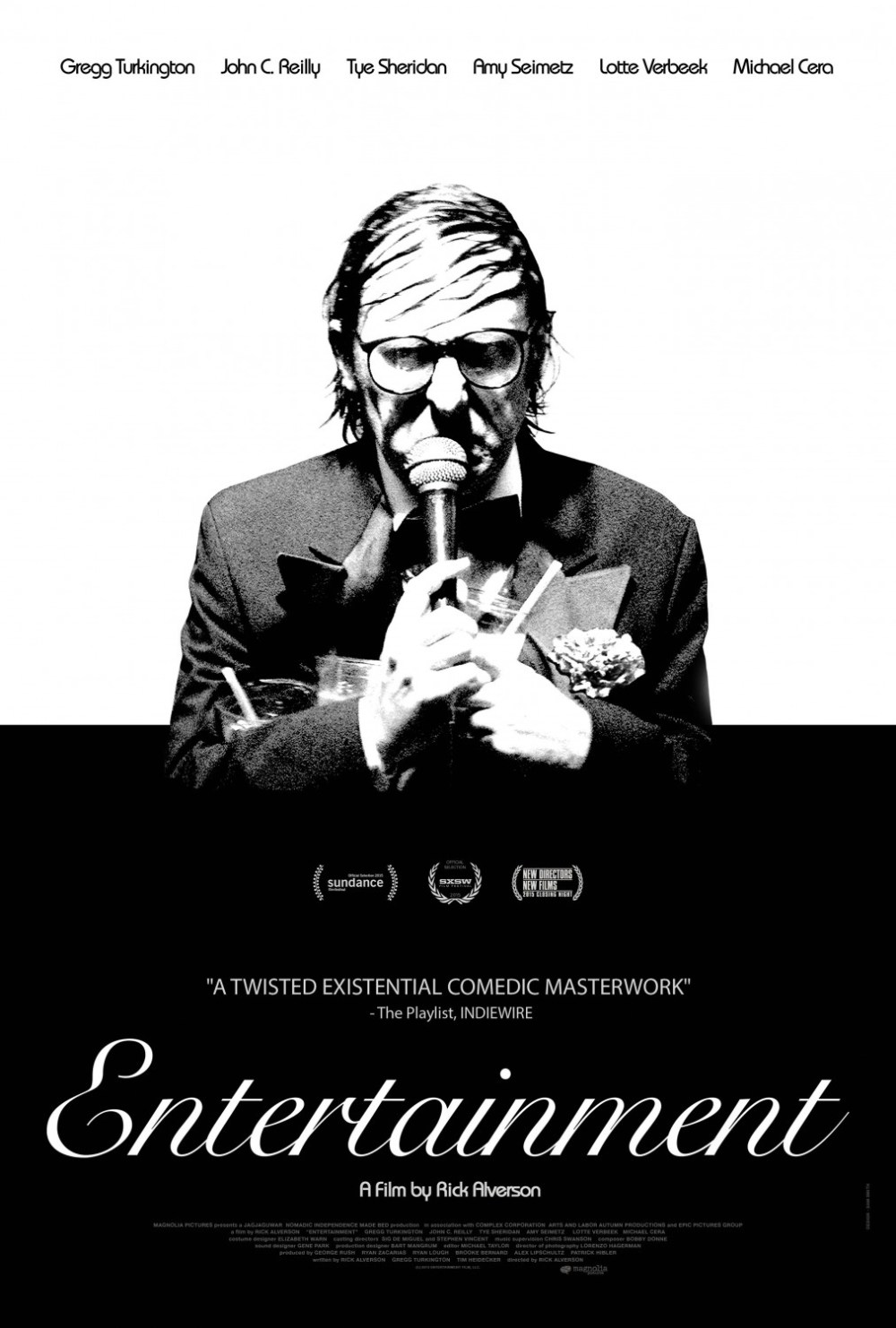
“Entertainment” is probably the most ironically named movie to be released in 2015 as it is not entirely fun to sit through, but to dismiss it as bad because it is not enjoyable would be missing the point. It proves to be an experience more than anything else as we watch a stand-up comic named The Comedian (played by Gregg Turkington) travel through the California desert while performing at a string of third-rate venues in front of audiences who couldn’t be less excited to watch him. During this time, he tries to get in touch with his estranged daughter and eagerly awaits a lucrative Hollywood engagement which just might revive his sagging career. But first, he has to travel through what seems like the equivalent of Dante’s Inferno in order to find any hope of salvation.
“Entertainment” was directed by Rick Alverson who previously gave us “The Comedy,” another ironically named motion picture which starred Tim Heidecker as an aging New Yorker who is indifferent to inheriting his father’s estate and passes time with friends playing games of mock sincerity and irreverence. Turkington is a noted stand-up comic best known for his alter-ego of Neil Hamburger, a persona which he brings to “Entertainment” but who is not the same character as The Comedian.
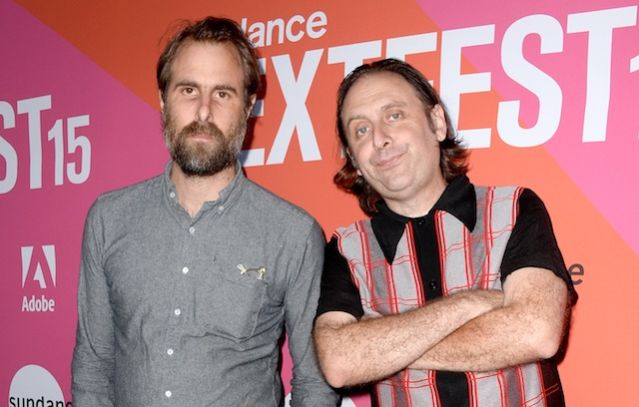
I got to speak with Alverson and Turkington while they were at Cinefamily in Los Angeles where “Entertainment” was being shown. When I told that them this interview was for Examiner.com, they joking replied how someone on the website gave them their movie the worst review imaginable and described it as anything but entertaining. We started with that review and went from there.
Ben Kenber: How do you feel about reviews like that?
Rick Alverson: Well it’s weird. Obviously the movie isn’t a romp through a good time, so if somebody says it’s a failure for doing that they are right, but that’s not even engaging with the movie (laughs). It’s like you’re not even walking into the room.
Gregg Turkington: They got the details wrong, that’s what I don’t like. They seem to have thought he was trying to do something else and that he failed in trying to do that, but he was trying to do that so he didn’t fail so fuck yourself (laughs). But I like the bad reviews if sometimes it feels like the person’s taking it so personally that the review, when you are reading it, you can tell that I don’t like this person and they don’t like this and this sounds interesting to me, I’m gonna go see the movie. I’ve gone to a lot of movies with scathing reviews because I could tell we are not on the same page, and what you hate is what I like. That’s fine with me.
BK: I saw “Entertainment” a couple of weeks ago and it has stayed with me ever since. Some movies are meant to be experienced more than enjoyed, and this movie is an example of that. Not all movies are meant to be enjoyed.
RA: Great. That’s very good to hear.
BK: We’re looking at a comedian who is at the end of his rope psychologically, and you can’t turn away from his suffering.
RA: Yeah, I would say it’s even more than just psychological. I think it’s a holistic disaster biologically, psychologically, spiritually…
GT: Environmentally (laughs). Although we did win an award in Switzerland at this film Festival we went to.
RA: Environment is Quality of Life Award from the junior jury at Locarno in Switzerland.
GT: Pick the film that best sums up the environment is quality of life (laughs).
RA: It’s true, we won.
GT: Environment is low quality of life, and that environment is low quality (laughs).
BK: I can see why it won. Greg, your character of The Comedian was inspired by your character of Neil Hamburger. When you brought that character to this movie, did you have to change anything about the way you perform?
GT: The live stage show is similar to the real live stage show although me lashing out at somebody for no good reason is not something I would do in a live stage show. That was more the character. But yeah, there were a lot of things that had to be planned out and thought about and addressed. Ultimately I don’t think it is the Neil Hamburger story. It’s a very similar character and certainly it helps to have that character up our sleeves when we need it, but we had to be free to start from scratch.
BK: Rick, I read in the production notes that you had mentioned how you found failure as being very liberating. What specifically about failure do you find so liberating?
RA: Well it describes the boundaries and limitations of the world and experience, and there’s something beautiful to what we can and can’t do and understanding them. It’s like understanding what your feet are for, and your feet have a certain function. I think functionality is beautiful, and we are increasingly a society that’s divorced from form in every way and ignores the limitations which are the actual architecture of life. So we are just ignoring the shape of things and instead are wrapped up in what things could be in this idealized ephemeral flight of fancy. There is a neglecting the beauty of facts on the ground.
GT: A lot of peoples’ failures are to me successes. There’s a purity often to them that you don’t find with things that are successful.
RA: Yeah, because the idea of success is that so few can achieve it in any discipline and any particular way, whether it’s the success of becoming incredibly rich or the success of perfectly achieving the discipline. The majority of people are in some sort of muddy approximation of that. I don’t use traditionally scripted dialogue in any of my movies, so there’s improvisation and other methods of achieving tonal exchanges or content. I really like when things fall flat or there is that absence of chiseled, airtight exchange that we see in so much of popular cinema.
BK: Regardless of how people view “Entertainment,” I have a feeling it will endure over the years as it offers a different and specific view of things.
GT: I’m surprised at how people’s perceptions of things is all based on something like an opening weekend or with music too. It’s like some record comes out and it doesn’t do well, but the music is still valid at any point. The time that it comes out shouldn’t determine the value of it. It’s crazy.
RA: There are these sort of free market metrics especially in an age where we don’t even know who’s buying this stuff. Netflix isn’t releasing their numbers or whatever company. Digital platforms don’t need to release their numbers, so we really don’t know where this stuff’s going and who it’s being imbibed by. To think that our metrics for an opening weekend at the box office have any sort of say about a work is silly.
GT: It’s also replaced for a lot of people film criticism. I hear people in airports or on the street talking about box office numbers and really that should only be of interest to the investors, not to the moviegoers. What do you care if it made 30 million or 60 million? That’s nothing to do with you.
RA: Increasingly we want context for everything. We need context for our own experience. We need to understand how other people are viewing something so that we know how to view it, which is a bit of a shame. Where’s discovery?
BK: I imagine there was a lot of improvisation involved in the making of this movie.
GT: For the dialogue. The rest of it is pretty scripted out very carefully scripted out. It’s not improvised like, what will we talk about now. It’s written there what the topic is, what the town he is in and what’s being communicated. It’s just up to the actors to use the actual words.
RA: We were talking about the other day how there’s, in a tent pole blockbuster movie, a general sense that people were improvising. Because of the prowess of the spectacle, everybody is saying that they know that they (the actors) are riffing on lines in a popular sense. But I think when people talk about independent films and say that they are improvised, it’s just like you turn on the camera and everybody’s doing whatever the fuck they want. It’s so many different things for so many different people. You think you are communicating one thing by saying it, but language is useless sometimes. This was fun because we worked with different people in different ways. I was improvising lines and writing lines on the spot and feeding them to certain people. Others like John (C. Reilly) and Gregg, they have a chemistry and they are very good improvisers so the dialogue exchanges between them were in that world. For me, watching that thing sort of come apart or the attempt at it, honestly half the time if I know we are covering whatever little narrative ground we need, I’m just listening to the voices. We don’t do more than three takes, and some of that is economic. If it’s not achieved by the casting or by the sort of conditions that you’re setting up, then what are you aiming for? I like things falling kind of flat too.
GT: But it’s also true that people think it’s a big free-for-all, improvising. They should see a scene that we might do where we do the first take, me talking to somebody or whatever making up the dialogue, and Rick says, “Alright for this one I need you to move half a millimeter to your right.” That’s not a free-for-all, being told to move half a millimeter to the right. That would probably be the direction over we need you to use this line and to say this specific thing. A lot of times it was stuff like that which is really the opposite of a free-for-all.
BK: Gregg, your character gets booked at a lot of second-rate venues or places that are the worst for comedians to be stuck at. Is that something you’ve experienced in your own career, or is that something you just been a witness to?
GT: I experienced it when I’ve gone out of my way to make sure that it was happening by booking shows that I knew what have that sort of outcome. And then sometimes you go into a show with the best of intentions and it just doesn’t pan out. Things get awful and ugly. But I like a variety of responses and so I like to have shows that are successes on the traditional level, success in the failures on the traditional level. To me they are probably both successes because they gave me a different experience.
RA: I feel that way about movies. It’s strange increasingly for me to recognize how similar me and Gregg are and what we want out of the thing whether it’s comedy or drama or film or stand up. We’re kind of curious about the off-kilter event (laughs).
BK: There are some amazing shots of the California desert in this movie. On one hand they are beautiful, but on the other they illustrate how vacant and empty The Comedian’s life is. Was it challenging to get those shots with the budget you had?
RA: We stretched our budget really, really far, and that speaks to the dedication of everybody involved; the crew and the producers and the cast. So yeah, of course it’s challenging. It’s 112° outside and Lorenzo Hagerman, our cameraman, is carrying a 50-pound camera kit on his shoulder up a rocky cliff to get those wide vista shots 400 yards from something. Gregg’s shoes are melting and it’s dangerous out there. Don’t go to the desert! (Laughs)
GT: Don’t shoot in the desert is right!
RA: Me and Gregg talked about how we liked in the 70’s you see a lot of films of people just sweating and nobody’s dabbing them. They are just covered in sweat and look greasy and wrong. You started to see that becoming the sterilization of, “No that’s not quite right. We can do better than that.” So you had to sterilize the representation down to its most idealized form, but we were hoping for some more sweat actually.
BK: Tye Sheridan’s role in this movie is interesting because he basically plays a clown who doesn’t have much of an act. He just basically panders to the audience’s basest instincts. How did you work with him on that role?
RA: I showed him an idiot dance and he brought it to life. I’d ask him to do sort of these mime-ish things at events, and he stepped up on that stage and animated it in a way that shocked all of us. It was electrifying. He sort of plays the apocalypse in the movie. He definitely is the end of the spectacle. He’s reduced down to the rawest of the raw materials. He is the smut in the pig sty, the character I mean. Tye is one of the kindest, gentlest, most respectful young men that you could ever meet.
BK: What do you hope people get the most out of “Entertainment” and the experience of watching it?
RA: I hope they do what you’ve done. You can watch a film and be activated by it and be engaged with it and have an experience like you’re saying. It doesn’t necessarily in a typical sort of way expect for it to do to you what the majority of films do. There can be an outlier that doesn’t operate by those principal, and the spectrum of art is much larger than a particular metric like if you enjoyed it or if you didn’t enjoy it. It’s so much more broad.
I want to thank Rick Alverson and Gregg Turkington for taking the time to talk with me. “Entertainment” is now available to watch on DVD, Blu-ray and Digital.
I went into “The Guest” knowing almost nothing about it. I was expecting something very artistic and the kind of movie Hollywood studios wouldn’t have the guts to finance these days, but what I got instead was the kind of thriller similar to those from the 1980’s like “The Hitcher.” I kept wondering why the Sundance Next Festival would allow something so formulaic to play at this festival, but when the filmmakers came out after a screening to talk about “The Guest,” it then became clear it was actually meant to be an homage to those thrillers we all grew up on. As a result, I quickly saw the movie in a different light.
But even before this revelation, I had to admit “The Guest” is a thriller which packs a mighty punch and left me on the edge of my seat throughout. It grabs you by the throat and holds you tightly within its grasp, and a lot of that is due to the infinitely charismatic performance by Dan Stevens who portrays the guest of the movie’s title.
“The Guest” starts off with an introduction to the Peterson family who are still grieving over the loss of Caleb who was killed in Afghanistan. Then a man knocks at their door and politely introduces himself as David (Dan Stevens), a friend of Caleb’s from the military, and he is here to fulfill a promise to his fallen comrade. David tells Laura (Sheila Kelley) and her husband Spencer (Leland Orser) he has no wish to overstay his welcome, but they become insistent he stay at their house to where he quickly becomes the best houseguest anyone could ever hope to have as he helps out wherever and whenever he can. But just as in life, we can’t help but think no one can be this nice without being somewhat psychotic.
Some of “The Guest’s” best moments come when David looks out for the Peterson children, Anna (Maika Monroe) and Luke (Brendan Meyer). Luke is having some major problems at school as he is the target of bullies who beat him up at any given opportunity. Now I have seen this scenario played out in many movies, and it used to tug at my emotions in a very strong way. But watching it in “The Guest” gave me that primal beat up the bullies feeling I haven’t felt in the longest time. It doesn’t take a rocket scientist to see David is going to give these jerks a taste of their own medicine, and watching him do so is a perverse thrill.
Anna is less quick to warm up to David even after he goes out of his way to get a keg of beer for her high school friends. From the start she is suspicious of who he really is, and those suspicions are confirmed when a number of strange events start happening around town. Of course, her dad can’t see him doing anything bad and chides his daughter for even thinking such a thing. After all these years, teenagers are still forced to deal with their parents’ hypocrisy, and that’s even with actors like Leland Orser playing the father.
As you can see, “The Guest” travels down the road of familiar genre conventions and delivers them to the audience in a way which feels both potent and fresh. The violence in the movie is more brutal than in others I’ve seen recently, and there are several scenes which shocked me I haven’t been shocked in a while. No character is on safe ground here, and anyone is expendable in a way those actors in “The Expendables” movies ever are. At the same time, the movie has a sharp sense of humor which shows just how much fun its filmmakers were having with the material.
“The Guest” comes to us from director Adam Wingard and writer Simon Barrett, the same two who gave us “You’re Next.” I came out of this movie wondering if they had as much playing around with the slasher genre in “You’re Next” as they did with the thriller genre here. Having interviewed them both the following day for the website We Got This Covered, I can tell you they absolutely did as they talked about combining elements from “The Terminator” and John Carpenter’s “Halloween” to make this movie a reality.
Furthermore, “The Guest” comes equipped with a terrific electronic score courtesy of Steve Moore which recalls the great 80’s electronic film scores like Mark Isham’s “The Hitcher” and the “Halloween” scores of John Carpenter and Alan Howarth, particularly the one they did for “Halloween III: Season of the Witch.” Anyone who knows me best knows how much of a sucker I am for this kind of movie music, and I was digging’ Moore’s score right from the first note as it adds the ominous atmosphere we will be venturing through when David makes his entrance into town.
Seriously, this movie really does belong to Stevens who is best known for playing Matthew Crawley on “Downton Abbey,” the TV show everyone seems to be watching except me. He exudes endless charisma and makes you believe how lethal David can be when you look right into those beautifully steely eyes of his. I’m not kidding when I say he has a stare which can cut through you with a laser from a mile away. Stevens also infuses a number of his scenes with a twisted sense of humor, and this is especially the case when he coolly manipulates Luke’s principal to where he realizes suspending this young man from school might actually be hazardous to his health.
“The Guest” falters a little towards the end as the filmmakers get too enamored of the foolishness of their character’s decisions. It also has one of those horror movie endings which imply how evil can never die, and it feels a little soft compared to what we have seen in other films of its ilk. At the same time, it could mean that Wingard and Barrett will reteam for “The Guest 2,” and it would be fun to see how they would play around with the conventions of a sequel.
Seriously, “No Good Deed” could only dream of being as thrilling as this movie, and it starred Idris Elba for crying out loud. “The Guest” gleefully plays around with all the things we remember from the ultra-violent movies from our past, and I found myself enjoying it a lot even as things got increasingly nasty. Just when I thought I knew how this movie would play out, it quickly shifted gears and took me for a loop.
Now if you’ll excuse me, I have to buy this movie’s soundtrack.