The Whole Truth

the-whole-truth-poster

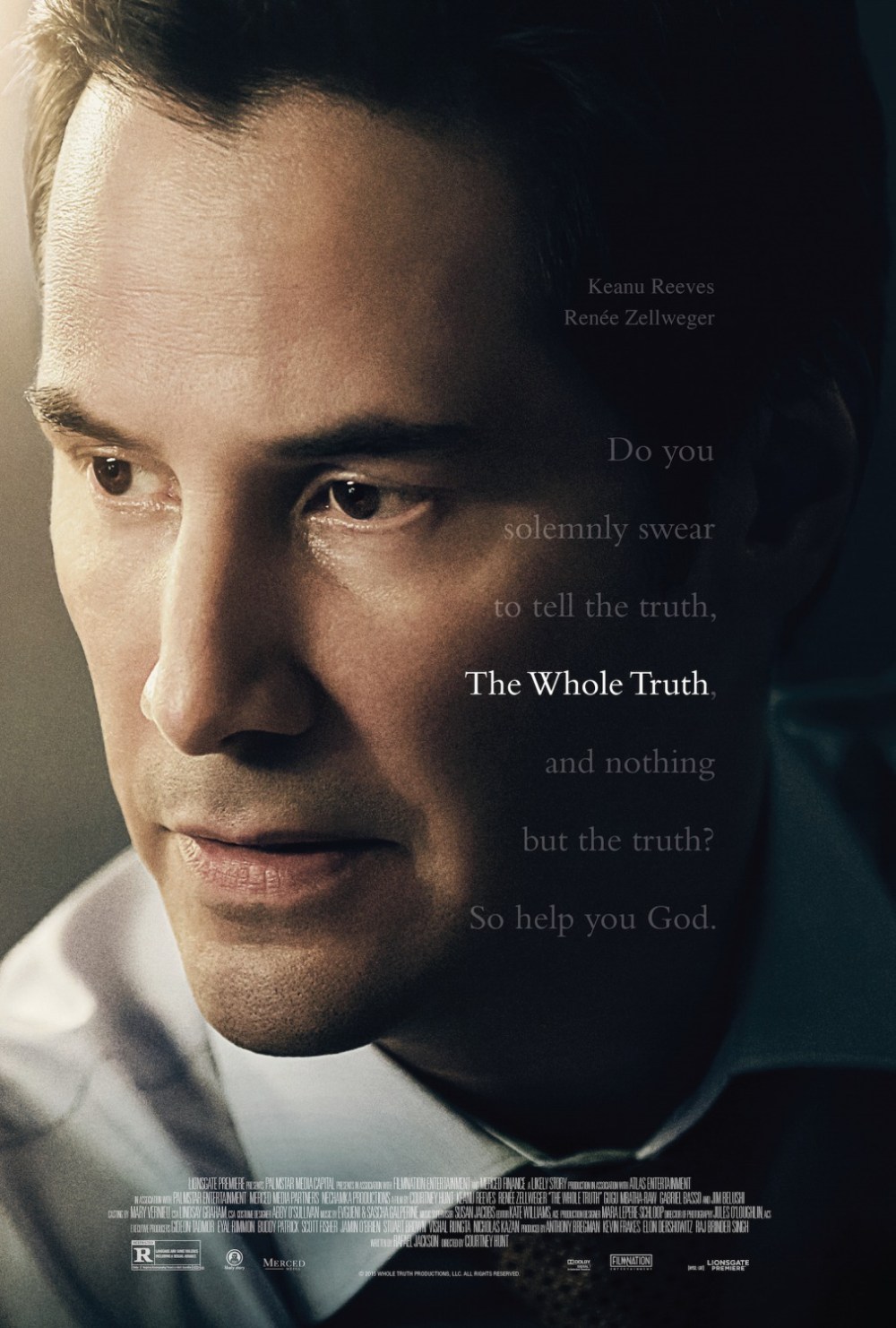
Watching “The Whole Truth,” I wondered if I had seen way too many courtroom dramas over the years to have the energy to appreciate this one. Then again, this movie does start off with a narration which had me laughing unintentionally, and its plot of a young man on trial for patricide felt like I was experiencing a severe case of déjà vu. How many episodes of “Law & Order” dealt with this kind of crime? Furthermore, how many of them proved to be more enthralling than this motion picture? Considering the talent involved in front of and behind the screen, “The Whole Truth” is a major disappointment.

Perhaps one of the main problems comes from an opening image which has a snake slithering on the ground as Keanu Reeves’ lawyer character of Richard Ramsay rides his motorcycle up the road. As soon as Richard goes by, the snake slithers right after him. From there, we have a good idea of the kind of people this movie will inhabit, and realizing this makes one realize there will be no real surprises in store for us.

Richard is a defense attorney, and he is defending young Mike Lassiter (Gabriel Basso) who is accused of murdering his father, Boone Lassiter (Jim Belushi). Things are not going well for these two as Mike refuses to speak about anything regarding his father’s death, and Richard tries to make him see they are on their way to a guilty verdict. All this time, Mike’s mother, Loretta (Rene Zellweger) sits in the courtroom looking on impassively. Did Mike really kill his father? Oh, come on, you already know the answer to this.

For those familiar with the novels of John Grisham and Scott Turow or the movies based on their works, the path “The Whole Truth” takes is one which has been traveled endlessly. We know something is up from the start, and it just makes us all the more impatient for the big reveal we know is coming. And while I’m no lawyer, I can see so many plot holes in this case which defy all reasonable logic. Mike himself makes a revelation on the stand which turns everything upside down, but the prosecuting attorney doesn’t even order a medical evaluation to verify it.

As for Reeves’ character, he seems much too close to the Lassiter family to represent them without bias. Then again, this probably doesn’t matter in the real world. It certainly didn’t matter when Johnnie Cochran represented O.J. Simpson in his murder trial, so why should it here? Still, with Richard so close to the family, it’s no surprise he is involved in this fiendish crime to where I just wanted him to admit the truth already.

The most dispiriting thing about “The Whole Truth” is it was directed by Courtney Hunt, the same person who gave us the terrific crime drama “Frozen River” back in 2008. That one starred Melissa Leo and the late Misty Upham as a pair of working-class women who smuggled illegal immigrants across the border into the United States. Hunt directed her actors to incredible performances, and she gave us a movie which felt alive and was never weighed down by clichés or illogical moments.

“The Whole Truth,” however, is the exact opposite as it is full of clichés and proves to be an insult to the intelligence even before the movie reaches its halfway point. The courtroom scenes are lifelessly staged, and the actors lack conviction in their performances. I expected Howard to bring something fresh to this material, and she even had a screenplay by Rafael Jackson to work from. But none of the energy and originality she brought to “Frozen River” can be found here. It’s been eight years since that film, and I can’t help but wonder why she chose this project as her follow up.

When it comes to Reeves as an actor, he either gives you the best or the worst he has to offer. His performance in “The Whole Truth” has him delivering courtroom speeches in an inauthentic manner which is depressing to watch, and his delivery of the voiceover narration is at times laughable. While he fares much better than he did in “Knock, Knock,” watching Reeves here makes me yearn for the “John Wick” sequel to come out sooner rather than later. Just from looking at the trailer for it, he looks far more alive in that sequel than he does here.

Then there’s Zellweger who makes Loretta far too enigmatic a character here. Furthermore, she looks very sick and emaciated here; very unhealthy. This all but takes away from the great performance she could have given but doesn’t. Loretta proves to be nothing more than another helpless wife and mother, and more could have been done to make this character complex and interesting. Instead, Zellweger is wasted in a role which gives her very little to work with. It’s great to see her back onscreen, but she deserves much better than this.

The only actor who gets off easy is Belushi as he succeeds in leaving his “According to Jim” persona in the dust by playing such an unlikable prick. His character of Boone is a jerk to put it mildly, but Belushi manages to make him more than that even with his limited screen time. Boone is like Aaron Paul’s character of Peter from “The 9th Life of Louis Drax” in that Boone initially comes across as a jerk, but we soon realize there is more going on with him than what’s on the surface. Belushi manages to convey this in a way the other actors are unable to, but it’s still not enough to life this movie out of the muck of mediocrity.

Popular culture has been and still is filled with court shows like “The People’s Court” and procedurals like “Law & Order: Special Victims Unit” to where we know exactly what to expect from the trials presented to us. It’s tempting to say “The Whole Truth” suffers from being stuck in a time where we have long since been burned out from this kind of entertainment, but it still feels like so much more could have been done with this material. What ends up unfolding before us feels stale, derivative and easily forgettable. My hope is Howard will have more luck on her next film because this one does not represent a step in the right direction for her.

Daniel Craig was actually set to play Reeves’ role, but he ended up dropping out before filming began. Perhaps he realized the screenplay for “The Whole Truth” wasn’t as good as he originally thought. Jack Nicholson once yelled “you can’t handle the truth” in “A Few Good Men,” and there’s no reason why audiences should have to handle “The Whole Truth.” Courtroom dramas are a dime a dozen, and this one doesn’t even try to stand out from the pack.

* ½ out of * * * *


Jack Reacher

jack-reacher-poster

I haven’t read “One Shot” or any of the other books written by Lee Child which feature the character Jack Reacher. At this point, however, I almost don’t need to as the casting of Tom Cruise as Reacher has brought to everyone’s attention how the character is 6’ 5” tall and weighs over 200 pounds. This description makes the role seem far more appropriate for Arnold Schwarzenegger, Sylvester Stallone, Dwayne Johnson or any other athlete turned actor who looks like they live at the gym. So, of course, everyone is snickering at Cruise the same way they did when he was cast as Lestat in “Interview with the Vampire,” but we all know how that turned out.

You know what? I don’t care if Cruise resembles the character or not because he proves to be the best thing “Jack Reacher” has to offer. While he is much smaller and nowhere as muscular as Child’s literary character, he still comes across as an intimidating force to everyone he comes in contact with. His charisma onscreen ends up giving you a reason to check out this movie even though it is surprisingly ho-hum and feels like a business as usual action picture.

Directing “Jack Reacher” is Christopher McQuarrie who won an Oscar for writing “The Usual Suspects” and previously worked with Cruise on “Valkyrie.” He gets things off to a suspenseful and tense start as we watch a sniper looking through his scope at random targets. It’s an unsettling way to start this movie off, and McQuarrie keeps us waiting with anxiety for the first bullet to be fired, and you know it will be fired. The sniper takes out five people and is later caught and interrogated by Detective Emerson (David Oyelowo), but instead of him giving the detective a confession he writes the following message down on a legal pad, “GET JACK REACHER”

Mr. Reacher arrives in town soon after, but not to help his sniper friend but instead bury him. Still, as in many action thrillers, things are not quite what they seem. Reacher has to contend with the sniper’s defense attorney Helen Rodin (Rosamund Pike), her dad who also happens to be District Attorney Alex Rodin (Richard Jenkins), a hired killer and a Russian named Zec Chelovek (Werner Herzog) who everyone refers to as “the Zec.”

Now I know it has been popular to hate Cruise these past few years with his off-camera antics getting more press than his movies, and part of me expected that I wouldn’t take him very seriously in this role. But he really does deliver here and gives a believable performance as a man you really don’t want to mess with. Even in those obligatory scenes where he’s about to beat up a bunch of guys at once, he’s riveting because his eyes tell us and his opponents they don’t stand much of a chance. It’s fun to see Cruise give Reacher an undeniably dangerous vibe, and even at his age he never feels out of place in this role.

It’s a kick to see Werner Herzog show up as “the Zec,” and he makes this villainous character especially depraved as he recounts the unthinkable of what he once had to do in order to survive. Herzog makes the almost unbelievable story he tells sound terrifyingly believable, and his voice continues to serve him well whether he’s narrating one of his documentaries or reading from the book “Go The F—k To Sleep.” It’s a shame he’s not in the movie more than he is.

I also liked seeing Robert Duvall, who starred opposite Cruise in “Days of Thunder,” show up as shooting range owner Martin Cash. These two share a great chemistry together no matter what movie they’re in, and it feels like it’s been forever since I’ve seen Duvall in anything. Like Herzog, I wish he had a bigger part here, but Duvall does make the scenes he’s in count for a lot. This is an actor who can take any throwaway role given to him and make it seem like it’s so much more than what’s on the page.

McQuarrie is a great writer, and not just for creating the screenplay to “The Usual Suspects.” I like how he gives us characters like Reacher and Helen Rodin whose descriptions cannot easily be boiled down into one sentence. And yes, the movie has some great dialogue in it just as it should.

Having said that, “Jack Reacher” comes up a little short for me because there’s not much to distinguish it from other movies of its ilk. Furthermore, it goes on for much longer than it should to where it drags in spots which had me getting a little restless. McQuarrie and Cruise are also unable to escape the clichés of the genre which would easily do in a weaker movie. Maybe it’s because the tone of this film is a little more downbeat than it should be. Both clearly had some fun with this character, but you come out of it wishing they had more fun with the story.

If you can get past the unspectacular aspects of “Jack Reacher,” you might still enjoy the movie for what it is. At the very least we have Cruise’s performance to enjoy as he makes every lethal blow he gives the bad guys hurt like hell. When the movie is finished, you do come out of it wanting to see Cruise take on this role again in the future. But if and when that does happen, let’s hope that potential sequel has a little more edge to it than this one.

* * ½ out of * * * *

Tommy Lee Wallace Talks about ‘Halloween III’ at New Beverly Cinema

halloween-iii-poster

PLEASE NOTE: THIS ARTICLE CONTAINS SPOILERS ABOUT THE MOVIE.

Tommy Lee Wallace dropped by New Beverly Cinema on October 30, 2010 to talk about his directorial debut, “Halloween III: Season of the Witch.” This is the Michael Myers-less sequel of the long running franchise and it played as a double feature with “Trick ‘r Treat.” All the “Halloween” movie fans were in for a special treat as Wallace gave us more trivia about the making of it than we ever could have ever expected.

When Wallace was brought up after the movie ended, he admitted his reaction to watching it after so many years was that it resembled one of the strangest and most bizarre movies he had ever seen. The original plan for “Halloween III” was to work from an original screenplay by Nigel Kneale, best known for his work on the “Quatermass” series. What Kneale ended up writing was, as Wallace put it, “brilliant and deeply, darkly grim” and more of a cerebral, intellectual horror movie than your typical slasher fare. But it turned out everyone thought the overall story needed work, and Wallace said he and Carpenter wanted to make it more commercial and scarier for audiences. As a result, Kneale took his name off the movie as he felt the filmmakers would simply butcher all he came up with. Wallace did say that he really liked Kneale’s script and hopes to put it online someday in its entirety for all to see.

While making the movie, Wallace described himself and the crew as being under the gun as it was a low budget affair like most horror movies. Understanding how to do work on the cheap, he said all the “el cheapo” special effects taught him a lot about simplicity which turned out to be a great virtue.

As for Carpenter’s participation, Wallace said Carpenter gave him full autonomy as he himself always expected to have it on all his movies. Joe Dante, the director of “Gremlins” and “Innerspace,” was originally set to helm “Halloween III,” but he later turned it down when something else came up. Having worked on many of Carpenter’s movies, Wallace was originally offered the gig of directing “Halloween II,” but he turned it down as he saw no way to top the original. But upon being offered “Halloween III,” Carpenter and the late Debra Hill told him neither of them wanted to do a direct sequel as Carpenter hated “Halloween II.” With that in mind, Wallace jumped at the chance to direct it.

The only real barrier Wallace had to deal with before accepting the job was getting the blessing of Dino De Laurentis. Wallace had previously written the script for a movie De Laurentis produced called “Amityville II: The Possession,” and he said the one rule everyone needed to remember was “you do not fuck with Dino.” In response to Wallace’s request, De Laurentis begged him not do the film, but Wallace said he was determined to get De Laurentis’ blessing because he would have directed it anyway.

With “Halloween III: Season of the Witch,” Carpenter and Hill wanted to turn the franchise into an anthology of movies about the occasion of Halloween. Looking back, the original was really not about Halloween at all (the original title was “The Babysitter Murders”). But when it came to releasing this particular “Halloween” movie, Wallace said Universal Pictures did not do enough to prepare audiences for it. Sadly, audiences did not want something new. They wanted Michael Myers back and breathing heavy while slashing over stimulated teenagers.

One of the biggest influences on “Halloween III” was the 1956 version of “Invasion of the Body Snatchers” directed by Don Siegel. Like that one, this sequel was meant to be a pod movie and could not be mistaken as something nice. Wallace even wanted to shoot it in Sierra Madre where Siegel’s classic was filmed, but it didn’t look good enough. The production team had driven all over Northern California looking for the perfect small town to film in, and it took forever to find it. Wallace said they were never as lucky as they were with Carpenter’s The Fog.” Also, the town’s name, Santa Mira, is the same as the one used in “Invasion of the Body Snatchers.”

But the big difference between “Invasion of the Body Snatchers” and “Halloween III” is in the way each movie ended. Siegel wanted his film to close on a highway with star Kevin McCarthy screaming frantically, “THEY’RE ALREADY HERE! YOU’RE NEXT! YOU’RE NEXT!” Instead, “Invasion” ended the same way it began, in a police station. All this did was indicate to the audience everything was going to be alright. Wallace said the ending of “Halloween III” was dedicated to Siegel for what he tried to pull off, and it leaves the fate of the world up in the air which makes things far scarier as your mind was forced to imagine what could have happened. Universal Pictures, however, put pressure on Carpenter to change the ending to something more upbeat. When Carpenter asked Wallace if he wanted to change the film’s ambiguous climax, Wallace said he refused to do so and Carpenter defended Wallace’s decision to the studio.

Tom Atkins’ name in the credits as well as his first appearance onscreen generated a huge applause from the audience. When it came to casting “Halloween III,” Wallace said Atkins was already a part of Carpenter’s company of actors, and his performance in “The Fog” served as his audition for the role of Dr. Daniel Challis. Wallace then went on to explain how horror movies can easily be ruined by “pretty boy casting,” and he felt this didn’t need to be the case here. Atkins naturalistic performance is commendable considering much of what he has to deal with is utterly ridiculous. You also have to give him credit for wasting no time in bedding the main female character, Ellie Grimbridge, played by Stacey Nelkin.

Another actor who got a lot of applause was the late Dan O’Herlihy who portrayed the movie’s chief villain, Conal Cochran. Wallace described O’Herlihy as being perfect for the part, and he was always prepared and ready to go. He also said O’Herlihy was a man from the British Isle, Irish and was someone who was never afraid of getting sentimental. O’Herlihy’s performance was a fiendish mix of a friendly persona which is a cover for his grisly nature.

As for Nelkin, the first question from the audience was whether or not her character was a robot throughout the entire movie. Wallace said he honestly didn’t know and figured Cochran’s company was really good at making robots in the first place. Nelkin was a very appealing presence in “Halloween III,” and perhaps Roget Ebert put it best in his one-and-a-half-star review of the movie: “Too bad she plays her last scene without a head.”

Then there’s the movie’s commercial for the Silver Shamrock masks which features one of those annoying jingles which, like any other commercial, you cannot get out of your head. Alan Howarth, who composed the score along with Carpenter, was given credit for doing the jingle and putting it to the tune of “London Bridge” from “My Fair Lady,” but Wallace said it was his idea more than anyone else’s.

As for the voice on the jingle, it is Wallace’s. They were originally going to hire someone else, but when they found out the guy wanted $550, it was quickly determined they couldn’t afford him. Wallace got the job soon after and said he got into the mood by doing the smooth tone of a “stupid radio voice from the 50’s.”

Another audience member asked Wallace if there were any product placements in “Halloween III,” and he said there were not. Truth be told, this wasn’t really the kind of movie which would allow for that, and it was also clarified how no one was ever asked to move the can of Miller Lite closer to the camera.

“Halloween III: Season of the Witch” was designed to be a diatribe against consumerism, and it didn’t turn out to be a very elegant one. The movie cost $2.5 million to make and grossed about $14 million at the box office. While it did make a tiny profit, the sequel was considered a critical and commercial disappointment. Wallace said he fell into an abject depression for months afterwards as he felt he did a shitty job on the sequel and figured he would be consigned to movie hell.

Years later, however, Wallace discovered “Halloween III” had developed a cult following and a new generation of fans. He was stunned to hear a lot of people telling him they watch it every single year, and he said people continue to invite him to speak at annual horror conventions about it. Having been originally released in 1982, audiences have had plenty of time to reflect on the kind of movie it was and reevaluate it critically. While still not a great film by any stretch, it’s much better than its reputation suggests.

Certainly, there are other “Halloween” sequels that are far worse (“Halloween: The Curse of Michael Meyers” is the pits), and the moderator put it best when comparing the third movie to “Halloween: Resurrection:”

“Do you prefer this or Busta Rhymes?”

Save

Halloween II (1981)

halloween-ii-1981-poster

Sequels are usually beaten to a critical pulp, and it’s not hard to understand why. They are primarily made because the original made a ton of money, and heaven forbid that the money train stops there. It’s not enough to make a killing at the box office (no pun intended); you have to capitalize on what you made because greed still reigns supreme. Heck, these days studios are franchise crazy and are always on the lookout for the next one to start up. However, audiences these days are a lot more discerning and are quick to question why certain sequels were even made. They can tell when they are being scammed out of their hard-earned money, but the curiosity of what the sequel has to offer can be hard to ignore.

In a lot of ways, sequels are undone by the high expectations placed on them. Certain movies have no chance of living up to the brilliance of their predecessor, but maybe they can be enjoyable enough when you come to them with reduced expectations. Sometimes that can be enough.

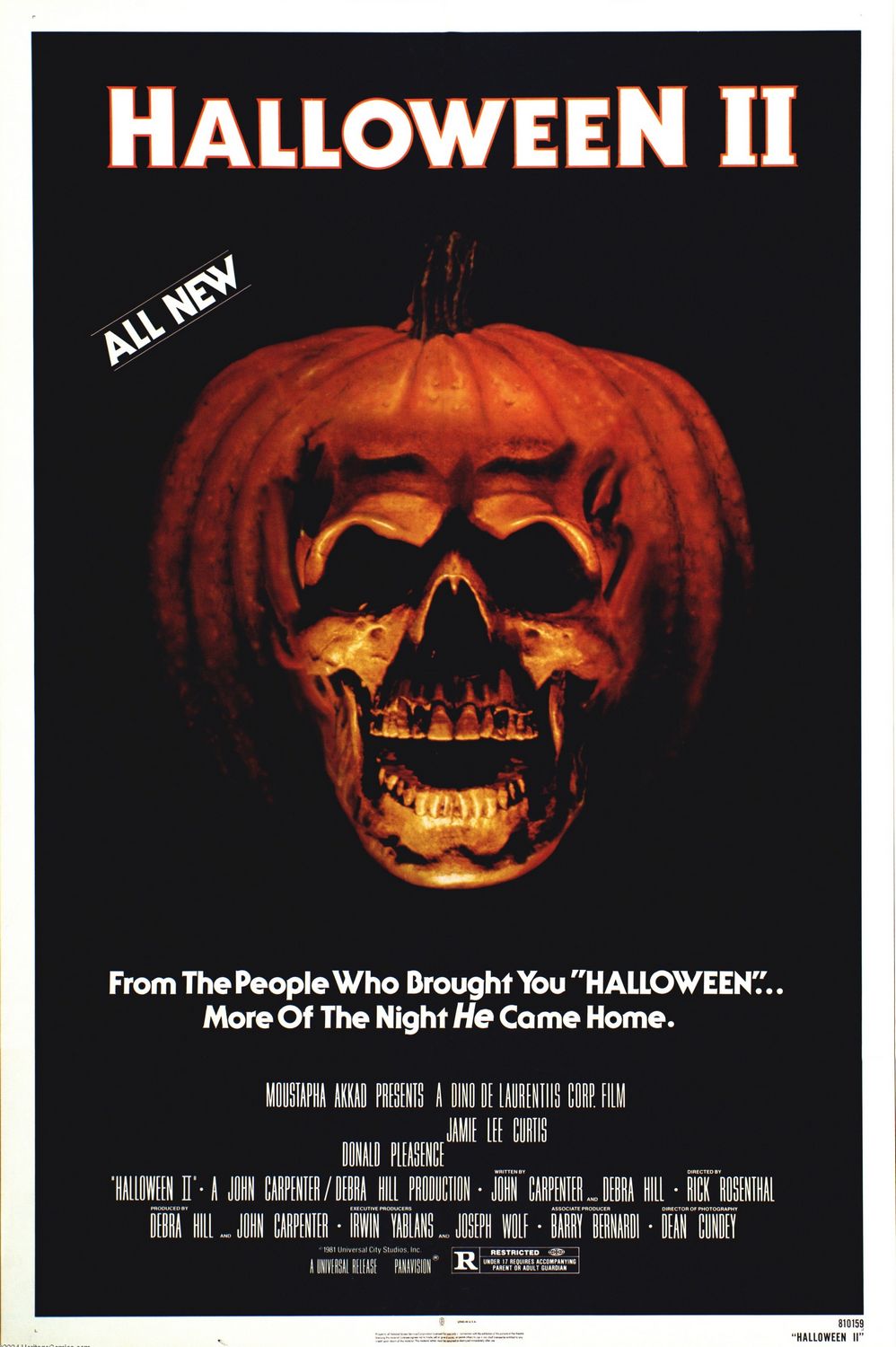
Case in point is “Halloween II,” the sequel to, at the time, the highest grossing independent film ever made. “Halloween” was and still is one of the scariest movies ever made. The ending of the movie had Michael Myers disappearing from sight, and it was visual proof of how evil never dies. “Halloween II,” however, takes place at the exact moment the original ended with Michael still on the loose, and even while he moves a hell of a lot slower, he still proves to be a very deadly threat to everyone around him. Dr. Loomis (Donald Pleasance) continues to hunt for the man he tried to keep locked up, and Jaime Lee Curtis returns as Laurie Strode who is taken to Haddonfield Memorial Hospital to recover from the injuries she suffered a few hours earlier.

“Halloween II” was torn apart by the critics for being nowhere as good as the original, proclaiming it a rehash of what we saw before and for having nothing new to say about Michael Myers  or anyone else from the original. Even John Carpenter, who co-wrote the script for this one with the late Debra Hill but did not direct it, said he hated it, and the only thing which got him to finish writing this sequel was a six-pack of Budweiser. Even he realized he was making the same movie which is probably why he declined to direct it. The only really fresh aspect of this one is that we discover how Laurie Strode and Michael Myers have a closer bond than they realize, and it comes to explain why he made the long trip back to Haddonfield after waiting for years while staring out a window in total silence.

But despite its flaws, I still enjoyed “Halloween II” for what it was. Yes, it is a retread of the original, but what else are you gonna do with Michael Myers? Do you want him to win the Nobel Peace Prize? Get rehabilitated? Make peace with his sister after killing so many people? Don’t you remember? Evil never dies!

The one thing to note about “Halloween II” is how much bloodier and gorier it is than its predecessor. When this sequel came out, there had already been so many knock offs of “Halloween” with the psychotic and silent killer wearing a different kind of mask and using a different weapon which suits their murderous rages more than any other. “Friday The 13th” would not have existed without Carpenter’s original masterpiece.

At the very least, “Halloween II” tries to be more creative in the way Michael kills his victims as he proves to be  inventive with hypodermic needles, scalding hot water, and he even conducts a blood drive which doesn’t require anyone from the Red Cross to help out. If you run into Michael, you’re a donor whether you driver’s license says you are or not.

While “Halloween” only showed us so much of Michael and kept him hidden in the shadows for the most part, “Halloween II” pretty much shows everything. While it makes this sequel less effective than the original, I still got a kick out of it. Carpenter apparently came in to reshoot some scenes because he felt audiences would be demanding more blood and guts as horror movies have upped the ante in that arena since the original. Whether or not this was the right decision may be up for debate, but fans of Fangoria Magazine will not be complaining. The scene where Michael plunges Pamela Susan Shoop into scalding hot water is shocking and highly unnerving, and seeing a hypodermic needle get inserted into someone’s eye is very unsettling.

One thing this sequel has to its advantage is that is made by the same team which made the original. Director of photography Dean Cundey came back for it, and he gives “Halloween II” a dark and creepy look to where you want to keep an eye on what is hiding in those shadows across the hall. Michael could be anywhere, waiting for you to come out into the open.

At the very least, Carpenter and Hill do a good job of giving us characters who are as down to earth as those in the original. There’s a little scene where three of them are in a hospital lounge watching TV and talking about what just happened their previously quiet little town of Haddonfield. The young nurse claims she saw Michael, and one of the guys is a sexually frustrated prick who is more interested in having sex than the fact this force of evil is still on the loose.

The characters may come across as clichés after having seen the first one, but to me, they still felt real enough to where I wasn’t snickering at their actions. Among them is Jimmy, a paramedic played by Lance Guest, who ends up developing a protective crush on Laurie. After seeing Laurie being all shy in the first film, it was  nice to see her get something of a boyfriend in this one, and seeing him get hurt actually made me feel bad. If this were any other sequel to a slasher flick, I probably would have been cheering the killer on more than the victim.

There’s also the ever so serious nurse Mrs. Alves played by Gloria Gifford. She plays the boss you probably have been stuck with once or twice in your life, and one which you hope you never have again. Pamela Susan Shoop plays the well-meaning but always tardy Nurse Karen Bailey and, she is very good and appealing here and shows off the appropriate cleavage for a horror movie like this.

If there is a major weakness in “Halloween II,” it is the way Laurie Strode is written. She is not the same brave heroine we saw in the first movie. Here, she is drugged out after the doctor works on her injuries, and there is only so much she can do as a result. She is smart enough to run away when she feels Michael closing in, but she becomes utterly helpless instead of being inventive in the ways she protects herself. Regardless, I still liked Laurie Strode here, but it would have been better to see her kick more ass like she did the first time around. Perhaps she could have been much more vengeful towards Michael and much more eager to put an end to his rampage.

Donald Pleasance once again gives the demonic lines he is given a lot of depth to where they stay with you long after the movie has ended. His little speech on the festival of Sam Hain, the Lord of the Dead, and how we are all afraid of the darkness inside of ourselves is a great moment. The unconscious mind can be a very frightening place indeed.

I also have to say that when it comes Pleasance and Curtis, I have never really seen give a bad performance in any film they have ever been in. Put either of them into the worse movie ever made, and they will still be good.

But my most favorite thing about this “Halloween II” is the gothic score composed by Carpenter and Alan Howarth. It’s not any different from the score for the original, but I loved how it was done with synthesizers this time around. It feels all the more atmospherically consuming even after all these years, and I never get sick of listening to it. The piece of music where Michael  finally finds Laurie in the hospital and pursues her remains one of my favorite pieces of music in any movie ever.

Dick Warlock takes on the role of Michael this time around. I do agree that it would have been great if Nick Castle came back to play Michael again, but I imagine his own directing career must have been keeping him busy at that point. Warlock tries a little too hard to mimic Castle’s movements, but it is understandable why he moves so slowly in this one (he was shot six times). All the same, Michael still came across as a very threatening figure to me. Even if he moved so slowly, I was still terrified of him coming up on unsuspecting hospital employees, and it was excruciating to wait for that elevator door to open.

“Halloween II” might not be a great movie, but I still enjoyed it a lot. This sequel in many ways marked the last time where these characters seemed relatable as just about all the other sequels in this franchise as they came to feature infinitely stupid characters played by mediocre actors. Perhaps the passage of time has been kinder to this sequel than others as the series soon descended into mediocrity, but it didn’t decrease in quality as quickly as other slasher franchises have.

I have no shame in saying I really enjoyed this sequel. Then again, why should I have any shame about like it? Other critics can bash it all they want. But for me, “Halloween II” still delivers.

* * * ½ out of * * * *

John Carpenter’s Halloween (1978)

halloween-1978-poster

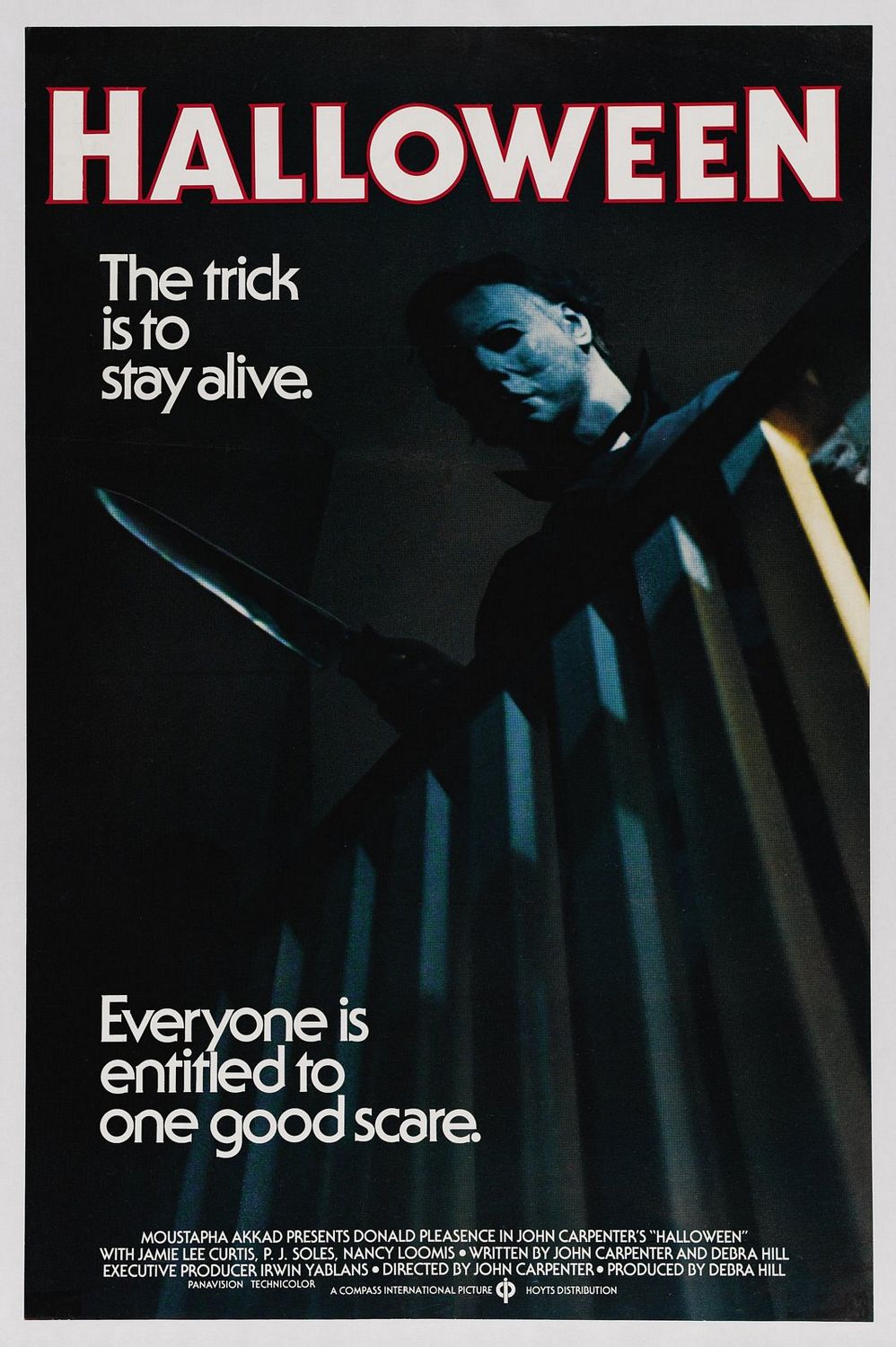
What is there to say about “Halloween” which hasn’t already been said? It has been discussed ad nauseam, and even Carpenter must be sick of talking about it all the time. Granted, he did take the time to record a new commentary track with Jamie Lee Curtis for Anchor Bay’s 35th anniversary edition, but when the 25th anniversary edition came out it just had the same commentary track from the Criterion Collection laserdisc.

We all know the story, and this is in large part due to the countless imitators who rushed to create their own psychotic killer following “Halloween’s” astonishing success. At the time of its release, it was the most successful independent movie ever made. Made for about $300,000, it ended up grossing over $50 million. “Friday The 13th” would never have existed without “Halloween,” and that franchise is far more responsible for those clichés horror movies exploit to infinity.

What I love about “Halloween” is how down to earth it is. All of these characters come across as very relatable. The way the script is written and how the actors played their roles, they easily reminded us of people from our own lives we grew up with. The only character in the whole movie who is NOT down to earth is Michael Meyers as he is a killer who has no real motive for why he heads back home to kill. As the movie goes on, we eventually stop seeing him as a person and instead as a force of evil which cannot be easily stopped.

We have all lived in a town like Haddonfield, a small town where families can raise their children in peace, or so it would seem, and the problems they face there end up paling in comparison to those they were forced to endure in the city. The parents see small town life as a home away from reality, but for the children it is reality. It is all they know. So when multiple murders occur there, it threatens to define the town more than anything else. Was there anything interesting about Haddonfield before young Michael Meyers took a knife to his sister when he was only a boy?

I also love how “Halloween” was shot. Working with Director of Photography Dean Cundey, Carpenter creates truly unnerving visuals of a killer lurking in the shadows. One moment Michael appears in the frame, and in the next he is gone. Michael could be anywhere and there is no escape from him. How does one escape from evil anyway? One of Carpenter’s main themes with “Halloween” is how evil never dies. It is a force which is with us whether we like it or not, and it is always just around the corner…

One of my favorite shots is when little Tommy is fooling around with Lindsay as they watch Howard Hawks’ version of “The Thing.” But when Tommy turns around and looks out the window, he sees a man carrying a lifeless body from the garage to the front door. The bullies at school kept warning him about the boogeyman coming, and it is an unfortunate and infuriating coincidence that they are correct. It is one of the creepiest images from “Halloween,” and it is one which always stays with me. Don’t you wonder what your neighbors are up as you look at their houses across the street?

The other brilliant thing about “Halloween” is how it was edited in such a way where you cannot be sure when or where Michael will appear next. The best example of this is when Laurie Strode is running away from Michael. Carpenter puts us right in her shoes as she desperately tries to escape the madman who wears an altered William Shatner mask. The editing plays with your emotions beautifully. You want her to escape, but you soon feel as helpless as her as she yells at Tommy to wake the hell up.

The moment where Laurie is at the front door of Tommy’s house, screaming for him to let her in, is one of the scariest scenes I have ever seen in a movie. It intercuts with her banging on the door while the Shape approaches her, and Carpenter succeeds brilliantly in leaving us stuck in a place we are desperate to escape from. Like her, we are begging for Tommy to unlock the door to where we want to yell at the movie screen, TV set or whatever device you are watching this movie on.

And who could ever forget the music? Carpenter’s score for “Halloween” ranks among the greatest horror movie scores ever composed to where I would put it up alongside Bernard Herrmann’s score for “Psycho.” Carpenter’s musical work has been done mostly in a minimalist style, very much unlike the bombastic orchestral scores from every other Hollywood composer. After all these years, the main title for “Halloween” is a piece of music I never get sick of listening to. The music succeeds in heightening the ever growing tension which never lets up even after the movie is ovr.

The final shot is unnerving and utterly perfect in the way Carpenter shows how evil never dies. We see images we have become familiar with throughout the movie, and they now have the stain of evil on them. The point is point he could be anywhere at this point.

This is definitely one of my all-time favorite movies, and the recent 35th anniversary edition Blu-ray reminded me of how I never get tired of watching it. Jamie Lee Curtis is great here as Laurie Strode, the only one who is the least bit observant about what’s going on around her. Then you have P.J. Soles and Nancy Loomis as Laurie’s so-called friends who frolic around, completely unaware of the killer stalking them from a distance. And you have Donald Pleasance, and his Dr. Loomis is a character which pretty much came to define the latter half of the franchise.

Many say “Halloween” originated the undying cliché of how teenagers who have premarital sex and do drugs are the first ones to be killed off. In the Criterion commentary, both Carpenter and the late Debra Hill make it abundantly clear they were not trying to lay any sort of judgment on these characters. Religion was not intended to shoved down our throats by anyone involved with this movie. These characters don’t get murdered because they are sinners, but because they aren’t paying attention to what is going on around them. Laurie Strode, on the other hand, is always very suspicious of her surroundings.

John Carpenter’s “Halloween” will always remain the best of all the so-called slasher movies in my humble opinion. There is no way anyone can top what he did with the 1978 classic, and this is even though Rob Zombie’s take on Michael Meyers was better than people gave his “Halloween” movies credit for. It has reached such a high level of praise in the ever growing pantheon of cinema to where duplicating its power is extremely difficult to pull off. The fact it still has the power to unsettle generations of audiences is a testament to Carpenter’s brilliance as a director, and its amazing success led him to make many other great films which continue to stay with us long after the end credits have finished.

* * * * out of * * * *

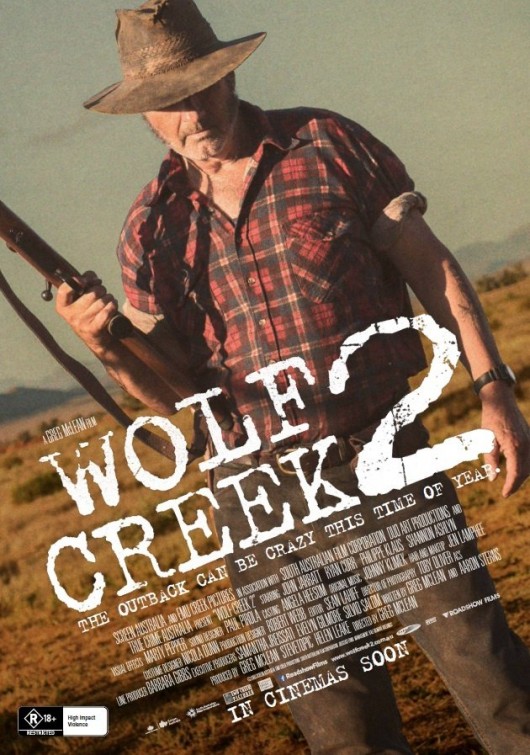
Exclusive Interview with Greg McLean on ‘Wolf Creek 2’

wolf-creek-2-mclean-and-jarratt

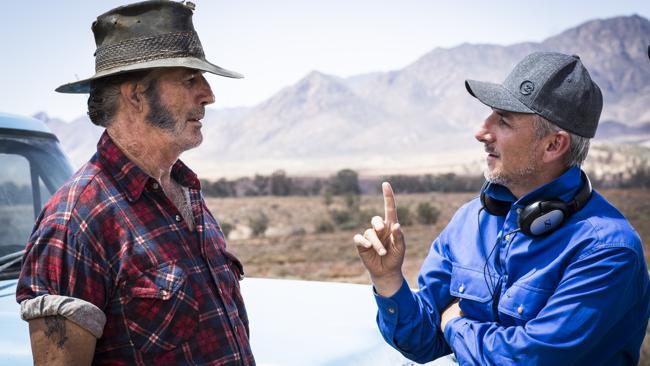
Australian film director Greg McLean returns to the scene of the crime with “Wolf Creek 2,” a movie which, supposedly anyway, is based on actual events. The original “Wolf Creek” came out in 2005 and introduced us to the relentless serial killer Mick Taylor (played by John Jarratt) who captures a group of backpackers and tortures them without any remorse. Now Mick is back to take on another group of tourists who make the mistake of crossing his path and have the serious misfortune of not being from his home country. If you are not a proud Australian and are not fully aware of the country’s rich history, pray you don’t run into Mick.

McLean also directed the killer crocodile horror film “Rogue,” and he is said to be a member of the unofficial “Splat Pack.” This term, which was created by film historian Alan Jones, refers to the modern wave of directors who make brutally violent horror films, and other members include Alexandre Aja, Neil Marshall, Eli Roth, James Wan and Rob Zombie. I spoke with McLean about “Wolf Creek 2” and he talked about how a sadistic psychopath like Mick Taylor can be strangely appealing, how this sequel differs from the original, and he pointed out the differences between making a film in Australia and the United States.

Ben Kenber: This was a terrific sequel, and it was great to see John Jarratt return as Mick Taylor. Mick is one of the most sadistic psychopaths ever put in a movie, and yet there is something about him which is undeniably appealing. Why is he so memorable and why are we drawn to characters like him?

Greg McLean: I think that people are generally fascinated with evil and true crime. A character like Mick Taylor represents a very interesting way of peering into a very, very dark psyche. People are fascinated with the nature of evil, and I think the appeal of a character like Mick Taylor is to really get a chance to examine someone who is completely devoid of any sign of humanity. He’s really incredibly dark and twisted, and he’s very terrifying. I think people who like horror films and thrillers and like being scared enjoy coming face-to-face with really disturbing personalities. There is a long history of really fascinating, evil characters and I think people are intrigued at how their personalities work.

BK: When it came to doing a sequel to “Wolf Creek,” was it something you had planned on doing all along, or did you consider doing it after the original movie was finished?

GM: My plan was always to see if the movie worked and people liked it. If people embraced the character (of Mick Taylor), then there will be a chance for another film. So it was always in my mind to do it, it just took a lot longer to get around to it than I thought it ever would (laughs).

BK: Regarding John Jarratt’s portrayal, did you develop the character with him or was it largely his creation?

GM: Well we obviously did the first film together so we had a background to how to approach the character and a discussion on what the character is about. We had been talking about this particular draft of the screenplay (for “Wolf Creek 2”) for a couple of years, so there were certain things we wanted to explore and certain aspects of the character we wanted to bring up, and we kept evolving it on set. Obviously John makes choices as an actor, and then some of those things are in the script and some are developed in the moment. When we got together, we just kind of jammed and came up with cool things to do.

BK: Since the script was in the development stage for a couple of years, did that make it easier for you to return to the character of Mick Taylor and the original movie’s setting?

GM: It certainly enabled us to mine the thematic ideas that we wouldn’t have had if we didn’t have such a long gestation period. We had a script a couple of years ago and it was good, but it just wasn’t amazing. I realized that there was an element to it that was missing and which was making me not want to pull the trigger on it, and what it didn’t have was a kind of somatic investigation into the character that I thought we needed to have. Then once I locked into that concept, then there was enough new information we revealed about his character that I thought it be worth making the film. We also wanted to make a different genre film. The first film is very much a first-person, true crime, real terror film whereas this one I wanted very much to explore the thriller film, and it’s more of an action film. It has horror elements, but it certainly is a different structure in terms of what kind of film that is.

BK: I agree, it does have a different structure and feels more like a road movie. Speaking of that, how did you manage to pull off the sequence where Mick Taylor launches the big rig truck into Paul Hammersmith’s (played by Ryan Corr) car?

GM: We just found a big hill and dropped the truck off it (laughs). It’s much easier to do stuff like that in Australia than it is in the (United) States. Doing things over there is still a bit of the Wild West. It’s interesting because I’m doing a film right now in Los Angeles and I showed that scene to some people and they were just like going, “Wow! How did you do that?” And there’s a shot after the actual truck hits where the fire is just actually continuing to burn the hillside, and everybody was freaking out about that. I said, “Why is that so weird?” They were just going, “Oh my god, how did you let the hill keep burning?” The restrictions are very intense. Obviously there are rules and regulations here and there are in Australia as well, but they were just fascinated by the idea of just literally destroying a truck and letting it burn a hole in the hill. We had fire brigades in the back, and we were able to just do some really crazy stuff. We also wanted to do it in a very practical way. I love doing CG stuff and we used a lot of CG for the kangaroo sequence, but some things I feel are just better to get onscreen practically because you see the texture of things and the physics of moving in a particular way that’s kind of cool.

BK: Yeah, I think that’s what I liked most about that sequence because it really did look real. In most American films, filmmakers would more likely film a sequence like that with CG.

GM: Yeah, I think that part of that is kind of a budgetary thing as well. When you have a low budget you have to find more practical ways of doing things. Digital effects, if you want them to, can be ultra-photorealistic and necessarily expensive. The other way to do it is to find a location you can do something like that and ask to just do it. For all the driving stuff in that sequence, we just closed down highways and did crazy driving on them for two weeks and got all the shots. It was great fun doing a sequence like that.

BK: Looking at those empty highways reminded me of “The Hitcher” with Rutger Hauer and C. Thomas Howell. You have this great open space, but still there’s something about it which is quite claustrophobic.

GM: Well I think the first movie had a very particular primary feed that it was drawing on, and this film to me was really about the fear of isolation in a desolate place. What most of the fear comes from is the primary idea of that which is quite different from the first film. The first film had a different emphasis which was more about the randomness of violence in the real terror that comes from believing someone is something and then suddenly seeing them transform. This one is really much more about exposing the audience to the real terror which comes from extreme isolation and being pursued by a character that is just relentless.

BK: What elements do you believe a horror movie should have in order for it to be successful?

GM: Two things. One, it needs to be based on a primary universal human fear that touches the psychic pressure point. Number two, the film has to have three, if not more, unique and believably memorable set pieces or things that people will talk about when they leave the cinema for hopefully weeks if not years, and that’s it.

I want to thank Greg McLean for taking the time to talk with me about “Wolf Creek 2.” The movie is now available to own and rent on DVD, Blu-ray and Digital.

wolf-creek-2-poster


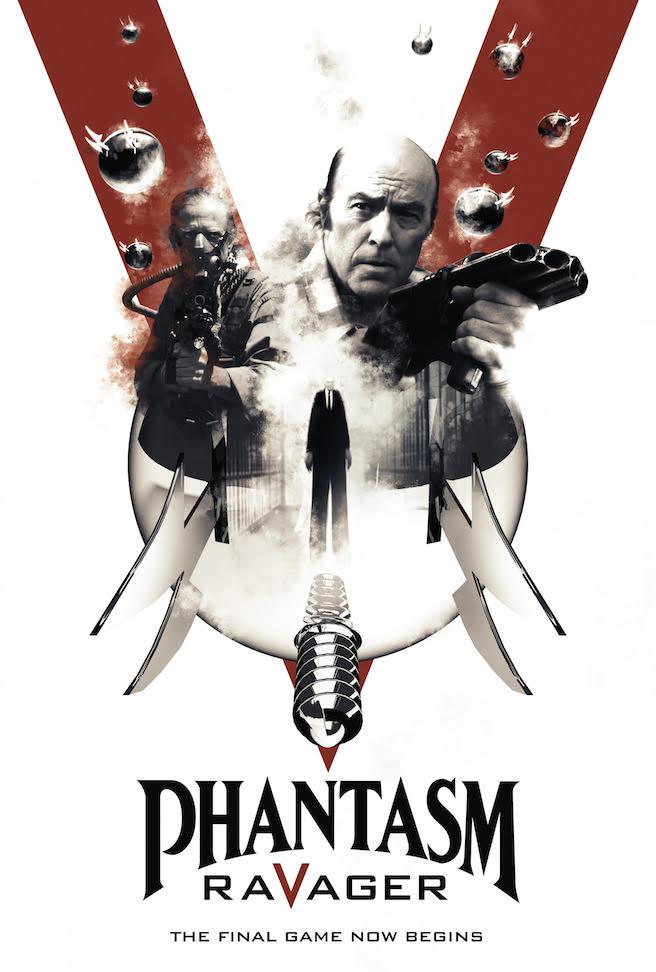
Phantasm: Ravager

phantasm-ravager-poster

Sooner or later the horror movie gods had to deliver this one to the fans. It took George Romero 20 years, but he finally followed up “Day of the Dead” with “Land of the Dead.” While we may have gotten an “Evil Dead” reboot instead of a third sequel to Sam Raimi’s original film, he and Bruce Campbell gave us the next best thing with “Ash vs. Evil Dead.” After giving us one of the most visceral and terrifying horror flicks ever created with “The Texas Chainsaw Massacre,” Tobe Hooper followed it up with a sequel 12 years later which has since developed a cult following. Although the filmmakers behind these movies are always keen to move on to other genres, something always seems to pull them back to horror.

So it only makes sense we would eventually get a fifth “Phantasm” movie in this lifetime, right? Rumors abounded from year to year of how another installment featuring Mike, Reggie and The Tall Man was in pre-production, but it never became a reality. Then in 2014 we got a teaser trailer out of nowhere for “Phantasm: Ravager” which nobody saw coming. Astonishingly enough, this sequel was filmed in secret, and after an equally agonizing wait it has now arrived in theaters and VOD and serves as a conclusion to a franchise which began back in 1979. Yes, these characters and those silver spheres have been with us for a very long time.

Does “Phantasm: Ravager” give us a fitting conclusion to this never ending series? Well, it may depend on the expectations you bring to the theatre. It’s no surprise series creator Don Coscarelli made this one solely for the fans, so those “Phantasm” virgins would be best to check out the previous films or sit through the short film “Phantasm and You” which will bring them up to speed. While we get the usual silver sphere action with hapless victims getting blood sucked out of their heads as Red Cross workers watch on helplessly, we can never be fully certain as to which direction the story will take.

This installment focuses mostly on Reggie (Reggie Bannister), the former ice cream man whom we last saw entering the space gate in “Phantasm: Oblivion” in an effort to save his friend Mike (A. Michael Baldwin) from the clutches of the Tall Man (the late Angus Scrimm). At the start of “Ravager,” Reggie is walking alone in the desert and telling us in a voiceover how he can no longer tell what is real and what is not. Still, he’s got his four-barrel shotgun and, with very little effort, retrieves his Hemicuda and drives on as those silver spheres pursue him with a vengeance.

Next thing we know, Reggie wakes up in a hospital where Mike tells him he is in the early stages of dementia. From there we watch as he switches from one place to another, be it another road trip where he picks up another beautiful lady, the hospital he is confined to or a post-apocalyptic future where The Tall Man reigns supreme. It’s a lot like the series finale of “Star Trek: The Next Generation” where Captain Jean-Luc Picard finds himself traveling back and forth through time, but with Reggie it’s an even bigger battle to discover the reality he belongs in.

“Phantasm: Ravager” is billed as a horror film, but it is really more of a sci-fi action flick as this series has gone from sheer horror to something more supernatural. But more than anything else, the story here deals with aging, something Hollywood movies rarely, if ever, deal with these days. We see Reggie struggle to bring his friends together even as he is seen as a terminal case the doctors are impatiently waiting to see die. Who is the bigger culprit here, The Tall Man or Reggie’s deteriorating mind?

It’s a lot of fun to see Bannister, Baldwin, Bill Thornbury who returns as Jody Pearson and Angus Scrimm return to the roles they have long since become famous for. Bannister in particular is a gas to watch here as not even Reggie’s advancing age keeps him from trying to hit on any beautiful woman he picks up. As for Baldwin and Thornbury, it’s been fascinating to watch them grow up from one “Phantasm” movie to the next. It’s like looking at a photo album, albeit with a lot of blood and mortuaries.

Scrimm’s Tall Man remains one of the scariest characters to appear in any movie, and Scrimm gets a little more to do and say here than he has in previous installments. It’s great Scrimm got another chance to play this iconic character, but “Phantasm: Ravager” is tinged with sadness as he passed away earlier this year at the age of 89. This is the last we will ever see of The Tall Man as there is no earthly way he can ever be replaced by another actor. After all these years, Scrimm remains a frightening presence as he toys with Reggie endlessly and makes you wonder why anyone would dare to fight him when he’s so omnipotent.

An interesting move Coscarelli made here was to step out of the director’s chair and hand the reins over to another. When we first got word of this, many feared it would be a catastrophic mistake, but David Hartman, who has worked behind the scenes on other Coscarelli films like “Bubba Ho-Tep” and “John Dies at the End,” brings a fresh energy to this material, and he clearly relishes working within this franchise and with these actors. As a result, everything in “Phantasm: Ravager” feels more supercharged than I expected.

The “Phantasm” movies have come close to being perfect, but the fans never really complained much about that. Sure, this particular one relies on CGI effects a little too much, but then again the franchise has never had much money to work with (“Phantasm II” had the largest budget with $3 million). Everyone involved with “Ravager” did the best they could with the materials they were given, and like the others it is equipped with an imaginative storyline which keeps us guessing.

If “Phantasm: Ravager” is indeed the last “Phantasm” film of all, it certainly sends the series off with a strong emotional punch. These movies have always been a family affair, and it’s great to see everyone back together for another round with the Ball and the Tall Man. It’s also great to see how this series has been maintained by the same creators from start to finish in age where studios are always desperate to reboot a classic property. For myself, “Phantasm: Ravager” was a blast, and it serves as proof that there’s always a chance for another sequel no matter how long time has passed since the last one.

* * * ½ out of * * * *

Copyright Ben Kenber 2016.

Save

Seven Marathons For One Benjamin

day-one

It’s that time of year again! The time where I get up at an ungodly hour on Saturday morning, put on my running shoes, venture out to Griffith Park in Burbank and not get into any car accidents (none of which would ever be my fault) along the way, and arrive to join up with veteran and newbie runners for another season of training for the Los Angeles Marathon. And as always, I will be training with the great people of Team to End AIDS, a training program and fundraising group which benefits AIDS Project Los Angeles.

And in addition to putting on my running shoes, I will be wearing clothes as well.

For those new to my Los Angeles Marathon exploits, this marks the seventh year in a row of me training for it with T2EA. Yes, you read it right, SEVEN YEARS. After running the last one, I began to wonder if it was time to take a break as the last one was more of a struggle than ever before. Despite it being a tiny bit cooler than 2015 and with a nice breeze to aid us, the 2016 LA Marathon had me wondering why I allowed myself to listen to the coaches and not take any Tylenol during it. As I made my way up and down San Vicente Boulevard, I had to stop and get into a crouching position because my legs could not take much more abuse. As for my knees, they gave up arguing with me during year three.

Each year I have trained for the LA Marathon, I found myself doing it for different reasons be it emotional, physical or weight related. Among my goals for LA 2017 is to continue with my weight loss as I joined Weight Watchers a few months back, and I would like to be rid of my spare tire which is my belly once and for all. Also, I want to improve on my time from my last marathon which, in retrospect, was pitiful. I don’t want to say the 2016 LA Marathon was a disappointment, but it was in a sense because it felt like I dragged my ass to the finish line instead of crossing it triumphantly. I did finish the marathon, but I came out of it feeling like things could have gone much better.

But the main reason which finally got me to sign up for another season of marathon training is this is T2EA’s last marathon training season ever. With their fundraising focus now shifting to other areas, they have decided to discontinue this program following the 2017 LA Marathon. As a result, missing out on this particular season would be, as Arnold Schwarzenegger would say, a “BIG MISTAKE.” Unsurprisingly, this first day of training proved to be bittersweet, but it will be quite the adventure all the same.

And once again, I will be raising $1,100 for APLA, and I encourage you, my fellow readers, to donate a few bucks to help me reach my fundraising goal. Please click here to find out how you can make a TAX-DEDUCTIBLE donation.

t2ea-2017-week-one-1

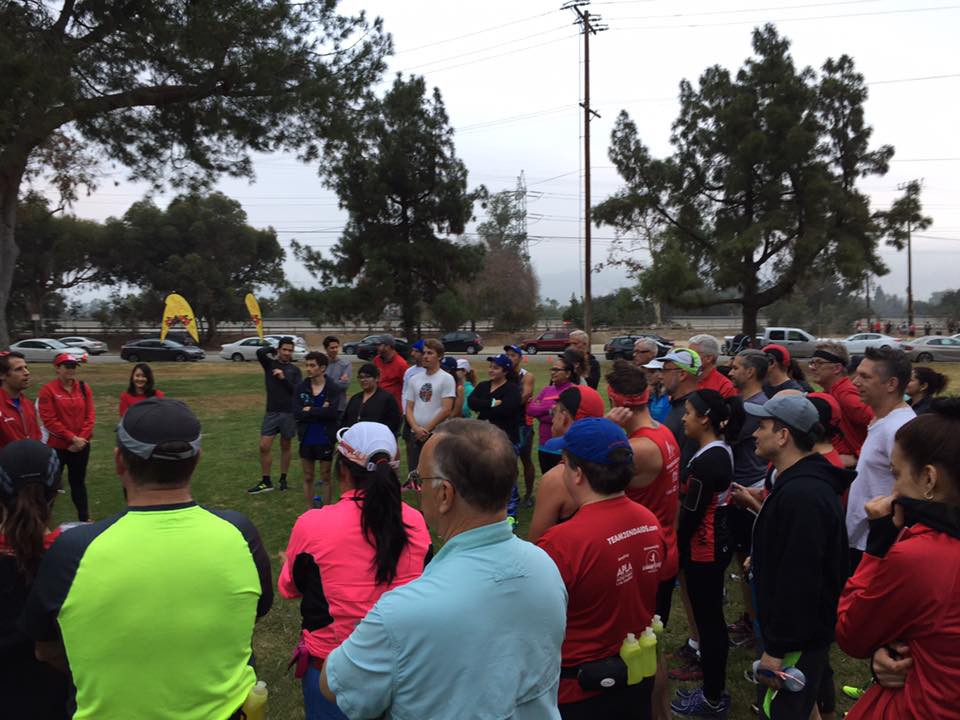
While JC is back and still hating pickles, he has stepped down as the marathon coach and has passed the baton to a new coach, James Hawthorn. He is a 17-time marathon runner, and he has finished the Boston Marathon in under three hours. Learning of this makes him seem rather intimidating, but he assured us he wasn’t expecting anyone to run LA as fast as he ran Boston.

Kerry, T2EA’s Director of Endurance Events, told us they were changing things up this season as he found everyone was getting a little lazy with training these past few years to where we developed bad habits like arriving at Griffith Park late. I myself got to Griffith Park this morning at a quarter to 7 a.m. which is when we start. Have I ever arrived late in the past? I don’t have to answer that.

t2ea-2017-week-one-3

Coach James started us off with a crouching stretch which served to loosen everyone up, and he told us to make sure we lead with our butts and not our knees as we pretended to sit down in an imaginary chair. I did lead with my butt, by my knees wanted in as they wanted some kind of feeling for themselves. The way my knees see it, why should my butt have all the fun?

Today’s run gave us two options: we could run 5 miles or 3. When it comes to these choices, my gut usually tells me to run the longer distance. C’mon, I have run the Los Angeles Marathon six years in a row. I’ve got this training thing down. 5 miles is a piece of cake to me! So yes, I only ran 3.

The truth is I haven’t kept up with the running since the 2016 LA Marathon, so once again I feel like I’m starting over because, well, I am. As I ran from Griffith Park to the Gene Autry Museum, which is 1.5 miles, my legs felt like concrete bricks which I dragged over the asphalt. I used to run like I was light on my feet, but I haven’t been svelte in such a long time. But the good news is I did use Runkeeper to keep track of my time, and I finished the 3 miles in forty minutes.

In past years I have run in the 13-minute pace group, but today I ended up in the 15-minute group. It feels like I’ve been downgraded, but then again I haven’t run on a regular basis in some time. Still, as my fellow veteran marathoners pointed out, it gives me something to work for. As the training season progresses, I can always move up to a faster pace group if I put in the effort. This is only the beginning, and I have nowhere to go but up.

Coach James concluded our first day by conducting a stretching clinic. It involved stretches I am not altogether familiar with, so I hope I did them correctly. If I didn’t do them correctly, I still hope some part of my body got stretched out (and not just my knees).

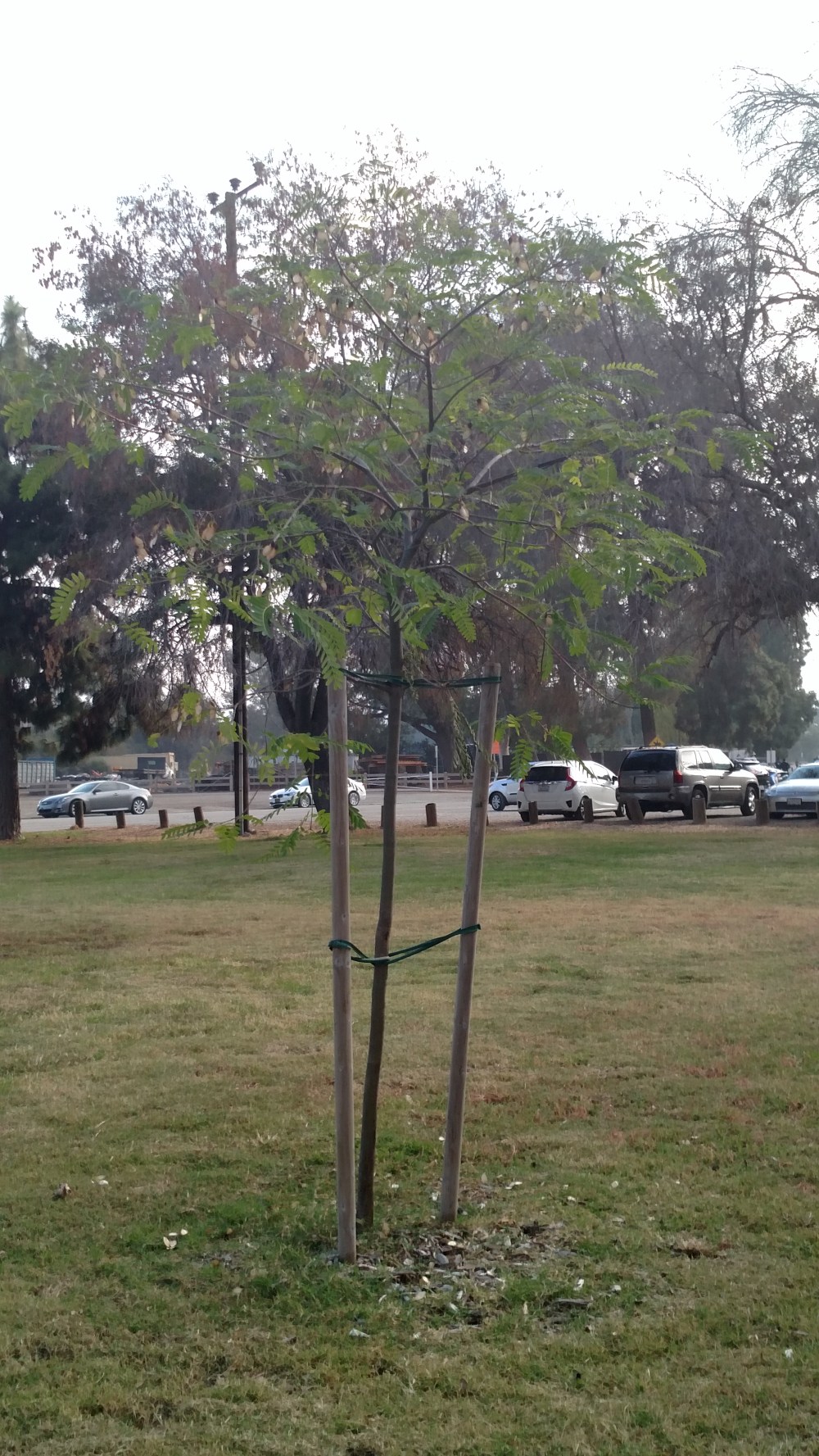
Despite whatever problems arose, this training season has gotten off to a strong start. The weather was perfect in that it was not too hot and not too cold, and we have yet to feel the full force of the fall and winter seasons (assuming they will ever arrive in Southern California). And when all is said and done, Scott Boliver’s tree continues to grow beautifully in Griffith Park.

img_20161015_0846163181

HELP A BROTHER OUT: Like I said, I am doing this marathon to raise money for AIDS Project Los Angeles, a renowned non-profit group which has spent many years helping those who have been afflicted by this terrible disease we will one day conquer. I invite you all to make a tax-deductible donation to this group so that they can continue to help those who can no longer help themselves. Just click here to find out how you can help. By the way, check out the video below.


Exclusive Interview with John Jarratt on ‘Wolf Creek 2’

john-jarratt-wolf-creek-2

It’s been a long time coming, but Australian actor John Jarratt finally returns to his famous role of serial killer Mick Taylor in “Wolf Creek 2.” When Jarratt first played this role back in the 2005 original, he succeeded in giving us one of the most terrifying psychopaths the world of cinema has ever seen. But at the same time, he also made Mick into one of the most amusing as well, and while watching him in this sequel you can’t help but laugh with him even as he becomes increasingly sadistic. Now he’s back to terrorize a new group of backpackers from other countries who don’t quite share his love for Australia.

I got to talk with Jarratt while he was doing press for “Wolf Creek 2,” and it was a real pleasure chatting with him. The sequel isn’t so much a horror movie as it is a thriller and a road movie, and Jarratt talked about the change in tone between the two movies. In addition, he also discussed how he based Mick Taylor on his father, how method he was in his approach to playing him, and of whether or not movies like this will affect tourism to Australia.

Ben Kenber: Thanks for another great performance as Mick Taylor. It was a lot of fun watching you play him once again.

John Jarratt: Thank you very much.

BK: You’re welcome. There was a long break between “Wolf Creek” and “Wolf Creek 2” (about eight years). Were there any changes for you in the way you portrayed Mick Taylor between the two movies?

JJ: No, not a bit. It was exactly the same. He’s not the kind of guy who has growth.

BK: That’s true. It was said you stayed in character during the making of “Wolf Creek.” Was this also the case on the sequel?

JJ: Not so much because I knew what worked, but you have to stay within the realms of it. You can’t be having a coffee and just fall back into John Jarratt and then some guy says, “Come over here and cut this person’s head off,” you know? So you’ve got to kind of stay in the zone if you know what I mean (laughs).

BK: But it’s not like Daniel Day-Lewis who stays in character 24 hours a day obviously.

JJ: No, I think that’s a bit of a wank, but anyway. With Mick Taylor, I tend to go a little bit method because he’s a psychopath and a serial killer, and it’s a long way from who I am, you know? So I have to work at that. People say you’re a method actor, and I just say I’m a professional actor.

BK: It was said that you based Mick Taylor on your father but that you filled in the evil bits because your father is clearly not evil. When it came to the evil bits, what exactly did you add?

JJ: Well if Mick Taylor wasn’t a psychopath and a serial killer, if he wasn’t bent, and if he was the guy you thought you knew at the hotel at the bar if you met Mick, that’s my dad. But like all serial killers he’s bent and everyone says, “He seems like such a nice guy and he’s a terrific fella. He’s quiet and he was a good neighbor and he’s mutilated 27 people, but…” The hard part for me was to find that part of Mick, that psychopath side, and find a way that he was comfortable with it, you know?

BK: Yeah. It reminds me of when Anthony Hopkins played Hannibal Lecter in “The Silence of the Lambs” where he said he wasn’t so much interested in doing research on serial killers. Instead, he worked on finding the psychopath or the crazy person within himself.

JJ: Yeah.

BK: While the original was a full out horror movie, and one of the scariest and unnerving in recent memory, “Wolf Creek 2” is more of a thriller and a road movie. How did you feel about that shift in tone this time out?

JJ: In a way, sequels are lose, lose affair, you know? If we made it pretty much the same as the first one, you’d all be complaining about that we didn’t go anywhere with it. But if you change a little, then everyone says it’s not like the first one. To me, I thought it was a good movement on the first one. The first one you wait for the monster to come out of the cage which is about halfway through the movie, and it’s the set up that’s scary and then how he becomes (who he is) and everyone freaks out. With the second one we all know who he is, so it’s a waste of time doing that so you get them from the get-go. It’s not unlike the first one much when Mick turns up because, as you may remember in the first one, they (the unlucky tourists) drive my pick up over a cliff and then I chased them in a car and I blow the girl way, and that’s the end of the movie. So there’s a bit of chase in that one, but a hell of a lot more in this one because you get the Mick thing happening from the beginning rather than halfway through.

BK: The scene where Mick Taylor sends that big rig truck rolling down a hill where it crashes into Ryan Corr’s jeep gives “Wolf Creek 2” one of its best action sequences. Were you on the set when it was shot?

JJ: Yeah, I was there. It was fantastic (laughs). The funny thing was that the jeep came down the hill and landed like nothing had happened to it. We didn’t expect that, but it says a lot about the jeep I’ve got to say. Then the big truck comes down and creams it, and it was a great day. They were 20 cameras on it watching the truck come down the hill. In real life it was quite stunning.

BK: I imagine it was. If this was an American production, I bet they would’ve used CGI effects instead, but the fact that you did the real thing makes the sequence all the more thrilling to watch.

JJ: Yeah, it was great. It was like “Mad Max” days, you know? It’s what Aussies do really well.

BK: What would you say you added to this character that wasn’t in the script or which Greg McLean didn’t come up with?

JJ: I don’t think I added anything. He (McLean) was there for the entire film. There was more opportunity for a lot more humor I suppose, but I honestly didn’t add anything. I just knew a hell of a lot more, and I thought Mick was pretty funny in the first one. I think about 90% of this film is Mick as opposed to 50%. I think that’s the difference, I really do, so I didn’t do anything differently except you see even more of what he does. I suppose that’s different.

BK: The black humor in this movie is very clever.

JJ: Yeah, you’ve got to have a laugh. You got to remember that he (Mick) is having a ball and he’s got a great sense of humor. If you met him in a bar you’d think he was a lot of fun; he’s a big barrel of happy-go-lucky and a fun kind of guy. He’s having a ball playing games with these Pommy backpackers, so I think it lends itself to comedy.

BK: A lot of people might look at a movie like this as if it will decrease tourism to Australia, but I think it will increase it because people travel to different countries for a variety of reasons. What effect do you think “Wolf Creek 2” will have on tourism?

JJ: I tend to think that tourism improves with these kinds of films and “Crocodile Dundee” kind of films. If someone gets eaten by a crocodile in the northern territory in Australia, the tourist numbers go up from the publicity it gets. So I don’t think people will be frightened (from travelling there) really.

I want to thank John Jarratt for taking the time to talk with me. “Wolf Creek 2” is now available to own or rent on DVD, Blu-ray and Digital.

wolf-creek-2-poster

Exclusive Interview with Kim A. Snyder about ‘Newtown’

I got to speak with Kim A. Snyder recently while was in Los Angeles to discuss her documentary “Newtown.” The documentary looks at the aftermath of the largest mass shooting of school children in American history which took place at Sandy Hook Elementary School on December 14, 2012. The school was located in Newtown, Connecticut, and we watch as the adults who tragically lost their children attempt to move on with their lives. But since this tragedy, these adults look to be stuck in a moment they may never get past. What they are left with is profound grief and memories which will now be forever tinged with sadness.

“Newtown” is certainly one of the most emotionally devastating documentaries to come out in some time, but it is not without hope. Not once is the killer’s name mentioned or his face shown as Snyder’s real interest is in the townspeople who struggle to move on despite all they have lost. As painful as their stories are, these are the stories which need to be heard as the media often tends to focus on the shooter more than anything else.

Snyder is an award-winning filmmaker and producer, and for a time she was a contributor to Variety Magazine. She made her directorial debut in 2000 with “I Remember Me” which chronicled her struggles with Chronic Fatigue Syndrome (CFS). She also directed “Welcome to Shelbyville” which documented the intersection between race and religion in America’s Heartland. Her other works include the short films “Alone No Love,” “One Bridge to the Next” and “Crossing Midnight.”

While talking with Snyder, she explained why the shooter’s name was never mentioned in “Newtown,” why the term “gun control” was never used, of how Atom Egoyan’s “The Sweet Hereafter” proved to be a major influence on this documentary, and of how she managed to find hope in a story filled with infinite grief.

Check out the interview above, and be sure to catch “Newtown” when it opens in Los Angeles on October 14. Also, be sure to visit the documentary’s website at www.newtownfilm.com.

newtown_final_9_14