Exclusive Interview with John Jarratt on ‘Wolf Creek 2’

john-jarratt-wolf-creek-2

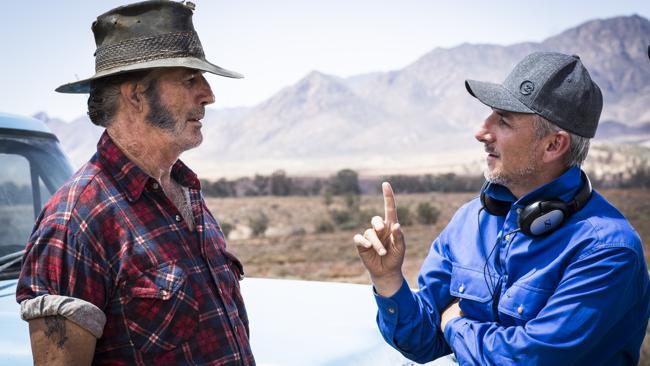
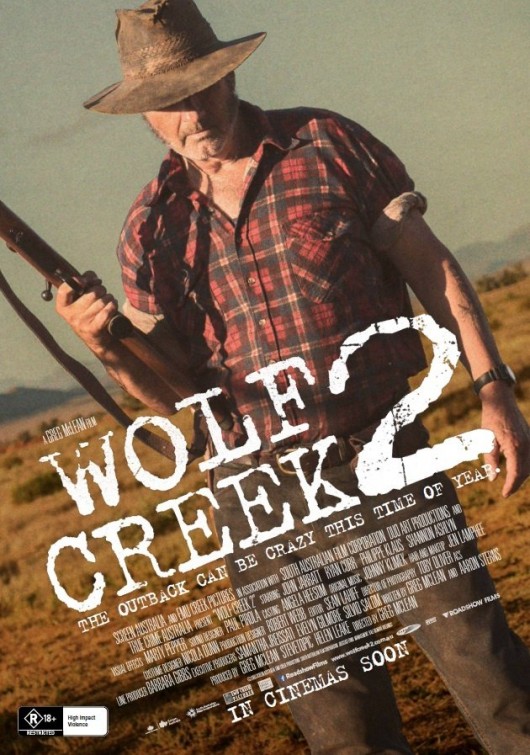
It’s been a long time coming, but Australian actor John Jarratt finally returns to his famous role of serial killer Mick Taylor in “Wolf Creek 2.” When Jarratt first played this role back in the 2005 original, he succeeded in giving us one of the most terrifying psychopaths the world of cinema has ever seen. But at the same time, he also made Mick into one of the most amusing as well, and while watching him in this sequel you can’t help but laugh with him even as he becomes increasingly sadistic. Now he’s back to terrorize a new group of backpackers from other countries who don’t quite share his love for Australia.

I got to talk with Jarratt while he was doing press for “Wolf Creek 2,” and it was a real pleasure chatting with him. The sequel isn’t so much a horror movie as it is a thriller and a road movie, and Jarratt talked about the change in tone between the two movies. In addition, he also discussed how he based Mick Taylor on his father, how method he was in his approach to playing him, and of whether or not movies like this will affect tourism to Australia.

Ben Kenber: Thanks for another great performance as Mick Taylor. It was a lot of fun watching you play him once again.

John Jarratt: Thank you very much.

BK: You’re welcome. There was a long break between “Wolf Creek” and “Wolf Creek 2” (about eight years). Were there any changes for you in the way you portrayed Mick Taylor between the two movies?

JJ: No, not a bit. It was exactly the same. He’s not the kind of guy who has growth.

BK: That’s true. It was said you stayed in character during the making of “Wolf Creek.” Was this also the case on the sequel?

JJ: Not so much because I knew what worked, but you have to stay within the realms of it. You can’t be having a coffee and just fall back into John Jarratt and then some guy says, “Come over here and cut this person’s head off,” you know? So you’ve got to kind of stay in the zone if you know what I mean (laughs).

BK: But it’s not like Daniel Day-Lewis who stays in character 24 hours a day obviously.

JJ: No, I think that’s a bit of a wank, but anyway. With Mick Taylor, I tend to go a little bit method because he’s a psychopath and a serial killer, and it’s a long way from who I am, you know? So I have to work at that. People say you’re a method actor, and I just say I’m a professional actor.

BK: It was said that you based Mick Taylor on your father but that you filled in the evil bits because your father is clearly not evil. When it came to the evil bits, what exactly did you add?

JJ: Well if Mick Taylor wasn’t a psychopath and a serial killer, if he wasn’t bent, and if he was the guy you thought you knew at the hotel at the bar if you met Mick, that’s my dad. But like all serial killers he’s bent and everyone says, “He seems like such a nice guy and he’s a terrific fella. He’s quiet and he was a good neighbor and he’s mutilated 27 people, but…” The hard part for me was to find that part of Mick, that psychopath side, and find a way that he was comfortable with it, you know?

BK: Yeah. It reminds me of when Anthony Hopkins played Hannibal Lecter in “The Silence of the Lambs” where he said he wasn’t so much interested in doing research on serial killers. Instead, he worked on finding the psychopath or the crazy person within himself.

JJ: Yeah.

BK: While the original was a full out horror movie, and one of the scariest and unnerving in recent memory, “Wolf Creek 2” is more of a thriller and a road movie. How did you feel about that shift in tone this time out?

JJ: In a way, sequels are lose, lose affair, you know? If we made it pretty much the same as the first one, you’d all be complaining about that we didn’t go anywhere with it. But if you change a little, then everyone says it’s not like the first one. To me, I thought it was a good movement on the first one. The first one you wait for the monster to come out of the cage which is about halfway through the movie, and it’s the set up that’s scary and then how he becomes (who he is) and everyone freaks out. With the second one we all know who he is, so it’s a waste of time doing that so you get them from the get-go. It’s not unlike the first one much when Mick turns up because, as you may remember in the first one, they (the unlucky tourists) drive my pick up over a cliff and then I chased them in a car and I blow the girl way, and that’s the end of the movie. So there’s a bit of chase in that one, but a hell of a lot more in this one because you get the Mick thing happening from the beginning rather than halfway through.

BK: The scene where Mick Taylor sends that big rig truck rolling down a hill where it crashes into Ryan Corr’s jeep gives “Wolf Creek 2” one of its best action sequences. Were you on the set when it was shot?

JJ: Yeah, I was there. It was fantastic (laughs). The funny thing was that the jeep came down the hill and landed like nothing had happened to it. We didn’t expect that, but it says a lot about the jeep I’ve got to say. Then the big truck comes down and creams it, and it was a great day. They were 20 cameras on it watching the truck come down the hill. In real life it was quite stunning.

BK: I imagine it was. If this was an American production, I bet they would’ve used CGI effects instead, but the fact that you did the real thing makes the sequence all the more thrilling to watch.

JJ: Yeah, it was great. It was like “Mad Max” days, you know? It’s what Aussies do really well.

BK: What would you say you added to this character that wasn’t in the script or which Greg McLean didn’t come up with?

JJ: I don’t think I added anything. He (McLean) was there for the entire film. There was more opportunity for a lot more humor I suppose, but I honestly didn’t add anything. I just knew a hell of a lot more, and I thought Mick was pretty funny in the first one. I think about 90% of this film is Mick as opposed to 50%. I think that’s the difference, I really do, so I didn’t do anything differently except you see even more of what he does. I suppose that’s different.

BK: The black humor in this movie is very clever.

JJ: Yeah, you’ve got to have a laugh. You got to remember that he (Mick) is having a ball and he’s got a great sense of humor. If you met him in a bar you’d think he was a lot of fun; he’s a big barrel of happy-go-lucky and a fun kind of guy. He’s having a ball playing games with these Pommy backpackers, so I think it lends itself to comedy.

BK: A lot of people might look at a movie like this as if it will decrease tourism to Australia, but I think it will increase it because people travel to different countries for a variety of reasons. What effect do you think “Wolf Creek 2” will have on tourism?

JJ: I tend to think that tourism improves with these kinds of films and “Crocodile Dundee” kind of films. If someone gets eaten by a crocodile in the northern territory in Australia, the tourist numbers go up from the publicity it gets. So I don’t think people will be frightened (from travelling there) really.

I want to thank John Jarratt for taking the time to talk with me. “Wolf Creek 2” is now available to own or rent on DVD, Blu-ray and Digital.

wolf-creek-2-poster

Exclusive Interview with Kim A. Snyder about ‘Newtown’

I got to speak with Kim A. Snyder recently while was in Los Angeles to discuss her documentary “Newtown.” The documentary looks at the aftermath of the largest mass shooting of school children in American history which took place at Sandy Hook Elementary School on December 14, 2012. The school was located in Newtown, Connecticut, and we watch as the adults who tragically lost their children attempt to move on with their lives. But since this tragedy, these adults look to be stuck in a moment they may never get past. What they are left with is profound grief and memories which will now be forever tinged with sadness.

“Newtown” is certainly one of the most emotionally devastating documentaries to come out in some time, but it is not without hope. Not once is the killer’s name mentioned or his face shown as Snyder’s real interest is in the townspeople who struggle to move on despite all they have lost. As painful as their stories are, these are the stories which need to be heard as the media often tends to focus on the shooter more than anything else.

Snyder is an award-winning filmmaker and producer, and for a time she was a contributor to Variety Magazine. She made her directorial debut in 2000 with “I Remember Me” which chronicled her struggles with Chronic Fatigue Syndrome (CFS). She also directed “Welcome to Shelbyville” which documented the intersection between race and religion in America’s Heartland. Her other works include the short films “Alone No Love,” “One Bridge to the Next” and “Crossing Midnight.”

While talking with Snyder, she explained why the shooter’s name was never mentioned in “Newtown,” why the term “gun control” was never used, of how Atom Egoyan’s “The Sweet Hereafter” proved to be a major influence on this documentary, and of how she managed to find hope in a story filled with infinite grief.

Check out the interview above, and be sure to catch “Newtown” when it opens in Los Angeles on October 14. Also, be sure to visit the documentary’s website at www.newtownfilm.com.

newtown_final_9_14


The Girl With The Dragon Tattoo (2009)

tattoo Final 27x40.indd

You look at her from a distance, and all you see is just another punk chick who’s nothing but trouble; born under a bad sign. You’d figure she’s pierced her body in lord only knows how many different places, and the mascara applied to her eyes might make you see her as an intimidating threat. Not once does she try to adjust her antisocial behavior or clothing attire in the workplace, and this is a sign of how unwilling she is to compromise her learned set of values.

But once you get to know her, you will find Lisbeth Salander is not your average punk rock girl. In fact, she’s a brilliant hacker and researcher who knows more about yourself than you could possibly realize. Bo Diddley was right when he said you can’t judge a book by looking at the cover. I mean you could, but she would just kick your ass because a rough upbringing has more than prepared her for the harsh reality of life.

Lisbeth Salander is the heroine of “The Girl with the Dragon Tattoo,” a brilliant mystery/thriller based on the best-selling novel by the late Stieg Larsson. Many have said Noomi Rapace gives a star making performance as Lisbeth, and nothing could be more true. She finds the heart of this incredibly intelligent yet mysterious character whose past is hinted at but never explained until the end, but we come to get enough of a glimpse which helps us understand where she is coming from. Lisbeth sets the bar high in terms of compelling characters (and not just females) you can find in movies from any country.

Right from the start, this film absorbs us in its compelling mystery involving the case of a missing girl which has remained unsolved for 40 years. Mikael Blomkvist (Michael Nyqvist), the publisher of Millennium Magazine, is coming off of a trial where he was wrongfully disgraced, and soon after he is hired by rich man Henrik Vanger (Sven-Bertil Taube) who wants him to look into the disappearance of his great-niece Harriet who was last seen years ago when she was only 16. Henrik believes Harriet was murdered by someone in his family, and it’s a very dysfunctional family filled with those who will fight one other for the whole inheritance without a single thought for anyone else.

Please believe me when I say “The Girl with the Dragon Tattoo” puts so many American movies of this genre to utter shame. Seriously, many of the mystery thrillers I have seen in the past few years are full of plot holes Michael Bay could lead both Autobots and Decepticons through no matter how enormous they are. Instead of being enthralled, we come out of them feeling like they are average at best, but they do allow us to feel smarter than the filmmakers since we spotted all their foolish mistakes.

Compared to all those wannabes, “The Girl with the Dragon Tattoo” has a very well-constructed plot to where if it is at all flawed, we certainly don’t realize it because we are too caught up with what’s unfolding onscreen. But where this movie truly succeeds is as a character piece in how deeply it involves us in the lives of two very different people. The two main characters are well developed and are very complex, something I always look forward to seeing. Lisbeth is a wounded person, damaged by life, and the trust she puts in others is exceedingly rare. These two end up coming together as Lisbeth has been hacking into Mikael’s computer as part of his case, and she ends up giving him some clues which have eluded him. While she is hesitant to get involved with Mikael professionally or emotionally, he points out how she contacted him in a way that is easy to track.

Lisbeth and Mikael are indeed an odd couple, and yet perfectly matched to work on the coldest of cases. They are also coming together at a time where they are in a very isolated state, having been largely misunderstood by just about everyone around them. While many view them negatively, they come to see one another as who they really are. The more they work together, the more they gain each other’s trust. In the large scheme of things, these are two people who do not let others define them.

“The Girl with the Dragon Tattoo” was directed by Niels Arden Oplev, a three-time award-winning director from Denmark. He deserves a lot of credit for keeping us deeply involved in a movie that could have easily overstayed its welcome. Not once did I find myself getting bored or restless while watching it. Oplev balances out the story and the acting to where they are on equal footing and never upstaged by style. Never does he indulge in quirky camera angles or other visual elements which would have taken away from this movie. Some directors just love to show off instead of just trusting what is there, and Oplev has clearly laid his complete trust in the story and the actors cast.

Noomi Rapace brings a powerful life force to Lisbeth Salander, a character destined to become as iconic as Clarice Starling from “The Silence of the Lambs.” Beneath her hard exterior is a person whose trust in others is practically non-existent for reasons which eventually become clear. Rapace more than succeeds in making Lisbeth tough as well as sympathetic. Her performance could easily have been a caricature, but she proves to be far too good of an actress to allow this to happen.

Michael Nyqvist does excellent work as Mikael Blomkvist, showing his strong resolve and utter frustration without ever going overboard in his performance. When he is first shown to the audience, it is as a man who has just been found guilty. We don’t know why at first, so we can only assume he had it coming or perhaps he was framed. We see him walking down the street when his picture comes up on television, pretty much defining him in the eyes of those who do not know him personally. But Nyqvist invests his character with a strong moral code which he never surrenders even when it seems smart for him to do so. We sympathize with Mikael as it always seems the wealthiest of people are more than willing to smash down the individual, especially when said individual is correct in what he or she discovers about them. The truth always seems to come at a heavy price.

Peter Andersson doesn’t even try to hide the hideous slime that consumes his utterly immoral character of Bjurman, a sexually abusive bastard who takes advantage of Lisbeth in the worst way possible. Even worse, he is her new legal guardian who takes charge of her trust fund after her original guardian suffers a stroke. Not to worry though, the pain Bjurman inflicts on Lisbeth comes back at him in a most vicious way, showing us once again what you see on the surface does not even begin to tell you the whole story.

Two sequels based on Stieg Larsson’s follow up novels have already been made, and I eagerly await the opportunity to see them on the big screen. They will have a tough act to follow after “The Girl with the Dragon Tattoo,” but with Rapace and Nyqvist reprising their roles, they will continue one of the more interesting and unusual partnerships you can hope to find in cinematic history.

It will be interesting to see who will be the next idiotic human being who foolishly thinks they have complete control over Lisbeth. Even more interesting will be in what way Lisbeth lets said person know just how wrong they are. Pray for whoever it is.

* * * * out of * * * *

Blu-ray Review: Shout Factory’s ‘Phantasm II’ Special Edition

phantasm-ii-blu-ray-cover

Over the years, “Phantasm II” has been treated like the illegitimate child of the “Phantasm” franchise. While Anchor Bay was able to secure the rights to the other three films in the series, they could never come to an agreement with Universal Pictures over this one. Eventually “Phantasm,” “Phantasm III: Lord of the Dead” and “Phantasm IV: Oblivion” got special editions filled with commentaries and special features, and yet “Phantasm II” still hadn’t seen the light of day on DVD. When Universal finally relented and released the sequel on DVD, all the fans got in terms of bonus features was the theatrical trailer. It looked like we would see “Phantasm V” long before any “Phantasm II” special edition became a reality, and the last “Phantasm” movie came out 15 years ago.

Well “Phantasm” fans can now rejoice because the good people at Shout Factory have come through for you with their “Phantasm II” special edition which proves to be well worth the wait. This cult sequel now looks and sounds better than ever, and we also get an audio commentary, various featurettes, a making of documentary, the theatrical trailer and a host of other goodies which fans can take their sweet time watching.

For many people including myself, “Phantasm II” was our introduction to the work of Don Coscarelli’s franchise, the Tall Man (played by Angus Scrimm) and those killer spheres which look like they’re designed to make forced deposits to your local blood bank. Even if you’re not able to understand most of what’s going on here, it was still loads of fun as “Phantasm II” proved to be far more imaginative than your average slasher movie. Watching it all those years ago made me want to check out the first film, and I became very eager to see the story continue on with a third movie which eventually came out (albeit straight to video) in 1994, six years after this one.

Unsurprisingly, “Phantasm II” looks wonderful in its Blu-ray incarnation. At the same time, I do have to point out there is a little of white noise at the top of the screen which comes and goes throughout the movie. I didn’t notice it right away, but it does become a bit of annoyance at times. This seems like a very rare error for the folks at Shout Factory to make as their previous special editions have more often than not given us pristine prints of various cult classics, and I wonder if this was something which happened on their end or if Universal Studios did something wrong. Still, the movie looks fantastic.

There is also a commentary track with Coscarelli, Angus Scrimm and Reggie Bannister who plays Reggie. It’s a terrific track which starts with Scrimm speaking as the Tall Man, wondering why this guy Scrimm keeps impersonating him in the “Phantasm” movies. From there, the participants talk non-stop about the making of “Phantasm II” and what they managed to accomplish on a budget of $3 million (the highest of any “Phantasm” movie). There’s also talk of why A. Michael Baldwin, who played Michael in the original, was replaced by James LeGros. The reasons why aren’t fully explained here, but everyone says they had a great time working with LeGros who back then was known for appearing in independent movies.

For more information on why LeGros replaced Baldwin, check out the documentary “The Ball is Back!” which gives you just about all the information you ever need to know about the production of “Phantasm II.” It turns out Universal wanted to get rid of both Bannister and Baldwin as they had not acted much since “Phantasm” came out. Coscarelli, however, managed to make a deal with Universal to where he could keep one of the actors, so while Bannister got to stay on, Baldwin had to go as the studio wanted someone who was “hunkier.”

The documentary also features other actors like Paula Irvine, Kenneth Tigar and Samantha Phillips who played the bald man-loving Alchemy. Phillips is especially fun to listen to as she talks about how she got the role of Alchemy and of how she almost talked Coscarelli out of casting her in the movie. She even talks about the sex scene she did with Bannister and of how his wife was on set that day (as if she didn’t have enough pressure to deal with).

We also get to see why, despite it making a profit, “Phantasm II” was initially considered a box office flop. It turns out Universal Pictures decided to release the sequel during the summer movie season where it faced off against “Die Hard” and “Who Framed Roger Rabbit?” As to why Universal thought it was good idea to release “Phantasm II” during this time, no one seems to have an answer.

There’s also an old featurette called “The Gory Days with Greg Nicotero” where he explains how he got involved in the world of movie makeup. These days, Nicotero is one of the best known people for doing makeup effects in film, and it’s great to see how he got his start. There’s also some vintage behind the scenes footage of makeup tests the crew performed as well as some on the set footage where they blow up a house. Seeing all the preparation the crew took in making sure the explosion, which they filmed with what seemed like a dozen cameras, anything but small makes me miss practical special effects which have since been overrun by CGI.

To round things out, there are movie trailers for the first three “Phantasm” movies, original TV spots, still galleries, additional scenes which were taken from the work print, deleted scenes from Coscarelli’s archive, and a rare short film which has Scrimm playing Abraham Lincoln.

This special edition of “Phantasm II” has been a long time coming, and despite some minor technical flaws, fans of the series should be very pleased with what Shout Factory has come up with. The cult of “Phantasm” remains strong to this day, and they are served well by this release which is evidence of this series’ enduring popularity. If things keep up, maybe we will see a “Phantasm V” in the future. Some say that’s wishful thinking, but anything is possible!

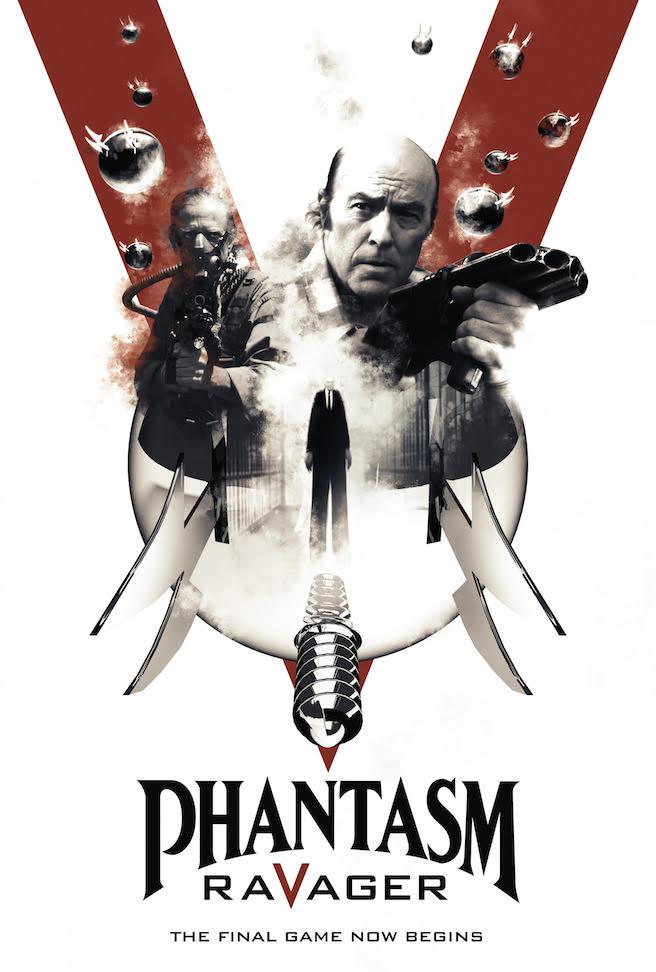
WRITER’S NOTE: This review was written back in 2013 when “Phantasm II” was released by Shout Factory on Blu-ray. “Phantasm V,” titled “Phantasm: Ravager,” is finally about to be released in theaters after a long wait.

Save

‘The Rocky Horror Picture Show’ Celebrates 40th Anniversary in Westwood

Few cult classics have had such a strong and everlasting cultural impact than “The Rocky Horror Picture Show,” and it always gains a new set of fans from one generation to the next. Based on the musical “The Rocky Horror Show” written by Richard O’Brien, the movie was a critical and commercial disappointment upon its release in 1975, but it went on to become a motion picture which made talking during the movie seem like not such a bad thing. Once it was introduced into the realm of midnight screenings in theaters everywhere, its influence became widespread, and it achieved a popularity many movies only dream of attaining.

“The Rocky Horror Picture Show” celebrated its 40th anniversary on October 30, 2015 outside of the building formerly known as the Mann Festival Theater in Westwood, California where it made its Los Angeles debut. Of all the cinemas the movie premiered in, it did the best business there when it was originally released. The theater closed down a number of years ago, but this wasn’t about to stop anyone from making the world remember that this location was where “The Rocky Horror Picture Show” got its start.

In attendance for this celebration, which was held on a ridiculously hot October day, were Tim Curry who originated the role of Dr. Frank N. Furter, Lou Adler who produced the movie, Sal Piro who is the President of the “Rocky Horror Picture Show” fan club and Los Angeles City Councilmember Paul Koretz. Joining them were a number of die-hard fans who did not hesitate to dress up as their favorite characters and the cast of Sins O’ The Flesh, a group of actors who perform at Saturday midnight screenings of “Rocky Horror Picture Show” at the Nuart Theater in Santa Monica.

Koretz declared October 30, 2015 “Rocky Horror Picture Show” Day in Los Angeles, and he remarked that while its fans may not know the capitol of every state in America, the movie continues to offer “solace, unity and friendship over the years to disenfranchised” and to anyone who feels like an outsider. The movie remains a very important one for LGBT people, and it has long since opened the doors for those who may not feel like they are part of the “mainstream.”

Adler remarked how there were almost as many people at this celebration as there were at the movie’s opening back in 1975, and he thanked what he called the “true fans” for showing up here as well as at every screening of this movie from one year to the next. Adler also remarked how Curry should have won the Academy Award for Best Actor back in 1975, and those in attendance were very much in agreement.

But make no mistake, the big star of the day was Curry, and the fans were ecstatic to see him appear at this celebration. The actor suffered a major stroke in 2013 which has left him confined to a wheelchair, but he was in good spirits as he greeted the fans and encouraged them not to fry as it was very hot outside. The fans in turn thanked him for coming to this event to which he responded, “Did you think I would miss this?”

Piro at how he and others put out the word about “Rocky Horror” midnight screenings in a time before there was social media or the internet. The fans came to see this movie over and over again through pure word of mouth, and it was the same group of people who came which showed how much it meant to them.

The ceremony concluded with the presentation of a plaque made to commemorate the movie theater in Westwood where “The Rocky Horror Picture Show” premiered all those years ago. Following this, Koretz quoted the words of Dr. Frank N. Furter and said to “give yourselves over to absolute pleasure and to don’t dream it, be it.”

I myself had the fortunate opportunity to talk with Curry following the ceremony. In addition to “The Rocky Horror Picture Show,” he also appeared in another cult classic movie called “Clue.” I asked him what the secret was to making a cult classic like this, and he replied that if he knew he would have done another one.

Be sure to check out the video of the anniversary celebration above. “The Rocky Horror Picture Show” is now available to watch on Blu-ray in honor of its 40th anniversary, but nothing will compare to seeing it on the big screen along with its many devoted followers.

the-rocky-horror-picture-show-poster

Deepwater Horizon

deepwater-horizon-poster

It appears director Peter Berg and actor Mark Wahlberg are on their way to completing a trilogy of movies which aim to show audiences how Americans stand up and take care of their own during the most trying of times. In 2013 they gave us “Lone Survivor” which dramatized the unsuccessful United States Navy SEALs counter-insurgent mission Operation Red Wings, and before 2016 ends we will get “Patriots Day” which deals with the Boston Marathon bombing and the subsequent terrorist manhunt. But before that we get “Deepwater Horizon” which focuses on the offshore drilling rig of the same name which exploded in 2010 and created the worst oil spill in U.S. history. As you can expect, it is a riveting motion picture which provides audiences with a visceral experience even though we know how the story will end.

Wahlberg portrays Mike Williams, one of the chief rig workers on Deepwater Horizon, and as the movie starts we see him spending precious time with his beautiful wife Felicia (Kate Hudson) and daughter. Before he leaves to go to work for a couple of weeks, Mike’s daughter shows him a science project she is working on which involves poking a hole in the bottom of a Coke can and then stuffing it up with honey. But, of course, it explodes all over the family dinner table as it foreshadows the terrible disaster which is yet to come.

Berg does great work portraying the working environment these oil rig workers endure on a daily basis as their work is always dangerous, and their animosity towards the executives of BP and Halliburton, a company whose name has long since become a four-letter word, is completely understandable. While these workers aim to do their job safely, the execs are eager to increase their profits as the drilling schedule has fallen behind by forty days. Profit always seems to reign supreme over the rights of the workers who might never reach the level of the 1%, and this is further proof of how the 80’s never left us.

The foreshadowing of the explosion becomes a little too much as Berg employs Steve Jablonsky’s music score to an unnecessary degree. Jablonsky’s score booms way too much as we watch the beginnings of this explosion which emanate far below the ocean’s surface. It alerts us way too early that a natural disaster is about to occur, and this could have instead been a time where we could have seen proof of how silence is golden because, as Gary Oldman’s character from “The Professional” said, we like these quiet little moments before the storm, and that’s regardless of whether or not it reminds us of the Ludwig Van Beethoven’s music.

When things do go horrifically bad on the rig, Berg captures it in a way which feels horrific and almost unbearable as he captures the disaster with a lot of handheld footage. When the main pipe goes bust, it’s not like your average disaster movie where things go out of control but in a not so dangerous way. Bodies are flung with full force against metal railings, and it doesn’t take long for the viewer to feel how painful the deaths and injuries on display are. To say what happened here was a natural disaster is an understatement as the chemicals underneath the earth’s surface make their way to the surface to where it feels like planet is having serious revenge on us.

Wahlberg is an actor who can authentically portray a blue collar worker without any movie star swagger. With a role like Mike Williams, he never ever lets his ego get the best of him or tries to show off in some obnoxious way. You may never lose sight of the fact you are watching Mark Wahlberg on the big screen, but he always succeeds in portraying a character who spends his days doing hard work for an honest living. Not many actors of his stature can pull that off these days.

Then we have Kurt Russell, a veteran actor you can never ever go wrong with, who plays Jimmy Harrell, the man who is very serious about ensuring the safety of his workers. The oil company’s profits may suffer, but that is the least of Jimmy’s problems. Russell makes it clear from the get go where Jimmy’s priorities lie, and you never doubt him for a second. Even when Jimmy suffers greatly from the rig’s explosion to where one of his eyes is swollen shut, which quickly reminds us of Russell’s role as Snake Plissken from “Escape From New York,” he is still infinitely determined to ensure the safety of his workers.

Another standout performance to be found in “Deepwater Horizon” comes from Gina Rodriguez who plays Andrea Fleytas, an oil rig worker prepared to do what’s necessary to save lives but is stopped by the men who somehow think they know better. Rodriguez throws herself into the role to where you never doubt her for a second, and it makes you all the angrier when she is admonished by her superiors who are afraid to make decisions under pressure. She certainly knows her way around an oil rig better than her beat up Mustang.

As for Kate Hudson, she does fine work with an underwritten role. As Felicia, she has to be stuck at home and worried sick about her husband and the situation on the rig, so we only get to see so much of her in this movie. However, her role is an important one as she puts a human face on those who have to suffer from a distance. Besides, it is so nice to see Hudson in a good movie after she appeared in the cinematic monstrosity that was “Mother’s Day.”

But the biggest star of “Deepwater Horizon” is Berg as he thrusts into a real life story with gusto and intensity. As a director, he has never been one to give us a decent time at the movies. Whether it’s “The Rundown,” “Lone Survivor” or “The Kingdom,” Berg wants us pinned to our seats and gasping for air. He achieves this once again with “Deepwater Horizon,” and in the process pays tribute to those who lost their lives while doing their jobs. It makes me look forward to his next movie, “Patriots Day,” all the more.

* * * ½ out of * * * *

Lone Survivor

lone-survivor

In a sense, this movie almost shouldn’t work. The title alone flat out tells you only one person will survive the battle we are about to see, and the opening shows doctors working furiously to save that person’s life. From the start, we know how this movie’s going to end even if we haven’t read the book it is based on, so this should kill any suspense it hopes to have right there. But thanks to the tense direction of Peter Berg and a terrific cast, “Lone Survivor” proves to be one of the most visceral war movies I have seen in quite some time.

Like every other movie coming out today, this one is based on a true story. Wahlberg portrays Marcus Luttrell, a United States Navy SEAL who, along with three other Navy SEALS, were dropped off in the mountainous Afghanistan-Pakistan border to conduct a reconnaissance mission on notorious Taliban leader Ahmad Shahd. This particular Taliban leader was said to have close ties to Osama Bin Laden, and we watch as these soldiers keep a very close eye on him.

But during their mission, they are accosted by a group of civilians whom they quickly restrain. Some of the Navy SEALS consider killing them so that their mission can remain a secret, but Marcus manages to convince his fellow soldiers that letting them go is the best option. To kill them would mean standing trial for murder and spending the rest of their lives in prison, and since this has already happened to other soldiers, they agree it is in their best interest to avoid this particular fate. So they let the civilians go and abort their mission, feeling they will be exposed if they stay any longer.

The time these men have to wonder if they made the right choice or not is cut short when they get ambushed by Taliban forces which end up surrounding them on all sides. From there, it is a race for survival as, despite their training, the SEALS find themselves outnumbered and out of communication range with the rest of their unit. From there, “Lone Survivor” becomes quite the blistering experience as you feel everything these soldiers are forced to experience and endure.

Berg starts the movie off with documentary footage of Navy SEAL training which is still considered the toughest military training anyone could endure. It is said 70% of the soldiers who enlist in this training end up dropping out, and from what we see here this is no surprise. I was immediately reminded of Ridley Scott’s “G.I. Jane” which had Demi Moore going through the torturous ritual of becoming a Navy SEAL, but seeing real people go through it here makes it seem all the more brutal.

This opening succeeds in showing us how these soldiers come to form such a close bond with one another, having succeeded in making it to the level of a Navy SEAL. But as this movie continues on, they will soon come face to face with something they are not used to enduring at all: failure.

Berg has proven himself to be a terrific action director with films like “The Rundown” and “The Kingdom,” and he really outdoes himself here. He makes you feel the bullet wounds, the cuts and dark bruises these men are forced to put up with as their chances for survival continue to erode. By the time “Lone Survivor” comes to its inevitable conclusion, I found myself feeling emotionally and physically exhausted by what I had seen. This is a movie which barely lets you come up for air. Even though we know who the lone survivor of the movie’s title will to be, we are still riveted because we still don’t want these soldiers to die.

Berg treats this story with tremendous respect and doesn’t ever try to exploit what these soldiers went through for the sake of entertainment. We get to know these men well enough to where their eventual demise is harrowing to witness. Berg also has quite the cast to help him make this film a reality. In addition to Wahlberg, “Lone Survivor” also stars Taylor Kitsch, Emile Hirsch and Ben Foster as the Navy SEALS, and each actor puts their all into roles which are physically and emotionally draining. Foster is especially a standout as Matthew Axelson who meets his end with sheer defiance.

2013 was a busy year for Wahlberg as he starred in “Broken City,” “Pain & Gain” and “2 Guns” in addition to this. When all is said and done, “Lone Survivor” represents the best work did that year. While watching him, you can tell how deeply he felt about this story just by looking at his eyes. Ever since he blew us away with his performance in “The Basketball Diaries,” Wahlberg has given us one unforgettable performance after another, and he rarely if ever lets us down when he’s onscreen. He has never been the kind of actor who just walks through a role, and I believe him when he talks about the effect playing Marcus Luttrell had on him.

There’s a lot more I would love to tell you about “Lone Survivor,” but I really don’t want to spoil it for those who haven’t read the book this film is based on. As much as I want to tell you this was one of the first really good movies of 2014, it was given a limited release before the end of 2013. Oh well, whether you consider it a 2013 or 2014 film, “Lone Survivor” is certainly one of the most visceral movie going experiences we have seen in a while. For those who like their movies filled with intense emotions, this is a must see.

* * * ½ out of * * * *

Al White Discusses How Jive Talk Came About in ‘Airplane’ at New Beverly Cinema

airplane-movie-poster

New Beverly Cinema was packed more than usual when the revival theater screened one of the funniest comedies ever made, “Airplane,” in honor of its 35th anniversary. After the movie was over, the audience got treated to a special appearance by Al White, the actor who played one of the jive talking passengers in the satirical comedy (to be more specific, he was the one with the beard). He ran up to the front of the theater to a thunderous applause and remarked how the movie still holds up after all these years, and the only thing which has changed about it is the color of his hair.

airplane-al-white-screenshot

White was born in Houston, Texas but was raised mostly in San Francisco, California, and he decided to pursue an acting career after working as a janitor at Golden Gate Park for eight years. In addition to his role as the jive talking dude in “Airplane,” a role he would reprise in “Airplane II: The Sequel,” he also had a memorable role in “Back to the Future Part II” as an angry homeowner who tries to beat up Michael J. Fox with a baseball bat. He was also a member of the American Conservatory Theater for several years and originated the role of the military officer in the Tennessee Williams play “This is an Entertainment.”

White told the New Beverly audience that making “Airplane” proved to be a lot of fun. While the movie was distributed by Paramount Pictures, much of its filming took place in Culver City, California.

Acting opposite White as the other jive-talking man in the movie was Norman Alexander Gibbs whom has since moved back to the east coast of the United States. White remarked at how Gibbs talked so much to where he didn’t want to compete with him, so he tried to fill in the blanks when Gibbs wasn’t saying anything. That made for one wonderful scene after another in this comedy classic.

Many in the audience were curious about the jive language White, Gibbs and Barbara Billingsley, who played the elderly white woman who understood what they were saying, said throughout and if it was a real language. White said it was something he and Gibbs worked on throughout shooting. The movie’s writers and directors, Jim Abrahams, David Zucker and Jerry Zucker, apparently got the idea for the jive talking guys while they were in a restaurant and sitting next to some black men who spoke in a language they couldn’t understand.

Jeff Zucker, the one who worked with the actors on set the most, gave the actors free range to come up with dialogue, and White described how a line of dialogue like “each of us faces a moral choice” turned into “that gray matter backlot perform us DOWN, I take TCB-in’, man!”

Following the screening of “Airplane,” White hung out in the lobby to sign autographs and talk with the fans. I thanked him for coming down to the New Beverly and told him how I always wondered if the jive language was real or if it was gibberish. He replied, “It’s gibberish to those who don’t understand it, but it makes perfect sense to those that do understand it.”

The genius of “Airplane” is that all the actors never played their roles as if they were in on the joke, and that’s a lesson lost on many filmmakers today when they make satires. These days, filmmakers seem far more concerned about the jokes than anything else, and the movies they make suffer as a result. To this White replied, “The old stuff is better.”

COL’ got to be! (How true!)

ben-kenber-and-al-white-from-airplane

Altered Minds

altered-minds-poster

On the surface, “Altered Minds” looks like your typical “Sixth Sense” psychological thriller as the characters struggle to get to the truth of what’s terrifying them so deeply, but this description doesn’t do it justice. What we have instead is a deeply thought out and well-constructed thriller which features a strong ensemble of actors and, like the films of Alfred Hitchcock, keeps you wondering and guessing all the way to the very end.

“Altered Minds” opens up on a family reunion which takes place in a town just as cold and frozen over as the one Ang Lee took us to in “The Ice Storm.” However, it turns out we are guests at a funeral of sorts as it is the birthday of Dr. Nathaniel Shellner (Judd Hirsch), and most likely his last as he is suffering through the merciless disease that is lung cancer. Nathaniel was once a celebrated psychiatrist who won a Nobel Prize for his work in treating refugees from war zones who have been afflicted by PTSD. He is surrounded by his loving wife Lillian (Caroline Lagerfelt), his biological son Leonard (Joseph Lyle Taylor) and his two adopted children, Harry (C.S. Lee) and Julie (Jaime Ray Newman).

altered-minds-house-with-snow

The only one late to the party is Nathaniel’s third adopted child, Tommy (Ryan O’Nan), a horror novelist who is busy looking for an urn containing the remains of the family dog. But when Tommy finally arrives, there comes to be more on his mind as he accuses his father of performing cruel psychological experiments on him and the other family members. What started out as a loving family reunion soon turns into an occasion where bitter resentments and long lost memories arise to where they can be ignored no longer.

The first thing I want to mention about “Altered Minds” is how good the acting is. We’ve known Judd Hirsch for years as an actor who has played endearing characters in “Ordinary People” and “Independence Day,” not to mention his appearances on the television series “Taxi” and “Dear John.” The role of Dr. Nathaniel Shellner is one he could easily have turned into a two-dimensional adult character, but Hirsch reminds us of what a talented actor he is by making him much more. Throughout this movie, he keeps us guessing as to what’s going on in his mind and presents a humane front as he declares he wants nothing but the best for his children. Some actors would be happy to spell everything out for the audience, but Hirsch is far more interested in giving us a well-rounded character, flaws and all, who keeps you wondering if he has a dark side. How dare anyone forget how great an actor he is.

altered-minds-judd-hirsch

I was also impressed with Ryan O’Nan’s performance as Tommy as he manages to find a balance between appearing insane and being more aware of the reality of things than the others are. Like Hirsch, O’Nan keeps you on edge throughout as he makes Tommy an enigmatic character who may or may not be crazy. His performance helps add to the tension inherent in the story, and he makes everything seem just as unnerving as the movie’s potent and unsettling sound design.

Caroline Lagerfelt is a wonderful presence and plays every scene she’s in just right. C.S. Lee, best known for his work on “Dexter,” gives certain scenes a raw emotional power which is hard to look away from. Jamie Ray Newman makes Julie a wonderfully independent character the others would be smart to rely on when things don’t go their way. Joseph Lyle Taylor is at times a little stiff as Leonard, but he still does solid work in making the character appear more complex than he appears at first.

“Altered Minds” was written and directed by Michael Z. Wechsler, and he said the movie arose from obsessions he could never stop thinking about. Its story definitely has a personal vibe to it, and it does feels like his version of a Stephen King novel. Writing and directing a thriller is always tricky because audiences constantly second guess every move filmmakers make as they are eager to stay one step ahead of the action, and one wrong and foolish step could easily destroy the whole picture. Wechsler, however, keeps us hooked all the way to the end, and it’s hard not to feel as obsessed as the characters are in uncovering any secrets which have been left in the dark for far too long.

It’s also impressive to see what Wechsler was able to accomplish with such a low budget and a very short shooting schedule. A lot of independent movies these days are given ridiculously little time to be made in, and you have to be a bit forgiving if certain elements don’t fall into place because any good movie, let alone any good performance, needs time to be developed to its potential. Many filmmakers these days, however, can only work with the time they are given, and it’s not always enough. Regardless, Wechsler in the time he had managed to put together a very effective thriller which is chilling in its presentation and filled with terrific performances.

There are a lot of movies flying under the radar these days, but “’Altered Minds” is one deserving of your attention. That’s especially the case for you film buffs who like any kind of movie which is especially unnerving and deeply suspenseful. It is written and directed by a filmmaker who sidesteps the easy traps of the genre and delivers us something which keeps us on edge from start to finish. It also allows Judd Hirsch to give one of his best performances in years, and that should be more than enough of a reason to give it a look.

Copyright Ben Kenber 2016

* * * ½ out of * * * *


Exclusive Interview with Kirsten Johnson about ‘Cameraperson’

2016 has been a superb year for documentaries, and the latest example of this is “Cameraperson.” Directed by documentary filmmaker and cinematographer Kirsten Johnson, it is a series of images taken from her 20-plus year filmmaking career which she treats as a memoir of her life behind the camera. Among the visuals we get to see are of Brooklyn, a boxing match, postwar Bosnia and Herzegovina, a Nigerian midwife delivering babies as well as moments taken from Johnson’s own life as well. There is even a moment where she shoots footage of the entrance to an Iraqi prison which has a “you are there” feel to it, and it gets to where you are as eager to escape the area as they are. She presents these images to us in a movie without any narration as all these pictures tell a story all their own, and it is impossible to take your eyes off the screen. “Cameraperson” allows us to step into Johnson’s worldview as she takes us on a personal journey, and she acknowledges how complex it is to film and be filmed.

It was a real pleasure talking with Johnson while she was in Los Angeles to promote “Cameraperson,” and it resulted in one of the most fascinating interviews I have conducted this year. I was very eager to learn about how she went about constructing her documentary and of how it evolved from start to finish. This could have just been a movie with a bunch of images thrown together randomly, but there was clearly a lot of thought put into this one. Johnson also explained how she resisted the urge to put narration in her documentary, and she even shared some behind the scenes stories about “Citizenfour” which she was one of the camera people on.

Please check out the interview above, and be sure to watch “Cameraperson” which is now playing in Los Angeles at the Laemmle Royal thru September 29th.

cameraperson-poster