Crouching Tiger, Hidden Dragon: Sword of Destiny

crouching-tiger-hidden-dragon-sword-of-destiny-poster

Ang Lee’s “Crouching Tiger, Hidden Dragon” is one of those few movies I can describe as being truly exhilarating. It combined amazing martial arts sequences with a great story filled with compelling characters you were eager to follow along with from start to finish. To simply call it a martial arts movie was not fair as Lee gleefully subverted the genre to give us something completely mesmerizing, and it went on to become one of the most successful foreign films ever made.

So it’s a shame to see its eagerly awaited sequel, “Crouching Tiger, Hidden Dragon: Sword of Destiny” doesn’t come even close to recapturing the spirit of the original. Michelle Yeoh returns as Yu Shu Lien and Yuen Woo-ping, who choreographed the action of the original, steps in as director, but those who loved the original are bound to feel like something is missing. While Woo-ping still delivers some amazing action scenes, he lacks Lee’s poetic touch.

“Sword of Destiny’s” greatest strength is definitely Yeoh who looks fantastic at 53 years old and can still kick ass and do her own stunts like nobody else’s business. She is the only cast member from the original to appear in this sequel, and she makes it almost worth a recommendation as her performance is as powerful and heartfelt as it was before.

The movie takes place 18 years after the events of the original and sees Yu Shu Lien coming out of solitude and heading back to Peking where her lover Li Mui Bai’s legendary sword, the Green Destiny, is being held. However, it doesn’t take long for her to encounter resistance as her carriage is attacked by several warriors. In the time she was away, various clans have wreaked havoc in the martial world in an effort to gain control of it, and many have their eye on stealing the Green Destiny which will allow them to rule it with unimpeachable power.

The Green Destiny was a major focal point of the original as Jen Lu (Zhang Ziyi) stole it in an attempt to engage in the warrior lifestyle she had become envious of. That sword is a focal point in the sequel as well to where I began to wonder if perhaps destroying it instead of keeping it safe and locked up would have made more sense. It certainly would have saved the martial world a lot of trouble. Then again, destroying that sword would also have meant destroying the past, so perhaps that’s why the characters are not eager to obliterate it even for their own safety.

We get a lot of characters thrown at us this time around like Wei-Fang (Harry Shum, Jr.) and Snow Vase (Natasha Liu Bordizzo), both of whom want the sword for their own purposes. There’s also Silent Wolf (Donnie Yen) who faked his own death because he was in love with Yu Shu Lien and preferred a life of solitude as he knew Li Mu Bai was the one she loved more. And then we have Hades Dai (Jason Scott Lee), the West Lotus warlord who learns he must obtain the Green Destiny as it will allow him to rule the Martial World.

With all these characters and their various plot threads, it’s hard to get involved in their individual dramas and they are nowhere as compelling as the ones from the original. Many of the characters we see here feel like typical kind martial arts movies tend rely on. Snow Vase in particular feels like a generic version of Jen Lu, and the latter only appears a footnote in this sequel. They all fight like the best warriors, but the action feels ordinary and less than thrilling because we don’t care that much for them.

Another thing about “Sword of Destiny” is the actors speak in English instead of Mandarin, and this proves to be a big mistake. While there are many who can’t stand subtitles, seeing the dialogue spoken in English makes it seem all the more clichéd and uninspired. It’s like watching the original “Crouching Tiger, Hidden Dragon” dubbed in English; it’s still cool to watch, but everything sounds rather laughable in another language. In Mandarin, there was at least a beauty to the words they otherwise would not have had.

But perhaps “Sword of Destiny’s” biggest sin is its overall look. While the original only used CGI effects to remove the wires which helped the actors to fly all over the place, this movie looks like it bathed in them. As a result, everything looks artificial to where “Sword of Destiny” has the appearance of a video game, and not a very good one at that. In fact, the movie at times looks quite ugly because you can easily tell that what’s on the screen is not at all real. While Lee made collapsing buildings look exciting, Woo-ping is not able to recapture that magic as scenes of warriors crashing through floors of a tower looks inescapably fake and all done on a computer.

Coming out of this sequel, I wondered if “Crouching Tiger, Hidden Dragon” even needed one. The stories of both movies connect, but this one looks like it exists on a different planet. Time will only tell if there is to be a “Crouching Tiger, Hidden Dragon 3,” but “Sword of Destiny” doesn’t make much of a case for one. Yeoh is great as always and Woo-ping does pull off some nice stunts, but this sequel feels uninspired and routine at best. Perhaps it’s time for the Green Destiny to be laid to rest once and for all. Just look at what Harry Potter did with the Elder Wand in the “Deathly Hallows;” problems were solved and the wizarding world was balanced out. It’s that simple.

Copyright Ben Kenber 2016
* * out of * * * *

No, I Haven’t Seen It Until Now: Citizenfour

citizenfour-movie-poster

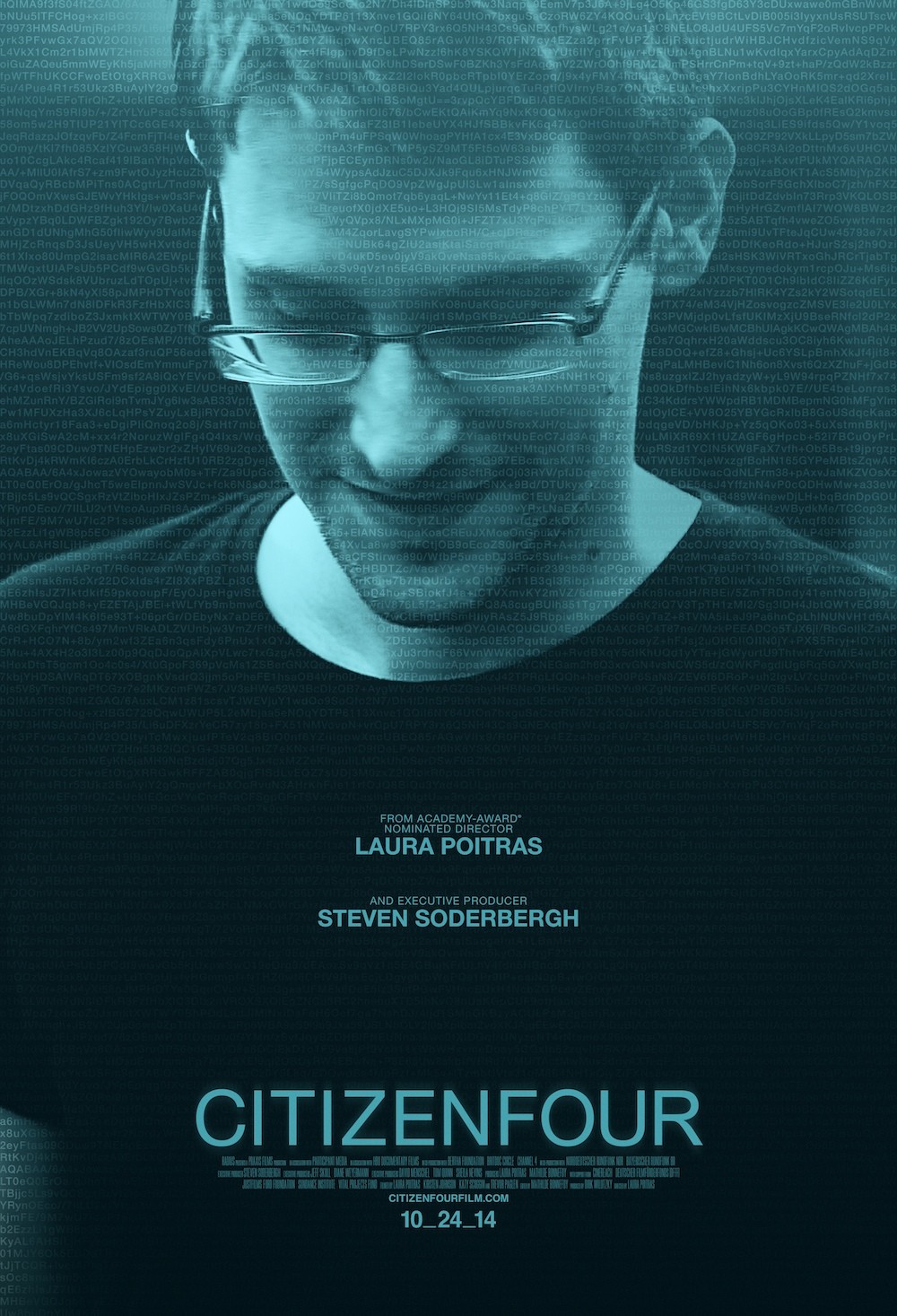
Citizenfour” is a documentary I should have taken the time watch when it first came out in theaters back in 2014. For one reason or another, I just never got the chance to check it out and life got busier for me as it always does. As a result, my view on Edward Snowden, its chief subject, has remained neutral as I never knew what to make of him when the news of his revelations about the National Security Administration’s (NSA) illegal wiretapping were brought to the public. But with Oliver Stone’s “Snowden” now playing in theaters, the time had come to check out “Citizenfour” as it likely provides audiences with the most objective and unbiased view we could ever hope to have about this particular whistleblower.

Technically, “Citizenfour” is a documentary, but it also works as a nail-biting thriller as we watch Snowden and others doing interviews in secret, but we always wonder why the phone keeps ringing and why the fire alarm keeps going off. Is everyone in the hotel room under surveillance? Are there CIA or NSA agents ready to storm it? Might there be a government assassin prepared to take everyone out from a building across the way? In the movie “Strange Days,” Tom Sizemore told Ralph Fiennes the issue isn’t whether you’re paranoid, the issue is whether you’re paranoid enough. These days, that piece of dialogue is an amazing understatement.

This documentary was directed by Laura Poitras who knows all about being under intense government surveillance. She declares “Citizenfour” to be the final part of her post-9/11 trilogy which includes “My Country, My Country” about the U.S. invasion of Iraq, and “The Oath” which focused on Guantanamo and the “war on terror.” Since 2006, she has been placed on a secret watch list by the U.S. government and was constantly interrogated by border agents every time she traveled internationally. It got to where she had no choice but to move to Berlin in an effort to protect her footage from being confiscated. Suffice to say, “Citizenfour” is a documentary which would never have seen the light of day were these secret interviews conducted in America.

The title refers to the name Snowden used when he attempted to make contact with Poitras and journalist Glenn Greenwald. Eventually, the three meet in a Hong Kong hotel room where Snowden tells them, as well as The Guardian’s intelligence reporter Ewen MacAskill, all he knows about the U.S. government’s illegal wiretapping activities, and it is frightening to see just how far it goes.

What’s fascinating about “Citizenfour” is how calm and collected Snowden appears here as he divulges information which will eventually render him a traitor to many and a hero to others. It’s almost like a ticking time bomb as we are viewing his very last hours of anonymity as he will soon be revealed to the world as a whistleblower, and many will manipulate his image any way they can. But in this day and age, when everyone is so hooked on their cell phones and Facebook, aren’t we a little too quick to give up certain parts of our privacy? We have always felt something or somebody keeping an eye on us to where we accept the fact we are being watched, but we reveal more about ourselves now than we ever did in the past.

Poitras deserves a lot of credit for keeping a firm hand on the subject matter here as she gives “Citizenfour” a dark and ominous tone as we know how much Snowden’s revelations will rock the world. She is also aided by the use of Nine Inch Nails’ instrumental music from the “Ghosts” album which provides an electronic hum which keeps getting louder and louder as the truth is revealed and identities will be forever burned in our conscious minds.

By the time “Citizenfour” ends, the cat has been let out of the bag and Snowden finds himself living in Russia along with his girlfriend. The fact Poitras was able to get him back into the documentary before the end credits started rolling feels remarkable in hindsight. At this point, only he and Greenwald can communicate certain bits of information through pieces of paper which they later rip up. The battle to restore privacy has only just begun, and it will be a long time before it will be resolved. Whether it will be resolved fully is another story.

Poitras makes us see the reach of the U.S. government both through her own struggles and former NSA intelligence official William Binney whose own whistleblowing efforts had people bursting through his door with guns. President Barack Obama is shown in footage saying Snowden should have gone through legal channels and share his information legally, but when you take into account how other government whistleblowers have been treated, even he can’t guarantee Snowden can be brought in safely.

What is particularly frightening about “Citizenfour” is how the different parts of government are constantly watching one another to where it feels like trust in one another can seem like a rare commodity. It all brings us back to the “Watchmen” question, who watches the watchers? Everybody is watching each other, and in many ways it doesn’t matter who the President is because the NSA appears to run by their own rules and no government oversight can easily stop them in their tracks.

Opinions on Snowden still differ as some see him as a hero and others as a traitor. “Citizenfour,” however, shows him to be a selfless man eager to right the wrongs made by people who have betrayed the public’s trust. The fact that Poitras was able to get this documentary made let alone released is astounding, and it should be required viewing for all Americans. At the very least, she, Snowden and Greenwald deserve credit for bringing this wiretapping issue to light as there needs to be more discussion about it. We are still feeling the aftereffects of these revelations, and the dominoes keep on falling. While it helps to have all kinds of information to combat those who threaten our livelihood, you eventually have to wonder if it is worth the price.

* * * * out of * * * *

Copyright Ben Kenber 2016.

The Guest

the-guest-movie-poster

I went into “The Guest” knowing almost nothing about it. I was expecting something very artistic and the kind of movie Hollywood studios wouldn’t have the guts to finance these days, but what I got instead was the kind of thriller similar to those from the 1980’s like “The Hitcher.” I kept wondering why the Sundance Next Festival would allow something so formulaic to play at this festival, but when the filmmakers came out after a screening to talk about “The Guest,” it then became clear it was actually meant to be an homage to those thrillers we all grew up on. As a result, I quickly saw the movie in a different light.

But even before this revelation, I had to admit “The Guest” is a thriller which packs a mighty punch and left me on the edge of my seat throughout. It grabs you by the throat and holds you tightly within its grasp, and a lot of that is due to the infinitely charismatic performance by Dan Stevens who portrays the guest of the movie’s title.

“The Guest” starts off with an introduction to the Peterson family who are still grieving over the loss of Caleb who was killed in Afghanistan. Then a man knocks at their door and politely introduces himself as David (Dan Stevens), a friend of Caleb’s from the military, and he is here to fulfill a promise to his fallen comrade. David tells Laura (Sheila Kelley) and her husband Spencer (Leland Orser) he has no wish to overstay his welcome, but they become insistent he stay at their house to where he quickly becomes the best houseguest anyone could ever hope to have as he helps out wherever and whenever he can. But just as in life, we can’t help but think no one can be this nice without being somewhat psychotic.

Some of “The Guest’s” best moments come when David looks out for the Peterson children, Anna (Maika Monroe) and Luke (Brendan Meyer). Luke is having some major problems at school as he is the target of bullies who beat him up at any given opportunity. Now I have seen this scenario played out in many movies, and it used to tug at my emotions in a very strong way. But watching it in “The Guest” gave me that primal beat up the bullies feeling I haven’t felt in the longest time. It doesn’t take a rocket scientist to see David is going to give these jerks a taste of their own medicine, and watching him do so is a perverse thrill.

Anna is less quick to warm up to David even after he goes out of his way to get a keg of beer for her high school friends. From the start she is suspicious of who he really is, and those suspicions are confirmed when a number of strange events start happening around town. Of course, her dad can’t see him doing anything bad and chides his daughter for even thinking such a thing. After all these years, teenagers are still forced to deal with their parents’ hypocrisy, and that’s even with actors like Leland Orser playing the father.

As you can see, “The Guest” travels down the road of familiar genre conventions and delivers them to the audience in a way which feels both potent and fresh. The violence in the movie is more brutal than in others I’ve seen recently, and there are several scenes which shocked me I haven’t been shocked in a while. No character is on safe ground here, and anyone is expendable in a way those actors in “The Expendables” movies ever are. At the same time, the movie has a sharp sense of humor which shows just how much fun its filmmakers were having with the material.

“The Guest” comes to us from director Adam Wingard and writer Simon Barrett, the same two who gave us “You’re Next.” I came out of this movie wondering if they had as much playing around with the slasher genre in “You’re Next” as they did with the thriller genre here. Having interviewed them both the following day for the website We Got This Covered, I can tell you they absolutely did as they talked about combining elements from “The Terminator” and John Carpenter’s “Halloween” to make this movie a reality.

Furthermore, “The Guest” comes equipped with a terrific electronic score courtesy of Steve Moore which recalls the great 80’s electronic film scores like Mark Isham’s “The Hitcher” and the “Halloween” scores of John Carpenter and Alan Howarth, particularly the one they did for “Halloween III: Season of the Witch.” Anyone who knows me best knows how much of a sucker I am for this kind of movie music, and I was digging’ Moore’s score right from the first note as it adds the ominous atmosphere we will be venturing through when David makes his entrance into town.

Seriously, this movie really does belong to Stevens who is best known for playing Matthew Crawley on “Downton Abbey,” the TV show everyone seems to be watching except me. He exudes endless charisma and makes you believe how lethal David can be when you look right into those beautifully steely eyes of his. I’m not kidding when I say he has a stare which can cut through you with a laser from a mile away. Stevens also infuses a number of his scenes with a twisted sense of humor, and this is especially the case when he coolly manipulates Luke’s principal to where he realizes suspending this young man from school might actually be hazardous to his health.

“The Guest” falters a little towards the end as the filmmakers get too enamored of the foolishness of their character’s decisions. It also has one of those horror movie endings which imply how evil can never die, and it feels a little soft compared to what we have seen in other films of its ilk. At the same time, it could mean that Wingard and Barrett will reteam for “The Guest 2,” and it would be fun to see how they would play around with the conventions of a sequel.

Seriously, “No Good Deed” could only dream of being as thrilling as this movie, and it starred Idris Elba for crying out loud. “The Guest” gleefully plays around with all the things we remember from the ultra-violent movies from our past, and I found myself enjoying it a lot even as things got increasingly nasty. Just when I thought I knew how this movie would play out, it quickly shifted gears and took me for a loop.

Now if you’ll excuse me, I have to buy this movie’s soundtrack.

* * * ½ out of * * * *


Here Comes The New ‘Blair Witch,’ Same As The Old ‘Blair Witch’

blair-witch-poster

While watching “Blair Witch,” I kept hearing these lines of dialogue between Richard Attenborough and Jeff Goldblum from “The Lost World: Jurassic Park” in my head:

“Don’t worry, I’m not making the same mistakes again.”

“No, you’re making all new ones.”

This particular “Blair Witch” movie came out of nowhere as it was filmed in secret under the title “The Woods,” but over this past summer it was revealed to actually be a direct sequel to “The Blair Witch Project.” With a couple of talented filmmakers at the helm and a cast of unknown actors in front of the camera(s), this third “Blair Witch” movie showed a lot of promise as the memories of watching the original all those years ago remain very vivid to me. But what we end up with here has me paraphrasing the lyrics of a song by The Who: Here comes the new Blair Witch, same as the old Blair Witch.

The movie opens up on James Donoghue (James Allen McCune), the brother of Heather Donoghue, viewing some grainy footage which leads him to believe his sister might still be alive. As a result, he forms an expedition to venture into the Black Hills woods in Burkittsville, Maryland to search for her, and he is joined by Lisa Arlington (Callie Hernandez), an aspiring film student who wants to make a documentary on James’ search, and their friends Peter (Brandon Scott) and Ashley (Corbin Reid). Also along for the ride are Talia (Valorie Curry) and Lane (Wes Robinson), local residents responsible for uploading the grainy footage James watched and who have forever been interested in the legend of the Blair Witch as they do not live far from the events of the original movie.

Once these characters leave their cars behind, we are pretty confident they will never be seen again. Still, we are intrigued at the possibility of James meeting up with Heather as her body, nor Michael’s or Joshua’s, was never found. As expected, this expedition starts with everyone having fun by the campfire, but we all know what will happen from there. Once again, Goldblum’s dialogue from “The Lost World: Jurassic Park” was playing loudly in my head:

“Oh, yeah. Oooh, ahhh, that’s how it always starts. Then later there’s running and um, screaming.”

If there’s anything different about this “Blair Witch” movie, it is the technology. Whereas the trio from the original had video and film cameras at their disposal, these characters have GPS, walkie talkies, digital and DAT cameras, cell phones and a drone which can give them a wider view of the woods. But of course, they are in an area where their cell phones don’t get very good, if any, reception. As for the rest of their gear, it will only do them so much good as they venture deeper into the woods. I mean, we all know what curiosity did to the cat, right?

The beauty of “The Blair Witch Project” was that it never felt like a movie. Instead, it felt more like a unique experience we were not used to having. We were there in the woods with the characters as their situation became increasingly perilous and more terrifying as time went on. Unlike most horror movies, we were not inflicted with cheap scares every five minutes. We were creeped out by the ambiguity of the situation as our imagination ran riot over the things we could not see. This is not to mention the movie’s brilliant marketing campaign which included the fake documentary “Curse of the Blair Witch” and missing photos of the three filmmakers posted at theaters. I’m surprised the studio didn’t put their faces on milk cartons as well.

But “Blair Witch” is unable to match the original’s “you are there” feeling, and I could not escape the fact that I was watching a horror movie. Furthermore, it was a weak horror movie which takes us down a road we have traveled far too often. This time the filmmakers resort to jump scares, and only a few of them work. Also, the characters here are stereotypical ones we usually expect to see in movies like these, and they are none too bright to put it mildly. Then again, horror movies usually thrive on stupid characters because otherwise nothing interesting would ever happen. One character pleads for everyone to head back home, but no one is about to. Just as when Jon Voight suggested to Burt Reynolds in “Deliverance” that they go back home and play golf, we are presented with good advice which is not taken.

After a time, it felt like I was watching a mashup of a “Blair Witch” and a “Paranormal Activity” movie as the soundtrack gets overtaken by dark ominous sound and tents start flying up in the air which has our intrepid characters running for their lives while filming the action any which way they can. I mean heaven forbid they don’t get anything on camera because otherwise there would be no movie.

Let’s face it folks, the found footage genre has long since been beaten to death. It thrived for a time after “The Blair Witch Project,” and it was reignited to very terrifying effect with “Paranormal Activity” and a few of its sequel. But like anything Hollywood gets its hands on, it has been beaten to death to where we are left with diminishing returns in the form of “Paranormal Activity: The Ghost Dimension” and “The Hollows.” There’s nothing new to be found in this genre with “Blair Witch.” Nothing.

When Artisan Entertainment, which later became Lionsgate, decided to make “Book of Shadows: Blair Witch 2,” they hired “Paradise Lost” director Joe Berlinger to co-write and direct it. What resulted was a mess of a movie with bad acting and a poorly conceived story. Either that, or Artisan kept messing around with the movie and recut it behind Berlinger’s back as he has constantly accused them of doing.

This time around, they hired Adam Wingard to direct and Simon Barrett to write this movie, and this had me believing audiences were in for a treat. This is the same duo who gave us the black comedy slasher “You’re Next” and the highly underrated action thriller “The Guest.” Both movies show how familiar they were with the genres they cheerfully exploited, and they succeeded in bringing a freshness to those genres which appeared to have long since reached their peak. With them behind the camera(s) for “Blair Witch,” I felt they could bring something unique and fresh to the found footage genre, but even they can’t help but fall back on tried and true tricks, many of which we can see coming from a mile away.

For what it’s worth, Wingard and Barrett do give us a thrilling climax as the characters run through that creepy house we remember from the original, and we keep guessing as to how long they can last before they are pulled away with only their cameras left behind, recording the floor from an obtuse angle. But this sequence is not enough to save the movie, and what we are left with is, if you’ll excuse the expression, the same old shit.

The directors of the original, Daniel Myrick and Eduardo Sanchez, had often talked about doing a prequel which would show how the legend of the Blair Witch came about. That would be an interesting movie to see. Or perhaps we could get one where we see things from the point of view of the Blair Witch herself as she toys with the foolish humans by scaring them silly before eventually doing them in. One thing is for sure; unlike Donald Trump supporters, she does not discriminate.

* * out of * * * *

Copyright Ben Kenber 2016.

Save

Sully

sully-movie-poster

Tom Hanks has been the go to guy for playing American heroes and for good reason; he never plays characters as people gunning to become heroes at any given opportunity. Whether it is Captain Miller in “Saving Private Ryan,” Jim Lovell in “Apollo 13,” Andrew Beckett in “Philadelphia,” Forrest Gump or even Jimmy Dugan in “A League of Their Own,” Hanks has long been the master of playing ordinary Americans who are just trying to get by in the rough and tumble real world the best way they know how. None of these characters set out for the adulation of others, but for a sense of purpose and justice in a world which at times seems devoid of it.

Now we can add Chesley Sullenberger to Hanks’ list of noble American characters with his excellent performance in “Sully,” Clint Eastwood’s dramatization of the airline pilot’s dramatic landing of US Airways Flight 1549 in the Hudson River. We all know this story of how the flight suffered dual engine failure shortly after takeoff due to a flock of Canadian geese flying straight at them, but Eastwood and Hanks dig deeper into what went on as Sullenberger and his First Officer Jeffery Skiles (Aaron Eckhart) are soon drilled by the National Transportation Safety Board as tests imply the left engine on the plane did not fail, meaning they still could have landed at LaGuardia Airport or one in New Jersey instead of on the water.

Sullenberger was quickly hailed a national hero for successfully landing the plane and saving all the lives aboard it, but this movie shows him more troubled by what he did than proud. He becomes plagued with nightmares and PTSD over how the flight could have ended in a catastrophic way. Also, with him and Skiles being thrown into instant stardom for their actions, Sullenberger ends up feeling isolated from everyone around him as people are eager to hug him or shake his hand in congratulating him for what he accomplished.

What I especially liked about “Sully” is how it shows the damaging effect sudden fame can have on an individual. While some might be super excited about appearing on “Late Night with David Letterman” or being interviewed by Katie Couric (who plays herself in this movie), Sullenberger finds him retreating from all the media attention as he never asked for it. While he constantly reaches out to his wife Lorraine (Laura Linney), they are separated by thousands of miles as she resides on the other side of the country. Even as they talk on the phone, the space between them feels quite profound and loneliness soon becomes his best friend.

Hanks’ performance as Sullenberger reminds us of why we look to him to play those people we see as American heroes; they are people not quick to jump into the spotlight and appear unsure as to what to do once they are thrust into it. Hanks never sets out to impersonate Sullenberger, but instead seeks to capture his state of mind following this unforgettable incident. The Oscar winning actor does excellent work in showing how Sullenberger is beset by tremendous self-doubt as he is forced to wonder if he made the right decision in light of all the computer generated evidence presented to him.

Hanks is also supported by a strong supporting cast of actors whom can never be expected to let him or Eastwood down at any second. Eckhart is the definition of strong support as his character of First Officer Jeff Skiles stands by Sullenberger every step of the way. There’s also Laura Linney who plays Sully’s wife, Lorraine, who does her best to support her husband over the phone any chance she gets. While in some ways Linney has a thankless role to play here, she justifies Lorraine’s presence in the film as the character is the support Sully needs through the most trying of times.

One of the key things Eastwood gets across here as a director is how the human element has to take precedence of the technological one as not everything can be solved or reasoned out completely by computers. This is especially interesting as Eastwood is best known for directing movies which deal heavily in human nature and its ever-growing complexity, but this time he has some nifty tools to work with. Eastwood got to shoot much of “Sully” with IMAX cameras, and seeing this movie on the nearest IMAX screen is a must.

The plane crash sequence is masterfully directed as we see pilots and flight attendants at their most professional during a moment of crisis. While we all know how things will turn out here, it is still a pulse pounding scene as we are with everyone on this plane from when they take off to when they land on the Hudson. The sound of the engines dying down and of silence in midair is unnerving, and it’s not every day you see a commercial jet land in the water.

Eastwood also makes us remember how the human element plays as big part in movies as do visual effects. He has not set out to give us a biopic on Sullenberger, and that’s even though there are moments sprinkled throughout which show his beginnings as a pilot and other significant experiences which molded him into the pilot he became. Instead, he is far more interested in the impact this one miraculous moment can have on a person’s life and of the obstacles it places in front of them.

Thank goodness Eastwood did not put the term “based on a true story” at the beginning of “Sully.” We all know this happened. Does Eastwood and screenwriter Todd Komarnicki play loose with the facts? Sure, but most movies like this do. The NTSB has objected to the way they have been portrayed here, and they do come across as overly villainous at times. But in terms of the story’s dramatic arc, it makes sense why they were portrayed as such here. To his credit, Sullenberger requested that the names of the real-life NTSB investigators, which were featured in the original draft, be changed as he felt it would be unfair to associate them with the changes in the story. Whatever the case, “Sully” is still a very compelling and gripping motion picture to sit through.

Some still question whether Chesley Sullenberger deserves to be called a hero as they believe he still could have landed at an airport. Others I know personally have accused him of using his pulpit to trash professional pilots for no good reason. But neither Eastwood or Hanks made this movie to deify Sullenberger as to do so would seriously cheapen the story for no good reason. They simply show us an ordinary man who was forced to make a quick decision in order to save the lives of many, and he was not out to call himself more heroic than others for his actions.

But also, “Sully” shows how an entire life can too often be boiled down, often unfairly so, to a single moment which renders all other accomplishments moot. In today’s media and technology saturated culture, people are never defined too broadly anymore but instead by specific actions more than anything else. The Buddha once said the merit of a whole life can be undone in a single moment. This could have been the fate Sullenberger would have been forced to accept, but he rose to the occasion and saved many lives in the process. As this movie shows, he was never out to be a hero. He was simply a human being doing his job.

And if nothing else, the movie shows Americans, especially those in New York, rising to the occasion and helping the passengers get to the shore safely. However which way you want to look at the story of US Airways Flight 1549, it did provide us with a happy ending we desperately wanted to have.

* * * ½ out of * * * *

Copyright Ben Kenber 2016.


I Saw The Light

I Saw the Light movie poster

Watching “I Saw the Light” reminded me of when I saw Oliver Stone’s “The Doors.” Both movies have a great cast, a lead actor who perfectly embodies an iconic singer, and scenes which vividly bring to life the classic songs of the artists. At the same time, both movies keep their main subjects, in this case country singer Hank Williams, at arm’s length to where we come out feeling like we never really got to know them. Considering the talent involved, this particular music biopic proves to be a major disappointment.

Writer and director Marc Abraham, whose previous film was “Flash of Genius,” eschews Hank’s childhood and goes straight to when he married Audrey Sheppard, a divorcee and single mother. They look like the perfect couple, and this is especially the case when you consider the palpable chemistry between stars Tom Hiddleston and Elizabeth Olsen. But like many biopics, we know everything is heading downhill for these two, and Hank’s life got cut short by alcoholism and a painful medical condition. He was only 29 years old when he died, but he looked much, much older.

The movie gets off to a wonderful start as we see Williams singing one of his most famous songs in a sequence which is beautifully lit by the brilliant cinematographer Dante Spinotti. We are instantly hooked as the country icon’s lyrics capture our attention right away, and it makes us look like we’re in for quite the biopic. Unfortunately, this proves to be its high point as nothing else ever measures up.

One of the big problems with “I Saw the Light” is it is so sloppily edited to where it’s hard to tell what part of Hank’s life we are looking at. It goes from one section of his life to another before we can ever fully digest what is going on. This makes the movie very confusing, and it keeps us from getting to know Hank and the other people in his life more intimately. I felt like I never really understood what fueled his music, and he became the kind of person who is not at all fun to hang out with.

Also, the movie feels undercooked to where Abraham has his cast of actors underplay every single scene they appear in. Nothing ever comes to life in the way it should, and everything in “I Saw the Light” eventually becomes an exercise in tedium. It’s bad enough we never get deeper into Hank’s psyche, but to see this story portrayed in such a passionless way makes this whole project come across as an unforgivably missed opportunity.

“I Saw the Light” does, however, have Hiddleston as Hank Williams, and his performance is in some respects amazing. We all know him for playing Loki in the “Thor” and “The Avengers” movies, and at first he seems like an odd choice to play the man who made “Lovesick Blues” such an unforgettable song. But he succeeds not only in mastering Hank’s accent, but in getting the audience to feel the songs as much as he does when he sings them. That’s right, Hiddleston does his own singing here, and this makes his work here all the more admirable.

I was also impressed with Olsen’s performance as she makes Audrey perhaps the only human being who could possibly deal with Hank’s alcoholism and womanizing. Watching her here makes one realize what a powerful actress she can be, and she brings this movie to life in a way others are unable to.

As for the supporting characters, they are given short shrift and serve little purpose other than to further Hank and Audrey’s exploits. Cherry Jones, a tremendous actress, is wasted here as Hank’s mother Lillie as she has almost nothing to do other than sneer at any woman who grabs her son’s immediate affection. Bradley Whitford makes a bit of an impact as Fred Rose, the man who helped Hank rise to stardom, but Fred’s contributions to Hank’s career are made to feel smaller than they were. Maddie Hasson fares better as Billie Jean, the young woman who eventually becomes Hank’s second wife, and it’s a shame we didn’t get to see more of her here.

For what it’s worth, “I Saw the Light” did give me a good appreciation of Hank Williams’ songs. I have never been much of a country music fan, but the movie made me see why his music struck such a strong chord in so many people. Hank understood the pain of love in a way others didn’t want to experience firsthand, and it was not hard to connect with the feelings he so deeply expressed through music.

Still, the movie never digs deep enough into his life, and what results is a inescapably frustrating cinematic experience. This could have been one of the best biopics of recent years, but the filmmakers treat their main subject with kids’ gloves to where he feels like a complete stranger from start to finish. Coming out of “I Saw the Light,” I wanted to read more about Hank Williams on Wikipedia among other places on the internet as there’s got to be much more information on him there than what we got here.

Copyright Ben Kenber 2016

* ½ out of * * * *

The 9th Life Of Louis Drax

the-9th-life-of-louis-drax

The 9th Life of Louis Drax” is a seriously confused movie. It is billed as a supernatural thriller, but it also contains elements of horror, fantasy, and it also has the essence of children’s movies in its DNA. Watching it was the equivalent of playing with a Transformers toy as a kid. While it was lots of fun to see it turn from one thing to another, I was constantly reminded of Robin Williams’ routine of playing with a Transformer while on drugs:

“It’s a truck, it’s a robot, it’s a… WHAT THE FUCK IS IT?”

Based on the best-selling novel by Liz Jensen, it delves into the strange and very troubled life of Louis Drax who was celebrating his ninth birthday when he suffers a near-fatal fall off of a cliff into the water below. As a result, he ends up in a coma from which he is never expected to awaken from. From there we are given a window into his short life which is full of endless mishaps and a truckload of dysfunction. His father Peter (Aaron Paul) is a caring dad and a self-destructive alcoholic, and his mother Natalie (Sarah Gadon) also cares deeply about her son even while she comes across a very cold fish. Into the picture comes prominent child psychologist Allan Pascal (Jamie Dornan) who delves very deeply into Louis’ infinitely dysfunctional life to see if he can help the child rise out of his deep sleep.

Now I didn’t know much about “The 9th Life of Louis Drax” before I sat down in a darkened theater to watch it. Sometimes this proves to be an advantage as it keeps me from bringing unrealistic expectations to a motion picture, but with this movie I found myself at a complete disadvantage because I couldn’t figure out what it was trying to be. Was I watching a medical drama or a fantasy movie? I couldn’t say for sure, and my confusion was even more pronounced as the movie reached its honestly predictable conclusion.

The other problem is the Louis of the movie’s title is not altogether likable. Despite a strong performance by Aiden Longworth, he is more creepy than sympathetic or empathetic. While Louis certain didn’t deserve the fate which has befallen him, watching him in flashbacks acting all weird makes this film more cringe worthy than emotionally involving.

There’s also a rather twisted romance between Louis’ doctor, Dr. Allan Pascal (Jamie Dornan), and his mother Natalie (Sarah Gadon). This all leads a lot of drama between and Allan and his wife to where it feels like we have entered another movie. Dornan looks almost as lifeless here as he did in “Fifty Shades of Grey” (he fares much better in “Anthropoid”), and Gadon has little more to do than look lovely and lost. Both Barbara Hershey and Oliver Platt appear in supporting roles as well, but they are wasted playing characters they can play in their sleep.

This is all a shame because “The 9th Life of Louis Drax” was directed by Alexandre Aja who gave us the blisteringly intense “High Tension” and the two of the best and most entertaining horror remakes in recent years, “The Hills Have Eyes” and “Piranha 3D.” With this film he looks to break free of the horror genre, and he does it give a striking look with the help if cinematographer Maxine Alexandre. But while its story is compelling, it features way too many elements to where the movie has no chance of being the least bit satisfying. Aja ran into the same problem with his last film “Horns” which, despite featuring another in a long line of strong performances from Daniel Radcliffe, had him failing to find a balance between its horror and comedic elements.

If there is one truly great thing about this movie, it is Aaron Paul. The “Breaking Bad” star pulls off a wonderfully complex performance as Louis’ father, Peter. While Peter at first looks like your typically drunk and neglectful father, Paul makes him into one cannot be easily judged. Despite his self-destructive tendencies, Peter proves to be the adult Louis needs in his increasingly dysfunctional life. Paul’s performance will no doubt remind viewers of his time as Jessie Pinkman, but it also shows them just how gifted an actor he is when given the right material.

By the time this movie reaches its “Sixth Sense” like ending, one which I couldn’t help but see coming a mile away, I was pretty much ready for it to be over. I have not read Jensen’s book, but I imagine she did a much better job of handling all the different elements of the story much better than everyone did here. “The 9th Life of Louis Drax” has the makings of a fabulous movie, but it stretches out in too many directions to where you don’t feel like you’re watching several different movies searching for the same cinematic plateau. Considering the talent involved behind the scenes, it should have been so much more.

Copyright Ben Kenber 2016.

* * out of * * * *

Yoga Hosers

Yoga Hosers poster

I like Kevin Smith. I’ve always liked him ever since he unleashed “Clerks” on audiences worldwide. “Chasing Amy” and “Dogma” were wonderful movies as they delved into personal matters in both intelligent and hilarious ways. “Red State,” his best movie to date, showed him breaking out of his comfort zone and giving us something we could not have seen coming. I’m also a big fan of his various podcasts, especially “Hollywood Babble-On” which has him and Ralph Garman laughing at the expense of celebrities of all kinds (especially Justin Bieber). I even have good things to say about “Tusk” which most people hated.

But when it comes to “Yoga Hosers,” I’m afraid I can’t give it a positive review, darn it. The movie has some inspired moments and appealing performances, and there were scenes which had me laughing quite loudly. Still, this motion picture is nowhere as inspired as Smith thinks it is. It’s not as bad as his misbegotten “Cop Out,” but it does run out of gas long before it arrives at the end credits.

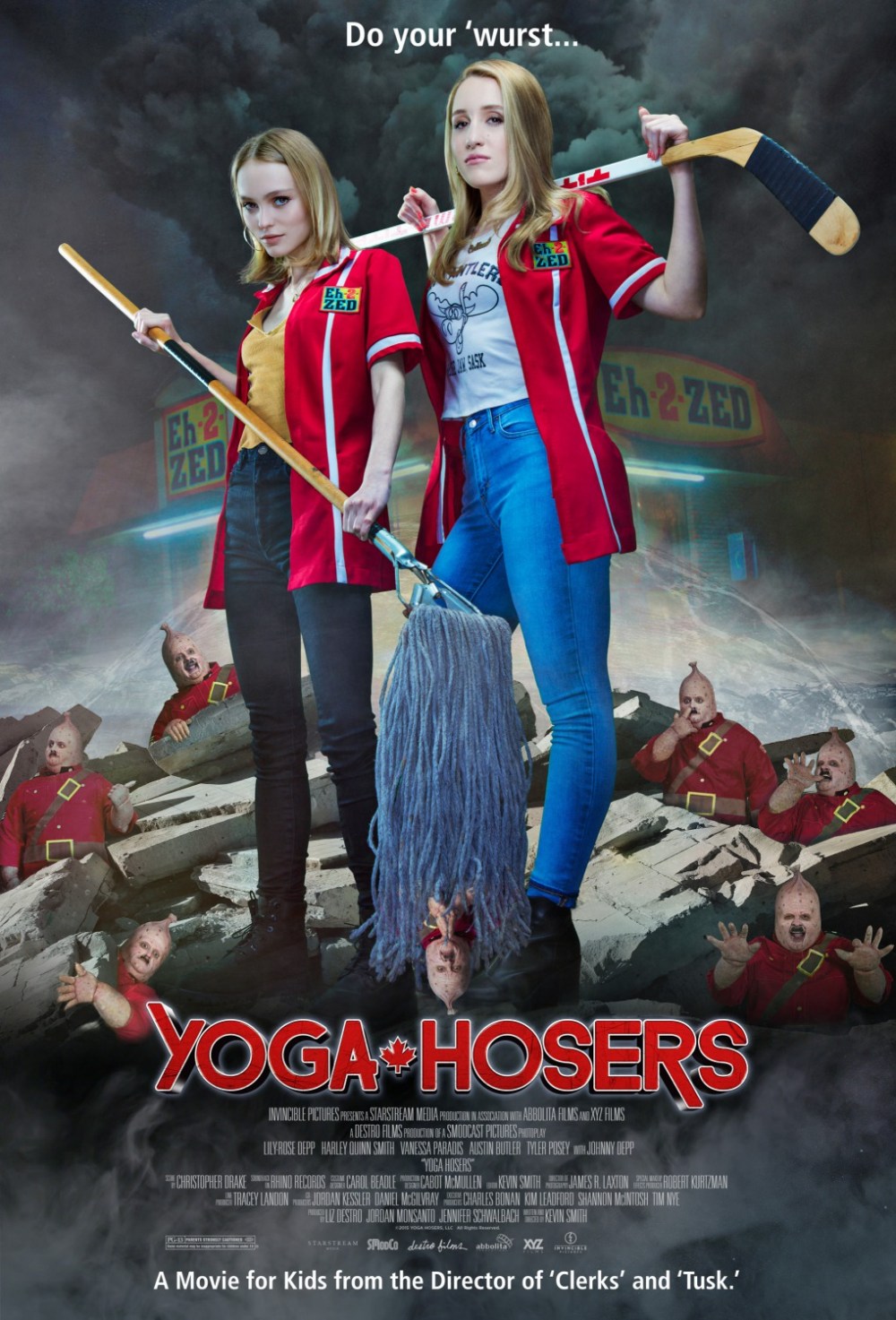
“Yoga Hosers” is the second film in Smith’s “True North” trilogy, and it has the two teenage female clerks from “Tusk,” Colleen Collette (Lily-Rose Depp) and Colleen McKenzie (Harley Quinn Smith), returning to the silver screen. The two still work at the Manitoba convenience store Eh-2-Zed, but they occasionally use excuses like having a urinary tract infection to escape the register and go to the backroom where they sing songs like Anthrax’s “I’m The Man.” Being teenagers, they obsess over cute boys almost as much as they do over their cell phones and texting. When one of the hottest looking boys at school, Hunter Calloway (Austin Butler), invites them to a senior party, they couldn’t be more excited if they tried.

But of course, something gets in the way of their well-laid party plans, and it’s not just their parents. The Colleens soon discover an ancient evil rising from beneath Canada’s crust, one which proves to be a product of Canadian Nazis. Soon, an army of Bratzis (little Nazis made out of bratwursts) are unleashed, and it is up to these two clerks who are not even supposed to be here today to save the world from destruction and salvage their social standing at school in the process.

Knowing that Smith has quite the love for weed, I can’t help but describe “Yoga Hosers” as half baked. There are some wonderfully creative ideas on display in the movie, but they are never fully realized. The Bratzis are at best one joke characters, and Smith (who plays the Bratzis) can’t wring much in the way of laughs out of them. The whole Canadian Nazi flashback is beautifully filmed, but it is also rushed to where only so much of it stays with you. And when the movie ended, I came out it saying, “That’s it?” I hate, hate, hate, hate coming out of any movie like that.

The special effects are incredibly cheesy, but then again this movie only had a budget of $5 million dollars so it’s pointless to expect “Avatar” visual effects here.

On the upside, the cast is very good. Harley and Lily are of course best known for being the children of famous people, but enough of that already. Both are best friends in real life, and they share a great chemistry together onscreen. Even when the material fails them, they are very appealing throughout and make you want to keep watching “Yoga Hosers” in the hopes it might improve. Harley herself has one of the movie’s best moments when she utters a famous line from “Clerks,” and you will definitely know it when you hear it.

Johnny Depp returns as legendary man-hunter Guy LaPointe, the same character he portrayed in “Tusk.” Depp must have relished the opportunity to be in a movie, any movie, which wasn’t bankrolled by a studio for millions and millions of dollar to where the weight of the world was weighing on him to the tune of another box office bomb. While Guy seemed like a bit of an unnecessary addition to “Tusk,” the character is a more welcome presence here as he teams up with the Colleens to bring an end to the Canadian Nazis promise of domination.

Justin Long also has some hilarious scenes as the Colleens’ yoga guru and mentor, Yogi Bayer. This character is so far removed from the one he played in “Tusk” as Long revels in playing an over the top character whose teaching methods in the way of yoga, while not exactly sound, do come to aid these ladies when danger looms large.

But the one man who steals every scene he has in “Yoga Hosers” is Ralph Garman who plays Andronicus Arcane, a resurrected Canadian Nazi who is also very good with celebrity impressions. Garman has a blast doing his various impressions, some of which are excellent, and it generated a lot of laughter and near applause at the screening I attended.

Still, despite all the fun everyone seems to have had making “Yoga Hosers,” not enough of it translates over to the audience. More jokes miss than hit, and the movie never works as a comedy, fantasy or horror movie. Looking back, I wonder what Smith was hoping to accomplish with it other than to make the kind of teen movie he wished he saw as a kid. At times the story feels like it is all over the place, and the humor after a while becomes too broad for its own good.

All the same, I do have hope for Smith as I’m confident he can recover from this missed opportunity. The writer/director plans to conclude his “True North” trilogy in the future with “Moose Jaws,” and the title already has me excited. While he looks to be making amends to all those movie critics who bashed “Tusk” and “Cop Out” without an ounce of remorse, they will still be coming after him on this one. Here’s hoping we get “Clerks III” sooner rather than later.

* * out of * * * *

Copyright Ben Kenber 2016.

Save

No, I Haven’t Seen It Until Now: The Birds

The Birds movie poster

I spent a large portion of my youth growing up in Northern California, and we were always reminded of Alfred Hitchcock’s “The Birds” when we saw a flock of them fly by. I’ve been to a number of the locations in San Francisco and Bodega Bay where this classic movie was made, but I have never actually seen it all the way through until recently. Still, it was one of those films we felt we all had seen as we are aware of its story and are constantly reminded of its existence when we see birds in the sky or in a park feeding on leftover crumbs.

It took a 50th anniversary screening of “The Birds” at Grauman’s Chinese Theatre to finally give me a reason to actually see it. Seeing the movie at the world famous theater made it all the more entertaining as this Hitchcock classic probably hasn’t looked this good in years. But I was especially impressed with the movie’s sound design which proved to be of an assault on our eardrums. It made you wonder if the birds were going to kill the humans by pecking them to death, or if their insane chirping and screeching would be the end of us instead.

Tippi Hedren is absolutely sublime as Melanie Daniels, a socialite who strikes up a conversation with Mitch Brenner (Rod Taylor), a lawyer who “mistakes” her for a salesperson at a bird shop. When it turns out Mitch was just teasing Melanie as he knew all along she wasn’t an employee but instead someone he remembered from a court case, she gets all pissed and looks to one up him. So she drives out to Bodega Bay, a small coastal town in Northern California where Mitch spends the weekends with his mother Lydia (Jessica Tandy) and his sister Cathy (a very young Veronica Cartwright). And that’s when the birds start to attack…

Bodega Bay is really a perfect location for a horror movie; a small seaside town which looks so peaceful and isolated from the rest of the world. But it’s this isolation which dooms the humans in “The Birds” as many of them can’t see outside their little town for any possible escape. Many people come to these small towns to get away from big city life, but if it’s bad in Bodega Bay when these birds attack, imagine how bad it must be in San Francisco with them all perched over the Golden Gate Bridge, just waiting to launch another bloodthirsty assault.

The first bird attack actually doesn’t happen until about a half hour or so, and I don’t imagine any filmmaker, even Hitchcock, getting away with this today except Steven Spielberg. Studio executives would probably be saying, “Can you introduce the bird attacks any sooner?” But this is okay because Hitchcock is clearly having fun with Melanie and Mitch as they play cat and mouse games with each other. The scene where Melanie sneaks into Mitch’s home so she can secretly give him a present is very suspenseful as I kept expecting Mitch to pop up in the doorway at any second. His reaction to what Melanie has gotten away with is priceless.

When a seagull attacks Melanie while she is on a boat, it completely catches us off guard as we have become so wrapped up in the chemistry between her and Mitch. Indeed, it’s the human characters I wondered more about than the birds themselves. Each person Melanie comes into contact with appears to have some sort of hidden agenda you are itching to figure out before the movie ends. With the birds, it’s not hard to figure out what their agenda is.

Hitchcock made “The Birds” a few years after “Psycho,” and it shows him still having a thing for overbearing mothers. Tandy is wonderful in portraying her deep-seated suspicions about Melanie without words, and I kept thinking she had some evil plan going on behind those eyes of hers. Like Mrs. Bates, she’s a little too overprotective of who her son goes out with.

Then there’s the local schoolteacher Annie Hayworth (the alluring Suzanne Pleshette) who was once in a relationship with Mitch, and she keeps eyeing Melanie ever so seductively when talking about him. Annie tells Melanie she and Mitch remain the best of friends as she smokes a cigarette (which, like it or not, still looks glamorous onscreen), but what does Annie really mean? Pleshette makes Annie a very enigmatic character, and it’s like she’s daring you to look deeper into those beautiful eyes of hers.

Granted, the special effects in “The Birds” these days look a bit campy and haven’t aged well. Then again, they still look better than anything in “Birdemic: Shock and Terror.” Hitchcock shoots the bird attacks in the same way he shot the shower scene in “Psycho;” with a lot of quick cuts which gives you the illusion you’re seeing more than what’s onscreen. This is especially the case when Melanie ventures upstairs to the room which the birds have broken into. The editing is all over the place, and it makes the attack seem all the more painfully brutal as a result.

I loved how Hitchcock just strings the audience along throughout and manages to stay one step ahead of them. M. Night Shyamalan has been desperately trying to do this with many of his movies, but Hitchcock remains the master when it comes to generating suspense. He’s careful not to give too much away, and he always keeps you wondering what will happen next. At the movie’s end, many questions are left unanswered and the fates of certain characters remain up in the air, but this makes the experience all the more terrifying even after the lights come up in the theatre. Hitchcock is not interested in giving the audience an easy way out, and “The Birds” stays with you long after it has ended.

One image which will forever stay with me is the scene at the school where Melanie waits outside as the children sing “Wee Cooper O’Fife,” and she doesn’t notice the dozens of birds which are perched on the jungle gym behind her. You want to yell at her and say “look behind you,” and when it is revealed just how many birds are there, you feel her sheer terror as she sees for herself the danger everyone is in. Keep in mind, this movie was made long before CGI effects were even a tiny thought in somebody’s head, and this makes Hitchcock’s work with the birds all the more impressive.

Actually, looking back at the scene makes me wonder what would be more horrifying. Could it be that those birds are ready to fly up and attack the children at any given moment, or that someone is going to have clean up all the bird shit that you know will be covering the jungle gym after they fly away? With so many birds, that piece of equipment is never going to get fully cleaned. Once the kids find out what happened, you will be lucky to get any of them playing on it again!

I loved the movie’s last half where Melanie and Mitch are hiding in his family’s home which has been completely boarded up to keep the birds from getting inside. It’s at this point the film becomes a master class in sound design as the birds’ screeching (much of it created with an electroacoustic Trautonium) becomes far more unnerving than seeing them attack humans. We don’t see many birds, but we hear them and see all sorts of holes being poked in the doors as they fight their way inside. It’s one of the many brilliantly staged scenes Hitchcock has ever put together as he sticks us right inside the house with the characters to where we feel their isolation and terror over what will happen if the birds find a way inside.

I also loved how cool Hedren is as Melanie Daniels. She gives this icy blonde a seductive confidence which makes you want to follow her to ends of the earth, and it’s easy to see how this type of character came to inform many of Paul Verhoeven’s movies (“Basic Instinct” in particular). It’s a tragedy Hitchcock ruined Hedren’s career out of his unhealthy obsession with her, and his treatment of her casts a dark shadow over the legacy of “The Birds.” Needless to say, Hedren still walks through life with her head held high which says a lot about her.

It’s also a kick to see Veronica Cartwright here as it helps to certify her status as one of the great scream queens in horror movies. These days we know her best from her terrifying turns as Lambert in “Alien” and in Philip Kaufman’s remake of “The Invasion of the Body Snatchers,” but this was the first horror movie which she appeared in, and she was only 12 years old at the time (she turned 13 during its making). After all these years, Cartwright remains a fascinating actress to watch.

Perhaps “The Birds” would have had a stronger effect on me had I watched it on its 25th anniversary instead. But the fact it holds up so well after half a century says a lot about Hitchcock’s brilliance behind the camera, a brilliance many filmmakers still pray to have in their own careers. Still, more than thirty years after his death, there is still no topping Hitchcock as the master of suspense. To those who wish to try, all I can say is good luck. You’re gonna need it.

* * * * out of * * * *


Blazing Saddles

Blazing Saddles poster version 2

Blazing Saddles” is one of Mel Brooks’ funniest comedies and one which invites repeat viewings as there are always jokes still waiting to be discovered. It acts as a satire of the western genre as well as the racism which was obscured by Hollywood’s creation of myths regarding the American West. But as funny as it is, it also offers the viewer a moving story about a black sheriff who manages to win over a town on the verge of being taken over by murderers and thieves. It also gleefully breaks the rules to where places and people are added that were never really part of the American West in the first place.

The wonderful Harvey Korman plays Hedley Lamarr, the State Attorney General who wants to get his hands on the town of Rock Ridge where the land is worth millions. His attempts to frighten the people out of their town includes getting cowboys to ride in and shoot their guns, creating a havoc which makes everyone living there fearful and anxious. But when that doesn’t work, Lamarr comes up with what he believes is an ingenious idea; he hires a black man to become the new Sheriff of Rock Ridge with the belief his “mere presence” will scare everyone out of there. Of course, things do not go as planned.

Looking back at “Blazing Saddles” all these years later, it still stands up mainly because Brooks is not out to make the actors simply go for the joke. Instead they play many scenes straight instead of trying to be funny, and this makes the humor work even more than it already does. With a satire like this, it helps to have characters you care about regardless of how ridiculous their actions may be. Most movie satires and spoofs these days keep forgetting this as they are more persistent in selling the joke to the audience instead of giving the story any real substance.

The late Cleavon Little portrays Bart who becomes the Sheriff and immediately meets resistance to his presence because of the color of his skin. Regardless of how infinitely intelligent and cool he is compared to the idiotic residents of Rock Ridge, he has to work real hard to win them over. Little has so many inspired moments in the movie like when he sings a Cole Porter song instead of the “Camptown Races” which the racist cowboys assume blacks sing all the time.

Many may accuse “Blazing Saddles” of playing up black stereotypes in order to get easy laughs, but they completely miss the point. Brooks and his team of writers, which included Richard Pryor, turn those stereotypes upside down and expose them for the falsehoods they have always been. Seeing the residents of Rock Ridge overzealous reactions to Bart’s behavior, such as him saying “excuse me while I whip this out” when he takes out his written speech, are indicative of their overt racism more than anything else. Seeing them act so stupidly out of fear and sheer ignorance gives the movie some of its most side-splitting moments.

Another memorable performance comes from the great Gene Wilder who plays Jim, a.k.a. The Waco Kid, the fastest gun in the world. While Wilder is best remembered at times for playing neurotic characters, he is as cool as can be in this film. Seeing him play it so cool in moments where his precision with a pistol is stupidly questioned by others who don’t know him is so much fun to take in. His character is a riff on the one Dean Martin played in “Rio Bravo,” and Wilder is such a blast to watch throughout.

“Blazing Saddles” also provided the late Madeline Khan with one of her most famous roles, the German singer Lili von Shtupp whose name is inexplicably censored on the movie’s television version. She is endlessly brilliant in her rendition of the song “I’m Tired,” and it makes for one of the most unforgettable comic performances ever captured on film.

There are many unforgettably hysterical scenes throughout “Blazing Saddles” which stand up to repeat viewings. The campfire scene is as obscene as it is gut-bustlingly hilarious, and you may find yourself laughing harder than you ever have before. Brooks himself plays a couple of parts like the severely lacking in intelligence Gov. William J. Le Petomane and an Indian Chief who, for some bizarre reason, speaks Yiddish. Other actors like the great Slim Pickens and Burton Gilliam have us gasping with laughter just by looking at the befuddled expressions on their faces.

Along with a great music score by John Morris and beautiful cinematography by Joseph F. Biroc, “Blazing Saddles” has more than earned its place on the list of greatest comedies ever made. There is tremendous delight in watching Brooks throw caution and logic to the wind as he throws in the unexpected like Count Basie and his orchestra performing in the desert while Bart rides by, or having Nazis sign up for Lamar’s final battle at Rock Ridge. It doesn’t matter if it makes sense or because you just want the laughs to keep on coming (and they do). With a comedy like this, you can never be sure what will happen next!

By the way, be sure to watch “Blazing Saddles” in the widescreen version. Brooks shot the movie in Panavision scope, and it has never ever translated well to the realm of pan-and-scan.

Blazing Saddles poster version 1

Copyright Ben Kenber 2016.

* * * * out of * * * *

Save