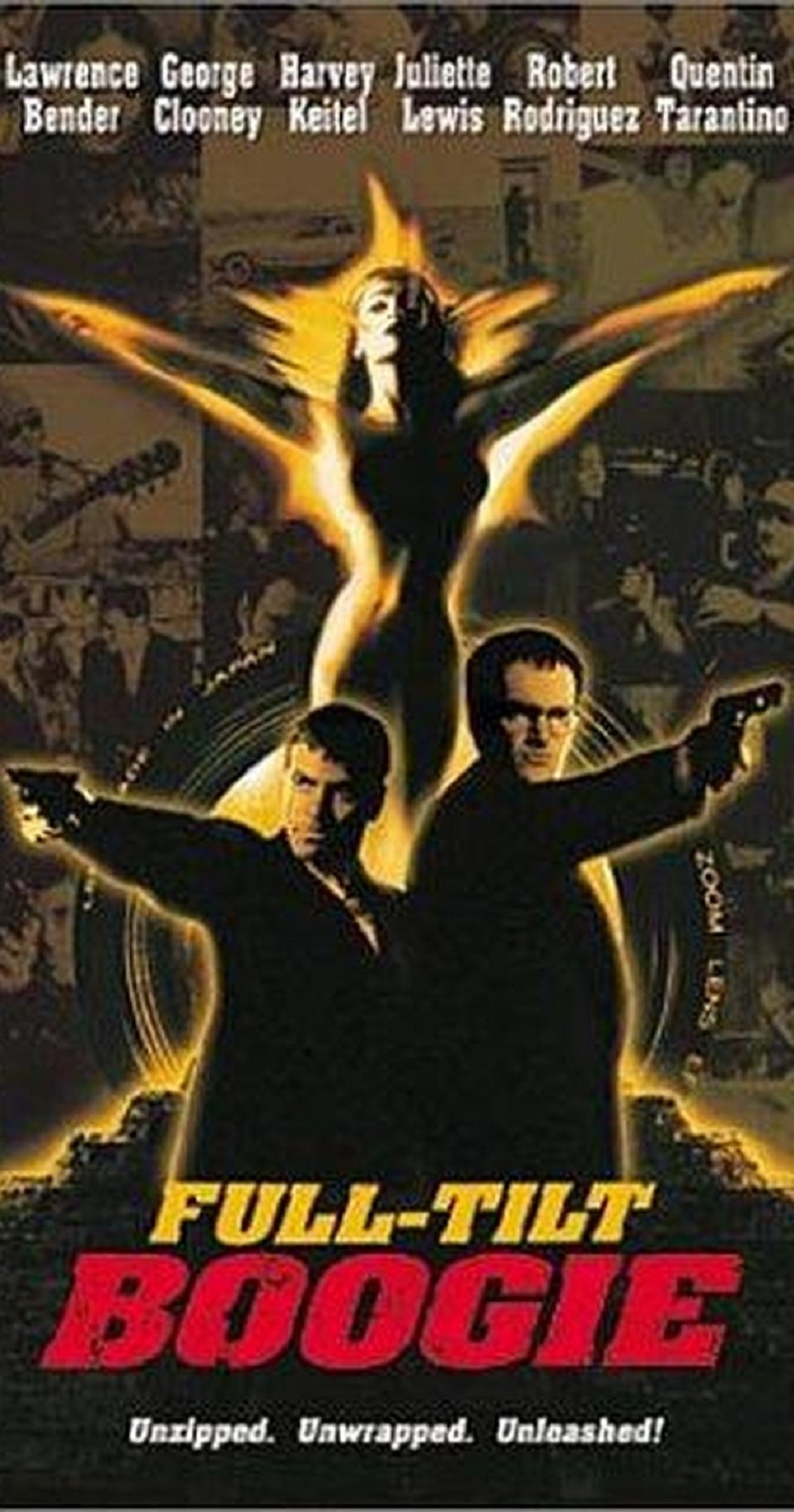
After a double feature of William Friedkin’s “To Live and Die in L.A.” and “Rampage,” which is not currently available on DVD, the audience members at New Beverly Cinema were in for a special midnight treat as the theater held a screening for the 20-year-old documentary “Full Tilt Boogie.” Directed by Sarah Kelly, it chronicles the making of Robert Rodriguez’s action horror cult classic “From Dusk till Dawn” which starred George Clooney and Quentin Tarantino as outlaw brothers who, along with a vacationing family, end up at a rowdy Mexican bar which turns out to be infested with vampires. The documentary introduces us to those people who worked behind the scenes on the movie, of why they want to be a part of show business, the fun they have when the cameras are not rolling, and of the complicated relationship between movie studios and unions.
Introducing this screening of “Full Tilt Boogie” was Kelly, and she was joined by her producer and friend Rana Joy Glickman. The emcee who welcomed them remarked about how cool it was this documentary was playing at the New Beverly and that it was sharing a marquee with Friedkin’s “Cruising.” To this, the emcee said about Kelly, “Whoa! She scored good!”
Kelly welcomed all the “insomniacs” who came out to see her documentary and explained how it became a reality.
“The reason this movie came about was that Robert Rodriguez and Quentin were about to start shooting ‘From Dusk till Dawn,’ and it was an $18-million-dollar independent movie and the unions were pissed,” Kelly said. “They were like, ‘What do you mean? No, you have to go union.’ And so, there was a big threat of a strike, and Quentin thought it would be cool to document it.”
“I had worked for him on a little movie called ‘Pulp Fiction’ and a couple of other movies he was involved with,” Kelly continued, “and he knew that I was studying to be a director so he gave me a shot. At the time, I was taking a break from production and I was working part-time in a law firm and I was like, ‘So is this for real? Should I quit my job?’ And he said, ‘Uh, quit your job yesterday.’ So, I did. We wrangled our little, tiny, hardcore crew and we started shooting, by the way, on 16mm film. Nobody shoots documentaries on 16mm film anymore, but we did. The union threat kind of turned into a cold war and I asked Quentin if we could keep shooting and just do a love letter to the crew. I pitched it as kind of like ‘Hearts of Darkness’ (Eleanor Coppola’s documentary on ‘Apocalypse Now’), but not that dark. Quentin said, ‘Yeah, that’s really fucking cool!’”
As for Glickman, she claimed to have hundreds of stories to tell about the documentary and “From Dusk till Dawn,” but she chose to tell only this one.
“When we finished ‘Full Tilt Boogie’ we were just so pleased that we finished and we got to make the posters for the film, not the one that Harvey Weinstein had selected,” Glickman said. “Our favorite poster is Sarah’s design, and it was Ken (Bondy), the craft service guy on ‘From Dusk till Dawn,’ standing there with a tray of lattes and it said, ‘From the maker of coffee on Pulp Fiction, we bring you Full Tilt Boogie.’”
Kelly responded, “That’s a great poster, right?”
“Full Tilt Boogie” may not be the masterpiece “Hearts of Darkness: A Filmmaker’s Apocalypse” is, but it’s still a very entertaining documentary which takes you behind the scenes of a movie’s production in a way few others do. We get to see the challenges crew members constantly face on a movie set, and we also get to take in the fun they have outside of it as well. For these people, this is a job done out of love and far more preferable than working a 9 to 5 job which has them sitting at a desk all day. Kelly certainly did create a love letter to these crew members, and we revel in the festivities they have from one day to the next.
Thanks to Sarah Kelly and Rana Joy Glickman for taking the time to come out, and at such a late hour, to talk about “Full Tilt Boogie” at New Beverly Cinema.
Billy Bob Thornton is back in the Santa suit as Willie Soke in “Bad Santa 2” which once again involves Willie teaming up with his partner-turned-nemesis Marcus (Tony Cox) to rob a charity in Chicago on Christmas Eve. But this time they have an additional partner in crime, and one Willie didn’t expect to deal with, his mother Sunny (played by Kathy Bates). It’s no surprise to see Willie and Sunny don’t have the best mother and son relationship, and both seem intent on outdoing each other when it comes to insults and political incorrectness. But can these two get past their differences to pull off a heist and maybe try some love and tenderness in the process? Well, you’ll have to see the movie for yourself to figure this out.
It’s great to see Thornton back in one of his most famous roles. “Bad Santa” has long since become a cult hit, and the fans were eager to see Willie back in action even as we wondered if his liver could take much more damage. Thornton was joined by Bates at the Four Seasons Hotel in Los Angeles, California for the “Bad Santa 2” press day, and I was eager to find out how they prepared to play their loathsome and yet strangely appealing characters. The two of them are Oscar winners, Thornton for “Sling Blade” and Bates for “Misery,” and they have since been nominated several more times. Their attention to developing a character is impeccable, and I was fascinated to learn how they worked on the ones they played in this sequel.
Their answers to my question led to a hilarious story involving Thornton and his mother, and Bates reflected on one of the first movies she ever appeared in.
Ben Kenber: First, I just want to say Willie has one hell of a liver. Also, Billy and Kathy, I read the two of you worked on your characters’ backstories a lot for this movie. What specifically did you come up with that you really agreed on and which really helped to inform your performances?
Kathy Bates: I remember one day we were talking that maybe they were carnies together and con artists and had lived in that atmosphere. Nothing against carnies, but we figured that that’s probably where they were from. What else Billy?
Billy Bob Thornton: Yeah and the idea that I was sort of like the artful dodger and she was faking. That sort of idea that I grew up, and it even says in there, where she used to sell me out to do stuff for her all the time, and so we’re sort of grifters in a way. So, it’s not like Willie doesn’t have an understanding of what she does and why she’s that way and why I’m the way I am. We grew up rough in a weird business, so that was mainly it. And also, you can see the mother-son relationship because you know how if you’re watching a movie with your parents… My mom’s 83, and if I’m watching a movie and somebody starts making out, I get so embarrassed. I’ll never forget when my mom called me once and she said she had been to see my movie, and I was like, what movie? I never even thought she would know this existed, and she just gone to see “Monster’s Ball” with her best friend and I was like, why did you do that? How could you do that to me? But I’m still that way. I have never said the F-word around my mother to this day, and she’s 83. So, there is the scene where Kathy has the dildo, and you can see the kid and the mother in that scene and it’s kind of like, golly! Don’t do that! So, I think we had that part too. You can see a mother and son in there. I think we felt it. We did talk about it to a degree, but a lot of it just came naturally.
Kathy Bates: Can I just say one last thing? I remember doing a movie years and years ago with Dustin Hoffman, and it was my first talking part in a movie. Gary Busey was in it and his son, Jake Busey, was in it too, and he was five. Jake got the part, but Gary said, “Do you want to take the night to think about it?” So, Jake came back the next day and he said, “Well, yeah, I’ll do the movie because I think acting is pretending and making believe like you’re not pretending.” And I thought, okay, that’s it. Lee Strasberg, you can go home, and that says it all.
I want to thank Billy Bob Thornton and Kathy Bates for taking the time to answer my question. “Bad Santa 2” opens in theaters on November 23, 2016.
Ben Younger made his directorial debut with “Boiler Room” in 2000, but “Bleed for This” marks his first directorial effort since “Prime,” and that film was released over a decade ago. After failing to get his Isle of Man racing movie off the ground, he withdrew for a time to Costa Rica where he became a pilot, cooked in a restaurant, and even raced professionally on motorcycles for a year. When it came to making “Bleed for This,” he originally approached it as a writing assignment and had no intention of directing it.
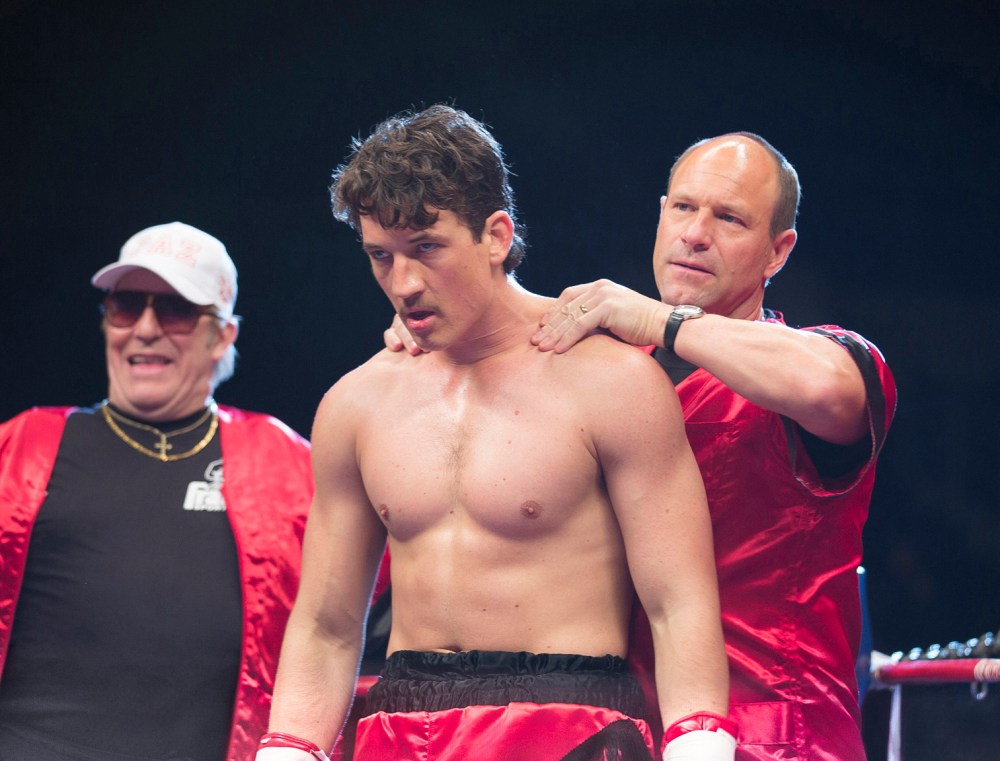
“Bleed for This” tells the true-life story of champion boxer Vinny Paz (played by Miles Teller) who, after winning a fight, is involved in a nasty car crash which leaves him with a broken neck. Many tell him his boxing career is over as a result, but Vinny is determined to repair the damage and get back in the ring. That he succeeded in doing so makes his comeback one of the greatest ever in sports history.
While at the Four Seasons Hotel in Los Angeles, California, Younger explained what finally made him want to tell this story.
Ben Younger: Simply because of the comeback. Vinny won 50 fights, I don’t know if you guys knew that. I’m sure to real boxing aficionados that would be an exciting thing. I’m not one of them. For me, it was all about the crash and the comeback. I started this as a writing assignment. I wasn’t supposed to direct this. I didn’t think I wanted to direct it. But once I realized there was a parallel between his story and mine… You guys know I took a long time off. I didn’t make a movie for 12 years which is kind of like having a broken neck.
So yes, “Bleed for This,” like every other movie released these days, is “based on a true story.” This term has long since lost its meaning as filmmakers tend to embellish the real-life events they are portraying to where they resemble something which feels canned and artificial. Younger, however, sought to pull back from this, and his explanation led to my question regarding certain things I figured filmmakers do their best to avoid.
BY: In every other way, we had to reverse embellishment. For example, that scene with Vinny lifting the bar? That happened five days after the Halo went on in real life. I couldn’t present that because no one would believe it. Same for Ciarán Hinds’ performance of Angelo (Vinny’s father). Angelo was such a colorful character that he bordered on a caricature of an Italian-American in New England. If I showed him as he was, you would say I was racist or we would’ve made a comedy.
Ben Kenber: It’s interesting because when it comes to East Coast people, I think a lot of us have a sort of a specific view which might seem clichéd in the way they are portrayed on-screen. How did you manage to keep it to where it felt like the actors and the accents felt natural and not clichéd?
BY: That was a fear. Boxing wise, there are so many clichés. Those I was like, we are going to avoid those, those are easier to avoid. But this is tougher because the actual accents can in themselves sound caricature like. So, we had a great dialect coach, Tom Jones (not the singer), a really talented guy, and we prayed and we were just careful and we really listened. I wasn’t looking at the monitors. I just stood next to the camera and just stared. You know when someone’s full of shit and when they’re someone they’re not, and you just can tell when they are getting it. Even if you don’t know the world, there’s just something if you really pay attention.
One thing which astonished me about “Bleed for This” was how several of the actors were unrecognizable in their roles. This is especially the case with Aaron Eckhart who plays Vinny’s coach Kevin Rooney, Ted Levine who plays boxing promoter Lou Duva, and Katey Sagal who portrays Vinny’s mother, Louise. One person even told me he didn’t realize it was Sagal in the role until her name came up during the end credits. I brought this up to Younger, and he responded with the following.
BY: That’s the nicest compliment you can pay an actor. They really want to disappear (into their roles). That’s more them than me, but thank you.
Another highlight of this interview was when Younger was asked which movie inspired him to become a filmmaker. His answer was not at all what anyone could have expected.
BY: No one’s ever asked me this question strangely, and I’ve been avoiding it for 16 years because I have to tell the truth. It is Steven Seagal’s “Above the Law.” It was his first movie, I was 16 years old, I cut school. I was going to a Yeshiva, like a Jewish seminary school, and I cut and I went and saw it. It was the first time I realized that someone made movies and that there were people behind it and some thought had gone into it. It was mostly that opening. There’s archival footage in the first 30 seconds. It’s footage of Seagal as a 19 or 20-year-old studying martial arts in the Far East cut together with the narrative they were doing which was about him being a CIA operative. The movie holds up. I see it probably once a year and it’s completely watchable.
Truth be told, Younger is correct. “Above the Law” featured Seagal in his prime, and it does still hold up. Some might see the movie as a guilty pleasure, but it really is not. It was also directed by Andrew Davis who would later direct Seagal in his biggest hit, “Under Siege,” and gave us the excellent cinematic adaptation of “The Fugitive” with Harrison Ford and Tommy Lee Jones. Everything Seagal did following “Under Siege” has proven to be pretty much abysmal.
It’s great to see Younger directing again, and he ended his time by saying he finally got the financing for his Isle of Man movie which is now heading into pre-production. Odds are we will not have to wait 15 years for it to reach the silver screen.
“Bleed for This” is now playing in theaters. Whether you are a boxing fan or not, it is definitely worth checking out.
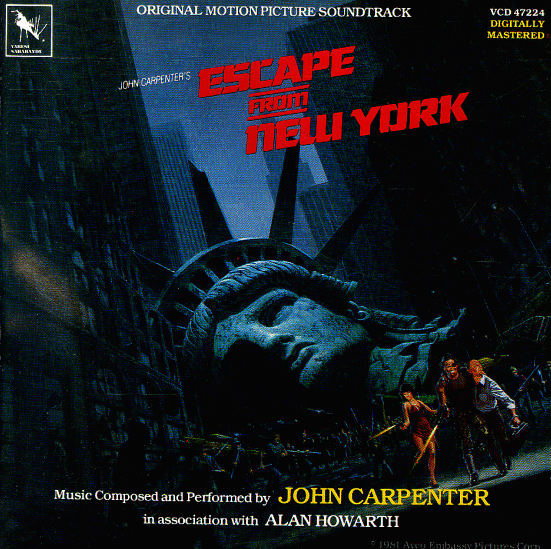
A screening of John Carpenter’s “Assault on Precinct 13” at the Egyptian Theatre in Hollywood brought out a number of guests such as Austin Stoker who played Lieutenant Ethan Bishop and Douglas Knapp who was the film’s director of photography. But the one guest I was really interested to hear from was Alan Howarth, the composer and sound designer who collaborated with Carpenter on a number of his film scores from “Escape From New York” to “They Live.” Howarth even took the time to do a live performance of his and Carpenter’s music, something I never thought I would ever see in my lifetime.
During the Q&A, Howarth talked about how he came to work with Carpenter, their process for scoring his films and his favorite film scores of the ones they worked on together. Howarth wasn’t actually on board for the original “Assault on Precinct 13” though he did work on a remastered version of the soundtrack for it and “Dark Star” for BuySoundtrax.com. It wasn’t until he worked on his first big film when he became inadvertently acquainted with Carpenter.
“I came on board at ‘Escape from New York,’ and that was kind of happenstance because my very first movie, less than a year earlier, was ‘Star Trek: The Motion Picture,’” Howarth said. “I had come on as the sound designer and created the sounds of the Enterprise like the warp drive and the transporters and stuff like that. The picture editor from that movie, Todd Ramsay, his next assignment was ‘Escape from New York,’ so I had slipped him some cassettes and he knew I was a musician. John had worked with another fellow on ‘Halloween,’ Dan Wyman, and there was some change up there, and so literally the guy comes over to my little, rented house in Glendale and set up in my dining room. It was nothing formal. I sat down and I played him a few things and he goes, ‘okay, let’s do it.’ That was it.”
“John always wanted somebody who knew about the technology,” Howarth continued. “In fact, a couple of times I tried to explain to him how it worked and he was all, ‘I don’t want to know that. It’s your job to make it work, make it in tune, and when I push down the note the red light is on.’ So that’s where I started, but he’s a collaborative person. I love working with people. I’m from the bands and rock & roll. I was one of those people. So, it was really great and my first film score was ‘Escape from New York.’”
From there, the two of them worked on several projects all the way to “They Live.” As he continued discussing the work he did with Carpenter, we came to discover he played a larger part in Carpenter’s film scores than we ever realized.
“Next, he went off to do ‘The Thing’ and they wanted to make ‘Halloween II,’ so again John said, ‘I’m going to be busy. You’re going to have to do Halloween.’ Same thing, so I did ‘Halloween II’ and I used his original ‘Halloween’ music, overdubbed it and created new stuff.”
After “They Live,” they seemed to part ways for reasons Howarth never explained, but it gave him the confidence to start scoring films on his own. Of course, he was still eager to get Carpenter’s blessing when it came to a franchise the director never planned to start.
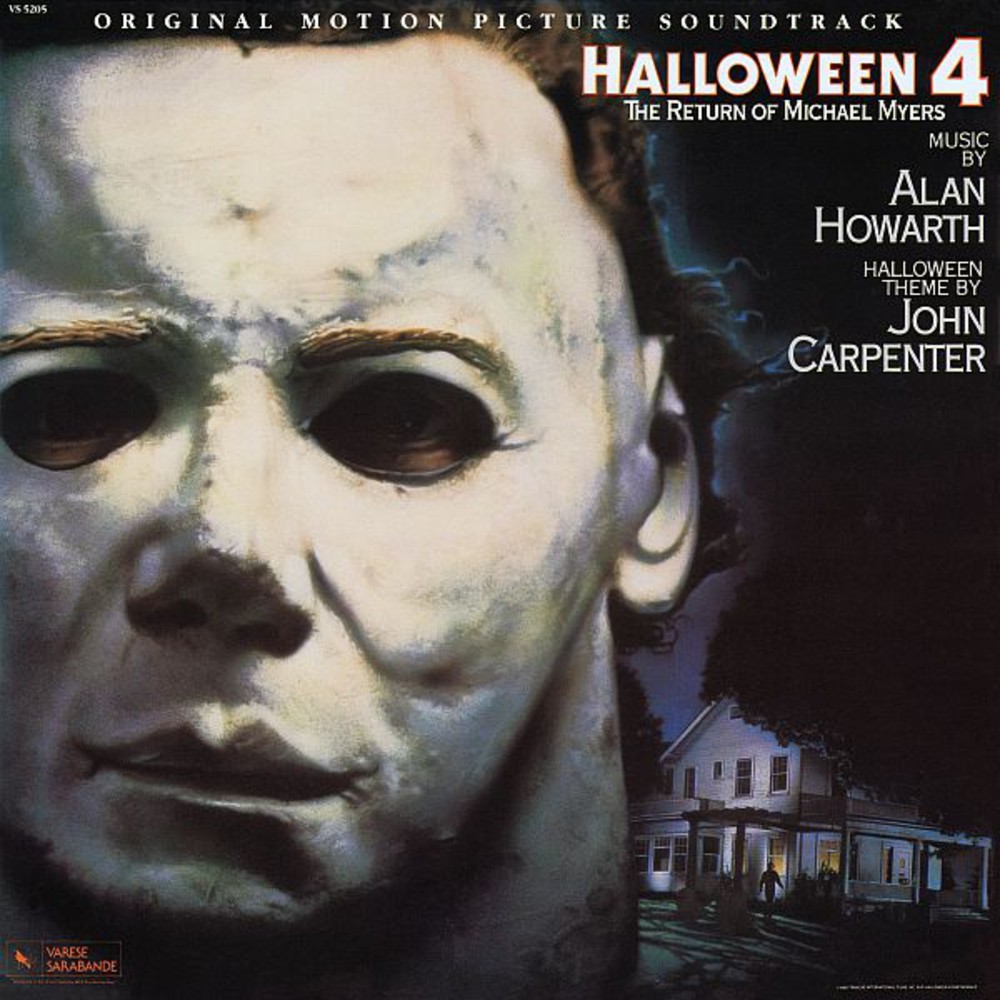
“I found out they were going to do ‘Halloween 4’ and I said to John, ‘they asked me to do this and you’re my buddy and I want to do something with this.’ He said sure, so I wound up doing ‘Halloween 4, 5 and 6’ and that really launched me as a composer which is what I love to do the most, and as we are in a world of economic stasis, I had to do it all by myself. As you see, this is my studio right here. It’s all down to a laptop and a guitar and some recorders when it used to be a million dollars’ worth of stuff. Not that that stuff isn’t valuable, but you can do without it now,” Howarth said.
One audience member asked which of the scores he did with Carpenter is his favorite, and the answer was a little bit of a surprise.
“I think ‘Halloween III’ because it was really an artistic departure for both of us, and ‘Big Trouble in Little China’ is the most produced and has the widest range,” said Howarth. “We had rock and roll and scary things and chases and this whole Asian influence, so it was really a broad scope of things. That’s one of my favorites.”
Like many in the audience, I was eager to hear how Howarth and Carpenter would go about working on a score. Did they start working on it before shooting began? Did they work on it after shooting was finished? Did they think about the music while making the film? We hear how composers spend so much time preparing the perfect score for a movie, but Howarth made his process with Carpenter sound quite simple.
“It’s all one big jam. It’s improvised,” Howarth said. “Sometimes he would come in with a theme in mind. I’d set up the piano before he came over and started something. A lot of it we just made up on the spot. In fact, I introduced him, because I’m a technical person, to the synchronization between a videotape and a tape recorder. It almost seems like we were the first to do it. Before that, everything was done with a stopwatch. So, you would make a cue that was three minutes long and kind of set a tempo, and then you would go back and literally copy it on a Moviola and fool around with the scene.”
“This was the first time you could watch the movie and play at the same time, so he referred to that as the electronic coloring book which made it even easier to improvise,” Howarth continued. “Through that whole period we also benefited from the evolution of electronic music instruments, so from analog synthesizers and a 24-track machine to midi and digital sequencers, these scores had a new installation in the progress of musical instruments, so it’s almost a chronology or a music lesson in the gear.”
Another audience member asked Howarth how long he and Carpenter would jam until they found something they really liked. His answer illustrates how fast these two worked on their music.
“We did a cue a day,” Howarth said. “One quote I always get from John, and it’s just really true, he said, ‘Alan if you want to be a director you only need two important words, yes and no. Just be very decisive. Even if you say no today or yes today and tomorrow, you change your mind. You got twenty or thirty people that are taking direction, and you don’t want to leave them in a lurch, so it’s better to just be decisive.’ So, it was a couple of times we did something and came back and said that wasn’t working, but it wasn’t very often.”
Having worked in movies and music all these years, Howarth clearly has a wide knowledge of musical instruments and electronics. When asked what he would consider as the go to synthesizer, Howarth’s answer shed some light on how far musical technology has come over the years.
“I chose all the gear and I arrived at being a fan of the Prophet 5,” Howarth said. “It sounded good, but the other reason was that it was the first programmable synthesizer. Prior to that, you had to literally make little diagrams of where all the knobs and switches were to get back to the same sound, so this was the first time you could do something and save it. That really moved things forward a lot, and I brought in the programmables and the sequencers.”
One big question many had about the music Carpenter and Howarth worked on was the score to Carpenter’s remake of “The Thing.” This was Carpenter’s first big studio movie, and it allowed him to work with his all-time favorite composer Ennio Morricone. However, when you listen to the score, some it sounds like it was done by Carpenter and Howarth, and this is especially the case with the movie’s main theme. Howarth went into detail about who really composed the score to “The Thing.”
“They (Carpenter and Morricone) took a meeting, and he (Morricone) saw a little bit of the footage and he scored his score,” Howarth said. “He comes back and, of course, how does John talk to his hero about what just went down and where he wants to go? And there’s a translation issue between English and Italian and all this other stuff. So John played the stuff we did for ‘Escape from New York’ and he says, ‘Can you do something like this?’ Ennio goes back for a second pass now with keyboards, and that’s where ‘The Thing’s’ theme came from. So it’s Ennio Morricone doing John Carpenter really. At the very end after all that, there was one more pass on about four or five cues where John came over for just an afternoon and we did some cues that kind of sound like ‘Christine’ that you can tell is basically our synth stuff. So basically, it took three scoring passes on the show to get it.”
It was a real treat to have Alan Howarth talk about his musical collaboration with John Carpenter. The film scores they worked on are among my favorites of all time, and I never get sick of listening to them. Howarth continues to work as a film composer, and his more recent credits include scores for “Backstabbed,” “The Dentist” and “House at the End of the Drive.” Here’s hoping we get to hear more scores from him in the near future.
Jake Gyllenhaal played one in “Southpaw,” Michael B. Jordan portrayed another in “Creed,” and now Miles Teller gets to put on his own set of gloves to play a boxer in “Bleed for This.” The biographical drama, directed by Ben Younger, focuses on Vinny Paz, a champion boxer from Rhode Island who became Super Middleweight champion of the world after defeating Gilbert Dele in the ring. Paz’s victory, however, is short-lived when he gets seriously injured in a nasty car accident. With his neck broken, his boxing career is assumed to be over by everyone, but he became determined to regain his title through a brutal rehabilitation regimen, and this led to one of the greatest comebacks in sports history.
Teller recently sat down for an interview and talked at length about how he trained and prepared to play Paz in “Bleed for This.” He also discussed what it was like to wear the halo Paz opted to wear in an effort to repair his neck. The boxer’s doctors initially encouraged him to undergo spinal fusion which would have ensured his ability to walk again but also would have erased any chance of him getting back into the ring. Paz chose the halo instead, and it involved having a number of screws drilled into his head in order to ensure this apparatus would keep it in one place for months.
Question: Did growing up in South Jersey help you with your accent?
Miles Teller: The Jersey accent is different. It’s just impossible to sound intelligent honestly, especially in South Jersey. The Northwest is just a specific kind of energy and people, and even though Rhode Island is totally different from New Jersey… I’ve just been around those guys, so I think it probably added something to the kind of relation that I found to Vinny.
Q: What was the most difficult thing that Vinny had as a person for you to get for the movie?
MT: The physicality was very tough. To get that look for me to just be able to have the conditioning to be able to shoot a boxing fight for a 16-hour day. The last two fights were back-to-back days. Each fight took one day which is unheard of. We shot the movie in 24 days. To even just look like a boxer… I had to shoot two movies in between, but that was eight months of just a very strict diet and working out. I lost 20 pounds and got down to 6% body fat for the first fight, but Vinny also moved up in weight and won the title of Lightweight and Super Middleweight, and we showed that. That’s also something very unique and special to Vinny’s legacy. He and Roberto Durán were the only two guys to win titles in those two weight classes specifically. So, I started at 160 and then I had to gain 15 pounds to get to 183 in like 2 ½ weeks. But once I had to gain weight, that was fun. It was just like Dunkin Donuts in Federal Hill. I don’t know if you’ve ever been to Providence, but Federal Hill has amazing Italian food.
Q: But while you were eating a lot, you still had to be boxing.
MT: I got cast two and a half years ago. We filmed it two years ago. This was pre- “Whiplash.” I had never done anything like this where I just got to play like a man or a world champion boxer. Even when I was on set, if I had any time in between I was always doing something like push-ups or sit-ups because I knew I didn’t walk into this movie with this God-given talent of being in shape. They tell you just get a workout and diet, but I think I went anti that early in my career because I was just like, I don’t want to be that guy with the six pack and a tan who’s worried about his makeup and stuff.
Q: Did doing this movie help you to appreciate the nuances of boxing, or is that something you already had as a sports fan?
MT: I was a big MMA fan and I still am, but I started watching it when it was the WCE when I was in high school; I was 16 years old. And then with boxing, I always played the video games and I always watch certain guys like Tyson and Holyfield and Lennox Lewis; the heavyweights back then were the big draws. But once you start training in it, you realize it is very highly nuanced. I don’t see it as two guys in a blood sport. I see it as technique.
Q: The mind is very important to being a champion boxer? Strategy?
MT: Yeah, for sure, but that’s what they say: you have a game plan until you get hit in the face, and then it all goes away. We didn’t have a ton of time. I only had about five weeks in Los Angeles with my boxing trainer, and he was Sugar Ray Leonard’s trainer for 18 years. He was just a very high-level guy. The first fight in the movie against Roger Mayweather, I had five days to work with that boxer. The second boxer, we had a day and a half. And the third boxer, this dude Edmund Rodriguez, got in a fight, professionally, that he wasn’t supposed to. He told Ben (Younger, the director) he wasn’t going to fight, got in a fight, luckily knocked the dude out, didn’t get messed up, flew down, and I honestly only had maybe like a day with him.
Q: You also had to wear the halo in this movie. What was it like reading about that in the script and then wearing it for however long?
MT: For the beginning physical transformation, it was eight months of all that stuff that you hear. You can’t eat any bread or drink for that time. You’re just eating like a rabbit and hoping it all pays off. This guy dedicated like everything in his life to this, so it would’ve been very immature of me to slack off and mess with that. As far as the halo goes, that was highly uncomfortable. Again, you don’t like to complain because, for Vinny, it was screwed in his head. But for me, it wasn’t actually screwed in my head so we really had to make it as tight as possible because if the thing moves at all, then it doesn’t matter what you just did in that take. You only get so many takes, but it’s not usable because when it moves, people understand it’s not real. If this was like a big-budget studio film, I would have had a ton of fittings with it. I just did a firefighter movie and I had more fittings with my boots than I did for this thing. The girl just went to a hospital in Providence and got one from them, and then we put little rubber pieces on the end and just put it so far up my head that I could tell when it was in the right spot because I just had indentations on my head.
“Bleed for This” opens in theaters on Friday, November 18th.
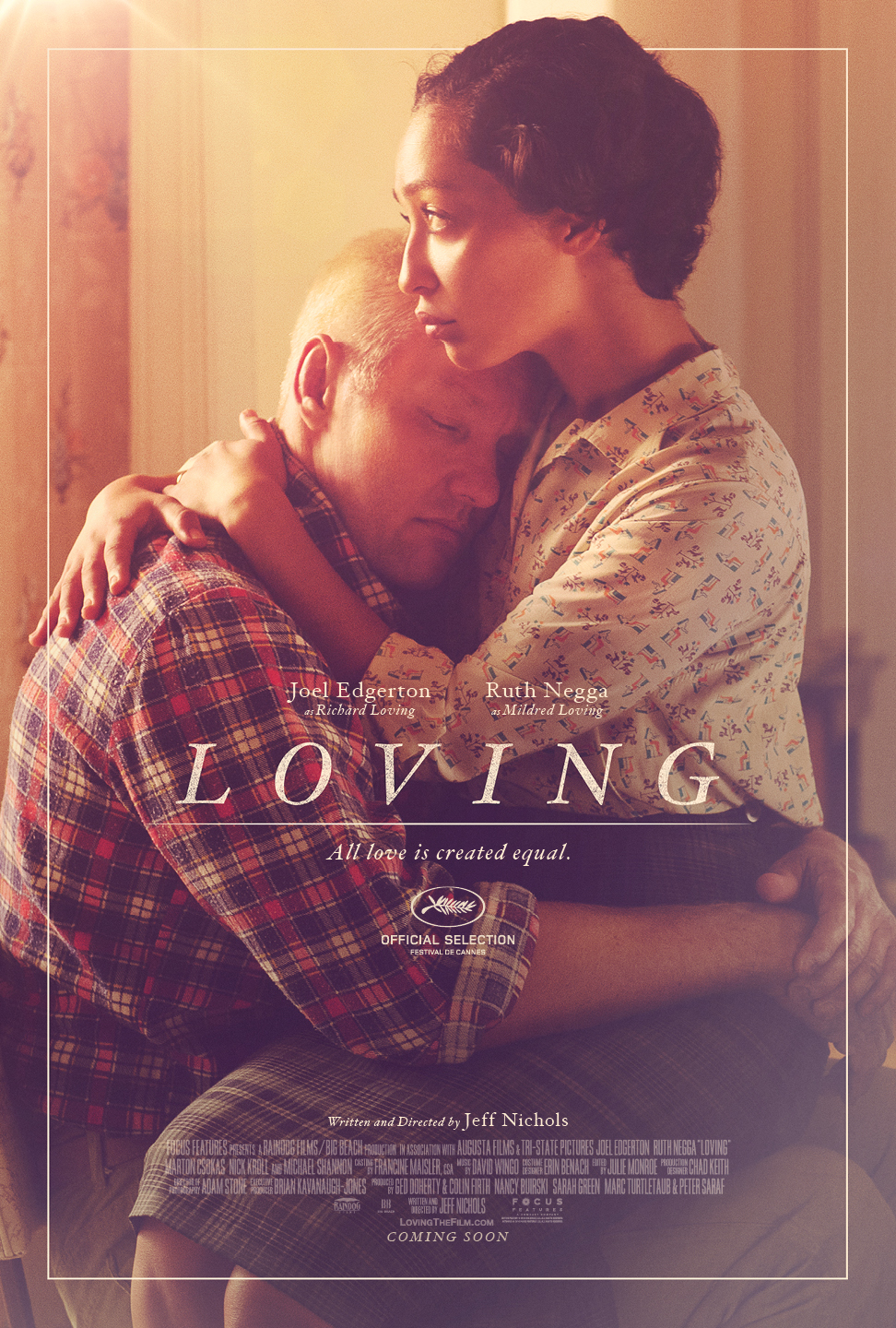
I got to speak with Costume Designer Erin Benach about her work on Jeff Nichols’ historical drama “Loving.” The movie takes us back to the late 1950’s and early 1960’s where we are introduced to Richard and Mildred Loving, an interracial couple whose marriage quickly had them banished from Virginia as it violated the state’s anti-miscegenation laws. They later sued Virginia, and their civil rights case, “Loving vs. Virginia,” eventually made it all the way to the Supreme Court which affirmed the very foundation of marriage ways and ended state laws that prohibited interracial marriage.
Benach also worked with Nichols on his other 2016 movie, “Midnight Special.” She earned a 2012 Costume Designers Guild Award nomination for her work on Nicolas Winding Refn’s “Drive,” and she reteamed with him on “The Neon Demon.” She has also worked with filmmaker Derek Cianfrance on his movies “Blue Valentine,” “The Place Beyond the Pines,” and “The Light Between Oceans.” Her other credits include Brad Furman’s “The Lincoln Lawyer,” Andrew Niccol’s “The Host,” Anna Boden and Ryan Fleck’s “Sugar,” and Ryan Gosling’s directorial debut “Lost River.” You can visit her website at www.erinbenach.com.
In my conversation with Benach, she talked about having the costumes fit into the story without overwhelming it, why the costumes could not stand out too much, and of the challenges she faced in capturing the look and feel of the years “Loving” takes place in. She also talked about the differences of working with Nichols and Refn whose films are so very different from one another.
Please check out the interview above. “Loving” is now playing in Los Angeles and New York.
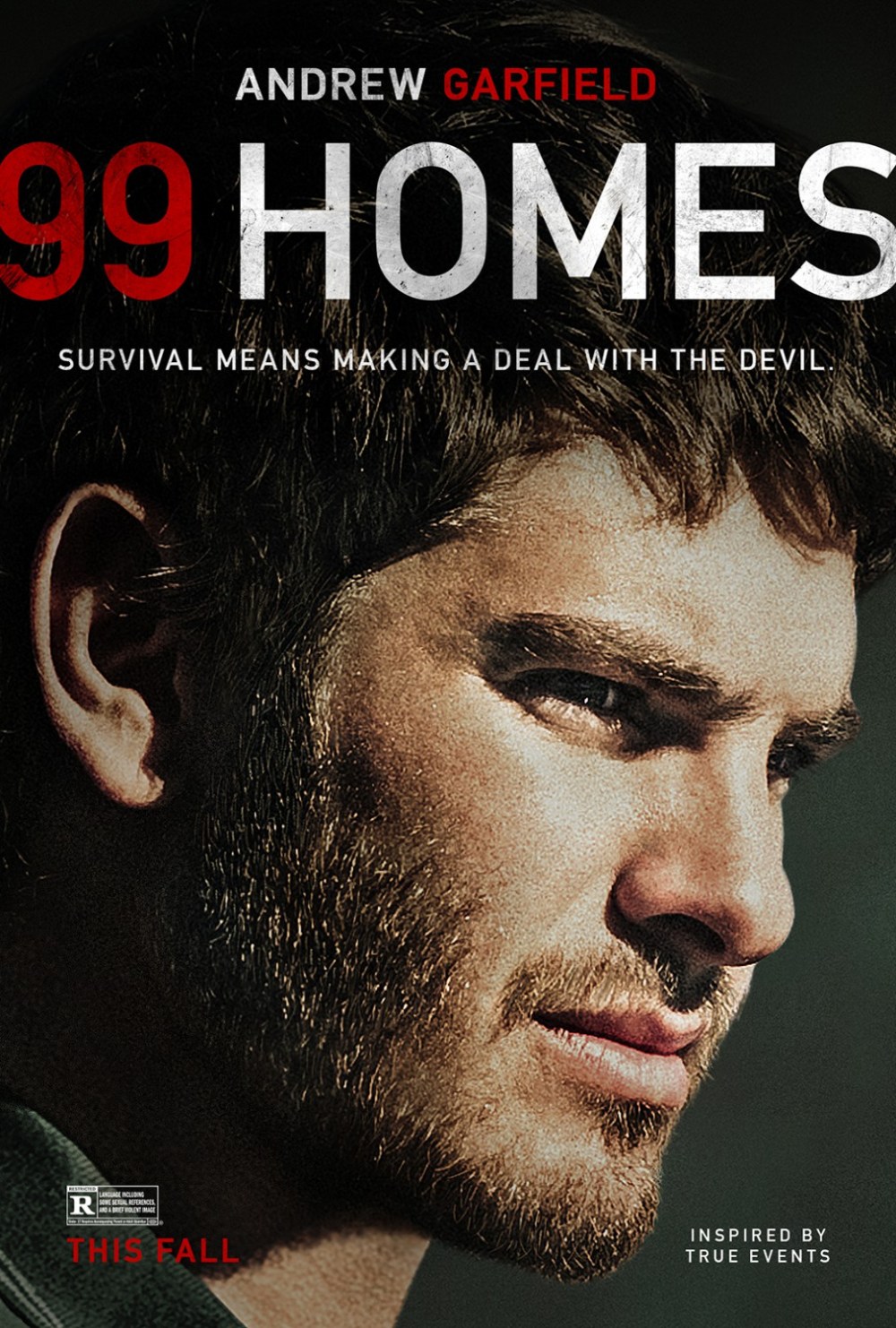
The late Roger Ebert proclaimed Ramin Bahrani director of the decade on the basis of his movies “Chop Shop” and “Goodbye Solo,” both of which came out in the 2000’s. His films have received tremendous critical acclaim and numerous awards from one film festival to the next, and this streak does not look to stop with his latest movie. “99 Homes” stars Andrew Garfield as an unemployed contractor who is unjustly evicted from his home and Michael Shannon as the real estate magnate who kicked him out of it and who eventually becomes his mentor in the art of home foreclosures. It’s a thriller which is unsettling as it is heartbreaking as it calls attention to the housing crisis which swept the nation and those cold-hearted and greedy men who profited greatly from it.
Bahrani gives us a story which hits close to home as it contains agonizing scenes of Garfield and his family being given only a few minutes to pack up all their belongings and leave their house. He makes you feel the searing discord between the haves and have-nots as it’s open season on homeowners who have no chance of defending what is rightfully theirs. But when Garfield comes on board with Shannon, he finds a way to dig himself out of his financial black hole so he can get back his house. But as Garfield gets deeper and deeper into Shannon’s world, he starts losing his ethical and moral bearings as he starts to others what was done to him.
Bahrani was at the Four Seasons Hotel in Los Angeles, California to do a press conference on “99 Homes.” I was one of the reporters there and told him the movie seemed to be as much about survival in an economically shaky world as it is about greed and home foreclosures. When I asked him what he felt “99 Homes” had to say about surviving in this crazy world the characters inhabit, he said the following:
Ramin Bahrani: “One of the scenes I really like, for me it was like something from Dostoyevsky in my mind, was when the two men sit at the dock at night. And I remember Michael (Shannon) came up to me and said, ‘Ramin, is this the important line in the scene?” I told him, ‘Michael, this is the important line in the whole movie.’ And that’s after Michael tells Andrew (Garfield) that he carries a gun even at two o’clock in the morning because he was almost run off the road one time when he goes to dinner with his family and all this stuff, and Andrew says, ‘Is it worth it?’ And Michael looks at him and says, ‘As opposed to what?’”
It’s a haunting question which left the reporters at the press conference speechless, and it’s one of the many reasons why you must see “99 Homes” which is now available to rent and own on DVD, Blu-ray, and Digital.
Having escaped “The Amazing Spider-Man” universe intact, Andrew Garfield gives one of his best performances to date in the tense and timely thriller “99 Homes.” In it, he plays Daniel Nash, an unemployed contractor and construction worker who gets evicted from his home along with his mother Lynn (Laura Dern) and son Connor (newcomer Noah Lomax). In an effort to get his home back, Daniel ends up working for real estate magnate Rick Carver (Michael Shannon), the same man who evicted him and his family, and in the process, he becomes Rick’s protégé and learns how to work the housing market to make a lot of cash. This leads to Daniel making more money than he ever dreamed of, but considering what he’s doing to others what Rick did to him, this newfound wealth is coming at a high moral price.
“99 Homes” is an urgent thriller which demands your attention as it deals seriously with the housing crisis which erupted in America in 2010 and the insatiable greed that followed. Garfield makes Daniel into a very empathetic character, and it’s hard not to feel bad for him even as he makes a Faustian bargain to get his house back. You share in Daniel’s fury at being evicted so unjustly, and you root for him even as he becomes more and more ethically bankrupt. Some will call Daniel a traitor while others will see him as just another guy trying to survive in an increasingly insane world. In the end, we have to ask ourselves what we would have done if we were in his situation.
Garfield was one of several cast members who appeared at the press day for “99 Homes” which was held in Los Angeles, California at the Four Seasons Hotel. I pointed out that while this movie is about money, greed, and ethics, it is also about survival and what we are willing to do to keep a roof over our head and food on the table. I asked Garfield what he felt “99 Homes” said about survival, and he answered my question in a very personal way.
Andrew Garfield: I betray myself every day. I betray myself in small ways, in big ways in order to fit in, in order to be accepted and in order to stay on the path I think I’m supposed to be on. I feel afraid a lot as well in the modern world. I feel a lot of fear about instability to be honest. I don’t feel a great foundation in our culture as of now. I think there are great things happening, there are soulful things happening usually on the outskirts, but it takes a great deal of treasure hunting to find those things or find something that’s deep and meaningful. I’m so grateful and lucky. Thank God for storytelling and thank God for this medium of storytelling because without this I would be lost, I know I would be. This is a big part of survival for me that I get to give myself to something that feels meaningful. And that’s why, when a story like this comes along, it’s really impossible to say no because it’s very rare, the essence of what this story is. That’s my very shallow answer to a very difficult question.
To be honest, it didn’t sound like a shallow answer at all, and it’s not hard to see how Garfield put all his heart and soul into this project. It should go without saying there’s much more to this actor than him playing Spider-Man, and we should expect to see more great performances from him in the future.
“99 Homes” is now available to own and rent on DVD, Blu-ray, and Digital.
“The Unbelievably Sweet Alpacas” is one of 20 short films which make up “We the Economy,” a series that uses innovative story techniques to give us a better understanding of the U.S. economy. This particular short film was directed by Adam McKay, best known for directing the “Anchorman” movies, “The Big Short” and for co-founding the comedy website “Funny or Die,” and it’s an animated short film and a thinly veiled parody of all those “My Little Pony” cartoons children are still crazy about watching. It takes place in a magical land filled with long-lashed, multi-colored Alpacas who love lollipops, rainbows, and friendship, and they have just graduated from school and are looking to get well-paying jobs in the business world. But once they are made aware of the sharp divide in wealth distribution which mirrors America’s, the growing evidence of inequality gap makes them turn against one another with hilarious results.
A press day for “We the Economy” was held at the London Hotel in West Hollywood, California, and McKay was one of the directors who attended it. “The Unbelievably Sweet Alpacas” is not only the funniest short film in this series but also one the most informative. McKay said the inspiration for it came in part from his kids watching “My Little Pony” cartoons all the time, but another one came from an unexpected source.
“There was actually a documentary about the richest building in New York City on Park Avenue, and it was made by Alex Gibney and it was called ‘Park Avenue (Money, Power and the American Dream),’” McKay said. “He describes how the children of the super billionaires would always come through the lobby and be so friendly with the doorman, and the doorman would go, ‘How was your soccer game?’ And then the doorman described how one day when they were like 11 or 12, the light just went off. It was like someone had told them you were different and they no longer connected with the doorman. The guy was talking how sad that is, and so I think just vaguely that was in my mind that when you’re a kid, these differences don’t mean anything. And then when they become real, all of a sudden you’ll notice all the alpacas start fighting with each other and they’re no longer friends. So yeah, I think we’ll give Alex Gibney credit for that.”
Making this short film also proved to be very educational for McKay as it made him fully aware of just how bad income equality is in the United States.
“I was shocked,” McKay said. “I came in knowing that the U.S. had a problem with income inequality, but I didn’t know just how bad it was and that our upward mobility was so stagnant and that it’s actually not that great in the U.S. I was shocked about the numbers about the middle class. Our middle class has almost completely evaporated. I knew we were bad, but then when I worked with Adam Davidson and looked at the actual numbers… Damon actually contacted us and was like, ‘I think there was a mistake made when you said 50% of the wealth went to the top .1%.’ We’re like, ‘No, that’s not a mistake.’ And I had the same reaction he did which was like, that’s gotta be a typo.”
“I didn’t know that we are by every definition of the word in the U.S. an oligarchy. I had no idea that that was the case,” McKay continued. “A strict definition of oligarchy, that is the U.S. more so than Russia or China than any country you can think of. It’s a little depressing but at the same time a good opportunity to let people know about these numbers.”
One of the images which really stood out in my mind was when the Alpacas are shown a portrait of a company CEO who is shown holding a copy of Ayn Rand’s “The Fountainhead.” For the record, I have not read any of Rand’s books, but her name has been coming up a lot even though she died back in 1982. There were three movies based on her book “Atlas Shrugged,” the first which was a critical and commercial flop, and yet the filmmakers still made a pair of sequels to it. John Oliver even did a segment about her on “Last Week Tonight” as he wondered why she was still considered relevant. I had to ask McKay why this book was so prominently featured in the portrait, and he helped school me in what Rand was really about.
“She was a refugee of Communist Russia, so she had been given the hard boots,” McKay said. “I think she was a fun partier supposedly so she hung out with the billionaires and was like fuck everyone else, let’s have a good time. She had seen the overreaction of the Communist Revolution so she was an extremist in the other way, and then you have these guys with dynastic wealth who have inherited millions of dollars who kind of feel shitty about it. And then here’s a woman telling you, let’s go have a big sex party and you shouldn’t feel shitty about having your money. She’s perfect for the Koch Brothers and it’s like she’s their bible because, otherwise, they’re going to have to give away a lot of their money, and they don’t want to do that.”
“Ever since I’ve been in college, I’ve always been having arguments with the Ayn Rand devotees,” McKay continued. “My point on Ayn Rand is she’s always been a bad writer. John Milius is a big right-winger, but the guy can write (remember Robert Shaw’s famous U.S.S. Indianapolis speech from “Jaws?”). You can be a right winger or whatever you want to be, just don’t be a shitty writer.”
“It’s funny because she becomes more important the more you get income inequality in our country, and the more billionaires you get the more her name comes back into the public,” McKay said. “In the 50’s and 60’s, she was fringe. The interview with Mike Wallace with her was like she was a cuckoo bird, and it is only now that our country’s kind of a little bit broken that suddenly she’s back in the mainstream.”
“We the Economy” is now up and running, and it has proven to be a clever and innovative way to teach us more about the U.S. economy. Be sure to check the website, and you can view “The Unbelievably Sweet Alpacas” below.
Jeff Nichols’ “Loving” is a beautiful movie from top to bottom as everyone involved in its making did an expert job of transporting us back to the 1950’s and 60’s. Based on a, yes, true story, it introduces us to Richard Loving (Joel Edgerton) and Mildred Jeter (Ruth Negga) who are deeply in love with one another. They eventually get married, but with Richard being white and Ruth being black, they are arrested and put in jail as their interracial marriage violated Virginia’s anti-miscegenation laws. As punishment, they are banned from returning to Virginia for 25 years and forced to live in Washington D.C., but they soon sue the state and their case eventually made it all the way to the Supreme Court where it was ruled banning interracial marriage is unconstitutional.
I recently got to speak with two artists who worked on “Loving” behind the scenes: Kenneth Walker and Julie Lallas. Walker was the head of the hair department, and his previous credits include “Jimi: All is By My Side,” “Munich” and Ridley Scott’s “American Gangster” which he described as the hardest film he ever worked on. Lallas headed up the makeup department and worked with Nichols previously on “Take Shelter,” and she has also worked on the set of “Enchanted,” “Nick & Norah’s Infinite Playlist” and “We Need to Talk About Kevin.” Talking with them both was very illuminating in terms of how they went about their jobs, and it also allowed me to ask them if they want their work to be showy or to instead just disappear into the framework of the movie.
Check out the interview above, and also included below is a trailer for “Loving.” Nichols’ movie is now playing in Los Angeles and New York, and it is definitely worth checking out.










 The Ultimate Rabbit